2014
CHILDHOOD DEVELOPMENT INITIATIVE
The Tallaght West
Childhood Development Initiative (CDI)
Process Evaluation Thematic Report No. 3:
The Tallaght West
Childhood Development Initiative (CDI)
Process Evaluation Thematic Report No. 3:
CDI Experience Impacting on Training
and Support of Managers and Practitioners
This report has been authored by the CDI Process Evaluation Team Child and Family Research Centre,
School of Political Science and Sociology, NUI Galway
The team comprises
Dr. John Canavan, Mr. Liam Coen, Ms. Jessica Ozan and Prof. Chris Curtin.
The team also owes its gratitude to the project’s Expert Advisor, Prof. Rob Chaskin,
Chapin Hall, University of Chicago.
The authors are responsible for the choice and presentation of views expressed in this report and for opinions expressed herein, which are not necessarily those of UNESCO and do not commit the Organisation.
2014
The team comprises:
Dr. John Canavan, Mr. Liam Coen, Ms. Jessica Ozan and Professor Chris Curtin
The team owes its gratitude to its Expert Advisor for the project:
Professor Rob Chaskin, Chapin Hall, University of Chicago.
The authors are responsible for the choice and presentation of views expressed in this report and for opinions expressed herein, which are not necessarily those of UNESCO and do not commit the Organisation.
Any citation of this report should use the following reference:
Canavan, J., Coen, L., Ozan, J. and Curtin, C. (2014) CDI Experience Impacting on Training and Support of Managers and Practitioners. Dublin: Childhood Development Initiative.
Copyright © Childhood Development Initiative, 2014
Childhood Development Initiative Ltd. St. Mark’s Youth and Family Centre Cookstown Lane
Fettercairn Tallaght Dublin 24
Tel: +353 (0)1 494 0030 Fax: +353 (0)1 462 7329 Email: [email protected] Web: www.twcdi.ie
All rights reserved. No part of this publication may be reproduced, stored in a retrieval system, or transmitted, in any form or by any means, electronic, mechanical, photocopying, recording or otherwise, without the prior permission in writing of the copyright holder.
For rights of translation or reproduction, applications should be made to the Strategy and Corporate Services Manager, Childhood Development Initiative Ltd., St. Marks Youth and Family Centre, Cookstown Lane, Fettercairn, Tallaght, Dublin 24, Ireland.
DISCLAIMER
Executive Summary
BACKGROUND
The Tallaght West Child Development Initiative (CDI) aims to improve outcomes for children and young people through the implementation of a ten year strategy A Place for Children: Tallaght West. In Winter 2008 the Child and Family Research Centre, NUI Galway (CFRC) was commissioned to undertake a process evaluation of CDI. In using the strategy as its starting point, the CFRC developed an evaluation plan underpinned by five core themes evident in the strategy. These five themes correspond to the outputs of the evaluation plan. These outputs (reports) are:
1. Review of the Origins and Strategy Development of CDI;
2. Working Together and Service Integration aspects of CDI;
3. CDI Experience Impacting on Training and Support of Managers and Practitioners;
4. CDI as a Community-Led Initiative;
5. CDI, Sustainability, and Informing Government Thinking and Policy Making.
This report relates to the third output listed above, training and support. CDI undertakes a significant amount of work in relation to progressing its strategic aims of developing and delivering quality services for families and support for practitioners. Central to this is the commissioning of a core set of training programmes for staff of its services and a wider Quality Enhancement Programme (QEP) open to all practitioners, and in some cases to community members, in Tallaght West. The QEP comprises three elements: special talks or conferences; lunchtime seminars; and workshops and short, medium and long term training courses.
AIMS AND OBJECTIVES
The overarching aim of this report is to examine the extent to which the CDI experience impacts on training and support for practitioners and managers. More specifically, the evaluation questions developed in conjunction with CDI can be grouped into three clusters of objectives:
• What are CDI’s strategic aims regarding the provision of training and support to organisations in Tallaght West?
• What processes underpin the development and implementation of training and support to these organisations?
• Are there organisational and individual shifts in attitude towards training and support amongst recipient organisations in Tallaght West?
DESIGN AND METHODS
This aspect of the process evaluation was designed in conjunction with CDI. A draft evaluation plan for this theme was developed and forwarded to CDI for comment and affirmation. The plan was adjusted on foot of these comments and finalised. As with all aspects of a process evaluation, a mixed methods approach was adopted. For this report the following methods were used:
• Documentary analysis: in consultation with CDI a hierarchy of documents was developed and examined. For this report, quantitative content analysis was deployed with particular forms of support searched for and frequency quantified. Analysis of attendance data from various QEP events was also undertaken;
• Focus groups and interviews were undertaken with a number of different stakeholders. CDI staff were interviewed together and individually. A sample of organisations involved in each of the five services was taken and one-to-one semi structured interviews and focus groups were undertaken.
• A short survey was also developed and administered with the support of CDI for those who provided training;
FINDINGS
The findings reveal that CDI provides a significant amount of training to both commissioned and non-commissioned organisations in Tallaght West. In particular, the training provided to organisations involved in delivering three of CDI’s services is based on needs as identified through consultation with manual authors and other key actors. Training provided through the broader QEP programme is done so based on local needs identified in a number of different ways, including periodic surveys, observations of CDI staff and feedback/input from managers of services and frontline staff. Based on limited data, the top three attending organisations at QEP events are the HSE, Barnardos and CDI.
There is broad agreement amongst service staff on the impact of training on personal attitudes towards training. However, there is little conclusive evidence to suggest that there has been a reported shift in organisational attitudes towards training – many participating organisations already prioritise training for their staff. Nevertheless, CDI provides support in accessing free training.
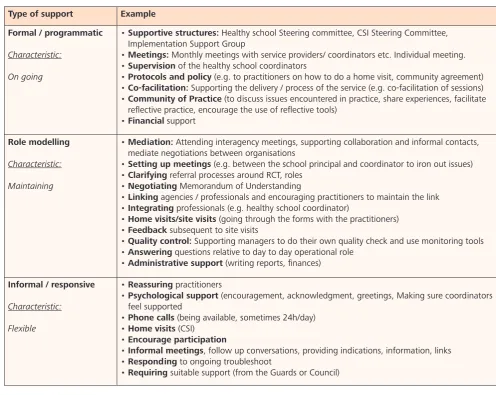
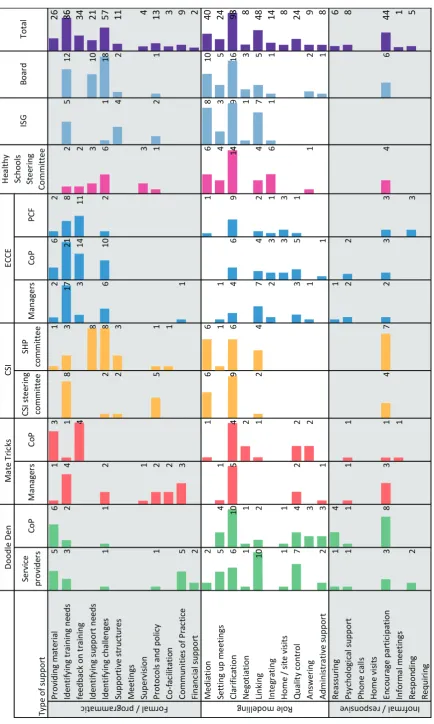
CDI staff are perceived by respondents as being very supportive and accessible. This support takes a number of forms: programmatic, e.g. pertaining to the implementation of particular programmes and structural aspects of support such as CoPs; role-modelling, e.g. clarifying issues, setting up meetings; and responsive or informal support, e.g. encouraging participation, reassuring, responding to phone call queries and so on. Respondents indicated that while CDI is broadly as supportive as it was initially, they find that they do not need to depend on or source such support as often as previously. Instead, they are relying on their own sources of support in house.
Frontline staff report of a positive experience of attending and participating in CoPs. In addition to them offering an opportunity to meet up and share experiences, they are also an avenue to communicate directly with CDI and express particular needs, concerns or discuss issues which can arise from time to time. They are viewed as another useful form of support.
LIMITATIONS
The initial evaluation plan proposed to purposively sample the top five attending organisations at the third element of the QEP – short, medium and long term training courses and undertake focus groups with them. However, due to incomplete data this could not be fulfilled. The evaluation team is aware that the data collected, therefore, only informs the report in a detailed way of the views of those attending training particularly associated with commissioned services. While a number of those within the sample were not in receipt of training as a result of their involvement in commissioned services, their work did not allow them to access anything other than a small number of lunchtime seminars.
CONCLUSION AND RECOMMENDATIONS FOR CONSIDERATION
It is clear that CDI has and continues to do much to contribute to the ongoing enhancement of quality services in the locality. In both meeting the (albeit mandatory) service needs of commissioned service providers and considering additional needs which they might have, CDI seeks to underpin the implementation of evidence based programmes with significant amounts of service provision. CDI developed the QEP as an attempt to contribute to quality service development and delivery amongst the wider organisational community in Tallaght West. It should also be noted that the QEP also forms a significant support base for two of the five ‘services’ which CDI funds. .
Based on the discussion, experience and data collected in the course of undertaking this evaluation, the evaluation team recommends that the CDI team considers the following draft recommendations:
1. At a strategic level, consider what you want to achieve with the Quality Enhancement Programme. What strategy should be adopted to underpin the organisation’s aims regarding training? Is there a balance between one- off talks held at lunchtime and more medium-term courses? Is there added value in linking in with existing fully accredited courses linked to the National Framework of Qualifications?
2. The development and current roll out of the restorative practice training is interesting. It also contains a specific, easily measurable goal – training up to 1000 individuals across the locality. It is possible to identify clear outcomes, sub – outcomes and indicators for some or all of the QEP initiatives?
Table of Contents
Executive Summary
iv
Chapter One: Introduction
1
1.1 Background to the Evaluation
2
1.2 Training and Support: Clarifying the Scope of the Evaluation
2
1.3 Methodology for Report Three
2
1.4 Outline of the Report
5
Chapter Two: Brief account of summary overview of key aspects of
Training Provision pertinent to this Report
7
Chapter Three: Presentation of Findings relating to Provision of
Training by CDI
11
3.1 Introduction
12
3.2 Training and the Aims of the CDI Strategy
12
3.3 Identifying Needs and Providers
14
3.3.1 Identifying Need
14
3.3.2 Identifying Providers
15
3.4 Training Provision
16
3.4.1 Commissioned Training Provision
16
3.4.2 Non-Commissioned Training Provision
17
3.5 Perspectives on CDI Training
19
3.5.1 Needs Identification and Promotion
19
3.5.2 Facilitators of and Barriers to Uptake of Training
20
3.6 Organisational Attitudes towards Training as a result of Engaging
in Service-Specific and QEP Events
21
3.7 Summary
23
Chapter Four: Presentation of Findings relating to support provided
by CDI to commissioned services
25
4.1 Introduction
26
4.2 Developing a Support Provision Framework and Accounting
for Support Provision in CDI Documents
26
4.3 Findings from Interviews on Support Provision by CDI
30
4.3.1 Forms and Processes of Support
30
4.3.2 Communities of Practice and Reflective Practice
33
4.4 Summary
35
Chapter Five: Discussion of Findings
37
5.1 The Strategic Intent of CDI towards Training and Support
38
5.2 Needs Analysis Processes of CDI
38
5.3 The extent of coverage by the QEP of Commissioned
and Non-Commissioned Services in the Locality
39
5.4 Organisational Attitudes towards Training as a result of
CDI’s activities
39
5.5 The Provision of Support to Commissioned Organisations
40
5.7 Summary
41
5.8 Recommendations
42
Bibliography
43
Appendices
Appendix 1: Overview of Key Aspects of Training Provision
45
Appendix 2: List of events under the three categories of the QEP
59
Appendix 3: Frequency of attendance CDI QEP event by organisation
62
Appendix 4: Training provided to commissioned services
(ECCE, Doodle Den and Mate-Tricks)
63
Appendix 5: Survey Demographics
65
ix
List of Tables
Table 1: Sample of staff across the five services 4
Table 2: Levels of development of Communities of Practice 8
Table 3: Data received from CDI relating to attendance lists 17
Table 4: Organisations’ attendance frequency 18
Table 5: Conceptual framework for support 27
Table 6: Level of support provided by CDI Governance and Service Structures 29
Table 7: Training needs analysis’ guidelines for good practice 46
Table 8: Techniques to obtain data (taken directly from Garavan et al., 1997, p. 525-6.) 47
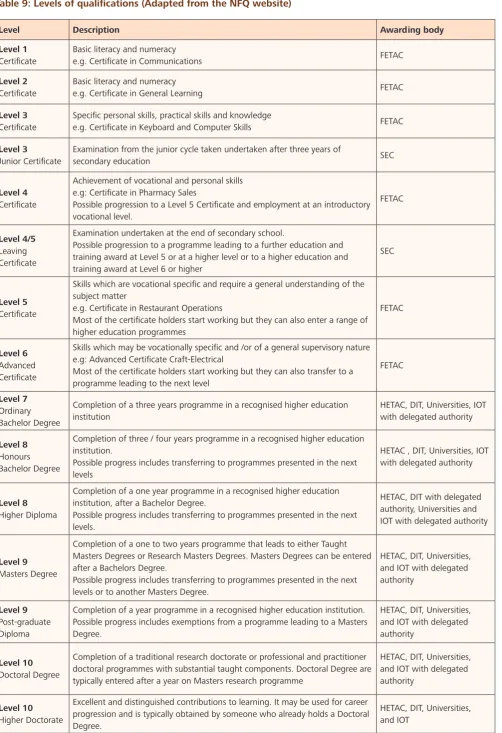
Table 9: Levels of qualifications (Adapted from the NFQ website) 50
Table 10: FÁS training standards (Taken from FÁS, 2000) 52
Table 11: Síolta standards (Adapted from Síolta website) 54
Table 12: Characteristics of communities of practice 55
Table 13: Wenger’s indicators of community of practice (1998) 56
Table 14: List of one-off talks/ Conferences 59
Table 15: List of lunchtime seminars 60
Table 16: List of Training Courses/Special Workshops/Special Discussions 61
Table of Figures
Figure 1: Trainers’ process of engagement with CDI 15
Figure 2: Number of participants attending more than one event 18
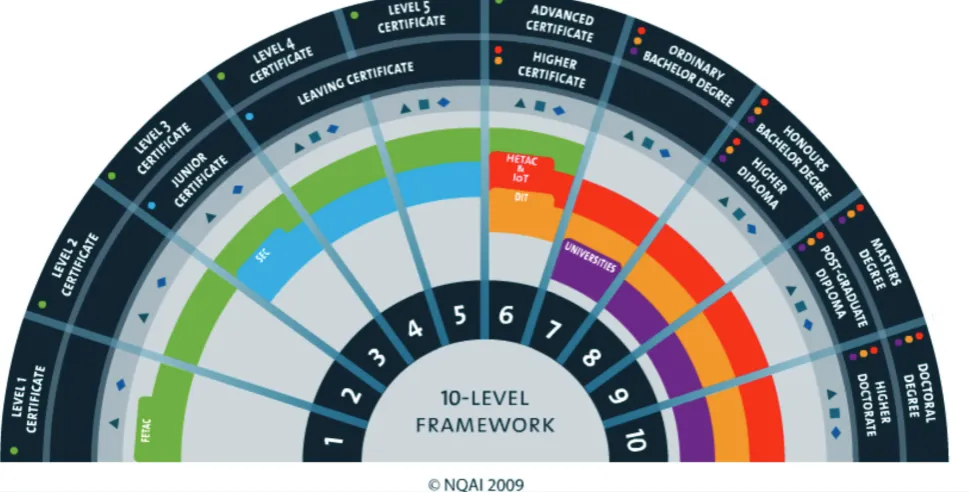
Figure 3: 10-Level National Famework of Qualifications 49
Figure 4: CoPs’ stages of development (Wenger, 1998) 56
2
1.1 Background to the Evaluation
In Winter 2008 the Child and Family Research Centre (CFRC) was contracted for a three year period to undertake the Process Evaluation of the Childhood Development Initiative (CDI). The full details of the evaluation have been outlined in the first report and therefore will not be repeated here. This report is the third in a series of five thematic reports relating to the evaluation. The complete list of thematic reports is as follows:
1. Review of the Origins and Strategy Development of CDI;
2. Working Together and Service Integration aspects of CDI;
3. CDI Experience Impacting on Training and Support of Managers and Practitioners;
4. CDI as a Community-Led Initiative;
5. CDI, Sustainability, and Informing Government Thinking and Policy Making.
1.2 Training and Support: Clarifying the Scope of the Evaluation
In the original evaluation plan set out in early 2009, the remit of this theme of the evaluation was to examine “the extent to which the CDI experience impacts on training and support for practitioners and managers.” To clarify the precise scope of this theme and re-confirm the appropriateness of the original evaluation questions, CFRC undertook a consultation process with CDI. As a result, the following overarching objectives are identifiable as key to the research for this report1:
• What are CDI’s strategic aims regarding the provision of training and support to organisations in Tallaght West?
• What processes underpin the development and implementation of training and support to these organisations?
• Are there organisational and individual shifts in attitude towards training and support amongst recipient organisations in Tallaght West?
1.3 Methodology for Report Three
As with all reports of this evaluation, the research team adopted a mixed-methods approach. Numerous definitions of mixed method approaches abound (Johnson et al., 2007). For this report, we take Creswell and Clark’s (2007, p.5) definition that mixed-methods as a method “focuses on collecting, analysing and mixing both quantitative and qualitative data in a single study or series of studies. Its central premise is that the use of quantitative and qualitative approaches in combination provides a better understanding of research problems than either approach alone.” We address each particular method below:
Summary of key aspects of training provision
An overview of key aspects of training provision was undertaken, focussing on the process elements of providing quality training and support. It should be noted that, given the resources used for this report and the utility and appropriateness of such material to ground findings, the review is not as extensive as those contained in previous reports. Therefore, articles were purposively searched on undertaking training needs analysis, quality standards for training in Ireland and national qualifications frameworks. The Síolta Framework for Early Childhood Care and Education also forms part of the review. Finally, the review builds on the literature on Communities of Practice presented in report two, while also briefly examining Reflective Practice as a concept and practice tool. A short synopsis of the overview is included in the report (chapter two) with the full overview contained in the appendix.
Questionnaire
In dialogue with CDI, the evaluation team developed a short process evaluation trainer’s survey to inquire into particular process aspects of training provision. This was carried out for two reasons: (a) as a mechanism to include in the research some of those commissioned by CDI to provide prolonged training courses to professionals working in Tallaght West; and (b) to inquire into particular process elements of arranging training, such as needs analysis, assessment, evaluation, linkages to the Irish National Framework of Qualifications and accreditation bodies, and to identify facilitators and barriers in providing training. The survey was developed and distributed through CDI to 16 trainers in mid-October. Eleven trainers completed the survey, representing a response rate of 69%.
3
Documentary analysisDocumentary analysis was undertaken of a range of CDI documents. Similar to the last report Working Together and
Service Integration the evaluation team developed, in conjunction with CDI, a hierarchy of documents to examine based
on the theme of the report. Specifically, this report is based on:
• Minutes of CDI Board, Implementation Support Group (ISG) Meetings and Board Reports;
• Newsletters;
• Documents contained in the CDI folder ‘Quality Enhancement Programme’;
• Service-Specific Folders, including minutes of meetings; and
• The Síolta Folder – those documents pertaining to the implementation of the Síolta Framework. Documentary analysis forms the basis of much of the content of chapters three and four.
Interviews
Interviews were conducted in two phases. The first phase involved a wide ranging semi-structured interview with CDI staff on their work relating to the provision of training and support. This was also followed up with individual interviews with CDI team members.2 These were important interviews as they permitted the team to develop a conceptual framework for
support provision which was forwarded to CDI for comment. Upon receiving staff comments, the framework was finalised. The framework outlines the various forms of support which CDI staff feel they provide to commissioned organisations’ management and staff, and lists examples of each form of support provided. It is presented in chapter four. An interview specific to the theme was also undertaken with the CEO of CDI. Additional team interviews were also undertaken with the quality specialists and another member of staff.
2 It should be noted that a number of these interviews also formed the basis of the prefacing interviews for data collection
for report two.
4
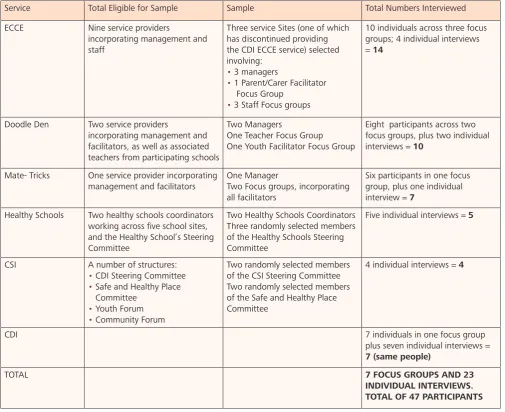
[image:14.595.43.549.129.541.2]As agreed with CDI, a series of focus group and one-to-one interviews were undertaken with a sample of staff from across the five services. The sample is as follows:
Table 1: Sample of staff across the five services
Limitations
In executing this research a number of issues arose. Firstly, only enough participants (six) turned up for one focus group under Mate-Tricks. Secondly, while a focus group was planned for the Parent/Carer Facilitator (PCF), only one PCF was present. It was also agreed that the evaluation team would purposively sample non-commissioned organisations whose staff attended CDI-commissioned training courses – short, medium and long term. This was with a view to trying to ascertain the extent to which CDI’s Quality Enhancement Programme (QEP) is influencing organisational attitudes to training and support. However, due to significantly incomplete data (figures, names of organisations in which some training attendees are employed not recorded) this was not possible. The evaluation team is aware that this is a limitation of the report as, in essence, the sample is entirely made up of staff and managers of CDI-commissioned service providers. While some did attend QEP events, these tended to be lunchtime seminars and were in low single figures (3-5). Despite this, some data on attendance and organisational affiliation were recorded and is presented in the report. Additionally, while the evaluation team expected to receive individual evaluation sheets of QEP events, only a small number of cumulative evaluation scores were received (i.e. individual evaluation sheets were not received).
Service Total Eligible for Sample Sample Total Numbers Interviewed
ECCE Nine service providers
incorporating management and staff
Three service Sites (one of which has discontinued providing the CDI ECCE service) selected involving:
• 3 managers
• 1 Parent/Carer Facilitator Focus Group
• 3 Staff Focus groups
10 individuals across three focus groups; 4 individual interviews = 14
Doodle Den Two service providers
incorporating management and facilitators, as well as associated teachers from participating schools
Two Managers
One Teacher Focus Group One Youth Facilitator Focus Group
Eight participants across two focus groups, plus two individual interviews = 10
Mate- Tricks One service provider incorporating management and facilitators
One Manager
Two Focus groups, incorporating all facilitators
Six participants in one focus group, plus one individual interview = 7
Healthy Schools Two healthy schools coordinators working across five school sites, and the Healthy School’s Steering Committee
Two Healthy Schools Coordinators Three randomly selected members of the Healthy Schools Steering Committee
Five individual interviews = 5
CSI A number of structures: • CDI Steering Committee • Safe and Healthy Place Committee
• Youth Forum • Community Forum
Two randomly selected members of the CSI Steering Committee Two randomly selected members of the Safe and Healthy Place Committee
4 individual interviews = 4
CDI 7 individuals in one focus group
plus seven individual interviews =
7 (same people)
TOTAL 7 FOCUS GROUPS AND 23
INDIVIDUAL INTERVIEWS. TOTAL OF 47 PARTICIPANTS
5
Data AnalysisData analysis was undertaken in a number of different ways. Due to the relative small number of responses, survey data was managed and analysed using Excel. Unstructured reading of documents was initially undertaken too so as to allow the team to familiarise themselves with the breadth and content of them. Following this, each document was re-read utilising the conceptual framework of support provision developed and quantitative content analysis deployed. Observation notes were subjected to the schedule emerging from documentary analysis. Regarding interviews, a number of questions specifically relating to training and support provision – drawn loosely from the agreed evaluation questions - were asked in each interview. The interviews were semi-structured and thus it was more straightforward to thematically group the data emerging from them. Nevertheless, the transcripts were initially sifted to identify common themes across all interviews before they were coded to ensure systematic analysis. Interview data was analysed using the qualitative data management and analysis package Nvivo.
1.4 Outline of the Report
Following this introduction, chapter two provides a very short summary of the main features of the overview of main concepts pertaining to the theme of the report. Chapter three provides an overview of the findings from interviews and documentary analysis regarding the provision of training by CDI. Chapter four discusses the provision of support by CDI staff. Chapter five concludes the report with a discussion of the findings and recommendations for CDI.
Chapter 2:
Brief Account of Summary Overview
of Key Aspects of Training
Provision Pertinent to this Report
3
8
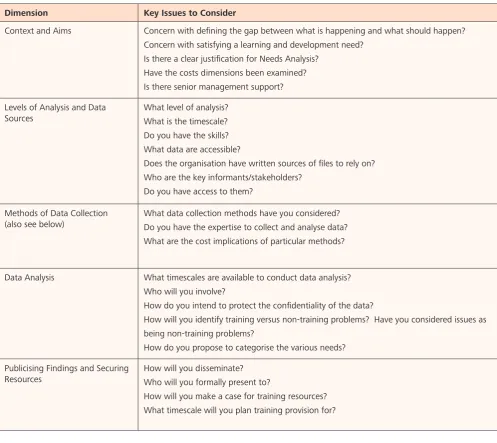
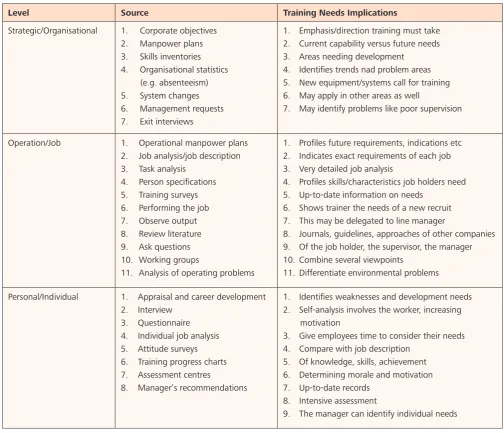
The provision of training in Ireland and internationally is underpinned by a number of processes which are perceived to contribute to good practice. The team used its knowledge of CDI as guidance in purposively selecting works for this overview. These are: needs analysis; training quality indicators and standards; communities of practice; and reflective practice. A brief account of each of these is now outlined below.
Needs Analysis
Throughout much of the published works on training and personnel development the importance of undertaking a needs analysis is emphasised. A variety of approaches and mechanisms are outlined, including:
• Supply-led approach – where the trainer or authority identify the training needs;
• Demand-led – which can be characterised by either a top-down approach underpinned by an organisational level goal or desired outcome, or more localised approach characterised by the desire to address the training needs associated with a particular aim in an efficient manner;
• Trainee-led approach – characterised by a bottom up, self-development focused emphasis where trainees themselves identify need by way of self-assessment.
Other characterisations of the needs analysis process include organisational, operation/task and person analysis which respectively map onto each of the three forms outlined here.
Training Quality Indicators and Standards
Irish training programmes are underpinned by the National Framework of Qualifications (NFQ) developed by the National Qualifications Authority of Ireland. The NFQ provides the potential for all training courses to map training outcomes onto a series of levels which are internationally recognised. For example, level one involves certification of basic literacy and numeracy, level three equates to the Junior Certificate qualification while level four involves certification of the Leaving Certificate qualification. Additionally, the NFQ also provides for information on accreditation or awarding bodies associated with each level of qualification.
Communities of Practice
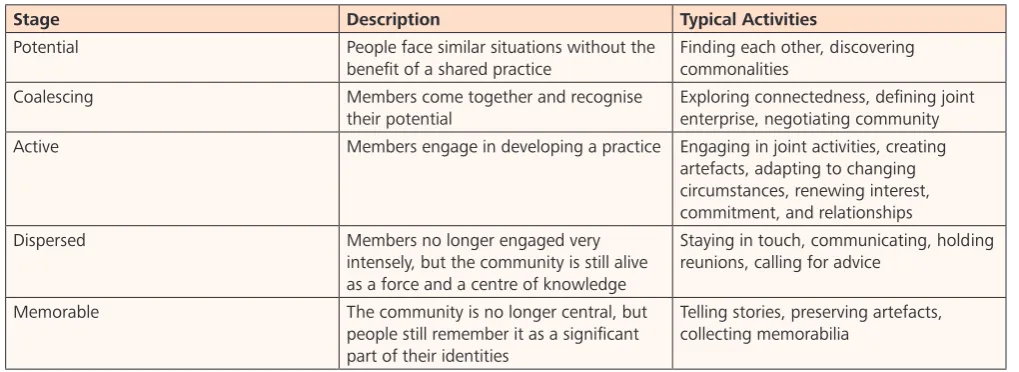
[image:18.595.40.550.528.714.2]Viewed as “groups whose members regularly engage in sharing and learning, based on common interests” (Lesser and Storck, 2001: 831), Communities of Practice (CoPs) are places and structures where participants can engage in supportive processes and develop working relationships built on commonality and shared experience. They are dynamic and move through various levels of development:
Table 2: Levels of Development of Communities of Practice
Adapted from Wenger (1998).
In evaluating CoPs, some authors cite the relevance of listening to members’ stories and examining the potential impact on service performance in a number of areas, including decreasing the learning curve of new employees, responding more rapidly to customer needs and inquiries and spawning new ideas for products and services.
Stage Description Typical Activities
Potential People face similar situations without the benefit of a shared practice
Finding each other, discovering commonalities
Coalescing Members come together and recognise their potential
Exploring connectedness, defining joint enterprise, negotiating community Active Members engage in developing a practice Engaging in joint activities, creating
artefacts, adapting to changing circumstances, renewing interest, commitment, and relationships Dispersed Members no longer engaged very
intensely, but the community is still alive as a force and a centre of knowledge
Staying in touch, communicating, holding reunions, calling for advice
Memorable The community is no longer central, but people still remember it as a significant part of their identities
9
Reflective PracticeAt a basic level reflective practice concerns learning from experience or practice. For some (Loughran, 2002), it is bound up with problem solving and in particular the mechanisms used to frame and reframe problems so as to identify solutions. For others, particularly Kolb (1984), a model of reflective practice incorporates a number of different stages involved in the process of learning, including having an experience, reflecting on the experience, learning from the experience and applying the learning. In some ways, therefore, reflective practice is a constant process rather than a once-a-year occurrence. It involves constant questioning – of daily practice and activities, and the constraints and opportunities which frame those actions.
Ruch (2007) extends this thinking, offering something of a middle ground between outright reflection on the one hand and a prioritising of theory and research alone on the other. She argues that reflective practice can have different modes within one overarching frame:
• Practical reflection – borrowed from Schon who argues for reflection in and on action;
• Critical reflection – which links knowledge from practice with being free from any constraining interests in the activity;
• Process reflection – which stresses the unconscious and emotional dimensions of work;
• Technical reflection – drawing on formal theoretical and empirical knowledge.
As highlighted by Dolan and colleagues (2006), the challenge for practitioners is that while they are battling with service delivery, management and policy making, they have to understand what their contribution to the negotiation of useful responses to families’ needs is. This contribution includes not only the skills and values but also knowledge.
Chapter 3:
12
3.1 Introduction
This chapter is the first of two which presents findings from documentary analysis, a short survey of trainers facilitated by CDI and interviews undertaken with a number of individuals as outlined in the methodology section of chapter one. This chapter details findings relating to the provision of training commissioned by CDI, both to commissioned organisations involved in the delivery of CDI’s programmes and those provided under the wider Quality Enhancement Programme (QEP). Following this introduction, the chapter outlines the commitments made in the CDI strategy towards training provision in the locality, and based on document and interview data, it details initial developments undertaken to operationalise the commitments of the strategy. The detailed third section outlines the various processes implemented by CDI in rolling out training– for both commissioned and non-commissioned service providers. Included in this section are data pertaining to attendance at various QEP training sessions, the identification of need, views of respondents on needs identification mechanisms, and trainers’ and recipients’ views on facilitators and barriers to providing and receiving training. The fourth and final section presents findings on the attitudes of respondents towards training as a result of CDI’s work.
3.2 Training and the Aims of the CDI Strategy
The CDI strategy sets out a number of strengths and weaknesses upon which its proposed set of activities are built. It points to the value of resources in the locality, including “exceptional teachers and a wide range of outstanding professionals and voluntary supports for children” (CDI 2005a, p. 13) while also highlighting the weakness of a complexity of services in Tallaght West, specifically the “proliferation of ‘thin’ services - services with little technical and supervisory support and no independent evaluation of impact on child outcomes” (ibid). In attempting to address this weakness and build on the defined strength, the strategy sets out a number of activities to foster the continual professional development of all those in the area who work with children and families. Under the activity ‘Supporting the People Who Work with Children’ the strategy speaks of the desire to “focus on commissioning training in children’s services for local providers according to quality standards, and on facilitating a common approach by all providers to contribute to the achievement of targeted outcomes” (CDI 2005a, p. 14).
The specific section of the strategy addressing this aim details a number of programmatic activities which will contribute to the achievement of a number of outcomes. In particular, it aims to “train local people in early years and after-school provision, establish a learning forum on Early Childhood Care and Education, and sponsor evaluation of early years and after-school services” (CDI 2005a, p. 25). The strategy speaks of the need to develop new quality training programmes, designed on proven models, as well as “facilitating a common approach by all providers to contribute to the achievement of target outcomes” (CDI 2005a, p.24). Albeit under a different activity, the strategy aims (through Integrated Services Coordinators) to develop partnership agreements between statutory, voluntary, and community providers of children and
Key Findings
• Training is viewed by CDI as a key aspect of working towards the development of quality services in Tallaght West;
• Multiple forms of needs analysis are undertaken by CDI which underpins provision of QEP training;
• An extensive range of training is provided for both commissioned and non-commissioned organisations;
• From limited data, the top three attending organisations at QEP events are HSE, Barnardos and CDI;
• Interview respondents overall report positively about training they receive;
• CDI facilitates attendance at and provision of training in a number of ways;
• While individual attitudes towards training have reportedly shifted, it would appear that organisational attitudes have not – the view is that organisations already provide and prioritise training.
Various CDI strategic documents identify training as a means to promote quality in the development of services in Tallaght West. The strategy speaks of developing a number of supportive fora for professionals in the area, as well as commissioning training in various aspects of service provision and community building.
13
family services. Such agreements would include policies, procedures and technical supports (CDI 2005a, p.20). Moreover, under activity five – ‘advocating to reduce major stresses on children and families’ – the strategy proposes to design and implement a training programme in community advocacy to promote leadership within the community of Tallaght West. Additionally, for its second three-year phase (2009 – 2012) the strategy speaks of establishing or facilitating a number of fora, specifically one on family support services and one on preventative services for 13-18 year olds.The CDI Report of the Stakeholder Consultation Process (2005b) also addresses the themes of training and support. In reviewing findings from a number of consultations with providers the report found that the “technical support needs of groups were to the fore” (CDI 2005b, p. 38). These needs included: project management; staff training and development; recruitment of volunteers; and evaluation of services. CDI’s compass and vision statement also contain pledges to improve the quality of services in the locality with a view to improving outcomes for children. The compass states that CDI “will support, promote and enhance quality, innovative services which will meet the needs of children and families in West Tallaght and improve outcomes for the community” while the vision statements also make reference to quality service provision, specifically in “promoting and enhancing quality, innovative services.”
In response to these findings and the strategic aims set out in the strategy and other documents, the QEP was developed by CDI. The QEP has two stated objectives: to achieve integrated services for children and families; and to enhance quality through an assessment and training programme for early years and after-school practitioners (CDI, n.d). In particular, CDI documents highlight that an audit would be undertaken to assess training and professional development requirements for the region, with necessary training required to raise quality being provided (ibid). The target group for training aspects of the programme is identified as those working in pre-school and after-school services, while two activity components are outlined: the recruitment of two Quality Specialists and the undertaking of a needs assessment process.
Regarding underpinning the development of the training and support aspect of the strategy, CDI employed two Quality Specialists as well as a Quality and Services Officer, a post deemed “central to the QEP.”4 However, with the vacating of
this latter post, some of its duties have been distributed amongst other staff, including one administrative staff member who has taken over the communication aspects of the post, along with the existing Quality Specialists who continue to provide support for commissioned and non-commissioned service providers. More recently, the Quality and Services position has been filled part-time with a particular focus on providing support to CDI quality specialist staff and working directly on the Healthy Schools programme.
In December 2007 CDI held a workshop with service providers in the locality to identify training and support needs, with “feedback from the process [leading] to the design, development and launch of a series of lunchtime seminars in January 2008” (Keogh 2008, p. 17). It also sought to build on the work of the District Approach Group – a group under the auspices of Tallaght Partnership – which had undertaken its own training needs analysis of service providers in the locality. CDI was in a position to offer help to meet some of these needs, specifically in sponsoring participation in one training event (ibid). More broadly, CDI documentation highlights that the QEP “gives service providers in Tallaght West opportunities to access training and networking through a comprehensive programme of events” (CDI, n.d.).
Largely manifest through one-off talks, lunchtime seminars, and workshops and short, medium and long-term training courses, the QEP is viewed as a space where common issues and objectives can be teased out. It should be viewed as training over and above that which is provided solely to the commissioned service providers. This latter training relates to the implementation of three of CDI’s services – ECCE, Doodle Den and Mate-Tricks. A full outline of the training organised by CDI for commissioned service providers is contained in appendices two and four, along with an outline of all the training events under the QEP (also see below). Those who participate in service-specific training are also free to avail of broader QEP related training events.
4 http://connect.southdublin.ie/cdi/index.php?option=com_content&task=view&id=47&Itemid=96
14
3.3 Identifying Needs and Providers
3.3.1 Identifying Need
Across both commissioned and non-commissioned services the emphasis on training and improving the quality of services is underpinned by needs analysis undertaken by CDI. In addition to the explicit training requirements of manual-based services (see below) the needs and desires of all service providers are identified in a number of ways:
• Identification of Needs questionnaires are intermittently sent out to managers of service providers requesting them to identify themes which they would like to see covered by the QEP lunchtime seminars, special talks and training courses. The questionnaires also request suggestions for speakers and suitable time slots (CDI interviews);
• Managers’ meetings – monthly meetings with commissioned services and progress reports provide an opportunity for staff needs to be identified and discussed (CDI interviews, numerous Service Provider (SP) interviews);
• Communities of practice provide a space for, amongst other things, requests for additional training or training in relation to particular themes to be verbalised to CDI staff (CDI interviews, numerous SP interviews);
• CDI staff themselves identify needs which may not be always explicitly named but are apparent through observations of services in practice – “picking up on things” – and brainstorming and discussions amongst colleagues; and
• Evaluation sheets of various training events (completed by attendees).
CDI view its team meeting as a key part of identifying needs. Views expressed, observations and both formal and informal discussions are an influence on the potential themes to be addressed in the training events and a support to the QEP process as a whole. Observations undertaken of CDI staff meetings reveal that they provide for colleagues to update each other about activities undertaken in the services. In relation to training, brainstorming has taken place to identify key speakers. Sometimes, a staff member, not necessarily the QSO, would suggest someone they know and propose to contact them. The Implementation Support Group (ISG) has also provided some useful ideas and information on supporting the QEP process (CDI interview).
Documentary evidence further corroborates the different forms of needs analysis undertaken by CDI. In December 2007, CDI facilitated a workshop with practitioners to audit training and support needs. The needs identified during the workshop formed the basis for the lunchtime seminars that started in 2008. A questionnaire to ascertain training was circulated to anyone with managerial responsibility within schools and organisations in 2008. For instance, the management training delivered at the end of 2008 was based on needs identified through this questionnaire. CDI also informed their choice of seminars from needs identified by other organisations. Indeed, in 2009, the District Approach Group undertook an audit of training needs with results being similar to the ones identified by CDI. Furthermore, a feedback sheet is circulated after each seminar/workshop asking participants to identify if the training/seminar met their expectations, what CDI could follow up on, things they would change, and suggestions for future seminars/trainings.
Specific training needs are identified in various meetings and from different perspectives. For example, the training needs for the Doodle Den facilitators are not only discussed during managers’ meetings but also directly with the facilitators during CoPs. For programmes with different structures, such as the CSI and Healthy Schools, training needs can be identified by the Steering Committees. They are also identified through reports: for example progress reports include a section where managers can identify training requirements.
In relation to training that is compulsory and specific to the services - e.g. High Scope training for ECCE - CDI staff identify the number of service staff requiring either initial or booster training for each service. When issues were raised by service staff in relation to training standards and delivery, documentary evidence indicates that CDI responded to them.
CDI identifies the training needs of organisations in a number of different ways, including periodic questionnaires, observations of practice, service provider management meetings and staff CoPs. Trainers were identified through the manual writing process, were purposively selected by CDI, approached CDI themselves or responded to requests for tender.
15
For example, in the case of High Scope training, service providers raised issues through emails and progress reports. Feedback from Doodle Den training was gathered from facilitators themselves at the end of the year, from interim service evaluation reports and from the team at CDI. Based on this information, CDI decided to change the training provider for the following year.The QEP programme also has a number of implicit aims with regards to meeting the needs of non-commissioned services in the locality. While contributing to the shared learning of all organisations, it also serves as a capacity building opportunity for these organisations while providing a showcase opportunity for some services to publicise what they do – some of which request or offer to present and others who are asked to do so:
“[W]e would be conscious of needing to provide opportunities for local organisations to showcase their work [but it] is not just about showcasing their work. It makes it more helpful to the participants that this is somebody that they may actually need to pick up the phone to as opposed to somebody from Drogheda who they are never going to cross paths with. We would also – particularly in terms of the lunch time seminars – get requests from people to present at them. It’s a bit of a status thing, we all like to show off what we think we do well, so we do get requests from people who want that opportunity and wherever we can, we facilitate that”
(CDI interview)
Entry to these events is open to all. However, there would be times where, dependent on the training or event, particular groups would be targeted, followed up with and encouraged to go (CDI interview).
In relation to the trainer survey, of the 11 respondents, seven indicated that some form of training needs analysis was undertaken at some stage. Of these seven, five undertook some form of discussion with CDI staff regarding the experience and level of attainment of participants prior to delivering the training, with two undertaking needs assessment with participants prior to starting the course. Of the four who responded that no needs assessment was done, three mentioned that the course was related to service delivery or CDI service development.
3.3.2 Identifying Providers
In addition to those trainers identified before, CDI was asked to identify the processes in place for identifying trainers for non-commissioned pieces of work. For one-off events the team may brainstorm around particular speakers that they have heard of and invite them to speak. Some individuals or organisations – as highlighted above – may actually offer to present on a topic or service. If the desired topic is specialised “contacts are relied upon to point you in the right direction” (CDI interview). However, more prolonged training events such as mid and long-term courses are delivered by experts either identified by the team or in response to Requests for Tender (RFTs). Even where the proposed funding amount is below the threshold for an RFT, it is a practice which is adhered to so as to ensure transparency and ensure a competitive process (CDI interview).
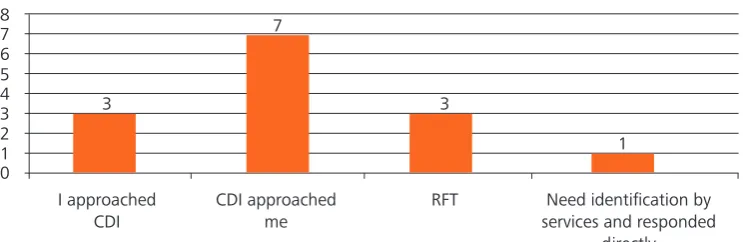
[image:25.595.54.426.663.784.2]Survey respondents were asked to indicate how they came to provide training for CDI. The most frequent response was that CDI contacted the individual trainer to ask them to provide a training input.
Figure 1: Trainers’ process of engagement with CDI
I approached CDI
CDI approached me
RFT Need identification by services and responded
directly 8 7 7 6 5 4
3 3 3
2
1 1
0
16
3.4 Training Provision
3.4.1 Commissioned Training Provision
Emerging from the strategy was the readily apparent need for training in Early Childhood Care and Education (ECCE) service provision. This process began in 2007 with the initiation of High/Scope Training for ECCE pilot sites. An additional emphasis on quality is illustrated by the rollout of the Síolta Quality Framework from 2009 for ECCE services in conjunction with the National Children’s Nurseries Association (NCNA). Regarding the other programmes which CDI would come to develop and implement, training needs became apparent out of the process of writing manuals and discussion with the manual writers (CDI interview).
With Doodle Den, whilst in-depth discussions took place with the manual author around training requirements arising out of the programme curriculum, difficulties were encountered in identifying suitable trainers for the programme. In the end, and mirroring the delivery of the programme itself, a teacher and youth worker co-delivered Doodle Den training for the first cohort in 2008 (CDI interview and follow up email clarification). Induction training was also delivered to these participants (CDI interviews and CDI, 2009) and, on foot of the experience of it, a more streamlined induction process resulted, delivered by facilitators of the test sites.
Training for the Mate-Tricks programme was also influenced by the development of the manual, with two separate training programmes required to meet the needs of service staff (as Mate-Tricks is a combination of two separate programmes). There is no specific training associated with the implementation of the Healthy Schools Programme. In this regard, then, CDI tends to provide support more so than direct training for the provision of the service, although the Healthy Schools Coordinators did receive induction training alongside Doodle Den staff. However, members of the Healthy Schools Steering Committee did receive a form of induction through committee meetings:
“On a number of occasions [we provided] an overview of what the Healthy Schools Programme is intended to achieve while we’re doing it, what its objectives are, how we think we might achieve it. That happened at least twice if not more”
(CDI interview)
More significantly, perhaps, members of the Steering Committee were provided with a one-off seminar on the programme with inputs from, amongst others, the Healthy Schools evaluation team, the National Coordinator of the Social, Personal and Health Education (SPHE) Post-Primary Support Service and a member of the Welsh Network of Healthy School Schemes. This seminar was viewed by CDI as instrumental in supporting the programme towards achieving its goals.
As outlined in the second process report Working Together and Service Integration, the CSI has a number of different structures to it. The Youth Forum has not received any CDI-sponsored training. The Safe and Healthy Place (SHP) Committee has also not received any specific training, but does have a work plan and terms or reference to support it. The residents association has just recently been provided with committee training as well as participating in the newly commissioned Restorative Practice training. The Community Forum members have received capacity building training while members of the CSI Steering Committee have not received any training explicitly linked with the service but do avail of training offered under the wider QEP programme.
Training was commissioned by CDI based on the needs of each service manual in three instances (ECCE, Doodle Den and Mate-Tricks). There is no service-specific training currently for either the Healthy Schools Programme or the Community Safety Initiative. Staff across all five services are free to attend QEP programmes. The QEP emerged out of a desire to prevent two-tier provision and sought to build on previous CDI lunchtime seminars. The QEP incorporates special events, lunchtime seminars and training courses. From limited information the top three organisations attending QEP events are the HSE, Barnardos and CDI.
17
3.4.2 Non-Commissioned Training Provision
As highlighted above and in previous reports, CDI works with and for both commissioned and non-commissioned organisations in Tallaght West. Conscious of not wanting to contribute to the development of a two-tier system of provision, the QEP was mooted in the strategy and subsequently developed as a mechanism to contribute to non-commissioned organisations’ staff development in the locality:
“We had this piece of work, the QEP, which was explained […] as something that was included in the strategy because of a concern that there would be two-tiered provision in Tallaght - that you would have social services that were commissioned by CDI and had all the supports and the training and that the non-commissioned services would get left behind […]. The QEP was about offering something to everybody both to ensure that there wasn’t that two tiered outcome and also to maintain good relationships”
(CDI interview)
The QEP sought to build on previous developments in the locality, in particular the work of the Integrated Services Forum– of which CDI became a member - which was attempting in 2007 to develop cross-agency training and support. The early development work of CDI itself in putting on lunchtime seminars (although then discontinued for some time) was also cited as a formative influence. To begin this work, the CDI newsletter was issued on a monthly basis and the practice of having lunchtime seminars was revived so as to begin contributing to the practice experience of people working with children and families in Tallaght West [CDI interview].
Yet, the desire to progress the extensive service commitments outlined in the strategy tended to be prioritised in the first instance over developing further the training and support elements of the strategy. Caution about the longstanding practices and procedures of existing organisations in the locality and a wariness about “treading on toes” (CDI interview) also contributed to the slow evolution of the QEP programme.
Profile of QEP Programme
As part of the QEP, CDI provided or commissioned the delivery of a wide range of events open to all practitioners in the Tallaght West area between November 2007 and September 2010. These events can be divided into three categories:
• Seminars / Conferences that take place either during the day or in the evening. They are usually one-off sessions.
• Lunchtime seminars which take place between 12noon and 2pm to facilitate the attendance of some of frontline staff from organisations in the locality. These are also usually one-off sessions.
• Workshops/ Training programmes, the provision of which can extend from day-long courses to months.5
It is clear that CDI are doing a significant amount under the auspices of the QEP. The extent of its focus is something which will be addressed in the discussion.
Summary of data received from CDI relating to attendance lists for seminars is outlined below:
Table 3: Data received from CDI relating to attendance lists
5 It should be noted that CDI is currently rolling out provision of restorative practice training in the locality with the aim of training
1000 professionals by 2011. It is also contributing to the development of a masters programme initally aimed at those working in healthy schools and in other organisations at a later date. These will be examined in a further report.
6 Attendance lists for 5 of these events were received in late October 2010
Category of Event Number of events for which some data was received
as against all events
Conferences, one-off talks 9/12
Lunchtime Seminars 14/23
Training courses/workshops 16/296
18
[image:28.595.54.459.145.417.2]From the information provided to the evaluation team by CDI, there are 842 attendee names for 34 events across all categories. Once duplicated names have been removed, CDI data reveals that 474 individuals attended those events. A breakdown of the figures pertaining to multiple attendances at different QEP events is graphically represented below:
Figure 2: Number of participants attending more than one event
From the information provided to CDI, of the 684 participants identifiable as living and/or working in the community7
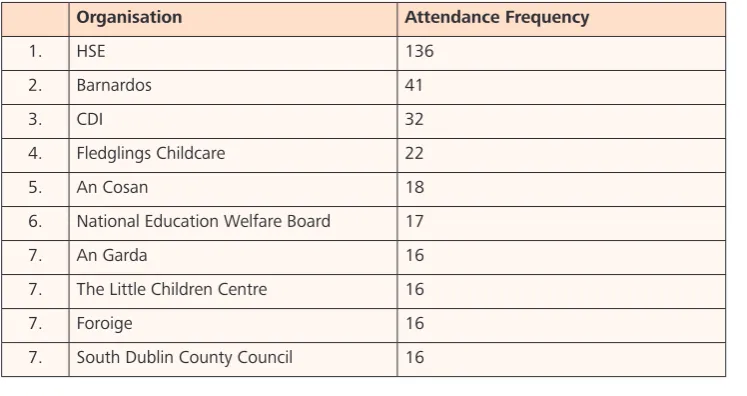
66 participants were residents, representing 9.6%. When duplicated names are removed, the percentage of participants rises to 13.3% (53 out 399). Other participants belong to 106 different organisations. As illustrated in the table below, the Health Service Executive (HSE) attends most frequently, with its staff attending events 133 times. Barnardos staff have attended on 41 occasions with CDI staff being the third most frequently attending organisation, accounting for 29 positions at various events. A full breakdown of these attendance figures is outlined in the appendix with the top ten attending organisations outlined below.
Table 4: Organisations’ attendance frequency
Organisation Attendance Frequency
1. HSE 136
2. Barnardos 41
3. CDI 32
4. Fledglings Childcare 22
5. An Cosan 18
6. National Education Welfare Board 17
7. An Garda 16
7. The Little Children Centre 16
7. Foroige 16
7. South Dublin County Council 16
7 Some attendees were not categorised as such in the data received but it was possible for the evaluation team to categorise them
as a result of contact details provided. There were, however, 158 cases where organisational/community affiliation could not be identified.
[image:28.595.42.416.558.756.2]19
Trainer survey respondents were asked to indicate whether their courses are certified and linked with the NFQ. Eleven respondents answered the question, with the vast majority (nine) indicating that their courses were not linked to the NFQ. One indicated that their course was a level six course and one other respondent indicated that their course was currently under consideration by the awarding body FETAC (Further Education and Training Awards Council). Of the nine who answered whether their course was accredited by any awarding body, five indicated that they were not. Of the other four answers, one course indicated that it was FETAC accredited, with the remaining three being accredited ’in-house’ by their own organisations.3.5 Perspectives on CDI Training
3.5.1 Needs Identification and Promotion
Almost all of the 22 service providers interviewed confirmed some or all of the mechanisms outlined above as the main ways in which they contribute to the ongoing QEP programme (it should be noted that of those providers whose services are underpinned by manual/programme training, many indicated that it was mandatory or a requirement of the contract with CDI and necessary for the programme). Many spoke about the questionnaires (received via email) and other forms of inquiry which ask them to identify what themes or issues their staff would like to have covered. For example:
“They [CDI] will ask me if there are any training needs, we will discuss it. When I ring them and say ‘one of the staff wants to do such and such,’ they’ll say yes or no. I have to say they are very good with the training; they’re very good with the budget. There’s a huge amount of training out there. It actually shocked me the amount of training that they provide”
(SPI 3)
Other respondents highlighted that they would have indicated training needs as part of the evaluation of other training events, to their managers directly, CDI staff directly, through evaluation sheets or at communities of practice (CoP) meetings:
“Yeah, well if we’re given an evaluation sheet I’d fill it out alright [….] Maybe in the [particular training] I remember we requested a little bit more on [X] and I think that was responded to”
(SPI 9)
“Training doesn’t just happen – it’s on a needs basis so if we feel the need for more training or like booster
sessions there’s never a problem asking for something [….]. it comes up in these communities of practice, they’re kind of like review, planning, evaluation sessions so if the need for training comes up I guess it’s probably discussed with everybody there so it’s CDI, [our organisation] and all of us […]. So it comes up there, it goes from there”
(SP 6)
This last sentiment was echoed by some respondents who experienced an improvement in the training provided between years one and two. However, in a small number of cases there were dissenting views about particular needs being expressed and not being met (SPI 17), and that the process of surveying needs could be more focused on asking what level of expertise potential participants have:
Respondents verify the various mechanisms by which they can communicate training needs to CDI and how they hear about training provision. A number of facilitators and barriers are also identified, in both attending training and providing it, including finance, access, lunch, and recruitment. The main barrier cited to attending training is work pressures.
20
“There was a check list form about what you were interested in and I would have filled them out in the early
days when we went to the first few [events], about what your interests were, topics, but I suppose there wouldn’t have been a checklist as to what the level of the training was […..]. So I don’t think I would have got to express that at any point [….]sometimes maybe in hindsight you look back as well and you see then later on ‘actually that was why I didn’t find it so useful.’ Maybe at the time you weren’t able to identify that
(SPI 10)
A number of interviews with CDI staff indicated the importance of the newsletter as a mechanism for promoting what the organisation does and publicising CDI events. In addition, the community engagement staff liaise with members of the community about particular events which may be of interest to them. Email shots, mobile phone texts and shared calendars are also viewed as a significant mechanism in promoting events. With a database of over 800 individuals and organisations it is viewed as an effective way of publicising the events. Local press has also been used to publicise particular events. Others highlighted that the CoPs were another mechanism by which training events were publicised.
3.5.2 Facilitators of and Barriers to Uptake of Training
Both interview and survey respondents indicated a number of factors which facilitated and impeded both the delivery of, and attendance at, training. In the main, more facilitating than impeding factors are mentioned across both deliverers’ and providers’ responses, and both sets of responses generally align with CDI’s own views on what facilitates delivery and attendance of training.
Survey respondents indicated a number of factors which both facilitated and impeded them providing training (respondents were permitted to indicate more than one factor). In relation to facilitating factors, of the eleven who responded, six indicated that CDI had recruited participants, while nine mentioned this and other ancillary support such has providing lunch, arranging the room, arranging materials and sourcing accommodation for trainers. Of the two who mentioned non-CDI related issues, one indicated the highly motivated participants while the other responded about knowledge of the local area.
In relation to impediments, two of the four respondents indicated dissatisfaction with the selection of participants, with one highlighting that they “were poorly screened” and the other highlighting that participants were “poorly chosen”.
All interview participants were asked to identify factors which facilitated their attendance at training events. CDI interviews reveal that from its perspective a number of factors are instrumental in facilitating attendance at training:
“[T]here are some very practical things: I think the venue helps - people like coming here, everybody likes the building. Things like parking - people don’t want to go somewhere where you have to spend half an hour trying to park. The fact that we provide lunch at the lunchtime seminars is a huge draw. That the networking social element is sort of built into the programme - that really works for a lot of people. I think for the lunch time seminars the regularity of them, so the fact that they are on the last Thursday of the month and everybody knows that [….]. Obviously the quality of the speakers, that’s critical, so we’ve been very fortunate, we’ve had some really great people”
(CDI interview)
Many of these factors are alluded to in interviews with other participants. However, while the mandatory nature of the programmatic training was mentioned, many comments highlighted the positive attitude towards training which other employing organisations possessed which facilitated attendance. For example:
“Training is essential. I think the staff themselves have more confidence in what they’re delivering and in how they’re delivering it and in the impact that they can make by delivering the programme so it certainly gives a much more confident approach, even seeing the seriousness of it and the importance of detail in it”
(SPI 5)
21
Other factors were also readily mentioned. In particular, location was not deemed overall an obstacle to accessing training, irrespective of where the training was being held. CDI’s willingness to change the location of training was also cited by a small number of respondents as being facilitative. Food, venue and training schedules were also mentioned by respondents as important facilitating factors, as was the ability of some service providers – with the support of CDI – to close for a day to attend training.The funding aspect was a strong and important other respondents, who highlighted that the most facilitating factor was that it was free:
“Well just by providing the training, the fact that they were there, the training was there, and also the fact that […] it was free. Yes, absolutely, nobody could have afforded to do that by themselves”
(SPI 2)
“Well it was free, which made a big difference because in [our organisation] our budget has completely
disappeared in terms of training, there is no training budget […]. So in this case there was no payment involved, so we gave them the time to attend”
(SPI 15)
Some respondents indicated that they have not attended any lunchtime seminars, although this was largely due to the nature of their services operating across lunchtime. Where attendance at these seminars was indicated, the numbers tended to be in the low single digits (3-5). For many, time and work pressures tended to be the main barriers to attending such events:
“It’s probably work pressures, time pressure, trying to manage my time and there’s only so many training courses that you can attend. A very heavy workload and we would be committed to training at [own organisation] so if I had to prioritise training it has to be specifically for the unit so”
(SPI 13)
For others it was difficult to arrange cover for staff going on training:
“Sometimes it’s a challenge. It is a challenge to try and get other staff then to come in and replace staff that you’re letting go to training. [The people we work with] need consistency of staff as well so it is challenging when you have to relieve staff and get different people into the rooms”
(SPI 14)
3.6 Organisational Attitudes towards Training as a result of Engaging in
Service – Specific and QEP Events
Interviews reveal that individual attitudes towards training and its importance for service provision are shifting. However, organisational attitudes towards training are moving less so, with the view being offered that organisations already prioritised training.
22
Interview respondents were asked to indicate whether they thought their organisation’s attitudes towards training had altered since they began engaging with programmatic and wider QEP training events provided by CDI. Many respondents indicated that their experience of receiving training from CDI has had a significant personal impact. Both managers and frontline staff indicated the positive motivational aspects of the training, in particular for individual staff:
“I think, well speaking for myself and I know in discussion as a team, like we really upped our game since CDI and the training. […] I mean we would have all had best practice that came before, and then all the training we received. But CDI, being accountable to them […..] you always feel that you have to be on the top, top performance and while you always would have been aware of best practice, We’re doing it, we are implementing it to the best of our ability anyhow, and every new piece of information we get, it’s not ‘will we bother?’ It’s ‘no, we are doing that’”
(SPI 21)
“Yes, I think so. When you’re starting a new programme, I think when they (staff) were told that they have to have this, have to do x training it was, ‘oh God, have we got to go to more training.’ Now they really see because it’s coming from them you know. They’re identifying some of these, some of the training that they need to have, that they’re actually more willing to go and more interested in it”
(SPI 14)
Some respondents indicated that the training also had a positive impact on their organisational processes. For example, some commented that it allowed for improved fidelity to manualised programmes generally (SPI 4) as well as a more competent staff generally (SPI 15). Others felt that it served ultimately to improve service provision for children and families. For example:
“Well I think we are providing a better quality service now because of the training whereas before, we would have had a quality service, but not as good, not as high a standard as we have now”
(SPI 3)
“Training is essential. I think the staff themselves have more confidence in what they’re delivering and in how they’re delivering it and in the impact that they can make by delivering the programme so it certainly gives a much more confident approach, even seeing the seriousness of it and the importance of detail of it”
(SPI 5)
“As I said, it’s made it a better service, better quality, I think that I’m better on time management as well”
(SPI 3)
However, when respondents were asked did their experience of CDI training foster a change in attitude of their organisations, there was significantly less agreement. For many interviewed, while highlighting that they were grateful for the training they received and the positive impact it could have on their own practice, their ‘own’ organisations were already providers of ‘in-house’ training or have a history of sourcing training. Thus, there has not been much of a shift in attitude towards training – in the words of one person in a focus group, “it was always good.” However, two individuals did comment on the complementary nature of the CDI training programme, that it dovetailed with their own organisation’s training programmes and emphasis (SPI 5, SPI 1).
Albeit in the minority, there was a very small number of positive assessments of the potential implications of CDI training on organisations.