eLearning Without Borders - A Support Framework for
Reusing Educational Strategies
Declan Dagger Declan.Dagger@ cs.tcd.ie
Knowledge and Data Engineering Group, Dept. of Computer Science, Trinity College Dublin, Ireland
Abstract
Education is seen as a key enabler in forming and sustaining knowledge-based economies. Such economies have their competitive edge in the skills and capabilities of the knowledge workers in that economy. However, the effort and scale required to sustain such knowledge workers must inevitably rely on more than just traditional educational means.
Personalised eLearning is seen as a key element for next generation educational programmes (Brusilovsky, 2004). It seeks to maximise the potential of each learner by providing individually personalised learning experiences. More specifically, it offers the vision of dynamically composed courses which are tailored to an individual’s specific needs, experience, prior knowledge, computing environment, connectivity and communication preferences. Personalised eLearning is an enabling technology that allows learners of varying degrees of experience, knowledge and capabilities to access advanced learning opportunities. Currently, eLearning has tended to focus on learning object and multimedia content reuse (De Bra et. al., 2000). However to realise personalised eLearning in the future we need to be able to reuse best practice in eLearning, pedagogical strategies and instructional design techniques.
This paper focuses on innovative means of creating and reusing adaptable learning strategies for personalised eLearning. Several benefits may be attributed to this research: reduced complexity (in the strategy design process), increased efficiency (both in the time taken to design the adaptive learning strategies as well as in learning how to design learning strategies) and decreased costs associated with such compositions. The reusable aspect of these strategies implies that a strategy developed in one school or university may be reused anywhere in the world. This is an important point, as learning content by itself is insufficient for effective learning to occur. It is through the application of appropriate, pedagogically-driven, strategies that learning may be best facilitated. This paper describes how strategies and learning content are conceptually separated, as well as their application in adaptive learning environments. In this way a strategy may be developed with content in one language, but may be applied to learning content of a different language. Through this, the teaching expertise may be reused or repurposed globally.
1 Introduction
such a process is pedagogy first followed by the personalisation of learning activities and content. eLearning courses that are content-centric have typically failed because the learners have not been engaged in a pedagogical process that is appropriate for them.
The key goal of a personalised eLearning development framework is to support the teacher with tools to create adaptive and non-adaptive eLearning experiences of an activity-oriented and pedagogically-driven nature in a service orchestrated environment. The stream of importance here is that firstly the teacher creates an eLearning experience that is pedagogically driven and activity-focused, secondly they identify course elements that could be adapted and thirdly they choose the content services they would like to use.
Since the pedagogical strategy is crucial in both the personalised eLearning delivery process and the personalised eLearning development process, novel methods of collecting, storing and disseminating pedagogical processes and information are required. By modelling the pedagogical information and processes we can more easily provide a support framework to facilitate and promote the active use, reuse and collaboration within the pedagogical development process. This support framework is the basis for the Adaptive Course Construction Toolkit (ACCT) (Dagger, et. al. 2004). The ACCT is a design-time tool which allows the course developer to create adaptive and non-adaptive activity-oriented course narratives based on sound pedagogical strategies in a developer-supported environment. The ACCT provides the course developer with such tools as concept space/domain ontology editor, custom narrative builder, content package assembler, learning resource repository interactivity and a real-time course test and evaluation environment. The architecture of the ACCT is built upon a reusability-focused, developer-supported and service-oriented architecture. For example, the ACCT allows the course developer to interact with the learning resource repository, searching for candidates based on keywords and contextual prior use, through a web-service interface.
2 Axes of Personalisation
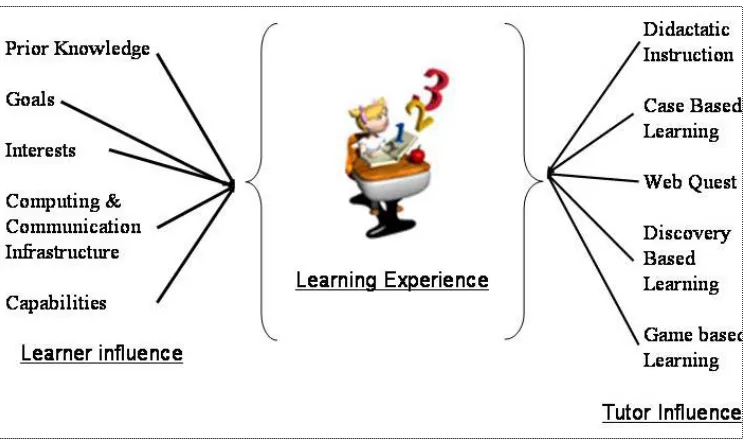
When creating a personalised course there are two key influential actors, the learner and the tutor. The level of influence from each can vary, yet both are equally important in achieving an effective personalised eLearning experience. The role of the learner is fundamental in a constructive and active environment which specifies a learner-centric learning environment. The tutor’s role primarily focuses on providing guidance, direction and scope to each learner’s educational experience.
Adaptivity can occur across many different axes under two core categories, namely Adaptive Navigation (AN) and Adaptive Presentation (AP). AN performs adaptivity on the navigational structure of an hypermedia collection, namely link hiding, link sorting and link annotation. AP performs adaptivity on the presentational attributes of an hypermedia collection, namely content inclusion and exclusion (Brusilovsky, 1996).
Personalisation can apply adaptivity techniques to abstract learning-related paradigms, namely prior knowledge, goals and objectives, learning environment, device capabilities and context; and teaching-related paradigms, such as educational and pedagogical strategies and curriculum alignment.
Fig 1) the influential characteristics of both Learner and Teacher
As mentioned above there are many aspects of a learner that an adaptive system may adapt towards. They correspond in many instances to properties of the learner. Highlighted in this section are a number of characteristics of the learner that may be personalised to and some systems that adapt to these are referenced.
[image:3.612.121.496.339.559.2]incidents. This has partly been realised in the ALEKS system (Doignon & Falmange, 1999).
Basing personalisation on learner preferences is another classical approach from the Human Computer Interaction (HCI) field. The systems interface is adapted to the learner’s preferences, generally determined through options or preferences menus (Helander et al., 1997). Learner preferences may be used to give the learner a greater sense of familiarity and comfort with the rendering interface.
Learners may differ in their communication style and needs, for example, they may have a preference for clear directives versus a broader freedom of choices. This topic also includes special communication needs, for example, in the case of handicapped learners who may need special input devices with different facilities, or who may be restricted in the selection of output devices. One example for this special type of adaptivity is the AVANTI system developed by Kobsa’s group (Brusilovsky & De Bra, 1998).
Learning and cognitive styles can also provide the basis for personalisation. These are, at least in their realisation, closely related to the former point of communication styles. Learners differ in their preferred way of “learning” presentation and cognitive processing. Examples for considering different cognitive styles are visual, textual, or auditory presentation of information. Different learning styles include the presentation of examples, presentation of theoretical knowledge, and practical exercises. An example of a tutoring system adapting according to learning styles is the CAMELEON system by Laroussi and Benahmed (Ottmann et al., 1998).
Depending on their knowledge, the learning objects made accessible to the learner are determined by applying meta information about prerequisite relationships between the learning objects and the prior knowledge of the current learner. Systems providing such adaptivity based on the theory of knowledge spaces (Albert, 1994) (Albert & Lukas, 1999) (Doignon & Falmagne, 1999) are the ALEKS system developed by Falmagne and the RATH (Hockemeyer et al., 1998) system developed at the University of Graz (UoG).
Personalisation to a learner’s learning history can be considered in two ways connected to their learning and communication style, and to their knowledge, respectively. The knowledge history does not only deal with the prerequisite relationships mentioned above. It also deals with already existing additional knowledge, including misconceptions. These misconceptions may need different explanations pointing to connections with this additional knowledge, or to differences to already known special cases of more general topics. These explanations aim to explicitly correct existing misconceptions. This approach has been realised in the AHA! system by De Bra and Calvi (De Bra & Calvi, 1998). Adaptivity to the learner’s communication style means adaptivity to the learner’s communication behaviour as observed by the system during their learning history.
only different explanations of content, but also different approaches to navigation support. This could entail, for example, the use of more directives for the novice learner and the use of more freedom towards the expert learner.
Learners and/or teachers may differ in their conceptions about the aims and goals of a learning experience. A system could adapt by directing learners towards those concepts they (or the teacher) have specified as a crucial element of a specific goal. In educational scenarios where a learner is pursuing qualifications, their goals may be to concentrate on learning the essential concepts to pass an examination, whereas their teacher’s goals may be that they want the learners to become more proficient at solving certain problem types. These contrasting goals, although different in educational focus, are equally important within personalise eLearning paradigms.
Content, structures, etc. must be adapted to requirements inputs from external sources, often connected with formal or technical demands. Examples include existing curricula, which may be predefined by public authorities, or the technical equipment available in a certain school, which may depend on the responsible person’s own preferences. Additionally, learning material may need to provide adaptation to newly gained knowledge in the field.
3 Pedagogy, Educational Strategies and eLearning
Current eLearning research applications focus on the delivery of multimedia rich content and, to lesser extent, the delivery of learning activities. The recent trend of placing content first in the online learning experience is far from ideal. It is often the case that little or no educational strategy or pedagogy is used during the composition of the learning experience (De Bra et. al., 2003, Brusilovsky et. al., 2002). Although the experience is multimedia rich, the question of “is there any learning occurring” may be asked. By bringing pedagogy back into focus, we can start to support educators and learners in benefiting from the potential value-add to the learning experience that personalised eLearning can offer. By making pedagogical strategies more accessible we can facilitate and promote wider use of pedagogy in eLearning environments.
3.1 Modelling Pedagogical Strategies
A pedagogical approach usually consists of an arranged sequence of conceptual tasks and activities that need to be performed. This workflow, a pedagogical strategy, is usually accompanied with best practice principals and use case guidelines to illustrate the maximum potential benefit offered by the strategy. Through a pedagogical modelling mechanism we can create an accessible and flexible instance of the pedagogy. The model contains descriptive and usage information for each of the high level concepts/activities of the pedagogical strategy and suggests a possible sequencing of these abstract elements through the use of relationship descriptors. Typically, pedagogical strategies can be represented as a series of high-level descriptive concepts representing learning activities to be undertaken.
and customize elements of pedagogical strategies in the process of creating pedagogically-sound adaptive online learning experiences.
Narrative Structures are used to formally model the aspects of a pedagogical approach. They provide a solid foundation, based on sound pedagogical and instructional design strategies, from which an eLearning experience can be composed. The use of Narrative Structures facilitates eLearning composition based on single or multiple strategies. For example, a custom pedagogical strategy composition may deal with the question of “How to teach online”. The general pedagogical structure may follow a didactic approach. Within the scope of this overall pedagogy, however, their may be several activities that are best taught using a case-based or a web-quest approach. By modelling pedagogical strategies they can be combined and customised under many different circumstances. By providing modelling mechanisms for pedagogical strategies, the process of creating adaptive personalised eLearning strategies is somewhat simplified. Adaptivity descriptions can then be associated with the Narrative Structures to make certain elements of the strategy or the entire strategy personalisable.
3.2 Making Pedagogical Strategies Accessible
Narrative Structures are created to describe how the pedagogical strategy(s) can be realized, e.g. defining types of activities, suggesting possible sequencing of activities, opportunities for communication and collaboration, associations with adaptivity descriptions and content selection. They represent the (re)usable elements of pedagogical strategies in a model-based (XML) form. These models can be used as a pedagogically sound foundation upon which the construction of adaptive pedagogically sound courses may be based.
The rapid construction of online courses consisting of different “flavours” of pedagogy is facilitated through the use of these Narrative Structures. For example, case based learning, web-quest learning, discovery-based learning and didactic based learning pedagogical models can be combined by a course developer to form the basis of a customized and blended pedagogy. This allows the potential course developer to create customized courses based on “flavours” of the modelled approaches thus actively promoting and facilitating the reuse of not only learning content but also the strategies and pedagogy behind the delivery of such learning experiences.
There are several similarities between modelled pedagogical strategies and existing educational standards. By expressing the pedagogical strategies in a standards-conformant way, we can increase the potential for accessibility of the strategy. For example, IMS Learning Design (LD) could be used as a language for representing pedagogical models. Since LD is being recognised as an acceptable markup for educational resources, it would be a good candidate for adoption.
4 Reusing Educational Strategies
of a proven basis upon which those changes are made. In this way, institutions across different countries can benefit from each others teaching experiences. They may share both strategy and content, or strategy along. Through facilitating this reuse, pedagogical expertise may be shared in the same way content currently is. These mechanisms allow the strategy to be applied across educational, institutional, geographical and cultural boundaries.
There are a number of key facilitators to the reuse of educational strategies. The primary of these is the use of standards to assemble the model. Standards impact the reuse of educational strategies in two ways. If the strategies are written in a standards compliant format, such as IMS Learning Design, they may be interpreted by Learning Management Systems that support this specification. The second impact that standards have on the reuse of educational strategies is in their description towards discovery. Strategies may be described in a similar manner to existing Learning Objects (LO). If appropriate standards such as IEEE Learning Object Metadata (LOM) or ADL Shareable Content Object Reference Model (SCORM) are used the potential discoverability and, hence, reusability of a strategy is greatly increased.
Another key facilitator in the reuse of educational strategies is the utilization of a commonly understood vocabulary. This may take the form of either a shared vocabulary or of mappings between separate vocabularies. The vocabulary is used to describe pedagogical concepts, activities, collaboration, services (Narrative Concepts) and applied adaptivity (Narrative Attributes) in the educational strategy. A common understanding of these facilitates the reuse of the strategy across different systems and environments.
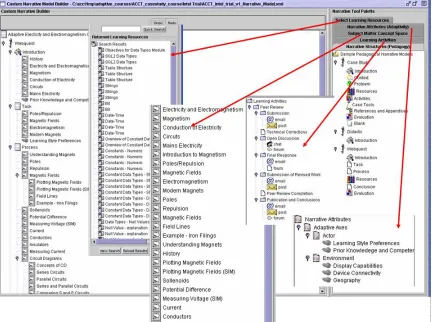
Fig. 2) building customised pedagogical strategies with the ACCT
By using the ACCT, as illustrated in Fig 2, a custom pedagogical strategy can be composed by mixing and extending the supplied sample pedagogical models, conceptual descriptions from the subject matter domain, learning activity models and adaptivity descriptions. This abstract custom pedagogical strategy can be exported, shared and reused. However, at this stage the custom pedagogy can be given candidate learning resources [Dagger et. al. 2003] to contextualise the strategy. So in this way, the ACCT facilitates and actively supports the sharing of strategy and content or simply strategy alone.
5 Conclusions
[image:8.612.92.524.74.396.2]Based on this research, a number of trials to evaluate both the pedagogical modelling mechanisms and the Adaptive Course Construction Toolkit (ACCT) have been being carried out. The initial evaluation results indicate that educators feel empowered in the personalised course composition process, thus alleviating some of the teacher disenfranchisement that can occur within elements of personalised eLearning experiences.
References
Advanced Distributed Learning (ADL) Sharable Content Object Reference Model (SCORM) (2004). Available online at http://www.adlnet.org/
Albert, D. & Lukas, J. (1999). Knowledge Spaces: Theories, empirical Research, and Applications. Mahwah, NJ: Lawrence Erlbaum.
Brusilovsky, P (2004) Adaptive Navigation Support: From Adaptive Hypermedia to the Adaptive Web and Beyond. PsychNology Journal, 2004 Volume 2, Number 1, 7 - 23
Brusilovsky, P. and Nijhawan, H. A Framework for Adaptive E-Learning Based on Distributed Re-usable Learning Activities. AACE Proceedings of World Conference on E-Learning, E-Learn 2002, Montreal, Canada, (2002) 154-161
Brusilovsky, P & De Bra, P (1998). Second Workshop on Adaptive Hypertext and Hypermedia. Eindhoven University of Technology, NL. Online available at http://wwwis.win.tue.nl/ah98/Proceedings.html.
Brusilovsky, P. (1996) Methods and techniques of adaptive hypermedia. User Modeling and User-Adapted Interaction, 6 (2-3), pp. 87-129.
Dagger, D., Wade, V., Conlan, O., (2004) Developing Active Learning Experiences for Adaptive Personalised eLearning, third international conference on Adaptive Hypermedia and Adaptive Web-Based Systems, AH2004, LNCS3137 p55-64
Dagger, D.; Conlan, O.; Wade, V. (2003) An Architecture for Candidacy in Adaptive eLearning Systems to Facilitate the Reuse of Learning Resources. E-Learn 2003, World Conference on E-Learning in Corporate, Government, Healthcare and Higher Education, Phoenix (2003) 49-56
De Bra, P., Aerts, A., Berden, B., De Lange, B., (2003) Escape from the Tyranny of the Textbook: Adaptive Object Inclusion in AHA!. Proceedings of the AACE ELearn 2003 Conference, Phoenix, Arizona, (2003), 65-71
De Bra, P., Aerts, A., Houben, G.J., Wu, H (2000) Making General-Purpose Adaptive Hypermedia Work. Proceedings of the WebNet Conference, pp. 117-123, 2000
Doignon, J.& Falmagne, J. (1999). Knowledge Spaces. Berlin: Springer Verlag.
Helander, M., Landauer, T.& Prabhu, P. (1997). Handbook of Human-Computer Interaction. 2nd edition. Amsterdam, NL: Elsevier.
Hockemeyer, C., Held T., and Albert, D. (1998). RATH A relational adaptive tutoring hypertext WWW-environment based on knowledge space theory. Proceedings of CALISCE'98, 4th International conference on Computer Aided Learning and Instruction in Science and Engineering, Goteborg, Sweden, pp. 417-423.
IEEE Learning Object Metadata (LOM) Available online at http://ltsc.ieee.org/wg12/