Designing Interactive Objects and
Spaces for the Digital Public Space
Adrian I. Gradinar, BSc
This thesis is submitted in partial fulfilment of the
requirement for the award of the degree of
Doctor of Philosophy
Abstract
The Internet is evolving, both in form and function, at a rate which is becoming increasingly difficult to match. Through constructs such as The Internet of Things, our consumption of digital information and knowledge is slowly moving away from being primarily consumed through screens to one in which we are generators of data by interacting with the objects and spaces which surrounds us. Thus, the Internet is no longer a space we visit but rather the space we live in and experience in our daily lives. The Digital Public Space, a concept based on the democratisation of privately held knowledge, is intrinsically connected to the notions of Internet, especially around its
delivery and reach. Whilst the two are arguably separated by different social and political motivational aspirations as the internet evolves so must our consideration of the Digital Public Space.
The AHRC Creative Exchange research project was set to explore the myriad of potentials of the Digital Public Space from understanding, facilitation and creation of digital public spaces to privacy and ethical concerns. I approached this space by considering how our own physicality means that there will always be a tangible aspect to the consumption and production of digital information; a duality in existence which needs to be understood in order to design better experiences. In particular, I am concerned with the characteristics and particularities around the creation processes involved in the design of mixed-reality objects and spaces which might contribute to the Digital Public Space in the context imposed by the juxtaposition of the digital and the physical worlds.
Therefore, this research presents the methodological framework required for the understanding of such design processes with a clear focus on the
interactions and affordances mixed-reality artefacts make use of in their designs. Through the exploration of five different research projects, resulting from collaborative design-led research, conducted in close partnership between academia and the creative industries, I extract, rationalise and
Declaration
I declare that, other than where the contribution of others is specified in the list below, that this thesis is entirely my own work and has not been submitted for the award of any other degree, either at Lancaster University or elsewhere.
Adrian Gradinar
The following chapters have sections that have been presented as research papers or chapters in books in earlier forms.
Research Design includes excerpts adapted and expanded from:
Coulton, P., Burnett, D., Gradinar, A., Gullick, D. and Murphy, E., 2014. Game design in an internet of things. Transactions of the Digital Games Research Association, 1(3).
This paper can be found here:
http://todigra.org/index.php/todigra/article/view/19
PAC-LAN includes excerpts adapted and expanded from:
Gradinar, A., Huck, J., Coulton, P., Lochrie, M. and Tsekleves, E., 2015. Designing for the dichotomy of immersion in location based
games. Foundations of Digital Games 2015.
This paper can be found here: http://eprints.lancs.ac.uk/74315/
Huck, J., Coulton, P., Gradinar, A. and Whyatt, D., 2015, April. Cartography, location-based gaming and the legibility of mixed reality spaces. In 23rd GIS Research UK Conference.
This paper can be found here: http://eprints.lancs.ac.uk/72807/
Paths of Desire includes excerpts adapted and expanded from:
Gradinar, A., Huck, J., Coulton, P. and Salinas, L., 2016, May. Beyond the blandscape: utilizing aesthetics in digital cartography. In Proceedings of the 2016 CHI Conference Extended Abstracts on Human Factors in Computing Systems (pp. 1383-1388). ACM.
Coulton, P., Huck, J., Gradinar, A. and Salinas, L., 2017. Mapping the beach beneath the street: digital cartography for the playable city. In Playable Cities (pp. 137-162). Springer Singapore.
This paper can be found here:
https://link.springer.com/chapter/10.1007/978-981-10-1962-3_7
Huck, J., Gradinar, A., Paul, C. and Salinas, L., 2016. Paths of desire: dynamic visual hierarchies to intentionally influence route decision. In Proceedings of the 24th Annual GIS Research UK Conference.
This paper can be found here:
https://www.research.manchester.ac.uk/portal/en/publications/paths-of-
desire-dynamic-visual-hierarchies-to-intentionally-influence-route-decision(d9dbd2aa-70c7-42d9-aa1c-583245503330).html
Perceptive Media includes excerpts adapted and expanded from:
Gradinar, A., Burnett, D., Coulton, P., Forrester, I., Watkins, M., Scutt, T. and Murphy, E., 2015, September. Perceptive Media–Adaptive Storytelling for Digital Broadcast. In Human-Computer Interaction (pp. 586-589). Springer, Cham.
This paper can be found here:
https://link.springer.com/chapter/10.1007/978-3-319-22723-8_67
Physical Playlist includes excerpts adapted and expanded from:
Burnett, D., Gradinar, A., Porter, J., Stead, M., Coulton, P. and Forrester, I., 2015, September. Physical playlist: bringing back the mix-tape. In Human-Computer Interaction (pp. 72-78). Springer, Cham.
This paper can be found here:
The following is a list of other academic publications based on the projects I have collaboratively worked on during my doctoral candidate journey:
Simm, W, Ferrario, MA, Gradinar, A & Whittle, J 2014, Prototyping 'clasp': implications for designing digital technology for and with adults with autism. in DIS '14 Proceedings of the 2014 conference on Designing interactive
systems. ACM, New York, pp. 345-354. DOI: 10.1145/2598510.2600880
Huck, J, Whyatt, D, Coulton, P & Gradinar, A 2014, Mapping traffic pollution exposure: the quantified self. in J Drummond (ed.), Proceedings of the GIS Research UK 22nd Annual Conference: The University of Glasgow 16th-18th April, 2014. vol. 1, Geomatic Group, University of Glasgow, Glasgow, pp. 243-251.
Lochrie, M, Gazzard, A, Gradinar, A & Coulton, P 2014, Mobilising Monopoly: game design, place and social values. in Proceedings of 9th
International Conference on the Foundations of Digital Games. FDG 2014, the 9th International Conference on the Foundations of Digital Games, Ft.
Lauderdale, United States, 3-7 April.
Tsekleves, E, Darby, A, Gradinar, AI & Smith, MT 2014, Exercising playfully: co-designing fun ways of keeping active in the park. in CHI PLAY '14
Proceedings of the first ACM SIGCHI annual symposium on Computer-human interaction in play. ACM, New York, pp. 447-448, the first ACM SIGCHI annual symposium, United Kingdom, 19-21 October. DOI: 10.1145/2658537.2661316
Tsekleves, E, Gradinar, A, Darby, A & Smith, M 2014, Active Parks: ‘Phygital’ urban games for sedentary and older people. in B Schouten, S Fedtke, M Schijven, M Vosmeer & A Gekker (eds), Games for Health 2014: Proceedings of the 4th conference on gaming and playful interaction in healthcare.
Huck, J, Coulton, P, Gradinar, A, Powell, P, Roberts, J, Hudson-Smith, A, De-Jode, M & Mavros, P 2014, Designing for empathy in a church community. in AcademicMindTrek '14 Proceedings of the 18th International Academic MindTrek Conference: Media Business, Management, Content & Services. ACM, New York, pp. 249-251, Academic MindTrek Conference 2014, Tampere, Finland, 4-6 November. DOI: 10.1145/2676467.2676497
Coulton, P, Jacobs, R, Burnett, D, Gradinar, A, Watkins, M & Howarth, C 2014, Designing data driven persuasive games to address wicked problems such as climate change. in AcademicMindTrek '14 Proceedings of the 18th International Academic MindTrek Conference: Media Business, Management, Content & Services. ACM, New York, pp. 185-191, Academic MindTrek Conference 2014, Tampere, Finland, 4-6 November. DOI:
10.1145/2676467.2676487
Gazzard, A, Lochrie, M, Gradinar, A, Coulton, P, Burnett, D & Kershaw, D 2014, 'From the board to the streets: a case study of Local Property Trader' ToDIGRA, vol. 1, no. 3.
Tsekleves, E, Darby, A & Gradinar, A 2015, Urban design for promoting community public health: co-designing playful urban park experiences for promoting community public health. in 11th Design and Health World Congress and Exhibition. International Academy for Design and Health.
Darby, A, Tsekleves, E & Gradinar, A 2015, Co-designing playful interactions for public health in green spaces. in K Christer (ed.), Proceedings of the Third European Conference on Design4Health 2015.Sheffield Hallam University, Sheffield.
Simm, WA, Ferrario, MAFC, Gradinar, AI, Forshaw, S, Tavares, M, Smith, IC & Whittle, JND 2016, Anxiety and autism: towards personalized digital health. in CHI '16 Proceedings of the 2016 CHI Conference on Human Factors in Computing Systems. ACM, New York, pp. 1270-1281. DOI:
Ferrario, MAFC, Simm, WA, Gradinar, AI, Forshaw, S, Tavares, M & Smith, IC 2016, Values-first software engineering: research principles in practice. in ICSE '16 Proceedings of the 38th International Conference on Software Engineering Companion. ACM, New York, pp. 553-562, 38th International Conference on Software Engineering Companion, Austin, Texas, United States, 14-22 May. DOI: 10.1145/2889160.2889219
Coulton, P, Burnett, D & Gradinar, AI 2016, Games as speculative design: allowing players to consider alternate presents and plausible futures. in P Lloyd & E Bohemia (eds), Proceedings of Design Research Society Conference 2016. Proceedings of DRS 2016, vol. 4, Design Research Society, pp. 1609-1626, DRS 2016: Future Focused Thinking, Brighton, United Kingdom, 27-30 June. DOI: 10.21606/drs.2016.15
Huck, J, Whyatt, JD, Coulton, P, Davison, BM & Gradinar, AI 2017,
'Combining physiological, environmental and locational sensors for citizen-oriented health applications' Environmental Monitoring and Assessment, vol 189, 114. DOI: 10.1007/s10661-017-5817-6
Gradinar, AI, Davenport, J, Coulton, P & Hill, H 2017, Improving the Visualisation of Renal Blood Test Results to Enhance Patient – Clinician Communication. in Proceedings of EAD 2017. 12th European Academy of Design, Rome, Italy, 12-14 April.
A Thank You! note
First and foremost, a special thank you goes to the AHRC, The Creative Exchange, its team and Rachel Cooper for funding my research and indulging me. A special thank you to Paul Coulton, for giving me this opportunity, your constant support and guidance on this journey, for believing in me getting here and helping me win the war against myself, and especially thank you for allowing me to say ‘You were right!’ in my constant pursuits in trying to prove I know best; some lessons I hope I’ll pass on in time to others. To
Emmanuel Tsekleves, for letting me hang on to his solid grounding in time of need; I really appreciate your constant support and guidance over this journey and I hope our collaborations to further continue. In this respect, thank you both for all that you have done; it would have been a sour journey had it not been for both your support. A massive thank you goes to Mark Lochrie, for believing in me when I first came to this country; I honestly don’t know where I’d be today had it not been for your friendship and constant belief in me; this thesis would have never been written had it not been for your encouragement in tackling such a journey in the first place! To Daniel Burnett, from whom I have learnt a great deal; I cannot imagine this PhD without us working together, fighting at times with either each other or the technical difficulties these projects have thrown at us. The lessons and knowledge I have gained by working side-by-side with you are invaluable. To all the partners in all my projects for your knowledge, expertise and support; the work we’ve achieved would have never reached these levels had it not been for you all.
To my family, for believing in me and putting up with my constant switch between languages, peculiar translations and particular jargon used when explaining the mists of my work and especially to Stefan, my little brother, for your technical and moral support which I constantly and
wisdom. To Maria Angela Ferrario, you’ve been a constant beacon of hope, new, beliefs and overall amazing person and friend!
To David Gullick, Andy Darby, Marcia Smith, Carlos García Wylie, Claire Coulton, Klen Čopič Pucihar, Matjaž Kljun, Jonny Huck, Conor Cahill, Will Simm, Stephen Forshaw, Fabian Strunden, Patrick Horrigan, Jon Whittle, Carlos Gonzalez Mota, Paul Cambre, Luke Blake, little Seb, Ian Smith, David Ojeda, Ian Forrester, Phil Benachour, Kiel Long, Miriam Sturdee, Liz
Edwards, Joe Lindley, Vanessa Thomas, Robert Potts, Ding Wang, Rui Roberto Ramos, Mike Stead, Emma Young, Chris Bull, John Vidler, Cosmin Popan, Lucian Ancu, Richard Vickers, Graham Cooper, Scott Hamill, Clara Crivellaro, Ben Dalton, Jeremy Davenport, Tess Denman-Cleaver, John Fass, Andrew Garbett, David Green, Susannah Haslam, Benjamin Koslowski, Bettina Nissen, Joel Porter, Veronica Ranner, Tim Shaw, Thomas Smith, Hannah Stewart, Jimmy Tidey, Gavin Wood, Pam Allen, Naomi Jacobs, Rachael Hill, Ruth Templeton, Andrew Quick, Roger Whitham, Nick Dunn, Leon Cruickshank, Simon Bowen, Tom Simmons, Chris Boyko, Simon Attwood, basically everyone in Imagination Lancaster and part of The
Creative Exchange, and all the other ones who have contributed with a chat, a late-night drink, a needed shoulder, or an ear for my rants. You are all
amazing and have been so helpful at some point or another, in more ways than I can explain, during this incredibly hectic four-year journey.
Table of Contents
Abstract ... ii
Declaration ... iii
A Thank You! note ... viii
Table of Contents ...x
What to expect from this thesis ... xix
The Scene ... 1
The Creative Exchange ... 1
The Creative Exchange PhD Model... 3
My Creative Exchange Experience ... 4
The Digital Public Space ... 5
The Internet ... 8
Research Design ... 13
An Epistemological and Ontological Discussion of RtD ... 15
Other Methodologies ... 20
Grounded Theory ... 20
Action Research ... 21
Interaction Design ... 27
Affordances ... 30
PAC-LAN ... 37
The Constructed Bits ... 37
Connection to the Digital Public Space ... 37
The Team ... 38
The Settings ... 39
Game Design ... 40
The Physical Game Space ... 42
The Digital Game ... 44
The Mobile Application ... 45
Map Design ... 49
The Fog of War ... 52
The Screen Blanking ... 53
The Blood Drops ... 53
The Game User Interface Design... 54
Study 1 - Background ... 56
Study 1 - Findings ... 56
Study 2 - Background ... 57
The RPG Map ...58
The Sketchy Map ...58
The Anti-Glare Map ...60
Study 2 - Findings ... 61
A Discussion of Immersion ... 62
Paths of Desire ... 68
The Constructed Bits ... 68
Connection to the Digital Public Space ... 68
The Team ... 69
Introduction ... 70
Initial Meeting ... 71
The Infrastructure ... 73
Visual Hierarchies... 74
Map Design ... 77
Mobile Application ... 78
Chas’ Designs ... 81
Final Meeting ... 83
Discussion and Conclusions ... 83
Perceptive Media ... 87
The Constructed Bits ... 87
Connection to The Digital Public Space ... 87
Background ... 88
Introduction ... 89
The Team ... 91
Initial Meeting ... 92
Sensors ... 93
Camera ... 94
Microphone ... 95
Location ... 96
Bluetooth ... 97
Distance sensing ... 98
Perceptive Radio - The Platform ... 99
Mudlark’s Perceptive Story... 100
API ... 101
Mid-project meeting ... 103
Admin Interface ... 104
Case Design ... 107
Final Project Evaluation Meeting... 107
MozFest 2015 Workshop ... 109
The Creation Stage ... 111
The Improving Stage ... 111
The Adaptive Stage ... 111
The Presentation Stage ... 112
Observations ... 113
Discussion and Conclusions ... 113
Physical Playlist ... 116
The Constructed Bits ... 116
Connection to The Digital Public Space ... 116
The Team ... 117
Stop. Play. Record! ... 118
The Initial Idea ... 118
Design Guidelines ... 120
The Fruit Bowl ... 121
The Scanner ... 122
The Vinyl Record ... 122
The Vertical Player ... 123
The Playlist ... 124
First Prototype... 125
The Player ... 125
The Bracelet... 128
The Mobile Application ... 129
Final Project Evaluation Meeting... 130
Second Prototype ... 131
MozFest Demonstration ... 134
Final evaluation meeting ... 135
Master’s Workshop ... 135
Final Design ... 137
Discussion and Conclusions ... 144
Physical Social Network ... 147
The Constructed Bits ... 147
Connection to The Digital Public Space ... 147
The Team ... 151
The First Meeting ... 152
The Web Interface ... 153
The Prototype ... 154
The Digital Interface ... 154
The Artefact ... 156
The Crank ... 157
The Enclosure ... 161
The Construction of the Artefact ... 163
The Final Prototype ... 172
Feedback ... 173
Discussion and Conclusions ... 176
Discussion and Conclusions ... 178
Reflections on CX and the PhD ... 178
Objects and Spaces within the Digital Public Space... 181
Digital Public Spaces ... 184
Interactions ... 187
Real Interactions ... 187
Virtual Interactions ... 189
Contributions ... 190
Manifesto ... 196
Future Work ... 199
References... 202
List of Figures and Tables
Figure 1. The mandatory CX team composition. ... 3
Figure 2. Frayling’s design research categories, adaptation from Press (1995, p. 3). ... 15
Figure 3. The Action Research cycle. ... 23
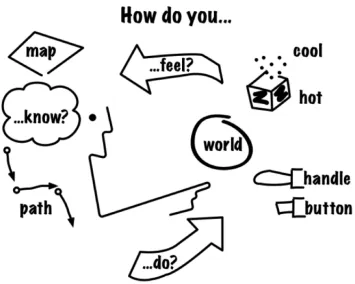
Figure 4. Interaction Design as defined by Bill Verplank (ibid, p. 6). ... 27
Figure 5. Situating DPS objects and spaces within the physical-digital-interaction dimension... 29
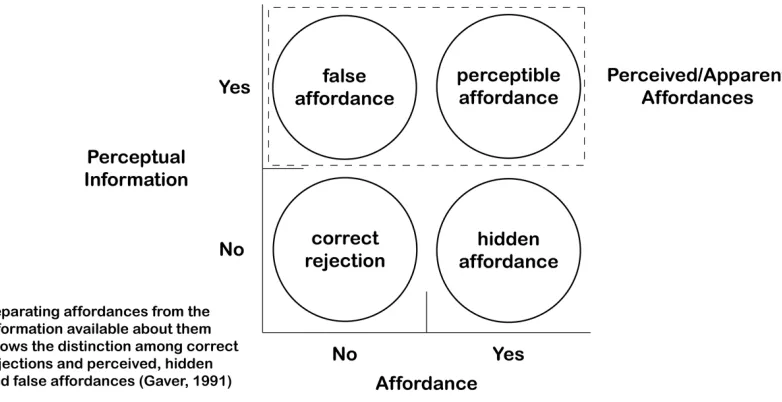
Figure 6. Affordance relative to Perceptual Information (Gaver, 1991). ... 31
Figure 7. Improving Affordance Design adapted from McGrenere and Hon (2000). ... 32
Figure 8. Idea Sketching, adaptation from McKim (2000). ... 34
Figure 9. The Design Process, adaptation from Verplank (2003)... 34
Figure 10. Product design and research design based on Verplank’s design process. ... 35
Figure 11. Pac-Lan project team. ... 38
Figure 12. a) PAC-LAN entering the game (left); b) Zombie entering the game with a countdown for ‘waiting time’ (right). ... 41
Figure 13. NFC pills (left) and Frisbees pills (right). ... 43
Figure 14. Player using a cape (left) and all Zombie hats (right). ... 44
Figure 15. The ‘Play’ area - original sketches. ... 45
Figure 16. The ‘Scores’, ‘Leaderboard’ and ‘Rules’ – original sketches. ... 46
Figure 17. The four different areas from the mobile game as they were implemented. ... 47
Figure 18. The first two screens from the on-boarding experience. ... 48
Figure 19. A comparison between the original OpenStreetMap (A), and the Pac-Map (B). ... 51
Figure 20. The Pac-Map displayed on the mobile screen. ... 52
Figure 21. The four different levels of the Fog of War covering the screen. ... 53
Figure 22. PAC-LAN User Interface (capturing UI). ... 54
Figure 23. Physical ‘check-in pill’ (left) and ‘power pill’ (right) shown in the real environment. ... 55
Figure 24. The RPG Map. ... 58
Figure 25. The Sketchy Map. ... 59
Figure 26. The Anti-Glare Map. ... 60
Figure 28. A map of the city centre of Lancaster, illustrating major points of interest, often overlooked tourist attractions, and the principal routes taken by visitors on foot. Contains OS data © Crown
copyright and database right (2015). ... 75
Figure 29. A sketched illustration of the first three stages of the recursive process used to construct the quad-tree index. The example here has a simple path network with only 2 segments. Each cell of the quad-tree recursively subdivides into 4 until it either contains only one path segment or reaches a pre-defined minimum size. ... 76
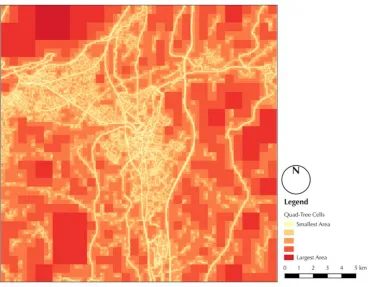
Figure 30. An illustration of the Quad-Tree index used for this experiment. Cells are coloured according to their area, with lighter coloured cells having undergone more subdivisions. ... 76
Figure 31. An excerpt from the design sheet for the Paths of Desire map produced by Magnetic North. ... 77
Figure 32. An image depicting the renderer’s inability to display dotted paths and the resulting attempt. ... 79
Figure 33. The original style (left) and the resulting mobile application design (right). ... 80
Figure 34. Screenshot of the Lancaster Map, developed in collaboration with Chas Jacobs. ... 81
Figure 35. A square of paint produced by Chas Jacobs, and the corresponding seamless texture tile used in the map. ... 82
Figure 36. A comparison between the original POIs drawn by Chas Jacobs and the resulting rendered POIs. ... 83
Figure 37. Perceptive Media project team. ... 91
Figure 38. Story logic explained. ... 102
Figure 39. Wi-Fi selection... 105
Figure 40. Story selection. ... 106
Figure 41. Story customisation. ... 106
Figure 42. Sound selection. ... 107
Figure 43. The Perceptive Radio (v2, right hand side) with the Original Radio (v1) in the background. ... 108
Figure 44. The initial settings of the workshop. ... 110
Figure 45. IDEAS Hexagons. ... 110
Figure 46. The ‘Perceptive Dice’ (left), with each of its faces explained (right). ... 112
Figure 47. One of the stories created during the workshop. ... 113
Figure 49. The Fruit Bowl Player. ... 121
Figure 50. The Scanner Player. ... 122
Figure 51. The Vinyl Player. ... 123
Figure 52. The Vertical Player. ... 124
Figure 53. The Original Sketch. ... 125
Figure 54. The First Prototype. ... 126
Figure 55. The first bracelet. ... 129
Figure 56. The first round of 3D holders. ... 129
Figure 57. The first mobile application design. ... 130
Figure 58. The second prototype. ... 132
Figure 59. The first sketch of the GUI interface. ... 133
Figure 60. Some of the designed bracelets. ... 136
Figure 61. The participants investigating the player. ... 137
Figure 62. The last mechanism design for the proprietary 3D modelled housing. ... 138
Figure 63. The first iteration of the 3D housing model. ... 139
Figure 64. Some concept designs for the bracelets. ... 140
Figure 65. The final bracelets. ... 141
Figure 66. The final player with one of the bracelets on display. ... 142
Figure 67. The newly designed writer mobile app. ... 143
Figure 68. The newly designed reader mobile app... 144
Figure 69. The first idea of the prototype. ... 150
Figure 70. Physical Social Network project team. ... 151
Figure 71. The Web Interface. ... 153
Figure 72. The ‘wall’ of postcards as it was originally envisioned. ... 155
Figure 73. The sketch depicting the envisioned interface and interaction. ... 155
Figure 74. An image showing a similar air raid siren to the one which was procured. ... 158
Figure 75. The first holding mechanism of the crank displaying the air raid siren as well as the rotary encoder directly attached to the crank. ... 159
Figure 76. The first round of 3D printing for the new enclosure ... 161
Figure 77. The first fully designed and 3D printed enclosure. ... 162
Figure 78. The thickness issue encountered (left) and the fix (right)... 162
Figure 79. The final design of the 3D enclosure. ... 163
Figure 80. A comparison between the first size (left) and the final one (right). ... 164
Figure 82. The 3D printed version (left); the sliced laser-cut cardboard
goggles (middle); the 3mm plywood version whilst being built (right). ... 166
Figure 83. The ‘finger’. ... 168
Figure 84. The final designed mechanism for the ‘finger’. ... 169
Figure 85. The interior arrangement of the artefact. ... 170
Figure 86. Different images showing different stages for the creation of the knob. ... 171
Figure 87. The final artefact. ... 173
Figure 88. Representation of ‘liminal’ and ‘liminoid’ states found in mixed-reality worlds (Coulton, 2017). ... 185
Figure 89. Atoms and Bits representation (Colton, 2017). ... 185
Figure 90. A view of all 5 projects with their respective ’real’ interactions split following Verplank’s designing interactions theme... 188
Figure 91. A view of all 5 projects with their respective ’virtual’ interactions split following Verplank’s designing interactions theme... 189
Figure 92. My proposed Design Process. ... 193
“Now that I begin to see where I’m going with it,
I’ll take a new canvas and start again!”
What to expect from this thesis
In essence, there are two levels of research in this thesis: the micro level, representing knowledge derived that relates specifically to the projects and, at the macro level, the knowledge contributing to new understandings of the Digital Public Space.
The Scene
The work in this thesis is primarily built upon five projects developed as part of The Creative Exchange Research Programme. Through the
presentation and analysis of these projects the design challenges encountered are discussed with a final aim of using my critical reflections to producing design guidelines, in the form of a manifesto, which should be taken into consideration when designing interactive objects and spaces within The Digital Public Space.
This manifesto, alongside my reflections on the methodologies used in each of the five projects, as well as the analysis of the design insights each project provides in relation to the particular application context, and more general insights relating to the Digital Public Space are my contributions to knowledge within Design research. Note that particular projects insights are included within each chapter whilst overall reflections contribute to my design manifesto and a consideration of the overall PhD project in my conclusions. In order to achieve this endeavour, I believe you, the reader, requires a thorough description of the scaffolding of this work which should create the necessary mindset to better understand its production. To do so, I first need to set the ‘scene’ of this research by providing a detailed account of the research programme in which it was undertaken as well as some
considerations around The Digital Public Space and The Internet1 more
generally. I then explain my philosophical, epistemological and ontological approach to further reinforce this foundation.
Before the manifesto can be considered, it is important to consider the research programme through which it was undertaken, which follows in the subsequent section, as it provides both the scaffolding for my PhD and the constraints on how it could be undertaken. It effectively shaped and directed my research and practice and thus the overall work presented in this thesis.
The Creative Exchange
The Creative Exchange (CX) Research Project was funded by the Arts and Humanities Research Council (AHRC) (project AH/J005150/1) and it was designed to explore notions around the idea of the Digital Public Space (DPS)
whilst stimulating the creative economy in the UK, targeting, in particular, the north of England. Three different universities took part in this project:
Lancaster University, Newcastle University and the Royal College of Art (RCA) in London. The project ran from the start of 2012 and the end of 2015 and was grouped around six different thematic clusters formed through initial iterative consultation with project partner companies and academics. These clusters were: “Public Innovation and Democracy”, “Rethinking Working Life”, “Making the Physical Digital”, “Stories, Archives and Living Heritage”, “Performance, Liveness and Participation” and finally “Building Social
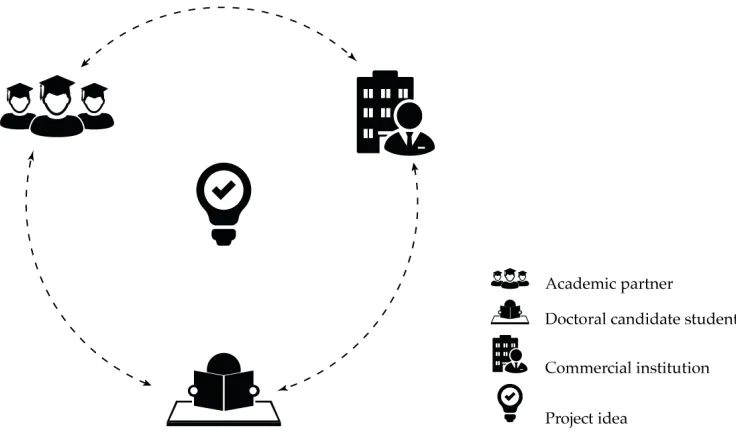
Communities - Dynamic Structure for Growth”. During its four-year period, a number of different events gathered academics from different disciplines, creative industry partners, and doctoral candidates from CX to form multidisciplinary teams to jointly explore these different thematic clusters with the aim of coming up with ideas for projects that would explore these themes in the context of the Digital Public Space. Whilst the research area for the projects was relatively open, the composition of the team was fairly strict, but not limited to, the inclusion of at least one academic partner, one doctoral candidate and one external (industry) partner, as shown in Figure 12. Ideally, a
project would run three-to-six months and would benefit from a budget of up to £16k. Project funding proposals had to be submitted to the CX board which consisted of members from across the three universities, based on the Creative Exchange’s criteria, following strict rules imposed by the Arts and Humanities Research Council.
Over the course of the four-year period, the CX hub attracted further funding of more than £1.8 million in research grants. From its original budget, almost £350,000 was invested in more than 90 projects generating a
collaborative network of 176 academic and industry partners from 107
different organisations. 40 of the attracted 150 academics (principally from the Arts and Humanities area) were actively involved in different research
projects, generating over 100 concepts and prototypes of new services with 45 new jobs across both creative and digital SMEs as well as academia. It
furthered secured funding of more than £17 million by the CX partners to address similar topics in the creative and digital sectors. Finally, it produced
21 highly skilled people at the doctoral level capable of working, thinking and researching in academia, industry and the creative economy3.
Figure 1. The mandatory CX team composition.
The Creative Exchange PhD Model
At Lancaster University, the Creative Exchange was located in the Lancaster Institute for the Contemporary Arts building (LICA) and was run by Imagination Lancaster4, an open and exploratory design-led institution
conducting both applied and theoretical research. More often than not, the Imagination team works with different external partners in a collaborative manner to generate new research as well as affect change within the
community or working partner.
A ‘typical’ approach to studying for a doctoral position involves
generating a research question that is then to be explored for the duration of the studies by the doctoral candidate. This journey is mostly guided by the student’s own research interests augmented with further guidance from their supervisory team. Most of the time, this journey is individual and involves little outside influence. An example of this could be one of a PhD student in Architecture; based on the original idea proposed by the student, some
background research is made into the field followed by an experimentation phase, collection, analysis and interpretation of the results, and ultimately a detailed overview compiled into the final thesis where conclusions are drawn. A similar journey, probably with a different take on the collection of the data, could be envisioned by another PhD student in philosophy or history.
Compared to these ‘typical’ PhD student journeys, the doctoral candidates that took part in the Creative Exchange research programme had, most of the times, a totally different experience. As previously stated, from the beginning we were asked to perform research in the context of the Digital Public Space whilst working on projects that needed to be beneficial of all included members. This led up to a PhD model which include theoretical research coupled with a requirement for real-world research and development. To be effective in achieving such tasks, we often had to take roles ranging from managerial, to a facilitator, developer, collaborator, designer, engineer and last but not least, researcher.
My Creative Exchange Experience
My journey with the Creative Exchange started in October 2013, almost two full years after the research programme began. During this initial period within the CX, which I was absent from, different workshops and meetings were held between industry partners, academics and doctoral candidates, where a range of ideas was explored with some materialising into projects. A great many of these projects were already active whilst others were scheduled to start in the forthcoming months. This means that while I did join some of these projects, I was not involved in their formation. In my three-year study period with the Creative Exchange, I was involved in eight different projects under the CX umbrella. It is important to note that not all of these projects are featured in this body of work, as they are not of direct relevance to the
presented argument, however, all projects included in this thesis are belonging to the “Making the Digital Physical” cluster.
Within each project, my role shifted from researcher to developer, knowledge exchange facilitator, designer, software engineer and manager. Whilst this mix modus operandi provided high valuable training and
was responsible for the quality and rigour of the research process (Dick, 1999)5
pursuing my own research agenda and those of my partners. As a developer and software engineer, I had to provide the technical skills required for the completion of each project. More often than not, these skills had to be
acquired, which frequently meant a steep learning curve in order to achieve the desired outcomes. As a designer and facilitator, I had to help the team(s) find and explore different viable solutions while as a manager, I had to keep track of the expenditures, provide updates to each partner and the CX board, keep the project on track, write and submit ethics forms. Finally, as a
knowledge exchange coordinator, I had to create an environment that worked positively for all those involved. Whilst the goals of all the stakeholders involved in the project finally converged into a unified area of interest, the process required open mediated discussions to be held at the beginning of each project where each stakeholder explained their role in the project and their outlooks of what was to be expected from the project.
There are many things which could be said about the Creative Exchange, how the project became successful through the individual and collective works of the people involved, how it was run and where it could have been improved, however, this is beyond the scope of this thesis. My aim here was to provide the needed background information to give the reader the required information to form their own understandings of some of the challenges the CX PhD student had to overcome in their pursuit of knowledge gathering and formation. Therefore, in the next part of this chapter, I would like to introduce and discuss the notion of the Digital Public Space, since it was the research area the CX was concerned about and, subsequently, that of my own. The chapter concludes with my overall research questions which I have tried to answer through my work.
The Digital Public Space
In this section, I will consider the Digital Public Space and its
interconnectivity and dependency upon the Internet both from a political and technological perspective with the purpose of situating the research presented in the rest of this thesis.
According to a news article in The Guardian (Kiss, 2010), the original term of the Digital Public Space was coined at the British Broadcasting
Corporation6 (BBC) by Tony Ageh, after a period of two years of working with
the digital archives of the BBC. Ageh believed that many of the challenges of working with digital archives are shared by other institutions. He put forward a proposition for creating a ‘Digital Public Space’ for publicly owned content where organisations such as the British Film Institute7, the British Library8 and
Europeana9 would make their content public and free for non-commercial
public use (Kiss, 2010). “In a nutshell, the ‘Digital Public Space’ is intended as a secure and universally accessible public sphere through which every person, regardless of age or income, ability or disability, can gain access to an ever-growing library of permanently available media and data held on behalf of the public by our enduring institutions” (Ageh, 2015). As such, we could envision the Digital Public Space as a ‘server farm(s)’ (a physical space) where each company would ‘deposit’ their archives to be accessed publicly by
everyone at any given time whilst “respect[ing] privacy” (ibid). This naturally implies a common and similar method for the storing as well as the access and retrieval of the content thus, the Digital Public Space becomes an arrangement of “shared technologies, standards and processes” rather than a product or service “whose defining characteristics are openness, persistence,
engagement, partnership, access and public benefit” (ibid).
When the Creative Exchange research project was conceived, the Digital Public Space was defined as a space “where anyone, anywhere, anytime can access, explore and create with digital content” (CX, 2012). Whilst this is directly intertwined with the notion of working with and around archives since they represent a type of digitally stored content, the above definition encompasses much more. FutureEveryting released a publication in 2013 titled Digital Public Spaces (Hemment et al., 2013) where different authors contributed their knowledge on this subject. Hemment and Thompson believe that “the central vision of the DPS is to give everyone everywhere unrestricted access to an open resource of culture and knowledge (ibid, p. 3). Neville Brody defines the Digital Public Space as a unique and attractive space where the
“opportunity to develop new tools to store, share, exchange and develop human knowledge” presents itself (ibid, p. 10). Jill Cousins sees the Digital Public Space as “a set of protocols, services and resources unified under the public domain to raise awareness and power new forms of engagement” (ibid, p. 12). On one hand, the rhetoric of the Digital Public Space is not that
dissimilar to the intentions of the Open Web Platform (OWP) which opposes private, exclusionary and proprietary web solutions (W3C Interest Group, 2017) or, as the CEO of the W3C Jeff Jaffe words it, “a platform for innovation, consolidation and cost efficiencies” (Thompson, 2011). Paula le Dieu believes we should situate the Digital Public Space within the OWP and by doing so “the public does not just consume the artefacts of the Digital Public Space but that the Public can make Digital Public Spaces” (Hemment et al., 2013, p. 17). On the other hand, Parikka and Caplan argue that the Digital Public Space is more than just a space and compared it to an affordance or “a habit of
production, sharing, mixing and remixing” (ibid, p. 28).
I would like to stop and reflect on the main ideas being shared so far. If Ageh’s concept of the Digital Public Space was coming out of a desire to democratise the archives held by the BBC, the developed understanding of what the Digital Public Space quickly grew beyond that. On one hand, some of the authors which contributed their ideas and understandings to the FutureEverything document, see the Digital Public Space solely from the perspective of what it could offer by publicising proprietary content, and thus, the sharing of privately owned knowledge. On the other hand, other authors believe the power of the Digital Public Space comes from a two-way
communication, where the benefits of the Digital Public Space are exponentially increased by facilitating the public’s own makings to be released back into the Digital Public Space and thus further sharing newly formed knowledge. Based on this, there could be an infinity of routes of
I could go on and investigate all these avenues in an attempt to better express the Digital Public Space from understanding to implementation, delivery and finally its implications. However, this would inevitably render this thesis into a theoretical study of the notions of Digital Public Space and, whilst this is undoubtedly useful, it does not represent my intentions and desires for this body of work. What made an impact on me when I started looking at the Digital Public Space is how it seems to have an innate link to the operation of the Internet (and implicitly, that of the World Wide Web as a consumption medium). It seems that all rhetoric around the Digital Public Space naturally implies the Internet and that they are somewhat part of each other. Ageh believes the differentiation between the Digital Public Space and the Internet is given by the term ‘public’ stating “the Internet is a digital space and it does deliver plenty of public benefits. But what’s different about the ‘Digital Public Space’ is the underlying intent - the ‘application’ of the
medium, rather than the underlying fabric” (Ageh, 2012, p. 4). Based on this, my understanding reflects on the ‘how’ rather than the ‘what’ or the ‘why’. How do we create digital public spaces which are within the Digital Public Space? More importantly, how do we create meaningful Internet based experiences which are situated within the Digital Public Space? In order to achieve such an endeavour, I have to take a step back and look at the Internet as a phenomenon as well as situate my work within the ‘why’ and the ‘what’.
The Internet
It seems rather futile to try and define the Internet. Similar to the Digital Public Space, it is a phenomenon which could be approached from a
multitude of angles and, more importantly, because it is so widely spread and used, both as an experience as well as a term, no definition would ever suffice. Most of the literature on the origins of the Internet can be traced back to the ARPANET project, an Advanced Research Projects Agency (or DARPA10 today)
initiative of the Department of Defence (DoD11). The core mission of the project
was the desire to connect multiple computers and transmit viable information from one node to another (Abbate, 2000). Moving further in time, in
September 1981, The Internet Protocol (IPv4) was released whose scope was
“to provide the functions necessary to deliver a package of bits (an internet datagram) from a source to a destination over an interconnected system of networks” (Postel, 1981) which we are still using even today. Whilst the emergence of the Internet would not have been possible without overcoming the technical difficulties, the desire behind a connected network of networks comes from a belief in knowledge sharing. It is interesting to note that this ambition for knowledge sharing had been seen before in the works of Vannevar Bush, often also credited alongside with Tim Berners-Lee for the creation of the World Wide Web (Kitzmann, 2001, p. 441). In his essay “As We May Think”, Bush describes a ‘memex’ machine, “a mechanised private file and library” taking the shape of a desk with multiple screens for storing books, records and communications of one individual with the sole purpose of “supplement[ing] his memory”. By accessing the ‘memex’, the information seeker would also create a trail of own thoughts which later on would be recorded back into the ‘memex’ (Bush, 1945, p. 101-108). What Bush is
envisioning in his ‘memex’ is what Ted Nelson12 later on coined as ‘hypertext’
and ‘hypermedia’, nowadays, the foundations of the Web. Whilst Bush’s reasons may have come from a place of “modernisation, efficiency, and progress” (Kitzmann, 2001, p.447) being framed “within the discourse of the solitary and gifted pioneer” (ibid, p. 447), does not defer from the knowledge sharing argument, even if solely addressed to a particular social class, since he stated that “professionally our methods of transmitting and reviewing the results of research are generations old and by now are totally inadequate for their purpose” (Bush, 1945, p. 101-108). Almost twenty years before Bush’s memex, across the Atlantic Ocean, Paul Otlet envisioned a ‘radiated library’ which looks very similar to the Internet of today. The ‘Mondotheque’ was similar to the present-day workstation only based on the technologies
available in the 1930’s: the radio, telephone, microfilm, television and record player. “It would be an autonomous machine that allowed the user to create a highly-personalised information environment arrayed around one’s personal interests but directly connected to the larger corpus of recorded knowledge” (Wright, 2016, ch. 10). Whilst I am not trying to credit Otlet’s work for the birth of the Internet, his reasons came from a positivist approach to
knowledge gathering, where the creation of new knowledge is derived from
having access to a vast array of information, which is, in parts, the Internet we are experiencing today!
In this respect, this connected network or networks which we loosely call the Internet is inherently linked to the Digital Public Space as a platform and thus why I believe there is a strong connection and an impossible separation between these two phenomena. It is difficult to ignore the political reasons behind the emergence of the Internet since it can be seen as a manifestation of human thoughts coming from a deep desire of accessing knowledge, and in this respect the Digital Public Space and the Internet are the same. On the other hand, if I only consider the Internet from a technical stance, it becomes the ‘protocol’ to be used for the manifestation of digital public spaces, the ‘language’ of communication and the means of delivering knowledge to the masses; a military project turned into a scientific and knowledge sharing tool13.
Therefore, there is an intentionality aspect which clearly separates the Internet from the Digital Public Space.
Lastly, I would like to point out that what the Internet is today, has moved far away from what it was originally envisioned. Nowadays, we are witnessing an information gathering approach driven by concepts such as the Internet of Things (IoT) and the Web of Things (WoT). At its core, the IoT stands for seamlessly connecting devices to the Internet with the purpose of gathering and sharing information “across platforms in order to develop a common picture” (Gubbi et al., 2013, p. 1). According to Kevin Ashton, who is believed to have originally coined the term (Ashton, 2009, p. 97-114), IoT stands for an alternative to human gathering data, since “they [humans] are not very good at capturing data about things in the real world” (ibid). The first IoT object is credited as being the 1990 Interop Internet Toaster build by John Romkey and Simon Hackett (Romkey, 2017, p. 116-119) which had only one control function, that of being turned on over a network. One year later, a robotic arm was added to pick up a slice of bread and put it into the toaster which automated the whole process (Stewart, 2015). Nowadays, the limits to what could be connected to the Internet and remotely controlled are only bounded by our imagination. From simple house appliances like the iKettle,14
13I am purposefully omitting all the ‘junk’ out there since one might not consider said ‘junk’ to be
the fridge,15 the coffee maker,16 the thermostat17 which can be adjusted when not
at home or the ever-so-present lightbulb,18 smart watches19 and fitness trackers20,
to sex toys which can ‘vibe’ at the rhythm of music tracks21 and personal
assistants similar to Amazon’s Echo22 or Google’s Home,23 we seem to have
them all. Analyst firm Gartner believes that by 2020 there will be more than 20 billion objects connected to the Internet (Meulen, 2017), almost thrice the population of the globe! All these devices will generate data which could easily be recorded; some will be quite crude, limited only to the time and date of when an action took place as well as the type of the action (turn on, turn off) whilst other devices will spawn more comprehensive datasets. This implies that whilst, on one hand, we are clearly witnessing a trend of
connecting more and more devices to the Internet, which seems is not about to stop very soon, on the other hand, such actions transform the Internet from a knowledge sharing tool into an information sponge. The current trend focuses on the acquisition of the data to plot graphs and trends, shaped into digital dashboards, for a better personal use of each device. However, it will not be long until different datasets will be brought together with the aim of
generating a better human profile or, when one device will decide the
‘behaviour’ of another based on human patterns and available datasets. The rhetoric of IoT and WoT (Web of Things) seem to be positioning themselves on the idea of devices generating data with the purpose of better suiting the human population, large datasets and algorithms understood and designed by humans for humans. Since the IoT is directly and undoubtedly shaping the current understanding of the Internet, and since the Digital Public Space and the Internet are so tightly interconnected, how will the IoT change our current understanding of the Digital Public Space? How do we come to act in this space, be that ethically, politically, socially, technically or technologically? Because of the structure and the particularities of my PhD, I am concerned with how the Internet is shaping our understanding of the Digital Public
15http://bit.ly/2cp2Ys6 16http://amzn.to/2vG7TD7
17https://nest.com/uk/thermostat/meet-nest-thermostat/ 18http://www2.meethue.com/en-gb/
19https://www.apple.com/uk/watch/ 20https://www.fitbit.com/uk/home 21http://we-vibe.com/sync
Space, which represents the ‘what’ and the ‘why’ of my general area or research.
If our understanding of the Digital Public Space is being challenged and shaped by the constant evolution of the Internet through rhetoric such as IoT and WoT, I believe that the knowledge we generate by consuming different digital public spaces must also come through the construction of new objects and spaces within the Digital Public Space. Whilst this idea is fully explored in the next chapter, in order to bring some justification and validity to my claim, I would like to point out that Jean Piaget24 believed that “knowledge is not
information to be delivered at one end, and encoded, memorized, retrieved, and applied at the other end. Instead, knowledge is experience that is
acquired through interaction with the world, people and things” (Ackermann, 2001, p. 3). Moreover, this happens ‘in a context where the learner is
consciously engaged in constructing a public entity, whether it’s a sand castle on the beach or a theory of the universe” (Papert and Harel, 1991, p.1). This construction of new objects and spaces within the Digital Public Space is the ‘how’ of this thesis. By looking at the processes of creating, interacting and the experiences these new objects and spaces allow, I plan to present how
knowledge can be formed. I believe this newly formed knowledge is required for a deeper and more comprehensible understanding of the Digital Public Space and stands as my contribution to our society.
The following chapter presents the design research which stood as the methodological framework, which guided my overall research in the
multitude of projects I was involved in.
Research Design
This chapter describes the methodology and subsequent methods through which the main body of this research can be perceived. It starts by presenting the theoretical perspectives through which my particular approach to research can be understood. This is achieved by describing my ontological, epistemological and methodological perspectives, which serve to scaffold the subsequent research. It then follows with a thorough practical presentation of the methods utilised in the main body of work.
John Law rightly pointed out that “in practice, research needs to be messy and heterogeneous. It needs to be messy and heterogeneous, because that is the way it, research, actually is. And also, and more importantly, it needs to be messy because that is the way the largest part of the world is. Messy, unknowable in a regular and routinised way. Unknowable, therefore, in ways that are definite or coherent” (Law, 2007, p. 595–606). If everything we see around and do in our lives, research included, is in a perceived disarray, is likely that something “less messy will make a mess at describing it?” (ibid). Furthermore, if our understanding of what the Digital Public Space appears broadly and loosely characterised by the thinkers and researchers of this space, by trying to impose structure and sanitise it, would that make it more comprehensible? I believe it will not! Therefore, in order for you to
understand how I approached the research design of my work, given the presented complexities of The Creative Exchange research programme, I need to illustrate how I embraced this mess through considering particular
epistemological perspectives and theoretical frameworks which when combined allowed me to come up with the methodology and methods
required to successfully act upon my own research agenda as well as those of my partners.
towards an actor (object or person). This, in the academic realm, is better explained as the acquisition of knowledge and skills new to the investigator (but already known in the field), a sort of self-enlightenment. On the other hand, research with a big ‘R’, which is often found in conjunction with the word ‘development’ implies “work[ing] directly towards innovation,
introduction and improvement of products and processes” (Frayling, 1994, p. 1). Thus, ‘Research’ looks closely at the process or method behind a specific way of acting or working in a field with the aims of introducing novelty, the development of knowledge and skills new to the field. Searching for a new thermostat for one’s home (research) is quite different to searching for a more practical, economical and user-friendly way of heating one’s place (Research) even if the latter might actually end up in taking the shape of a thermostat. To this end, when I talk about design research in this thesis, I will be focusing on the big ‘R’, since it is this one which is the principal aim of design research in academia.
Looking in specific at the field of research in art and design, Frayling (1994) makes a clear distinction between research into art and design (RiD), research through art and design (RtD) and finally, research for art and design (RfD). Research into art and design, big ‘R’ considers research into the history, aesthetic, perceptual and theoretical aspects of the arts and design practices; it represents the context of where art and design sit as fields of study. Research through art and design, (big ‘R’, accounts for material research, development work and action research, thus it better describes the process involved in the creation of the design; it is the union between making and thinking. Lastly, research for art and design, “the thorny one” as Frayling refers to it (1994), or research with a ‘little r’, is where the knowledge is embedded into the artefact, so that the artefact itself communicates visually and not in writing through the words of the designer; we can refer to this as the final outcome (Frayling, 1994, p. 5). To better express where each approach sits within the design process and especially how they inform each other, I will be using an adaptation of Press’ (1995) diagram shown in Figure 2 below.
Figure 2. Frayling’s design research categories, adaptation from Press (1995, p. 3).
An Epistemological and Ontological Discussion of RtD
One of the essential implications for RtD is that the designer and
researcher are one and the same person. This opens up RtD to a vast amount of scrutiny from the research community on the potential bias the designer plays in the role of the researcher. Building on top of Herbert’s view of the designer as the one “who devises courses of action aimed at changing existing situations into preferred ones” (Herbert, 1988, p. 67), Mike Press states that “designers look at the material world, compare their observations with their value preferences on how the world should be, and propose material
changes” (1995, p. 6). Let us take the design of a website as an example. If ten different designers are tasked with the creation of a website, they will deliver ten different websites. Whilst some of the structural choices will most likely be similar (separation into different pages, the presence of a navigation bar, etc.), the style will be different (typography, colour scheme, the positioning of elements, etc.). In each design process, there is a vast array of decisions on which the designer has to act upon such as the functionality of the design, its aesthetics, the practicalities, the motivation of the work and the socio-political concerns (Gaver and Bowers, 2012). This naturally implies a certain higher level of subjectivity, as opposed to a lower level of objectivity, involved into the process of making since it is intertwined with a system of human values held by the designer. Swann (2002, p. 51), argues that the design process should, in fact, be biased since “design is for human consumption and not bounded by the quantifiable ‘certainties’ of the physical world” (ibid). So then, what is the position the researcher has to take to generate valid
One way this can be addressed is by understanding the research
paradigm which allows RtD to be considered as a valid research methodology. A research paradigm is “the set of common beliefs and agreements shared between scientists about how problems should be understood and addressed” (Kuhn, 1962, p. 45). According to Guba (1990), research paradigms can be characterised by their ontology, epistemology and methodology. Ontology, or the study of being, “is concerned with ‘what is’ with the nature of existence, with the structure of reality as such” (Crotty, 1998, p. 10), or what reality is. Epistemology looks at the “relationship between the knower and the would-be-knower [researcher] and what can be known” (Guba and Lincoln, 1994, p. 108), or how can we know reality as such whilst methodology is concerned with how do we go about finding out what can be known (ibid). Guba and Lincoln proposed four different research paradigms based on the well-established philosophies at that time: positivism, post-positivism, critical theory et al. and constructivism (Guba and Lincoln, 1994). Each paradigm is described by their ontological, epistemological and methodological
perspectives. In a revised edition of the same chapter, and based on the works of Heron and Reason, the authors reposition their original four proposed research paradigms into a five-tier split with the addition of a ‘participatory’ inquiry paradigm (Lincoln and Guba, 2000, p. 165). It is beyond the scope of this chapter to fully present each of these paradigms in detail, as such an endeavour will most likely contribute to confusion around my approach. My aim here is primarily to justify my chosen methodology and methods from an epistemological and theoretical perspective in such ways to be recognised as sound research by any inquirer (Crotty, 1998, p. 13). Ideally, by focusing on a single paradigm and following its ontological, epistemological and
methodological perspective, the research will be scaffolded in theory thus minimising the possibility of it being misunderstood. As Guba and Lincoln demonstrated, some paradigms are commensurable since sometimes there is a need to “blend elements of one paradigm into another, so that one is engaging in research that represents the best of both worldviews” (Lincoln and Guba, 2000, p. 174). This is an acceptable practice especially when these paradigms share “axiomatic elements that are similar” (ibid) which inevitably opens up a wider range of philosophies available to the researcher. As such, it also
in “contradictory or mutually exclusive” (ibid) ontological and
epistemological perspectives. This is an important point to make since it will become clear in the following paragraphs that RtD, especially in the context of CX, can only be understood by acknowledging a crossover between different paradigms. Furthermore, I will point out the need to borrow other practices from well-established methodologies which will contribute to the validity of this research.
Let us go back to the subjective/objective debate on generating
knowledge. A position to view the world where “subjective thought and the object of that thought are interlinked is also defended by Constructionism. Constructionism suggests that there is no true or valid interpretation of the world” (Rodriguez Ramirez, 2009, p. 6). This is a theoretical perspective on how I, in the point and case the researcher, come to know the world. “It is a view that all knowledge, and therefore all meaningful reality as such, is contingent upon human practices, being constructed in and out of interaction between human beings and the world, and developed and transmitted within an essentially social context” (Crotty, 1998, p. 42). This implies we have to accept a worldview where objects exist outside of our interactions but are meaningless until we engage with them. As such, meaning (or truth), cannot be either only objective or only subjective, since it is built based on the
‘constructs’ (terminology) we have previously given to the world surrounding us and especially by our interactions with its objects. If we separate the
designer from the researcher and implicitly their practices, the design practice could be seen as a subjective approach, since the designer can make decisions based only on personal experiences. Whilst the end product may as well embed knowledge, this would be seen as a constructivist approach
(Rodriguez Ramirez, 2009, p. 6) since its focus is on the “meaning-making activity of the individual mind” (Schwandt, 1994, p. 127). This naturally implies that each view is equal and valid thus dissipating the
subjective/objective debate. According to Crotty, it is useful to make a clear separation of these two terms by considering constructivism for
epistemological views “where the focus includes ‘the collective generation [and transmission] of meaning’” (Crotty, 1998, p. 58) which inevitably shapes our view of the world. Whilst I am making this stance here, it is of importance to note that these two terms have been used and abused in literature to the point of furthering confusion as opposed to providing clarity. Even Crotty acknowledges that “the terminology is far from consistent” (Crotty, 1998, p. 57). Whilst Crotty and Schwandt refer to constructivism as an epistemological framework, Guba and Lincoln define it as a paradigm, regardless of the fact that they all mean it in similar considerations. Despite advocating for a constructivist approach, Rodriguez Ramirez (2009, p. 1-13) often mixes the terminology in his proposition. To make matters worse, Koskinen et. al (2011, p. 5) build on top of Frayling’s definition of RtD by looking solely at programs which involve the construction of a prototype, mock-up or scenario. In their words, construction research design (CRD) is “design research in which construction - be it product, system, space, or media - takes centre place and becomes the key means in constructing knowledge” (Koskinen et al., 2011, p. 5). According to the authors, the emergence of this new concept comes from the desire to answer the need for stronger theory to guide practice in RtD, raised by Alain Findeli and Wolfgang Jonas (ibid). Whilst the proposed area might be of interest in some circles, the justification is somewhat misguided since constructivist theories already provide the required framework to justify RtD approaches. The constructivist approach to knowledge generation
naturally implies the construction of an entity, be that of an artefact or media, thus the added term brings little to the discussion. By situating RtD in the epistemological and ontological frameworks available to the researchers, the focus should fall on the methods used to validate the research not the
foundation of the methodological approach.
By putting the individual to the forefront, constructivism has also strong connections to the postmodernism philosophy which rejects ‘grand narratives’ and emphasises ‘local stories’. In order to understand postmodernism, we need to first consider modernism. The industrial age brought into everyday life mass-production by replacing hand tools with power driven machines. In doing so it relinquished the making from the hands of the craftsmen,
generalisation took over individual/local production. Modernism represents a cosmopolitan movement, arising in a period of accelerated globalisation and spread especially across art and culture “reflecting a series of representation, as having arisen in Europe in the middle of the nineteenth century” (Pericles, 2011, p. 1). In social sciences, modernism tends to be associated more with modernity and modernisation. According to Macionis, modernity represents “the patterns of social life linked to industrialisation” and modernisation “the process of social change initiated by industrialisation” (Macionis, 1991, p. 617, 619). In relationship to these two concepts, modernism “evinces great faith in the ability of reason to discover absolute forms of knowledge” (Crotty, 1998, p. 185). This means that the individual voices and local stories give way to larger trends. Postmodernism is a “thoroughgoing rejection of what
modernism stands for and an overturning of the foundations on which it rests” (Crotty, 1998, p. 185). If modernism embraces generalisation and
absolute truths on how reality can be seen, postmodernism “commits itself to ambiguity, relativity, fragmentation, particularity and discontinuity” (ibid). In this way, local takes precedence over global (and to some extent, a total
rejection of global) such that “the artist and the writer, then, [and, in our case, the designer/researcher] are working without rules in order to formulate the rules of what will have been done” (Lyotard, 1984, p. 81). Postmodernism accepts a worldview where everyone’s voice is as equal as anyone else’s, an epistemological plurality which naturally implies an acknowledgement of multiple sources of knowledge creation. Thus, we are no longer recognising reality as it was once defined, but rather we “invent allusions to the
conceivable which cannot be presented” (ibid). As such, there is no need for a clear distinction between the researcher and the designer, but rather an
explanation for the position the researcher/designer takes which is required to be of benefit to the discussion. Taking such a position would allow any inquirer to create their own interpretations of the presented findings. From a methodological standpoint, this implies taking “situatedness, variations, complicatedness, difference of all kinds, and personality/relationality very seriously in all their complexities, multiplicities, instabilities, and
Other Methodologies
Grounded TheoryGrounded theory (GM) is a qualitative research approach for “the discovery of theory from data systematically obtained from social research” (Glaser and Strauss, 1967, p. 2). At its core, grounded theory makes use of the grounded theory method (GTM), which encourages the researcher to
continually interact with the collected data, whilst in a constant connection with the emerging analysis (Bryant and Charmaz, 2010, p. 1). A typical example of this type of collection would often see the researcher conducting interviews or personal observations. According to Charmaz, grounded theorists code the emerging data from the beginning but also during the collection process. In doing so, they can start formulating concepts and derive ideas to explain the studied phenomenon (Charmaz, 2002). Strauss and
Corbin confer that theories are “interpretations made from given perspectives as adopted or researched by researchers - and therefore fallible - is not at all to deny that judgements can be made about the soundness or probable
usefulness of it” (Strauss and Corbin, 1994, p. 279). Nevertheless, the proposed approach comes from a positivist standpoint, one where the researcher tries to formalise a scientific discipline (Clarke, 2005, p. 558) and in doing so it creates a reductionist explanation of reality (Law, 2002). Clarke proposes that
grounded theory/method can be used with a constructivist epistemology by emphasising the meaning-making and relativist/perspectival understandings (Clarke, 2005, p. 559). “Situational analysis supplements basic grounded theory with situation-centred approaches that can enrich research by addressing and engaging important postmodern theoretical and
methodological concerns about differences and complexities of social life” (Clarke, 2005, p. 558). The purpose of these maps is to stimulate thinking and open up the data to fresh/different approaches.
framework for RtD. This can be achieved if the researcher clearly defines their role, background and motivations. Furthermore, the researcher should
provide a thorough description of the design process, and in doing so, the open up the decision-making process to scrutiny.
From an ontological perspective and based on the proposed paradigms by Guba and Lincoln, RtD sits well within Critical Theory et al. and
Constructivism since it acknowledges the reality by social, political and cultural values (postmodernism) as well as local and specific constructed realities (constructionism/constructivism). However, RtD can also be used as a methodological framework when considering the Participatory paradigm. One of the mandatory requirements of the Creative Exchange research programme was to collaboratively work on small research projects. If all the participants are actively involved in the projects, they are thus contributing to the production of knowledge and invariably influencing the overall outcome of the research. In acknowledging this point, the participatory paradigm is a good fit since we are looking at a participative reality, a co-created subjective-objective one, based on the shared knowledge and understanding of the work undertaken for the whole duration of the project (Lincoln and Cuba, 2000, p. 168). This opens up the possibility, but not necessity, of other theories and methodologies which could be used in conjunction with RtD to better support and validate it. One such methodology is Action Research.
Action Research
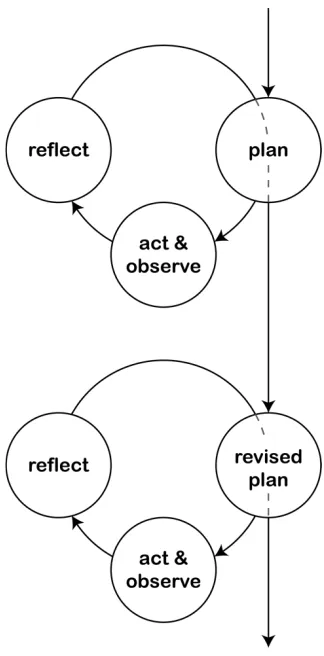
The concept of action research was firstly introduced by social psychologist Kurt Lewin (1946) who developed this methodology and successfully applied it in a series of community experiments in post-world-war America (Kemmis and McTaggart, 1988, p. 6). He believed that: “research that produces nothing but books will not suffice” (Lewin, 1946, p. 35) thus he proposed an iterative approach to solution driven problems where both the researcher and the client would benefit.
According to Dick (2007), in order to find a solution to a dilemma, most of us would follow a simple algorithm: we would examine a given
problem/situation, then decide on what steps should be taken, followed by an implementation phase (of the mentioned decisions) and finally a