Submitted in Partial Fulfilment of the Lancaster University Doctorate in Clinical Psychology
August 2019
Doctoral Thesis
Exploring the experiences and perceptions of people with learning disabilities
James S. Taylor
Trainee Clinical Psychologist
Doctorate in Clinical Psychology Division of Health Research
ii Word Count Statement
Thesis section Main Text Appendices (tables,
figures, references)
Total
Abstracts Thesis Literature Review
Empirical Paper
278 151 147
- - -
576
Literature Review 7998 8570 16550
Empirical Paper 7968 3981 11951
Critical Appraisal 3955 628 4583
Ethics Section 3669 6923 10592
iii Thesis abstract
In the first chapter, a systematic literature review explored the experiences of people with learning disabilities (LD) transitioning from long-term, residential care to community-based alternatives. Socio-political changes over the decades have resulted in many people with LD experiencing change to their accommodation and care. Qualitative research exploring these experiences for people with LD was reviewed, adopting a meta-ethnographic approach. Nineteen papers were included in the review, and subsequently analysed and synthesised. Two over-arching themes regarding people with LD’s experiences of residential transitions were identified; From trauma to the unknown; and Striving to belong. The findings
highlighted the impact of moving on people with LD, therefore theoretical and clinical implications were discussed.
The second chapter presents the findings of an empirical paper, which explored the
experiences and perceptions of people with LD who have been diagnosed with a ‘personality disorder’ (‘PD’). Under Transforming Care, more people with LD and complex needs are likely to move to the community. Therefore, the experience of receiving and living with a ‘PD’ diagnosis was investigated in people using current, community-based services. Eight people were interviewed, and the data analysed through use of Interpretative
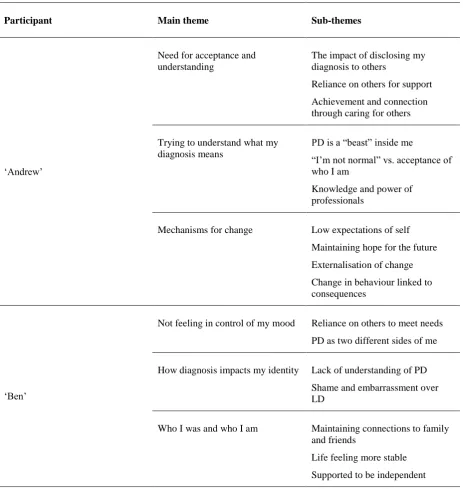
Phenomenological Analysis. Four super-ordinate themes were developed: Knowledge is power – Diagnosis as the domain of professionals; Understanding difficulties through a trauma lens; The stigma of diagnosis – Feeling different, seeking acceptance; and Taming the ‘beast’ inside – The journey towards regaining control. Clinical and research implications were discussed.
v Declaration
This thesis represents research activity completed between March 2018 and August 2019 undertaken for the Doctorate in Clinical Psychology at Lancaster University. The work presented here is the author’s own, except where due reference is made. The work has not been submitted for the award of an academic qualification elsewhere.
vi Acknowledgements
Firstly, I would like to thank everyone who graciously gave their time to participate in this research. I was humbled by your willingness to share your experiences, and inspired by your continued resilience, strength and hope in the face of adversity. Thank you also to the
experts-by-experience who volunteered and provided invaluable comments regarding the design of the research.
For their invaluable knowledge, guidance, support and belief in the research, I would like to thank my research supervisors, Dr Suzanne Hodge and Dr Alex Cookson. Their passion for enhancing the lives of people with learning disabilities comes through on a daily basis and it has been truly inspiring to work with them.
I would also like to say a massive thank you to my cohort who have been a wonderful group of people to go through the process with. Thank you for all the support, patience, fun and laughter. I continue to learn so much through you all.
To all my lovely family and friends, thank you for your unconditional support and
encouragement throughout this journey. You have all helped shape me into the person I am today. For instilling me with the confidence that I could achieve any goal in life, I would like to say a special thank you to my Mum, Dad, and sister, Louise.
vii Table of contents
Chapter One: Experiences of transitions from long-term care for people with learning disabilities: A meta-ethnography
Title page 1-1
Abstract 1-2
Introduction 1-3
Method 1-7
Results 1-11
Discussion 1-22
Conclusion 1-28
References 1-29
Table 1. SPIDER Search Strategy 1-43
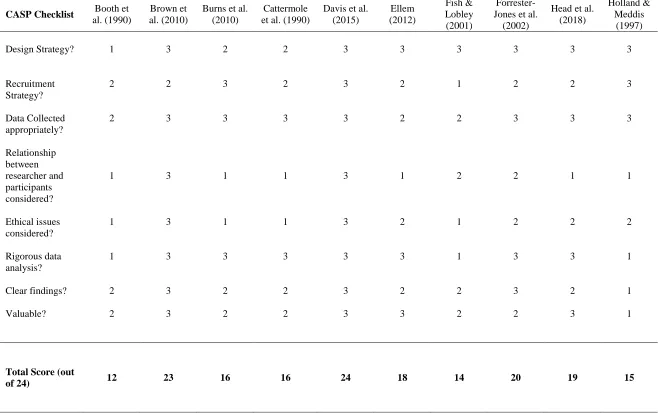
Table 2. CASP Analysis 1-46
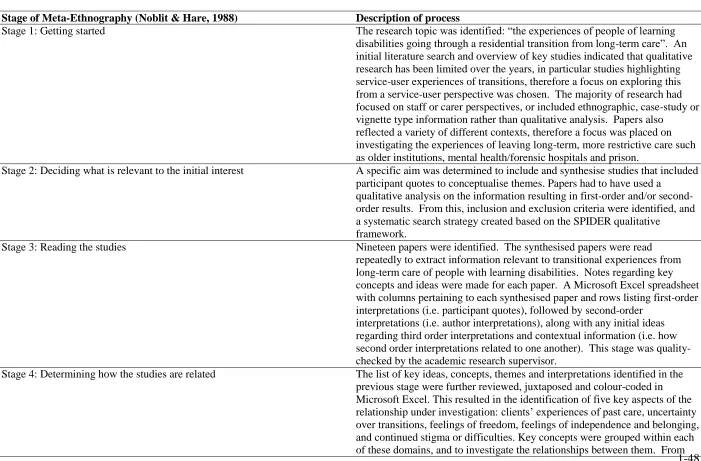
Table 3. Stages of Meta-Ethnography 1-48
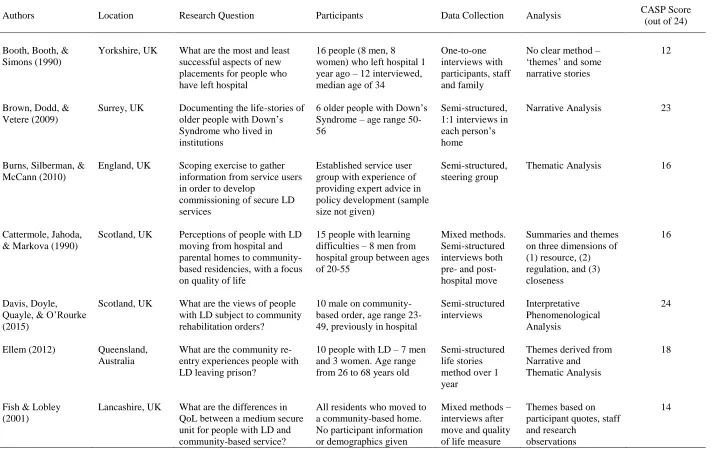
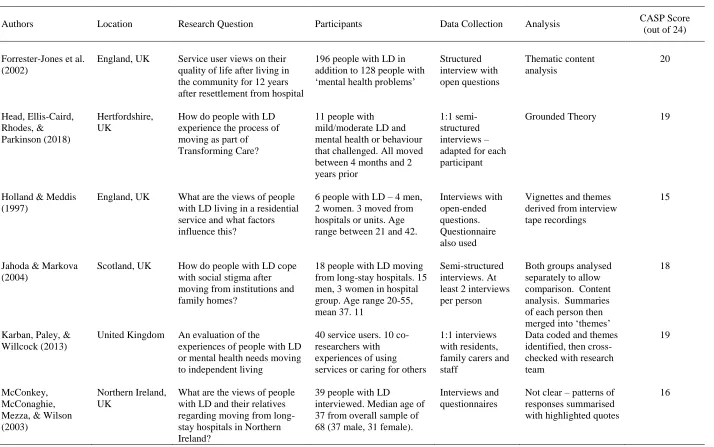
Table 4. Characteristics of Included Studies 1-50
Table 5. Contribution of Papers to Themes 1-53
Figure 1. PRISMA Search Process 1-54
Appendix 1-A 1-55
Chapter Two: The subjective experiences of people with a diagnosis of learning disability and ‘borderline personality disorder’
Title page 2-1
Abstract 2-2
Introduction 2-3
viii
Results 2-10
Discussion 2-21
Conclusion 2-28
References 2-29
Table 1. Participant Demographics 2-36
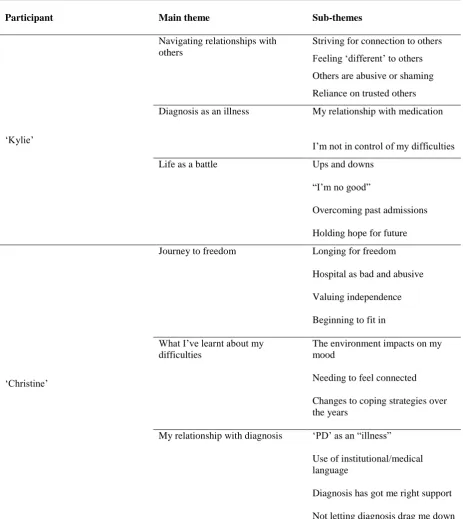
Table 2. Participants’ Themes and Sub-themes 2-37 Table 3. Participant Contributions to Over-arching Themes 2-41
Appendix 2-A 2-46
Appendix 2-B 2-47
Chapter Three: Critical Appraisal
Title page 3-1
Summary of findings 3-2
Epistemological position 3-3
My relationship to the topic 3-4
My role in the research 3-6
Transforming Care 3-7
Methodological considerations 3-8
Impact on clinical practice 3-12
Final reflections 3-13
References 3-15
Chapter Four: Ethics Documents
Title page 4-1
Ethics Application 4-2
Running Head: TRANSITIONS FOR PEOPLE WITH LD
Chapter One: Literature Review
Experiences of transitions from long-term care for people with learning disabilities: A
meta-ethnography
James Taylor
Doctorate in Clinical Psychology
Division of Health Research, Lancaster University
Word count: 7998 (Max 8000 excluding figures, tables, references and appendices)
All correspondence should be addressed to: James Taylor
Doctorate in Clinical Psychology
Division of Health Research, Furness College Lancaster University
Lancaster LA1 4YG
Tel: +44 (0)1524 592970 Fax: +44 (0)1524 592981
Email: [email protected]
TRANSITIONS FOR PEOPLE WITH LD
1-2 Abstract
A significant minority of people with learning disabilities (LD) will experience multiple changes to their living accommodation and the care they receive. These changes have often occurred due to social and political movements or policies such as ‘deinstitutionalisation’ and Transforming Care. Despite the complexity and possible impact of transitions to community-based care, the experiences of people with LD who undergo these moves are
underrepresented in the literature. A meta-ethnographic method was used to systematically review and synthesise experiences of people with LD leaving more restrictive, long-term care for community-based alternatives. Nineteen articles were retrieved from database searches. Two over-arching themes, with additional sub-themes, were developed: (1) From trauma to the unknown; and (2) Striving to belong. Implications for clinical practice were made, including ways to provide support during transitions, increasing autonomy and community integration in people with LD and raising awareness of stigma.
TRANSITIONS FOR PEOPLE WITH LD
1-3 The term ‘learning disability’ (LD) will be used throughout this paper, as this is the accepted terminology used within UK services. It is acknowledged that internationally there has been a significant shift to the preferred term of ‘intellectual disability’. It is also acknowledged that every person is individual, and experts-by-experience may adopt or relate to different terminology. The desire for use of alternative language within a social model of disability framework is recognised (Department of Health [DoH], 2010). However, as there is no agreed consensus of terminology within this group, ‘LD’ will be used throughout. Transitions
‘Transition’ can refer to any change in life, whether that be physical or environmental, or a more psychological or social change (Tanner, Glasby, & McIver, 2014). Transitions require personal adjustment, and may significantly affect a person’s roles, routines, beliefs, and relationships (Parkes, Pyer, Ward, Doyle, & Dickens, 2015). They can elicit excitement and opportunity, or uncertainty, anxiety and loss (Schlossberg, 1981). This review aims to explore the experiences of transitions from long-term care to the community for people with LD. Some experience many residential transitions over their lives. Therefore, the context of why people experience transitions will be reviewed first.
Deinstitutionalisation
TRANSITIONS FOR PEOPLE WITH LD
1-4 paper adopts a UK focus in terms of context, policy, and clinical practice. UK inpatient beds have reduced from 33,000 in 1987 to under 3,000 (NHS England, 2015). An important principle of ‘Valuing People’ (DoH, 2001) was to enable people with LD to have greater independence, social inclusion, control and choice in their lives, including over their accommodation and support.
Where do people with LD live?
‘Deinstitutionalisation’ resulted in many people leaving institutions for community, residential settings. Due to economic difficulties and anxiety about their release, not all people with LD received appropriate support, often leading to re-hospitalisation (Martin & Ashworth, 2010; Simpson & Price, 2010). A significant minority require intensive support, with an estimated 33% of all people with LD living in residential care (National Development Team for Inclusion, 2010). Community provision mainly consists of supported group homes for up to eight people, or ‘supported living’ where individuals have more choice over their accommodation and staffing (Mansell & Beadle-Brown, 2010). However, there remains a lack of appropriate community provision (Mansell, 2006), resulting in people being supported in unnecessarily restrictive settings. This can include limiting a person's movement, liberty or freedom via locked doors, limited access to living spaces, seclusion, restraint, and over-medication (Emerson & Einfield, 2011).
TRANSITIONS FOR PEOPLE WITH LD
1-5 reconvicted within a year of their release, with factors relating to poor housing, social
isolation and unemployment highlighted (Loucks, 2007). Ex-prisoners with a LD return to prison at more than twice the rate of ‘non-disabled’ equivalents (Holland & Persson, 2011).
If people with LD require assessment for additional needs, they may live in forensic or mental health hospitals (Slevin, McConkey, Truesdale-Kennedy, & Taggart, 2008). These are often out-of-area, and people face long admissions, delayed discharges or unplanned transitions due to lack of specialist placements (Holland, Clare, & Mukhopadhyay, 2002; Parkes et al., 2015; Reed, Russell, Xenitidis, & Murphy, 2004). Admissions are unnecessary for some who may benefit more from community-based support (Purandare & Wijeratne, 2015). Out-of-area placements restrict money required for local services (Barron, Hassiotis, & Paschos, 2011). Ultimately, some people with LD therefore transition between different contexts.
Transforming Care (TC; DoH, 2012) was the response to exposure of systematic abuse and mistreatment at Winterbourne View, a long-stay LD hospital. People with LD can receive inappropriate levels of care, restriction and length of admission during inpatient stays (DoH, 2015). TC aims to help people move from hospital by reinvesting money from the closure of all LD specialist beds into robust community services (NHS England, 2015). However, discharge to services not yet fully funded or implemented has resulted in readmissions (Taylor, McKinnon, Thorpe, & Gillmer, 2017). People with forensic needs may be diverted to prison or independent sector beds (Taylor et al., 2017). Therefore, various transitions between different contexts occur for some people with LD.
Better quality of life in the community?
Community living after ‘deinstitutionalisation’ has been associated with
TRANSITIONS FOR PEOPLE WITH LD
1-6 Improvements in quality of life (QoL) through community participation and social activities and contact have also been reported (Chowdhury & Benson, 2011). However, environment changes alone do not guarantee better QoL for people with LD (Kozma, Mansell, & Beadle-Brown, 2009). People with higher levels of adaptive functioning have more positive
outcomes than those with more ‘complex’ difficulties (Kozma et al., 2009). Transition requires each individual to draw upon their skills, abilities and personal resources to adjust to new surroundings (Parkes et al., 2015). There remain challenges to the level of community integration people with LD can attain, with many feeling socially isolated within the
community they live (Chowdhury & Benson, 2011; McConkey, Abbott, Walsh, Linehan, & Emerson, 2007). They still experience stigma, discrimination, social exclusion and
disempowerment (Scior, 2011). In addition, ‘transinstitutionalisation’ suggests people may move to similarly restrictive community alternatives (Drake, 2013). Therefore, transitions may either enhance or reduce people’s QoL depending on current personal, contextual and environmental factors. Focusing on each individual’s ability, need and awareness of the community is required. The structure and quality of support provided should be considered, as maintaining historical beliefs and practice can impact on people’s wellbeing (Bigby & Fyffe, 2006). Staff practice is thereby vital in building supportive relationships and promoting independence (Kozma et al., 2009).
Review Aim
TRANSITIONS FOR PEOPLE WITH LD
1-7 further investigation into their experiences is warranted (Woodman, Mailick, Anderson, & Esbensen, 2014). This review aims to explore the experiences of people with LD and ‘complex’ needs transitioning from more restrictive, long-term placements (i.e. institutions, secure hospitals, forensic settings) to community-based options (i.e. group homes,
independent or supported living). It does not explore transitions from family homes or independent living. Within this review, ‘complex’ difficulties incorporate ‘challenging behaviour’, mental health and/or forensic-related needs. It will investigate the psychological and social impact, alongside the environmental change. Head (2017) completed a similar review exploring transitions from home, hospitals and forensic settings. Transitions were potentially challenging, distressing and worrying for people with LD; however, with
increased control over the transition, it marked a time of significant growth and development. This review differs in focusing solely on the perspectives of people with LD themselves. A more transparent and stringent methodology for qualitative synthesis is adopted.
Method Design
The review adapted the three stage method of Britten et al. (2002) for qualitative health research: (1) a systematic literature search, (2) critical appraisal of the papers’ quality, and (3) data synthesis via a meta-ethnography approach (Noblit & Hare, 1988). Guidelines in enhancing the reporting of qualitative synthesis were also consulted (Tong, Flemming,
McInnes, Oliver, & Craig, 2012). Eligibility Criteria
TRANSITIONS FOR PEOPLE WITH LD
1-8 older); and (8) the article detailed transitions from long-term care to less restrictive,
community alternatives.
Papers were excluded if: (1) the research used only quantitative methods; (2)
participant quotes were not highlighted or information was presented as case studies; (3) the same sample appeared across different papers, with similar research aims and themes; (4) the sample reflected different presentations (e.g. LD and ‘mental health’) without differentiation; (5) articles documented experiences of transitions from other contexts (e.g. family home) without differentiation; and (6) ‘grey literature’ including books, literature reviews, theses, or position papers were excluded due to a lack of peer review. Eligibility criteria were
discussed within the research team. Search Strategy
TRANSITIONS FOR PEOPLE WITH LD
1-9 due to overlap between these areas. Quotation marks and truncation methods were also employed.
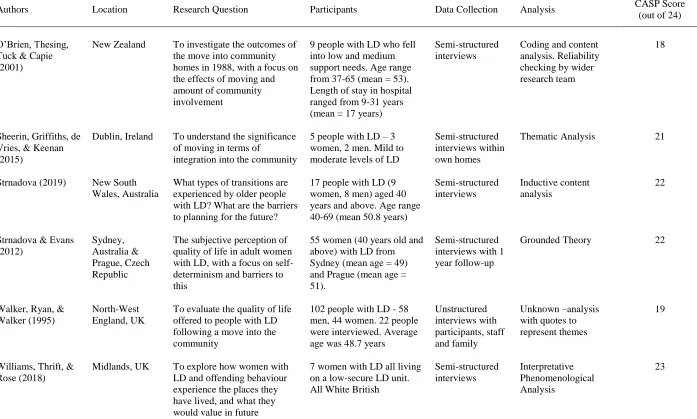
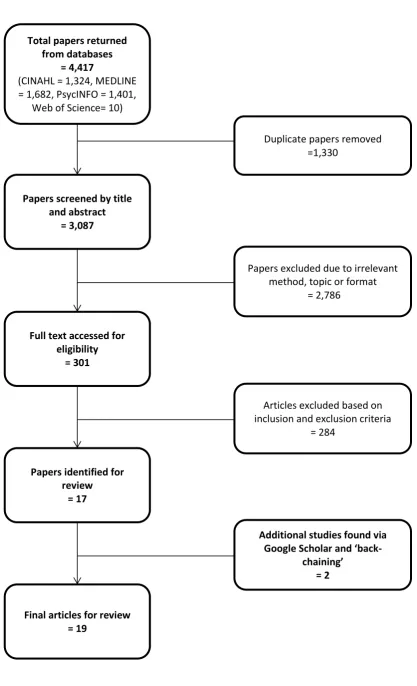
The initial search identified 4417 potential studies for inclusion in the review. The search results from each database were imported into EndNote X9, combined, and duplicates removed. A review of the titles and abstracts of the remaining 3078 studies, taking into account the eligibility criteria, resulted in 17 studies being identified (see Figure 1 for the selection process). Backchaining via searching the references and citations of included studies identified two additional studies, retrieved via Google Scholar. Therefore, 19 studies were found to meet the inclusion criteria for the review. Some articles were excluded due to being published in non-peer reviewed journals, themes could not be identified, or they reported ethnographic or narrative case studies. Some articles provided poignant first-person accounts (Banham, Garrett, McClean, Strydom, & Hassiotis, 2003; Boodle, Ellem, &
Chenoweth, 2014). Studies were also excluded when the context of the transition differed between participants, and the findings were undifferentiated (Bond & Hurst, 2010; Salmon et al., 2019). Studies that included this distinction were included (Cattermole, Jahoda, & Markova, 1990; Jahoda & Markova, 2004). Articles by Ellem (Ellem, 2012; Ellem, Wilson & Chui, 2012) and Booth (Booth, Booth, & Simons, 1990; Booth, Simons, & Booth, 1989) used the same sample, highlighting similar themes. One paper by each author was chosen, based on which had the most relevance to the research question.
Quality Appraisal
TRANSITIONS FOR PEOPLE WITH LD
1-10 analysis and implications. A three-point rating system, as described in Duggleby et al. (2010), was used to calculate a score between one and three for each of the eight CASP questions in every study. A score of one point was given to papers that offered little or no discussion of a topic, score of two given if some justification was given, and a score of three given to papers who fully addressed the question. Therefore, the overall quality of each study was based on a maximum score of 24 points (see Table 2). The author made notes during the initial appraisal, whilst another colleague familiar with the CASP provided a further quality check of the scores for several studies. Discrepancies were discussed and resolved. The majority of papers were identified as good in quality. No articles were ultimately excluded based on scores, to reduce the potential for excluding valuable qualitative data (Barbour, 2001).
Analysis and Synthesis
Meta-ethnography (Noblit & Hare, 1988) is an interpretative approach to qualitative data, aiming to produce new insights and interpretations that go beyond the data of any individual study. As this review explored limited documented experiences of people with LD leaving long-term care, it will be able to contribute to the theoretical understanding of
residential ‘transitions’. Firstly, the papers were read several times each to become familiar with the content. All themes relevant to the research aim were identified from the
TRANSITIONS FOR PEOPLE WITH LD
1-11 were reviewed by the research team to check how well they captured the original data and themes from each study (see Table 3 for a detailed approach).
Results Description of the Synthesised Papers
TRANSITIONS FOR PEOPLE WITH LD
1-12 papers shows an increasing trend throughout the years, possibly due to the advancement of formalised qualitative research methodologies and reporting guidance.
Experiences of Transitions
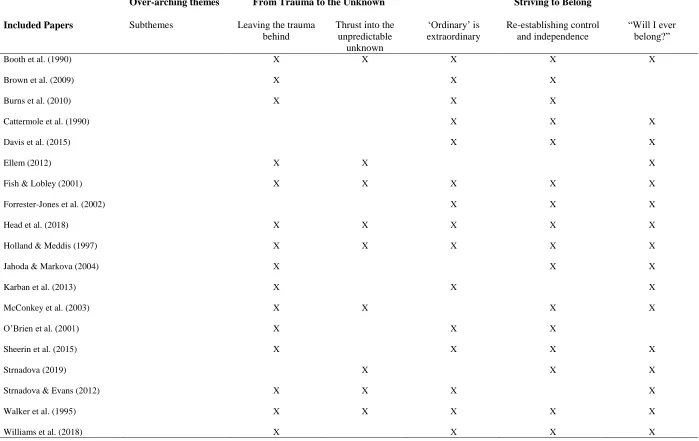
Synthesis of the data produced two over-arching themes: (1) From trauma to the unknown; and (2) Striving to belong. Sub-themes were identified and are individually described (Table 4 details the contribution of papers to themes).
Theme 1: From Trauma to the Unknown
An over-arching theme emerged relating to the difference people with LD experienced between their old placements and their new lives within the community.
Transitions appeared to give people opportunity to reflect on how their new environment may represent the potential for a new start. Reflecting on negative past experiences within care helped people contextualise the change to their lives, and a fear of returning to hospital. However, transitions themselves appeared to bring difficult feelings regarding loss and uncertainty. Despite some negative experiences of long-term care, people missed
relationships they had built with staff and other residents in care. This theme is split between two subthemes: (1) Leaving the trauma behind, and (2) Thrust into the unpredictable
unknown.
Subtheme 1.1: Leaving the trauma behind. This subtheme highlights how people were happy to leave hospital care. People with LD would often compare previous
TRANSITIONS FOR PEOPLE WITH LD
1-13 he whacked me in the face. Bite my ear once […] I was really frightened […] I don’t want to go back there again” (Brown, Dodd, & Vetere, 2009, p. 220). Others experienced feeling controlled and abused by staff, limiting their dignity and capability:
I just didn’t like it, the staff were rude. The staff weren’t very nice to me. They used to hurt me when they were showering me. They wouldn’t let me shower on my own. And I told them I could do it myself. (Head, Ellis-Caird, Rhodes, & Parkinson, 2018, p. 67)
Moving to community settings had a significantly positive impact on one person’s overall life: “Community is not as bad as (hospital). There is more environment, more space to move around in. Life has changed” (O’Brien, Thesing, Tuck, & Capie, 2001, p. 79). The importance of space highlights how hospital restrictions impact on people’s expectations in life. Moving away from the difficulties experiences and environments of long-term care made significant changes to people’s lives, allowing them to break away from the past: “When I left there, I left all that behind me. That’s the way I felt. I said to myself, when I leave the hospital, I’ll forget all about the hospital. I don’t even tell people I’ve been there” (Jahoda & Markova, 2004, p. 725).
TRANSITIONS FOR PEOPLE WITH LD
1-14 They were talking about it and I was passing by them and they were saying “girls will go away”. I turned around and said “where?” They said, “Nowhere”, so […] I asked her why they are keeping a secret that we have to go away, that they should tell us. (Strnadova & Evans, 2012, p. 76)
This often occurred within prisons, with some experiencing unexpected, immediate release: “The other security guard, he said ‘‘Mr Mario P, your time is up’’ (Ellem, 2012, p. 131). The amount of unpredictable transitions experienced elicited a sense of uncertainty over the future: “Yeah, you just don’t know what you’re going to be dealing with. That’s kind of a frightening thought” (Strnadova, 2019, p. 61). One participant highlighted how advanced planning and support during transitions reduced levels of worry:
When I found out I was moving, it was a bit scary. The staff where I was living brought me here. And I didn’t want them to leave. But I met [Support Worker] and she was really nice […] I knew her, and that made me feel a bit easier because I knew somebody already here. The new staff came to the hospital I was in […] and got to know ‘em. (Head et al., 2018, p. 67)
Loss of previous relationships appeared to impact on people’s initial evaluation of the move, as trusted others were a rare source of familiarity and support: “I don’t see them no more” (Booth et al., 1990, p. 92). This appeared linked to an initial sense of insecurity, rather than the move itself: “I wasn’t happy here at first because I missed the people at the institution. I’m really glad I came now though” (Fish & Lobley, 2001, p. 105).
TRANSITIONS FOR PEOPLE WITH LD
1-15 McConaghie, Mezza, & Wilson, 2003, p. 85). Although people missed previous
relationships, the majority did not want to return to their previous lives. Theme 2: Striving to Belong
The second over-arching theme investigates people with LD’s search for a ‘normal life’, which the move into community settings appeared to give people hope of achieving. Firstly, people appreciated more freedom and ordinariness to their lives, which allowed a process of rebuilding their identity, independence and sense of belonging to occur. Despite this, barriers within services and the wider community impacted on people’s ability to feel truly integrated. This theme is split into three subthemes: (1) ‘Ordinary’ is extraordinary; (2) Re-establishing control and independence; (3) “Will I ever fit in?”
Sub-theme 2.1: ‘Ordinary’ is extraordinary. A common theme to emerge from the papers related to people’s freedom to do ‘ordinary’ things after moving from long-term care. Freedom was represented by fewer restrictions, having more space and privacy, and being able to complete everyday activities. However, restrictions still remained in place for the majority of people; therefore, only a sense of ‘normality’ was experienced.
TRANSITIONS FOR PEOPLE WITH LD
1-16 independent living, reflected by a lack of requirements from others: “We’re free to do what we want, anything we like. We’re free. In other words we don’t get told what to do” (Karban, Paley, & Willcock, 2013, p. 90).
Building upon the positives of moving to community services, the idea of having personal space and privacy was an important aspect of many papers. People’s sense of privacy and dignity had often been restricted by strict routines, other people and physical security measures, however there was now a sense of privacy when living in more community-based settings: “You have your own space, and then you have your own
bedroom, and no one comes into your room without your permission” (Sheerin, Griffiths, de Vries, & Keenan, 2015, p. 272). Some people highlighted the contrast in privacy and dignity between hospital and community settings: “In hospital, I had to share with four other girls and one kept wetting her bed and staff used to come in and wake us up too” (Forrester-Jones et al., 2002, p. 745).
The move to the community opened up new opportunities to learn new or maintain previously learnt skills. People with LD discussed the ability to choose and complete everyday chores such as cooking or cleaning, giving a sense of achievement: “Yeah I love cooking. I can cook my own meals […] I like doing my own washing, my own self […] I like keeping the place clean” (Sheerin et al., 2015, p. 272). Freedom allowed people to
demonstrate their competence in areas such as self-care and personal hygiene, whereby previously they were reliant on staff: “Now I do the bath and basin, toilets and the floor and washing and […] yeah and do cups and that” (O’Brien et al., 2001, p. 79). Managing
TRANSITIONS FOR PEOPLE WITH LD
1-17 freedom of an ‘ordinary life’ overwhelming: “I don’t know how to use the cooker. I can only switch on the cooker, I don’t know the other switches. I’d like staff to show me how to use the cooker” (Karban et al., 2015, p. 90). The advancement in technology over the years (sometimes decades) that people with LD had been in places like prison, meant they often felt disconnected and unprepared for everyday life in the community:
What they should do for the long termers is mainly courses like – they sort of brought a mobile phone in. ‘‘This is a new thing outside. This is how you use it.’’ […] I hardly know how to use mine […] I never knew about it. (Ellem, 2012, p. 131)
After the initial excitement over increased freedom within community settings had receded, people still encountered barriers that appeared to impact on their sense of ‘genuine’ freedom. After being made aware of more independent living, Janet highlighted that she did not want to continue living with others:
I really hate it here. I hate it. I don’t like the other people. I don’t like them at all. I want to leave. I want my freedom. I want to live in a flat alone, or a bungalow alone […] where I can have my freedom (Holland & Meddis, 1997, p. 70)
For people with forensic histories, risk-related restrictions placed on them impacted on their sense of freedom: “Hopefully I’ll get my freedom – to just to go to the shop myself, or to go down the town myself, but no […] staff have to come with me and make sure they keep me safe” (Davis, Doyle, Quayle, & O’Rourke, 2015, p. 155). In other cases, the lack of complete autonomy and freedom in people’s lives was inherent, observed through people’s
TRANSITIONS FOR PEOPLE WITH LD
1-18 Sub-theme 2.2: Re-establishing control and independence. This sub-theme
highlights people’s process of trying to regain an element of control in their lives and relationships, whilst also continuing to develop a sense of belonging and independence in their ‘new lives’.
The importance of having ownership and choice over possessions appeared to give people with LD a sense of belonging: “I have my own bedroom, my own kitchen, my own bathroom” (Karban et al., 2013, p. 89). This appeared extremely important for people in the context of moving from somewhere familiar and comfortable, even if past placements were not always remembered fondly. People choosing and buying their own possessions
represented the importance of being able to build a new life, one with increased autonomy and decision-making: “It’s a home where you comfortable, and you happy […] because you have your own personal stuff in it” (Walker et al., 2018, p. 138).
TRANSITIONS FOR PEOPLE WITH LD
1-19 People with LD spoke about a sense of equality and control in the relationships they formed with staff in community settings, impacting on their sense of acceptance and
belonging. People generally appreciated the support they received more than in long-term care. This appeared partly due to the word ‘staff’ being replaced, as it had negative connotations to previously unequal, overprotective or punitive relationships with staff in hospital: “The staff is better in here. We don't call them staff in here, we just call them helpers, keyworkers” (Cattermole et al., 1990, p. 148); “They’re care workers, they’re not staff!” (Sheerin et al., 2015, p. 275). The ability to cope with the community allowed some people to regain a sense of power, identity and independence in light of their previous negative experiences with staff: “There was nothing wrong with me. But the staff and the doctor thought I was a bit of a nutcase, that I couldnae look after myself. But I proved them wrong. I am happy the way I am, doing everything” (Jahoda & Markova, 2004, p. 725). Transitions from hospital appeared to allow people to build more reciprocal and collaborative relationships with staff. Several papers reported people with LD describing support as ‘peers’, ‘friends’ or even family, reflecting a sense of acceptance and belonging: “I don’t call the staff ‘staff’, I call them family.They’re my family” (Head et al., 2018, p. 67); “I really like it here. I like all the staff, they are my friends” (Holland & Meddis, 1997, p. 70). However, others with more forensic needs were at different stages in their relationships with professionals. They remained fearful and felt less supported by services; therefore aimed to prove their ability to belong in the community: “I’m keep on nowadays progressing with my independent living. I’m not giving any of these professional people any excuses or any cases to argue” (Davis et al., 2015, p. 157).
TRANSITIONS FOR PEOPLE WITH LD
1-20 I’m not worried about things. What are the things that have changed for me – I’ve improved a lot and I go out more on my own and I’m more independent and (I like) not to be depending on other people. Yes I feel more comfortable in myself, because I am not relying on anybody. Well, I’ve had no difficulties at all” (O’Brien et al., 2001, p. 80).
This sense of independence and therefore belonging increased for the minority who were able to attain meaningful employment within the community: “I work at Sainsbury’s. I stack shelves. I am completely independent” (Forrester-Jones et al., 2002, p. 750). Overall, having a sense of belonging and independence allowed people to believe in a positive future: “It’s the first time I feel like I belong” (Forrester-Jones et al., 2002, p. 753).
Subtheme 2.3: “Will I ever fit in?” Linked to the previous, this sub-theme refers to the barriers that prevented people with LD from feeling like they truly belonged in the community and cope with ‘normal’ life. This reflected a sense of internal stigma of being ‘disabled’ and in care. In addition, external factors such as societal stigma left people feeling isolated and segregated from the wider community.
TRANSITIONS FOR PEOPLE WITH LD
1-21 superiority to their peers: “What happens if you’ve got visitors or mum and dad’s come through. I just wouldnae let hospital boys come down to my house […] I want normal boys. They’re no normal in here” (Jahoda & Markova, 2004, p. 725).
Outside of residences, people highlighted limited opportunities for interaction, impacting on their ability to feel accepted and socially integrate themselves into the community: “The neighbours don’t talk to me much. I keep to myself. My second-oldest brother said, “You should keep to yourself around there. Mind your own business.” And that’s what I do” (Strnadova, 2019, p. 61). Experiences of the area not feeling safe or being bullied reinforced a lack of belonging: “The children look through my window and pull faces at me” (Forrester-Jones et al., 2002, p. 749). Living in the community for some people reinforced earlier experienced of stigma:
I have always been bullied at school, and I’m still being bullied, and I don’t like it, but I don’t know why I’m a target. When I got punched, I went to the shop for help. He told me to get the eff out of his shop. It’s really like I’m being a victim, but I brush it off. I try to keep myself calm, and just ignore it. It’s alright, because I’m used to it, all my life […] and it’s not going to change. I just have to live with it. (Strnadova, 2019, p. 61)
TRANSITIONS FOR PEOPLE WITH LD
1-22 et al., 2015, p. 275). Consequently, some people suggested they wanted to move out and live by themselves, cutting themselves off from the wider world: “I want to live by myself. I’d like to have a nice bungalow. I’d be happy—I’d rather live by myself, be on my own in my own nice house and get a cat or a dog” (Forrester-Jones et al., 2002, p. 747).
Discussion
This review used meta-ethnography to explore people with LD’s experiences of transitioning from long-term care to community-based alternatives. The findings of the synthesis highlighted two over-arching themes: (1) From trauma to the unknown; and (2) Striving to belong. Within the themes, people’s transitions into the community highlighted reflections of ‘moving on’ from negative experiences of historical care, and a chance to begin ‘ordinary’ life with the freedoms and independence that others have. Methods and barriers to regaining a sense of identity and control after the hierarchical nature of long-term emerged from the data. The synthesis highlights points for discussion that may have clinical and research implications.
TRANSITIONS FOR PEOPLE WITH LD
1-23 community integration remains low (Chowdhury & Benson, 2011). Without these roles, people with LD risk becoming further marginalised (Lemay, 2009). Consistent development in QoL for people with LD would require greater use of opportunities available in the
community (Chowdhury & Benson, 2011). Individuals represented within this review detailed the barriers to social integration and employment, to the detriment of their sense of identity and belonging. These experiences can be understood partly by the prevalent attitudes regarding seeing people with LD as ‘different’ (Owen, Hubert, & Hollins, 2008). Through difficulties with language, others can view people with LD as the sum of their impairments and behaviours (Hubert & Hollins, 2006). By merely changing the physical environment, views towards people with LD by staff and wider society does not change (Johnson, 1998).
The desire to regain a sense of control within their environment and their relationships with others was apparent in the findings. The move allowed people with LD time to reflect on their lives and plan for the future. Endings to long-term stays in care acted as a process of fostering independence and ‘moving on’ from the past, offering potential for new growth (Head, 2017). However, removal of structures and routines without replacing them is linked to increased mental health difficulties (Young-Southward, Philo, & Cooper, 2017). Despite people appreciating freedom, privacy and independence; routine and activities within community settings are vital. People need to feel supported and integrated to foster and maintain feelings of belonging within their new environments. Enhancing people’s QoL may help reduce incidents of re-hospitalisation. Readmission shortly after discharge due to
community placements breaking down remains a concern (NHS England, 2015).
Loneliness was highlighted across papers, reflecting difficulties people have in feeling integrated within the community. People with LD rarely form significant relationships within their wider communities after transitioning from long-term hospitals (Bigby, 2008).
TRANSITIONS FOR PEOPLE WITH LD
1-24 obstacle, which has severe implications for people with LD’s sense of identity, purpose and mental health. Furthermore, people’s rejection of peers they live with due to conflict or stigma, increases the likelihood of people further isolating themselves. This moves people further away from the meaningful life people strive for. Internalised stigma can be a barrier to seeking support and community integration within forensic populations (Gerber, Prince, Duffy, McDougall, Cooper, & Dowler, 2003). Perceptions of being ‘different’ from others often result in a negative self-image, increased stress and low self-esteem (Johnson, 1998). Clinical Implications
These findings support the key principles of Valuing People (DoH, 2001) that people with LD should enjoy greater rights, choice, inclusion and independence. Clinical practice should continue to support policy in achieving these goals through improving opportunities and support for social integration, raising awareness of people with LD’s vulnerabilities rather than their ‘disabilities’, and maintain an appropriate level of support whilst increasing people’s level of choice, autonomy and independence (Bond & Hurst, 2009).
TRANSITIONS FOR PEOPLE WITH LD
1-25 The process of transition was often a time of anxiety and uncertainty due to a lack of involvement or control over the situation. All people can find change stressful and difficult. This is increasingly so for people with LD who are leaving 24-hour care and environments that have become familiar, sometimes over decades. People who were allowed to visit their new home first, or met their new support prior to moving appeared to settle more easily (Head et al., 2018). Therefore, continued efforts to join-up communication between inpatient and community services must be encouraged.
People within this review often spoke about the difficulties of living with others who have ‘complex’ difficulties, reducing satisfaction of their current environment and leading to internalising stigma. Training support staff in approaches such as Positive Behavioural Support (PBS) may not only help increase the individual’s own QoL, but also minimise occurrences of ‘challenging behaviour’ in the environment, thereby creating a more safe space where people would like to remain (LaVigna & Willis, 2012).
Merely closing the remaining specialist hospitals as part of TC is unlikely to give people with LD the chance to fully integrate and belong in the community. Stigma, social exclusion and institutional practice continue to dominate some people’s lives (Owen et al., 2008). There is a need to readdress the narratives of people with LD in society, but also raising awareness of the links stigma plays in increasing risk of mental health difficulties (British Psychological Society, 2016). Formulation work around understanding people’s difficulties, rather than focusing on their ‘disabilities’, with those close to people with LD may have a cascading effect on reducing stigma more widely.
TRANSITIONS FOR PEOPLE WITH LD
1-26 provision. PBS allows for more understanding and contextualisation of a person’s behaviour, and the language used may help reduce any internalisation of a possible negative identity (Head et al., 2018), as highlighted by some people referring to themselves as “patient”, “not normal” or “prisoner”.
Limitations
Meta-ethnography relies on quotes and interpretations as reported by others. However, the themes developed do not claim to offer definitive explanations of people’s experiences; it is one interpretation of others’ interpretations. Each layer of interpretation moves further away from the accounts of the individual themselves. The analytic quality of the review is therefore influenced by the quality of each paper. However, by following the stages of meta-ethnography, themes are developed as transparently and replicably as possible.
Furthermore, the results were developed across papers that differ in context, samples, settings and time, increasing the robustness of themes.
Papers were not excluded based on appraisal scores to reduce the risk of excluding valuable data that may be discarded by over-elaborate use of the CASP. The function of the CASP was to review and weigh the data in regards to the credibility of each paper’s
methodology and analysis rather than assessing any individual’s comments about their lived experiences. Higher scoring papers provided more influence on findings, with quotes from low scoring papers only used to illustrate themes that similarly appeared in papers with higher CASP scores (Tong et al., 2012). This allowed for greater systematic quality, transparency and ease of replication, as well as to ensure a minimum standard of research included.
TRANSITIONS FOR PEOPLE WITH LD
1-27 often mimic the positivist approach used in quantitative research and therefore offer an incomplete understanding of good ‘quality’ in qualitative research (Williams, Boylan, & Nunan, 2019). Therefore, further work and debate regarding quality assessment in qualitative research is needed.
The search strategy only allowed papers published in peer-reviewed journals. It is acknowledged that exclusion of alternative sources of qualitative data, which are known to have reported the experiences of many people with LD leaving care, such as books,
ethnographic accounts or governmental papers may have influenced the findings. This decision was implemented to ensure a minimum standard of research included and the replicability of the process.
The majority of papers (n = 14) were based within the UK. Although some experiences of transitioning into the community may be similar between people, the local context and drivers may also affect the experience. Transitions occurred in a variety of contexts, ranging from prisons to ‘congregated’ settings in Ireland. The contextual
differences would likely influence each individual’s experience of transition. Therefore, the generalisability of these findings may be limited. However, it does provide general
implications for clinical practice in providing support for easier transitions into the
community, and follow-up support. This is particularly timely in the context of TC and its continued commitment to moving people with LD into community-based settings.
Future Research
TRANSITIONS FOR PEOPLE WITH LD
1-28 Conclusion
Findings indicate that moving out of long-term care is often a positive move for people with LD. The sense of freedom, independence and choice to live a more ‘normal’ life is greatly valued and appreciated. Despite this, societal barriers remain in the form of
TRANSITIONS FOR PEOPLE WITH LD
1-29 References
Banham, K., Garrett, M., McClean, A., Strydom, A., & Hassiotis, A. (2003). About leaving: making sense of moving on. British Journal of Learning Disabilities, 31(2), 70-73. doi:10.1046/j.1468-3156.2003.00200.x
Barbour, R. (2001). Checklists for improving rigour in qualitative research: A case of the tail wagging the dog? British Medical Journal, 322(7294), 1115-1117.
doi:10.1136/bmj.322.7294.1115
Barron, D., Hassiotis, A., & Paschos, D. (2011). Out-of-area provision for adults with
intellectual disabilities and challenging behaviour in England: Policy perspectives and clinical reality. Journal of Intellectual Disability Research, 55(9), 832-843.
doi:10.1111/j.1365-2788.2011.01405.x
Beail, N., & Williams, K. (2014). Using qualitative methods in research with people who have intellectual disabilities. Journal of Applied Research in Intellectual
Disabilities, 27(2), 85-96. doi:10.1111/jar.12088
Bigby, C. (2008). Known well by no‐ one: Trends in the informal social networks of middle‐ aged and older people with intellectual disability five years after moving to the community. Journal of Intellectual & Developmental Disability, 33(2), 148-157. doi:10.1080/13668250802094141
Bigby, C., & Fyffe, C. (2006). Tensions between institutional closure and deinstitutionalisation: what can be learned from Victoria’s institutional redevelopment? Disability & Society, 21(6), 567-581.
TRANSITIONS FOR PEOPLE WITH LD
1-30 Bond, R., & Hurst, J. (2010). How adults with learning disabilities view living
independently. British Journal of Learning Disabilities, 38(4), 286-292. doi:10.1111/j.1468-3156.2009.00604.x
Boodle, A., Ellem, K., & Chenoweth, L. (2013). Anna's story of life in prison. British Journal of Learning Disabilities, 42(2), 117-124. doi:10.1111/bld.12015
Booth, T., Simons, K., & Booth, W. (1989). Perspectives of people with learning difficulties on relocation and community care. International Journal of Rehabilitation
Research, 12(2), 167-174. doi:10.1097/00004356-198906000-00005
Booth, W., Booth, T., & Simons, K. (1990). Return journey: The relocation of adults from long-stay hospital into hostel accommodation. The British Journal of Mental Subnormality, 36(71), 87-97. doi:10.1179/bjms.1990.010
British Psychological Society. (2016). Working relationally with adults with an intellectual disability: A discussion [PDF file]. Retrieved from
https://www.bps.org.uk/sites/bps.org.uk/files/Member%20Networks/Divisions/DCoP/ INF311%20WEB.pdf
Britten, N., Campbell, R., Pope, C., Donovan, J., Morgan, M., & Pill, R. (2002). Using meta-ethnography to synthesise qualitative research: A worked example. Journal of Health Services Research & Policy, 7(4), 209-215. doi:10.1258/135581902320432732 Brown, J., Dodd, K., & Vetere, A. (2010). ‘I am a normal man’: A narrative analysis of the
accounts of older people with Down’s syndrome who lived in institutionalised
TRANSITIONS FOR PEOPLE WITH LD
1-31 Burns, M., Silberman, W., & McCann, G. (2010). ‘It's what happens when you're ready to
leave hospital that's really important’ ‐ commissioning secure services for people with learning disabilities. Journal of Learning Disabilities and Offending
Behaviour, 1(1), 17-28. doi:10.5042/jldob.2010.0174
Cattermole, M., Jahoda, A., & Markova, I. (1990). Quality of life for people with learning difficulties moving to community homes. Disability, Handicap & Society, 5(2), 137-152. doi:10.1080/02674649066780141
Chowdhury, M., & Benson, B. (2011). Deinstitutionalization and quality of life of individuals with intellectual disability: A review of the international literature. Journal of Policy and Practice in Intellectual Disabilities, 8(4), 256-265.
doi:10.1111/j.1741-1130.2011.00325.x
Cooke, A., Smith, D., & Booth, A. (2012). Beyond PICO: The SPIDER tool for qualitative evidence synthesis. Qualitative Health Research, 22(10), 1435-1443.
doi:10.1177/1049732312452938
Davis, A., Doyle, M., Quayle, E., & O'Rourke, S. (2015). Am I there yet? The views of people with learning disability on forensic community rehabilitation. Journal of Intellectual Disabilities and Offending Behaviour, 6(3/4), 148-164. doi:10.1108/jidob-08-2015-0024
Department of Health. (2001). Valuing people: A new strategy for learning disability for the 21st century. (CM4683). London. UK: HMSO. Retrieved from
TRANSITIONS FOR PEOPLE WITH LD
1-32 Department of Health. (2010). Valuing people now: Summary report March 2009 to
September 2010 [PDF File]. Retrieved from
https://assets.publishing.service.gov.uk/government/uploads/system/uploads/attachme nt_data/file/215891/dh_122387.pdf
Department of Health. (2012). Transforming care: A national response to Winterbourne View hospital [PDF file]. Retrieved from
https://assets.publishing.service.gov.uk/government/uploads/system/uploads/attachme nt_data/file/213215/final-report.pdf
Department of Health (2015). Transforming Care for people with learning disabilities – Next Steps [PDF file]. Retrieved from
https://www.england.nhs.uk/wp-content/uploads/2015/01/transform-care-nxt-stps.pdf
Dias, S., Ware, R., Kinner, S., & Lennox, N. (2013). Co-occurring mental disorder and intellectual disability in a large sample of Australian prisoners. Australian & New Zealand Journal of Psychiatry, 47(10), 938-944. doi:10.1177/0004867413492220
Drake, G. (2013). The transinstitutionalisation of people living in licensed boarding houses in Sydney. Australian Social Work, 67(2), 240-255. doi:10.1080/0312407x.2013.843714
Duggleby, W., Holtslander, L., Kylma, J., Duncan, V., Hammond, C., & Williams, A. (2010). Metasynthesis of the hope experience of family caregivers of persons with chronic illness. Qualitative Health Research, 20(2), 148-158. doi:10.1177/104973230935832
Ellem, K. (2012). Experiences of leaving prison for people with intellectual
TRANSITIONS FOR PEOPLE WITH LD
1-33 Ellem, K., Wilson, J., & Chui, W. (2012). Effective responses to offenders with intellectual
disabilities: Generalist and specialist services working together. Australian Social Work, 65(3), 398-412. doi:10.1080/0312407x.2011.625433
Emerson, E., & Einfeld, S. L. (2011). Challenging behaviour: analysis and intervention in people with intellectual disabilities (3rd ed.). Cambridge: Cambridge University Press.
Emerson, E., & Hatton, C. (1996). Deinstitutionalization in the UK and Ireland: Outcomes for service users. Journal of Intellectual & Developmental Disability, 21(1), 17-37. doi:10.1080/13668259600033021
Evans, L., & Randle-Phillips, C. (2018). People with intellectual disabilities’ experiences of psychological therapy: A systematic review and meta-ethnography. Journal of Intellectual Disabilities, 174462951878435. doi:10.1177/1744629518784359
Fakhoury, W., & Priebe, S. (2007). Deinstitutionalization and reinstitutionalization: Major changes in the provision of mental healthcare. Psychiatry, 6(8), 313-316.
doi:10.1016/j.mppsy.2007.05.008
Fazel, S., Xenitidis, K., & Powell, J. (2008). The prevalence of intellectual disabilities among 12000 prisoners - A systematic review. International Journal of Law and
Psychiatry, 31(4), 369-373. doi:10.1016/j.ijlp.2008.06.001
Fish, R., & Lobley, J. (2001). Evaluating a forensic service for people with learning disabilities. Journal of Learning Disabilities, 5(2), 97-109.
TRANSITIONS FOR PEOPLE WITH LD
1-34 Fonagy, P. (2003). Genetics, developmental psychopathology, and psychoanalytic theory:
The case for ending our (not so) splendid isolation. Psychoanalytic Inquiry, 23(2), 218-247. doi:10.1080/07351692309349032
Forrester-Jones, R., Carpenter, J., Cambridge, P., Tate, A., Hallam, A., Knapp, M., &
Beecham, J. (2002). The quality of life of people 12 years after resettlement from long stay hospitals: Users' views on their living environment, daily activities and future aspirations. Disability & Society, 17(7), 741-758. doi:10.1080/0968759021000068469
Gerber, G., Prince, P., Duffy, S., McDougall, L., Cooper, J., & Dowler, S. (2003). Adjustment, integration, and quality of life among forensic patients receiving
community outreach services. International Journal of Forensic Mental Health, 2(2), 129-136. doi:10.1080/14999013.2003.10471184
Hamilton, D., Sutherland, G., & Iacono, T. (2005). Further examination of relationships between life events and psychiatric symptoms in adults with intellectual
disability. Journal of Intellectual Disability Research, 49(11), 839-844. doi:10.1111/j.1365-2788.2005.00761.x
Head, A. (2017). How people with intellectual disabilities experience transitions through the transforming care programme: A grounded theory study (Unpublished doctoral dissertation). Retrieved from
https://pdfs.semanticscholar.org/6de4/347990365f68a6af3f76352ea977b2f9870c.pdf
Head, A., Ellis-Caird, H., Rhodes, L., & Parkinson, K. (2018). Transforming identities through Transforming Care: How people with learning disabilities experience moving out of hospital. British Journal of Learning Disabilities, 46(1), 64-70.
TRANSITIONS FOR PEOPLE WITH LD
1-35 Holland, A., & Meddis, R. (1997). People living in community homes: Their views. British
Journal of Learning Disabilities, 25(2), 68-72. doi:10.1111/j.1468-3156.1997.tb00013.x
Holland, S., & Persson, P. (2011). Intellectual disability in the Victorian prison system: characteristics of prisoners with an intellectual disability released from prison in 2003–2006. Psychology, Crime & Law, 17(1), 25-41.
doi:10.1080/10683160903392285
Holland, T., Clare, I., & Mukhopadhyay, T. (2002). Prevalence of 'criminal offending' by men and women with intellectual disability and the characteristics of 'offenders': Implications for research and service development. Journal of Intellectual Disability Research, 46(s1), 6-20. doi:10.1046/j.1365-2788.2002.00001.x
Hubert, J., & Hollins, S. (2006). Men with severe learning disabilities and challenging behaviour in long-stay hospital care. British Journal of Psychiatry, 188(1), 70-74. doi:10.1192/bjp.bp.105.010223
Hutchison, M., Hummer, D., & Wooditch, A. (2013). A survey of existing program strategies for offenders with intellectual and developmental disabilities under correctional supervision in Pennsylvania. Probation Journal, 60(1), 56-72.
doi:10.1177/0264550512470189
TRANSITIONS FOR PEOPLE WITH LD
1-36 Jahoda, A., & Markova, I. (2004). Coping with social stigma: People with intellectual
disabilities moving from institutions and family home. Journal of Intellectual Disability Research, 48(8), 719-729. doi:10.1111/j.1365-2788.2003.00561.x
Johnson, K. (1998). Deinstitutionalisation: The management of rights. Disability & Society, 13(3), 375-387. doi:10.1080/09687599826696
Karban, K., Paley, C., & Willcock, K. (2013). Towards support: Evaluating a move to independent living. Housing, Care and Support, 16(2), 85-94. doi:10.1108/hcs-02-2013-0001
Kozma, A., Mansell, J., & Beadle-Brown, J. (2009). Outcomes in different residential
settings for people with intellectual disability: A systematic review. American Journal on Intellectual and Developmental Disabilities, 114(3), 193-222. doi:10.1352/1944-7558-114.3.193
LaVigna, G., & Willis, T. (2012). The efficacy of positive behavioural support with the most challenging behaviour: The evidence and its implications. Journal of Intellectual & Developmental Disability, 37(3), 185-195. doi:10.3109/13668250.2012.696597
Lemay, R. (2009). Deinstitutionalization of people with developmental disabilities: A review of the literature. Canadian Journal of Community Mental Health, 28(1), 181-194. doi:10.7870/cjcmh-2009-0014
Loucks, N. (2007). No one knows: Offenders with learning difficulties and learning
TRANSITIONS FOR PEOPLE WITH LD
1-37 Mansell, J. (2006). Deinstitutionalisation and community living: Progress, problems and
priorities. Journal of Intellectual & Developmental Disability, 31(2), 65-76. doi:10.1080/13668250600686726
Mansell, J., & Beadle-Brown, J. (2010). Deinstitutionalisation and community living: position statement of the Comparative Policy and Practice Special Interest Research Group of the International Association for the Scientific Study of Intellectual Disabilities. Journal of Intellectual Disability Research, 54(2), 104-112. doi:10.1111/j.1365-2788.2009.01239.x
Martin, L., & Ashworth, M. (2010). Deinstitutionalization in Ontario, Canada: Understanding who moved when. Journal of Policy and Practice in Intellectual Disabilities, 7(3), 167-176. doi:10.1111/j.1741-1130.2010.00261.x
McConkey, R., Abbott, S., Walsh, P., Linehan, C., & Emerson, E. (2007). Variations in the social inclusion of people with intellectual disabilities in supported living schemes and residential settings. Journal of Intellectual Disability Research, 51(3), 207-217. doi:10.1111/j.1365-2788.2006.00858.x
McConkey, R., McConaghie, J., Mezza, F., & Wilson, J. (2003). Moving from long-stay hospitals. Journal of Learning Disabilities, 7(1), 78-93.
doi:10.1177/1469004703007001986
National Development Team for Inclusion. (2010), Supported living – Making the move. Developing supported living options for people with learning disabilities [PDF File]. Retrieved from
TRANSITIONS FOR PEOPLE WITH LD
1-38 NHS England. (2015). Building the right support: A national plan to develop community
services and close inpatient facilities for people with a learning disability and/or
autism who display behaviour that challenges, including those with a mental health
condition [PDF File]. Retrieved from https://www.england.nhs.uk/wp-content/uploads/2015/10/ld-nat-imp-plan-oct15.pdf
Noblit, G. W., & Hare, R. D. (1988). Meta-ethnography: Synthesising qualitative studies. London: Sage Publications.
O’Brien, P., Thesing, A., Tuck, B., & Capie, A. (2001). Perceptions of change, advantage and quality of life for people with intellectual disability who left a long stay institution to live in the community. Journal of Intellectual & Developmental Disability, 26(1), 67-82. doi:10.1080/13668250020032778
Owen, K., Hubert, J., & Hollins, S. (2008). Moving home: the experiences of women with severe intellectual disabilities in transition from a locked ward. British Journal of Learning Disabilities, 36(4), 220-226. doi:10.1111/j.1468-3156.2007.00484.x
Parkes, J., Pyer, M., Ward, A., Doyle, C. and Dickens, G. (2015). ‘Going into the unknown’: Experiences of male patients in secure settings during environmental
transition. International Journal of Mental Health Nursing, 24(1), 2-10. doi:10.1111/inm.12088
TRANSITIONS FOR PEOPLE WITH LD
1-39 Purandare, K., & Wijeratne, A. (2015). Reflections on the use of a specialist acute assessment
and treatment unit for adults with intellectual disability. Advances in Mental Health and Intellectual Disabilities, 9(3), 132-138. doi:10.1108/amhid-07-2014-0029
Reed, S., Russell, A., Xenitidis, K., & Murphy, D. (2004). People with learning disabilities in a low secure in-patient unit: Comparison of offenders and non-offenders. British Journal of Psychiatry, 185(6), 499-504. doi:10.1192/bjp.185.6.499
Salmon, N., Garcia Iriarte, E., Donohoe, B., Murray, L., Singleton, G., Barrett, M., & Dillon, M. (2018). Our homes: An inclusive study about what moving house is like for people with intellectual disabilities in Ireland. British Journal of Learning Disabilities, 47(1), 19-28. doi:10.1111/bld.12251
Schlossberg, N. (1981). A model for analyzing human adaptation to transition. The Counseling Psychologist, 9(2), 2-18. doi:10.1177/001100008100900202
Scior, K. (2011). Public awareness, attitudes and beliefs regarding intellectual disability: A systematic review. Research in Developmental Disabilities, 32(6), 2164-2182. doi:10.1016/j.ridd.2011.07.005
Sheerin, F., Griffiths, C., de Vries, J., & Keenan, P. (2015). An evaluation of a community living initiative in Ireland. Journal of Intellectual Disabilities, 19(3), 266-281. doi:10.1177/1744629515573679
Simpson, G., & Price, V. (2010). From inclusion to exclusion: Some unintended
consequences of Valuing People. British Journal of Learning Disabilities, 38(3), 180-186. doi:10.1111/j.1468-3156.2009.00572.x
TRANSITIONS FOR PEOPLE WITH LD
1-40 challenging behaviours and mental health problems. Journal of Psychiatric and Mental Health Nursing, 15(7), 537-546. doi:10.1111/j.1365-2850.2008.01262.x
Strnadová, I. (2019). Transitions in the lives of older adults with intellectual disabilities: “Having a sense of dignity and independence”. Journal of Policy and Practice in Intellectual Disabilities, 16(1), 58-66. doi:10.1111/jppi.12273
Strnadová, I., & Evans, D. (2012). Subjective quality of life of women with intellectual disabilities: The role of perceived control over their own life in self-determined behaviour. Journal of Applied Research in Intellectual Disabilities, 25(1), 71-79. doi:10.1111/j.1468-3148.2011.00646.x
Talbot, J. (2008). No one knows – Prisoners’ voices: Experiences of the criminal justice system by prisoners with learning disabilities and difficulties [PDF file]. Retrieved from
http://www.prisonreformtrust.org.uk/Portals/0/Documents/No%20One%20Knows%2 0report-2.pdf
Tanner, D., Glasby, J., & McIver, S. (2014). Understanding and improving older people's experiences of service transitions: Implications for social work. British Journal of Social Work, 45(7), 2056-2071. doi:10.1093/bjsw/bcu095
Taylor, J. (2019). Delivering the Transforming Care programme: a case of smoke and mirrors? BJPsych Bulletin, 1-3. doi:10.1192/bjb.2019.3
Taylor, J., McKinnon, I., Thorpe, I., & Gillmer, B. (2017). The impact of transforming care on the care and safety of patients with intellectual disabilities and forensic
TRANSITIONS FOR PEOPLE WITH LD
1-41 Tong, A., Flemming, K., McInnes, E., Oliver, S., & Craig, J. (2012). Enhancing transparency in reporting the synthesis of qualitative research: ENTREQ. BioMed Central Medical Research Methodology, 12(1), 181-188. doi:10.1186/1471-2288-12-181
Walker, C., Ryan, T., & Walker, A. (1995). A step in the right direction: people with learning difficulties moving into the community. Health & Social Care in the
Community, 3(4), 249-260. doi:10.1111/j.1365-2524.1995.tb00026.x
Warner, M. (2018, November 21). Out of the shadows: The untold story of people with learning disabilities in prison. Retrieved from
https://www.bjp-online.com/2018/11/out-of-the-shadows-prison/
Williams, E., Thrift, S., & Rose, J. (2018). The subjective experiences of women with intellectual disabilities and offending behaviour: Exploring their experiences of ‘home’. International Journal of Developmental Disabilities, 64(3), 132-143. doi:10.1080/20473869.2017.1413153
Williams, W., Boylan, A-M., & Nunan, D. (2019). Critical appraisal of qualitative research - Necessity, partialities and the issue of bias. Retrieved from
https://ora.ox.ac.uk/objects/uuid:02c2003d-7262-4458-bdd8-de8fe6848917/download_file?file_format=pdf&safe_filename=Williams_etal_2019_ Critical_appraisal_of_qualitative_research.pdf&type_of_work=Journal+article
Wolfensberger, W. (2011). Social role valorisation: A proposed new term for the principle of normalisation. Intellectual and Developmental Disabilities, 49(6), 435-440.
http://dx.doi.org/10.1352/1934-9556-49.6.435
TRANSITIONS FOR PEOPLE WITH LD
1-42
Intellectual and Developmental Disabilities, 119(6), 496-515. doi:10.1352/1944-7558-119.6.496
Young, L., Sigafoos, J., Suttie, J., Ashman, A., & Grevell, P. (1998). Deinstitutionalisation of persons with intellectual disabilities: A review of Australian studies. Journal of Intellectual & Developmental Disability, 23(2), 155-170.
doi:10.1080/13668259800033661
Young-Southward, G., Rydzewska, E., Philo, C., & Cooper, S. (2017). Physical and mental health of young people with and without intellectual disabilities: Cross-sectional analysis of a whole country population. Journal of Intellectual Disability
TRANSITIONS FOR PEOPLE WITH LD
1-43 Tables
SPIDER tool Search Terms
S (AND)
P of I (AND)
P of I (2) (AND)
D (OR)
E (OR)
R (OR)
"intellectual disabilit*" OR "intellectual impairment" OR "intellectual difficult*"
OR "intellectual handicap" OR "learning disabilit*" OR "learning difficult*" OR
"mental handicap" OR "mental impairment" OR "mental deficiency" OR "mental
retardation" OR "special needs" OR "learning needs" OR "cognitive deficiency"
OR "cognitive impairment" OR "cognitive needs" OR "cognitive disabilit*" OR
"developmental disorder" OR "developmental disabilit*"
inpatient* OR institution* OR hospital* OR psychiatric OR ward OR unit OR
forensic OR secure OR "long stay" OR "long term" OR prison OR resident*
transition* OR moving OR move OR deinstitutionalis* OR discharge OR
rehabilitat* OR deinstitutionaliz* OR leave OR leaving OR community OR
relocat* OR release
interview* OR "focus group*
experience* OR view* OR opinion* OR story OR stories OR perspective*
qualitative* OR “thematic analysis” OR ethnograph* OR phenomenolog* OR
“grounded theory”
Note. Additional subject terms PsycINFO Thesaurus Terms
(DE "Learning Disorders" OR DE "Learning Disabilities" OR DE "Developmental Disabilities") OR (DE "Learning Disabilities" OR DE "Learning Disorders") OR (DE "Cognitive Impairment" OR DE "Cognitive Ability" OR DE "Intellectual Development Disorder") OR (DE "Cognitive Ability" OR DE "Cognitive Impairment")
Table 1
TRANSITIONS FOR PEOPLE WITH LD
1-44
(DE “Psychiatric Units) OR (DE “Psychiatric Hospitals”) OR (DE “Institutional Release” OR DE “Institutionalization”) OR (DE “Facility Discharge”) OR (DE “Hospital Discharge” OR DE “Facility Discharge” OR DE “Hospitalization” OR DE “Institutional Release” OR DE “Psychiatric Hospital Discharge” OR DE “Discharge Planning”) OR (DE “Prisoners” OR DE “Prisons”) OR (DE “Prisoners” OR DE “Criminal Offenders” OR DE “Criminal
Rehabilitation” OR DE “Reintegration”) OR (DE “Residential Care Institutions”)
(DE "Discharge Planning" OR DE "Deinstitutionalization" OR DE "Facility Discharge" OR DE "Hospital Discharge" OR DE "Institutional Release" OR DE "Psychiatric Hospital Discharge") OR (DE "Deinstitutionalization" OR DE "Community Mental Health" OR DE "Community Mental Health Services" OR DE "Discharge Planning" OR DE "Habilitation" OR DE "Institutional Release" OR DE "Rehabilitation")) OR (DE "Reintegration" OR DE "Socialization" OR DE "Prisoners" OR DE "Social Processes" OR DE "Society")
(DE "Qualitative Measures") OR (DE "Qualitative Methods" OR DE "Focus Group" OR DE "Grounded Theory" OR DE "Interpretative Phenomenological Analysis" OR DE "Narrative Analysis" OR DE "Semi-Structured Interview" OR DE "Thematic Analysis") OR (DE "Experiences (Events)" OR DE "Life Experiences" OR DE "Life Review" OR DE
"Interpretative Phenomenological Analysis")) OR (DE "Public Opinion" OR DE "Attitudes" OR DE "Community Attitudes") OR (DE "Attitudes" OR DE "Preferences" OR DE "Adult Attitudes" OR DE "Attitude Change")
CINAHL/Medline MeSH terms