doi:10.4236/am.2011.22021 Published Online February 2011 (http://www.SciRP.org/journal/am)
On the Distribution of Type II Errors in
Hypothesis Testing
Skip Thompson
Department of Mathematics and Statistics, Radford University Radford, USA E-mail: [email protected]
Received October 16, 2010; revised November 26, 2010; accepted November 30, 2010
Abstract
When a statistical test of hypothesis for a population mean is performed, we are faced with the possibility of committing a Type II error by not rejecting the null hypothesis when in fact the population mean has changed. We consider this issue and quantify matters in a manner that differs a bit from what is commonly done. In particular, we define the probability distribution function for Type II errors. We then explore some interesting properties that we have not seen mentioned elsewhere for this probability distribution function. Finally, we discuss several Maple procedures that can be used to perform various calculations using the dis-tribution.
Keywords:Complementary Error Function, Hypothesis Testing, Power Curves, Power Surfaces, Type II Errors
1. Introduction
Both the probability of committing a Type I error and the probability of committing a Type II error must be considered when a statistical test of hypothesis of a population mean is performed. There is a vast lite-rature dealing with the role of each type of error. Both [1] and [2] contain useful discussions and references to the relevant literature. For a given sample size, it is possible to calculate and control directly; but it is not possi-ble to calculate since the new population mean is not known. Various techniques have been developed to quantify the role of Type II errors. A particularly good description of these techniques may be found in [1]. For example, operating-characteristic curves are often used to estimate sample sizes needed to keep the probability of a Type II error below a prescribed level. Similarly, the power of a test is used to assess the ability of a test to detect changes in the population mean. For a given sam-ple size, it is customary to postulate a new value (or sev-eral new values) for the population mean and compute
using each such mean. The size of then gives an indication whether the sample size is adequate.
In this paper we will maintain the spirit of this ap-proach but we will quantify Type II errors using a dif-ferent perspective. In Section 2, we will briefly review Type II errors. We will use
u to denote theproba-bility of a Type II error if the new population mean is equal to u. In Section 3, we will go a bit further and convert
u into a probability distribution u
uand explore properties of this distribution. In Section 4, we will illustrate how the distribution can be used to answer interesting questions that are usually addressed using operating curves and power curves and how it may be used to quantify conventional wisdom regarding Type II errors. By converting
u into a probability distri-bution, we will find that these questions can be addressed in a systematic and convenient manner.2. Type II Errors
In this section we review Type II errors briefly. A de-tailed discussion of Type II errors (and hypothesis testing in general) can be found in any mathematical statistics text, for example, [2]. We assume that the parent popula-tion of interest is normally distributed with standard deviation . If is the significance level for a two tailed test, the null hypothesis uu0 will not be re-jected for a sample of size n if the sample mean x is such that the standardized statistic
0 x u z
n
0 , 0
u L u L
n n
where L denotes the inverse standard normal value determined by the right tail of size
2
.
We will use the complementary error function to facilitate our discussion. This function is defined as
20
2
erfc x 1 xe t dt
(1)We note the following useful properties of the complementary error function.
lim erfc 0
x x (2)
lim erfc 2
x x (3)
2erfc erfc
x e
x dx x x
(4)The cumulative distribution function for the standard normal distribution can be expressed using the comple- mentary error function as
22
1 1
erfc 2 2
2
x t
e dt x
(5)The probability of a Type II error is equal to
1 22 2
1 2
M u t M u
u e dt
(6)where M1 and M2 are the u-based standardized va- lues defined by
0 2,1u L n u
M u
n
(7)
so that
21
( )
( ) 1
erfc 2
2
M u
M u
u t
(8)
The probability of a Type II error approaches a maxi- mum limiting value 1 as uu0. Furthermore, a bit of reflection shows that
u is symmetric about u0. We define a probability distribution for
u as fol- lows. Let
21
( )
( ) 1
erfc 2 2
M u
M u
T
t du (9) The probability distribution is then
u
u u
T
(10)
Of course, in any practical tests of hypothesis, the new
population mean u is not a random variable. We are being cavalier and regarding it as such simply for the purposes of analyzing the properties of u
u . Quan-tities obtained by integrating u
u can be interpretedsimply as the fraction of all possible new population means that yield Type II errors of various sizes.
3. Distribution Properties of Type II Errors
In this section we will explore several important and interesting properties of the u
u distribution.Property 1. We claim that T, interestingly enough, is equal to the length of the 1 confidence interval about u0, that is,
2
T L
n
(11)
When the integral in Equation (11) is expanded, there results an expression with fifteen terms. (Refer to [3] for the actual expression and simplification.) Due to Equa- tions (2)-(4), all but two eight terms approach 0 as
2
u and u1 since M1
u and M2
uapproach as u . The remaining two nonzero terms are
0 1 0 1
erfc
2 2 2
L L
u u u u
n n
n
n n
and
0 1 0 1
erfc
2 2 2
L L
u u u u
n n
n
n n
The arguments in the erfc factors approach as 1
u ; so each factor approaches 2. Therefore,
0 1 0 1
2
2 2 2
2
u L n u u L n u
T
n n n
L n
as claimed. As a matter of interest, we give also a more conventional proof (based on the standard normal rather than the complementary error function) of the fact that
u du 2L n
.191
2 2 2 2 0 2 2 0 2 2 2 2 2 2 1 2 1 2 1 2 1 2 1 2 2 12 2 2
2 u u L x n u u L n
w L x
w L
w L x
w L
x x
x
u du e dxdu
e dxdw n
e dwdx n
x L e x L e dx
n
L e dx
n L L n n
Property 2. Given values u1 and u2, we have
2 2 1 1 1 2 1 erfc 2 2 M u uu M u
p u u u t du
T
so that
2 1 1 2 2 1 1 erfc erfc2 2 2
u
u
p u u u
M u M u
du T
which in turn is equal to
2 1
0 0
1
erfc erfc
2 2 2
u
u
L L
u u u u
n n du T n n
Breaking this integral into two, using the substitutions
2
i
M u
x , and using Equation (4), we see that
2 2 2 2 1 1 2 2 1 1 2 1 2 2 2 2 erfc 2 erfc M u x M u M u x M u ep u u u x x
nT e x x (12)
Equation (12) allows us to work with the probability distribution u
u using the erfc function withoutthe need to integrate it directly.
Property 3. If we use Equation (3) and Property 1, and we let u1 , we find that the contribution of the two terms M ui
1 is 1. We thus obtain a convenientrepresentation for the cumulative distribution function for u
u
1 2 2 2 21 erfc( )
2
M u x
M u
p x u
e x x nT (13)
Property 4. For a given value of p in
0,1
, denote by uL and uR the values of u for which
u p with uL uR. (We refer to these values as
the left and right inverses of p, respectively.) In this case, Equation (13) can be expressed in a simpler form that more clearly shows the dependence on p and L:
2 2
2 1
1
1 2 2
2 2 1 1 erfc 2 2 1 2 L L L L
M u M u
M u p
p u u u M u
L e e L (14)
Indeed, using Equation 13 shows that p
x uL
is equal to
1 2 2 2 2 1 erfc 2 2 L L M u x M u e x x nT (15)Expanding this expression using Property 4 and Equa- tion (11) yields
2 2
2 1 2 2 1 1 2 2 1 1 erfc
2 2 2 2
erfc 2 2 1 2 2 L L L L L L
M u M u
M u M u
L
M u M u
e e L
We can rewrite the factor containing the two values of erfc as
2 2 1
1 2 1
erfc erfc
2 2 2
erfc
2 2 2
L L L
L L L
M u M u M u
M u M u M u
Since
uL p, the first parenthesized term isequal to 2p. The second parenthesized term is equal to
2L. Making these substitutions and simplifying esta- blishes Equation (14).
Property 5. The mean of this distribution is equal to 0
u due to symmetry. The standard distribution is equal to
2
1 L 3
n
For values of in the range 0.01 to 0.10, 2
1L 3
ranges from approximately 1.5 to 2. The size of this factor accounts in part for the rounded shape of u
u .To establish this property, we start with the integral
0 2
0
2 u
u
u u u du
T
We obtain a complicated antiderivative with twenty-six terms. (Refer to [3] for the actual expression and simpli- fication.) However, grouping terms and using Equations (2) and (3) show that all but two of the terms approach 0 as u1 . The two grouped terms that do not approach 0 as u1 are
1
3 1 0 1 0
1
lim erfc erfc
2 u 2 2
u u Ls u u Ls
Ls
Ls s s
and
1
3 3 1 0 1 0
1
lim erfc erfc
6 u 2 2
u u Ls u u Ls
L s
Ls s s
In both grouped terms
1 0
1
erfc 0as
2
u u Ls
u s
and
1 0
1
erfc 2as 2
u u Ls
u s
Making these substitutions and simplifying leads to
0 2 2 2
0 2
1 3
u
u
u u u du s L
T
(17) as claimed.Property 6. Working with the second derivative of
u u
shows that the inflection points of u
u occurwhen
0 *
2
s
u u t
L
where t* is the unique positive solution of
2 2
2 2 0.
t t
te t L L e
(Refer to [3] for details.) We note that t* is in the interval
2 2
2L, 3L for L ln 5 3
.Property 7. Given an interval
u u1, 2
that we sus-pect contains the new population mean, the average pro- bability of a Type II error for this interval is equal to
1 2
2 1
T
p u u u
u u
Customarily,
u is calculated for a particular va- lue of the population mean or for a few particular values.This simple property provides an interval-oriented version of
u . By dropping the factor of T, we can obtain similar average values for u
u .Property 8. Given a probability level p, the probabi- lity that
u does not exceed p is equal to
* 2
L
u p
u
p p
u du (18) where uL
p is the left inverse of p
uL
p
. Tosee this, first note that we can calculate p*
p usingProperty 4. Suppose p* is constructed using two sets of population parameters u0,0, and n0, and u1,1, and
1
n . The definition of M1
uL and M2
uL and thefact that 0
uL0 1
uL1 p leads to0 1
0 1
0 1
1 0
L L
u u u u
n n
Solving for uL1 in terms of uL0 and substituting the
results into Property 4 for the second set of parameters shows that the corresponding terms in Property 4 are equal for the two sets of parameters so that p*,0
p
*,1
p p . p* is thus a function of p and (via L). *
p quantifies intrinsically the well-known difficulty of obtaining Type II errors within prescribed levels due to the roundedness of
u .Property 9. A slight extension of Property 8 is
possible. Given two probability levels p1 and p2 with
1 2
p p , the probability that
u will be between these values is equal to
1
,2 ,1 ,2 ,1
2 beta_cdf uL beta_cdf uL p uL uL T
(19)
where uL,1 and uL,2 are the left inverses of p1 and 2
p , respectively.
4. Using
u
and
u
u
193
vorite statistical computing package.
The uses of
u are well known [2]. For example, given a particular value u1 for the new population mean we can calculate the probability
u1 of a Type IIerror using Equation (8) or we can perform the calcula- tion as usual using Equation (6). Furthermore, given an in- terval
u u1, 2
that we suspect contains the new popula-tion mean, we can calculate the average probability of a Type II error for this interval using Property 7.
Power curves and operating-characteristic curves [1] are often used to help determine appropriate sample sizes to obtain Type II error probabilities of different sizes. Such a curve is the graph of 1 obtained using various sample sizes. Rather than generate a set of one-dimen- sional operating-characteristic curves in the usual fashion we can consider
u as a function of u and n and plot the surface 1
u n, or the surface the
u n,as in the following abbreviated code segment. beta_PADN := x -> 0.5*erfc(-x/sqrt2); beta_PUNN := (u,n) ->
beta_PADN((u0-u)/(sigma/sqrt(n))+L) - beta_PADN((u0-u)/(sigma/sqrt(n))-L);
plot3d(1-beta_PUNN(u,n),u=U1..U2,n=4..50,axe s=boxed,
grid=[51,51]);
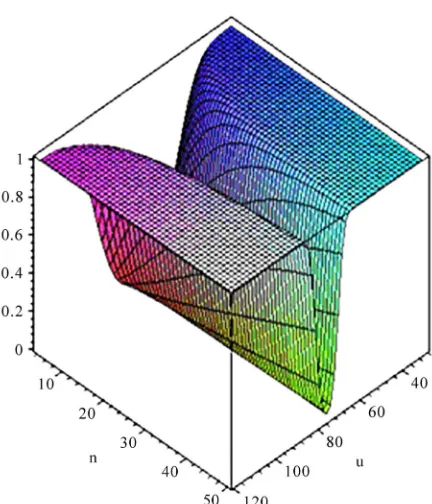
The surface can be rendered in various ways. Figure 1 depicts a power surface for a typical set of population parameters. By working with the surface contours and cross sectional slices, we can obtain the information usu- ally obtained by using one-dimensional power curves. In particular, we can study the question of determining the sample sizes required to yield Type II errors of various sizes. To see how we might proceed, consider the follow- ing example. Suppose the population parameters areu0 74 and 30. Further suppose we wish to use a signi- ficance level 0.01. We would like to determine the minimum sample size that yields a Type II error equal to 0.2 when the new population mean is equal to 85. While it is simple enough to solve the nonlinear equation
u n, min
0.02 [image:5.595.316.532.73.325.2] , we can use the power surface to esti- mate nmin as accurately as desired. Figure 2 shows the portion of the surface for which
u n, 0.2. If we follow the surface around the bottom for u85 until reaching the contour curve foru85,we see that a sam- ple size between 85 and 90 will suffice. Solving the cor- responding nonlinear equation shows that nmin 87. For this example, nmin 87agrees with the usual two-tailed estimate [2] and this approach is applicable to other types of tests in which a simple estimate is not readily avai- lable. The usefulness of this approach is enhanced due to the fact the
u surface can be generated quickly with- out the need to perform tedious and time consuming in- tegrations. Also, once the surface has been generated, itFigure 1. The power surface 1
u n,
.Figure 2. Top portion of the surface
u n . ,can viewed and manipulated in any manner that is de- sired.
[image:5.595.316.533.128.605.2]beta_PADA := x -> 0.5*erfc(-x/sqrt2); beta_PUNA := (u,alpha) ->
beta_PADA((u0-u)/(sigma/sqrt(n))+L(alpha)) - beta_PADA((u0-u)/(sigma/sqrt(n))-L(alpha)); plot3d(1-beta_PUNA(u,alpha),u=U1..U2,alpha= 0.001..0.10,
[image:6.595.315.531.75.330.2]axes=boxed,grid=[51,51]);
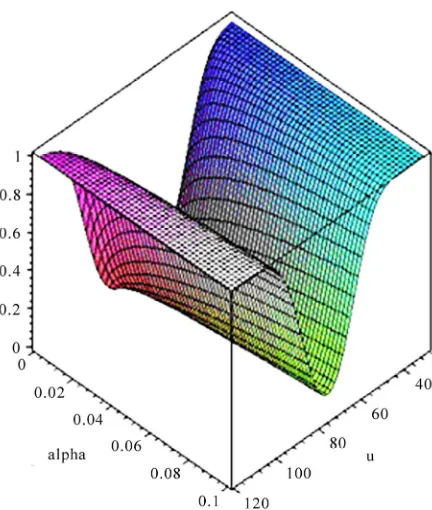
Figure 3 depicts the surface obtained for a typical set of population parameters. As with Figure 1 we can use the surface contours and cross sectional slices to consider the effect of using different significance levels.
For the same reason that inverse normal calculations are needed when working with a normal distribution, we need to be able to invert u
u to find the value of upfor which p x
up
p. The following procedure canbe used to perform this task. It uses fsolve to find u given that pbeta_cdf
u .beta_cdf_inv := proc(p)
# Calculate the inverse of beta_cdf. local eqn, u, up:
global beta_cdf, U1, U2, u0: u := 'u': up := 'up':
if (p = 0.5) then u := u0: return(u); fi:
if (p < 0.5) then
eqn := beta_cdf(up) = p: fsolve(eqn, {up}, U1..u0): assign(%):
else
eqn := beta_cdf(up) = p: fsolve(eqn, {up}, u0..U2): assign(%):
fi: u := up: return(u): end proc:
Given a particular probability p, we can perform an inverse calculation to find the values uLu0 and
0
R
u u for which
uL
uR p in much thesame way as in the above inversion of u
u . uR canbe calculated as in the following procedure. arcpR := proc(p)
local eqn, ustar, u: global beta_erfc, U2, u0: ustar := 'ustar': u := 'u': eqn := beta_erfc(ustar) = p: fsolve(eqn, {ustar}, u0..U2): assign(%):
u := ustar: return(u): end proc:
Figure 3. The power surface 1
u n,
.A similar procedure arcpL can be used to calculate uL.
Of course, only one of the procedures is actually needed due to symmetry. uLand uRsatisfyuR 2u0uL.Note
that u0uLuRu0 is precisely the amount by which the population mean u must change in one direction or the other in order that the probability of a Type II error does not exceed p.
Once the values uL
p and uR
p are available,we know that
u will not exceed p if uuL or Ruu . Suppose we wish to calculate the probability
*
p p this will happen. Property 8 allows us to do so. As examples, suppose p0.2. Then 0.01 yields
* 0.04
p while 0.05 yields p*0.06 and 0.10 yields p*0.09. In the latter case, we then can say there is a 9% chance of committing a Type II error that does not exceed 20%, that is to say, 9% of all possible values for the new population mean yield a Type II error not exceeding 20%.
Although p* is smaller than for most cases of interest its size is easily explained by the rounded shape of u
u . If p is small enough that uL and uR dif-fer significantly from u0, the area of the region under
u u
between uL and uR can be nearly one. Since
this area is 1p*, p* tends then to be near zero. Inter- preted in another way, the tails whose combined size is
*
p can be quite small for a rounded distribution such as
u u
195
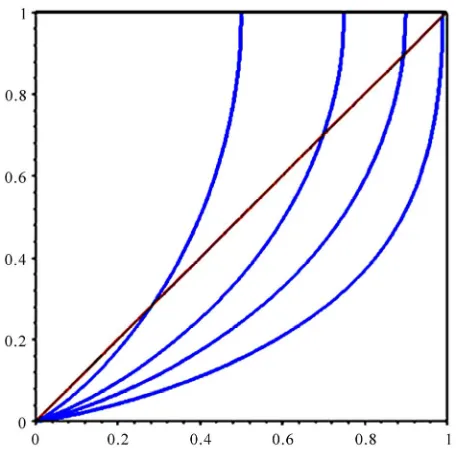
[image:7.595.65.284.344.578.2]Figure 4. The curves p*
p for = 0.01, 0.10, 0.25, 0.5.Figure 5. The surface p*
p,
.The following procedure calculates p*
p . Figure 4depicts graphs of the functions p*
p (the blue curves)vs p (the brown curve) for selected significance levels
0.01, 0.10, 0.25, and 0.50
. The horizontal extent of
each blue curve is the interval
0,1
; the vertical extent is the interval
0,1 . Figure 5 depicts a more de- tailed surface plot of p*
p,
.betastar := proc(p)
# Calculate pstar, the probability that the # probability of a Type II error will not # exceed p.
local eqn, ustar, u, uL, pstar:
global beta_cdf, beta_erfc, U1, u0, CL: ustar := 'ustar': u := 'u': pstar := 'pstar': uL := 'uL':
eqn := beta_erfc(ustar) = p: fsolve(eqn, {ustar}, U1..u0): assign(%):
uL := ustar:
pstar := 2*beta_cdf(uL): return(pstar):
end proc:
An interval oriented variant of p*
p can provideadditional information. Given two probability levels p1 and p2 with 0 p1p2 1 , suppose we wish find the probability that the size of a Type II error will be between these values. In this case, Property 9 allows us to calculate this probability. A procedure for performing the necessary calculations can be found in [3].
5. Summary
This paper investigated the probability distribution for Type II errors. Several interesting properties of the distri- bution were obtained. These properties can be used to obtain the same information as that obtained using other commonly used methods. In addition, the properties allow us to quantify several thorny issues in precise ways. The manner in which this can be done was discussed and il- lustrated using selected Maple procedures for working with the distribution.
6. Acknowledgements
The author is indebted to an anonymous referee and to the AM staff for several suggestions which improved the exposition of this paper significantly.
7. References
[1] D. C. Montgomery, “Statistical Process Control,” John Wiley & Sons, New York, 1991.
[2] D. S. Wackerly, W. Mendenhall, and R. L. Scheaffer, “Mathematical Statistics with Applications,” Duxbury Press, 1996.
[3] S. Thompson, “Maple Worksheets for Investigating Type II Errors,” 2010.
http://www.radford.edu/thompson/TypeIIErrors/index.ht ml