Unmanned Aerial Vehicles in Healthcare: Now and for the Future – investing into emerging technology for rapid vaccination delivery in Healthcare, Globally and
especially in rural Africa
By
David A. Allan-Matheson
A Master’s Paper submitted to the faculty of the University of North Carolina at Chapel Hill
in partial fulfillment of the requirements for degree of Master of Public Health in the Public Health Leadership Program
Chapel Hill Spring 2018
Approved by:
_____________________________________
_____________________________________
Date _____________________________________
_____________________________________
Date
Page 2 of 52
© 2018
David A. Allan-Matheson ALL RIGHTS RESERVED
Page 3 of 52 ABSTRACT
The importance of this paper is based on the change occurring in industries outside of healthcare based on the emergence of new capabilities and processes.
Healthcare and public health are also undergoing changes to their delivery operating models, which results from the increased testing of unmanned aerial vehicles (UAVs) across underdeveloped and vast African landscapes to transport rapidly, vaccines and other medicines. (HCS, 2017) Public health, healthcare organizations, and rural
communities will benefit from a proposal to use unmanned aerial vehicle (UAVs) as a rapid delivery platform for vaccines. (USAID, 2017) Specifically, UAVs could be used across Eastern and sub-Saharan Africa to tackle diseases such as malaria,
tuberculosis, Hepatitis B, Human Papillomavirus (HPV) and others that are endemic in Africa. (Thomas, 2018) Further, it is postulated that robust and sustainable vaccine delivery programs will result from implementation of programs that will require high capital investment funding through strategic partnerships across different institutions, to include African governments.
KEYWORDS: Africa, Costs, Delivery, Drones, Partnership, Rural, Vaccines, Unmanned Aerial Vehicles
Page 4 of 52
ACKNOWLEDGEMENTS
I would like to thank and make an honorable mention of my Academic Advisor and professor, Lori Evarts, for her leadership, support and steadfast dedication to helping me meet my educational aspirations and milestones at the University of North Carolina. Lori is a phenomenal leader and an inspiration.
Additionally, I offer special thanks to my second reader, Dr. Wayne Rosamond, for his insights and thoughtfulness as he reviewed this paper.
Page 5 of 52
TABLE OF CONTENTS
List of Tables, Figures, and Illustrations………7
List of Abbreviations……….8
Introduction………...……….9
Theoretical Perspective……….11
General Information on Unmanned Aerial Vehicles………..14
Unmanned Aerial Vehicles Usage in Healthcare………..15
In-brief: UAV related healthcare Pilots………18
Comparison of UAV Use and End Users………21
Modeling the value in Costs and Lives of UAV Employment………..21
The Amazon bet that will affect future healthcare delivery systems…………..…24
UNICEF UAV Aims in Africa……….28
Findings and Discussions.………30
Basic Requirements for Drones in Healthcare………..30
Budgeting Priorities and Challenges………...33
Importance of Public Health Leaders………..36
Recommendations for Public Health Leaders……….………..……36
Recommendation 1: Healthcare organizations should pursue Private – NGO/ Non-Profit Strategic Partnerships………37
Recommendation 2: Increase government advocacy to drive the creation of policies favorable to the establishment UAV transport systems ………39
Recommendation 3: Continue the growth of UAV Training Academies and the Establishment of UAV Learning Centers of Excellence in Africa………39
Recommendation 4: Monitor developments across the healthcare industry and facilitate knowledge pooling………..…40
Conclusion……….………..………40
References……….………...43
Appendices………..48
Page 6 of 52
Appendix 1: UAV Configuration Types………48 Appendix 2: Comparative Graph of Developers UAVs: Payload and Distance…49 Appendix 3: Drone Regulatory Climate by Country………..50 Appendix 4: Healthcare UAV Delivery and Infrastructure Feasibility Index in Africa……….51 Appendix 5: Dr. One Approval for Data Usage………..52
Page 7 of 52
LIST OF TABLES, FIGURES, AND ILLUSTRATIONS
Table 1: Optimal uses for drones in healthcare delivery in Africa….………...19 Table 2: Transport Systems Responsiveness vs. Costs ……….22 Table 3: Total Costs for the implementation of a UAV Delivery
Program.………...34
Page 8 of 52
LIST OF ABBREVIATIONS
AFRO – Regional Office for Africa CAA – Civil Aviation Authority CoE – Center of Excellence EtC – Energize the Chain
GAVI – The Global Vaccine Alliance GPS – Global Positioning System
GPHSCT – Global Public Health Supply Chain Team HPV – Human Papillomavirus
IAPHL – International Association of Public Health Logisticians MIT – Massachusetts Institute of Technology
MVIP – Malaria Vaccine Implementation Programme MSF – Doctors with Borders
NGO – Non-Governmental Organization TB – Tuberculosis
TMLTS – Traditional multi-tiered land transport system
UAS – Unmanned Aerial Systems UAV – Unmanned Aerial Vehicles
UNICEF – United Nations Children Fund
USAID – United States Agency for International Development USD – United States Dollars
VTOL – Vertical Take Off and Lift WHO – World Health Organization
Page 9 of 52 1. Introduction
According to the International Association of Public Health Logisticians (IAPHL), a group dedicated to consolidating the findings and results of drone feasibility studies and testing in healthcare supply chain delivery, advantages abound for unmanned aerial vehicles (UAV) usage: “1) Quick delivery of health products; 2) a complementary
strategy to address challenges in poor road, rail, and other transport infrastructure, and;
3) ability to use an on-board camera to obtain live feed that can be used to determine routes to navigate or reach causalities [trapped] in disaster areas.” (IAPHL, 2017) Essentially, UAVs have the potential for becoming the 21st century’s transportation modality. (Boeing, 2018) “The technology opens up new possibilities for delivering time- sensitive and high-value goods, conducting autonomous missions in remote or
dangerous environments, and other applications.” (Boeing, 2018)Similar, to how planes, trains, and automobiles shaped the transportation delivery system of the 20th century, except unmanned and geographically unbound. UAVs applicability across the public health space holds the potential to support vaccine delivery if capabilities are optimized and used under the right conditions. Accordingly, this paper will explore how unmanned aerial vehicles will impact the delivery of vaccines to locales in Africa if sustainable and adequate investments are made.
Eastern and sub-Saharan African nations represent accommodating
environments for pilots, the testing of UAVs and their delivery capabilities based on limited civil aviation authority (CAA) regulatory frameworks. (HCS, 2017) Unlike
developed countries like the United States, many African states such as Ghana, South Africa, Tanzania, Rwanda, Malawi and Madagascar and others hold the potential for
Page 10 of 52
drone implementation on an expansive scale. (HCS, 2017) These countries currently have limited technological infrastructure but rapidly expanding WIFI and mobile systems’ capabilities undergirded by new and streamlined regulations that are permissive for drone testing. (HCS, 2017) These countries also have distinct populations living in environments that are hard to reach by automotive means
hindering quicker delivery of vaccines along the supply chain. (USAID Deliver Project, 2013) UAVs with their rapid responsiveness and quick turn-around can meet the need of fast delivery of medicines and vaccines to address healthcare needs of isolated Africans, geographically.
Potential use of UAVs in the vaccine delivery space in Africa is highlighted
through a Dr. One case study on the investment cost assumptions required to launch an implementable and sustainable public health aerial technology platform. Dr. One is a healthcare delivery program based in the Netherlands, where researchers have extensively studied the requirements of drone investment from development through testing and implementation. Total Costs for implementation of a UAV delivery program are estimated at $5,685,000 USD. (Poppinga, 2017) Consequently, the focus of this paper is not on a pilot program, for UNICEF Malawi and other agencies that are
pursuing such endeavors. This paper is focused identifying the requirements to create a sustainable vaccine delivery that is feasible and executable, where costs include labor, construction, testing and maintenance for longevity.
UAVs represent a technological leap in vaccine and other medicine delivery based on their capabilities, such as cold storage during transit to rural areas without healthcare infrastructure. (HCS, 2017) UAVs can transform how medicines and other
Page 11 of 52
lifesaving products are delivered to austere regions in Africa and other parts of the world. (PriceWaterhouseCooper, 2017) As a result, with the growing drone environment and expertise worldwide and in Africa, public health organizations can leverage the capabilities of UAV to resolve transportation issues and shorten the delivery timelines of life-saving vaccines and other medicinal products. (USAID Deliver Project, 2013) UAVs can serve as transportation platforms for Tuberculosis (TB), Malaria, Human
Papillomavirus (HPV), and Hepatitis B vaccines to healthcare providers. These vaccines are noted due to high incidence rates of these preventable conditions in sub- Saharan and Eastern Africa. (Thomas, 2018). Supporting this delivery change will require significant financial investment by public health organizations, Ministries of Health and other interested parties in time and personnel resources. It is proposed that this investment and related actions will transform the healthcare eco-systems around the world, especially in the global public health arena.
2. Theoretical Perspective
This paper aims to add further insight into an emerging area concerning the use of UAVs. The intended focus is the potentially positive effect unmanned aerial vehicles can create by the delivery of vaccines to locales in Africa. The advantage to pursuing a long-term solution is based on the results of pilot programs conducted by UNICEF Malawi and others non-governmental organizations (NGOs). According to a 2017 report on UAVs from the United States Agency for International Development (USAID), the UAV pilots combined with other tests conducted by NGOs like UNICEF Malawi have demonstrated the feasibility of drones as a rapid delivery platform for medicine. (USAID, 2017)
Page 12 of 52
The use of UAVs is an approach that focuses on heavy capital investment requirements on the front end to deliver life-saving medicines at faster and more responsive rate to rural African populations. In effect, those organizations will provide enhanced care to peoples of Africa, specifically those in rural areas that have limited to no road network, healthcare infrastructure, and severely lacking medical personnel expertise. (USAID, 2017) Thus, the overarching purpose of the UAV initiative as a solution is to ensure the efficient and quick delivery of medicine and vaccines which is a central challenge of global public health as acknowledged by the World Health
Organization. (WHO, 2017)
For example, the WHO announced on April 24, 2017, through its Regional Office for Africa (AFRO), countries such as Malawi will partner with WHO in the Malaria
Vaccine Implementation Programme (MVIP). This new program’s mission is making Mosquiriz (RTS, S), a newly developed malaria vaccine created through a partnership by GlaxoSmithKline and the Gates Foundation. This vaccine initially will be available in 2018 to millions of Africans. (Malaria Vaccines Initiative, 2018). According to the WHO, as of 016, 216 million people worldwide had Malaria, with 445,000 reported deaths.
Now isolating Africa by itself in relation to those numbers, 90% of the 216 million cases were in Africa, along with 91% of the deaths. (WHO, November 2017) As a result, the malaria vaccine represents a critical need. Thus, as the WHO works to disseminate the malaria vaccine to Africa the ability to reach rural areas will be required. This delivery challenge is how UAVs can have the most impact on the transportation of vaccines to rural populations for administration by healthcare professionals, and possibly
establishing a foundation for 21st century public health innovation.
Page 13 of 52
For example, in the taxi industry, Uber and Lyft have changed how people in cities travel from one location to another using mobile phone applications and are now looking to serve as a healthcare delivery mode by taking patients to hospitals. (Cava, 2018) This example of technological change could be extended to UAVs becoming a delivery solution to the challenges of healthcare in rural areas. (USAID, 2017) UAVs are systemically deconstructing existing forms of supply chain distribution in healthcare and changing what is possible in vaccines and medicinal delivery. The speed and efficacy of transport will result in shortening timelines of patient receipt from the initial point of shipment, decreasing from several hours to one hour or less based on UAVs that can fly more than 60 miles per hour, with a storage capacity of 2.2kg (4.85lbs). (HCS, 2017)
Drones are transforming the possibilities of transporting lifesaving medicines, blood products, and vaccines for preventable diseases – a core foucs of public health -- across developed and under-developed landscapes to groups and peoples in need in Africa. (USAID Deliver Project, 2013) With continuous proof of concept occurring in Africa, especially in rapid transport, measuring costs versus value (i.e., lives saved) and investment in a sustainable UAV program is vital for public health organizations to be able to demonstrate. Based current UAV flight data by Zipline across Rwanda and Tanzania, involving trips lasting 30 mins and crossing 50 kilometers at 75km/hr, drones can carry 100 vaccines or up to five units of blood. (Nuki, 2018) For example, a young woman’s life in Rwanda was saved in February 2018, after a swarm of Zipline drones shuttled in multiple blood units to her local rural clinic during a C-section that led to hemorrhaging. This example was just one of 950 life-saving trips made by Zipline between the 4th quarter of 2017 and 1st quarter of 2018. (Nuki, 2018) Based on these
Page 14 of 52
efforts, UAVs impact in transporting blood product to save lives in rural Africa has been established.
a. General Information on Unmanned Aerial Vehicles
Drones are unmanned aerial systems or vehicles (UAS / UAV), smaller and nimbler with special capabilities in comparison to fully manned and operated larger fixed-wing and rotary counterparts, planes and helicopters, respectively. Capabilities and structures of drones are shown in Appendices 1 and 2. It is worth noting that UAVs before their commercialization across civilian industries were predominantly used in combat operations in Iraq, Afghanistan and other world hotspots by the U.S. military.
(Bowden, 2013) The global positioning system (GPS) took a similar technological path after the first deployment in Operation Desert Storm during the early 1990s, before widespread consumer usage in early 2000s, and to the present-day application in mobile phones. Consequently, drones first and primary employment involved
surveillance and targeting by the military of non-state actors (i.e., terrorists) hostile to U.S. and its allies’ interests. (Bowden, 2013)
Now, with advances in aerial platforms technology and restructuring of aviation regulations within different countries across the globe, especially in Africa, drones have been adapted for use by companies and consumers. The widespread proliferation of UAVs’ capabilities was exemplified with Amazon’s launch of Prime Air in the United Kingdom and patenting of the Airborne Warehouse for expedited delivery to customers in December 2016. (Lovelace, 2016) Instead of waiting days for packages to arrive, drones can deliver goods and services within minutes or hours, meeting the increasing
Page 15 of 52
demand for high-level of customer engagement and responsiveness that citizens of modern society now expect. (Amazon.com, 2017)
These expectations have migrated into public health and supply chain delivery.
Organizations such as UNICEF, the Global Fund and others have partnered with drone developers such as Matternet, Vayu, Zipline, and Autel to test and observe the
implications of drones in the delivery of vaccines, blood products, medicines and goods across the African landscape. (HCS, 2017) Organizations such as Dr. One has laid out financial blueprints for the creation of sustainable delivery programs of medicines and vaccines, optimal for environs of eastern and sub-Saharan Africa. Total Costs for
implementation of robust programs are estimated at $5,685,000 USD. (Poppinga, 2017) Consequently, airborne transportation of vaccines and other medicinal needs in cold storage is only achievable if capabilities are optimized and used under the right
conditions as demonstrated by Zipline in Rwanda and across Africa since 2014. (Hotz, 2017) Thus, I propose that long-term and continuous investment is the most viable path for public health organizations to meet the needs of rural populations versus
implementing short-term and limited pilot programs. Further, I believe that the search for a quick win, versus a sustainable solution, that require deep investments of finances, resources, and trained personnel, such as a robust UAV network for rapid vaccination delivery across rural Africa is an ideal approach.
b. Unmanned Aerial Vehicles Usage in Healthcare
At the Pennovation Center, a University of Pennsylvania umbrella organization in Philadelphia, Pennsylvania, visitors are invited to walk-around and observe the many drone types. UAVs run the gamut from fixed-wing to rotary wing, those with vertical
Page 16 of 52
take-off and landing, and others requiring sling-shots and short runways to fly.
(Pennovation, 2018) Drones with unique capabilities will satisfy a variety of user-based organizations such as non-profits like UNICEF and for-profit companies like Healthcare Systems, Inc (HCS). (BI Intelligence, 2017) If an organization desires a different
capability and unique type of drone, the intellectual and human capital at Pennovation can conceive, sketch, design, build, test and implement the new craft. (Pennovation, 2018) A loosely comparable organization is Lockheed Martin’s secretive and innovative Skunk Works (formally known as Lockheed’s Advanced Development Programs).
Through Skunk Works, Lockheed Martin created the world’s first spy plane, the U-2, and America’s premier stealth bomber, the F-117 Nighthawk, and other airborne platforms, supporting the evolution of modern aviation. (Lockheed Martin, 2018)
Unlike Skunk Works, Pennovation is an open-door and welcoming drone
laboratory. For example, due to Pennovation’s culture of transparency and engagement, Healthcare Systems, Inc., since 2016 optimizes the many technological strengths of Pennovation that aligns with drone technology employment found in the organization.
(HCS, 2017) Collectively, the two entities support and collaborate on a program called Energize the Chain. Energize the Chain’s (EtC) objective is to “leverage electricity from remote mobile phone base stations to power and extend the vaccine cold chain
infrastructure” to under-developed areas in rural and poverty-stricken locations in Africa.
(EtC, 2018) To ensure vaccines reach the most distant locales in provincial Africa, they must remain refrigerated to prevent spoilage, damage and contamination, this can be solved via containerized within the designated UAV. (EtC, 2018) Refrigeration is one of the core capabilities tied into specialized UAVs, with the packing of ice and other solid
Page 17 of 52
contents, to ensure no degradation during flight. Vaccines and medicines must be distributed in a timely manner to increase the chance of effectiveness since rural African populations have extremely limited cold storage capabilities. This is a focus of HCS and Pennovation via the use of UAVs to address challenges in healthcare – getting to
destinations absent of robust roads and general infrastructure, especially in rural Africa.
For example, there is a critical need for tuberculosis (TB) vaccines, especially in sub-Saharan nations, like Nigeria and South Africa, and others where 25% of the
world’s estimated 10.4 million TB cases are located as of 2016. (WHO, January 2018) A further dive into the statistics, highlights, that worldwide in 2016, 1 million children
became sick with TB, in which 250,000 subsequently died. Extrapolating those numbers to Africa, where 25% of the world’s TB cases resides, an estimated 62,500 children likely perished. Many conceivably lived in rural areas, where healthcare accessibility was extremely limited and access to TB vaccines were under-resourced. (Evans and Baker, 2016)
Aerial drones can deliver TB vaccines based on the need as successfully demonstrated by a 2014 UAV pilot led by Doctors with Borders (MSF) in Papua New Guinea, an island off the northern coast of Australia. (Mitchell, 2014) Using Matternet drones, MSF demonstrated the feasibility of using UAVs to deliver TB vaccines to Papua New Guineans, where 87% of the population lives in very rural and rugged areas, often several days travel from medical facilities. MSF with Matternet
demonstrated the capability to deliver TB medicine to local healthcare specialists in villages 26 miles away from the UAV point of origin in an estimated 55 minutes.
(Mitchell, 2014) While drone delivery of TB vaccines, specifically, to date remain
Page 18 of 52
untested in Africa, the knowledge now exists for the successful implementation of such an initiative given a commitment of capital investment in a potentially sustainable UAV vaccine delivery program.
c. In-brief: UAV related healthcare Pilots
To date, the testing of UAVs in Africa for the delivery of medicines, vaccines and blood products has been done through pilot efforts such as those run by UNICEF Malawi under the leadership of Dr. Sherman since as early as 2014. (UNICEF Malawi, 2016) Pilot efforts exemplify the quintessential and exploratory usage of drones in the healthcare industry by organizations such as UPS, UNICEF, VillageReach, FHI.org, the Gates Foundation and GAVI, in partnership with drone developers (Dr. One, Matternet, Vayu, Zipline, Autel) from the United States and around the world. (HCS, 2017) These organizations collectively understand how to effectively deliver lifesaving medicines, blood products and vaccines across different countries on the African continent, highlighted by the Table 1 below. All great technologies have testing grounds, for the drones initially it was the battlefields of war in Iraq and Afghanistan. Now their tests continue, to facilitate efficient and rapid delivery of medicines to distant regions in Malawi, Rwanda and other African nations. (GAVI, 2016; HCS, 2017)
Page 19 of 52
Table 1: Optimal uses for drones in healthcare delivery in Africa
SOURCE: Healthcare Systems, Inc (HCS). (2017, February 13) Presentation to Healthcare Systems, Inc.: General MI: CM/SM CoE Drone Shipments in Africa.
Based on a high-level African country to country assessment conducted by Healthcare Systems, Inc (HCS), nations such as Ghana, South Africa, Tanzania, Rwanda, Malawi, and Madagascar hold potential for the employment of drones in healthcare’s medicinal supply chain. (HCS, 2017) These six nations were evaluated based on their existing healthcare delivery and transportation infrastructure, tied to expanding regulations that enable the use of drones. Country by country regulations are found in Appendix 3 and the Healthcare Delivery Assessment Index in Appendix 4.
As an example of these nations’ potential, Rwanda is taking charge as a leader in the drone usage space. Rwanda is set to build Africa’s first drone port by 2020, establishing a “Red Line” focused on healthcare delivery and a “Blue Line” tailored towards commercial operations. (Markoff, 2016) The “Red Line” will have an operational
Page 20 of 52
range of 50km (80mi) with a payload of 10kg (22lbs). On the other hand, the “Blue Line”
will have an operational reach of 100km (160mi) and a payload of 100kg (220lbs), which is a blue print for vaccine and other medicine delivery. (HCS, 2017) Such a
development represents an expanded use of drones in Africa.
The Rwandan example is cited because it is first strategic program proposed and implemented by an African government that has shown viability and success in the delivery of medicines. (Kazan, 2016; Hotz, 2017) Zipline, a UAV firm out of California partnered with the Global Vaccine Alliance (GAVI), and the Rwandan government in 2016 “to deliver blood and vaccines on demand.” (Kazan, 2016; Hotz, 2017) The organization’s first 15 UAVs systems have logged over 2,000 medical flights across Rwanda, delivering thousands of units of blood to women amid childbirth, along with vaccines and medicines to ailing patients at remote clinics. In late 2017, Zipline
increased the number of drones to 60 in Rwanda. (Hotz, 2017). Zipline’s efforts resulted in blood and vaccine transport delivery time shifting downwards from 3 hours in traffic and unimproved roads to 15 minutes through the air. (Hotz, 2017). Further, Zipline is expanding into neighboring Tanzania, intending to increase its drone fleet to 120 and the construction of a second drone base. Zipline sees a $1 billion dollars commercial opportunity in Africa, even as the organization delivers vaccines, blood and other medical supplies to 1,000 clinics across the country serving 10 million Tanzanians as part of public health support initiative. (Hotz, 2017)
Zipline’s partnership with GAVI and the Rwandan government shows the milestones drones can achieve if a program is heavily financially invested through partnerships including public health organizations interested in the expeditious delivery
Page 21 of 52
of vaccines to remote areas of Africa. Healthcare Systems, Inc. is studying the efforts in Rwanda. Non-profit public health and NGOs such as VillageReach.org, FHI.org, GAVI, and UNICEF Malawi are studying the Zipline’s efforts, to define their roadmaps towards the implementation of a sustainable vaccine delivery program. (Hotz, 2017)
Comparison of UAV Use and End Users
a. Modeling the value in Costs and Lives of UAV Employment
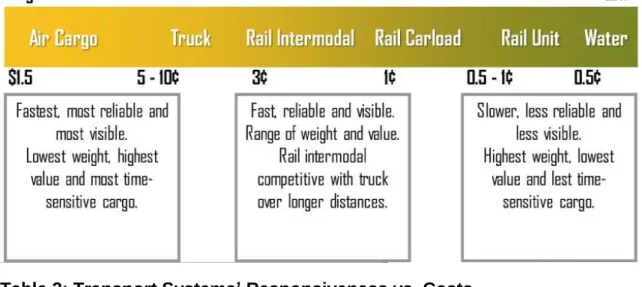
UAVs as modeled by Llamasoft, Inc., a supply chain modeling start-up company located in Ann Arbor, Michigan, have a focus on UAV multiuse in the supply chain in healthcare and other industries. (Rupani, 2017) Llamasoft has shown that drones can improve responsiveness to the need of patients, even with higher costs in relation to other modes of transport, as referenced by Table 2.(Rupani, 2017) According to Llamasoft, while the ramp up investments in UAVs are cost-intensive at development start, UAV program costs over the long-term diminishes as the system becomes sustainable and mature. This is like the investment program proposal offered by Dr.
One to build an implementable program for vaccine and medicinal delivery in Africa.
(Poppinga, 2017) Based on the continuous flights of UAVs, inventory stocks could constantly be replenished versus sitting on shelves at clinics or hospitals. (Rupani, 2017) Rapid shipment to rural sites in Africa could in effect lower inventory costs, and lead to the reallocation of funds to purchase additional vaccines and other medicines.
(Haidari, Brown, Bancroft, Spiker, Wilcox, A., Ambikapathi, Connor, & Lee, 2016) However, an important aspect to be addressed is the availability of healthcare specialists to administer vaccines and other medicines in these rural areas.
Page 22 of 52
For example, increasing the number deliveries has the effect of decreasing the number of cold-chain storage units needed at the distributions sites such as hospitals, which will lower capital maintenance costs (Rupani, 2017). The deliveries in effect leads to increasingly more rapid transport of blood products, vaccines and other medical necessities to rural Africa, which would trigger the constant need for inventory and further investment.
Table 2: Transport Systems’ Responsiveness vs. Costs
SOURCE: Rodrigue, J-P. (2017) The Geography of Transport Systems, Hofstra University, Department of Global Studies & Geography. Retrieved from
https://transportgeography.org.
Another metric that currently remains unquantifiable is costs per lives saved due to the responsiveness of UAVs during delivery of blood products, vaccines or medicine.
However, vaccine delivery programs have dominated the African landscape such as the Mozambique Massachusetts Institute of Technology (MIT) Zaragoza 2011 program, a supply chain initiative. (USAID Deliver Project, 2013) Using end-to-end esupply chain operations, this program placed 100 vaccine delivery sites across Mozambique, in rural
Responsiveness vs. Costs
Page 23 of 52
areas, providing Mozambicans access to TB, Hepatitis B, HPV and other
immunizations. (USAID Deliver Project, 2013) According to the WHO, two to three million deaths are prevented per year worldwide due to vaccinations, and a significant percentage of those lives saved are in Africa, in places like Mozambique, Rwanda, Tanzania, Malawi, and other African countries. (WHO, 2018) Drones with their extended reach have the potential to reach those same populations where the stationary sites are located with more product, whether it be blood or vaccines.
As an example, Zipline, with its many drones in flight since late 2016, has flown more than 200,000 miles (320,000km) across Rwanda and Tanzania, delivering 7,000 units of blood and thousands of vaccines across 7,500 on-demand flights, which if quantified, signifies at least 7,000 lives saved of 7,500. (Nuki, 2018) Although this data is not definitive, it demonstrates the unique possibilities of UAVs as they are deployed across rural Africa. UAVs potential impact on life-threatening situations such as
childbirth in Rwanda and disease treatment with vaccines is a positive example of their usage in saving lives. (Nuki, 2018)
In Rwanda, maternal mortality and childbirth statistics trend in a dispositive direction. (Rosen, 2017) According to the WHO, Rwanda sustains one maternal death per every 344 live births. (WHO, 2015) By comparison, those numbers are 20 times greater than the United States and 97 times greater than most Western European countries. An estimated 50% of maternal deaths occur after childbirth, with 26% dying because of excessive blood lost: hemorrhaging. (Rosen, 2017) Based on the speed of UAVs, which can achieve more than 60 miles per hour, more new mothers can be saved by providing blood products to local clinic professionals or midwives, decreasing
Page 24 of 52
the existing 26% mortality rate in Rwanda, and in other parts of Africa. (HCS, 2017) As a result, according to Zipline, 40 percent of the blood they have transported since 2016 across Rwanda goes to post-partum hemorrhaging. (Nunez, 2017)
Consequently, UAVs have shown that they can save lives and this reach could be expanded if a sustainable delivery program whether for vaccines, medicines or blood products is established. Drones can and will increase the availability of these treatments by health professionals thus helping save African lives, and simultaneously decreasing a lack of basic medicines and blood products in African healthcare. Such transport changes will drastically improve the transport and arrival timeframes of vaccines and other medicines to rural parts of Africa, definitively impacting public health for the
positive. (USAID, 2017) Although challenges will remain as programs become a reality, companies such as Amazon and non-profits like UNICEF aim to resolve them in their areas of focus, which can serve as conduits for knowledge and lessons learned transfer. (UNICEF Malawi, 2016)
b. The Amazon bet that will affect modern and future healthcare
In 2005, Amazon.com founded by Jeff Bezos, which started as a small-scale internet bookseller in the 1990s, launched Amazon Prime, a two-day shipping delivery service offered to customers for a yearly fee, revolutionizing consumer engagement and responsiveness. (Burnson, 2016) In effect, Amazon created a new and faster delivery model, shrinking the retailer to consumer shipping response rate from weeks to days.
(Burnson, 2016) Many versions of the Amazon Prime model now exist across the retail industry implemented by Walmart and other competitors of Amazon, but the value of the model to vaccine delivery is speed. Addressing traditional transport challenges and
Page 25 of 52
speed are the determinative factors in the feasibility of using UAVs across rural Africa to deliver vaccines and other medicines. (Werber, 2016) Speed is the key to treatment and saving lives, that is why financial investments are necessary for this delivery model.
Amazon is betting on the speed of its drones for their competitive advantage, through its UAV swarm platform (hundreds of airborne vehicles flying in tandem or apart at the same time), Prime Air. Prime Air can deliver up to 4.85 pounds (2.2kg) worth of product using UAVs within 30 minutes after initial customer purchase of a product on Amazon.com. (USAID, 2017) Amazon’s development is similar to that of Zipline in Rwanda, adapting innovative technology, in this case, drones, to meet the need of consumers and patients, quickly. Consequently, there is an intuitive leap worth-making in healthcare based on Amazon’s focus: if customers can receive their packages in minutes, the assumption is valid that patients, who might be some of the same customers, can receive medicine at a similar quick rate. (Brunson, 2016)
Now, extrapolate a similar use of UAVs in Africa and other parts of the world that have geographical restrictions where populations require vaccines that is the challenge undertaken by Zipline, UNICEF and other organizations in Africa. (Hotz, 2017) For example, in 2016 USAID conducted a test of drones in Madagascar in partnership with the UAV distributor Vayu and the Government of Madagascar to transport testing samples to laboratories from healthcare providers in rurally situated clinics. The healthcare providers had undergone training in UAV operations, using cellphones to notify operators when the blood needed airlifting upon securing with the drones. Vayu safely transported blood, stool, and tissue samples leading to faster and improved
Page 26 of 52
diagnostics services for indigents in rural Madagascar. (USAID, 2017) Such innovation is key to enhance preventive care in public health through vaccine delivery.
As in the concept of an implementable UAV delivery system, the receiver of the vaccines or blood will be trained healthcare professional who are familiar with drones.
Using the roadmap establish by Zipline and implemented throughout Rwanda, the delivery process is organized in a manner to ensure that only trained personnel handle the blood products and UAVs. (Brunson, 2016) This requirement for a cadre of trained personnel is a common reason why the program if implemented will require high-levels of financial investment early on and strong partnerships between governments, public health organizations, non-profits and local African providers. UAVs hold the potential to reshape the healthcare landscape, but the end users, operators and healthcare
providers, rural and non-rural must have adequate training in UAV functions and operations.
Healthcare providers will have to know how to receive the UAV, offload the vaccine, blood product or other medicine, perform any sanitization requirements before providing to or injecting their patients. Providers will either call the operator miles away to retake control of the UAV or launch it themselves using cellphones, allowing the drones to autonomously pilot itself back to home base. Such use of technology by healthcare providers will require weeks, if not months of training. (HCS, 2017) Funding for the training will need to be provided by public health organizations and their partners establishing the program, since UAV education and licensing academies are increasing in Africa, specifically in South Africa and Kenya. (Andae, 2018)
Page 27 of 52
UAV piloting and handling is an emerging career path in Africa with training academies such as the UAV Industries in South Africa, which aims to educate Africans in the piloting, operating, handling, and maintenance of drones. (UAV Industries, 2018).
South Africa, as a result, is taking the lead in establishing UAV training centers of excellence for interested Africans, as the drone industry expands in sub-Saharan and Eastern Africa. (UAV Industries, 2018). Over the long-term, there is an expectation that schools like UAV industries will spread across the continent. Kenya is launching its UAV training academy. Such schools can, therefore, serve as a pool of applicants for public health organizations and their potential partners such as the Gates Foundation,
UNICEF and Gavi to establish sustainable vaccine delivery programs. (Andae, 2018)
Further, the training academies can serve to educate local villagers identified by either their tribal elders or healthcare providers in the employment, operation, and maintenance of UAVs. (Andae, 2018) Trained villagers can work alongside rural healthcare professionals, who themselves will be required to undergo training in the operation of UAVs as a complementary skill for a first responder. In effect, such an approach creates a critical network of healthcare and UAV specialists to support rural areas. (Pather and Alison, 2017) The growth in talent in UAV operation to support a vaccine delivery program holds increasingly positive potential for employment opportunities in rural African healthcare and can support critical public health developments.
UAVs have the versatility and mobility to cross geographical boundaries at a quicker rate, establishing a new platform for access to preventive medicine and other care, especially if trained operators can serve dual roles as healthcare specialists and
Page 28 of 52
operators. Drones can deliver medicines, vaccines for malaria or TB, blood products and even transport back information to public health specialists, doctors and other clinicians, hundreds of miles away, ensuring accurate and more time-sensitive response to patient needs. (Haidari et al., 2016) For example, in Rwanda, 81% of the country’s population live in rural areas. Due to the extended network established by Zipline, drones can travel at least 60 miles in every direction at speeds up to 95 miles an hour, arriving in rural villages with 20 minutes and returning in under one hour, ready for another trip. (Pather and Alison, 2017) Comparatively a motorcycle or truck would take several hours depending on road conditions and accessibility. (Phillips, Blauvelt, Ziba, Sherman, Saka, Bancroft, & Wilcox, 2016)
As a result, UAVs can serve as airborne rapid response platforms, optimized for the purpose storing and carrying vaccines to populations in villages and towns,
specifically for areas designated as high-risk for sicknesses such as TB, malaria, and others. The benefit for the population is increased vaccination in high-risk areas and adjacent populations and responding healthcare specialists. (USAID, 2017) This approach in a new delivery approach is an opportunity to impact public heath for the positive if substantial financial investment is made in UAV programs that traverse Eastern and sub-Saharan Africa delivering vaccines and other necessary medicines.
c. UNICEF UAV Aims in Africa
On June 29th, 2017, UNICEF Malawi and the Government of Malawi
implemented a new airborne avenue for UAVs. The two bodies “launched an air corridor to test potential humanitarian use of unmanned aerial vehicles (UAVs), also known as
Page 29 of 52
drones. The corridor is the first in Africa and one of the first globally with a focus on humanitarian and development use.” (UNICEF Malawi, 2017) The aims of the corridor which is in central Malawi, running an 80km diameter, is to provide platforms for public and private partnerships to deliver services to communities across Malawi, especially those in rural areas. (UNICEF Malawi, 2017) Three core focuses exist for the structuring of this program that is heavily invested in by the Malawi government evens as it
partners with UNICEF:
The Humanitarian UAV Testing Corridor will facilitate testing in three main areas: 1.
Imagery – generating and analyzing aerial images for development and during humanitarian crises, including for situation monitoring in floods and earthquakes; 2.
Connectivity – exploring the possibility for UAVs to extend Wi-Fi or cellphone signals across difficult terrain, particularly in emergencies; 3. Transport – delivery of small low weight supplies such as emergency medical supplies, vaccines, and samples for laboratory diagnosis, including for HIV testing. (UNICEF Malawi, 2017)
The key component of this program is item 3, the use of UAVs to deliver medicinal supplies to include vaccines across Malawi. Institutions see the value in UAVs to shortcut traditional delivery means such as trucks and cars. But if areas have unimproved roads and surrounded by densely wooded areas, drones have the
versatility and capability to safely and effectively deliver medical products to rural and isolated villages. (UNICEF Malawi, 2017)
Consequently, since 2015, due to ongoing attempts at full-scale implementation of UAVs, several non-profits (IGOs, NGOs) like UNICEF Malawi have teamed up with developers and African governments to conduct targeted pilot efforts. (USAID, 2017) Studies focused on the testing the feasibility and optimal uses of UAVs in the delivery of vaccines and other medicinal products, to meet the healthcare needs of African
Page 30 of 52
populations. (USAID, 2017) Research and analysis are primarily aimed at extending the supply chain and delivery networks for medicines, vaccines and blood products to rural areas in Africa. (USAID, 2017) All studies were designed to assess the feasibility of drones as a long-term investment and to rapidly and expeditiously transport healthcare products to African in need of critical support.
Additionally, it is worth mentioning that superstition, such as witchcraft, is a commonly shared belief within some rural African groups, especially in countries like Malawi. (Fraser, 2017) Drones are perceived by the members of different tribes as tools of witchcraft, so establishing strategic partnerships with African governments to develop messages focused on allaying the fears of their population is critical. If Africans fear UAVs, they will not accept the vaccines delivered by the airborne platform and may work to disrupt the program. (Fraser, 2017) Thus, educating the rural populations on what drones are and how they function is an important aspect of why relationships between UAV developers, public health organizations, NGOs and African governments and local community health workers are necessary. Internal to the local populace, understanding of the value of the program must be achieved. Otherwise the UAV transport system for vaccines can fail.
3. Findings and Discussions
a. Basic Requirements for Drones in Healthcare
Drone design, capacity, and function are divergent based on mission and business requirements. (HCS, 2017) When considering the purchase of UAVs, according to Dr. Harvey Rubin and Dr. Jnaneshwar Das, researchers at Pennovation
Page 31 of 52
(during a visit by this paper’s author), they stated the objective of their long-term role ought to be the guiding factor for service in commercial environs or ithe non-profit
healthcare arena (Pennovation, 2017). For public health and specifically focusing on the delivery of medicines, vaccines and blood products in Africa, basic functionalities ought to be considered such as:
Infrastructure requirements – VTOL versus runway or slingshot
Fixed or Rotary-Wing
Internal Payload/External Payload
Payload Capacity
Flight Time and Range
Energy requirements
Training of Pilots
Internal Mobile Operating System
Survivability and Sensors
Costs (Investment, Implementation, and Maintenance)
Diversity of use
Refrigeration (HCS, 2017)
Further, when a healthcare organization decides to partner with a UAV provider such as Dr. One, Zipline, Vayu, Matternet and others, there are three service delivery models available for suppliers to follow when it comes to transporting vaccines and other products. (HCS, 2017) According to research garnered by Healthcare Systems, Inc., the determinative factors for partnership are based on infrastructure and regulatory climates of the country in Africa where UAVs will be employed. (HCS, 2017) The
models are:
Engagement Model – for commercial delivery, providers prefer to pursue leases and partially outsourced of drones to customers or a fully-outsource the UAVs system relinquishing the responsibility of risk.
Pricing Model – establish delivery prices for payloads of more than 3 kg (6.6lbs) based on distance to travel and weight of cargo. For payload 1–2 kg (2.2 – 4.4lbs), the ongoing delivery price is negotiable, centered on the number of shipments and type of products.
Contract Duration – engaging in a minimum of the 1-year contract period with buyers.
(HCS, 2017)
Page 32 of 52
For example, Zipline in 2016 established a 2-year term contract with the Government of Rwanda through its ministry of health where minimum transport
shipments serve as the baseline, with every additional trip above that cutline, assessed a specific cost. (USAID, 2017) Accordingly, healthcare organizations whose aim is ensuring rapid and responsive treatment to patients, will need to possess a working knowledge of the business model of their technology supplier or partner to secure their short and long-term success. (HCS, 2017) This understanding should be a central focus of any endeavor or initiative that will involve a viable airborne vaccine delivery solution that implementable and sustainable.
Thus, all models proposed by this paper will require significant capital
investments and allocation of resources (personnel and time) commensurate with the level of interest by the organization. (USAID, 2017) When the decision is made to pursue a UAV delivery system, the partnership process will likely involve the African country’s government within whose borders the UAV platform will be launched, as well as requires a symbiotic partnership with a drone developer and a public health
organization or non-profit that is the lead on the vaccine delivery efforts, like UNICEF and Zipline’s relationship. (UNICEF Malawi, 2017) As a result, this solution for vaccines transport with use of UAVs is not focused on singular public health entities or local African organizations that pursue significantly smaller scale efforts due to funding constraints that align with their pilots. (USAID, 2017)
Page 33 of 52 b. Budgeting Priorities and Challenges
To understand the full challenges to launching and executing a drone program, Dr. One gave the author permission (Appendix 5) to use the organization’s estimated financial costs for a successful and sustainable program launch over the long-term.
(Poppinga, 2017) The program execution and implementation can serve under a standalone framework or through partnerships. (HCS, 2017)
Public health institutions, if embarking on constructing a viable solution for UAV vaccine delivery, should know that partnerships will support capital investment is received and financial risk is shared and to promote working with host nations’
governments. Dr. One, as a result, is seeking financial partnerships with institutions in the United States and Africa since they have the technical expertise to build and operate UAVs. (Poppinga, 2017)
Dr. One is a health delivery program based in the Netherlands, where researchers have extensively studied the requirements of drone investment from development through testing and implementation. The program’s director, Gerald
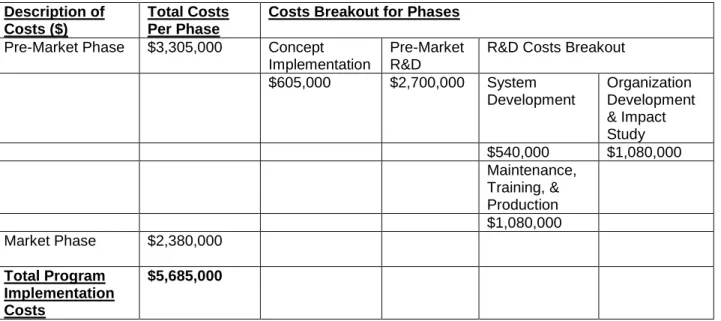
Poppinga provided financial data to Healthcare Systems, Inc. (HCS) which can serve as a model for program execution in Africa. (Poppinga, 2017) Dr. One’s reported costs were initially quantified in euros, and the conversion to U.S. dollars is provided in Table 3.
Page 34 of 52
Description of Costs ($)
Total Costs Per Phase
Costs Breakout for Phases Pre-Market Phase $3,305,000 Concept
Implementation
Pre-Market R&D
R&D Costs Breakout
$605,000 $2,700,000 System Development
Organization Development
& Impact Study
$540,000 $1,080,000 Maintenance,
Training, &
Production
$1,080,000 Market Phase $2,380,000
Total Program Implementation Costs
$5,685,000
Table 3: Total Costs for the implementation of a UAV Delivery Program
SOURCE: Poppinga, G. and Jansen op de Haar, M. (2016, April 1) Dr. One Proof of Concept. Drones for Development, p. 1.
The ramp up and investment costs per the Dr. One’s study is only an example of a possibility based on the organization’s study of the emerging UAV delivery landscape.
This cost structure is only an example and may not be replicable in totality by other healthcare organizations and partnerships as variables will change based on the investment needs, parameters, guidelines, structure, and culture of the investing
organizations. The plan is tailored toward a larger external and international entity such as GAVI, UNICEF, and the Gates Foundation, as these organizations are perceived to have enough capital to invest versus local African non-profits or public health
institutions. (Gatesfoundation.org, 2018)
Consequently, Dr. One’s business plan highlights the core challenge in the UAV transport of medicine space, “high capital investment costs, lack of trained human resources and regulatory” (IAPHL, 2017) obstacles that constrain the willingness by groups and organization to support emerging drone technology. Another factor is the
Page 35 of 52
viability of firms that are developing UAVs since many firms are start-ups and looking for capital investment to serve in the healthcare and public health space. (Poppinga, 2017) While healthcare organizations can purchase viable standalone UAVs from $1,000 up to
$25,000, depending on the developer and capabilities of the drone; (Drone Apps, 2017) program implementation and sustainability (operation, maintenance, and support) over the long-term are the actual cost drivers. (Poppinga, 2017) These factors are several of the reasons why the focus of this paper is a large scale implementable solution by a public health and non-profit organization. (IAPHL, 2017) The organization that pursues the creation of a vaccine delivery transport system across rural Africa must have the capacity and resources to make significant levels of investments, nearing $5,000,000 USD or more. (Poppinga, 2017)
As a result, and as demonstrated by partnerships of Zipline, UNICEF Malawi, Vayu, the governments of Madagascar, Rwanda, and Malawi, pursuing a vaccine delivery solution, will require a cooperative approach through strategic partnerships.
(Phillips et al., 2016) However, to pursue such a path, extensive funding through grants and other key investments strategies will be a key driver. The Gates Foundation
provides millions of dollars in grants for vaccine delivery initiatives along with GAVI, the Vaccine Alliance to support vaccine delivery. These organizations focus much of their investments ensuring safe and reliable healthcare is brought to impoverished areas across Africa. (Gavi.org, 2018; Gatesfoundation.org, 2018) Accordingly, navigating the build of a viable and sustainable vaccine delivery platform using UAVs in rural Africa will require significant investment by public health organizations through partnerships with other more powerful external institutions. (UNICEF 2017; Gavi.org, 2018;
Page 36 of 52
Gatesfoundation.org, 2018) The challenge of rapid and responsive vaccine delivery to meet the needs of African populations across the continent’s vast landscape will require cooperative approaches across a range of stakeholders.
4. Importance of Public Health Leaders
Leadership in public health endeavors is a collaborative exercise. We must pool our multidisciplinary ideas and experiences to develop solutions appropriate for patients’
lives and general population health, in the context of their community. (Koh and Jacobson, 2009)
For public health leaders, caring for the welfare of others is why we serve as public health specialists. Our profession drives and empowers us to understand the dynamics that shape health outcomes of communities. (Koh and Jacobson, 2009) As public health professionals, we can lead groups or be members of a cross-discipline team working cooperatively to ensure program implementation outcomes are positive.
5. Recommendations for Public Health Leaders
UAVs are being used now and have the potential to shift the landscape of medicine through new delivery platforms in communities. They hold the potential to transform how medicines and other lifesaving products are delivered to rural regions in Africa and other parts of the world. The emerging UAV use in rural Africa will require extensive investment, which means partnerships between African governments, international organizations like UNICEF Malawi and UAV developers such as Dr. One and Zipline that focus on the healthcare space. (USAID, 2017) Lessons learned from for-profit organizations like Amazon, which is launching Prime Air, will serve as a model
Page 37 of 52
on how to increase responsiveness to meet the needs of populations in need of care across rural Africa.
Public health organizations will need to engage powerful stakeholders such as GAVI, UNICEF, and the Gates Foundation for grants and funding if they are to
implement sustainable vaccine delivery programs with the use of UAVs. Any
organization undertaking this endeavor must know that capital investment at the front end will run into the millions of U.S. dollars, so it is a path that will require extensive due diligence and consideration. Consequently, developments of partnership opportunities will be the path forward between governments in Africa, developers, and non-profit organizations. African governments will need to maintain or establish regulatory climates to support drone usage across their countries and foster buy-in by their populations.
The following recommendations and insights can place public health
organizations in a position to build programs in supporting vaccine delivery in rural Africa using UAVs.
a. Recommendation 1: Healthcare organizations should pursue Private – NGO/ Non-Profit Strategic Partnerships
First, healthcare and public health organizations should reach out to global organizations like UNICEF, the Bill and Melinda Gates Foundation, and the Global Vaccine Alliance (GAVI) to develop sustainable programs, after having shown success in pilots. Demonstrations with non-profit organizations such as UNICEF Malawi will involve the delivery of medicines or vaccines with developers such as Dr. One providing
Page 38 of 52
the technological platforms. In all cases, since the focus is rural Africa, involving the government of the nation within which testing is occurring must be a priority. This early engagement will serve as a launching pad for partnership and integration across the internal elements of governments, NGOs and developers, in anticipation of leading to successful and sustainable programs. The creation of strong and binding relationships based on trust will matter, if problems arise, so that cooperative, and collaborative solutions will enhance solutions.
Next, public health organizations will need to work with ministries of health, as well as VillageReach and other smaller U.S. non-profits that already have extensive expertise in drone delivery based on several years of testing and study. Engagement of these smaller scale organizations will involve attending UAV development seminars and employment of the technology to understand where the tools such as refrigeration technology can be optimized for safety and efficacy in the delivery of vaccines.
Lastly, grant funding from Gates Foundation, GAVI and other stakeholders support of capital-intensive vaccine transport programs, should support smaller institutions, and public health entities should work with minor non-profits and African firms to enhance their programs. Those smaller scale programs will test the boundaries of the UAV platform, with lessons learned that could be included in program solutions already in-flight by the public health organization. These efforts can dramatically improve the delivery of life-saving vaccine and capture information that might need to protect populations from emerging sicknesses, whether they be epidemic or pandemic, especially in Africa. (Tucker, 2018)
Page 39 of 52
b. Recommendation 2: Increase government advocacy to drive the creation of policies favorable to the establishment UAV transport systems
Working with institutions such as GAVI, The Gates Foundation, UNICEF and healthcare-focused nonprofits such as VillageReach and FHI.org, UAV developers, and public health organizations should focus on partnering with African governments. The collective focus of these institutions should be advocating and streamlining of
regulations and policies throughout Africa to create consistency across countries.
(VillageReach, 2018) Concerted efforts by multiple organizations working in tandem hold the possibility of increasing the number of UAV-friendly African nations, in addition to those identified in Appendix 3.
Simultaneously, since many of the organizations identified throughout this paper are headquartered in the U.S., they should engage U.S. federal and state government bodies to create UAV healthcare delivery regulatory frameworks. Regulatory
frameworks designed to support the delivery of vaccines and medicines using drones to rural parts of America that face their healthcare challenges. Lessons learned from these endeavors, can be transported over to and from Africa. Public health organizations can then implement them as improvement efforts in the system design of their rural vaccine delivery networks.
c. Recommendation 3: Continue the growth of UAV Training Academies and the Establishment of UAV Learning Centers of Excellence in Africa
Public health organizations in concert with their international partners should support Africans countries growth in UAV expertise by funding training academies and
Page 40 of 52
hiring personnel with experience in this arena such as U.S. military personnel who have spent years operating UAVs. These individuals will serve as contracted instructors for local African healthcare professionals, students, and entrepreneurs interested in learning more about the technology and becoming part of the eco-system. (IT News Africa, 2016) This investment will serve as part of a long-term human capital
advancement and development program, enabling doctors, nurses, public health specialists to learn “rules for the road” to meet the needs of patients in rural Africa and the U.S.
d. Recommendation 4: Monitor developments across the healthcare industry and facilitate knowledge pooling
Public health organizations focused on the delivery of vaccines and medicinal products across rural Africa should monitor Amazon’s PrimeAir platform development.
(Amazon.com, 2018) Rapid developments such as ever decreasing response rates to customer purchases made by Amazon in the delivery of products with its drone swarm will inform the proliferation of UAVs around the world, and their use in Africa. To support the exchange of lessons learned, public health leaders should attend and establish UAV roundtables with Amazon, VillageReach, and new entrants to the drone healthcare delivery landscape. These exchanges will also promote the discussion of cooperative efforts, future trend lines, and use cases – knowledge pooling. (VillageReach, 2018)
6. Conclusion
This paper aimed to promote the use of UAVs in the delivery of vaccines and others medical products to rural areas across Eastern and sub-Saharan Africa.
Page 41 of 52
Additionally, it highlighted the high capital costs public health organizations and their partners would have to invest to build a robust and viable system. The author
deliberately focused on the costly nature of such an endeavor to provide interested public health leaders with a realistic framework as to the level of funding required to implement the right solution.
Next, as public health leaders focus on how to establish UAV vaccine delivery programs, the remaining question to answer is how many lives are UAVs saving? As of 2018, that remains an unknown metric until the programs in Malawi, Rwanda, and other African countries have data for program evaluation. However, an indicator might be the relatively successful 7,000 of 7,500 (93%) of UAVs deliveries involving the transport of blood products and vaccines on separate trips across a cumulative 200,000 miles of rural Rwanda since 2016. (Nuki, 2018)
Based on my research, a valid conclusion is that the responsiveness of UAVs in the delivery of blood products, vaccines, or medicine can and will save lives. I based this on UAV’s speed and ability to fly above rough terrain into hard to reach areas as demonstrated by the Papua New Guinea study in 2014. (Mitchell, 2014). Data on existing UAV delivery programs to assess the operations of large-scale public health endeavors are forthcoming. These organizations with their partners such as UNICEF will collect data that will either prove or disprove the hypothesis, the initial large financial commitment for the establishment of a UAV vaccine delivery system are saving millions of African lives. Ultimately, even with the seemingly prohibitive costs, the endeavor to provide essential healthcare to rural Africans using UAVs as transport delivery vehicles
Page 42 of 52
will serve as a force for African and other rural populations, speeding the delivery of vaccines.
Page 43 of 52 REFERENCES
Allen, K. (2016, March 15). Using drones to save lives in Malawi. BBC.com. Retrieved from http://www.bbc.com/news/world-africa-35810153
Andae, Gerald (2018, January 18). Kenya’s first drone academy on the way. Business Daily Africa. Retrieved from
https://www.businessdailyafrica.com/corporate/shipping/Kenya-s-first-drone- academy-on-the-way/4003122-4266198-cikogc/index.html
Amazon. (2018). Amazon PrimeAir. Retrieved from https://www.amazon.com/Amazon- Prime-Air/
BI Intelligence. (2017, February 8). Unmanned aircraft might have a future at airports.
Business Insider.com. Retrieved from
http://www.businessinsider.com/unmanned-aircraft-might-have-a-future-at- airports-2017-2
Boeing. (2018, January 10). Unlocking the Future of Flying. Boeing.com. Retrieved from http://www.boeing.com/features/2018/01/cargo-air-vehicle-01-18.page
Bowden M. (November 2013) How the Predator Drone Changed the Character of War.
Smithsonian Magazine. Retrieved from
https://www.smithsonianmag.com/history/how-the-predator-drone-changed-the- character-of-war-3794671/
Burnson, F. (2017, December 27). Ways Amazon is Changing Supply Chain Management in 2016. Retrieved from
http://www.softwareadvice.com/resources/amazon-supply-chain-management/
Della Cava, Marco. (2018, March 5). Why Uber and Lyft want to take you to the hospital. USA TODAY. Retrieved from
https://www.usatoday.com/story/tech/2018/03/05/uber-and-lyft-show-off-their- latest-side-hustle-hospital-transport/395315002/
Drone Apps. (2015, August 21). Price wars: counting the cost of drones, planes and satellites. Retrieved from https://droneapps.co/price-wars-the-cost-of-drones- planes-and-satellites/
Droneii.com. (2017). Drone Business Development Guide. Retrieved from https://www.droneii.com/drone-business-development-guide
Energize the Chain. (2018). Imagine a world in which all children are protected by life- saving vaccines. Retrieved from http://www.energizethechain.org
Fraser, A. (2017, September 14). ‘The Whites Have Brought Planes’: Perceptions of Drones of Malawi. Impakter.com. Retrieved from http://impakter.com/whites- brought-planes-perceptions-drones-malawi/
Page 44 of 52
Gates Foundation. (2018). What we do: Vaccine Delivery Strategy Overview. Retrieved from https://www.gatesfoundation.org/What-We-Do/Global-
Development/Vaccine-Delivery
Gavi: The Vaccine Alliance. (2016, October 14). Rwanda launches world's first national drone delivery service powered by Zipline. Retrieved from
http://www.gavi.org/library/news/gavi-features/2016/rwanda-launches-world-s- first-national-drone-delivery-service-powered-by-zipline/
Gavi: The Vaccine Alliance. (2018). Funding and Finance. Retrieved from http://www.gavi.org/funding/
Haidari, L., Brown, S., Ferguson, M., Bancroft, E., Spiker, M., Wilcox, A., Ambikapathi, V. Connor, D. L., and Lee, B.Y. (2016). The economic and operational value of using drones to transport vaccines,” Vaccine 34, Baltimore: HERMES Logistics Modeling Team: 2016, pp. 4062-4067.
Healthcare Systems, Inc (HCS). (2017, February 13) Presentation to Healthcare Systems, Inc.: General MI: CM/SM CoE Drone Shipments in Africa.
Hotz, R. (2017, December 1). In Rwanda, Drones Deliver Medical Supplies to Remote Areas. The Wall Street Journal. Retrieved from https://www.wsj.com/articles/in- rwanda-drones-deliver-medical-supplies-to-remote-areas-1512124200
International Association of Public Health Logisticians. (2017) Drones in Public Health Supply Chains. Retrieved from thttp://iaphl.org/services/moderated-
discussions/drones-in-public-health-supply-chains/
IT News Africa. (2016, March 17). South Africa. Western Cape’s first drone pilots graduate. ITNewsAfrica.com. Retrieved from
http://www.itnewsafrica.com/2016/03/south-africa-western-capes-first-drone- pilots-graduate/
Kharpal, A. (2016, December 30). Amazon wins patent for a flying warehouse that will deploy drones to deliver parcels in minutes. CNBC.COM. Retrieved from https://www.cnbc.com/2016/12/29/amazon-flying-warehouse-deploy-delivery- drones-patent.html
Khazan, O. (2016, April 4). A Drone to the Save the World, The Atlantic. Retrieved from https://www.theatlantic.com/technology/archive/2016/04/a-drone-to-save-the- world/476592/
Koh, H.K., Jacobson, M. (2009). Fostering public health leadership, Journal of Public Health, Vol. 31, No. 2, pp. 199-201.
Lockheed Martin. (2018). Missions Impossible: The Skunk Works Story. Retrieved from https://www.lockheedmartin.com/us/100years/stories/skunk-works.html
Lovelace, B. (2016, December 14). The future arrives? Amazon’s first Prime Air completes its first deliver. CNBC.COM. Retrieved from