MACA: A Modular Architecture for Conversational Agents
Hoai Phuoc Truong∗, Prasanna Parthasarathi†, and Joelle Pineau‡ School of Computer Science
McGill University
Abstract
We propose a software architecture de-signed to ease the implementation of di-alogue systems. The Modular Architec-ture for Conversational Agents (MACA) uses a plug-n-play style that allows quick prototyping, thereby facilitating the devel-opment of new techniques and the repro-duction of previous work. The architec-ture separates the domain of the conver-sation from the agent’s dialogue strategy, and as such can be easily extended to mul-tiple domains. MACA provides tools to host dialogue agents on Amazon Mechan-ical Turk (mTurk) for data collection and allows processing of other sources of train-ing data. The current version of the frame-work already incorporates several domains and existing dialogue strategies from the recent literature.
1 Introduction
Recent research in building sophisticated AI-based dialogue management systems has led to many new models supporting goal oriented or chit-chat style dialogue agents. These models have been applied to a variety of consumer domains, such as restaurant booking (Kim and Banchs, 2014), flight booking (Young, 2006), etc. How-ever, the lack of tools for easy prototyping of newer models remains an impediment to devel-oping new models and properly benchmarking against previous models. Furthermore, the differ-ent types of conversational agdiffer-ents– e.g., generative (Hochreiter and Schmidhuber,1997;Serban et al., 2015, 2016), retrieval-based (Schatzmann et al.,
∗[email protected] †[email protected] ‡[email protected]
2005a; Lowe et al., 2015a), slot-based (Young, 2006) or POMDP agents (Png and Pineau,2011)– have different working mechanisms, which pose challenges to the development of a unified plat-form for conversational agents with multi-domain support.
To address this gap, we propose a new, ready-to-use, cross-platform framework for text-based conversational agents – MACA1(Modularized Architecture for Conversational Agents)– that supports plug-n-play use of several existing dia-logue agents, as well as facilitates easy prototyp-ing of new dialogue agents. The architecture sim-plifies the specification of different types of di-alogue agents and plugs in an already-built dia-logue agent. The framework also maintains a clear separation between domain knowledge and the di-alogue agent, which improves agent and domain knowledge reusability. MACA separates task def-inition from task selection and thereby supports multi-task agents that can extend to multiple turns. The key characteristics of the MACA frame-work include:
• strong separation between domain
knowl-edge and a dialogue agent
• a unified architecture to support
goal-oriented, POMDP, generative, and retrieval-based dialogue agents
• easy plug-n-play of custom-built agents
• multi-task support for domain specification
• reusability of slots across different tasks
• tool to collect data from mTurk with ease
• template to construct dialogue agents within the framework
• independence from dialogue agents’ imple-mentation libraries
• open source code ready for public sharing
1https://github.com/ppartha03/MACA
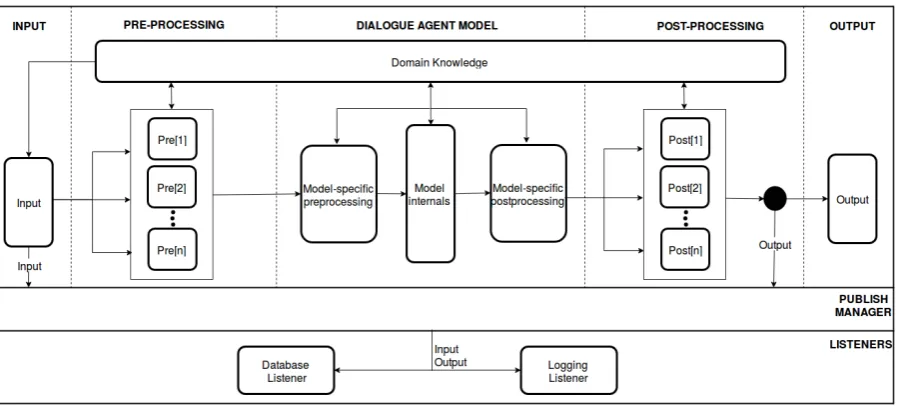
Figure 1: Overview of MACA: A Modular Architecture for Conversational Agents.
2 Related Work
There are a few proposed frameworks in recent years that provide easy prototyping of dialogue agents.
Ravenclaw (Bohus and Rudnicky, 2003), pro-posed as a successor to Agenda (Allen et al., 2001), is a two-tiered dialogue architecture sup-porting rapid development of dialogue agents. This flexible architecture provides a clear separa-tion between the domain knowledge and dialogue agent, and maintains a hierarchical task structure. Systems can be built on the architecture with the hierarchical task layout but adding a new task re-quires the hierarchy to be rebuilt, which impedes application to new domains.
A hierarchical architecture similar to Raven-claw, called Task Completion Platform (TCP) (Crook et al.,2016), addresses domain knowledge extensibility with minimal changes to a configura-tion file. In addiconfigura-tion, it allows the goal oriented tasks to be defined easily using a TaskForm lan-guage to maintain slot information. Although TCP facilitates extension of slot-based agents to multi-ple domains, it cannot be extended for other dia-logue agent types viz., generative models and re-trieval models.
Another notable architecture is ClippyScript (Seide and McDirmid, 2012), but its task defini-tion is tied to a task condidefini-tion by rule. Rules are therefore constrained to be explicitly defined on a per task basis. This is significantly more restrictive than our proposed architecture.
As much research focuses on proposing
dif-ferent architectures for dialogue models, there have also been some progress made in propos-ing efficient protocols for agent-agent interaction such as DialPort (Zhao et al., 2016), which pro-vides tools for enabling multi-modal interaction between agents. Our proposed work is different from this line of research, focusing on a unifying architecture for dialogue agents and little on the inter-agent communication.
3 Architecture Description
An overview of the Modular Architecture for Con-versational Agents (MACA) is presented in Fig-ure1. The system is setup as a pipeline with six major components: Input, Pre-processing, Dia-logue Model, Post-processing, Output, and Listen-ers. Each component contains independent sub-components that interact across it. All compo-nents within the architecture abstract away their underlying implementations and therefore allow their extensions to be straightforward. This helps in block-wise designing of newer systems by pre-serving the original functionality, yet also provid-ing a free hand in customizprovid-ing of each component. 3.1 Component Details
3.1.1 Domain Knowledge
knowl-edge must be independent of the model implemen-tation, and can be shared between different models and components.
3.1.2 Input
TheInputmodule provides or generates input ut-terances (i.e. statements, sentences) to the conver-sation pipeline. This component represents an ab-stract input device whose source of context varies depending on the use case. This could include a database of previous collected conversations, a terminal interface (i.e. stdin) to acquire data in real-time, or a web interface to a data source (e.g. mTurk).
3.1.3 Preprocessing
The Pre-processing module serves as a bridge between raw data acquired via the Input com-ponent and the input format required of compo-nents of the Dialogue model module. The sys-tem architect may choose to include one or sev-eral pre-processing operations within this mod-ule. These pre-processing operations by default are performed in parallel and their results are fed into the next component as an array. This allows the dialogue model to have multiple input repre-sentations. Alternatively, the framework also al-lows these operations to be sequentially processed in a specified order (e.g. spelling correction, fol-lowed by stemming).
Pre-processing operations currently imple-mented in MACA include: getting POS tags, re-moving stop-words, sentence tokenizing (Loper and Bird,2002), Byte-Pair encoding (BPE) (Gage,
1994) and can be extended to accommodate
trained sentence2vec model (Le and Mikolov, 2014), trained word2vec model (Mikolov et al., 2013), etc. These nodes can also interact with the Domain Knowledgecomponent to acquire domain specific information required for the operations. 3.1.4 Dialogue Model
This module is the core of the architecture, and contains implementations of agents capable of producing dialogue acts in response to the pre-processed Input information. This module can have up to three sub-components: Model Specific Pre-processing, Model Internalsand Model Spe-cific Post-processing, to accommodate dialogue agent models with various interface requirements. The Model internals sub-module contains the central dialogue model, which may be an
exist-ing model, such as a POMDP (Png and Pineau, 2011), Dual Encoder (Lowe et al.,2015a), HRED agent (Serban et al., 2015), or a newly designed model. This sub-module receives inputs from the Model Specific Pre-processing sub-module. The space of possible responses, vocabulary or dia-logue acts are stored in the Domain Knowledge
module. The Model internals and Model
spe-cific Pre/Post-processing sub-modules share the model information. Similar to thePre-processing component, they can access any information re-quired for their operations by querying the Do-main Knowledgecomponent. A specific illustra-tion of this interacillustra-tion is in goal-oriented dialogue agents, where the slot information – askQueries and other attributes of the slot and these slot ob-jects – are maintained in the domain knowledge, which enables the framework to support multiple agents. In such settings, the Dialogue Model is ini-tialized with a generic agent that tries to gauge the user intent, and then queries the domain knowl-edge for the appropriate slots.
Model specific Pre-processing and Post-processing sub-components are provided to give the luxury of designing fine-tuned pre-processing
for a model. Model Specific Pre-processing
sub-component transforms pre-processed input(s) into appropriate representations compatible with the model internals (e.g. array of word indices into vector, matrix or lookup table, etc). On the other hand, Model Specific Post-processing sub-component transforms model outputs into more comprehensible forms for the next independent
component in the system (e.g. matrix/vector
representation to array of words/sentences). Although certain interpretations suggest analo-gies between the above sub-modules and conven-tional units of a goal-oriented dialogue system such as Dialogue Manager (DM) asModel inter-nals, Natural Language Understanding (NLU) as Model specific Pre-processing, and Natural Lan-guage Generation (NLG) asModel specific Post-processing, MACA does not impose any restric-tion on how the framework’s sub-modules should correspond with these conventional parts of a di-alogue system. For example, the architect may choose to have the Model internals sub-module act as a NLU unit, while Model specific Post-processingact as both NLG Unit and DM unit.
pre-and post-processing sub-components can also be used to keep processing units specific to each of the model in the architecture. For clarification, in a typical implementation of an ensemble of models, theModel specific Pre-processingsub-component can be used to provide separate inputs parsed from thePre-processingcomponent to the correspond-ing models, whileModel specific Post-processing sub-component can be used to perform a majority voting or other ensemble techniques to select the responsepool.
3.1.5 Postprocessing
The Posprocessing component connects the Dia-logue Model and the Output components. It al-lows the architect to choose the response in the case of multi-response retrieval, to alter responses based on linguistic characteristics, or to modify a response in accordance with the conversation do-main. It may also serve as a translation of text to system calls, which is useful in the case where a dialogue agent placed as the front-end interface to another software system. Similar to the Pre-processing module, this component includes one or multiple post-processing operations, which pro-cess the output in parallel or in sequence, depend-ing on the specification of the designer. In addi-tion, these post-processing operations within the Post-processingcomponent can also query the Do-main Knowledgecomponent for relevant data re-quired for the generation of text response.
3.1.6 Output
Through the output component, the architecture provides a generic way to output the response to appropriate audience(s) depending on the use case. Currently, implemented options arecommand line, file based, web based, anddatabase. Similar to the Inputcomponent, the output component provides flexibility for the architect to change the destina-tion of produced outputs and to separate the output programming logic from that of other components. 3.1.7 Pubsub system/Listeners
In addition to the main pipeline presented above, the proposed system also includes a passive pub-sub layer to facilitate monitoring, conversation recording, and independent evaluation of the model. This pubsub system allows the architect to choose or plug in a wide range of peripheral components (calledListeners) to passively moni-tor the main system for execution behaviors and
performance. On top of several default channels (seeOperation modessection below) that the sys-tem writes to and reads from, users can freely add their own channels to communicate between the main system and the pubsub layer hosting the pe-ripherals.
Listeners, as previously mentioned, are optional modules that can be plugged in to passively moni-tor the system over different channels. These mod-ules are useful when the architect is interested in observing the system inputs and/or outputs, or vi-sualizing internal parameters or states of the dia-logue model at execution time. Passive monitor-ing logic can be independently introduced into the system without modifying the other components’ implementations.
3.2 Operation modes
[image:4.595.306.538.415.471.2]MACA can be operated in three different modes: Data Collection, Training and Execution. This section describes the data flow in the architec-ture along with abstract setups of the framework’s components in these different operation modes for several dialogue models from the recent literature. 3.2.1 Data Collection Mode
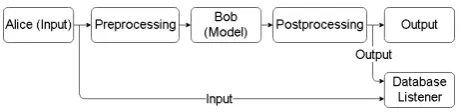
Figure 2: Data flow in data collection mode.
The goal of the data collection mode is to col-lect conversations as training datasets for dialogue models. In this mode, the two agents Alice and Bob involved in the conversation are considered the Input component and the Dialogue Model component respectively. Figure2describes a typ-ical setup for the data collection process with said configuration. The conversation is recorded using a database listener that receives both input (con-text) and output (response) for each speaking turn, similar to the scheme presented in section 3.2.3 above.
of the Inputcomponent fetching contexts from a database, while Bob is a human agent responding to the fetched contexts.
[image:5.595.73.297.116.224.2]3.2.2 Training Mode
Figure 3: Data flow in training mode.
The goal of the training and validation mode is to use the data obtained in the data collec-tion stage to train one or multiple dialogue mod-els, as illustrated in figure3. Assuming a dataset is available from theDomain Knowledge compo-nent, training data can be fetched as batches by theInputcomponent and fed into the VoidPrepro-cessing component. This component simply for-wards the data as is to the Dialogue Model com-ponent, which performs model training, and oc-casionally queries the domain knowledge for val-idation data to verify its training progress. Since system output is irrelevant within the training sce-nario,Post-processingandOutputcomponents are implemented with null operations, which simply discard their received contents. Once certain val-idation accuracy is achieved, the model can save its internals on to the disk and terminate the sys-tem. In addition to the core training process, the architect may opt to emit training information to a listener through thetrainingchannel to monitor the training progress.
3.2.3 Execution Mode
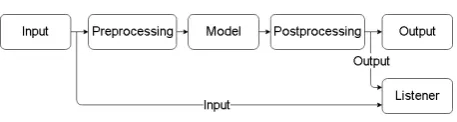
Figure 4: Data flow in execution mode.
Data flow in execution mode is illustrated in fig-ure 4. In this mode, all core components in the system are enabled and active. Given that the di-alogue model has been successfully trained and fine-tuned, its internal states (e.g. weights, hyper-parameters) are loaded into the Dialogue Model
component at system initialization time. Input data is retrieved in real time (through local user interface (e.g. terminal, GUI) or via an interface with the Internet (e.g. web page, chat client)). This input then enters the pipeline and goes through Preprocessing, Dialogue model, Postprocessing and finallyOutput component. At the end of the pipeline, the output component is responsible for sending the generated responses to relevant audi-ences (e.g. print to stdout, HTTP response, ...).
From the peripheral components perspective, conversation logging and system monitoring can be done through two default channels: input and output. Specifically, as shown in figure4, the pas-sive listener receives a notification for every in-put received from theInputcomponent on the in-put channel, and a notification for every output received by the Output component on the output channel.
4 Feature Highlights
As discussed in the previous sections, MACA can be used to plug in different types of existing di-alogue agents. The architecture abstracts the im-plementation details, similar to popular machine learning libraries such as Theano (Theano Devel-opment Team, 2016), Tensorflow (Abadi et al., 2016), or PyTorch. The modular design enables rapid prototyping and should facilitate reproduc-ing previous results. The support for experimenta-tion, extension, and development of slot-based di-alogue agents for goal-oriented tasks has also been provided. In addition, the current implementation has rule-based approach for slot disambiguation and has provisions for the easy extension of slot disambiguation to machine learning (ML) based modules. The clear separation of domain knowl-edge from the agent aids in multi-agent systems with little dependence on the domain – the in-tent identification is provided at a higher level to identify and trigger the task, defined as a set of slots and ask queries. Intent identification sup-ports hosting of multiple tasks.
[image:5.595.72.301.586.647.2]MACA TCP Ravenclaw
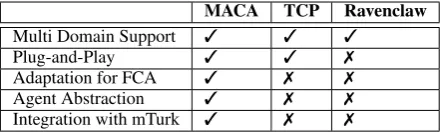
Multi Domain Support 3 3 3
Plug-and-Play 3 3 7
Adaptation for FCA 3 7 7
Agent Abstraction 3 7 7
[image:6.595.72.294.62.128.2]Integration with mTurk 3 7 7
Table 1: Feature Comparison of MACA with ex-isting similar frameworks. Note: FCA: Frequently used Conversational Agents.
5 Implementation Highlights2
MACA’s current implementation is in Python and includes standard libraries to ensure the frame-work’s portability, as well as to facilitate rapid prototyping of different dialogue model strategies.
Each component of the framework (e.g. Input
component) is described with an abstract Python class, whose concrete implementation instances (i.e. Python objects) are manifestations of that component (e.g. Command line input, Database input). This corresponds to the abstraction layer of the architecture’s module to foster independence of the pipeline implementation from that of the underlying dialogue model(s). The assembly of these components are then specified in a central configuration file representing an instantiation of the architecture. With this design, changes in the instantiation specifications can be done within the central configuration file by modifying the names of invoked modules. On the other hand, this setup allows system specifications to be completely con-tained within the central configuration file, which reduces maintenance effort and simplifies config-uration modification during development. In ad-dition, the open source nature of the framework encourages sharing and reusing of components, which allows researchers to easily develop from existing models and save time by reusing common components written by others.
6 Case Studies
MACA was deployed for several studies within our research group. All conducted studies have the same template for the central configuration file, whose content is then modified corresponding to the purpose of each study. Listing 1 shows the configuration template representing a system with a simple dialogue agent, which repeats its input
2Some of the configuration file samples provided in the
listings in this section are slightly modified to fit the page limit constraint.
(echo agent). The configuration file requires sev-eral attributes to be mentioned and provides a gen-eral outlook of the experiment being run. The tem-plate contains the following attributes: input, out-put, preprocessing, postprocessing, agent, domain knowledge andlisteners. The class sub-attribute of the attributes refers to the Python class imple-mentation of the component being invoked.
6.1 Building a simple agent
The Echo agent is designed to simply listen and store the input to file; this is a good first test case for new users of MACA. In this setup, the in-putattribute is instantiated withStdinInputDevice, which is the commandline inputs, and the out-putattribute is instantiated withFileOutputDevice, which writes the results to a file. Likewise, the instantiations of the other attributes, like postpro-cessing, preprocessing and domain knowledge, point to VoidPostprocessor, VoidPreprocessor, and EmptyDomainKnowledge respectively, since Echo agent does not require them. Theagent at-tribute is instantiated with the appropriate dialogue agent, which in this case is Echo agent. Along with these components, LoggingListener, which logs the input and output of the system on to an output file, is included as alistenercomponent.
1 ’input’ :{’class’ : StdinInputDevice}, 2 ’output’ :{
3 ’class’ : FileOutputDevice, 4 ’args’ : [’out.gods’] 5 },
6 ’preprocessing’ :{
7 ’modules’ : [{’class’ : VoidPreprocessor,}], 8 ’parallel’ : False,# Optional
9 },
10 ’postprocessing’ :{
11 ’output index’ : 0,# Index of the pipe to output 12 ’parallel’ : False,# Optional
13 ’modules’ : [{’class’ : VoidPostprocessor,}] 14 },
15 ’agent’ :{’class’ : EchoAgent},
16 ’domain knowledge’ :{’class’ : EmptyDomainKnowledge}, 17 ’listeners’ :{’unnamed’: [{’class’ : LoggingListener}]}
Listing 1: Configuration Template.
6.2 Building a goal oriented system
oriented policies/sub-agents for each task happens with the description of slots – askQuery, disam-biguation strategy etc. As with providing agent support, the architecture can handle multi-ple intents with intent triggers defined for each of them. For example, ”I would like to book a flight” will trigger the flight booking policy which will fill in slots specific to this task based on the informa-tion provided in the domain knowledge, whereas ”What’s a good restaurant nearby?” will trigger the restaurant booking policy. The configuration file modification in the agent and domain knowl-edge attributes is provided in Listing2.
1 first name slot = Slot(’first name’) 2 last name slot = Slot(’last name’) 3 ’agent’ :{
4 ’class’ : PersonalInformationAskingModel, 5 ’kwargs’ :{
6 ’intents’ : [
7 AddressAskingAgent(’address’), 8 NameAskingAgent(’name’)
9 ]
10 }
11 },
12 ’domain knowledge’ :{
13 ’class’ : GoalOrientedDomainKnowledge, 14 ’args’ : [{
15 ’address’ : [
16 first name slot, last name slot, 17 Slot(’street’, [’apt’, ’street name’]), 18 Slot(’city’),
19 Slot(’country’),
20 Slot(’zip code’, enabling condition =\ 21 lambdaslots: slots[’country’].value() == ”US”)
22 ],
23 ’flight booking’ : [
24 first name slot, last name slot, 25 Slot(’origin’),
26 Slot(’destination’), 27 Slot(’return date’)
28 ]
29 }] 30 },
Listing 2: Sample Agent attribute in Goal Ori-ented Dialogue models’ Configuration.
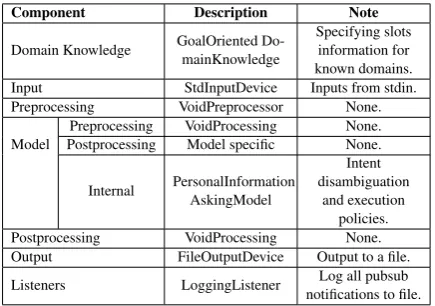
An overview of the architecture components in the goal oriented setting is provided in Table2. 6.3 Building a neural response generation
agent
We also used MACA to prototype neural re-sponse generation agents based on the Hierarchi-cal Encoder-Decoder framework (Serban et al., 2015).
6.3.1 HRED in training mode
MACA’strainingmode was tested with the train-ing process of an HRED agent. The modifica-tions for the central configuration files for this
Component Description Note
Domain Knowledge GoalOriented Do-mainKnowledge Specifying slotsinformation for known domains. Input StdInputDevice Inputs from stdin. Preprocessing VoidPreprocessor None.
Model PostprocessingPreprocessing VoidProcessingModel specific None.None.
Internal PersonalInformationAskingModel
Intent disambiguation
[image:7.595.308.526.61.214.2]and execution policies. Postprocessing VoidProcessing None. Output FileOutputDevice Output to a file. Listeners LoggingListener notifications to file.Log all pubsub
Table 2: Setup for goal oriented system in execu-tion mode.
setup are presented in Listing3. HREDTraining-InputDevice simply invokes the training process by sending aninitiatemessage to the model while the dialogue modelHREDAgent, configured to be in training mode, starts its regular training pro-cess and writes the trained weights to disk. The training dataset is specified using the prototype sub-attribute (in compliance with the HRED code base) within thetrain argsattribute ofagent. All other components of the pipeline are unchanged as it is unnecessary to postprocess or to output data. The HRED agent was trained using both the Twit-ter Corpus (Ritter et al., 2011) and Ubuntu Dia-logue Corpus (Lowe et al.,2015b).
1 ’input’ :{
2 ’class’ : HREDTrainingInputDevice 3 }, ...
4 ’agent’ :{
5 ’class’ : HREDAgent, 6 ’kwargs’ :{
7 ’train args’ :{’prototype’ : ’ubuntu HRED’}, 8 ’mode’ : system modes.TRAINING,
9 }
10 },
Listing 3: Modified attributes for HRED training.
6.3.2 HRED in execution mode
pre-trained HRED model can be seen as a case of cus-tom built dialogue agent adapted to MACA.
1 ’agent’ :{
2 ’class’ : HREDAgent, 3 ’kwargs’ :{
4 ’ignore unknown words’ : True, 5 ’normalize’ : False,
6 ’prototype’ : ’prototype twitter HRED’, 7 ’train dialogues’ : ’Training.dialogues.pkl’, 8 ’test dialogues’ : ’Test.dialogues.pkl’, 9 ’valid dialogues’ : ’Validation.dialogues.pkl’, 10 ’dictionary path’ : ’Dataset.dict.pkl’, 11 ’model prefix’ : ’./334.74 Model’
12 }
13 },
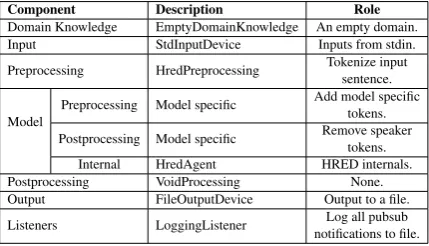
Listing 4: Agent attribute in HRED Configuration. The central configuration file from Listing 1 is updated for HRED in execution mode, as shown in Listing 4. The model specific arguments, pro-vided between lines 3 and 14, in Listing4 demon-strate MACA’s support for plugging in customized or pre-trained dialogue agents. Furthermore, an overview of the architecture, with the instantiated components, and their roles is provided in Table3.
Component Description Role
Domain Knowledge EmptyDomainKnowledge An empty domain. Input StdInputDevice Inputs from stdin. Preprocessing HredPreprocessing Tokenize inputsentence.
Model Preprocessing Model specific
Add model specific tokens. Postprocessing Model specific Remove speakertokens.
[image:8.595.74.289.382.505.2]Internal HredAgent HRED internals. Postprocessing VoidProcessing None. Output FileOutputDevice Output to a file. Listeners LoggingListener notifications to file.Log all pubsub
Table 3: Setup of HRED system: Execution mode.
6.4 Building a neural response retrieval agent Finally, we built an architecture that incorporates a neural response retrieval agent operating using the Dual Encoder method (Lowe et al.,2015a). 6.4.1 Dual Encoder in training mode
Listing 5 presents changes to the template con-figuration to incorporate a Dual Encoder dialogue agent in training mode. Similar to the HRED model training case, we replace the Input and Modelmodules in the template configuration. In the case of Dual Encoder, the specified data set will be loaded into DomainKnowledge and will become accessible after initialization. During the training process, RetrievalModelTrainingInputDe-vice retrieves the data from the specified
train-ing data set via DomainKnowledge and feeds it to the Dialogue Modelwhile the RetrievalMode-lAgent contains the relevant training parameters. Once training finishes, RetrievalModelTrainingIn-putDevice issues a message to the agent to write out trained weights to disk.
1 ’input’ :{
2 ’class’ : RetrievalModelTrainingInputDevice, 3 ’kwargs’ :{’n epochs’ : 500, ’shuffle batch’ : False} 4 }, ...
5 ’agent’ :{
6 ’class’ : RetrievalModelAgent,
7 ’args’ : [ ’twitter dataset/W twitter bpe.pkl’ ], 8 ’kwargs’ :{
9 ’model fname’ : ’model.pkl’, 10 ’mode’ : system modes.TRAINING, 11 ’model params’ :{
12 ’encoder’ : ’lstm’,
13 ’batch size’ : 512, ’hidden size’ : 200, 14 ’optimizer’ : ’adam’, ’lr’ : 0.001,
15 }
16 }
17 }, ... 18 ’dataset’ :{
19 ’class’ : RetrievalTwitterDataset,
20 ’args’ : [ ’twitter dataset’, ’dataset twitter bpe.pkl’ ] 21 },
Listing 5: Modified attributes for Dual Encoder training.
6.4.2 Dual Encoder in execution mode
We also tested the Dual Encoder agent in execu-tionmode, which is an instance of adapting a re-trieval based model to the proposed framework. The execution mode in this case obtained inputs from a database of previously collected context-response pairs. The configuration file for the Dual Encoder model looks mostly similar to the generic template, with modification on theagentattribute, described in Listing6.
1 ’preprocessing’ :{ 2 ’modules’: [{
3 ’class’ : RetrievalModelPreprocessor,
4 ’args’ : [’./retrieval/BPE/Twitter Codes 5000.txt’] 5 }],
6 }, ... 7 ’agent’ :{
8 ’class’ : RetrievalModelAgent,
9 ’args’ : [ ’../../twitter dataset/W twitter bpe.pkl’ ], 10 ’kwargs’ :{
11 ’model params’ :{ 12 ’encoder’ : ’lstm’,
13 ’batch size’ : 512, ’hidden size’ : 100, 14 ’input dir’ : ’../../twitter dataset’, 15 ’W fname’ : ’W twitter bpe.pkl’
16 }
17 }
18 },
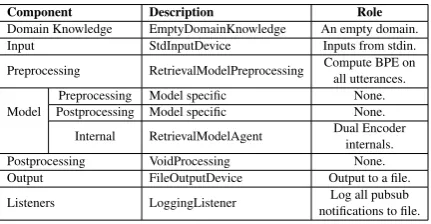
The configuration file’s flexibility allows cus-tomized agents to be plugged in with ease, while providing the parameters for the model to run in the model params sub-attribute. Further, an overview of MACA with its instantiated com-ponents and their roles is provided in Table 4; specification of these attributes within MACA is achieved through the configuration file.
Component Description Role
Domain Knowledge EmptyDomainKnowledge An empty domain. Input StdInputDevice Inputs from stdin. Preprocessing RetrievalModelPreprocessing Compute BPE onall utterances.
[image:9.595.74.290.179.291.2]Model Postprocessing Model specificPreprocessing Model specific None.None. Internal RetrievalModelAgent Dual Encoderinternals. Postprocessing VoidProcessing None. Output FileOutputDevice Output to a file. Listeners LoggingListener notifications to file.Log all pubsub
Table 4: Setup for Dual Encoder system in execu-tion mode.
7 Discussion
MACA offers a unified architecture for dialogue agents that supports the plug-n-play of different types of dialogue agents and different domains. We hope that this will facilitate the fast develop-ment of new models, but also foster reproducibil-ity in dialogue system research.
A few possible limitations in the current imple-mentation of MACA include simplicity of the pub-sub system, lack of support for distributed hosting of different components of the architecture, and lack of support for parallel conversations. As fu-ture work, the pubsub system could be improved by capturing a wider range of system information with more monitoring pubsub channels. In ad-dition, we plan to incorporate new domains and agents as they become available, along with com-prehensive ML based slot-disambiguation mod-ules.
Acknowledgments
Acknowledgements The authors gratefully ac-knowledge financial support for this work by the Samsung Advanced Institute of Technology (SAIT) and the Natural Sciences and Engineering Research Council of Canada (NSERC).
References
M. Abadi, A. Agarwal, P. Barham, E. Brevdo, Z. Chen, C. Citro, G. S Corrado, A. Davis, J. Dean, and
M. et. al Devin. 2016. Tensorflow: Large-scale machine learning on heterogeneous distributed sys-tems. arXiv:1603.04467.
J. F Allen, D. K Byron, M. Dzikovska, G. Ferguson, L. Galescu, and A. Stent. 2001. Toward conversa-tional human-computer interaction. AI magazine. D. Bohus and A. I Rudnicky. 2003. Ravenclaw: Dialog
management using hierarchical task decomposition and an expectation agenda .
PA Crook, A Marin, V Agarwal, K Aggarwal, T Anas-tasakos, R Bikkula, D Boies, A Celikyilmaz, S Chandramohan, and Z et. al Feizollahi. 2016. Task completion platform: A self-serve multi-domain goal oriented dialogue platform.NAACL HLT . P. Gage. 1994. A new algorithm for data compression.
The C Users Journal.
T. M. Gureckis, J. Martin, J. McDonnell, A. S. Rich, D. Markant, A. Coenen, D. Halpern, J. B. Ham-rick, and P. Chan. 2016. psiturk: An open-source framework for conducting replicable behavioral ex-periments online.Behavior research methods. S. Hochreiter and J. Schmidhuber. 1997. Long
short-term memory.Neural computation.
S. Kim and R. E. Banchs. 2014. R-cube: a dialogue agent for restaurant recommendation and reserva-tion. In Asia-Pacific Signal and Information Pro-cessing Association, 2014 Annual Summit and
Con-ference (APSIPA). IEEE.
Q. V. Le and T. Mikolov. 2014. Distributed representa-tions of sentences and documents. InICML. E. Loper and S. Bird. 2002. Nltk: The natural
lan-guage toolkit. InProceedings of the ACL-02 Work-shop on Effective tools and methodologies for teach-ing natural language processteach-ing and computational linguistics-Volume 1.
R. Lowe, N. Pow, I. Serban, and J. Pineau. 2015a. The ubuntu dialogue corpus: A large dataset for re-search in unstructured multi-turn dialogue systems.
arXiv:1506.08909.
R. Lowe, N. Pow, I. Serban, and J. Pineau. 2015b. The ubuntu dialogue corpus: A large dataset for research in unstructured multi-turn dialogue systems. In16th Annual Meeting of the Special Interest Group on
Discourse and Dialogue.
T. Mikolov, K. Chen, G. Corrado, and J. Dean. 2013. Efficient estimation of word representations in vec-tor space. arXiv:1301.3781.
S. Png and J. Pineau. 2011. Bayesian reinforcement learning for pomdp-based dialogue systems. In
Acoustics, Speech and Signal Processing (ICASSP),
IEEE International Conference on. IEEE.
A. Ritter, C. Cherry, and W. B. Dolan. 2011. Data-driven response generation in social media. In
EMNLP.
J. Schatzmann, K. Georgila, and S. Young. 2005a. Quantitative evaluation of user simulation tech-niques for spoken dialogue systems. In6th SIGdial
Workshop on DISCOURSE and DIALOGUE.
J. Schatzmann, K. Georgila, and S. Young. 2005b. Quantitative evaluation of user simulation tech-niques for spoken dialogue systems. In6th SIGdial
F. Seide and S. McDirmid. 2012. Clippyscript: A pro-gramming language for multi-domain dialogue sys-tems. InThirteenth Annual Conference of the
Inter-national Speech Communication Association.
I. Serban, A. Sordoni, Y. Bengio, A. Courville, and J. Pineau. 2015. Building end-to-end dialogue sys-tems using generative hierarchical neural network models. arXiv:1507.04808.
I. Serban, A. Sordoni, R. Lowe, L. Charlin, J. Pineau, A. Courville, and Y. Bengio. 2016. A hierarchical latent variable encoder-decoder model for generat-ing dialogues. arXiv:1605.06069.
Theano Development Team. 2016. Theano: A Python framework for fast computation of mathematical ex-pressions. arXiv:1605.02688.
S. Young. 2006. Using pomdps for dialog manage-ment. In Spoken Language Technology Workshop. IEEE.