STUDY ON POLY HERBAL SIDDHA PREPARATION “MATHUMEKA
CHOORANAM” BASED ON SOME PRELIMINARY STEPS OF
STANDARDIZATION METHODS
Dr. S. Janani1* and Dr. M.A.M. Ajwad2
1
Lecturer (Probationary), Unit of Siddha Medicine, Trincomalee Campus, Eastern
University Sri Lanka.
2
Medical Officer, Siddha Teaching Hospital, Konesapuri, Trincomalee, Sri Lanka.
ABSTRACT
In the few decades, there has been exponentially growth in the field of
herbal remedies. Newer guidelines for standardization, manufacture,
quality control and scientifically rigorous research will be necessary
for traditional treatments. This traditional knowledge can serve as the
powerful search engine that will greatly facilitate drug discovery.
Standardization of herbal formulations is essential in order to assess
the quality, purity, safety and efficacy of drugs based on the amounts
of their active principles. The aim of the present work is to standardize
“Mathumeka Chooranam” based on some preliminary steps of
standardization methods. The “Mathumeka chooranam” is Siddha
polyherbal formulation used in the treatment of Mathumekam (diabetes
mellitus). The drug was standardized on the basis of organoleptic characters, physical
characteristics and physico-chemical properties such as moisture content, ash values,
extractive values (water & ethanol) were carried out according to world health organization
guidelines and the results were compared with other formulation. The purpose of this
standardization involves the safe, proper selection and handling of crude materials, ensure
efficacy and stability of finished product, and guiding the consumer about the product.
KEYWORDS: Mathumeka chooranam, Mathumekam, Standardization.
Volume 7, Issue 9, 1447-1459. Research Article ISSN 2277– 7105
Article Received on 19 March 2018,
Revised on 09 April 2018, Accepted on 30 April 2018,
DOI: 10.20959/wjpr20189-12018
*Corresponding Author
Dr. S. Janani
INTRODUCTION
Background of the study
Sri Lanka has a rich heritage of traditional medicine constituting with its different
components like Ayurveda, Siddha and Unani. Indigenous systems of medicines may be
explored with the modern scientific approaches for better leads in the health care. In the last
few decades, there has been an exponential growth in the field of Indigenous medicine .There
are great need of standardization and quality control of Indigenous formulations.
Standardization and quality control depends upon the nature of crude drug and compound
drugs.
Herbal medicines as the major remedy in traditional system of medicine have been used in
medical practices since antiquity. The practices continue today because of its biomedical
benefits as well as place in cultural beliefs in many parts of the world and have made a great
contribution towards maintaining human health. Approximately 60% of the population use
herbal medicines to treat medical illnesses. Therefore, reproducible standards of each plant
are necessary for effective quality control to prevent adulteration.
The subject of herbal drug standardization is massively wide and deep. Standardization is an
essential factor for herbal formulation in order to assess the quality of the drugs based on the
concentration of their active principle. Thus the present study deals with standardization of
Siddha herbal preparation Mathumeka chooranam. Mathumeka chooranam is mentioned in
the Siddha pharmacopeia by Dr. Pon Ramanathan, for the treatment of mathumekam
(Diabetes mellitus).
The term Chooranam (Powdered herbal preparation for internal use) is applied to the powder
prepared by a single or a combination of two or more herbal ingredients. Mathumeka
Choornam is a popular compound preparation of four ingredients used for diabetes mellitus.
It consists of Kadukaay thol (Terminalia chebula), Nelli vatral (Phyllunthus emblica),
Kariveppilai (Murraya koenigii) and Sirukurincha (Gymnia sylvestra).
Systematic protocols for standardization of Mathumeka chooranam is not available, hence it
was decided to evaluate the qualitative and quantitative analysis for Mathumeka chooranam
scientifically to prevent its adulteration. For the standardization of these drugs organoleptic
properties, physical and chemical studies were carried out. TLC of the Mathumeka
designed to prepare and standardized the Mathumeka chooranam in accordance with the
WHO guidelines.
Statement of the problem
Diabetes mellitus is a very commonest problem in the world. Although synthetic drugs
available for the treatment of diabetes causes multiple unwanted effects. To avoid this
problem search of newer and alternative therapy is getting important. Thus several studies are
ongoing worldwide to find natural healing agents with better safety profile. In siddha
medicine, there are many drugs signified for management of mathumekam (Diabetes
mellitus) even though the availability of standardization studies about that medicines are
limited in our country. Therefore the current study aimed to standardize the mathumeka
chooranam through some preliminary studies.
Hypothesis
Mathumeka Chooranam is an effective medicine for mathumekam (Diabetes mellitus).
Objectives
General objective
To standardize the Mathumeka chooranam through some preliminary studies.
Specific objectives
To identify the botanical aspect of each crude materials (authentication & organoleptic
characters).
To identify the microscopic aspects of each powders.
To calculate the moisture content, ash value and extract value (water soluble & ethanol
soluble).
Significance of the study
The use of herbal drugs has been increased all over the world due to their huge therapeutic
effect and less adverse effects as compared to other medicines. The herbal drugs are very
effective but due to adulteration and lack of standardization, the effectiveness of the herbal
drug is decreased. Therefore there is need of development of standardization parameters. It
Scope of the study
Scientifically proof the herbal drug formulations or alignment with modern technology.
Assess the quality of drugs, based on the concentration of their active principles.
Assess the purity, safety and efficacy of the drug.
METHODOLOGY
Authentication
Ingredients of Mathumeka Choornam is consists of Kadukaay thol (Terminalia chebula),
Nelli vatral (Phyllunthus emblica), Kariveppilai (Murraya koenigii) & Sirukurincha (Gymnia
sylvestra).They were procured from local market of Colombo district and was botanically
authenticated and voucher specimen (No: IN 003) was deposited by the botany section of the
Bandaranayaka, Memorial Ayurvedic Research Institute (BMARI), Nawinna, Maharagma,
Sri Lanka.
Preparation of Mathumeka chooranam
The Mathumeka chooranam was prepared according to the procedure of Siddha Pharmacopea
by Dr. Pon Ramanathan. In house formulation of Mathumeka chooranam prepared from each
equal parts of Kadukaay thol (Terminalia chebula), Nelli vatral (Phyllunthus emblica),
Kariveppilai (Murraya koenigii) and half part of Sirukurincha (Gymnia sylvestra). These all
ingredients were washed with water and dried in shade. The individual ingredients were then
powdered using a grinder and sieved through cotton cloth. Weigh separately each powdered
ingredient and mix together. Pack it in tightly closed containers to protect from light and
moisture.
Organoleptic evaluation
Organoleptic evaluation was used for identification of sensory characteristics like colour,
odour, taste & texture. The organoleptic characters of the samples were carried out based on
Ayurvedic pharmacopeia.
Microscopic Study
Individual microscopic analysis of each ingredient of the formulation along with Mathumeka
chooranam was carried out to by classical pharmacognostical methods. The authenticity of
the individual ingredients was confirmed by comparison of their power characteristics with
Physicochemical evaluation
Physicochemical parameters such as Loss on drying, ash values and extractive values (water
& ethanol) of both chooranams were determined as per guidelines of World Health
Organization (WHO).
Loss on Drying
Loss on drying is the loss of mass expressed as percent w/w. About 2g of 3 drug samples of
each formulation was accurately weighed in a dried and tared flat weighing dish and dried at
1050C for 5hrs/ until become constant weight. The percentage was calculated with reference
to initial weight. Finally calculate the average value.
Determination of Total Ash
2samples of 0.5g and1 sample of 1g of powdered material of each formulation were placed
separately in a suitable crucible of silica previously ignited and weighed. The powdered drugs
were spread into an even layer and weighed accurately. The materials were incinerated by
gradually increasing the heat, not exceeding 450°C until free from carbon, cooled in a
desiccator, weighed and percentage ash was calculated by taking in account the difference of
empty weight of crucible & that of crucible with total ash. Finally calculate the average
value.
Alcohol Soluble Extractive Value
2.5g of coarsely powdered air-dried drug was macerated with 50ml of 95% of ethanol in a
closed flask for twenty-four hours, shaking frequently during six hours and allowed to stand
for eighteen hours. It was then filtered rapidly; taking precautions against loss of solvent.
20ml of the filtrate was evaporated to dryness in a tared flat-bottomed shallow dish at 105°C
to constant weight and weighed. The percentage of alcohol-soluble extractive was calculated
with reference to the air dried drug and is represented as% value.
Water Soluble Extractive Value
2.5g of coarsely powdered air-dried drug was macerated with 50 ml of 95% of chloroform
water in a closed flask for twenty-four hours, shaking frequently during six hours and
allowed to stand for eighteen hours. It was then filtered rapidly, taking precautions against
loss of solvent. 20ml of the filtrate was evaporated to dryness in a tared flat bottomed shallow
dish at 105°C to constant weight and weighed. The percentage of water-soluble extractive
RESULT AND DISCUSSION
Plant description and authentication
1. Emblica officinalis (Dried)
Nelli consists of pericarp of dried mature fruits of Emblica officinalis Gaertn.Syn.
Phyllanthus emblica Linn. (Fam. Euphorbiaceae); mostly collected in winter season after
ripening, a small or medium sized tree, found both in natural state in mixed deciduous forests
of the country ascending to 1300 m on hills; cultivated in gardens, home yards or grown as a
road side tree.
Vernacular names
Sanskrit: Ëmalaka
English: Emblic Myrobalan
Tamil: Nellikkai, nelli
Sinhala: Nelli
Macroscopic description
Drug consists of curled pieces of pericarp of dried fruit occurring either as separated single
segment; 1-2 cm long or united as 3 or 4 segments; bulk colour grey to black, pieces
showing, a broad, highly shriveled and wrinkled external convex surface to somewhat
concave, transversely wrinkled lateral surface, external surface shows a few whitish specks,
occasionally some pieces show a portion of stony tester (which should be removed before
processing); texture rough, cartilaginous, tough; taste, sour and astringent.
Terminalia chebula
Kadukaay consists of the pericarp of mature fruits of Terminalia chebula Retz. (Fam.
Combretaceae), a moderate sized or large tree, chiefly in deciduous forests and areas of light
rainfall, but occasionally also in slightly moist forests, up to about 1500 m elevation,
throughout India, flowers appear from April, August and fruits ripen from October-January.
Vernacular names
Sanskrit: Abhaya, Harithaki
English: Myrobalan
Tamil: Kadukkaai
Macroscopic description
Intact fruit yellowish-brown, ovoid, 20-35 mm long, 13-25 mm wide, wrinkled and ribbed
longitudinally, pericarp fibrous, 3-4 mm thick, non-adherent to the seed, taste, astringent.
Gymnema sylvestre (Leaf)
Sirukurinchaa consists of dried leaf of Gymnema sylvestre R.Br. (Fam.Asclepiadaceae), a
large woody, much branched, climber, with pubescent young parts, found in dry forests up to
600 m.
Vernacular names
Sanskrit: Meshashringi, madhunashini
English: Periploca of the wood
Tamil: Shirukurum Kaay, Shakkaraikkolli, Sirukurinchaa
Sinhala: Masbadhdha
Macroscopic description
Leaf simple, opposite, elliptical or ovate, petiolate, petiole 6 to 12 mm long and pubescent;
lamina 3 to 6 cm long and 1 to 3 cm broad; acute or shortly acuminate; more or less
pubescent on both sides, base rounded or cordate, venation reticulate; odour, unpleasant;
taste, bitter and acrid.
Murraya koenigii
The plant belonging to Rutaceae family. Shrubs or trees are up to 4 m tall and is found in
evergreen areas and in moist forest. Leaves of Murraya koenigii (L) Spreng (Mitha neem) are
aromatic and commonly used as flavoring agent in Sri Lanka curry preparation since ancient
times.
Vernacular names
Sanskrit: Surabhinimba
English: Curry leaves
Tamil: Kariveppilai, Karivempu
Sinhala: Karapinchaa
Macroscopic description
Curry leaf tree is a small tree, growing 4–6 m (13-20 feet) tall, with a trunk up to 40 cm
bipinnately compound with estipulate in alternate arrangement., with 11-21 leaflets, each
[image:8.595.64.538.145.291.2]leaflet 2–4 cm long and 1–2 cm broad. They are highly aromatic; taste, acrid.
Table 1: Organoleptic Properties of powders of each ingredient.
Ingredients Parameters
Appearance Colour Odour Taste
Terminalia chebula
Smooth powder
Yellowish
brown Characteristic Astringent
Phyllunthus emblica
Smooth
powder Brown Characteristic Sour & astringent
Murraya koenigii
Smooth
powder Dark green Aromatic
Slight pungent, bitter & feebly acidic taste
Gymnia sylvestra
Smooth
powder Light green Unpleasant Bitter & acrid
Table 2: Organoleptic Properties of Mathumeka chooranam.
Parameters Mathumeka chooranam Appearance Smooth powder
Colour Brownish green
Odour Aromatic
[image:8.595.70.530.428.674.2]Taste Slightly bitter & astringent
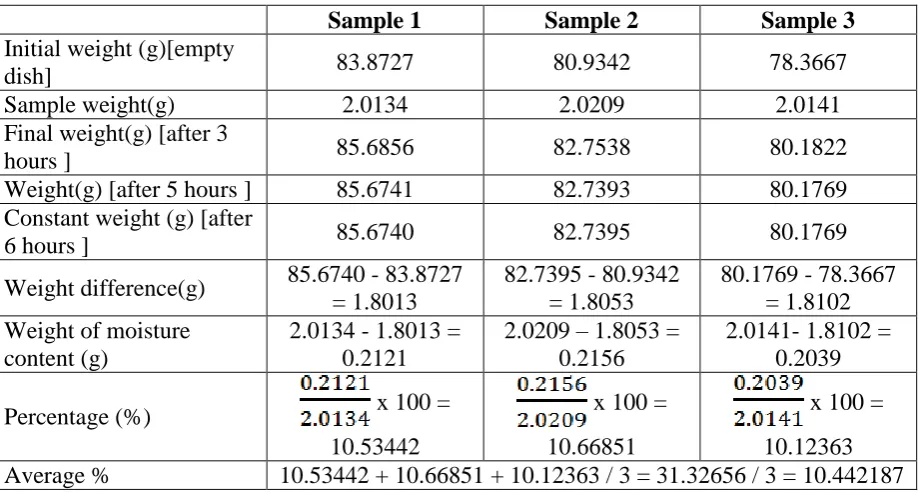
Table 3: Loss on drying readings of 3 samples of Mathumeka chooranam.
Sample 1 Sample 2 Sample 3
Initial weight (g)[empty
dish] 83.8727 80.9342 78.3667
Sample weight(g) 2.0134 2.0209 2.0141
Final weight(g) [after 3
hours ] 85.6856 82.7538 80.1822
Weight(g) [after 5 hours ] 85.6741 82.7393 80.1769
Constant weight (g) [after
6 hours ] 85.6740 82.7395 80.1769
Weight difference(g) 85.6740 - 83.8727 = 1.8013
82.7395 - 80.9342 = 1.8053
80.1769 - 78.3667 = 1.8102 Weight of moisture
content (g)
2.0134 - 1.8013 = 0.2121
2.0209 – 1.8053 = 0.2156
2.0141- 1.8102 = 0.2039
Percentage (%) x 100 =
10.53442
x 100 =
10.66851
x 100 =
10.12363
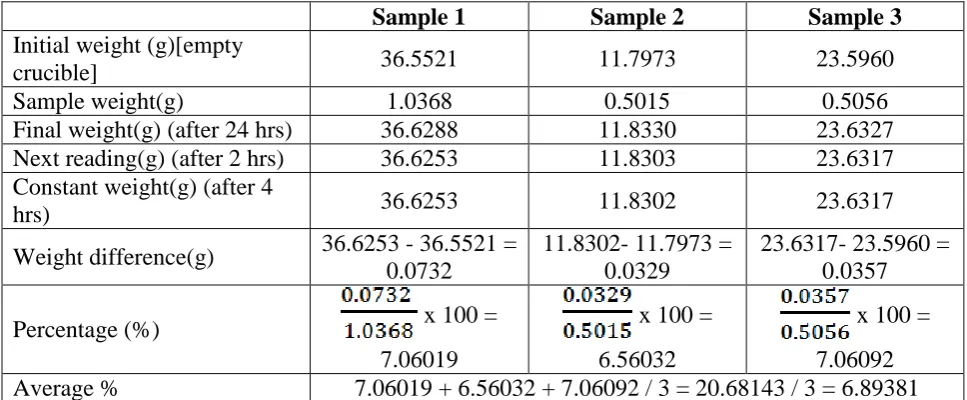
Table 5: Ash values of 3 samples of Mathumeka chooranam.
Sample 1 Sample 2 Sample 3
Initial weight (g)[empty
crucible] 36.5521 11.7973 23.5960
Sample weight(g) 1.0368 0.5015 0.5056
Final weight(g) (after 24 hrs) 36.6288 11.8330 23.6327
Next reading(g) (after 2 hrs) 36.6253 11.8303 23.6317
Constant weight(g) (after 4
hrs) 36.6253 11.8302 23.6317
Weight difference(g) 36.6253 - 36.5521 =
0.0732
11.8302- 11.7973 = 0.0329
23.6317- 23.5960 = 0.0357
Percentage (%) x 100 =
7.06019
x 100 =
6.56032
x 100 =
7.06092
[image:9.595.68.533.326.514.2]Average % 7.06019 + 6.56032 + 7.06092 / 3 = 20.68143 / 3 = 6.89381
Table 7: Extract values of Mathumeka chooranam.
95% of Ethanol Water
Initial empty weight(g) 36.1069 37.6350
Sample weight(g) 2.5036 2.5074
Volume of solvent(ml) 50 50
Final weight(g) in 20ml
(weight 1) 36.3131 37.9814
Final weight(g) in 20ml
(weight 2) 36.3130 37.9786
Final weight(g) in 20ml
(weight 3) 36.3090 37.9786
Percentage% x x
100 = 20.21
x x
100 = 34.36
Table 9: Physicochemical Parameters: Mathumeka chooranam.
Quantitative standards Result in % w/w
(Mathumeka chooranam)
Total Ash Value 6.89381
Moisture content 10.442187
Alcohol soluble extractives 20.21
Aqueous soluble extractives 34.36
Table 10: Standard value of physicochemical Parameters of choorna.
Parameter S.V.(standard value of
choorna)
Moisture content (%) ≤10
Water soluble extractive (%) 10 to 20
Ethanol soluble extractive (%) 15 to 20
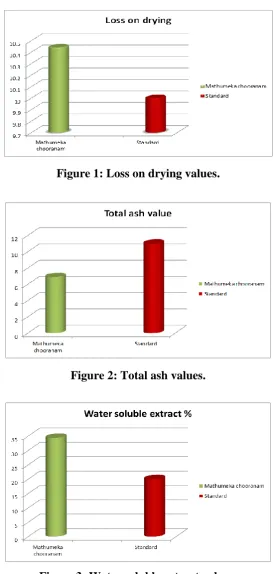
Figure 1: Loss on drying values.
Figure 2: Total ash values.
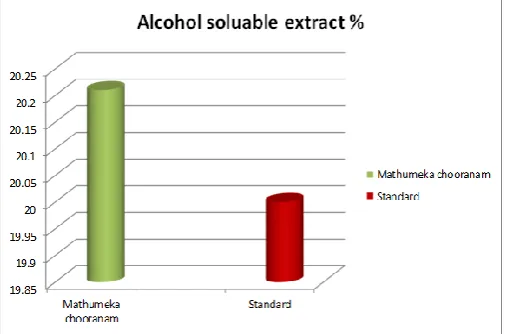
[image:10.595.165.431.469.630.2]Figure 4: Alcohol soluble extract values.
Figure 5: Extract values of mathumeka chooranam.
The above formulation was prepared in accordance with the Siddha pharmacopeia. As part of
standardization procedure, the finished product Mathumeka chooranam was tested for
relevant physical and chemical parameters.
The Mathumeka chooranam was Brownish green colour. The powder was smooth, having
aromatic and characteristic odour in subsequently, possessing bitter and astringent taste. The
organoleptic properties of the ingredients of Mathumeka chooranam was reported in table 1.
The organoleptic properties of the Mathumeka chooranam was described in table 2. Quality
tests for Mathumeka chooranam was performed for moisture content; ash content, water
soluble extractive and ethanol soluble extractive were found to be within standard ranges.
The loss on drying of the Mathumeka chooranam is given in table 3 & 4. The extractive
The total ash value of Mathumeka chooranam is (6.89381%). Moisture content for
Mathumeka chooranam was found to be 10.442187%. The Alcohol soluble extractives
percentage of Mathumeka chooranam is 20.21%. Aqueous soluble extractives percentage of
Mathumeka chooranam is 34.36. The extractive values of formulation in water were found to
be much higher than alcohol extractive values.
The standard range of loss on drying is equal or less than 10%. Moisture content for
Mathumeka chooranam was found approximately in standard range. Like that a total ash
value of the preparation was found in almost in normal range. (Standard is 7 – 10%) Water
soluble extractive of mathumeka chooranam (34.36%) is high than standard value (10 20%).
Alcohol soluble extract values of both formulations were in standard range.
CONCLUSION
From the present investigation various standardization parameters such as physicochemical
standards like total ash, water & alcohol soluble extractive values and loss on drying were
carried out, it can be concluded that the formulation of Mathumeka chooranam contains most
good characters of an ideal Chooranam. The sample shows satisfactory results, but the
efficacy of the products can only be judged by doing the pharmacology of which is suggested
as future scope. The study shows that the maximum contents of formulation presents within
the permissible limits as per WHO and the standard literature such as in pharmacopoeia,
which could helpful in authentication of Mathumeka chooranam. There is some mild
verification presents in this study also. It may due to different geographical location where
there plants grow.
REFERENCES
1. World Health Organization (W.H.O.), Organization Mondiale De La Sante, Quality
control methods for plant materials, 559, Rev.1, Original English, 1998, P. 8 - 67.
2. Dr. K.S. Murugesamuthaliyar Kunapadam textbook (muthalpaakam- porutpanpunool)
Central Drug Research Institute, Lucknow, Publications and information directorate, New
Delhi India. 1993:56-57.
3. D.A.M. Jayaweera Medicinal plants used in Ceylon. Part 1 Published by The National
Science Council of Sri Lanka 4115, Maitland Place Colombo 7, Sri Lanka.
4. Seth SD, and Sharma B, Medicinal plants in India. Indian Journal of Medicinal Research.
5. P.C.Sharma Databased on medicinal plants. Chand and Company, New Delhi.
1977:329-331.
6. Dr. Prakash paranjpe Indian medicinal plants, Forgotton herbs. International Books
distributors, Deharadun, India. P. 318.
7. William dymock Pharmacographia indica. Volume 2. New Delhi, India. 1985:305-307.
8. Kannusamipillai S, Siddha Vaidthiya Patharththa Guna Vilakam, (Moola varkkam).
9. B Rathinanajakar & Sons, Chennai, 1967 & 1998; 6: 09-671.
10.Thiyagarajan R, Gunapadam (Thathu Jeeva Vaguppu) part II & III, Directorate Indian
Medicine & Homoeopathy, Chennai, IVth ed. 1992, 43-63; 2004; 4: 369-372, 401-405.
11.Siddiqui Hakim MA. Format for the pharmacopoeial analytical standards of compound
formulation. Workshop on standardization of Unani drugs, (appendix), 24-25 January,
New Delhi: Central Council for research in Unani Medicine (CCRUM); 1995.
12.Pharmacopeial Standardization of Mahasudarshan Churna: A Polyherbal Formulation
Journal of Medicinal Plants Studies Year: 2013, Volume: 1, Issue: 2
13.Shwetajain, Chanderachud Sharma, Pankaj Khatri, Atul Jain, Ankur Vaidya,
Pharmacognostic and Phyto chemical Investigations of the Leaves of Zizyphus xylopyrus
(Retz) Willd. International Journal of Pharmacy and Pharmaceutical Sciences, Vol 3[2],
2011; 122-125.
14.Standardisation of sudharshana churnaa Polyherbal formulation J. Karthi, v. Kalvimoorthi
and m. Thamizh mozhi international journal of pharmaceutical, chemical and biological
sciences
15.Standardization of Polyherbal Marketed Formulation Triphala Churna. Yogendr
Bahuguna, Suhaib Zaidi, Neeraj Kumar, and Kailash Rawat.Division of Pharmaceutical