DEVELOPMENT OF ISOSORBIDE MONONITRATE FAST
DISINTEGRATING TABLETS AND CHARACTERIZATION
Nirupa S.*1 and Dr. K. Umashankar1
M Pharmacy, Department of Pharmaceutics, Krishna Teja College of Pharmacy,
Chadalawada Nagar, Renigunta road, Tirupathi, Andhra Pradesh, India-517506.
ABSTARCT
In the present work, an attempt has been made to develop fast
disintegrating tablets of Isosorbide mononitrate Novel method of co
processed super disintegrates technology was employed to formulate
the tablets using co processed polymers like vivasol, polyplasdone. All
the formulations were prepared by direct compression method. The
blend of all the formulations showed good flow properties such as
angle of repose, bulk density, tapped density. then checked for
compatibility using FTIR and DSC studies. The prepared tablets were
shown good post compression parameters and they passed all the
quality control evaluation parameters as per I.P limits. Among all the
formulations F14 formulation showed maximum drug release i.e.,
99.3% in 4 min hence it is considered as optimized formulation. The
F14 formulation contains CP5 as super disintegrate in the
concentration of 40 mg. (CP 5 contains Vivasole and polyplasdone XL
in 3:1 ratio).
KEYWORDS: Isosorbide mononitrate, Co processed super disintegrates, Vivasole and polyplasdone XL.
INTRODUCTION
Drug delivery systems (DDS) are a strategic tool for expanding markets/indications,
extending product life cycles and generating opportunities. DDS make a significant
contribution to global pharmaceutical sales through market segmentation, and are moving
rapidly. Drug delivery systems are becoming increasingly sophisticated as pharmaceutical
Volume 7, Issue 12, 1036-1069. Research Article ISSN 2277– 7105
Article Received on 03 May 2018,
Revised on 23 May 2018, Accepted on 13 June 2018
DOI: 10.20959/wjpr201812-13021
*Corresponding Author
Nirupa S.
M Pharmacy, Department of
Pharmaceutics, Krishna Teja
College of Pharmacy,
Chadalawada Nagar,
Renigunta road, Tirupathi,
Andhra Pradesh,
India-517506.
scientists acquire a better understanding of the physicochemical and biochemical parameters
pertinent to their performance.[1]
Despite of tremendous advancements in drug delivery, the oral route remains the perfect
route for the administration of therapeutic agents because the low cost of therapy, ease of
[image:2.595.207.397.203.341.2]administration lead to high levels of patient compliance.
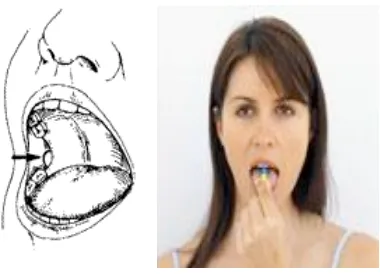
Fig 1.1: Fast dissolving tablets.
It is always the aim of a scientist or a dosage form designer to enhance the safety of a drug
molecule while maintaining its therapeutic efficacy. Recent advances in NDDS aim for the
same by formulating a dosage form, convenient to be administered so as to achieve better
patient compliance. Mouth Dissolving Tablet (MDT) is one among such approaches.
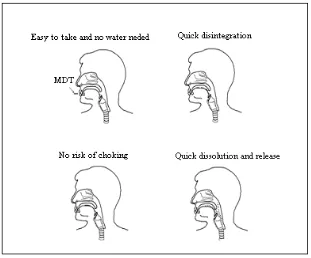
Fig 1.2: Mechanism of fast dissolving tablets.
Improved patient compliance has achieved enormous demand. Consequently demand for
their technologies is also increasing many folds. To develop a chemical entity, a lot of
money, hard work and time are required. So focus is rather being laid on the development of
new drug delivery systems for already existing drugs, with enhanced efficacy and
[image:2.595.172.427.475.616.2]The oral route of administration is the most preferred route due to its many advantages like
ease of administration, accurate dosage, self-medication, pain avoidance, versatility and
[image:3.595.190.406.146.277.2]patient compliance. Tablets and capsules are the most popular dosage forms.
Fig 1.3:Commercial tablets.
But one important drawback of such dosage forms is Dysphasia or difficulty in swallowing.
This is seen to afflict nearly 35% of the general population. This disorder is also associated
with a number of pathological conditions including stroke, Parkinson‟s disease, neurological
disorders, AIDS etc.
1. Parkinsonism
2. Motion sickness
3. Unconsciousness
4. Elderly patients
5. Children
6. Mentally disabled persons
7. Unavailability of water
To solve the above-mentioned problems, pharmaceutical technologists have put in their best
efforts to develop a Fast dissolving drug delivery, i.e. Mouth Dissolving Tablet that
disintegrates and dissolves rapidly in the saliva, within a few sec without the need of drinking
water or chewing. A mouth dissolving tablet usually dissolves in the oral cavity within 10 sec
to 3 min. Most of the MDTs include certain super disintegrants and taste masking agents.
1.1 Ideal properties of a mouth dissolving tablet
Though nothing or nobody is ideal or perfect in this world, yet there are certain limits or
characteristics that judge the nearness to perfection. A mouth dissolving tablet should:
1. Not require water or other liquid to swallow.
3. Have a pleasing taste.
4. Leave negligible or no residue in the mouth when administered.
5. Be portable and able to tolerate the transportation stress.
6. Be able to be manufactured in a simple conventional manner within low cost.
7. Be less sensitive to environmental conditions like temperature, humidity etc.
1.2 Advantages of Mouth dissolving tablet
1. No need of water to swallow the tablet.
2. Can be easily administered to pediatric, elderly and mentally disabled patients.
3. Accurate dosingas compared to liquids.
4. Dissolution and absorption of drug is fast, offering rapid onset of action.
5. Bioavailability of drugs is increasedas some drugs are absorbed from mouth, pharynx and
esophagus through saliva, passing down into the stomach.
6. Advantageous over liquid medication in terms of administration as well as transportation.
7. First pass metabolism is reduced, thus offering improved bioavailability and thus reduced
dose and side effects.
8. Free of risk of suffocation due to physical obstruction when swallowed, thus offering
improved safety.
[image:4.595.143.454.473.731.2]9. Suitable for sustained/controlled release actives.
1.3 Criteria for Fast dissolving Drug Delivery System
The tablets should
1. Not require water to swallow but it should dissolve or disintegrate in the mouth in matter
of seconds.
2. Be compatible with taste masking.
3. Be portable without fragility concern.
4. Have a pleasant mouth feel.
5. Leave minimum or no residue in the mouth after oral administration.
6. Exhibit low sensitive to environmental condition as temperature and humidity.
7. Allow the manufacture of the tablet using conventional processing and packaging
equipments at low cost.
1.4 Salient Feature of Fast Dissolving Drug Delivery System
1. Ease of Administration to the patient who cannot swallow, such as the elderly, stroke
victims, bedridden patients, patient affected by renal failure and patient who refuse to
swallow such as pediatric, geriatric & psychiatric patients.
2. No need of water to swallow the dosage form, which is highly convenient feature for
patients who are traveling and do not have immediate access to water.
3. Rapid dissolution and absorption of the drug, which will produce quick onset of action.
4. Some drugs are absorbed from the mouth, pharynx and esophagus as the saliva passes
down into the stomach. In such cases bioavailability of drug is increased.
5. Pre-gastric absorption can result in improved bioavailability and as a result of reduced
dosage; improve clinical performance through a reduction of unwanted effects.
6. Good mouth feel property helps to change the perception of medication as bitter pill
particularly in pediatric patient.
7. The risk of chocking or suffocation during oral administration of conventional
formulation due to physical obstruction is avoided, thus providing improved safety.
8. New business opportunity like product differentiation, product promotion, patent
extensions and life cycle management.
9. Beneficial in cases such as motion sickness, sudden episodes of allergic attack or
coughing, where an ultra rapid onset of action required.
10.An increased bioavailability, particularly in cases of insoluble and hydrophobic drugs,
11.Stability for longer duration of time, since the drug remains in solid dosage form till it is
consumed. So, it combines advantage of solid dosage form in terms of stability and liquid
dosage form in terms of bioavailability.
1.5 Main ingredients used in preparation of mouth dissolving tablets
Important ingredients that are used in the formulation of Fast dissolving tablet should allow
quick release of the drug, resulting in faster dissolution. This includes both the actives and the
excipients.[3]
Excipients balance the properties of the actives in FDDTs. This demands a thorough
understanding of the chemistry of these excipients to prevent interaction with the actives.
Determining the cost of these ingredients is another issue that needs to be addressed by
formulators. The role of excipients is important in the formulation of fast-melting tablets.
These inactive food-grade ingredients, when incorporated in the formulation, impart the
desired organoleptic properties and product efficacy. Excipients are general and can be used
for a broad range of actives, except some actives that require masking agents.
Binders keep the composition of these fast-melting tablets together during the compression
stage. The right selection of a binder or combination of binders is essential to maintain the
integrity and stability of the tablet. The temperature of the excipient should be preferably
around 30–350C for faster melting properties. Further, its incorporation imparts smooth
texture and disintegration characteristics to the system. Binders can either be liquid, semi
solid, solid or mixtures of varying molecular weights such as polyethylene glycol. The choice
of a binder is critical in a fast-dissolving formulation for achieving the desired sensory and
melting characteristics, and for the faster release of active ingredients. Commonly available
fats such as cocoa butter and hydrogenated vegetable oils can also be used. The most
important ingredients of a mouth dissolving tablets are:
1.5.1. Super disintegrants
Use of disintegrants is the basic approach in development of mouth dissolving tablets.
Disintegrants play a major role in the disintegration and dissolution of MDT. It is essential to
choose a suitable disintegrant, in an optimum concentration so as to ensure quick
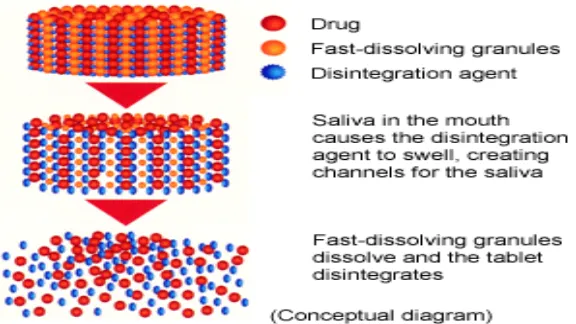
Super disintegrants provide quick disintegration due to combined effect of swelling and water
absorption by the formulation. Due to swelling of superdisintegrants, the wetted surface of
the carrier increases, which promotes the wettability and dispersibility of the system, thus
[image:7.595.151.439.173.335.2]enhancing the disintegration and dissolution.
Figure 1.5: Mechanism of fast-dissolving tablets.
The optimum concentration of the superdisintegrant can be selected according to critical
concentration of disintegrant. Below this concentration, the tablet disintegration time is
inversely proportional to the concentration of the superdisintegrant, whereas if concentration
of superdisintegrant is above critical concentration, the disintegration time remains almost
constant or even increases Sodium starch glycolate, Ac-di-sol(crosscaremellose sodium),
crosspovidone, microcrystalline cellulose, pregelatinised starch are some of examples of
disintegrants.
1.5.2. Sugar based excipients
Sugar based excipients are used for taste masking and as bulking agents. Most of the drugs
are having unpleasant or bitter taste. And the basic requirement for designing MDTs is that
the drug should not have disagreeable taste. So taste masking is necessary in most of the
cases. Sorbitol, Mannitol, xylitol, dextrose, fructose, etc. are mainly used. Aqueous solubility
and sweetness impart a pleasing mouth feel and good taste masking. But not all sugar-based
materials have fast dissolution rate and good compressibility or compatibility. However
technologies are developed to make use of the sugar based excipients in the design of fast
dissolving tablets. Other ingredients commonly used are water soluble diluents, lubricants,
1.6 Mechanism of action of disintegrants
The tablet breaks to primary particles by one or more of the mechanisms listed below:
1.6.1 By capillary action
Disintegration by capillary action is always the first step. When we put the tablet into suitable
aqueous medium, the medium penetrates into the tablet and replaces the air adsorbed on the
particles, which weakens the intermolecular bond and breaks the tablet into fine particles.
Water uptake by tablet depends upon hydrophilicity of the drug /excipient and on tabletting
conditions. For these types of disintegrants maintenance of porous structure and low
interfacial tension towards aqueous fluid is necessary which helps in disintegration by
creating a hydrophilic network around the drug particles.
1.6.2 By swelling
Perhaps the most widely accepted general mechanism of action for tablet disintegration is
swelling Tablets with high porosity show poor disintegration due to lack of adequate swelling
force. On the other hand, sufficient swelling force is exerted in the tablet with low porosity. It
is worthwhile to note that if the packing fraction is very high, fluid is unable to penetrate in
the tablet and disintegration is again slows down.
Figure 1.6: Disintegration of Tablet by Wicking and Swelling.
1.6.3 Because of heat of wetting (air expansion)
When disintegrants with exothermic properties gets wetted, localized stress is generated due
to capillary air expansion, which helps in disintegration of tablet. This explanation, however,
is limited to only a few types of disintegrants and cannot describe the action of most modern
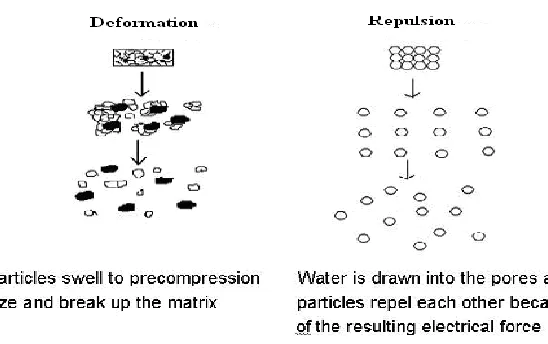
1.6.4 Due to disintegrating particle/particle repulsive forces
Another mechanism of disintegration attempts to explain the swelling of tablet made with
„non-swellable‟ disintegrants. Scientists have proposed a particle repulsion theory based on
the observation that non-swelling particle also cause disintegration of tablets. The electric
repulsive forces between particles are the mechanism of disintegration and water is required
for it. Researchers found that repulsion is secondary to wicking.
1.6.5 Due to deformation
Researchers had proved that during tablet compression, disintegrated particles get deformed
and these deformed particles get into their normal structure when they come in contact with
aqueous media or water. Occasionally, the swelling capacity of starch was improved when
granules were extensively deformed during compression. This increase in size of the
deformed particles produces a breakup of the tablet. This may be a mechanism of starch and
[image:9.595.159.433.371.543.2]has only recently begun to be studied.
Figure 1.7: Disintegration by Deformation and Repulsion.
1.6.6 Due to release of gases
Carbon dioxide released within tablets on wetting due to interaction between bicarbonate and
carbonate with citric acid or tartaric acid. The tablet disintegrates due to generation of
pressure within the tablet. This effervescent mixture is used when pharmacist needs to
formulate very rapidly dissolving tablets or fast disintegrating tablet. As these disintegrants
are highly sensitive to small changes in humidity level and temperature, strict control of
environment is required during manufacturing of the tablets. The effervescent blend is either
added immediately prior to compression or can be added in to two separate fraction of
1.6.7 By enzymatic reaction
Here, enzymes presents in the body act as disintegrants. These enzymes destroy the binding
action of binder and helps in disintegration.
1.7 Various Approaches for Fast Dissolving Tablets
The fast-dissolving property of the tablet is attributable to a quick ingress of water into the
tablet matrix resulting in its rapid disintegration. Hence, the basic approaches to developing
fast dissolving tablets include maximizing the porous structure of the tablet matrix,
incorporating the appropriate disintegrating agent, and using highly water-soluble excipients
in the formulation.[6-8]
Various technologies used in the manufacture of Fast dissolving tablets include:
Freeze –drying or lyophilization
Spray drying
Direct compresion
Moulding
Mass extrusion
1.7.1 Freeze-drying
The tablets prepared by freeze-drying or lyophilization are very porous in nature and
disintegrate or dissolve rapidly when come in contact with saliva. In this process, water is
sublimated from the product after freezing. First of all, the material is frozen to bring it below
its eutectic point. Then primary drying is carried out to reduce the moisture to around 4%
w/w of dry product. Finally, secondary drying is done to reduce the bound moisture to the
required volume. Due to lyophilization, bulking agent and sometimes drug acquire glossy
amorphous structure and thus dissolution is enhanced. A tablet that rapidly disintegrates in
aqueous solution includes a partially collapsed matrix network that has been vacuum dried
above the collapsed temperature of the matrix. The matrix is partially dried below the
equilibrium freezing point of the matrix. Vacuum drying the tablet above its collapse
temperature, instead of freeze drying below its collapse temperature provides a process for
producing tablets with enhanced structural integrity, while rapidly disintegrating in normal
amounts of saliva. However the use of freeze-drying is limited due to high cost of equipment
and processing. Other major disadvantages of the final dosage forms include lack of physical
1.7.2 Spray drying
A highly porous and fine powder is prepared by spray drying an aqueous composition
containing support matrix and other components. This is then mixed with active ingredient
and compressed into tablet. Allen and Wang used this technique to prepare mouth-dissolving
tablets, which disintegrated within 20 sec.
1.7.3 Direct compresion
This process involves addition of some inert volatile substances like urea, urethane,
naphthalene, camphor, etc to other excipients and the compression of blend into tablet.
Removal of volatile material by direct compresion creates pores in tablet structure, due to
which tablet dissolves when comes in contact with saliva. Additionally several solvents like
cyclohexane, benzene etc can also be used as pore forming agents. Mouth dissolving tablets
with highly porous structure and good mechanical strength have been developed by this
method.
1.7.4 Moulding
Tablets prepared by this method are solid dispersions. Physical form of drug in the tablets
depends on whether and to what extent it dissolves in the wetted mass.The drug can exist as
discrete particles or micro particles in the matrix. It can dissolve totally to form a solid
solution or dissolve partially in the molten carrier and remaining, if any, stays undissolved
and dispersed in the matrix. Disintegration time, drug dissolution rate and mouth feel will
depend on the type of dispersion. Different moulding techniques can be used to prepare
mouth-dissolving tablets:
a) Compression moulding: The powder mixture previously wetted with a solvent like Ethanol/water is compressed into mould plates to form a wetted mass.
b) Heat moulding: A molten matrix in which drug is dissolved or dispersed can be directly moulded into Mouth dissolving tablets.
c) No vacuum lyophilization: This process involves evaporation of solvent from a drug solution or suspension at a standard pressure.
Moulded tablets having porous structure, which facilitates rapid disintegration and easy
dissolution. Moulded tablets offer improved taste due to water-soluble sugars present in
dispersion matrix. But moulded tablets lack good mechanical strength and can undergo
breakage or erosion during handling and opening of blister packs. However, adding sucrose,
1.7.5 Mass extrusion
In this technique, a blend of active drug and other ingredients is softened using solvent
mixture of water soluble polyethylene glycol, using methanol and then the softened mass is
extruded through the extruder or syringe to get a cylinder of product, which is finally cut into
even segments with the help of heated blades to get tablets. The dried cylinder can be used to
coat the granules of bitter tasting drugs and thereby masking their bitter taste.
1.7.6 Direct compression
The disintegrant addition technology(direct compression) is the most preferred technique to
manufacture the tablets due to certain advantages:
High doses can be accommodated and final weight of the tablet can exceed that of other
methods.
Easiest way to manufacture the tablets.
Conventional equipment and commonly available excipients are use
A limited number of processing steps are involved.
Cost-effectiveness.
Disintegration and solubilzation of a directly compressed tablet depend on single or
combined effects of disintegrants, water-soluble excipients and effervescent agents. Tablet
size and hardness strongly affect the disintegrant efficacy. Hard and large tablets have more
disintegration time than normally required. Very soft and small tablets have low mechanical
strength. So, an optimum kind and concentration of disintegrant should be chosen to achieve
quick disintegration and high dissolution rates. Above the critical concentration level,
however, disintegration time remains approximately constant or even increases.
1.8 Technologies for MDT
Several technologies are available for preparing Mouth dissolving tablets. But some
commercially useful technologies are.[9-10]
1.8.1 Zydis technology
„Zydis‟ is the first mouth dissolving dosage form in the market. It is a unique freeze-dried
tablet in which the active drug is incorporated in a water-soluble matrix, which is then
transformed into blister pockets and freeze dried to remove water by direct compresion. Zydis
matrix is made up of a number of ingredients in order to obtain different objectives. SUPER
handling. These form a glossy and amorphous structure. Mannitol or sorbitol is added to
impart crystallinity, elegance and hardness. Various gums may be added to prevent
sedimentation of dispersed drug particles. Water is used as a medium to ensure the formation
of a porous dosage form. Collapse protectants like glycine may be used to prevent shrinkage
of dosage form during freeze drying and long-term storage.If necessary, suspending agents
and pH adjusting agents may be used. Preservatives may also be added to prevent microbial
growth. Zydis products are packed in blister packs to protect the formulation from
environmental moisture. A secondary moisture proof foil punch is often required as this
dosage form is very moisture sensitive. When put into the mouth, Zydis unit quickly
disintegrates and dissolves in saliva.
Drawbacks
1. A water insoluble drug can be incorporated only upto 400 mg per tablet or less. On the
other hand water-soluble drug can be incorporated only upto 60mg.
2. Relatively expensive and time-consuming process.
3. Fragility and poor stability of dosage form during storage under stressful conditions.
1.8.2 Orasolv technology
It is CIMA lab‟s first mouth dissolving formulation. This technology involves taste masking
of active drug. Effervescent disintegrating agent is also used. Conventional blenders and
tablet equipment are used for preparation of tablets. Less force of compaction is used for
manufacturing so as to obtain soft and quickly disintegrating tablets. There is a limitation of
this technology that soft and fragile tablets are formed, therefore needed to be packed in
specially designed pick and place package system.
1.8.3 Durasolv Technology
This too has been developed by CIMA labs. This is one of the suitable technologies to
prepare products requiring low amounts of active drug.This technology uses drug, fillers and
a lubricant to prepare the tablet. Conventional tabletting equipment is used to prepare the
tablet. Due to higher force of compaction used, tablets prepared are rigid. Dosage form can be
packaged into conventional packaging system like blisters.
1.8.4 Wowtab Technology
saccharides of both low and high mouldability are used to prepare the granules. Mouldability
is the capacity of a compound to be compressed.
Highly mouldable substance has high compressibility and thus shows slow dissolution. The
combination of high and low mouldability is used to produce tablets of adequate hardness.
Active ingredients are mixed with low mouldability saccharides and then granulated with
high mouldabiity saccharides and then compressed into tablet. The Wowtab product dissolves
quickly in 15 seconds or less. Wowtab product can be packed in both into conventional bottle
and blister packs.
1.8.5 Flashdose Technology
This technology is patented by Fuisz. This system uses the combination of both Shearform
and Ceform technologies in order to mask the bitter taste of the drug. A sugar based matrix,
called „Floss‟ is used, which is made up of a combination of excipients (crystalline sugars)
alone or in combination with drugs. Nurofen meltlet, a new form of Ibuprofen, as a
mouth-dissolving tablet is the first commercial product prepared by this technology and launched by
Biovail Corporation.
Drawbacks
1. The dosage form can accommodate only upto 600 mg of drug.
2. Tablets produced are highly friable, soft and moisture sensitive. Therefore specialized
packing is required.
1.8.6 Flashtab Technology
Prographarm labs have a patent over this technology. In this technology, microgranules of the
taste-masked active drug are used. These may be prepared by using conventional techniques
like coacervation, microencapsulation, and extrusion- spheronisation. All these processes
utilize conventional tabletting technology.These taste-masked micro crystals of active drug,
disintegrating agent, a swelling agent and other excipients like soluble diluents etc are
compressed to form a multi-particulate tablet that disintegrates rapidly.
1.8.7 Shearform Technology
In this technology, a shearform matrix, „Floss‟ is prepared. Feedstock prepared with a sugar
carrier is subjected to flash heat processing. In this process, sugar is simultaneously subjected
to rise and hence an internal flow condition is created, permitting part of it to move with
respect of the mass. The flowing mass comes out through the spinning head that flings the
floss. The produced floss is amorphous in nature. So by various techniques, it is further
chopped and recrystallised to provide a uniform flow, thus facilitate blending. Then the
recrystallised matrix, active drug and other excipients are blended together and finally
compressed into tablets. Active drug and other excipients may be blended with the floss
before recrystallising it.
1.9 Selection of drug candidates for mouth dissolving tablets.[11]
Several factors must be considered when selecting drug candidates for delivery as MDT
dosage forms. In general,
MDT is formulated as a bioequivalent line extension of an existing oral dosage form.
Under this circumstance, it is assumed that the absorption of a drug molecule from the
MDT occurs in the post-gastric GIT segments, similar to the conventional oral dosage
form.
But this scenario may not always be the case. MDT may have varying degrees of
pre-gastric absorption and thus, the pharmacokinetic profile (including the maximum plasma
concentration, time to achieve maximal plasma concentration, and area under the plasma
concentration time curve of an equal dose of an MDT and a conventional oral dosage
form) will vary. Therefore, the MDT will not be bioequivalent to the conventional oral
dosage form.
Examples are cited in the literature in which the pharmacokinetic profiles and
bioavailabilities of the same dose of drug in an MDT are not bioequivalent to the
conventional oral dosage form.
For example, MDT formulations of selegiline, apomorphine, and buspirone have
significantly different pharmacokinetic profiles compared with the same dose
administered in a conventional dosage form.
It is possible that these differences may, in part, be attributed to the drug molecule,
formulation, or a combination of both.
If significantly higher plasma levels and systemic exposure have been observed,
pre-gastric absorption leading to the avoidance of first-pass metabolism may play an
important role.
This situation may have implications for drug safety and efficacy, which may need to be
For example, safety profiles may be improved for drugs that produce significant amounts
of toxic metabolites mediated by first-pass liver metabolism and gastric metabolism and
for drugs that have a substantial fraction of absorption in the oral cavity and segments of
the pre-gastric GIT.
1.9.1 Some of promising Drug candidates for mouth dissolving tablets
Antibacterial agents: Ciprofloxacin, tetracycline, azithromycin, erythromycin, rifampicin, penicillin, doxycyclin, clarithromycin, nalidixic acid, nitrofurantoin, trimethoprim,
sulphacetamide, sulphadiazine.
Anthelmintics: Albendazole, mebendazole, thiabendazole, livermectin, praziquantel, pyrantel embonate, dichlorophen, etc.
Antidepressants: Trimipramine maleate, nortriptyline HCl, trazodone HCl, amoxapine, mianserin HCl.
Antidiabetics: Glibenclamide, glipizide, tolbutamide, tolazamide, gliclazide, chlorpropamide, etc.
Analgesics and anti-inflammatory agents: Diclofenac sodium, ibuprofen, flurbiprofen, ketoprofen, naproxen, mefenamic acid, meclofenamic acid, indomethacin, nabumetone,
piroxicam, oxyphenbutazone, phenylbutazone, etc.
Antihypertensives: Amlodipine, carvedilol, diltiazem, felodipine, minoxidil, nifedipine, prazosin HCl, nimodipine, terazosin HCl, etc.
Antiarrhythmic agents: Disopyramide, quinidine sulphate, amiodarone HCl, etc.
Antihistamines: Acrivastine, cetrizine, cinnarizine, loratadine, fexofenadine, triprolidine, etc.
Anxiolytics, sedatives, hypnotics and neuroleptics: Alprazolam, diazepam, amylobarbitone, chlorpromazine, clotiazepam, chlordiazepoxide, clozapine, flurazepam,
lorazepam, haloperidol, nitrazepam, oxazepam, midazolam, droperidole, phenobarbitone,
Diuretics: Acetazolamide, clorthiazide, amiloride, furosemide, spironolactone, bumetanide, ethacrynic acid, etc.
Gastro-intestinal agents: Cimetidine, ranitidine HCl, famotidine, domperidone, loperamide, mesalazine, sulphasalazine, omeprazole, lansoprazole, ondansetron HCl, granisetron HCl,
etc.
Corticosteroids: Betamethasone, beclomethasone, cortisone acetate, hydrocortisone, dexamethasone, fluticasone propionate, prednisone, prednisolone, methyl prednisolone, etc.
Antifungal agents: Amphotericin, fluconazole, itraconazole, miconazole, ketoconazole, terconazole, econazole nitrate, nyastatine, griseofulvin, etc.
Antiprotozoal agents: metronidazole, tinidazole, omidazole, benznidazole, clioquinol, decoquinate, etc.
1.1 Some commercially available mouth dissolving tablets. Trade name Active drug Manufacturer
Nimulid-MD Nimesulide Panacea Biotech, New Delhi, India
Feldene Fast Melt Piroxicam Pfizer Inc., NY, U.S.A
Zyrof Meltab Rofecoxib Zydus, Cadila, India
Pepcid RPD Famotidine Merck and Co., NJ, U.S.A
Romilast Montelukast Ranbaxy Labs Ltd., New Delhi, India
Torrox MT Rofecoxib Torrent Pharmaceuticals, Ahmedabad, India
Olanex Instab Olanzapine Ranbaxy Labs Ltd., New Delhi, India
Zofran ODT Ondansetron Glaxo Wellcome, Middlesex, UK
Mosid-MT Mosapride citrate Torrent Pharmaceuticals, Ahmedabad, India
Febrectol Paracetamol Prographarm, Chateauneuf, France
Coprocessed super disintegrates.[12]
Co-processing is based on the novel concept of two or more excipients interacting at the sub
particle level, the objective of which is to provide a synergy of functionality improvement as
well as masking the undesirable properties of individual5. Co-processing excipients lead to
the formulation of excipient granules with superior properties, compared with physical
mixtures of components or individual components, like improved flow properties, improved
compressibility, better dilution potential, fill weight uniformity, andreduced lubricant
sensitivity6. Several co-processed superdisintegrants are commercially available: Ludipress
(lactose monohydrate, polyvinylpyrrolidone and crospovidone), Starlac(lactose and maize
cellulose, silica and crospovidone), Ran Explo-S (microcrystalline cellulose, silica and
sodium starch glycolate), PanExcea MH300G (microcrystalline cellulose, hydroxy propyl
methyl cellulose and crospovidone.
METHODOLOGY
6.1. PREFORMULATION STUDIES
The goals of the preformulation study are:
To establish the necessary physicochemical characteristics of a new drug substance.
To determine its kinetic release rate profile.
To establish its compatibility with different excipients.
Hence, preformulation studies on the obtained sample of drug include colour, taste, solubility
analysis, melting point determination and compatibility studies and flow properties.
6.2 Determination of absorption maximum (λmax)
Absorption maximum is the wavelength at which maximum absorption takes place. For
accurate analytical work, it is important to determine the absorption maxima of the substance.
Isosorbide mononitrate was weighed accurately 10 mg and transferred to 100 ml volumetric
flask, dissolved in 6.8 pH phosphate buffer and the final volume was made up to 100 ml with
6.8 pH phosphate buffer to get a stock solution (100µg/ml). From the stock solution, 1 ml
was pipette out in 10 ml volumetric flask and the final volume was made up to 10 ml with 6.8
pH phosphate buffer to get 10µg/ml. Then this solution was scanned at 200-400nm in
UV-Visible double beam spectrophotometer (UV-3200, Labindia, India) to get the absorption
maximum (λmax).
Construction of Isosorbide mononitrate calibration curve with phosphate buffer PH 6.8:
100mg of Isosorbide mononitrate was dissolved in 100ml of 6.8 pH phosphate buffer to give
a concentration of 1mg/ml (1000µgm/ml). From the above standard solution (1000µgm/ml)
1ml was taken and diluted to 100ml with )6.8 pH phosphate buffer to give a concentration of
0.01mg/ml (10µgm/ml). From this stock solution aliquots of 0.5, 1, 1.5,2 and 2.5ml were
pipette out in 10ml volumetric flask and the volume was made up to the mark with )6.8 pH
phosphate bufferto produce concentration of 5, 10,1,20 and 25µgm/ml respectively. The
6.3. Drug- excipient compatibility studies by FT-IR
The compatibility between the pure drug and excipients was detected by FTIR spectra
obtained on Bruker FTIR Germany(Alpha T). The potassium bromide pellets were prepared
on KBr press by grounding the solid powder sample with 100 times the quantity of KBr in a
mortar. The finely grounded powder was then introduced into a stainless steel die and was
compressed between polished steel anvils at a pressure of about 8t/in2. The spectra were
recorded over the wave number of 8000 to 400cm-1.
6.4. Flow properties Angle of Repose
It is performed to determine the flow rate of powder done by the funnel method. The powder
was poured into a funnel which is fixed from height of 2cm of the plane surface.
Circumference was drawn with a pencil on the graph paper and the radius of base of a pile
was measured at 5 different points and average was taken for calculating Angle of repose
using following formula: Ө= tan-1 H/R
Ө=angle of repose
H=height of powder cone, R=radius of powder cone
Angle of Repose less than 300 shows the free flowing property of the material.
Table 6.1: Angle of Repose values (as per USP).
Angle of Repose Nature of Flow
<25 Excellent
25-30 Good
30-40 Passable
>40 Very poor
Loose bulk Density (LBD)
Loose bulk density was obtained by dividing the mass of powder by the bulk volume in cm3.
The sample of about 50 cm3 of powder, previously been passed through a standard sieve no.
20, was carefully introduced into a 100 ml graduated cylinder. The cylinder was dropped at 2
second intervals on to hard wood surface three times from a height of 1 inch. The bulk
density of each formulation was then obtained by dividing the weight of sample in grams by
the final volume in cm3 of the sample contained in the cylinder. It was calculated by using
equation given below:
Where, Df = bulk density
M = weight of sample in grams
Vp = final volume of powder in cm3
Tapped bulk density (TBD)
It is the ratio of total mass of the powder to the tapped volume of the powder. Volume was
measured by tapping the powder for 750 times if the difference between these two volumes is
less than 2%. If it is more than 2%, tapping was continued for 1250 times and tapped volume
was noted. Tapping was continued until the difference between successive volumes is less
than 2 % (in a bulk density apparatus). It is expressed in g/ml and is given by
Do = M /Vp
Where, Do = Tapped density,
M = weight of sample in grams
Vp = final volume of powder after tapping in cm3
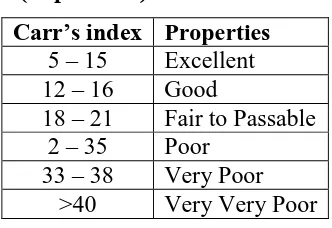
Carr's consolidation index
The Carr index is an indication of the compressibility of a powder. This is calculated by
the formula
Where, ρb is the bulk density, ρt is the tapped bulk density
A Carr index greater than 25 is considered to be an indication of poor flowability, and below
[image:20.595.215.381.550.664.2]15, of good flowability.
Table 6.2: Carr’s index value (as per USP).
Carr’s index Properties
5 – 15 Excellent
12 – 16 Good
18 – 21 Fair to Passable
2 – 35 Poor
33 – 38 Very Poor
>40 Very Very Poor
Hausner’s ratio
The Hausner ratio is a number that is correlated to the flowability of a powder or granular
material. The Hausner ratio is calculated by the formula
Where, ρb is the bulk density ρb is the tapped bulk density
Hausner ratio greater than 1.25 is considered to be an indication of poor flowability.
6.5. Formulation of Fast dissolving tablets of Isosorbide mononitrate: Preparation of co processed super disintegrates:
Co processed super disintegrates were prepared by using sodium Vivasole and polyplasdone
XL. The super disintegrates were mixed in different concentrations and labeled as
CP1,CP2,CP3.The blend of super disintegrates was mixed thoroughly for a period of 15 min,
collected and used for preparing formulations in different concentrations.
CP = Coprocessed super disintegrate Table 6.3: Composition of co processed super disintegrates.
Ingredients CP1 CP2 CP3 CP4 CP5
Vivasol (mg) 500 500 500 1500 1000
Polyplasdone XL (mg) 500 1000 1500 500 500
Preparation of tablets
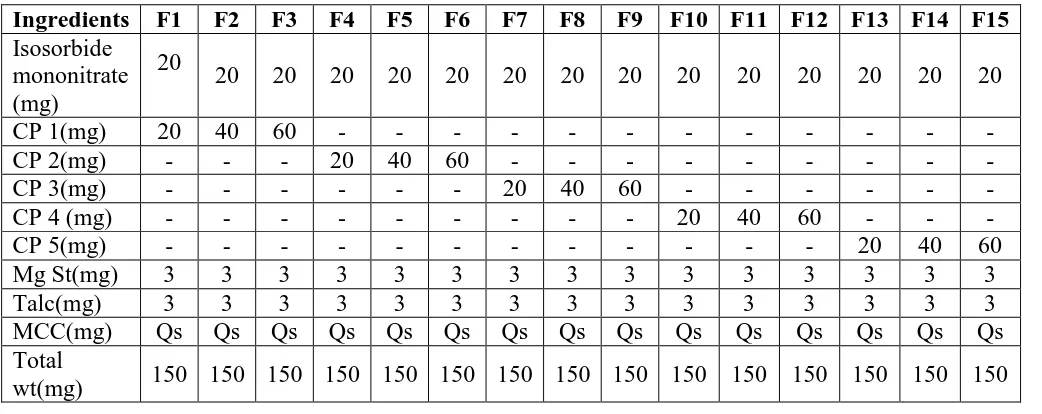
Composition of Isosorbide mononitrate Fast dissolving Tablet by direct compression is
shown in table 6.4. All the ingredients were weighed. Required quantity of drug and excipient
mixed thoroughly in a polybag. The blend is compressed using rotary tablet machine-10
station with 6mm flat punch, B tooling. Each tablet contains 10 mg Isosorbide mononitrate
[image:21.595.42.563.527.734.2]and other pharmaceutical ingredients.
Table no. 6.4. Composition of various tablet formulations.
Ingredients F1 F2 F3 F4 F5 F6 F7 F8 F9 F10 F11 F12 F13 F14 F15
Isosorbide mononitrate (mg)
20
20 20 20 20 20 20 20 20 20 20 20 20 20 20
CP 1(mg) 20 40 60 - - -
-CP 2(mg) - - - 20 40 60 - - -
-CP 3(mg) - - - 20 40 60 - - -
-CP 4 (mg) - - - 20 40 60 - -
-CP 5(mg) - - - 20 40 60
Mg St(mg) 3 3 3 3 3 3 3 3 3 3 3 3 3 3 3
Talc(mg) 3 3 3 3 3 3 3 3 3 3 3 3 3 3 3
MCC(mg) Qs Qs Qs Qs Qs Qs Qs Qs Qs Qs Qs Qs Qs Qs Qs
Total
6.6. POST COMPRESSION PARAMETERS Evaluation of tablets
Shape and colour
The tablets were examined under a lens for the shape of the tablet and colour by keeping the
tablets in light.
Uniformity of thickness
Randomly 10 tablets were taken from formulation batch and their thickness (mm) was
measured using a Vernier callipers.
Hardness test
The hardness of the tablets was determined using Monsanto hardness tester. It is expressed in
Kg/cm2. Six tablets were randomly picked from each formulation.
Friability test
It is the phenomenon whereby tablet surfaces are damaged and/or show evidence of
lamination or breakage when subjected to mechanical shock or attrition. The friability of
tablets was determined by using Roche friabilator (Lab India, FT 1020). It is expressed in
percentage (%). Ten tablets were initially weighed [W(initial)] and transferred into friabilator.
The friabilator was operated at 25 rpm for 4 min or run up to 100 revolutions. The tablets
were weighed again [W (final)]. The percentage friability was then calculated by,
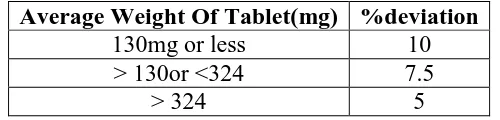
Weight variation test
The tablets were selected randomly from each formulation and weighed individually to check
for weight variation. The U.S Pharmacopoeia allows a little variation in the weight of a tablet.
[image:22.595.173.423.646.706.2]The % deviation in weight variation is shown in table.
Table no.6.5.Limits of Weight variation.
Average Weight Of Tablet(mg) %deviation
130mg or less 10
> 130or <324 7.5
Drug Content estimation
The content uniformity test is used to ensure that every tablet contains the amount of drug
substance intended with little variation among tablets within a batch.
10 tablets were weighed and triturated. The tablet triturate equivalent to 50 mg of the drug
was weighed accurately, dissolved in pH 1.2 buffer and diluted to 100 ml with the same.
Further dilutions were done suitably to get a concentration of 10 μg/ ml with simulated
gastric fluid pH 1.2. Absorbance was read at 290 nm against the reagent blank, and the
concentrations of drug in μg/ ml was determined by using the regression equation.
Drug content in mg / tablet = conc. μg/ml * dilution factor /1000
% Drug content = drug content in mg * 100 / label claim.
In -vitro dissolution studies
In-vitro release studies were carried out using a modified USP XXIII dissolution test
apparatus (Lab India, DS-800).
The dissolution fluid was 500ml of 6.8 pH phosphate buffer at a speed of 50rpm at a
temperature of 370c were used in each test. Samples of dissolution medium (5ml) were
withdrawn for every 2min and assayed for Isosorbide mononitrate by measuring absorbance
at 290 nm. For all the tests 5ml of the test medium were collected at specified time intervals
and replaced with same volume of 6.8 pH phosphate buffer. Details:
Apparatus used : USP II Lab India DS 800
Dissolution Medium : 6.8 pH phosphate buffer
Dissolution Medium volume : 500ml
Temperature : 370C
Speed of paddle : 50rpm
Sampling Intervals : 2, 4, 6, 8, 10, 15, 20,25 and 30 min
Sample withdrawn : 5ml
MATERIALS
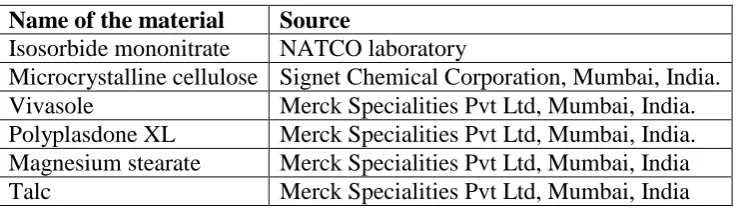
Table 5.1: List of Materials Used.
Name of the material Source
Isosorbide mononitrate NATCO laboratory
Microcrystalline cellulose Signet Chemical Corporation, Mumbai, India.
Vivasole Merck Specialities Pvt Ltd, Mumbai, India.
Polyplasdone XL Merck Specialities Pvt Ltd, Mumbai, India.
Magnesium stearate Merck Specialities Pvt Ltd, Mumbai, India
[image:24.595.84.513.246.406.2]Talc Merck Specialities Pvt Ltd, Mumbai, India
Table 5.2: List of Equipment’s used.
Name of the Equipment Manufacturer
Weighing Balance Wensar
Tablet Compression Machine (Multistation) Karnavati
Limited, India.
Hardness tester Monsanto, Mumbai, India.
Vernier callipers Mitutoyo, Japan.
Roche Friabilator Labindia, Mumbai, India
DissolutionApparatus Labindia, Mumbai, India
UV-Visible Spectrophotometer Labindia, Mumbai, India
pH meter Labindia, Mumbai, India
FT-IR Spectrophotometer Per kin Elmer, United States of America.
RESULTS AND DISCUSSION
7.1. Standard Calibration curve of Isosorbide mononitrate
Table 7.1: Concentration and absorbance obtained for calibration curve of Isosorbide mononitrate in 6.8 pH phosphate buffer.
S. No. Concentration (µg/ml)
Absorbance* (at 290 nm)
1 0 0
2 5 0.106
3 10 0.177
4 15 0.265
5 20 0.344
6 25 0.431
It was found that the estimation of Isosorbide mononitrate by UV spectrophotometric method
at λmax 290.0 nm in 6.8 pH phosphate buffer had good reproducibility and this method was
used in the study. The correlation coefficient for the standard curve was found to be closer to
[image:24.595.197.400.503.618.2]Fig 7.1: Standard graph of Isosorbide mononitrate 6.8 pH phosphate buffer.
7.2 Evaluation Parameters for Fast Dissolving Tablets of Isosorbide mononitrate 7.2.1 Pre-compression parameters
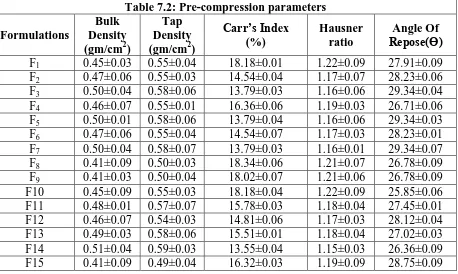
The data‟s were shown in Table 7.2.The values for angle of repose were found in the range of
25°-30°. Bulk densities and tapped densities of various formulations were found to be in the
range of 0.41 to 0.50 (gm/cc) and 0.50 to 0.58 (gm/cc) respectively. Carr‟s index of the
prepared blends was fall in the range of 13.06% to 18.18%. The Hausner ration was fall in
range of 1.14 to 1.22. From the result it was concluded that the powder blends had good flow
properties and these can be used for tablet manufacture.
Table 7.2: Pre-compression parameters Formulations
Bulk Density (gm/cm2)
Tap Density (gm/cm2)
Carr’s Index (%)
Hausner ratio
Angle Of Repose(Ɵ)
F1 0.45±0.03 0.55±0.04 18.18±0.01 1.22±0.09 27.91±0.09
F2 0.47±0.06 0.55±0.03 14.54±0.04 1.17±0.07 28.23±0.06
F3 0.50±0.04 0.58±0.06 13.79±0.03 1.16±0.06 29.34±0.04
F4 0.46±0.07 0.55±0.01 16.36±0.06 1.19±0.03 26.71±0.06
F5 0.50±0.01 0.58±0.06 13.79±0.04 1.16±0.06 29.34±0.03
F6 0.47±0.06 0.55±0.04 14.54±0.07 1.17±0.03 28.23±0.01
F7 0.50±0.04 0.58±0.07 13.79±0.03 1.16±0.01 29.34±0.07
F8 0.41±0.09 0.50±0.03 18.34±0.06 1.21±0.07 26.78±0.09
F9 0.41±0.03 0.50±0.04 18.02±0.07 1.21±0.06 26.78±0.09
F10 0.45±0.09 0.55±0.03 18.18±0.04 1.22±0.09 25.85±0.06
F11 0.48±0.01 0.57±0.07 15.78±0.03 1.18±0.04 27.45±0.01
F12 0.46±0.07 0.54±0.03 14.81±0.06 1.17±0.03 28.12±0.04
F13 0.49±0.03 0.58±0.06 15.51±0.01 1.18±0.04 27.02±0.03
F14 0.51±0.04 0.59±0.03 13.55±0.04 1.15±0.03 26.36±0.09
[image:25.595.72.530.472.746.2]7.2.2. Post compression Parameters Weight variation test
Tablets of each batch were subjected to weight variation test, difference in weight and
percent deviation was calculated for each tablet and was shown in the Table 7.3. The average
weight of the tablet is approximately in range of 307 to 298.5, so the permissible limit is ±5%
(>250mg). The results of the test showed that, the tablet weights were within the
pharmacopoeia limit.
Hardness test
Hardness of the three tablets of each batch was checked by using Monsanto hardness tester
and the data‟s were shown in Table 7.3. The results showed that the hardness of the tablets is
in range of 2.0 to 2.5 kg/cm2,which was within IP limits.
Thickness
Thickness of three tablets of each batch was checked by using Vernier Caliper and data
shown in Table-7.3. The result showed that thickness of the tablet is raging from 4.56 to 5.34.
Friability
Tablets of each batch were evaluated for percentage friability and the data‟s were shown in
the Table 7.3. The average friability of all the formulations lies in the range of 0.30 to 0.51%
which was less than 1% as per official requirement of IP indicating a good mechanical
resistance of tablets.
In vitro disintegration time
Tablets of each batch were evaluated for in vitro disintegration time and the data‟s were
shown in the Table 7.3. The results showed that the disintegration time of prepared tablets
were in the range of 17 to 25.33 seconds.
Assay
Assay studies were performed for the prepared formulations. From the assay studies it was
concluded that all the formulations were showing the % drug content values within 97.23
Invitro Dissolution studies
Table 7.4: Invitro dissolution data. Time
(Min) F1 F2 F3 F4 F5 F6 F7
2 25.4±0.3 31.7±0.05 40.8±0.9 24.3±0.9 39.5±0.6 44.9±0.3 35.2±0.7
4 39.6±0.05 40.5±0.3 56.72±0.05 31.6±0.6 56.3±0.3 58.4±0.6 50.2±0.3
6 48.6±0.6 51.9±0.9 76.16±0.3 49.3±0.05 76.2±0.9 63.1±0.3 62.1±0.6
8 54.3±0.9 62.4±0.6 87.4±0.7 58.3±0.3 89.7±0.3 79.7±0.6 73.5±0.3
10 66.4±0.7 79.1±0.3 98.5±0.6 74.3±0.7 97.8±0.3 89.3±0.05 80.4±0.9
15 73.1±0.3 85.5±0.7 88.1±0.6 98.9±0.3 89.3±0.05
20 80.6±0.7 95.2±0.6 97.6±0.7 94.2±0.3
25 91.5±0.6 100.2±0.7
30 97.86±0.9
Time
(Min) F8 F9 F10 F11 F12 F13 F14 F15
2 44.2±0.7 53.2±0.4 43.7±0.9 54.2±0.4 75.2±0.9 53.2±0.4 79.3±0.7 83.1±0.4
4 52.1±0.4 66.2±0.7 55.2±0.4 70.3±0.6 85.3±0.4 60.2±0.7 99.3±0.4 96.3±0.7
6 64.9±0.2 79.3±0.6 74.2±0.7 86.3±0.6 99.3±0.7 75.3±0.9
8 75.3±0.6 85.2±0.2 89.3±0.6 97.3±0.7 94.3±0.2
10 87.3±0.9 98.2±0.9 95.3±0.9
15 96.2±0.2
20 25 30
Invitro dissolution studies were carried out by using 500ml of 6.8 pH phosphate buffer in
USP dissolution apparatus by using paddle method. The dissolution studies were carried out
for about 30 min. The dissolution data for all the formulations were given in the Table 7.4.
[image:27.595.144.454.529.730.2]Fig 7.3:Dissolution profile of formulations prepared with CP2 as super disintegrate.
Fig 7.4:Dissolution profile of formulations prepared with CP3 as super disintegrate.
[image:28.595.142.454.525.738.2]Fig 7.6: Dissolution profile of formulations prepared with CP5 as super disintegrate.
From the tabular column 7.4 it was evident that the formulations prepared with super
disintegrate CP5 showed maximum % drug release in 4 min i.e.99.3%, 96.3% (F13, F14)
formulations and the concentration of super disintegrate is 30mg,45 mg). So the principle of
coproceesed super disintegrates was found to be useful to produce oro dispersible tablets.F13
formulation was considered as optimized formulation as it contains less concentration of
super disintegrate.
Fourier Transform-Infrared Spectroscopy
[image:29.595.77.513.462.668.2]Fig 7.8: FTIR of optimized formulation.
Observation: by observing the spectrum it was observed that there is no change in the characteristic peaks of the pure drug and polymers it shows the compatibility between the
pure drug and optimized formulation.
CONCLUSION
In the present work, an attempt has been made to develop fast disintegrating tablets of
Isosorbide mononitrate. Novel method of co processed super disintegrates technology was
employed to formulate the tablets. All the formulations were prepared by direct compression
method. The blend of all the formulations showed god flow properties such as angle of
repose, bulk density, tapped density. The prepared tablets were shown good post compression
parameters and they passed all the quality control evaluation parameters as per I.P limits.
Among all the formulations F14 formulation showed maximum drug release i.e., 99.3% in 4
min hence it is considered as optimized formulation. The F14 formulation contains CP5 as
super disintegrate in the concentration of 30 mg. (CP 5 contains Vivasole and polyplasdone
XL in 3:1 ratio).
Conflict of Interest
The authors declare that they have no conflict of interest.
ACKNOWLEDGEMENT
We would like to acknowledge Dr. Jayachndra Reddy, principal, Krishna teje college of
pharmacy, Dr. K. Umashankar, HOD & Professor of pharmaceutics, and Staff of
REFERENCES
1. Velmurugan S, Sundar V. Oral Disintegrating Tablets: An Overview. International Journal of
Chemical and Pharmaceutical Sciences, 2010; 1(2): 1-12.
2. Kaur T, Bhawandeep G, Sandeep K, Gupta GD. Mouth dissolving tablets: a novel approach
to drug delivery. Int J Curr Pharm Res., 2011; 3(1): 1-7.
3. Shukla D, Chakraborty S, Singh S, Mishra B. Mouth Dissolving Tablets-An Overview of
Formulation Technology. Scientia Pharmaceutica, 2009; 309-326.
4. Deshika R, Viness P, Yahya EC, Lisa CT. Rapidly disintegrating oramucosal drug delivery
technologies. Pharm Dev Tech., 2009; 14(6): 588-601.
5. Suresh B, Rajender M, Ramesh G, Rao MY. Orodispersible tablets: An overview. Asian J
Pharm., 2008; 2(1): 2-11.
6. Pfeffer M, Swedberg K, Granger C, Held P, McMurray J, Michelson E et al. "Effects of
candesartan on mortality and morbidity in patients with chronic heart failure: the
CHARM-Overall programme". Lancet, 2003; 362(9386): 759–66.
7. Goodman and Gilman Manual of Pharmacology and Therapeutics, Second Edition by Randa
Hilal-Dandan, Laurence Brunton.
8. Keny RV, Desouza C, Lourenco CF. Formulation and evaluation of rizatriptan benzoate
mouth disintegrating tablets. Indian J Pharm Sci 2010; 72(1): 79-85. 17. Parikh BN, Patel
DM, Patel CN, Dave JB, Gothi GD, Patel TD. Formulation optimization and evaluation of
immediate release tablet of telmisartan. J Global Pharm Tech., 2010; 2(2): 79-84.
9. Shid SL, Hiremath SP, Borkar SN, Sawant VA, Shende VS, Tote MV, Birari RB, Changrani
SR. Effect of superdisintegrants in rapidly disintegrating flurbiprofen sodium orodispersible
tablets via direct compression and camphor sublimation. J Global Pharm Tech., 2010; 2(1):
107-117.
10. Rajalakshmi G, Damodharan N, Chudhary A, Reddy DM. Formulation and evaluation of
orodispersible tablets of pheniramine maleate. Chem Tech Res., 2010; 2(1): 310-318.
11. Zade PS, Kawtikwar PS, Sakarkar DM. Formulation, evaluation and optimization of fast
dissolving tablet containing tizanidine hydrochloride. Int J Pharm Tech Res., 2009; 1(1):
34-42.
12. Chaulang G, Patel P, Hardikar S, Kelkar M, Bhosale A, Bhise S. Formulation and evaluation
of solid dispersions of furosemide in sodium starch glycolate. Trop J Pharm Res., 2009; 8:
43-51.
13. Masareddy RS, Kadia RV, Manvi FV. Development of mouth dissolving tablets of clozapine
14. Shen YC, Lee MY, Chaucer CH, Chen CH. Orally disintegrating olanzapine for the treatment
of a manic patient with esophageal stricture plus chronic pharyngitis. Progress Neuro Psycho
Biol Psych, 2007; 31: 541–542.
15. Bhanja S, Ellaiah P, Martha SK, Sahu1 PK, Tiwari SP. Formulation and in vitro evaluation of
mucoadhesive buccal tablets of promethazine. Int J Pharm Biomed Res., 2010; 1(4): 129-134.
16. Mohammad BJ, Hadi V, Siavoush D, Mohammad R, Siahi S, Azim BJ, Khosro A,
Mohammad G. Enhancing dissolution rate of carbamazepine via cogrinding with
crospovidone and hydroxypropylmethylcellulose. Iran J Pharm Res., 2007; 6(3): 159-165.
17. Argemi A, Ellis JL, Saurina J, Tomasko DL. Development of a polymeric patch impregnated
with promethazine as a model of transdermal sustained release system. J Pharm Sci., 2011;
100(3): 992-1000.
18. Wilbert SA. Treatment of systemic hypertension-A review. Am J Cardiovasc Dis., 2012;
2(3): 160-170.
19. M. M. Ghorab and Mayada Elhadi Babiker. AFormulation and In-vitro-evaluation of
Isotretinoin Tablets Journal of Chemical and Pharmaceutical Research, 2012; 4(5):
2817-2831.
20. Minal Shantilal Chopda1 *, Priya Rangari1, K. R. Khandelwal1, Mahesh Bhadgale1
Formulation and In-Vitro Evaluation of Oro-Dispersible Tablets of Olanzapine by Direct
Compression Am. J. PharmTech Res., 2014; 4(5).
21. Narayana Charyulu R, Satyanarayana DS and Srilakshmi D Formulation and in vitro
comparative evaluation of orodispersible tablets of Pantoprazole International Journal of
Chemical Science and Technology (ISSN: 2248-9797), April 2015; 5(2): 399-404.
22. B.Venkateswara Reddy*, K. Navaneetha Formulation and evaluation of Orodispersible
tablets of candesartan The Pharma Innovation Journal, 2015; 4(1): 25-32.
23. A.K.Dhadwe1*, C.P.Rathod1, S.M.Vadvalkar1, N.B.Ghiware1, N.Y.Gond1, G.R.
Shendarkar1, P. K. Sahoo2 Formulation And Evaluation Of Orodispersible Tablet Of
Cinnarizine By Direct Compression Method World Journal of Pharmacy and Pharmaceutical
Sciences, 2014; 3: 5.
24. Howell SJ, Sear JW, Foex P. Hypertension, hypertensive heart disease and perioperative
cardiac risk. British Journal of Anaesthesia, 2004; 92(4): 570-83.
25. James W. Pharmaceutical preformulation: The physicochemical properties of drug
substances: Aulton ME. Pharmaceutics the science of dosage form design, Churchill
26. Banker S, and Anderson GR. In Lachman L, Leon Liber- man HA, and Kanig JL. (eds.). The
Theory and Practice of Industrial Pharmacy, Ed. 3, Varghese Pub- lishing House, Mumbai,
1987; 293-345.
27. Bogner RH, Wilkosz MF, Fast-dissolving tablets.U. S. Pharmacist. A Jobson Publication,
2005; 1-5.
28. Kaushik D, Dureja H, Saini TR, Mouth dissolving tablets: A Review. Indian Drugs, 2004;
41(4): 187-193.
29. Koizumi K, Watanabe Y, Morita K, Utoguchi N, Matsu- moto M, New method for preparing
high porosity rapidly saliva soluble compressed tablets using manifold with camphor, a
subliming material. Int J Pharm., 1997; 152: 127-131.
30. Kuchekar BS, Atul CB, Mahajan HS, Mouth dissolving tablets: A novel delivery system.
Pharma Times, 2003; 35: 7-9.
31. Liebermann HA, Lachman L, Kanig JL, The theory and practice of industrial pharmacy 3rd
ed. USA: Varghese Publishing house, 1990; 253-296.
32. Ozeki T, Yasuzawa Y, Katsuyama H, Takashima Y, Kasai T, Eguchi T, et al, Design of
rapidly disintegrat- ing oral tablets using acid- treated yeast cell wall: a technical note. AAPS
Pharm SciTech, 2003; 4(4).
33. Panigrahi D, Baghel S, Mishra B. Mouth dissolving tab- lets: An overview preparation
techniques, evaluation and patented technologies. J Pharma Res., 2005; 4(3): 33-38.
34. Patel MM, Patel DM, Effect of superdisintegrants on the dissolution rate of valdecoxib from
tablets. Int J Pharma Excip, 2004; 3(3): 64-68.
35. Pfister WR, Ghosh TK, Orally Disintegrating Tab- lets. Pharmaceutical Technology. Pharma
tech, 2005; 1-11. www.pharmatech.com
36. Shu T, Suzuki H, Hironaka K, Ito K, Studies of rapidly disintegrating tablets in oral cavity
using co ground mixture of manifold with crospovidone. Chem Pharm Bull, 2002; 50:
193-198.
37. Sreenivas SA, Dandagi PM, Gadad AP, Godbole AM, Hiremath AP, Mastiholimath VS,
Bhagvati ST, Oro dispersible tablet: New-fanged drug delivery sys- tem–A review. Ind J
Pharm Educ Res., 2005; 39(4): 177-181.
38. Kulkarni Ajit, Ghadge D, Kokate P. Formulation and In-vitro Evaluation of Orally
Disintegrating Tablets of Olanzapine-2-Hydroxypropyl-β-Cyclodextrin Inclusion Complex.
Iranian J Pharma Res., 2010; 9(4): 335-347.
39. Jaysukh H, Dhaval R, Kantilal V. Orally Disintegrating Tablets: A Review. Tropical J
40. Hindustan A, Chitta K, Kishor R, Anil B, Chandra A, Sushma K, Sairam T, Sivaji S. A novel
technique in formulation and evaluation of mouth dissolving nimesulide tablets. J Advanced
Pharma Res., 2010; 1(2): 101-107.
41. Kumara Swamy S, Narender D, Agaiah Goud B. formulation and evaluation of orodispersible
tablet of theophylline using different super disintegrants. J Advanced Pharma Sci., 2012;
2(2): 260-264.
42. http://www.drugfuture.com/Pharmacopoeia/USP32/pub/data/v32270/usp32nf27s0_c11
43. htm Swamivelmanickam M, Manavalan R, Valliappan K. Mouth dissolving tablets: an
overview Int J Pharma Science And Research 2010; 1(12): 43-53.
44. Sathali A, Ganesan S. Formulation and evaluation of fast dissolving tablets of
desloratadine.Int J pharma World Res., 2012; 3(2): 1-28.
45. The United States pharmacopoeia (USP XXVIII), 28th ed., the United States Pharmacopeial
Convention, Inc., Rockville, MD, USD, 2005; 2411-2414.
46. M M Ghorab; S A Elkheshen and S H Badr-Eldin, 2008. Pharmaceutical study on certain
phosphodiesterase inhibitor. Library of Faculty of pharmacy- Cairo University.
47. P Mura; N Zerrouk; N Mennini; F Maestrelli and C Chemtob, Eur J Pharm Sci., 2003; 19(1):
67–75. [15]A M Marı´a; M B Andriana and I S Adriana, J Therm Anal Calorim, 2010, 99,
631-637.
48. H Nakano; T Kiso; K Okamoto; T Tomita; M B Abdul Manan and S Kitahata, J. Biosci.
Bioeng., 2003; 95(6): 583-588.
49. E M M Del Valle, Process Biochemistry, 2004; 39(9): 1033-1046.
50. R S Hirlekar; S N Sonawane and V J Kadam, Pharm. Sci. Tech., 2009; 10(3): 858-863.
51. T Higuchi and K A Connors, Phase solubility techniques. In: C N Reilly (Ed.). Advances in
Analytical and Chemistry Instrumentation, vol. 4, Wiley Inter-science, New York, 1965; 4:
117-212.
52. M S Nagarsenker and M S Josh, Drug Dev. Ind. Pharm., 2005; 31(2): 169-178.
53. R C Rowe; P J Sheskey and M E Quinn, Handbook of Pharmaceutical excipients, sixth
edition, 2009.
54. N M Mc Callion; K M G Taylor; M Thomas and A J Taylor, Int. J. pharm., 1999; 129(1-2):
123-136.
55. A M Khan and S S Shah, J. Chem. SOC. Pak., 2008; 30(2): 186-191.
56. http://www.chemblink.com/products/4759-48-2.htm
57. J A Ryan, J. Pham. Sci., 1986; 75(8): 805-807.
58. P Mura; A Manderioli; G Bramanti; S Furlanetto; and S Pinzauti, Int J Pharm., 1995; 119(1):