CHILDREN’S LITERACY DEVELOPMENT: EXPLORING EARLY EDUCATORS’
VIEWS ABOUT GUIDED PRACTICE
1,*
Chhanda Islam and
1
Professor, Department of Early Childhood and Elementary Education, 3213 Alexander Hall,
Murray State University, Murray, KY 42071
2
Associate Professor, Department of Early Childhood and Elementary Education, 32
Murray State University,
ARTICLE INFO ABSTRACT
The purpose of this paper is to discuss the methods and findings of a study that examined how early childhood educators enrolled in
learned to implement to support
methods course helped pre
developmentally appropriate guided practice
literacy and development of vocabulary, oral language abilities, and print knowledge
was very effective at involving guided practice. courses for pre
strategies that help children solidify thinking and all future learning.
Copyright©2017, Chhanda Islam and Mi-Hwa Park. This
unrestricted use, distribution, and reproduction in any medium, provided the original work is properly cited.
INTRODUCTION
Children’s Literacy Development: exploring early educators’ Views about Guided Practice Teachers in constructivist classrooms believe that knowledge is built through questioning, prompting, targeted feedback, and social interactions that can provide developmentally appropriate support to help young learners think on a higher level (Maloch, 2002). Vygotsky (1978) stated: “Every function in the child’s cultural development appears twice: first, on the social level, and later, on the individual level; first, between people (interpsychological) and then inside the child (intrapsychological). This applies equally to voluntary attention, to logical memory, and to the formation of concepts. All the higher functions originate as actual relationships between individuals”. (p. 57). Exemplary early ed implement guided practice into their literacy instruction, particularly in small group lessons.
*Corresponding author: Chhanda Islam,
Professor, Department of Early Childhood and Elementary Education, 3213 Alexander Hall, Murray State University, Murray, KY 42071.
ISSN: 0975-833X
Article History:
Received 18th October, 2016
Received in revised form
28th November, 2016
Accepted 18th December, 2016
Published online 31st January,2017
Citation: Chhanda Islam and Mi-Hwa Park, 2017. International Journal of Current Research, 9, (01), 45875
Key words:
Early Literacy Development, Pre-Service Early Childhood Teachers, Literacy Teaching Strategies.
RESEARCH ARTICLE
CHILDREN’S LITERACY DEVELOPMENT: EXPLORING EARLY EDUCATORS’
VIEWS ABOUT GUIDED PRACTICE
Chhanda Islam and
2Mi-Hwa Park
Professor, Department of Early Childhood and Elementary Education, 3213 Alexander Hall,
Murray State University, Murray, KY 42071
Associate Professor, Department of Early Childhood and Elementary Education, 32
Murray State University, Murray, KY 42071
ABSTRACT
The purpose of this paper is to discuss the methods and findings of a study that examined how early childhood educators enrolled in an undergraduate
learned to implement guided practice, as a research-based approach to literacy instruction, to support and nurture early literacy. The results of the study suggest that the literacy methods course helped pre-service early educators understand the advantages of developmentally appropriate guided practice strategies designed to promote children’s literacy and development of vocabulary, oral language abilities, and print knowledge. The results of the study also strongly suggest
was very effective at providing rigorous pre-service training and experiential opportunities involving guided practice. Based on the results of the study, college
courses for pre-service early educators should teach those educators to
strategies that help children solidify thinking a fundamental skill for literacy development and all future learning.
This is an open access article distributed under the Creative Commons Att use, distribution, and reproduction in any medium, provided the original work is properly cited.
exploring early educators’ Teachers in constructivist classrooms believe that knowledge is built through questioning, prompting, targeted feedback, and social interactions that can provide developmentally appropriate help young learners think on a higher level (Maloch, Every function in the child’s cultural development appears twice: first, on the social level, and later, on the individual level; first, between people ) and then inside the child (intrapsychological). This applies equally to voluntary attention, to logical memory, and to the formation of concepts. All the higher functions originate as actual relationships Exemplary early educators implement guided practice into their literacy instruction,
Professor, Department of Early Childhood and Elementary Education, University, Murray, KY 42071.
Weaving demonstrations through prompting and questioning, rather than telling, is the predominant method of instructional delivery (Morrow, 2011; Taylor, Pearson, Peterson, Rodriguez, 2003). Early educators make intentio
deliberate instructional decisions in their classrooms about how to support children’s literacy acquisition of skills such as alphabet recognition, print awareness, letter
development, and vocabulary development (Isbell, Sobol, Lindauer, and Lowrance, 2004).
is critical to child development and paramount to build on children’s strengths and extend their knowledge and skills. Early literacy development is a complex process that
strategies such as learning through interactive storybook reading and storybook extensions using props through guided play (Friesen and Butera, 2012).
educators promote guided literacy instruction by creating a language-rich environment in which
participants in classroom dialogue
facilitate rich interaction in the classroom as children talk and make sense of stories together. In guided practice, early educators provide opportunities for open
combined with specific literacy instruction.
practice is associated with a variety of strategies, such as (a) International Journal of Current Research
Vol. 9, Issue, 01, pp.45875-45879, January, 2017
INTERNATIONAL
OF CURRENT RESEARCH
2017. “Children’s Literacy Development: Exploring Early Educators’ Views about Guided Practice
45875-45879.
CHILDREN’S LITERACY DEVELOPMENT: EXPLORING EARLY EDUCATORS’
Professor, Department of Early Childhood and Elementary Education, 3213 Alexander Hall,
Associate Professor, Department of Early Childhood and Elementary Education, 3210 Alexander Hall,
The purpose of this paper is to discuss the methods and findings of a study that examined an undergraduate literacy methods course based approach to literacy instruction, The results of the study suggest that the literacy understand the advantages of strategies designed to promote children’s literacy and development of vocabulary, oral language abilities, and print-related The results of the study also strongly suggest that the literacy methods class service training and experiential opportunities Based on the results of the study, college-level literacy methods educators to use guided practice a fundamental skill for literacy development
distributed under the Creative Commons Attribution License, which permits
Weaving demonstrations through prompting and questioning, rather than telling, is the predominant method of instructional delivery (Morrow, 2011; Taylor, Pearson, Peterson, and Early educators make intentional and deliberate instructional decisions in their classrooms about how to support children’s literacy acquisition of skills such as alphabet recognition, print awareness, letter-sound relationship development, and vocabulary development (Isbell, Sobol, Lowrance, 2004). Understanding these decision is critical to child development and paramount to build on children’s strengths and extend their knowledge and skills. Early literacy development is a complex process that requires as learning through interactive storybook reading and storybook extensions using props through guided Butera, 2012). In guided practice, early educators promote guided literacy instruction by creating a rich environment in which children become active participants in classroom dialogue (Massey, 2013). They facilitate rich interaction in the classroom as children talk and make sense of stories together. In guided practice, early educators provide opportunities for open-ended responses combined with specific literacy instruction. This guided practice is associated with a variety of strategies, such as (a)
INTERNATIONAL JOURNAL OF CURRENT RESEARCH
higher-level questions asked by both early educators and children, (b) meaningful interactions around texts provided by early educators, (c) analytic talk by both early educators and children, and (d) book-related play led by children (Partridge, 2004). Children whose early literacy experiences include interaction with their caregivers are more motivated to pursue the challenging tasks associated with learning and are more likely to develop a lifelong love of reading and writing (Scully and Roberts, 2002). Guided practice is at the heart of helping children develop literacy in early childhood classrooms. Children benefit from the reciprocity between listening and talking and the immediate application of skills (Holland, 2008). Providing the right support for developing literacy skills takes knowledge, skill, preparation, close observation, and instructional decision-making. Early educators are charged with the responsibility of explicitly teaching literacy skills for successful literacy acquisitions to meet the demands of increasingly complex child and family needs (Johns, 2010). Teacher knowledge and instructional decision-making are important in today’s more challenging early literacy curriculum. Increased demands for program accountability are often focused on approaches of early literacy development. Early educators need well-conceived literacy strategies/approaches that help them support critical thinking in young children.
Early educators need in-classroom teaching demonstrations provided by the course instructor, which can serve as the most powerful influence on literacy instruction (Ankrum, Genest, and Belcastro, 2014). Burant and Kirby (2002) suggested that we must challenge and reconfigure early field experiences in teacher education to better prepare our pre-service early childhood candidates for teaching strategies that support and extend children’s literacy. Research (Jalongo, 2013) supports the claim that the quality of the teachers and their own pedagogical knowledge about children’s literacy development is the key to achieving the best outcomes. The early educators must engage in a full academic year of professional development with undergraduate credit under the guidance of a qualified instructor and actively participate in weekly classes while applying their learning by teaching children on a daily basis. The purpose of this paper is to discuss the methods and findings of a study that examined how pre-service early childhood teachers enrolled in an undergraduate literacy methods course learned to implement guided practice, as a research-based approach to literacy instruction, to support and nurture early literacy.
Guided Practice: The Research
The research conducted over the past two decades on prevention of reading difficulties has produced extensive results demonstrating that children who get off to a poor start in reading rarely catch up. One particular research-based strategy, guided reading practice, is an important interactive method associated with today’s developmentally appropriate literacy instruction (Pinnell and Fountas, 2010). The National Reading Panel (2000), based on a review of scientific research-based literacy instructional practices used by educators in classrooms across the country, argued that guided practice is preferable when helping children develop literacy. Additionally, in their position statements, the International Literacy Association/The National Association for the Education of Young Children and the National
Council of Teachers of English have recommended programs to adapt guided reading practice as part of a balanced literacy program (Iaquinta, 2006). In guided practice, early educators provide specific demonstrations and teach comprehension strategies such as open-ended questions, targeted feedback, analytical talk, expansion on responses, recall of what was learned, repetition of pages, and evaluation of conversations. Early educators prompt children to think critically and talk in strategic ways. The National Reading Panel (2000) suggested that interactive techniques are highly effective in helping children recall information, generate questions, and understand texts. Discussion-based guided reading lessons have greater depth to help stretch children’s language abilities and can be “geared toward creating richly textured opportunities for students’ conceptual and linguistic development” (Goldenberg, 1994, p. 178). In guided practice, an early educator (a) selects books that are engaging and developmentally appropriate, (b) introduces a prompt by using questions and then evaluating and expanding on the responses, (c) repeats the prompt to see if the children have more to add, and (d) uses a scaffolded method of supporting children’s vocabulary and critical thinking. As the children become increasingly familiar with a book, early educators use higher-level prompts to encourage the children to go beyond naming objects in the pictures to thinking at a deeper level about what is happening in the book and how it relates to their own personal experiences.
Research shows that guided practice in which early educators read collaboratively with children through interaction has positive impacts on the receptive vocabulary development of children (Kotaman, 2013). In guided practice, early educators read aloud while creating meaning through dialogue and classroom interaction, providing an opportunity for children to respond to literature in a way that builds on their background knowledge (Wiseman, 2011). Reading aloud and encouraging interaction provides important learning opportunities for emergent readers because early educators can actively model and scaffold strategies and engage readers in a variety of meaningful ways. Without interacting with the children, early educators cannot assess what children know about literacy, which in turn makes it difficult for them to facilitate guided practice (Matusov and Smith, 2007). Guided practice has been an effective technique for increasing children’s engagement in and understanding and appreciation of reading in early childhood and kindergarten settings (Pinnell and Fountas, 2010). Disadvantaged at-risk children who have fewer at-home opportunities for literacy development can especially benefit from guided play through listening, hearing, and interacting with adults (Pinnell and Fountas, 2010).
Course Overview: A Literacy Methods Course for Early Childhood Educators
professional. Early educators have the opportunity to apply the theories, principles, skills, concepts, and best practices that they have learned in their coursework. They earn a total of 3 credits for 12 practicum hours per semester. The early educators complete their practicum experience at a local accredited Head Start program that serves children ranging in age from infants/toddlers through preschool. This mid-level methods course includes observation, participation, and teaching in the early childhood setting. In the literacy methods course, the instructor (the first author) spent several weeks teaching pre-service early childhood educators how to teach literacy using guided practice, including explanations, demonstrations, modeling, scaffolds, and targeted feedback. The instructor exposed pre-service early educators to the types of comments and questions that could serve to facilitate children’s vocabulary and comprehensive language development. She also collaborated with the local Head Start partners to discuss effective implementation of guided practice. Each strategy was taught using supporting research, followed by a description of how it could be implemented. The guided practice was modeled as a tool for educators to increase instructional motivation in children. The goal was to improve the educational outcomes of all children by creating a language-rich environment in which the children could become active participants in classroom interchange (McKie et al., 2012).
METHODS
The literacy methods course that was the basis for this study was offered by a U.S. Midwestern university’s Department of Early Childhood and Elementary Education. Through class activities and field experiences, the pre-service early educators developed an increased awareness of the importance of establishing a learning climate conducive to literacy development for all children and an understanding of methods to assimilate the critical thinking skills that involved children’s synthesis of new learning through dialogue. Pre-service educators were required to take this mid-level literacy-related course before enrolling in their senior-level courses. The participants of the study were 10 pre-service (undergraduate) early educators who were enrolled in the methods course during the fall of 2014, and the age of participants ranged from 20 to 40 years. All 10 educators were white female teacher candidates. The approach of this descriptive study was both qualitative and quantitative in nature. The researchers mainly collected qualitative and quantitative data by using a reflective journal assignment to determine if the pre-service early childhood educators were well trained to offer children opportunities to become active participants using guided practice. The assignment provided educators with an opportunity to implement guided practice that required children’s involvement in literacy experiences and reflect on the effectiveness of the guided practice and its positive influence on early literacy. The premise was based on life-span research demonstrating that literacy development is positively affected by the amount of active participation in learning episodes (Rogoff, Paradise, Arauz, Correa-Chávez and Angelillo, 2003). The reflective journal required educators to include ideas related to teaching and learning, reasoning of strategy used, analysis of performance, propositions of developmentally appropriate practice, and opinions with some justification and explanation. The purpose of the reflective journal was to teach educators to regularly ask and answer questions about teaching and learning and thus develop deeper
thinking and more careful judgments about all the dynamics of what occurred during teaching (Nelken, McAdoo and Manwaring, 2009). In short, the journal assignment asked educators to reflect on the interaction between the educator and children by documenting effectiveness of guided practice. The evaluation criteria were based on clear descriptions of characteristics of the work associated with each component, at varying levels of mastery. Grades were determined in accordance with the university’s policy and written guidelines that were distributed within the first session of the course. The percentage of possible points system was easy to apply and established the educational value of criteria or standards tied more directly to course goals.
RESULTS
The purpose of this paper was to discuss the methods and findings of a study that examined how pre-service early childhood teachers enrolled in an undergraduate literacy methods course learned to implement guided practice, as a research-based approach to literacy instruction, to support and nurture early literacy. Qualitative analysis was used to gain an understanding of underlying reasons and motivations or generating ideas for later quantitative research. Quantitative analysis was considered for the purposes of quantifying data and measuring the incidence of various views and opinions in a chosen sample. Statistical data were used in the form of tabulations for recommending a final course of action (Fraenkel, Wallen and Hyun, 2012).
Qualitative Analysis
reading without analytic talk by early educators (Rao, Newlin-Haus and Ehrhardt, 2016). One early educator wrote how guided practice helped children develop an understanding of the new concept or critical thinking skill: “It is in the collaboration between children and me that children seek to make sense of the meanings found within the texts they engage with. It is within these conversations that the children develop their understanding at levels that move them towards more critical thinkers”. Another early educator wrote how she supported children in classrooms by creating opportunities that allowed them to think:
[image:4.595.40.284.328.515.2]“As children discuss the story elements and do not simply just listen to the read aloud, talk becomes an important factor in the learning process. The interaction during guided instruction creates opportunities for children to ask and answer questions, engages them to get involved in analytic thinking and talk, presents environments to dramatize the conversations, and allows [them] to carry on dialogue related to concepts”. Guided practice with young children creates an opportunity for adults and children to present and participate in read-alouds that promote active engagement of the children with reciprocal sharing of information (Flint, 2010).
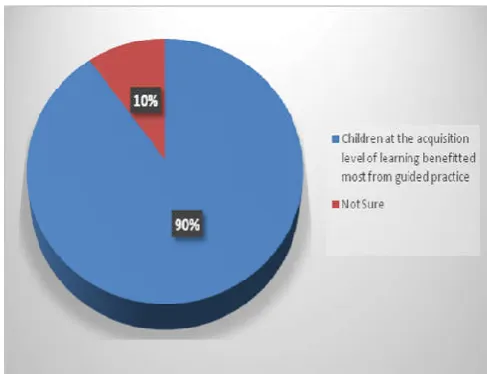
Figure 1. Response to the reflective journal guidelines, “Who benefitted most from explicit instruction activities
and guidance to perform new tasks to mastery?”
Quantitative Analysis
Data about the pre-service early educators’ familiarity with and use of guided practice strategies revealed the following results. First, 100% of early educators said that the literacy methods course was very effective for advancing competence and comfort with implementing guided practice that helped children develop positive reading attitudes and build receptive vocabulary. In addition, 100% of early educators said that the activities in the course enabled them to design effective teaching strategies that provided for a balanced literacy approach and included attention to guided practice. Further, 100% said that the field component was very effective for engaging with children in direct experiences using guided practice as an important touchstone for the course. Nearly 90% of participants said that children at the acquisition level of learning benefitted most from explicit instruction activities and guidance to perform new tasks to mastery (Figure 1). Furthermore, 90% said that the guided practice strategies were the most powerful techniques to promote children’s oral
language, vocabulary, and print knowledge and to foster children’s engagement in interaction. Finally, 100% said that their guided conversations and interaction with children ensured understanding of the printed words, inspired imagination and critical thinking, and helped children develop a love for reading, an integral component of literacy proficiency.
Recommendations and Implications
The results of the study suggest that the literacy methods course helped pre-service early educators understand the advantages of appropriate guided practice that are linked with children’s improved literacy and development of vocabulary, oral language abilities, and print-related knowledge. Young children learn literacy skills through interactions with the adults around them and gain skills necessary for literacy development when those adults, particularly parents and early educators, are both knowledgeable and intentional in how they support and nurture early literacy (Rao et al., 2016). In order to develop teaching competencies, teacher preparation programs must provide pre-service trainings that are grounded in current scientific knowledge about how children learn to develop literacy skills and the best instructional practices to help them learn. In addition, the results of the study suggest that the literacy methods class was very effective at offering rigorous pre-service training and experiential opportunities involving guided practice. Each early educator in the study reported having training in research-based guided practice that resulted in enhancing young children’s vocabulary and increasing children’s engagement in and understanding and appreciation of literacy. Based on the study results, college-level literacy methods courses for pre-service early educators should teach those educators to use guided practice strategies that help children solidify thinking—a fundamental skill necessary for literacy development and all future learning.
The generalizability of the results of this study is limited due to the small number of participants. A study with a larger sample would allow for more valid conclusions about how guided practice could be implemented to improve young children’s literacy. A similar study extended over a longer period would generate more participants and would mark an interesting direction for further research. An additional element could be added that examines a lesson/unit plan of children and determines if guided practice strategies have a significant impact on literacy development. Finally, an extended study might help determine other ways faculty can support pre-service early educators in order to improve literacy instruction and thus achieve a successful school wide literacy initiative that truly impacts children’s achievement and improves their literacy and learning.
REFERENCES
Ankrum, W., J., Genest, T., M., and Belcastro, G. E. 2014. The Power of Verbal Scaffolding:‘‘Showing’’ Beginning Readers How to Use Reading Strategies. Early Childhood
Education, 47, 39-47.
Burant, J. T. and Kirby, D. 2002. Beyond classroom- based early field experiences: understanding an “educative
practicum” in an urban school and community. Teaching
and Teacher Education, 18 (5), 561-575.
Flint, K., T. 2010. Making Meaning Together: Buddy Reading in a First Grade Classroom. Early Childhood Education, 38. 289-297
Fraenkel, J., Wallen, N., Hyun, H. 2012. How to design and
evaluate research in education. McGraw Hill: New York.
Friesen, A., Butera, G. 2012. 'You introduce all of the alphabet...But I do not think it should be the main focus': Exploring early educators' decisions about reading instruction. Early Childhood Education Journal, 40(6), 361-368.
Goldenberg, C. 1994. Promoting early literacy achievement among Spanish-speaking children: lesson from two studies. E. Hiebert (Ed.), Getting reading right from the start:
effective early literacy interventions (pp. 171-199).
Boston: Allyn and Becon.
Holland, J. 2008. Reading aloud with infants: The controversy, the myth, and a case study. Early Childhood Education
Journal, 35(4), 383-385.
Iaquinta, A. 2006. Guided reading: A research-based response to the challenges of early reading instruction. Early
Childhood Education Journal, 33(6), 413-418.
Isbell, R., Sobol, J., Lindauer, L., and Lowrance, A. 2004. The effects of storytelling and story reading on the oral language complexity and story comprehension of young children. Early Childhood Education Journal, 32(3), 157-163.
Jalongo, M. R. 2013. Early childhood language arts. New York, NY: Pearson.
Johns, K. 2010. What bugs you about teaching reading?
Educating Young Children, 16(3), 29-33.
Kotaman, H. 2013. Impacts of dialogical storybook reading on young children’s reading attitudes and vocabulary development. Reading Improvement, 50(4), 199-204. Maloch, B. 2002. Scaffolding student talk: One teacher’s role
in literature discussion groups. Reading Research
Quarterly, 37(1), 94–112.
Massey, S. 2013. From the reading rug to the play center: Enhancing vocabulary and comprehensive language skills by connecting storybook reading and guided play. Early
Childhood Education Journal, 41(2), 125-131.
Matusov, E. and Smith, P. M. 2007. Teaching imaginary children: University students’ narratives about
their Latino practicum children. Teaching and Teacher
Education, 23 (5), 705-729.
McKie, B., Manswell Butty, J., Green, R. 2012. Reading, reasoning, and literacy: Strategies for early childhood education from the analysis of classroom observations.
Early Childhood Education Journal, 40(1), 55-61.
Morrow, L. M. 2011. Developing effective reading curricula for beginning readers and the primary grades. In T. V. Rasinski (Ed.), Rebuilding the foundation: Effective
reading instruction for 21st century literacy (pp. 89–112).
Bloomington, IN: Solution Tree Press.
National Reading Panel 2000. Teaching children to read: An evidence-based assessment of the scientific research literature on reading and its implications for reading
instruction. Washington, DC: National Institute of Child
Health and Human Development.
Nelken, M., B. McAdoo, M. and Manwaring. A. 2009. Negotiating learning environments. In Rethinking
negotiation teaching: Innovations for context and culture,
edited by C. Honeyman, J. Coben and G. De Palo. St. Paul, MN: DRI Press.
Partridge, H. A. 2004. Helping parents make the most of shared book reading. Early Childhood Education Journal, 32(1), 25-30.
Pinnell, G. S., Fountas, I. C. 2010. Research base for Guided Reading as an Instructional Approach. Retrieved June 12, 2016, from www.scholastic.com/guidedreading
Rao, S. M., Newlin-Haus, E., Ehrhardt, K. 2016. Repeated interactive read-aloud: Enhancing literacy using story props. Childhood Education, 92(3), 226-235.
Rogoff, B., Paradise, R., Arauz, R. M., Correa-Chávez, M., and Angelillo, C. 2003. Firsthand learning through intent participation. Annual Review of Psychology, 54, 175-203. Scully, P., Roberts, H. 2002. Phonics, expository writing, and
reading aloud: Playful literacy in the primary grades. Early
Childhood Education Journal, 30(2), 93-99.
Taylor, B. M., Pearson, P. D., Peterson, D., and Rodriguez, M. C. 2003. Reading growth in high-poverty classrooms: The influenceof teacher practices that encourage cognitive engagement in literacy learning. Elementary School
Journal, 104(1), 3–28.
Vygotsky, L. S. 1978. Mind in society: The development of
higher psychological processes. (pp 1-298). Cambridge,
MA: Harvard University Press.
Wiseman, A. 2011. Interactive read alouds: Teachers and students constructing knowledge and literacy together.
Early Childhood Education Journal, 38(6), 431-438.