A STEREOLOGICAL STUDY OF THE EFFECTS OF THYMOQUINONE ON THE RENAL GLOMERULUS
NUMBER IN EXPERIMENTAL DIABETIC RATS
1
Kawa Kamal AZEEZ,
*Kawa Kamal AZEEZ’s master thesis
1
Master Student, Department of Histology and Embryology,
2
Department of Histology and Embryology, Faculty of Medicine,
ARTICLE INFO ABSTRACT
This investigation has been conducted to study the protective effect of Thymoquinone against Streptozotocin
seven animals; Control, Thymoquinone, group was injecteda single dose by intra
group provided thymoquinone (4mg/kg) with drink single doseby intra
with drinking water three days after streptozotocin was injected a single dose intra
of streptozotocin (40 mg/kg)to the streptozotocin+ thymoquinone group. Three days after the administration of streptozotocin, the development of diabetes in two experimental groups was confirmed by measuring the glucose levels in the blood. Eight days after the
experiment the rats were anesthetized then right kidney was taken for process was followed for light microscopic research. The kidney volume and glomerular number were calculated for each group using physical disector. A significant incre
andstreptozotocin + thymoquinone. A significant group.
Copyright © 2017, Kawa Kamal AZEEZ et al. This unrestricted use, distribution, and reproduction in any medium,
INTRODUCTION
Diabetes mellitus is the very popular lifestyle illness distinguished via high blood glucose level and glucose intolerance due to insulin insufficiency, reduced performances of insulin work or, both. It affects 5% of the world community and turn out the third human murderer after cancer and cardiovascular sickness (Taylor, 1999). Type 1 diabetes mellitus is due to cellular-mediated autoimmune demolition of pancreatic islet beta cells, driving to lack of insulin output. It generally beginning at childhood, but has ability to take place at all ages. Type 2 diabetes mellitus is about 90%
diabetes and had universal widespread evaluate of 2.8% in the year 2000 and is expected to be 4.4% in 2030 (Wild 2004). Both Type 1 and Type 2 diabetes mel
complex pathophysiologies, including insulin resistance syndrome and hyperglycaemia, which are associated with abnormalities in reactive nitrogen species and fat species
(Brownlee, 2001; Green et al., 2004). Streptozotocin (STZ) is
surely wide vision antibiotic and cytotoxic chemical that is
*Corresponding author: Fikret ALTINDAG,
Department of Histology and Embryology, Faculty of Medicine, Yil University, Turkey.
ISSN: 0975-833X
Vol.
Article History:
Received 22nd September, 2017
Received in revised form 14th October, 2017
Accepted 26th November, 2017
Published online 27th December, 2017
Citation: Kawa Kamal AZEEZ, Fikret ALTINDAG
renal glomerulus number in experimental diabetic rats Key words: Glomerulusnumber, Kidney, Rat, Stereology, Streptozotocin, Thymoquinon.
RESEARCH ARTICLE
A STEREOLOGICAL STUDY OF THE EFFECTS OF THYMOQUINONE ON THE RENAL GLOMERULUS
NUMBER IN EXPERIMENTAL DIABETIC RATS
Kawa Kamal AZEEZ, *
,2Fikret ALTINDAG and
2Murat Cetin
*Kawa Kamal AZEEZ’s master thesis
Department of Histology and Embryology, Faculty of Medicine, Yuzuncu Yil University,
Department of Histology and Embryology, Faculty of Medicine, Yuzuncu Yil University,
ABSTRACT
This investigation has been conducted to study the protective effect of Thymoquinone against Streptozotocin induced diabetes in rats. The rats were allocated into four groups
seven animals; Control, Thymoquinone, Streptozotocin, Streptozotocin + thymoquinone. Control group was injecteda single dose by intra-peritoneal injection of saline (0.5ml/kg), Thymoquinone group provided thymoquinone (4mg/kg) with drinking water, Streptozotocin group was
single doseby intra-peritoneal of streptozotocin (40 mg/kg) and thymoquinone was provided (4mg/kg) with drinking water three days after streptozotocin was injected a single dose intra
reptozotocin (40 mg/kg)to the streptozotocin+ thymoquinone group. Three days after the administration of streptozotocin, the development of diabetes in two experimental groups was confirmed by measuring the glucose levels in the blood. Eight days after the
experiment the rats were anesthetized then right kidney was taken for process was followed for light microscopic research. The kidney volume and glomerular number were calculated for each group using physical disector. A significant increase of the kidney volume in streptozotocin group andstreptozotocin + thymoquinone. A significant decreased glomerular number in streptozotocin
is an open access article distributed under the Creative Commons medium, provided the original work is properly cited.
Diabetes mellitus is the very popular lifestyle illness distinguished via high blood glucose level and glucose intolerance due to insulin insufficiency, reduced performances 5% of the world community ird human murderer after cancer and cardiovascular sickness (Taylor, 1999). Type 1 diabetes mediated autoimmune demolition of pancreatic islet beta cells, driving to lack of insulin output. It ut has ability to take place at all ages. Type 2 diabetes mellitus is about 90% - 95% of all diabetes and had universal widespread evaluate of 2.8% in the
year 2000 and is expected to be 4.4% in 2030 (Wild et al.,
2004). Both Type 1 and Type 2 diabetes mellitus have complex pathophysiologies, including insulin resistance syndrome and hyperglycaemia, which are associated with abnormalities in reactive nitrogen species and fat species ., 2004). Streptozotocin (STZ) is ision antibiotic and cytotoxic chemical that is
Department of Histology and Embryology, Faculty of Medicine, Van Yuzuncu
especially toxic to the pancreatic, insulin making beta cells in mammals (Szkudelski, 2001; Hayashi
al., 2006). It has been vastly utilized to stimulate diabetes in animal models particularly rats and mice (Brentjens and Saltz,
2001; Hayashi et al., 2006).Early diabetes mellitus and acute
experimental diabetes have been shown to improve renal function and glomerular function (
1973; Hostetter, 1981). The number of glomeruli in a kidney can change as a result of disease
A decrease in the number of glomeruli ca
(John et al., 1992)The basement membrane thickening is a
broadly acknowledged distinctive of small blood vessel diabetic illness (Huang, 1980). In glomeruli and
kidneys of diabetic patients, marked basement membranes thickening is monitored. Furthermore, it is believed this alteration might result in the kidneys premature degeneration
(Steffes et al., 1979; Isogia
experimental diabetes mellitus in animal, STZ and Alloxan are widely utilized medicines. STZ and Alloxan diabetogenic factors damage the B cell of the pancreas. In addition, they have various cytotoxic activities. Intracellular construction of hydrogen peroxide, hydroxyl radicals and superoxide radicals are generated by reaction the Alloxan. The hydroxyl radicals
International Journal of Current Research
Vol. 9, Issue, 12, pp.62757-62761, December, 2017
Fikret ALTINDAG and Murat Cetin RAGBETLİ, 2017. “A stereological study of the effects of thymoquinone on the renal glomerulus number in experimental diabetic rats”, International Journal of Current Research, 9, (12), 62757-62761
Available online at http://www.journalcra.com
z
A STEREOLOGICAL STUDY OF THE EFFECTS OF THYMOQUINONE ON THE RENAL GLOMERULUS
Murat Cetin RAGBETLİ
Yuzuncu Yil University, Turkey
Yuzuncu Yil University, Turkey
This investigation has been conducted to study the protective effect of Thymoquinone against induced diabetes in rats. The rats were allocated into four groups each group contain Streptozotocin, Streptozotocin + thymoquinone. Control peritoneal injection of saline (0.5ml/kg), Thymoquinone ing water, Streptozotocin group was injecteda streptozotocin (40 mg/kg) and thymoquinone was provided (4mg/kg) with drinking water three days after streptozotocin was injected a single dose intra-peritoneal injection reptozotocin (40 mg/kg)to the streptozotocin+ thymoquinone group. Three days after the administration of streptozotocin, the development of diabetes in two experimental groups was confirmed by measuring the glucose levels in the blood. Eight days after the beginning of the experiment the rats were anesthetized then right kidney was taken for process was followed for light microscopic research. The kidney volume and glomerular number were calculated for each group ase of the kidney volume in streptozotocin group decreased glomerular number in streptozotocin
Commons Attribution License, which permits
toxic to the pancreatic, insulin making beta cells in
mammals (Szkudelski, 2001; Hayashi et al., 2006; Takeshita et
., 2006). It has been vastly utilized to stimulate diabetes in animal models particularly rats and mice (Brentjens and Saltz, ., 2006).Early diabetes mellitus and acute experimental diabetes have been shown to improve renal function and glomerular function (Mogensen and Andersen, ). The number of glomeruli in a kidney as a result of disease and aging (Heptinstall, 1983). A decrease in the number of glomeruli causes various diseases
., 1992)The basement membrane thickening is a broadly acknowledged distinctive of small blood vessel diabetic illness (Huang, 1980). In glomeruli and capillaries in kidneys of diabetic patients, marked basement membranes thickening is monitored. Furthermore, it is believed this alteration might result in the kidneys premature degeneration
., 1979; Isogia et al., 1998).So as to make
ental diabetes mellitus in animal, STZ and Alloxan are widely utilized medicines. STZ and Alloxan diabetogenic factors damage the B cell of the pancreas. In addition, they have various cytotoxic activities. Intracellular construction of hydroxyl radicals and superoxide radicals are generated by reaction the Alloxan. The hydroxyl radicals
INTERNATIONAL JOURNAL OF CURRENT RESEARCH
contain trace quantities of reactive iron within secondary lysosomes. The lysosomal hydrolases seepage and further cellular degeneration is caused by the ensuing lysosomal membrane damage. The weakness excretion of insulin results in production of nitrite, energizing of islet guanylyl cyclase and collection of cGMP, and inhibition of islet mitochondrial aconitase activity occurred when STZ through the glu transporter (GLUT2) come in to the B cell. The local liberation of nitric oxide from STZ within islets might mediate impact of STZ on β-cells. This might results in DNA alkylation and insulin tyrosine kinase receptor activity reduction. After that, the damaged DNA makes B cells go through the destruction via necrosis (Szkudelski, 2001).The most significant
component of the volatile oil from Nigella sativa
Thymoquinone (TQ). It has strong antioxidant characteristics. The organs are protected by TQ against oxidative impairment enthused via a range of free radical producing agents like doxorubicin evoked cardiotoxicity, carbon tetrachloride induced hepatotoxicity, nephropathy produced by cisplatin autoimmune and allergic encephalomyelitis and stom mucosal damage evoked via ischemia reperfusion (Nagi and
Mansour, 2000; Al-Majed et al., 2006).
MATERIALS AND METHODS
Animals
We obtained ethical approval for our study from
Yil University Animal Research Local Ethic Committee in the session held on 9/8/2016 under number TYL
healthy female wistar albino rats, weighing 180
averaging 20 weeks old were utilized in this study. The rats were allocated into four experimental groups each group contain 7 animals: Control, TQ, STZ, STZ+TQ. Control grup was injecteda single dose intra-peritoneal(i
ml/kg, TQ group was givedTQ for eight days (with drinking water, 4mg/kg/day), STZ grup was injected a single dose of STZ (i.p, 40 mg/kg) (Sigma). STZ+TQ group were given TQ (with drinking water, 4mg/kg body weight)
single dose of STZ injection (i.p, 40 mg/kg). Diabetes was induced in two groups by a single dose of STZ (i.p, 40 mg/kg, freshly dissolved in 5.5 mmol/l citrate buffer, pH 4.5). Three days after STZ was injected, blood glucose levels of STZ and STZ+TQ grupswas measured. Rats with blood glucose levels of 250 mg/dl or higher were considered to be diabetic. Blood glucose levels in control animals remained normal for the duration of the study. The initial and final body weight changes of the various groups were record
perfused after being anesthetized with ketamine 50mg/kg and xylazine 4mg/kg.
Histology
Following perfusion, right kidneys wereremovedand fixed in 10% neutral buffered formal in and washing
immersed in Bouin’ssolutions for repeat fixation.
neys were dehydrated through a gradedalcoholseries, cleared in xylene and infiltrated with parafin for embeding. Serial sections of each kidney were cut in a vertical
using a rotary microtome. Selected sectionswer
slides, hydrated through descending concentrations of alcoholseries and stained with hematoxyl in and eosin (H&E).
62758 Kawa Kamal AZEEZ et al. A stereological study of the effects of thymoquinone on the renal glomerulus number in experimental d
contain trace quantities of reactive iron within secondary lysosomes. The lysosomal hydrolases seepage and further e ensuing lysosomal membrane damage. The weakness excretion of insulin results in production of nitrite, energizing of islet guanylyl cyclase and collection of cGMP, and inhibition of islet mitochondrial aconitase activity occurred when STZ through the glucose transporter (GLUT2) come in to the B cell. The local liberation of nitric oxide from STZ within islets might mediate impact of cells. This might results in DNA alkylation and insulin tyrosine kinase receptor activity reduction. After that, e damaged DNA makes B cells go through the destruction via necrosis (Szkudelski, 2001).The most significant
Nigella sativa seeds is
Thymoquinone (TQ). It has strong antioxidant characteristics. TQ against oxidative impairment enthused via a range of free radical producing agents like doxorubicin evoked cardiotoxicity, carbon tetrachloride induced hepatotoxicity, nephropathy produced by cisplatin autoimmune and allergic encephalomyelitis and stomach mucosal damage evoked via ischemia reperfusion (Nagi and
We obtained ethical approval for our study from Van Yuzuncu l University Animal Research Local Ethic Committee in the 9/8/2016 under number TYL-2016-5369. 28 albino rats, weighing 180–220 g and averaging 20 weeks old were utilized in this study. The rats were allocated into four experimental groups each group STZ+TQ. Control grup peritoneal(i.p)of saline 0.5 ml/kg, TQ group was givedTQ for eight days (with drinking water, 4mg/kg/day), STZ grup was injected a single dose of STZ (i.p, 40 mg/kg) (Sigma). STZ+TQ group were given TQ (with drinking water, 4mg/kg body weight) two days after a dose of STZ injection (i.p, 40 mg/kg). Diabetes was induced in two groups by a single dose of STZ (i.p, 40 mg/kg, freshly dissolved in 5.5 mmol/l citrate buffer, pH 4.5). Three days after STZ was injected, blood glucose levels of STZ and asured. Rats with blood glucose levels of 250 mg/dl or higher were considered to be diabetic. Blood glucose levels in control animals remained normal for the duration of the study. The initial and final body weight changes of the various groups were recorded. The rats were perfused after being anesthetized with ketamine 50mg/kg and
Following perfusion, right kidneys wereremovedand fixed in in and washing the kidney were fixation. Right kid through a gradedalcoholseries, cleared in with parafin for embeding. Serial kidney were cut in a vertical plane at 5μm using a rotary microtome. Selected sectionsweremounted on concentrations of in and eosin (H&E).
Stereology
We used the physical fractionator and disector counting methodfor the total number of glomeruli. Thephysical
consists of two paralel cross
certaindistance "t". Onecountstheparticlesthatarevisible on thereferencesection, but not thelook
counting frame. Toachievesystematicrandomsampling for stereology, the first section was chosen randomly while the next section was taken after cutting every
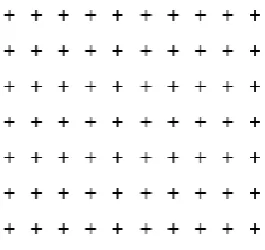
[image:2.595.342.530.206.306.2]nine to 11 sections were taken. The multiplied by the sampling rate (Sterio, 1984)
Figure 1.Unbiasedcountingframe. thereferencesectionbut not seen inthelook
Thus, a disectorparticle (Q
The total number of glomeruli in the kidney the formula:
N = Nv x Vref
Nv is thenumericaldensity of theparticleof interest
(glomeruli/unitvolume) and Vref
of the object.
We used Cavalieri’s principle for total kidney calculation. With the Cavalieri’s
divided into parallelslices at equal Random sampling from beginning were taken and divided into spaced total area of the received sections point counting grade (Fig.2). The from all theslices was multiplied calculate the volume. The values the sampling rate.We can formulate it like
Vref= t x Σa
‘‘t’’ issectionthickness and ‘‘Σa’’ is total surfacearea in sections (Howard and Reed, 1998).
Kawa Kamal AZEEZ et al. A stereological study of the effects of thymoquinone on the renal glomerulus number in experimental d
fractionator and disector counting for the total number of glomeruli. Thephysical dissector consists of two paralel cross-sectional planeseparatedby a Onecountstheparticlesthatarevisible on thereferencesection, but not thelook-upsection by unbiased . Toachievesystematicrandomsampling for stereology, the first section was chosen randomly while the next section was taken after cutting every 30 section. About nine to 11 sections were taken. The values obtained were
sampling rate (Sterio, 1984)
nbiasedcountingframe.Theblackparticleseen in thereferencesectionbut not seen inthelook-upsectionwascounted.
Thus, a disectorparticle (Q-)=2
glomeruli in the kidney estimated using
is thenumericaldensity of theparticleof interest
refis the total (reference) volume
principle for total kidney volume Cavalieri’s principle, the kidney was parallelslices at equal intervals with systematic
beginning to end. Some random slices spaced sections equally (t). The sections were calculated using the . The total surface area obtained multiplied by the slice thickness to values obtained were multiplied by sampling rate.We can formulate it like this:
‘‘t’’ issectionthickness and ‘‘Σa’’ is total surfacearea in sections (Howard and Reed, 1998).
[image:2.595.368.501.647.772.2]Statistical analysis
Statistical Analyses were performed using Microsoft SPSS Version 13.0 for statistical analyses. Kruskal-Wallis test was performed to compare groups.
RESULTS
Rat's blood glucose levels
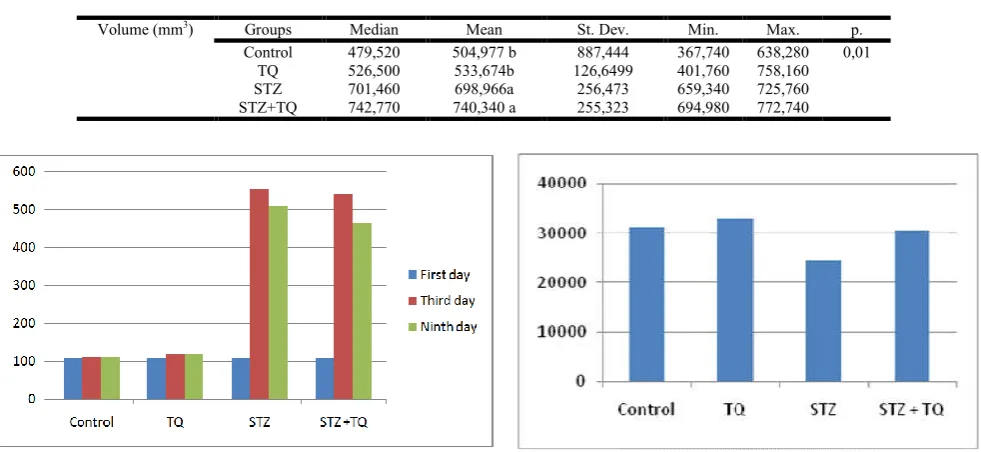
After injectedstreptozotocin the blood glucose levels increases gradually in STZ group but in STZ +TQ group show significant decrease while in Control and TQ group the blood glucose level remained normal during experimental period.
Total number of glomeruli
In addition, in the Streptozotocin (STZ) group the total glomerular number were decreased when compared to control group. However, Thymoquinone (TQ) group indicated an increase in glomerular number in comparison to control group (P=0,01).
Total kidney Volume
The results revealed that the total kidney volume for each of the of the groups (control and Thymoquinone (TQ), there was no significant difference. Furthermore, When Thymoquinone (TQ) + Streptozotocin (STZ) and Streptozotocin (STZ) group was compared with control group, a significant increase was
Table 1. Total number of the glomeruli
[image:3.595.51.542.324.550.2]Glomeruli Groups Median Mean St. Dev. Min. Max. p.* Control 31307,00 31338,00 b 909,17 31208,00 31466,00 0,01 TQ 32927,00 32992,00 a 3811,41 32534,00 33484,00 STZ 24309,50 24405,83 d 3360,69 24062,00 25007,00 STZ+TQ 30606,00 30566,67 c 2046,53 30211,00 30758,00
Table 2. The total volume of groups
Volume (mm3) Groups Median Mean St. Dev. Min. Max. p. Control 479,520 504,977 b 887,444 367,740 638,280 0,01
TQ 526,500 533,674b 126,6499 401,760 758,160 STZ 701,460 698,966a 256,473 659,340 725,760 STZ+TQ 742,770 740,340 a 255,323 694,980 772,740
[image:3.595.159.430.586.740.2]
Figure 3. Effect of TQ on blood glucose in STZ-induced Figure 4. Total number of glomeruli diabetic rats (mg/dl)
Figure 5. Kidney volume (mm3)x102
detected (P=0,01). The coefficient variation (CV) and coefficient error (CE) valueswere calculated. CV values of grups; Kontrol 0,002, TQ 0,009, STZ 0,012, STZ+TQ 0,006 and CE values of grups; Kontrol 0,05, TQ 0,06, STZ 0,06, STZ+TQ 0,05.
DISCUSSION AND CONCLUSION
In controlling the composition and volume of body fluids, kidney have the subsequent vital roles controlling maintenance of blood volume ratio and pressure, excretion, controlling the level of solutes in the blood, checking acidity and basicity of extracellular fluid, vitamin D synthesis and red blood cell
synthesis regulation (Seeley et al., 1995; Saladin, 2007). To
remove poisonous waste products from the body and to maintain fluids, minerals, and electrolytes at physiological levels, kidneys are vital. The cells and microblood vessels of
the kidney are elevated blood glucose is damaged (Suzuki et
al., 2005).For examining the pathogenesis of diabetic
nephropathy, the STZ model of diabetes is normally utilized. like activation of protein kinase C is one of several
pathological features (Carpenter et al., 2002). The chief active
constituent of Nigella sativa seeds which accountable for its medicinal effects is TQ. Additionally, it has a potential for treating of cancer. Anti- inflammatory, antioxidant, and
anti-2009; Alkharfy et al., 2011). Early diabetes mellitus and acute
experimental diabetes have been shown to improve renal function and glomerular function (Mogensen and Andersen, 1973; Hostetter, 1981). The number of glomeruli in a kidney can change as a result of disease and aging (Heptinstall, 1983).
A decrease in the number of glomeruli causes various diseases
(John et all., 1992). In conclusion, the present study
demonstrated that in the STZ group the total glomerular number were decreased when compared to control group. But our result do not compared to another studies, because there is no any articles about effect of thymoquinone on the glomerulus number by stereology method. However, TQ group indicated an increase in glomerular number in comparison to control group. Moreover, in the treatment of TQ+STZ group were decreased in comparison to control group while the total number of glomeruli were increased in the comparison to STZ group. The result showed that pretreatment with TQ against STZ cause increasing kidney volume and glomerular number decreased accordingly, but in in treated group show protection of glomeruli against STZ damaging. Finally TQ can be utilize as a protective drug against diabetes in kidney damage.
Acknowledgment
[image:4.595.75.530.116.306.2]
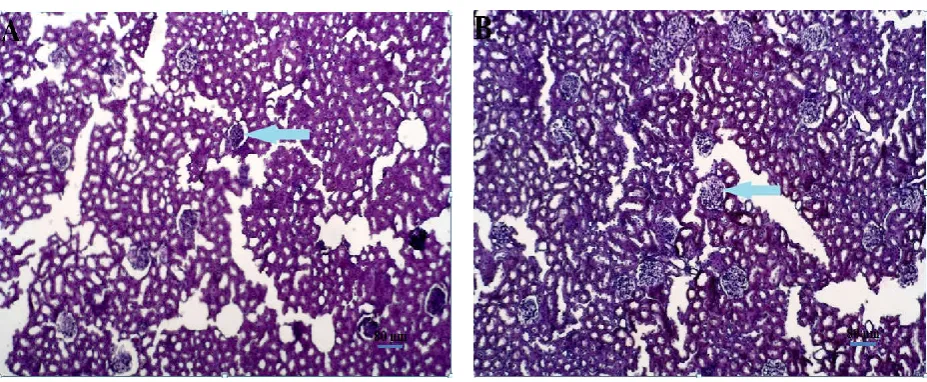
Figure 6. Microscopical section of kidney showing glomeruli (A:Control group) (B:TQ group) (scale bar= 80µm)H&E x10
[image:4.595.68.532.332.523.2]
REFERENCES
Alkharfy, K.M., Al-Daghri, N.M., Al-Attas, O.S. and Alokail, M.S. 2011. The protective effect of thymoquinone against
sepsis syndrome morbidity and mortality in mice. Int.
Immunopharmacol., 11:250-254.
Al-Majed, A.A., Al-Omar, F.A. and Nagi, M.N. 2006. Neuroprotective effects of thymoquinone against transient
forebrain ischemia in the rat hippocampus. Eur. J.
Pharmacol., 543:40-47.
Brentjens, R. and Saltz, L. 2001. Islet cell tumors of the
pancreas: the medical oncologist's perspective. Surg. Clin.
N. Am., 81:527-542.
Carpenter, L., Cordery,D. and Biden, T.J. 2002. Inhibition of protein kinase C δ protects rat INS-1 cells against
interleukin-1β and streptozotocin-induced apoptosis.
Diabetes, 51:317-324.
Hayashi, K., Kojima, R, and Ito, M. 2006. Strain differences in
the diabetogenic activity of streptozotocin in mice. Biol.
Pharm. Bull., 29:1110-1119.
Heptinstall, R.H. 1983. Polyarteritis (periarteritis) nodosa, other forms of vasculitis, and rheumatoid arthritis.
Pathology of the Kidney, 2:793-838.
Hostetter, T.H., Troy, J.L. and Brenner, B.M. 1981 Glomerularhemodynamics in experimentaldiabetesmellitus.
KidneyInt., 19:410-415
Howard, C.V. and Reed, M.G. 1998. Unbiased Stereology.
Bios Scientific Publishers, 39-54
Isogai, S., Kameyama, M., Iso, K. and Yoshino, G. 1998. Protective effects of a small dose of captopril on the reduction of glomerular basement membrane anionic sites in spontaneously hypertensive rats with
streptozotocin-induced diabetes. J. Diabetes Complicat., 12:170-175.
John, F.B., Mary, C.S., Sharon, D.R. and Graeme, B.R. 1992.
Total numbers of glomeruli and
individualglomerularcelltypes in the normal ratkidney. Cell
TissueRes., 270:37-45
Kouidhi, B., Zmantar, T., Jrah, H., Souiden, Y., Chaieb, K., Mahdouani, K. and Bakhrouf, A. 2011. Antibacterial and resistance-modifying activities of thymoquinone against
oral pathogens. Ann. Clin. Microbiol. Antimicrob., 10:29.
Mogensen, C.E. and Andersen, M.J. 1973. Increasedkidney size and glomerularfiltration rate in earlyjuvenilediabetes. Diabetes, 22:706-712
Nagi, M.N. and Mansour, M.A. 2000. Protective effect of thymoquinone against doxorubicin–induced cardiotoxicity
in rats: A possible mechanism of protection.
Pharmacol.Res., 41:283-289.
Ragheb, A., Attia, A., Eldin, W.S., Elbarbry, F., Gazarin, S. and Shoker, A. 2009. The protective effect of thymoquinone, an anti-oxidant and anti-inflammatory
agent, against renal injury: a review. Saudi. J. Kidney Dis.
Transpl., 20:741-752
Saladin, K.S. 2007. The Urinary System. Human Anatomy,
2nd Ed, p. 708-723, Mc Graw Hill, New York.
Saravanan, D., Baskaran, K. and Sakthisekaran, D. 2016. Protective effect of thymoquinone on the liver tissues of 7, 12-dimethylbenz (a) anthracene induced experimental
breast cancer rats. Asian. J. Pharm. Clin. Res., 9:197-201.
Sayed, M.D. 1980. Traditional medicine in health care. J.
Ethnopharmacol., 2:19-22.
Seeley RR, Stephens TD and Tate, P. 2007. The Urinary
System. Essentials of anatomy and physiology, 6th Ed, p.
508-532, Mosby, Phiadelphia.
Steffes, M.W., Brown, D.M., Basgen, J.M., Matas, A.J. and Mauser, S.M. 1979. Glomerularbasement membrane ethicknessfollowingislettransplantation in thediabeticrat.
Journal of Technical Methods and Pathology,41:116-118
Sterio, D.C. 1984. The unbiased estimation of number and
sizes of arbitrary particles using the disector. J. Microsc.
Oxford., 134:127-136.
Suzuki, R., Okada, Y. and Okuyama, T. 2005. The favorable effect of style of Zea mays L. on streptozotocin induced
diabetic nephropathy. Biol. Pharm. Bull., 28:919-920.
Szkudelski, T. 2001. The mechanism of alloxan and
streptozotocin action in B cells of the rat pancreas. Physiol.
Res., 50:537-546.
Takeshita, F., Kodama, M., Yamamoto, H., Ikarashi, Y., Ueda, S., Teratani, T., Yamamoto, Y., Tamatani, T., Kanegasaki, S. and Ochiya, T. 2006. Streptozotocin-induced partial beta cell depletion in nude mice without hyperglycaemia
induces pancreatic morphogenesis in transplanted
embryonic stem cells. Diabetologia, 49:2948-2958.
Taylor, S.I. 1999. Deconstructing type 2 diabetes. Cell,
97:9-12.
Wild, S., Roglic, G., Green, A., Sicree, R. and King, H. 2004. Global prevalence of diabetes: estimates for the year 2000
and projections for 2030. Diabetes Care, 27:1047-1053.