5Department of Radiotherapy, Yijishan Hospital Affiliated to Wannan Medical College, Wuhu, Anhui, China
Received October 8, 2014; Accepted December 1, 2014; Epub December 1, 2014; Published December 15, 2014
Abstract: The identification of cancer-associated long non-coding RNAs and the investigation of their molecular and biological functions are vital for understanding the molecular biology and progression of cancer. The CARLo-5, a
newly identified long non-coding RNA, was found to be upregulated in colon cancer. However, little is known about its role in gastric cancer. In the present study, a great upregulation of CARLo-5 was observed in gastric cancer
com-pared to paired adjacent normal tissues. Knockdown of CARLo-5 in gastric cancer cell lines significantly inhibited the cell proliferation via inducing G0/G1 cell-cycle arrest and apoptosis. Furthermore, ERK/MAPK pathway was found to be inactivated in the gastric cells after CARLo-5 knockdown. These results indicated that CARLo-5 might
serve as a pro-oncogenic lncRNA that promotes proliferation of gastric cancer and activates the ERK/MAPK path -way.
Keywords: CARLo-5, gastric cancer, lncRNA, proliferation, ERK, MAPK
Introduction
Gastric cancer (GC) is the fourth most frequent cancer and second most frequent cause of
cancer-related deaths worldwide [1]. Despite
recent advances in diagnostic techniques and
in treatment including target therapy, there are
still large numbers of GC patients with poor
prognosis [2-4]. The pathogenic mechanism
contributing to the aggressive biological fea
-ture in this cancer remains to be clarified. The genome sequencing projects revealed that the human genome is comprised of less than
2% protein coding genes, and more than 90%
of the genome is transcribed as noncoding
RNAs (ncRNA) [5]. Long non-coding RNAs
(lncRNAs) are a class of non-coding RNA tran -scripts longer than 200 nucleotides and are
implicated in a number of important events,
such as various cellular processes, develop-ment, and human diseases [6]. Increasing
evi-dence demonstrate that lncRNAs exhibit unique profiles in various human cancers, which reflect
disease progression and serve as a prognostic
LncRNA CARLo-5, a recently identified long non
-coding mapped to chromosome 8q24, was found to be generally upregulated in colon can -cer tissues compared to their neighboring nor-mal tissues [10]. CARLo-5 expression was
sig-nificantly correlated with the rs6983267 allele,
which was associated with increased cancer susceptibility [10]. Kim et al [10] demonstrated that MYC enhancer region physically interacts
with the active regulatory region of the CARLo-5
promoter, suggesting that the cancer-associat-ed variant rs6983267 in MYC enhancer could regulate CARLo-5 expression through long-range interaction with the active regulatory
region of its promoter. It also reveals that
CARLo-5 has a role in cell-cycle regulation and
development of colon cancer [10]. However, the prognostic role of CARLo-5 in cancer is elusive
and few studies have examined in detail its
molecular mechanism in gastric cancer. In the present study, we determined CARLo-5
expression pattern and its correlation with
Materials and methods
Human tissue specimens
All patients gave written informed consent to
the study, which was approved by the Ethics
Committee of Yijishan Hospital at Wannan
Medical University (Anhui, China). The study
methodologies conformed to the standards set by the declaration of Helsinki. Fifty-one paired GC and adjacent non-tumor gastic tissues (≥ 3
cm away from tumor) were obtained from patients who underwent resection of the pri -mary gastric cancer at Yijishan Hospital between 2012 and 2013 and were diagnosed
with GC based on histopathological evaluation. Each sample was snap-frozen in liquid nitrogen
and stored at -80°C prior to RNA isolation and
qRT-PCR analysis. No anti-cancer treatments were given before biopsy collection. Complete clinicopathological data of the patients from
which the specimens were collected were
avail-able. No selection bias was introduced in GC samples collection for this study.
Cell lines
Three gastric cancer cell lines (SGC7901, BGC823, MGC803), and a normal gastric epi
-thelium cell line (GES-1) were purchased from the Institute of Biochemistry and Cell Biology of the Chinese Academy of Sciences (Shanghai,
China). The cell lines were cultured in DMEM or
RPMI 1640 (Gibco BRL), supplemented with 10% fetal bovine serum (FBS, HyClone) as well as 100 U/ml penicillin and 100 μg/ml strepto -mycin (Invitrogen). Cells were maintained in a
humidified incubator at 37°C in the presence of
5% CO2. All cell lines have been passaged for fewer than 6 months.
RNA extraction and quantitative real-time PCR
Total RNA from tissues and cells was extracted
using Trizol reagent (Invitrogen, CA) according
to the manufacturer’s protocol. RNA was
reverse transcribed to cDNA by a Reverse
Transcription Kit (Takara, Dalian, China). The cDNA template was amplified by real-time
RT-PCR using the SYBR® Premix Dimmer
Eraser kit (TaKaRa, Dalian, China). The quanti -tative real-time polymerase chain reaction
(qRT-PCR) was performed on ABI 7500 system
(Applied Biosystems, CA, USA) according to the
manufacturer’s instructions. Glyceraldehyde-3-phosphate dehydrogenase (GAPDH) was mea
-sured as an internal control for cell lines and β-actin was measured as an internal control for
paired tumor and normal tissues. The relative
expression fold change of mRNAs was calcu -lated by the 2-ΔΔCt method. The primer sequenc
-es were as follows: β-actin: 5’-GAAATCGTG-CGTGACATTAA-3’ (forward), 5’-AAGGAAGGCTG-GAAGAGTG-3’ (reverse); GADPH: 5’-GTCAACG-GATTTGGTCTGTATT-3’ (forward), 5’-AGTCTTCT-GGGTGGCAGTGAT-3’ (reverse); CARLo-5: 5’-GC-Figure 1.CARLo-5 expression in GC cell lines, cancer tissues and its clinical significance. A. qRT-PCR analysis of
CARLo-5 expression levels in gastric cancer cell lines (BGC-823, MGC-803, and SGC-7901) compared with the normal gastric epithelium cell line (GES-1). Data represent the mean ± S.D. from three independent experiments. B. Difference in expression levels of CARLo-5 expression levels between gastric cancer tissues and matched
non-tumor tissues. The expression of CARLo-5 was normalized to β-actin. The statistical differences between samples
were analyzed with paired samples t-test (n = 51, P < 0.0001). Horizontal lines in the box plots represent the
[image:2.612.96.519.73.223.2]CACAAATCAACAACAACAACAACAA-3’ (forward), 5’-AGAGTGATGCCAAGGCTGTTATTGTCAA-3’ (reverse). The qRT-PCR reaction was conducted under the following conditions: 95°C for 30 s, 40 cycles of 95°C for 5 s and 60°C for 60 s. For
cell expression and tumor samples, each
sam-ple was run in triplicate. qRT-PCR results were
analyzed and expressed relative to CT
(thresh-old cycle) values, and then converted to f(thresh-old
changes.
Transfection of gastric cancer cells
The nucleotide sequences of siRNA for CARLo-5 were as follows: CARLo-5 siRNA-1 (si CAR-Lo5-1): GGAGGGUGCUUGACAAUAAUU; CARLo-5 siRNA-2 (siCARLo5-2): GAGAAGACCAUA-AGAAGAU [10]. Negative control siRNA (si-NC) were purchased from Invitrogen (Invitrogen,
USA). Cells were grown on six-well plates to 75%
Flow cytometric analysis
Transfected Gastric cells were plated in 6-well plates. After 48 h incubation, the cultures were incubated with propidium iodide (PI) for 30 min in the dark. Cultures were collected and ana
-lyzed for cell cycle using a flow cytometer (FACSCalibur, BD Biosciences) after PI staining.
The cultures were also stained with annexin
V-fluorescein isothiocyanate, and the cell apop
-tosis was analyzed using a flow cytometer.
Nuclear stain
Transfected cells were allowed to adhere on
slide glasses overnight. Then, they were washed
with PBS three times and fixed with ethanol for 10 min. After being air dried, cells were washed
with PBS and stained with Hoechst 33258 (1
mg/mL) for 10 min. The chromatin structures
< 5 cm 28 (54.90%) 3.78
Histologic differentiation
well/moderately 35 (68.63%) 4.33 0.134 poor 16 (31.37%) 4.97
TNM stage
I/II 30 (58.82%) 4.03 0.012 III/IV 21 (41.18%) 5.25
Invasion depth
T1/T2 24 (47.06%) 4.26 0.121 T3/T4 27 (52.94%) 4.89
Lymph node metastasis
Yes 25 (49.02%) 4.91 0.567 No 26 (50.98%) 4.54
Distant metastasis
Yes 7 (13.73%) 4.53 0.786 No 44 (86.27%) 4.75
aMedian of relative expression, bP < 0.05 was considered significant
(Mann-Whitney U test).
sured using MTT assay. The cells were
incubated in 0.1 mg/ml MTT at 37°C for 4 h and lysed in dimethyl sulfoxide (DMSO) at room temperature for 10 min. The
absorbance in each well was measured by a microplate reader (Bio-Rad, Hercules,
CA, USA). Cell proliferation was docu -mented every 24 h.
Colony formation assay
1000 of transfected cells were placed in each well of 6-well plates and maintained in proper media containing 10% FBS for two weeks, during which the medium was
replaced every 4 days. Colonies were
then fixed with methanol and stained with 0.1% crystal violet (Sigma) in PBS for 15 minutes. Colony formation was deter
-mined by counting the number of stained
[image:3.612.91.333.98.437.2]of the cells were examined by fluorescence
microscopy.
Western blot analysis
To determine the expressed protein levels,
transfected cells were harvested from 6-well culture plates, lysed in RIPA lysis buffer (Cell
Signaling Technology) supplemented with pro-tease inhibitors (Roche) on ice. The lysates were then collected and subjected to
ultrasoni-cation and centrifugation at 12000 rpm for 10
min. The supernatants were collected, and
pro-tein content was determined by Bradford assay. Total proteins (30-50 μg) were resolved using 10% SDS-PAGE separating gel (Bio-Rad Lab-oratories, CA) and blotted onto a PVDF Immobilon-P membrane (Millipore). The PVDF membranes were then blocked with 10% non-fat powdered milk in Tris-buffered saline
Solution with Tween (TBS-T) at room
tempera-ture for 2 h and incubated overnight with pri -mary antibody at 4°C overnight: anti-p16 (1:1000), anti-p21 (1:1000), anti-p27 (1:1000), anti-Bax (1:1000), anti-Bcl-2 (1:1000), anti-cas-pase-3 (1:1000), anti-p-ERK (1:1000), anti-ERK (1:1000), anti-p-p38 (1:1000), and anti-tubulin (1:2000). All the primary antibodies were
pur-chased from Abcam. After three 5-min washes
in TBS-T, the membranes were incubated with horseradish peroxidase (HRP)-conjugated goat
anti-rabbit IgG antibody (1:2000; Abcam) for 4
h at room temperature and then washed again
in TBS-T and visualized with BeyoECL Plus kit. All experiments were performed in triplicate.
Statistical analysis
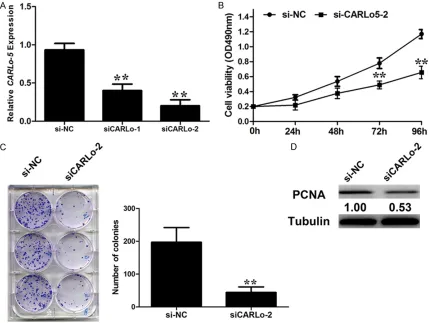
[image:4.612.92.521.72.395.2]The statistical analysis was performed with SPSS 17.0 software. The data are presented as Figure 2. Effect of CARLo-5 on cell proliferation. A. qRT-PCR analysis of CARLo-5 expression following treatment of SGC-7901 cells with two specific siRNAs targeting CARLo-5. B. SGC-7901 cells were transfected with si-CARLo-2 or
si-NC. MTT assays were performed to determine the proliferation of SGC-7901 cells. C. Changes in the colony-forma
the means ± standard deviation (S.D.).
Continuous variables were compared by
Student’s t test or the ANOVA test. If the test result of the variance homogeneity between the groups was significant, the Mann-Whitney
test was appropriately adopted. In samples with small size (n < 30) and with non-normal distribution and/or elevated dispersion, we also used non-parametric statistics. Two-tailed
P-values less than 0.05 were considered
statis-tically significant.
Results
Expression levels of CARLo-5 in GC cell lines
To explore whether CARLo-5 was upregulated
in GC, we first determined its expression in diverse GC cell lines with RT-PCR and normal
-ized to GADPH. When normal-ized to normal gastric epithelium cell line (GES-1), three cell lines (BGC-823, MGC-803, and SGC-7901) expressed higher levels of CARLo-5 (Figure 1A).
Expression of CARLo-5 is upregulated in GC
tissues
The expression level of CARLo-5 was detected
in 51 paired GC tissues and adjacent normal tissues by RT-PCR, and normalized to β-actin.
CARLo-5 was significantly upregulated in can -cer tissues compared with normal counterparts (P < 0.01, Figure 1B).
In order to further understand the significance of CARLo-5 overexpression in GC, we deter -mined the potential associations between
CARLo-5 expression and patients’ clinicopatho
-logical features. The detailed relationships
between CARLo-5 expression status and
clini-copathological variables of 51 patients were
summarized in Table 1. It is worth noting that, high CARLo-5 expression was significantly cor -related with tumor size (P = 0.004) and advanced TNM stage (P = 0.012). However,
CARLo-5 expression level was not correlated
with other parameters such as patient’s gender
[image:5.612.93.524.70.358.2]and tumor position (Table 1).
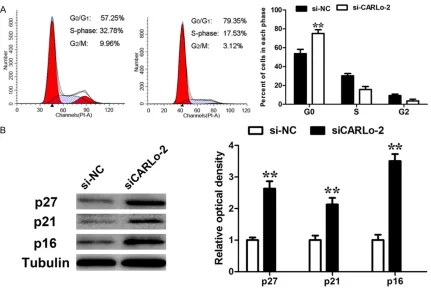
Figure 3. Effect of CARLo-5 on cell cycle. A. Cell cycle analysis determined the relative cell numbers in each cell-cycle
phase after propidium iodide staining of CARLo-5-downregulated SGC-7901 cells. Numbers inside bars represent percentages of cells in each phase. Data represent the mean ± S.D. from three independent experiments. B.
SGC-7901 cells, treated as described in Figure 3A, were collected for western blotting analysis of the G0/G1 arrest mark
Manipulation of CARLo-5 expression via
small-interference RNA (siRNA) in GC cells
To further explore the molecular mechanism of
CARLo-5 in GC, we inhibited the expression level of CARLo-5 in GC cell lines. As illustrated
in Figure 1A, SGC-7901 cells harbored higher expression levels of CARLo-5. Then, CARLo-5
siRNAs were transfected into SGC-7901 cells. To avoid off-target effects, we designed two siRNAs targeting different regions of CARLo-5.
RT-PCR revealed that the expression level of
CARLo-5 was significantly reduced in
SGC-7901 cells (Figure 2A). As shown in Figure 2A,
CARLo-5 was most efficiently inhibited by
siCARLo-2, the most effective siRNA. Thus,
siCARLo-2 was used in subsequent
experi-ments.
Knockdown of CARLo-5 inhibits of GC cell pro -liferation in vitro
Kim et al [10] demonstrated that CARLo-5
pro-moted colon cancer cells proliferation. Then, we explored effects of CARLo-5 on the
biologi-cal behaviors on GC cells. MTT assay showed that knockdown of CARLo-5 expression signifi
-cantly inhibited the cell proliferation in
SGC-7901 cells compared to the control cells (Figure
2B). Similarly, colony formation assay revealed inhibition of CARLo-5 markedly decreased the clonogenic survival in SGC-7901 cells (Figure 2C). Consistent with the proliferation promotion effects of CARLo-5 on GC cells, western blot analysis showed the expression of proliferating
cell nuclear antigen (PCNA) was greatly
attenu-ated in SGC-7901 transfected with siCARLo-2
compared to cells transfected with si-NC
(Figure 2D). These data suggest that CARLo-5
may play a role in the cell proliferation.
Knockdown of CARLo-5 inhibits GC cell prolif
-eration via inducing G0/G1 arrest
Flow cytometric analysis was performed to fur
-ther explore whe-ther the effect of CARLo-5 on
proliferation of GC cells was via altering
cell-cycle progression. The data showed that the
cell-cycle progression of siCARLo-2 transfected cells was significantly stalled at G0-G1 phase compared to cells transfected with si-NC
(Figure 3A). To explore the mechanism of
CARLo-5’s role in G0/G1 arrest, we determined the alteration in the expression levels of G0/G1 arrest markers, p27, p21 and p16 by western
blot. The results showed that p27, p21 and p16 protein expression levels were increased with
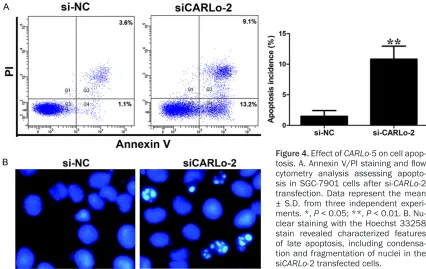
[image:6.612.92.518.71.340.2]inhibition of CARLo-5 expression (Figure 3B). Figure 4. Effect of CARLo-5 on cell
apop-tosis. A. Annexin V/PI staining and flow
cytometry analysis assessing
apopto-sis in SGC-7901 cells after si-CARLo-2
transfection. Data represent the mean ± S.D. from three independent experi -ments. *, P < 0.05; **, P < 0.01. B. Nu-clear staining with the Hoechst 33258
stain revealed characterized features of late apoptosis, including condensa
-tion and fragmenta-tion of nuclei in the
Knockdown of CARLo-5 inhibits GC cell prolif
-eration through inducing apoptosis
Flow cytometric analysis was performed to examine whether the anti-proliferative effects of CARLo-5 knockdown could possibly be through inducing GC cell apoptosis. Knockdown of CARLo-5 expression could obviously induce cell apoptosis (Figure 4A). In addition, nuclear staining with the Hoechst 33258 stain revealed
characterized features of late apoptosis, includ
-ing condensation and fragmentation of nuclei
in the siCARLo-2 transfected cells (Figure 4B).
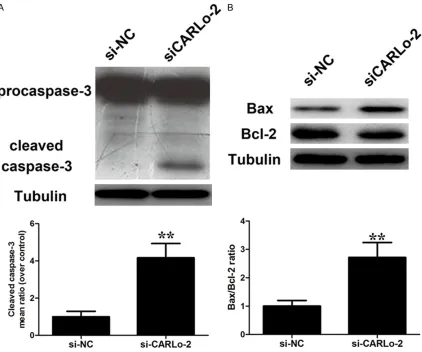
To explore the underlying mechanism of CARLo-5’s role in cell apoptosis, we determined the expression of pro-apoptotic factor, Bax, Bcl and
caspase-3 by western blot. CARLo-5 knock
-down increased the expression levels of cas -pase-3 (Figure 5A) and Bax/Bcl-2 ratio (Figure 5B). These results demonstrated that CARLo-5
knockdown may inhibit the proliferation of GC cells through inducing cell G0/G1 arrest and
apoptosis.
CARLo-5 downregulation may exert its
anti-proliferative effect through inactivation of
ERK/MAPK pathway
To further define the underlying molecular
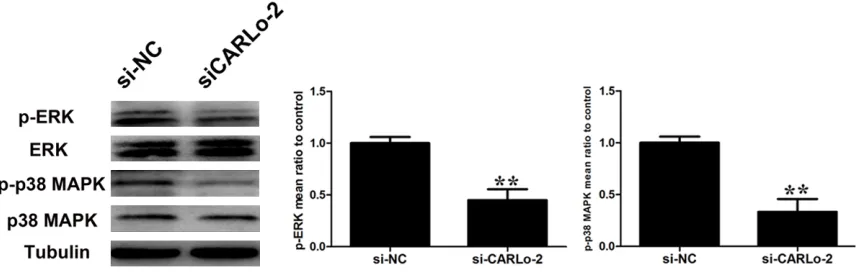
mechanism modulated by CARLo-5’s in the growth and apoptosis of GC cells, we focused on the ERK/MAPK pathway. Knockdown of
CARLo-5 resulted in the decrease of phosphor
-ylation of ERK and MARK (p38) (Figure 6A).
Discussion
Recent advances in high-throughput gene
sequencing analysis have improved our under -standing that < 2% of human genome can be
[image:7.612.95.517.71.423.2]coding RNAs with limited or no protein-coding capacity [5]. MicroRNAs (miRNAs) are a
well-described class of non-coding RNAs. They are
~22-nucleotides long and act as negative
regu-lators of gene expression by inhibiting mRNA
translation or promoting mRNA degradation
[11, 12]. miRNAs are found to play a vital role in
gastric cancer [13-15]. Long non-coding RNAs
(lncRNAs) are a class of non-coding RNA tran -scripts longer than 200 nucleotides and are
implicated in a number of important events,
such as various cellular processes, develop-ment, and human diseases [6]. LncRNAs
regu-late the expression of genes at the epigenetic,
transcriptional and post-transcriptional levels, and play an important role in physiological pro-cesses [16]. Recent studies have demonstrat-ed that lncRNAs are important players in the
development of gastric cancer [17-19]. Yet only a quite small number of lncRNAs have been
characterized and their role in cancer remains to be explored.
CARLo-5 was first identified as an upregulated
lncRNA in colon cancer, wherein CARLo-5
pro-motes tumor proliferation [10]. As CARLo-5
plays an important role in colon cancer
pro-gression, we investigated the biological role of
CARLo-5 in GC development and studied its clinical significance. In our present study, we found that the average levels of CARLo-5 were
markedly higher in GC tissues compared to
those in paired non-tumor tissues. The high
expression level of CARLo-5 in gastric cancer was correlated with tumor size and advanced TNM stage. It suggests that CARLo-5 might exhibit oncogenic activity and play an important
part in GC development.
We demonstrated that CARLo-5 knockdown resulted in a significant reduction in GC cell pro
-liferation. To explore the molecular mechanism
modulated by CARLo-5 in the proliferation of GC cells, we examined the effects of CARLo-5
on the cell-cycle progression and apoptosis.
Flow cytometric analysis revealed that CARLo-5
knockdown induced G0/G1 cell-cycle arrest and cell apoptosis. Western blot analysis of G0/G1 arrest markers and pro-apoptotic fac
-tors confirmed the results. It suggests that
CARLo-5 knockdown may inhibit GC cell growth through inducing G0/G1 arrest and apoptosis.
The MAPK pathway coordinately regulates
diverse cellular processes, such as prolifera
-tion, apoptosis and differentiation [20]. In this
study, we showed that CARLo-5 knockdown resulted in significant decrease in the expres
-sion of p-ERK and MAPK (p38). However,
CARLo-5 downregulation almost had no effect on the activation of AKT.
In summary, we demonstrate that the
expres-sion of CARLo-5 was significantly upregulated in GC tissues. We also showed that CARLo-5
promoted the proliferation of GC cells, suggest -ing that CARLo-5 may play a vital role in GC
development. Our study may add our under-standing to the molecular mechanisms through which CARLo-5 contributes to the tumor
pro-gression, which may facilitate the development of lncRNA-directed diagnostics and therapeu -tics against cancers.
Disclosure of conflict of interest
[image:8.612.93.522.73.209.2]None.
Figure 6. The effects of CARLo-5 downregulation on ERK/MAPK pathway. Changes in ERK and p38 MAPK activation
were shown by western blotting analysis after si-CARLo-2 transfection. Data represent the mean ± S.D. from three
Gastrointestinal Surgeons of Great Britain and Ireland, the British Society of Gastroenterology and the British Association of Surgical Oncology. Guidelines for the management of oesophageal and gastric cancer. Gut 2011;
60: 1449-1472.
[3] Saka M, Morita S, Fukagawa T, Katai H. Present and future status of gastric cancer surgery. Jpn
J Clin Oncol 2011; 41: 307-313.
[4] Tan HT, Low J, Lim SG, Chung MC. Serum auto
-antibodies as biomarkers for early cancer de
-tection. FEBS J 2009; 276: 6880-6904.
[5] Shi X, Sun M, Liu H, Yao Y, Song Y. Long
non-coding RNAs: a new frontier in the study of hu -man diseases. Cancer Lett 2013; 339: 159-166.
[6] Fatica A, Bozzoni I. Long non-coding RNAs: new players in cell differentiation and develop
-ment. Nat Rev Genet 2014; 15: 7-21.
[7] Ge XS, Ma HJ, Zheng XH, Ruan HL, Liao XY, Xue
WQ, Chen YB, Zhang Y, Jia WH. HOTAIR, a
prog-nostic factor in esophageal squamous cell car
-cinoma, inhibits WIF-1 expression and acti -vates Wnt pathway. Cancer Sci 2013; 104: 1675-1682.
[8] Huang JF, Guo YJ, Zhao CX, Yuan SX, Wang Y, Tang GN, Zhou WP, Sun SH. Hepatitis B virus X
protein (HBx)-related long noncoding RNA (ln-cRNA) down-regulated expression by HBx (Dreh) inhibits hepatocellular carcinoma
me-tastasis by targeting the intermediate filament
protein vimentin. Hepatology 2013; 57: 1882-1892.
[9] Yang F, Zhang L, Huo XS, Yuan JH, Xu D, Yuan SX, Zhu N, Zhou WP, Yang GS, Wang YZ, Shang JL, Gao CF, Zhang FR, Wang F, Sun SH. Long
noncoding RNA high expression in
hepatocel-lular carcinoma facilitates tumor growth through enhancer of zeste homolog 2 in hu -mans. Hepatology 2011; 54: 1679-1689.
Biophys Acta 2014; 1845: 255-265.
[13] Wu Q, Yang Z, An Y, Hu H, Yin J, Zhang P, Nie Y,
Wu K, Shi Y, Fan D. MiR-19a/b modulate the metastasis of gastric cancer cells by targeting
the tumour suppressor MXD1. Cell Death Dis 2014; 5: e1144.
[14] Ma J, Liu J, Wang Z, Gu X, Fan Y, Zhang W, Xu L, Zhang J, Cai D. NF-kappaB-dependent microR -NA-425 upregulation promotes gastric cancer
cell growth by targeting PTEN upon IL-1β induc -tion. Mol Cancer 2014; 13: 40.
[15] He XP, Shao Y, Li XL, Xu W, Chen GS, Sun HH, Xu HC, Xu X, Tang D, Zheng XF, Xue YP, Huang GC, Sun WH. Downregulation of miR-101 in
gastric cancer correlates with
cyclooxygen-ase-2 overexpression and tumor growth. FEBS
J 2012; 279: 4201-4212.
[16] Krishnan J, Mishra RK. Emerging trends of long non-coding RNAs in gene activation. FEBS
J 2014; 281: 34-45
[17] Yang F, Xue X, Zheng L, Bi J, Zhou Y, Zhi K, Gu Y, Fang G. Long non-coding RNA GHET1 pro
-motes gastric carcinoma cell proliferation by increasing c-Myc mRNA stability. FEBS J 2014;
281: 802-813.
[18] Yang F, Bi J, Xue X, Zheng L, Zhi K, Hua J, Fang G. Up-regulated long non-coding RNA H19 con
-tributes to proliferation of gastric cancer cells. FEBS J 2012; 279: 3159-3165.
[19] Sun M, Xia R, Jin F, Xu T, Liu Z, De W, Liu X. Downregulated long noncoding RNA MEG3 is
associated with poor prognosis and promotes
cell proliferation in gastric cancer. Tumour Biol
2014; 35: 1065-1073.
[20] Koul HK, Pal M, Koul S. Role of p38 MAP
Kinase Signal Transduction in Solid Tumors.