Recognizing Implicit Discourse Relations in the Penn Discourse Treebank
Ziheng Lin, Min-Yen Kan and Hwee Tou Ng
Department of Computer Science National University of Singapore
13 Computing Drive Singapore 117417
{linzihen,kanmy,nght}@comp.nus.edu.sg
Abstract
We present an implicit discourse relation classifier in the Penn Discourse Treebank (PDTB). Our classifier considers the con-text of the two arguments, word pair infor-mation, as well as the arguments’ internal constituent and dependency parses. Our results on the PDTB yields a significant 14.1% improvement over the baseline. In our error analysis, we discuss four chal-lenges in recognizing implicit relations in the PDTB.
1 Introduction
In the field of discourse modeling, it is widely agreed that text is not understood in isolation, but in relation to its context. One focus in the study of discourse is to identify and label the relations between textual units (clauses, sentences, or para-graphs). Such research can enable downstream natural language processing (NLP) such as sum-marization, question answering, and textual entail-ment. For example, recognizing causal relations can assist in answering why questions. Detect-ing contrast and restatements is useful for para-phrasing and summarization systems. While dif-ferent discourse frameworks have been proposed from different perspectives (Mann and Thompson, 1988; Hobbs, 1990; Lascarides and Asher, 1993; Knott and Sanders, 1998; Webber, 2004), most ad-mit these basic types of discourse relationships be-tween textual units.
When there is a discourse connective (e.g., be-cause) between two text spans, it is often easy to recognize the relation between the spans, as most connectives are unambiguous (Miltsakaki et al., 2005; Pitler et al., 2008). On the other hand, it is difficult to recognize the discourse relations when there are no explicit textual cues. We term these cases explicit and implicit relations, respectively.
While the recognition of discourse structure has been studied in the context of explicit relations (Marcu, 1998) in the past, little published work has yet attempted to recognize implicit discourse relations between text spans.
Detecting implicit relations is a critical step in forming a discourse understanding of text, as many text spans do not mark their discourse re-lations with explicit cues. Recently, the Penn Dis-course Treebank (PDTB) has been released, which features discourse level annotation on both explicit and implicit relations. It provides a valuable lin-guistic resource towards understanding discourse relations and a common platform for researchers to develop discourse-centric systems. With the recent release of the second version of this cor-pus (Prasad et al., 2008), which provides a cleaner and more thorough implicit relation annotation, there is an opportunity to address this area of work. In this paper, we provide classification of im-plicit discourse relations on the second version of the PDTB. The features we used include contex-tual modeling of relation dependencies, features extracted from constituent parse trees and depen-dency parse trees, and word pair features. We show an accuracy of 40.2%, which is a significant improvement of 14.1% over the majority baseline. After reviewing related work, we first give an overview of the Penn Discourse Treebank. We then describe our classification methodology, fol-lowed by experimental results. We give a detailed discussion on the difficulties of implicit relation classification in the PDTB, and then conclude the paper.
2 Related Work
One of the first works that use statistical meth-ods to detect implicit discourse relations is that of Marcu and Echihabi (2002). They showed that word pairs extracted from two text spans provide clues for detecting the discourse relation between
the text spans. They used a set of textual patterns to automatically construct a large corpus of text span pairs from the web. These text spans were assumed to be instances of specific discourse re-lations. They removed the discourse connectives from the pairs to form an implicit relation corpus. From this corpus, they collected word pair statis-tics, which were used in a Na¨ıve Bayes framework to classify discourse relations.
Saito et al. (2006) extended this theme, to show that phrasal patterns extracted from a text span pair provide useful evidence in the relation clas-sification. For example, the pattern “... should have done ...” usually signals a contrast. The au-thors combined word pairs with phrasal patterns, and conducted experiments with these two feature classes to recognize implicit relations between ad-jacent sentences in a Japanese corpus.
Both of these previous works have the short-coming of downgrading explicit relations to im-plicit ones by removing the exim-plicit discourse con-nectives. While this is a good approach to auto-matically create large corpora, natively implicit re-lations may be signaled in different ways. The fact that explicit relations are explicitly signaled indi-cates that such relations need a cue to be unam-biguous to human readers. Thus, such an artificial implicit relation corpus may exhibit marked dif-ferences from a natively implicit one. We validate this claim later in this work.
Wellner et al. (2006) used multiple knowledge sources to produce syntactic and lexico-semantic features, which were then used to automatically identify and classify explicit and implicit dis-course relations in the Disdis-course Graphbank (Wolf and Gibson, 2005). Their experiments show that discourse connectives and the distance between the two text spans have the most impact, and event-based features also contribute to the perfor-mance. However, their system may not work well for implicit relations alone, as the two most promi-nent features only apply to explicit relations: im-plicit relations do not have discourse connectives and the two text spans of an implicit relation are usually adjacent to each other.
The work that is most related to ours is the forthcoming paper of Pitler et al. (2009) on im-plicit relation classification on the second ver-sion of the PDTB. They performed classification of implicit discourse relations using several lin-guistically informed features, such as word
polar-ity, verb classes, and word pairs, showing perfor-mance increases over a random classification base-line.
3 Overview of the Penn Discourse Treebank
The Penn Discourse Treebank (PDTB) is a dis-course level annotation (Prasad et al., 2008) over the one million wordWall Street Journal corpus. The PDTB adopts the predicate-argument view of discourse relations, where a discourse connective (e.g., because) is treated as a predicate that takes two text spans as its arguments. The argument that the discourse connective structurally attaches to is called Arg2, and the other argument is called Arg1. The PDTB provides annotations for explicit and implicit discourse relations. By definition, an explicit relation contains an explicit discourse con-nective. In the PDTB, 100 explicit connectives are annotated. Example 1 shows an explicit Contrast relation signaled by the discourse connectivebut. The last line shows the relation type and the file in the PDTB from which the example is drawn.
(1) Arg1:In any case, the brokerage firms are clearly moving faster to create new ads than they did in the fall of 1987.
Arg2: Butit remains to be seen whether their ads will be any more effective.
(Contrast - wsj 2201)
In the PDTB, implicit relations are constrained by adjacency: only pairs of adjacent sentences within paragraphs are examined for the existence of implicit relations. When an implicit relation was inferred by an annotator, he/she inserted an implicit connective that best reflects the relation. Example 2 shows an implicit relation, where the annotator inferred a Cause relation and inserted an implicit connective so(i.e., the original text does not include so). The text in the box (he says) shows the attribution, i.e., the agent that expresses the arguments. The PDTB provides annotation for the attributions and supplements of the arguments.
(2) Arg1:“A lot of investor confidence comes from the fact that they can speak to us,”
he says .
Arg2:[so] “To maintain that dialogue is absolutely crucial.”
The PDTB provides a three level hierarchy of relation tags for its annotation. The first level consists of four major relationclasses: Temporal, Contingency, Comparison, and Expansion. For each class, a second level oftypesis defined to pro-vide finer semantic distinctions. A third level of subtypesis defined for only some types to specify the semantic contribution of each argument. Rela-tion classes and types in the PDTB are reproduced in the first two columns of Table 1.
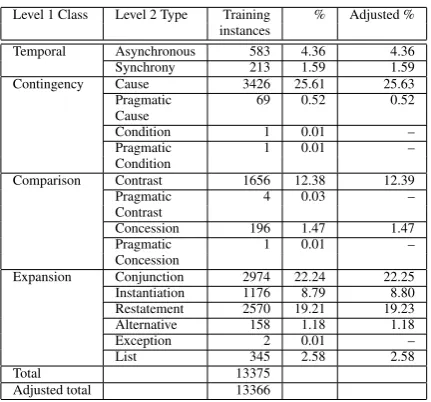
We focus on implicit relation classification of the Level 2 types in the PDTB, as we feel that Level 1 classes are too general and coarse-grained for downstream applications, while Level 3 sub-types are too fine-grained and are only provided for some types. Table 1 shows the distribution of the 16 Level 2 relation types of the implicit rela-tions from the training secrela-tions, i.e., Secrela-tions 2 – 21. As there are too few training instances for Condition, Pragmatic Condition, Pragmatic Con-trast, Pragmatic Concession, and Exception, we removed these five types from further considera-tion. We thus use the remaining 11 Level 2 types in our work. The initial distribution and adjusted distribution are shown in the last two columns of the table. We see that the three predominant types are Cause (25.63%), Conjunction (22.25%), and Restatement (19.23%).
Level 1 Class Level 2 Type Training % Adjusted % instances
Temporal Asynchronous 583 4.36 4.36 Synchrony 213 1.59 1.59 Contingency Cause 3426 25.61 25.63 Pragmatic 69 0.52 0.52 Cause
Condition 1 0.01 –
Pragmatic 1 0.01 –
Condition
Comparison Contrast 1656 12.38 12.39
Pragmatic 4 0.03 –
Contrast
Concession 196 1.47 1.47
Pragmatic 1 0.01 –
Concession
Expansion Conjunction 2974 22.24 22.25 Instantiation 1176 8.79 8.80 Restatement 2570 19.21 19.23 Alternative 158 1.18 1.18
Exception 2 0.01 –
List 345 2.58 2.58
Total 13375
[image:3.595.339.492.271.385.2]Adjusted total 13366
Table 1: Distribution of Level 2 relation types of implicit relations from the training sections (Sec. 2 – 21). The last two columns show the initial distribution and the distribution after removing the five types that have only a few training instances.
4 Methodology
Our implicit relation classifier is built using super-vised learning on a maximum entropy classifier. As such, our approach processes the annotated ar-gument pairs into binary feature vectors suitable for use in training a classifier. Attributions and supplements are ignored from the relations, as our system does not make use of them. We chose the following four classes of features as they represent a wide range of information – contextual, syntac-tic, and lexical – that have been shown to be help-ful in previous works and tasks. We now discuss the four categories of features used in our frame-work.
X'XM X'XM
X'XM
X'XM
X'XM X'XM X'XM
X X
X
X
X'XM
Figure 1: Two types of discourse dependency structures. Top: fully embedded argument, bot-tom: shared argument.
Contextual Features. Lee et al. (2006) showed that there are a variety of possible dependencies between pairs of discourse relations: independent, fully embedded argument, shared argument, prop-erly contained argument, pure crossing, and par-tially overlapping argument. They argued that the last three cases – properly contained argument, pure crossing, and partially overlapping argument – can be factored out by appealing to discourse no-tions such as anaphora and attribution. Moreover, we also observed from the PDTB corpus that fully embedded argument and shared argument are the most common patterns, which are shown in Fig-ure 1. The top portion of FigFig-ure 1 shows a case where relationr1is fully embedded in Arg1 of
re-lationr2, and the bottom portion showsr1 andr2
[image:3.595.74.290.450.651.2]the first item and the second item, and another List relation between the previous List relation and the third item, where the previous List relation is fully embedded in Arg1 of the current List relation. As we are using the gold standard argument segmen-tation from the PDTB, we can extract and leverage these dependency patterns. For each relationcurr, we use the previous relationprevand the next re-lationnext as evidence to fire six binary features, as defined in Table 2.
Note that while curr is an implicit relation to be classified, bothprevandnextcan be implicit or explicit relations. Pitler et al. (2008) showed that the type of a relation sometimes correlates to the type of its adjacent relation. When the adjacent relation is explicit, its type may be suggested by its discourse connective. Thus we include another two groups of contextual features representing the connectives ofprevandnextwhen they are explicit relations.
Fully embedded argument:
prev embedded in curr.Arg1 next embedded in curr.Arg2 curr embedded in prev.Arg2 curr embedded in next.Arg1
Shared argument:
[image:4.595.306.529.77.298.2]prev.Arg2 = curr.Arg1 curr.Arg2 = next.Arg1
Table 2: Six contextual features derived from two discourse dependency patterns.curris the relation we want to classify.
Constituent Parse Features. Research work from other NLP areas, such as semantic role la-beling, has shown that features derived from syn-tactic trees are useful in semantic understanding. Such features include syntactic paths (Jiang and Ng, 2006) and tree fragments (Moschitti, 2004). From our observation of the PDTB relations, syn-tactic structure within one argument may constrain the relation type and the syntactic structure of the other argument. For example, the constituent parse structure in Figure 2(a) usually signals an Asynchronous relation when it appears in Arg2, as shown in Example 3, while the structure in Fig-ure 2(b) usually acts as a clue for a Cause relation when it appears in Arg1, as shown in Example 4. In both examples, the lexicalized parts of the parse structure are bolded.
(3) Arg1:But the RTC also requires “working” capital to maintain the bad assets of thrifts that are sold
Arg2:[subsequently] That debt would be paid offasthe assets are sold
(Asynchronous - wsj 2200) (4) Arg1:It wouldhave beentoo late to think
about on Friday.
Arg2:[so] We had to think about it ahead of time.
(Cause - wsj 2201)
(a) SBAR IN as
S . . .
(b)
VP
MD VP
VB have
VP
VBN been
ADJP PP
Figure 2: (a) constituent parse in Arg2 of Example 3, (b) constituent parse in Arg1 of Example 4.
S-TPC-1
NP-SBJ PRP
We
VP
VBD had
NP
NP
DT no
NN operating
NNS problems
ADVP IN
at DT
all
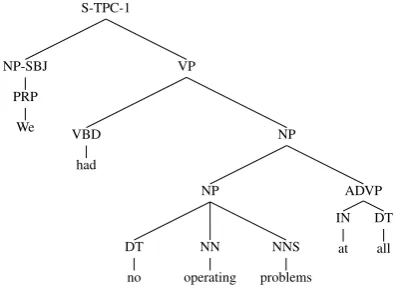
Figure 3: A gold standard subtree for Arg1 of an implicit discourse relation from wsj 2224.
[image:4.595.116.246.339.424.2] [image:4.595.321.520.375.522.2]is a subtree. We then collect all production rules from this subtree, with function tags (e.g., SBJ) removed from internal nodes. POS tag to word production rules are collected as well. The result-ing production rules include ones such as: S →
NP VP, NP→PRP, PRP→“We”, etc. Each pro-duction rule is represented as three binary features to check whether this rule appears in Arg1, Arg2, and both arguments.
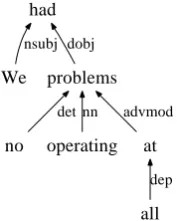
Dependency Parse Features. We also experi-mented with features extracted from dependency trees of the arguments. We used the Stanford de-pendency parser (de Marneffe et al., 2006), which takes in a constituent parse tree and produces a de-pendency tree. Again, for an argument, we may collect a whole dependency tree, parts of a tree, or multiple trees, depending on the span of the ar-gument. The reason for using dependency trees is that they encode additional information at the word level that is not explicitly present in the con-stituent trees. From each tree, we collect all words with the dependency types from their dependents. Figure 4 shows the dependency subtree for the same example in Figure 3, from which we col-lect three dependency rules: “had”←nsubj dobj, “problems”←det nn advmod, “at”←dep.
Note that unlike the constituent parse features which are guaranteed to be accurate (as they are extracted from the gold parses of the corpus), the dependency parses occasionally contain errors. As with the constituent parse features, each depen-dency rule is represented as three binary features to check whether it appears in Arg1, Arg2, and both arguments.
We had
nsubj
problems
dobj
no operating
det nn
at
advmod
all
[image:5.595.137.226.535.646.2]dep
Figure 4: A dependency subtree for Arg1 of an implicit discourse relation from wsj 2224.
Lexical Features. Marcu and Echihabi (2002) demonstrated that word pairs extracted from the respective text spans are a good signal of the discourse relation between arguments. Thus we also consider word pairs as a feature class. We
stemmed and collected all word pairs from Arg1 and Arg2, i.e., all (wi, wj) where wi is a word
from Arg1 andwja word from Arg2. Unlike their study, we limit the collection of word pair statis-tics to occurrences only in the PDTB corpus.
4.1 Feature Selection
For the collection of production rules, dependency rules, and word pairs, we used a frequency cutoff of 5 to remove infrequent features. From the im-plicit relation dataset of the training sections (i.e., Sec. 2 – 21), we extracted 11,113 production rules, 5,031 dependency rules, and 105,783 word pairs in total. We applied mutual information (MI) to these three classes of features separately, resulting in three ranked lists. A featuref has 11 MI values with all 11 types (for example,MI(f, Cause)and
MI(f, Restatement)), and we used the MI with the highest value for a feature to select features. In our experiments, the top features from the lists are used in the training and test phases.
5 Experiments
We experimented with a maximum entropy clas-sifier from the OpenNLP MaxEnt package using various combinations of features to assess their ef-ficacy. We used PDTB Sections 2 – 21 as our train-ing set and Section 23 as the test set, and only used the implicit discourse relations.
In the PDTB, about 2.2% of the implicit rela-tions are annotated with two types, as shown in Example 7 in Section 6. During training, a relation that is annotated with two types is considered as two training instances, each with one of the types. During testing, such a relation is considered one test instance, and if the classifier assigns either of the two types, we consider it as correct. Thus, the test accuracy is calculated as the number of cor-rectly classified test instances divided by the total number of test instances.
In our work, we use the majority class as the baseline, where all instances are classified as Cause. This yields an accuracy of 26.1% on the test set. A random baseline yields an even lower accuracy of 9.1% on the test set.
5.1 Results and Analysis
with all features from all feature classes (Row 5). Among the four individual feature classes, produc-tion rules and word pairs yield significantly better performance over the baseline withp <0.01and
p < 0.05respectively, while context features per-form slightly better than the baseline.
# Production # Dependency # Word Context Acc. rules rules pairs
R1 11,113 – – No 36.7%
R2 – 5,031 – No 26.0%
R3 – – 105,783 No 30.3%
R4 – – – Yes 28.5%
[image:6.595.71.292.154.217.2]R5 11,113 5,031 105,783 Yes 35.0%
Table 3: Classification accuracy with all features from each feature class. Rows 1 to 4: individual feature class; Row 5: all feature classes.
Interestingly, we noted that the performance with all dependency rules is slightly lower than the baseline (Row 2), and applying all feature classes does not yield the highest accuracy (Row 5), which we suspected were due to noise. To con-firm this, we employed MI to select the top 100 production rules and dependency rules, and the top 500 word pairs (as word pairs are more sparse). We then repeated the same set of experiments, as shown in Table 4 (Row 4 of this table is repeated from Table 3 for consistency). With only the top features, production rules, dependency rules, and word pairs all gave significant improvement over the baseline with p < 0.01. When we used all feature classes, as in the last row, we obtained the highest accuracy of 40.2%.
# Production # Dependency # Word Context Acc. rules rules pairs
R1 100 – – No 38.4%
R2 – 100 – No 32.4%
R3 – – 500 No 32.9%
R4 – – – Yes 28.5%
R5 100 100 500 Yes 40.2%
Table 4: Classification accuracy with top rules/word pairs for each feature class. Rows 1 to 4: individual feature class; Row 5: all feature classes.
Table 4 also validates the pattern of predictive-ness of the feature classes: production rules con-tribute the most to the performance individually, followed by word pairs, dependency rules, and fi-nally, context features. A natural question to ask is whether any of these feature classes can be omit-ted to achieve the same level of performance as the combined classifier. To answer this question, we conducted a final set of experiments, in which we gradually added in feature classes in the
or-der of their predictiveness (i.e., production rules
word pairsdependency rulescontext fea-tures), with results shown in Table 5. These results confirm that each additional feature class indeed contributes a marginal performance improvement, (although it is not significant) and that all feature classes are needed for optimal performance.
# Production # Dependency # Word Context Acc. rules rules pairs
R1 100 – – No 38.4%
R2 100 – 500 No 38.9%
R3 100 100 500 No 39.0%
R4 100 100 500 Yes 40.2%
Table 5: Accuracy with feature classes gradually added in the order of their predictiveness.
Note that Row 3 of Table 3 corresponds to Marcu and Echihabi (2002)’s system which ap-plies only word pair features. The difference is that they used a Na¨ıve Bayes classifier while we used a maximum entropy classifier. As we did not implement their Na¨ıve Bayes classifier, we compare their method’s performance using the re-sult from Table 3 Row 3 with ours from Table 5 Row 4, which shows that our system significantly (p <0.01) outperforms theirs.
Level 2 Type Precision Recall F1 Count in
test set Asynchronous 0.50 0.08 0.13 13
Synchrony – – – 5
Cause 0.39 0.76 0.51 200 Pragmatic Cause – – – 5 Contrast 0.61 0.09 0.15 127
Concession – – – 5
Conjunction 0.30 0.51 0.38 118 Instantiation 0.67 0.39 0.49 72 Restatement 0.48 0.27 0.35 190
Alternative – – – 15
[image:6.595.310.526.167.222.2]List 0.80 0.13 0.23 30 All (Micro Avg.) 0.40 0.40 0.40 780
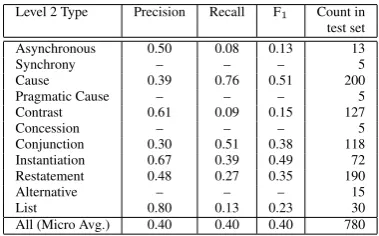
Table 6: Recall, precision, F1, and counts for 11
Level 2 relation types. “–” indicates 0.00.
Table 6 shows the recall, precision, and F1
[image:6.595.321.511.412.530.2]pre-dominant type in the training data, the classifier tends to label uncertain relations as Cause, thus giving Cause high recall but low precision. We see that the F measures correlate well with the train-ing data frequency, thus we hypothesize that ac-curacy may improve if more training data for low frequency relations can be provided.
Our work differs from that of (Pitler et al., 2009) in that our system performs classification at the more fine-grained Level 2 types, instead of the coarse-grained Level 1 classes. Their system ap-plies a Na¨ıve Bayes classifier whereas our system uses a maximum entropy classifier, and the sets of features used are also different. In addition, the data set of (Pitler et al., 2009) includesEntRel
andAltLex, which are relations in which an im-plicit connective cannot be inserted between ad-jacent sentences, whereas ours excludesEntRel
andAltLex.
6 Discussion: Why are implicit discourse relations difficult to recognize?
In the above experiments, we have shown that by using the four feature classes, we are able to in-crease the classification accuracy from 26.1% of the majority baseline to 40.2%. Although we feel a 14.1 absolute percentage improvement is a solid result, an accuracy of 40% does not allow down-stream NLP applications to trust the output of such a classification system.
To understand the difficulties of the task more deeply, we analyzed individual training and val-idation data pairs, from which we were able to generalize four challenges to automated implicit discourse relation recognition. We hope that this discussion may motivate future work on implicit discourse relation recognition.
Ambiguity. There is ambiguity among the rela-tions. For example, we notice that a lot of Contrast relations are mistakenly classified as Conjunction. When we analyzed these relations, we observed that Contrast and Conjunction in the PDTB anno-tation are very similar to each other in terms of words, syntax, and semantics, as Examples 5 and 6 show. In both examples, the same antonymous verb pair is used (fellandrose), different subjects are mentioned in Arg1 and Arg2 (netandrevenue in the first example, and netandsalesin the sec-ond), and these subjects are all compared to like items from the previous year. Moreover, the im-plicit discourse connective given by the annotators
iswhilein both cases, which is an ambiguous con-nective as shown in (Miltsakaki et al., 2005). (5) Arg1:In the third quarter, AMR said, net
fell to $137 million, or $2.16 a share, from $150.3 million, or $2.50 a share.
Arg2:[while] Revenue rose 17% to $2.73 billion from $2.33 billion a year earlier.
(Contrast - wsj 1812) (6) Arg1:Dow’s third-quarter net fell to $589
million, or $3.29 a share, from $632 million, or $3.36 a share, a year ago.
Arg2:[while] Sales in the latest quarter rose 2% to $4.25 billion from $4.15 billion a year earlier.
(Conjunction - wsj 1926) Relation ambiguity may be ameliorated if an in-stance is analyzed in context. However, according to the PDTB annotation guidelines, if the annota-tors could not disambiguate between two relation types, or if they felt both equally reflect their un-derstanding of the relation between the arguments, they could annotate two types to the relation. In the whole PDTB corpus, about 5.4% of the ex-plicit relations and 2.2% of the imex-plicit relations are annotated with two relation types. Example 7 is such a case where the implicit connective mean-whilemay be interpreted as expressing a Conjunc-tion or Contrast relaConjunc-tion.
(7) Arg1:Sales surged 40% to 250.17 billion yen from 178.61 billion.
Arg2:[meanwhile] Net income rose 11% to 29.62 billion yen from 26.68 billion.
(Conjunction; Contrast - wsj 2242)
Inference. Sometimes inference and a knowl-edge base are required to resolve the relation type. In Example 8, to understand that Arg2 is a re-statement of Arg1, we need a semantic mechanism to show that either the semantics of Arg1 infers that of Arg2 or the other way around. In the be-low example, I had calls all night long infers I was woken up every hoursemantically, as shown in: receive call(I) ∧ duration(all night) ⇒ woken up(I)∧duration(every hour).
(8) Arg1:“I had calls all night long from the States,” he said.
Arg2:“[in fact] I was woken up every hour – 1:30, 2:30, 3:30, 4:30.”
In fact, most relation types can be represented using formal semantics (PDTB-Group, 2007), as shown in Table 7, where|Arg1|and|Arg2| repre-sent the semantics extracted from Arg1 and Arg2, respectively. This kind of formal semantic reason-ing requires a robust knowledge base, which is still beyond our current technology.
Relation type Semantic representation
Cause |Arg1| ≺ |Arg2| ∨ |Arg2| ≺ |Arg1| Concession A≺C ∧ B⇒ ¬C
whereA∈ |Arg1|,B∈ |Arg2| Instantiation exemplify(|Arg2|, λx.x∈E)
whereE=extract(|Arg1|)
Restatement |Arg1| ⇒ |Arg2| ∨ |Arg1| ⇐ |Arg2| Alternative |Arg1| ∧ |Arg2| ∨ |Arg1| ⊕ |Arg2| Table 7: Some examples of relation types with their semantic representations, as taken from (PDTB-Group, 2007).
Context. PDTB annotators adopted the Mini-mality Principlein argument selection, according to which they only included in the argument the minimal span of text that is sufficient for the in-terpretation of the relation. While the context is not necessary to interpret the relation, it is usually necessary to understand the meaning of the argu-ments. Without an analysis of the context, Arg1 and Arg2 may seem unconnected, as the follow-ing example shows, where the meanfollow-ing of Arg1 is mostly derived from its previous context (i.e.,West German ... technical reactions).
(9) Prev. Context:West German Economics Minister Helmut Haussmann said, “In my view, the stock market will stabilize
relatively quickly. There may be one or other psychological or technical reactions,
Arg1:but they aren’t based on fundamentals.
Arg2:[in short] The economy of West Germany and the EC European Community is highly stable.”
(Conjunction - wsj 2210) Sometimes the range of the context may eas-ily extend to the whole text, which would require a system to possess a robust context modeling mechanism. In Example 10, in order to realize the causal relation between Arg2 and Arg1, we possibly need to read the whole article and under-stand what was happening: the machinist union was having a strike and the strike prevented most of its union members from working.
(10) Arg1:And at the company’s Wichita, Kan., plant, about 2,400 of the 11,700 machinists still are working, Boeing said.
Arg2:[because] Under Kansas
right-to-work laws, contracts cannot require workers to be union members.
(Cause - wsj 2208)
World Knowledge. Sometimes even context modeling is not enough. We may also need world knowledge to understand the arguments and hence to interpret the relation. In the following example, from the previous sentence of Arg1, it is reported that “the Senate voted to send a delegation of con-gressional staffers to Poland to assist its legisla-ture”, and this delegation is viewed as a “gift” in Arg1. It is suggested in Arg2 that the Poles might view the delegation as a “Trojan Horse”. Here we need world knowledge to understand that “Trojan Horse” is usually applied as a metaphor for a per-son or thing that appears innocent but has harm-ful intent, and hence understand that Arg2 poses a contrasting view of the delegation as Arg1 does. (11) Arg1:Senator Pete Domenici calls this
effort “the first gift of democracy”.
Arg2:[but] The Poles might do better to view it as a Trojan Horse.
(Contrast - wsj 2237) These four classes of difficulties – ambiguity between relations, inference, contextual modeling, and world knowledge – show that implicit dis-course relation classification needs deeper seman-tic representations, more robust system design, and access to more external knowledge. These ob-stacles may not be restricted to recognizing im-plicit relations, but are also applicable to other re-lated discourse-centric tasks.
7 Conclusion
References
Marie-Catherine de Marneffe, Bill MacCartney, and Christopher D. Manning. 2006. Generating typed dependency parses from phrase structure parses. In Proceedings of the Fifth International Confer-ence on Language Resources and Evaluation (LREC 2006), pages 449–454.
Jerry R. Hobbs. 1990. Literature and cognition. In CSLI Lecture Notes Number 21. CSLI Publications. Zheng Ping Jiang and Hwee Tou Ng. 2006. Semantic role labeling of NomBank: A maximum entropy ap-proach. In Proceedings of the 2006 Conference on Empirical Methods in Natural Language Processing (EMNLP 2006), pages 138–145, Sydney, Australia. Alistair Knott and Ted Sanders. 1998. The
classifica-tion of coherence relaclassifica-tions and their linguistic mark-ers: An exploration of two languages. Journal of Pragmatics, 30(2):135–175.
Alex Lascarides and Nicholas Asher. 1993. Temporal interpretation, discourse relations and commonsense entailment. Linguistics and Philosophy, 16(5):437– 493.
Alan Lee, Rashmi Prasad, Aravind Joshi, Nikhil Di-nesh, and Bonnie Webber. 2006. Complexity of dependencies in discourse: Are dependencies in dis-course more complex than in syntax? In Proceed-ings of the 5th International Workshop on Treebanks and Linguistic Theories, Prague, Czech Republic, December.
William C. Mann and Sandra A. Thompson. 1988. Rhetorical Structure Theory: Toward a functional theory of text organization. Text, 8(3):243–281. Daniel Marcu and Abdessamad Echihabi. 2002. An
unsupervised approach to recognizing discourse re-lations. In Proceedings of the 40th Annual Meet-ing of the Association for Computational LMeet-inguistics (ACL 2002), pages 368–375, Morristown, NJ, USA. Daniel Marcu. 1998. A surface-based approach to identifying discourse markers and elementary tex-tual units in unrestricted texts. InProceedings of the COLING-ACL 1998 Workshop on Discourse Rela-tions and Discourse Markers, pages 1–7, Montreal, Canada, August.
Eleni Miltsakaki, Nikhil Dinesh, Rashmi Prasad, Ar-avind Joshi, and Bonnie Webber. 2005. Experi-ments on sense annotations and sense disambigua-tion of discourse connectives. InProceedings of the Fourth Workshop on Treebanks and Linguistic The-ories (TLT2005), Barcelona, Spain, December. Alessandro Moschitti. 2004. A study on
convolu-tion kernels for shallow semantic parsing. In Pro-ceedings of the 42nd Annual Meeting of the Asso-ciation for Computational Linguistics (ACL 2004), Barcelona, Spain.
PDTB-Group, 2007. The Penn Discourse Treebank 2.0 Annotation Manual. The PDTB Research Group, December.
Emily Pitler, Mridhula Raghupathy, Hena Mehta, Ani Nenkova, Alan Lee, and Aravind Joshi. 2008. Eas-ily identifiable discourse relations. InProceedings of the 22nd International Conference on Compu-tational Linguistics (COLING 2008), Manchester, UK, August.
Emily Pitler, Annie Louis, and Ani Nenkova. 2009. Automatic sense prediction for implicit discourse relations in text. To appear in Proceedings of the Joint Conference of the 47th Annual Meeting of the Association for Computational Linguistics and the 4th International Joint Conference on Natural Lan-guage Processing of the Asian Federation of Natural Language Processing (ACL-IJCNLP 2009). Rashmi Prasad, Nikhil Dinesh, Alan Lee, Eleni
Milt-sakaki, Livio Robaldo, Aravind Joshi, and Bon-nie Webber. 2008. The Penn Discourse Treebank 2.0. InProceedings of the 6th International Confer-ence on Language Resources and Evaluation (LREC 2008).
Manami Saito, Kazuhide Yamamoto, and Satoshi Sekine. 2006. Using phrasal patterns to iden-tify discourse relations. InProceedings of the Hu-man Language Technology Conference of the North American Chapter of the Association for Computa-tional Linguistics (HLT-NAACL 2006), pages 133– 136, New York, USA, June.
Bonnie Webber. 2004. D-LTAG: Extending lex-icalized TAG to discourse. Cognitive Science, 28(5):751–779, September.
Ben Wellner, James Pustejovsky, Catherine Havasi, Anna Rumshisky, and Roser Sauri. 2006. Clas-sification of discourse coherence relations: An ex-ploratory study using multiple knowledge sources. InProceedings of the 7th SIGdial Workshop on Dis-course and Dialogue, Sydney, Australia, July. Florian Wolf and Edward Gibson. 2005. Representing