Resume Analysis for Skill-Set Estimation using
HDFS,MapReduce and R
Krishna Mohan Ankala, Sowmya Karra
Abstract— A Resume is a document used to represent a person's background and skills. A typical resume contains a summary of past employment and education, technical skills, co curricular and extracurricular activities, personal details etc. It is usually one of the most important items submitted for an application for employment which is used to screen applicants based on the profile required.
Hence analysis of resumes of students provides a good insight into how many people are proficient in various technologies. In this paper, we present a model that analyzes the current set of resumes using HDFS, MapReduce and R. While resumes from hundreds of students represent big data set, we use HDFS to store them. Map Reduce is the programming model that is used to extract patterns from the resumes. Finally the results are visualized using R.
Keywords—HDFS, MapReduce,R
I. INTRODUCTION
Organizations are always on hunt for good technical talent which is often expensive and short in supply. Resume is one such document which records a person's data that provides a useful window into some of the specific skills and areas of knowledge that are in greatest demand. The traditional approach is one where resumes are uploaded to the job portal or career section of an organization and then manually read by a person to identify if he/she has the primary skill(s) the job requires. It also helps determine a person's pay scale depending on the skill set. This old way has many disadvantages.
1.Every resume has to be manually checked by a person which is time consuming
2.The skill will have to be saved into a file along with the name and other details of the person
3.If different people analyze different resumes the overall result can be ambiguous as they may record details at varying levels (total no of people with the same skill set, some skills may not be appealing to some people etc..)
Krishna Mohan Ankala is a professor and Head of the Department of Computer Science & Engineering ,JNTU(Jawaharlal Nehru Technological University),Kakinada-533003,AndhraPradesh,India
Phone:(+91)8008498555(e-mail:[email protected])
Sowmya Karra is an M.Tech(Master of Technology) student in CSE department,JNTU,Kakinada-533003,AndhraPradesh,India
Phone:(+91)9966432969(e-mail:[email protected])
II. PROPOSED APPROACH
In this paper ,an algorithm is proposed where resumes are collected from students and stored for further analysis. Before proceeding with the entire analysis process two things are assumed.
1.Resumes are named after the student(If at all there are two people with the same name care should be taken to rename the files as the system will not take in duplicates)
2.A standardized format for all resumes should be followed for accurate results
The following are the steps :
Step-1: 'N' number of resumes are taken from the students and saved in a directory
(pdf, doc and docx files)
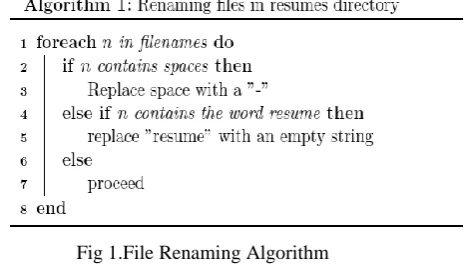
[image:1.595.325.558.420.552.2]Step-2: (File Renaming) All files that have spaces in their file names are renamed by replacing the space with any special character of personal choice(" -" is used here)
Fig 1.File Renaming Algorithm
Step-3: (File Conversion) HDFS cannot store pdf and word formats . Hence all the files are converted into text files .
Fig 2.File Conversion Algorithm
[image:1.595.321.564.607.742.2]Fig 3.Skill Set Extraction Algorithm
Step-5:(Storing on HDFS) The above file is now placed on HDFS.
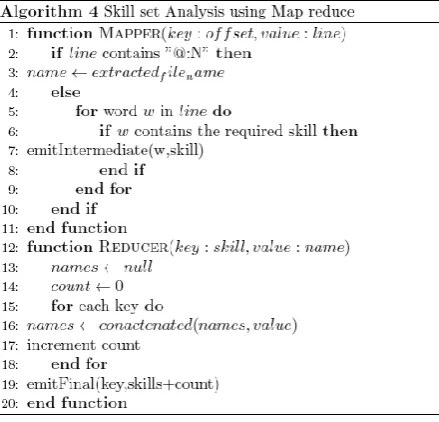
[image:2.595.69.289.278.489.2]Step-6:(Analyze) Using MapReduce , the required skills are analyzed. This gives the Skill - Names of students proficient - Count as the output. This file is also on HDFS
Fig 4.Skill Analyzing Algorithm(Map Reduce)
Step-7:(Visualization) Using RHadoop, write an R script that reads the analyzed skills file and visualize it as a bar plot.
Step-8:(Resume upload) Now when a new resume comes into the system, repeating all the above steps would be very expensive. Hence a slightly optimized procedure is followed
1.Upload the file into the system
2.Perfom Steps 2,3,4 on the given file only
3.Get the skills file from HDFS and append the current student's data to that
4.Place this file on HDFS again
Step-9: Along with the visualization part in R, the skills-students-count details are listed in the browser
III. LITERATURE SURVEY
This section presents a comprehensive literature review from different journals, academicians and other internet sources.
First is the process of extracting information from resumes. It is not an easy task as resumes come in variable formats and file types. In the paper " Resume information extraction with cascaded hybrid model "[1] the author used an HMM(Hidden Markov Model) based pipelined approach to extract text in multiple iterations.
In the first pass, a resume is segmented into a consecutive blocks attached with labels indicating the information types. Then in the second pass, the detailed information, such as Name and Address, are identified in certain blocks (e.g. blocks labeled with Personal Information), instead of searching globally in the entire resume. But this however cannot be used as we are not interested in detailed extraction of fields like address, phone , zip code etc.. Instead the concentration is only on skill set and we do not wish to shift the crux of the paper from that to extracting unnecessary information. Hence Apache Tika is used which is more appropriate for the problem.
Apache Tika is a library that provides a flexible and robust set of interfaces that can be used in any context where metadata analysis and structured text extraction is needed.
The key component of Apache Tika is the
Parser (org.apache.tika.parser.Parser) interface because it hides the complexity of different file formats while providing a simple and powerful mechanism to extract structured text content and metadata from all sorts of documents.
The next step is Skill Extraction from the resumes. In the paper " An Approach to Extract Special Skills to Improve the Performance of Resume Selection "[2] the author(s) proposed an approach to identify resumes with special skill information. The notion of special features have been applied to improve the process of product selection in E-commerce environment. However, extending the notion of special features for the development of approach to process resumes is a complex task as resumes contain unformatted text or semi-formatted text. In this paper, the author(s) have proposed an approach by considering only skills related information of the resumes. This , however , cannot be used completely as organizations receive and store thousands (or even lakhs) of resumes which constitutes Big Data ! Hence for extracting the person and skill information Hadoop would be a better framework as it analyzes data in a distributed manner.
proposed system but can be used as a base for calculating the final result.
In all the above papers, data were analyzed with output in a basic form( either word-count or details of a person etc...) But as known, a picture speaks a thousand words, Hence R(programming language) is used to visualize the results as a graph along with data in a table format(in a browser) so that any novice will be able to understand the output.
IV. HADOOP
We live in the data age. It’s not easy to measure the total volume of data stored electronically. The problem is simple: while the storage capacities of hard drives have increased tremendously over the time, access speeds—the rate at which data can be read from drives—have not kept up.
It takes a long time to read all data on a single drive and writing is even slower. The most efficient way to reduce the time is to read from multiple disks at once.Hadoop works in the same way. The storage component of hadoop is called HDFS(Hadoop Distributed File System) which segments the data file into blocks and replicates these across multiple drives.
V. MAP-REDUCE
MapReduce is the programming model that Hadop uses for data processing. Hadoop can run MapReduce programs written in various languages like Java, Ruby, Python, and C++. Most important, these programs are run in parallel, thus reducing the time taken for large scale data analysis.
MapReduce works by splitting the processing into two steps(phases): the map phase and the reduce phase. The input and output to these phases are key value pairs with varying data type options as required by the programmer.
In our algorithm, the input to the Mapper is the file that has skills and names of the person. Every name of the person is appended before the skill set using "N:@" prefix to identify it as a name. The skill set then follows till we find another name. In the Mapper phase each line of the file is taken as an input where the key is the offset and value is the entire line. The output from the mapper is the skill as the key and name as the value. The Reducer works by collecting all the values with the same key(i.e skill) and counting the total and concatenating all the students names who are proficient in that skill. So here the output is the skill as the key and concatenated names and count as value.
VI. R
R is a programming language and a software suite used for data analysis, statistical computing and data visualization. It is highly extensible and has object oriented features and strong graphical capabilities. At its heart R is an interpreted language and comes with a command line interpreter – available for Linux, Windows and Mac machines – but there are IDEs as well to support development like RStudio
R and Hadoop can complement each other very well. One of the most well-known R packages to support Hadoop functionalities is RHadoop that was developed by Revolution Analytics. RHadoop is a collection of three R packages: rmr, rhdfs and rhbase. rmr package provides Hadoop MapReduce functionality in R, rhdfs provides HDFS file management in R and rhbase provides HBase database management from within R.
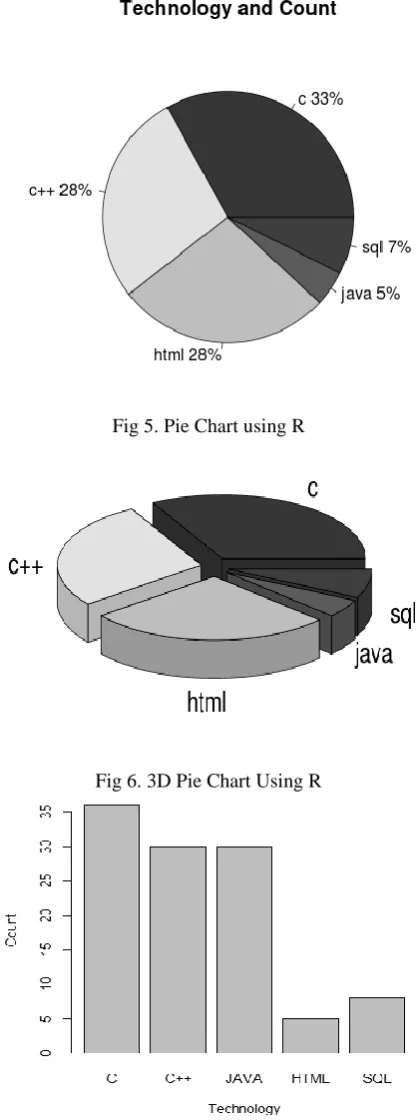
[image:3.595.322.531.211.772.2]The following are some of the graphs that we generated using Rhadoop to analyze the “Technology and Count” using resumes
Fig 5. Pie Chart using R
Fig 6. 3D Pie Chart Using R
VII. RESULTS
Table I. Upload File Input Vs Output
[image:4.595.304.543.109.304.2]Table II. Pseudo Distributed Mode
Table III. 4 Node Cluster(1 Namenode & 3 Datanodes)
63.261 38.82 11.229 172.541 89.223 39.986 260.554 123.78 73.519 720.693 214.672 129.519 0 100 200 300 400 500 600 700 800
1 2 4
107100
214200
321300
535500
Fig 8. Block Size Vs Time Spent by Mappers
The above graph indicates that as the block size increases, there will be a decrease in the no of blocks which in turn reduces the time occupied by Mappers
E.g. No of Resumes = 107100
Total Size = 3181549 bytes = 3.03416MB Block size = 1 MB
No of Blocks = 4
Since the no of blocks is 4 , 4 map tasks are launched which run in parallel and hence reduce the overall time.
50.524 53.957 51.756
193.759 190.229 194.206
466.216 463.012 491.919
1457.93 1391.875 1399.446 0 200 400 600 800 1000 1200 1400 1600
1 2 4
107100
214200
321300
[image:4.595.43.290.455.787.2]535500
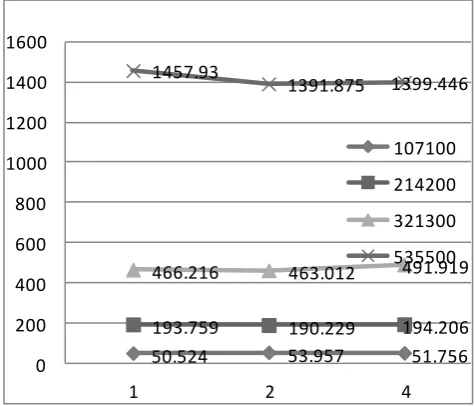
Fig 9. Block Size Vs Time Spent by Reducers
The above graph shows the Time spent by reducers after map phase. It is clear that despite the no of blocks , reduce phase takes almost the same time as it works on filtered data from the Mappers.
INPUT OUTPUT
x.txt/x.png/x.jpg (Any extension other than pdf and
word)
Only pdf and word files are allowed !
x.pdf (or) x.doc(x) File Successfully Uploaded
x.pdf( same file name) File Name exists ! Please choose a different name
y.pdf/doc(x)( Same File but Different name) (contents are compared)
File already exists !! Please choose a different file
No of Resumes Time for Map phase (ms) Time for Reduce Phase(ms) Total Time (ms)
56 1 8 14
100 1 15 24
200 5 27 38
320 6 45 59
No of resumes Block Size ( MB) No of blocks Time Spent in sec (Mappers) Time Spent in sec (Reducers)
107100 1 11 63.261 50.524
107100 2 6 38.82 53.957
107100 4 3 11.229 51.756
214200 1 23 172.541 193.759
214200 2 11 89.223 190.229
214200 4 6 39.986 194.206
321300 1 34 260.554 466.216
321300 2 17 123.78 463.012
321300 4 9 73.519 491.919
535500 1 56 720.693 1457.934
535500 2 28 214.672 1391.875
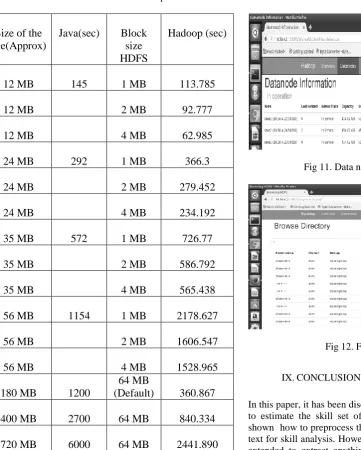
[image:4.595.307.545.472.675.2]Table IV. Java Vs Hadoop
The above table shows that the real beauty of hadoop can be seen while working with very huge sets of data
VIII. SCREENSHOTS
The following were the screenshots of the full cluster installed in the Research laboratory
Fig 10. Hadoop Daemons (Master & Slaves)
[image:5.595.56.418.60.511.2]Fig 11. Data nodes Health/Status
Fig 12. Files in HDFS
IX.CONCLUSIONANDFUTUREWORK
In this paper, it has been discussed how resumes can be used to estimate the skill set of all the students. It has been shown how to preprocess the files and then extract relevant text for skill analysis. However the technique can be further extended to extract anything(any data like name, address etc..) from the resumes. It can be further optimized to extract text from image and video resumes. The practical results show that the proposed method of text classification gives better results as compared to the existing one and hence we further would like to carry on more investigation over the same
REFERENCES
[1] Kun Yu, Gang Guan, and Ming Zhou, "Resume Information Extraction with Cascaded Hybrid Model", In Proceedings of the 43rd Annual Meeting on Association for Computational Linguistics, Stroudsburg, PA, USA, pp 499-506,2005
[2] Sumit Maheshwari, Abhishek Sainani, P.Krishna Reddy, "An Approach to Extract Special Skills to Improve the Performance of Resume Selection", In 6th International Workshop, DNIS 2010, Aizu-Wakamatsu, Japan, pp 256-273, 2010
Size of the
file(Approx)
Java(sec)
Block
size
HDFS
Hadoop (sec)
12 MB
145
1 MB
113.785
12 MB
2 MB
92.777
12 MB
4 MB
62.985
24 MB
292
1 MB
366.3
24 MB
2 MB
279.452
24 MB
4 MB
234.192
35 MB
572
1 MB
726.77
35 MB
2 MB
586.792
35 MB
4 MB
565.438
56 MB
1154
1 MB
2178.627
56 MB
2 MB
1606.547
56 MB
4 MB
1528.965
180 MB
1200
64 MB
(Default)
360.867
400 MB
2700
64 MB
840.334
[3] Mrigank Mridul, Akashdeep Khajuria, Snehasish Dutta, Kumar N, Prasad.M.R,"Analysis of Bidgata using Apache Hadoop and Map Reduce",In International Journal of Advanced Research in Computer Science and Software Engineering, Volume 4, Issue 5, pp 2277-128X,May 2014
[4] Katrina Sin, Loganathan Muthu, "Application Of Big Data In Education Data Mining And Learning Analytics – A Literature Review, In ICTACT journal on soft computing: special issue on soft computing models for big data, volume: 05, issue: 04 pp 2229-6956 ,July 2015
[5] Cristóbal Romero, Sebastián Ventura, "Educational Data Mining:A Review of the state of Art", In IEEE Transactions on Systems, Man and Cybernetics , Part C (Applications and Review) Volume 40,Issue 6, pp 601-618 ,July 2010
[6] Divna Krpan, Slavomir Stankov, "Educational Data Mining for grouping students in e-learning system",In Information Technology Interfaces (ITI), Proceedings of the ITI 2012 34th International Conference ,pp 207-212,June 2012
[7] Tom White "Hadoop: The Definitive Guide, Third Edition"