R E S E A R C H A R T I C L E
Open Access
Validation of the Atopic Dermatitis Control
Tool (ADCT©) using a longitudinal survey of
biologic-treated patients with atopic
dermatitis
Eric Simpson
1, Laurent Eckert
2*, Abhijit Gadkari
3, Usha G. Mallya
4, Min Yang
5, Lauren Nelson
6, Michelle Brown
6,
Matt Reaney
7, Puneet Mahajan
8, Isabelle Guillemin
2, Mark Boguniewicz
9and David Pariser
10Abstract
Background:The Atopic Dermatitis Control Tool (ADCT©) is a brief patient self-administered instrument designed and validated to assess atopic dermatitis (AD) control; six AD symptoms and impacts are evaluated over the past week, including overall severity of symptoms, days with intense episodes of itching, intensity of bother, problem with sleep, impact on daily activities, and impact on mood or emotions. This study assessed the reliability, validity, and responsiveness of the ADCT in a longitudinal context, and provided thresholds to identify meaningful within-person change.
Methods:Data were from a prospective, longitudinal patient survey study of real-world effectiveness of dupilumab in patients with AD. Eligible patients completed a baseline survey before starting dupilumab and were followed at Months 1, 2, 3, and 6 post-initiation as they became eligible.
Results:Psychometric analyses confirmed internal consistency; Cronbach’sαcoefficients were consistently above the threshold of 0.70 across each follow-up; item-to-total correlations were above the threshold of r≥0.50. High correlations between the ADCT and the Dermatology Life Quality Index (DLQI) and skin pain supported construct validity, while known-group validity was shown on Patient Global Assessment of Disease (PGAD) overall well-being subgroups with worse AD-related overall well-being having higher mean ADCT total scores at all time points. The ability of the ADCT to detect change was confirmed; the threshold for meaningful within-person change was estimated to be 5 points. Finally, test–retest reliability was confirmed in subgroups of patients with stable PGAD responses.
Conclusions:Our findings confirm that the ADCT is a valid and reliable tool for assessing AD control.
Keywords:Atopic dermatitis, tool, control, symptoms, impacts, ADCT©, reliability, validity, responsiveness
Background
Atopic dermatitis (AD) is a systemic, inflammatory skin
condition [1, 2] characterized by intense pruritus,
ec-zematous lesions, swelling, and pain [3–6]. With
increas-ing awareness of the substantial patient burden
associated with long-term uncontrolled AD [3, 7–13],
especially as it relates to sleep disturbance, health-related quality of life, and work or school performance
[6, 14–19], assessment of patient self-reported disease control has been deemed crucial for clinical evaluation of AD [15,20,21].
Several patient-reported outcome measures (PROMs), including the Peak Pruritus Numerical Rating Scale (Peak Pruritus NRS) [22] for itch, the Patient-Oriented Eczema Measure (POEM) [23] for overall AD symptoms, and the Dermatology Life Quality Index (DLQI) [24] for health-related quality of life (HRQL), are available for use in AD trials; however, these PROMs do not holistic-ally capture the broad concept of disease control. AD
© The Author(s). 2019Open AccessThis article is distributed under the terms of the Creative Commons Attribution 4.0 International License (http://creativecommons.org/licenses/by/4.0/), which permits unrestricted use, distribution, and reproduction in any medium, provided you give appropriate credit to the original author(s) and the source, provide a link to the Creative Commons license, and indicate if changes were made. The Creative Commons Public Domain Dedication waiver (http://creativecommons.org/publicdomain/zero/1.0/) applies to the data made available in this article, unless otherwise stated.
* Correspondence:[email protected]
2Sanofi, France, Chilly-Mazarin, Paris, France
control has been described in various ways in the litera-ture, ranging from reduced disease severity or the
ab-sence of AD flares, to the impact of AD on patients’
everyday lives and well-being [25–29].
The Atopic Dermatitis Control Tool (ADCT©) is a new PROM designed to assess patient-perceived disease control, meeting this current measurement gap in the
management of patients with AD (ADCT v1; https://
patient-questionnaires.sanofi.com/questionnaires/adct-atopic-dermatitis-control-communication-tool) (Pariser D, Simpson E, Gadkari A, Bieber T, Margolis D, Brown M,
Nelson L, Mahajan P, Reaney M, Guillemin I et al:
De-sign, validation and scoring of the Atopic Dermatitis Control Tool (ADCT), unpublished). It is envisaged that the tool will also foster patient–clinician communication regarding disease control. The ADCT is a simple, brief tool that evaluates six symptoms and effects associated with AD over the past week. These include overall sever-ity of symptoms, days with intense episodes of itching, intensity of bother, problem with sleep, impact on daily activities, and impact on mood or emotions. Each of the six ADCT items has a score range from 0 (no problem) to 4 (worst), rating the severity of each concept; the total score ranges from 0 to 24, which is the summation of the responses to all the items. An initial evaluation of the psychometric properties of the instrument in the United States has indicated that the ADCT is valid and reliable for assessing patient-perceived AD control in adults (Pariser D, Simpson E, Gadkari A, Bieber T, Mar-golis D, Brown M, Nelson L, Mahajan P, Reaney M,
Guillemin I et al: Design, validation and scoring of the
Atopic Dermatitis Control Tool (ADCT), unpublished).
In addition, a score of ≥7 points was derived as the
threshold to identify patients “not in control”, based on optimal sensitivity/specificity values (Pariser D, Simpson E, Gadkari A, Bieber T, Margolis D, Brown M, Nelson L,
Mahajan P, Reaney M, Guillemin I et al: Design,
valid-ation and scoring of the Atopic Dermatitis Control Tool (ADCT), unpublished). The ADCT© is protected by copyright with all rights reserved to Sanofi and its devel-opment partners.
The present study further assessed the reliability, valid-ity, and responsiveness of the ADCT. In addition, it de-fines a threshold to identify meaningful within-person change. The assessments were conducted on data from the EaRly REal-WorLd PatIent EValuation for DupixEnt in Atopic Dermatitis (RELIEVE-AD) study, a prospect-ive, longitudinal patient survey conducted in the United States that aims to evaluate the early effectiveness of dupilumab in the real-world setting. Dupilumab is ap-proved in the United States and Japan for subcutaneous administration every 2 weeks for the treatment of
pa-tients aged ≥12 years with moderate-to-severe AD
inad-equately controlled with topical prescription therapies or
when those therapies are not advisable [30], and in the European Union for use in adults with moderate-to-severe AD who are candidates for systemic therapy [31].
Methods Data source
RELIEVE-AD is an ongoing observational, prospective, longitudinal survey study in adult patients with AD who
were enrolled in the Dupixent MyWay™ Patient Support
Program and for whom dupilumab had been recently prescribed. Eligible patients completed a baseline survey before starting dupilumab and were followed at Months 1, 2, 3, 6, 9, and 12 post-initiation as they become eligible.
Patient enrollment into the RELIEVE-AD study began in January 2018 and the final data collection is expected to be completed in February 2020. The present study included patients in the RELIEVE-AD study who, on December 6, 2018, had completed the baseline and Months 1, 2, 3, and 6 surveys. Patients were eligible for inclusion in the RELIEVE-AD study if they met the following criteria at the time of the baseline survey:
aged≥18 years
can speak and read English
be willing to participate in the study and provide informed consent
have not previously participated in a dupilumab clinical trial
have not initiated treatment with dupilumab.
The surveys collected data on patient characteristics, including socio-demographics (age, sex, race/ethnicity, marital status, level of education, insurance, employment status, level of income, geographic region), medical history (self-reported age at AD diagnosis, comorbidities), and AD treatment and experience (treatment history prior to dupilumab initiation, concomitant therapy post dupilu-mab initiation, self-reported adherence to treatment and reasons for discontinuation), and treatment satisfaction.
In addition, PRO data were collected using the Patient Global Assessment of Disease (PGAD), Numerical Rating Scale (NRS) for patient self-reported symptoms (skin pain, burning, and sensitivity) (scores: 0–10; higher scores indicate worse symptom severity), disease control using ADCT (eczema-related symptoms, days with in-tense itching, overall bothersomeness, sleep problems,
daily activities, mood/emotion; total score 0–24; higher
scores indicate worse disease control), health-related quality of life (HRQL) using the Dermatology Life
Quality Index (DLQI: 0–30, higher scores indicating
worse HRQL), and the Work Productivity and Activity Impairment-Atopic Dermatitis questionnaire
(WPAI-AD; percentages: 0–100, higher percentages indicate
Analyses in this study were conducted using PRO data from multiple survey timepoints to ensure the robust-ness of the findings.
Statistical methods
All data analyses were conducted using SAS 9.4 (SAS Institute Inc., Cary, NC, USA).
Reliability
Assessments for reliability included internal consistency reliability and test–retest reliability. Internal consistency
was assessed using Cronbach’s alpha (α ≥0.7) [32].
ADCT item-to-total correlations were estimated at base-line and Months 1, 2, 3, and 6 using the Pearson correl-ation coefficient (PCC ≥0.5) [33]. Test–retest reliability was evaluated based on the intra-class correlation (ICC) coefficient of the ADCT total score among patients with unchanged PGAD scores across month pairs (between Months 1 and 2, Months 2 and 3, and Months 3 and 6).
An ICC ≥0.70 was expected for confirming test–retest
reliability [34].
Construct validity
Convergent validity of the ADCT was assessed by
com-puting Spearman’s rank-order correlation between the
ADCT total score and the DLQI (total and item-level scores), skin pain, PGAD overall well-being, WPAI total work impairment (WPAI-TWI), and WPAI total activity impairment (WPAI-TAI) at baseline and Months 1, 2, 3, and 6. Given that the skin pain NRS directly measures AD-related symptoms and the DLQI includes questions on both symptoms and impacts due to skin problems, correlations between the ADCT and skin pain and DLQI were expected to be higher than the correlations be-tween the ADCT and other measures, such as PGAD,
WPAI-TWI, and WPAI-TAI. Cohen’s recommended
guidelines for determining small, moderate, or large ef-fects (0.1 to < 0.3, 0.3 to < 0.5, and≥0.5, respectively) were applied, and a large effect (r≥0.5) was used in this study as evidence of convergent validity [35]. Divergent validity, established previously for the ADCT, was not assessed here owing to the lack of appropriate measures for use from the current study.
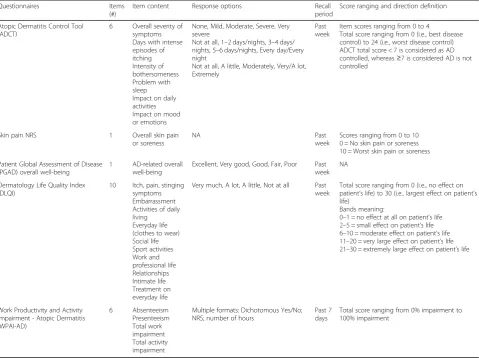
Table 1Patient-reported outcome measures used in RELIEVE-AD
Questionnaires Items
(#)
Item content Response options Recall
period
Score ranging and direction definition
Atopic Dermatitis Control Tool (ADCT)
6 Overall severity of symptoms Days with intense episodes of itching Intensity of bothersomeness Problem with sleep Impact on daily activities Impact on mood or emotions
None, Mild, Moderate, Severe, Very severe
Not at all, 1–2 days/nights, 3–4 days/ nights, 5–6 days/nights, Every day/Every night
Not at all, A little, Moderately, Very/A lot, Extremely
Past week
Item scores ranging from 0 to 4 Total score ranging from 0 (i.e., best disease control) to 24 (i.e., worst disease control) ADCT total score < 7 is considered as AD controlled, whereas≥7 is considered AD is not controlled
Skin pain NRS 1 Overall skin pain
or soreness
NA Past
week
Scores ranging from 0 to 10 0 = No skin pain or soreness 10 = Worst skin pain or soreness
Patient Global Assessment of Disease (PGAD) overall well-being
1 AD-related overall well-being
Excellent, Very good, Good, Fair, Poor Past week
NA
Dermatology Life Quality Index (DLQI)
10 Itch, pain, stinging symptoms Embarrassment Activities of daily living Everyday life (clothes to wear) Social life Sport activities Work and professional life Relationships Intimate life Treatment on everyday life
Very much, A lot, A little, Not at all Past week
Total score ranging from 0 (i.e., no effect on patient’s life) to 30 (i.e., largest effect on patient’s life)
Bands meaning:
0–1 = no effect at all on patient’s life 2–5 = small effect on patient’s life 6–10 = moderate effect on patient’s life 11–20 = very large effect on patient’s life 21–30 = extremely large effect on patient’s life
Work Productivity and Activity Impairment - Atopic Dermatitis (WPAI-AD) 6 Absenteeism Presenteeism Total work impairment Total activity impairment
Multiple formats: Dichotomous Yes/No; NRS; number of hours
Past 7 days
Total score ranging from 0% impairment to 100% impairment
Known-groups validity
To confirm known-groups validity, mean ADCT total scores were compared across adjacent subgroups of pa-tients based on PGAD responses (Excellent, Very good, Good, Fair, Poor) and categories of DLQI responses: no effect on patient life (score range: 0–1), a small effect (2–5), a moderate effect (6–10), a very large effect (11– 20), or an extremely large effect (21–30) [36] (Table1). Patients in a worse PGAD or DLQI band subgroup were expected to display poorer AD control (i.e., higher mean ADCT total scores, indicating more severe symptoms/ greater impact) than patients in a better PGAD or DLQI band subgroup. If the homogeneity of variance across
the subgroups was rejected (p< 0.05) based on a
Levene’s test of equality of variance, a Mann–Whitney U test was used to compare the mean ADCT total scores
between the subgroups; otherwise, t-tests were applied.
Cohen’s d was calculated for the standardized differences in mean ADCT total scores between subgroups and was corrected for small sample sizes when the total sample size in the two groups was below 50 [37].
Ability to detect change (responsiveness)
Responsiveness was evaluated using correlations be-tween the change from baseline (to Months 1, 2, 3, and 6) in ADCT total score and the change from baseline in DLQI total score (Pearson product-moment). The
same analysis was conducted using (Spearman’s
rank-order correlation) (r≥0.5) for DLQI bands and PGAD
scores [34].
Interpretation of change
Anchor-based and distribution-based methods were used to establish a threshold characterizing meaningful within-person change in the ADCT total score.
Prior to applying the anchor-based method, the correl-ation coefficient between the change in the ADCT total score and the potential anchor measure was reviewed for the magnitude of association; in this study, a large ef-fect (i.e., correlation at least 0.5) was required [38]. Once established as appropriate, univariate regression analyses accounting for repeated measures were conducted; changes in ADCT total scores from baseline was the dependent variable and changes in the anchor measure from baseline was the independent variable. The change in PGAD and change in DLQI were considered as po-tential anchor measures and the following anchors were selected a priori: a 1-level improvement in the PGAD; a 4-point improvement on the DLQI total score [39]; or a 1-level improvement in the DLQI band. Patients who were not likely to change were excluded: e.g., reporting
PGAD =“excellent” or DLQI =“no effect” (i.e., total
score of 0 or 1) at baseline. Additional analysis was con-ducted using the subset of patients whose AD was
considered not controlled at baseline based on the ADCT total score (i.e., score > 7; Table1), as established in previous research (Pariser D, Simpson E, Gadkari A, Bieber T, Margolis D, Brown M, Nelson L, Mahajan P,
Reaney M, Guillemin Iet al: Design, validation and
scor-ing of the Atopic Dermatitis Control Tool (ADCT), unpublished).
For the distribution-based approach, the half standard deviation (SD) method of the baseline ADCT scores, one-third SD, one unit of standard error of measure-ment (SEM), and two units of SEMs were examined. Final recommendations for thresholds characterizing meaningful within-person change and considered as a clinical important responder were made considering the anchor- and distribution-based results.
Results
Patient population
The interim dataset from RELIEVE-AD, as of December 6, 2018, included 1010 patients who completed the base-line survey, 538 patients at Month 1, 458 patients at Month 2, 372 patients at Month 3, and 206 patients at Month 6. Patients who were eligible to receive the sur-vey at each timepoint varied based on time elapsed since they initiated dupilumab. Accounting for the number of surveys sent out at each timepoint, the response rate ranged from between 89.8% in Month 1 to 74.4% in Month 6. The smaller sample sizes in the later follow-ups were attributable to many patients not due for sur-vey completion at the time of this interim data cut. Overall, patient characteristics were comparable between patients at baseline and those who had completed the follow-up surveys.
At baseline, the mean age of the patients was 47 years, and the mean age at AD diagnosis was 28 years. More than half of the population (62%) were female and the majority (74%) were White. Most patients (96%) re-ported experiencing flares over the previous 4 weeks at baseline. The mean skin pain NRS score was 5.9 and the mean DLQI total score was 13.4; no patients reported a DLQI score of 0 or 1. Very few patients (3.4%) reported
levels of ‘excellent’ or ‘very good’ on the PGAD. The
mean WPAI-TAI and WPAI-TWI were 45.8 and 40.8%, respectively. The mean ADCT total score was 15.9 at baseline.
Reliability
Cronbach’sα coefficients of the ADCT total score were
0.90 at baseline, 0.93 at Month 1, 0.94 at Month 2, 0.9 at Month 3, and 0.95 at Month 6. Item-to-total correlations ranged from 0.68 to 0.81 at baseline to 0.79 to 0.88 at
Month 6 (Table 2). ICCs computed using subgroups of
patients with stable PGAD responses were 0.82 for
between Months 2 and 3 (n = 189), and 0.79 between
Months 3 and 6 (n= 107) (Table3).
Construct validity
The highest correlations were observed between the ADCT total score and skin pain NRS (from 0.74 to 0.83) and the DLQI total score in the follow-up surveys (from
0.80 to 0.85), supporting construct validity (Table 4).
Spearman’s rank-order correlations between the ADCT
total score and individual DLQI items ranged between 0.37 (issues at work or studying) and 0.75 (degree of itchiness, soreness, pain or sting) at baseline to 0.12 (is-sues at work or studying) and 0.75 (degree of itchiness, soreness, pain or sting) at Month 6. Other item correla-tions ranged between 0.4 and 0.6 regardless of the timepoint.
Known-group validity
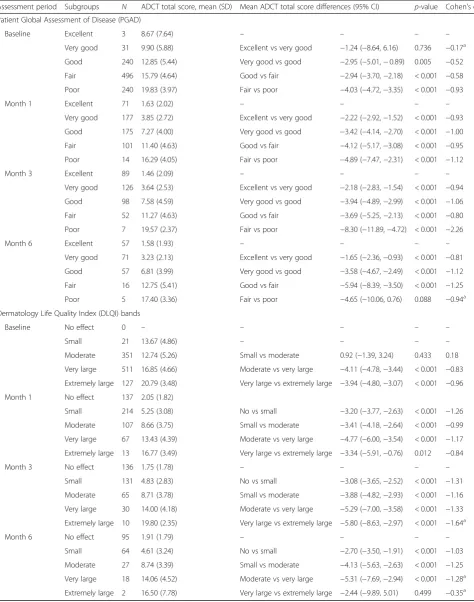
Known-group analyses indicated that PGAD subgroups with worse AD-related overall well-being had higher mean ADCT total scores (poor AD control) at all
time-points (Table 5). The differences in mean ADCT total
score between the adjacent groups were statistically sig-nificant (p < 0.01), except between ‘excellent’ and ‘very good’at baseline and between ‘fair’and ‘poor’at Month 6, likely due to small sample sizes. Similarly, patients in the groups of DLQI bands with greater effect on life were associated with higher mean ADCT total scores
(poor AD control) (Table 5). All differences in mean
ADCT total score between the adjacent bands were sta-tistically significant (p < 0.05) except between the small effect and the moderate effect bands at baseline, and
between the very large effect and the extremely large
ef-fect bands at Month 6. The Cohen’s d effect size showed
large effect across all adjacent categories except between
‘excellent’and ‘very good’at baseline, between the small effect and the moderate effect bands at baseline, and be-tween the very large effect and the extremely large effect bands at Month 6.
Ability to detect change (responsiveness)
Correlational analyses confirmed the ADCT’s ability to
detect change (responsiveness; Table 6). Specifically,
Spearman’s rank-order correlation between change in
ADCT total score and change in PGAD from baseline ranged from 0.54 in Month 3 to 0.60 in Month 6.
Spear-man’s rank-order correlation between change in ADCT
total score and change in DLQI bands from baseline ranged from 0.47 in Month 1 to 0.51 in Month 3. Pear-son product-moment correlation between change in ADCT total score and change in DLQI total score from baseline ranged from 0.55 in Month 1 to 0.61 in Month 3. All correlation coefficients were statistically significant (p< 0.001).
Interpretation of change
Changes in PGAD, DLQI bands, and DLQI total score correlated well with change in ADCT total Table 2Cronbach’sαfor internal consistency reliability of ADCT
Baseline (n= 1010) Month 1 (n= 538) Month 2 (n= 458) Month 3 (n= 372) Month 6 (n= 206)
Overall internal consistency 0.90 0.93 0.94 0.94 0.95
Item-to-total correlation
Overall severity of AD symptoms 0.74 0.79 0.81 0.81 0.84
Days with intense episodes of itching 0.68 0.76 0.79 0.81 0.79
Intensity of bothersomeness 0.81 0.85 0.89 0.89 0.88
Problem with sleep 0.68 0.75 0.73 0.78 0.83
Impact on daily activities 0.76 0.82 0.82 0.84 0.82
Impact on mood or emotions 0.71 0.79 0.82 0.84 0.86
ADAtopic dermatitis,ADCTAtopic Dermatitis Control Tool
Table 3Test–retest reliability of ADCT anchored by no change in the Patient Global Assessment of Disease
N ICC (95% CI) ADCT total score at Months 1 and 2 219 0.82 (0.77, 0.86)
ADCT total score at Months 2 and 3 189 0.78 (0.71, 0.83)
ADCT total score at Months 3 and 6 107 0.79 (0.71, 0.85)
ADCTAtopic Dermatitis Control Tool,CIConfidence interval,ICCIntra-class correlation coefficient
Table 4Construct validity with Spearman’s rank-order correlations between ADCT total score and other patient-reported outcome measures in RELIEVE-AD
Baseline Month 1 Month 2 Month 3 Month 6
DLQI total score 0.543*** 0.803*** 0.828*** 0.846*** 0.812***
PGAD 0.489*** 0.734*** 0.762*** 0.758*** 0.705***
Skin pain 0.741*** 0.831*** 0.807*** 0.793*** 0.806***
WPAI-TAI 0.645*** 0.677*** 0.750*** 0.772*** 0.706***
WPAI-TWI 0.605*** 0.644*** 0.686*** 0.721*** 0.725***
***p< 0.001
ADCTAtopic Dermatitis Control Tool,DLQIDermatology Life Quality Index,
Table 5Comparisons of mean differences in ADCT total score by PGAD and DLQI known groups
Assessment period Subgroups N ADCT total score, mean (SD) Mean ADCT total score differences (95% CI) p-value Cohen’s d
Patient Global Assessment of Disease (PGAD)
Baseline Excellent 3 8.67 (7.64) – – – –
Very good 31 9.90 (5.88) Excellent vs very good −1.24 (−8.64, 6.16) 0.736 −0.17a Good 240 12.85 (5.44) Very good vs good −2.95 (−5.01,−0.89) 0.005 −0.52
Fair 496 15.79 (4.64) Good vs fair −2.94 (−3.70,−2.18) < 0.001 −0.58
Poor 240 19.83 (3.97) Fair vs poor −4.03 (−4.72,−3.35) < 0.001 −0.93
Month 1 Excellent 71 1.63 (2.02) – – – –
Very good 177 3.85 (2.72) Excellent vs very good −2.22 (−2.92,−1.52) < 0.001 −0.93
Good 175 7.27 (4.00) Very good vs good −3.42 (−4.14,−2.70) < 0.001 −1.00
Fair 101 11.40 (4.63) Good vs fair −4.12 (−5.17,−3.08) < 0.001 −0.95
Poor 14 16.29 (4.05) Fair vs poor −4.89 (−7.47,−2.31) < 0.001 −1.12
Month 3 Excellent 89 1.46 (2.09) – – – –
Very good 126 3.64 (2.53) Excellent vs very good −2.18 (−2.83,−1.54) < 0.001 −0.94
Good 98 7.58 (4.59) Very good vs good −3.94 (−4.89,−2.99) < 0.001 −1.06
Fair 52 11.27 (4.63) Good vs fair −3.69 (−5.25,−2.13) < 0.001 −0.80
Poor 7 19.57 (2.37) Fair vs poor −8.30 (−11.89,−4.72) < 0.001 −2.26
Month 6 Excellent 57 1.58 (1.93) – – – –
Very good 71 3.23 (2.13) Excellent vs very good −1.65 (−2.36,−0.93) < 0.001 −0.81
Good 57 6.81 (3.99) Very good vs good −3.58 (−4.67,−2.49) < 0.001 −1.12
Fair 16 12.75 (5.41) Good vs fair −5.94 (−8.39,−3.50) < 0.001 −1.25
Poor 5 17.40 (3.36) Fair vs poor −4.65 (−10.06, 0.76) 0.088 −0.94a Dermatology Life Quality Index (DLQI) bands
Baseline No effect 0 – – – – –
Small 21 13.67 (4.86) – – – –
Moderate 351 12.74 (5.26) Small vs moderate 0.92 (−1.39, 3.24) 0.433 0.18
Very large 511 16.85 (4.66) Moderate vs very large −4.11 (−4.78,−3.44) < 0.001 −0.83
Extremely large 127 20.79 (3.48) Very large vs extremely large −3.94 (−4.80,−3.07) < 0.001 −0.96
Month 1 No effect 137 2.05 (1.82)
Small 214 5.25 (3.08) No vs small −3.20 (−3.77,−2.63) < 0.001 −1.26
Moderate 107 8.66 (3.75) Small vs moderate −3.41 (−4.18,−2.64) < 0.001 −0.99
Very large 67 13.43 (4.39) Moderate vs very large −4.77 (−6.00,−3.54) < 0.001 −1.17
Extremely large 13 16.77 (3.49) Very large vs extremely large −3.34 (−5.91,−0.76) 0.012 −0.84
Month 3 No effect 136 1.75 (1.78) – – – –
Small 131 4.83 (2.83) No vs small −3.08 (−3.65,−2.52) < 0.001 −1.31
Moderate 65 8.71 (3.78) Small vs moderate −3.88 (−4.82,−2.93) < 0.001 −1.16
Very large 30 14.00 (4.18) Moderate vs very large −5.29 (−7.00,−3.58) < 0.001 −1.33
Extremely large 10 19.80 (2.35) Very large vs extremely large −5.80 (−8.63,−2.97) < 0.001 −1.64a
Month 6 No effect 95 1.91 (1.79) – – – –
Small 64 4.61 (3.24) No vs small −2.70 (−3.50,−1.91) < 0.001 −1.03
Moderate 27 8.74 (3.39) Small vs moderate −4.13 (−5.63,−2.63) < 0.001 −1.25
Very large 18 14.06 (4.52) Moderate vs very large −5.31 (−7.69,−2.94) < 0.001 −1.28a Extremely large 2 16.50 (7.78) Very large vs extremely large −2.44 (−9.89, 5.01) 0.499 −0.35a a
Cohen’s d was corrected for small sample sizes. The correction factor was (N–3)/(N–2.25) x sqrt (1–2/N)
score (r > 0.50); therefore, PGAD and DLQI were de-termined to be appropriate anchors. Through the anchor-based approach, 1-level improvement in PGAD or in DLQI bands, or a 4-point reduction in DLQI total score, was associated with a reduction in ADCT total score of 5.30, 5.20, or 3.90, respectively, among the overall sample, and 5.43, 5.42, or 4.03, respectively, among patients with uncontrolled AD symptoms at baseline (Table7).
Using the distribution-based approach, the half SD and one-third SD of ADCT total score at baseline were 2.72 and 1.81, respectively. The SEM of ADCT total score at baseline was 1.71 when using the overall Cron-bach’sαat baseline as reliability measure and 2.32 when using the ICC between Month 1 and Month 2 as reli-ability measure. Consequently, 2 units of SEM were 3.42 and 4.64, respectively.
Discussion
Practice guidelines recommend that during a clinical evaluation, clinicians inquire about a patient’s itch, sleep, and impact on daily activity due to their AD [15]. How-ever, no single PROM is currently available to holistic-ally evaluate these concepts within a single tool. The ADCT was previously developed and validated to assess AD control, with the standards recommended in the PRO Guidance by the US Food and Drug Administra-tion [40]. Not only does this PROM evaluate AD control in a comprehensive and standardized approach, but, at the same time, it can easily be completed at home or during a clinical encounter given its brevity and ability to be self-administered via paper, online, or handheld device. The ADCT is brief, straightforward, and easily scored and interpreted, providing an immediate metric to patient self-measure of their disease control, and is thus very well adapted to clinical practice. It is antici-pated that the ADCT will also facilitate meaningful pa-tient–clinician dialogue about disease control, enhancing clinical monitoring and informing treatment decisions.
The measurement properties of the ADCT based on initial evaluations have been previously published (Pari-ser D, Simpson E, Gadkari A, Bieber T, Margolis D, Brown M, Nelson L, Mahajan P, Reaney M, Guillemin I et al: Design, validation and scoring of the Atopic Dermatitis Control Tool (ADCT), unpublished); in the present study, we have further evaluated this novel PROM based on data from RELIEVE-AD, a real-world, prospective, longitudinal patient survey. Cross-sectional properties previously defined were confirmed within this longitudinal context. Internal consistency was met, and moreover, ICCs computed using subgroups of patients
with stable PGAD responses supported the test–retest
reliability of the ADCT total score. High correlations be-tween the ADCT and DLQI and skin pain NRS sup-ported convergent validity, while known-groups validity was shown on PGAD subgroups with worse AD-related overall wellbeing and in the groups of DLQI bands with greater effect on life having higher mean ADCT total scores at all timepoints. Separately, versus the DLQI, the
ADCT was not strongly correlated with the item“impact
at work or studying” but was strongly correlated with
Table 6Responsiveness of ADCT according to change in Patient Global Assessment of Disease (PGAD) and Dermatology Life Quality Index (DLQI)
Correlation coefficient
Change in ADCT total score vs. change in PGAD
Spearman (95% CI)
Month 1 vs. Baseline,n= 538 0.56*** (0.50, 0.62)
Month 2 vs. Baseline,n= 458 0.58*** (0.51, 0.64)
Month 3 vs. Baseline,n= 372 0.54*** (0.46, 0.61)
Month 6 vs. Baseline,n= 206 0.60*** (0.50, 0.68)
Change in ADCT total score vs. change in DLQI bands
Spearman (95% CI)
Month 1 vs. Baseline,n= 538 0.47*** (0.40, 0.54)
Month 2 vs. Baseline,n= 458 0.48*** (0.41, 0.55)
Month 3 vs. Baseline,n= 372 0.51*** (0.43, 0.58)
Month 6 vs. Baseline,n= 206 0.50*** (0.39, 0.59)
Change in ADCT total score vs. change in DLQI total score
Pearson (95% CI)
Month 1 vs. Baseline,n= 538 0.55*** (0.49, 0.61)
Month 2 vs. Baseline,n= 458 0.57*** (0.50, 0.63)
Month 3 vs. Baseline,n= 372 0.61*** (0.54, 0.67)
Month 6 vs. Baseline,n= 206 0.60*** (0.51, 0.68)
***p< 0.001
ADCTAtopic Dermatitis Control Tool,CIconfidence interval
Table 7Average reduction in ADCT total score by improvement in Patient Global Assessment of Disease (PGAD) and Dermatology Life Quality Index (DLQI)
Overall sample Uncontrolled patients (ADCT≥7 at baseline) N Mean reduction N Mean reduction
Reduction in ADCT total score per 1-level improvement in PGADa 1570 5.30*** (5.14, 5.46) 1479 5.43*** (5.27, 5.59)
Reduction in ADCT total score per 1-level improvement in DLQI bandsb 1574 5.20*** (5.05, 5.35) 1483 5.42*** (5.27, 5.58)
Reduction in ADCT total score per 4-point improvement in DLQI total scoreb 1574 3.90*** (3.80, 4.00) 1483 4.03*** (3.92, 4.12)
***p< 0.001;a
Patients who reported excellent PGAD at baseline were excluded from this analysis due to lack of variability;b
No patients had 0 or 1 DLQI scores at baseline and therefore no patients were excluded from this analysis
“impact on social or leisure activities”at each of the time-points. Analyses revealed a very strong correlation with the item“degree of itchiness, soreness, pain or sting”. The total scores were as well strongly correlated. From these findings, it appears that self-perception of disease control is not strongly associated with AD impact at work or studying but it is very strongly with HRQL.
The ability of the ADCT to detect change was con-firmed for use in real-world settings; the threshold for meaningful within-person change was estimated to be 5 points. Establishing this threshold allows the clinician to assess clinically meaningful changes in AD control over time based on repeated administration of the ADCT. As
previously established, a total score of≥7 on the ADCT
allows a cross-sectional assessment of lack of AD control at a given timepoint (Pariser D, Simpson E, Gadkari A, Bieber T, Margolis D, Brown M, Nelson L, Mahajan P,
Reaney M, Guillemin I et al: Design, validation and
scoring of the Atopic Dermatitis Control Tool (ADCT), unpublished). The meaningful within-person change threshold of 5 points compliments this by allowing a longitudinal assessment of improvement in disease con-trol of a patient over time. Finally, good stability of the ADCT in providing reliable data over time was observed
through test–retest scores against subgroups of patients
with stable PGAD responses.
In consideration of our positive findings on the validity and reliability of the ADCT, a few study limitations are to be noted. First, participant diagnosis of AD relied only on self-report (i.e., not confirmed by a clinician). How-ever, all included patients were prescribed dupilumab, which was approved only for AD when patients were en-rolled in the study. Regarding the sample size, the RELIEVE-AD study is ongoing, and the full dataset is still maturing; therefore, there was a reduction of patient numbers across follow-up periods that was mainly due to the number of patients who were eligible for survey completion at those timepoints by the December 6, 2018 data cut.
While our results confirmed the psychometric proper-ties of ADCT using data from an ongoing observational, prospective, longitudinal patient survey study, additional studies that are currently ongoing will also be able to confirm the present findings and potentially address some of the limitations. For example, one study is cur-rently ongoing including patients and physicians to de-termine how ADCT compares with clinical scales (e.g., Eczema Area and Severity Index, physician assessment of control). We expect that data from such a study will also be able to confirm our findings within a population of patients with physician-confirmed diagnosis of AD.
Despite the limitations, the real-world survey data used in the present study have added further evidence to initial evaluations that the ADCT is a valid and reliable
tool for assessing patient-perceived AD control and may
provide a useful patient–clinician communication tool
on disease control in clinical and non-clinical settings.
Conclusion
Our findings confirm that the ADCT is a valid and reli-able tool for assessing AD control in real-world, longitu-dinal settings. In addition, ongoing studies will be able to further evaluate the present findings and potentially address some of the limitations noted.
Abbreviations
AD:Atopic dermatitis; ADCT: Atopic Dermatitis Control Tool; CI: Confidence interval; DLQI: Dermatology Life Quality Index; HRQL: Health-related quality of life; ICC: Intra-class correlation; NRS: Numerical Rating Scale; PCC: Pearson correlation coefficient; PGAD: Patient Global Assessment of Disease; POEM: Patient-Oriented Eczema Measure; PROM: Patient-reported outcome measure; RELIEVE-AD: EaRly REal-WorLd PatIent EValuation for DupixEnt in Atopic Dermatitis; SD: Standard deviation; SEM: Standard error of
measurement; WPAI-AD: Work Productivity and Activity Impairment - Atopic Dermatitis; WPAI-TAI: WPAI total activity impairment; WPAI-TWI: WPAI total work impairment
Acknowledgments
The authors and study sponsors wish to thank study participants enrolled in the Patient Support Program. Medical writing support provided by Gauri Saal, MA Economics, of Prime, Knutsford, Cheshire, UK, and was funded by Sanofi and Regeneron Pharmaceuticals, Inc.
Authors’contributions
LE, AG, UGM, MR, PM, IG, ES, MB, DP contributed to the conception, design, and interpretation of the data. MY. LN, MB contributed to the conception, design, acquisition, analysis, and interpretation of the data. All authors read and approved the final manuscript to be published after critically revising it for important intellectual content.
Funding
The study was funded by Sanofi and Regeneron Pharmaceuticals, Inc. The funders contributed to the design of the study, to the collection, analysis and interpretation of data, and to the writing of the manuscript.
Availability of data and materials
The datasets generated and/or analysed during the current study are not publicly available as the RELIEVE-AD study is ongoing with continued data collection, but are available from the corresponding author on reasonable request.
Ethics approval and consent to participate
Patients must have consented online to participate in the real-world study prior to proceeding to completing the baseline questions through a secure online portal. The survey was performed in accordance with the Helsinki Declaration of 1964 and its later amendments and received a full review ap-proval by the New England Independent Review Board in December 2017.
Consent for publication Not applicable.
Competing interests
Biotechnology, Biofrontera AG, Celgene Corporation, Dermira, Dermavant Sciences, DUSA Pharmaceuticals, Inc., Eli Lilly and Company, LEO Pharma, US, Merck & Co., Inc., Novartis Pharmaceuticals Corp., Novo Nordisk A/S, Ortho Dermatologics, Peplin Inc., Pfizer Inc., Photocure ASA, Promius
Pharmaceuticals, Regeneron Pharmaceuticals, Inc., Sanofi, Stiefel a GSK company, TDM SurgiTech, Inc., TheraVida, Valeant Pharmaceuticals International. M Boguniewicz has received grants from Regeneron Pharmaceuticals, Inc. and has been a consultant for Regeneron Pharmaceuticals, Inc. and Sanofi-Genzyme.
Author details
1
Oregon Health and Science University, Portland, OR, USA.2Sanofi, France, Chilly-Mazarin, Paris, France.3Regeneron Pharmaceuticals, Inc, Tarrytown, NY,
USA.4Sanofi, Cambridge, MA, USA.5Analysis Group, Boston, MA, USA.6RTI
Health Solutions, Research Triangle Park, NC, USA.7Sanofi, Guildford, UK. 8
Sanofi, Bridgewater, NJ, USA.9School of Medicine, University of Colorado, Boulder, CO, USA.10Eastern Virginia Medical School, Norfolk, VA, USA.
Received: 21 May 2019 Accepted: 10 October 2019
References
1. Brunner PM, Silverberg JI, Guttman-Yassky E, Paller AS, Kabashima K, Amagai M, et al. Increasing comorbidities suggest that atopic dermatitis is a systemic disorder. J Invest Dermatol. 2017;137(1):18–25.
2. Thijs JL, Strickland I, Bruijnzeel-Koomen C, Nierkens S, Giovannone B, Knol EF, et al. Serum biomarker profiles suggest that atopic dermatitis is a systemic disease. J Allergy Clin Immunol. 2018;141(4):1523–6. 3. Bieber T. Atopic dermatitis. Ann Dermatol. 2010;22(2):125–37. 4. Boguniewicz M, Leung DY. Atopic dermatitis: a disease of altered
skin barrier and immune dysregulation. Immunol Rev. 2011;242(1): 233–46.
5. Guttman-Yassky E, Nograles KE, Krueger JG. Contrasting pathogenesis of atopic dermatitis and psoriasis--part I: clinical and pathologic concepts. J Allergy Clin Immunol. 2011;127(5):1110–8.
6. Simpson EL, Guttman-Yassky E, Margolis DJ, Feldman SR, Qureshi A, Hata T, et al. Association of inadequately controlled disease and disease severity with patient-reported disease burden in adults with atopic dermatitis. JAMA Dermatol. 2018;154(8):903–12.
7. Barbarot S, Auziere S, Gadkari A, Girolomoni G, Puig L, Simpson EL, et al. Epidemiology of atopic dermatitis in adults: results from an international survey. Allergy. 2018;73:1284–93.
8. Girolomoni G, Gadkari A, Auziere S, Puig L, Barbarot S, Chosidow O, et al. The patient-reported disease burden in adults with atopic dermatitis: a cross-sectional study in Canada and Europe. Value Health. 2017;20(9):A807.
9. Dalgard FJ, Gieler U, Tomas-Aragones L, Lien L, Poot F, Jemec GBE, et al. The psychological burden of skin diseases: a cross-sectional multicenter study among dermatological out-patients in 13 European countries. J Invest Dermatol. 2015;135(4):984–91.
10. Simpson EL, Bieber T, Eckert L, Wu R, Ardeleanu M, Graham NM, et al. Patient burden of moderate to severe atopic dermatitis (AD): insights from a phase 2b clinical trial of dupilumab in adults. J Am Acad Dermatol. 2016; 74(3):491–8.
11. Yano C, Saeki H, Ishiji T, Ishiuji Y, Sato J, Tofuku Y, et al. Impact of disease severity on work productivity and activity impairment in Japanese patients with atopic dermatitis. J Dermatol. 2013;40(9):736–9.
12. Whiteley J, Emir B, Seitzman R, Makinson G. The burden of atopic dermatitis in US adults: results from the 2013 National Health and wellness survey. Curr Med Res Opin. 2016;32:1645–51.
13. Sandhu JK, Wu KK, Bui TL, Armstrong AW. Association between atopic dermatitis and suicidality: a systematic review and meta-analysis. JAMA Dermatol. 2019;155(2):178–87.
14. Bender BG, Ballard R, Canono B, Murphy JR, Leung DY. Disease severity, scratching, and sleep quality in patients with atopic dermatitis. J Am Acad Dermatol. 2008;58(3):415–20.
15. Eichenfield LF, Tom WL, Chamlin SL, Feldman SR, Hanifin JM, Simpson EL, et al. Guidelines of care for the management of atopic dermatitis: section 1. Diagnosis and assessment of atopic dermatitis. J Am Acad Dermatol. 2014; 70(2):338–51.
16. Chalmers JR, Thomas KS, Apfelbacher C, Williams HC, Prinsen CA, Spuls PI, et al. Report from the fifth international consensus meeting to harmonize core outcome measures for atopic eczema/dermatitis clinical trials (HOME initiative). Br J Dermatol. 2018;178(5):e332–41.
17. Schmitt J, Spuls P, Boers M, Thomas K, Chalmers J, Roekevisch E, et al. Towards global consensus on outcome measures for atopic eczema research: results of the HOME II meeting. Allergy. 2012;67(9):1111–7. 18. Leung DY, Guttman-Yassky E. Assessing the current treatment of atopic
dermatitis: unmet needs. J Allergy Clin Immunol. 2017;139(4S):S47–8. 19. European Task Force on Atopic Dermatitis. Severity scoring of atopic
dermatitis: the SCORAD index. Consensus report of the European task force on atopic dermatitis. Dermatology. 1993;186(1):23–31.
20. Wei W, Anderson P, Gadkari A, Blackburn S, Moon R, Piercy J, et al. Discordance between physician- and patient-reported disease severity in adults with atopic dermatitis: a US cross-sectional survey. Am J Clin Dermatol. 2017;18(6):825–35.
21. Schmitt J, Spuls PI, Thomas KS, Simpson E, Furue M, Deckert S, et al. The Harmonising outcome measures for eczema (HOME) statement to assess clinical signs of atopic eczema in trials. J Allergy Clin Immunol. 2014;134(4): 800–7.
22. Yosipovitch G, Eckert L, Chen Z, Ardeleanu M, Shumel B, Plaum S, et al. P480 correlations of itch with quality of life and signs of atopic dermatitis across dupilumab trials. Ann Allergy Asthma Immunol. 2017;119(5):S95. 23. Charman CR, Venn AJ, Williams HC. The patient-oriented eczema measure:
development and initial validation of a new tool for measuring atopic eczema severity from the patients’perspective. Arch Dermatol. 2004;140(12):1513–9. 24. Finlay AY, Khan GK. Dermatology Life Quality Index (DLQI)- a simple
practical measure for routine clinical use. Clin Exp Dermatol. 1994;19:210–6. 25. Zuberbier T, Orlow SJ, Paller AS, Taieb A, Allen R, Hernanz-Hermosa JM,
et al. Patient perspectives on the management of atopic dermatitis. J Allergy Clin Immunol. 2006;118(1):226–32.
26. Reitamo S, Allsopp R. Treatment with twice-weekly tacrolimus ointment in patients with moderate to severe atopic dermatitis: results from two randomized, multicentre, comparative studies. J Dermatolog Treat. 2010;21(1):34–44. 27. Ortiz de Frutos FJ, Torrelo A, de Lucas R, Gonzalez MA, Alomar A, Vera A,
et al. Patient perspectives on triggers, adherence to medical recommendations, and disease control in atopic dermatitis: the DATOP study. Actas Dermosifiliogr. 2014;105:487–96.
28. Meurer M, Lubbe J, Kapp A, Schneider D. The role of pimecrolimus cream 1% (Elidel) in managing adult atopic eczema. Dermatology. 2007;215(Suppl 1):18–26.
29. Abuabara K, Hoffstad O, Troxel A, Gelfand JM, Margolis DJ. Atopic dermatitis disease control and age: a cohort study. J Allergy Clin Immunol. 2015;136(1): 190–2 e193.
30. Dupixent® [dupilumab injection for subcutaneous use] prescribing information.https://www.accessdata.fda.gov/drugsatfda_docs/label/2017/ 761055lbl.pdf. Accessed 2 Apr 2019.
31. Dupixent® (dupilumab). Summary of Product Characteristics. European Medicines Agency 2017.http://www.ema.europa.eu/docs/en_GB/ document_library/EPAR_-_Product_Information/human/004390/WC5002365 07.pdf. Accessed 2 Apr 2019.
32. Cortina J. What is coefficient alpha? An examination of theory and applications. J Appl Psychol. 1993;78(1):98.
33. Shrout PE, Fleiss JL. Intraclass correlations: uses in assessing rater reliability. Psychol Bull. 1979;86(2):420–8.
34. Terwee CB, Bot SD, de Boer MR, van der Windt DA, Knol DL, Dekker J, et al. Quality criteria were proposed for measurement properties of health status questionnaires. J Clin Epidemiol. 2007;60(1):34–42.
35. Cohen J. A power primer. Psychol Bull. 1992;112(1):155–9.
36. Hongbo Y, Thomas CL, Harrison MA, Salek MS, Finlay AY. Translating the science of quality of life into practice: what do dermatology life quality index scores mean? J Invest Dermatol. 2005;125(4):659–64.
37. Durlak JA. How to select, calculate, and interpret effect sizes. J Pediatr Psychol. 2009;34(9):917–28.
38. Streiner DL, Norman GR, Cairney J. Health measurement scales: a practical guide to their development and use. 5th ed. New York: Oxford University Press; 2015.
40. US Food and Drug Administration. Guidance for Industry Patient-Reported Outcome Measures: Use in Medical Product Development to Support Labeling Claims. (2009). https://www.fda.gov/regulatory-information/search- fda-guidance-documents/patient-reported-outcome-measures-use-medical-product-development-support-labeling-claims. Accessed 2 Apr 2019.
Publisher’s Note