R E S E A R C H A R T I C L E
Open Access
Implementation and effects of
Movement-oriented Restorative Care in a nursing
home
–
a quasi-experimental study
Marinda Henskens
1*, Ilse M. Nauta
2, Erik J. A. Scherder
1, Frits G. J. Oosterveld
3and Susan Vrijkotte
4,5Abstract
Background:The prevalence of dementia is expected to increase rapidly, and institutionalization is a common consequence of the disease. Dependence in activities of daily living (ADL) is a predictor for institutionalization and a determinant for the quality of life (QoL). A promising method to increase functional independence in nursing homes is a restorative care or function focused care (FFC) approach. Movement-oriented restorative care (MRC) is derived from the concept of FFC and restorative care and focuses on the integration of physical activity in the daily lives of nursing home residents with dementia using a multidisciplinary approach. The objective of this study was to assess the effectiveness of MRC in preservation of ADL independence and QoL in nursing home residents with dementia.
Methods: In this quasi-experimental 12-month study, the effects of MRC were compared to care as usual in 61 nursing home residents with moderate to severe dementia. The outcome measures were ADL independence and QoL. These outcomes were measured five times (i.e. at baseline, and after 3, 6, 9, and 12 months). Additionally, data was collected regarding the degree of implementation, and the barriers to the implementation process. The effect of the intervention was analyzed using linear mixed model analyses.
Results:There was no significant overall intervention effect on ADL independence and QoL. A significant group-by-time interaction was found for the QoL subscale positive self-image: after a 12 month intervention period, the MRC group scored significantly better than the control group on positive self-image. Regarding the other subscales and the total score of the QoL, as well as ADL, no significant group-by-time interactions were found.
Conclusions:MRC did not demonstrate significant improvements in ADL or QoL. After a 12-month intervention period, residents who received MRC showed higher scores on positive self-image compared to the control group. This study contributes to the limited research regarding the effect of MRC on resident outcomes. Further large-scale studies are recommended.
Trial registration:The trial was retrospectively registered in http://clinicaltrials.gov on February 2, 2017: NCT03001232.
Keywords:Dementia, Movement, Quality of life, Activities of daily living, Institutionalization
* Correspondence:[email protected]
1Department of Clinical Neuropsychology, VU University Amsterdam, van der
Boechorststraat 1, 1081 BT Amsterdam, Netherlands
Full list of author information is available at the end of the article
Background
Worldwide, 47.5 million people are diagnosed with de-mentia [1]. Due to the aging population and the absence of a cure for dementia, this number is expected to increase rapidly in the coming years [1]. In the Netherlands, an estimated number of 70,000 patients with dementia are currently institutionalized [2]. An im-portant predictor for institutionalization is a loss of independence in activities of daily living (ADL) [3], and independence in ADL is a key determinant for the qual-ity of life (QoL) of patients with dementia [4]. Therefore, it is important to attain the highest possible level of functional independence in ADL.
However, once institutionalized, independent function-ing tends to decline more rapidly than expected based on the neuropathology [5]. The study of Carpenter and colleagues (2006) shows that 6 months after institutionalization, residents with moderate cognitive impairment show a decline in ADL [6]. This rapid de-cline may be due to insufficient stimulation of the pa-tients’ remaining abilities, as nursing staff may overestimate physical and cognitive limitations of pa-tients with dementia [7, 8]. In addition, adequate assist-ance of patients with dementia during ADL may be a challenge due to frequently occurring behavioral and mood problems [5, 9]. Furthermore, the inactive lifestyle often observed among nursing home (NH) residents [10] may also contribute to the rapid decline in ADL [11].
A promising method described in the literature to in-crease functional independence in ADL in NH residents with dementia is a restorative care or function focused care (FFC) approach, terms which are interchangeably used to describe a philosophy of care that focusses on obtaining the highest level of functional independence by stimulating physical activity during performance of ADL throughout the day [12]. Since most basic ADLs, such as bathing and toileting, are overlearned behaviors, it is argued that these functions can still be trained in patients with dementia [13, 14]. Studies implementing FFC, restorative care, or other comparable interventions reported inconsistent results. Some studies indicate posi-tive effects on ADL independence [5, 12, 15–17], while others found no beneficial effects [18–21]. To our know-ledge, no improvements are found for QoL measures [12]. In general, studies do indicate that the nursing staff is willing to actively stimulate NH residents to increase physical activity [5, 12, 16].
Since only a small number of these studies focused on NH residents with moderate to severe dementia [12], it is relevant to further investigate physical stimulation in this patient group. It is possible that in comparison to cognitively healthy elderly, NH residents with dementia need a long intervention period for changes to be effec-tuated [20]. The majority of the studies described,
however, had a relatively short intervention period [12]. Moreover, adopting a multidisciplinary approach when stimulating physical activity could lead to more continu-ous stimulation of physical activity in all aspects of care throughout the day. The approach should therefore inte-grate various disciplines in order to increase functional independence in ADL.
Therefore, the purpose of this study was to test the ef-fect of movement-oriented restorative care (MRC) among NH residents with moderate to severe dementia. MRC is derived from the concept of FCC and restorative care [12] and focuses on the integration of physical ac-tivity in the daily lives of NH residents with dementia using a multidisciplinary approach. MRC incorporates a wide range of disciplines, including nursing staff, depart-ment heads, physiotherapists, occupational therapists, psychologists, geriatricians, and activity leaders, as well as volunteers and family members. It is an individual-ized approach based on cognitive and physical cap-abilities of the resident, taking into account individual preferences and motivation. The goal of MRC is to optimize independence in ADL and QoL by continu-ously stimulating physical activity in ADL throughout the day. It was hypothesized that a 12-month MRC approach results in a maintenance, or a slower de-cline of ADL independence and QoL in NH residents with dementia compared to residents with dementia who receive care as usual.
Methods
Design
A 12-month quasi-experimental study with two parallel groups and a convenient sample was conducted. Two lo-cations of a long-term care organization (‘Solis’) in the Netherlands were non-randomly assigned to the inter-vention or control location, due to ethical and practical considerations. The study was approved by a local institutional review board and the medical ethical review committee of the VUmc. Written consent was obtained from the legal representatives of the participants.
Participants
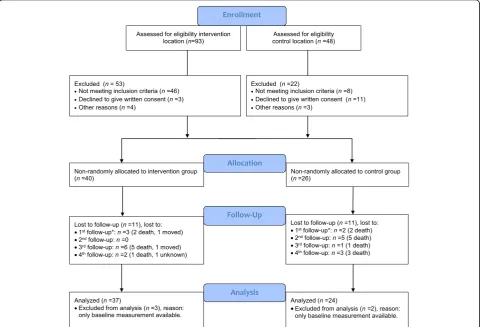
study, of which 5 participants were excluded from analysis due to drop-out before the first follow-up. Of the 61 participants analyzed, 37 participants were allocated to the intervention condition and 24 participants to the control condition. Of these participants, 29 and 15 participants completed the study respectively. The drop-out rate did not differ significantly between the intervention group (n = 8, 21.6%) and the control group (n = 9, 37.5%), χ2 = 1.83, p = .244. A flow-diagram of the sampling procedure and the reasons for drop-out are represented in Fig. 1.
Demographics
Factors considered were age, gender, type of demen-tia, and severity of cognitive impairment. Type of de-mentia was derived from the residents’ medical records. The severity of cognitive impairment was de-termined by the scores on the MMSE [23]. The scores ranged from 0 (severe cognitive impairment) to 30 (no cognitive impairment). The recommended cut-off point of 24 was applied, with a score of 23 or lower indicating dementia [23].
Materials and procedure
Materials
Activities of daily living (ADL) The Barthel Index is
designed to measure the level of independence in ADL [24]. The survey consists of 10 performance items (e.g. toilet use, dressing) and each item can be rated on a two, three- or four-point scale indicating the level of help needed. The survey is completed by two profes-sional caregivers; the first responsible caregiver and a qualified nursing staff. Scores range from 0 to 20, with higher scores representing a higher level of functional independence. The Barthel Index is considered a reliable and valid measure of functional disability [25, 26].
Quality of life (QoL)QoL was assessed with the
Quali-dem [27, 28]. The questionnaire includes 37 items for elderly with mild-to-severe dementia [27]. The items measure observable behavior and each question is rated on a four-point scale, ranging from 0 (never) to 3 (often). The questionnaire consists of nine subscales: (1) care relationship (range: 0–21), (2) positive affect (range: 0–18), (3) negative affect (range: 0–9), (4) restless tense
behavior (range: 0–9), (5) positive self-image (range: 0–9), (6) social relations (range: 0–18), (7) social isolation (range: 0–9), (8) feeling at home (range: 0–12), and (9) having something to do (range: 0–6). For each subscale, a higher score represented a better QoL. The mean total Qualidem score was calculated by adding the mean score of each of the 9 subscales (range: 0–27). The questionnaire is completed by the first responsible caregiver together with a qualified nursing staff. The scales are moderately reliable [27, 29] and valid for elderly with dementia in a residential setting [28].
Procedure
Residents were non-randomly allocated to the interven-tion or control condiinterven-tion, based on their living locainterven-tion, due to practical and ethical considerations. Moving resi-dents to another ward was considered too much of a burden for the resident. Additionally, by separating the control and intervention location, staff from the inter-vention location were prevented from sharing their knowledge with staff from the control location. The intervention location consisted of three psychogeriatric wards and the control location of two. The psychogeriat-ric wards were large-scale homes with living rooms with a maximum capacity of 30 residents. Participants living at the intervention location received MRC, while partici-pants living at the control location received care as usual. The outcome variables were measured five times, i.e. at baseline and 3, 6, 9, and 12 months after baseline. Whenever possible, the participants were rated by the same caregiver throughout the study.
Movement-oriented Restorative Care (MRC) MRC is
derived from the concept of FCC and restorative care [12], which is a multidisciplinary approach towards nurs-ing home dementia care that focuses on stimulatnurs-ing physical activity and independent functioning in daily care and activities throughout the day. MRC incorpo-rates important aspects of FFC and restorative care, such as establishing goals with each resident, educating nurs-ing staff and families, and administernurs-ing process evalua-tions to determine the extent to which MRC was implemented as intended [20]. In addition to these ele-ments, MRC incorporates a broad range of disciplines, such as nursing staff, department heads, physiothera-pists, occupational theraphysiothera-pists, psychologists, geriatricians and activity supervisors. Additionally, volunteers and family caregivers are involved in MRC. Each discipline had a different role in MRC. First, the primary respon-sible caregiver played an important role in the initial se-lection and evaluation of the functional capabilities of each resident, as they are most involved in the residents’ life, and therefore familiar with their capabilities, history, and preferences. Consequently, the geriatricians advised
the nursing staff about the specific medical and physical capabilities and limitations of each participant, ensuring safe physical stimulation. Based on the final advice of the geriatrician, the nursing staff created a plan for each participant to determine which daily routines and activ-ities could be performed independently, and in what manner they could be stimulated to engage in physical activities. Individually based instructions were reported in the following four domains of the health care plan: (1) living conditions, (2) participation, (3) mental well-being and autonomy, and (4) physical well-being and health. In addition, activity supervisors constructed a leisure-care calendar that focused on general activities based on physical capabilities and personal preferences. The nurs-ing staff played a central role in MRC by continuously stimulating participants to function as independently as possible. Family caregivers and volunteers were encour-aged to stimulate the participants in being physically ac-tive in general. Finally, the heads of departments ensured MRC was discussed during staff meetings.
Training and information Nursing staff were
inten-sively trained by an expert in MRC (three sessions of 3 h). The MRC expert is a professional and qualified trainer in the area of increased self-control and func-tional independence amongst elderly, directed at stimu-lating change in the geriatric sector. The trainer aimed to increase awareness of the benefits of physical activity throughout the day, the role of physical activity in ADL, the stimulating and motivational role of the nursing staff, how physical activity can be integrated into their daily work routine, and how to document physical activ-ity in the life care plan. To translate this knowledge into practice, the trainer focused on practical techniques to provoke independence in ADL, and to stimulate physical activity throughout the day. Additionally, physiothera-pists and occupational theraphysiothera-pists were informed in a two-hour meeting about the benefits of physical activity and their role in advising the nursing staff about stimu-lation of physical activities in ADL. Furthermore, the volunteers and family caregivers were informed about the benefits of an active lifestyle and the role of physical activity in ADL during two open meetings, where they also had the opportunity to ask questions. The open meetings were given by a qualified staff member who was previously trained by the MRC expert. Additional workshops were given in which family caregivers and volunteers could experience the benefit of movement, as well as receive practical tips on how to stimulate resident activity. Lastly, they received written informa-tion at home.
Compliance to the intervention To ensure compliance
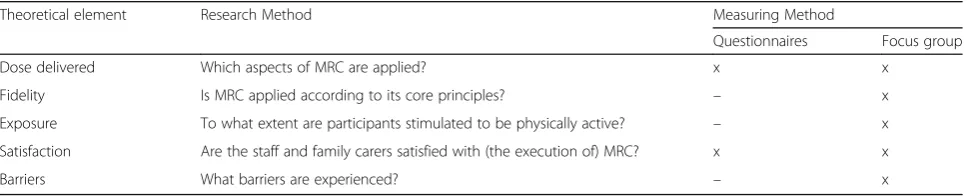
psychogeriatric ward became an ‘ambassador’ of MRC. Ambassadors were responsible for warranting the con-tinuation of MRC at their ward. Compliance to the intervention was determined by administering process evaluations, which included both questionnaires and structured interviews. The structured interviews inte-grated five theoretical elements from previous studies [30–32] (see Table 1). Each element consisted of several corresponding questions which could be answered on a 5- or 10-point Likert scale. The average of these scores were reported. Structured interviews were conducted with members of a multidisciplinary focus group after three and 9 months, and evaluated the intervention on a group level per psychogeriatric ward. The focus group consisted of the following 12 professionals: three nurses, three activity supervisors, two heads of the departments, one physiotherapist, one occupational therapist, and two
‘ambassadors’. Questionnaires were completed by the nursing staff and family caregivers every 3 months, and reflected individual patient based evaluations of the intervention.
Statistical analysis
Statistical analyses were performed using IBM Statistical Package for the Social Sciences (SPSS) 23.0. Differences between groups in demographic characteristics and out-come measurements at baseline were analyzed using in-dependent samples t-tests, Mann-Whitney U tests, and Pearson’s chi-square tests.
The effect of the intervention was analyzed according to a modified intention-to-treat analysis, including par-ticipants with at least one follow-up measurement, using linear mixed model (LMM) analyses. Two hierarchal levels were distinguished. Data was analyzed using two models. The first model examined the overall effect of the intervention, independent of time. The second model examined the effect of the intervention at each time point. Group, time and the group-by-time inter-action were inserted as predictors to the model. Random intercepts and slopes at participant-level were included if significantly improving model fit using the Likelihood Ratio Test. Data were analyzed using a crude and an
adjusted model. In the crude model, baseline perform-ance was added as a covariate. In the adjusted model, baseline performance, gender, age, and MMSE were added as covariates to the model. For the final models, a dichotomous ‘completed’group variable was added as a covariate, representing completion of the study or lost between the first and last measurement, to examine whether drop-outs influenced the intervention effect. Last, it was examined whether the residuals were nor-mally distributed in the final models.
Alpha level was set at .05 for baseline characteristics and the outcome variable ADL. For the nine quality of life subscales and its total score, a Bonferroni correction was used to correct for alpha inflation (p < .005 (.05/ 10)). Regression coefficients and 95% confidence inter-vals for both models were reported, with the regression coefficients representing the overall intervention effect for model 1 (group estimate) and the difference of the intervention effect at different time points for model 2 (group by time estimate).
Results
Comparisons at baseline
The demographics of the group of participants included in the analyses are listed in Table 2. The average MMSE scores indicate a severe stage of dementia in both the intervention and control group. However, on average, the intervention group scored significantly higher than the control group on MMSE at baseline (score 9.75 v 6.52;p< .05). The participants in the intervention group did not differ significantly from the participants in the control group on baseline ADL and QoL (all p’s > .05, see Table 3). The 17 participants who dropped out be-tween the first and last follow-up measurement did not differ significantly from the 44 participants who com-pleted the study on demographic characteristics (all
p’s > .05). The participants who dropped out did have significantly lower scores at baseline on the Barthel Index (p < .005), and the subscales ‘social relations’ (p < .005) and ‘having something to do’ of the Quali-dem (p < .05).
Table 1Theoretical elements and measuring method of process evaluations
Theoretical element Research Method Measuring Method
Questionnaires Focus group
Dose delivered Which aspects of MRC are applied? x x
Fidelity Is MRC applied according to its core principles? – x
Exposure To what extent are participants stimulated to be physically active? – x
Satisfaction Are the staff and family carers satisfied with (the execution of) MRC? x x
Barriers What barriers are experienced? – x
Intervention effect
The parameter estimates of the final crude and adjusted multilevel models are presented in Table 4. There was no significant main intervention effect on the Barthel Index (p= .622) and the subscales and total score of the Qualidem (all p’s> .005). This holds for both the crude and adjusted analyses.
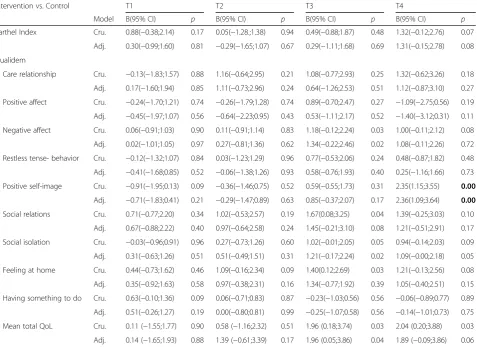
Table 5 shows the intervention effect at different time points. There was no significant group-by-time interaction effect for the Barthel Index, indicating that intervention effects did not differ over time between the MRC and control group. With respect to the Qualidem, a significant group-by-time interaction was found for the subscale positive self-image. Specifically, the MRC group scored significantly better than the control group on the subscale positive self-image after 12 months (b = 2.36, p < .001 in the adjusted analysis). Regarding the other subscales and the total score of the Qualidem, no significant group-by-time
Table 2Demographic characteristics of the participants at baseline
Intervention group (n= 37)
Control group (n= 24)
Age, mean(SD) 86.51 (7.1) 84.21 (4.7)
Age, range 69–100 70–92
Gender (female),n(%) 30 (81.1) 17 (70.8)
MMSE, mean(SD)* 9.75 (5.1) 6.52 (5.2)
Diagnosis,n(%)*
Alzheimer’s disease 21 (56.8) 13 (54.2)
Vascular dementia 2 (5.4) 5 (20.8)
Mixed vascular and Alzheimer 1 (2.7) 5 (20.8)
Other/unknown 13 (35.1) 1 (4.2)
MMSEMini-Mental State Examination,rfrisk factor *p< .05
Table 3Means of ADL and QoL ratings at each measurement of participantsa
Group T0
N= 61 nint= 37
ncon= 24
M(SD)
T1 N = 61 nint= 37
ncon= 24
M(SD)
T2 N= 55 nint= 36
ncon= 19
M(SD)
T3 N= 49 nint= 31
ncon= 18
M(SD)
T4 N= 44 nint= 29
ncon= 15
M(SD)
Barthel index Int. 9.38(5.37) 9.16(4.76) 8.72(4.96) 8.55(5.57) 8.86(5.28)
Con. 8.50(5.79) 7.54(5.28) 8.89(5.43) 8.17(5.84) 8.27(5.65)
Qualidem
care relationship Int. 14.46(3.98) 14.27(4.33) 14.58(4.00) 14.61(3.84) 14.86(4.21)
Con. 12.58(4.01) 13.25(3.85) 12.32(3.48) 12.50(4.38) 11.67(3.66)
positive affect Int. 14.51(3.66) 14.16(3.89) 14.17(3.08) 14.61(3.78) 14.21(3.42)
Con. 13.63(3.19) 13.96(2.71) 14.32(2.96) 13.39(3.18) 14.93(2.25)
negative affect Int. 5.43(2.49) 5.38(2.70) 5.25(2.53) 5.90(2.45) 5.55(2.38)
Con. 5.79(2.62) 5.54(2.15) 5.32(2.31) 5.06(2.90) 4.47(2.33)
restless tense behavior Int. 4.27(2.81) 4.08(2.87) 4.19(2.84) 4.42(3.05) 4.52(2.95)
Con. 4.21(2.28) 4.17(2.35) 4.47(2.78) 4.00(2.68) 4.07(2.66)
positive self-image Int. 5.89(2.48) 5.59(2.82) 5.72(2.72) 6.71(2.37) 6.07(2.74)
Con. 6.88(2.07) 7.08(1.53) 6.68(1.42) 6.78(2.16) 4.33(2.38)
social relations Int. 11.73(4.05) 11.62(3.78) 11.92(3.89) 12.06(4.29) 11.97(3.91)
Con. 10.46(4.30) 10.00(4.56) 10.95(3.94) 10.28(4.24) 10.87(3.89)
social isolation Int. 5.62(2.37) 5.32(2.47) 5.53(2.22) 5.94(2.35) 6.00(2.49)
Con. 5.38(2.14) 5.21(1.87) 5.21(1.87) 4.83(2.20) 4.60(1.92)
feeling at home Int. 9.24(2.64) 9.68(2.52) 9.50(2.31) 10.06(1.91) 10.10(2.68)
Con. 8.54(2.67) 8.88(2.77) 7.84(2.85) 8.17(3.42) 7.93(3.47)
having something to do Int. 2.24 (1.91) 2.62(1.93) 2.25(1.92) 2.29(1.85) 2.66(1.97)
Con. 1.92(1.56) 1.79(1.25) 2.11(1.79) 2.22(1.56) 2.53(1.46)
mean total QoL Int. 16.94(4.09) 16.86(5.08) 16.83 (4.71) 17.85 (4.81) 17.72 (4.95)
Con. 16.32(3.47) 16.33(2.32) 16.21 (1.93) 15.77 (2.75) 15.03 (3.08)
IntIntervention group,ConControl group, T0 = baseline; T1 = 3 months; T2 = 6 months; T3 = 9 months; T4 = 12 months a
Table 4Overall intervention effect on ADL and QoL unadjusted and adjusted for confounders
Intervention vs. control Crude Model Adjusted Model
Beta(95% CI) p-value Beta(95% CI) p-value
Barthel index 0.62(−0.42;1.67) 0.24 0.27(−0.83;1.37) 0.62
Qualidem
care relationship 0.71(−0.72;2.15) 0.32 0.69(−0.85;2.23) 0.37
positive affect −0.15(−1.38;1.08) 0.81 −0.44(1.74;0.85) 0.50
negative affect 0.48(−0.28;1.24) 0.21 0.56(−0.28;1.39) 0.19
restless tense behaviour 0.23(−0.80;1.26) 0.66 0.02(−1.07;1.11) 0.97
positive self-image 0.15(−0.72;1.01) 0.74 0.28(−0.67;1.24) 0.55
social relations 1.12(−0.19;2.43) 0.09 1.01(−0.37;2.38) 0.15
social isolation 0.47(−0.29;1.23) 0.22 0.72(−0.04;1.47) 0.06
feeling at home 0.94(−0.04;1.93) 0.06 0.84(−0.25;1.94) 0.13
having something to do 0.17(−0.44;0.77) 0.58 0.09(−0.55;0.74) 0.78
mean total QoL 0.96(−0.52;2.43) 0.20 0.95(−0.65;2.56) 0.24
Crude model: adjusted for baseline scores; Adjusted model: adjusted for baseline scores, age, gender and MMSE
Table 5Intervention effect at different time-points on ADL and QoL unadjusted and adjusted for confounders
Intervention vs. Control T1 T2 T3 T4
Model B(95% CI) p B(95% CI) p B(95% CI) p B(95% CI) p
Barthel Index Cru. 0.88(−0.38;2.14) 0.17 0.05(−1.28.;1.38) 0.94 0.49(−0.88;1.87) 0.48 1.32(−0.12;2.76) 0.07
Adj. 0.30(−0.99;1.60) 0.81 −0.29(−1.65;1.07) 0.67 0.29(−1.11;1.68) 0.69 1.31(−0.15;2.78) 0.08
Qualidem
Care relationship Cru. −0.13(−1.83;1.57) 0.88 1.16(−0.64;2.95) 0.21 1.08(−0.77;2.93) 0.25 1.32(−0.62;3.26) 0.18
Adj. 0.17(−1.60;1.94) 0.85 1.11(−0.73;2.96) 0.24 0.64(−1.26;2.53) 0.51 1.12(−0.87;3.10) 0.27
Positive affect Cru. −0.24(−1.70;1.21) 0.74 −0.26(−1.79;1.28) 0.74 0.89(−0.70;2.47) 0.27 −1.09(−2.75;0.56) 0.19
Adj. −0.45(−1.97;1.07) 0.56 −0.64(−2.23;0.95) 0.43 0.53(−1.11;2.17) 0.52 −1.40(−3.12;0.31) 0.11
Negative affect Cru. 0.06(−0.91;1.03) 0.90 0.11(−0.91;1.14) 0.83 1.18(−0.12;2.24) 0.03 1.00(−0.11;2.12) 0.08
Adj. 0.02(−1.01;1.05) 0.97 0.27(−0.81;1.36) 0.62 1.34(−0.22;2.46) 0.02 1.08(−0.11;2.26) 0.72
Restless tense- behavior Cru. −0.12(−1.32;1.07) 0.84 0.03(−1.23;1.29) 0.96 0.77(−0.53;2.06) 0.24 0.48(−0.87;1.82) 0.48
Adj. −0.41(−1.68;0.85) 0.52 −0.06(−1.38;1.26) 0.93 0.58(−0.76;1.93) 0.40 0.25(−1.16;1.66) 0.73
Positive self-image Cru. −0.91(−1.95;0.13) 0.09 −0.36(−1.46;0.75) 0.52 0.59(−0.55;1.73) 0.31 2.35(1.15;3.55) 0.00
Adj. −0.71(−1.83;0.41) 0.21 −0.29(−1.47;0.89) 0.63 0.85(−0.37;2.07) 0.17 2.36(1.09;3.64) 0.00
Social relations Cru. 0.71(−0.77;2.20) 0.34 1.02(−0.53;2.57) 0.19 1.67(0.08;3.25) 0.04 1.39(−0.25;3.03) 0.10
Adj. 0.67(−0.88;2.22) 0.40 0.97(−0.64;2.58) 0.24 1.45(−0.21;3.10) 0.08 1.21(−0.51;2.91) 0.17
Social isolation Cru. −0.03(−0.96;0.91) 0.96 0.27(−0.73;1.26) 0.60 1.02(−0.01;2.05) 0.05 0.94(−0.14;2.03) 0.09
Adj. 0.31(−0.63;1.26) 0.51 0.51(−0.49;1.51) 0.31 1.21(−0.17;2.24) 0.02 1.09(−0.00;2.18) 0.05
Feeling at home Cru. 0.44(−0.73;1.62) 0.46 1.09(−0.16;2.34) 0.09 1.40(0.12;2.69) 0.03 1.21(−0.13;2.56) 0.08
Adj. 0.35(−0.92;1.63) 0.58 0.97(−0.38;2.31) 0.16 1.34(−0.77;1.92) 0.39 1.05(−0.40;2.51) 0.15
Having something to do Cru. 0.63(−0.10;1.36) 0.09 0.06(−0.71;0.83) 0.87 −0.23(−1.03;0.56) 0.56 −0.06(−0.89;0.77) 0.89
Adj. 0.51(−0.26;1.27) 0.19 0.00(−0.80;0.81) 0.99 −0.25(−1.07;0.58) 0.56 −0.14(−1.01;0.73) 0.75
Mean total QoL Cru. 0.11 (−1.55;1.77) 0.90 0.58 (−1.16;2.32) 0.51 1.96 (0.18;3.74) 0.03 2.04 (0.20;3.88) 0.03
Adj. 0.14 (−1.65;1.93) 0.88 1.39 (−0.61;3.39) 0.17 1.96 (0.05;3.86) 0.04 1.89 (−0.09;3.86) 0.06
Bold values indicate significantp-values after Bonferroni correction
interactions were found after correcting for alpha inflation (p> .005, see Table 5). The dummy variable‘completion’ (study completed versus lost to follow-up) was a signifi-cant predictor of the Qualidem subscale‘feeling at home’ for males, yet, it did not influence the group-by-time esti-mate. Due to the adjustment for baseline values, all models had normally distributed residuals.
Compliance to the intervention
Process evaluations
A summary of the process evaluations is presented in Table 6.
Reach All 37 participants of the intervention group
were reached. In addition, all permanent staff members of the psychogeriatric ward were trained in MRC. The nursing staff analyzed each individuals’physical potential and reported individually based instructions for each do-main in the health care plan.
Dose delivered The program was individually based,
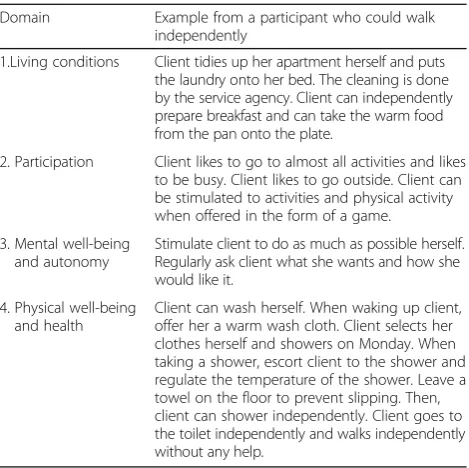
and therefore, there was no standard protocol. In Table 7, an example of an individually based health care plan is presented.
The amount of stimulation varied from three times per week to several times per day. The nursing staff rated their preparedness to deliver MRC a 4.06 on a scale from 1 (very bad) to 5 (very good).
Fidelity The way in which MRC was applied differed
from its core principles, as staff reported difficulties remembering all the information gathered from the training sessions. Improved cooperation with other disciplines is observed, and MRC is regularly dis-cussed during staff meetings, yet it was not recorded how often. The staff did not consistently report their actions with the participants in the daily care reports of the patients.
Exposure Movement has become a part of the daily
care, however understaffing makes optimal implementa-tion of MRC challenging. Members of the focus group were able to stimulate independence during meals, bed-time, and in ADL, but reported more difficulties in stimulating activities such as walking.
Satisfaction In general, the staff were enthusiastic about
MRC. The questionnaires indicate that 78.6% of the nursing staff experience benefits from MRC, compared to 22% of family caregivers. Although only a small group of family caregivers experience benefits from MRC, 89.5% were willing to continue with MRC.
Barriers Understaffing and limited time available for
personalized care and stimulation were the most prom-inent barriers to implementation. Additionally, doubts were expressed about the point at which stimulation becomes a burden for the participants, as some partici-pants decline quickly. The focus group recommended additional training sessions, more consultations with other disciplines, and more time for implementation. The staff did not consistently report their actions with the participants in their daily care reports. Overall, fam-ily caregivers and volunteers spent less time stimulating a physically active lifestyle compared to nursing staff.
Discussion
In the present study, MRC was hypothesized to result in a maintenance, or a slower decline of ADL independence and QoL in NH residents with moderate to severe demen-tia. Although our study provided no clear evidence for the
Table 6Summary of process evaluations regarding compliance to the intervention
Theoretical element Nursing Staffa Family Caregiversa Focus groupb
Dose delivered (scale 1 to 5)ª
3.54 – 3.21
Fidelity (scale 1 to 5)ª – – 3.24
Exposure (scale 1 to 5)ª – – 3.27
Satisfaction (scale 1 to
10)b 6.86 6.45 6.88
Experienced benefits of MRC (%)
78.6 22.2 –
Willing to continue with MRC (%)
92.90 89.50 –
ª1 = very bad, 5 = very good,b
1 = very bad, 10 = very good, c
questionnaires,dinterviews
Table 7Example of an individually based health care plan
Domain Example from a participant who could walk independently
1.Living conditions Client tidies up her apartment herself and puts the laundry onto her bed. The cleaning is done by the service agency. Client can independently prepare breakfast and can take the warm food from the pan onto the plate.
2. Participation Client likes to go to almost all activities and likes to be busy. Client likes to go outside. Client can be stimulated to activities and physical activity when offered in the form of a game.
3. Mental well-being and autonomy
Stimulate client to do as much as possible herself. Regularly ask client what she wants and how she would like it.
4. Physical well-being and health
effectiveness of MRC in improving independence in ADL or QoL, we did find a significant group-by-time inter-action for a subscale of the Qualidem. Specifically, after 12 months, residents who received MRC showed a higher positive self-image compared to the control group. A higher positive self-image could indicate that the MRC group verbally expressed less feelings of incapability, less desire for help, and less indications of worthlessness and being a burden to others. No additional benefits of MRC were demonstrated regarding other QoL aspects, which is in accordance with previous studies [12]. Differences in positive self-image between the groups only became ap-parent after 12 months, which may be explained by the time needed to effectuate environmental changes in the nursing home [5]. It could also indicate the time needed for MRC to have an effect on the patients. However, there were no overall trends of improvements after 12 months.
There are several explanations for the lack of benefits of MRC on QoL. First, it may be justified by the lack of improvements in independent functioning in ADL, as functional independence is an important predictor for QoL [4]. Second, it is possible that QoL is affected by other factors not accounted for in the present study, such as social functioning, social support, and educa-tional level [33]. Nonetheless, the results are indicative of a continued trend in maintenance in positive self-image after a longer intervention period. This finding is relevant as elderly with dementia often struggle with feelings of worthlessness [34]. The role of the environ-ment in encouraging the residents’ self-value has previously been emphasized, as a decreased positive self-image is found to be associated with increased feelings of social rejections [34].
The lack of improvements in ADL are inconsistent with a recent review comparing 15 interventions of which 60% found improvements in ADL [12]. Other similar studies did not show improvements in ADL [18, 19]. The lack of benefits of the intervention may be re-lated to the treatment fidelity. The process evaluations show that even though all 37 participants of the inter-vention group were reached, some parts of the protocol were not implemented as intended. For example, the nursing staff tended to implement MRC in their own way, as the information gathered from the training ses-sion is forgotten with time. Additionally, the family care-givers, activity leaders, and volunteers were not actively stimulating independence and physical activity. The process evaluations also show that nursing staff reported successful implementation of MRC during ADLs such as morning care, meals, and self-care, but delivered less MRC throughout the day with, for example, walking, due to understaffing. Nursing staff were also hesitant about residents’remaining capabilities, and we anticipate that their fear for resident falls or injury may have
prevented them from implementing MRC in all aspects of care, even though medical staff tried assisting them in this aspect. Fear of falling and injury is a common barrier to implementation [35], even though the imple-mentation of function focused care does not increase fall risk [12]. Therefore, the amount of MRC delivered was less than intended, and intensity of the intervention is strongly related to beneficial outcomes [15, 30]. Perhaps incorporating motivational techniques and more staff guidance and information during the implementation would increase treatment fidelity [20].
The process evaluations indicate that the nursing staff were prepared to deliver MRC, and the majority experi-enced benefits of MRC. The fact that the nursing staff experienced considerably more benefits of MRC com-pared to family caregivers may be explained by the fact that the nursing staff were involved daily with the care of the participants, enabling them to observe the partici-pant in all routines and activities.
Strengths and limitations
The strengths of this study include a long intervention period, and outcome measures specifically designed for elderly with dementia. In contrast to previous studies, using the Qualidem enabled us to focus not only on social and emotional domains, but also on care relation-ship and coping with the NH environment [27]. The strength of MRC is the multidisciplinary and person-centered approach to NH dementia care.
The current study has some limitations. First, the quasi-experimental design is more susceptible to bias than a randomized controlled trial [36]. However, by adjusting for confounders, we partly controlled for po-tential baseline differences that existed between groups. In addition, there was a limited power as a result of the relatively small sample size. Even though we managed to include only a small sample, these findings are still of value to the limited number of studies that investigate the effect of ADL interventions in elderly with moderate to severe dementia. Still, results should be interpreted with caution. Third, it was difficult to monitor the inten-sity of the intervention, as the intervention was individually-based and appealed to general health care facets and activities. However, using elaborate process evaluations was highly valuable as it provided insight into the fidelity of the treatment. Last, it was not possible to blind the nursing staff who filled in the ques-tionnaires. This may have caused some bias in resident outcomes due to the subjective nature [37].
Conclusion
period. No improvements in total QoL or ADL were found. Nevertheless, it is important to continue research in this area, as it has the potential to enhance NH mentia care. Studying interventions that reduce ADL de-pendency will benefit the nursing staff and possibly increase QoL of residents. Understaffing and limited time are important barriers that should be taken into consideration when implementing MRC interventions. Publishing non-significant results is essential in order to avoid exaggeration of benefits of interventions, and contributes to our knowledge on dementia health care. Further large scale studies are required to draw more profound conclusions regarding the impact of MRC on independence in ADL and QoL.
Abbreviations
ADL:Activity of Daily Living; MMSE: Mini-Mental State Examination;
MRC: Movement-oriented Restorative Care; NH: Nursing home; QoL: Quality of Life
Acknowledgements
Not applicable
Ethics approval and consent to participate
The study was approved by the medical ethics review committee of VU Medical Center Amsterdam, the Netherlands (METc Vumc: 2013.311/A2015.245), who concluded that this study was not subject to the Medical Research (Human Subjects) Act. Written consent was obtained from the legal representatives of the participants.
Funding
This study is funded by Zorggroep Solis, the Netherlands, who contributed to the conception and design of the study, helped with data acquisition, and critically revised the manuscript. The study funders had no role in the analysis and interpretation of the data.
Availability of data and materials
The data that support the findings of this study are available from Zorggroep Solis but restrictions apply to the availability of these data, which were used under license for the current study, and so are not publicly available. Data are however available from the authors upon reasonable request and with permission of Zorggroep Solis.
Authors’contributions
MH contributed to the data analysis and interpretation and writing of the manuscript. IN contributed to the data analysis and writing of the manuscript. SV designed and conducted the study, supervised data collection, and critically revised the manuscript. FO advised in designing and conducting the study, contributed to data collection and analysis, and critically revised the manuscript. ES advised in designing the study, contributed to interpretation of data, and critically revised the manuscript. All authors read and approved the final manuscript.
Consent for publication
Not applicable
Competing interests
The authors declare that they have no competing interests.
Publisher’s Note
Springer Nature remains neutral with regard to jurisdictional claims in published maps and institutional affiliations.
Author details
1Department of Clinical Neuropsychology, VU University Amsterdam, van der
Boechorststraat 1, 1081 BT Amsterdam, Netherlands.2Department of
Neurology, VU University Medical Center, de Boelelaan 1117, 1081 HV
Amsterdam, Netherlands.3Saxion University of Applied Science, P.O. Box
75.000, 7500 KB Enschede, Netherlands.4Zorggroep Solis, Postbus 5014, 7400
GC Deventer, Netherlands.5Human Physiology Research Group, VU
University Brussel, Pleinlaan 2, B-1050 Brussels, Belgium.
Received: 6 June 2017 Accepted: 11 October 2017
References
1. World Health Organization, facts on dementia. http://www.who.int/ mediacentre/factsheets/fs362/en/ (2016). Accessed 7 Mar 2017. 2. Alzheimer Nederland, Cijfers en feiten over dementie. (2016) https://www.
alzheimer-nederland.nl/sites/default/files/directupload/factsheet-dementie-algemeen.pdf. Accessed 7 Mar 2017.
3. Gaugler JE, Yu F, Krichbaum K, Wyman JF. Predictors of nursing home admission for persons with dementia. Med Care. 2009;47(2):191–8. 4. Ballard C, O'Brien J, James I, Mynt P, Lana M, Potkins D, Reichelt K, Lee L,
Swann A, Fossey J. Quality of life for people with dementia living in residential and nursing home care: the impact of performance on activities of daily living, behavioral and psychological symptoms, language skills, and psychotropic drugs. Int Psychogeriatr. 2001;13(01):93–106.
5. Galik E, Resnick B, Hammersla M, Brightwater J. Optimizing function and physical activity among nursing home residents with dementia: testing the impact of function-focused care. Gerontologist. 2013;54(6):930–43. 6. Carpenter GI, Hastie CL, Morris JN, Fries BE, Ankri J. Measuring change in
activities of daily living in nursing home residents with moderate to severe cognitive impairment. BMC Geriatr. 2006;6(1):7.
7. Malone ML, Camp CJ. Montessori-based dementia programming: providing tools for engagement. Dementia. 2007;6(1):150–7.
8. Volkers KM, Scherder EJ. Impoverished environment, cognition, aging and dementia. Rev Neurosci. 2011;22(3):259–66.
9. Mezey M, Fulmer T, Wells DL, Dawson P, Sidani S, Craig D, Pringle D. Effects of an abilities-focused program of morning care on residents who have dementia and on caregivers. J Am Geriatr Soc. 2000;48(4):442–9. 10. Van Alphen HJ, Volkers KM, Blankevoort CG, Scherder EJ, Hortobágyi T, van
Heuvelen MJ. Older adults with dementia are sedentary for most of the day. PLoS One. 2016;11(3):e0152457.
11. Blankevoort CG, van Heuvelen MJ, Boersma F, Luning H, De Jong J, Scherder EJ. Review of effects of physical activity on strength, balance, mobility and ADL performance in elderly subjects with dementia. Dement Geriatr Cogn Disord. 2010;30(5):392–402.
12. Resnick B, Galik E, Boltz M. Function focused care approaches: literature review of progress and future possibilities. J Am Med Dir Assoc. 2013;14(5):313–8. 13. Zanetti O, Zanieri G, Giovanni GD, de Vreese LP, Pezzini A, Metitieri T,
Trabucchi M. Effectiveness of procedural memory stimulation in mild Alzheimer's disease patients: a controlled study. Neuropsychol Rehabil. 2001;11(3–4):263–72.
14. Sitzer D, Twamley E, Jeste D. Cognitive training in Alzheimer's disease: a meta-analysis of the literature. Acta Psychiatr Scand. 2006;114(2):75–90. 15. Resnick B, Gruber-Baldini AL, Zimmerman S, Galik E, Pretzer-Aboff I, Russ K,
Hebel JR. Nursing home resident outcomes from the res-care intervention. J Am Geriatr Soc. 2009;57(7):1156–65.
16. Chang SH, Wung SF, Crogan NL. Improving activities of daily living for nursing home elder persons in Taiwan. Nurs Res. 2008;57(3):191–8. 17. Morris JN, Fiatarone M, Kiely DK, Belleville-Taylor P, Murphy K, Littlehale S,
Ooi WL, O’Neill E, Doyle N. Nursing rehabilitation and exercise strategies in the nursing home. J Gerontol. 1999;54(10):494–500.
18. Talley KM, Wyman JF, Savik K, Kane RL, Mueller C, Zhao H. Restorative Care’s effect on activities of daily living dependency in long-stay nursing home residents. Gerontologist. 2015;55(Suppl 1):S88–98.
19. Galik E, Resnick B, Lerner N, Hammersla M, Gruber-Baldini AL. Function focused care for assisted living residents with dementia. Gerontologist. 2015;55(Suppl 1):S13–26.
20. Resnick B, Galik E, Gruber-Baldini A, Zimmerman S. Understanding dissemination and implementation of a new intervention in assisted living settings: the case of function-focused care. J Appl Gerontol. 2013;32(3):280–301.
21. Galik EM, Resnick B, Gruber-Baldini A, Nahm E, Pearson K, Pretzer-Aboff I. Pilot testing of the restorative care intervention for the cognitively impaired. JAMDA. 2008;9(7):516–22.
23. Folstein MF, Folstein SE, McHugh PR.“Mini-mental state”: a practical method for grading the cognitive state of patients for the clinician. J Psychiatr Res. 1975;12(3):189–98.
24. Mahoney F. Functional assessment: the Barthel index. Md Med J. 1965;14:61–5.
25. Collin C, Wade D, Davies S, Horne V. The Barthel ADL index: a reliability study. Int Disabil Stud. 1988;10(2):61–3.
26. Law M, Letts L. A critical review of scales of activities of daily living. Am J Occup Ther. 1989;43(8):522–8.
27. Ettema TP, Dröes RM, de Lange J, Mellenbergh GJ, Ribbe MW. QUALIDEM: development and evaluation of a dementia specific quality of life instrument. Scalability, reliability and internal structure. Int J Geriatr Psychiatry. 2007;22(6):549–56.
28. Ettema TP, Dröes RM, de Lange J, Mellenbergh GJ, Ribbe MW. QUALIDEM: development and evaluation of a dementia specific quality of life instrument––validation. Int J Geriatr Psychiatry. 2007;22(5):424–30. 29. Bouman A, Ettema T, Wetzels R, van Beek A, de Lange J, Dröes R. Evaluation
of Qualidem: a dementia-specific quality of life instrument for persons with dementia in residential settings; scalability and reliability of subscales in four Dutch field surveys. Int J Geriatr Psychiatry. 2011;26(7):711–22.
30. Metzelthin SF, Daniëls R, van Rossum E, Cox K, Habets H, de Witte LP, Kempen GI. A nurse-led interdisciplinary primary care approach to prevent disability among community-dwelling frail older people: a large-scale process evaluation. Int J Nurs Stud. 2013;50(9):1184–96.
31. Saunders RP, Evans MH, Joshi P. Developing a process-evaluation plan for assessing health promotion program implementation: a how-to guide. Health Promot Pract. 2005;6(2):134–47.
32. Baranowski T, Stables G. Process evaluations of the 5-a-day projects. Health Educ Behav. 2000;27(2):157–66.
33. Hjaltadóttir I, Gustafsdottir M. Quality of life in nursing homes: perception of physically frail elderly residents. Scand J Caring Sci. 2007;21(1):48–55. 34. Steeman E, Godderis J, Grypdonck M, de Bal N, de Casterlé BD. Living with
dementia from the perspective of older people: is it a positive story? Aging Ment Health. 2007;11(2):119–30.
35. Benjamin K, Edwards N, Ploeg J, Legault F. Barriers to physical activity and restorative care for residents in long-term care: a review of the literature. JAPA. 2014;22:154–65.
36. Eccles M, Grimshaw J, Campbell M, Ramsay C. Research designs for studies evaluating the effectiveness of change and improvement strategies. Qual Saf Healthc. 2003;12:47–52.
37. Kuske B, Hanns S, Luck T, Angermeyer MC, Behrens J, Riedel-Heller SG. Nursing home staff training in dementia care: a systematic review of evaluated programs. Int Psychogeriatr. 2007;19(05):818–41.
• We accept pre-submission inquiries
• Our selector tool helps you to find the most relevant journal
• We provide round the clock customer support
• Convenient online submission
• Thorough peer review
• Inclusion in PubMed and all major indexing services
• Maximum visibility for your research
Submit your manuscript at www.biomedcentral.com/submit