REVIEW
Cost-effectiveness analysis of malaria
interventions using disability adjusted life years:
a systematic review
Resign Gunda
*and Moses John Chimbari
Abstract
Background: Malaria continues to be a public health problem despite past and on-going control efforts. For suste-nance of control efforts to achieve the malaria elimination goal, it is important that the most cost-effective interven-tions are employed. This paper reviews studies on cost-effectiveness of malaria interveninterven-tions using disability-adjusted life years.
Methods: A review of literature was conducted through a literature search of international peer-reviewed journals as well as grey literature. Searches were conducted through Medline (PubMed), EMBASE and Google Scholar search engines. The searches included articles published in English for the period from 1996 to 2016. The inclusion criteria for the study were type of malaria intervention, year of publication and cost-effectiveness ratio in terms of cost per DALY averted. We included 40 studies which specifically used the DALY metric in cost-effectiveness analysis (CEA) of malaria interventions.
Results: The majority of the reviewed studies (75%) were done using data from African settings with the majority of the interventions (60.0%) targeting all age categories. Interventions included case treatment, prophylaxis, vector con-trol, insecticide treated nets, early detection, environmental management, diagnosis and educational programmes. Sulfadoxine–pyrimethamine was the most common drug of choice in malaria prophylaxis, while artemisinin-based combination therapies were the most common drugs for case treatment. Based on guidelines for CEA, most interven-tions proved cost-effective in terms of cost per DALYs averted for each intervention.
Conclusion: The DALY metric is a useful tool for determining the cost-effectiveness of malaria interventions. This paper demonstrates the importance of CEA in informing decisions made by policy makers.
Keywords: Malaria, Disability-adjusted life years, Cost-effectiveness, Cost, Effectiveness
© The Author(s) 2017. This article is distributed under the terms of the Creative Commons Attribution 4.0 International License
(http://creativecommons.org/licenses/by/4.0/), which permits unrestricted use, distribution, and reproduction in any medium,
provided you give appropriate credit to the original author(s) and the source, provide a link to the Creative Commons license, and indicate if changes were made. The Creative Commons Public Domain Dedication waiver (http://creativecommons.org/
publicdomain/zero/1.0/) applies to the data made available in this article, unless otherwise stated.
Background
Although the number of malaria cases are showing a declining trend, about 3.2 billion people remain at risk of malaria [1]. There were an estimated 214 million new cases of malaria and 438,000 deaths in 2015 alone, with approximately 80% of these deaths concentrated in just 15 countries, mainly in Africa [1]. The main challenges in the fight against malaria include in-effective national malaria control programmes, changes in population
distribution and population growth, changes in land use, resistance to anti-malarial drugs, insecticide resistance, poor health infrastructure as well as climate change and climate variability [1, 2].
Cost-effectiveness analysis (CEA) of malaria inter-ventions can provide essential information for malaria control at various levels and can inform health sector budgets [3]. In this context, intervention is defined as any preventive, promotive, curative, or rehabilitative action that improves health [4]. CEA uses a cost-effectiveness ratio (CER) to compare interventions in terms of costs and effectiveness [5]. CEA can be used to identify pri-ority interventions when resources are limited [6] and
Open Access
*Correspondence: [email protected]
hence should be considered when designing strategies for prevention, treatment and control of disease [7]. CEA takes into account the costs and effects of adding new interventions to current ones or of replacing an existing intervention with another targeting the same condition [4]. The decision to employ a particular malaria interven-tion must therefore be determined, not only by the effec-tiveness of the intervention, but also by the ability of the health system to sustain its use [8].
The disability-adjusted life year (DALY) is a metric measure for burden of disease [9, 10] developed by the World Health Organization (WHO), World Bank and the Harvard School of Public Health researchers [10– 13]. DALYs were first used in the global burden of dis-ease and injury (GBD) study, a joint study done by the World Bank, WHO and Harvard School of Public Health [10, 14]. The DALY can be used as a summary measure to determine the cost-effectiveness of different types of interventions for each specific disease type [15]. It has been recommended that analysts express CER in terms of DALYs, although measures such as the quality-adjusted life years (QALYs) and healthy life years (HYL) can also be used [15]. CERs can be expressed as the cost per DALY averted through each intervention thereby allow-ing for comparisons in costs and effectiveness across dif-ferent settings.
Information on CEA of malaria interventions is essen-tial in informing malaria control programmes to guide the decision-making and planning processes. There is paucity of information on CEA of malaria interventions in most low- and medium-income countries, which are home to the majority of the impoverished communities of the world [15]. This may result in failure to effectively implement intervention programs at sufficient scale [5]. Hence, this review was conducted to assess and examine the utility of the DALY methodology in CEA of malaria interventions.
Methods
In this review, only studies employing the DALY meth-odology in CEA of malaria interventions were included. Selection for eligible studies was conducted through a search of peer-reviewed journals on Medline (Pub-Med) and EMBASE. Grey literature was also searched using the Google Scholar search engine. The searches included international peer-reviewed articles published in the period from 1996 (the year of the first GBD study [10, 14]) to 1 June 2016. The search terms were ‘cost’ OR ‘effectiveness’ OR ‘cost-effectiveness’ AND ‘disability adjusted life years’ AND ‘malaria’. Any literature which did not satisfy these criteria was excluded. The snowball technique was used to identify other articles by search-ing for relevant papers listed in reference lists of the
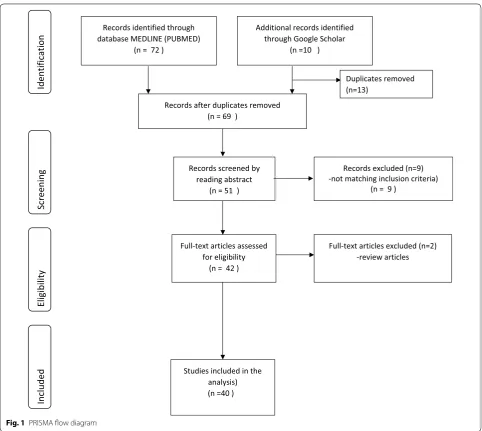
initially selected articles. Although review papers were not included as part of this review, they used to check for other potential references that fulfil the eligibility criteria. A total of 82 studies were initially retrieved and after further screening using the inclusion criteria, a total of 40 studies were finally included for this review. The inclusion criteria are shown by the PRISMA flow dia-gram (Fig. 1) which was adapted from Moher et al. [16] and modified. We limited our search to papers written in English. For each of the selected studies, we noted the year of study, malaria intervention assessed, interven-tion target populainterven-tion, country of study, data sources and CERs in terms of DALYs averted. We checked if the stud-ies followed the GBD study methodology in estimating DALYs. We assessed the use of disability weights, appli-cation of age weighting and discounting as well as use of life expectancy tables.
Cost‑effectiveness analysis
Reviewed studies used two main approaches as thresh-olds to determine whether or not an intervention was cost-effective. The first approach was based on per cap-ita gross domestic product (GDP). Interventions with a CER per DALY averted less than a country’s per capita gross domestic product (GDP) could be regarded as ‘very cost-effective’ and those for which the cost-effectiveness is less than three times the country’s per capita GDP as ‘cost-effective’. This approach was recommended by the World Health Organisation’s choosing interventions that are cost-effective (WHO-CHOICE) project [15, 17]. The second approach used was thresholds of US$ 30 and US$ 150 per DALY averted as a basis for considering an intervention either highly cost-effective or cost-effective respectively [18, 19].
In order to standardise the CERs, each ratio was expressed as number of DALYs averted per US$ 1 million spent on the intervention. For CERs expressed as a range, the midpoint value was calculated and used calculate the number of DALYs averted.
Results
Characteristics of reviewed studies
(n = 21) stated the type of malaria (Plasmodium falcipa-rum or Plasmodium vivax malaria) targeted by the inter-vention. Of the studies that stated the type of malaria, the majority of them were on interventions against P. falciparum. Sixty percent (60.0%) of the malaria interven-tions targeted all age categories, while the others targeted pregnant women (12.5%), children (25.0%) and both women and children (2.5%). Of the studies whose inter-ventions targeted children, 20.0% (n = 8) of them specifi-cally targeted infants.
DALY methodology used
The DALY methodology was generally applied in a stand-ard manner by most of the studies under review. How-ever, some aspects of DALY calculation such disability
weights and life expectancy values were not clearly stated in some instances. It was also not clear which specific assumptions were made when the calculation of DALYs was done. It was found that 19 studies (47.5%) applied the same disability weight for malaria from the global burden of disease (GBD) studies. The first GBD study was pub-lished in 1996 [10] and the latest one in 2015 [20]. Other studies either applied country or region specific disabil-ity weights. However, 15 studies (37.5%) did not clearly specify which disability weights for malaria were used to calculate the DALYs. Four (4) reviewed studies reported that they applied age weighting while six studies did not report on the use of age-weighting. Thirty-two (32) stud-ies (82.5%) reported applying a 3% discounting rate while six studies did not clearly specify whether discounting Records identified through
database MEDLINE (PUBMED) (n = 72 )
Screenin
g
Include
d
Eligibilit
y
Identification
Additional records identified through Google Scholar
(n =10 )
Records after duplicates removed (n = 69 )
Records screened by reading abstract
(n = 51 )
Records excluded (n=9) -not matching inclusion criteria)
(n = 9 )
Full-text articles assessed for eligibility
(n = 42 )
Full-text articles excluded (n=2) -review articles
Studies included in the analysis) (n =40 )
Duplicates removed (n=13)
was applied or not. Twenty-seven studies (67.5%) used country-specific life tables while 6 (15.0%) used life tables obtained from the GBD study or WHO. Some of the studies 6 (15.0%) did not explicitly state the source of the life expectancy used. The major sources of data used for calculating the DALYs included published and unpub-lished studies, malaria control program records, health facility records, clinical trials, programme reports and census data.
Cost‑effectiveness ratios
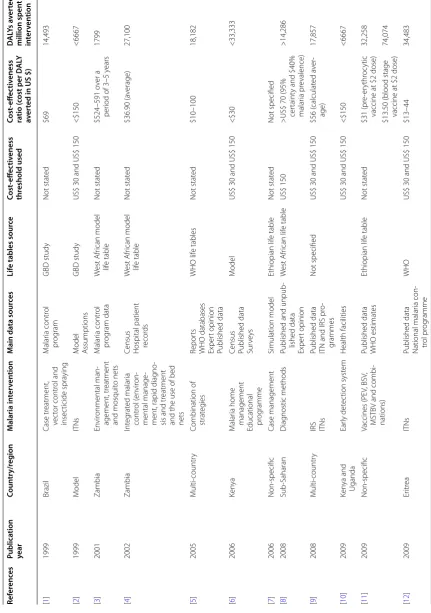
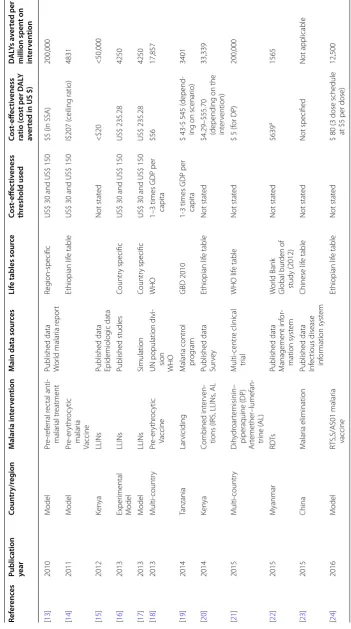
In this review, we identified 40 studies on CEA of malaria interventions, which used DALYs to determine CERs in terms of cost per DALY averted per each intervention. The CERs were expressed in United States Dollars (US$) per DALY averted and ranged from 1 US$ to 639 US$ depending with the specific intervention. Some studies expressed the CERs as cost of DALYs averted per person while in other studies it was expressed as the number of DALYs averted over a certain period of time. Other stud-ies (15.0%) did not specify the exact number of DALYs averted per each intervention. To standardise the CERs, we also expressed cost-effectiveness as DALYs averted per 1 million US$ spent on each intervention. Based on internationally accepted thresholds for CERs [15, 17–19], most of the interventions (85%) were found to be cost-effective. For the malaria interventions that were targeted at all age groups (Table 1), pre-referral rectal antimalarial
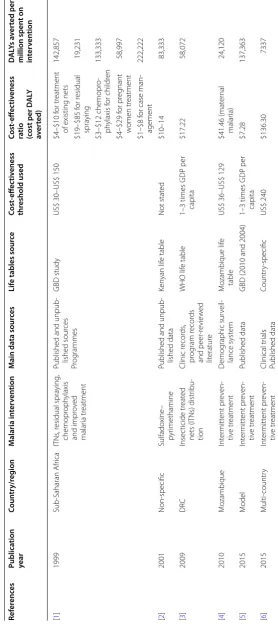
treatment and dihydroartemisinin–piperaquine (DP) combined with artemether–lumefantrine (AL) were the most cost-effective interventions. Each of these interven-tions averted approximately 200,000 DALYs per 1 million US$ spent on the intervention. In some cases, the same intervention was more cost-effective in one setting com-pared to a different setting. For example, intermittent preventive treatment had a CER of US$ 41.46 per DALY averted in Mozambique, while the same intervention had a CER of US$ 136.30 when it was carried out as part of a multi-country study.
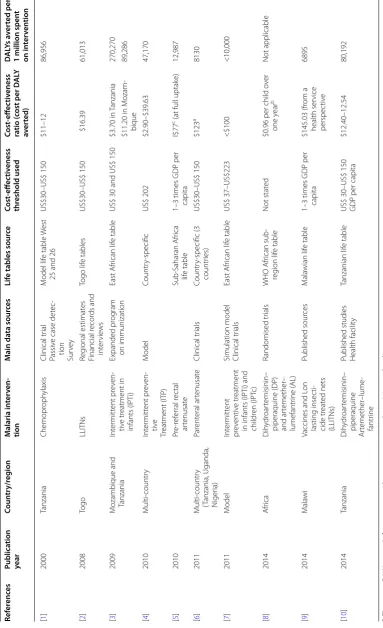
Combined interventions targeting pregnant women were the most cost-effective (Table 2). The combined interventions included provision of insecticide treated nets (ITNs), residual spraying, chemoprophylaxis and improved case management in pregnant women (IPTp) was the least cost-effective. The number of DALYs averted per 1 million US$ spent on each intervention ranged from 19,231 to 222,222 DALYs.
Intermittent preventive treatment (IPT) in children (Table 3) in Mozambique and Tanzania was the most cost-effective intervention, averting 270,270 DALYs per 1 million US$ spent on the intervention. Vaccines and long lasting insecticide-treated nets (LLITNs) were the least cost effective interventions for children and infants.
The least cost-effective intervention was rapid diagnos-tic tests (RDTs) in Myanmar, averting only 1565 DALYs per 1 million US$ spent on the intervention. Although 0
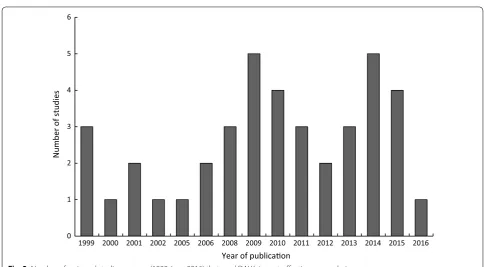
1 2 3 4 5 6
1999 2000 2001 2002 2005 2006 2008 2009 2010 2011 2012 2013 2014 2015 2016
Number
of studies
Year of publicaon
Table
1
Summar
y of study char
ac teristics and c osts p er D AL Y a ver ted f or in ter ven tions tar
geting all ages
Ref er enc es Publica tion year Coun tr y/r eg ion M alaria in ter ven tion M ain da ta sour ces Lif
e tables sour
ce Cost ‑eff ec tiv eness thr eshold used Cost ‑eff ec tiv eness ra tio (c ost per D AL Y av er
ted in US $)
D
AL
Ys a
ver
ted per $ 1
million spen t on in ter ven tion [ 1 ] 1999 Brazil Case tr eatment, vec tor contr ol and insec ticide spra ying M alar ia contr ol pr og ram GBD study Not stat ed $69 14,493 [ 2 ] 1999 M odel ITNs M odel A ssumptions GBD study
US$ 30 and US$ 150
<$150 <6667 [ 3 ] 2001 Zambia En vir onmental man -agement, tr eatment and mosquit o nets M alar ia contr ol pr og ram data W est A frican model lif e table Not stat ed $524–591 o ver a per
iod of 3–5
y ears 1799 [ 4 ] 2002 Zambia Int eg rat ed malar ia contr ol ( en vir on -mental manage
-ment, rapid diag
no
-sis and tr
eatment
and the use of bed nets Census Hospital patient recor
ds W est A frican model lif e table Not stat ed $36.90 (a verage) 27,100 [ 5 ] 2005 M ulti-countr y
Combination of strat
eg
ies
Repor
ts
WHO databases Exper
t opinion Published data WHO lif e tables Not stat ed $10–100 18,182 [ 6 ] 2006 Ken ya M alar ia home management
Educational pr
og
ramme
Census Published data Sur
ve
ys
M
odel
US$ 30 and US$ 150
<$30 <33,333 [ 7 ] 2006 Non-specific Case management Simulation model Ethiopian lif e table Not stat ed Not specified [ 8 ] 2008 Sub -Saharan Diag nostic methods
Published and unpub
-lished data Exper t opinion W est A frican lif e table US$ 150
>US$ 70 (95% cer
taint
y and $40%
malar ia pr evalence) >14,286 [ 9 ] 2008 M ulti-countr y IRS ITNs Published data ITN and IRS pr
o-grammes
Not specified
US$ 30 and US$ 150
$56 ( calculat ed a ver -age) 17,857 [ 10 ] 2009 Ken ya and Uganda Ear ly det ec tion syst em Health facilities
US$ 30 and US$ 150
<$150 <6667 [ 11 ] 2009 Non-specific Vaccines (PE V, BSV , MSTB
V and combi
-nations)
Published data WHO estimat
es Ethiopian lif e table Not stat ed $31 (pr e-er ythr oc ytic
vaccine at $2 dose)
32,258
$13.50 (blood stage vaccine at $2 dose)
74,074 [ 12 ] 2009 Er itr ea ITNs
Published data National malar
ia con -tr ol pr og ramme WHO
US$ 30 and US$ 150
$13–44
Table 1 c on tinued Ref er enc es Publica tion year Coun tr y/r eg ion M alaria in ter ven tion M ain da ta sour ces Lif
e tables sour
ce Cost ‑eff ec tiv eness thr eshold used Cost ‑eff ec tiv eness ra tio (c ost per D AL Y av er
ted in US $)
D
AL
Ys a
ver
ted per $ 1
million spen t on in ter ven tion [ 13 ] 2010 M odel Pr e-r ef er ral r ec tal anti -malar ial tr eatment
Published data Wor
ld malar ia r epor t Reg ion-specific
US$ 30 and US$ 150
$5 (in SSA)
200,000 [ 14 ] 2011 M odel Pr e-er ythr oc ytic malar ia Vaccine Ethiopian lif e table
US$ 30 and US$ 150
I$207 ( ceiling ratio) 4831 [ 15 ] 2012 Ken ya LLINs
Published data Epidemiolog
ic data Not stat ed <$20 <50,000 [ 16 ] 2013 Exper imental M odel LLINs Published studies Countr y specific
US$ 30 and US$ 150
US$ 235.28 4250 [ 17 ] 2013 M odel LLINs Simulation Countr y specific
US$ 30 and US$ 150
US$ 235.28 4250 [ 18 ] 2013 M ulti-countr y Pr e-er ythr oc ytic Vaccine
UN population divi
-sion
WHO
WHO
1–3 times GDP per capita
$56 17,857 [ 19 ] 2014 Tanzania Lar viciding M alar ia contr ol pr og ram GBD 2010
1-3 times GDP per capita
$ 43-$ 545 (
depend
-ing on scenar
io) 3401 [ 20 ] 2014 Ken ya Combined int er ven
-tions (IRS, LLINs
, AL
Published data Sur
ve y Ethiopian lif e table Not stat ed
$4.29–$55.70 (depending on the int
er vention) 33,339 [ 21 ] 2015 M ulti-countr y Dih ydr oar temisinin– piperaquine (DP) Ar temether –lumefan -tr ine ( AL) M ulti-centr e clinical tr ial WHO lif e table Not stat ed
$ 5 (f
or DP) 200,000 [ 22 ] 2015 M yanmar RD Ts
Published data Management inf
or -mation syst em W or ld Bank Global bur den of study (2012) Not stat ed $639 a 1565 [ 23 ] 2015 China M alar ia elimination
Published data Infec
tious disease inf or mation syst em Chinese lif e table Not stat ed Not specified Not applicable [ 24 ] 2016 M odel RT S,S/AS01 malar ia vaccine Ethiopian lif e table Not stat ed
$ 80 (3 dose schedule at $5 per dose)
12,500
a Subsidy with inf
or
ma
tion, educa
tion and c
ounselling c
ompar
ed t
o no in
ter
ven
Table
2
Summar
y of study char
ac teristics and c osts p er D AL Y a ver ted f or in ter ven tions tar geting pr egnan t w omen Ref er enc es Publica tion year Coun tr y/r eg ion M alaria in ter ven tion M ain da ta sour ces Lif
e tables sour
ce Cost ‑eff ec tiv eness thr eshold used Cost ‑eff ec tiv eness ra tio (c ost per D AL Y av er ted) D AL Ys a ver
ted per $ 1
million spen t on in ter ven tion [ 1 ] 1999 Sub -Saharan A frica ITNs , r esidual spra ying , chemopr oph ylaxis and impr ov ed malar ia tr eatment
Published and unpub
-lished sour ces Pr og rammes GBD study
US$ 30–US$ 150
$4–$10 f
or tr
eatment
of existing nets
142,857 $19–$85 f or r esidual spra ying 19,231 $3–$12 chemopr o-ph ylaxis f or childr en 133,333 $4–$29 f or pr eg nant w omen tr eatment 58,997 $1–$8 f
or case man
-agement 222,222 [ 2 ] 2001 Non-specific Sulfado xine – pyr imethamine
Published and unpub
-lished data Ken yan lif e table Not stat ed $10–14 83,333 [ 3 ] 2009 DR C Insec ticide tr eat ed
nets (ITNs) distr
ibu -tion Clinic r ecor ds , pr og ram r ecor ds and peer -r evie w ed lit eratur e WHO lif e table
1–3 times GDP per capita
$17.22 58,072 [ 4 ] 2010 M ozambique Int er mitt ent pr ev en -tiv e tr eatment D emog raphic sur veil -lance syst em M ozambique lif e table
US$ 36–US$ 129
$41.46 (mat er nal malar ia) 24,120 [ 5 ] 2015 M odel Int er mitt ent pr ev en -tiv e tr eatment Published data
GBD (2010 and 2004)
1–3 times GDP per capita
Table
3
Summar
y of study char
ac teristics and c osts p er D AL Y a ver ted f or in ter ven tions tar geting childr en
a T
hese w er e D AL Ys a ver ted af ter tr ea tmen
t with ar
tenusa
te c
ompar
ed t
o quinine as a baseline
b F
irst
-line tr
ea
tmen
t with dih
ydr
oar
temisinin–piper
aquine (DP) c
ompar ed t o ar temether –lumefan tr ine sa ved $0.96
c I$ stands f
or in ter na tional dollars Ref er enc es Publica tion year Coun tr y/r eg ion M alaria in ter ven ‑ tion M ain da ta sour ces Lif
e tables sour
ce Cost ‑eff ec tiv eness thr eshold used Cost ‑eff ec tiv eness ra tio (c ost per D AL Y av er ted) D AL Ys a ver ted per $
1 million spen
t on in ter ven tion [ 1 ] 2000 Tanzania Chemopr oph ylaxis Clinical tr ial Passiv
e case det
ec -tion Sur ve y M odel lif e table W est
25 and 26
US$30–US$ 150 $11–12 86,956 [ 2 ] 2008 Togo LLITNs Reg ional estimat es Financial r ecor ds and int er vie ws Togo lif e tables US$30–US$ 150 $16.39 61,013 [ 3 ] 2009 M
ozambique and Tanzania
Int er mitt ent pr ev en -tiv e tr eatment in infants (IPT i) Expanded pr og ram on immunization East A frican lif e table
US$ 30 and US$ 150
$3.70
in T
anzania
270,270
$11.20 in M
ozam -bique 89,286 [ 4 ] 2010 M ulti-countr y Int er mitt ent pr ev en -tiv e Tr eatment (ITP) M odel Countr y-specific US$ 202 $2.90–$39.63 47,170 [ 5 ] 2010 Pr e-r ef er ral r ec tal ar tenusat e Sub -Saharan A frica lif e table
1–3 times GDP per capita
I$77
c (at full uptak
e) 12,987 [ 6 ] 2011 M ulti-countr y (T anzania, Uganda, N iger ia) Par ent eral ar tenusat e Clinical tr ials Countr y-specific (3 countr ies) US$30–US$ 150 $123 a 8130 [ 7 ] 2011 M odel Int er mitt ent pr ev entiv e tr eatment
in infants (IPT
i) and
childr
en (IPT
c)
Simulation model Clinical tr
ials East A frican lif e table US$ 37–US$223 <$100 <10,000 [ 8 ] 2014 A frica Dih ydr oar temisinin–
piperaquine (DP) and ar
temether – lumefantr ine ( AL) Randomised tr ials WHO A frican sub -reg ion lif e table Not stat ed
$0.96 per child o
ver one year b Not applicable [ 9 ] 2014 M ala wi
Vaccines and L
on lasting insec ti-cide tr eat ed nets (LLITNs) Published sour ces M ala wian lif e table
1–3 times GDP per capita
$145.03 (fr om a health ser vice perspec tiv e 6895 [ 10 ] 2014 Tanzania Dih ydr oar temisinin– piperaquine Ar temether –lume -fantr ine
Published studies Health facilit
y
Tanzanian lif
e table
US$ 30–US$ 150 GDP per capita
$12.40–12.54
most interventions were cost-effective, some studies (35%) did not specify the specific thresholds that were applied to determine cost-effectiveness.
Malaria interventions
Broad malaria intervention categories for the reviewed studies are summarised in Table 4. The interventions were classified as case treatment, prophylaxis, vector control, insecticide treated nets, early detection, environ-mental management, diagnosis, combined interventions and educational programmes. Most CEA studies were on case treatment (30.0%) and preventive treatment (30.0%) followed by insecticide treated bed-nets (27.5%). How-ever, some studies analysed cost-effectiveness of more than one malaria intervention.
Case treatment
Pre-referral artenusate was shown to be a cost-effective intervention in the management of severe childhood malaria in rural African settings with a cost of 77 inter-national dollars (I$) per DALY averted at full uptake [25]. Parenteral artenusate was highly cost effective and an affordable alternative to quinine for treating children with severe malaria with a cost of $123 per DALY averted after treatment with artenusate compared to quinine as a baseline [8]. One study showed that combined rectal formulations (antimalarials and antibacterials) are a cost-effective alternative to rectal anti-malarials or anti-bacte-rials alone [22]. This intervention showed a cost of $5 per DALY averted. Three of the reviewed studies compared the cost-effectiveness of dihydroartemisinin–piperaquine (DP) and artemether–lumefantrine (AL) in treatment of complicated malaria [21, 23, 55]. The maximum cost per DALY averted for these three studies was $12.54. These
two drugs are highly recommended for the treatment of uncomplicated malaria. It was predicted that DP was more cost-effective compared to AL with the assumption that compliance to treatment was higher in DP than in AL due to the once a day dose for DP [23]. It was also suggested that DP might be more cost effective than AL across a range of settings in Africa [55].
Prophylaxis
Intermittent preventive treatment (IPT) is one of the malaria control strategies used in malaria endemic areas. This strategy is often used in infants and pregnant women and can contribute to a decrease in clinical malaria [32]. IPT in infants (IPTi) was shown to be a highly cost-effective intervention when it is delivered alongside the expanded programme on immunisation (EPI) with a range of $2.90–$29.63 per DALY averted [32]. This strat-egy can be strengthened by inclusion of iron supplemen-tation [33]. IPTi with sulfadoxine pyrimethamine (SP) is expected to produce health improvements in a cost-effective way from both the health system and societal perspectives [31]. One study demonstrated the impor-tance of CEA for IPT in pregnant women (IPTp) in sup-porting policymakers’ decisions [56]. The study showed that monthly doses of SP during the second and third tri-mester are more cost effective than only two doses that were previously recommended. This finding was consist-ent with the WHO guidelines [57].
One reviewed study estimated the cost-effectiveness of IPTp-SP on maternal clinical malaria and neonatal survival in Mozambique [38] and found that it was cost-effective in both instances. The cost per DALY averted for maternal malaria was $41.46. This intervention was said to remain cost-effective even with significant increases in drug and other related costs. Presumptive treatment regi-mens to prevent low birth weight associated with malaria were shown to be a cost-effective strategy in areas with high malaria transmission rates [26]. The cost-effective-ness of 2-dose IPTp-mefloquine (MQ) was compared with IPTp-SP in HIV negative women. IPTp-MQ was more cost-effective than IPTp-SP although poor toler-ability of MQ does not favour its use for IPTp [58].
A malaria vaccine model was applied to analyse the cost-effectiveness of a hypothetical pre-erythrocytic malaria vaccine [34]. Using a ceiling ratio of I$207 as cost per DALY averted, this study showed that 52.4% of parameterizations predicted cost-effectiveness in the pri-mary analysis. The cost-effectiveness of the vaccine was shown to be maximal in low endemicity settings, thereby suggesting the use of a selective vaccine introduction strategy. Vaccinating children with RTS,S vaccine was shown to be very cost-effective from both a societal and health service perspective in Malawi [40]. However, the
Table 4 Broad malaria intervention categories showing the number of studies as a percentage of the total number of reviewed studies
Intervention category Number
of studies (%) References
Case treatment (out- and
in-patients) 12 (30.0) [3, 8, 21–30]
Prophylaxis 12 (30.0) [3, 29, 31–40]
Vector control/insecticide
spraying 6 (15.0) [3, 27, 29, 30, 41, 42] Insecticide treated nets 11 (27.5) [3, 28–30, 40, 42–49]
Early detection system 1 (2.5) [19]
Environmental management 2 (5.0) [28, 50]
Diagnosis 2 (5.0) [51, 52]
Educational programme 1 (2.5) [53]
Malaria elimination program 1 (2.5) [54]
study recommended that long-term follow-up studies were essential. The RTS,S/AS01 vaccine was shown to be highly cost-effective across a wide range of African set-tings [36].
Simulation showed that malaria vaccines might be an efficient malaria control intervention and that both transmission setting and vaccine delivery modality are important to their cost-effectiveness [39]. The simulation used three different vaccine types: pre-erythrocytic vac-cines (PEV), blood stage vacvac-cines (BSV) and mosquito-stage transmission-blocking vaccines (MSTBV). The cost per DALY averted for PEV and BSV was $31 and $13.50 respectively at a cost of $2 per dose. Specific malaria intervention drugs used in prophylaxis, case treatment and vaccines are summarised in Table 5. SP was the most common drug of choice in malaria prophylaxis, while artemisinin-based combination therapies (ACTs) were the most common drugs used in case treatment. In addi-tion to prophylaxis, SP was also used for case treatment.
Insecticide treated nets and vector control
The effectiveness of ITNs in preventing malaria is threat-ened by increasing resistance to insecticides as well as changing biting behaviour of mosquitoes [44, 45]. Com-bination mosquito nets such as pyrethroid piperonyl butoxide long lasting insecticidal nets were shown to be likely more cost effective than standard long lasting insecticidal nets (LLINs), especially in areas with strong resistance to pyrethroids [44]. Varying malaria transmis-sion levels were shown to have an impact on CERs.
There is paucity of information on the cost-effective-ness of larviciding. In light of this, a study was carried out in Tanzania to estimate the CERs of microbial larviciding for malaria vectors [41]. The study estimated CERs from the provider and societal perspectives, and showed that larviciding can be used as a cost-effective intervention in urban areas with the cost per DALY averted in the range $43–$545. A study on the cost-effectiveness of a malaria control program showed case treatment to be more cost-effective than vector control, in particular, in areas where P. falciparum is prevalent and insecticide spraying is
relatively ineffective [27]. The cost per DALY averted was shown to be $69.
The cost-effectiveness of elimination of falciparum malaria was analysed in a province in China [54], with the results of the study showing that the programme was cost-effective. The cost-effectiveness of an early detection system for epidemic malaria was explored in the high-lands of Kenya and Uganda [19]. Results from the study suggested that the early detection system was cost-effec-tive, but further studies are needed to analyse the costs and effects of the health systems’ reaction after being prompted by the early detection system.
There is scanty information on the cost-effectiveness of environmental management as a malaria control strategy. Hence, a study was conducted to assess the efficacy and cost-effectiveness of environmental management (vegeta-tion clearance, modifica(vegeta-tion of river boundaries, draining swamps, oil application to open water bodies and house screening) [28]. The results of that study showed that environmental management, when integrated with other malaria control interventions like case treatment, insec-ticide spraying and bed nets, could substantially increase the chances of rolling-back malaria. A study in rural Kenya found that an educational programme for home management of malaria targeted at shopkeepers and communities was highly cost-effective when compared to other benchmarks for interventions in resource-limited settings [53]. The strategy of introducing an education programme is therefore essential in areas where a large proportion of the community access malaria drugs from private retailers.
Diagnosis
A subsidy of RDTs and artemisinin-based combina-tion therapies (ACTs) within the informal private sec-tor can help in the efforts to fight malaria. When these subsidies are combined with information, education and counselling, the results were shown to have favour-able CERs [51]. RDTs were shown to have the potential to be cost-effective in most parts of sub-Saharan Africa. This reflected better treatment and health outcomes for
Table 5 Specific malaria intervention drugs used for prophylaxis, case treatment and vaccines
Prophylaxis References Case treatment References Vaccine References
Sulfadoxine–pyrimethamine [26, 29, 31, 32, 37, 38, 56, 58] Dihydroartemisinin–piperaquine (DP) [21, 23, 29, 55] RTS,S [34] Mefloquine [32, 58] Artemether–lumefantrine (AL) [21–23, 29, 30, 55] Hypothetical [35]
Chlorproguanil–dapsone [32] Artenusate [8, 22, 25] RTS,S/AS01 [36]
Artenusate [32] Quinine [22]
Amodiaquine–artenusate [32, 37] Sulfadoxine–pyrimethamine [3, 24, 29]
Pyrimethamine–dapsone [33] Amodiaquine [24]
non-malarial febrile illness as well as savings on antima-larial drug costs [52].
Combination of interventions
A stochastic simulation modelling platform was applied to simulate the impact of interventions singly and in combination in the highlands of Kenya [30]. The study results showed that the greatest simulated health impact was from a combination of long-lasting insecticidal nets (LLIN) use by 80% of the population, 90% household coverage by IRS with deployment starting in April and intermittent screen and test of school children using AL with 80.0% coverage twice per term. It was also shown that high coverage with artemisinin-based combination treatments is the most cost-effective strategy in most countries in sub-Saharan Africa with the cost per DALY averted in the range $10–100 [29]. However, this alone is not enough if it is not combined with other interventions such as use of ITNs, IRS and ITP. The economic impact of malaria was assessed in the mining sector in the Zambian copperbelt. The study showed that integrated malaria control in the copper mining communities was a sound investment resulting in reduced direct malaria treatment costs and reduced indirect costs as a result of reduced work absenteeism [50].
Discussion
We reviewed studies that utilised the DALY metric in cost-effectiveness analysis of malaria interventions. Although the reviewed studies used the DALY, there were some variations in methodology. Most of the inter-ventions were within the WHO-CHOICE thresholds for effectiveness. Some interventions were more cost-effective in one setting compared to a different setting. This shows that cost-effectiveness analysis may only be useful in the context of the choices available in a particu-lar setting [59]. Although most interventions reviewed in this study were cost-effective based on set thresholds, the number of DALYs averted per one million US$ spent on each intervention were different. It is therefore essential for policymakers to compare results of cost-effectiveness analysis with as many relevant interventions as possible before making resource allocation decisions.
In general, a combination of interventions were more cost-effective than single interventions. Combined malaria interventions have been shown to deliver sub-stantial efficiency gains compared to single interventions [48]. For instance, ITN distribution was shown to be a more cost-effective intervention when added to antenatal services [43]. It is essential to include long-term surveil-lance as part of ITN interventions, with particular atten-tion to the age range over which rebound can occur [46]. It has been shown that emphasis on treatment as well as
targeted vector control yielded significantly lower costs per life saved [27]. Although there is a wide range of cost-effective interventions available, provision of these inter-vention packages is often not affordable in low-income countries. There is therefore, need for external donors to assist with funding where possible [3]. Information from the studies in this review can be used to make decisions on which interventions can be effectively applied inde-pendently and which ones are mutually exclusive [4].
The majority of published studies on CEA of malaria interventions using DALYs focused on case treatment, use of insecticide treated nets and prophylaxis. This review showed that there is paucity of information on cost-effectiveness of other interventions such as early detection, environmental management, diagnostic ser-vices and educational programmes. Lack of cost-effec-tiveness information on some interventions makes it difficult to conduct a comprehensive comparison in order to guide policy-makers in decision-making. There is therefore need for more CEA studies on less explored malaria interventions to inform policy and to improve effectiveness of these interventions. The evidence pro-vided by such studies will assist in guiding decisions at various levels [6]. From our literature search, there were no studies on cost-effectiveness of malaria interventions for a malaria outbreak scenario. It would be interesting to know whether interventions that are likely to be cost-effective in a normal malaria transmission situation will also be cost-effective in an outbreak.
This review showed that disease modelling methods can provide useful information by predicting cost-effec-tiveness for scenarios and multiple strategies, where, for practical reasons, trials cannot be carried out [3, 37]. However, CEA results obtained through modelling techniques must be interpreted with caution as assump-tions made in the models may be different to the actual situation obtaining in real life situations. Thus, results from complex models should be presented to decision-makers in a form in which interpretation and transla-tion is easy.
information had to be extracted from referenced articles as it was not clearly stated.
Conclusions
Cost-effectiveness analysis studies of malaria interven-tions done over the past 20 or so years have provided important information for policymakers to guide them on choosing the most cost-effective interventions for malaria programmes. This review has shown that most malaria interventions are cost-effective in terms of the cost per DALYs averted per each malaria intervention, based on acceptable thresholds. This information is use-ful in identifying interventions that effectively use avail-able resources. Although most of the studies we reviewed generally followed the DALY methodology in the CEA, there were differences in the way the CERs were expressed thereby making it difficult to make a compre-hensive comparison between studies.
Abbreviations
AL: artemether–lumefantrine; CEA: cost-effectiveness analysis; CER: cost-effec-tiveness ratio; DP: dihydroartemisinin–piperaquine; DALY: disability adjusted life year; GBD: global burden of disease; GDP: gross domestic product; ITP: intermittent preventive treatment; ITNs: insecticidal treated nets; RDT: rapid diagnostic test; US$: United States Dollars; WHO: World Health Organisation. Authors’ contributions
RG led on all aspects of the paper’s development from conceptualisation to finalisation, while MJC was involved in the conceptualisation and reviewing of all drafts of the paper. Both authors read and approved the final manuscript. Acknowledgements
Not applicable. Competing interests
The authors declare that they have no competing interests. Availability of data and materials
Data and materials can be requested from the authors. Funding
No direct funding was received to support the reported research. Publisher’s Note
Springer Nature remains neutral with regard to jurisdictional claims in pub-lished maps and institutional affiliations.
Received: 13 January 2017 Accepted: 24 June 2017
References
1. WHO. World malaria report. Geneva: WHO; 2015.
2. Githeko AK, Ndegwa W. Predicting malaria epidemics in the Kenyan highlands using climate data: a tool for decision makers. Glob Chang Hum Health. 2001;2(1):54–63.
3. Goodman CA, Coleman PG, Mills AJ. Cost-effectiveness of malaria control in sub-Saharan Africa. Lancet. 1999;354(9176):378–85.
4. Evans DB, et al. Methods to assess the costs and health effects of interventions for improving health in developing countries. BMJ. 2005;331(7525):1137–40.
BMC Public Health. 2009;9(Suppl 1):S5.
6. Chisin R. Cost-effectiveness analysis. J Nucl Med. 2009;50(3):338–9. 7. Creese A, et al. Cost-effectiveness of HIV/AIDS interventions in Africa: a
systematic review of the evidence. Lancet. 2002;359(9318):1635–43. 8. Lubell Y, et al. Cost-effectiveness of parenteral artesunate for treating
chil-dren with severe malaria in sub-Saharan Africa. Bull World Health Organ. 2011;89(7):504–12.
9. Bener A, et al. Measuring burden of diseases in a rapidly developing economy: state of Qatar. Glob J Health Sci. 2013;5(2):134–44. 10. Murray CJL, Lopez A. The global burden of disease: a comprehensive
assessment of mortality and disability from diseases, injuries, and risk fac-tors in 1990 and projected to 2020. 1st ed. Cambridge: Harvard University Press; 1996.
11. Murray CJ, Lopez AD, editors. The Global Burden of Disease. Havard School of Public Health: Geneva; 1998. p. 1–46.
12. Donev D, Zaletel-Kragelj L, Bjegovic V, Burazeri G. Measuring the burden of disease: disability adjusted life year (daly). Methods and tools in public health. In: Zaletel-Kragelj L, Boţikov J, editors. A handbook for teach-ers, researchers and health professionals. Lage: Hans Jacobs Publishing Company; 2010.
13. Murray CJ, et al. GBD 2010: design, definitions, and metrics. Lancet. 2012;380(9859):2063–6.
14. Murray CJL, Lopez AD. Global health statistics: a compendium of inci-dence, prevalence and mortality estimates for over 200 conditions. 2nd ed. Cambridge: Harvard University Press; 1996.
15. WHO. Making choices in health: WHO guide to cost-effectiveness analy-sis. In: Tan-Torres Edejer T, Baltussen R, Adam T, Hutubessy R, Acharya A, Evans DB, Murray DB, Murray CJL, editors. Geneva: WHO; 2003. 16. Moher D, et al. Preferred reporting items for systematic reviews and
meta-analyses: the PRISMA statement. Open Med. 2009;3(3):e123–30. 17. Edwards C. Cost-effectiveness analysis in practice. In: Hunter P, Cameron
J, Jagals P, Pond K, editors. Valuing water, valuing livelihoods. London: IWA Publishing; 2011. p. 181–197.
18. WHO. Investing in health research and development: report of the ad hoc committee on health research relating to future intervention options. Geneve: WHO; 1996.
19. Mueller DH, et al. Costs of early detection systems for epidemic malaria in highland areas of Kenya and Uganda. Malar J. 2009;8:17.
20. GBD 2013 DALYs and HALE Collaborators. Global, regional, and national disability-adjusted life years (DALYs) for 306 diseases and injuries and healthy life expectancy (HALE) for 188 countries, 1990–2013: quantifying the epidemiological transition. Lancet. 2015;386(10009):2145–91.
21. Pfeil J, Borrmann S, Tozan Y. Dihydroartemisinin–piperaquine vs. artemether–lumefantrine for first-line treatment of uncomplicated malaria in African children: a cost-effectiveness analysis. PLoS ONE. 2014;9(4):e95681.
22. Buchanan J, et al. Cost-effectiveness of pre-referral antimalarial, antibacte-rial, and combined rectal formulations for severe febrile illness. PLoS ONE. 2010;5(12):e14446.
23. Mori AT, et al. Cost-effectiveness of dihydroartemisinin–piperaquine com-pared with artemether–lumefantrine for treating uncomplicated malaria in children at a district hospital in Tanzania. Malar J. 2014;13:363. 24. Tediosi F, et al. An approach to model the costs and effects of case
man-agement of Plasmodium falciparum malaria in Sub-Saharan Africa. Am J Trop Med Hyg. 2006;75(2 Suppl):90–103.
25. Tozan Y, et al. Prereferral rectal artesunate for treatment of severe childhood malaria: a cost-effectiveness analysis. Lancet. 2010;376(9756):1910–5.
26. Wolfe EB, et al. Cost-effectiveness of sulfadoxine–pyrimethamine for the prevention of malaria-associated low birth weight. Am J Trop Med Hyg. 2001;64(3–4):178–86.
27. Akhavan D, et al. Cost-effective malaria control in Brazil: cost-effectiveness of a malaria control program in the Amazon Basin of Brazil, 1988–1996. Soc Sci Med. 1999;49(10):1385–99.
28. Utzinger J, Tozan Y, Singer BH. Efficacy and cost-effectiveness of environmental management for malaria control. Trop Med Int Health. 2001;6(9):677–87.
• We accept pre-submission inquiries
• Our selector tool helps you to find the most relevant journal
• We provide round the clock customer support
• Convenient online submission
• Thorough peer review
• Inclusion in PubMed and all major indexing services
• Maximum visibility for your research
Submit your manuscript at www.biomedcentral.com/submit
Submit your next manuscript to BioMed Central
and we will help you at every step:
trol interventions in the highlands of western Kenya. PLoS ONE. 2014;9(10):e107700.
31. Hutton G. Cost-effectiveness of malaria intermittent preventive treatment in infants (IPTi) in Mozambique and the United Republic of Tanzania. Bull World Health Organ. 2009;87(2):123–9.
32. Conteh L, et al. The cost-effectiveness of intermittent preventive treatment for malaria in infants in Sub-Saharan Africa. PLoS ONE. 2010;5(6):e10313.
33. Alonzo Gonzalez M, et al. Cost-effectiveness of iron supplementation and malaria chemoprophylaxis in the prevention of anaemia and malaria among Tanzanian infants. Bull World Health Organ. 2000;78(1):97–107. 34. Maire N, et al. Cost-effectiveness of the introduction of a pre-erythrocytic
malaria vaccine into the expanded program on immunization in sub-Saharan Africa: analysis of uncertainties using a stochastic individual-based simulation model of Plasmodium falciparum malaria. Value Health. 2011;14(8):1028–38.
35. Nunes JK, et al. Modeling the public health impact of malaria vaccines for developers and policymakers. BMC Infect Dis. 2013;13:295.
36. Penny MA, et al. Public health impact and cost-effectiveness of the RTS, S/AS01 malaria vaccine: a systematic comparison of predictions from four mathematical models. Lancet. 2016;387(10016):367–75.
37. Ross A, et al. Determinants of the cost-effectiveness of intermittent preventive treatment for malaria in infants and children. PLoS ONE. 2011;6(4):e18391.
38. Sicuri E, et al. Cost-effectiveness of intermittent preventive treat-ment of malaria in pregnancy in southern Mozambique. PLoS ONE. 2010;5(10):e13407.
39. Tediosi F, et al. Simulation of the cost-effectiveness of malaria vaccines. Malar J. 2009;8:127.
40. Seo MK, Baker P, Ngo KN. Cost-effectiveness analysis of vaccinating children in Malawi with RTS,S vaccines in comparison with long-lasting insecticide-treated nets. Malar J. 2014;13:66.
41. Maheu-Giroux M, Castro MC. Cost-effectiveness of larviciding for urban malaria control in Tanzania. Malar J. 2014;13:477.
42. Yukich JO, et al. Costs and consequences of large-scale vector control for malaria. Malar J. 2008;7:258.
43. Becker-Dreps SI, et al. Cost-effectiveness of adding bed net distribution for malaria prevention to antenatal services in Kinshasa, Democratic Republic of the Congo. Am J Trop Med Hyg. 2009;81(3):496–502. 44. Briet OJ, Chitnis N. Effects of changing mosquito host searching
behav-iour on the cost effectiveness of a mass distribution of long-lasting, insecticidal nets: a modelling study. Malar J. 2013;12:215.
45. Briet OJ, et al. Effects of pyrethroid resistance on the cost effectiveness of a mass distribution of long-lasting insecticidal nets: a modelling study. Malar J. 2013;12:77.
effectiveness of malaria control: potential impact of increased mortality in late childhood following the introduction of insecticide treated nets. Trop Med Int Health. 1999;4(3):175–86.
47. Kahn JG, et al. Integrated HIV testing, malaria, and diarrhea prevention campaign in Kenya: modeled health impact and cost-effectiveness. PLoS ONE. 2012;7(2):e31316.
48. Mueller DH, et al. Cost-effectiveness analysis of insecticide-treated net distribution as part of the Togo Integrated Child Health Campaign. Malar J. 2008;7:73.
49. Yukich JO, et al. Costs and cost-effectiveness of vector control in Eritrea using insecticide-treated bed nets. Malar J. 2009;8:51.
50. Utzinger J, et al. The economic payoffs of integrated malaria control in the Zambian copperbelt between 1930 and 1950. Trop Med Int Health. 2002;7(8):657–77.
51. Chen IT, et al. Cost-effectiveness analysis of malaria rapid diagnostic test incentive schemes for informal private healthcare providers in Myanmar. Malar J. 2015;14:55.
52. Shillcutt S, et al. Cost-effectiveness of malaria diagnostic methods in sub-Saharan Africa in an era of combination therapy. Bull World Health Organ. 2008;86(2):101–10.
53. Goodman CA, et al. The cost-effectiveness of improving malaria home management: shopkeeper training in rural Kenya. Health Policy Plan. 2006;21(4):275–88.
54. Sun DW, et al. A cost-effectiveness analysis of Plasmodium falciparum malaria elimination in Hainan Province, 2002–2012. Am J Trop Med Hyg. 2015;93(6):1240–8.
55. Pfeil J, et al. An economic evaluation of the posttreatment prophylactic effect of dihydroartemisinin–piperaquine versus artemether–lume-fantrine for first-line treatment of Plasmodium falciparum malaria across different transmission settings in Africa. Am J Trop Med Hyg. 2015;93(5):961–6.
56. Fernandes S, et al. Cost-effectiveness of two versus three or more doses of intermittent preventive treatment for malaria during pregnancy in sub-Saharan Africa: a modelling study of meta-analysis and cost data. Lancet Glob Health. 2015;3(3):e143–53.
57. WHO. Intermittent preventive treatment in pregnancy (IPTp): key documents and guidelines. 2016. http://www.who.int/malaria/areas/
preventive_therapies/pregnancy/en/.
58. Sicuri E, et al. Economic evaluation of an alternative drug to sulfadox-ine–pyrimethamine as intermittent preventive treatment of malaria in pregnancy. PLoS ONE. 2015;10(4):e0125072.