Open Access
Research
Changes in smoking prevalence among first- and second-generation
Turkish migrants in Germany – an analysis of the 2005 Microcensus
Anna Reeske
1, Jacob Spallek*
1,2and Oliver Razum
1Address: 1University of Bielefeld, Department of Epidemiology & International Public Health, School of Public Health, P.O. Box 10 01 31, D-33501 Bielefeld, Germany and 2Johannes Gutenberg – University Mainz, University Medical Center, Institute of Medical Biostatistics, Epidemiology and Informatics (IMBEI), Department of Epidemiology, Obere Zahlbacher Str. 69, D-55131 Mainz, Germany
Email: Anna Reeske - [email protected]; Jacob Spallek* - [email protected]; Oliver Razum - [email protected]
* Corresponding author
Abstract
Background: Compared to the majority population of a host country, migrants tend to have different health risks and health behaviour. We have hypothesised that these differences diminish with time passed since migration. We tested this hypothesis by examining smoking behaviour among Turkish migrants and their children born in Germany (second-generation migrants), stratified by educational level and, for the first generation, length of residence.
Methods: We estimated the prevalence of smoking based on the representative 2005 Mikrozensus, an annual survey including 1% of Germany's households. The 2005 Microcensus was the first to provide information that makes it possible to differentiate between first- and second-generation Turkish migrants. In total, 12,288 Turkish migrants and 421,635 native-born Germans were included in our study. The unit non-response is generally low (about 6% in 2005) because participation in the Microcensus is obligatory.
Results: We found the prevalence of smoking in second-generation male Turkish migrants to be lower than in the first-generation group: 47.0% of first-generation Turkish migrants with a high level of education were smokers, in contrast to only 37.6% in the second generation. Within the German reference population, 29.9% were smokers. The percentage of Turkish women in our sample who smoked was generally smaller, but was not significantly lower in the second generation. In fact, the prevalence of smoking was highest among Turkish women of the second generation with a low level of education (40.9%), similar to younger second-generation German women with the same level of education.
Conclusion: We present the first representative data on changes in the prevalence of a risk factor for many chronic diseases among Turkish migrants in Germany. Male Turkish migrants (with a high level of education) showed a decrease over the generations while smoking prevalences of female Turkish migrants increased. In the second generation, prevalences partly converged with those of the German reference population or were even higher. Our hypothesis – that migration can be interpreted as a "health transition" – was thus partly confirmed.
Published: 20 July 2009
International Journal for Equity in Health 2009, 8:26 doi:10.1186/1475-9276-8-26
Received: 18 December 2008 Accepted: 20 July 2009
This article is available from: http://www.equityhealthj.com/content/8/1/26
© 2009 Reeske et al; licensee BioMed Central Ltd.
Background
The prevalence of smoking, an important risk factor for cardiovascular diseases and several types of cancer, differs between countries. A Turkish-German study, which com-pared smoking prevalences in Turkey and Germany, has shown that smoking prevalence among men in Turkey is higher than in Germany [1]. WHO statistics show that in 2003, smoking prevalence among men was 49.4% in Tur-key versus 37.1% in Germany, while smoking prevalence among women was more than 10% higher in Germany (17.6% vs. 30.5%) [2]. Turkish migrants to Germany thus migrate from a country with a high smoking prevalence among men and a low prevalence among women to a country with a lower smoking prevalence among men and a comparatively higher prevalence among women. In Ger-many, little is known about the development of smoking behaviour among migrants from Turkey after migration. Compared to the majority population of a host country, migrants tend to have different health risks and show dif-ferent health behaviour [3]. These differences are influ-enced by living conditions, e.g. dietary habits, access to health services, risk behaviour, and socioeconomic factors such as housing and working conditions (commonly sub-sumed under the term 'nurture'), genetic disposition ('nature'), and, finally, the process of migration itself, which can be associated with factors such as physiological and psychological stress [4]. The differences in health risks and resources between migrants and the native popula-tion change with the length of time passed since migra-tion, and especially over generations, and it has been postulated, and partly shown, that migration can be described as a "health transition" [5]. This model holds that in the host country, migrants from low-income coun-tries are faced with more advanced health care services, but also a different, 'Western', life style. Thus, while mor-tality and morbidity from causes such as infectious agents will decrease quickly thanks to better hygienic conditions and health services, the incidence of some chronic dis-eases, such as cancer and cardiovascular disdis-eases, will increase due to changes in life style (e.g. diet, smoking behaviour, and physical activity). Depending on genetic makeup and latency periods, this increase may be slow. The model predicts that smoking prevalence among migrants from Turkey to Germany should change with increasing duration of residence.
Persons with migration experience (or with migrated par-ents) show a higher smoking prevalence than Germans without migration experience [6,7]. A German study found that the percentage of smokers among Turkish nationals (15–24 years old) increased with increasing duration of residence, especially among men [8].
International studies on smoking and migrants have reported partly high smoking prevalences in migrant
pop-ulations [9,10] and differences in smoking prevalence between migrants and the native population [11-14]. A Dutch study analysed whether behavioural risk factors over two generations of Turkish migrants in the Nether-lands converge towards that of the native Dutch popula-tion [15]. The authors found that smoking prevalence was highest in male first-generation migrants while the second generation converged to the lower prevalence of the Dutch reference population. Among women, there was no convergence over the generations: Smoking prevalences in the first generation and the Dutch reference population were similar while prevalences in the second generation were higher than either. Smoking prevalence was pre-sented by generational status and sex but was not strati-fied for socioeconomic status and age.
Since the mid 1950s, Germany has been among the coun-tries in Europe accepting the largest numbers of migrants. During the 1960s economic boom, Germany's govern-ment supported the hiring of workers from Mediterranean countries to meet the labour demand in Germany. From 1955 to 1968, agreements with several countries were signed, among them Turkey (1961). Young men, and, later, women from rural areas came to Germany as so-called Gastarbeiter ('guest workers'). With the 1973 eco-nomic recession and oil crisis, recruitment of 'guest work-ers' was stopped. At this time, the number of 'guest workers' in Germany was 2.6 million [16]. In a second migrant wave during the 1980s, former 'guest workers' began to move their families to Germany. Thus, since the 1960s, the number of Turkish migrants has increased con-tinuously. By the end of 1997, 62% of the Turkish resi-dents had lived in Germany for more than 10 years [17]. Today, many former guest workers who migrated them-selves – migrants of the first generation – are now the par-ents' generation. Thus, a large number of ethnic Turks who live in Germany were born in Germany, but have not migrated themselves. They are referred to as migrants of the second generation or persons with a Turkish 'migra-tion background'.
generation, were more similar to that of the German pop-ulation.
The present study is the first to use Microcensus data to differentiate between first- and second-generation migrants, stratified by educational level, and also uses information on length of residence.
Methods
Data set
The prevalence of smoking was estimated on the basis of the German 2005 Mikrozensus. The Microcensus is a repre-sentative, country-wide, annual survey conducted by the
Statistisches Bundesamt (Federal Statistical Office) in Ger-many. In total, 1% of all households in Germany are included each year. This means 380,000 households, or 820,000 persons, are included. We used a Scientific Use File, which is a 70% sub-sample of the 1% survey. House-holds are included on the basis of 'partial rotation', mean-ing each of the chosen households is included for four years, and every year, 25% of the included households leave the survey and are replaced by new ones [18]. Partic-ipation in the Microcensus is obligatory. It comprises questions that are asked annually, e.g. questions about demography, economic and social conditions. Every fourth year, a health module is included. These additional questions can be answered voluntarily, while the annual programme is obligatory. For the present analysis, we were interested in the questions about smoking habits, which are part of the health module.
The preferred interviewing method is a face-to-face inter-view conducted by trained interinter-viewers. Answers are directly entered into data collection software using mobile computers (laptops). Approximately 12% of the respond-ents fill in their questionnaires by themselves. Among
young people aged 15–19, there is a high proportion of proxy interviews (75%) and a moderate proportion of 25–30% for older people [20]. If necessary, the question-naires for Turkish respondents are translated into their mother tongue to ensure they can understand the ques-tions.
The unit non-response is generally low (about 6% in 2005) because it is obligatory to participate in the Micro-census. The item non-response is mostly under 10% [20]. Information about differences in the response rate between Turkish migrants and native-born Germans was not available because we used a more detailed definition of Turkish migrants than was employed earlier (see below). The Turkish migrants in this study are most likely representative of the Turkish population in Germany as a whole, because the questionnaire is translated, answering is obligatory, the sample size is large enough and the data collection method used by the Federal Statistical Office is well established.
Definition of the study subgroups
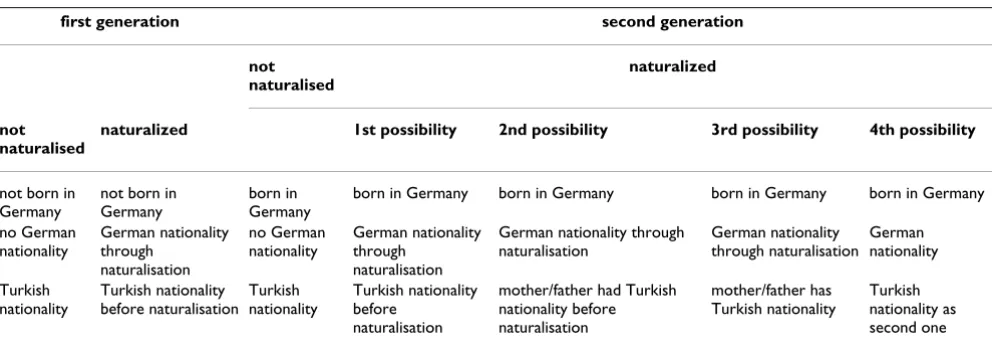
In 2005, the Microcensus included an extended list of questions about migration. Before 2005, it had been pos-sible to define migration background only by nationality as a crude proxy. Since 2005, the Microcensus has included detailed questions on migrant status. Thus, we were able to differentiate between first- and second-gener-ation migrants for the first time. In this study, we defined first- and second-generation Turkish migrants by their country of birth (Table 1). More specifically, we classified persons as first-generation Turkish migrants when they were not born in Germany (and had the Turkish national-ity or had had it before naturalisation) while the second generation was defined as born in Germany (and having the Turkish nationality or having had it before
naturalisa-Table 1: Variables used for the definition of first- and second-generation Turkish migrants
first generation second generation
not naturalised
naturalized
not naturalised
naturalized 1st possibility 2nd possibility 3rd possibility 4th possibility
not born in Germany
not born in Germany
born in Germany
born in Germany born in Germany born in Germany born in Germany
no German nationality
German nationality through
naturalisation
no German nationality
German nationality through
naturalisation
German nationality through naturalisation
German nationality through naturalisation
German nationality
Turkish nationality
Turkish nationality before naturalisation
Turkish nationality
Turkish nationality before
naturalisation
mother/father had Turkish nationality before naturalisation
mother/father has Turkish nationality
tion). People of the second generation who acquired Ger-man citizenship by birth were also defined as second-generation migrants if at least one of their parents was Turkish-born (regardless of whether that parent was later naturalised). As reference population, we used native-born Germans. This group includes every respondent who possessed German citizenship and both of whose parents were native Germans.
Smoking
The question on the smoking status addressed all respondents older than 10 years. The wording is: "Are you currently a smoker?". The possible answers are 'regular', 'occasional' and 'no'. For estimating the prevalence of smoking, regular and occasional smokers were combined because the proportion of occasional smokers was very small. Furthermore, these two categories were not defined in the questionnaire and have a low discriminatory power because they are self-reported and not verified using bio-logical markers.
Level of education
Since it is known that smoking is associated with social status, we stratified the smoking prevalence for level of
education, which was used as a proxy variable for social status. Level of education was dichotomised based on the highest school degree or vocational qualification in the German educational system, which does not have exact counterparts in most other countries. Roughly, we defined a low level of education as anything less than 10 years of school, or no vocational training below that required to fill a senior position in a given trade. All educational attainments higher than that were defined as a high level. For details, please see the footnote in Table 2. Respond-ents younger than 18 years were excluded from the analy-sis, because the final level of education cannot be defined for most people under the age of 18.
Analysis
In this descriptive study, the chi-square test was used for statistical testing of differences in smoking prevalences between first-generation migrants, second-generation migrants and the native-born Germans as well as differ-ences between the three categories of duration of resi-dence in the first generation. The significance level was set at 0.05. Analyses were stratified for sex, age, and level of education.
Table 2: Characteristics of the study population
1st generation by duration of residence 1st generation (total) 2nd generation native-born Germans
0–15 16–31 ≥ 32
n % n % n % n % n % n %
Gender and age group
Males 840 1223 1002 3510 1022 166522
18–24 94 11.2 59 4.8 0 0.0 174 5.0 427 41.8 16883 10.1
25–44 684 81.4 876 71.6 186 18.6 1989 56.7 574 56.2 55026 33.0
45–64 59 7.0 266 21.7 589 58.8 1056 30.1 17 1.7 56359 33.8
65+ 3 0.4 22 18.0 227 22.7 291 8.3 4 0.4 38254 23.0
Females 868 1370 687 3368 1005 183309
18–24 186 21.4 67 4.9 0 0.0 294 8.7 460 45.8 16021 8.7
25–44 590 68.0 850 62.0 132 19.2 1799 53.4 518 51.5 54309 29.6
45–64 81 9.3 406 29.6 455 66.2 1090 32.4 24 2.4 57899 31.6
65+ 11 1.3 47 3.4 100 14.6 185 5.5 3 0.3 55080 30.0
Gender and education
Males 833 1215 993 3481 1019 165072
High 244 29.3 267 22.0 153 15.4 747 21.5 422 41.2 91384 55.4
Low 589 70.7 948 78.0 840 84.6 2734 78.5 597 58.6 73688 44.6
Females 865 1360 683 3343 999 181114
high 167 19.3 214 15.7 76 11.1 514 15.4 498 49.8 95148 52.5
low 698 80.7 1146 84.3 607 88.9 2829 84.6 501 50.2 85966 47.5
The precise cut-off point we chose between 'high' and 'low level of education' is in fact a peculiarity of the German three-tier secondary school system, where pupils are assigned to one of three types of schools after 4 years of primary school based on their primary school teachers' recommendations: the Gymnasium, which takes another 9 years of school (13 in all), and prepares for academic studies, the Hauptschule, which takes another 5 or 6 years (9 or 10 in all), and prepares for an apprenticeship for professions which might tentatively be categorised as blue-collar jobs, and, finally, the Realschule, which, in a manner of speaking, takes the middle ground: it always lasts for another 6 years (10 in all) and even though it is not intended to prepare for academic studies either, the professions it prepares for can be tentatively categorised as white-collar jobs. An important difference is that the Realschule curriculum includes two foreign languages, as opposed to only one in the Hauptschule. We defined a
All statistical analyses were performed using SPSS version 15 (SPSS Inc., Chicago, IL, USA). Missing values were not imputed.
Results
The 70% sub-sample of the 2005 Microcensus includes 477,239 persons. We identified 7,205 Turkish migrants of the first generation (1.5% of the total), 5,083 Turkish migrants of the second generation (1.1% of the total) and 421,635 native-born Germans (88.3% of the total). The remaining 9.1% were persons with a non-Turkish migra-tion background, and this group was excluded from our sample.
Of all respondents (n = 477,239), nearly 20% smoked cig-arettes regularly or occasionally. There were 57.4% non-smokers, 8.8% of respondents were under the age of ten, and 14.6% did not answer the question. In the study pop-ulation (n = 433,923), which excluded any non-Turkish migrants, the proportion of smokers was 27.0%. The non-response concerning smoking status was 21.0% among first-generation Turkish migrants, 19.5% among the sec-ond generation and 15.6% among the native-born Ger-mans.
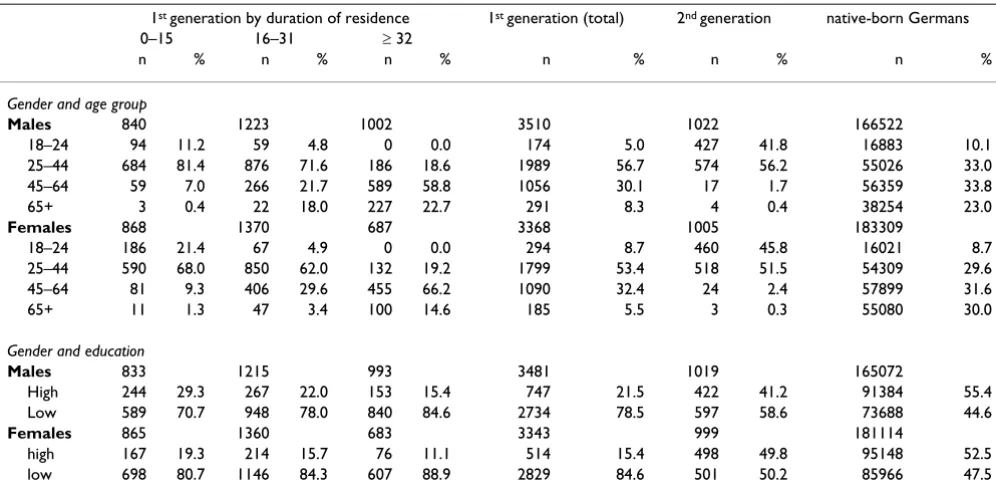
Table 2 shows the demographics of the Turkish migrants and the native-born Germans. Turkish migrants are pre-sented according to their generation and, for the first gen-eration, length of residence.
Males
There are statistically significant differences in the smok-ing prevalence between male Turkish migrants of the first and second generation and the German reference popula-tion (see table 3). We found a difference in smoking prev-alence between the first and the second generation of male Turkish migrants with a high level of education: 47.0% among Turkish men in the first generation were smokers, as opposed to only 37.6% in the second genera-tion. Within the German reference population, nearly 30.0% were smokers. In contrast, smoking prevalences among male Turkish migrants with a low level of educa-tion were higher in the second generaeduca-tion (first genera-tion: 50.5%, second: 56.2%). Compared with the native-born Germans, first- and second-generation migrants showed considerably higher smoking prevalences in all age groups, except in the youngest age group (18–24 years). In addition, there is an obvious effect of the level of education, because the smoking prevalence among men with a low level is generally higher than among men with a high level of education (Table 3).
There were also significant differences among first-gener-ation migrants with different durfirst-gener-ations of residence (see table 3). Among male Turkish migrants with a high level of education, smoking prevalence decreased with increas-ing duration of residence, i.e. migrants who had lived in Germany for more than 31 years had the lowest smoking prevalence (41.3%) and approached the smoking
preva-Table 3: Number of smokers and non-smokers (n) and smoking prevalence (%) (males)
Age in years
1st generation (total) 2nd generation native-born
Germans
p-values1 1st generation by duration of residence
0–15 16–31 ≥ 32 p-values2
n % n % n % n % n % n %
High level of education
18–24 38 42.1 141 27.7 10202 35.3 0.11 19 31.6 14 42.9 - - 0.51
25–44 418 51.2 192 44.8 31412 35.4 <0.01 184 53.3 140 50.7 51 47.1 0.72
45–64 135 39.3 -* -* 24871 28.5 0.02 6 50.0 56 41.1 58 41.4 0.91
65+ 20 20.0 0 0.0 10043 10.6 0.18 0 0.0 0 0.0 17 23.5
-total 611 47.0 335 37.6 76528 29.9 <0.01 209 51.2 210 47.6 126 41.3 0.21
Low level of education
18–24 90 40.0 207 46.4 3807 60.4 <0.01 51 39.2 31 35.5 - - 0.74
25–44 1202 58.9 270 64.8 13516 50.9 <0.01 378 60.8 576 57.5 110 64.5 0.30 45–64 667 44.4 12 41.7 22689 35.4 <0.01 39 46.2 154 50.0 393 43.8 0.42 65+ 192 24.0 -* -* 23783 14.1 <0.01 -* -* 15 26.7 149 20.8 0.15 total 2151 50.5 493 56.2 63795 32.2 <0.01 471 57.3 776 54.5 652 42.0 <0.01
-* = number smaller than 5
lences of the second-generation migrants (37.6%) and the native-born Germans (29.9%).
Among men with a low level of education, smoking prev-alence was also lowest among first-generation migrants who had lived in Germany for more than 31 years (except in the age group between 25 and 44), and was nearer to that in the German reference population. In the age group between 25 and 44, the first generation (≥32 years of res-idence) has a smoking prevalence comparable to that in the second generation.
Females
In contrast to the Turkish male population, a smaller per-centage of Turkish women in our sample smoked. Among Turkish women, the second generation had a higher smoking prevalence after age adjustment both among women with a high and with a low level of education. Among women with a high level of education, this differ-ence was modest, i.e. between 31.6% (first) and 33.3% (second generation). At the same time, both the first and second generation exceeded the prevalence of the female native-born Germans (24.5%). The difference among Turkish females with a low level of education was even more obvious (first generation: 24.5%, second genera-tion: 40.9%). In the youngest age group, the prevalence was highest among native-born Germans (53.4%), and between 25 and 44 years, it was similar between native-born Germans and second-generation migrants (Table 4).
In contrast to male Turkish migrants, smoking prevalence did not decrease with increasing duration of residence in
the first generation among female Turkish migrants with a high level of education; the prevalence was highest among females with 16–31 years of duration of residence (36.3%) and lowest among female migrants with the longest duration of residence (23.5%). But the number of female smokers in the first generation with a high level of education was too small to state a trend. Among the female first generation with a low level of education, smoking prevalence increased with increasing duration of residence in the age groups 25–44 and 45–64 years; also, the longer the residence, the more prevalences resembled those of the second generation and those of the second-generation German women.
Discussion
We present the first representative data on the prevalence of smoking, a risk factor for cancer and cardiovascular dis-eases that are differentiated between first and second gen-eration Turkish migrants and, for the first gengen-eration, broken down by duration of residence in Germany. The model which interprets migration as a "health transi-tion" was partly confirmed. Differences in smoking prev-alence between migrants and the native population of a host country have been reported in several studies [6,7,12,14]. We also found differences between Turkish migrants and the native-born Germans. Male first-genera-tion migrants from Turkey showed smoking prevalences higher than that of native-born Germans, but similar to the high, and, over time, only slightly decreasing smoking prevalences in Turkey [1,2]. In fact, the prevalence of smoking among female first-generation Turkish migrants
Table 4: Number of smokers and non-smokers (n) and smoking prevalence (%) (females)
Age in years 1st generation
(total)
2nd generation native-born Germans p-values1 1st generation by duration of residence
0–15 16–31 ≥ 32 p-values2
n % n % n % n % n % n %
High level of education
18–24 75 24.0 208 26.9 11086 31.4 0.15 39 12.8 31 32.3 - - 0.05
25–44 275 32.7 204 39.7 34282 28.7 <0.01 90 36.7 130 34.6 30 20.0 0.23
45–64 66 36.4 0 0.0 24966 22.2 0.01 -* -* 20 55.0 35 25.7 0.09
65+ 5 20.0 0 0.0 9784 8.0 0.32 0 0.0 -* -* -* -* 0.51
total 421 31.6 412 33.3 80118 24.5 <0.01 132 29.5 182 36.3 68 23.5 0.13
Low level of education
18–24 163 21.5 165 33.9 2258 53.4 <0.01 113 16.8 28 32.1 - - 0.07 25–44 1162 32.4 215 48.8 10195 46.0 <0.01 377 28.6 569 33.9 81 44.4 0.02
45–64 778 16.6 21 19.0 24318 26.6 <0.01 63 14.3 311 15.1 312 18.3 0.50
65+ 134 6.0 -* -* 37469 5.8 0.94 9 0.0 34 0.0 75 8.0 0.16
total 2237 24.5 403 40.9 74240 19.6 <0.01 562 24.2 942 26.4 468 21.2 0.09
-* = number smaller than 5
in Germany seems to be higher than in Turkey, and partly even higher than the prevalence among native-born Ger-mans.
In line with the findings of Hosper et al. [15], we found that trends of convergence in smoking prevalences dif-fered between men and women. Our hypothesis that migration can be described as a health transition was con-firmed for the case of men with a high level of education. Smoking prevalence in the first generation decreased with increasing duration of residence, and the prevalence in the second generation converges towards that of the native-born Germans. This may indicate that Turkish male migrants with a high level of education partly adopt a Ger-man life style. In contrast, Turkish male migrants with a low level of education showed a negative generation effect over time, in line with the results of Dill et al. [8]. Within the first generation the smoking prevalence partly con-verged towards, but also exceeded the smoking prevalence of native-born Germans. Thus, the well-known associa-tion between low socioeconomic status and higher risk behaviour is once more confirmed here. But it is also important to note that the second generation group with a low level of education had a higher smoking prevalence than the first generation and the native-born Germans. In contrast to the second-generation Turkish migrants with a high level of education, they do not seem to adopt Ger-man smoking behaviour, but rather intensify theirs. This could be interpreted an indication of lack of integration. Together with the lower level of education it may increase the smoking prevalence, perhaps both factors interacting with one another. But it is also possible that migrants adopt to the behaviour of 'their' socioeconomic group in the host country. This could explain our findings in men, but not for those in women.
There is also evidence for a "health transition" among women. Older women in Turkey have a very low smoking prevalence [1,2]. But among Turkish women in Germany, smoking prevalence increases over the generations and even exceeds the prevalence of German women. This may be an indication that cultural attitudes among female Turkish migrants of the second generation differ from those of their parents' generation in this respect. Among the first generation, there is a convergence towards the native-born Germans with increasing duration of resi-dence. This could be the expression of a health transition towards the risk behaviour of the native-born Germans. In contrast to male Turkish migrants, an association between socioeconomic status and smoking is less obvious among female Turkish migrants. The influence of generation and age seem to play a more important role in determining smoking patterns than the level of education.
The fact that with respect to a possible convergence, our results would lead to different interpretations for men and
women may also be due to the different stages of the tobacco epidemic. This could, however, not explain why interpretations would also differ between migrants with a high level and those with a low level of education. The strengths of this study are the large number of respondents included, its representativeness, its use of detailed information on migrant status, rather than the unsatisfactory indicator "nationality", and the stratifica-tion of results according to level of educastratifica-tion, age and length of residence.
The study also has limitations. Selection bias or response bias cannot entirely be ruled out. For example, language problems might have somewhat reduced the representa-tiveness of the results for the Turkish population in Ger-many. The questionnaire is, however, also available in Turkish, so even Turkish migrants with little knowledge of the German language can respond. Furthermore, the most frequent method of data collection was the face-to-face interview, such that misunderstandings of questions and language problems should have occurred only rarely. Further, smoking prevalences might have been underesti-mated due to incorrect answers. The percentage of proxy interviews was high for youngsters between 15 and 19 (75,0%). It is possible that parents stated the wrong smok-ing status for their children, or that younger interviewees denied their smoking when filling in the questionnaire together with their parents. Such an underestimation, however, would be a non-differential misclassification, because we failed to find any indication of differences between the Turkish migrants' and the German reference population's response behaviour. Apart from that, such an underestimation seems rather improbable because the study has excluded persons under the age of 18, where denial of smoking might be expected to be more likely.
Responding to the question about smoking status is not obligatory. The non-response rate of 16.0% for this item is higher than the average item non-response rate of 9.0– 13.0% [18]. Turkish migrants showed a slightly higher non-response rate for the smoking status in our study, but the difference was small, and thus no evidence that a par-ticular group selectively failed to answer this question.
Regarding the variable 'smoking status', we combined occasional and regular smokers because of the small per-centage of occasional smokers. Furthermore, we would argue that our hypothesis can be examined without distin-guishing between occasional and regular smokers. The aim of this study was to analyse whether a transition effect can be found in the prevalence of smoking. Thus, stratifi-cation for the number of cigarettes smoked would not have added significant information to answer this ques-tion. Furthermore, categorisation into 'occasional' and 'regular' was self-reported and not verified by examining a biological marker, thus, it has a high uncertainty and cat-egories can be expected to overlap.
One limitation is the small number of persons in some of the strata after adjustment for age, sex and level of educa-tion. Such findings may be subject to random variation and are thus difficult to interpret.
In our analysis, we could not consider possible clustering of smoking behaviour in households. Respondents from one household could be more similar with regard to smoking status than respondents recruited by simple ran-dom sampling in the general population. Thus, the p-val-ues we estimated might be slightly too low.
The Microcensus is a cross-sectional data set and does not provide any longitudinal data. Thus, it is of limited useful-ness for assessing changes over time. This weakens our analysis of a possible development over the generations and with increasing duration of residence. It seems possi-ble that the observed differences between the generations are due to a cohort effect rather than convergence, and hence, not the expression of a health transition. This would imply that the age cohorts of Turkish migrants in Germany have stable smoking prevalences that reflect the prevalence in Turkey at the time of migration. The pres-ence of a "cohort effect" cannot be excluded in a study with cross-sectional data. But the smoking prevalence in Turkey has been high over a long period of time and decreased only slightly in recent years. This makes a cohort effect an unlikely explanation for our findings.
Conclusion
Our study shows different trends in smoking prevalences over generations between men and women with a Turkish migration background. It indicates that migration can be conceptualised as a health transition with regard to risk behaviour. Although our data are representative, further studies are needed to analyse the health situation of migrants longitudinally. Our results also indicate a need for preventive action. On the one hand, male Turkish migrants should be supported in reducing smoking even further. On the other hand, there is need for intensified smoking prevention among female Turkish migrants.
Pre-vention efforts need to take into account the different needs of people of different social status or levels of edu-cation, and how these combine with the migration back-ground. This should make it possible to reach especially high-risk groups such as Turkish male migrants with a low educational level or Turkish female migrants of the sec-ond generation.
Competing interests
The authors declare that they have no competing interests.
Authors' contributions
JS, OR and AR conceived the study. JS coordinated the study. AR performed the data analysis and wrote the first draft of the manuscript. JS participated in the data analy-sis. All authors helped to draft the manuscript and read and approved it in its final form.
Acknowledgements
The authors thank the Federal Statistical Office in Germany for providing the data.
References
1. Tezcan S, Altintas H, Sönmez R, Akinci A, Dogan B, Cakir B, Bilgin Y, Klör HU, Razum O: Cardiovascular risk factor levels in a lower
middle-class community in Ankara, Turkey. Trop Med Int
Health 2003, 8:660-667.
2. WHO: European health for all database. 2008 [http://
data.euro.who.int/hfadb/].
3. Razum O, Geiger I, Zeeb H, Ronellenfitsch U: Gesundheitsver-sorgung von Migranten. Dtsch Ärzteblatt 2004, 101:A2882-A2887. 4. Spallek J, Razum O: Gleich und gerecht? Erklärungsmodelle für die gesundheitliche Situation von Migrantinnen und Migranten. In Health Inequalities. Determinanten und Mechanismen gesundheitlicher Ungleichheit Edited by: Bauer U, Bittlingmayer UH, Richter M. Wiesbaden, VS Verlag für Sozialwissenschaften; 2008:271-288.
5. Razum O, Twardella D: Time travel with Oliver Twist –
Towards an explanation for a paradoxically low mortality among recent immigrants. Trop Med Int Health 2002, 7:4-10. 6. Lampert T, Burger M: Verbreitung und Strukturen des
Tabak-konsums in Deutschland. Bundesgesundheitsblatt – Gesundheitsfor-schung – Gesundheitsschutz 2005, 48:1231-1241.
7. Lampert T, Saß AC, Häfelinger M, Ziese T: Armut, soziale Ungleichheit und Gesundheit, Expertise des Robert Koch-Instituts zum 2. Armuts- und Reichtumsbericht der Bundesregierung Berlin, Robert Koch-Institut; 2005.
8. Dill H, Frick U, Höfer R, Klöver B, Straus F: Risikoverhalten junger Migrantinnen und Migranten – Expertise für das Bundesministerium für Gesundheit Nomos, Baden-Baden; 2002.
9. van Oort FVA, Ende J van der, Crijnen AAM, Verhulst FC, Macken-bach JP, Joung IMA: Determinants of daily smoking in Turkish young adults in the Netherlands. BMC Public Health 2006, 6:294. 10. Bhopal R, Vettini A, Hunt S, Wiebe S, Hanna L, Amos A: Review of prevalence data in, and evaluation of methods for cross cul-tural adaption of, UK surveys on tobacco and alcohol in eth-nic minority groups. BMJ 2004, 328:76-80A.
11. Singh GK, Hiatt RA: Trends and disparities in socioeconomic and behavioural characteristics, life expectancy, and cause-specific mortality of native-born and foreign-born popula-tions in the United States, 1979–2003. Int J Epidemiol 2006, 35:919-921.
12. Uitewaal PJ, Manna DR, Bruijnzeels MA, Hoes AW, Thomas S: Prev-alence of type 2 diabetes mellitus, other cardiovascular risk factors, and cardiovascular disease in Turkish and Moroccan
immigrants in North West Europe: a systematic review. Prev
Publish with BioMed Central and every scientist can read your work free of charge "BioMed Central will be the most significant development for disseminating the results of biomedical researc h in our lifetime."
Sir Paul Nurse, Cancer Research UK
Your research papers will be:
available free of charge to the entire biomedical community
peer reviewed and published immediately upon acceptance
cited in PubMed and archived on PubMed Central
yours — you keep the copyright
Submit your manuscript here:
http://www.biomedcentral.com/info/publishing_adv.asp
BioMedcentral
13. Lindstrom M, Sundquist J: Ethnic differences in daily smoking in Malmö, Sweden: Varying influence of psychosocial and eco-nomic factors. Eur J Public Health 2002, 12:287-294.
14. Brussaard JH, van Erp-Baart MA, Brants HA, Hulshof KF, Löwik MR: Nutrition and health among migrants in the Netherlands.
Public Health Nutrition 2001, 4:659-664.
15. Hosper K, Nierkens V, Nicolaou M, Stronks K: Behavioural risk factors in two generations of non-Western migrants: do
trends converge towards the host population? Eur J Epidemiol
2007, 22:163-172.
16. Özcan V, Grimbacher S: Focus migration, Länderprofil Deutschland 2007 [http://www.focus-migration.de/typo3_upload/groups/3/
focus_Migration_Publikationen/Laenderprofile/ LP01_Deutschland_v2.pdf].
17. Ausländerbeauftragte der Bundesregierung: Beauftragte der Bundesre-gierung für Ausländerfragen: Mitteilungen. Daten und Fakten zur Aus-ländersituation Bonn/Berlin; 1999.
18. Statistisches Bundesamt: Leben in Deutschland, Haushalte, Familien und Gesundheit – Ergebnisse des Mikrozensus 2005 2006 [http://www.des tatis.de/jetspeed/portal/cms/Sites/destatis/Internet/DE/Presse/pk/ 2006/Mikrozensus/Pressebroschuere,property=file.pdf].
19. Bundesamt für Migration und Flüchtlinge (BAMF): : Migrationsbericht.
2006 [http://www.bamf.de/cln_092/SharedDocs/Anlagen/DE/Migra tion/Publikationen/Forschung/Migrationsberichte/
migrationsberich2006,templateId=raw,property=publicationFile.pdf/ migrations bericht-2006.pdf].
20. Lechert Y, Schimpl-Neimanns B: GESIS-ZUMA-Methodenbericht 2007/ 08. Mikrozensus Scientific Use File 2005. Dokumentation und Datenauf-bereitung 2007 [http://www.gesis.org/fileadmin/upload/forschung/pub likationen/gesis_reihen/gesis_methodenberichte/2007/