University of New Hampshire
University of New Hampshire Scholars' Repository
Doctoral Dissertations Student Scholarship
Spring 2018
SHIPWORMS AND THE MAKING OF THE
AMERICAN COASTLINE
Derek Lee Nelson
University of New Hampshire, Durham
Follow this and additional works at:https://scholars.unh.edu/dissertation
This Thesis is brought to you for free and open access by the Student Scholarship at University of New Hampshire Scholars' Repository. It has been accepted for inclusion in Doctoral Dissertations by an authorized administrator of University of New Hampshire Scholars' Repository. For more information, please [email protected].
Recommended Citation
Nelson, Derek Lee, "SHIPWORMS AND THE MAKING OF THE AMERICAN COASTLINE" (2018).Doctoral Dissertations. 2386.
SHIPWORMS AND THE MAKING OF THE AMERICAN COASTLINE
BY
DEREK LEE NELSON
Bachelor of Arts, The Evergreen State College, 2006 Master’s of Arts, Western Washington University, 2010
DISSERTATION
Submitted to the University of New Hampshire in Partial Fulfillment of
the Requirements for the Degree of
Doctor of Philosophy in
History
ii ALL RIGHTS RESERVED
iii This dissertation has been examined and approved in partial fulfillment of the
requirements for the degree of Doctor in History by:
Dissertation Director, Kurkpatrick Dorsey, Professor of History and History Graduate Program Director
W. Jeffrey Bolster, Professor of History
Jessica Lepler, Associate Professor of History
Lucy Salyer, Associate Professor of History
Christine Keiner, Associate Professor Science, Technology, and Society
On April 18, 2018
iv ACKNOWLEDGEMENTS
I’ve shown pictures of teredo to hundreds of people over the years. So, I have a pretty good idea how most will react. First comes the eyebrow raise, followed by the looks of confusion, curiosity, and disgust—sometimes all at once. Next comes the word. “Teredo” is infectious and most people can’t help but give it a whirl, mouthing it to themselves, quietly and hesitantly at first, usually as I drone on with my elevator pitch. I owe a debt to all of you who couldn’t look away and who couldn’t help but say the word aloud. I can’t name you all, but our conversations taught me how to tell stories about shipworms in ways that resonate with people—as I imagine they would have to people a hundred years ago or more.
My deepest thanks go to Kurk Dorsey and Jeff Bolster. As a marine topic, this project fell to them by default. They shared and shouldered the burden of overseeing a peculiar topic and I’m grateful to both of them for permitting me the long leash that I required to pursue my own interests at my own pace. I’ve found that Jeff and Kurk work extremely well together and I’ve always felt that their advice complements and never competes. It’s hard to imagine what this project would have looked like without both cooks in the kitchen.
v Ellen Fitzpatrick with her modern history surveys and I’m grateful for her vote of
confidence. In retrospect, I wish I had studied more with Jan Golinski, especially after taking his 2011 historiography class, the most entertaining course I’ve ever taken. My friends Sarah Batterson and Mike Verney rescued me from my isolation as the sole member of my graduate cohort and made me feel welcome in New Hampshire. Sarah deserves special thanks for helping with the Ancient Greek translations. Finally, a thanks goes to Department Chair, Eliga Gould, and Department Staff, Laura Simard, Lara Demarest, and, formerly, Thea Dickerman, who’ve made being a graduate student that much easier.
The University of New Hampshire has funded some of this research. I was fortunate to receive several Summer Teaching Assistant Fellowships as well as the Steelman and Rutman Awards. I’m grateful for the 2014 Graduate Student Teaching Award.
There are a number of other scholars outside of UNH who have helped. Far and away, marine biologist Jim Carlton has had the biggest impact on this dissertation. I met Jim shortly after I decided to go all in on shipworms and he put me on the scent for sources that I had no idea that I needed. I’m very grateful for the encouragement from Christine Keiner and John Gillis—both reviewed the blueprint for this dissertation. Dozens of others have offered valuable advice, usually between panels at conferences. Sadly, I can only name a few of you here. Chris Pastore kindly pressed me to think big. Aboard the Sabino in Mystic, Connecticut Matt McKenzie listened to my pitch and pushed me to embrace the coastal dimensions of the project and to play up the
vi on teredo that he did not include in his book. A special thanks goes to Mart Stewart who, as my thesis advisor, has listened to me ramble on about teredo perhaps longer than anyone else—though neither of us knew way back when that a distracting two-page tangent on shipworms in the middle of my master’s thesis would grow into a dissertation.
I cut my teeth at several conferences, seminars, and institutes. My thanks go to the Massachusetts Historical Society for inviting me to present my research at the Boston Environmental History Seminar Series in 2014. So much of this dissertation incubated during a summer at Mystic as part of the Frank C. Munson Institute of American
Maritime History in 2014. My thanks go to the Munson directors, Eric Roorda and Glenn Gordinier for their invitation. I’m grateful to Tom Robertson and Richard Tucker for allowing me to participate in the “Environmental History of World War II in the United States” workshop in Ohio in 2016—that workshop helped me sharpen ideas that have come to fruition in this dissertation.
vii TABLE OF CONTENTS
ACKNOWLEDGMENTS ... iv
LIST OF FIGURES ... viii
ABSTRACT ... x
CHAPTER PAGE
INTRODUCTION ... 1
I. THE SHIPWORM DIASPORA
Global Exchanges and Discourses in the Age of Sail ... 22
II. “TIME FOR THE RAVAGES OF THE ‘TEREDO’”
Nineteenth Century Coastal Designers Confront Shipworms
Along the Southern Atlantic Seaboard and Gulf Coast ... 64
III. THE BOOK WORM
Knowing Nature Through Language ... 103
IV. “THE SCOURGE OF PUGET SOUND” How Teredo Hindered and Helped
The People of the Pacific Northwest ... 136
V. AN UNNATURAL NATURAL DISASTER
Marine Borer Invasions of San Francisco Bay ... 192
VI. “IS THE PORT OF NEW YORK IN DANGER?” The Northeast, Invasive Species, and the
Professionalization of Marine Borer Research ... 232
viii LIST OF FIGURES
FIGURE 1: Shells of Teredo navalis ... 2
FIGURE 2: Pile attacked by three genera of woodborers ... 3
FIGURE 3: Teredo navalis ... 13
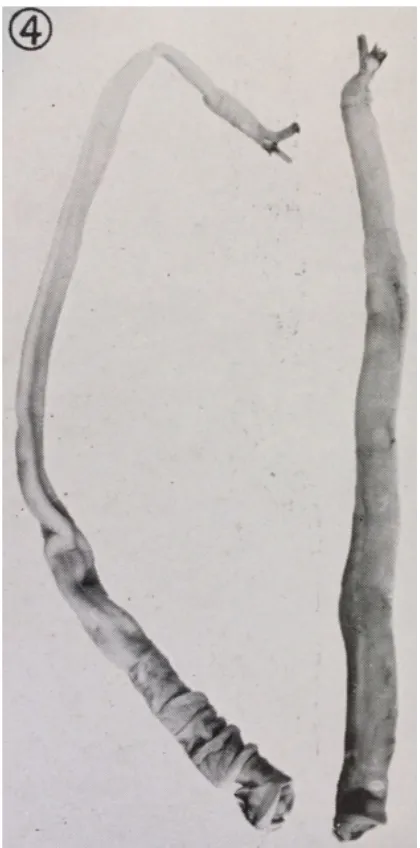
FIGURE 4: “Honeycombed” Timber ... 14
FIGURE 5: Iconography of the Dutch Crisis ... 56
FIGURE 6: James Buchanan Eads (1820-1887) ... 77
FIGURE 7: Mississippi Jetties at South Pass ... 78
FIGURE 8: Willow Mattresses ... 80
FIGURE 9: Creosote Chamber ... 93
FIGURE 10: Domestic Creosote Production ... 101
FIGURE 11: Hollowed Wood ... 109
FIGURE 12: Newspaper Graph ... 131
FIGURE 13: Google Ngram ... 132
FIGURE 14: Bankia setacea ... 141
FIGURE 15: Seattle Harbor and the Duwamish Mudflats, 1854 ... 147
FIGURE 16: Lake Washington Ship Canal Route ... 154
FIGURE 17: Birdseye of Bellingham Bay’s North Shore ... 158
FIGURE 18: Nautical Chart of Bellingham Bay ... 159
FIGURE 19: Birdseye of Everett, Washington ... 165
FIGURE 20: Nautical Chart Everett, Washington and Port Gardner ... 167
ix
FIGURE 22: Eugene Semple (1840-1908) ... 181
FIGURE 23: Blueprint for the South Canal and Duwamish Waterways ... 182
FIGURE 24: Hiram Chittenden (1858-1917) ... 189
FIGURE 25: Map of Teredo navalis Invasion ... 193
FIGURE 26: Yerba Buena Cove, 1847 ... 196
FIGURE 27: Limnoria ... 206
FIGURE 28: Limnoria Eating ... 207
FIGURE 29: “Hourglass” Piles ... 208
FIGURE 30: The Clark House ... 226
FIGURE 31: Trestle Collapse, Oleum, California ... 227
x ABSTRACT
SHIPWORMS AND THE MAKING OF THE AMERICAN COASTLINE by
Derek Lee Nelson
University of New Hampshire, May, 2018
This dissertation tells the forgotten history of the American teredo epidemic. During the late nineteenth and early twentieth centuries, an assortment of native and invasive wood-boring marine organisms, known collectively as “teredo,” swept through the ports and harbors of the United States. Teredo’s penchant for wood, both for shelter and sustenance, made wharves and wooden ships easy targets. Because teredo enters timber as tiny juveniles, and grows to maturity beyond view, it was often detectable only after a wharf had collapsed or a ship had sunk. Teredo’s unpredictability grated on people so much so that the borer was rarely mentioned apart from the ominous saying, “the ravages of the teredo.”
xi borers that the word “teredo” even became a widely used pejorative metaphor that
captured the resentment that people felt towards society. “Teredo” could mean everything from “furtive” to “ruthless” and could be flung at people of different political leanings and even ethnicities. The epidemic, in short, was just as much about people as teredo.
1 INTRODUCTION
The Epidemic
In March of 1890, Bill Nye (not that Bill Nye) stopped over in Seattle while on a national speaking tour. Edgar William Nye, better known as “Bill,” was a syndicated writer and founding editor of the Laramie, Wyoming Daily Boomerang. As a humorist, journalist, and author with a national following, Nye was just as much interested in scouring the Pacific Northwest for new material as he was about recycling his older stories to packed theatre houses. During his stay in Seattle, Nye ventured over to Lake Washington, a 22-mile stretch of water along the city’s eastern border. Its placid waters stirred his imagination. Nye envisioned a ship canal running from Puget Sound, through the city, and into the lake where oceangoing vessels could moor. What intrigued him most about Lake Washington was what it lacked: teredo. Following his visit, Nye wrote a nationally circulated article explaining how the “chief advantage of a fresh water harbor for ships, of course, is that the teredo, or ship worm, the pest of all warm salt waters, and especially of Puget Sound, would be eliminated.” The idea of digging a canal through the city because of a worm was no joke; the humorist was very much serious.1
1. Edgar W. Nye, “Bill Nye In Seattle,” Seattle Post-Intelligencer, May 31, 1890, 9. Syndications of this article went by the alternate title, “Doings In Seattle”.
2
Figure 1: Shells of Teredo navalis. Credit: The San Francisco Marine Piling Committee of the American Wood-Preservers’ Association, Inc.[First] Report on the San Francisco Bay Marine Piling Survey, plate 29. Used with permission of the American Wood-Preservers Association.
It’s hard for modern readers to fathom how such a thing as teredo—a collection of worm-like marine wood-boring organisms—could inspire such a colossal scheme as the Lake Washington Ship Canal. But we no longer live in an era in which these so-called shipworms routinely feast on planks of ships and piles propping up wharves, endeavoring all the while, as Nye insisted, “to damage the commerce of the world.” During Nye’s lifetime, teredo reached epidemic proportions all along the American coastline. Over a period spanning roughly the 1860s through the 1940s, woodborers flared up in nearly every major harbor. They swept through ports, such as Galveston, San Francisco, Seattle, New York, and Boston at different times and to varying degrees. Since World War II, coastal dwellers have taken steps to fight borers, such as by improving wood preservation techniques and gaining a better understanding of borer biology, both of which have sapped these once virulent creatures of their power. Though they are still around,
3 the “ravages of the teredo,” a once common saying, resonated with Americans all across the nation, often through the medium of texts by writers like Nye.2
Figure 2: Pile attacked by three genera of woodborers: Teredo, Bankia, and Limnoria. Credit: The San Francisco Marine Piling Committee of the American Wood-Preservers’ Association, Inc.[First] Report on the San Francisco Bay Marine Piling Survey, plate 14. Used with permission of the
American Wood-Preservers Association.
This dissertation will examine how people experienced and responded to the teredo epidemic. The emphasis on people is important. Shipworms are peculiar and fascinating creatures (more details on them shortly). They have a way of arresting our attention, like a sleight of hand artist, and obscuring the real agents in this story: seamen, stevedores, scientists, politicians, investors, harbormasters, journalists, newsmen, and many others. By keeping the focus on people throughout, the following pages illuminate how Americans all along the coastline responded to environmental crises in ways that had social, economic, and cultural implications. Their responses were as remarkable as
4 they were varied and deserve to be the focus, lest this work slip from environmental history into historical geography or historical ecology.3
One way to keep the spotlight on people is by paying attention to the ways in which they altered coastal landscapes in response to teredo. This dissertation explores the many instances of subtle and extreme environmental change. Throughout the epidemic, coastal designers struggled to keep shipworms out of their wharves, piers, and docks. When feasible, engineers enclosed their piles with sheets of metal and filled underneath their structures—a practice known as “bulkheading”. At other times, they manipulated estuaries to enhance the teredo-killing effects of freshwater. Extreme examples, such as the aforementioned Lake Washington Ship Canal, though rarer, highlight the lengths to which people would go to repel borers. As a result, people have reshaped the American coastline in their quest to adapt to shipworms. To look upon the coastline today is to see the legacy of a long ago contest between people and borers.
Not every story about teredo centers on a battle between people and borers. Shipworms became the pretext for several interurban rivalries across the late nineteenth and early twentieth centuries. Many commercial waterways and urban waterfronts around the country benefited from nearby river mouths, such that the constant dousing of
freshwater prevented the saline-loving teredo from gaining a foothold in docks and wharves. These communities didn’t take this benefit for granted. Boosters in cities like Astoria, Oregon (at the mouth of the Columbia River) and Bellingham Bay, Washington
5 (freshened by the Nooksack River in Puget Sound) learned how lucky they were to be free from woodborers and leveraged their advantages by criticizing rival ports, such as Seattle, Washington and Tacoma, Washington, which were saddled with teredo
infestations. This practice, which we may call “teredo-slandering,” underscores how the woodborer epidemic impacted people differently and how some people even welcomed the spike in borer activity for the opportunities it might hold. The epidemic is just as much a part of social history as environmental history.
“Crisis” and “epidemic” appear often in the following chapters, so it’s important to address the utility of such words. Across the period surveyed, people spoke about borers with such direness that one might think a horde of invaders had arrived on a regular basis out of the blue. In truth, there are only a few documented cases where nonnative shipworms arrived to the United States—or moved from one part of the coastline to another. With the exception of southern California, woodborers were present along every part of the American coastline long before the start of what I dub the “teredo epidemic.” There’s a tendency, as historian Ted Steinberg has argued, to attribute
disasters solely to nature that are equally the product of decisions made (or not made) by people. The teredo epidemic is no different. Specific decisions about how to develop the American coastline fostered the crisis. Wharf builders drove an ungodly number of piles into the worm-infested waters of the Gulf and West coasts after the Civil War and, if anything, this represents a human invasion of teredo’s habitat, not the other way around. At every turn, the teredo epidemic was human-induced.4
6 Charting the rise and fall of the teredo epidemic poses a conceptual conundrum. Some coastal regions struggled with borers for much or all of the period from the Civil War to World War II, while others, particularly in the northeast, were spared for much of this span, before witnessing a rash of attacks during the 1930s and 1940s. This lack of uniformity might seem to undercut the notion of a broader national epidemic. But there is glue that binds everything together: language. Wherever “teredo” appeared in texts— whether it was in newspaper accounts, books, or engineering reports, etc.—it almost always came as part of the ominous phrase the “ravages of the teredo.” The saying became part of the national vernacular and those who encountered it were quick to learn about teredo’s destructiveness no matter how distant they were from such attacks. Over the course of the epidemic, the word “teredo” took on a life of its own, evolving into a pejorative metaphor that people could use to vent their social and cultural anxieties and frustrations, concerning everything from politics to race and class. The rise and fall of the word “teredo” in cultural terms is just as important to this overall analysis and mirrors the ebb and flow of real borers over time. Moreover, it shows that shipworms vexed a lot of people, and not just pile drivers and wharf managers. They were something that almost everyone experienced in some way or another.
7 era style commission. Led at first by the National Research Council, a handful of well organized and well funded woodborer committees sprouted up in San Francisco, New York, Boston, and Los Angeles. They would later be joined after World War II by the Bureau of Docks and Yards. Together, these organizations and institutions would
coordinate research and formalize methods. In the postwar era, the navy took the reins of the woodborer research program and made some breakthroughs in borer prevention, taxonomy, and physiology. State level interventions into the environment have a history of backfiring, as James C. Scott has argued, but in the case of teredo, “seeing like a state” was the only way to fathom the magnitude of the epidemic and meet it head on. Within a few short years, these efforts would render shipworms less dangerous, and the word “teredo,” which had once been so resonant, would all but disappear. The epidemic was over.5
The Context
Histories like this one are not often told, not even by environmental historians. At first glance, teredo’s history feels more than a little out of step with the wider currents of this field, which overwhelmingly favors terrestrial environments. Fortuitously, this study has benefited from the steady contributions of marine environmental historians over the past ten years, and has ridden quietly on the coattails of these scholars—perhaps
undeservedly and even a little opportunistically. To be sure, a history about teredo is warranted and stands on its own, but in light of recent scholarship, it requires some further justification as to its merits as marine environmental history and should not be lumped in with this field thoughtlessly or solely by virtue of its nickname: “shipworm”.
8 Teredo does not always mesh with the amazing work being done on the history of
commercial fisheries declines. It doesn’t rely on such innovative methods as Catch Per Unit Effort, nor does it have any stakes in problematizing older models like Maximum Sustainable Yield or attaching to the Shifting Baselines Syndrome. This dissertation goes against the grain of the bulk of marine environmental scholarship.6
But the subfield is maturing, and what shipworms offer is another story in a growing body of work on non-fisheries topics. Histories about tides, sharks, and deep-sea environments have opened up new ways of thinking about the sea, particularly in terms of culture. Fisheries historians have made use of cultural attitudes towards the sea, and how its perceived inexhaustibility had real consequences in fisheries management over the centuries. Scholars such as historians Gary Kroll and Helen Rozwadowski have uncovered other cultural attitudes toward the sea. Drawing on the American frontier, they have shown how western mindsets were applied to the ocean and how biologists once
6. W. Jeffrey Bolster, “Putting the Ocean in Atlantic History: Maritime Communities and Marine Ecology in the Northwest Atlantic, 1500–1800,” American Historical Review 113 (February 2008): 19-47; W. Jeffrey Bolster, The Mortal Sea: Fishing the Atlantic in the Age of Sail (Cambridge: Belknap, 2012); Kurkpatrick Dorsey, Whales and Nations: Environmental Diplomacy on the High Seas (Seattle: University of Washington Press, 2013); Brian Fagan, Fish on Friday: Feasting, Fasting, and Discovery of the New World (New York: Basic Books, 2006); Carmel Finley, All The Fish in the Sea: Maximum Sustainable Yield and the Failure of Fisheries Management (Chicago: University of Chicago Press, 2011); Glenn M. Grasso, “What Appeared Limitless Plenty: The Rise and Fall of the Nineteenth- Century Atlantic Halibut Fishery,” Environmental History 13 (2008): 66–91; Richard C. Hoffmann, “Economic Development and Aquatic Ecosystems in Medieval Europe,” American Historical Review 101 (June 1996): 631-669; Jeremy B. C. Jackson, Karen E. Alexander, and Enric Sala, Shifting Baselines: The Past and Future of Ocean Fisheries (Washington, DC: Island Press, 2011); Christine Keiner, “How Scientific Does Marine Environmental History Need to Be?” Environmental History 18 (January 2013): 111–120; Arthur F. McEvoy, The Fisherman’s Problem: Ecology and Law in the California Fisheries, 1850–1980
(Cambridge: Cambridge University Press, 1986); Callum Roberts, The Unnatural History of the
Sea (Washington DC: Island Press, 2007); Andrew A. Rosenberg, et al., “The History of Ocean Resources: Modeling Cod Biomass Using Historical Records,” Frontiers in Ecology and the Environment 3 (March 2005): 84-90; Tim D. Smith, Scaling Fisheries: The Science of Measuring the Effects of Fishing, 1855– 1955 (New York: Cambridge University Press, 1994); Joseph E. Taylor, Making Salmon: An
9 envisioned such things as whale ranching. By contrast, historian Jennifer Martin explores how sharks have shifted in the American imagination from dangerous predators to
vulnerable species, similar to wolves—thus their nickname, “wolves of the sea”. Humans have imagined and reimagined the sea and its species in many different ways, and
shipworms are no different. At its peak, the teredo epidemic resonated with people all across America. Curiously, the cultural construction of teredo went both ways; people projected anthropomorphic intentions onto shipworms while at the same time drawing on the habits of teredo to make sense of a wide array of social phenomena, which will be explored more fully in Chapter Three.7
In spite of its nautical moniker, teredo’s history belongs just as much to the subfield of coastal environmental history as it does to marine. In fact, its less common English nickname, the “pile-worm,” is the colloquial term preferred in the Netherlands, e.g. paalworm. In recent years, a number of scholars have shared simultaneous
epiphanies and discovered a middle ground—or “muddy ground,” as historian Christopher Pastore puts it—between land and sea that does not conform to either
terrestrial or marine environmental histories. In these coastal landscapes, where people do not always live, but still often exert control, a variety of different stakeholders have clashed over such things as sedimentation, near shore fisheries and aquaculture,
7. Alain Corbin, The Lure of the Sea: Discovery of the Seaside in the Western World (London: Penguin Press, 1995); Gary Kroll, America’s Ocean Wilderness: A Cultural History of Twentieth-Century
Exploration (Lawrence: University Press of Kansas, 2008); Jennifer A. Martin, “Seeing Jaws: The Role of Shark Science in Ocean Conservation,” Historical Studies in the Natural Sciences 46 (February 2016): 67-100; Jennifer A. Martin, “When Sharks (Don’t) Attack: Wild Animal Agency in Historical Narratives,”
Environmental History 16 (July 2011): 451–455; Michael S. Reidy, Tides of History: Ocean Science and Her Majesty's Navy (Chicago: University of Chicago Press, 2008); Helen M. Rozwadowski, “Arthur C. Clarke and the Limitations of the Ocean as a Frontier,” Environmental History 17 (July 2012): 578–602; Helen M. Rozwadowski, Fathoming the Ocean:The Discovery and Exploration of the Deep Sea
(Cambridge: Harvard University of Press, 2005); Philip E. Steinberg, The Social Construction of the Ocean
10 navigable channels, and polluted runoff, among other things. The majority of this
dissertation emphasizes these sorts of coastal conflicts and rarely strays out to sea again after the opening chapter.8
Coastal environmental history is not without its drawbacks. Out of necessity, researchers have focused narrowly on specific estuaries or bays. While such a slender scope has illuminated the changing nature and shifting understandings of these
environments, it can also be limiting. As it stands, the subfield is made up of a series of case studies that sacrifice breadth for depth. There are merits to such an approach. But there is also the need (to avoid clichés) for stepping back and taking in a broader geographical framework. Teredo liberates coastal environmental history from such parochialism and seeks comparisons over a broad geographic range. The wide
distribution of shipworms begs for a greater comparative coastal history that is sorely needed. In the case of teredo, going big has illuminated the aforementioned interregional tensions that would otherwise remain unexplored. More of this is welcome.
The history of teredo also serves as an open invitation to urban environmental historians to incorporate marine environments into their analyses. Cities have long been an opportunity for the field, as demonstrated by the gentle prodding of historians such as Joel Tarr and Martin Melosi. Ari Kelman’s impressive study of the Mississippi River and
11 City of New Orleans is a lauded exception, but there’s an opportunity to explore the saltwater-urban nexus too. Environmental historians writing about Seattle have dabbled with waterfronts in encouraging ways (and have even tripped over teredo a handful of times). In particular, Michael Rawson’s work on Boston Harbor—which explores
landfilling and its effects on underwater shipping channels—offers an excellent model to emulate. This dissertation explores many urban waterfronts around the country—
hopefully it inspires other scholars to keep their eyes peeled for borers or other marine organisms that are also historically causal.9
There are encouraging signs that teredo might finally be emerging from obscurity and reaching historians. In a matter of months, three different studies on woodborers, emphasizing three different corners of the planet, became available in the latter half of 2015. One of them, by historian Adam Sundberg, has made use of eighteenth century studies on the so-called Dutch Crisis and reinterpreted them effectively from an environmental-religious framework (see Chapter One). On the other side of the world, scientists in New Zealand have admirably descended various rabbit holes in their exhaustive recounting of the repeated missteps by marine builders during the late nineteenth and early twentieth centuries. For my part, I offered some initial thoughts on the social and cultural responses to the American teredo epidemic—ideas that will be
9. Ari Kelman, A River and Its City: The Nature of Landscape in New Orleans (Berkeley: University of California Press, 2006); Matthew W. Klingle, Emerald City: An Environmental History of Seattle (New Haven: Yale University Press, 2007); Martin V. Melosi, “The Place of the City in Environmental History,”
Environmental History Review 17 (Spring 1993): 1-23; Martin V. Melosi, The Sanitary City: Urban Infrastructure in America from Colonial Times to the Present (Baltimore: John Hopkins University Press, 2000); Michael Rawson, “What Lies Beneath: Science, Nature, and the Making of Boston Harbor,” Journal of Urban History 35 (July 2009): 675-697; Michael Rawson, Eden on the Charles: The Making of Boston
(Cambridge: Harvard University Press, 2010); Joel A. Tarr, The Search for the Ultimate Sink: Urban Pollution in Historical Perspective (Akron: University of Akron Press, 1996); Joel A. Tarr and Clay McShane, The Horse in the City: Living Machines in the Nineteenth Century (Baltimore: John Hopkins University Press, 2007); David B. Williams, Too High, Too Steep: Reshaping Seattle’s Topography
12 expanded in this dissertation. In the long run, the history of teredo will require a
comprehensive global narrative, so it’s encouraging that the foundation for such a work is being laid in such disparate parts of the world.10
The Worm
Before going too much further, it’s time to give teredo a more proper
introduction. Teredo’s peculiar-sounding name is befitting of one of the most puzzling organisms in the sea. In taxonomic jargon, Teredo is not actually a species, but a genus of marine wood-boring bivalve mollusks—which means that shipworms are not worms at all, but close cousins to clams. There are several different genera of shipworms in the larger family known as the Teredinidae, such as Lyrodus and Bankia. But Teredo is the oldest, and is a word drawn from the ancient Greek language. When eighteenth century taxonomists described the first shipworm for Carl von Linnaeus’ Systema Naturae, they settled on Teredo, which had not been used regularly for at least a millennium. As it happened, Teredo navalis, the first shipworm identified in this genus, is also one of the most widespread and destructive borers in the world. Subsequently, “teredo” became shorthand for roughly seventy similar looking and acting mollusks, even though few are Teredo navalis or share its genus.11
10. Adam D. Sundberg, “Floods, Worms, and Cattle Plague: Nature-induced Disaster at the Closing of the Dutch Golden Age, 1672-1764,” (PhD diss., University of Kansas, 2015); Courtney A. Rayes, James Beattie, and Ian C. Duggan, “Boring Through History: An Environmental History of the Extent, Impact and Management of Marine Woodborers in a Global and Local Context, 500 BCE to 1930s CE,” Environment and History 21 (November 2015): 477-512; Derek Lee Nelson, “The Ravages of Teredo: The Rise and Fall of Shipworm in US History, 1860–1940,” Environmental History 21 (January 2016): 100-124. The advanced online access of this article was in October of 2015.
13
Figure 3: Teredo navalis. The shells sit atop the anterior ends (bottom of image), and their siphons and pallets jut out from the posterior (top). Credit: The San Francisco Marine Piling Committee of the American Wood-Preservers’ Association, Inc.[First] Report on the San Francisco Bay Marine Piling Survey, plate 28. Used with permission of the American Wood-Preservers Association.
While shipworms vary in size and shape, they share enough in common with each other that a brief sketch of Teredo navalis can stand-in as a general description for the rest. Unlike its clammy cousins, Teredo navalis has forsaken its protective shells,
allowing its organs to spill out and elongate into a worm-like form, stretching to almost a
14 foot in length when fully grown. Not that its shells would have offered much protection anyways; they grow from between ¼ and ⅜ of an inch in diameter, the same width as the worm’s body. Teredo navalis swaps out the security of its shells by boring into wood and excavating long wooden tubes that it then lines with a protective calcareous secretion. Its shells still serve a purpose, but as rasping tools that help the mollusk dig a deeper cavern that widens from the size of a pinhead at the surface of the wood to its full girth. Since Teredo navalis bores parallel to the grain of the wood, and never crisscrosses tubes
drilled by other borers, a heavily infested piece of wood looks like a honeycomb when cut into cross sections. Other species of shipworms don’t always stay in their lanes, so to speak, meaning that Teredo navalis is uniquely efficient and very destructive, from a human standpoint.12
Figure 4: “Honeycombed” Timber: Credit: The San Francisco Marine Piling Committee of the American Wood-Preservers’ Association, Inc. [First] Report on the San Francisco Bay Marine Piling Survey, plate 2. Used with permission of the American Wood-Preservers Association.
15 To survive deep inside timber, Teredo navalis controls and regulates its
sequestered environment with a set of posterior plugs, called pallets, which block its tiny opening to the outside world from intruders. The pallets also seal in seawater when the tube is not submerged. Its pallets enable borers to survive for weeks out of water. When the pallets are not performing this function, two small siphons extend out into the water column and snare plankton, which the borer supplements with food derived from the wood it tunnels through. To digest wood, Teredo navalis is aided by symbiotic bacteria that live inside its gills—all but one other teredinid has this trait. Teredo navalis never ventures from its tube (not that a full sized borer could squeeze through its minute borehole even if it wanted to). It prefers to live out its days in what is tantamount to a well-stocked bomb shelter.13
Shipworms have mystified biologist for centuries, and still do. Teredinids are extremely hard to distinguish from one another, which has led to misidentifications over the centuries. Unlike other bivalves, shipworm shells have a lot of intraspecific
morphological variations, meaning that two sets of shells from the same species can appear quite different. This makes them useless as means of parsing one species from another. On the other hand, pallets show much more intraspecific consistency, something that was discovered in the 1960s, and are usually what biologists rely on to make
identifications. But even pallets can warp or wear down, fooling taxonomists. What’s more, borers with identical pallets are not always of the same species. For instance, Lyrodus pedicellatus and Lyrodus floridanus look like identical twins. But they are
16 physiologically distinct species. The former is a long-term brooder (carrying its eggs to an advanced developmental stage) while the latter is closer to a broadcast spawner (sending out hundreds of small and immature larvae into the water). With so many physiological and morphological subtleties, shipworms have confused taxonomists, leading them to describe and re-describe single species dozens of times over. Calls for greater “taxonomic resolution” have been repeated like music from a broken record for centuries and remain a regular refrain in modern woodborer research.14
Shipworms have also surprised and baffled marine builders for centuries. The reproductive habits of shipworms are largely to blame for their surreptitious behavior. Once the litter of borers is released, the larvae from broadcast spawning borers float in the water column for as long as a month while they search for wood to make their new homes. By contrast, long-term brooders, known as veliger, are slightly larger and more mature at birth, and seek out wood in two weeks or less. Either way, both types of juvenile borers are tiny, and when they attach to timber and begin excavating, they leave behind a pinhead-sized hole, which is almost impossible for wharf inspectors to detect under water. Before anyone on top of the wharf is the wiser, teredo has colonized and begun to hollow out the piles below their feet. Just as quickly, the juveniles mature and undergo a sex change (typically from male to female) and in a month or more they are sending out their own larvae and veliger into the sea. These might attach to a ship moored at the wharf (or get sucked up into its ballast tank). As the ship embarks from the
14. J. Reuben Shipway et al., “The Broadcast Spawning Caribbean Shipworm, Teredothyra dominicensis
(Bivalvia, Teredinidae), Has Invaded and Become Established in the Eastern Mediterranean Sea,”
17 honeycombed structure, its captain has unwittingly become a transmitter of borers to distant shores.15
Shipworms have spread to every corner of the globe. Salinity, temperature, and breeding habits are the only things restricting their distributions, with some being more ecologically selective than others. The temperate Teredo navalis is one of the most widely distributed borers and can be found in all oceans, save the Arctic, and shows a high resistance to brackish water and colder temperatures. By contrast, Bankia setacea is partial to even colder and saltier waters, often preferring to bore into piles deep down at the mud-line—its aversion to surface water temperatures might explain why it doesn’t readily attach to ships and, thus, hasn’t spread out of the North Pacific Ocean. One of the most spectacular shipworms is Teredora princesae, which is an entirely pelagic species, living out its whole life floating inside wood in the open ocean—and since it avoids coastal waters, it requires timber to fall into the ocean and float deep out to sea for it to colonize! Likewise, there are borers that live hundreds of feet below the surface, thriving on waterlogged timber that falls to the ocean floor. For organisms that have evolved to eat wood, some seem as though they are going out of their way to avoid the trees that give them sustenance.16
15. Nair and Saraswathy, “The Biology of Wood-Boring Teredinid Molluscs”; Shipway, “The Broadcast Spawning Caribbean Shipworm, Teredothyra dominicensis (Bivalvia, Teredinidae), Has Invaded and Become Established in the Eastern Mediterranean Sea”: 2038.
18 The Source
Detecting shipworms in the heart of a pile is bewildering enough, but tracking them down in historical records is equally challenging. Still, there is plenty of low hanging fruit there for the taking. Travel narratives from the Age of Discovery are easily accessible and contain fascinating tidbits about shipworms. During the early modern period, borers were still novel enough that explorers gave thoughtful descriptions and interpretations about shipworms. Chapter One draws on many of these sources to show how early modern seamen reimagined marine environments and their place in them through a never-ending negotiation with marine woodborers.
Besides travel narratives, there are plenty of other sources easy to find. In the wake of the Teredo navalis invasion of San Francisco Bay, for instance, the National Research Council, in conjunction with the American Wood-Preservers’ Association, conducted a wide-ranging survey of borers all around the nation. This study produced dozens of reports, both large and small, that have proved crucial at every juncture of the dissertation. A few years later, two separate northeastern consortiums—made up of business leaders and government agencies (from the local, state, and national levels)— investigated the spike in borer activity in New England and New York City during the 1930s and early 1940s. While the reports that the New England and New York
committees produced are not as dense as the San Francisco Bay Marine Piling Survey, they are still valuable, covering an important period towards the end of the epidemic. All of these sources provide a crucial backbone to Chapters Five and Six, but they are also interspersed throughout other chapters.
19 on the research taking place in the northeast and began coordinating and funding an even wider array of studies on marine borers, some of which took more than a decade to complete. This research offers what is perhaps the clearest picture of marine borers ever created (though there has been a renaissance in attention to borers over the last decade that may in time surpass the work done in the fifties and sixties—see Conclusion). They examine taxonomy, physiology, prevention, and timber-resistance, among other things. The studies conducted by the navy helped bring about the end of the teredo epidemic, and close out the final chapters of the dissertation.
Extraordinary events like the invasion of San Francisco Bay have generated a more robust cache of records than the earlier years of the teredo epidemic. Getting at these earlier years has been difficult, but by no means impossible. The US Army Corps of Engineers kept tabs on shipworms, especially after it began improving coastal waters through dredging and diking after roughly the 1870s. From these sources, we can see the efforts that engineers took to counteract borers. By their nature, these sources are terse and technical, but it is rare to find a report that does not convey feelings of frustration since nearly all of them repeat the ominous phrase “the ravages of the teredo.” Corps reports are most useful in Chapters Two and Four, which cover navigational and coastal improvements along the Gulf Coast and Puget Sound.
20 sources, namely newspaper archives. At this present juncture, the number of digitized sources that contain references to teredo (and its various synonyms) is still manageable. But they are growing all the time, and may soon be too difficult for one scholar to explore on his or her own. In any case, the quality of these sources will hopefully trump any concerns about the quantity of references to teredo now currently available. Without them, a crucial element of this dissertation—the cultural element—would have been nigh impossible to recover.
Finally, this dissertation draws on a number of scholarly studies produced over a couple hundred years. Ever since the eighteenth century, researchers have tried to make sense of shipworms in terms of physiology and taxonomy. Many of these studies are notable more for their shortcomings than their accuracy, so they must be taken with a grain of salt (it wasn’t until the twentieth century when studies became more accurate). What they provide are stories and anecdotes. Moreover, errors and flawed methodologies (of which there are many) shed just as much light on the teredo epidemic as the more reliable data that emerged during the twentieth century.
The Rundown
21 and scientific developments that stem from the crisis. This is a story about a largely
22 CHAPTER ONE
THE SHIPWORM DIASPORA:
GLOBAL EXCHANGES AND DISCOURSES IN THE AGE OF SAIL
Introduction
When the Golden Hind sailed into London in 1580, Queen Elizabeth greeted it with reservations. Although it had carried the English flag around the world, the queen, wary of provoking Spain, forbade Captain Francis Drake from speaking about its journey. Still, the Golden Hind was a national treasure in her eyes, symbolizing the nation’s growing naval might. England would go on to command the seas for most of the next three centuries, while the Golden Hind would suffer a shorter fate. During its voyage the galleon had been riddled by “Teredo” and “grown rotten and spongy.” It never sailed again. Details of the Golden Hind’s run-in with shipworms are spotty. The ship’s logbook was suppressed by the queen and later lost. It is from the writings of Thomas Muffet, a naturalist specializing on insects, that we know anything concrete about the ship’s encounter with borers. Muffet knew Drake and may have personally examined the Golden Hind. Years later, Muffet recounted how Drake brought borers “home with him,
in his Ship that had gone over the world.”1
1. Thomas Muffet, “The Theatre of Insects,” in The History of Four-Footed Beastsand Serpents, ed. Edward Topsel(London: E. Cotes, 1658), 1083; For the Queen Elizabeth’s tepidness to Drake see, John H. Parry, “Drake and the World Encompassed,” in Sir Francis Drake and the Famous Voyage, 1577-1580: Essays Commemorating the Quadricentennial of Drake’s Circumnavigation of the Earth, ed. Norman J. W. Thrower (Berkeley: University of California Press, 1984), 8-9; Existing firsthand accounts of the voyage are vague on shipworms. A deposition by one of Drake’s Spanish prisoners mentions how the Golden Hind
“has two sheathings, one as perfectly as the other,” which may have been protection against shipworms, see Zelia Nuttall, trans. and ed., New Light on Drake: A Collection of Documents Relating to His Voyage of Circumnavigation, 1577-1580 (London: The Hakluyt Society, 1914), 302-303; The notes (now lost) from Drake’s chaplain, Francis Fletcher, which were the basis for The World Encompassed, indicates that the
23 Just as Drake and other early modern seamen changed the world, they also
changed the sea. European explorers and traders unintentionally redistributed marine organisms all over the globe. Stowaway shipworms rode inside the planks of vessels piloted by Christopher Columbus, William Dampier, James Cook, and many others. The specific details of this shipworm diaspora, unfortunately, are hazy. A clearer
understanding of teredinid taxonomy didn’t come into focus until the twentieth century. By then, some of the most ravenous species had attained global distributions such that their places of origin are unknown, and may forever remain a mystery. Therefore, it’s unclear if shipworms arrived “home with” Drake or the other way around—or some combination of both. The shipworm diaspora is not at all transparent, except in the most general of terms.2
Early modern seafarers weren’t oblivious to shipworms. Far from it. They paid careful attention to the borers they encountered—and sometimes shuttled—around the globe. Their lives depended on it. Logbooks and travel narratives contain stories about teredo that range from mundane to harrowing. Modern biologists have tried to mine these
landed, she might be repaired.” This happened off the coast of California, though it’s unclear if teredo was the culprit as many have assumed. See, Sir Francis Drake and Francis Fletcher, The World Encompassed By Sir Francis Drake (London, 1628), 68, and Sir Simon Cassels, “Where Did Drake Careen the Golden Hind in June/July 1579? A Mariner’s Assessment,” The International Quarterly Journal of the Society for Nautical Research 89 (August 2003): 260-271; On Drake’s lost logbooks see, David B. Quinn, “Early Accounts of the Famous Voyage,” in Sir Francis Drake and the Famous Voyage, 1577-1580: Essays Commemorating the Quadricentennial of Drake’s Circumnavigation of the Earth, ed. Norman J. W. Thrower (Berkeley: University of California Press, 1984), 38-39; for the connection between Drake and Muffet see, W. T. Calman, Marine Boring Animals Injurious to Submerged Structures (London: British Museum of Natural History, 1919), 5 n. 1.
2. For arguments about the early modern redistribution of shipworms, see James T. Carlton, “Molluscan Invasions in Marine and Estuarine Communities,” Malacologia 41 (1999): 439–54; and Carlton, “Blue Immigrants: The Marine Biology of Maritime History,” The Log of Mystic Seaport (May 1992): 31–36; For an analysis of the difficulties of establishing the origins of teredinids, see Luisa M. S. Borges et al.,
“Diversity, Environmental Requirements, and Biogeography of Bivalve Wood-Borers (Teredinidae) in European Coastal Waters,” Frontiers in Zoology 11 (December 2014), 6; For an evolution in taxonomy, see Ruth Dixon Turner, A Survey and Illustrated Catalogue of the Teredinidae (Mollusca: Bivalvia)
24 sources for data on the spread of borers, but have found them too scant to be of much use. From a historical perspective they are worth examining for the human stories that they tell. They reveal how seamen struggled to fathom the sea; how they developed and revised theories about teredo; and how they adapted technologically and logistically to borers. The story of the spread of shipworms that is told here is from the view of
merchants and explorers, for the shipworm diaspora is just as much about people as it is about teredo.3
This chapter explores how early modern seafarers constructed and used
knowledge about shipworms in the Age of Sail. Europeans knew next to nothing about teredo when they embarked in search of distant lands five centuries ago, but they quickly discovered that shipworms were among the most dangerous organisms in the sea. Seamen crafted theories about borers and developed strategies for negotiating marine
environments teeming with teredo. To accomplish this, they exchanged stories and evaluated one another’s practices. Seafarers jotted down their encounters with borers around the world and observed how foreign cultures dealt with them in distant seas. Every honeycombed ship, and every anecdote etched in a logbook, helped to paint a picture of teredo throughout the world. Journals, travel narratives, and scholarly works all open a window onto this multi-century, multi-cultural, and multi-environmental
3. For the difficulty of reconstructing the spread of shipworms, see Carlton, “Molluscan Invasions in Marine and Estuarine Communities”; Other fields have tried to use written sources to reconstruct historical ecologies. For proponents of using written records to reconstruct historical fish populations and
distributions, see Jeremy B. C. Jackson, “Reefs Since Columbus,” Coral Reefs 6 (Supplemental, 1997): 23-32; and Jackson, “Historical Overfishing and the Recent Collapse of Coastal Ecosystems,” Science 293 (July, 2001): 629-637; Some scholars have warned about the field of marine environmental history caving to the demands of historical ecology. See W. Jeffrey Bolster, “Opportunities in Marine Environmental History,” Environmental History 11 (July 2006): 567-597; See the January 2013 forum in Environmental History, especially Christine Keiner, “How Scientific Does Marine Environmental History Need to Be?”
25 discourse. After more than two centuries of contending with shipworms, Europeans
constructed a paradigm that guided their preparations for journeys throughout the world’s oceans as well as their defenses against shipworms back in Europe.
The Rise and Fall of τερηδὼν
Muffet’s use of “Teredo” is peculiar; Europeans hadn’t used it for a thousand years, and wouldn’t regularly use it again for two more centuries. It was the ancient word for shipworm. The ancients were well versed with shipworms. Beginning in the fourth century BCE, Greeks and Romans studied teredo and adapted to it throughout the Mediterranean. By the 1500s, Europeans were mostly unaware of this ancient discourse. A quick review of what the ancients knew about shipworms can help establish a baseline from which we can interpret early modern experiences with shipworms.
For centuries, the ancient Greek language did not have a word for shipworms. Then around the fourth century BCE it got one. Teredo has its origins in the word
τερηδὼν—spelled “teredon” in English. The playwright Aristophanes first used the word
τερηδόνων (a declension of τερηδὼν) in his play The Knights (424 BCE). In this story, Hyperbolus, a corrupt and inept warmonger, inspired a great deal of contempt throughout Athens. He was so reviled that a flotilla of triremes came to life to complain about him. The sentient ships feared that the next battle would end in their destruction, so they blocked Hyperbolus’ army from boarding their decks. One of the hotheaded younger ships captured how other triremes felt about Hyperbolus when she said, “God save us! Never shall he be my master! Rather, if need be, I’ll let myself grow old here and be eaten away by woodworm [or, τερηδόνων in the original].”4
26 It seems like Aristophanes intended τερηδόνων to refer to shipworms. But this might not have been so. According to some translators, τερηδόνων means “rust” or “rot.” It might have been that modern translators were simply unfamiliar with shipworms. But it
doesn’t help that Aristophanes and other ancients use the word inconsistently before the
fourth century BCE. In another of his plays, τερηδὼν is the name of a piper boy who
plays a Persian dance—this might have been an allusion to the name of an older Persian
maritime city at the mouth of the Euphrates that also went by the name Τερηδών. The
meaning of τερηδὼν is further clouded by its usage by other famous Greeks. Hippocrates defined it as a horrific malady whereby a “teredo forms in the skull” and “the skin over the teredo becomes thin and puffed up, and a break develops in it.” By contrast, Aristotle
explains that τερηδόνας (another declension of τερηδὼν) is a parasite that destroys
beehives (given that shipworm-infested wood looks like a honeycomb, it’s possible that
this was the inspiration for the word for shipworm). While these competing definitions
certainly conjure the imagery of teredinids, they might have been coincidental
homonyms. What’s more likely is that the competing definitions independently drew
from the Ancient Greek root “ter” (which means “to bore.”). Regardless, it is far from
certain whether any of these terms stood for shipworm, as we know them.5
It wasn’t until the mid-fourth century BCE that τερηδὼν clearly came to signify
5. The Complete Plays of Aristophanes, ed. Moses Hadas (New York: Bantam Books, 1962), 97;
Aristophanes: The Birds and Other Plays, trans. David Barrett and Alan H. Sommerstein (London: Penguin Books, 2003), 84; Aristophanes: Birds, Lysistrata, Women at the Thesmophoria, trans. Jeffrey Henderson (Cambridge: Harvard University Press, 2000), 607; Strabo: Geography, Books 1-2, trans. Horace Leonard Jones and John Robert Sitlington Sterrett (Cambridge: Harvard University Press, 1917), 302, 303;
Hippocrates: Vol. 5, trans. Paul Potter (Cambridge: Harvard University Press, 1988), 233; Aristotle,
27
shipworms. Theophrastus, a pupil of Aristotle, clarified the meaning in his book the
Enquiry Into Plants, which made it abundantly clear that τερηδὼν referred to marine
woodborers and nothing else. He writes, “woods which decay in sea-water are eaten by
the teredon” and “those which decay on land by the skolex and thrips; for the teredons
not occur except in the sea.” It’s fair to wonder what triggered Theophrastus to develop a
stricter definition. Were shipworms new to the Mediterranean? Or had they always been
there and only escaped the notice (or interest) of Greeks up until then? While there is no
way to know for certain, there is some evidence that around the same time Alexander the
Great (or his commanders) showed interest in trees from Arabia that purportedly resisted
decay when submerged, making them ideal for ships. Thus, shipworms may have become
a strategic concern, necessitating an unambiguous signifier. Whatever the reason, the
Greek language lacked a distinct word for shipworms before the fourth century BCE.
Then, for reasons that will likely remain a mystery, it got one.6
Thereafter, τερηδὼν remained a stable Greek referent. Evidence comes from
Polybius, who mentioned τερηδόνες (yet another declension of τερηδὼν) in The
Histories, written in the second century BCE. Polybius was a historian, not naturalist; so,
teredinids interested him only so far as they shed light on the history of politics of the
Mediterranean. Polybius used shipworms as a metaphor in his analysis of the inherent
faults of government. He argued that all kingships, aristocracies, and democracies, even
when they appeared stable on the surface, carried the seeds for their own downfall.
Government was like a piece of wood; while it might escape all external injuries, it has a
28
“vice engendered in it” and will “fall prey to the evils” of shipworms (τερηδόνες) that are
“inseparable from it.”7
When the Romans gained hegemony over the Mediterranean, they inherited the
problem of shipworms as they constructed their vast empire. They seem to have known
even less about shipworms than their Greek neighbors. Not only did Romans lack a word
of their own for shipworms, they didn’t bother to make one. They simply borrowed
τερηδὼν from the Greeks. Given the cross-cultural nature of the Hellenistic period, it is
not surprising that Greek words transferred to Latin more or less intact. Romans
transcribed τερηδὼν variously as teredine, teredini and teredinem. Pliny the Elder parsed
out their meanings in his book Natural History where he writes that “it is held that
[shipworms] are the only ones to which the name [teredinem] properly applies.”8
Shipworms had an impact on Roman coastal infrastructure. The architect
Vitruvius, author of the first century BCE book titled On Architecture, had shipworms in
mind when he recommended that Mediterranean shipyards “be built and with a northern
aspect, as a rule. For southern aspects because of their warmth generate dry rot, wood
worms and ship worms [spelled “teredines” in Latin] with other noxious creatures, and
feed and maintain them.”9
Romans also tangled with woodborers in one corner of their empire. In faraway
Britannia, archeologists have discovered shipworm borings in the so-called Blackfriars
7. Polybius, The Histories: Books 1-2, trans. W. R. Paton, revised by Frank W. Walbank and Christian Habicht (Cambridge: Harvard University Press, 2010), 316-317.
8. Pliny the Elder, Natural History, Books 1-2, trans. Harris Rackham (Cambridge: Harvard University Press, 1949), 530-531.
29
ship. Unearthed along the banks of London, the ship contains rare evidence of
millennia-old teredinid attacks. Named after the Blackfriars Bridge where it was found, the ship
sank in the second century CE. Judging by its flat-bottomed, keel-less hull, and cargo of
Kentish ragstone, the Blackfriars was a barge that floated from Londinium down the
Thames to the estuary near the River Medway, where the barge probably became
infected, since borers can’t survive upstream of Gravesend, thirty miles from London.
The find suggests that Britannia was home to shipworms long before Drake returned
from his famous voyage.10
Shipworms found a prominent place in Roman culture, just as they had in Greek.
Much like Polybius, the famed poet Ovid found the behaviors of borers very useful as a
metaphor. While exiled from Rome, Ovid writes, “[d]eath at least by his coming will put
an end to my exile, my sin even death will not remove. ’Tis then no marvel if my heart
has softened and melts as water runs from snow. It is gnawed as a ship is injured by the
hidden borer [spelled ‘teredine navis’].” While it is fair to wonder how versed most
Romans were with the habits of teredinids, Ovid’s poetry reached a broad audience,
indicating that literate Romans throughout the empire had some familiarity with
woodborers through his texts, if not through direct experience.11
As early as the second century CE, the meaning of the Greek word τερηδὼν
fragmented again. Plutarch, for instance, explained in his work Moralia that τερηδόνων
10. P. R. V. Marsden, A Ship of the Roman Period, from Blackfriars, in the City of London (London: Society for Nautical Research, 1966); J. H. Williams, “Roman Building-Materials in South-East England,”
Britannia 2 (1971): 172; For the geography of woodborers in the Thames River, see J. J. Wilkinson, “An Historical Account of Coppering Sheathing for Vessels,” Minutes of Proceedings of the Institution of Civil Engineers 2 (February 1842): 67.
11. Publius Ovidius Naso, Tristia. Ex Ponto, 2nd ed., trans. A. L. Wheeler, revised by G. L. Goold (Cambridge: Harvard University Press, 1996), 268-269.
30
“are generated in trees when the moisture in them putrefies,” which indicates that he was
referring to a terrestrial woodborer, not a teredinid. Later, the physician Galen used
τερηδὼν to refer to “caries of the bone,” a definition that harkens back to the writings of
Hippocrates. And, finally, Aelian, a Roman writer who preferred Greek to Latin, used
Τερηδόνι to signify the Babylonian City of Teredon. It is not clear from surviving
records if τερηδὼν stopped meaning “shipworm”, but by the start of the Middle Ages
woodborers no longer had a monopoly it.12
Shipworms resurfaced a couple of times in written records in the intervening
years before the Age of Discovery, though the word “teredo” and derivatives of τερηδὼν
would not. One such instance occurred in The Saga of Erik the Red. In the tale, voyagers
from Vinland to Iceland “came into a sea, which was filled with worms, and their ship
began to sink beneath them.” According to the saga, the crew had been unaware of the
infestation until it was too late. Bjarni, the leader of the voyage, ordered all of his men
into the ship’s boat, “which had been coated with seal-tar; this the sea-worm does not
penetrate.” Unfortunately, the boat could not hold them all so they randomly selected
who would board and who would remain on the ship, ultimately to perish.13
The remaining sagas make no more mention of teredinids. In fact, had it not been
for a selfless act by Bjarni, shipworms probably wouldn’t have made it into The Saga of
Erik the Red either. Bjarni’s story became ensconced in Viking lore, not because of
shipworms, but because he chose to go down with his ship. Bjarni refused to make “the
12. Plutarch, Moralia, trans. F. H. Sandbach (Cambridge: Harvard University Press, 1969), 15: 154-155; Galen, On the Constitution of the Art of Medicine, ed. and trans. Ian Johnston (Cambridge: Harvard University Press, 2016), 36-37; Aelian, On the Characteristics of Animals, trans. A. F. Scholfield (Cambridge: Harvard University Press, 1959), 3:345.
31
rank of the men” a factor in the lottery that decided the crew’s fate. As luck would have
it, Bjarni won a seat in the survivor’s boat, but willingly gave it up to another
crewmember. While Bjarni perished in the so-called “Worm-sea,” his self-sacrifice
immortalized him in Norse culture. If it were not for his altruism the presence of
teredinids in the North Atlantic might have gone undocumented altogether.14
The last reliable shipworm sighting of the middle ages came during the Third
Crusade in 1190. During his lengthy stay in Sicily, Richard I ordered “all the ships of his
fleet to be hauled ashore and repaired, as many of them had become damaged in
consequence of being eaten away by worms,” writes Richard’s clerk. It would seem that
the crusaders had no prior experience with the borers. They didn’t have a word for them,
instead relying on the local term “beom.” Richard’s clerk associated the worms with
Sicily. “For in the river Del Faro,” he writes, “there are certain thin worms…whose food
is every kind of wood.” Since Richard lingered in Sicily for roughly half a year, it’s
possible that his fleet contracted shipworms on arrival—though it’s not out of the
question that he unknowingly brought them from northern Europe.15
Shipworms existed in the waters of Europe before the early modern era. They
survived in the chilly seas of the Norsemen to the sunny ports of Alexandria, though the
exact species and their distributions are unknown. When Christopher Columbus set sail
for the New World, much of this traditional knowledge about borers had vanished. For all
practical purposes, teredo was a new and novel species.
Shipworm Ecology in the Age of Discovery
14. Ibid.
15. The Annals of Roger de Hoveden, Comprising the History of England and of Other Countries of Europe, trans. Henry T. Riley (London: H. G. Bohn, 1853),2:173-174.
32
Stories from the New World reignited a long dormant interest in shipworms. The
near fatal voyages of Christopher Columbus and Gonzalo Fernández de Oviedo
captivated European readers. In 1503, Columbus nearly succumbed to teredo, or broma
(as the Spanish called borers) on his final voyage. While exploring Panama, he had to
abandon two of his four ships when they had become “riddled with holes as a
honeycomb.” With his remaining ships in peril, Columbus set a course for Cuba. The
journey was dreadful. “With three pumps, pots and cauldrons and all hands at work,” he
writes, “I still could not keep down the water that entered the ship, and there was nothing
we could do to meet the damage done by the shipworm.” Columbus spent the year
marooned on Jamaica.16
Similarly, Oviedo, a Spanish New World chronicler, recounts in his famous
history of the Indies how in 1523 he had “traveled in a small caravel...so eaten up by
shipworms that to keep afloat we were using our shirts to try to plug the holes through
which the water was flooding the ship.” Oviedo might have been guilty of dramatizing
this frightful episode, but for good reason. He was concerned that naïve Europeans might
come to the New World with high expectations and little understanding of the risks.
Scaring European readers with tales of shipwrecks might dissuade the foolish and
unprepared from coming. In these ways, dramatic stories about shipworms spread to
Europe.17
16. J. M. Cohen, ed., The Four Voyages of Christopher Columbus: Being His Own Log-Book, Letters and Dispatches with Connecting Narrative Drawn from the Life of the Admiral by His Son Hernando Colon and Other Contemporary Historians (London: Harmondsworth, 1969), 293-295.
33
Throughout the sixteenth century, Europeans tried to get to the root of these
shocking tales. Peter Martyr d’Anghiera, an Italian employed as Spain’s royal historian,
offered one theory. The reason teredo was so destructive in the West Indies was due to
the warmer weather. Martyr had never encountered shipworms in the New World (he
never went there) but he was familiar with borers from his homeland. Venetians called
them bissa and complained about borers attacking their trading ships at Alexandria.
Martyr inferred from reading Columbus’ logbook and speaking with returnees from the
New World that shipworms were more prolific in the West Indies because the “suns from
the waters of these regions situated near the equator.”18
There’s some truth to Martyr’s deduction. In general, shipworms are more prolific
in warmer waters. Shipworms breed until temperatures drop below a certain level. This
varies from borer to borer. To give an example, Bankia gouldi, a borer common in the
Caribbean, spawns as long as temperatures remain above 27-28 degrees Celsius. In the
tropics, there is little stopping this borer from breeding most of the year. Bankia gouldi
also ranges as far north as Chesapeake Bay. But owing to fluctuations in water
temperature, it breeds there less frequently. While there are certainly exceptions to
Martyr’s rule of thumb (Bankia setacea, a Northeastern Pacific borer, breeds in the chilly
waters of Alaska), he hit upon a theory that was accurate enough for the purposes of early
modern sailors.19
Within a few decades, Martyr’s climate theory spread northward to England, but
in fits and starts. By 1553, Richard Chancellor, the discoverer of the Northeast Passage to
18. De Orbe Novo: The Eight Decades of Peter Martyr d’Anghera, trans. Francis Augustus MacNutt (New York: G. P. Putnam’s and Sons, 1912), 1:43, 325-327.