Published by Faculty of Science, Kaduna State University
COMPARATIVE STUDIES OF RICE WINE PRODUCTION FROM
SYNERGISTIC AND INDIVIDUAL ACTIVITIES OF LACTIC ACID
BACTERIA AND YEAST ISOLATED FROM FERMENTED FOODS
1Shittu A.A.*, 1Orukotan A.A.., 1Mohammed S.S.D.
1Department of Microbiology, Faculty of Science, Kaduna State University
*Corresponding Author Email Address: [email protected] Phone: +2348123986921
ABSTRACT
Rice wine is an alcoholic beverage of cereal produced as a result of saccharification and fermentation of rice, by action of microorganisms and enzymes. The comparative studies of rice wine production from synergistic and individual activities of lactic acid bacteria and yeast were investigated. Isolation and identification of LAB and yeast were carried out using API 50 CHL and API 20 AUX respectively, and the pure cultures of these isolates were inoculated at different concentration (50-50, 70-30, 100%) respectively into the rice substrate, and fermented for seven (7) days. The identified isolates were Lactobacillus
plantarum and Candida krusei. Results obtained from the
physiochemical and proximate analysis of rice wine after fermentation shows that alcoholic content of rice wine produced with C. krusei (100%) had higher value of 36.83% compared to rice wine produced with L. plantarum (100%) whose value was 4.52%. pH, total titratable acidity, and temperature after fermentation were between ranges of 2.4-4.5, 0.09-0.675 and 34oC-39oC respectively. The proximate analysis of rice wine
indicates that, with L. plantarum and C. krusei (50-50) had a higher total soluble solids of 9.65% compared to rice wine produced with a (70-30) concentration, with the value 8.95% , rice wine produced with L. plantarum and C. krusei (70-30) has a higher moisture and energy content of 91.1% and 137.1kcal/g respectively compared to rice wine produced with yeast (100%) whose values were 90.8% and 79.2% kcal/g values respectively. Rice wine contains several organic acids which helps in the digestion of food and promotes better blood circulation and enhances body metabolism.
Keywords: Rice wine, fermentation, Lactobacillus plantarum,
Candida krusei, saccharification
INTRODUCTION
Rice is the seed of the monocot plant Oryza sativa of the grass family Gramineae. (Kadiri et al., 2014). Rice is an increasingly important crop in Nigeria. It is relatively easy to produce and it is grown for sale and for home consumption. In some areas there is a long tradition of rice growing, but for many, it is considered a luxury food for special occasions only, with the increased availability of rice, it has become part of the everyday diet of many people in Nigeria. There are many varieties of rice grown in Nigeria; some of these are traditional varieties while others have been introduced into the country. Rice is grown virtually in all the agro-ecological zones in Nigeria (Kadiri et al., 2014). This is because, Nigeria have ideal climatic conditions which is akin to that of South East Asia where the crop is produced for export. Rice wine is produced by amylolytic process, which is the
conversion of starch into sugar by the action of acids or enzymes like amylase (Subhasree, 2010). Wine is a fermented beverage of cereals, fresh fruits, etc. Wine from rice is produced after saccharification of starch by microbes, enzymes etc. Starch is the major constituent of rice, and makes up to 90% of rice in dry weight. Considerable attention has been given to the production of different beverages from various sugary substrates such as starchy materials like rice, wheat, barley etc. Most biological processes concerned with the conversion of starchy materials into alcoholic beverages has three steps, liquefaction of starch, enzymatic saccharification and fermentation (Karthikeyan et al., 2014). The well-known fermented rice foods in liquid form are rice wine, rice beer, and rice vinegar. Wine is a complex mixture of organic and inorganic substances like carbohydrates, proteins, amino acids, ethyl alcohol, organic acids, inorganic acids and micronutrients etc. The quality of wine depends on the composition of rice. The wine quality differs with rice varieties and also with different yeast strains (Karthikeyan et al., 2014). Since, from ancient times rice wine is popular in various parts of world and also in some part of India. The rice wine has been developed from very primitive Thai rice wines to highly sophisticated Japanese Sake which itself developed from very primitive beverage. Even the Korean beverages yakju and takju were originally made from rice which are ancient beverages popular among the common people (Karthikeyan et al., 2014). Chinese rice wines are traditional alcoholic beverages in China, with more than 14,000 years of history and are popular in China particularly in Southern part of the country. This research is aimed at comparing rice wine produced from both synergistic and individual activities of lactic acid bacteria and yeasts isolated from fermented foods.
MATERIALS AND METHODS
Source of Organisms
Pure strains of Lactobacillus plantarum, Candida krusei, were obtained from the culture collection of the department of microbiology, Kaduna state university, Kaduna, Nigeria. These organisms were maintained on Deman Rogosa and Sharpe agar (MRS) and potatoe dextrose agar (PDA) slants at 40C
respectively.
Processing of Rice for Rice Wine Production
Washing and Steeping of Rice
Four kilogram (4 kg) of rice was neatly sorted and washed with sterile distilled water. This was done consecutively for up to four times. The 4 kg of rice was then steeped into ten litres (10 L) of
Fu
ll L
en
gt
h Rese
ar
ch
distilled water for an hour (Adams and Moss, 2008).
Steaming of Rice
Ten litres (10 L) Water was poured into the bottom of the steamer and rice was spread uniformly on the tray above it and then covered. Four kilogram (4kg) of Rice was steamed by first boiling for 30 minutes and stirred, as one litre (1 L) of water was added; boiling of rice was continued for another 30 minutes, then stirred again and another two litres (2 L) of water was added; boiling of rice was done for another 30 minutes until its well done. The cooked steamed rice was taken out of the steamer and transferred to a plastic tray for cooling at room temperature. (Subhasree, 2010; Chim et al., 2015).
Cooling of Steamed Rice
The steamed rice was spread thinly on a plastic tray and cooled at room temperature. During this process a plastic spoon was used to turn over the rice, breaking up large clumps by whacking them with the plastic spoon (Subhasree, 2010).
Preparation of Inoculum for Rice Wine Fermentation Cultures of lactic acid bacteria and yeasts were picked with the use of a sterile swab and mixed with 2 ml sterile distilled water in a bijou bottle to make a heavy suspension. Exactly 0.5 ml of this suspension was transferred to 5 ml sterile distilled water in a bijou bottle to make turbidity equivalent to 0.5 on the McFarland scale containing (1X10⁸ cells), which was used as starter culture
(Ansah, 2011).
Inoculation of Rice with Starter Cultures
The steamed rice was spread thinly on a sterile foil paper and cooled at room temperature and 1000g each of the steamed rice were aseptically transferred into five different fermenting chambers. Exactly five millilitre (5 ml) of the inoculum of (lactic acid bacteria and yeasts prepared respectively to the turbidity of 0.5 McFarland standard) were aseptically transferred into the five different fermenters containing the rice substrate (at different concentrations 100%, 50%- 50%, and 70%-30%) (Chim et al., 2015).
Solid State Fermentation
Rice substrate which was inoculated with starter cultures of (lactic acid bacteria and yeasts with the turbidity of 0.5 McFarland standard containing (1X10⁸ cells) at different concentrations) into
five separate fermenters were monitored for 48 hrs at room temperature during the solid state fermentation. Temperature and pH were monitored during the fermentation process (Chim et al., 2015).
Submerged Fermentation
After 48 hour fermentation, water was poured into sterile transparent plastic bucket at the rate of 1 part milled rice to 3 parts water (1:3) (milled rice 1 Kg and water added 3 L. The temperature was checked every 24 hours. Thus, the period of fermentation took a total of 96 hours for rice liquor processing. After completed fermentation, the pH, TTS, TSS and Alc. was measured (Chim et al., 2015).
Filtration of Wine from Rice Winery Cake Using Sterile Muslin Cloth
The rice wine mash was pumped into the frames and the liquid
part was firstly filtered out through filter cloths. At this stage, rice wine was obtained by filtration. By increasing the pressure gradually, the remaining liquid in the cake was squeezed out, pasteurised and stored in glass bottles at a temperature of 240C.
A hundred (100) ppm of sodium benzoate was added and the clear wine was transferred into clean bottles and pasteurized at 650C for 30minutes. (Subhasree, 2010; Karthikeyan et al., 2014).
Removal of Alcohol from Rice Wine
The fermented substrate was purified using a rotary vacuum evaporator to remove residual water, alcohol and impurities. Purification conditions was studied using a rotary vacuum evaporator, which will be operated at temperature of 65oC (normal
boiling point of ethanol) under a pressure of 0.175 bar for 45 minutes (Chongkhong and Lolharat, 2013).
Proximate Analysis
This refers to the determination of the major constituents of rice wine and it is used to assess if the wine is within its normal compositional parameters or somehow been adulterated. This method partitioned nutrients in wine into 6 components: water, ash, crude protein, ether extract, crude fibre and nitrogen free extract (NFE). After bringing the samples to uniform size, they were analysed for moisture, protein, fat, ash, fibre and nitrogen free extract by the methods of AOAC (2010)
Microbiological Analysis of Rice Wine
I. Total viable count of bacteria (TVC):
The microbiological analysis was carried out according to Adedeji and Oluwalana. (2013). Plate count agar was used for enumeration of bacteria. A well homogenized sample was serially diluted with 0.1% peptone water up to 10-6. One ml aliquot from a
suitable dilution was transferred aseptically into sterile petri dishes. To each plate about 15 ml of melted and cooled PCA (Potato Count Agar) was added. The inoculum was evenly mixed with media by rotating the plates and allowed to solidify. The inverted plate was incubated for 48 hours. The TVC (cfu/ml) was determined using a colony counter.
II. Total coliform bacteria (TCC):
MacConkey broth was used for the detection of coliform bacteria by the multiple tube technique. The medium was distributed in 9 ml quantities standard test tubes with inverted Durham tube and was then autoclaved for 20mins at 1210C.Well homogenized
samples was serially diluted (10-1, 10-2, 10-3 and 10-4) with 0.1%
peptone water.1 ml from each dilution was aseptically inoculated into triplicate of 9 ml sterile MacConkey broth in standard test tube and incubated for 48 hours at 370C. Positive tests gave gas
in the Durham tubes and changed the colour of the medium (Adedeji and Oluwalana, 2013).
III. Yeast and Mould Enumeration:
Potato dextrose agar (PDA) was used for enumeration of yeast and mould .Well homogenised samples were serially diluted with 0.1%pepetone water up to 10-6. Aliquots (0.1 ml) from a suitable
dilution were transferred aseptically into solidified PDA plates. Samples were spread all over the surface of the plates using sterile bent glass rod. The plates were then incubated for 48 to 72 hours at 280C.Counting (cfu/ml) was carried out by using
colony counter (Adedeji and Oluwalana, 2013).
Sensory Evaluation of Rice Wine
The standard general procedure of sensory evaluation was followed as described by (Chim et al., 2015) to evaluate the rice wine. About 15 ml of the prepared rice wine was dispensed in a clean short glass and placed on serving plates. Panel of judges consisting of students and lecturers of the department of microbiology, Kaduna State University. Sensory properties such as clarity, aroma, flavour, bitterness and general acceptability of rice wine was determined using Quality Scoring test with 7-point hedonic scale. (Range of Scores: Dislike very much: 1, Dislike much: 2, Dislike: 3, Fairly like: 4, Like: 5, Like much: 6,Like very much :7. (Chim et al., 2015).
Statistical Analysis
Data was analysed using Analysis of Variance (ANOVA). Samples found to be significantly different were further subjected to Duncan’s New Multiple Range Test (DNMRT) to find the difference among samples.
RESULTS
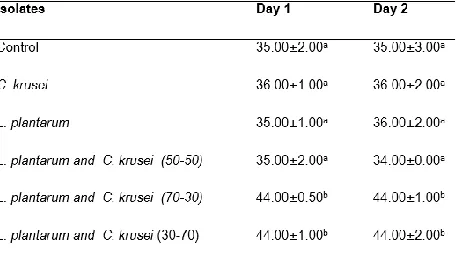
There was significant difference at (P<0.05) in the temperature readings during the solid state fermentation of rice for wine production. Rice inoculated with (Lactobacillus plantarum and
Candida krusei) at concentrations of (70-30%, and 30-70%)
respectively had the highest temperature readings at 440C for
both day one (1) and two (2). Rice inoculated with Lactobacillus
plantarum (100%), Lactobacillus plantarum and Candida krusei
(50-50%) and the control, had the lowest temperature readings of 350C for day one (1) respectively. Temperature readings in day
two experiment shows that rice inoculated with Lactobacillus
plantarum and Candida krusei (50-50%) had the lowest
temperature readings. During this solid state fermentation, there was significant difference at (P<0.05) with in the column and the range of fermentation temperature was between 340Cto 440C, as
shown in table 1. Table 2 shows the analysis pH of rice inoculated with different isolates at different concentrations during submerged fermentation of rice for wine production from day three (3) to day seven (7). There was significant difference at (P<0.05) within the column with values having different superscript. At day three (3) fermentation, rice inoculated with Lactobacillus plantarum (100%), had the highest pH reading, at day four to six rice inoculated with Lactobacillus plantarum and
candida krusei (70-30%) had the highest pH readings and at day
seven (7) the rice sample used as control has the highest pH reading, with values of 4.32, 3.42, 3.09, 2.91, and 2.99 respectively. Rice inoculated with Lactobacillus plantarum and
candida krusei (50-50%) had the lowest pH readings from day five
(5) to seven (7). Values within the columns of day three (3) and seven (7) shows significant difference at (P<0.05), while values within the columns of day four (4) to six (6) shows no significant difference at (P>0.05) as these values have same superscript. There was significant difference at (P<0.05) within the columns of temperature readings from day three (3) to seven (7) during submerged fermentation of rice for wine production. Rice inoculated with Lactobacillus plantarum and candida krusei at concentrations of (70-30%, and 30-70%) respectively had the highest temperature readings at 440C for both day one (1) and
two (2) and there was no increase in the level of significance at (P>0.05) between this values within the columns as shown in table 3. Analysis in table 4 shows the total titratable acidity (TTA) from day three (3) to seven (7) with significant difference at
(P<0.05) within the columns. Rice inoculated with Candida krusei (100%) had the highest TTA value from day three (3) to seven with significant difference at (P<0.05) within the columns of these values.
Table 1: Effect of Solid State Fermentation on the Temperature of Rice Wine Production
Values are Mean ± SD: Values with different superscript within the columns are statistically different (P<0.05)
Key- C. krusei [Candida krusei (yeast)], L. plantarum
[Lactobacillus plantarum (lactic acid bacterium)], oC (temperature)
Table 2: Effect of Submerged Fermentation on the pH of Rice Wine
Values are Mean ± SD: Values with different superscript within the columns are statistically different (P<0.05)
Key- C. krusei [Candida krusei (yeast)], L. plantarum
[Lactobacillus plantarum (lactic acid bacterium)]
Table 3: Effect of Submerged Fermentation on the Temperature of Rice Wine
Values are Mean ± SD: Values with different superscript within the columns are statistically different (P<0.05)
Key- C. krusei [Candida krusei (yeast)], L. plantarum [Lactobacillus plantarum (lactic acid bacterium)]
Table 4: Effect of Submerged Fermentation on the Total Titratable Acidity of the Rice Wine
Values are Mean ± SD: Values with different superscript within the columns are statistically different (P<0.05)
Key- C. krusei [Candida krusei (yeast)], L. plantarum
[Lactobacillus plantarum (lactic acid bacterium)] TTA (total
titratable acidity)
Table 5 shows the specific gravity and alcoholic concentration of rice wine produced using different isolates lactic acid bacteria and yeast at different concentrations. The decrease in specific gravity leads to the increase in the alcoholic content of the rice wine. Rice wine produced with Candida krusei (100%) had the highest alcoholic content of 36.83% while rice wine produced with
Lactobacillus plantarum (100%) had the least alcoholic content of
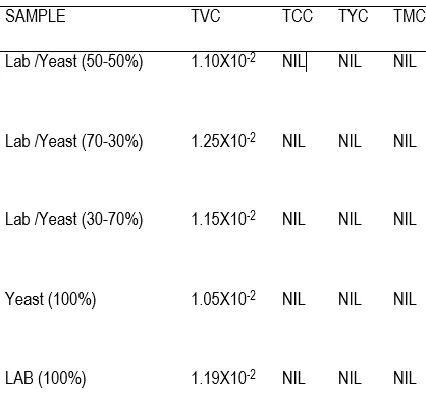
4.52%. In table 6, microbiological analysis of rice wine (finished product) was carried out on all the samples containing different concentrations of Lactobacillus plantarum and candida krusei. Total viable count, total yeast count, and total coliform count were analysed, and it was observed that only for the total viable count plates had growth of viable cells but the rest of the plates had no growth cells. Proximate analysis on rice wine produced with different isolates of lactic acid bacteria and yeast at different concentration shows that there is significant difference at (P<0.05) within some columns of some parameters. Lactobacillus
plantarum and candida krusei (50-50%) had the highest value of
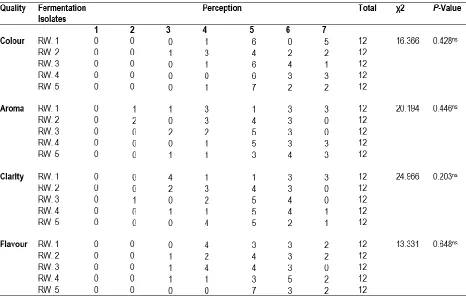
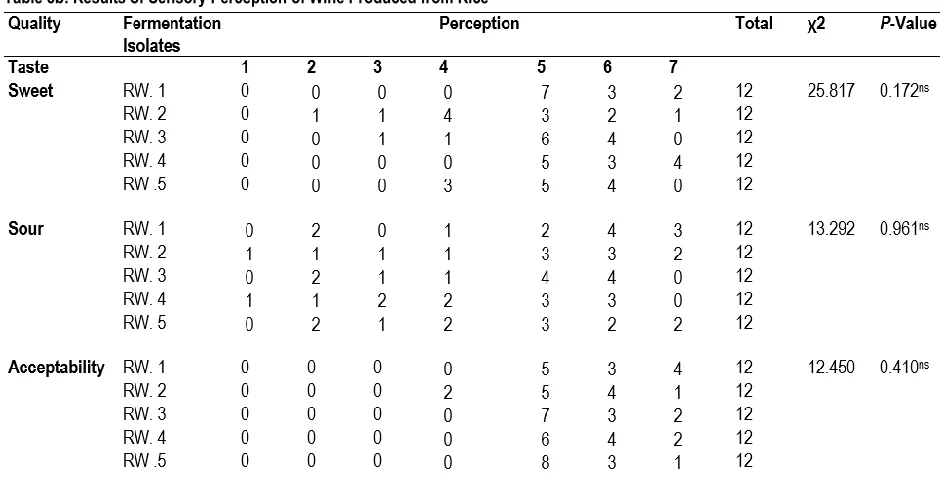
total solids (9.65) while Lactobacillus plantarum and candida krusei (70-30%) had the least value of (8.95) and there is no significant difference at (P>0.05) within the columns of total solids. Candida krusei (100%) had the highest value of ash content compared to Lactobacillus plantarum and candida krusei (70-30%) that had the least value of ash content and there is significant difference at (P<0.05) within the columns of the ash content with each value having different superscript. There is no significant difference at (P<0.05) within the columns of Moisture content, protein and total carbohydrate as shown in table 7. The results of sensory perception of wine produced from rice in table 8a and 8b shows the different views of the twelve (12) panellist on
the rice wine produced with different concentration of lactic acid bacteria and yeast. There is no significant difference at (P>0.05) between the different isolates and the perception of different qualities (colour, aroma, clarity, flavour, taste (sweet or sour), and general acceptability. This implies that irrespective of the volume of concentration of isolates used in rice wine production, it has no significant effect on how they different qualities of wine are perceived
Table 5: Physicochemical Analysis of Rice Wine
Table 6 Microbiological Profile of Rice Wine
KEY: TVC- Total Viable Count, TCC- Total Coliform Count, TYC- Total Yeast Count, TMC- Total Mold Count, LAB- Lactic Acid Bacteria, NIL- Absent of microorganisms
Table 7 Proximate Analysis of Rice Wine
Values are Mean ± SD: Values with different superscript within the columns are statistically different (P<0.05) Key- C. krusei [Candida krusei (yeast)], L. plantarum [Lactobacillus plantarum (lactic acid bacterium)]
Table 8a: Results of Sensory Perception of Wine Produced from Rice
n = 12; ns = no significant association between isolates and perception of quality (P > 0.05) Key: RW (RICE WINE) RW 1=Candida krusei (100%), RW2= Lactobacillus plantarum and Candida krusei (50%-50%), RW 3= Lactobacillus plantarum and Candida krusei (70%-30%), RW
4= Lactobacillus plantarum (100%), RW 5= Lactobacillus plantarum and Candida krusei (30%-70%)
Table 8b: Results of Sensory Perception of Wine Produced from Rice
n = 12; ns = no significant association between isolates and perception of quality (P > 0.05) Key: RW (RICE WINE) RW 1=Candida krusei (100%), RW2= Lactobacillus plantarum and Candida krusei (50%-50%), RW 3= Lactobacillus plantarum and Candida krusei (70%-30%), RW
4= Lactobacillus plantarum (100%), RW 5= Lactobacillus plantarum and Candida krusei (30%-70%).
DISCUSSION
During the submerged fermentation of rice wine the effect of pH was monitored for five (5) days. At the 72nd and 96th hour, the pH
range was 3.3 to 3.4. This result falls within the studies of Chim et al. (2015) whose pH value during the 72nd and 96th hour
fermentation of the mash was 3.3 to 3.5. It is also in conformity with the report of Han et al. (2008) whose pH after rice wine production was between the ranges of 3.4 to 3.9. After 96th hour
fermentation during the findings of this research, the pH value dropped between ranges of 2.4 to 2.5 at the end of the fermentation. This does not agree with the findings of Chim et al. (2015) whose pH at the end of wine production was 4. It also does not agree with Vairappan et al. (2013), who reported that the pH values of wine produced at the end of fermentation was between the ranges of 4.3 to 4.7. He further explained that wine produced using sweet starter cultures have pH values of 4.5 to 4.7 for common glutinous rice and wine produced using sweet bitter starter cultures have slightly lower pH values of 4.3 to 4.4. The findings in this research work also does not agree with Karthikeyan et al. 2014, who reported that pH of wine produced from different rice varieties after fermentation was between ranges of 4.65 to 5.0. The variations in the pH values of the findings of this research work compared to other research could be as a result of the presence of alcohol, various organic acids and by products during the anaerobic fermentation process. The temperature was monitored during the solid and liquid state fermentation process for a period of seven (7) days. The temperature started rising from first day till the last day of fermentation with temperatures ranging from 34oC to 44oC. This
agrees with the report of Chim et al. (2015) who reported that temperature started rising from first day of fermentation to the last day but its temperature range was between 38oC to 39oC,
regardless of the starter cultures used during fermentation. Karthikeyan et al. (2014) reported that the temperature of the fermenting rice mash was 30oC which agrees with the report of
Subhasree. (2010) whose fermentation temperature of rice mash was between 26oC to 30oC, but disagrees with the findings of this
present research work and that of Chim et al. (2015). The rise in temperature could be as a result of high release of ATP during the active growth of starter microorganisms present during fermentation, and various biochemical changes that occurred in the main mash. Firstly, the starch is converted to alpha form by steaming and was saccharified by saccharification amylase to glucose and other sugars such as maltose, isomaltose, and panose. Saccharification amylases are relatively stable and continue to act in the main mash throughout fermentation. Secondly, glucose was fermented by yeast to form ethanol and carbon di oxide, lactic, succinic, and other organic acids are released in the process during fermentation. The solid state fermentation is a critical stage during rice wine production because at this stage starter microorganism present convert rice starch into fermentable sugars by process known as saccharification. If the temperature is favourable, activities of microorganism present during conversion of the sugar will be high but if the temperature is low, the activities of microbes will be slow. This agrees with the reports of Chim et al. (2012) and Karthikeyan et al. (2014) that the fermentation temperature of the yeast activities is affected due to low temperature, which brings about low production of ethanol and its percentage. They also reported that fermented rice in ambient and room temperature are also suitable for rice wine production. During the liquid state fermentation, water was added and the rice was acted upon by the enzymes produced by the starter microbes to liquefy the mash into a much lesser viscous mixture with acidic, sweet and
alcoholic taste. This agrees with the work of Iwata et al. (2003) and Karthikeyan et al. (2014) that fermentable sugars was converted to ethanol by yeast. Saccharification and fermentation proceeded simultaneously in the unfiltered dense mushy mash which brought about high mass of yeast cells in the mash and high ethanol contents in the rice wine. In wine and beer making, fermentation is a one step process, where glucose is converted to ethanol while in rice wine production, starch in steamed rice is broken down to glucose and glucose is converted ethanol as reported by Karthikeyan et al. (2014). Scientist differentiated this two process in beer making and rice wine as single fermentation for beer making and double fermentation process for rice wine production as reported by Iwata et al. (2003). The total titratable acidity (TTA) of rice wine increases as the fermentation time increases. At the end of the fermentation, the acidic content of the wine was from 0.03 to 0.67. This agrees with Chim et al. (2015) whose total titratable acidity of wine at the end of fermentation was 4. It also agrees with the work of Han et al. (2008) whose value for TTA was from 0.89 to 1. The increase in the acidic content of wine could be as a result of increase in cell density or cell mass of starter microbes present during fermentation and also the conversion of glucose and excess sugar into ethanol brings about the release of further organic acids such as succinic, lactic and other organic acids during fermentation. Iwata et al. (2003) reported that lactic and succinic acid are nearly equal in concentration with malic acids which accounts for approximately ninety (90) percent of total organic acids. Han et al. (2008) also reported that lactic acid bacteria contributes to the production of lactic acid and acetoin, which imparts sour taste and pleasant flavour, thus having a significant impact on food quality parameters such as taste and texture. Kim et al. (2007) also reported that acidity is used to indicate the quality of tartness or sharpness of wine, and therefore adequate acidity is important to improving the taste and maintaining wine quality. Alcoholic content of the rice wine produced with different concentration of lactic acid bacteria and yeast were of different percentages. Rice wine produced with Lactobacillus plantarum (100%) had the lowest percentage of alcoholic content of 4.82%, while wine produced with Candida krusei (100%) had the highest percentage of alcoholic content of 36.83%. the wine which has the least percentage of alcohol in the findings of this present research work agrees with the reports of Chim et al. (2015) whose alcoholic content of wine produced from various species of rice was between 5.6% to 7%. This is also in conformity with the work of Karthikeyan et al. (2015) who reported that alcoholic content of rice wine after production was between ranges of 6.2% to 6.7%. But reports from Han et al. (2008) and Subhasree. (2010) had different alcoholic percentages of 15% to 18%. The different values of alcoholic percentages could be as a result of the different species of rice varieties used for wine production and also starter microbes involved in conversion of sugar to ethanol. Dung et al. (2007) reported that the alcoholic level in rice wine is inversely proportional to sugar content in rice cake, and also alcohol is produced from the conversion of sugar by microbes. Vairappan et al. (2013) reported that sufficient substrates and sugar for microbes will lead to the production of ethanol. He further explained that when sugar level is very high and reaches an equilibrium between alcohol percentages, it tends to disrupt further transformation of sugar into alcohol. Proximate analysis of rice wine produced with different concentrations of lactic acid bacteria and yeast gave different values from various parameters
of the analysis except for protein content that has same value of 0.35% for all the rice wine concentrations. Rice wine produced with Lactobacillus plantarum and Candida krusei (70%-30%) was high in moisture content at the value of 91.1% compared to rice wine produced with Candida krusei (100%) that had the least moisture content value of 90.8%. rice wine produced with
Lactobacillus plantarum and Candida krusei (50%-50%) was high
in total solids at value of 9.65% while rice wine produced
Lactobacillus plantarum and Candida krusei (70%-30%) was the
lowest in total solids at value of 8.95%. rice wine produced with Candida krusei (100%) was high in ash and fat contents with values of 0.45% and 9.25% respectively while rice wine produced with Lactobacillus plantarum and Candida krusei (70%-30%) was low in both ash and fat contents at values of 0.15% and 3.05 respectively. Total carbohydrate was high in wine produced with
Lactobacillus plantarum and Candida krusei (50%-50%) and low
in wine produced with Lactobacillus plantarum (100%) at values of 5.89 and 5.14 respectively. Results from protein, ash and total solid content obtained agrees with the findings of Lertisiri et al. (2008) who reported that rice wine was produced from different rice species gotten from different regions in Thailand. They were analysed for ash, protein and total solids. The total solids of the produced rice wine were between ranges of 1.72 to 14.34, ash contents were between ranges of 0.10 to 0.30 and protein contents were between ranges of 0.45 to 0.94. The variation in this values could be as result of certain enzymatic activities and also starter microbes involved during fermentation. In the case of the total solids, amylase is produced during the first stage of fermentation when aerobic conditions is still available, as a result a low amylolytic activities during fermentation could result to high total solids due to high level of starch and vice versa. Also low protein content could also be as a result of protein been possibly liberated from yeast cells and raw materials such as rice during fermentation. The mean carbohydrate obtained agrees with the work of Awe et al. (2013) who produced pawpaw and banana wine and compared it with commercial red wine. The mean carbohydrate for pawpaw, banana and commercial red wine were 6.20, 6.10, and 8.30 respectively. the fat contents obtained from the rice wine was much higher than the reports of Nirmala et al. (2014) who reported that fat content of tomato wine produced were 0.0009 and 0.0004 respectively for both fresh and aged tomato wine for six (6) months. Awe et al. (2013) reported that proximate comparison of samples tend to vary due to the geographical location such samples were grown. Also the production process of the wine also tend to contribute to the variation in proximate analysis. Microbiological analysis of rice wine samples at different concentrations of lactic acid bacteria and yeasts showed that there were viable cells present but no yeasts, mould and coliform present in the rice wine. The viable cells were between the ranges of 1.05x10⁻² cfu/ml to 1.25x10⁻²
cfu/ml. This implies that the wine was produced under hygienic conditions and safe for human consumption. This agrees with the reports of Adedeji and Oluwalana. (2013) who produced watermelon and pawpaw wine under hygienic conditions and had no growth of yeast, mould and coliform but had viable cells present between the ranges of 1.00x10⁻² cfu/ml to 1.03x10⁻²
cfu/ml. He further explained that heat treatment is sufficient enough to destroy microbial load in wine beverage. Carter et al. (2007) reported that many products that could safely be maintained sterile by a pasteurization and also the use of potassium metabusulphite. The sulphite inhibits yeast, mould and
bacteria (Adedeji and Oluwalana, 2013). The sensory perception of rice wine produced with different concentration of lactic acid bacteria and yeasts shows no level of significance will allows the null hypothesis to this research accepted. This implies that irrespective of the concentration of isolates used for the rice wine production, it is generally accepted and safe for consumption.
Conclusion
Rice wine can be produced using synergistic microorganisms of lactic acid bacteria and other species of yeasts apart from
Saccharomyces cerevisiae. Rice wine contains several organic
acids which helps in the digestion of food and promotes better blood circulation, and enhances body metabolism.
REFERENCES
Ansah, H. K. (2011). Characterization of microorganisms involved in the second stage of soy sauce fermentation (Moromi) and studies on the shelf life of soy sauce. College Of Science, Faculty of Bioscience, Department Of Biochemistry and Biotechnology, Kwame Nkrumah University of Science and Technology Kumasi, 04/08/011.
Awe, S.J., Eniola, K.I.T., and Kayoed-Ishola, T.M. (2013). Proximate and mineral composition of locally produced pawpaw and banana wine. America Journal of Research Communication 1(12).
Bernardeau, M., Vernoux, J.P., Henri-Dubernet, S., Gueguen, M. (2008). Safety assessment of dairy microorganisms: The Lactobacillus genus. International Journal of Food
Microbiology, 126(3):278– 285.
Chelule, P. K., Mokoena, M. P., and Gqaleni, N., (2010). Advantages of traditional lactic acid bacteria fermentation of food in Africa. Current research, technology and education
topics in applied Microbiology and Microbial Biotechnology.
A. Mendez-Vilas(Ed). FORMATEX2010.
Chim, C., Erlinda, I. D., Elegado, F. B., Hurtada, A.W., Chakrya, N., and Raymond, C. L. (2015) Traditional dried starter culture (Medombae) for rice liquor production in Cambodia.
International Food Research Journal. 22(4):1642-1650.
Damisa- Okorhi, F. B., and Ataikiru, T. L. (2015). Preliminary study on antimicrobial activity of friendly Bacteria isolated from dairy products. Issues in Biological Sciences and
Pharmaceutical Research.3(3), 21-32.
Ebabhi, A.M., Adedotun, A. A., Oluwayinka, O., and Akinniyi, A. (2013). Isolation and characterization of yeast strains from local food crops. Journal of Yeast and Fungal Research. 4(4):38-43, 2013.
Ghosh, S. Kr; 2011. Study of yeast flora from fruit of syzygium cumini (linn) skeel. Agricultural and Biology Journal of North
America. Issn print: 2151-7517 Online: 2151-7525, doi:
10.525/ abjna-2011.2.8.116.1170.
Goyal R, Das S, Arora A, Aggarwal A. (2008). Rhodotorula
mucilaginosa as a cause of persistent femoral non-union.
Journal of Postgraduate Medicine. 54:25-27.
Iwata, H., Suzuki, T., and Aramaki, I. (2013). Purification and characterization of rice and α-glucosidase, a key enzyme for alcohol fermentation rice polish. Journal of Bioscience and
Bioengineering 95(1): 106-108.
Jimoh, S.O., Ado, S.A., Ameh, J.B., Whong, C.M.Z. (2012). Characteristics and diversity of yeasts in locally fermented beverages sold in Nigeria. World Journal of Engineering and
Pure and Applied Sciences. 2(2):40
Kadiri, F.A., Eze, C.C., Orebiyi, J. S., Lemchi, J.I., Ohajianya, D.O., and Nwaiwu, I.U. (2014). Technical effiency in paddy rice production in Niger Delta region of Nigeria. Global
Journal of Agriculture Research. 2(2):33-44.
Karthikeyan, R., Ravichandiran, K., Ramakrishnan, T. (2014). Production of Wine from Tamil Nadu Traditional Rice Varieties. International Food Research Journal 21(6):2091-2093.
Lertisiri, S., Chuenchomrat, P., And Assavanig, A. (2008). Volatile flavour compounds analysis of solid state fermented Thai rice wine (Ou). Shwan Asia 34:199-206.
Marcel, M.L., Luana, P.B., Marcos, D.R., Alane, B.V., and Sonia, R. (2009) Identification of antifungal susceptibility and scanning electron microscopy of a keratinolytic strain of Rhodotorula mucilaginosa: a primary causative agent of onychomycosis; FEMS Immunology and Medical Microbiology. 55(3):396–403.
Oluwaniyi, T.T., and Emmanuel, D.F. (2015). Mycoflora, proximate composition and nutritional changes during the storage of Oryza sativa. Food science and quality
management. ISSN 2224-6088. Vol, 40, 2015.
Vairappan, C.S., and Kishneth, P., (2013). Biochemical properties of rice wine produced from three different starter cultures.
Journal of Tropical Biology and Conservation. 10:31-41,
2013.
Xu Gan Rong and Bao Tong Fa, 2008. Grandiose Survey of Chinese Alcoholic Drinks and Beverages. Retrieved http://www.sytu.edu.cnlzhgjiuluS-2.html.