World Maritime University Dissertations Dissertations
2016
Criminal procedures and sanctions against seafarers after
Criminal procedures and sanctions against seafarers after
large-scale ship-source oil pollution accidents: a human rights
scale ship-source oil pollution accidents: a human rights
perspective
perspective
Anete Logina
World Maritime University
Follow this and additional works at: https://commons.wmu.se/all_dissertations
Part of the Criminal Law Commons, and the Human Rights Law Commons
Recommended Citation Recommended Citation
Logina, A. (2016). Criminal procedures and sanctions against seafarers after large-scale ship-source oil pollution accidents: a human rights perspective (Ph.D). World Maritime University.
CRIMINAL PROCEDURES AND SANCTIONS
AGAINST SEAFARERS AFTER LARGE-SCALE
SHIP-SOURCE OIL POLLUTION ACCIDENTS:
A HUMAN RIGHTS PERSPECTIVE
by
ANETE LOGINA
Latvia
A dissertation submitted to the World Maritime University in partial fulfilment of the requirements for the award of the degree of
DOCTOR OF PHILOSOPHY
2016
Acknowledgement
I would like to express my deepest gratitude to INTERTANKO for granting me the fellowship to carry out this research. Without the financial support my PhD studies would not have been possible. I wish to thank INTERTANKO not only for its financial support but also for its other kind of unwavering support: valuable contact information, professional discussions and, simply, friendship. A separate thanks, in this regard, I wish to say to Ms. Michele White, my always ready-to-help contact person at INTERTANKO.
I would like to extend my thanks to other persons who provided their guidance and support over the years, including but not limited to:
• World Maritime University current and former faculty members – Professors Olof Linden and Max Mejia, Associate Professors Michael Ekow Manuel, Yoshinobu Takei, Raphael Baumler, George Theocharidis, Michael Baldauf and my supervisor Maria Carolina Romero Lares, Assisstant Professor Momoko Kitada and others – who gave me valuable comments regarding the research;
• former World Maritime University faculty member, now Associate Professor
of International Law at Musashino University – Dr. Chie Kojima – who supervised my work before changing her workplace.
• World Maritime University staff members – Faculty Support Officer Carla Escalante Fischer, Librarians Christopher Hoebeke and Anna Volkova, Information and Communication Technology Assistant Ammar Jaber, Henrik Smith Residence Supervisor Ursula Hoebeke and others – who used their best efforts to make my stay at the University comfortable and my research easier;
• Mr. Christian Hoppe, Senior Legal Affairs Officer at BIMCO, Mr. David
• Mr. Ruiz Soroa from Ruiz Soroa & Zabaleta as well as several others, who expressed their wish to remain anonymous, for providing me extremely valuable first-hand information for my case studies;
• Dr. Cedric Leboeuf from the University of Nantes and Mr. Miquel Roca from
Blas de Lezo for helping me to understand particular French and Spanish law, respectively;
• Ms. Michele Galliford, my very amicable and professional English language proof-reader, for helping me to improve the text of the dissertation language-wise.
Abstract
Title of Dissertation: Criminal Procedures and Sanctions Against Seafarers After Large-Scale Ship-Source Oil Pollution Accidents: A Human Rights Perspective
Degree: PhD
The international maritime community is highly concerned about the unfair application of criminal procedures and sanctions against seafarers, particularly after large-scale ship-source oil pollution accidents, because such unfairness may cause severe negative consequences for individual seafarers and the shipping sector in broader terms. A lot of work has already been done towards the elimination of the respective unfairness. Yet, the unfair practice continues. This dissertation attempts to give new ideas as to how to facilitate the fair application of criminal procedures and sanctions against seafarers after large-scale ship-source oil pollution accidents.
The dissertation starts with the clear definition and comprehensive explanation of the standard of fair criminal procedures and sanctions against seafarers. The offered standard is – relevant human rights.
After analysing the relevant legal norms of UNCLOS and MARPOL, the dissertation turns to the long-standing discussion on the qualities of EU Directive 2005/35 on ship-source pollution, particularly to the controversy of whether the Directive conflicts with the MARPOL exceptions from liability, or not. The dissertation, inter alia, makes an original conclusion that the root cause of the controversy is the failure of the drafters of MARPOL to agree on the issue as to when, if ever, State Parties to MARPOL may adopt more stringent standards than MARPOL.
Some insight into relevant national laws and practices is provided by the dissertation – through the case study of four large-scale ship-source oil pollution accidents: the Erika, Prestige, Tasman Spirit and Hebei Spirit accidents. The case study shows that after all four afore-mentioned accidents seafarers were exposed to unfair criminal procedures and sanctions.
After this unfortunate finding, the dissertation analyses whether IMO/ILO Guidelines on Fair Treatment of Seafarers are capable to bring considerable positive change in practice. Conclusion is made that the Guidelines, per se, are not capable to bring such change, however some rules of the Guidelines are good basis for further, more substantial developments.
The dissertation ends with revisiting of all research questions and providing user-friendly lists of main recommendations related to these questions. At the very end, a couple of overall conclusions and recommendations, which, at times, reach even further than only large-scale ship-source oil pollution offences, are given. One of such recommendations is the recommendation to develop three new IMO instruments: one binding (the International Convention for the Unification of Certain Rules Relating to Penal Liability in the Maritime Domain) and two non-binding (the Sanctioning Guidelines for Offences in the Maritime Domain and the Guidelines on Penal Proceedings Which Involve Seafarers).
Table of Contents
DECLARATION ... I
COMPLIANCE WITH GUIDELINES ON GOOD RESEARCH PRACTICE ... II
ACKNOWLEDGEMENT ... III
ABSTRACT ... V
LIST OF FIGURES AND ABBREVIATIONS ... XIII
1. INTRODUCTION ... 1
1.1.BACKGROUND AND STATEMENT OF PROBLEM ... 1
1.2.AIM AND OBJECTIVES OF THE DISSERTATION ... 8
1.3.RESEARCH QUESTIONS ... 9
1.4.STRUCTURE OF DISSERTATION AND TARGET GROUPS ... 11
1.5.LEGAL THEORY AND METHODOLOGY ... 14
1.6.CLARIFICATION OF THE SCOPE OF DISSERTATION AND USE OF TERMS ... 16
1.6.1. Terms “Fair” and “Unfair” ... 16
1.6.2. Focus on Law ... 19
1.6.3. Focus on Human Rights and Specific International and EU Legal Instruments ... 20
1.6.4. Only Criminal Procedure Law and Criminal Law Perspective ... 21
1.6.5. Terms “Criminal Offence”, “Criminal Procedures” and “Criminal Sanctions” ... 22
1.6.6. Term “Criminalisation” ... 23
1.6.7. Only Seafarers Perspective ... 25
1.6.8. Only Ship-Source Oil Pollution Offences ... 25
1.6.9. Only “Accidental” Ship-Source Oil Pollution ... 26
1.6.10. Only “Large-Scale” Ship-Source Oil Pollution Accidents ... 29
1.6.11. Choice of Cases for Chapter 2 “Human Rights” ... 31
1.6.12. Choice of Cases for Chapter 6 “Case Study” ... 31
2. HUMAN RIGHTS ... 33
2.1.CONCEPT OF HUMAN RIGHTS ... 33
2.2.RIGHT TO LIBERTY ... 37
2.2.1. Introduction ... 37
2.2.2. Violation of the Right to Liberty: Arbitrary Deprivation of Liberty ... 39
2.2.2.1. Deprivation of Liberty Without Existence of Sufficiently Precise Law ... 40
2.2.2.2. Deprivation of Liberty not in Conformity with Existing Law ... 41
2.2.2.3. Deprivation of Liberty Without Existence of Recognised Ground ... 42
2.2.2.4. Deprivation of Liberty Without Convincingly Demonstrating Its Justification ... 50
2.2.3. Violation of the Right to Liberty: Failure to Provide Required Guarantees for Persons Deprived of Liberty ... 51
2.2.3.1. Right to Be Informed on the Reasons for Deprivation of Liberty and Charges ... 51
2.2.3.2. Right to Automatic Judicial Review of Deprivation of Liberty ... 53
2.3.RIGHT TO BE FREE FROM TORTURE AND OTHER CRUEL,INHUMAN OR DEGRADING TREATMENT
... 57
2.4.RIGHT TO BE FREE FROM CRUEL,INHUMAN OR DEGRADING PUNISHMENT ... 60
2.4.1. Introduction ... 60
2.4.2. General Principles for Determining Criminal Liability ... 62
2.4.2.1. Introduction ... 62
2.4.2.2. Objective Element “Act” ... 65
2.4.2.3. Objective Element “Harm” ... 65
2.4.2.4. Objective Element “Causation” ... 66
2.4.2.5. Other Objective Elements of a Crime ... 68
2.4.2.6. Subjective Element “Intent” ... 69
2.4.2.7. Subjective Element “Recklessness” ... 70
2.4.2.8. Subjective Element “Gross Negligence” ... 71
2.4.2.9. Other Subjective Elements of a Crime ... 73
2.4.2.10. Strict Liability ... 73
2.4.2.11. Defence of Necessity ... 77
2.4.3. General Principles for Determining Sanction to Be Imposed for an Offence ... 78
2.5.RIGHT TO FAIR TRIAL ... 83
2.5.1. Introduction ... 83
2.5.2. Right to a Public Hearing ... 84
2.5.3. Right to Be Tried by Competent, Independent and Impartial Tribunal Established by Law ... 85
2.5.3.1. General Introduction to the Right to Be Tried by Competent, Independent and Impartial Tribunal Established by Law ... 85
2.5.3.2. Requirement for a Tribunal to Be Established by Law ... 86
2.5.3.3. Requirement for a Tribunal to Be Competent ... 86
2.5.3.4. Requirement for a Tribunal to Be Independent ... 87
2.5.3.5. Requirement for a Tribunal to Be Impartial ... 87
2.5.4. Presumption of Innocence ... 88
2.5.5. Right to Defence ... 90
2.5.6. Right to Be Informed of Charges ... 91
2.5.7. Right to Have Adequate Time and Facilities for the Preparation of Defence ... 91
2.5.8. Right to Be Tried Without Undue Delay ... 92
2.5.9. Right to Be Tried in Presence ... 94
2.5.10. Right to Defend Oneself in Person or Through Legal Assistance ... 95
2.5.11. Right of a Charged Person to Examine Witnesses Against Him and to Obtain the Examination of Witnesses on His Behalf ... 98
2.5.12. Right to Have the Assistance of an Interpreter ... 99
2.5.13. Right Not to Incriminate Oneself ... 100
2.5.14. Right to the Review of Conviction and Sentence ... 102
2.5.15. Right Not to Be Tried or Punished Twice for the Same Offence ... 103
3. UNCLOS ... 108
3.1.INTRODUCTION ... 108
3.2.RIGHT TO LIBERTY AND UNCLOS ... 109
3.2.1. Introduction ... 109
3.2.2. Procedural Rules of UNCLOS Related to Deprivation of Liberty ... 110
3.2.2.1. Requirement to Facilitate Involvement of Others into Proceedings ... 110
3.2.2.2. Requirement to Pay Due Regard to Other Interests when Exercising Powers of Enforcement 115 3.2.3. Legal Norms of UNCLOS on Prompt Release from Detention ... 116
3.3.RIGHT TO BE FREE FROM CRUEL,INHUMAN OR DEGRADING PUNISHMENT AND UNCLOS ... 121
3.4.RIGHT TO FAIR TRIAL AND UNCLOS ... 129
3.4.1. Introduction ... 129
3.4.2. Right to Be Tried Without Undue Delay ... 130
3.4.3. Right of a Charged Person to Examine Witnesses Against Him and to Obtain the Examination of Witnesses on His Behalf ... 130
3.4.4. Right Not to Be Tried or Punished Twice for the Same Offence ... 131
3.5.RIGHT TO NON-DISCRIMINATION AND UNCLOS ... 134
3.6.HUMAN RIGHTS AND LEGAL NORMS OF UNCLOS ON JURISDICTION ... 137
3.6.1. Introduction ... 137
3.6.2. Criminal Jurisdiction of States ... 137
3.6.3. Criminal Jurisdiction of Officials ... 172
3.7.HUMAN RIGHTS AND ARTICLES 230(3) AND 300 OF UNCLOS ... 176
4. MARPOL ... 179
4.1.INTRODUCTION ... 179
4.2.RIGHT TO LIBERTY AND MARPOL ... 180
4.3.RIGHT TO BE FREE FROM CRUEL,INHUMAN OR DEGRADING PUNISHMENT AND MARPOL ... 181
4.3.1. Introduction ... 181
4.3.2. Legal Norm of MARPOL on Severity of Sanctions ... 182
4.3.3. Legal Norms of MARPOL on Exceptions from Liability ... 184
4.3.3.1. Introduction ... 184
4.3.3.2. MARPOL Exceptions from Liability and Defence of Necessity ... 187
4.3.3.3. MARPOL Exceptions from Liability and Corpus Delicti ... 189
4.3.3.4. MARPOL Exceptions from Liability and Strict Liability ... 198
5. DIRECTIVE 2005/35 ... 203
5.1.INTRODUCTION ... 203
5.2.INTERTANKOCASE ... 208
5.2.1. General Description of INTERTANKO Case ... 208
5.2.2. Question 2 Referred to the ECJ in the INTERTANKO Case: Question on the Compatibility of Directive 2005/35 with MARPOL ... 22211
5.2.3. Question 3 Referred to the ECJ in the INTERTANKO Case: Question on the Compatibility of Directive 2005/35 with the Right of Innocent Passage ... 228
5.2.4. Question 4 Referred to the ECJ in the INTERTANKO Case: Question on Legal Certainty of the Term “Serious Negligence” ... 230
5.3.LEGAL NORMS OF DIRECTIVE 2005/35 ON SEVERITY OF SANCTIONS ... 2375
6. CASE STUDY ... 238
6.1.INTRODUCTION ... 238
6.2.SINKING OF ERIKA ... 238
6.2.1. Facts ... 238
6.2.2. Analysis ... 251
6.3.SINKING OF PRESTIGE ... 254
6.3.1. Facts ... 254
6.3.2. Analysis ... 282
6.4.GROUNDING OF TASMANSPIRIT ... 294
6.4.1. Facts ... 294
6.4.2. Analysis ... 304
6.5.COLLISION OF HEBEISPIRIT AND SAMSUNGNO.1 ... 307
6.5.1. Facts ... 307
6.5.2. Analysis ... 319
7. IMO/ILO GUIDELINES ON FAIR TREATMENT OF SEAFARERS ... 326
7.1.INTRODUCTION ... 326
7.2.RIGHT TO LIBERTY AND THE GUIDELINES ... 327
7.3.RIGHT TO BE FREE FROM TORTURE AND OTHER CRUEL,INHUMAN OR DEGRADING TREATMENT AND THE GUIDELINES ... 330
7.4.RIGHT TO BE FREE FROM CRUEL,INHUMAN OR DEGRADING PUNISHMENT AND THE GUIDELINES ... 332
7.5.RIGHT TO FAIR TRIAL AND THE GUIDELINES ... 332
7.6.RIGHT TO NON-DISCRIMINATION AND THE GUIDELINES ... 336
8. CONCLUSIONS AND RECOMMENDATIONS ... 337
8.1.INTRODUCTION ... 337
8.2.RESEARCH QUESTION 1 ... 340
8.3.RESEARCH QUESTION 2 ... 344
8.4.RESEARCH QUESTION 3 ... 354
8.5.RESEARCH QUESTIONS 4 AND 5 ... 358
8.6.RESEARCH QUESTION 6 ... 361
8.7.POTENTIAL OVERALL WAYS FORWARD ... 364
REFERENCES ... 372
ANNEX I: HUMAN RIGHTS COMPLIANCE CHECK-LISTS ... 393
ANNEX II: CRIMINAL JURISDICTION OVER LARGE-SCALE SHIP-SOURCE OIL POLLUTION ACCIDENTS ... 420
ANNEX III: POTENTIAL LEGAL NORMS OF THE INTERNATIONAL CONVENTION FOR THE UNIFICATION OF CERTAIN RULES RELATING TO PENAL LIABILITY IN THE MARITIME DOMAIN ... 430
ANNEX IV: POTENTIAL LEGAL NORMS OF THE SANCTIONING GUIDELINES FOR OFFENCES IN THE MARITIME DOMAIN ... 433
List of Figures and Abbreviations
LIST OF FIGURES
Figure 1 – Vision of the dissertation.
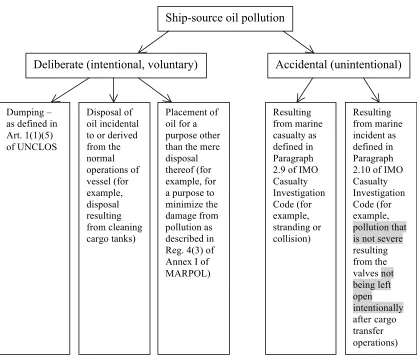
Figure 2 – Types of ship-source oil pollution.
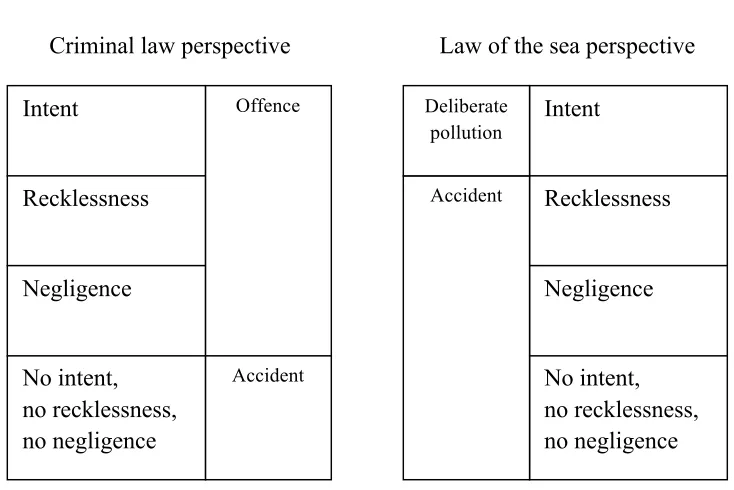
Figure 3 – Comparison of the meaning of the term “accidental pollution” from the perspective of criminal law and from the perspective of law of the sea.
Figure 4 – Tripartite test of proportionality of sanctions.
Figure 5 – Flow of references in UNCLOS establishing the competence of a coastal State to apply such criminal enforcement measures which hamper innocent passage through territorial sea.
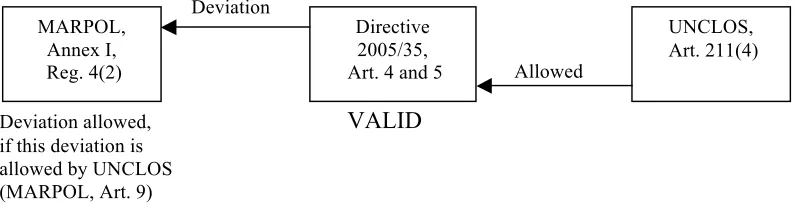
Figure 6 – Position of “supporters of the deviation” regarding validity of Articles 4 and 5 of Directive 2005/35.
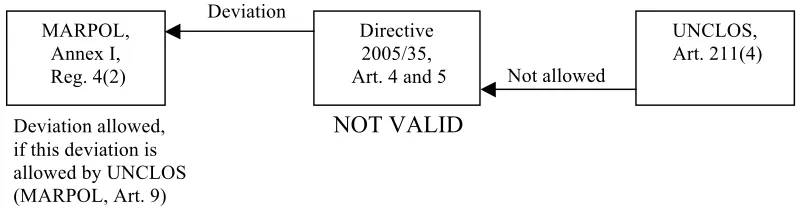
Figure 7 – Position 1 of “adversaries of the deviation” regarding validity of Articles 4 and 5 of Directive 2005/35.
Figure 8 – Position 2 of “adversaries of the deviation” regarding validity of Articles 4 and 5 of Directive 2005/35.
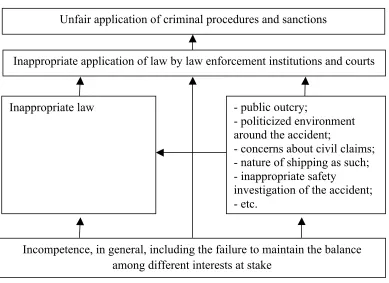
Figure 9 – Possible causes of the problem of the unfair application of criminal
procedures and sanctions against seafarers after large-scale ship-source oil pollution accidents.
LIST OF ABBREVIATIONS
AB able seaman
BIMCO Baltic and International Maritime Council
CJEU Court of Justice of the European Union
CMI Comité Maritime International
COLREG International Regulations for Preventing Collisions at Sea, 1972
CROSS Etel Regional Operational Centre for Monitoring and Rescue (Centres Régionaux Opérationnels de Surveillance et de Sauvetage) in Etel, France
CZCS Finisterre Regional Centre for the Coordination of Maritime Rescue and the Fight Against Marine Pollution of Finisterre (Centro Zonal de Coordinación de Salvamento Marítimo y Lucha contra la Contaminación Marina de Fisterra)
DNA deoxyribonucleic acid
dwt deadweight tonnage
EC European Commission
ECJ European Court of Justice
ECtHR European Court of Human Rights
EEZ exclusive economic zone
EMSA European Maritime Safety Agency
EU European Union
F French franc
Fund Convention International Convention on the Establishment of an International Fund for Compensation for Oil Pollution Damage, 1992
GT gross tonnage
HF high frequency
IACtHR Inter-American Court of Human Rights
ICS International Chamber of Shipping
IFSMA International Federation of Shipmasters’ Associations
ILO International Labour Organization
IMO International Maritime Organization
INTERTANKO International Association of Independent Tanker Owners IOPC Funds International Oil Pollution Compensation Funds
ISF International Shipping Federation
ITF International Transport Workers’ Federation
ITLOS International Tribunal for the Law of the Sea
KRW South Korean won
MARPOL International Convention for the Prevention of Pollution from Ships, 1973 as modified by the Protocol of 1978
MLC Maritime Labour Convention, 2006
MoU Memorandum of Understanding
MQM Mattahida Qaumi Movement
NGO non-governmental organisation
OCHA Office for the Coordination of Humanitarian Affairs
P&I Protection and Indemnity
RINA Registro Italiano Navale
SOLAS International Convention for the Safety of Life at Sea, 1974
SOPEP Ship Oil Pollution Emergency Plan
SRI Seafarers’ Rights International
STCW International Convention on Standards of Training, Certification and Watchkeeping for Seafarers, 1978
UDHR Universal Declaration of Human Rights
UK United Kingdom
UN United Nations
UNCLOS United Nations Convention on the Law of the Sea, 1982
UNEP United Nations Environment Programme
USD United States dollar
VHF very high frequency
VLCC very large crude carrier
1. Introduction
1.1. Background and Statement of Problem
Since the late 1990s and the early 2000s, the international maritime community has been highly concerned about the unfair application of criminal procedures and sanctions against seafarers, particularly after large-scale ship-source oil pollution accidents – accidents which cause public and media reaction and together with that also heightened political tension.1 It has been argued that seafarers are detained for prolonged periods, without clear grounds, without access to legal advice and without interpretation services; and that, they are held as “material witnesses”, as hostages pending the resolution of a financial dispute, treated as scapegoats for dubious owners with deficient ships or as inducement for those responsible to come forward and convicted without proving their criminal intent, by applying a lower standard of proof or basing conviction on political motivations.2 Through case-study analysis conducted for this dissertation, those fore-mentioned concerns of the international maritime community will be confirmed as well-founded.
1 See infra, pp. 29-30 for explanation of “large-scale” in the context of this dissertation. 2 See, for example, Deirdre Fitzpatrick and Michael Anderson, (ed.), Seafarers’ Rights,Oxford:
It is a true and promising fact that large-scale ship-source oil pollution accidents have decreased significantly over the past several years.3 Consequently, there are also less cases of unfair application of criminal procedures and sanctions against seafarers after these accidents. However, it is highly likelythat sooner or later a large-scale ship-source oil pollution accident will once again occur, because as Mooradian has stated:
[...] given the inhospitable nature of the marine environment, it is unlikely that mankind will ever completely eliminate marine disasters. One would surmise that it would be practically impossible to completely eliminate, through legislative edict, human error and the incalculable element of misfortune.4
Everybody in the maritime community wants to be sure that if and when another such unfortunate oil-pollution accident were to occur, seafarers would not be exposed to unfair criminal procedures and sanctions again, because such unfairness against seafarers brings severe negative consequences.
First of all, such unfairness can damage seafarers’ and their family members’ psychological and physical health.5 Secondly, such unfairness can negatively influence seafarers’ professional career, with resultant economic implications for them and their family members. If a seafarer is detained or imprisoned, he is not able to continue to work and may lose his salary and social benefits. If a seafarer is not detained or imprisoned, his career still might be impacted. Criminal conviction, as such, even if only a monetary penalty is imposed, puts a “stigma” on the seafarer and may subject him to debilitating. For example, some states do not give visas to persons who have been criminally punished. In the case of seafarers, the inability to
3 See ITOPF,Oil Tanker Spill Statistics 2015, available at:
http://www.itopf.com/fileadmin/data/Documents/Company_Lit/Oil_Spill_Stats_2016.pdf [accessed 7
March 2016].
4 Christopher P. Mooradian, “Protecting ‘Sovereign Rights’: the Case for Increased Coastal State
Jurisdiction over Vessel-Source Pollution in the Exclusive Economic Zone”, in Boston University Law Review, Volume 82, Issue 3, June 2002 at p. 769.
5 ITF, Hebei Spirit fact sheet, available at: http://www.itfglobal.org/campaigns/hebeifacts.cfm
[accessed 21 March 2013]. See also the case study in this dissertation which indicates that after
obtain a visa can prevent them from carrying out their duties.6 Even criminal accusation followed by an acquittal puts “stigma” on a seafarer;7 because, typically, any accusation questions seafarers’ respect for the law, and such questioning can cause the perception that a particular person is not reliable. Naturally, employers do not want “unreliable” people to work for them. Thus, they might be reluctant to hire respective seafarers.
Implications for individual seafarers are not the only negative consequences of the unfair application of criminal procedures and sanctions against seafarers. These consequences are much broader. As BIMCO puts it:
[…] the implications for individual seafarers cannot be seen in isolation. Thus, the considerable number of high profile cases of unfair treatment is bound also to have consequences for the shipping sector in broader terms, its image, and the ability to recruit and retain a sufficient number of qualified seafarers to the sector.8
Results of several studies show that many seafarers are concerned about a possibility that they will be unfairly criminalised or otherwise unfairly treated after maritime accidents, including large-scale ship-source oil pollution accidents.9 This concern pushes seafarers to seek for alternative employment in which they are less exposed to the risk of accusation and conviction – employment ashore or if still on a ship, then at lower rank. In turn, it results in the lack of qualified seafarers, especially officers.10
6 Olivia Murray, “Fair Treatment of Seafarers – International Law and Practice”, in the Journal of
International Maritime Law, Volume 18, Issue 2, March-April 2012 at p. 156;
BIMCO, Unfair Treatment of Seafarers – Serious Implications for the Seafarers Involved, available at: https://www.bimco.org/en/News/2010/03/04_Unfair_treatment_of_seafarers.aspx?RenderSearch=true [accessed 23 December 2014];
BIMCO, IOPC Fund Launches Recourse Action in Hebei Spirit Incident, available at:
https://www.bimco.org/en/News/2010/03/15_IOPC_Fund_launches_recourse_action.aspx?RenderSea rch=true [accessed 23 December 2014].
7 MURRAY, ibid.
8 BIMCO, Unfair Treatment of Seafarers – Serious Implications for the Seafarers Involved, supra note
6.
9 See Nautilus International, Criminalisation of Seafarers Report, 2011 and SRI Criminal Survey,
2013.
10 Proshanto K. Mukherjee, “Criminalisation and Unfair Treatment: The Seafarer’s Perspective”, in
This shortage of seafarers brings implications on trade. In the worst-case scenario, hundreds of ships may be retired as a result of having no qualified seafarers to navigate them. Considering the fact that shipping transports over 90% of global trade – for instance, raw materials, consumer goods, essential food stuff and energy – and that a vast majority of these products cannot be transported any other way,11 one can imagine the catastrophe that a shortage of seafarers may cause. For convincing those who lack an imagination, Mukherjee suggests every ship everywhere in the world to come to a halt just for two days. Empty supermarket shelves then will allow the modern consumer society to understand the harsh nightmare of a world without shipping.12
Even if the above-described, extreme scenario (the scenario of nobody to navigate ships) never were to materialize, a shortage of seafarers still has the potential to bring severe negative impact on trade. A survey on the shortage of seafarers which was carried out by Moore Stephens and was based on responses from key players in the international shipping industry, concluded: competition for crews is likely to help push up crew wages and other crew costs and, together with it, also the total vessel operating costs.13 Perhaps the saddest thing is that more costly crews, in this case, do not mean better crews. Responses to this issue in the above- mentioned survey were like these: “Crew competence and skill is declining” and “A lot of the new crews are of a very low standard.”14 Such responses are not surprising. General research on the labour market has often concluded that there exists a strong inverse relationship between the number of professionals in a field and the skills shortage in this same field.15 One might wish to see more research proving this
11 IMO, IMO and the Environment at p. 2, available at:
http://www.imo.org/OurWork/Environment/documents/imo%20and%20the%20environment%202011 .pdf [accessed 2 September 2015].
12 MUKHERJEE, supra note 10 at p. 336.
13 Moore Stephens, Future Operating Costs Report, 2012 at pp. 2-4, available at:
http://www.moorestephens.co.uk/vessel_operating_costs_expected_to_rise_over_the_next_two_years .aspx [accessed 2 September 2015].
14Ibid.
15 See, for example, Mari Lind Frongner, “Skills Shortages”, in Labour Market Trends, January 2002
relationship, also, specifically in regards to the shortage of seafarers and their declining skills. However, even without such research, it is clear that there is a high possibility that such a relationship exists; for instance, at the maritime educational institutions, quality might be compromised in the quest for increasing quantity and inexperienced seafarers might be promoted quickly due to a lack of officers. Less- qualified crews, obviously, bring with them a higher risk of accidents.
Another phenomenon caused by the unfair application of criminal procedures and sanctions against seafarers which results in higher risk of accidents is the reluctance of seafarers, due to fear of self-incrimination, to cooperate with institutions which carry out safety investigations of accidents – investigation in accordance with the IMO Code of the International Standards and Recommended Practices for a Safety Investigation into a Marine Casualty or Marine Incident, adopted by IMO Resolution MSC.255(84) (hereinafter – IMO Casualty Investigation Code),16 or other similar investigations.17 The objective of a safety investigation, as it is stated in Paragraph 1.1 of the IMO Casualty Investigation Code, is “preventing marine casualties and marine incidents in the future.” This objective is reached by revealing the causes of the casualty or incident and giving relevant recommendations to the whole maritime community. The unwillingness of seafarers to cooperate fully and openly with a safety investigation can hamper the revelation of the true causes of the casualty or incident. Yet, without knowing these causes, it is very hard to take effective response measures and, consequently, to achieve the above mentioned objective of preventing marine casualties and marine incidents in the future.
16 IMO, Code of the International Standards and Recommended Practices for a Safety Investigation
into a Marine Casualty or Marine Incident (Casualty Investigation Code), adopted by IMO Resolution MSC.255(84), 16 May 2008.
17 For example, see SRI Criminal Survey, 2013, in which it is stated that 46% of seafarers who
The high probability of the unfair application of criminal procedures and sanctions against seafarers may also have negative impact on the will of masters of ships to seek refuge in particular states.18 It can lead to accidents which may not have happened at all or may have had less severe consequences if a ship had asked for and was granted a place of refuge.
Arguments discussed above prove that aiming to secure a cleaner environment with the help of criminal law, if this law is developed and enforced in unfair manner, in fact can cause the opposite effect – more pollution due to poorly qualified crew navigating ships, due to inability to find out the true causes of the accident and eliminate them and due to unwillingness of masters of ships to seek refuge in particular states.
A lot of work has been done by the international maritime community towards the elimination of the unfair application of criminal procedures and sanctions against seafarers. In 2004, the Joint IMO/ILO Ad Hoc Expert Working Group on the Fair Treatment of Seafarers in the Event of a Maritime Accident was established. According to the terms of reference, the Working Group needed to prepare suitable recommendations for consideration by the IMO Legal Committee and the ILO Governing Body, including draft guidelines on the fair treatment of seafarers in the event of a maritime accident.19 The Working Group successfully accomplished its task and, consequently, in 2006, the IMO Legal Committee as well as the ILO Governing Body adopted “Guidelines on Fair Treatment of Seafarers in the Event of a Maritime Accident” (hereinafter – IMO/ILO Guidelines on Fair Treatment of Seafarers). 20,21
18 Marc A. Huybrechts, “Whatever Happened to European Directive 2005/35/EC? Europe’s
Ambivalent Approach to the Fight Against Marine Pollution and Its Consequences for Seafarers”, in Baris Soyer and Andrew Tettenborn, (ed.), Pollution at Sea: Law and Liability, London: Informa, 2012 at p. 266; “Proposed Criminal Sanctions for Oil Spills Top Legal Agenda”, Lloyd’s List, 24 August 2004.
19 Report of the Joint ILO/IMO Ad Hoc Expert Working Group on Fair Treatment of Seafarers in the
Event of a Maritime Accident, ILO, GB.292/STM/6/1, March 2005.
20 IMO, Adoption of Guidelines on Fair Treatment of Seafarers in the Event of a Maritime Accident,
Resolution LEG.3(91), adopted on 27 April 2006; ILO, Minutes of the 296th Session of the Governing
Body of the International Labour Office,GB.296/PV, adopted on 12 and 16 June 2006.
21 For detailed analysis of the IMO/ILO Guidelines on Fair Treatment of Seafarers see Chapter 7 of
Apart from the IMO/ILO Guidelines on Fair Treatment of Seafarers, there has been a significant contribution by the international maritime community towards enhancing the fair application of criminal procedures and sanctions against seafarers via several studies, such as:
• CMI study on fair treatment of seafarers, 2006. During this study the
information on laws and practices of specific countries in regards to the criminalisation and deprivation of liberty of seafarers after maritime accidents was compiled. The results of the study indicated that laws and practices of several countries are not in line with the relevant international requirements.22
• BIMCO Study of the Treatment of Seafarers, 2010. During this study the examples of cases of unfair application of criminal procedures or sanctions against seafarers from 1996 to 2009 were identified and briefly described. The results of the study showed topicality of the issue.23
• Already fore-mentioned SRI Criminal Survey, 2013. During this survey
seafarers were questioned to acquire the data on their personal and their colleagues’ experiences of facing criminal charges or being a witness in a criminal prosecution. Amongst the findings of the survey were the following: 8.27% of respondents had faced criminal charges; 90.21% of respondents who had faced criminal charges and who answered the relevant question did not have legal representation; 91.20% of respondents who had faced criminal charges and needed interpretation services were not provided with these services; 88.66% who had faced criminal charges and who answered the relevant question did not have their legal rights explained to them; 80.00% of respondents who had faced criminal charges and who answered the relevant question felt they were intimidated or threatened as an accused; 24.49% of respondents who had been witnesses in a prosecution and who answered the relevant question felt they were intimidated or threatened as a witness. These
22 CMI, Fair Treatment of Seafarers: Summary of Responses of CMI Members to the Questionnaire,
2006.
findings showed that during penal proceedings specific human rights of seafarers are often not respected.24
Unfortunately, all above-mentioned and other efforts of the international maritime community have appeared to be not enough for elimination of the unfair application of criminal procedures and sanctions against seafarers. The evocative proof of the truthfulness of this statement is the recent judgment of the Spanish Supreme Court in the Prestige case – the judgment with which, more than 13 years after the accident, the 81 year-old master of Prestige was sentenced to two years imprisonment for his role in the large-scale ship-source oil pollution accident; although the guilt of the master in no-way could be considered as being high if it could be considered as existing at all.25 In other words, despite all efforts, the issue of unfair application of criminal procedures and sanctions against seafarers, particularly after large-scale ship-source oil pollution accidents, has remained topical. Consequently, new ways for minimising the respective unfairness must be explored. This dissertation will do so.
1.2. Aim and Objectives of the Dissertation
The aim of this dissertation is to facilitate the fair application of criminal procedures and sanctions against seafarers after large-scale ship-source oil pollution accidents and, with that, reduce the severity of the negative consequences which arise from the unfair application of such procedures and sanctions.
The objectives of the dissertation are:
• to identify unfair international law, EU law and examples of unfair national
law on criminal procedures and sanctions applicable against seafarers after large-scale ship-source oil pollution accidents;
• to identify unfair enforcement of laws on criminal procedures and sanctions against seafarers after large-scale ship-source oil pollution accidents;
• to make recommendations for eradication of the identified problems.
24 SRI Criminal Survey, 2013.
1.3. Research Questions
For achieving the above mentioned aim and objectives the following questions have been analysed in the dissertation:
1. What rights concerning criminal procedures and sanctions are prescribed by international and regional human rights instruments, such as UDHR;26 the
International Covenant on Civil and Political Rights;27 the European Convention for the Protection of Human Rights and Fundamental Freedoms (hereinafter – the European Convention on Human Rights);28 the Charter of Fundamental Rights of the European Union;29 the American Convention on Human Rights30 and the African Charter on Human and Peoples’ Rights?31 2. What rights concerning criminal procedures and sanctions applicable against
seafarers after large-scale ship-source oil pollution accidents are prescribed by specific international “hard law” instruments and whether relevant legal norms in these instruments are clear and comply with human rights:
2.1. What are the relevant legal norms of UNCLOS,32 are they clear and do they comply with human rights?
2.2. What are the relevant legal norms of MARPOL,33 are they clear and do they comply with human rights?
2.3. If legal norms are unclear or do not comply with human rights, how they should be interpreted?
26 UN General Assembly, Universal Declaration of Human Rights, 10 December 1948,217 A (III). 27 UN General Assembly, International Covenant on Civil and Political Rights, 16 December
1966, United Nations, Treaty Series, Volume 999, p. 171.
28 Council of Europe, European Convention for the Protection of Human Rights and Fundamental Freedoms, as amended by Protocols Nos. 11 and 14, 4 November 1950, ETS 5.
29 EU, Charter of Fundamental Rights of the European Union, 26 October 2012, 2012/C 326/02. 30 Organization of American States, American Convention on Human Rights, "Pact of San Jose", Costa Rica, 22 November 1969.
31 Organization of African Unity, African Charter on Human and Peoples' Rights ("Banjul Charter"),
27 June 1981, CAB/LEG/67/3 rev. 5, 21 I.L.M. 58 (1982).
32United Nations Convention on the Law of the Sea, 10 December 1982, United Nations, Treaty
Series, Volume 1833, p. 3.
2.4. If legal norms are unclear or do not comply with human rights, what can be done to improve them?
3. What rights concerning criminal procedures and sanctions applicable against seafarers after large-scale ship-source oil pollution accidents are prescribed by Directive 2005/35/EC of the European Parliament and of the Council of 7 September 2005 on ship-source pollution and on the introduction of penalties, including criminal penalties, for pollution offences (as amended by Directive 2009/123/EC of the European Parliament and of the Council of 21 October 2009 amending Directive 2005/35/EC on ship-source pollution and on the introduction of penalties for infringements) (hereinafter – Directive 2005/35)34 and whether relevant legal norms in this Directive are clear and comply with human rights, UNCLOS and MARPOL? If relevant legal norms of Directive 2005/35 are unclear or do not comply with human rights, UNCLOS or MARPOL, how these legal norms should be interpreted and what can be done to improve them?
4. What are examples of unfair national laws on criminal procedures and sanctions applicable against seafarers after large-scale ship-source oil pollution accidents?
5. Does the practical enforcement of laws on criminal procedures and sanctions against seafarers after large-scale ship-source oil pollution accidents comply with human rights?
6. What rights concerning criminal procedures and sanctions applicable against seafarers after large-scale ship-source oil pollution accidents are prescribed by IMO/ILO Guidelines on Fair Treatment of Seafarers and whether relevant legal norms in these guidelines are capable to bring significant positive change in practice?
34 Directive 2005/35/EC of the European Parliament and of the Council of 7 September 2005 on
1.4. Structure of Dissertation and Target Groups
Structure of this dissertation is highly linked with its research questions:
• Chapter 1 is an introduction.
• Chapter 2 explains the standard of fairness – being human rights.35 Firstly, it discloses the concept of human rights. Secondly, it examines the exact content of individual human rights which can possibly be violated when applying criminal procedures and sanctions against seafarers after large-scale ship-source oil pollution accidents. Thirdly, where exact content of the relevant human right is not clear, recommendations are made regarding how to make this content clearer. Chapter 2 is accompanied by Annex I. This annex contains compliance check-lists for each human right analysed in the dissertation.
• Chapters 3 and 4 are allocated to specific international “hard law”
instruments: UNCLOS and MARPOL respectively. First of all, each of these instruments is introduced. Secondly, those rules from each of the instruments, which can be linked to criminal procedures or sanctions applicable against seafarers after large-scale ship-source oil pollution accidents, are identified and analysed in detail. Thirdly, where above-mentioned rules are unclear or inconsistent with human rights, recommendations are made regarding the interpretation of these rules. Chapter 3 is accompanied by Annex II. This annex contains a user-friendly table indicating who, under UNCLOS, has criminal jurisdiction over large-scale ship-source oil pollution accidents.
35 For detailed explanation on why, exactly, human rights are treated as the standard of fairness for the
• Chapter 5 is allocated to Directive 2005/35. Again, first of all, the Directive is introduced. Secondly, those rules of the Directive, which can be linked to criminal procedures or sanctions applicable against seafarers after large-scale ship-source oil pollution accidents, are identified and analysed in detail. Thirdly, where above-mentioned rules are unclear or inconsistent with human rights, UNCLOS or MARPOL, recommendations are made regarding the interpretation of these rules. Differently from analysis of UNCLOS and MARPOL in Chapters 3 and 4, analysis of Directive 2005/35 in Chapter 5 is carried out from the perspective of one single case – highly debated case of INTERTANKO and others v. Secretary of State for Transport (hereinafter – INTERTANKO case).36
• Chapter 6 is a case study. It examines whether, in the aftermath of specific large-scale ship-source oil pollution accidents, criminal procedures and sanctions applied against seafarers complied with human rights. To some of the conclusions from the case study brief reference is already made in the earlier chapters.
• Chapter 7 is dedicated to the introduction to and critical analysis of the
IMO/ILO Guidelines on Fair Treatment of Seafarers.
• Chapter 8 sums up the earlier analysis and discusses the possible ways forward for enhancing the fair application of criminal procedures and sanctions against seafarers after large-scale ship-source oil pollution accidents (and beyond). Chapter 8 is accompanied by Annexes III, IV and V. These annexes list possible legal norms of three new legal instruments proposed by this dissertation.
36INTERTANKO and others v. Secretary of State for Transport, Case C-308/06,Judgment of 3 June
Part of the dissertation contributes to the already on-going widespread discussions, for example, the discussion on the compatibility of Directive 2005/35 with UNCLOS and MARPOL or discussions on the treatment of seafarers after specific large-scale ship-source oil pollution accidents. Yet, another part of the dissertation is more innovative. For instance, despite the fact that the international maritime community often talks about the unfair application of criminal procedures and sanctions against seafarers, it, so far, has not clearly defined and comprehensively explained the standard (or “yardstick”) for fair criminal procedures and sanctions against seafarers. This dissertation does so. Similarly, while the international maritime community has been very active in criticising EU and national laws and practices related to the application of criminal procedures and sanctions against seafarers after large-scale ship-source oil pollution accidents, it has relatively rarely looked critically at the corresponding rules of international maritime conventions, particularly UNCLOS and MARPOL, perhaps hastily assuming that these rules are not the source of the problem. This dissertation does not make such an assumption. It examines in detail relevant rules of UNCLOS and MARPOL.
The main target groups of the dissertation are:
• authorities which make and promulgate legislation in the maritime field (such
as IMO, the EU and Ministries of Transport in particular states);
• authorities which make and promulgate legislation in the criminal law field
(such as Ministries of Justice and Ministries of Interior in particular states);
• bodies which practically enforce criminal procedures and sanctions (such as police, prosecutor’s offices and courts);
• bodies which monitor fairness of the enforcement of criminal procedures and
Descriptions, analysis, conclusions and recommendations incorporated into this dissertation strive to provide the above-mentioned groups of people with the legally- informed framework for their decisions in regards to criminal procedures and sanctions against seafarers after large-scale ship-source oil pollution accidents, and beyond. The dissertation, inter alia, strives to facilitate proactive decision-making, as the dissertation not only identifies unfairness which is already fait accompli but also warns about unfairness which may occur in the future. This “warning” is expressed:
1) by analysing relevant law, as such, and identifying where this law deviates from human rights – even if, so far, this law has not caused unfairness against seafarers in practice;
2) by analysing cases outside the maritime field, for example, general human rights cases which illustrate different violations of the right to liberty or the right to fair trial – even if, so far, similar violations have not occurred in regards to seafarers.
1.5. Legal Theory and Methodology
This research is legal research. It examines qualities of law: the clearness of meaning of particular rules and the coherence between different rules. Consequently, this research predominantly uses legal research method, namely, the analysis of written materials. Such analysed written materials include: legislative acts, case law, reports, books and articles from journals.
legal norm is situated.37 In other words, literal (philological), systemic and teleological methods of interpretation are applied simultaneously. However, the teleological method of interpretation (the method which examines the object and purpose of a legal instrument) is used cautiously, because a majority of scholars treat this method as extrinsic; they emphasize the primacy of the text as the basis for the interpretation.38 If, after application of the above-mentioned methods of
interpretation, meaning of a legal norm remains ambiguous or obscure, or if these methods of interpretation lead to a result which is manifestly absurd or unreasonable, recourse is made to the preparatory materials (or travaux preparatoires) of the legal instrument in question.39
For resolving conflicts of law, conflicts of law principles are applied, such as: lex superior derogate legi inferiori meaning where two laws govern the same factual situation, a law higher in the hierarchy overrides a law lower in the hierarchy, and lex specialis derogate legi generali meaning where two laws govern the same factual situation, a law governing a specific subject matter overrides a law which only governs general matters.40
The case study began by gathering as much factual information as possible about the cases, inter alia, by approaching institutions and persons directly involved in respective cases. Then, the gathered information was analysed. It was analysed on the basis of human-rights compliance check-lists incorporated into Annex I of this dissertation.
37 See Article 31 of the Vienna Convention on the Law of Treaties, 23 May 1969, United Nations,
Treaty Series, Volume 1155, p. 331.
38 UN, Document A/6309/ Rev.1: Report of the International Law Commission on the Second Part of
Its Seventeenth Session and Its Eighteenths Session, in Yearbook of the International Law Commission, 1966, Volume II, New York: United Nations Publications, 1967 at p. 218.
39 See Article 32 of the Vienna Convention on the Law of Treaties, supra note 37.
The information given above (starting with the aim of this dissertation) shows that the research is concerned with qualities of law and practice. It is not concerned with quantifying anything. In other words, this research is qualitative. As any qualitative research, or in fact as any interpretive activity, this research is subjective. However, all efforts are made to enhance the credibility of the findings, for example, by taking into account the multiple perspectives and multiple interests and by testing rival explanations, as well as by comparing and cross-checking the consistency of information derived by different means. Therefore, it is hoped that all target groups will perceive this dissertation, not as propaganda, nor mere critique, but as a balanced material which can serve as a basis for constructive discussions and improvements.
1.6. Clarification of the Scope of Dissertation and Use of Terms
1.6.1. Terms “Fair” and “Unfair”
It was stated above that the aim of this dissertation is to facilitate fair application of criminal procedures and sanctions against seafarers after large-scale ship-source oil pollution accidents and, with that, reduce the severity of the negative consequences which arise from the unfair application of such procedures and sanctions. The terms “fair” and “unfair” are also used in other places of this paper. Similarly, IMO documents, different reports and scholarly literature utilises the terms “fair” and “unfair” when talking about the treatment of seafarers. However, the terms “fair” and “unfair” are vague. The dictionary meaning of the term “fair” is: “just or appropriate in the circumstances”.41 Consequently, “unfair” means – unjust or inappropriate in the circumstances. Yet, such terms as “just”, “unjust”, “appropriate” and “inappropriate” are not any more instructive than the terms “fair” and “unfair” themselves. In other words, dictionary definitions of the terms “fair” and “unfair” are of little help for revealing the exact notion of fairness.
41 Judy Pearsall, (ed.), The New Oxford Dictionary of English, Oxford: Oxford University Press, 2001
If the dictionary definitions of the terms “fair” and “unfair” are of little help for revealing the exact notion of fairness, it must be revealed with the help of “tools”, other than dictionaries. One might see legal norms as such a “tool” and say: “What is lawful is fair.” and “What is unlawful is unfair.” Others might see moral norms as such a “tool” and say: “What is morally right is fair.” and “What is morally wrong is unfair.” However, neither the law, alone, nor morality, alone, can serve as a standard of fairness, at least not for the purpose of this dissertation. The law, alone, cannot serve as a standard of fairness because the law, itself, can be unfair. Morality, alone, can, possibly, serve as the standard of fairness in a specific community, but it cannot serve as a standard of “global fairness” because actual moralities differ from culture to culture. This dissertation is concerned with the fairness of criminal procedures and sanctions applied against seafarers after large-scale ship-source oil pollution accidents globally, irrespectively in which country seafarers find themselves in the aftermath of the accident. Therefore, some instrument incorporating the standard of “global fairness” would be the best “tool” for revealing the exact notion of fairness for the purpose of this dissertation. Such an instrument exists; it is human rights. First of all, human rights are law; but not simply law, they are morally justified law. This justification gives strong belief that human rights is “fair law” and, as such, can serve as a standard of fairness for any other law, as well as for enforcement practices. Secondly, human rights are morality but not simply a compilation of existing divergent morality. They are compromise “global morality”, established with the help of law. It makes human rights almost synonymous to “global fairness”.42 Consequently, human rights are adopted as the standard of fairness for the purpose of this dissertation and, thus, within the dissertation: “fair” means – in compliance with human rights; “unfair” means – not in compliance with human rights.
42 Dual nature of human rights (law and morality), is analysed in more detail in Sub-chapter 2.1,
It can be argued that the concept of human rights is still vague (similar to the concepts of “justice” and “appropriateness”), that human rights are just general principles, which in different states may be enforced in different manners, and, consequently, that they cannot help draw an exact boundary between “fair” and “unfair” actions. Sub-chapter 2.1 “Concept of Human Rights” will show that the reality is that human rights are different – they range from abstract to specific (or from general to precise). For example, social rights, such as rights related to health care, education and labour, indeed, are still vague.43 Also, some human rights
associated with criminal procedures and sanctions are rather general; for example, despite the fact that there exists the human right to be free from disproportionate punishment, few guidelines can be found which help to understand whether specific punishment is proportional or disproportionate in the circumstances in question. However, the majority of human rights associated with criminal procedures and sanctions are relatively precise, their exact content can be revealed in a relatively detailed manner, particularly it can be done with the help of case law from human rights tribunals. The whole of Chapter 2 “Human Rights” of this dissertation, which introduces relevant rules from human rights instruments and which extensively analyses relevant case law of human rights tribunals, proves that the above-mentioned statements are true. Obviously, one might wish to have an even more precise standard than human rights on his hands when assessing the fairness of criminal procedures and sanctions. However, it is hard to find such a more precise standard (if possible at all).
1.6.2. Focus on Law
The aim of this dissertation – to facilitate fair application of criminal procedures and sanctions against seafarers after large-scale ship-source oil pollution accidents and, with that, reduce the severity of the negative consequences which arise from the unfair application of such procedures and sanctions – can be achieved only by eliminating the causes of respective unfairness. However, causes of respective unfairness might be quite diverse, for instance:
• social interests – such as the interest to diminish outcry of the general public;
• political interests – such as the interest to preserve a state’s image, when in
fact action or inaction of authorities of this state caused the accident, or at least facilitated it;
• economic interests – such as the interest to find, as quickly as possible,
somebody (preferably not the state itself) guilty of the accident so that losses caused by the accident could be recovered (in the jurisdictions where civil remedies result from finding the criminal offence and offender);
• poor education of law enforcement officials – such as poor education of
police officers on human rights or law of the sea what ultimately leads to the application of criminal procedures and sanctions against seafarers not in conformity with existing law.
causes of the unfair application of criminal procedures and sanctions against seafarers disappear.
This author does indeed have a legal background. Therefore, focus of this dissertation is on law. The author believes that one of the possible causes of the unfair application of criminal procedures and sanctions against seafarers after large-scale ship-source oil pollution accidents (parallel to causes related to social, political, economic and education aspects, as well as others) is simply inappropriate law – law which is not clear and law which does not take into consideration all relevant aspects, for example, human rights. Consequently, the fairness of the application of criminal procedures and sanctions against seafarers after large-scale ship-source oil pollution accidents, inter alia, can be improved by simply explaining and improving relevant law. Exactly this explanation and improvement of relevant law is what this dissertation predominantly strives to provide – by developing recommendations how to interpret law and by developing recommendations how to adjust law, where necessary.
1.6.3. Focus on Human Rights and Specific International and EU Legal Instruments
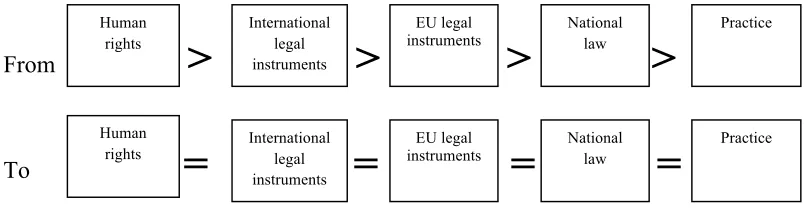
The vision of this dissertation can be described in the following way: this dissertation strives to change the situation whereby human rights instruments secure more human rights than specific international and EU legal instruments, as well as national law and practice, to the situation whereby specific international and EU legal instruments, as well as national law and practice, follow human rights.
From
> >
>
>
To
=
= = =
Figure 1 – Vision of the dissertation.
Human rights
International legal instruments
Practice EU legal
instruments National law
Human
rights International legal instruments
EU legal
However, due to the limited amount of time allocated to carry out this research, the dissertation focuses only on the first three blocks (human rights, specific international legal instruments and specific EU instruments) of the vision. Into the following blocks (national law and practice) only insight is given – through the case study at the end of the work.
Rules on criminal procedures and sanctions can predominantly be found in national law. Also, the enforcement of criminal procedures and sanctions takes place at national level. Consequently, it is very important to carry out a comprehensive analysis of criminal laws and corresponding practices of different countries, to assess whether respective laws and practices comply with human rights and specific international and EU legal instruments. Ground-breaking research in this regard has already been carried out – by CMI.44 Yet, the work of CMI should be continued to cover more countries and wider subject matters. This author hopes that it will be done. At the same time, this author thinks that it is important not to jump into criticising national laws and practices for being unfair before setting the clear standard of fairness and before making sure that relevant international and EU law (law based on which national law and practice should be developed) is clear and fair itself. In other words, this author sees the analysis of human rights and specific international and EU legal instruments as an absolutely necessary precondition for further, though not less important, research.
1.6.4. Only Criminal Procedure Law and Criminal Law Perspective
In very broad terms, this dissertation is concerned with the unfair treatment of seafarers. However, the topic of the unfair treatment of seafarers, even within the domain of law, exclusively, can be approached from different perspectives, for example:
44 See CMI, Fair Treatment of Seafarers: Summary of Responses of CMI Members to the
• administrative law perspective – the issue of unfair denial of shore leave;
• labour law perspective – the issue of unfair conditions of employment (for
example, unfair terms regarding wages, hours of work, failure to provide decent accommodations board, failure to serve good-quality food on-board and failure to provide medical care).
This dissertation examines whether criminal procedures and sanctions applicable against seafarers after large-scale ship-source oil pollution accidents are fair. Thus, it analyses treatment of seafarers only from the perspective of criminal procedure law and criminal law. Criminal procedure law is a body of law which determines the process of instituting, investigating and adjudicating criminal case.45 Criminal law is a body of law which determines what should be treated as crime and what punishment should be imposed for specific crimes.46 For the sake of convenience, further on in the paper, term “criminal law” is used to refer to both “criminal procedure law” and “criminal law.”
1.6.5. Terms “Criminal Offence”, “Criminal Procedures” and “Criminal Sanctions”
As the scope of this dissertation is limited to criminal law perspective, then only criminal offences (or crimes) and, consequently, only criminal procedures and sanctions are addressed in it. Usually national law defines which offences and, consequently, which procedures and sanctions are criminal. Serious offences are usually termed “criminal offences”, and those of comparatively less seriousness are termed otherwise, for example, “regulatory offences” or “administrative offences.”47 However, this dissertation is not national law based; it is human rights based. Therefore, in this dissertation, the term “criminal offence” and, consequently, the
45Г.И. Загорский, Уголовно-процессуальноеправо: Уголовныйпроцесс, Москва: Волтерс
Клувер, 2010, с. 21.
46В.С. КомиссароваиА.Н. Павлухина, Уголовноеправо: Общаячасть, Санктпетербург:
Питер, 2003, с. 9.
47 Proshanto K. Mukherjee, “The Penal Law of Ship-Source Marine Pollution: Selected Issues in