*Address for correspondence
Development and Validation of a Simple Isocratic HPLC
Method for Simultaneous Estimation of Phytosterols
in Cissus quadrangularis
UNNATI M. SHAH , S. M. PATEL1, P. H. PATEL1, L. HINGORANI1 AND R. B. JADHAV*
Bioecology Laboratory, Department of Pharmacognosy, R.C. Patel Institute of Pharmaceutical Education and Research, Shirpur - 425 405, 1Quality Control Department, Pharmanza Herbal Pvt. Ltd., Plot No. 214, Kania, Borsad-Tarapur Road, Dist. Anand - 388 430, India
Shah, et al.: Quantification of Phytosterols in Cissus quadrangularis
Cissus quadrangularis L. is a promising remedy prescribed in the ancient Ayurvedic literature for bone fracture healing properties. As this activity has been extensively investigated and well established, a range of formulations containing C. quadrangularis has been marketed. This work reports the development and validation of a reliable RP-HPLC method for the analysis of phytosterols in the various extracts of the plant. The proposed method utilizes a Cosmosil C8 column (250 × 4.6 mm) with a compatible Phenomenex C8 guard column with isocratic elution of acetonitrile and water (95:5 v/v) at 25°. An effluent flow rate of 2 ml/min and UV detection at 202 nm was used for the analysis of phytosterols. The described method was linear in the range of 1–500 µg/ml, with excellent correlation coefficients. The precision, robustness and ruggedness values were also within the prescribed limits (less than 2%). The recovery values were within the range, which indicates that the accuracy of the analysis was good and that the interference of the matrix with the recovery of phytosterols was low. The phytosterols were found to be stable in a stock solution for 48 h (% RSD was below 2%) and no interfering extra peaks were observed under controlled stress conditions. The proposed method is simple, specific, precise, accurate, and reproducible and thus can be used for routine analysis of C. quadrangularis phytosterols in quality control laboratories.
Key words: Cissus quadrangularis, HPLC, phytosterols
Research Paper
Cissus quadrangularis L. (CQ), a succulent plant of the family Vitaceae, is commonly found in tropical and subtropical xeric woods. It is a fleshy, cactus-like liana widely used as a food item in India[1]. The plant is prescribed in the ancient Ayurvedic literature as a general tonic and analgesic, with specific bone fracture healing properties[2]. Bone fracture healing properties of the plant have been extensively investigated and well established[3-11]. Because being an effective remedy in the treatment of bone fractures, a range of formulations containing CQ extract either alone or in combinations with other herbs have been marketed. However, due to a lack of data that link the bone fracture healing property of the plant with specific groups of phytochemicals, no reliable quality control methods have been developed. Nevertheless, the HPTLC method of quantification of certain marker constituents isolated from CQ, such as unsymmetric tetracyclic triterpenoids, along with δ-amyrin and
δ-amyrone, has been reported[10]. Further, a HPLC method of quantification of another marker compound, 3,3′,4,4′-tetrahydroxybiphenyl, has also been reported as a pharmacopoeial standard for CQ[10]. However, it is well established that quantification of marker compounds does not necessarily dictate the quality of the plant material unless these are related to desired pharmacological effects.
standardize the plant extracts/ preparations indicatedfor bone fracture treatment.
A variety of techniques for the quantification of phytosterols in different matrices has been reported[16,17]. However, no method has been reported for simultaneous estimation of β-sitosterol and stigmasterol from the CQ matrix. It should be noted that each matrix is unique, and the conditions have to be selected to optimize an accurate method in the presence of other chemical constituents. Therefore, the aim of the present study was to develop a simple HPLC method of analysis for simultaneous estimation of the major sterols, i.e. β-sitosterol and stigmasterol, from CQ as a quality control parameter.
MATERIALS AND METHODS
The plant material was collected from the campus of the Anand Agriculture University, Anand, Gujarat, India in August 2008. Plant specimen was authenticated at B. R. Doshi School of Biosciences, Sardar Patel University, Vallabh Vidhyanagar, Gujarat, India (PHPL/HB/003). Stigmasterol and β-sitosterol were purchased from Chromadex Inc Irvine, USA. Acetonitrile, water and methanol (HPLC grade) were purchased from Merck Ltd., India. The other chemicals used were of analytical grade.
HPLC system and conditions:
A Prominence series HPLC system, equipped with an LC 20AT solvent delivery unit, autosampler, CTO-20AC column oven and SPD-M20A photodiode array detector (Shimadzu Corporation, Japan), was used for acquiring the chromatograms and UV spectra. The chromatographic separation was performed using a Cosmosil C8 column (250 × 4.6 mm, 5 μm i.d.) with a compatible Phenomenex C8 guard column (4.6 × 7.5 mm, 5 μm i.d.) at 25°. The mobile phase consisted of acetonitrile and water (95:5 v/v), filtered through a 0.2 μm membrane filter and degassed in an ultrasonic bath prior to use. The mobile phase was delivered
at a flow rate of 2.0 ml/min in the isocratic mode. Quantitation of stigmasterol and β-sitosterol was performed by injecting 20 μl volume with the UV detector set at 202 nm.
Standard and sample preparation:
Powdered crude drug (5 g) was accurately weighed and extracted with methanol (3 × 10 ml) at 40° for 6 h, the solvent being refreshed at the end of 2 h. Pooled extracts were concentrated on a rotary vacuum evaporator and further dried using an oven at 80°. The yield of extract was 5.25% w/w. Stock solutions of the reference compounds (1000 µg/ml) and test extract (5000 µg/ml) were prepared separately by dissolving them in methanol, and further dilutions were prepared from these stock solutions. The standard stock and working solutions were all prepared in calibrated flasks.
Optimization of chromatographic conditions:
The chromatographic conditions were optimized using different columns, flow rates, and mobile phase compositions given in Table 1.
Linearity and precision:
Calibration curves for stigmasterol and β-sitosterol were obtained from standard solutions at nine different concentrations. The precision of the system and the precision of the method were determined as recommended by International Conference on
Harmonization guidelines[18]. For determination
of the precision of the system, stigmasterol and β-sitosterol were injected at concentrations of 100 µg/ ml in six replicates on the same day. The acceptance criterion was ±2% for the % RSD of the peak area and retention time (RT). For the precision of the method, samples were prepared six times, and each of these was injected in duplicate. The precision was determined from the % RSD. To establish the intra-assay and inter-assay precision of the method, five different concentrations of reference standards were assayed in one day, on three different days (Tables 2 and 3).
TABLE 1: OPTIMIZATION OF CHROMATOGRAPHIC CONDITIONS
Solvent system Mode Mobile phase composition Column Flow rate (ml/min) RT (β-sitosterol)
ACN:water Isocratic 85:15 C-18, 150×4.6mm 1.0 1.803 ACN:water Isocratic 85:15 C-8, 250×4.6mm 2.0 25.088 ACN:water Isocratic 90:10 C-8, 250×4.6mm 2.0 14.484 ACN:water* Isocratic 95:05 C-8, 250×4.6mm 2.0 8.138
TABLE 2: SYSTEM AND METHOD PRECISION DATA
System precision Method precision
Stigmasterol β-sitosterol Stigmasterol β-sitosterol
RT Peak area RT Peak area Peak area
Mean 7.7987 1375811 8.657 714255.3 1235874 694877.7
SD 0.104 1505.881 0.009 1048.369 8391.687 6985.771
% RSD 1.33 0.11 0.11 0.15 0.68 1.01
n = 6; SD = Standard deviation; RSD = Relative standard deviation
TABLE 3: INTRA- AND INTER-ASSAY PRECISION
Stigmasterol (µg/ml) β-sitosterol (µg/ml)
1 5 25 100 500 1 5 25 100 500
Intra-assay precision
Mean 1.02 5.13 25.12 102.39 498.16 0.98 5.06 25.51 100.86 497.48
SD 0.02 0.04 0.10 1.04 1.03 0.02 0.05 0.13 0.68 1.34
% RSD 1.96 0.78 0.40 1.01 0.21 2.04 0.99 0.51 0.67 0.27 Inter-assay precision
Mean 0.998 5.09 25.31 102.36 496.63 1.02 5.04 25.61 100.47 496.38
SD 0.030 0.05 0.33 1.08 1.76 0.03 0.05 0.22 0.66 2.88
% RSD 3.00 0.98 1.30 1.06 0.35 2.94 0.99 0.86 0.66 0.58
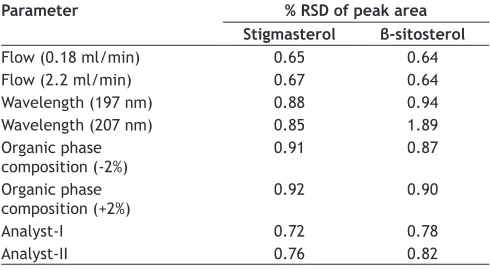
TABLE 4: METHOD ROBUSTNESS AND RUGGEDNESS
Parameter % RSD of peak area
Stigmasterol β-sitosterol
Flow (0.18 ml/min) 0.65 0.64 Flow (2.2 ml/min) 0.67 0.64 Wavelength (197 nm) 0.88 0.94 Wavelength (207 nm) 0.85 1.89 Organic phase
composition (-2%) 0.91 0.87 Organic phase
composition (+2%)
0.92 0.90
Analyst-I 0.72 0.78
Analyst-II 0.76 0.82
Limit of detection (LOD) and limit of
quantification (LOQ):
LOD and LOQ were calculated from the RSD and slope (S) of the calibration curves using equations,
LOD = 3.3×(RSD/S) and LOQ = 10×(RSD/S)[18].
Robustness and ruggedness:
The robustness and ruggedness of the method were investigated by varying the chromatographic conditions, such as the flow rate (±10%), organic phase composition (±2%) and wavelength of detection (±5 nm) and varying the analysts. The results were indicated by the % RSD between the data at each variable condition (Table 4).
Spike recovery:
The spike recovery was carried out by the standard addition method. For determination of the recovery from the methanol extract, five sets were prepared, each comprising 5000 µg/ml of sample and external addition of reference compounds.
Stability study:
The stability of phytosterols in standard stock solutions was investigated at different time intervals at room temperature. The experiment was also carried out to demonstrate the specificity of the developed method for the determination of stigmasterol and β-sitosterol in the presence of products generated
during controlled stress conditions as well as other compounds from the plant matrix. The samples were subjected to controlled levels of various stress conditions. These include thermolysis at 110º in an oven, photolysis by UV-light at 254 nm, acid hydrolysis (0.1 M H2SO4), and alkali hydrolysis (0.1 N NaOH). Twenty-microliter samples (5000 µg/ml) were drawn at 6, 12, 24, and 48 h, and the peak area responses were recorded under the optimized chromatographic condition.
Quantification of phytosterols from different extracts of CQ:
ethyl acetate, acetone, methanol (80%) and water. The stock solutions of each extract (5000 µg/ ml) were prepared separately by dissolving it in methanol, and a sample of 20 µl was subjected to HPLC analysis, and the peak area responses were recorded under the optimized chromatographic condition.
RESULTS AND DISCUSSION
In this work, a method based on reversed phase HPLC separation combined with PDA detection has been developed for phytosterol analysis in Cissus quadrangularis. An isocratic elution was chosen since it is simple, requires only one pump and minimizes the variation of baseline and ghost peaks. For RP-HPLC, various columns are available, but a Cosmosil C8 column (250 × 4.6 mm, 5 μm i.d.) was preferred because its peak shape and resolution were better. Among the different mobile phases employed, acetonitrile and water (95:5 v/v) was found to be suitable for analysis of stigmasterol and β-sitosterol. Further, a flow rate of 2 ml/min and an injection volume of 20 µl along with UV detection at 202 nm provided the optimal conditions for analysis of these phytosterols (Table 1 and fig. 1).
The linearity of the HPLC method was investigated in the range of 1–500 µg/ml with nine different concentrations. The calibration curves for stigmasterol and β-sitosterol were linear, with
excellent correlation coefficients (r2 = 0.9995
and 0.9997, respectively). The typical calibration curves of stigmasterol and β-sitosterol have the regression equations y = 12683.72x + 1097.98 and y = 6977.07x – 206.95, respectively. The system precision results indicate that the % RSD values were 1.33 and 0.11 (retention time and peak area, respectively) for stigmasterol and 0.11 and 0.15 (retention time and peak area, respectively)
for β-sitosterol, which are well within the prescribed limits of the ICH guidelines (% RSD < 2%) (Table 2). Similarly, the results obtained for the precision of the method are within the prescribed limit (% RSD < 2%), with the % RSD values of the peak area being 0.68 and 1.01 for stigmasterol and β-sitosterol, respectively (Table 2).
The % RSD values for intra-assay precision were in the range from 0.21 to 1.96 for stigmasterol and from 0.27 to 2.04 for β-sitosterol (Table 3), whereas the % RSD values for inter-assay precision were in the range from 0.35 to 3.0 for stigmasterol and from 0.58 to 2.94 for β-sitosterol (Table 3). These observations suggest that the method provides highly reproducible results. The results further reveal that the minimum concentration levels at which the analyte can be reliably detected (LOD) and quantified (LOQ) are 135 ng/ml and 446 ng/ ml for stigmasterol and 39 ng/ml and 118 ng/ml for β-sitosterol, respectively, demonstrating the sensitivity of the method.
The RP-HPLC method is robust and rugged since the % RSD values are lower than 2% for all four variables (Table 4). As shown in Table 5, the spike
Fig 1: HPLC chromatogram of stigmasterol and β-sitosterol in
optimized chromatographic conditions
TABLE 5: SPIKE RECOVERY IN STANDARD ADDITIONS Methanol extract
(5000 µg/ml) Spiked Stigmasterol β-sitosterol
quantity (mg) quantity (mg)Recovered recovery (%)Spike quantity (mg)Spiked quantity (mg)Recovered recovery (%)Spike
Level-1 0
0.25 0.50 1.0 1.5
0 0 0
0.14 0.39 0.85 1.25
0 0
Level-2 0.2487 99.48 0.1332 95.15
Level-3 0.4930 98.61 0.3853 98.79
Level-4 0.9854 98.54 0.8299 97.63
recovery values fall within the range from 96.09 to 99.48 for stigmasterol and from 95.15 to 98.79 for β-sitosterol, which indicates that the accuracy of the analysis is good and that the interference of the matrix with the recovery of phytosterols is low. The phytosterols were found to be stable in stock solutions for 48 h. The % RSD values were 0.56 and 0.04 for stigmasterol and β-sitosterol, respectively (Table 6). Further, the controlled stress stability results reveal that although the peak area responses were reduced after physical and chemical degradation, no extra peaks of degradation products were co-eluted (Table 7 and fig. 2). Among the different extracts investigated for phytosterol content using the optimized HPLC method, the methanol extract was found to contain higher amounts of stigmasterol and β-sitosterol, as shown in Table 8.
In conclusion, a simple, specific, precise, rapid, and reproducible HPLC method has been developed to quantify phytosterols, relevant marker
compounds, in extracts of C. quadrangularis.
The validation procedure confirms that this is an appropriate method for quality control of extracts of C. quadrangularis especially indicated for bone fracture healing by the pharmaceutical industry.
TABLE 7: EFFECT OF CONTROLLED STRESS CONDITIONS ON STABILITY
Condition Peak area Concentration (µg/ml)
Stigmasterol β-sitosterol Stigmasterol β-sitosterol
Untreated sample 115180 164470 8.99 12.88
Thermolysis at 110º 105224 152234 8.21 11.92
Alkali hydrolysis 106744 159364 8.33 12.48
Acid hydrolysis 94590 156326 7.37 12.24
UV-light irradiation* 105224 152234 8.21 11.92
* UV-light irradiation was conducted at 254 nm
Fig 2: HPLC chromatograms of the extract recorded after the controlled stress conditions
Thermolysis at 110º (a), UV treatment at 254 nm (b), acid hydrolysis (c) and after alkali hydrolysis (d)
TABLE 6: STOCK SOLUTION STABILITY DATA
Time (h) Peak area
Stigmasterol β-sitosterol
6 1373452 714544
12 1388345 715009
24 1377511 714610
48 1377510 714611
Mean 1379769 714721
SD 7699.05 251.59
%RSD 0.56 0.04
TABLE 8: ESTIMATION OF STIGMASTEROL AND Β-SITOSTEROL IN VARIOUS EXTRACTS OF CISSUS QUADRANGULARIS
Extract Stigmasterol β - sitosterol
Peak area Content (%) Peak area Content (%)
Methanol 320174 0.4780 422424 1.1509
Ethanol 114377 0.1697 202967 0.5533
Ethyl acetate 126135 0.1873 210431 0.5736
Acetone 7780 0.0010 19853 0.0546
Methanol (80%) 115180 0.1709 164470 0.4484
REFERENCES
1. Udupa KN, Chaturvedi GN, Tripathi SN. Advances in Research in Indian Medicine. Vol. 12. Varanasi: Banaras Hindu University; 1970. 2. Rastogi RP, Mehrotra BN. Compendium of Indian Medicinal Plants.
Vol. 3. New Delhi: CSIR; 1993.
3. Prasad GC, Udupa KN. Effect of Cissus quadrangularis on the healing of cortisone treated fracture. Indian J Med Res1963;51:667-76. 4. Chopra SS, Patel MR, Gupta LP, Datta IC. Studies on Cissus
quadrangularis in experimental fracture repair: Effect on chemical parameters in blood. Indian J Med Res 1975;63:824-8.
5. Chopra SS, Patel MR, Awadhiya RP. Studies on Cissus quadrangularis
in experimental fracture repair: A histo-pathological study. Indian J Med Res1976;64:1365-8.
6. Deka DK, Lahon LC, Saikia J, Mukit A. Effect of Cissus quadrangularis in accelerating healing process of experimentally fractured Radius-Ulna of dog: A preliminary study. Indian J Pharmacol 1994;26:44-8.
7. Shirwaikar A, Khan S, Malini S. Antiosteoporotic effect of ethanol extracts of Cissus quadrangularis Linn on ovariectomized rat. J Ethnopharmacol 2003;89:245-50.
8. Sanyal A, Mbarish AA, Sastry M. Calcite growth in Cissus quadrangularis plant extract, a traditional Indian bone-healing aid. Curr Sci2005;89:1742-5.
9. Duenpim P, Weerachai S, Thaweephol D, Sitthichai K. Cissus quadrangularis extract enhances biomineralization through up-regulation of MAPK-dependent alkaline phosphatase activity in osteoblasts. In Vitro Cell Dev Biol Anim 2009;45:194-200.
10. Mehta M, Kaur N, Bhutani KK. Determination of marker constituents from Cissus quadiangularis Linn. and their quantitation by HPTLC and HPLC. Phytochem Anal 2001;12:91-5.
11. Bhutani KK. Finger-printing of Ayurvedic drugs. East Pharm 2000;2:507.
12. Westbroek I, Plas A, Rooij KE, Klein-Nulend J, Nijweide PJ. Expression of serotonin receptors in bone. J Biol Chem 2001;276:28961-8.
13. Gustafsson BI, Westbroek I, Waarsing JH, Waldum H, Solligard E, Brunsvik A, et al. Long-term serotonin administration leads to higher bone mineral density, affects bone architecture, and leads to higher femoral bone stiffness in rats. J Cell Biochem 2006;97:1283-91.
14. Yadav VK, Ryu JH, Suda N, Tanaka KF, Gingrich JA, Schutz G, et al.
Lrp5 controls bone formation by inhibiting serotonin synthesis in the duodenum. Cell 2008;135:825-37.
15. Oben JE, Enyegue DM, Fomekong GI, Soukontoua YB, Agbor GA. The effect of Cissus quadrangularis (CQR-300) and a Cissus formulation (CORE) on obesity and obesity-induced oxidative stress. Lipids Health Dis 2007;6:4.
16. Abidi SL. Chromatographic analysis of plant sterols in foods and vegetable oils. J Chromatogr A 2001;935:173-201.
17. Lagarda MJ, Garcia-Llatas G, Farre R. Analysis of phytosterols in foods. J Pharm Biomed Anal 2006;41:1486-96.
18. ICH. International Conference on Harmonization. Q2B: Validation of Analytical Procedures. US FDA Federal Register 1997;62:27463-7.