
In vitro and in vivo advantage of celecoxib surface solid dispersion and dosage form development
8
0
0
Full text
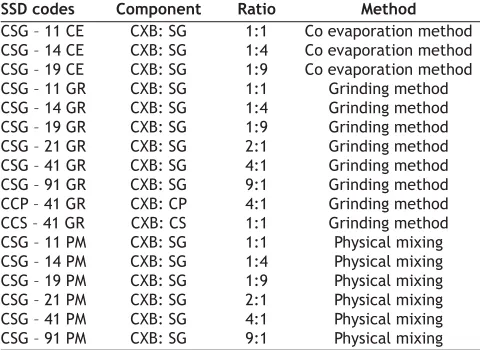
(2) www.ijpsonline.com. formulae are given in Table 1.. CXB was a gift sample from Cheminor Drugs Ltd. Hydrabad, India. Croscarmellose sodium, Ac-Di-Sol, FMC Corp., USA (CS) was obtained as a free sample from Khandelwal Lab Mumbai, India, Crospovidone, Kollidon CL, BASF Germany, (CP), sodium starch glycolate, (PrimogelTM, Avebe UK Inc.) (SG), colloidal silicon dioxide (Cab-O-Sil, Cabot, Germany), talc IP were kindly donated by Sun Pharmaceutical Industries Ltd., Mumbai. All other reagents and solvents used were of analytical grade. Female Wistar rats were procured from Bharat Serums and Vaccines Ltd., Mumbai, India.. Characterization of SSDs: SSDs were characterized by infrared (IR) spectroscopy, differential scanning calorimetry (DSC), scanning electron microscopy (SEM) and optical microscopy. Infrared spectra of powder CXB and its SSDs were recorded on a Jasco FT/IR 5300 infrared spectrophotometer, by using KBr disc method. The scanning range was 450 to 4000 cm-1 and the resolution was 4 cm -1. DSC curves of the CXB, SG, and their SSDs were recorded using Shimadzu DT-40 Thermal analyzer. The samples were heated from 30º to 300º at a rate of 10º/ min in an open pan using alumina as a reference material. DSC thermograms of CXB, excipients and SSDs are given in Þg. 1 Scanning electron microscopy of CXB, SG, CP, CS and their respective SSDs were done by Phillips FEI Quanta 200. The samples were Þxed on SEM- stub using double sided adhesive tape. The photomicrographs are given in fig. 2. The particle size distribution of selected samples was studied by optical microscopy. Dimensions of 300-500 particles were measured.. fro Th m is a PD si F te is ho a (w st va w ed ila w. b bl m y e ed M fo kn ed r fr ow kn ee .c ow do om P w ). ubl nlo ic ad at io ns. MATRIALS AND METHODS. Hydration capacity of carriers: A sample of disintegrants weighing 2 g was placed in 100 ml centrifuge tube. Water, 40 ml was added; tube was stoppered and shaken vigorously to suspend the sample thoroughly. The suspension was allowed to stand for 10 min and then subjected for centrifugation at 1000×g for 15 min. The supernatant liquid was carefully decanted and the tube was inverted to allow draining. The tube with sediment was then restoppered and contents were weighed 10 . The hydration capacity was calculated using equation, hydration capacity=(weight of the tube with sediment)─(weight of the empty tube)/weight of the sample on dry basis.. Preparation of SSD by various methods: SSDs of the drug and hydrophilic carriers were prepared in ratios of 9:1, 4:1, 2:1, 1:1, 1:4 and 1:9 of drug:carrier. Two techniques used for preparation were co-evaporation; co-grinding. Physical mixtures were formulated for comparison. In co-evaporation, an accurately weighed quantity of CXB was dissolved in a minimum amount of ethanol in which hydrophilic carrier was suspended. The suspension was stirred using a magnetic stirrer continuously at room temperature until all the solvent evaporated. In cogrinding technique, CXB was triturated with minimum quantity of ethanol in a glass mortar until it dissolved. The carrier was then added and suspension was triturated rapidly at room temperature until the solvent evaporated. Physical mixtures were formulated by mixing drug and carrier in geometric proportion using spatula without applying pressure. The SSDs were prepared in triplicate and sieved through BSS # 85 (180 μ) and stored over anhydrous calcium chloride in a desiccator until further evaluation. The selected May - June 2007. In vitro release study: SSDs equivalent to 75 mg of CXB were subjected for drug release study in 600 ml simulated intestinal fluid (pH 6.8, SIF) without pancreatin but with 0.5% w/v tween 80 using USP type 2 apparatus (Electrolab, India) rotating at 50 rpm. Samples were withdrawn at predetermined time intervals and analyzed spectrophotometrically using Shimadzu 160A TABLE 1: COMPOSITIONS AND CODES OF DIFFERENT SSDS SSD codes CSG – 11 CE CSG – 14 CE CSG – 19 CE CSG – 11 GR CSG – 14 GR CSG – 19 GR CSG – 21 GR CSG – 41 GR CSG – 91 GR CCP – 41 GR CCS – 41 GR CSG – 11 PM CSG – 14 PM CSG – 19 PM CSG – 21 PM CSG – 41 PM CSG – 91 PM. Component CXB: SG CXB: SG CXB: SG CXB: SG CXB: SG CXB: SG CXB: SG CXB: SG CXB: SG CXB: CP CXB: CS CXB: SG CXB: SG CXB: SG CXB: SG CXB: SG CXB: SG. Ratio 1:1 1:4 1:9 1:1 1:4 1:9 2:1 4:1 9:1 4:1 1:1 1:1 1:4 1:9 2:1 4:1 9:1. Method Co evaporation method Co evaporation method Co evaporation method Grinding method Grinding method Grinding method Grinding method Grinding method Grinding method Grinding method Grinding method Physical mixing Physical mixing Physical mixing Physical mixing Physical mixing Physical mixing. C is CXB, SG is sodium starch glycolate, CP is Crospovidone, CS is Croscarmellose, GR is co-grinding technique and PM is physical mixture. Indian Journal of Pharmaceutical Sciences. 371.
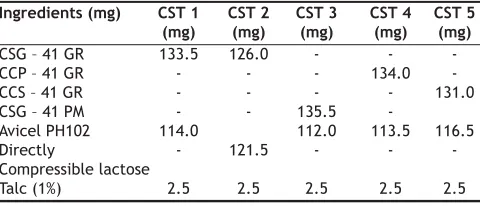
(3) www.ijpsonline.com. (a) (b) (c). (e). Heat Flow. Development of solid dosage form: Different formulae of tablets (Table 2) containing SSDs equivalent to 100 mg of drug were prepared to evaluate the effect of compression on the behavior of SSD. The blend was compressed using round shaped standard concave punches on 8-station single rotary machine (Cadmach, India) to obtain hardness of 4-5 Kp and 4.6±0.2 mm thicknesses. SSD (CSG-41 GR) equivalent to 100 mg of CXB was Þlled in capsule size 1 (CAP 1) and were compared with capsules of size 1 Þlled with physical mixture (CSG-41 PM) equivalent to 100 mg of CXB for comparison which was coded as CAP2. Tablets and the capsules were subjected to dissolution studies using simulated intestinal fluid containing 0.5% w/v tween 80 as a dissolution medium.. fro Th m is a PD si F te is ho a (w st va w ed ila w. b bl m y e ed M fo kn ed r fr ow kn ee .c ow do om P w ). ubl nlo ic ad at io ns. (d). 7140 plethysmometer, after 1, 2, 3, 4, 5 and 6 h after administration of carrageenan. The percent inhibition of edema was calculated11.. (f). (g). (h). RESULTS AND DISCUSSION. Temperature (o). Fig. 1: DSC curves of CXB and its surface solid dispersions. DSC curves of (a) CXB, (b) SG, (c) CSG–11 GR, (d) CSG–14 GR, (e) CSG–19 GR, (f) CSG–21 GR, (g) CSG–41 GR and (h) CSG–91 GR.. UV/Vis spectrophotometer at 258.2 nm. Drug release from selected physical mixtures was also studied for comparison. Pharmacodynamic evaluation in rats: Animal study protocol was approved by the Institutional Animals Ethics Committee, IAEC/ CPCSEA Mumbai. The antiinflammatory activity was assessed on female Wistar rats (200-250 g). The animals were housed into groups of six and maintained on a standard diet with free access to water. Animals were fasted overnight before experiment. SSDs (equivalent to 5 mg/kg) or plain drug (5 mg/kg) were administered orally as aqueous suspensions containing 0.25% carboxymethyl cellulose (CMC). Control group was administered an aqueous dispersion of 0.25% CMC. Edema was induced by injecting 0.1 ml lambda carrageenan (1% w/v) into the plantar tissue of the hind paw. The volume of the treated paw was measured with an Ugo Basile 372. Hydration capacity test is indicative of extent of solid liquid interactions or swelling power [Kornblum 1973]. In this test the material under test is wetted by water and evaluated for water holding ability. Hydration capacity of CS was found to be 11.0 which is superior to SG (9.18) and CP (3.71). Sample of CS exhibited quick water uptake in 10 min. As rapid water uptake is one of the requirements for inducing the disintegration, CS was anticipated to display superior performance. IR spectroscopy was used to study the possible interaction between CXB and the carriers in the SSD. The FT IR spectra of all drug-carrier SSDs did not differ from that of CXB and displayed absorption bands as in IR spectra of CXB, in particular the TABLE 2: FORMULAE OF DIFFERENT TABLET DOSAGE FORMS Ingredients (mg) CSG – 41 GR CCP – 41 GR CCS – 41 GR CSG – 41 PM Avicel PH102 Directly Compressible lactose Talc (1%). CST 1 (mg) 133.5 114.0 -. CST 2 (mg) 126.0 -. CST 4 (mg) 134.0 113.5 -. CST 5 (mg) 131.0. 121.5. CST 3 (mg) 135.5 112.0 -. 2.5. 2.5. 2.5. 2.5. 2.5. 116.5 -. Total tablet weight = 250 mg. Indian Journal of Pharmaceutical Sciences. May - June 2007.
(4) www.ijpsonline.com. D. B. C. fro Th m is a PD si F te is ho a (w st va w ed ila w. b bl m y e ed M fo kn ed r fr ow kn ee .c ow do om P w ). ubl nlo ic ad at io ns. A. E. F. G. Fig. 2: Photomicrographs of CXB, SG, CSG-41 GR, CP, CCP-41 GR, CS, CCS-41 GR. Photomicrographs of (a) CXB (bar=200µ), (b) SG (bar=50µ), (c) CSG-41 GR (bar=50µ), (d) CP (bar=200µ), (e) CCP-41 GR (bar=50µ), (f) CS (bar=100µ) and (g) CCS-41 GR (bar=20µ). characteristic sulfonamide-stretching band of CXB (1165 cm -1) was unchanged showing no evidence of significant interaction between drug and carrier (data not shown). The DSC thermograms of CXB, SG, its SSDs and physical mixtures are given in Þg.1. The DSC thermogram of CXB exhibits sharp melting endotherm at 165.4º with onset at 159.8º and recovery at 172.9º. SG does not exhibit a melting endotherm as would be observed for crystalline materials, suggesting amorphous nature. In all the SSDs prepared with SG, melting endotherm of CXB was seen in the temperature range of 159.8º to172.9º suggesting that drug crystallinity was retained in the May - June 2007. SSDs. Scanning electron photomicrographs of CXB showed plate shaped crystals. SEM studies on carriers showed SG particles moderately spherical shaped, CP as aggregates of irregular shaped particles and rod shaped CS particles. The photomicrographs of CSG-41 GR showed very small crystals of CXB uniformly deposited on the surface of SG. The CCS-41 GR also showed uniform deposition of small crystals on the surface of CS. However the CCP-41 GR had shown non uniform deposition of bigger crystals of drug on the surface of CP and frequent occurrence of free drug crystal in the sample. The arithmetic mean particle dimensions of CXB, carriers and selected. Indian Journal of Pharmaceutical Sciences. 373.
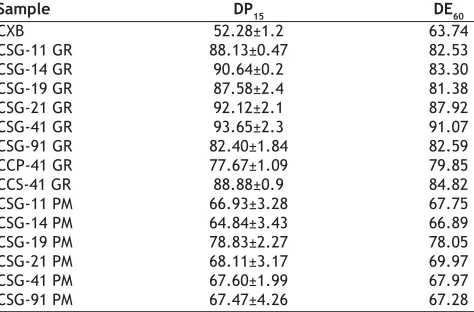
(5) www.ijpsonline.com. dispersions are given in the Table 3. The particle size of SG was found to be smaller and uniform as compared to crospovidone and croscarmellose so also mean particle size of CSG-41 GR was the smallest in the dispersions studied.. The SSDs formulated by co grinding technique also showed improved dissolution proÞle as compared to plain drug powder (Table 4). The improvement in the dissolution rate of CXB could be attributed to uniform deposition of the drug particulates on the surface of hydrophilic carrier- SG and drug amorphization as evident from SEM (fig. 2). In addition, it was expected that the SG would absorb large amount of water when exposed to dissolution medium and swell as observed in hydration capacity test. This would result in wetting of small drug particulates deposited on the surface of SG. The swelling of SG would cause deaggregation of clusters of small drug particles and facilitate their dissolution. It was observed that amount of SG as low as 10% was sufficient to physically associate with drug particles due to relatively spherical shape of SG particles and provide better drug dissolution. Physical mixtures of drug with SG in the same ratio as in SSDs were formulated for comparison. Physical mixtures (drug to carrier ratios ranging from 9:1 to 1:9) also improved the dissolution rate of drug and DP15 values were found to be in the range of 65% - 79% but there was no improvement in the extent of drug release as indicated by DE60 values. (Table 5). This could be due to hydrophilic nature of SG, which rendered the mixture hydrophilic and improved the wettability. Dissolution proÞle of drug CSG-41 GR was the best with highest values of DP15 and DE60 among the SDDs. Therefore SSD with other carriers were prepared using drug: carrier ratio of 4:1. SDDs formulated with CP and CS, CCP-41 GR and. fro Th m is a PD si F te is ho a (w st va w ed ila w. b bl m y e ed M fo kn ed r fr ow kn ee .c ow do om P w ). ubl nlo ic ad at io ns. CXB has low wettability and poor solubility in SIF pH 6.8 hence tween 80 (0.5% w/v) was incorporated in the dissolution medium as a wetting agent. Two parameters that is amount of drug dissolved at 15 min (DP15) and dissolution efÞciency at 60 min (DE60) were computed from in vitro release profile. CXB due to its hydrophobic nature exhibited tendency to form large aggregates and ßoated on the surface of dissolution medium. The aggregation caused reduction in effective surface area of drug particles available for dissolution, resulting in 52% of DP15 and ~ 64% of DE60 (Table 4).. and SSDs were prepared in mortar by co-grinding method.. SSDs formulated using various carriers and different methods of preparation showed marked enhancement in the dissolution of drug as compared to plain drug powder and is clearly evident from the DP15 and DE60 values of pure drug and its SSDs, represented in Table 4. SSDs prepared using co-evaporation technique resulted in significant improvement in dissolution proÞle of the drug. CSG11-CE formulated with drug: SG ratio 1:1 showed DP15 (57.1±3.33%) comparable to 52% of pure drug powder. The increase in SG content in CSG14-CE and CSG19-CE resulted in marked increase in DP15 up to 86.22% and 94.16% respectively (data not shown in Table 4). This could be due to partial amorphization and deposition of the drug on the surface of carrier during the evaporation of solvent. However, during preparation of SSDs by co-evaporation method, agitation provided by magnetic stirrer was insufÞcient to prevent the settling of insoluble SG particles during the evaporation of solvent and precipitation of drug. There was non uniformity in distribution of the drug on the surface of carrier. Hence use of the method was discontinued TABLE 3: MEAN PARTICLE SIZE OF CXB, CARRIERS AND SSDS Sample CXB Sodium starch glycolate (SG) Crospovidone (CP) Croscarmellose (CS) CSG-41 GR CCP-41 GR CCS-41 GR GR: Co-Grinding technique. 374. Arithmetic mean diameter (µm) 177.00 11.36 17.03 21.70 93.00 108.00 142.70. TABLE 4: DISSOLUTION PARAMETERS OF SSDS Sample CXB CSG-11 GR CSG-14 GR CSG-19 GR CSG-21 GR CSG-41 GR CSG-91 GR CCP-41 GR CCS-41 GR CSG-11 PM CSG-14 PM CSG-19 PM CSG-21 PM CSG-41 PM CSG-91 PM. DP15 52.28±1.2 88.13±0.47 90.64±0.2 87.58±2.4 92.12±2.1 93.65±2.3 82.40±1.84 77.67±1.09 88.88±0.9 66.93±3.28 64.84±3.43 78.83±2.27 68.11±3.17 67.60±1.99 67.47±4.26. DE60 63.74 82.53 83.30 81.38 87.92 91.07 82.59 79.85 84.82 67.75 66.89 78.05 69.97 67.97 67.28. DP15 = Percent drug dissolved in 15 min. DE60: Dissolution efÞciency at t = 60 min (calculated from the area under the dissolution curve at t = 60 min and expressed as% of the area of the rectangle described by 100% dissolution in the same time). Each value is the average of three determinations.. Indian Journal of Pharmaceutical Sciences. May - June 2007.
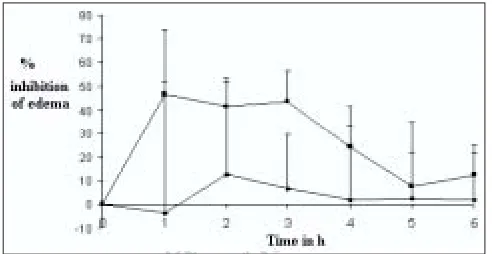
(6) www.ijpsonline.com. TABLE 5: DISSOLUTION PARAMETERS OF TABLETS Sample CST 1 CST 2 CST 3 CST 4 CST 5. DP30 79.60±2.06 59.85±1.68 66.92±1.29 45.00±0.67 56.45±2.24. DE120 59.42 50.69 53.02 46.44 51.30. DP30 = Percent drug dissolved in 30 min. DE120: Dissolution efÞciency at t = 120 min. Each value is the average of three determinations (coefÞcient of variation CV < 2.5%). fro Th m is a PD si F te is ho a (w st va w ed ila w. b bl m y e ed M fo kn ed r fr ow kn ee .c ow do om P w ). ubl nlo ic ad at io ns. CCS-41 GR, respectively, also showed better results as evident from higher values of DP15 and DE60 than that of pure drug. The improved dissolution could also be due to reduction in particle size of the drug, its deposition on the surface of carrier and improved hydrophillicity.. When SSDs formulated with different carriers were compared for release rate, CSG-41 GR was found to be superior compared to other carriers. This could be attributed to superior hydration capacity of SG and uniform deposition of very small drug particles on the relatively spherical shaped SG particles (Þg. 2). The hydration capacity of croscarmellose was also found to be higher but the mean particle size of croscarmellose and its dispersion (CCS-41 GR) was bigger (Table 3) than SG and its dispersion (CSG-41 GR), which would have reduced the dissolution rate. Crospovidone showed very low hydration capacity as compared to SG and CS, which is correlated with lower values of DP15 and DE60. SEM studies revealed non uniform deposition of bigger crystals of drug on the surface of crospovidone and frequent occurrence of bigger crystals of drug without association with carrier in CCP-41 GR sample. All these factors resulted in lower release rate and dissolution efÞciency compared to CSG-41 GR and CCS-41 GR. At a dose level of 5 mg/kg, the mean values of the % inhibition of rat paw edema produced by CSG-41 GR were higher at most of the time points as compared to those produced by plain drug. The higher values of inhibition at 1 hr indicates faster onset of action of the drug when administered as a SSD (Þg. 3). The plain drug showed very low values of inhibition of edema at a dose level of 5 mg/kg. Limited aqueous solubility of CXB must have affected its availability and resulted in low values of inhibition of edema in rats treated with pure drug. The t test indicated signiÞcant difference at 3 hrs in inhibition of edema between groups treated with drug and SSD at 5% level of signiÞcance. Lower standard deviation values May - June 2007. Fig. 3: Effect of SSD of CXB on inhibition of paw edema in female Wistar rats. Plot showing inhibition of rat paw edema by CSG–41 GR (─■─) and plain drug powder (─♦─). Each point is the mean±SD of 6 observations. Percent inhibition of edema at any time t, for each rat was calculated as, % inhibition = 100×[1-(A/x/B-y)], where, A is the paw volume after administration of carrageenan at time t, x is the paw volume before administration of carrageenan, B is the mean volume of control rats after administration of carrageenan and y is the mean volume of control rats before administration of carrageenan.. in case of response to CSG-41 GR in comparison with that for standard are indicative of better reproducibility of drug action when given as a SSD.. The nature and the properties of the excipients and dosage form influence the performance of SSD. Although SSDs of CXB were able to provide quick dissolution, its dissolution properties could be affected by the presence of diluents. Drug release pattern was studied after SSDs were mixed with two diluents and compressed. Disintegration of the tablets required 2 to 3 min that delayed the release of drug from tablets compared to SSD. DP 30, amount of drug released in 30 min and DE120, dissolution efÞciency, were computed from drug release profile. The data on dissolution parameters is given in Table 5 and the drug release profiles are shown in fig. 4 The tablets of formula CST 1 prepared using CSG-41 GR and microcrystalline cellulose as a diluent, released 79.60% in 30 min and had DE120 ~ 59%. The release of drug was slower than that of dispersion due to the additional disintegration step required prior to the dissolution of the drug. The formula CST 2 tablets in which CSG-41 GR was compressed using with lactose as a diluent had lower values of both DP30 and DE120. Faster release from CST 1 tablets in comparison with CST 2 tablets was attributed to swelling of microcrystalline cellulose in presence of water and its ability to hold high amount of water. This resulted in better wetting of drug particles in addition to that of wetting provided by SG and faster dissolution of. Indian Journal of Pharmaceutical Sciences. 375.
(7) www.ijpsonline.com. TABLE 6: DISSOLUTION PARAMETERS OF CAPSULES Sample CAP 1 CAP 2. DP15 36.79±7.18 45.89±3.36. DP30 79.84±2.06 71.78±1.68. DE120 57.94 54.20. DP15 = Percent drug dissolved in 15 min, DP30 = Percent drug dissolved in 30 min and DE120= Dissolution efÞciency at t = 120 min. Each value is the average of three determinations. fro Th m is a PD si F te is ho a (w st va w ed ila w. b bl m y e ed M fo kn ed r fr ow kn ee .c ow do om P w ). ubl nlo ic ad at io ns. profile than CAP 1. Drug release was apparently higher with CAP 2 formulation in 15 min, but not statistically different at 5% level of signiÞcance. But after 15 min, the CAP 1 formulation was showing higher drug release than CAP2 formulation at all time points. The difference in the release profile is statistically different at 5% level of significance at 30, 45, 60 and 90 min conÞrming improved release properties of SSD.. Fig. 4: Dissolution proÞles of various tablet formulations. Plot showing dissolution proÞle of various tablet formulations; CST 2 (─■─), CST 1 (─♦─), CST 3 (─▲─), CST 4 (─×─) and CST 5(─∗─). Dissolution was carried out using USP Apparatus 2 and 600 ml simulated intestinal ßuid at 37±0.5º and 75 rev min-1. Each data point is a mean±SD of 3 observations.. the drug. It was observed that CST 2 tablets did not disintegrate by bursting in the dissolution medium but eroded slowly.. Formulation CST 3, prepared by compressing CSG-41 PM was used for comparison. The DP30 and DE120 were found to be 67% and 53%. This was lower than CST 1 tablets but higher than CST 2 tablets. The higher release of CST 3 tablets than CST 2 tablets could be due to fast disintegration of the tablets and better wetting attributed to higher water holding capacity of microcrystalline cellulose than lactose.. Tablets of formulation CST 4 were found to release 45.00% in 30 min. This was signiÞcantly less than that released by CST 1 tablets. This is in line with hydration capacity of CP, which was lower than that of SG. Another possible reason could be non uniform deposition of bigger crystals of drug on the surface of CP and larger mean particle size of CCP-41 GR (Table 3) in comparison with mean particle size of CSG–41 GR. The dissolution parameters (DP30 and DE120) for CST 5 tablets were found to be 56.45% and 51%, which were inferior to that of CST 1 tablet. Though the swelling capacity of CS was found to be better than SG, particle size studies showed that CSG41 GR has smaller mean particle size than CCS-41 GR, (Table 3) which has affected drug release. The release parameters of capsule dosage forms are given in Table 6. DP15 values for CAP 1 and CAP 2 formulation were 36.79% and 45.89%, respectively. After disintegration, CAP 2 showed better release 376. In conclusion, SSDs of CXB with various superdisintegrants prepared by co-grinding techniques showed significantly higher drug dissolution in comparison with powder drug and physical mixtures having same drug to carrier ratio. IR and DSC studies showed no evidence of interaction between the drug and the carrier. SEM studies revealed deposition of the small drug particulates on the surface of carriers. In vivo studies of the SSDs in rats showed higher percentage inhibition of edema in the rats than that achieved with drug. This is attributed to improved bioavailability due to enhancement in rate and extent of drug release when drug was administered as SSD using SG as carrier. Compression of SSD into tablets resulted in slower drug release. Release profiles of tablets were affected by the excipients. Capsules Þlled with SSD exhibited enhanced release compared to the capsules Þlled with physical mixture having the same drug to carrier ratio as in the dispersion.. ACKNOWLEDGEMENTS The authors wish to acknowledge Indian Institute of Technology for SEM studies.. REFERENCES 1. Davies NM, McLachlan AJ, Day RO, Williams KM. Clinical pharmacokinetics and pharmacodynamics of celecoxib: A selective cyclo-oxygenase-2 inhibitor. Clin Pharmacokinet 2000;38:225-42. 2. Paulson SK, Vaughn MB, Jessen SM, Lawal Y, Gresk CJ, Yan B, et al. Pharmacokinetics of celecoxib after oral administration in dogs and humans: Effect of food and site of absorption. J Pharmacol Exp Ther 2001;297:638-45. 3. Seedher N, Bhatia S. Solubility enhancement of Cox-2 inhibitors using. Indian Journal of Pharmaceutical Sciences. May - June 2007.
(8) www.ijpsonline.com. of Piroxicam using solvent deposition technique. Drug Develop Ind Pharm 2002;28:681-6. 10. Kornblum SS, Stoopak SB. A new tablet disintegrating agent: Cross linked polyvinyl pyrrolidone. J Pharm Sci 1973;62:43-9. 11. Vogel HG, editor. Antiinflammatory activity: Paw edema. Drug discovery and evaluation: pharmacological assays. 2nd ed. Germany; Springer-Verlag Publishers: 1997. p. 759-62.. fro Th m is a PD si F te is ho a (w st va w ed ila w. b bl m y e ed M fo kn ed r fr ow kn ee .c ow do om P w ). ubl nlo ic ad at io ns. various solvent systems. AAPS Pharm SciTech 2003;4:E33. 4. Reddy MN, Rehana T, Ramakrishna S, Chowdary KP, Diwan PV. β-cyclodextrin complexes of celecoxib: Molecular- modeling, characterization, and dissolution studies. AAPS Pharm Sci 2004;6:E7. 5. Nagarsenker MS, Joshi MS. Celecoxib-cyclodextrin systems: Characterization and evaluation of in vitro and in vivo advantage. Drug Develop Ind Pharm 2005;31:169-78. 6. Devi VK, Vijayalakhmi P, Avinash M. Preformulation Studies on Celecoxib with a view to improve bioavailability. Indian J Pharm Sci 2003;65:542-545. 7. Law SL, Chiang CH. Improving dissolution rate of Griseofulvin by deposition on disintegrants. Drug Develop Ind Pharm 1990;16:137-47. 8. Yen SY, Chen CR, Ling MT, Chen L. Investigation of dissolution enhancement of Nifedipine by deposition on the superdiintegrants. Drug Develop Ind Pharm 1997;23:313-7. 9. Barzegar JM, Maleki N, Garjani A, Khandar AA, Haji M, Hosseinloo M, et al. Enhancement of dissolution rate and antiinßammatory effects. May - June 2007. Indian Journal of Pharmaceutical Sciences. Accepted 16 May 2007 Revised 30 January 2007 Received 3 February 2006 Indian J. Pharm. Sci., 2007, 69 (3): 370-377. 377.
(9)
Figure

+3

Related documents
We found that expression of SGLT1 and SMIT1 is signi fi - canctly higher than other SGLTs, indicating that other SGLT2- 6 may not play a main role in the glucose uptake of
The primary end point of the study was the change from baseline in goblet cell density (determined by CIC) over the 3-month treatment period. Exploratory end
1982, “Cognitive Mechanisms Mediating the Impact of Implicit Theories of Leader Behavior on Leader Behavior Ratings”, Organizational Behavior and Human Performance , vol. 1984,
Demographic, clinical and echocardiographic data were collected and compared among patients with HF with reduced ejection fraction (HFrEF), ie, EF ≤ 40%; HF with mid-range EF
When these nations were divided into three groups, the median (range) HIV prevalence estimates remained constant at 0.7% (0.05 – 33.7%) and 0.75% (0.05% – 33.4%) for the lower
OPG and RANKL levels, although slightly higher in osteoporotic patients with IBD, were not related to bone mass, showing similar values in patients with osteopenia, osteoporosis,
The variables added were: i) vaccinated in a campaign, which measures if the child was vaccinated in any mobile vaccination campaign; ii) health center far away, which
A history of hypertension, low platelet count, and Stanford type A aortic dissection on admission could be risk factors for AKI after initial aortic dissection, and the
