ESTIMATION IN SCHOOLS
JOHN GIBSON CLAYTON
MPHIL
INSTITUTE OF EDUCATION
UNIVERSITY OF LONDON
ProQuest Number: U062629
All rights reserved
INFORMATION TO ALL USERS
The qu ality of this repro d u ctio n is d e p e n d e n t upon the q u ality of the copy subm itted.
In the unlikely e v e n t that the a u th o r did not send a c o m p le te m anuscript and there are missing pages, these will be note d . Also, if m aterial had to be rem oved,
a n o te will in d ica te the deletion.
uest
ProQuest U062629
Published by ProQuest LLC(2017). C op yrig ht of the Dissertation is held by the Author.
All rights reserved.
This work is protected against unauthorized copying under Title 17, United States C o d e M icroform Edition © ProQuest LLC.
ProQuest LLC.
789 East Eisenhower Parkway P.O. Box 1346
ACKNOWLEDGEMENTS
I would like to thank Bristol Polytechnic Faculty of Education for its financial, academic and material support.
I would like to thank Dietmar Kiichemann for his support as my supervisor.
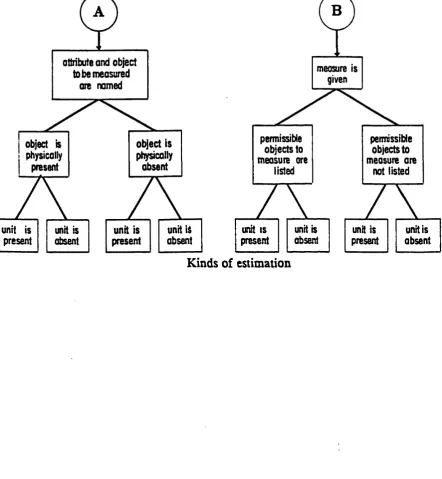
Figure 5.1 Kinds of Estimation is presented in Chapter 2 as Figure 2.1 and is Reprinted with permission from The Yearbook of the National Council for Teachers of Mathematics, 1976 by the National Council for Teachers of Mathematics.
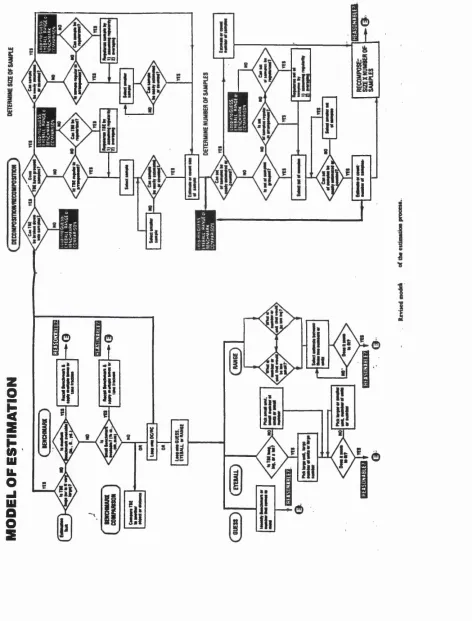
Figure 2 Revised Model of the Estimation Process is presented in Chapter 4 as Figure 4.1 and is Reprinted with permission from the Journal for Research in Mathematics Education, 1982 by the National Council for Teachers of
Mathematics.
I would like to thank School Curriculum Development Committee for giving me an award of £250 under the Teachers’ Fund scheme.
Without the assistance of friends and colleagues in schools and institutions of higher education, I would not have been able to proceed with this work.
ABSTRACT
The importance of pupils developing their ability to estimate has recently been emphasized. Although many researchers have written of the value of, and proposed strategies for estimation, few have studied the estimation ability of pupils and where research exists, the variety of criteria used by researchers prevents ease of comparison between studies.
In this study, a set of estimation tasks was presented to a large group of primary and secondary pupils. Several issues were raised from the analysis of the data leading to interviews of pupils engaged in estimation activities.
The data showed that the estimates of many pupils - and subsequently some mathematics educators - did not achieve a ±20% criterion for large magnitude answers and in response to this, a new Criterion Of Reasonableness (COR) was developed to assess estimation across a wide numerical range.
Additionally, many pupils experienced difficulties in estimating quantitative measures expressed in metric terms and interviews verified that the metric system is not used as their ‘natural’ system of measurement.
Many tasks requesting estimates in schools require pupils to test their estimate immediately by obtaining the exact answer and comparing thereby devaluing the estimate. A means was developed by which pupils could be encouraged to estimate without relating the correct answer. Pupils were required to state their confidence that their estimate was within a specified range and the gender of the pupil was a factor in his/her confidence.
TABLE OF CONTENTS
Page
Title Page 1
Acknowledgements 2
Abstract 3
Table of Contents 4
List of Figures 5
List of Tables 6
CHAPTER 1: An Overview of the Research 7
CHAPTER 2: The Nature of Estimation 9
CHAPTER 3: The Value of Estimation 17
CHAPTER 4: Studies of Estimation 23
CHAPTER 5: Preliminary Research 43
CHAPTER 6: Development of Test Questions 48
CHAPTER 7: Results of Testing Programme 60
CHAPTER 8: A New Criterion of Reasonableness 77
CHAPTER 9: Interviews to Address the Issues of
Units of Measure and Large Magnitude 96
CHAPTER 10: Encouraging Estimation and Measuring
Confidence Levels Raises Another Issue 117
CHAPTER 11: Risk-Taking as a Gender Issue 125
CHAPTER 12: A Survey to Investigate Risk-Taking 133 CHAPTER 13: Conclusions and Suggestions for Future Research 150
REFERENCES 168
APPENDIX I Estimation Tests 177
APPENDIX II Letter to Schools 188
APPENDIX III Script for Estimation Test 189
APPENDIX IV Bar Graphs of Estimation Test 191
APPENDIX V Matrices for Two Classes 239
APPENDIX VI Strategy Use for Computational Estimation 244
APPENDIX VII Estimation Teaching Programme 245
APPENDIX VIII ‘Risk-taking’ Surveys 251
LIST OF FIGURES
Page
Figure 2.1 The ‘Bright’ Model 13
Figure 4.1 The ‘Siegel’ Model 37
Figure 6.1 100 Dots 50
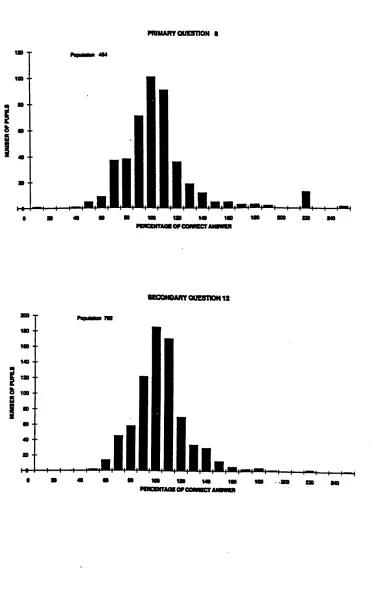
Figure 7.1 Bar Graphs of P8 & S12 61
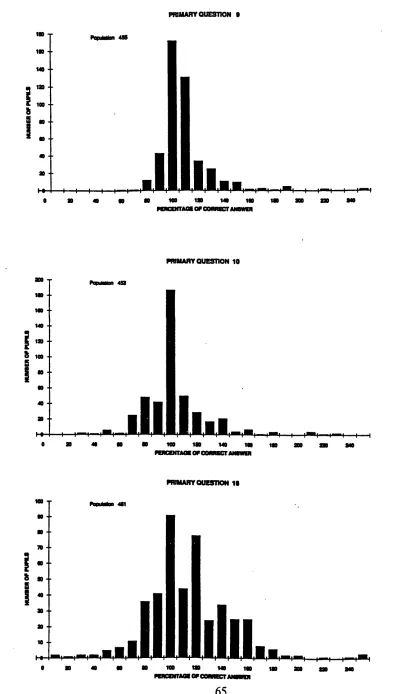
Figure 7.2a Bar Graphs of P9, P10 & P16 65
Figure 7.2b Bar Graphs of S13, S14 & S22 67
Figure 7.3a Bar Graphs of P17, P19, S23 & S25 69 Figure 7.3b Bar Graphs of P20, P26, S26 & S34 71
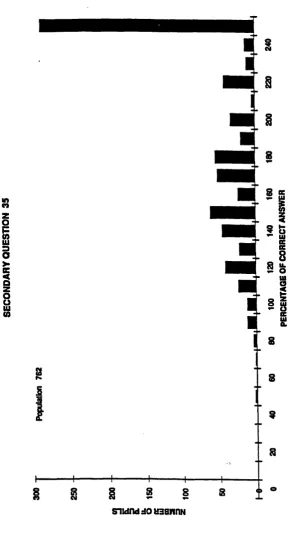
Figure 7.4 Bar Graph of S35 73
Figure 8.1a Bar Graphs of P27, P24, S36 & S31 79 Figure 8.1b Bar Graphs of P22, P28, S29 & S37 81
Figure 8.2 Criterion of Reasonableness (COR) 84
Figure 8.3 COR Using ±50% 89
Figure 8.4 Alternative Criterion 91
Figure 9.1 Scatter Diagram for Distance 98
Figure 9.2 Scatter Diagram for Weight 98
Figure 9.3 Scatter Diagram for Volume 98
Figure 9.4 Scatter Diagram for Vertical Distance 102
Figure 9.5 Scatter Diagram for Horizontal Distance 102
Figure 9.6 Estimates of Pupil Plotted on COR 112
Figure 10.1 Using COR to Determine ‘x’ and y 119
LIST OF TABLES
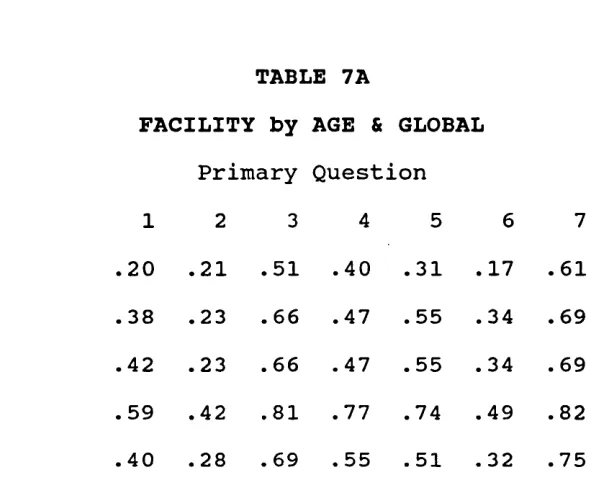
Page Table 7 A Facilities for Multiple Choice Questions 59
Table 8A Summary of Estimation Studies 76
Table 8B Effect of Subitising Levels on COR 87
Table 8C Effect of Percentage on COR 89
Table 8D Success Rate for BSRLM Participants 93
Table 9A Global Percentages of System of Measures 99 Table 9B ‘Sole Users’ Compared to ‘Mixed Users’ 100 Table 9C Favouring One System (for Distance Measure) 100
Table 9D ‘Sole Users’ for Distances 102
Table 9E Success Rate for Secondary Pupils 104
Table 8D Success Rate for BSRLM Participants 104
Table 9F Range of Scores for Each Group 106
Table 9G Global Percentage of Primary Pupils 108
Table 9H Global Percentage of Secondary Pupils 108
Table 91 Class P & Q Pupils’ Attainment 110
Table 9J Pupils’ Attainment for S32 110
Table 9K Comparison in Two Categories of Estimation 112
Table 10A The Jelly-Baby Effect 119
Table 10B Accuracy & Confidence ‘Scores’ by Gender 122 Table 12A-D Responses by Gender and School (Secondary) 138 & 140 Table 12E Chi-squared Analysis of Secondary Data 142 Table 12F-K Consistency of Responses of Various Statements 144 & 146 Table 12L-M Responses by Gender and School (Primary) 146 Table 12N Chi-squared Analysis of Primary Data 148 Table 13A Percentage of Pupils Satisfying Criteria
CHAPTER 1; AN OVERVIEW OF THE RESEARCH
My initial interest in estimation developed during a research project as part of my MSc in which I worked with a group of pupils to improve their estimation ability. As an introduction to the present work, Chapter 2 discusses the various types of estimation defining terms where necessary and Chapter 3 relates my reasons to believe that estimation is both valuable and important to the mathematics curriculum. Chapter 4 discusses the work of other
researchers in the field. A major problem I encountered in the literature search is the scarcity of research which has included data. There are many articles written pertaining to the value of estimation and suggested strategies of estimation. However, when research has given information regarding the estimation techniques and results by subject groups, the variety of criteria used by the different researchers prevents ease of comparison between studies.
The structure of the remainder of this dissertation will be a chronological development of my work. I decided that my own study of estimation would best be informed through interviewing pupils while they engaged in estimation activities. The initial work is discussed in Chapter 5 and it should be noted that this period of time was very speculative in nature and I was aware of my own inexperience in interview techniques. During this time, I also interviewed adults to complement those with pupils.
I decided that I would need a means by which I could assess pupils’ ability to estimate across a variety of tasks. Chapter 6 discusses the development of a pair of tests to assist me in determining areas of estimation which would be worth greater investigation and a full discussion of the results of these tests is given in Chapter 7. Two major areas of interest arose from these tests. The development of a Criterion Of Reasonableness (COR) is shown in Chapter 8 addressing the issue of assessment of large magnitude answers.
terms within the same limits of reasonableness as other estimates. This
prompted me to think that pupils did not have the metric system ‘internalised’. Subsequent to the tests, I conducted a series of interviews with secondary pupils to verify the use of the COR and also to discover the pupils’ ‘natural’ system of measurement and Chapter 9 discusses this work. One of my findings is that many pupils continue to use the Imperial system in their day-to-day lives. I found this interesting as most of their work in Mathematics, Science and Design & Technology involves measurement in the metric system.
Some problems developed during the course of the interviews which I had encountered previously in my experience in schools. I became more aware of pupils’ valuing - or lack thereof - of the estimation process. I developed a means by which I could encourage the pupils to estimate without relating the correct answer. I then required them to state their confidence that their estimate was within a specified range of values. The issue of confidence as related to the gender of the pupil arose during this set of interviews. This work is described in Chapter 10.
CHAPTER 2: THE NATURE OF ESTIMATION
M INTRODUCTION
"An estimate is required!" What is meant by this request? The word ‘estimate’ may convey a variety of meanings to people in their place of work. When the car body shop produces an ‘estimate’ for repair work, the amount of work which they have on their books may influence their estimate. Statisticians, on the other hand, use the term statistical estimation for the process of combining or reducing data to produce a statistic called an estimate, according to
Lindgren [1975]. These two ‘estimates’ may involve precise written
calculations with the results quoted to quite a high degree of accuracy. An estimate as referred to in the National Curriculum involves checking that calculations and measurements are reasonable [DES 1991b]. The terms estimation, mental arithmetic, and approximation are presently used almost interchangeably in mathematics education literature. What, then, is meant by these terms? Before proceeding further, I will discuss the use of these various terms and I will develop a working definition of estimation.
The term, mental arithmetic, is often confused with estimation. Atweh [1982] has divided arithmetic into four categories in an article in the 1982 National Council of Teachers of Mathematics Yearbook. His divisions are based upon whether the method of calculation is mental or uses some concrete aid, e.g. pencil and paper, and upon the precision of the result. He uses the term estimate as meaning an inexact solution. The four categories are:
Category 1 Concrete-Exact, Category 2 Mental-Exact,
Category 3 Concrete-Estimate, and Category 4 Mental-Estimate.
"Find the product of 87.2 and 21.9" may be a useful example to clarify his divisions.
using a calculator.
Category 2 would, in the case of the example, be the amazing skill illustrated by some people in performing this calculation mentally but would also include the more mundane calculations performed by the average barperson in determining the cost of a round of drinks. Category 3 gives an inexact answer using pencil and paper, e.g. 90 x 20 = 1800.
Category 4 would be the same calculation performed mentally and is often called estimation according to Atweh [1982 p53].
Bright [1979b, p581], whose contribution in the area of quantitative estimation has been considerable, stated that: "Understanding estimation is important for understanding measurement. Every measurement is an approximation, or if you will, an estimate." Kyburg & Smokier [1964, p52], experts in probability, stated that "all practical values are only approximate".
The Collins English Dictionary [1988, p500] defines an estimate as "an approximate idea of distance, cost, size, etc; calculate,roughly". An
approximation can be considered to be "a result precise enough for a specific purpose" according to Hall, L. [1984, p517] (of Richmond Public Schools, Richmond, Virginia). Her definition differs from that of Schmid [1967 p366], a principal in Baltimore, Maryland, who defines approximation as "a judgment (as distinguished from a wild guess) of a magnitude or of the size of an object or of a group of objects". He also defines estimation "to be a computation (emphasis mine) involving approximated numbers or quantities" [ibid p367]. Hall, L. [op cit, p517] defines estimation to be "the mental skill of making an educated guess". Williamson [1978], from the University of Wisconsin, defines approximation as the process of performing a ‘rough’ calculation with the given data and estimation as the process of performing a ‘calculation’ without all the given data.
estimate with the added confusing term, mental arithmetic. Mental arithmetic will be defined, for the purpose of this document, as any arithmetical operation performed without concrete aids. Approximation will be defined as the
process of determining the value of a measurable quantity but without the aid of a measuring instrument. I prefer Hall’s definition of estimate ("the mental skill of making an educated guess") but would wish to modify it to include the skill of making an educated guess using pencil and paper, where necessary. A revised definition of estimation incorporating the Collins Dictionary’s and that of Hall would read as follows: "The skill of making an educated guess as to the value of a distance, cost, size, etc., or arithmetic calculation". An estimate, then, would be the ‘educated guess’. It will be seen from the above definitions that the set of mental arithmetic skills and approximation will intersect those of estimation. These definitions are consistent with the use of these terms in the National Curriculum [DES 1991b].
It was important for me to keep the definitions for estimation, approximation and mental arithmetic firmly in mind when reading other writer’s work. These definitions are consistent with those of the other researchers in the field.
2.1 TYPES OF ESTIMATION
I will discuss the various ways in which estimation as defined can be classified. Computational estimation gives a rapid ‘rough’ answer to an arithmetic
problem such as:
6 . 4 9 x 9 8 . 73 8 1 . 7
estimation would include estimations of time such as: how many minutes will it take to walk to the train station? It should be recognised that a continuous quantity e.g. length and a discrete quantity e.g. number of people are both, nonetheless, quantities. Ellis [1968, pl59] states that counting may be called a measuring procedure but he makes the point that "it is unique among all measuring procedures". His reason for expressing this uniqueness is that there is no arbitrary standard against which one is measuring as in all other types of measuring. I intend to consider the numerical estimate and the quantitative estimate together and will incorporate them into the single term, quantitative estimation. This redefinition will be useful as some techniques for determining the number of items in a collection utilise techniques developed for estimating the length, area, or volume. It will also be shown that to perform quantitative estimation, often the estimator may wish to perform computational estimation as well.
2.1a COMPUTATIONAL ESTIMATION
‘Experts’ utilise various techniques, which will be discussed in Chapter 4, when performing computational estimation. These techniques, however, share a commonality and can all be considered arithmetical in nature. For example, an estimate for 63.2 x 1.47 will involve less sophisticated techniques than an estimate for the problem shown below:
9 . 842x(6 . 7 3 - 2 . 9P 9 . 87
FIGURE 2.1
THE ‘BRIGHT MODEL’
object is physically present
unit is absent
unit is absent unit is
present
unit is present unit is
absent presentunit is unit is
present absentunit is
measure is given
permissible objects to measure are
listed
permissible objects to measure are
not listed attribute and object
to be measured are named
complexity, they are similar in type.
2.1b QUANTITATIVE ESTIMATION
When one considers quantitative estimation, there are complications. First of all, certain aspects of measurement must be developed before the estimator can start. The notion of quantity (except when dealing with numerical
estimates) implies a means of measuring that quantity and therefore a unit of measure is necessary. The size of the unit has a direct bearing on the
magnitude of the measurement, i.e. a small unit will yield a larger magnitude for the measurement than a larger unit would yield. Also, any measurement must be considered to be independent of its position in space, i.e. the
measurer must practice conservation before s/he will be able to measure. It should be recognised that measurement is important in quantitative estimation and every measurement has limits to its accuracy as no measurement can be exact.1 Bakst [1937] states that measurements are always approximate because no instrument is perfect and people make errors in measuring.
As has been noted, numerical estimation is being regarded as a subset of quantitative estimation. There are also various task types of quantitative estimation. For example, the task of estimating the length of rope stretched between two pegs while one holds a metre rule in the hand (as a guide) is different from performing the same task with only a mental image of that unit. George Bright [1976] classified quantitative estimation into eight types and the reader is referred to the diagram of the model shown on the facing page in Figure 2.1.
1
First, he divided all tasks into two classes after he has assumed that the unit of measure had been selected for each class. By naming the unit, Bright may have eased the task if the estimator did not have any idea of the object’s size. For class A estimates, the estimator guesses the measure for a named attribute of an object plus the named unit i.e. the length of a rope in metres. It could also be argued that another class exists which would be class A but without a named unit or even a named system, eg metric or Imperial. Chapter 9 will show the manner in which I used this particular ‘sub-class’ which proved quite illuminating. I did not consider this further complication to be valuable in understanding the estimation process in the early stage of the research. My reasoning at the time was that the process was already quite complicated and I knew that I would have to develop some means of assessing estimation ability. I could be faced with answers that would be difficult to process. For example, if asked for the height of the tree, a subject could reply, "twice the height of the garage". I did not consider this omission from Bright’s model to be significant but it did remove the possibility of obtaining potentially useful information.
For class B estimates, the estimator chooses an object to which a specified measure could be assigned i.e. what object has a mass of 2 kg. Two subclasses of class A are defined by whether or not the estimator can see the object to be estimated. For class B, the two subclasses are determined by whether a list of permissible objects is given or not. Finally, each of the four subclasses are further divided into two types, by whether or not the estimator has the unit of measurement physically present.
O’Daffer [1979] stated that there are three aspects of any quantitative measurement:
1) an entity to be measured, 2) a unit of measure, and
3) a number called the measure.
This fits well into Bright’s model. The Bright model will be used in future chapters to classify tasks. A certain amount of control is kept in the hands of the researcher using this model and this may be a valid criticism of the model. It has limitations but it does allow many of the tasks generally associated with quantitative estimation to be categorised.
2.2 SUMMARY
CHAPTER 3: THE VALUE OF ESTIMATION
3.0 INTRODUCTION
Several publications have pronounced that the skill of estimation is of
importance to mathematics education. The Cockcroft Report included it in its Foundations List devoting paragraphs 257-262 to the topic but declared that "estimation is not practised in very many classrooms" [Cockcroft 1982, para 258]. A report by H.M.I. [DES 1985, pl8] included the "ability to estimate" as ‘Objective 15’. Finally, the National Curriculum [DES 1991b] specifically identifies estimation and approximation in almost every level of Attainment Target 2.
I will discuss how the need for developing the skill of estimation has been encouraged prior to these three documents and consider reasons for teaching estimation in the previously defined areas of computational and quantitative estimation. Recently, a conference in San Diego encouraged the inclusion of estimation in the mathematics curriculum for two basic reasons; firstly, it helps develop conceptual structures for number and secondly, it is useful in everyday life [Sowder 1989].
3.1 COMPUTATIONAL ESTIMATION
Recent pleas to teach computational estimation are not the first to be made and, in my opinion, unless estimation is more clearly understood, its recent inclusion in the National Curriculum will not stimulate understanding of estimation by pupils in school. Opinions have been expressed by various writers on the importance of developing estimation skills. Complaints that ‘approximation’ was badly taught were registered in the reports of the London University on the General School Examinations in 1928-30 as reported by Inman [1932] in the Mathematical Gazette. His use of ‘approximation’ here is very close to the definition given heretofore for computational estimation. In
multiplication and division [ibid]. The rules he refers to are those of counting decimal places in multiplier and multiplicand to determine the decimal
placement in the product and the similar method for long division decimal placement. He wanted to avoid the compartmentalising of ‘approximation’ to special lessons on the subject. Sauble [1959, p33], a Detroit schoolteacher, claimed in 1955 that pupils who succeed in estimating do not always employ the standard algorithms but "develop ingenuity and resourcefulness in dealing with numbers" and that estimation stimulates a more mature understanding of basic principles of the structures involved. She called for estimation to be part and parcel of arithmetic instruction and not something separate.
Buchanan [1980] claimed that estimation could be used as a part of learning about mathematical structure and developing a ‘sense’ of number. The structures Buchanan and Sauble refer to include the commutative, transitive, and associative properties. For example, the early stages of understanding commutativity may be shown by the following example:
If a is a ‘large’ number and b is a (relatively) ‘small’ number, the
importance of a is obvious regardless of whether the addition is a + b or b + a.
I admit this is an early stage in the development and the major advantage to the ‘estimating pupil’ should be in his/her improved number sense. Edwards, A [1984, p61], who has developed a programme for computational estimation in Papua New Guinea, claimed that it is the "most direct, and obvious way of teaching" the concepts and skills involved in ‘number sense’. Edwards defined ‘number sense’ as a shorthand for a ‘general quantitative literacy’ and the capacity to compare numbers. These rather vague terms can be clarified best by an example. ‘Number sense’ allows one to understand, among other things, that 3470 is close to 3500 while 46 is not close to 16 although the difference in each case is 30. Edwards A. [ibid] suggested four reasons for the lack of estimation in the curriculum:
3) assessment is consequently difficult and, 4) pupils and some teachers view it as ‘lazy’.
Finally, computational estimation allows a check on the reasonableness of any calculated answer. This ability will become more and more important as the use of electronic calculating aids becomes more widespread. Reys (a prolific writer on this subject) et al [1980] stated, however, that estimation skills do not automatically develop through maturation or from the study of more
mathematics. They point out that ‘good estimators’ can fall prey to believing a calculator over the estimated answer "claiming they must have made some mistake" [ibid, p231]. This is a source of concern and will be discussed in the next chapter.
O’Daffer [op cit, p48], a Professor of Mathematics involved in teacher education, claimed that estimating can "help to develop a positive attitude towards mathematics since the pupils are not competing with each other to get the right answer, but rather, are competing with themselves to improve the accuracy of their estimations". He claimed that it also provides motivation for solving problems and that once pupils commit themselves to a guess, they will often attempt to find the exact answer.
3.2 QUANTITATIVE ESTIMATION
Are there similar advantages to be gained by teaching quantitative estimation? Bell M. [1974] maintained that an essential part of every person’s
mathematical education is the ability to use estimation and approximation confidently, and readily. He suggested that this included ‘number sense’, ‘measure sense’ and an awareness of reasonable cost or amounts.
I found, during my seventeen years of teaching in secondary schools, that many pupils believed exact measurements are possible and just a matter of improved skill by the measurer. Pupils are sometimes told that a line is exactly 4cm long. Later in their education, they are told that this really is not true and that no measurement can be exact. Precision is obviously important but a more honest approach could be to develop the notion that measurements are given with an element of error. Trimble [1973, pl33] indicated that using an interval of values "provides a mathematical model for the arithmetic of measurement that contrasts with the rather sloppy, this-works-even-though-it-isn’t-really-right rubrics with which we currently mystify children". Pupils should not be misled into the idea of ‘exactness’ that can never be substantiated. Personal
experience has shown that pupils will mark their own work wrong if they are ‘o ff a measurement value given in the answer book by the slightest amount.
Estimating may be useful when some topics are developed. For example, a starting point for angle measurement builds on the pupil’s understanding of half and quarter turns. The notion of greater precision may be introduced and, consequently, the need for a measurement using a protractor or angle indicator. The ‘estimating’ pupil should not make the common error of
recording the supplementary angle. Other areas of the syllabus arise naturally from estimation. Payne and Seber [1959] claimed that estimates can be useful in teaching angle but also they give a natural entry to percentages. Quite interesting problems of permissible error on a given ‘measurement’ could develop into a topic for sixth form students.
Finally, quantitative estimation can help the pupil to describe the world s/he occupies. Bright [1976, pl03] asserted "Amount (e.g., length, mass,
temperature) is an important part of one’s understanding of the world.
Estimation skill can help organise this world so that patterns can be observed."
i a ESTIMATION IN PROBLEM SOLVING
Many writers (Bruner, Polya, Biggs, Burton) have stated that a major purpose of studying mathematics is to enable one to solve problems. In the past, pupils have typically been taught a great deal of mathematical content and were then expected to be able to use this to solve problems. Mathematics educators, such as Schoenfeld [1986], have suggested that a way to teach mathematics is to help pupils to solve problems and to use the problem as a motivator for developing mathematical content. The great problem-solver, G. Polya [1981, pl56], described the scientific method as "Guess and Test" and suggested that teachers should encourage pupils to guess with the exhortation: "Let us teach guessing!" [Polya 1954, pl58] Polya does not consider this to be an easy task but one which is most worthwhile. Estimating, as defined earlier, may be an important tool in the problem-solver’s repertoire. In particular, I claim it is a vital element to the problem-solving heuristic of Guess and Test and, possibly, ‘Make the Problem Simpler’. When the problem-solver makes the problem simpler, one aspect of this is to guess which parts of the problem can be ‘ignored’. Another way of stating the same thing is that the problem-solver estimates which are the vital parts of the problem.
3.4 SUMMARY
Opinions of writers as to the benefits of teaching computational estimation to the pupil have been put forward. It can be seen that a wide body of
Sowder [1992, p387] claims that computational estimation is closely related to number sense and that number sense is difficult to define and therefore
difficult to assess. Perhaps this is another reason for estimation not having had a high profile in the mathematics curriculum.
It has also been indicated that quantitative estimation may be an important element in measurement and in allowing the pupil to gain a greater
understanding of his/her environment.
CHAPTER 4: STUDIES OF ESTIMATION
4.0 PROBLEMS ASSOCIATED WITH THE LITERATURE SEARCH
In many of the studies to be discussed in this section, academically more able subjects have been studied to determine how people should estimate. This technique, suggested by Ginsburg et al [1983], allows one to gain insight into strategies available to pupils by determining what techniques or strategies are used by ‘experts’ in the field. I find this slightly problematic as this implies there are correct ways of estimating and that the academically ‘weaker’ pupils must do it along the same lines. It also relies heavily on the researcher’s access to ‘good’ estimators, in this case. I was more interested in discovering how most pupils estimate - not just the ‘good’ ones. I also wanted to discover the aspects of estimation that were most problematic to most pupils and to try to understand the reasons for these difficulties.
Until recently, estimation has not been part of an agreed curriculum. Even now, with its inclusion in the National Curriculum, it is often seen as a ‘tacked on’ topic and, I fear, not valued by the pupils. Most estimation tasks in school require an estimate and then (almost immediately) a measure or calculation is made. Many colleagues have agreed with me when I have asserted that pupils often make their ‘estimate’ after they have measured or calculated showing their disregard for the estimation process.
available for me to use the same criterion on all data.
I also found that transferability across the various estimation tasks did not take place readily according to the research that was available. In other words, a ‘good’ computational estimator was not necessarily a ‘good’ quantitative estimator.
I shall describe each of the studies found in the literature and attempt to show how these linked together but, for the aforementioned reason, sometimes this proved impossible.
I have found estimation difficult to analyze. Perhaps it is because it is such a private activity and difficult for subjects to relate how they are doing it. This problem has been a persistent one and has been the main impediment in many lines of the research. When pupils state that their estimate was "Just a Guess", it may be any number that came in their head or it may be that they have a very good intuitive feel for the number. The literature search was useful in providing the means to interpret findings and to show approaches to the problem by other researchers and it also gave support for my findings of the problematic nature of estimation.
4.1 INTRODUCTION
relationship of the epistemological position of the researcher and its relevance to their work in developing children’s number sense. Of the three
epistemological traditions of empiricism, rationalism and socioculturalism, I find myself to be a rationalist and it is from that perspective that this document is written.
Generally, the studies are easily divided between the areas of computational and quantitative estimation and this chapter will be so divided. However, one of the earliest works in the area of estimation dealing with both areas was Pauli’s [1971] doctoral dissertation. He tested 196 pupils, aged sixteen, in college preparatory classes from an upper middle class community in New York. One of his conclusions was that the ability to estimate is not a unitary ability. In other words, estimation tasks of different types i.e. numerical
estimates and computational estimates appear to require different abilities and there does not appear to be an easy transfer of ability between the various estimation tasks. The diversity of estimation tasks and performance of these tasks is a recurring theme in the research.
4.2 COMPUTATIONAL ESTIMATION
Reys, et al [1982] conducted a study in which 1200 people (across the
age-range 12 year-old to adults) took a computational estimation test. Reys has contributed a great deal to the literature in this field and this study is one of the most extensive I found in the literature search. All pupils were in ‘the upper track’ classes and the adults (mostly college graduates) were successful in their careers. The top 10% of each age group on the test paper were deemed to be ‘good estimators’ and 59 of these subjects were interviewed. I find great difficulty in accepting these ‘good estimators’ as such, as some of these individuals believed their estimate to be incorrect when faced with calculator or computer output which disagreed with the estimate. This may also give evidence of the lack of transferability across estimation tasks.
described by Reys, et al [ibid] as determined by the interview technique. These were found to be high-level cognitive processes that are difficult to define operationally. Their attempt at these definitions and the terminology used by Reys, et al follow:
Reformulation alters the numerical data into a more mentally manageable form. Thirty percent of 440,000 becomes 1/3 of 450,000. The structure of the problem remains intact.
Translation changes the structure of the problem into a more mentally manageable form. An example of this might be to estimate total school attendance for a week by multiplying a ‘reasonable’ daily average by 5 rather than adding 5 numbers together.
Compensation is a further process which adjusts the estimate at various stages in the estimation process. How much would each person receive, roughly, if a pools syndicate of 23 people won a total of £221 876? The estimator might alter the total to £230 000 to allow an easy division and then ‘compensate’ the answer to give a final estimate of £9 000.
Characteristics of the good estimators were identified. Quick and accurate mental computation and recall of basic facts and an understanding of place value were present in each subject interviewed and they all utilised
Reformulation. Each had a ‘Tolerance for Error’ which one seventh grade (12 year old) pupil explained to be the ability to "tell yourself not to be bothered by being off some" [ibid, p i 98]. A majority of the good estimators used Translation and Compensation. A minority, 20-50% of the ‘good estimators’ interviewed (considered by Reys, et al to be on a higher ‘level’), revealed that they searched through a variety of strategies e.g. (Averaging and
Compensating) before proceeding and they felt a strong sense of
linked to estimation) is nonalgorithmic and involves judgment and interpretation, the application of multiple criteria, self-regulation of the thinking process, and imposed meaning. She also claims it tends to be complex and effortful. The ‘nonalgorithmic’ nature of estimation links nicely with reformulation, translation and compensation which have definite
attributes of ‘number skills’. One can include ‘the application of multiple criteria’ and ‘self regulation of the thinking process’ as ‘cognitive processes’. It is important to recognise, as an estimator, that your estimate will be ‘wrong’ but the willingness to impose one’s own criterion upon the estimate and
remain in control of the rigour of one’s estimate might be an example of this aspect. Finally, the fact that it is complex and effortful and requires judgment and interpretation place it clearly within the affective domain and all of these aspects are distributed along a continuum. The continuous nature of these aspects deserve some explanation. At one extreme of the number skills attribute, one can imagine the mathematically able individual with
considerable skills in recognising a variety of means of expressing a number through the darts player able to calculate scores mentally with great accuracy until one reaches the individual with very poor number skills in any
environment. Examples of the range of cognitive processes are more difficult but it can be seen that simply restricting this to the application of a single criterion at one extreme through applying a multiplicity of criteria at the other gives a ‘flavour’ of the continuous nature of this aspect. Finally, the affective attribute might range from the very confident and effort-making individual through the confident but ‘lazy’ to eventually the ‘lazy’ and insecure individual. I shall discuss the links I have found between confidence and estimation in Chapter 10.
Another study reported by Levine [1982] determined the computational estimation ability of 89 undergraduates - none of whom were mathematics majors - and the strategies used by them which were classified into various categories. The categories had been predetermined through a literature
test and asked to "think aloud". The categories (with an illustrative example, where necessary) were:
1) Fraction (0.76 becomes 3A)
2) Exponents (0.047 becomes 5 x 10'2) 3) Rounding both numbers
4) Rounding one number
5) Powers of 10 (76 x 89 becomes 100 x 100) 6) Known numbers (27.2 x 4.63 becomes 25 x 4) 7) Incomplete Partial Products(Quotients)
(689 x 34 becomes 600 x 30 + 90 x 4) 8) Proceeding Algorithmically
The strategy types found to be used most frequently were Rounding Both Numbers and Proceeding Algorithmically. The Proceeding Algorithmically strategy was exemplified by a subject estimating 64.6 x 0.16 by computing 646 x 6 = 3876 or 3000, 646 x 10 = 6460 or 6000, adding these results to get 9000, and replacing the decimal point for a final estimate of 9. In my opinion, the widespread use of this ‘strategy’ indicates a paucity of adequate strategies available to the subjects interviewed (though one reason for its use may have been that the test did not have time constraints). It should be remembered that these subjects were not selected for their estimation ability as was the case in the Reys, et al study. Levine [ibid] stated that the ability to estimate was not found to be related in her study to the number of different strategies used. This finding appears to show disagreement with those of Reys, et al. This apparent lack of consistency will be seen again between other studies. Dowker discussed her findings at a British Society for Research into Learning
Mathematics (BSRLM) meeting utilising Levine’s test with a group of 35 professional mathematicians. "Each answer was given a score from 0 to 3 depending on the percentage error." Her main finding was that "the
mathematicians used a very great variety of strategies" in determining their estimates. [Dowker 1988, p3] This would, therefore, appear to show
findings of Levine.
A study to understand how the affective domain impinges on estimation ability was made by Bestgen, et al [1980]. A group of 187 preservice elementary teachers were divided into three groups to help ascertain how attitudes and estimation ability could be altered by a scheme of instruction over a ten week period. One group of 50 were the control group, another group of 79 received weekly practice quizzes, and the third group of 58 took these quizzes but also were taught specific estimation strategies. Attitude instruments were designed to determine the teachers’ attitude towards estimation. Pre-treatment and post-treatment tests and attitude instruments were given to each group. The results of the study showed that practice improved performance and when the "practice was accompanied with specific estimation strategies, greater
understanding and respect for estimation processes occurred." [ibid, pl35]
Levine [1980] reported, in her doctoral dissertation, that a further strategy called the Establishing Bounds Strategy was identified during the pilot study but not used by subjects in the final study. I believe this strategy to be a very important one. The recognition that is implicit when bounds for the estimate are given shows that the estimator knows s/he is not expected to get the answer ‘right’. The wording of a question requesting an estimate, however, implies one number and this is a possible explanation for the absence of this strategy in her final study. Levine [ibid] did not identify a reason for the absence of this strategy in the main study but it may be that less emphasis was placed on an estimate in the pilot study. I shall discuss a technique for
encouraging pupils to develop the Establishing Bounds strategy in Chapter 10.
Levine [ibid, p7] identified skills, which had been deduced by an analysis of the task, to be valuable in the estimation process; these are listed below:
1) Understanding of place value, 2) Ability to round numbers,
4) Ability to add, subtract, multiply and divide two numbers which are powers of ten,
5) Understanding of basic operations and how numbers behave under them, and
6) A feeling for the fractional equivalents of decimals.
The skills identified are those which are normally associated with
mathematically able pupils. Reinforcement of this claim comes from Pauli [op cit] who found that computational estimates were positively correlated with mathematical ability and verbal ability.
Rubenstein [1985, pl07] investigated the responses to four types of estimation tasks; her label for these "Estimation Scales", an example of each and the means of assessment are given below:
1) "Open-ended" - Estimate the cost of a collection of priced items - Allowed interval of answers determined by a panel of mathematics educators,
2) "Reasonable vs. Unreasonable" - Is the calculator display of 324 x 6 shown, right?, wrong? or don’t know - Display was exact or outside the bounds of the open-ended interval but within a power of ten of the correct answer,
3) "Reference Number" - Is the difference between $55.65 and $26.95 above or below $20 (don’t know was another possible answer) - The reference number was one of the bounds of the open-ended acceptable interval, 4) "Order of Magnitude" - Is 74.4 -f 24 closest to 0.3, 3, 31 or 310? - Correct option was within the open-ended acceptable interval.
She [ibid ppl09-110] also developed a multiple-choice "Related Factors Test" to measure the mathematical skills listed below (with an example, where necessary):
1) "Selecting Operations",
3) "Knowing Number Facts",
4) "Operating with Tens", 64.8 t 10 = 648, 64.80, 64.8 or 6.48
5) "Operating with Multiples of Tens", 6) "Knowing Place Value",
7) "Rounding",
8) "Judging Relative Size", Choose the largest number 9.8, 9.08, 9.80, or 9.9.
She found that "operating with tens, making comparisons and judging relative size" were the most important contributory factors in the prediction of
estimation performance but that "knowing place value, knowing number facts, rounding, and operating with powers of ten - did not explain more than 1% of the variance in any stepwise regressions." [ibid pi 17] Sowder [1992 p375] suggests that Rubenstein’s ‘good predictors’ might be too closely associated with place value and basic number understanding "for all to be significant in a stepwise regression." These results show some of the problems associated with the research into estimation.
Shoen et al [1981] conducted a teaching study to ascertain the possibility of improving the computational estimating ability of primary-aged pupils. The study found that they could be taught to become better estimators of whole number computations but several problems were identified during the study. Some pupils in the study knew an exact answer through rapid mental
were assigned ‘Levels’ and each set was given estimation sums "that were just a little too difficult for them to solve correctly." [Dowker 1989, p7] They also were given sums that were of much greater difficulty and the results showed that pupils scored reasonably well on the problems near their own Level but poorly on problems that were much higher than their own Level. This work concentrates on a lower age range, in general, than other researchers. It has not been very helpful to my study primarily due to the restriction in the age range and the tasks themselves.
Sowder and Wheeler [1989] investigated the development of concepts and processes which they determined to be associated with computational estimation. Their analysis considered the major factors affecting
computational estimation to be broadly grouped in the following components (which will be explained in the following paragraph):
1) Conceptual Components, 2) Skill Components,
3) Related Concepts and Skills, and 4) Affective Components.
The Conceptual Components recognised the role of approximate numbers, the potential for a multitude of possible techniques and outcomes, and finally, the appropriateness of an estimate was subject to context and desired accuracy. The Skill Component closely mirrored the processes described by Reys et al [1982] previously mentioned. Related Concepts and Skills were similar to those found by Levine [1980 & 1982] and the Affective Components included recognition of the usefulness of estimation, tolerance of error and confidence in mathematical ability and ability to estimate.
hypothetical pupils’ explanations. Finally, some open response problems were given where the pupils were required to give estimates for a set of arithmetic problems.
Several disturbing findings are given in their report. Pupils were found to prefer "computing with the exact number and then rounding off the result to obtain an estimate" [ibid pl43] This shows how estimation is not highly regarded by pupils and it was found that "the preference for this process grew in direct proportion to the development of the ability to estimate by the standard round-then-compute method." [ibid pl44] Few pupils would accept the validity of a number of possible outcomes for the same problem. Finally, the "rounding process used by many students, however, was school learned and algorithmic." [ibid] It would appear that the pupils considered there to be only one ‘right’ answer to an estimation problem and applied a rule which had been given to them in school. It should be clear that teachers will need to be aware of the need to avoid teaching the techniques of computational estimation as yet another set of rules.
4.3 QUANTITATIVE ESTIMATION
Several studies have been conducted to determine the cognitive factors which affect a subject’s ability to estimate quantity. Immers [1983], in his doctoral dissertation, studied the linear estimation ability of primary school pupils. He was interested in the strategies employed as they made their estimates. He found that the most frequently used strategy to estimate length was Unit Iteration; some pupils did this physically but most did so visually by marking off units with their eyes.2 He found that estimation of measures could be effectively taught to primary-aged pupils, although accuracy with a single unit was not found to be directly transferable to other units and, in novel situations,
pupils tended to underestimate length.[ibid] Again, this indicates the lack of transferability of estimation tasks.
A study by Corle described the difficulties middle school pupils had in making estimates and then measuring various quantities. An Editor’s note stated, "The enormity of pupils’ errors, both in estimating and in actual measurement, when dealing with some of the most common quantities, concepts upon which our textbook problems are based, certainly accounts for some of the pupils’
troubles in problem solving, but leaves us wondering how we are spending our time" [Corle 1960, p340]. I have heard similar complaints from colleagues when pupils have been asked questions about heights or lengths of everyday objects. If they estimate the height of a double decker bus to be 20 metres or more, it shows they have great difficulty with either the metric system or the notion of height.
High school seniors were studied by Crawford and Zylstra in 1952 to attempt to correlate measures of achievement and estimating ability as determined by a test they had devised. The measures of achievement were taken to be
performance on the Otis Self Administering Mental Ability Test3, the Schorling-Clark-Potter Hundred Problem Arithmetic Test4, the pupil’s
mathematics marks, and total grade point averages. They found "the ability of pupils to estimate with competency is not related to their mental abilities, computational abilities or marks received in mathematics courses" [Crawford & Zylstra 1952, p246].
3 According to F. Kuder [1975, p 331], Professor of Psychology ,Duke University, Durham, N.C., the Otis Test "compares favorably with other measures of general ability."
Their criterion for ‘correct’ on the estimating test calls for some comment. The test was multiple-choice with the ‘correct’ answer given and four other answers. A conclusion that was made from the data is that overall, pupils were "poor estimators of exact measurements (the ‘correct’ answer) but when nearly correct or approximate answers are allowed for, their performance is somewhat more satisfactory" [ibid, p242]. Two items from the test given in the paper showed answers deemed incorrect to be between 40 and 70 per cent above or below the correct answers. As other studies are analyzed, these figures shall be seen to be important. In my opinion, the lack of consistency in the criterion for ‘correctness’ in estimation studies is a major problem.
The primary and middle school age range and a group of adults were studied by Siegel, et al [1982] in an attempt to develop a model of estimation on the basis of their performance. They utilised rational task analysis5 and pilot test data to propose a competence model which distinguished between Benchmark and Decomposition/Recomposition estimation tasks. Their term Benchmark includes that of Unit Iteration (previously discussed) but also includes
Fractional Benchmark and Multiple Benchmarks. ‘How thick is a strand of spaghetti?’ might be a Fractional Benchmark question. The estimator, in this case, must choose a suitable unit (possibly the cm.) and then decide what part of that unit would be a reasonable estimate for the strand of spaghetti. An example given by Siegel, et al for a Decomposition/Recomposition task is, "How wide is the car park where I left my car?". The problem is ‘decomposed’ into an estimate of how many parking spaces along one edge, the width of each space, and then recomposed to determine the width of the car park.
Ten boys and ten girls randomly selected at each grade level from 2 to 8 inclusive participated in the study. Ten adults, six women and four men, were included and their educational level ranged from BA to PhD. Questions were developed which were found to be of interest to the pupils through pilot
testing and an explanation of the purpose of the test and a definition of an estimate was given. The pupils were interviewed on a tape recorder and probes were made when clarification was deemed necessary. Adults wrote both answers and explanations of how their estimates were made. The questions developed were pre-classified into problem types. These were Benchmark-Extent, Fractional Benchmark-Extent, Regular
Decomposition-Extent and Numerosity, and Irregular Decomposition-Extent and Numerosity. Extent refers to linear extent, i.e. length or height. An example of Irregular Decomposition would be to estimate the number of cars in a large car park with random empty spaces. Answers were judged to be ‘Reasonable’ if within one order of magnitude e.g. incorrect by no more than a power of ten and ‘Accurate’ if within ±50% of the actual value.
In this study, the terms problem type and strategy were often used
interchangeably. When the pupil estimated the length of an object by relating it to another object, the pupil was said to be using the Benchmark Comparison Strategy. Other ‘strategies’ e.g ‘Guess’ or ‘Eyeball’ were defined before the test. The strategies used by the pupils were determined through interview. Each strategy, with a brief explanation, is given below:
1. Don’t know - No explanation given 2. Guess - Just thought of an answer 3. Eyeball - Perceptual description 4. Range - Indicated bounds
5. Benchmark Comparison - Compared stimulus to another object 6. Benchmark - As above but with mentally carried unit
7. Fractional Benchmark - Fractional part of 6 above 8. Multiple Benchmark - Multiples of 6 above
9. Pseudo-Decomposition - Showed awareness that the problem could be broken down but did not use technique
M
O
D
E
L
OF
E
S
T
IM
A
T
IO
N
FIGURE 4.1
THE ‘SIEGEL’ MODEL
!
I
!!
!
•1 ©
©
i f
5H
t
sii
Sis
ill
h
!
li
Si1
A result of this study was to enable Siegel, et al to propose a hierarchy of estimating tasks. Benchmark-Extent was found to be the easiest (e.g. How long is this pencil?) and Irregular Decomposition/Recomposition Extent (e.g. What is the length of this reel of computer tape?) and Numerosity (e.g. How many holes in the head of a tennis racquet?) were the most difficult. These were not unexpected results. However, the study showed the proposed model in need of revision. A ‘final’ proposed model is given in Figure 4.1 on the facing page. The classification of the various tasks by Siegel, et al is useful and shows a variety of potential strategies. It is interesting to note that Siegel’s model is rather obvious from the point of view that it is a logical sequencing of types of strategies. However, if a subject is correct within a given criterion and states that s/he is "Guessing" or "Eyeballing", is it correct to say that this answer is less valid than that given by a person who uses
"Decomposition/Recomposition"? It is obvious that the
Decomposer/Recomposer is using mathematical strategies more overtly but the intuitive guesser who is ‘right’ may be using these same strategies or even more powerful ones at an innate level and these are inaccessible to the researcher. I certainly feel that sometimes I was unable to discover how very good estimates were made in the course of my own work.
Again the problem of comparability arises with, for example, the study by Crawford and Zylstra as the criterion for ‘accuracy’ is dissimilar. ‘Reasonable’ to Siegel, et al is incorrect to Crawford and Zylstra and some of Siegel’s ‘accurate’ answers would also be incorrect to Crawford and Zylstra. This exemplifies the problem of consistency previously mentioned.
Bright conducted a study on a small number (21) of experienced teachers. He found that they lacked skill in various types of estimation tasks but found that estimating lengths improved with practice. An important part of this study was Bright’s [1979a, pl61] attempt to determine "if estimation skills can be
was shown two objects labelled A and B and then asked "Which would be larger, 2A or 4B?". In other words, the subject could be shown a pencil (A) and a key (B) and then asked, what would be larger, two pencils or four keys? H e found that there does not appear to be a relationship between estimating physical measurements and choosing the greater of two measurements in symbolic form. This prompted Bright [ibid p i 63] to suggest "all types of estimation should be presented to students in order to develop skills in working with as many types as possible".
Using a correct criterion of ±15%, Attivo [1979, pl8], in her doctoral dissertation, found that transfer did not appear in a study of prospective
teachers’ ability to estimate lengths and areas and, consequently, she concluded that "instruction is needed in most types of estimation". This is a recurring recommendation in many studies of estimation as transfer between various tasks appears limited and yet, it would appear beneficial if pupils could
develop the means for transfer. However, until pupils are more accustomed to estimating and valuing their estimates, we cannot expect them to be able to make the transfer to novel situations.
Hildreth [1983], in an article based upon his doctoral dissertation, discussed strategies used by pupils aged 10, 12, and 18 years when estimating length and area. Each pupil was given a test of perceptual ability (a Group-Embedded Figures Test). The mathematical achievement of the 10 and 12 year old pupils was based on their Scholastic Aptitude Tests in Mathematics and those of the
18 year old pupils was found using a locally developed minimum competency test. In his article, Hildreth described some invalid strategies that pupils have been found to use. Wild guessing is an obvious one and used for length and area. Many pupils, according to Hildreth [ibid], used a ‘count-around’ or ‘count-around plus some for the middle’ method when finding the area of a shape; or they may just add the length and width together. These strategies indicate the pupils display a misunderstanding of area. This may be caused by the request for speed in making their estimate. A strategy that has not
The fact that ceiling tiles are one square foot and a foot is about 30cm allows the estimator to determine the length of the room in metres. Appropriate strategies for area estimates were: repeated addition (a type of unit iteration of an area), length times width, and rearrangement - to obtain a shape easier to estimate. An inappropriate strategy found by Piaget in studies of primary grade pupils and reported by Hildreth [ibid] was that of ‘Centering’, where the pupil gives the estimated length of one of its dimensions to be the area of the shape. Again, this is an inappropriate strategy that may be occurring due to the requirement of speed. Hildreth observed each subject answering a set of 24 questions and noting the estimation strategy which was used on a form containing 9 appropriate strategies e.g.(L x W), 7 inappropriate methods e.g. ‘Centering’ or Other Methods. All of the Other Methods were found to be inappropriate. Hildreth [1980] reported in his doctoral dissertation the calculation of a strategy use score (STRUSE) obtained by subtracting the number of items in which an inappropriate strategy was used from 24, the number of questions. He then used the STRUSE score as a means of correlating strategy use with various other factors.
Hildreth’s [ibid] study included a teaching programme in which half of the ten and twelve year-olds were taught to use guess and check methods and the other half were given explicit instruction in appropriate length and area
estimation strategies. He found, as a result of a pre-test and post-test, that the pupils improved in estimation ability and those who had been taught strategies showed an improvement in strategy use.
ability for the young adults but unrelated for the pupils. This contradicts Pauli’s [op cit] findings that 16 year-old pupil’s ability to estimate length was not correlated with either mathematical ability or verbal ability, nor was the ability to estimate length or area correlated with the ability to do mathematical computations rapidly. The Crawford and Zylstra [1952] study of 18 year-olds agreed with Pauli’s [1971] findings. A possible reason for the apparent contradictions is the differences in the criteria for correctness.
AA SUMMARY
There are encouraging signs of a growing interest in research in this field and some studies have produced useful results. Studies conducted have shown the strategies used by ‘good’ computational estimators are consistent with a
mathematical analysis of the task i.e. compensation is valid on mathematical grounds for altering an original estimate. Other studies have shown there is a great deal more that must be done before an understanding of the estimation process is achieved. It has been suggested that affective attributes, e.g.
self-confidence, may be contributory factors in computational estimation ability. Sowder [1992, p379] generated profiles of good estimators as people who have "strong self-concepts in mathematics, attribute success to ability, have too little experience with failure to attribute it to any cause, and value mental computation and estimation." The profiles were not universally true but they may be an indicator. Affective aspects of estimation will be investigated in a future chapter.
Training studies of quantitative estimation have shown that there is a lack of transfer between estimation tasks involving different units and situations with the plea for all types of estimation to be practised in the classroom.
There have been inconsistencies in various studies linking ‘mathematical