495 | P a g e
DESIGN AND IMPLEMENTATION OF TWO LAYERS
BASED UNIFORM ENCRYPTION DECRYPTION
ALGORITHM (TLBUED)
Er. Suraj Arya
Research Scholar P.hd(CSE),Baba Mastnath University
,
Rohtak, Haryana,(INDIA)
ABSTRACT
Most of the task in the current age depend on computers and can execute through internet so information security is the major challenge for the programmers, information sender and receiver. Every second many new hacking methods came into existence to break the information security so new invention and updation always required in the field of cryptography. This paper presents a technique which has a new concept of uniformity in encrypted message. Two layers perform the encryption and decryption process in through two layers with the help of symbol table. Second feature of this algorithm is uniformity it means that after encryption an encrypted message will use same symbols to represent every character. Thus by doing this intruder cannot differentiate or detect the message. In this technique first layer take Input message and convert character by character as per symbol table. In second layer first level conversion use as input and provide the special character according to input which makes the message uniform. To perform the uniformity typical symbols are used in the technique.
Keywords: TLBUED
I INTRODUCTION
Cryptography describes a process of encrypting information so that its meaning is unknown to those who do not
know how to decrypt the information. It is impossible to overemphasize the importance of cryptography, both in the
past and present. Without cryptography in computing it would be impossible to perform tasks. Secure log in, credit
cards, remotely log into servers can not be possible without security techniques [8],[1],[2]. A cryptographic
algorithm is a step by step sequence of mathematical calculations used to encrypt and decrypt information. There are
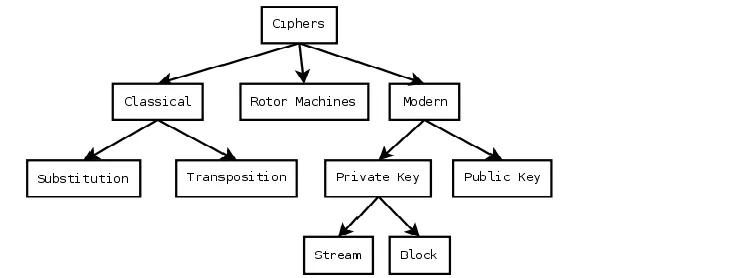
currently three different types of cryptographic algorithms [8],[1],[2].
496 | P a g e
II HASHING ALGORITHMS
A hash is a mathematical algorithm designed to perform one-way encryption. one-way means that once the
information has been encrypted there is no way to retrieve the original information from the hashed form. Hashing is
commonly used in password files and for ensuring the integrity of data. As an example, a hash may be created for an
email message in the form of a Message Authentication Code (MAC) [8],[1],[2]. When the message is received the
receiver would also generate a hash from the message. If the recipient's hash matches the code which accompanied
the message the receiver knows the message is authentic and has not been tampered with during
transmission[8],[3],[4].
1. Symmetric Encryption Algorithms (Private Key Encryption)
Symmetric encryption is one of the most basic forms of cryptography and is based on the premise that both
the sending and receiving parties are in possession of the key used to encrypt the data[5],[8],[6].
Symmetric key encryption is performed using two methods Block cipher
Stream cipher.
As the names suggest, block ciphers encrypt data in sections of bits whereas a stream cipher encrypts data
one bit at a time until the entire message is encrypted[7],[8],[6]..
III ASYMMETRIC ALGORITHMS (PUBLIC KEY ENCRYPTION)
Asymmetric Algorithm is based on the concept of using a pair of keys, one private and one public. The private key
is held by the host or application which is to receive the encrypted data. The corresponding public key is made
available to anyone who wishes to encrypt data such that it can be decrypted by the holder of the private
key[1],[8],[4].
RSA (Ron Rivest, Adi Shamir and Leonard Adleman):RSA is named after the last names of its three inventors (and
is used for both encryption and digital signatures. The algorithm works by multiplying two very large prime
numbers. Through further mathematical calculations public and private keys are derived[3],[8],[7].
497 | P a g e
IV TWO LAYERS BASED UNIFORM ENCRYPTION DECRYPTION TECHNIQUE
(TLBUEDT)
This technique is based on two layers approach and uniformity. Two layers perform the encryption and decryption
process in through two layers with the help of symbol table. Second feature of this method is uniformity it means
that after encryption an encrypted message will use same symbols to represent every character. Thus by doing this
intruder cannot differentiate or detect the message. In this technique first layer take Input message and convert
character by character as per symbol table. In second layer first level conversion use as input and provide the special
character according to input which makes the message uniform. To perform the uniformity typical symbols are used
in the technique.
Advantages
Two layer approaches makes the technique Robust.
Uniformity makes it more secure as message cannot be break or detected between sender and receiver.
Example
Step 1
Step 2
Step 3
Step 4
The Quick Brown Fox Jumps Over The Lazy Dog please call at
0987456123
3216547890 ta llac esaelp goD yzaL ehT revO spmuJ xoF
nworB kciuQ ehT
+*yyyJ%22kk1bbbb=.IIIIzz.PPPPPPzzVVV.88Wzz88PPPQQQQ.CCfff
•.55333zzÿ.88hh©.EEEE88RRR{.WQQQQCCCsssÆ.nnnnfff‰.SHHH
HHfffEEEE999.LLVVVoosssXx.88hh©
498 | P a g e
Step 5
+*yyyJ%22kk1bbbb=.IIIIzz.PPP
PPPzzVVV.88Wzz88PPPQQQQ.
CCfff
•
.55333zzÿ.88hh©.EEEE8
8RRR{.WQQQQCCCsssÆ.nnnn
fff‰.SHHHHHfffEEEE999.LLV
VVoosssXx.88hh©
###############TTTTTTTTTTTTTTTTTTTTTT@@@@@
@@@@@@@@@@TTTTTTTTTTTTTTT#########@@@
@@@@@@@@@@@@@@@@@@TTTTTTTTTTTTTTT
TTTTT######TTTTTTTTTTTTTT######################
##TTTTT###############################@@@@@@@
@@@@@#######$$$$$$$$$$$$$$#####################
###TTTTTTTTTTTTTTTTTTTTTTT@@@@@@@@######
#TTTTTTTTTTTTTTTTTTTTTTT@@@@@@$$$$$$$$$$$
$########################@$$$$$$$$$$###############
#########TTTTTTTTTTTTTTT#######TTTTTTTTTTTTTT
TT########################TTTTTTTTTTTTTTTTTTTT
TTT############@@@@@@@@@@@@@@@@@#####
###################TTTTTTTTTTTTTTTTTTTTTTTTTTT
TTTTTTTTTTTTTTTTT###########################@@
@@@@@@$$$$$$$$$$$$#####TTTTTTT###############
###################TTTTTTTTTTTTTTTTTTTTT@$$$##
##############################$$$$$$$$$$$$$@TTTT##
####################################$$$$$$$$$$$$$$$$
$$$$$$$$$$$$$TTTTTTT$$$$$$$#######################
#TTTTTTTTTTTTTTTTTTTTTTT############@@@@@
@@@@@@@@@@@@
Figure 2: Encrypted Message of TLBUEDT
V IMPLEMENTATION OF ALGORITHM
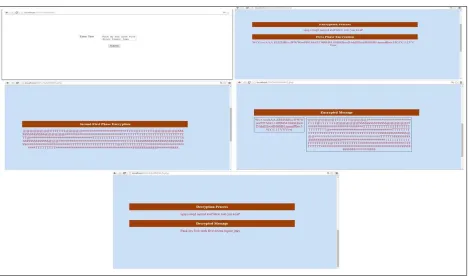
Figure 3 shows the implementation of first phase of uniform based Encryption Decryption Technique it based on
two symbol tables first Symbol table, consists symbols according of A to Z, a to z and 0 to 9 and table has a special
symbol for each character between A to Z, a to z and 0 to 9. Second table has uniform symbols corresponding to a
character. As the plain text entered in the technique at first it will reverse it as shown in figure it shows the entered
plain text in the reverse order. In the second step technique choose the symbols form table and perform the
499 | P a g e
Encryption Decryption Technique. In that phase as the transposition operation performed the particular character setfor corresponding to a plain text character.
Figure 3: Implementation of TLBUEDT Algorithm Using PHP
Then second phase of the two layers Based Uniform Encryption Decryption Technique will execute in which almost
uniform symbols select to the input of first phase. Thus the output of the first phase can work as input in the second
phase. Thus these uniform symbols will assign to the output of the first phase and the encryption process will
completed and the message is ready for receiver end. Figure show the encrypted message of two layers Based
Uniform Encryption Decryption Technique. The main feature of this method is uniformity it means that after
encryption an encrypted message will use same symbols to represent every character. Thus by doing this intruder
cannot differentiate or detect the message. In this technique first layer take Input message and convert character by
character as per symbol table. In second layer, first level conversion use as input and provide the special character
according to input which makes the message uniform. To perform the uniformity typical uniform symbols are used
in the technique. The decrypted message of two layers Based Uniform Encryption Decryption Technique. The
decryption can be performed with the help of uniform symbols in reverse order. As it is very clear that this technique
uses almost same symbols to represent every character. Thus during decryption receiver uses the table which
contains the uniform symbols the matches these symbols with the decrypted text and find out the special characters
500 | P a g e
in first phase receiver read the uniform table for decrypted message and in second phase find out the plain textaccording to the special characters.
VI CONCLUSION
Two layers based encryption decryption Technique executes encryption process in two steps. These steps further
divided in two layers. First layer take Input message and convert character by character as per symbol table. The
second layer is used for uniformity purpose for the encryption of messages and uses first level conversion as input
and provides the special character according to input which makes the encrypted message uniform.
VII FUTURE SCOPE
The scope of uniformity is very vast as it is also possible to generate the complete uniform encrypted message it
means encrypted message will based on a single symbol and that is used to represent all the character of plain text.
This uniformity makes the intruder uncomfortable as encrypted message will display same characters for encrypted
message. Thus there is no possibility to read that message. It is also not really possible to relate these uniform
characters with the actual characters or plain text.
REFERENCES
[1] Stallings, W [2005].Cryptography and Network Security Principles and Practice, 4th Edition, Pearson Education
Prentice Hall, ISBN 10: 0-13-609704-9 ISBN 13: 978-0-13-609704-4
[2] Bose,Ranjan[2008].Information Theory, Coding and Cryptography, Tata McGraw-Hill Education, ISBN
0070669015, 9780070669017
[3] Gitanjali, J.; Jeyanthi, N.; Ranichandra, C.; Pounambal M(2014) ASCII based cryptography using unique id,
matrix multiplication and palindrome number,in Networks, Computers and Communications, The 2014
International Symposium on,. IEEE 2014.
[4] Mittal Varun., and Murli Agawarl Piyush(2011). An Encryption and Decryption Algorithm for Messages
Transmitted by Phonetic Alphabets; International Conference of Soft Computing
and Pattern Recognition. 978-1-4577-1196-1/11/$26.00_c 2011 IEEE
[5]http://www.queen.clara.net/pgp/art6.html
[6]https://www.techopedia.com/definition/1770/cryptography
[7]https://www.cigital.com/knowledge-database/cryptography/