Source And Potential Conflict In The Process Of
Execution
Muhammad Fitriadi, Suriyaman M Pidde, Hj. Nurhayati Abbas, H. Mustafa Bola
Abstract: Purpose of the study is to locate and describe Social Conflict can hinder / delay the execution process. Research conducted Southeast Sulawesi Province. in Kendari and Konawe, the location Chosen for s good, as Provincial growing so much the presence of the resistance of the losers and do not voluntarily accept the decision on the implementation of the Court's decision in executing the decision based on the results that have been legally binding , Social conflicts can postpone the execution is a process conducted by the losing party which does not implement the decision voluntarily so that efforts by the Court in the form of forced execution of the disputed objects involving a group of group / community or the mass to deter obstruct the process of execution in order to delay its implementation. The essence of forceful measures that should be implemented as it relates to the fairness of the search for justice through litigation, resulting from forceful measures sparked a riot / mass resistance / conflict that often occurs in practice. A source of conflict / clash is due; Lack of legal knowledge and legal awareness is low, where in fact there are some members of the public who do not voluntarily hand over the object in the case that has been broken off and has had permanent legal force, dissatisfaction with the loser of the final decision of the judge who then anger, realized through process execution. And the potential for conflict in execution, namely; The potential for conflict in a person or group of people, the potential for conflict due to the sense of injustice of execution carried District Court, The existence of potential conflicts due to expropriation of property rights violations in execution by the District Court.
Keyword : source and potential , conflict in the process , execution
————————————————————
1.
INTRODUCTION
Social life, each individual or people have different interests between people from one another. Sometimes interest between the conflicting parties, giving rise to a legal dispute. Legal dispute can be defined as a dispute about everything regulated by law, in other words the legal dispute is a dispute that raises legal consequences. Conflict can be a dispute (disagreement), the tension (the presence of tension), or the emergence of other difficulties between two or more parties. Conflict often creates opposition between the two sides, to the stage where the parties involved looking at each other as a hindrance and a nuisance to achieve the needs and goals of each. In the "Organization Behavior" explained that the conflict is a process of interaction that occurs due to a mismatch between the two opinions (viewpoint) that influence on the parties involved either a positive effect or a negative influence (Simon Fisher et al. 2000) According Luthans (Simon Fisher et al. 2000) that: "Conflict is a condition caused by the presence of opposing forces. These powers are rooted in the desire human. Term conflict itself translated into some of the terms that dissent, rivalry and hostility. “Therefore, a difference of opinion does not always mean the difference desire. Therefore, conflict is rooted in the desire, then the difference of opinion does not always mean conflict. Competition is very closely related to the conflict because of the competition some parties want the
same thing but only one may get it. Competition is not the same as the conflict but easily lead to conflict, when there is competition especially use in ways that are contrary to the rules agreed. Civil law is intended to ensure compliance with material civil law. The provisions of civil law in general does not give rights and obligations as found in civil law material, but implementing and maintaining or enforcing the rules of civil law existing material, or protect the rights of individuals. Because in essence civil procedural law is the law that governs how guaranteed compliance with material civil law through the judge. In other words, civil law is the rule of law that determines how to file a claim right. Settlement of the dispute will not be interfered with by the State if the parties concerned can resolve itself through peace that the deliberations to reach a consensus. If the attempt to deliberation to reach consensus sought by the parties concerned can not be achieved then requested assistance on the country that is by filing a lawsuit to district court. In such case, the Civil Procedure Code can show the way that must be taken so that the dispute can be examined and resolved through the courts. Accordingly, the process of examination of a civil case in court is essentially aims to resolve cases that manifested in the form of a court decision. This court decision is intended to end the disputed issues and define how the law of the dispute. Case examination is terminated with the decision, but the decision was dropped just not over the issue. This ruling should be implemented or executed. The decision of the judge has the power executorial, namely the power to implement what is set out in the decision forcibly by means of the state. As for who gives strength to the verdict executorial is the head decision stating: "For the sake of justice based on God" (Article 2, Paragraph 1 of Law No. 48 of 2009 on Judicial Power). This trial basis in accordance with the explanation of Article 2 Paragraph 1 of Law No. 48 Year 2009 on Judicial Power, the Court could have simply interpreted simply as a symbol of the verdict in the formal standards or downright decision or internalized as judicial behavior. If this trial basis only understood only symbol in the formal validity of the decision to meet the standards then do not ever expect verdict accountable to God, society, law, and for himself. Another case if the trial basis
_____________________
Muhammad Fitriadi : Graduate Student PhD, Study Program : Science Of Law. Hasanuddin University, Makassar, 90245 , Indonesia.
Email : [email protected] Suriyaman M Pidde : Faculty Of Law. Hasanuddin
University, Makassar, 90245, Indonesia
Hj. Nurhayati Abbas : Faculty Of Law. Hasanuddin University, Makassar, 90245, Indonesia
interpreted that the entire examination process (from the beginning until the birth of the verdict) is imbued with the sentence. (Soekarno Aburaera. 2012). Court decisions that need to be executed or implemented only amar decisions or dictum is condemnatoir course, means containing a "punishment". Amar decisions or dictum is declaratory or constitutive does not need to be executed or implemented, because as soon as the decision dekalratoir or constitutive spoken, the state declared valid by declaratory judgment came into force at that time, or in the case of the constitutive decision, a new situation has been created at that moment anyway. Therefore, science teaches law at least three (3) types of civil verdict when viewed from nature, which is declaratory, constitutive, and condemnatoir (Retnowulan Sutantio and Iskandar Oeripkartawinata. 2005). The latter type of decision requires further legal action in the form of implementation involving the active participation of the losers, meaning that the parties concerned should voluntarily implement a court decision, or in other words means willing to fulfill its obligations to excel through its decision the court charged. In the event that the losing party is unwilling or fails to perform the court decision against the losing party can take action in the form of forced execution. Thus, the execution can be narrowly interpreted as the actions taken by the state through court officials at the request of the winning side, which acts intends that the losing party to comply with any court decisions that are condemnatoir. Accordingly, the execution was essentially a process of final settlement of a case that has been brought to face trial. The position of execution is important to guarantee the rights of individuals or legal entities that have been determined by the courts through a court decision. Especially for those who win, the execution of an important part for a whole series of struggles in order to get their rights through civil proceedings in court because all the processes it for him would be futile if the goal is to get a litigant rights are not realized in practice.Thus, in connection with the execution, only the decisions condemnatoir only. According to Yahya Harahap (Yahya Harahap. 2006) seen from its decision condemnatoir could be punishment for :
a. submit an item;
b. vacate a plot of land / building; c perform a certain deeds; d. to stop a certain action; e. pay a sum of money.
Court Judge's decision to run when has obtained permanent legal force means that both the plaintiff and the defendant has accepted the decision well and which need to be carried out are decisions of the judges which contains an order to a party to perform an act. Execution is forceful measures against those who do not voluntarily execute judgment orders assigned to them. The state of the losing party does not voluntarily implement a court decision in the country's lawless practices may take the form of action to obstruct the execution and in an extreme form of physical resistance against execution officers with the aim that the execution was not carried out. Therefore, conflicts that occur in the execution of human life is not possible to be separated and both are together because of differences in values, status, power, and resource limitations that are
certainly present in society. Conflict will always be encountered in human life or community life because to meet the needs of human life made great efforts in which the implementation is always faced with a number of rights and obligations. If the rights and obligations can not be met, then most likely conflicts occur. As happened in some areas of the city / region in Indonesia in the process of execution of the house, Land Execution, and Execution Building, which is at No. 202 Haji Bau road Makassar, South Sulawesi, Step execution in progress chaos as it gets resistance from local residents, thrust action boost between Makassar City Police officers and mass occurs when the Makassar District Court clerk was about to seize houses belonging Lunch Oe Ling; Execution of land in road Pue Bongo, West Palu, Central Sulawesi, ended in an uproar. The defendant rampage and reject the land executed by the Palu District Court clerk who won Siti Maryati; Execution of 20 hectares of land filled with cocoa and coconut in Polewali Mandar, West Sulawesi, tinged riot, Execution land area of 82 hectares in Bedagai Serdang, North Sumatra, colored riot; A number of police officers deployed was overwhelmed by the resistance of citizens. Paleko village, South Polongbangkeng, Takalar, South Sulawesi, facing execution officer who came with the police; Police officers and officials from the district court invalidated execution carry out the execution ground in Kendari, Southeast Sulawesi. This happens because they intercepted dozens of people with machetes and spears. (Http://www.liputan6.com/tag/eksekusilahan?page=2&sort=t erbaru&type=video&tag_slug= execution-accessible land on July 23, 2014). Allegedly these things is an effort from the losing party does not voluntarily implement the ruling of the court with the aim of inhibiting or delaying the execution process so that justice is expected through the courts by the party who has a right over the disputed objects can not enjoy the fruits of his struggle.
Problem Formulation
Based on the background of the problems above, it can be a problem as follows : 1. How Social Conflict can slow / delay the execution process?
Objective
The purpose of the study is:
1. To locate and describe Social Conflict can hinder / delay the execution process.
2.
RESEARCH METHODS
Location Research
Research conducted Southeast Sulawesi Province. in Kendari and Konawe, the location chosen for reasons as Provincial growing so much the presence of the resistance of the losers and do not voluntarily accept the decision on the implementation of the Court's decision in executing the decision based on the results that have been legally binding.
Population and Sample
1. Population
Office of the Regional Police Kendari, overall Bailiffs / Registrar District Court and litigants (defendant / parties executed).
2. Sample
The respondents were chosen by the number of 50 people, with the following details:
1. The District Court Judge 10 people. 2. The District Court Bailiffs 15 people 3. Police as many as 10 people 4. The litigants as many as 15 people Types and Sources of Data
1. Types of Data
Type the data obtained are of two kinds:
a) Primary data, such as data obtained by conducting interviews and research directly with parties related to the discussion dissertation author adopted.
b) Secondary data, such as data obtained from the material documentation and other written material that has nothing related to the writing of this dissertation.
2. Data Sources
Source of data obtained by the authors come from:
a. The primary data source, obtained from field research (field research), the research is done directly on the object to be studied.
b. Secondary data sources obtained from library research (library research), the research done by studying the scientific literature, laws and regulations, as well as other sources that already exist and are related to the material that will be discussed by the author.
Data Collection Techniques
Data collection techniques used in conducting field research and literature research as follows :
1. Interview techniques, namely the collection of data directly through a question and answer session conducted by unstructured interviews to obtain data and information relating to the writing of this dissertation.
2. Technical documentation, namely data collection techniques using documents and records relating to the issues to be discussed.
Data Analysis
Of the primary data and secondary data obtained will be analyzed qualitatively and then will described, qualitative data were processed and analyzed with the normative approach, sociological, and philosophical thinking through formal and argumentative logic in the process of inductive and deductive inference see the relationship between the phenomenon of the problems appointed in writing this dissertation. It is intended to obtain a clear picture with regard to the discussion of the authors discussed.
3.
RESULTS AND DISCUSSION
a. Source occurrence of conflict on the implementation of Execution. The verdict implies is what items have dropped out or decisions, namely consideration (provisions) are determined by the judge (WJS Poerwadarminta. 1976). Therefore, the verdict should
consider all aspects of the juridical, philosophical and sociological, so that justice is to be achieved, realized, and accounted for in the verdict is justice-oriented legal justice (legal justice), moral justice (moral justice) and community justice (social justice) (Ahmad. Rifai. 2011.) The decision of the court under Article 25 of Law No. 4 of 2004 has been amended by Act No. 48 of 2009 on Judicial Power which states that:
1. Any decision other than the court must contain reasons and grounds of the decision, also must also contain specific provisions of the regulations in question or the source of the unwritten laws that formed the basis for the judge.
2. Each court decision signed by the chairman and judges who decide and clerks who participated in session.
3. The rulings, effort-effort consultative meetings and news events of the trial examination signed by the chairman and clerks.
Law Number 2 of 1986 concerning the General Court stated that the authority of the general court in accordance with the provisions of Articles as follows:
1. Article 2, states that the General Court was one of the executors of judicial powers to the people seeking justice in general.
2. Article 6, the Court composed of:
- District Court that the Court of First Instance - High Court that the Court of Appeal
3. Article 50, the District Court on duty and authority to examine, decide and resolve criminal cases and civil cases in the first instance.
4. Article 51:
- The high court on duty and the authority to hear criminal cases and civil cases on appeal.
- The high court also duty and authority to hear at the first and final authority dispute between the district court in the jurisdiction
In order to enforce the rule of law, then the law of the country such as Indonesia, the necessary existence of an institution called the judicial power (judicative power). Judicial authority in practice organized by the Supreme Court and with the assistance of the State judicial bodies which exist underneath. The main task of the judiciary is to examine, hear, decide, and resolve cases that posed by the justice seekers, in addition to overseeing the enactment of legislation in force (ius constitutum). Judge in carrying out its duties and functions required to produce a verdict that charged the principles of fairness, certainty and expediency and at the same time creates legal life (the living law). To create this living law, the judge is very strategic role in efforts to establish the legal or other terms of legal discovery. (Achmad Ali, 2002) In line with this, the Basic Law of Judicial Power, namely Law No. 14 of 1970, in Article 27 paragraph (1) provides that: "Justice as law enforcement and justice, shall explore, and understand the legal values that live in the community." The provision is maintained until the enactment of Law No. 48 Year 2009 on Judicial Power which replaces Law Number 4 Year 2004 on Judicial Power, which in Article 5 (1) states : "The judge and constitutional judges shall explore, and understand the legal values and sense of justice in society." In line with Sukarno Aburaera (Sukarno Aburaera. 2012) namely: "However, it must be understood that freedom as an entity independence of judges is not arbitrariness, not indefinitely, because the judge in check, hear a case should be subject to the law, must not be contrary to morality and order, so that the form of the freedom of the judge is free from interference the hands of outsiders, free from all forms of physical or physics pressure, either from outside or from within their own hands. Freedom bore responsibility because of the freedom that is no responsibility, so it is with justice that could only be realized because there is freedom. " Therefore, the purpose of the parties-litigants submit his case to the court case is to resolve their case thoroughly with a court decision. In other words, the search for justice has the ultimate goal is that all his rights were harmed by the other party can be recovered through court decisions / judges and the recovery will be achieved when a decision can be implemented. Accordingly, the existence of cases involving land and buildings that are in it, based on the results of the research, it is caused by the increasing
justice as a virtue individual (individual virtue). Therefore, in the Institute of Justinian, grant very famous definition of justice, which defines fairness as a continuous and constant goal to give each person his rights. "Justice is the constant and continual purpose roomates Gives to everyone his own". (Roscoe Pound as quoted Munir Fuady. 2003). Therefore, in filing a lawsuit to the court seeking justice intends to get his rights, obtain legal certainty and expect the benefits of a court decision which granted the lawsuit. Furthermore, in order to met the rights as stated in the judgment is in favor of the necessary follow-up, known as requests for implementation of judgment (execution). Parties were convicted (defendant) is required to comply with and fulfill the obligations set forth in the ruling that has had permanent legal force voluntarily. How to implement the ruling of Justice under Article 196 to Article 208 HIR Decision implemented under the leadership of the Chairman of the District Court to decide the case. Implementation began with a rebuke losers for the 8-day meet with a voluntary decision. If the convicted party would not implement the decision voluntarily, then the decision should be carried out with an effort forced by the courts called execution. One of the principles of the execution of the decision that is run by force. The verdict forced the action that arises when the defendant did not carry out the
decision voluntarily. (Sudikno Mertokusumo, 1981). Therefore, when referring to the principle of execution, in principle, only a legally binding decision that can be implemented decision. Thus, the principles of execution (Yahya Harahap, 2006) are:
1. Executions are carried out only court decision that has obtained permanent legal force that is condemnatoir.
2. Decision is legally binding in it contain a fixed and definite law between the parties litigants.
3. Due to the legal relationship has been fixed and definite (fixed and Certain), then it must be obeyed and must be met.
4. Run voluntarily or by force through the aid of the state.
5. The authority to run the executable given to District Court
6. The execution on the orders and under the leadership of Chairman of the Court.
In connection with that, based on the results of research by the author, in the execution of court decisions is not as easy as imagined. As illustrated in the table below.
Table 1: Reports state petitioned Civil Case Execution In the District Court of Kendari
No Case number
Date
Information Request
Execution
Determination of Reprimand
Finish Execution
1
2
3
26/Pdt.G/1995/PN. KDI
37/Pdt.G/2001/PN.KDI
16/Pdt.G/2009/PN.KDI
06/09/2007
11/05/2010
07/06/2010
13/09/2007
08/06/2010
09/06/2010
-
-
-
Discharging stage Applicant Not Pointing the items to be seized Execution can not be carried out because the security is not guaranteed
No Case number
Date
Information Request
Execution
Determination of Reprimand
Finish Execution 4
5
17/Pdt.G/2008/PN. KDI
16/Pdt.G/2005/PN.KDI
01/09/2010
23/03/2011
01/09/2010
11/04/2011
-
-
The object of dispute in the load third-party security rights / new
accountability Evacuation
6
7
8
9
10
11
08/Pdt.Eks.HT/2011/PN.KDI
16/Pdt.G/2011/PN.KDI
43/Pdt.G/2010/PN.KDI
14/Pdt.G/2002/PN.KDI
53/Pdt.G/2008/PN.KDI
45/Pdt.G/1986/PN.KDI
10/05/2011
01/07/2011
14/07/2011
28/11/2011
23/02/2012
26/03/2012
13/05/2011
01/07/2011
14/07/2011
29/11/2011
14/03/2012
29/03/2012
-
-
-
25/04/2014
-
-
because there is resistance
The applicant has not paid the down payment fee of execution The applicant has not pointed goods seized execution
-
Suspended because there is a new lawsuit Deferred due to opposition
No Case number
Date
Information Request
Execution
Determination of Reprimand
Finish Execution 12
13
14
15
16
17
18
19
66/Pdt.G/2008/PN. KDI
19/Pdt.G/2006/PN.KDI
08/Pdt.G/2012/PN.KDI
01/Pdt.G/2006/PN.KDI
53/Pdt.G/1997/PN.KDI
46/Pdt.G/2006/PN.KDI
21/Pdt.G/1999/PN.KDI
21/Pdt.G/2008/PN.KDI
23/03/2012
10/09/2012
18/10/2012
18/10/2012
07/11/2012
28/11/2012
14/02/2013
04/03/2013
29/03/2012
25/03/2013
08/11/2012
21/11/2012
08/11/2012
07/03/2012
14/02/2013
17/04/2013
-
-
-
-
-
-
-
-
Discharging stage
Discharging stage
Discharging stage
Discharging stage
Discharging stage
20
21
22
23
24
57/Pdt.G/2009/PN.KDI
55/Pdt.G/2009/PN.KDI
60/Pdt.G/2008/PN.KDI
65/Pdt.G/2009/PN.KDI
07/Pdt.G/2010/PN.KDI
28/03/2013
17/04/2013
17/04/2013
17/04/2013
01/08/2013
28/03/2013
-
30/08/2013
05/06/2013
14/08/2013
-
-
-
-
27/01/2014
Discharging stage
Discharging stage
Phase accost
Phase accost
Suspended because there is resistance
Discharging stage
-
No Case number
Date
Information Request
Execution
Determination of Reprimand
Finish Execution
25
26
27 28
29
29/Pdt.G/2006/PN. KDI
11/Pdt.G/1999/PN.KDI
46/Pdt.G/2005/PN.KDI 27/Pdt.G/2008/PN.KDI
08/Pdt.G/2010/PN.KDI
01/08/2013
08/03/2013
08/11/2013 17/12/2013
24/02/2014
14/08/2013
22/11/2013
22/11/2013 -
-
-
-
24/04/2014 -
-
Phase accost
Discharging stage
- Phase accost
Phase accost Data Source: Data obtained from the Clerk of the District Court of Kendari and subsequently processed by author
Based on the table, there are some cases that already have permanent legal force (inkracht van gewijsde), but faces obstacles in the implementation of the execution, as was the case in the District Court of Kendari, the execution of as many as 29 petition filed in the District Court of Kendari in 2007 to by 2014, a total of three files can be accomplished execution, while as many as 26 files can not be executed. Kendari District Court found the petition that experienced some obstacles in its implementation, so that even if the decision has long has permanent legal force (incracht van gewijsde), and has long been registered application for execution, but in its implementation requires a long time and some have yet to be implemented execution despite using many years. The obstacles in the execution, partly due to resistance from the requested execution by anarchist
According to the authors, the cause can not be implemented by the District Court of Kendari execution due to two factors that affect the juridical (legal factors) and non-juridical (outside the law) in practice. Therefore, based on the results of a study of the juridical factors due to the rebuttal case filed by the defendant of the execution of the petition filed by the petitioner, the emptying stage, the stage of foreclosure, and accost phase carried out by the courts, particularly the Registrar / Bailiffs. The Supreme Court itself in instruction No. KMA / 015 INST / VI / 1998 dated 1 June 1998 instructed that judges establish professionalism in realizing the quality of justice, by generating executable verdict contains ethos (integrity), pathos (main juridical considerations) philosophical (cored sense of justice and truth ), sociological (in accordance with the cultural values prevailing in the society), as well as (acceptable reason), for the creation of the organizers of the independence of judicial power (A. Mukti Arto. 2005). This is in line with the opinion of Makarao Taufik Mohammad (Mohammad Taufik Makarao.2004) mentions various reasons for delay of execution include :
1. Reason Peace Created the Parties
Peace made the parties can delay the execution, whether peace is made outside the trial and peace based on a court decision, with the peace that the parties voluntarily comply with the contents of the peace agreement. Parties executed voluntarily implement the contents of the peace agreement, otherwise if the peace agreement is not adhered to or violated, then the execution can be carried out automatically by the court through the tools of his country. 2. Reasons humanitarian
The real execution form of demolition, discharging and delivery of land and houses at once vacate and leave the disputed land, may be requested postponement on the grounds of humanity.
3. Reasons Resistance Third Party (Derden Verzet) Article 195 (6) HIR gives the possibility for third parties to file opposition to the execution to be carried out. Resistance to the execution should be submitted before the execution is executed, if the execution has finished running, then it is clearly of no relevance to postpone the execution. The jurisprudence of the Supreme Court in a decision dated August 31, 1977No. 697 K / Sip / 1974 asserted, filing opposition to the execution must be filed prior to the auction sale is executed (before execution is executed), when execution has been completed, efforts can be filed third party to cancel the execution must go through a lawsuit. Resistance third party against execution based on property rights. Resistance can also be done based on the goods to be executed has been pledged to a third party.
4. Items Being Execution Object Still in Other Proceedings.
Object of execution in this case means a disputed in some cases. For example in a land dispute, a decision that has already had permanent legal force and asked for the execution of the decision, but in the land dispute case there is reconsideration, but his men were to be executed by the then chairman of the court in this case must be viewed in casuistry. Can not be generalized to all civil disputes, but
must be learned rulings on any civil dispute. Efforts to do is ask expedite the completion of cases which are still dependent, by reason of the case in question relates to the execution to be carried out.
5. Delays Execution for existence Reconsideration. Under Article 66 paragraph 2 of Law No. 3 of 2009 on the Supreme Court, an application for review does not suspend or stop the implementation of court decisions. Reconsideration in practice in casuistry can delay the execution, the request for a review that really fit in any of the grounds provided for in Article 67 of Law No. 3 of 2009 on the Supreme Court. Besides the reasons put forward is supported by the facts or the evidence is clear and perfect, and may be suspected of judge who will examine the possibility of reconsideration will grant.
6. Abolish Money Forced Execution Delay
1. Application cassation which "does not meet the formal requirements" can not be accepted.
2. The statement can not be accepted are set forth by the Chairman of the Court in the form of determination. 3. File case is "not delivered" to the Supreme Court. The same thing as proposed Yahya Harahap (Yahya Harahap, 2007) namely:
"Yurispridensi justify judicial practice and also delay or suspension of execution, among others, can be seen in Decision No. 1243 / K / Pdt / 1984, dated February 27, 1984, in the decision stated :
1. The Chairman of the Court is authorized to suspend the execution.
2. The suspension so forth in the form of its determination and the wisdom of the Chairman of the District Court.
3. Therefore, against which no appeal can be filed. Objections to the suspension execution conducted Chairman of the Court, must be submitted in the form of a
complaint within the framework of supervision to the President of the High Court, not in the form of a cassation to the Supreme Court. " Therefore, the reasons for the delay mentioned above shall be considered by the parties in a civil dispute, the legal counsel of the parties and the judges. So obvious limitations given the losing party in civil disputes and legal counsel of the parties when it will apply for a stay of execution, as well as judges, lest the judge granted a stay of execution on the grounds of being held because it would damage the image of justice for institutions and also claimed the rights of the parties that won the civil dispute. Regarding the non-juridical factor in the delay of execution, based on research results, the non-juridical factor is the presence of mass resistance to deter obstruct the process of execution used by the executed party (defendant) who will not voluntarily execute the decision of the court, causing physical clash between security officers (police) and those of the defendant (the party executed). It is further based on data correspondence and opinions of respondents, as shown in the table below:
Table 2. Respondents Opinion Concerning Resource Conflict in Execution N = 50
No Category Answers
Respondents Category
F P
Judge Bailiffs /
Registrar Police Society 1
Know 4 6 6 5 21 60%
2
Do Not Know - - 4 6 10 15%
3 No Answer 6 2 6 5 19 35%
Number 10 8 16 16 50 100%
Conflict / clash is due to :
1. Lack of legal knowledge and legal awareness is low in addressing execution where in fact there are some members of the public who do not voluntarily hand over the object in the case that has been broken off and has had permanent legal force. It is based on the results of the study authors through interviews with some of the Chief Clerk of the District Court in lieu of Kendari District Court, District Court Kolaka, Buton District Court, which is where the results of the interview the same point, the authors conclude that people still think that the execution is shameful and inhumane because it would lead to the homeless and the search for life and should be retained. 2. Dissatisfaction with the losing side against the final
verdict of the judges who then anger, realized through the process of execution. This is because maintaining self-esteem and a big name in the community. This occurs based on research by conducting interviews with execution party (defendant), based on the results, the authors concluded that the defendant had given also the evidence of the ownership of the disputed objects and follow all legal remedies (Appeals and Cassation) so
that at the time of execution is more inclined towards the defendant and sociological psychological wherein when the object to be taken forcibly disputed, the defendant will maintain the grounds shame about the community and also retain the name of his family. (Results Interview with the parties executed (defendant) On December 2, 2014).
of light (easy to understand) about the issues sitting on the object to be execution. (The results of the interview to the Bailiffs and executed Party (defendant) On December 5, 2014).
The tendency for execution defendant affects his extended family and the people around the place of execution of sympathy for him to do anarchists that the execution did not take place. Based on the results of the study this is because of the attitude to maintain the owned object that is based on the attitude of shame and maintain self-esteem / names of the families and distrust of law enforcement so that the defendant (the party executed) provocation towards the neighborhood and extended family to participate retarded block the execution process, especially in the case of research there the most the object to be executed is the object which support / workplaces and a lack of understanding of the law surrounding communities so conscious of surrounding communities will participate retain the object. (The results of the interview with Dir Intelkam Southeast Sulawesi Police. On 28 November 2014). Therefore, based on four factors that the authors conclude can be said to be the hope of every seeker of justice is to get the fairest decision, to go to the ideals of justice as a public protector, the court must always prioritize fairness in every decision he made. In fact, the court was not able to meet the expectations of society. Phenomena that exist now is that people no longer believe in the law, this case should be a warning to the court, including apparatus for building a better image quality through the judge's decision and the implementation of the verdict itself (Zudan Arif Fakrulloh.2001). Therefore, epistemologically mass violence or inter-group fighting occurred as regards the rule of law, people or other groups are from outside itself, whereas in the anthropological perspective, the individual will not be merged into the mass and collective violence purely spontaneous and instinctive. "Fairness" to injure or commit violence possible because individuals saw acts of violence as something of value (Kartini, Kartono. 2010) Therefore, discovering how a value system to motivate people to commit violence against each other is an important step to find the psychological origin of violence. Humans would do violence without feeling guilty if the action was seen as the realization of a value. Violence is a form of self-realization. To find a solution, sociological origins of violence, must start from the experience of isolation, it was because of the isolation that touches the soul is derived from the structural conditions of society. That is, society is the source of violence. (Kartini, Kartono. 2010). Many experts claim that social inequality trigger mass violence and fights between groups, because they are marginalized, discriminated against and depression and would mobilize themselves as a mass. Acts of violence can be seen as a strategy of protest. Conflict, disputes,strife, contention and fights, is a life experience that is pretty basic, because although it does not have to, but maybe even very likely to happen. Dahrendorf discusses an inherent tendency to conflict in society. The groups that hold power interests will fight for the interests and groups
that do not have the will power struggle, and their interests are often different, even conflicting. Sooner or later according to Dahrendorf in several strong power system may be carefully made camp-balance between power and change the opposition, and society changed. Thus, the conflict is "the creative power of human history" (Ritzer and Goodman, 2010). A conflict that occurs, it becomes unhealthy when the respective parties in the search for solutions is no longer rational but more emotional. For urban communities, cities tend to have a government that is slow in resolving a problem occurs. Therefore, sometimes a community to take action for the sake of certainty of settlement issues. The potential for conflict in execution Indonesia is a country that has a diverse culture, style and tribe, because in it there is a wide variety of cultures, ethnicity, religion, spread across thousands of islands separated. As the people of Indonesia, Indonesia has the characteristics of a pluralistic society, as mentioned by Furnivall (Nasikun, 1995) regarding the state of Indonesia during the Dutch East Indies " "Pluralistic society is a society that consists of two or more elements of its own life without assimilation to become a single entity. The structure of a pluralistic society can be influenced by several factors namely the geographical situation, backgrounds, cultures, and religions into Indonesia. " Therefore, the conflict is very difficult to be separated from public life, disputes that often happens is that there are differences opposing interests. The conflict is also a phenomenon that seemed to be common in Indonesian society. Relating to the conditions of the State of Indonesia is a multi-round, with all sorts of diversity and heterogeneity. Indonesia is a country made up of multi-ethnic and multi-cultural, even today Indonesia has become a multi-party political system. (Parsudi Suparlan, 2004). The principles governing the conflict perspective (Parsudi Suparlan, 2004) are:
a. Society consists of social groups differently. b. There are different definitions of right and wrong. c. The conflict between social groups is a conflict of political power.
d. Law designed to defend the interests of the ruler. e. Rulers make and enforce the law with the main objective to retain power
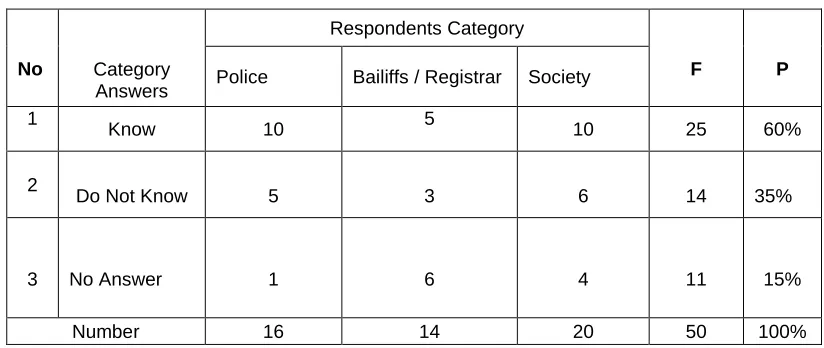
Table 3 Respondents Opinions Regarding Potential Conflicts in Execution N = 50
No Category Answers
Respondents Category
F P
Police Bailiffs / Registrar Society 1
Know 10 5 10 25 60%
2
Do Not Know 5 3 6 14 35%
3 No Answer 1 6 4 11 15%
Number 16 14 20 50 100%
Of tabulation correspondence, 60% of respondents knew the conflict in the form of mass action to hinder the process of executions State Court is due to:
1. The existence of a potential conflict in a person or a group. This is according to the authors, based on research results that people / society is characterized by the presence of displeasure because of What I Want party, which is in a state which is not to be resisted much less denied, and even not being able to avoid it.
2. There is a potential conflict because of the sense of injustice of execution carried District Court. This is according to the authors, based on the results of the research community believe that injustice and arbitrariness in terms of rights owned (assets, identity, honor, safety, and lives) by self, family, relatives, and community or society. 3. The existence of potential conflicts due to expropriation of property rights violations in execution by the District Court. This is according to the authors, assume that it is something of a violation or deprivation of property rights committed by a person or group of persons would be accepted by a person or group of people such as appropriate according to the norms and values prevailing culture in the local community, or it should be so. But it can not be accepted by the relevant when such actions are not in accordance with the norms and values prevailing culture. Therefore, the authors agree with Musakkir on his research on "The Fair Land Dispute Resolution" which is where the study discusses the potential for conflict management, so that according to the author of this opinion can be synergized with the management of potential conflicts that will occur, especially in the conflict in the execution process, Musakkir (Musakkir, 2013) argues that conflicts can be managed through several steps or strategies, namely: a. Contending (competitive or dominance), the parties
worked to keep their aspirations and tried to persuade others to surrender, with the threat, punishment, intimidation, and unilateral actions.
b. Yield (accommodating or willing to help), one of the parties does not show a big concern or interest in the achievement of their own, but they are really interested in what the other party is achieved. Let the other side win and get what you want.
c. Inaction (avoidance), the parties undertake silent strategy by showing little interest from the results they achieve.
d. Problem solving (working together or merging), the strategy of the parties show high attention to get the results that they want and give attention to eminence on the other.
e. Compromissing (the compromise between the parties to resolve the conflict with win-win solutions
Based on these opinions, further according to the writer, the potential conflict between two or more groups in the process of execution carried District Court embodied in physical conflict between members of opposing groups because of differences of individual persons involved in the conflict no longer recognized. individual persons is replaced by a group or groups. Therefore, of potential conflicts that I have found in the study will lead to resource conflicts that will trigger individual or group or party who does not voluntarily execute the decision what is already legally binding, in other words, the potential for conflict in execution carried District Court there is not a conflict between individual persons with individual identities but between individual persons who represent the class or group identity in the form of a rejection of the rules that have been made.
4.
CONCLUSION
the public who do not voluntarily hand over the object in the case that has been broken off and has had permanent legal force, dissatisfaction with the loser of the final decision of the judge who then anger, realized through process execution. This is because maintaining self-esteem and a big name in the community, not the good communication between the court and the defendant Bailiffs are used as a medium of interaction. It could be said communication as a two-edged sword: the lack of communication can lead to conflict, but on the other hand, the communication that takes itself can be a potential for conflict and trends affecting the defendant execution of his extended family and the people around the place of execution of sympathy for him to do anarchists order execution did not take place. And the potential for conflict in execution, namely; The potential for conflict in a person or group of people, the potential for conflict due to the sense of injustice of execution carried District Court, The existence of potential conflicts due to expropriation of property rights violations in execution by the District Court.
REFERENCES
[1] Mukti Arto. 2005. Mencari Keadilan. Pustaka Pelajar. Yogyakarta. Hal. 98.
[2] Achmad Ali. 2002. Menguak Tabir Hukum (Suatu Kajian Filosofis dan Sosiologis). GunungAgung Tbk. Hal. 25)
[3] Ahmad. Rifai. 2011. Penemuan Hukum oleh Hakim dalam Perspektif Hukum Progresif. Sinar Grafika. Jakarta. Hal. 126
[4] Kartini,Kartono. Kenakalan Remaja (Patologi sosial 2). Rajawali Press. Jakarta.2010 Hal: 106
[5] M.Yahya Harahap.2007. Ruang Lingkup Permasalahan Eksekusi Bidang Perdata. Jakarta: Sinar Grafika. Hal. 434.
[6] Mohammad Taufik Makarao.2004.Pokok-pokok Hukum Acara Perdata. Jakarta : Rineka Cipta.
[7] Munir Fuady. 2003 Aliran Hukum Kritis Paradigma Ketidakberdayaan Hukum, Bandung: Citra Aditya Bakti, Hal. 52.
[8] Musakkir. Penyelesaian Sengketa Pertanahan Secara Berkeadilan. Jurnal Ilmu Hukum Amanagappa Vol. 21 No. 1 Maret 2013. Makassar. Hal.33.
[9] Nasikun, 1995. “Struktur Majemuk Masyarakat Indonesia”, dalam Sistem Sosial Indonesia. Jakarta: PT. RajaGrafindo Persada. Hal. 29)
[10]Parsudi Suparlan, 2004, Hubungan Antar Suku Bangsa, KIK Press, Jakarta, hal. 208.
[11]Retnowulan Sutantio & Iskandar Oeripkartawinata. 2005. Hukum Acara Perdata dalam Teori dan Praktek. Mandar Maju. Bandung. Hal. 109.
[12]Retnowulan Sutantio & Iskandar Oeripkartawinata. 2005. Hukum Acara Perdata dalam Teori dan Praktek. Mandar Maju. Bandung. Hal. 109.
[13]Ritzer dan Goodman. Teori Sosiologi Modern. Kencana. Jakarta. 2010 hal: 153.
[14]Simon Fisher et all. 2000. Mengelola Konflik: Ketrampilan & Strategi untuk Bertindak (edisi bahasa Indonesia) Jakarta: The British Council, Indonesia.. Hal. 1.
[15]Soekarno Aburaera. 2012. Kekuasaan Kehakiman Indonesia. Arus Timur. Makassar. Hal. 10 ).
[16]Sudikno Mertokusumo. 1981. Hukum Acara Perdata. Liberty. Yogyakarta. Hal.8..
[17]Sukarno Aburaera. 2012. Kekuasaan Kehakiman Indonesia. Arus Timur. Makassar. Hal. 3-4.
[18]W. J. S. Poerwadarminta. 1976. Kamus Umum Bahasa Indonesia. Pusat Pembinaan dan Pengembangan Bahasa, Departemen Pendidikan dan Kebudayaan. PN. Balai Pustaka. Jakarta. Hal 784.
[19]Yahya Harahap. 2006. Ruang Lingkup Permasalahan Eksekusi Bidang Perdata edisi kedua. Sinar Grafika. Jakarta. Hal. 16.
[20]Zainuddin Mappong, 2010. Eksekusi Putusan Serta Merta: Proses Gugatan dan Tata Cara Membuat Putusan serta Pelaksanaan Eksekusi dalam Perkara Perdata. C e t . I . T u n g g a l Ma n d i r i Publishing. Malang Hal. 5.