http://www.sciencepublishinggroup.com/j/ijass doi: 10.11648/j.ijass.20180602.11
ISSN: 2376-7014 (Print); ISSN: 2376-7022 (Online)
Review Article
Research Progress of Bonding Agents for Nitramine
Composite Solid Propellants
Xuan Liu
1, 2, 3, *, Xiaofei Sun
1, 3, Xinlin Hong
2, Aimin Pang
1, 3, Yingke Qiao
1, 31
Science and Technology on Aerospace Chemical Power Laboratory, Xiangyang, China 2
College of Chemistry and Molecular Sciences, Wuhan University, Wuhan, China 3
Hubei Institute of Aerospace Chemical Technology, Xiangyang, China
Email address:
*
Corresponding author
To cite this article:
Xuan Liu, Xiaofei Sun, Xinlin Hong, Aimin Pang, Yingke Qiao. Research Progress of Bonding Agents for Nitramine Composite Solid Propellants. International Journal of Science, Technology and Society. Special Issue: Academic Research for Multidisciplinary. Vol. 6, No. 2, 2018, pp. 44-50. doi: 10.11648/j.ijass.20180602.11
Received: May 30, 2018; Accepted: June 20, 2018; Published: July 6, 2018
Abstract:
This review article summaries the method to improve mechanical properties of nitramine composite solid propellants. It concludes that the use of bonding agents is an economical, effective and convenient way to enhance the mechanical properties of propellants. The bonding mechanism and characteristics of bonding agents are analyzed. The review article presents the overview on the types and development of bonding agents for nitramine composite solid propellants. It is considered that the multi-functionalization of polymer bonding agents is a development direction of bonding agents. According to the surface characteristics of nitramine fillers and the structure characteristics of different binders, a universal bonding agent suitable for different binder-nitramine systems should be prepared through molecular design. Some suggestions are put forward for the design of universal bonding agents.Keywords:
Composite Solid Propellant, Nitramine, Small Molecular Bonding Agent, Polymer Bonding Agent, Mechanical Property1. Introduction
Solid propellants are composite materials which consist of solid fillers (such as oxidant and metallic fuel) and polymer binders [1-3]. Increasing the level of energy is the eternal theme of solid propellant development. The energy level of solid propellants can be improved significantly by using energetic materials such as energetic binders, energetic plasticizers and energetic additives. Due to the advantages of high energy, stable performance and convenient manufacturing, the nitramine explosives including RDX, HMX and CL-20 are widely used in high energy, reduced smoke and smokeless solid propellants [4-6]. However, considering its smooth furface and inert group, the nitramine explosives are regarded as the non-reinforcing. As a result, it is difficult to form a bonding effect between the binders and the solid fillers, which leads to the “dehumidification” of the
propellant at a low level of stress and strain, and this will significantly reduce the mechanical properties of the propellants.
bonding agents) can improve the mechanical properties of propellants effectively. This article primarily reviews two kinds of bonding agents and their applications in propellants. We hope that this review article can provide ideas for improving the mechanical properties of nitramine solid propellants.
2. Bonding Agents
Bonding agents, also known as coupling agents or surface treatment agents, can effectively enhance the bonding strength between solid fillers and binder matrix in the composite solid propellants with less dosage and high efficiency. Usually, a small amount (a few thousandths or tens of thousands) of bonding agents in solid propellants can improve the mechanical properties of propellants significantly. The molecular structure of the bonding agents is characterized by the groups (-Ti (OR)3, etxc.) that can interact with the solid
fillers, and the groups (-NH2, -SH etc.) that can react with
binders. In this way, the bonding agents can combine the binders with solid fillers organically. The interaction force between bonding agents and solid fillers can be physical effect (formation of hydrogen bonds) or chemical reaction (formation of chemical bonds). Theoretically, the best dosage of bonding agents is to form a single molecular layer on the surface of solid fillers, and the actual optimum amount of bonding agents needs to be analyzed in detail according to the actual situation.
Oberth and co-workers [8] reported that the bonding agents of propellants must have the following three functions: 1, It can be gathered on the surface of solid fillers; 2, It can react with curing agent and form tough film on the surface of solid fillers; 3, It can react with binders and bring the solid fillers into the network.
2.1. Small Molecular Bonding Agents
2.1.1. Borate Ester Bonding Agents
Borate ester bonding agents can improve the mechanical properties of nitramine composite solid propellants at high and low temperatures effectively [9]. Borate bonding agents contain strong polar functional groups such as –OH and – CONH. The functional groups (such as -CONH) can induce the –NO2 of nitramine to form hydrogen bonds [9-12]. The sp2
hybridized orbital of boron atoms is easy to form stable complexes with electron donors in nitramine. These factors are favorable for the accumulation of borate bonding agents on the surface of nitramine solid particles and the formation of stable coating. Due to the reaction between –OH in the borate bonding agents and –NCO in the curing agents, the borate bonding agents can be brought into the binder network. In addition, the transesterification of borate bonding agents and – OH of the binder (B (OR)3+3R’OH=B (O~R~OH)3+3ROH)
accelerates the boron atom into the binder network and increases the elongation of the binder matrix. In addition, the products of transesterification can enhance the interfacial strength between nitramine fillers and binder matrix, thus improving the mechanical properties of solid propellants.
Cui and co-workers [13] synthesized three kinds of alkylolamine intermediates by using diethanolamine, 1-bromobutane, acrylonitrile (AN) and glacial acetic acid as raw materials. Then four kinds of new borate-ester bonding agents were synthesized by utilizing the synthesized intermediates as well as the methyldiethanolamine and tributyl borate (see figure 1). The effect of bonding agents with different groups on mechanical properties and processing properties of AP/RDX/Al/HTPB (curing parameter R=1.01; temperature: 60±2oC; curing time: 7 days) was studied. It has been verified that all the newly synthesized bonding agents could improve the leveling property of the slurry. It has also found that the structure of the modifier group plays a decisive role in the use of the bonding agents. Compared with the bonding agents (BA-1, BA-2) containing non-polar alkyl modified groups, the bonding agents containing polar modified groups have better bonding effect (BA-3, BA-4). The stronger the polarity of the modified group is, the more obvious the bonding effect is (the bonding effect is shown in Table 2). In addition, Cui et al. [14] investigated the molecular structure and orbital of the four kinds of borate-ester bonding agents mentioned above by theoretical calculation. They also researched the interaction between borate-ester bonding agents and RDX (210) as well as RDX (200) crystal planes by molecular dynamics simulation. An obvious binding selectivity of these borate esters on RDX crystal planes is found, and the binding energies of RDX (200)/BA (1-4) are higher than that of RDX (210) /BA (1-4). Cui group [15] reported the bonding mechanism of the self-made borate ester bonding agent (BA-5) in the AP/RDX/Al/HTPB slurry. The value of interfacial enthalpy between the bonding agents and the components of propellant was characterized by the inverse gas chromatography. It has confirmed that the interaction between bonding agent (BA-5) and oxidant is far greater than that between bonding agent and binder. In the process of propellant mixing, BA-5 was strongly absorbed on the surface of the oxidant. During curing, BA-5 participated in cross-linking reaction and formed a high modulus shell on the surface of oxidant, thus improving the mechanical properties of the AP/RDX/Al/HTPB.
Borate ester bonding agents not only have bonding effect on RDX, but also have good bonding effect on HMX. Li and co-workers [16] synthesized a novel borate ester bonding agent containing amino group by molecular design. The results of IR and XPS showed that the coordinate-bond and inductive interaction were formed between boron atom and – NH2 group of borate ester bonding agent and NO2 groups of
HMX. The borate ester bonding agent could improve the interfacial properties of nitramine solid propellants.
Figure 1. Bonding agents with double borate structural, R1-polyether with
Table 1. The modified groups of bonding agents and their intermediates.
number intermediates modifier group
BA-1 N-methyl diethanolamine -CH3
BA-2 N, N-two hydroxyethyl n-butyl amine -CH2CH2CH2CH3
BA-3 N-(2-cyanoethyl) diethanolamine -CH2CH2CN
BA-4 N, N-two hydroxyethyl ethyl amide -COCH3
Table 2. Bonding effects of four bonding agents.
Bonding agents -40°C, 100 mm/min 20°C, 100 mm/min 70°C, 2 mm/min Leveling property σm/ MPa εm/ % εb/ % σm/ MPa εm/ % εb/ % σm/ MPa εm/ % εb/ %
none 1.233 35.7 39.2 0.622 31.5 42.8 0.327 27.3 47.2 good
MAPO 1.982 47.4 52.7 0.856 43.6 54.5 0.476 41.7 49.5 good
BA-1+MAPO 1.994 52.1 59.2 0.876 48.9 53.5 0.455 51.0 54.2 good
BA-2+MAPO 2.003 54.6 57.2 0.886 51.2 60.3 0.472 55.2 58.4 good
BA-3+MAPO 2.232 57.2 61.5 0.905 58.4 62.3 0.530 60.4 61.5 good
BA-4+MAPO 2.125 58.4 62.2 0.902 56.5 60.7 0.522 57.4 62.3 good
The boron atoms in borate ester bonding agents have empty
sp2 hybrid orbits, which makes the borate ester bonding agents hydrolysis easily. This will weaken the bonding effect and affect the performance of propellants. There are mainly two ways to improve the stability of borate ester bonding agents. One method is to introduce nitrogen atoms into the bonding agents. However, the introduction of nitrogen atoms is easy to produce a large number of hydrogen bonds, which will affect the processing and the leveling properties of the propellant slurry, making it less suitable. Another way is to increase the steric hindrance of substituted groups in borate ester molecules, which will block the attack of water molecules and inhibit the formation of intermediates.
Yu and co-workers [17] prepared a borate ester bonding agent with a five-membered ring via a “one-pot” process using borate acid, ethylene glycol and 1, 2, 4-butanetriol as raw materials. The results of on-line IR analysis showed that the hydrolysis reaction kinetics of the synthesized borate ester in normal temperature water and in saturated water vapor was the pseudo-first order reaction. The reaction rate constant and half life of the borate ester are 2.3x10⁻⁵s-1 and 8.4h in normal temperature water, 2.96x10⁻⁷s-1 and 27d in saturated water vapor, respectively. Compared with the ordinary borate ester bonding agents, the stability of the bonding agent with a five-membered ring increased significantly. In order to research the bonding effect of the bonding agent mentioned above, it has been applied to the mixture of the HTPB system (RDX/HTPB=83.5/16.5, the bonding agent: 0.2%). It has found that the tensile strength of the explosive increased by 80%, the compressive strength of the explosive increased by 163%.
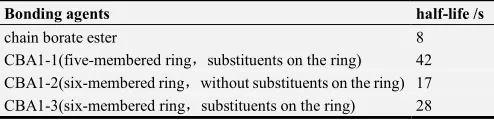
Wang et al. [18] synthesized three kinds of cyclic borate chelate bonding agents (CBA1 series) via method of esterification using 1, 2-propylene glycol, 1, 3- propylene glycol and 1, 3-butanediol as raw materials. They also prepared five kinds of cyclic borate chelate bonding agents (CBA2 series) via method of transesterification using boric acid, glycerol, 1, 4-butanediol, PEG200, PEG400 and 1, 3- propylene glycol as raw materials. The optimal synthetic
conditions of each series were determined by orthogonal and single-factor experiment. The half-life of the cyclic borate chelate bonding agents increased twice compared with the half-life of the chain borate ester bonding agents, indicating that the cyclic borate chelate bonding agents have a better hydrolysis stability, and the hydrolysis stability of the cyclic borate chelate bonding agents containing five-membered ring is better than that of the cyclic borate chelate bonding agents containing six-membered ring. The existence of substituents on the ring was more conducive to the improvement of the hydrolysis stability of borate ester bonding agents (as shown in Table 3).
Table 3. Hydrolysis stability of chelating borate ester bonding agents.
Bonding agents half-life /s
chain borate ester 8
CBA1-1(five-membered ring,substituents on the ring) 42 CBA1-2(six-membered ring,without substituents on the ring) 17 CBA1-3(six-membered ring,substituents on the ring) 28
2.1.2. Titanate Ester Bonding Agents
the existence of active group have great influence on the processing property of propellant slurry.
Figure 2. Chelated titanate bonding agents, R1:-O-CO-CO-O-;
-O-CO-CH2-CO-O-; -O-CO-CH(CH3)-O-,R2,R3: (-OCH2CH2-)nOH,
n=2,…,13 or oleate group.
There are many theories about the bonding mechanism of titanate bonding agents. Monte and co-workers [20] studied the interaction between the mono-alkyl titanate bonding agents and the inorganic fillers. It has found that one end of the titanate bonding agent hydrolyzed on the surface of inorganic fillers, absorbed on the surface of inorganic fillers and the long chain alkyl on the other end entangled with the organic polymer, which played the role of the molecular bridge. Yi et al. [21] found that the titanates could hydrolyze with water molecules on the surface of HMX, replacing isopropanol, producing hydroxyl groups. The hydrogen bonds would be formed through the interaction between hydroxyl groups and oxygen atoms in HMX. Li et al. [19] found that the strong physical absorption or hydrogen bonds could be formed through the interaction between the strong polar ring of the chelated titanates and HMX. This would weaken the interaction between HMX itself and reduce the yield value of slurry. Meanwhile, the branched chain of the titanate contained the same chain unit as the binder, which has good compatibility with the binder and could be intertwined with the binder molecules. In addition, the hydroxyl group at the end of the branch chain could take part in the curing reaction and enter the crosslinking network to further enhance the interaction force between the titanate and the binder. A hard and tough cross-linking transition layer was formed on the surface of HMX to improve the strength of the propellant.
2.2. Polymer Bonding Agents
When the polar energetic plasticizers (such as nitrates) are applied to composite solid propellants, borate ester and other small molecular bonding agents could not achieve satisfactory bonding effect, which is due to the high solubility of small molecular bonding agents in polar plasticizers [22-24]. Nitramine solid fillers have similar cohesive energy density to binder. This makes it more difficulty for the small molecule bonding agents to absorb on the surface of nitramines. The nitramine fillers even slightly dissolved in the polar plasticizers, making the fillers softened and resulting in the decrease in the interfacial interaction between the binder and nitramines as well as the mechanical properties of propellants. Based on the difficulty of the small molecular bonding agents to meet the operating requirements of propellants containing polar plasticizers and nitramine solid fillers, researchers have studied a variety of polymer bonding agents, mainly including the following two categories: 1, NPBAs; 2, amide polymer
bonding agents.
2.2.1. NPBAs
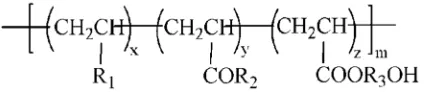
The pH value of NPBAs ranges from 5.5 to 8.5, and the molecular weight of polymer ranges from 3500 to 450000. There are many functional groups in the polymer chains to ensure the bonding effect [25]. The bonding mechanism of the NPBAs (the principle of phase separation for coating of the nitramine particles in the propellants as temperature decreases) can be summed up as follow: When the temperature is higher than the mixture temperature of the slurry (premixing temperature), the NPBAs dissolve in the propellant slurry. However, when the nitramine fillers are dispersed in the slurry and the slurry temperature drops to the mixing temperature, the NPBAs are separated from the slurry and adsorb on the surface of the nitramines, which achieves the bonding effect between nitramine fillers and binders. The structural formula of NPBAs is shown in figure 3. In the formula, -CN and ammonium nitrate have better adsorption, and –OH can take part in the curing reaction and then enter the binder networks to achieve the desired bonding effect.
Figure 3. Structural formula of NPBAs, R1: -CN; R2: -OCnH2n+1或-NH2; R3: -OCnH2n.
Revolving around the mechanical problems of NEPE propellants, C. S Kim et al. [22] developed NPBAs and applied them to propellants. The an copolymers were synthsized as NPBAs and applied to NEPE propellants (PEG/TMETN/NG/HMX). It has found that the strength of the propellants with an addition of 0.2% NPBA was five times higher than that of the propellants without any additional NPBA. Kim and co-workers [23-24] considered that the polymer bonding agents have three advantages, which were incomparable to small molecular bonding agents. Firstly, the surface activity of polymers was higher than that of small molecules, which can form more active adsorption sites on macromolecular chains and enhance the bonding effect of NPBAs. Secondly, the value of entropy of slurry containing NPBAs was lower than that of slurry containing small molecule bonding agents. Thirdly, the molecular design of NPBAs could have high fiexibility which can change the solubility of NPBAs in the slurry by adjusting the composition and content of NPBA.
polymerization of NPBA with azobisisbutyronitrile (AIBN) as the initiator, β-mercaptoethanol (β-ME) as the chain transfer agent, and an and hydroxyethyl methacrylate (HEA) as comonomers. The structure, molecular weight and hydroxyl value of NPBA could be controlled by the feeding mode and dosage of initiators and chain transfer agents. In order to improve the mechanical properties of solid propellant at high temperature, Zhang et al. [29-30] synthesized RAFT agents through a series of reactions with sulfur and benzyl chloride as raw materials. The block NPBAs (P (AN-b-EA-b-HEA), Mn: 11000) was then synthesized by using RAFT polymerization with AN, ethyl acrylate (EA) and HEA as raw materials. Compared with conventional NPBAs, the block NPBAs have higher glass transition temperature. Wang [31] presented the instructions for the usage of NPBAs. It has found that the key points to ensure the bonding effect of NPBA were determined by the following three points: 1, ensuring that NPBA and premixed slurry were dissolved into one; 2, after adding nitramine fillers, the mixing temperature should be no higher than the critical temperature of the phase separation of NPBAs; 3, the upper limit of curing temperature should be reasonable.
Landsem and co-workers [32] synthesized NPBAs and modified NPBAs by using AIBN, methyl acrylate and 2-mercaptoethanol as raw materials. Two kinds of NPBAs were applied to smokeless composite rocket propellants based on the HMX, GAP, and the energetic plasticizer N-butyl-2-nitratoethylnitramine (BuNENA). It has found that even at low NPBA concentrations (down to 0.001 wt% of propellant), these NPBAs clearly influenced the viscosity of the uncured propellant slurry and provided significantly enhanced mechanical properties to the cured propellants. A modified NPBAs provided the same level of mechanical improvement as regular NPBA.
Meng et al. [33] studied the influence of polar small molecular bonding agents (MAPO, T-313 and HX752) and the four kinds of NPBAs on mechanical properties of nitrate ester
plasticized BAMO-THF propellants
(BAMO-THF/NG/BTTN/AP/HMX/Al) by using uniaxial tension test. It has found that compared with polar small
molecular bonding agents, the four kinds of NPBAs could significantly improve the mechanical properties of nitrate ester plasticized BAMO-THF propellants. The tensile strength and elongation at break of propellants approached its maximum value when mass fraction of 4#NPBA was 0.15%. The results of SEM showed that the additional NPBAs made the interface of propellants become fuzzy, which means that the bonding strength of the two phase interface was improved.
In order to improve the adsorption force between NPBAs and oxidizers, Gholamina et al. [34] introduced N-Vinylpyrrolidone (NVP) molecules into the molecular structure of NPBAs. NPBAs containing four components including AN, methyl acrylate, 2-hydroxyethyl acrylate and NVP were prepared. The NPBAs formed a layer of film on the surface of oxidizers (ammonium perchlorate and Keto-RDX), and the hydrogen bonds formed between NPBAs and oxidizers were important factors to improve the interaction between them.
2.2.2. Amide Polymer Bonding Agents
Amide polymer bonding agents are the kind of bonding agents developed on the basis of the design idea of NPBAs. The polymer bonding agents containing cyclic amides and the dendritic bonding agents (DBAs) containing dendritic polyamides have a good application prospect in nitramine composite solid propellants.
Yao group [35] studied the bonding effect between substituted amide bonding agents and HMX by means of IR analysis, surface (or interface) free energy determination and X-ray photoelectron spectroscopy analysis. The interaction between the bonding agents and HMX was hydrogen bonds, and the bonding effect was related to the degree of surface coating on HMX particles and the properties of surface coating materials. Wang et al. [36] synthesized six kinds of amide polymer bonding agents by using 3-allyl-5, 5-dimethyl glycolylurea, methacrylic acid--hydroxyl ethyl ester, AN
and acrylic acid--hydroxyl ethyl ester as raw materials (the
parameters of bonding agents were shown in Table 4). The six kinds of polymer bonding agents could improve the maximum tensile strength of the NEPE propellants.
Table 4. Parameters of amide polymer bonding agents.
Mn Mw PDI Hydroxyl value/(mmol/g)
bonding agent 1 85870 118360 1.38 2.58
bonding agent 2 84860 114220 1.35 2.54
bonding agent 3 147940 227410 1.54 2.64
bonding agent 4 123780 192710 1.56 2.16
bonding agent 5 184310 331650 1.80 1.82
bonding agent 6 161490 247960 1.53 1.72
Mn: number-average molecular weight; Mw: weight-average molecular weight; PDI: polymer dispersity index.
The DBAs (Mn: 1000~10000) containing the dendritic polyamide macromolecules have a large number of terminal functional groups (nitrile, hydroxyl, etc.), which can guarantee the bonding effect of the bonding agents in the NEPE propellants. Pan et al. [11, 37-40] researched the interaction between DBAs and HMX, RDX and CL-20 by means of scanning electronic microscope, X-ray photoelectron
spectroscopy and micro-infrared. The DBAs could form a layer of viscous film on the surface of nitramine particles and have good coating properties. The induction effect between – NO2 group in HMX and –CN, -OH, -C=O groups in DBA was
formed. The hydrogen bonds were formed between –NO2
content of –CN. The induction effect between nitrogen atom in CL-20 and -C=O group in DBAs was formed, and the binder properties between DBAs and CL-20 were affected by the content of terminal group (-COOCH3).
3. Conclusion
Solving the problem of “dewetting” is the key to improving the mechanical properties of nitramine composite solid propellants. The bonding agents, as the auxiliary agent of the composite solid propellants, can significantly improve the mechanical properties of solid propellant with low dosage and cost. The bonding agents have developed from small molecules to macromolecules, from single function to multi-function (one agent with multi-function). Polymer bonding agents, while ensuring a good interaction between nitramine fillers and binders, can give consideration to other properties (crosslinking agents, burning rate regulators, surfactants, etc). Polymer bonding agents have broad application prospects in nitramine composite solid propellants, which should arouse the attention of researchers. At present, solid propellants have high selectivity for bonding agents, that is, different binders and inorganic fillers need to use different kinds of bonding agents to ensure bonding effect. It is sometimes even necessary to use different bonding agents together in order to achieve the best mechanical properties, which may increase the development period and cost of propellants. Therefore, on the basis of a comprehensive understanding of the bonding mechanism of propellants, it seems increasingly important to prepare universal bonding agents suitable for different binder-nitramine propellants via precise molecular design.
The following suggestions are made for the design of universal bonding agents:
(1) The bonding agents should contain groups which could occur strong physisorption or chemical reaction on the surface of nitramine fillers (that is, the polar groups);
(2) The bonding agents should have as many functional groups as possible (such as aziridine, isocyanate, alkyne) so that they could be used in different binder systems (such as CTPB, HTPB, GAP), and the branching structure is beneficial to the diversification of the functional groups of the bonding agents.
(3) For the thermoplastic binders, the bonding agents should have a large enough molecular weight to ensure good physical entanglement with the binder molecules, which further helps to strengthen the bonding effect.
(4) The universal bonding agents should have good compatibility with other components of propellants, and have no significant adverse effect on the processing, combustion and aging properties of propellants.
References
[1] Y. Chen, Y. Liu, L. Shi, W. Yang, and W. Yao (2015). Study on the Synthesis and Interfacial Interaction Performance of Novel Dodecylamine-based Bonding Agents Used of Composite Solid Propellants. Propellants, Explosives, pyrotechnics 40, 50-59.
[2] J. I. S. Oliveira, D. C. Pires, M. F. Diniz, J. L. Siqueira, E. C. Mattos, L. C. Rezende, K. Iha, and R. C. L. Dutra (2014). Determination of Primary Amine Content in Bonding Agent Used in Composite Solid Propellants. Propellants, Explosives, pyrotechnics 39, 538-544.
[3] J. K. Deng, X. Q. Wang, G. P. Li, and Y. J. Luo (2017). Effect of Bonding Agent on the Mechanical Properties of GAP High-Energy Propellant. Propellants Explosives Pyrotechnics 42, 394-400.
[4] A. A. Zenin, S. V. Finjakov, V. M. Puchkov, and N. G. Ibragimov (2015). Temperature and Pressure Sensitivities of Burning Wave Parameters of Nitramine-containing Propellants and HMX. Journal of Propulsion & Power 15, 753-758.
[5] J. Duterque, and G. Lengelle (2015). Combustion Mechanisms of Nitramine-based Propellants with Additives. Journal of Propulsion & Power 6, 718-726.
[6] T Naya, and M. Kohga (2015). Thermal Decomposition Behaviors and Burning Characteristics of AN/Nitramine-based Composite Propellant. Journal of Energetic Materials 33, 73-90.
[7] Y. Y. Yao, and J. Q. Zhang (2009). Research Progress of Polymer Bonding Agents for Nitramine Propellant. China Binders 18, 56-59.
[8] A. E. Oberth, and R. S. Bruenner. Polyurethane-based propellants. In: Edited by Robert F Gould. Advances in Chemistry Series 88-propellants Manufacture, Hazards and Testing. ACS Publication, 1969, pp. 84-121.
[9] W. D. Peng, C. H. Wang, and R. Zhang (1990). Application Research of Boride Bonding Agents in Nitramine Propellants. Journal of Solid Rocket Technology 13, 43-49.
[10] B. Zhang, Y. J. Luo, and H. M. Tan (2005). Interactional Mechanism of the Interface between CL-20 and Some Bonding Agents. Chinese Journal of Explosives & Propellants 28, 23-25.
[11] B. F. Pan, L. Zhang, Y. J. Luo, and H. M. Tan (2003). Study on Interaction between RDX and Dendritic Bonding Agent. Journal of Propulsion Technology 24, 470-473.
[12] G. Q. Bai, X. F. Li, and L. L. Chen (2006). Research Progress of Borate Ester Bonding Agents. Chemical Propellants & Polymeric Materials 4, 17-19.
[13] R. X. Cui, W. Zhang, and L. Chen (2012). Synthesis and Application of Borate Bonding Agents for AP/RDX/Al/HTPB Propellant. Journal of Solid Rocket Technology 35, 372-375.
[14] R. X. Cui, and W. Zhang (2012). Theoretical Investigation of the Structures of Borate Esters and Their Bonding Interaction with RDX. Chinese Journal of Energetic Materials 20, 459-464.
[15] R. X. Cui, W. Zhang, and J. R. Deng (2010). Mechanism of Boric-acid-ester Bonding Agent in AP/RDX/Al/HTPB Propellant. Journal of Propulsion Technology 31, 448-451.
[16] Y. B. Li, J. S. Li, H. Huang, and J. Wang (2010). Interaction between a Novel Borate Ester Bonding Agent and HMX. Chinese Journal of Explosives & Propellants 33, 36-39.
[18] Z. Y. Wang, X. L. Zhang, and J. R. Deng (2016). Synthesis and Characterization of Series of Heterocyclic Chelating Borate Ester Bonding Agents. Journal of Solid Rocket Technology 39, 231-235.
[19] H. X. Li, J. R. Deng, and H. X. Tang (2000). Chelated Titanate Aids Used in Nitrate Plasticized Polyether Propellant. Journal of Propulsion Technology 21, 73-76.
[20] S. J. Monte (2002). The potential of titanate agents in solid rocket fuel systems. AD-P004454.
[21] M. J. Yi, M. Z. Yang, Y. Y. Zheng, and M. N. Zhang (1990). Application and Mechanism of Bonding Agent in Solid Propellant. Chinese Journal of Explosives & Propellants 1, 38-45.
[22] C. S. Kim, H. Youn, P. N. Noble, and A. Gao (1992). Development of neutral polymeric bonding agents for propellants with polar composites filled with organic nitramine crystals. Propellants Explosives Pyrotechnics 17, 38-42.
[23] Q. H. Zhao, R. G. Wu, Y. C. Cui, L. L. Wang, and Y. Ma (2012). Research Progress in Bonding Agents for Nitramine-based Propellant. Chemical Propellants & Polymeric Materials 10, 12-16.
[24] C. S. Kim, P. N. Noble, C. H. Youn, D. Tarrant, and A. Gao (1992). The mechanism of filler reinforcement from addition of neutral polymeric bonding agents to energetic polar propellants. Propellants Explosives Pyrotechnics 17, 51-58.
[25] L. J. Sun, S. J. Chang, X. Q. Yang, and X. Liu (2016). Research Progress of Neutral Polymeric Bonding Agent. Chemical Propellants & Polymeric Materials 14, 44-49.
[26] B. H. Wang (1995). Molecular Design and Synthesis of Neutral Polymeric Bonding Agent. Journal of Propulsion Technology 16, 71-76.
[27] B. H. Wang (1994). Molecular Design of Neutral Polymeric Bonding Agent for NEPE Propellants. Journal of Solid Rocket Technology 17, 47-53.
[28] X. L. Zhang, L. Zhang, and J. R. Deng (2013). Precision Synthesis Method of Neutral Polymeric Bonding Agent. Journal of Solid Rocket Technology 36, 368-370.
[29] L. Zhang, Y. L. Cao, Y. H. Lu, and X. P. Zhang (2014). Synthesis and Characterization of Block Neutral Polymeric Bonding Agent. New Chemical Materials 42, 85-87.
[30] L. Zhang, Q. Tang, Y. Wang, X. M. Yin, Y. X. Wang, X. Z. Pan, and W. Li (2017). Preliminary Application of Block Neutral Polymeric Bonding Agent in NEPE Propellant. Chemical Propellants & Polymeric Materials 15, 50-53.
[31] B. H. Wang (1994). Application of Neutral Polymeric Bonding Agents to NEPE Propellants. Journal of Solid Rocket Technology 17, 59-65.
[32] E. Landsem, T. L. Jensen, F. K. Hansen, E. Unneberg, and T. E. Kristenseri (2012). Neutral polymeric bonding agents (NPBA) and their use in smokeless composite rocket propellants based on HMX-GAP-BuNENA. Propellants Explosives Pyrotechnics 37, 581-591.
[33] L. L. Meng, W. X. Xie, H. J. Wei, X. H. Zhang, W. Zhang, and Y. D. Chen (2011). Influence of Bonding Agents on Mechanical Properties of Nitrate Plasticized BAMO-THF Propellants. Chemical Propellants & Polymeric Materials 9, 64-66.
[34] F. Gholamian, M. Ansari, M. Abdullah, F. Bataghva, and S. Ghariban-Lavasani (2013). Intermolecular interaction of a neutral polymeric bonding agent containing N-vinylpyrrolidone units with ammonium perchlorate and keto-RDX. Chinese Journal of Polymer Science 31, 1372-1381.
[35] W. S. Yao, W. H. Wu, J. W. Dai, and H. M. Tan (1995). The Characterization of Interfacial Bonding in Nitramine-Filled Propellants. Journal of Propulsion Technology 6, 57-62.
[36] Y. M. Wang, Q. H. Zhao, X. Y. Sun, and F. L. Tian (2008). The Synthesis of Several Macromolecule Bonding Agents and the Study on Their Properties. Journal of Inner Mongolia University of Science and Technology 27, 341-345.
[37] B. F. Pan, Y. J. Luo, and H. M. Tan (2004). Study on Interaction between AP and Dendritic Bonding Ageng. Energetic Materials 12, 6-9.
[38] B. F. Pan, Y. J. Luo, and H. M. Tan (2004). Interatcion between HMX and Dendritic Bonding Agent. Chinese Journal of Explosives & Propellants 27, 25-28.
[39] B. F. Pan, Y. J. Luo, W. S. Yao, and H. M. Tan (2004). Application of Dendrimer Bonding Agent in PET Test Pieces. Energetic Materials 12, 277-281.