196 | P a g e
PRE-RECTIFICATION TECHNIQUE -THE NODE
RECOVERY SYSTEM FOR SECURE AND
DISTRIBUTED DATA DISSEMINATION IN WSN
Gouthami Bhandekar
1, Mrs.A.Naveena
2 1ETM, student, (G.Narayanamma institute of technology and sciences for women, (India)
2
ETM, Assistant Professor, (G.Narayanamma institute of technology and sciences for women, (India)
ABSTRACT
A wireless detector network consists of little detector nodes, that's able of assembling info from the environment and speaking to the controller through Wi-Fi transceivers. Restricted battery energy is employed to manipulate the detector nodes and is tremendously troublesome to trade or recharge it, as soon as the nodes die. It's in general elaborate or no longer possible to trade the batteries of the detector nodes. On the reverse hand, the final destination is as a rule rich in energy. On account that the detector power is that probably the most valuable useful resource inside the WSN, powerful utilization of the energy to fortify the community period has been the most important center of attention of abundant of the analysis on the WSN. This will influence the community efficiency. In most of current protocols authors considered handiest on the centralized knowledge dissemination approaches without more protection and vigor consideration. We generally tend to set up the protection vulnerabilities in previously planned protocols and that we lengthen the secured and dispensed information delivery process with vigor concerns. It’s the first allotted expertise discovery and dissemination protocol that enables community homeowners and permitted customers to disperse expertise items into WSNs without relying on the bottom station and with community existence time administration.The present DiDrip [1] protocol is handiest concentrating on the security factor. In our venture we advise as more desirable dissemination protocol, which is used to fortify the nice of service disorders. In our stronger work we advocate a approach to increase the vigor efficiency in distributed wireless sensor network.
Keywords
:
WSN, energy, protection, attacks, knowledge dissemination.
I. INTRODUCTION
197 | P a g e
now not-with ease-obtainable or opposed environment, most likely in huge quantities. Routing is a vital challenge in information gathering detector community, whereas on the opposite hand sleep/wake renovation is that the predominant problems for event detection networks. Despite the fact that, we are not able to restrict the failure of nodes, so in our research work, extra we brought the enhancement with the failure rectification strategies. Our perfect purpose of this venture is to furnish the vigor effective dispensed protection process for WSN. And more importantly, all earlier data discovery & dissemination algorithms appoint the centralized method.
We advise EDiDrip to make higher existence time in information dissemination process, yet another viable method to authentication is with the aid of single key cryptography. But, this type of method is liable to device compromise attack on account that as soon as a gadget is attacked; the generally shared secrets are printed. . Shah et al. [1] investigated mobility beneath stochastic method at any place the cellular collector picks up understanding from shut sensors, buffers and eventually offloads knowledge to the wired entry rationale. However, random phenomenon cannot assurance latency bounds that area unit needed in a number of applications. In [2], Jea et al. extra projected to manipulate information mules to traverse the sensing subject on parallel straight strains and accumulate knowledge from shut sensors with multi-hop transmissions as proven in Fig. 2b. This theme works good in an exceedingly uniformly allotted detector community. To achieve further versatile know-how gathering tour for mobile collectors, Ma partner degreed principle [6] projected an economical moving path designing algorithmic application with the aid of decisive some turning aspects on the straight lines that is accommodative to the detector distribution and could with ease hinder limitations on the trail. In [1], they instead projected a single-hop understanding gathering theme to pursue the proper uniformity of vigor consumption amongst sensors anywhere a cellular collector referred to as SenCar is optimized to avert at some areas to collect expertise from sensors within the proximity by way of single-hop transmission.Secured visibility hides data from something external the category division. Normal visibility makes it possible for all other courses to see the marked data.
In our venture work all the attributes are kept in the confidential info suggests the our proposed security structure
198 | P a g e
II. RELATED WORK
The present DiDrip [1] protocol is simplest targeting the safety point. In our mission we endorse as more desirable dissemination protocol, which is used to make stronger the high-quality of service disorders. In our better work we advise a method to increase the vigour effectively in distributed wireless sensor network. Within the literature, many of information discovery and dissemination algorithms [3] to [6] have been proposed for WSNs. A few of them, DIP [5], DHV [3] and Drip [4] are acknowledged as the today's algorithms and had been integrated with in the TinyOS. Most of proposed algorithm assumes that the working atmosphere of the WSN is trustable and has no malicious. However, in specific, malicious exist and impose safety issues to the ordinary operation of wireless sensor network [8]. The security situation has best been rectified just lately by using [7] which identifies the security vulnerabilities of Drip and proposes a strong resolution. But there's no consideration with energy issues. So in our proposed work we've followed these varieties of existing protocols and expanded the work to the energy effective routing and vigor headquartered trusting procedure. And the paper [9] describes the vigor effective routing in centralized community. We advise a vigor efficient routing for the dispensed community. There has been lot of related research on the failure detection quandary [10], [11], [12]. Authors in [10] studied the topic of detecting topological holes in WSN and not using localization information. They gave a disbursed theme that's supported the communication topology graph. A node decides whether or now not it can be on the boundary of a gap by way of evaluation its degree with the common degree of its 2-hop neighbors. No longer all boundary nodes may be known thoroughly through these components. Indeed, for an outsized WSN with few holes this procedure is not effective [10].
199 | P a g e
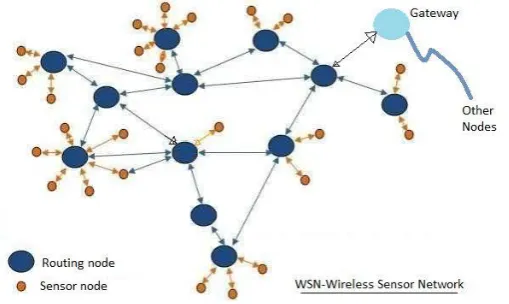
Fig.2 Data collection using Mobile device
III. PROPOSED SOLUTION
The need of allotted understanding discovery and dissemination protocols is not absolutely new, however earlier work failed to handle this want. We have a tendency to gain knowledge of the realistic requisites of such protocols, and set their style targets. Additionally, we tend to set up the protection vulnerabilities in previously planned protocols and that we extend the secured and dispensed expertise delivery procedure with vigor concerns as well as the failure rectification strategies with proactive method unlike previous document work (in earlier work we researched the on demand answer work). It’s the primary distributed know-how discovery and dissemination protocol that makes it possible for community house owners and authorized customers to disperse understanding items into WSNs without counting on the base station and with network existence time administration by making use of the self reliant actor placement programs. In our task we suggest as improved dissemination protocol, which is used to support the pleasant of provider problems. In our stronger work we recommend a solution to enhance the community existence time in disbursed Wi-Fi sensor community with pre-failure rectification technique. Our best aim of this project is to furnish the power effective dispensed protection system for WSN. And extra importantly, all earlier information discovery & dissemination algorithms rent the centralized system.
We suggest EDiDrip to make greater existence time in information dissemination method, one more viable approach to authentication is by single key cryptography. But, this form of system is at risk of gadget compromise attack on account that as soon as a device is attacked; the more commonly shared secrets and techniques are printed. This task proposes the primary energy efficient comfortable and allotted information discovery and dissemination protocol named EDiDrip.
200 | P a g e
Fig. 3 Example of Proposed work sensible module
3.1 Proposed work sensible module
EDiDrip contains 5 modules (Fig.4), community layout, user connection, and packet preprocessing and packet verification and pre-failure medication method. In our base project work we have proposed the protection solutions based on the power availability monitoring.
Wireless sensing element networks signify a brand new category of computing with gigantic numbers of useful resource-restricted computing nodes cooperating on clearly one software. We tend to be trained the purposeful standards of such protocols, and set their variety targets. Additionally, we have a tendency to establish the safety vulnerabilities in antecedently projected protocols.
2) supported the planning ambitions, we tend to advise EDiDrip. It’s the first vigour based distributed skills
discovery and dissemination protocol, that allows for community controllers and licensed users to spread expertise units into WSNs even as now not relying on the BS, the route determination is situated on the energy parameters. In addition, our intensive analysis demonstrates that EDiDrip satisfies the safety necessities of the protocols of its form. Peculiarly, we tend to use the demonstrable protection procedure to formally show the credibleness and integrity of the disseminated competencies things in EDiDrip.
201 | P a g e
programs developed, so one can work combine to enforce the overall approach. In this section, we are going to discuss about our enhancement work. Our base reference procedure works like reactive mode, if the gadget failed then most effective failure rectification will begin (Fig.5).
By means of our base work we can quilt the holes, but reactive method may just reason to excessive level location alterations, after which extra number of nodes has to maneuver from possess function. Due extra number of node failure, the total network might not be rectified after particular therapy approach. Compared with data assortment via a static sink, introducing mobility for know-how assortment enjoys the advantages of equalization vigor loss within the network and joining disconnected areas.
202 | P a g e
Fig.5. failure rectification model
START
Initialize battery
Send critical REQ
Normal process
no
yes
Energy <=
critical
Receive
packet
Extra
packet
Avail
exact
Update neigh table
Rebroadcast
Neigh exchange
Change critical to exact
Move to BS
Buffer node
Wait for exact
arrival
Move the exact
Hello
Neigh
Critical
Yes
No
No
203 | P a g e
V. RESULT
We’ve got tested our output with ns2 simulator and we got a two results, one is NAM, Xgraph. Our
enhancement system supplies first-rate results reminiscent of no node failure and no more motion.
Fig.6 Replacement of nodes
The fig.6 Replacement of nodes shows that when the node fails, the failure node is replaced with new node. The red color in the graph indicates failure node. Due to this, the delay in the communication decreases .The secured communication is done through two parties with a shortest delay. The Xgraph suggests the satisfactory of our rectification process efficiency. Fig.8 shows that the delay reduction between the DiDrip and EDiDrip protocols and also previous protocols.
204 | P a g e
Fig. 8 delay comparison graph.
VI. CONCLUSION
In most of present protocols creator considered only on the centralized information dissemination ways without more protection and vigor consideration. Now we have proposed the solution to set up the safety protocol and that we expanded the secured and dispensed know- how supply system with vigor considerations. It’s the primary disbursed expertise discovery and dissemination protocol that enables network house owners and accredited customers to disperse knowledge items into WSNs without relying on the base station and with community existence time administration. From our confirmed outcome, we will conclude that our study work supplying excellent vigor efficient security structure to Wi-Fi sensor network. In future, we will be able to self sufficient sensor robotic community to toughen the disaster administration procedure. In order to prolong the network lifetime, the pre-failure rectification technique is used. Thus, in the future work, will consider how to ensure data confidentiality in the design of secure and distributed data discovery and dissemination protocols.
REFERENCES
[1] Secure And Distributed Data Discovery And Dissemination In Wireless Sensor Networks”, Daojing He, Member, Ieee, Sammy Chan, Member, Ieee, Mohsen Guizani, Fellow, Ieee, Haomiao Yang, Member, Ieee, And Boyang Zhou, Ieee Transactions On Parallel And Distributed Systems, Vol. 26, No. 4, April 2015
[2] D. He, C. Chen, S. Chan, and J. Bu, “DiCode: DoS-resistant and distributed code dissemination in wireless sensor networks,” IEEE Trans. Wireless Commun., vol. 11, no. 5, pp. 1946–1956, May 2012.
[3] T.Dang,N. Bulusu,W. Feng, and S. Park, “DHV:Acode consistency maintenance protocol for multi-hop wireless sensor networks,” in Proc. 6th Eur. Conf.Wireless Sensor Netw., 2009, pp. 327–342.
205 | P a g e
[5] K. Lin and P. Levis, “Data discovery and dissemination with DIP,” in Proc. ACM/IEEE Int. Conf. Inf. Process. Sensor Netw., 2008, pp. 433–444.
[6] M. Ceriotti, G. P. Picco, A. L. Murphy, S. Guna, M. Corra, M. Pozzi, D. Zonta, and P. Zanon, “Monitoring heritage buildings with wireless sensor networks: The Torre Aquila deployment,” in Proc. IEEE Int. Conf.
Inf. Process. Sensor Netw., 2009, pp. 277–288.
[7] D. He, S. Chan, S. Tang, and M. Guizani, “Secure data discovery and dissemination based on hash tree for wireless sensor networks,” IEEE Trans. Wireless Commun., vol. 12, no. 9, pp. 4638– 4646, Sep. 2013.
[8] M. Rahman, N. Nasser, and T. Taleb, “Pairing-based secure timing synchronization for heterogeneous sensor networks,” in Proc. IEEE Global Telecommun. Conf., 2008, pp. 1–5. designing energy routing
protocol with power consumption optimization in manet”, shivashankar1, hosahalli narayanagowda suresh2, golla varaprasad3, and guruswamy jayanthi4, ieee transactions on emerging topics in computing, 2013.
[9] N. Ahmed, S.S. Kanhere, and S. Jha, “The Holes Problem in Wireless Sensor Networks: A Survey,” SIGMOBILE Mobile Computing Comm. Rev., vol. 9, no. 2, pp. 4-18, 2005.
[10] B. Wang, Coverage Control in Sensor Networks. Springer, 2010.
[11] B. Kun, T. Kun, G. Naijie, L.D. Wan, and L. Xiaohu, “Topological Hole Detection in Sensor Networks with Cooperative Neighbors,” Proc. Int’l Conf. Systems and Networks Comm. (ICSN’06), p. 31, 2006.
[12] R. Ghrist and A. Muhammad, “Coverage and Hole-Detection in Sensor Networks via Homology,” Proc. Fourth Int’l Symp. Information Processing in Sensor Networks (IPSN ’05), pp. 254-260, Apr. 2005.
[13] V. De Silva, R. Ghrist, and A. Muhammad, “Blind Swarms for Coverage in 2-D,” Proc. Robotics: Science and Systems, pp. 335-342, June 2005.
[14] D. Jea, A. A. Somasundara, and M. B. Srivastava, “Multiple controlled mobile elements (data mules) for data collection in sensor networks,” in Proc. IEEE/ACM Int. Conf. Distrib. Comput. Sensor Syst., Jun.
2005, pp. 244–257.
[15] M. Ma, Y. Yang, and M. Zhao, “Tour planning for mobile data gathering mechanisms in wireless sensor networks,” IEEE Trans.
[16] Veh. Technol., vol. 62, no. 4, pp. 1472–1483, May 2013. M. Zhao and Y. Yang, “Bounded relay hop mobile data gathering in wireless sensor networks,” IEEE Trans. Comput., vol. 61, no. 2, pp. 265–271,
Feb. 2012.
[17] M. Zhao, M. Ma, and Y. Yang, “Mobile data gathering with space-division multiple access in wireless sensor networks,” in Proc. IEEE Conf. Comput. Commun., 2008, pp. 1283–1291.
[18] M. Zhao, M. Ma, and Y. Yang, “Efficient data gathering with mobile collectors and space-division multiple access technique in wireless sensor networks,” IEEE Trans. Comput., vol. 60, no. 3, pp. 400–417, Mar. 2011.