© 2016 IJSRST | Volume 2 | Issue 2 | Print ISSN: 2395-6011 | Online ISSN: 2395-602X Themed Section: Science and Technology
Decision Making in the Multi-Dimensional Trust by Mining Huge Volume of
unstructured E-Commerce Feedback Comments
Dr. Kalli Srinivasa Nageswara Prasad 1, Sravan Kumar Vulchi2
1Professor, Department of CSE, GVVR Institute of Technology, Bhimavaram. Andhra Pradesh, India 2M.Tech. CSE Department Student, GVVR Institute of Technology, Bhimavaram. Andhra Pradesh, India
ABSTRACT
Information of extreme size, diversity and complexity – is everywhere. This disruptive phenomenon is destined to help organizations drive innovation by gaining new and faster insight into their customers. Market and Technology has its own way of implementation of the strategic decision policy. These days’ data mining in the trend o the E-commerce plays the role of the market, as the trend is shifting from classical trend to the electronics trend which in turn we call as E-commerce. If we approach the model of axis model of decision making cannot be without data and information. Hence In this Paper we put forward the concept of the feedback from customer as open text which mined with the specific purpose to study the customer need in the E-commerce market. Vendors like Amazon and Alibaba more customer centric rather to market centric, hence the data will help them what is the trend the customer need rather to the market. In the context, we have implemented the no-sql database based approach to retrieve information in a pattern which the client or customer need. The Divide and Conquer with Map reduced program enables us to reach the destination with the robustness, performance oriented and best of the timely technology solution.
Keywords: Electronic commerce, text mining, Big Data, Hadoop, Volume
I.
INTRODUCTION
An incentive mechanism is a system with designed rules ensuring that the actions of big data honestly reporting their information will produce a better outcome for these big data. Mechanism where big data are better off to report truthfully the information of their valuation about requested products. Different incentive mechanisms have been developed by researchers to encourage honesty in the reporting from buying big data in electronic marketplaces, in order to diminish concerns about untruthful ratings. For example, side payment mechanisms offer side payment to buyers that truthfully rate results of business with sellers. The credibility of two participants in their business will be decreased if their ratings about the business result are different.
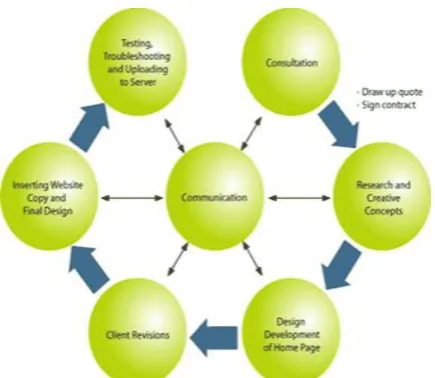
Figure 1. Decision Making Process Cycle Illustration.
trust they have of others. A special kind of social network is called an “affiliation network,” in which nodes are actors and events to which the actors belong. Affiliation networks can also be described as collections of subsets of entities. Each event describes the subset of actors who are affiliated with it, and each actor describes the subset of events to which it belongs. Viewing an affiliation network this way is fundamental to the hyper graph approach.
II.
RELATED WORK
Social acceptance of trust and reputation systems is another critical factor. For the more widespread and general usage of these systems, social acceptance by all parties is an issue that needs to be considered. The second task is to adjust reputation advice according to its accuracy. The aim of this task is to reduce the effect of inaccurate advice.
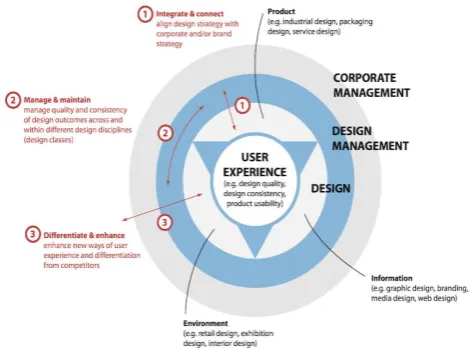
Figure 2. Model View of the E-Commerce Feedback
This task is necessary because it can deal with the situation where an advisor unfairly rates a seller a large number of times Experimental results shows that has better performance in estimating sellers' trustworthiness than the BRS system. However, this model also has some weaknesses. It assumes that selling big data act consistently. This assumption might not be true. A seller may change its behavior from being trustworthy to being untrustworthy. Suppose an advisor has done business with the seller before and their interaction is successful. The fair
advice provided by the advisor then indicates that the seller is trustworthy. However, this advice will be incorrectly considered as unfair when a buyer takes this advice and does business with the seller after the seller changes its behavior. The second problem is that this model relies only on the buyer's personal experience with the advisor's advice. Another example is the similarities between collaborative filtering and reputation systems. Both types of systems collect ratings from members in a social network.
III.
METHODOLOGY
reputation ratings to one other node, which is certainly insufficient.
The usefulness of the former arises when the emphasis is on the content, and the latter can be used when the source of information is a more important factor. They are thus complimentary social mechanisms in global
open distributed systems. There is significant potential to combine collaborative filtering and reputation systems. Another example is investigating Web-based social networks and its applicability to different tasks such as trust interference within trust networks.
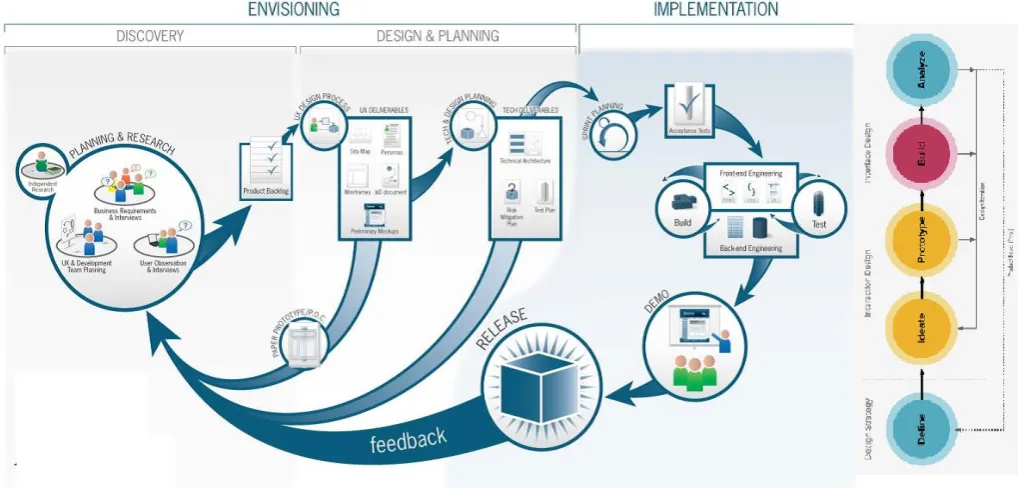
Figure 3. Architectural Model of the Prototype Approach
The third problem concerns the method for integrating advice. The RRSMAN approach updates the reputation rating of a node by considering other nodes' advice. Pieces of advice provided by other nodes are considered equally as long as these nodes are trustworthy or each piece of advice is compatible. Some trustworthy nodes may be more trustworthy and others may be less trustworthy. Their advice about a node should have different impact when updating the reputation rating of the node. Similarly, advice with different compatibility values should also be considered differently. In distributed reputation systems, there is no central location for submitting ratings or obtaining advisors' ratings. A buyer should simply request advice about a seller from advisors. Even though some distributed reputation systems have distributed stores for collecting ratings, it is still
costly to obtain all ratings for the seller. Therefore, approaches used in these systems cannot consider all big data' ratings for the sellers. The approaches used in distributed reputation systems, for example TRAVOS, Bayesian and WMA, handle unfair ratings by estimating the trustworthiness of an advisor based on each individual buyer's personal experience with the advisor's advice.
3.1 Evaluation and Analysis
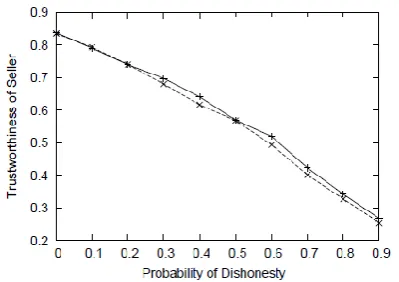
Figure 4. Comparison of the Density of the Seller
Do not consider buyers' personal experience with advisors' advice. These approaches are based on all
ratings of sellers and belong to the
\public/endogenous" category. Results from those approaches do not differ for different buyers.
IV.
CONCLUSION AND FUTURE WORK
A decision to trust is a decision tied with risk. Even when the expectations are well grounded, there is an element of risk in trust, a chance that those who are trusted will not act as expected. The risk should be justified in order to confirm the current trust and to strengthen it, otherwise if the other party defects, trust decreases dramatically. The estimation of this risk remains a problematic area. Game theory is a powerful tool for this purpose.
V.
REFERENCES
[1]. P. Resnick, K. Kuwabara, R. Zeckhauser, and E. Friedman, "Reputation systems: Facilitating trust in internet interactions," Commun. ACM, vol. 43, no. 12, pp. 45-48, 2000.
[2]. P. Resnick and R. Zeckhauser, "Trust among strangers in internet transactions: Empirical analysis of eBay’s reputation system," Econ. Internet E-Commerce, vol. 11, no. 11, pp. 127-157, Nov. 2002.
[3]. J. O’Donovan, B. Smyth, V. Evrim, and D. McLeod, "Extracting and visualizing trust relationships from online auction feedback
comments," in Proc. IJCAI, San Francisco, CA, USA, 2007, pp. 2826-2831.
[4]. M. De Marneffe, B. MacCartney, and C.
Manning, "Generating typed dependency parses from phrase structure parses," in Proc. LREC, vol. 6. 2006, pp. 449-454.
[5]. M. De Marneffe and C. Manning, "The Stanford typed dependencies representation," in Proc. CrossParser, Stroudsburg, PA, USA, 2008. [6]. B. Pang and L. Lee, "Opinion mining and
sentiment analysis," Found. Trends Inf. Ret., vol. 2, no. 1-2, pp. 1-135, Jan. 2008.
[7]. B. Liu, Sentiment Analysis and Opinion Mining. San Rafael, CA, USA: Morgan & Claypool Publishers, 2012.
[8]. D. M. Blei, A. Y. Ng, and M. I. Jordan, "Latent Dirichlet allocation," J. Mach. Learn. Res., vol. 3, pp. 993-1022, Jan. 2003.
[9]. T. Hofmann, "Probabilistic latent semantic indexing," in Proc.22nd ACM SIGIR, New York, NY, USA, 1999, pp. 50-57.
[10]. Y. Lu, C. Zhai, and N. Sundaresan, "Rated aspect summarization of short comments," in Proc. 18th Int. Conf. WWW, NewYork, NY,USA, 2009.
[11]. H. Wang, Y. Lu, and C. Zhai, "Latent aspect rating analysis without aspect keyword supervision," in Proc. 17th ACM SIGKDD Int. Conf. KDD, San Diego, CA, USA, 2011, pp. 618-626.
[12]. H. Wang, Y. Lu, and C. Zhai, "Latent aspect rating analysis on review text data: A rating regression approach," in Proc. 16th ACM SIGKDD Int. Conf. KDD, New York, NY, USA, 2010, pp. 783-792.
[13]. S. Ramchurn, D. Huynh, and N. Jennings, "Trust in multi-agent systems," Knowl. Eng. Rev., Vol. 19, no. 1, pp. 1-25, 2004.
[15]. M. Schillo, P. Funk, and M. Rovatsos, "Using trust for detecting deceptive big data in artificial societies," Appl. Artif. Intell., vol. 14,no. 8, pp. 825-848, 2000.
[16]. J. Sabater and C. Sierra, "Regret: Reputation in gregarious societies," in Proc. 5th Int. Conf. big data, New York, NY, USA, 2001,pp. 194-195. [17]. A. Jøsang, R. Ismail, and C. Boyd, "A survey of
trust and reputation systems for online service provision," DSS, vol. 43, no. 2, pp. 618-644, 2007.
[18]. S. D. Kamvar, M. T. Schlosser, and H. Garcia-Molina, "The EigenTrust algorithm for reputation management in P2P networks," in Proc. 12th Int. Conf. WWW, Budapest, Hungary, 2003.
[19]. A. Rettinger, M. Nickles, and V. Tresp, "Statistical relational learning of trust," Mach. Learn., vol. 82, no. 2, pp. 191-209, Feb. 2011. [20]. X. Wang, L. Liu, and J. Su, "RLM: A general
model for trust representation and aggregation," IEEE Trans. Serv. Comput., vol. 5, no. 1, pp. 131-143, Jan.-Mar. 2012.
[21]. L. Xiong and L. Liu, "A reputation-based trust
model for peer-to-peer e-commerce