IJIRT 145225
INTERNATIONAL JO URNAL OF INNOVATIVE RESEARCH IN TECHNOLOGY30
Optimization of MQL in grinding with CBN wheels
T Paramesh
1, B Prashanth
21
Asso. Professor, Dept in Mech at St. Martin’s Engineering college,Rnga Reddy, Telangana, India
2
Assistant professor in Mech Dept, at MLRIT ,Dundigal, Ranga Reddy Telangana, India
Abstract- The use of cutting fluids is fundamental to machining processes, mainly when it comes to high heat generation, which is the case of grinding. Thus, lubrication and cooling provided by cutting fluids improve the final quality of the work piece. However, cutting fluid usage provide some drawbacks concerning environmental, costs and health issues. Therefore, new methods for application and optimization of cutting fluids are being researched aiming to reduce the amount of fluid used, as well as the minimization of cutting fluid hazards. The present study analyzes the behavior of a recently proposed optimization method, up to now only tested in turning, which consists of adding water to minimum quantity lubrication (MQL). Three different proportions were tested in this study: 1/1, 1/3 and 1/5 parts of oil per parts of water. The following output variables were evaluated: surface roughness, roundness errors, grinding power and diametric wheel wear. Also, optical microscopy and micro hardness measurements were conducted, in order to detect burns and surface alterations. The obtained results were also compared to conventional (flood coolant) cooling-lubrication and traditional MQL (without water). MQL with water (1/5) presented better results of surface roughness and roundness errors, when compared to traditional MQL, and the results are very close to when using flood coolant. For grinding power and wheel wear, the results for MQL with water (1/5) were the best among the tested conditions.
Index Terms- grinding, minimum quantity lubrication
(MQL), cutting fluid optimization, MQL with water
1. INTRODUCTION
Grinding is an abrasive machining process, in which material removal occurs through the interaction of abrasive grains and workpiece1. Differently from other processes using tools with defined geometry (such as turning and milling), abrasive grains have irregular and randomly distributed cutting edges in a macroscopic view. However, in a scale much lower
IJIRT 145225
INTERNATIONAL JO URNAL OF INNOVATIVE RESEARCH IN TECHNOLOGY31
further the amount of oil used in cutting fluids, the present work aims to study the feasibility of a new cooling-lubrication method for grinding, consisting of water addition to traditional MQL technique, which conventionally uses only oil. Its uniqueness comes from the application in grinding of an already successful optimization of MQL technique, and the results proved beneficial to the process.
1.1. The use of cutting fluids
According to the definition, cutting fluids are liquids or gases applied around the workpiece/tool interface, in order to facilitate the cutting process10. The two most important considerations when working with grinding wheels are cooling and lubrication, due to high heat generation, which harms surface quality
and cause dimensional and geometric
non-conformities on the workpieces11,12.
For that, the use of cutting fluids in grinding is crucial. Besides cooling and lubrication, cutting fluids are also responsible for corrosion protection for the machine tool and the workpiece11. Secondary functions are removal of machined chips from the cutting zone and wheel cleaning13. Cutting fluids increase tool service life, resulting in higher productivity and the ability of using higher cutting speeds, thus reducing surface roughness. However, the use of cutting fluid has some drawbacks mainly concerning health hazards, since the worker is sometimes exposed to direct skin contact or inhalation of cutting fluid vapors. Skin damages and inflammation, respiratory and gastrointestinal disturbs can be developed by exposure to cutting fluids6,14.Cutting fluids can also contaminate soil, water and air, due to leaking, wastes, cleaning water and fluid disposal. Problems related to costs were also cited, such as: acquisition, treatment, maintenance and disposal15. Costs related to installation and proper fluid treatment can reach two times the costs involving tool acquisition16. Also, conventional cutting fluid application systems are relatively inefficient in grinding, particularly under severe machining conditions17. Due to the problems arising by the usage of cutting fluids, many works have been conducted in order to minimize or avoid the amount of fluid used. In doing so, no losses concerning surface quality and tool service life can be tolerated16.
1.2. Minimum quantity lubrication (MQL)
IJIRT 145225
INTERNATIONAL JO URNAL OF INNOVATIVE RESEARCH IN TECHNOLOGY32
1.3. Minimum quantity lubrication with addition of water
Even after the advent of minimum quantity lubrication, the search for alternative methods in cutting fluid application remains intensely active. So, studies concerning the minimization of fluid (and its deleterious drawbacks) are still in discussion among
researchers and industry.As a consequence,
researchers improved the traditional MQL adding water to it. Water has a higher cooling capacity than oil (two times the specific heat of pure oil), but its lubricating capacity is much lower. This method, therefore, presents higher cooling capacity than traditional MQL, due to water additions. The resultant water droplets sprayed are covered by a thin layer of oil, which may evaporate on the workpiece
surface, thus promoting cooling. However,
lubrication is harmed, when compared to traditional MQL (without water)24.The application of water in MQL grinding was studied recently25. In that study, a green cooling method for grinding, which is defined as minimum quantity oil–water lubrication cooling (oil–water MQL) was proposed to deal with the thermal damage during grinding of hardened AISI 52100 steel under different cooling-lubrication conditions (wet, dry, pure oil MQL and oil–water MQL). The grinding performance was investigated
and compared in terms of grinding force,
temperature, and workpiece surface integrity. Compared with dry grinding, surface finish and quality of MQL grinding were significantly better due to lubrication and cooling of water and/or oil. However, MQL could not provide better lubrication and cooling in comparison to wet grinding. Even so, MQL could be considered as a future alternative to wet grinding because the former is a more economic and more environmentally friendly technique. The study of oil–water MQL grinding showed that it could significantly reduce grinding temperature and thickness of the heat affected layer compared with pure oil MQL grinding, which indicated better cooling. Pure oil MQL grinding in comparison to oil– water MQL grinding reduced tangential force and surface roughness due to better lubrication around the work piece, chip, and grinding wheel. Based on recent works, MQL with water proved itself more efficient than traditional MQL. Besides reducing tool wear, water additions were also responsible for suppressing thermal distortions, improving precision
and final quality26. Previous research tested MQL with additions of water in turning, a process which behaves distinctly from grinding. This fact motivated the present study, which aimed to analyze the viability of MQL with water additions in CBN grinding, when compared to conventional (flood coolant) cooling-lubrication and traditional MQL (without water).
2. MATERIAL AND METHODS
The tests were carried out in a RUAP 515 H-CNC cylindrical grinder manufactured by SulMecânica. A vitrified bond CBN wheel was used, with the following dimensions: 350 mm external diameter, 127 mm internal diameter, 20 mm width and 5 mm abrasive thickness (specification SNB151Q12VR2). Work pieces of SAE/AISI 4340 quenched and annealed steel rings were used (54 HRc), with 54 mm external diameter, 30 mm internal diameter and 4 mm thickness. A semi-synthetic soluble oil was applied in
conventional (flood coolant) method, with
concentration of 2.5%, at a flow rate of 2.83 × 10–
4
m3/s. Its composition has already anticorrosive, biocides, fungicides, alkalizes, anti-foam, non-ionic tens actives, alkanolamides and others. For MQL and MQL with water, vegetable oil in the proportions of: 1:1, 1:3 and 1:5 parts of oil per parts of water (Figure 1) was used. The device for application of MQL is composed of air compressor, pressure regulator, flow rate meter and nozzle. In this experiment, the air pressure was 6.0 × 10⁵ Pa, and the fluid flow rate was 2.7 × 10⁻⁸ m3/s. This device provides oil and allows control of oil/air flow rates individually. The air flow rate was monitored using a turbine-type meter, calibrated to a pressure of 8.0 × 10⁵ Pa. Figure 2 presents the nozzle for MQL application8. This design aims to minimize turbulence of the air-oil mixture, enhancing penetration at the wheel/work piece interface. A wheel cleaning system using compressed air (at a flow rate of 8.0 × 10⁻³ m3/s and pressure of 7.0 bar) was also used23. The nozzle was placed at 1 mm in relation to the wheel cutting surface. Figure 3 presents the wheel cleaning nozzle design (a) and positioning (b). For each test, three work pieces were ground. Besides the distinct cooling-lubrication conditions, three feed rate (vf)
IJIRT 145225
INTERNATIONAL JO URNAL OF INNOVATIVE RESEARCH IN TECHNOLOGY33
speed (vs), 8 seconds spark out time (ts), 4 mm
grinding width, 0.02 mm depth of dressing (ad) for 12
passes, in order to remove any imperfections from the wheel surface caused by previous grinding operation. Dressing speed (vd) was kept constant and equal to
7.4 mm/s, using a conglomerate-type dresser. For each feed rate, tests were conducted using the conventional (flood coolant) cooling-lubrication technique, MQL and MQL with water additions (1:1, 1:3 and 1:5 parts of oil/parts of water). Surface roughness measurements were done using the arithmetic mean value (Ra). The presented results are averages of 5 readings in different positions along the perimeter for each of the three work pieces used in each condition. A Taylor Hobson Talleyrand 31c was used to measure roundness errors values, and five readings were also performed in different positions of the work piece. The assessment of diametric wheel wear was indirectly, by "printing" the worn wheel profile on a SAE/AISI 1020 steel cylinder. This measurement was possible, since the wheel width (15 mm) was not completely worn in each test (work piece width: 4 mm). Thus, a wear profile could be detected and measured. Diametric wheel wear values were obtained using a surface roughness meter, alon g with specific profiling software that measured the difference between the diameters in the piece. For that, five measurements were conducted in each work piece. Cutting power was determined through measurements of the consumed power from the wheel spindle. An electronic circuit was designed and built in order to convert the voltage and current values from the motor to compatible voltage signals, which then were sent to a data acquisition board and processed by a specific routine in National Instruments Lab VIEW 7.1. Optical microscopy was conducted by Olympus BX51 microscope, while
Mitutoyo HM-200 performed micro hardness
measurements. For both measurements, five work pieces of each condition were analyzed.
3. RESULTS AND DISCUSSION
3.1. Surface roughness
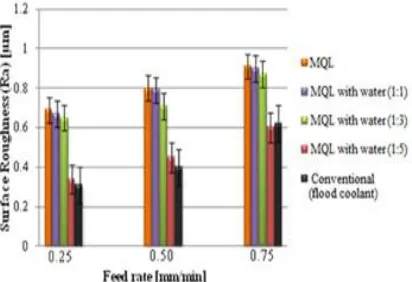
Figure 4 presents the obtained results for surface roughness (Ra).
It can be observed that increasing water parts in
traditional MQL improved surface roughness.
Among all the proportions tested, 1:5 parts of oil/parts of water provided the best results, reaching values close to (and even lower than, for 0.75 mm/min feed rate) conventional cooling-lubrication, which uses a greater amount of water in its composition. Traditional MQL provided the worst results, since a grout was formed by the mixture of machined chips and oil, and could be detected after the tests. Even high-velocity compressed air jets are not able to remove it properly from the cutting zone. This grout scratches the work piece surface, increasing surface roughness. The addition of water minimizes this problem, since the overall viscosity is reduced, improving chip removal from the cutting zone, minimizing scratching and reducing su rface roughness. Besides, for greater amounts of water,
cooling becomes more efficient. Cooling is
IJIRT 145225
INTERNATIONAL JO URNAL OF INNOVATIVE RESEARCH IN TECHNOLOGY34
3.2. Roundness errors
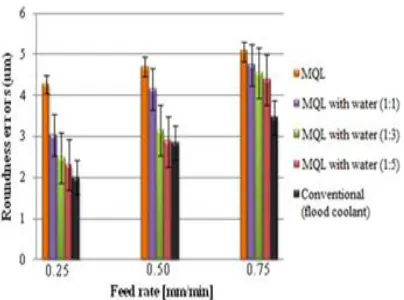
Figure 6 presents the roundness error values for each condition tested.
It can be observed that roundness errors presented the same tendency as the results for surface roughness. The lowest values were obtained for conventional (flood coolant) cooling-lubrication, and the highest for traditional MQL. The results for roundness errors were improved with the increase of water, close to the values for conventional cooling-lubrication, for MQL with water (1:5). Flood coolant application provided the best roundness results, due to better cooling capacity. With that, thermal distortions are minimized, allowing for better dimensional and geometric accuracies. Besides, for MQL and MQL with water, results worse than conventional cooling-lubrication were obtained, due to the aforementioned grout formation (mixture of MQL oil and chips), which lodges in the wheel pores. The presence of this grout increases friction between wheel and workpiece. With that, heat generation is increased, and roundness is worsened. As discussed previously, the increase of water reduces cutting fluid
viscosity, minimizing grout formation and,
consequently, wheel loading, besides improving cooling capacity. In relation to that, the increase of water parts provided lower values for roundness errors.
3.3. Diametric wheel wear
Figure 7 presents the results for diametric wheel wear, for each cooling-lubrication conditions tested. 3.3. Diametric wheel wear
Figure 7 presents the results for diametric wheel wear, for each cooling-lubrication conditions tested.
It can be observed that, among the cooling -lubrication methods tested, MQL provided lower grinding power values. This can be explained by the fact that MQL is able in disrupting the air barrier formed around the rotating wheel. Compressed air is thus capable of penetrating directly in the cutting zone, promoting efficient lubrication. Additions of water in traditional MQL were responsible for increasing grinding power, since lubrication is impaired (when it comes to MQL) due to the lower amount of oil, which increased cutting forces and power. For more parts of water per parts of oil, higher were the grinding power values. Conventional (flood coolant) cooling-lubrication method presented relatively higher results for grinding power when compared with MQL (with and without water). The high amount of unpressurized fluid flow is responsible for the inefficient penetration in the cutting zone. Therefore, the grinding wheel is subject to higher stresses, since a greater resistance must be overcome at the interface between grain and workpiece, which increased power. Also, it must be noted that conventional cooling-lubrication is the most efficient in wheel cleaning. These results prove that the lack of lubrication is more harmful, when it comes to consumed power, than friction between lodged chips and work piece. In other words, when it comes to grinding power, friction in the cutting surface is less deleterious than cutting and scratching promoted by the abrasive grains and lodged chips, respectively, when lubricated by MQL oil.
3.5. Optical microscopy and micro hardness
IJIRT 145225
INTERNATIONAL JO URNAL OF INNOVATIVE RESEARCH IN TECHNOLOGY35
Initially, micro hardness measurements were
conducted for non-ground work pieces and
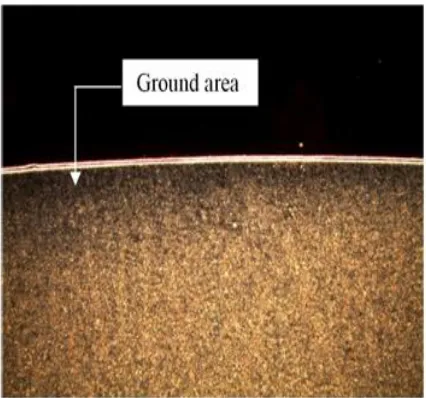
conventional (flood coolant) cooling-lubrication condition. The first stands as a reference for the work piece surface, and the latter stands as a reference of comparison with the MQL methods (with and without water) tested. No surface burn areas (distinct phases) or subsurface alterations were detected. The average micro hardness value for non-ground work pieces was 711.79 HK, while for conventional cooling-lubrication it was 693.1 HK. It can be observed that the values are close, which indicates that work piece surface integrity was maintained. Among the MQL methods tested, only extreme situations were analyzed, i.e., traditional MQL as the more severe condition, and MQL 1:5 parts of oil/parts of water as the less severe. Figure 9 presents the microscopy results for traditional MQL (without water).
It can be noted that traditional MQL was more severe to the work piece surface, since it clearly
presented a white burn. Micro hardness
measurements corroborate with this result, since a value of 849.1 HK was obtained, much higher than the reference values. During grinding of hardened steels, surface burns promote hardness increase, which is caused by quenching, consequence of reaustenitizing followed by formation of non -annealed martensite20, 24. White burns are very deleterious to the work piece integrity, since the hardened surface becomes extremely brittle, and high
tensile residual stresses are present, which can cause crack nucleation and growth, reducing considerably wear and fatigue resistances20.
Figure 10 presents the microscopy results for MQL with 1:5 parts of oil/parts of water.
Analyzing the figure above, it can be noticed that no surface burns were present. The average micro hardness value was 745.8 HK, much lower than 849.1 HK from traditional MQL (without water). This can be observed since the higher amount of water provided more cooling and chip removal, reducing the number of particles in contact with the work piece, minimizing thus strain hardening. However, in relation to non-ground work pieces (711.79 HK) and conventional (flood coolant) cooling-lubrication condition (693.1 HK), work piece surface suffered more damages, since the lack of wheel cleaning increased loading, due to lower chip removal, which is responsible for scratching and damaging the surface. Therefore, it can be observed that increasing water parts in MQL, in terms of surface quality and micro hardness, corroborates with the best finishing results, s ince no surface burns could be detected and the overall integrity could be maintained.
4. CONCLUSIONS
IJIRT 145225
INTERNATIONAL JO URNAL OF INNOVATIVE RESEARCH IN TECHNOLOGY36
efficient as MQL in disrupting the air barrier around the rotating wheel, due to the low pressure at which it is applied. Thus, higher the lubricating capacity of the cutting fluid, lower will be the consumed grinding power; • MQL with addition of water is more efficient than traditional MQL (without water) due to the improvements observed in both finishing quality (surface roughness and roundness errors) and lower tool wear; • When using MQL with water, for higher additions of water (1:5 parts of oil/parts of water), better results can be obtained; • Conventional cooling-lubrication provided, in a general way, more satisfactory results than MQL (with or without water), except when wheel wear is taken into account; • MQL with 1:5 parts of oil/parts of water is
technically viable, even when compared to
conventional (flood coolant) cooling-lubrication, since similar workpiece quality could be obtained for both methods, and the latter provided higher wheel wear and grinding power. The implementation of MQL plus water can be responsible, thus, for economic and environmental gains in grinding.
REFERENCES
[1] Ren YH, Zhang B and Zhou ZX. Specific energy in grinding of tungsten carbides of various grain
sizes. CIRP Annals - Manufacturing
Technology. 2009; 58(1):299-
[2] Anderson D, Warkentin A and Bauer R.
Experimental validation of numerical thermal models for dry grinding. Journal of Materials Processing Technology. 2008; 204(1-3):269-278.
[3] Tawakoli T, Hadad M J, Sadeghi MH, Daneshi A, Stöckert S and Rasifard A. An experimental investigation of the effects of workpiece and grinding parameters on minimum quantity
lubrication—MQL grinding. International
Journal of Machine Tools & Manufacture, 2009; 49(12-13):924-932.
[4] Guo C, Campomanes M, McIntosh D, Becze C, Green T and Malkin S. Optimization of Continuous Dress Creep-Feed Form Grinding
Process. CIRP Annals - Manufacturing
Technology. 2003; 52(1):259-262.
[5] Shen B, Shih AJ and Xiao G. Study of Convection Heat Transfer in Grinding Using Finite Difference Method. ASME Journal of
Manufacturing Science and Engineering. 2011; 133:031001(1-10).
[6] Irani RA, Bauer RJ and Warkentin A. A review of cutting fluid application in the grinding process. International Journal of Machine Tools & Manufacture. 2005; 45(15):1696-1705. [7] Sokovic M and Mijanovic K. Ecological aspects
of the cutting fluids and its influence on
quantifiable parameters of the cutting
processes. Journal of Materials Processing Technology. 2001; 109(1-2):181-189.
[8] Silva LR, Bianchi EC, Fusse RY, Catai RE, França TV and Aguiar PR. Analysis of surface integrity for minimum quantity lubricant—MQL in grinding. International Journal of Machine Tools & Manufacture. 2007; 47(2):412-418. [9] Kutz M. Mechanical Engineer's Handbook. 2nd
ed. Wiley; 1998.
[10]Shen B and Shih AJ. Minimum Quantity
Lubrication (MQL) Grinding Using Vitrified
CBN Wheels. Transactions of
NAMRI/SME. 2009; 37:129-136.
[11]Stanford M and Lister PM. Future role of metalworking fluids. Industrial Lubrification Tribology. 2002; 54(1):11-19.
[12]Alves JAC, Fernandes UB, Silva CE Jr, Bianchi EC, Aguiar PR and Silva EJ. Application of the minimum quantity lubrication (MQL) technique
in the plunge cylindrical grinding
operation. Journal of the Brazilian Society of Mechanical Sciences and Engineering. 2009; 31(1):1-4.
[13]Tawakoli T, Westkämper E and Rabiey M. Dry grinding by special conditioning. International Journal of Advanced Manufacturing Technology. 2007; 33(3-4):419-424.
[14]Alves MCS, Bianchi EC, Aguiar PR and
Canarim RC. Influence of optimized lubrication-cooling and minimum quantity lubrication on the cutting forces, on the geometric quality of the surfaces and on the micro-structural integrity of hardened steel parts. Matéria (UFRJ). 2011; 16(3):754-766.
[15]Sadeghi MH, Haddad MJ, Tawakoli T and Emami M. Minimal quantity lubrication-MQL in
grinding of Ti-6Al-4V titanium
alloy. International Journal of Advanced
IJIRT 145225
INTERNATIONAL JO URNAL OF INNOVATIVE RESEARCH IN TECHNOLOGY37
[16]Diniz AE, Marcondes FC and Coppini
NL. Tecnologia da Usinagem dos Materiais . 4th ed. Campinas: Artliber Editora Ltda; 2003 [17]Catai RE, Silva LR, Bianchi EC, Aguiar PR,
Zilio FM, Valarelli ID et al. Performance of Aerodynamic Baffles in Cylindrical Grinding Analyzed on the Basis of air Layer Pressure and Speed. Journal of the Brazilian Society of Mechanical Sciences and Engineering. 2008; 30(1): 47-50.
[18]18. Attanasio A, Gelfi M, Giardini C and Remino C. Minimal quantity lubrication in turning: Effect on tool wear. Wear. 2006; 260(3):333-338.
[19]19. Obikawa T, Kamata Y and Shinozuka J.
High-speed grooving with applying
MQL. International Journal of Machine Tools & Manufacture. 2006; 46(14):1854-1861
[20]20. Klocke F, Baus A and Beck T. Coolant Induced Forces in CBN High Speed Grinding
with Show Nozzles. CIRP Annals -
Manufacturing Technology. 2000; 49(1):241-244.
[21]21. Hafenbraedl D and Malkin S. Tecnologia
ambientalmente correta para retificação
cilíndrica interna. Machines and Metals
Magazine. 2001; 37(426):40-55.
[22]22. Marinescu ID, Rowe WB, Dimitrov B and Inasaki I. Tribology of abrasive machining processes. Norwich: William Andrew Inc; 2004.
[23]23. Oliveira DJ, Guermandi LG, Bianchi EC, Diniz AE, Aguiar PR and Canarim RC. Improving minimum quantity lubrication in CBN grinding using compressed air wheel cleaning. Journal of Materials Processing Technology. 2012; 212(12):2559-2568.
[24]24. Itoigawa F, Childs THC, Nakamura T and Belluco W. Effects and mechanisms in minimal quantity lubrication machining of an aluminum alloy. Wear. 2006; 260(3):339-344
[25]25. Mao C, Tang X, Zou H, Huang X and Zhou Z. Investigation of grinding characteristic using
nanofluid minimum quantity
lubrication. International Journal of Precision
Engineering and Manufacturing. 2012;
13(10):1745-1752.
[26]26. Yoshimura H, Itoigawa F, Nakamura T and Niwa K. Development of Nozzle System for
Oil-on-Water Droplet Metalworking Fluid and Its Application on Practical Production Line. JSME International Journal Series C. 2005; 48(4):723-729.