GSJ: Volume 6, Issue 10, October 2018, Online: ISSN 2320-9186
www.globalscientificjournal.com
STUDY OF THE INFLUENCE OF THE REFINING TIME
ON THE PHYSICAL CHARACTERISTICS OF THE PULP
AND BLEACHING
1
Youssef, ELRHAYAM*,
2Ahmed. Elharfi
1Laboratory of Agro Resources Polymers and Process Engineering (LAPPE), Team of Macromolecular & Organic Chemistry, Faculty of Sciences, Ibn Tofail University,
E-mail:[email protected]/[email protected]
2 Laboratory of Agro Resources Polymers and Process Engineering (LAPPE), Team of Macromolecular & Organic Chemistry, Faculty of Sciences, Ibn Tofail University,
E-mail:[email protected]/[email protected]
ABSTRACT:
Being a part of the programs of paper pulp production by Morocco in the early 20th century, the Administration of Forestry pledged to provide raw materials for cellulose production unit. An ambitious program of reforestation was carried out. It was based on Eucalyptus camaldilansis which is a forest species native to Australia and which was introduced to Morocco during the French protectorate. Over the years, the cellulose production unit in Morocco started to import wood of Eucalyptus grandis to Congo because of its low cost compared to that produced in Morocco. This tree species is also imported from Australia, introduced in the Congo during its colonization. In addition to its very low cost price, this imported wood has more efficient mechanical and physical properties for refinement compared to the species produced in Morocco, knowing that the imported species developed in the equatorial climate are different from those the Mediterranean climate.
The aim of this work is to study the tangible causes that pushed Morocco's cellulose unit to import wood of Eucalyptus grandis from Congo at the expense of the local species of Eucalyptus camldilansis. We compared the importance of the influence of the increasing sulphidity at the level of boiling on the physical properties of the cellulose fiber (bleached paste) and the influence of the increasing refining time of the unbleached pulp on the same physical properties of the two types of wood.
Natural polymers of the well-known plants are rubber, starch, glycogen, dolichol and cellulose. The latter is the component that provides protection and support in plant organisms. It is located in the cytoplasmic membrane of cells and is the most abundant organic substance in nature.
Indeed, it is estimated that a tree produces about 10g per day of cellulose at global scale. The production is in the order of 1,31010 tones per year [1]. The cellulose which is the raw material for the manufacture of paper pulp is constituted by a chaining pattern β-D-glucopyranose linked to each other by a glucosidic β link (1-4).
Hemicellulose which is the second major wood component is a polysaccharide consisting of hexosans (especially mannans) and pentosans (primarily xylans) which are incorporated into the cellulose chains.
Lignin which is the third major component of wood is an amorphous and cross-linked polymer of phenylpropane units, and it is the link between the cellulosic fibers.
The manufacturing process of the paper pulp is in the isolation of cellulose fibers [2]. The boiling of timber by soda aims to make lignin soluble in alkaline medium only. The presence of the latter may split cellulose chains and make their weakest features. In addition, certain sugars, such as galactose, mannose and xylose which are incorporated in the channels can cause an additional fragility especially by the presence of xylose [3].
2.Materials and Methods:
2.1Refining:
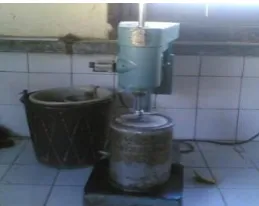
The refining of the pulp is an international test method for measuring the consumption of energy required for refining the latter before use. This is a preliminary step in determining the physical properties of paste.
For determining the refining time, a given amount of concentration is enclosed in the inner wall of a cylindrical refining animated box of a planetary rotational motion around a central axis and a grooved cylinder in the box.
3.The techniques of pulp characterization
3.1. Disintegration: ISO 5263
The pulp sample is subjected to mechanical treatment in water so that the intertwined fibers, which were dispersed in the pulp suspension, would be again separated from each other without substantial changes in structure.
Figure 1: Disintegrator (ADAMEL Lhomargy)
3.2. The mechanical characteristics
3.2.1. Length and Index Rupture (ISO 1924-1, 1994)
Figure 2: Dynamo-meter Adamel Lhomargy - DM 01 Type No. 1389 3.3. Resistance to tearing :
The average force required to continue the tearing initiated by an initial cut in a sheet of paper is expressed in milli Newtons (mN).
Figure 3: Dechiromètre (apparatus measuring tears) Adamel LHOMARGY- ED model 01 No. 518
3.4. Resistance to Splitting :
The maximum pressure uniformly distributed is supported by a single specimen of paper perpendicularly to its surface under the conditions of the test.
Figure 4:Éclatomètres Adamel Lhomargy EC 05.1 N ° 271 B
4.Results and Discussions
4.1.The refining time influence
Throughout the paper manufacturing process, it is undoubtedly the refining that dramatically changes the fiber properties to suit the needs of the papers. But in return, it is the machine that generally consumes a large amount of energy. Therefore, we perceive the interest of the refining modeling for a better control this process by following quantitative and qualitative criteria for each use.
4.2.Physical characteristics of the bleached pulp:
4.3.Rostrata Wood:
After determining the optimal sulphidity with which the cooking must be done, we used to assess the physical characteristics depending on the refining time on the bleaching at 30% of sulphidity; however, we also measured the physical characteristics of other bleachings (0, 10 and 20 of sulphidity) in order to check the trends.
4.3.1.The length of the Tearing (L.T):
The tearing length could be any length of bandwidth but a uniform which is suspended by one of its ends and breaks under its own weight.
L.T = (r * 100) / (l * f)
Figure 5: Evolution of LT according to Schopper degree
By analyzing the curve of the LT of 30% sulphidity in figure 5, we see that after 10 minutes of refining there is a considerable increase in the refining time by 93%. Continuing to 17 minutes, the increase continues in a low manner with the order of 8%, but beyond 17 minutes we observe a stability or even a slight decrease.
The hydration inter and intra cellulosic fibers maximum is made in this case easily in a short time and we get to know the best LR after 17 minutes of refining. This phenomenon is observed for all sulphidity (0, 10 and 20%).
4.3.2. Tearing Index (T.I. ISO 1974, 1998) T.I = D / F
D: Total of the values read on the device F: paper Force g / m2
Figure 6: Evolution of T. I depending on the Schopper degree
In figure 6 we find according to the 30% sulfidity curve that there is an increase in the T.I of about 31% after 10 minutes of refining. If we continue to increase the refining time there would be a slight increase followed by a small drop in this index.
We conclude that at 17 mn of refining time, we get a maximum of T.I. For the other sulphidity, we notice the same trend as the one seen before.
4.3.3.The Index of Splitting (I.E ISO 2758, 1998):
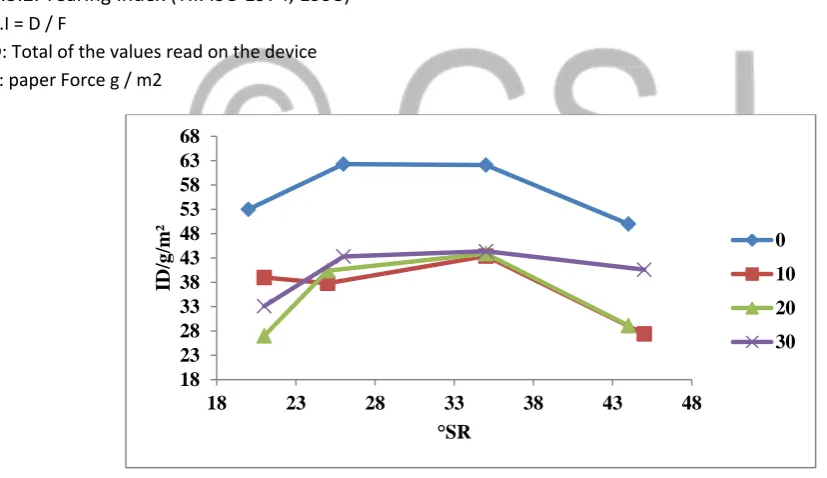
The measuring of the resistance of splitting of a sheet is subjected to a uniformly distributed pressure. I.S = P / F
P: average splitting pressure expressed in gf / cm2 F: Force of the sheet g / m2
1500 2500 3500 4500 5500 6500
18 23 28 33 38 43 48
LR(m)
°SR
0 10 20 30
18 23 28 33 38 43 48 53 58 63 68
18 23 28 33 38 43 48
ID/g
/m
²
°SR
Figure 7: Evolution of I.S depending on the Schopper degree
According to figure 7, the I.S. increases by more than 100% after 17 minutes in which it reaches its maximum, but later on we see a slight drop. The same trend is observed for the other curves. (Sulphidity 0, 10 and 20%).
4.3.4. Opacity: (Op)
The opacity iso is defined as the ratio of the reflectance value - which is obtained on a black background - on the value of the reflectance obtained on infinite background (ISO 2471.1998)
Opacity iso = (R0 * 100) / R ∞
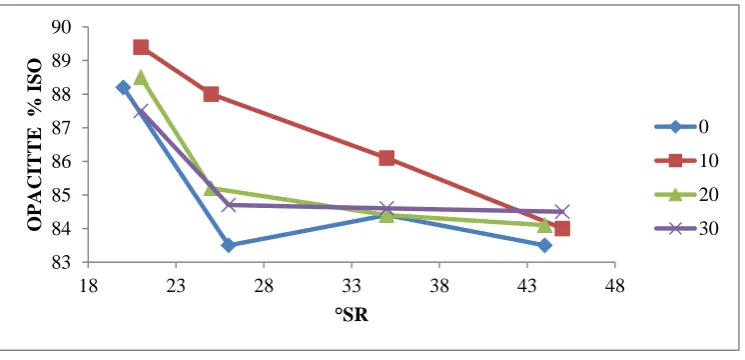
Figure 8: Evolution of the opacity as according to Schopper degree
This parameter generally decreases by increasing the refining time from 0 to 26 min, but beyond 10 minutes, the reduction is relatively insensitive.
4.3.5. The Hand (M):
It means the ratio of the thickness in microns of the mass of paper in g / m2. Hand = E/F
E: thickness in thousandths of millimeters F: Strength of the paper in g / m2
5 10 15 20 25 30 35 40 45
18 23 28 33 38 43 48
IE/
gf
/c
m²/
g/m²
°SR
0
10
20
30
83 84 85 86 87 88 89 90
18 23 28 33 38 43 48
OPAC
ITT
E
%
ISO
°SR
0
10
20
Figure 9: Evolution of the opacity according to Schopper degree
In figure 9, we see the same phenomenon as the one observed in opacity, namely a maximum of reduction after 10 minutes of refining and then a slight decrease till 26 min.
4.3.6. Air resistance (A.R):
It is the ability of a paper to resist the penetration of air. The measurement consists in determining the time required for a given amount of air to pass through a given paper surface. (ISO 5636/5, 1998)
Figure 10: Evolution of the A. R according to the Schopper degree
In figure 10, the air resistance increases with the increase of the refining time from 0 to 26 minutes. Also we notice that this increase at the same pace as the other sulfidities except for 0% sulphidity where we observe a significant increase between 34mn and 26 mn.
4.4.Grandis Wood:
Figures 10, 11, 12, 13,14 and 15 combine the results of the physical characteristics of the bleached pulp to various refining time and also show the variation of the physical characteristics according to the refining time.
1.2 1.4 1.6 1.8 2 2.2
18 23 28 33 38 43 48
MA
IN
µ/
g/m²
°SR
0
10
20
30
0 2 4 6 8 10 12 14
18 23 28 33 38 43 48
RA
mn
°SR
0
10
20
4.4.1.The length of the Tearing (L.T):
Figure 10: Evolution of the L.T according to the Schopper degree
According to Figure 10, the increase in the tearing length depending on the refining time is important. It reaches its maximum after 41mn, but already after 20 minutes we find that the value of LT has tripled. Beyond 35 min, the increase is insignificant as well for other sulfidities.
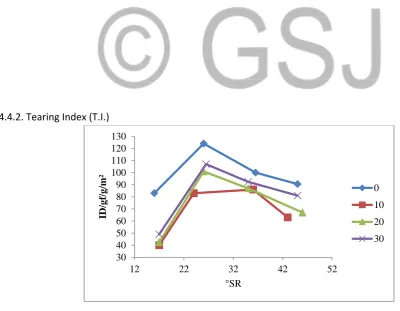
4.4.2. Tearing Index (T.I.)
Figure 11: Evolution of the TI depending on the Schopper degree
From Figure 11, the maximum value of the index is reached after 20 minutes, and we find a remarkable decline when we increase further the refining time, even for other sulfidities.
1200 2200 3200 4200 5200 6200 7200 8200 9200 10200
15 25 35 45 55
LR
m
0
10
20
30
30 40 50 60 70 80 90 100 110 120 130
12 22 32 42 52
ID/g
f/g/m²
°SR
0
10
20
4.4.3. Bursting index (B.I.)
Figure 12: Evolution of the B.I according to the Schopper degree
From Figure 12, the increase in this index is very important after 20 minutes of refining but it becomes less and less once continuing the refining from 20 to 41 min.
4.4.4. Opacity (Op):
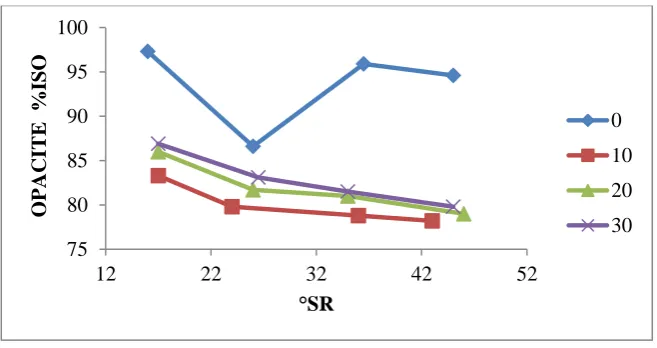
Figure 13: Evolution of the TL according to the Schopper degree
According to Figure 13, we see a decrease in the opacity throughout the refining. This decrease becomes less important at 35 minutes.
4.4.5.Hand (H): 0 10 20 30 40 50 60 70 80 90
12 22 32 42 52
IE gf /c m2/ m2 °SR 0 10 20 30 75 80 85 90 95 100
12 22 32 42 52
OPAC ITE % ISO °SR 0 10 20 30 1.1 1.3 1.5 1.7 1.9 2.1 2.3
12 22 32 42 52
Figure 14: Evolution of the TL according to the Schopper degree
According to figure 14, we notice a decrease in the hand throughout the refining with a less significant decrease at 20 minutes.
4.4.6. Air resistance (A.R.)
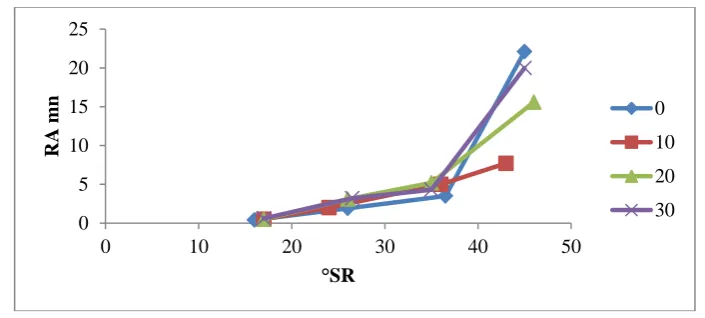
Figure 15: Evolution of the A.R according to the degree Schopper
From Figure 15, the evolution of A.R according to the refining time shows a small increase up to 35 minutes, then steeper up to 41 minutes, which is the same for other sulphidity.
Conclusion
We conclude that the refining of the pulp increases the mechanical characteristics and reduces the optical characteristics of the bleached pulp of Rostrata. As far as the air resistance is concerned, it increases in a continuous manner with the refining time, and we obtain better mechanical properties after 17 minutes which is about 35 ° SR. We also conclude that the mechanical characteristics of Grandis wood increase in view of the refining time and we get the maximum of LR after 35 minutes, the I.D after 20 minutes and then E.I after 41 minutes. Indeed, the use must take into account the refining time based on the desired parameters. As far as the A.R. is concerned, it continuously increases but the maximum is never reached.
The refining changes the characteristics of the paste. The Rostrata wood paste requires less refining time than that of Grandis wood with the particular characteristics of the latter which are higher.
As for the optical characteristics, the refining is not necessary for obtaining the maximal values and those of Rostrata are superior to those of Grandis.
0 5 10 15 20 25
0 10 20 30 40 50
RA
mn
°SR
0
10
20