College of Science & Technology
School of the Built Environment
Developing a Framework forIntegrated
Community-Centered Early Warning System to Enhance
Disaster Resilience in UAE
Abdulla Al Hmoudi
Submitted in Partial fulfilment of the Requirements of Degree of Doctorate of the Built Environment
i
Table of Contents
LIST OF FIGURES ... vi
LIST OF TABLES ... viii
LIST OF ACRONYMS ... ix
GLOSSARY OF TERMS ... x
ACKNOWLEDGEMENTS ... xii
DEDICATION ... xiii
ABSTRACT ... xiv
PUBLICATION FROM THIS WORK ... xv
CHAPTER 1: INTRODUCTION ... 1
1.1 Introduction ... 1
1.2 Research Background ... 1
1.3 Research Motivation ... 5
1.4 Justification for the Research ... 6
1.4.1 The Importance of the Effective Disaster Preparedness ... 6
1.4.2 Lack of Community Engagement ... 7
1.4.3 Hazards and Safety Concerns ... 8
1.4.4 The Lack of Empirical Studies ... 9
1.5 Research Questions ... 9
1.5.1 Research Aim and Objectives ... 9
1.6 Scope of Research ... 10
1.7 Outline Research Methodology ... 11
1.8 Research Contribution ... 11
1.9 Thesis Structure ... 12
1.10 Research Limitations ... 14
1.11 Chapter Summary ... 14
CHAPTER 2: STATE OF THE ART REVIEW ON EARLY WARNING
SYSTEMS FOR NATURAL DISASTERS ... 15
2.1 Introduction ... 15
2.2 Background and Concept of Early Warning Systems ... 15
2.2.1 Models and Application of EWS ... 20
ii
2.2.3 Evaluation of EWS Elements and Concepts ... 26
2.3 Evaluation of Best Practice in EWS ... 29
2.3.1 Tropical EWS ... 29
2.3.2 EWS in preparedness program ... 30
2.3.3 Vigilance EWS ... 33
2.3.4 Multi-hazard EWS ... 34
2.3.5 Three-Tier Orientated EWS ... 37
2.4 Knowledge Gap and Essential Principles of EWS ... 39
2.5 Existing deployment of EWS in the UAE ... 42
2.6 EWS Performance Indicators ... 44
2.7 Conceptual Framework for EWS and Justification ... 52
2.8 Chapter Summary ... 55
CHAPTER 3: EARLY WARNING SYSTEM DEPLOYMENT IN THE
UNITED ARAB EMIRATES CONTEXT ... 56
3.1 Introduction ... 56
3.2 Overview Emergency and Disaster Management in the UAE ... 56
3.2.1 Federal Disaster Plan in the UAE ... 58
3.3 Overview of Early Warning System in United Arab Emirates ... 61
3.3.1 Risk Knowledge ... 62
3.3.2 Monitoring and Warning Service ... 62
3.3.3 Dissemination and Communication ... 63
3.3.4 Assessment of Response Capability ... 64
3.4 Analysis of EWS in the Emirates ... 64
3.5 EWS Requirements in the UAE ... 66
3.6 Chapter Summary ... 68
CHAPTER 4: RESEARCH METHODOLOGY ... 69
4.1 Introduction ... 69
4.2 Research Methodological framework ... 70
4.2.1 Overall Research Process and Stimulus ... 71
4.3 Research Philosophy ... 74
4.3.1 The ontological assumption ... 75
4.3.2 The epistemological assumption ... 76
4.3.3 The axiological assumption ... 77
4.4 Research Approach ... 79
iii
4.5.1 Single Case or Multiple Cases ... 82
4.5.2 Justification of the Choice of Emirate of Fujairah and Abu Dhabi as a Case Study ... 84
4.6. Data Collection Methods ... 86
4.6.1 Interviews as a research technique for data collection ... 88
4.6.2 Justification of Choosing Semi-structured Interview in Data Collection ... 90
4.6.3 Designing the Interview Questions and Protocol ... 91
4.6.4 The Research Sample (interviewees) ... 92
4.6.5 Questionnaire surveys as a method for data collection ... 97
4.6.6 Sample Size ... 97
4.6.7 Questionnaire design ... 99
4.6.8 Documentation ... 100
4.6.9 Relationship between data collection tools and research objectives ... 101
4.7 Data Analysis Techniques ... 102
4.7.1 Content analysis ... 102
4.7.2 Using computer software for data analysis ... 104
4.8 Data Validity, Reliability and Generalizability ... 105
4.9 Ethical Consideration ... 107
4.10 Chapter Summary ... 108
CHAPTER 5: RESEARCH RESULTS AND ANALYSIS ... 109
5.1 Introduction ... 109
5.2 Overview of Results ... 109
5.3 Case study 1: Abu Dhabi ... 110
5.3.1 Evaluation of EWS during past incidents ... 112
5.3.2 Qualitative Data from Abu Dhabi ... 113
5.4 Case study 2: Fujairah ... 120
5.4.1 Evaluation of EWS during past incidents ... 121
5.4.2 Qualitative Data from Fujairah ... 123
5.5 Analysis of Qualitative Results from Abu Dhabi and Fujairah ... 128
5.6 Questionnaire Results ... 133
5.6.1 The Total Response Rate ... 133
5.7 Summary and Analysis of Results ... 159
5.7.1 Analysis of Primary Ideas from results ... 160
5.7.2 Essential elements of Theoretical Framework for EWS in the UAE ... 162
5.8 Summary of Chapter ... 163
iv
6.1 Introduction ... 165
6.2 Evaluation of EWS Frameworks ... 165
6.3 Analysis of recommended Framework for EWS ... 168
6.3.1 Red double sided arrows ... 169
6.3.2 Blue double sided arrows ... 170
6.3.3 Double sided arrows between community and the four components of EWS ... 170
6.4 Summary of Chapter ... 172
CHAPTER 7: DISCUSSION OF RESEARCH RESULTS ... 173
7.1 Introduction ... 173
7.2 Discussion of Results ... 173
7.2.1 Objective 1 - “To examine best practice in EWS for disaster resilience” ... 175
7.2.2 Objective 2 - “To investigate the existing deployment of EWS in the UAE” ... 177
7.2.3 Objective 3 - “To evaluate the EWS requirements for community and stakeholders in the UAE”... 181
7.2.4 Objective 4 - “To develop a framework that will facilitate successful and effective EWS in the UAE” ... 182
7.2.5 Objective 5 - “To validate the developed framework with concerned stakeholders” ... 185
7.2.6 Objective 6 - “To develop guidelines based on validation of framework for emergency management stakeholders in order to ensure effective Early Warning Systems in the UAE” ... 185
7.3 Implication of Research Findings ... 186
7.4 Summary of Chapter ... 187
CHAPTER 8: EWS FRAMEWORK VALIDATION AND GUIDELINES ... 188
8.1 Introduction ... 188
8.2 Justification for Validation... 188
8.3 Validation of EWS Framework ... 190
8.3.1 Validation of Risk Knowledge ... 191
8.3.2 Validation of Monitoring and Warning... 193
8.3.3 Validation of Dissemination and communication ... 194
8.3.4 Validation of Response Capability... 196
8.4 Discussion of Validation ... 199
8.5 Guidelines for EWS Framework ... 200
8.6 Summary of Chapter ... 203
CHAPTER 9: CONCLUSIONS AND RECOMMENDATIONS ... 204
9.1 Introduction ... 204
9.2 Conclusions of objectives and Key findings ... 204
v
9.3.1 Future Research Recommendation ... 207
9.3.2 Recommendation for practice ... 207
9.4 Contribution to Knowledge ... 210
9.5 Limitation of Research and Conclusion ... 211
References ... 212
Appendix A: Ethical Approval ... 224
Appendix B: Case Study Strategic Level Interview Guide Line ... 228
vi
LIST OF FIGURES
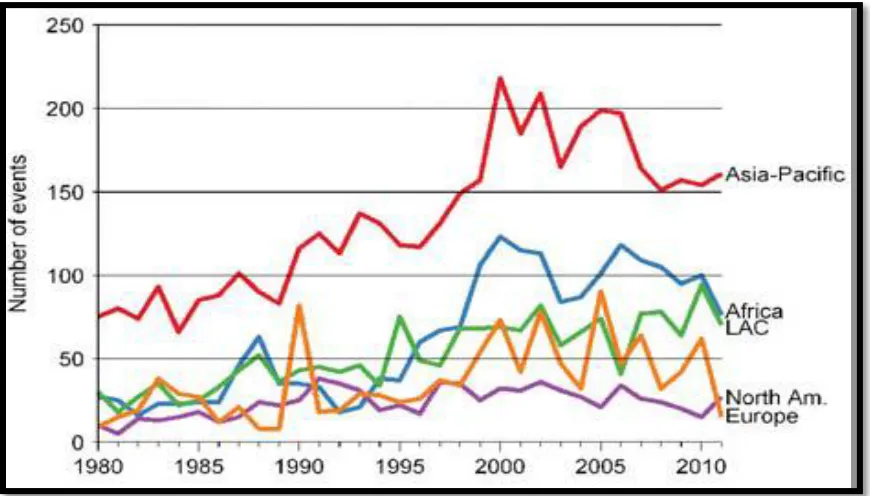
Figure 1- 1: Number of reported natural disasters (UNESCO, 2013) ... 2
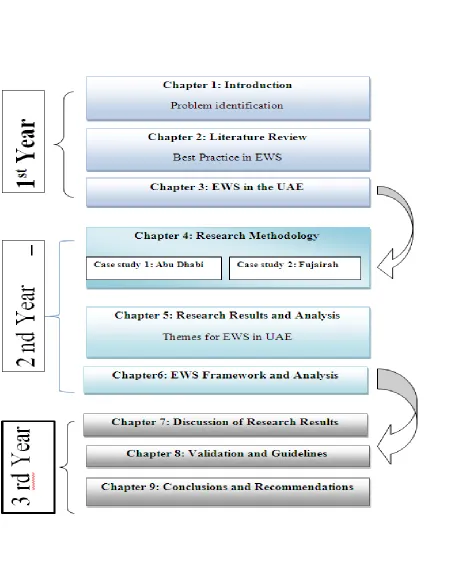
Figure 1- 2: Thesis Structure ... 13
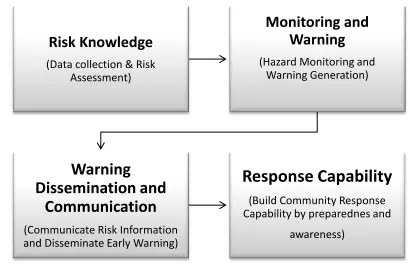
Figure 2- 1: Four elements of community-centred EWS (UN, 2006) ... 16
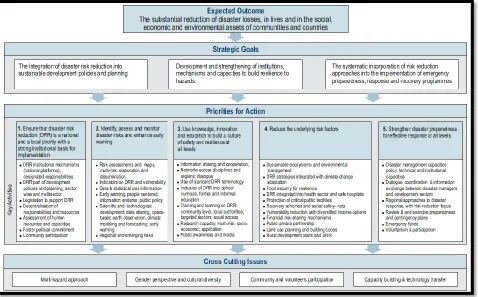
Figure 2- 2: Building the Resilience of Nations and Communities to Disasters (UNISDR, 2005) ... 18
Figure 2- 3: The Four Elements for an Effective People-Centred EWS Framework (IEWP, 2006). ... 21
Figure 2- 4: Integrated EWS (Basher, 2006) ... 22
Figure 2- 5: SCCT Types by responsibilities (Coombs, 2007) ... 25
Figure 2- 6: Traditional Perspective and Actual Importance of EWS in Society (Glantz, 2009) ... 27
Figure 2- 7: Institutional collaboration for piloting the end-to-end generation, feedback and application of flood forecasts application from national to the community level (Fakhruddin, 2014) . 31 Figure 2- 8: Readiness Levels Communication Flow (Tang et al., 2012) ... 34
Figure 2- 9: Hydrologic Services Collaboration Partners (Keeneyet al., 2012) ... 36
Figure 2- 10: Warning management of the DWD-The flow of warning information (Steinhorst and Vogelgesand, 2012) ... 38
Figure 2- 11: The Conceptual Framework for EWS implementation ... 54
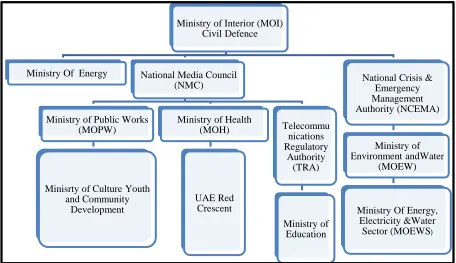
Figure 3- 1: Institutions that fall under the Federal Plan in the UAE (MOI, 2014) ... 57
Figure 3- 2: The Four Pillars of NCEMA (NCEMA, 2014) ... 59
Figure 3- 3: Public communication and EWS timeline (CCA, 2004) ... 60
Figure 3- 4: Loudspeaker in mosques used for warning the community in the UAE (AlAmeri, 2010)63 Figure 4- 1: The research „onion‟ method (Saunders et al., 2009) ... 71
Figure 4- 2: The overall research process ... 73
Figure 4- 3: Basic types of designs for case studies (Yin, 2009) ... 83
Figure 4- 4: Interview process ... 92
Figure 4- 5: The concept of sampling (Kumar, 2014) ... 93
Figure 4- 6: Risk in the Emirate of Fujairah and Abu Dhabi ... 98
Figure 4- 7: The main factors involved in asking a good question (Fonseca, 2012) ... 100
Figure 5- 1: The map shows the location of the Emirate of Abu Dhabi (Dhanhani, 2010) ... 111
Figure 5- 2: The pictures show damage caused by the storm in Ruwais (Abu Dhabi Police reports, 2013) ... 112
Figure 5- 3: The map shows Emirate of Fujairah location (Dhanhani, 2010) ... 120
Figure 5- 4: The pictures show the Phet storm, which hit the town of Sharm and caused considerable material damage (Haggag and Badry, 2011)... 122
Figure 5- 5: Kinds of the media used for Warning Dissemination for the community at risk ... 129
vii
Figure 5- 7: Nvivo analysis of themes and interviewee responses ... 132
Figure 5- 8: Level of concern about natural hazards in AD and Fujairah ... 135
Figure 5- 9: Numbers of people who have experienced the effects of natural hazards ... 136
Figure 5- 10: Hazard considered by community as most dangerous ... 137
Figure 5- 11: The scariest hazards ... 138
Figure 5- 12: Level of impact of Climate change ... 139
Figure 5- 13: Frequency of use of weather forecast ... 140
Figure 5- 14: Actions taken after receiving warning information ... 141
Figure 5- 15: Knowledge of emergency procedures ... 142
Figure 5- 16: Participation in civic activities ... 143
Figure 5- 17: Community interests in participating in emergency procedure exercise... 144
Figure 5- 18: Importance of public education meeting about natural hazards ... 145
Figure 5- 19: Roles and Responsibilities for EWS ... 146
Figure 5- 20: Importance of early warning and accurate forecasting ... 147
Figure 5- 21: Receipt of early warning messages ... 148
Figure 5- 22: Preferred medium for early warning messages ... 149
Figure 5- 23: Effectiveness of web-based warning and forecasting system ... 150
Figure 5- 24: Level of awareness about preparedness and EWS meeting ... 151
Figure 5- 25: Awareness about emergency exercise ... 152
Figure 5- 26: Training for improving disaster management and EWS ... 153
Figure 5- 27: Adopting best practice and lessons from other countries ... 154
Figure 5- 28: Risk Information about natural hazards ... 155
Figure 5- 29: Quality of risk Information ... 156
Figure 5- 30: Interest in risk information ... 157
Figure 5- 31: Preferred organisation for providing risk information ... 158
Figure 5- 32: General perception of risk of natural hazards ... 159
Figure 6- 1: Recommended Framework for effective EWS in Abu Dhabi and Fujairah ... 159
Figure 7- 1: Recommended Framework for effective EWS implementation in UAE ... 159
Figure 8- 1: The most used and validated Risk Knowledge principles and components ... 159
Figure 8- 2: The most used and validated monitoring and warning principles and components ... 159
Figure 8- 3: The most used and validated Dissemination and communication principles and components ... 159
Figure 8- 4: The most used and validated Response Capability principles and components ... 159
Figure 8- 5: Ranking for EWS Elements ... 159
Figure 8- 6: Guidelines for effective implementation of framework ... 159
viii
LIST OF TABLES
Table 1- 1: Cyclone information for the last 15 years (Meteorological department, 2011)... 4
Table 2- 1: Methods of disseminating warnings (Tang and Zou 2009) ... 23
Table 2- 2: Organizational roles and responsibilities of each organization (Fakhruddin, 2014) ... 32
Table 2- 3: Key Performance Indicators for EWS ... 45
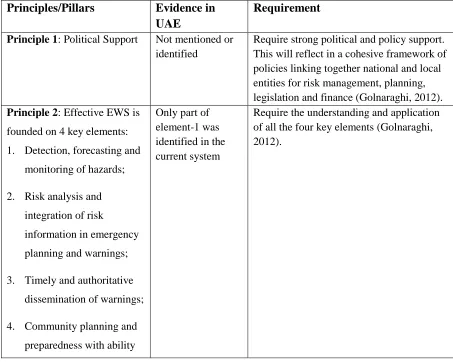
Table 3- 1: EWS Requirements for stakeholders and community in the UAE ... 66
Table 4- 1: The main differences between Positivism and interpretivism philosophies (Easterby-Smith et al., 2004) ... 75
Table 4- 2: Assumptions of the main philosophies (Collis and Hussey, 2009) ... 77
Table 4- 3: Major differences between deductive and inductive approach (Saunderset al., 2009) ... 79
Table 4- 4: Different Research Strategies (Yin, 2009) ... 81
Table 4- 5: Strengths and weaknesses of data collection methods (Yin, 2009) ... 87
Table 4- 6: Interviewees of Emirates of Abu Dhabi: Case Study (1) ... 95
Table 4- 7: Interviewees of Emirates of Fujairah: Case Study (2) ... 96
Table 4- 8: Research objective and their relevant data collection techniques ... 101
Table 5- 1: Profile of interviewees in Abu Dhabi ... 114
Table 5- 2: Profile of interviewees in Fujairah ... 123
Table 5- 3: Active Response Rate (Saunders et al., 2012). ... 134
Table 5- 4: Summary of themes and their indicators in the two Emirates ... 162
Table 7- 1 : Principles of effective EWS derived from best practice ... 176
ix
LIST OF ACRONYMS
EWS Early Warning Systems EST Estimates
FEMA Federal Emergency Management Agency GSOEWS Global Survey of Early Warning Systems ISDR International Strategy for Disaster Reduction
IDNDR International Decade for Natural Disaster Reduction IFRC International Federation of Red Cross
IPCC Intergovernmental Panel on Climate Change MENA Middle East and North Africa
MOI Ministry of Interior
NCEMA National Crisis & Emergency Management Authority
NCMS National Centre for Meteorology and Seismology
UAE United Arab Emirates
UNESCO United Nations Educational Scientific and Cultural Organization
UNPD United Nations Procurement Divisions
USD United States Dollar
UNISDR United Nations International Strategy for Disaster Reduction UN United Nation
UK-DTI United Kingdom Department of Trade and Industry USGS United States Geologic Survey
x
GLOSSARY OF TERMS
Early Warning Systems - can be described as the process for generating maximally accurate information about possible future harm and for ensuring that this information reaches the people threatened by this harm (Glantz, 2004). It is also the set of capacities needed to generate and disseminate timely and meaningful warning information to enable individuals, communities and organizations threatened by a hazard to prepare and to act appropriately and in sufficient time to reduce the possibility of harm or loss (UNISDR, 2009).
Elements of EWS – The four inter-related components of EWS i.e. risk knowledge, monitoring and warning, warning dissemination and communication and response capability that ensures the functionality and effectiveness of EWS (UN, 2009; Wiltshire, 2006).
Disaster - A serious disruption of the functioning of a community or a society involving widespread human, material, economic or environmental losses and impacts, which exceeds the ability of the affected community or society to cope using its own resources (UNISDR, 2009).
Disaster Resilience – The ability of a system, community or society exposed to hazards to resist, absorb, accommodate to and recover from the effects of a hazard in a timely and efficient manner, including through the preservation and restoration of its essential basic structures and functions (UNISDR, 2009).
xi
Natural hazard - Natural process or phenomenon that may cause loss of life, injury or other health impacts, property damage, loss of livelihoods and services, social and economic disruption, or environmental damage (UNISDR, 2009).
Stakeholders - Stakeholders are those who may be affected by or have an effect on disaster or emergency management efforts (Drabek, 1991). They may also include people who have a strong interest in emergency arrangements and effort for academic, philosophical, or political reasons, even though they and their families, friends, and associates are not directly affected by it (IAEM, 2007).
Community-centred – is a unique approach that enable individuals, families and communities to participate effectively in finding solutions to their own challenges especially impacts of natural hazards which disturb or subtract from their wellbeing, health and living full lives (Community-centred knowledge, 2015; Alhmoudi, 2014).
Emergency Management - The organization and management of resources and responsibilities for addressing all aspects of emergencies, in particular preparedness, response and initial recovery steps (UNISDR, 2009).
xii
ACKNOWLEDGEMENTS
xiii
DEDICATION
With All My Heart, I thank my God (Allah), because without His blessing, support, Guidance and Love, This Work Would Not Have Been Possible.
This piece of work is especially dedicated to my mother for her love and encouragement; she has never ceased praying for me.
Thank for my wife and my children who have endured during the study period.
xiv
ABSTRACT
The impacts and costs of natural disasters on people, properties and environment is often severe when they occur on a large scale or when not prepared for. Factors such as impacts of climate change, urban growth, poor planning to mention a few, have continued to significantly increase the frequencies and impacts of natural disasters across the world, the United Arab Emirates (UAE) inclusive. While the frequencies of natural disasters might not be controlled easily, the need for more effective early warning systems has become highly important. In recent years, existing researches and international organisations such as the United Nations (UN) have identified lack of Early Warning System (EWS) and the lack of integrated approach to disaster response as one of the reasons many deaths occur when natural disasters happen especially in developing countries. For instance, some communities in the (UAE) have suffered the impact of natural disasters in recent years due to lack of EWS deployment and lack of community knowledge of risks of natural disasters. These problems emphasises the importance of this research which aims to decrease the vulnerability of communities in the Emirates by developing a framework for integrated early warning systems in community in order to increase response capabilities against the risk of natural disasters in the United Arab Emirates.
xv
PUBLICATION FROM THIS WORK
Book Chapters
Alhmoudi, A.,& Aziz, Z. (2015).Developing a framework to enhance early warning response capabilities and resilience in the UAE. Disaster Management and Human Health Risk IV (book), (pp.127-133).Wessex Institute (WIT Press), British Library Cataloguing-in-Publication Data.
Alhmoudi, A.,& Aziz, Z. (2015) A guideline for implementing major elements of EWS in the Arab Region: Case studies in the U.A.E. Disaster Management and Human Health Risk IV (book), Wessex Institute (WIT Press), British Library Cataloguing-in-Publication Data. Alhmoudi, A., & Aziz, Z. (2015) Challenges for integrated early warning and disaster management in the UAE. Safety and Security Engineering VI (book), Wessex Institute (WIT Press), British Library Cataloguing-in-Publication Data.
Journal
Alhmoudi, A., & Aziz, Z. (2015).Integrated elements of early warning systems to enhance disaster resilience in the Arab Region. Geodesy and Geomatics Engineering.
Conference Paper
Alhmoudi, A. & Aziz, Z. (2015).Community-centred early warning enhances disaster resilience in the UAE. Paper present at the UN World 2015Conference on Disaster Risk Reduction (WCDRR), UNISDR, Sendai, Japan.http://disq.us/8mc78t.
Alhmoudi, A. & Aziz, Z. (2015).Integrating early warning response capabilities and
enhancing disaster resilience in United Arab Emirates. Paper present at the UN World 2015 Conference on Disaster Risk Reduction (WCDRR), Sendai,Japan.http://
wp.preventionweb.net
xvi
Alhmoudi, A.& AL nasser, N. (2014) .Enhance Professional Development Skills and Early Warning for Natural disasters in Middle East. Paper present at 5th International Disaster and Risk Conference IDRC Davos 2014, Global Risk Forum GRF Davos, Switzerland.
http://idrc.info/
Alhmoudi, A. (2014).Early warning and Natural disaster in the UAE. Blog on Police Magazine 999 the Arabic version, Abu Dhabi
PolicGHQ,https://www.adpolice.gov.ae/ar/media.centre/policemagazine
1
CHAPTER 1: INTRODUCTION
1.1 Introduction
A key objective of this research effort is to investigate development of a framework which integrates community-centred early warning systems (EWS) approaches with global best practices, in order to enhance disaster resilience in the United Arab Emirates (UAE). The EWS framework developed in this research focuses on increasing early warning capabilities in three types of natural hazard including Geophysical, Meteorological, and Hydrological. These hazards have been chosen due to their repeated occurrence and impact in the last ten years in the United Arab Emirate (UAE).The purpose of this introductory chapter is to set out the background of the research area, the aim, objectives and underlying research questions. The motivation for undertaking this study is also explained. Subsequent sections discuss scope of the research, methodology, research contribution and structure of thesis. The latter part of this chapter is devoted to sections on exclusion, constraints and limitations and summary of this first chapter.
1.2 Research Background
The frequency of natural disasters in the world has been steadily increasing over the years, occurring in unprecedented frequencies and with devastating impacts (Abe and Thangavelu, 2012). The principal reason for the continuing increase in natural disasters is related to population growth, particularly in developing countries, and to the increased concentration in urban growth, characterized by poor planning, climate change and limited infrastructure (Sqrensenet al., 2006). The peculiarity with population growth in many developing countries is that majority of this growth is taking place in vulnerable areas, increasing exposure to various natural and man-made disasters.
2
[image:19.612.72.507.187.435.2]terms of people affected by disasters, between 2002 and 2011, most people were affected in the Asian and Pacific region, which was also where most people were killed, as a result of these disasters (UNESCO, 2013). Figure 1-1 indicate that frequency of natural disasters has increased much more in Asia Pacific region, when compared to Africa and Europe.
Figure 1- 1: Number of reported natural disasters (UNESCO, 2013)
In recent years, many deaths through disasters have been attributed to a lack of an effective Early Warning System (EWS) and lack of an integrated approach to disaster response, particularly within developing countries (Raimondi, 2010). For instance, Momanietal. (2011) investigated the response efforts to flood disaster that happened in Jeddah city in 2009 and highlighted the lack of EWS in place to inform the population in a timely manner. Lack of early warning left the population without water, electricity, food, and telecommunications, resulting in key challenges in the task for reconstruction and rehabilitation of the community and people (Albreiki, 2013).
3
Based Early Warning Systems (CB-EWS) are recognised by institutions such as the UN as an effective and important strategy for disaster risk reduction (Londoño, 2011). According to UN/ISDR, the Asian Ocean Tsunami in December 2004 was probably the loudest wakeup call in recent history, indicating the urgent need to have effective CB-EWS in place, in all countries and regions, and for all types of hazards. Despite the broad destruction caused by the tsunami, local community-based initiatives, developed since before the event, proved to be successful (Subramanian, 2005). CB-EWS are designed to reduce the impact of a hazardous event and, if effective, can substantially increase the numbers of survivors. An example of how beneficial EWS can be is outlined in a review of deaths on the east coast of India from cyclones (ISDR, 2009).
It has been recognized that to be effective, EWS need to integrate scientific and technical abilities of hazard identification and forecasting with effective communication, commitment of public policy and understanding and active participation of local communities (Londoño, 2011). In March 2005, the United Nations International Strategy for Disaster Reduction (UNISDR) conducted a survey in over 23 countries with 20 international agencies, to identify existing capacities and gaps in EWS, with the intention of providing a wake-up call to governments and other agencies about the role of EWS in reducing human and economic loss from natural hazards (United Nations, 2006). To be effective, the report suggests that EWS must be people-centered (i.e. community based) and should be composed of four key elements (or subsystems) including knowledge of the risks being faced, warning service and technical monitoring, as well as dissemination and communication of meaningful warnings to people at risk and with response capability (Londoño, 2011). This discussion shows that human factors are critical in success of EWS and also highlight the need for effective engagement with local communities to understand their needs for EWS.
4
observed to be on the rise (Aburawa, 2011), which is believed to be due to inadequate preparedness, lack of early warning systems, among many other factors.
The UAE is located in the Gulf region in the northern part of the Arabian Plate, which is moving towards the North and will collide with the Corrugated Euro Asian Plate in both Iran and Turkey (Dhanhani, 2010). This has the potential to generate earthquakes along the mountain chains: Zagros of Iran and Taurus in Turkey. The UAE is undergoing a high level of financial investments and has high densities of populations (Barakat et al., 2008). In April, 2013, an 8.7 Richter scale earthquake occurred 650 km from Ras al Kamiah Emirate, raising threat of earthquakes in the region (Abdulla, 2013). The 25th April 2013 and several small earthquakes which have been recorded since, represent sufficient evidence of the existence of considerable seismic activity within the UAE (Abdulla, 2013).
In addition, the UAE is vulnerable to the possibility of tsunami activity (Kumar, 2009). Most natural hazards within UAE have occurred in Fujairah, such as the Al Qurayah flood of 1995, the Masafi earthquake of 2002, the Al Tawaian landslide of 2005, the Tropical Gonu storm of 2007 and the Sharm flood in 2009 (Dhanhani, 2010). The UAE have suffered various levels of impacts in terms of social, economic and environmental losses. For instance, intense tropical cyclones like Gonu over the Arabian Sea caused 78 fatalities, 37 missing people and a major costs of $4.4 billion (USD) spreading over Iran, Pakistan, Oman and UAE (UP International, 2007). While Oman declared a state of emergency, closing offices and restricting movement of people in the country to prevent further losses, there was no official warning in the UAE (Swan, 2010). This highlights lack of preparedness in the region. Besides cyclone Gonu, other cyclones which have occurred in this region which impacted the UAE are illustrated in Table 1-1.
5
issues, which is currently lacking in existing applications. This is evident in response to various events (e.g. Cyclone Gonu). This gap and weak EWS has motivated this research into this topic. The impact of these natural hazards have also motivated the research focus on developing a framework to enhance Community Based Early Warning Systems (CB-EWS) against the risk of natural disasters in the UAE, using the emirates of Fujairah and Abu Dhabi as case studies. The next two sections briefly explain the research motivation and justification for the research.
Table 1- 1: Cyclone information for the last 15 years (Meteorological department, 2011)
S/N CYCLONE YEAR
PRESSURE
hPa inHg
1 ARB 01 2001 932 27.52
2 Sidr 2007 944 27.88
3 Gonu 2007 920 27.17
4 Giri 2010 950 28.05
1.3 Research Motivation
6
EWS), Monitoring and Predicting (i.e. to undertake timely estimates of risks faced by communities), Dissemination information (i.e. communication systems for delivering warning messages) and Response capabilities (i.e. co-ordination, good governance, and appropriate action plans). All blocks are intertwined and failure in one dimension could lead to failure of the entire system. Author‟s personal experience of observing the level of inactivity in the area of community involvement within emergency/disaster management in UAE, has motivated this research topic. It is hypothesised that a better understanding of EWS, its effective application and sustained involvement of community and other stakeholders in EWS will enable the country to be disaster resilient.
The approach taken by this research is expected to create a collaborative effort which will help to mitigate the impact of disasters and the impact of challenges which result in rapid urbanisation within UAE. According to Ozerdem (2003), disasters can influence development and vice versa, therefore another motivation of this research is to take advantage of available technology and utilise this to serve the community. Inevitably this approach will help to strengthen cooperation between all institutions at all levels of government and the community. This is expected to be done by drawing best practice from countries that have good track record of effectively implementing EWS. All these factors, possibilities and potential impact of effective EWS in the UAE have contributed to the researcher selecting the subject of this study.
1.4 Justification for the Research
There are a number of reasons that make this study a valuable area to investigate. These reasons are classified based on the importance of the concept, lack of community engagement in EWS, hazard and safety concerns and lack of empirical studies. These sets of justifications are explained in the following subsections.
1.4.1 The Importance of the Effective Disaster Preparedness
7
affected and the lives of nearly 900,000 were claimed as a result of disasters. Therefore, many authors argued that disasters should be focused on, and that intensity and impact of hydro-meteorological disasters is on the rise because of global warming (Jarraud, 2006). Natural variations in the frequency and intensity of hurricanes are also believed to be a contributing factor (Than, 2005). Hydro-meteorological disasters often have a sudden on-set, with limited time for preparedness (Jarraud, 2006), thus, requiring effective preparedness to make best use of limited time window available.
1.4.2 Lack of Community Engagement
Engaging the community in EWS is an important starting point to avoid or minimize the risks of disasters. Even though there is paucity of published literature in terms of community engagement in EWS within UAE context, the authors‟ experience and primary research undertaken as part of this research effort indicates that the role of communities within EWS is not clearly defined in UAE. Even though National Emergency Crisis and Disasters Management Authority (NCEMA, 2013) was established in UAE and federal plans were devised, general public and members of the vulnerable communities are uninformed and unaware of such plans. As a result, there is a lack of awareness on procedures to be carried out in the event of the arrival of early warning signals. This requires an in-depth analysis into the role of communities and stake-holders within EWS, to enhance disaster resilience within UAE.
8
Thirdly, the recommendations of this research will help to enhance community engagement in early warning response capabilities against the risk of natural disasters in the United Arab Emirates. Lastly, the UAE is undergoing a high level of financial investments and has high densities of population including a huge expatriate population who do not speak Arabic. The presence of other languages such as English, Persian, Hindi, and Urdu create significant communication challenges. As identified by Al ameri (2010), there are significant weaknesses in the transfer of understandable warning messages and preparedness information to those at risk and there is no networking or communication among stakeholders.
1.4.3 Hazards and Safety Concerns
The UAE faces natural hazards such as landslides, earthquakes, and tropical storms. Although it is accepted that not every natural hazard can be predicted or prevented, it should be acknowledged that if there is a certain level of preparedness and the ability to respond quickly, then the number of people who suffer as well as the amount of damage done to properties and infrastructure, could be significantly reduced. Thus, it is important to have a plan of action for dealing with situations that occur in the event of natural disasters and ensure this is regularly updated.
9
1.4.4 The Lack of Empirical Studies
There is a lack of published empirical studies into EWS deployment within Arab countries. To the best of the author‟s knowledge, there is no published study within UAE context. The dearth of empirical research into the practices of disaster risk in the UAE is a principal motive for conducting this study. Therefore, this study represents an attempt to narrow the gap that this represents by contributing new knowledge concerning natural disasters in Arabic countries, and will provide deeper and better understanding of the natural disaster hazard in the UAE.
1.5 Research Questions
From the research aim the following questions emerge as being essential to achieve the research aim:
1) What is the best practice in deployment of Early Warning Systems to enhance disaster resilience?
2) What is the current EWS practice used in the UAE for emergency Planning and response?
3) What are the EWS requirements of stakeholders and community for effective emergency planning and response in the UAE?
4) What additional measures are required to improve EWS and how can EWS be improved in order to enhance disasters resilience in the UAE?
5) How an integrated approach can be taken across different Emirates within UAE using an EWS framework?
6) How can developed framework be validated with concerned stakeholders in the UAE?
1.5.1 Research Aim and Objectives
10
Key research objectives include:
1) To critically examine best practice in Early Warning Systems (EWS) for disasters resilience.
2) To undertake an investigation into the existing deployment of EWS in the UAE. 3) To evaluate the EWS requirements for community and stakeholders in the UAE.
4) To develop a framework that will facilitate successful and effective community integration in EWS in the UAE.
5) To validate the developed framework with concerned stakeholders.
6) To develop guidelines for emergency management stakeholders, in order to ensure effective community based Early Warning Systems deployment within UAE.
1.6 Scope of Research
This research study was aimed at developing a frameworkfor an integrated community-centered early warning system to enhance disaster resilience in the United Arab Emirates, using the Emirates of Fujairah and Abu Dhabi for a detailed case study analysis. The reason behind choosing these two Emirates was that the emirate of Abu Dhabi is the capital of the UAE and all Government organisations are based there, making it vulnerable to various types of disasters, while the Emirate of Fujairah has a recent history of natural disasters.
Man-made disasters were excluded from this research. This was because the frequency of natural disasters has been steadily increasing globally, especially in the Asian region and in the UAE, with its current weak Early Warning system (EWS). In addition, the geographical nature of the UAE varies from one city to another, which contributes to the diversity and variation of natural disasters by each Emirate. The man-made disasters are quite complex and variant and were excluded from scope of this research.
11
literature the theoretical framework was initially developed. The empirical work was carried out by collecting the data required for the research via interview and questionnaire survey in the case study. The interviewees mainly represented general directors and senior staff in each case. The researcher decided to include all these levels in order to gain in-depth information and a full picture of all people within the Emirates. After collecting the data, it was analysed qualitatively and quantitatively to identify and explore the key factors that enhance the engagement of individuals in a community in early warning response in the two selected cases. The findings of the research have been discussed, using many tools for triangulation. Then, the initial theoretical framework is revised accordingly to reflect the case studies' findings, and the final framework was developed and validated.
1.7 Outline Research Methodology
This section provides a brief overview of the research methodology adopted in this work. More detailed analysis is provided within the research methodology chapter. There is no definite rule as to which methodological paradigm to select when doing research, as the most suitable one will depend on the nature and scope of the study (Hussey and Hussey, 1997; Easterby-Smith et al., 2004). Based on the aim and objectives of this study, the researcher adopted mainly a qualitative method, while a quantitative approach was also used to validate and confirm the collected data, as well as to enhance the research quality.
Research philosophy used is interpretivism. The approach used is both deductive and inductive, and the strategy used was case study. The data collected from the case studies was analysed according to suitable methods, which are discussed in more detail in Chapter 4. All these methods are used in order to collect relevant data from Emirate of Fujairah and the Emirate of Abu Dhabi, in order to enhance the engagement of individuals in a community, to bolster EWS response capabilities against the risk of natural disasters in the UAE.
1.8 Research Contribution
12
requirements, activities, processes, information and technology support that are necessary for communities to work together in a disaster situation. The research contributes as well to discovering the requirements of the society of EWS and to benefit from the experiences of countries that have succeeded in the EWS deployment.
This is the first empirical study that identifies and addresses the Early Warning System (EWS) implementation against the risk of natural disasters in the United Arab Emirates context in particular and in Arabic countries in general. Thus, this study has attempted to narrow the gap in knowledge within natural disaster management by providing an empirical understanding of the phenomenon within this environment.
1.9 Thesis Structure
13
[image:30.612.82.535.104.665.2]
14
1.10 Research Limitations
Interviews done as part of this research were not recorded. Government officials and public in general are reluctant to have a candid discussion whilst being tape recorded. This can be attributed to cultural factors. Inability to voice record interviews is recognized as a limitation, as it may lead to important information being missed and less accuracy in the interview data. In order to tackle this limitation the researcher, as suggested by Yin (2009), tried to write as much information as possible during the interview, and then immediately on the same day after each interview, allowed time to transcribe all pieces of information and ideas and converted them into a form of written record, while they were quite easy to remember. These records were then confirmed by the interviewees.
Some of the case study documents were considered private e.g. minutes of meetings and, therefore, the researcher was not able to obtain copies. Moreover, there were cases encountered with lack of available documents within the case study and clarification in triangulation of evidence was not always available. This has reduced the ability to confirm or refute responses from participants.
1.11 Chapter Summary
15
CHAPTER 2: STATE OF THE ART REVIEW ON EARLY WARNING SYSTEMS FOR NATURAL DISASTERS
2.1 Introduction
The aim of this chapter is to achieve the first and second research objective by examining disaster concept and definitions relevant to this research area. It examines, evaluates and discusses issues such as concept of Early Warning Systems (EWS), models of EWS, dissemination of EWS. Other sections in this chapter also provide context and critical analysis of key lessons and best practice in EWS, review of principles and pillars of EWS, which informed the critical evaluation of the existing deployment of EWS in the UAE. The relevance and the importance of all these sections were drawn together to provide a potential conceptual framework for EWS which will be subject to further evaluation in this research. A section which summarises this entire chapter complete this chapter.
2.2 Background and Concept of Early Warning Systems
16
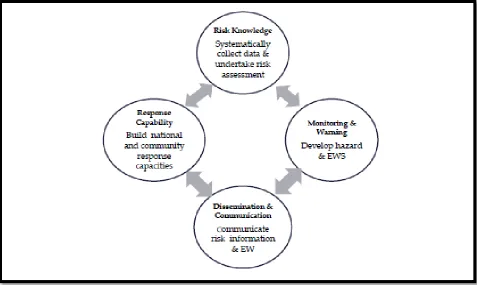
[image:33.612.79.489.147.416.2]preparedness must be constant (Grasso, 2007; Wiltshire, 2006). However, UN (2006) states that a complete and effective EWS must comprise four inter-related elements shown in Figure 2-1.
Figure 2- 1: Four elements of community-centred EWS (UN, 2006)
Figure 2-1 shows that risk knowledge is important for monitoring and warning, as well as for dissemination and communication. While these four elements are depicted in Figure 2-1 as elements with specific components, these are also interrelated elements as shown by the flow of arrows indicting the interactions between the four elements required for community-centred EWS. According to Haddow, Bullock and Coppola (2011), the knowledge of risk determines the data that will be collected and risk assessment for vulnerable communities. The risk knowledge also informs the response capability required for responding to the natural hazard when it happens and to determine required resources to protect communities. Therefore, EWS are well recognized as a critical, life-saving tool against hazards such as floods, droughts, storms and bushfires (Abdulla, 2013). The existence of EWS, containing such data, will reduce the loss of life and economic losses by allowing alerts to be made and preparations to take place (WMO, 2013).
Risk Knowledge
(Data collection & Risk Assessment)
Monitoring and
Warning
(Hazard Monitoring and Warning Generation)
Warning
Dissemination and
Communication
(Communicate Risk Information and Disseminate Early Warning)Response Capability
(Build Community Response Capability by preparednes and17
At the World Conference on Disaster Reduction in 2005, in Hyogo, Japan (UNISDR, 2005), 168 governments, which were supported by numerous organizations, adopted the Hyogo Framework (HFA) for Action 2005-2015 (Figure 2-2). The Hyogo Framework sets out a number of strategic goals, priority areas of action and institutional responsibilities, which can lead to significantly reducing disaster risks. It recognises the need to develop EWS capabilities and improve preparedness and responses, as part of a comprehensive approach involving the integration of disaster risk reduction into development planning and practices and by building a culture of prevention and capacities for resilience (UN, 2007). This has been associated with the development of EWS and emergency preparedness and planning at national to local levels (UN, 2009). Also, the World Conference in Hyogo emphasizes the importance of follow-up EWS measures and approaches developed by different countries in collaboration with communities during the period 2005–2015, due to the substantial reduction of disaster, loss of lives and of the social, economic and environmental assets of communities and countries.
18
Figure 2- 2: Building the Resilience of Nations and Communities to Disasters (UNISDR, 2005)
HFA as seen in Figure 2-2 also provides clues to the main impediments that exist in EWS development that need to be tackled in order to fill existing gaps. For example, the most frequently reported impediment to EWS development is lack of funding, followed by inadequate coordination between local, national, and regional actors, lack of human resources and of EWS infrastructure (Grasso, 2014). Thus, it is very important that EWS be integrated into policies for disaster resilience. Clearly, natural disasters can in no way be prevented; however, a community and environment can be destroyed by them and thus, governments have a responsibility to create policies that will involve at least attempts to reduce the risks of disaster to communities (UNEP, 2010).
19
preparedness for EWS to be effective (Haddow et al., 2011). Moreover, people will need to be more aware of potential risks and the warning systems must increase support of forecasts of impacts so that those at risk can better comprehend the consequences and actions that might need to be taken (Rogers and Tsirkunov, 2010). However, Regester and Larkin (2008) emphasized that risk perception can potentially influence the actions people take to reduce the impacts of hazards, while it can also influence their decision not to act because the hazard is not considered a major risk. This argument indicate that it is not the strong linkages between the four elements that is the critical factor for effective community-centered EWS, but how community and all stakeholders perceive and define what risk is to them.
Consequently, while the weakness or failure in any element or linkage could result in failure of the whole system (Steinberg and Steinberg, 2006), it also means that risk perception can completely influence whether people are taking action to avoid or reduce the impacts of natural disasters (McEntire and Myers, 2004). For instance, accurate warnings will have little or no impact if people are not prepared to take actions, or do not consider the issue as risk or if the alerts are not properly disseminated (Grasso, 2007). Ultimately, as a system, EWS should be judged not by the quality of its individual components, but by its effectiveness at achieving the desired result, which can only be attained if the elements and the linkages are well-understood, well-designed and well-operated (Basher, 2006). However, all this can be challenging to achieve when there is limited risk knowledge or lack of public education to educate people about risk impacts in order to improve their risk perception (Kapucu, 2006). In addition to these factors, Kapucu (2006) included that inadequate warning dissemination and without defining the appropriate method of communicating EWS between all stakeholders can also hinder the effectiveness of EWS especially the community-centred EWS.
Therefore, the occurrence of disasters which lacks the existence of effective EWS will lead to severe impact on the community at risk since natural disasters do not happen in isolation (Jacks
et al., 2010). Recognition of this cause and effect on a global and regional scale is stirring
20
effective EWS. Global efforts and regional measures across the world have emphasised the importance of ensuring that the four elements are interrelated as seen in Figure 2-1, and should be applied as such for community-cantered EWS to be effective. However, the argument by Regester and Larkin (2008) brought to light the role of risk perception in determining whether stakeholders or communities will cooperate to ensure that the four-elements of EWS will be effective. This means that if a community at risk do not consider or believe themselves to be at risk of the impact of any natural hazard, it will affected the ability of emergency agencies to collect data and conduct effective risk assessment, thereby influencing risk knowledge. The interrelated nature of the four elements also means that monitoring and warning will be wrong or difficult and so will be warning dissemination and communication as well as response capability. To further understand the relevance of this argument and the gaps in the existing theoretical explanation of community-centred EWS, the next section examines various models of EWS.
2.2.1 Models and Application of EWS
21
Figure 2- 3: The Four Elements for an Effective People-Centred EWS Framework (IEWP, 2006).
While this model in Figure 2-3 reaffirms the importance of EWS in Figure 2-1, it also fails to make provision for community engagement in order to educate the community at risk about imminent dangers and to improve their perception about risk. The importance of risk perception, and identification have been emphasized by Regester and Larkin (2008) as key to undertaking effective risk assessment for potential, or foreseen risk. Risk perception and identification are vital to effective risk mitigation, reduction and management (Regester and Larkin, 2008). While this model in Figure 2-3 is an improvement on Figure 2-1 by including interactive arrows, it also lacks the provision for educating and ensuring that community at risk have the appropriate perception of risks. This shows the gap in the existing models and theories of EWS, which this research will examine so that the research outcomes can contribute to knowledge.
22
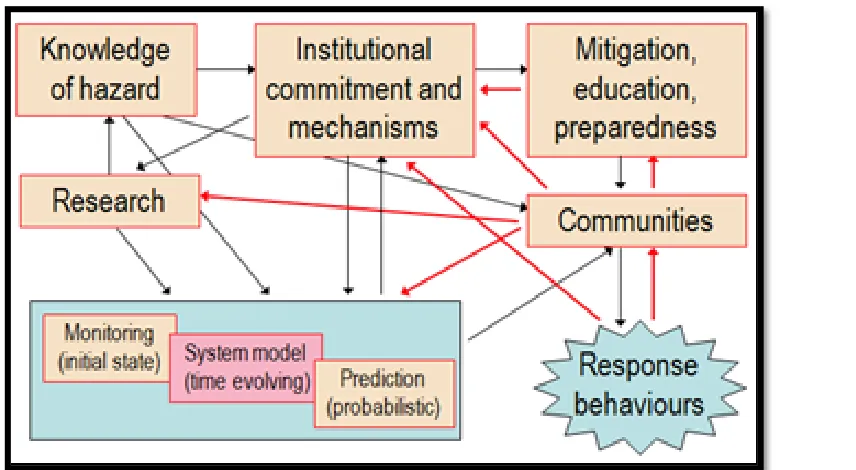
[image:39.612.109.537.172.407.2]being part of the system, and most notably, the political-administrative supporting entities, the district and community actors, and the research community. The second feature is the explicit inclusion of multiple linkages and feedback paths, particularly from those populations affected through their organizations to the political and technical actors (Villangran de Leon, 2012).
Figure 2- 4: Integrated EWS (Basher, 2006)
23
Another model of EWS was proposed by Paton (2008), which suggested that quantitative measurements should be used as incentive structures for a sustainable EWS including indicators of governance and institutions, community knowledge, and economic and human development all extracted from WMO (2006) KAM database. It also suggests qualitative measures for examining micro level EWS using the concepts of efficiency, effectiveness, equity and legitimacy (Villangran de Leon, 2012). However, these models are prone to be insufficient if the modes, medium and methods of dissemination are not determined or included. Thus the section is devoted to discussion on the importance of EWS dissemination.
2.2.2 EWS Dissemination and Communication
Existing theories and models in EWS indicates dissemination and communication as a vital element of EWS, especially for effective community-centred EWS. While this is an important aspect of EWS, the element only focused on the ranges of different methods of disseminating warning. For example, Table 2-1 shows the range of different methods used for disseminating warning.
Table 2- 1: Methods of disseminating warnings (Tang and Zou 2009)
No Issuing methods Receivers
1 File Transmission Protocol (FTP) The public
2 BGU transmitting system Community supervisors
3 Cell-Phone Dissemination System Municipal decision makers, various government agencies, residential community managers, basic response units managers (i.e. school, hospital, park, construction sites) and the public
4 FM Subsidiary Communication Authorization (SCA)
Special users
5 Radio Broadcasting The public
6 Public Electronic Billboards The public
7 Mobile Media TV Passengers in taxis, buses and subway
8 Warning Calls basic response units office
24
As observed, many of these warning issuing methods are very technology based and only focused on disseminating warnings without consideration of inter and intra communication between community and emergency organisations. Furthermore, warning during emergency can be problematic due to the impact and interruption caused by the disasters and especially in many developing countries where infrastructures are fragile. Therefore, overreliance on technology for communicating emergency warning, informing and educating can be limited, which means some of these methods can be limited in their use. Despite the advance in technology for the dissemination of the message, the lack of understanding of the warning and the lack of knowledge of how to properly react remain some of the biggest shortcomings of the system (UN, 2006; WMO, 2006). While this reflect the need for including human factor as means of communicating risk mitigation measures and EWS in general (Glantz, 2004), the issuing methods and dissemination of EWS fail to outline communication models or theories for effective EWS.
25
Figure 2- 5: SCCT Types by responsibilities (Coombs, 2007)
This communication theory shows that communication pre, during and post crisis is a shared responsibility between the victims and the organisation responsible for safety (Coombs, 2007). It also shows the classification of crisis and who has minimal and low responsibility for communication. As seen in Figure 2.5, the crises which will affect victims the most such as natural disasters, violence etc. shows that victims will have minimal responsibility for communication. Hence emphasising that the stronger responsibility for communicating risks, informing and warning is the responsibility of the emergency organisations (WMO, 2006). In addition to this, preven table crisis also shows that the emergency organisations have stronger crisis responsibility for communication (Fearn-Banks, 2007).
According to Coombs (2007), understanding these responsibilities and the cluster of impacts and crisis types are crucial to determining the communication method and medium for disseminating preventive and response strategies for managing the crisis. Although the SCCT was developing from an organisational perspective, it relates to the public communication timeline recommended as standard guidelines by the CCA (2004) for public awareness, public warning and informing and advising the public for emergencies. Therefore, while the existing models and theories in EWS lacks communication theories which explains dissemination of warning messages, the SCCT theory can be adopted as theoretical explanations for communicating EWS between
•Natural Disasters •Rumours
•Violence •Malevolence
Victims Crises
: Minimal
Crisis Responsibility
•Challenges
•Technical error accidents •Technical error harm
Accident Crises
: Low Crisis
Responsibility
•Human-error accidents •Human-error harm
•Organisational misdeed which puts stakeholders at risk
Preventable Crises
: Strong
26
stakeholders and organisations responsible for EWS. Thus, while this communication theory can potentially fill the gap in the current theories, models and explanations for EWS, the effectiveness and sustainability will be examined against the concepts of EWS.
2.2.3 Evaluation of EWS Elements and Concepts
The examination of EWS models, theories and application in this section have helped to identify four main elements of EWS. These elements being risk knowledge, monitoring and warning, warning dissemination and communication and response capability have been examined from critically from risk management perspective. It was discovered that an essential element such as communication responsibility were both missing from the main EWS models recommended by the UN and Basher (2006). Although the model by Basher (2006) included the community at risk and the need for collaborative efforts of stakeholders in influencing the response behaviors of community at risk, the model failed to explain how knowledge or hazard, research, institutional commitments and mechanism, education and mitigation can be communicated to community at risk. This led to examining the communication methods used in EWS across the world. An examination of this indicated that communication methods were too technology based, without much consideration of developing countries where infrastructures might be insufficient, because of the impacts of disasters and other factors.
27
EWS the role of the population is fundamental to developing and sustaining warning capabilities, especially for the mitigation and preparedness components (Wisner, 2011 and Basher, 2006). Using this explanation, society can be represented graphically by a pyramid, the base of which represents sustainable development as shown in Figure 2-6. This Figure provides a graphic representation of how governments tend to look at EWS of all kinds, including those for climate, water and weather. The pyramid suggests that governments view societies as stable entities resting on firm foundations (Glantz, 2009). In fact, the reality of EWS in society can be portrayed graphically as a pyramid resting on its apex in a position of unstable equilibrium, as in pyramid (b). Societies and the government that lead them are actually dependent on a wide array of EWS (Glantz, 2009).
Figure 2- 6: Traditional Perspective and Actual Importance of EWS in Society (Glantz, 2009)
28
monitoring and warning and response capability. Furthermore, Figure 2-6 emphasises the importance of sustainability of EWS in relation to development and the need to employ stable approach and elements for EWS.
However, the challenges of EWS such as accuracy of warning make it difficult to provide information that can contribute to stable and sustainable concept of EWS. According to McEntire and Myers (2004), ability to consistently provide stable EWS with consideration of all hazards can be challenging. For example, 75 per cent of all tsunami warnings in the Pacific Ocean are false alarms, making it very difficult to maintain the credibility of the warning systems (Gupta and Sharma, 2006). As a result of the increase in information and communication technologies (ICT) and the difficulty in ensuring that only one, authoritative voice issues warnings, further increases the risk of false alarms (UN, 2009). This suggests that for EWS to be effective and sustainable it must involve the community at risks, adopts the appropriate communication method and responsibility.
29
2.3 Evaluation of Best Practice in EWS
The critical evaluation of EWS elements, models and application have helped to identify existing models, concepts and theories in EWS. It has also helped to examine current practice of EWS and identify gaps which can potentially hinder the successful engagement of community at risk in EWS deployment and implementation. To better understand the role these gaps play and the ability of the four main elements of EWS to ensure disaster resilience, best practice in EWS across the world will be evaluated in this section and later cross examined with the existing deployment of EWS in the UAE. In this Section, five EWS will be evaluated and essential features which enable its successful deployment and implementation will be identified. There are many countries in different parts of the world exposed to various natural disasters. Some of these countries have developed EWS peculiar to the scenario they face, the available resources and capability focused on the community at risk.
2.3.1 Tropical EWS
A country such as Cuba is known for its comprehensive EWS called Tropical EWS, developed for coping with natural disasters which have saved thousands of lives, even with short notice about imminent dangers (Aguirre, 2005). Cuba´s EWS focus on monitoring both meteorological and hydrological threats as a result of significant environmental hazards arising from tropical cyclones and other natural events. The key component centers on the technological capacity of the meteorological service to predict likely environmental hazards and provide specialized alerts to civil defense agencies and comprehensible information to the population (Torres and Puig, 2012).
30
2012). To ensure that this EWS is effective, the community takes part in improving and protecting the environment, while UNESCO-associated schools in Cuba are involved in creating risk maps and evacuation plans for disaster prevention which the community themselves understand (Selby, 2012).
Specific subjects in the school curriculum are dedicated to teaching and dealing with the topics of disaster and risk management (Hasegawa et al. 2012). This EWS model and application shows collaboration efforts between the government and the community showing that the communities have adequate risk knowledge and perception about the danger they are exposed to. It also demonstrate the ability of all stakeholders to engage in monitoring and warning, dissemination and communication and ensure that evacuation is carried out when needed, showing understanding and joint involvement in response capability. Although some of these elements are present in the model recommended by the UN and Basher (2006), the tropical EWS also engages the active participation of community at risk through the schools to participate in warning and monitoring.
2.3.2 EWS in preparedness program
31
Most people prefer microphones as the method for dissemination as against technology gadgets (Habib et al., 2012). The source for communicating warning message could be a school teacher or religious leader (Imam) or Union Parishad member who is given the responsibility to inform people at school, college or mosques or bazaars (Fakhruddin, 2014). Evidently, this EWS model have adopted a community-centered approach, with shared responsibility for communicating warning, monitoring and dissemination and communicating danger of natural hazards.
Figure 2- 7: Institutional collaboration for piloting the end-to-end generation, feedback and application of flood forecasts application from national to the community level (Fakhruddin, 2014)
32
Table 2- 2: Organizational roles and responsibilities of each organization (Fakhruddin, 2014)
Organization Activities
RIMES-CFAN Generation of 1-10 day discharge in three major ricer stations (Ganges
Brahmaputra and Meghna) using hydrological model.
BMD Support local observed rainfall as well as ECMWF rainfall forecasts.
FFWC Generation of 1-10 day flood forecasts in 18 locations using RIMES-CFAN model
and MIKE-11 hydrodynamic model.
DDW Interpret forecasts and disseminate to community.
DAE Interpret and translate flood forecasts to agricultural outlook and send to local
representatives and farmers groups.
End Users Union Disaster Management Committee and local volunteers who are aware of
the local community people.
Due to this EWS and model involving community participation, Bangladesh has significantly improved the functioning of its EWS as a result of substantial loss of human life from tropical cyclones (Habib et al., 2012). A pivotal component is the creation and development of the Cyclone Preparedness Programme (CPP) in conjunction with international agencies such as the United Nations, the Bangladesh Red Crescent Society and the International Red Cross (Habib et al., 2012).
33
warning procedures (Habibet al., 2012). This has greatly helped to reduce the impact of disasters in the country, although its sustainability is yet to be examined.
2.3.3 Vigilance EWS
Disasters might not be prominent in Europe like in Asia, but some countries do suffer from the impacts of natural hazards such as earthquakes, flooding etc. France was compelled to improve its EWS in order to provide the citizens with better information following significant impacts from the storms in 1999. This decision can be seen to mirror the fact stated earlier that communication and shared responsibility for ensuring that information is understood is an important aspect of effective EWS, not just dissemination of warning and monitoring. For example, the number of actors and people involved in EWS in France has grown rapidly over the last 30 years (Wenzel and Zschau, 2014). The core focus of the EWS used in France is the policy which emphasises that the mechanism for communicating different levels of hazard risks and weather must be done in a common language (Borretti, 2012).
34
2.3.4 Multi-hazard EWS
Countries that are exposed to several hazards as seen in France often device a generic EWS which can be used to communicate warning and danger in order to avoid confusion. For example, China, United States (US), and Japan all have long history for experiencing natural disasters (Xu et al., 2014; Keeney et al., 2012; Hasegawa et al., 2012). To this end, China developed a Multi-Hazard EWS (MHEWS) in reaction to improve response to natural disasters. A significant component of MHEWS is the cooperation and coordination among multiple agencies at all levels in order to build regional capabilities and jointly decide to provide an optimal joint response to hazards (Tang et al., 2012). The system integrates diverse technologies to provide an advanced early warning hazard process and enables multiple agencies including emergency response and rescue to communicate and coordinate across a common communication platform. The MHEWS focuses on response capabilities and communication mechanisms. For example, the “4+1” technical platforms comprise: Multi-Hazard Detection and Monitoring; Forecast and Warning Information Generation; Multi-Agency Coordination and Cooperation Support; Dissemination and User Application Platforms, and a Multi-Hazard Information database. This is shown in Figure 2-8.
Figure 2- 8: Readiness Levels Communication Flow (Tang et al., 2012)
Weather & Climate Hazard
EWS (SMB) Weather and Climate
Related Hazards Other Hazards
Phone Media Internet Light
Governmental Agencies
Schools, Enterprises, Factories, Hospitals
Housing Communities
Villagers,