© 2016, IRJET | Impact Factor value: 4.45 | ISO 9001:2008 Certified Journal
| Page 117
LOW COMPLEX PAPR REDUCTION BY ALTERNATIVE SIGNAL METHOD
And ITERATIVE COMPANDING AND FILTERING METHOD IN
OFDM/OQAM MODEL
Y.Buela Pramodini
1, P.Subha Sree
21
PG scholar, Department of ECE, SRKIT, Vijayawada, India
2
Associate Professor, Department of ECE, SRKIT, Vijayawada, India
---***---Abstract -
An Orthogonal Frequency Division Multiplexing
(OFDM) is an attractive multi carrier modulation technique for wireless transmission systems. OFDM has many advantages immunity to impulse interference, robustness to channel fading, high spectral density, resistance to multipath, much lower computational complexity. The major drawback of OFDM is signal suffers a high Peak to Average Power Ratio (PAPR), a high PAPR easily makes the signal peaks move into the non-linear region of the RF power amplifier which causes signal distortion. The alternative-signal (AS) method, which directly leads to the independent AS (AS-I) and joint AS (AS-J) algorithms, is employed to reduce the PAPR of the OFDM/OQAM signal. The AS-I algorithm reduces the PAPR symbol by symbol with low complexity, whereas the AS-J algorithm applies optimal joint PAPR reduction among M OFDM/OQAM symbols with much higher complexity. To balance the performance and the computation complexity, we propose a sequential optimization procedure, which is denoted AS-S, which achieves a desired compromise between performance and complexity. This method is compared with Iterative Companding and Filtering(ICF) technique. Simulation results show better results over traditional state of art methods.
Key Words:
OFDM, OQAM, PAPR, AS-I, AS-J,ICF1. INTRODUCTION
OFDM, which is also popularly known as simultaneous MFSK, has been widely implemented in high-speed digital communications in delay dispersive environments. Basically it is a Multi-Carrier Modulation (MCM) technique. OFDM was first proposed by Chang, (1966). Chang proposed the principle of transmitting messages simultaneously over multiple carriers in a linear band-limited channel without ISI and ICI. The initial version of OFDM employed a large number of oscillators and coherent demodulators. In 1971,
DFT was applied to the modulation and demodulation process by Weinstein and Ebert, (1971).
Recently, the demand for multimedia data services has grown drastically which drive us in the age of 4th generation wireless communication system. This requirement of multimedia data service where user are in large numbers and with bounded spectrum, modern digital wireless communication system adopted technologies which are bandwidth efficient and robust to multipath channel environment known as multi-carrier communication system. The modern digital multicarrier wireless communication system provide high speed data rate at minimum cost for many users as well as with high reliability. In single carrier system, single carrier occupies the entire communication bandwidth but in multicarrier system the available communication bandwidth is divided by many sub-carriers. So that each sub-carrier has smaller bandwidth as compare to the bandwidth of the single carrier system. These tremendous features of multicarrier technique attract us to study Orthogonal Frequency Division Multiplexing (OFDM). OFDM forms basis for all 4G wireless communication systems due to its huge capacity in terms of number of subcarriers, high data rate in excess of 100 Mbps and ubiquitous coverage with high mobility.
© 2016, IRJET | Impact Factor value: 4.45 | ISO 9001:2008 Certified Journal
| Page 118
optimization procedure over time with the computationcomplexity linearly increasing with M. Simulation results will be provided to compare the performance among the three algorithms
2. RELATED DATA
2.1 Introduction to OFDM
Orthogonal frequency division multiplexing (OFDM) is a widely used modulation and multiplexing technology, which has become the basis of many telecommunications standards including wireless local area networks (LANs), digital terrestrial television (DTT) and digital radio broadcasting in much of the world. In the past, as well as in the present, the OFDM is referred in the literature as carrier, Multi-tone and Fourier Transform. The OFDM concept is based on spreading the data to be transmitted over a large number of carriers, each being modulated at a low rate. The carriers are made orthogonal to each other by appropriately choosing the frequency spacing between them.
A multicarrier system, such as FDM divides the total available bandwidth in the spectrum into sub-bands for multiple carriers to transmit in parallel. It combines a large number of low data rate carriers to construct a composite high data rate communication system. Orthogonality gives the carriers a valid reason to be closely spaced with overlapping without ICI. With the increase of communications technology, the demand for higher data rate services such as multimedia, voice, and data over both wired and wireless links is also increased. New modulation schemes are required to transfer the large amount of data which existing techniques cannot support. These techniques must be able to provide high data rate, allowable Bit Error Rate (BER), and maximum delay. Orthogonal Frequency Division Multiplexing (OFDM) is one of them. OFDM has been used for Digital Audio Broadcasting (DAB) and Digital Video Broadcasting (DVB) in Europe and for Asymmetric Digital Subscriber Line (ADSL) high data rate wired links. OFDM has also been standardized as the physical layer for the wireless networking standard HIPERLAN2 in Europe and as the IEEE 802.11a, g standard in the US, promising raw data rates of between 6 and 54Mbps.
2.1 Introduction to PAPR
Large envelope fluctuation in OFDM signal is one of the major drawbacks of OFDM. Such fluctuations create difficulties because practical communication systems are peak power limited. Thus, envelope peaks require a system to accommodate an instantaneous signal power that is larger
than the signal average power, necessitating either low operating power efficiencies or power amplifier (PA) saturation. In order to amplify the OFDM signal with large envelope fluctuations, PAs with large linear range are required, which makes it very expensive. If PA has limited linear range then its operation in non linear mode introduces out of band radiation and in band distortion. It is also necessary to have D/A and A/D converters with large dynamic range to convert discrete time OFDM signal to analog signal and vice versa.
PAPR is generally used to characterize the envelope fluctuation of the OFDM signal and it is defined as the ratio of the maximum instantaneous power to its average power. In addition to this, OFDM system requires tight frequency synchronization in comparison to single carrier systems, because in OFDM, the subcarriers are narrowband. Therefore, it is sensitive to a small frequency offset between the transmitted and the received signal. The frequency offset may arise due to Doppler Effect or due to mismatch between transmitter and receiver local oscillator frequencies. The carrier frequency offset (CFO) disturbs the orthogonality between the subcarriers, and therefore the signal on any particular subcarrier will not remain independent of the remaining subcarriers. This phenomenon is known as inter-carrier interference (ICI), which is a big challenge for error-free demodulation and detection of OFDM symbols.
3. PAPR REDUCTION TECHNIQUES
Many methods have been suggested to reduce PAPR over the year. PAPR reduction techniques vary according to the requirement of the system and are dependent on various factors such as PAPR Spectral efficiency, reduction capacity, increase in transmit signal power, loss in data rate, complexity of computation and increase in the bit-error rate (BER) at the receiver end are various factors which are taken into account before adopting a PAPR reduction technique of the system. Many techniques have been suggested for PAPR reduction, with different levels of success and complexity. Lot of techniques presents for the reduction of the PAPR and these techniques are divided into two groups - signal scrambling techniques and signal distortion techniques which are given below:
3.1 Signal Scrambling Techniques
Block Coding Techniques
Block Coding Scheme with Error Correction
© 2016, IRJET | Impact Factor value: 4.45 | ISO 9001:2008 Certified Journal
| Page 119
Partial Transmit Sequence (PTS)
Interleaving Technique
Tone Reservation (TR)
Tone Injection (TI)3.2 Signal Distortion Techniques
Peak Windowing
Envelope Scaling
Peak Reduction Carrier
Clipping and Filtering
4. PROPOSED METHOD
4.1 AS-I Algorithm
Inspired by the SLM method, the AS-I algorithm reduces the PAPR by optimally choosing one phase rotation vector from a given set for each OFDM/OQAM symbol. Over different OFDM/OQAM symbols, the phase rotation vectors might be different. Denote the set of candidate phase rotation vectors as
(9)
Where U is the size of B, and bu, 0 ≤ u ≤ U − 1, is the uth phase
rotation vector, which is defined as
(10)
With , i = 0, 1, . . . , W − 1 [10]. In this paper, we adopt W = 2 for simplicity. For convenience, denote as the phase rotation vector used by the mth OFDM/OQAM symbol ,. Usually, B is assumed to be known at both the transmitter and the receiver [10], [11].
After is generated as in (5), AS-I generates by multiplying the corresponding element in the selected phase rotation vector, i.e.,
(11)
Then, the new OFDM/OQAM symbol is expressed as
(12)
Thus, the PAPR reduction problem with the AS-I algorithm for the mth OFDM/OQAM symbol , m = 0, 1. . . M − 1, can be formulated as
Note that we adopt the peak power as the design metric throughout this paper. This is because the PAPR reduction should come from the peak power reduction rather than the average power increasing. Given the finite dimensionality of B, exhaustive search is adopted here to search the optimal . For each , the complexity of searching the optimal bm,u is on the order of O(U), i.e., for each , we take U searches. Thus, the complexity for all , m = 0, 1, . . . , M − 1, is on the order of O(UM).
Remark 1: After obtaining the PAPR-reduced OFDM/OQAM signal , the transmitter should send side information to the receiver about which phase rotation vector is selected for , m = 0, 1, . . . , M − 1. Obviously, log2(U) bits are needed for such side Information transmission of each OFDM/OQAM symbol and, thus, M log2(U) bits for all the M symbols in total. At the receiver, if the side information is correctly received, the original data matrix X can be thus successfully recovered. We will illustrate the PAPR reduction performance achieved by the AS-I algorithm in Section IV.
0-th Block
1st
block
M-th Bloc
k
(
© 2016, IRJET | Impact Factor value: 4.45 | ISO 9001:2008 Certified Journal
| Page 120
Fig 1: Structure of the AS-S method
As we will discussed later, the AS-I algorithm does not perform well enough since it ignores the structure of the OFDM/OQAM signals, i.e., the correlation among adjacent OFDM/OQAM symbols, whereas reducing the PAPR of independently is strictly suboptimal. To improve the PAPR reduction performance, the AS-J algorithm is proposed in the following to fully explore the inter symbol correlations
4.2 AS-J Algorithm
For each OFDM/OQAM symbol , the AS-J algorithm first chooses one phase rotation vector from the given B; then, it applies a joint PAPR reduction scheme among all the M OFDM/OQAM symbols. Similarly, after s ˜m k (t) is generated, as we did in the AS-I algorithm, the PAPR reduction problem could be formulated as
subject to:
It is easy to check that the complexity of exhaustive searching to solve Problem (P2) are on the order of O(U M), which makes the exhaustive search method impractical. Similarly, the number of bits for the side information is equal to M log2(U). It is earlier shown that the AS-I algorithm is simple but performs badly, whereas the AS-J algorithm performs well but bears high complexity. To balance the PAPR reduction performance and the complexity, the AS-S algorithm is proposed in the following.
C.
AS-S Algorithm
The main idea of the AS-S algorithm is shown in Fig. 3, which shows that the AS-S algorithm adopts a sequential optimization procedure. In the mth block, by taking into account the previous OFDM/OQAM symbols, i.e., , , . . . , , we reduce the peak power of . A detailed illustration of the proposed algorithm is described as follows.
In the zeroth block, we multiply by different phase rotation vectors and choose the one with the minimum peak power, which is denoted as . Then, is sent to the first block to solve the following problem
(15)
The optimal phase rotation vector is denoted as , and the new generated symbol is cast as
(16)
Next, and are both sent to the second block to calculate the new symbol . We repeat the given procedure until the (M − 1)th block. Thus, AS-S is a sequential
optimization procedure. Specifically, in the mth block, m = 1, 2. . . M − 1, the optimization problem could be cast as follows:
(17)
Note that Γ is a key parameter that significantly affects the PAPR reduction performance and will be discussed in Remark 2. In Problem (P3), the search complexity for each symbol is on the order of O(U), and the complexity for all the M symbols is on the order of O(UM). Similarly, the number of bits to transmit the side information is also equal to M log2 (U).
Remark 2: We plot the amplitudes of h (t − mT) and in Fig. 4, where the parameters of the prototype filter are the same as those in [2], [4], and [5]. It can be seen that the large-amplitude samples of h(t − mT ) are located within {(m + K/2 − 1/2)T ≤ t ≤ (m + K/2 + 1/2)T }. For h(t − mT − T/2), its large-amplitude samples are located within {(m + K/2)T ≤ t ≤ (m + K/2 + 1)T }. According to (5) and (6), we could obtain that the large-amplitude samples of are located within {(m + K/2 − 1/2)T ≤ t ≤ (m + K/2 + 1)T }. Intuitively, to obtain a good PAPR reduction performance, the large-amplitude samples of should be included in the optimization duration {(m + 1)T ≤ t ≤ (m + Γ)T } in Problem (P3), i.e., Γ should satisfy Γ ≥ K/2 + 1. Furthermore, since only spans over {mT ≤ t ≤ (m + K + 1/2)T }, it follows that Γ ≤ (K + 1/2). Thus, we conclude that K/2 + 1 ≤ Γ ≤ (K + 1/2) is a good choice.
© 2016, IRJET | Impact Factor value: 4.45 | ISO 9001:2008 Certified Journal
| Page 121
Step 1: Initialization: m = 1. Multiply ) by different phaserotation vectors and denote the one with the minimum peak power as . Then, is sent to the first block
Step 2: In the mth block, solve Problem (P3), and the new
symbol is denoted . Send ., ., . . . , .
to the next block.
Step 3: Set m = m + 1, if m ≤ M − 1, go to 2); otherwise,
calculate and output the value
4.3 Iterative Companding Method
ICTF (Iterative companding transform and filtering) technique is deployed at transmitter end for PAPR reduction. Over- sampled Inverse IFFT operation is used to convert the complex vector in accurate manner. Here two constants S1 and S2 are used to switch the single and multiple operations in respective iteration level. If S1 value is set to 1, then OFDM symbol is given as input to ICTF at the iteration, M=1 and these iterations are processed based on symbol-by-symbol process. In case, if both S1 and S 2 are set to 2, then in that stage both companding and ICTF are used for the same ODFM symbol. In last iteration both constants values are set to 1 again to get the output as
respectively. Assume and
represented the frequency-domain OFDM symbol at mth
iterative level (before and after filtering process).
[image:5.595.343.516.79.230.2]5. RESULTS
Figure 2: PAPR performance analysis proposed approaches.
[image:5.595.354.512.294.421.2]Figure 3: PAPR performance analysis proposed approaches under different ‘U’ values
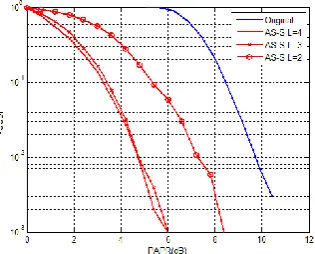
[image:5.595.357.509.488.611.2]Figure 4: PAPR performance analysis of ‘AS-S’ under different ‘L’ values
Figure 5: PAPR performance analysis of different methods including an extension of Iterative clipping transform
Analysis:
[image:5.595.89.233.524.637.2]© 2016, IRJET | Impact Factor value: 4.45 | ISO 9001:2008 Certified Journal
| Page 122
As an improvement task this method is compared against theIterative clipping transform and the results are tabulated in figure 5. It is found that the Iterative transform is outperforming than AS-I, AS-S methods but fall short of 1.2dB than AS-j method.
6. CONCLUSION
The demand for high data rate wireless communication has been increasing drastically over the last decade. One way to transmit this high data rate information is to employ well known conventional single carrier systems. Since the transmission bandwidth is much larger than the coherence bandwidth of the channel, highly complex equalizers are needed at the receiver for accurately recovering the transmitted information. The current implementations of OFDM do not fully exploit the capabilities of OFDM. There are still several avenues which can be explored to reduce the peak-to power ratio (PAPR) of OFDM signal.