Research Article
CODEN(USA) : JCPRC5
ISSN : 0975-7384
148
Dissolution Method Development and Validation for Tablet Dosage form of
Telmisartan Using UV Spectrophotometric Method
Manish Kumar
1*, Chinmoy Kumar
1, Shailendra Bhatt
1, A. Pandurangan
1, Vichitra
Kaushik
1, Anuj Malik
1and Vipin Saini
21M M College of Pharmacy, Mullana, Ambala-133207, Haryana, India 2M M University, Solan, Himachal Pradesh, India
_____________________________________________________________________________
ABSTRACT
In vitro drug dissolution is important parameters in pharmaceutical discipline used to be checked the releases of drug product in standard conditions. Telmisartan includes in the classification system BCS class (II). The angiotensin II receptors blocker of Telmisartan freely used for hypertension. The aim of this proposed method was developed and validated to the UV spectrophotometer for the routine quality control check of API containing 40 mg Telmisartan tablets. To investigate the most preferable dissolution method includes dissolution media as 0.1N HCl at 900ml, temperature as 37±0.5°C, rpm as 100, time 60 min. The absorbance maximum of Telmisartan was 296nm. The concentration range of the proposed method was 2-12µg/ml and linearity as r2= 0.999. The result of intraday & interday precision was 0.687% and 0.460% RSD respectively. The result of the percentage recoveries was 98.25%, 100.05%, and 99.75%. The effective dissolution method was developed and validated by UV spectrophotometer which used to be more applicable in various pharmaceutical industries.
Keywords:
Dissolution; Telmisartan; ICH guidelines; UV spectrophotometric method
_____________________________________________________________________________
INTRODUCTION
In pharmaceutical discipline the dissolution test is the vital quality control parameter for tablets dosage form. The functions of the dissolution test method to check the release of drug from the tablets dosage form and assure to the product quality. According to the biopharmaceutics, a grater dissolution approach is carried out due to the reality that the overall performance will indicate possible modifications in the drug product quality before in vivo dissolution test is affected [1-2].
The dissolution test method provides greater information about the uniform drug release of batch to batch and other brands. The dissolution test method proven that the tablet manufacturing process is reproducible, and clinically effective to ensure of the product quality. Finally, the dissolution test as regarded as one of the most important test parameter for solid pharmaceutical formulations [2-3].
149
[image:2.612.159.453.165.300.2]The angiotensin receptor blocker of Telmisartan is chemically known as 2-(4-{[4-methyl-6-(1-benzodiazol-1-yl] methyl} phenyl) benzoic acid (figure 1). The molecular formula & molecular weight of Telmisartan is C33H30N4O2 and 514.629. The angiotensin receptor blocker of telmisartan used to be prevention of high blood pressure. The dose of Telmisartan is 20, 40 and 80 mg available in pharmaceutical market and once daily. Telmisartan is a white solid component and slightly yellowish color. Telmisartan insoluble in water and the solubility depends on the pH (pH 3 to 9), Telmisartan sparingly soluble in strong acid (except insoluble in hydrochloric acid), and freely soluble in strong base [7-10].
Figure 1: Chemical Structure of Telmisartan
The aim of the existing work to develop the dissolution method using UV spectrophotometer and set up optimize dissolution conditions checking of Telmisartan in tablets. To validated of dissolution method accordance with ICH guidelines for specificity, precision, linearity and range, accuracy, and robustness.
MATERIALS AND METHODS
Instrument and Materials
The double beam UV visible spectrophotometer was used with (Shimadzu UV 1800) 1 cm matched quartz cells. The eight-station Electrolab EDT dissolution tester (model EDT-08Lx) was used in dissolution process in accordance with USP 27 general methods. A digital pH meter, model P101 (Hanna Instruments, Italy) was used to determine the pH of solutions. For deaeration of sample was used ultrasonicator (model U311).
Drug & Reagents
The gift sample of Telmisartan was obtained from Macleods Pharmaceuticals Ltd. in Baddi with 99.99% w/w assay value and was used without further purification. Telma tablet (Glenmark Pharmaceuticals Ltd.) containing 40 mg of Telmisartan was obtained from local market. All the chemicals and reagent was used in analytical grade. Freshly distilled water used throughout the study. Phosphate buffer pH 6.8 and 0.1 N HCl was prepared according to USP 27 [11].
Preparation of standard stock solution
The accurate weight of 10 mg Telmisartan was transferred in 100 ml volumetric flask and dissolve with 10 ml methanol. The volume was made up to the 100 ml with suitable media to get 100µg/ml solution.
Determination of Absorption maxima
The standard stock solution was individually diluted with both mediums and to prepare various dilutions in standard volumetric flasks (10ml). The various concentrations range of dilution was scanned in the wavelength range of 200-400 nm. The absorption maximum of Telmisartan in both medium was found at 296 nm. UV spectra of are
150
Figure 2 a) Absorbance maxima at 0.1N HCl b) Absorbance maxima at pH 6.8
Preparation of calibration curve
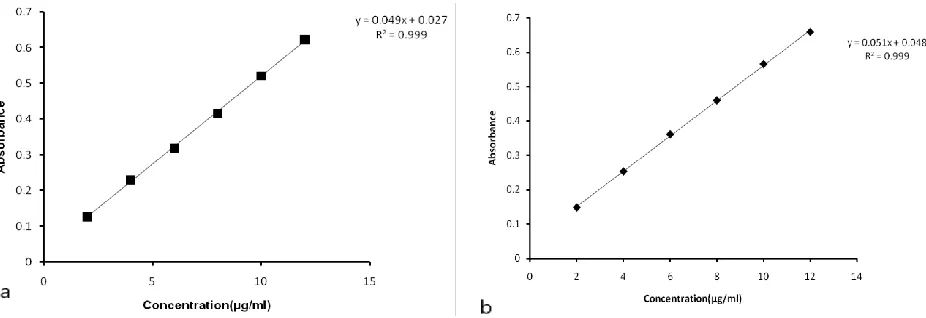
The calibration curve was found at 296 nm against both medium as a blank and the concentration range 2-12µg/ml. The absorbance versus the concentration of the drug in both medium was plotted and represented in figure 3a and 3b.
Figure 3a) Calibration curve of Telmisartan in phosphate buffer pH 6.8 and b) Calibration curve of Telmisartan in 0.1 N HCl.
Stability Studies
The stability study of both standard and sample was performed by UV spectrophotometer analyzed at room temperature .The percentage degradation found to be within 2% to use this solvent for dissolution studies.
Preparation of Stock and Working Sample Solution
40 mg API containing of one tablet was used in the experiment. The dissolution conditions for 30 minutes and the quantity of withdrawn sample was 10 ml filtered with filter paper. The sample solution diluted with both mediums and mark upto 10 ml. Finally, the sample solution was equal to the 5 µg/ml and recorded with spectrophotometer.
Optimization of dissolution test
[image:3.612.75.540.70.251.2] [image:3.612.75.538.350.509.2]151
Filter Evaluation
The function of the filter paper is removals of insoluble particles from sampled solution. The evaluation of filter paper must be needed to check the drug product absorb or not. Otherwise, the result may be altered [16].
Validation of dissolution method
The validation process performs to checking the method parameters to meet the acceptance criteria. The developmental proposed method was validated accordance with the International Conference on Harmonization (ICH) guidelines and validated parameters like as specificity, linearity, accuracy, precision, and robustness to demonstrate reproducibility and reliability [13-17].
Specificity
The placebo sample was carried out of dissolution medium. The USP type II paddle method was used for dissolution. The volume of the dissolution medium was 900ml and stirring speeds at 100 rpm and temperature at 37ºC for 60 minutes. The withdrawn solution was filtered with (Whatman No. 41) filter paper and examined by UV spectrophotometer.
Linearity and range
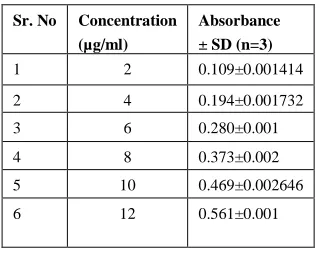
The standard stock solution of Telmisartan (100µg/ml) was diluted with both mediums and to get the linear concentrations range of 2-12µg/ml (figure 4).
Accuracy
According to the ICH guidelines, the addition of known quantity of API was added to the 900ml dissolution medium at different level such as 50%, 100%, and 150%. The amount of pure drug 20, 40, 60 mg was added along with each 40 mg Telmisartan tablet.
Precision
The validation parameter of precision was performed at different days as called intraday precision & interday precision using six samples of Telmisartan with proposed method. The repeatability result was assessed with % RSD value at 100% level.
[image:4.612.128.512.443.663.2]
152
Robustness
The robustness of the dissolution method was performed at same sample by changing of operating conditions such as paddle, instrument. The USP type II paddle apparatus was used in this method with six Telma tablets for 60 min and 900 ml of 0.1 N HCl as medium at 100 rpm.
RESULT AND DISCUSSION
Determination of Sink Conditions
The solubility of Telmisartan depends on the pH. The greater solubility was observed in 0.1 N HCl. The pH decreases as the solubility of Telmisartan increases[18]. The water solubility of Telmisartan was tested and the telmisartan poorly water soluble drug. The solubility of API and the excipients depends on the quality of water such as water source & water pH. Water is not used incidental medium and water dose not surrogate the gastric conditions [19]. The closeness to sink conditions describe as the proportion of saturation solubility to drug distribution(dose), represent as Cs/Cd ; the sink conditions of the dissolution medium takes place when the sufficient amount of drug dissolved in dissolution medium.
Stability Determination
The selection process of dissolution medium also depends on the profile of solution stability and drug solubility. The dissolution medium is not stable in room temperature at least 24 h that the medium must not be used [19-20].
Optimization of Dissolution Test
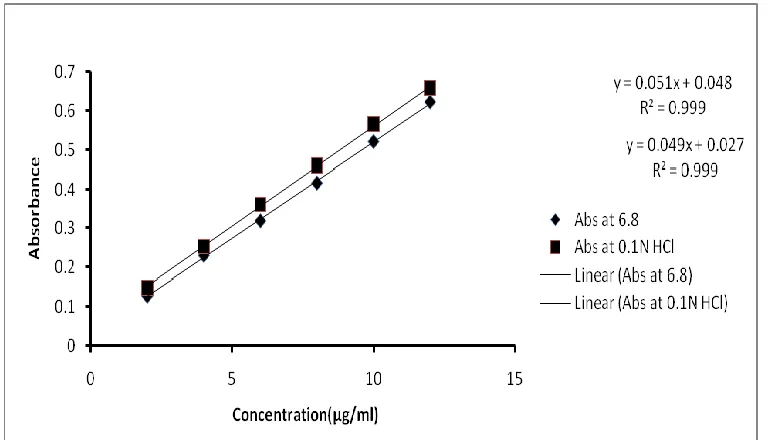
According to the solubility and stability profile of Telmisartan with the suitable sink conditions determines which is the best dissolution medium (phosphate buffer pH 8 or 0.1 N HCl). The dissolution study results are represented in Figures 5a and 5b.
Figure 5a) dissolution profile of Telma tablet in 0.1 N HCl and b) dissolution profile of Telma tablet in buffer pH 6.8
153
The solubility of Telmisartan was greater in 0.1N HCl than in phosphate buffer pH 6.8, the amount of Telmisartan dissolved in the pH 6.8 buffer was less than in the 0.1 N HCl.
The experimental dissolution method was performed in USP type II apparatus with Telma tablets. The volume of the dissolution medium was 900ml and stirring speeds of 50, 75 rpm. The drug release was less than 85% within 45 min; according to the USFDA that was not satisfactory result [21]. To set up 100 rpm and drug release was greater than 85% within 45 minutes. When 0.1 N HCl was used as the dissolution medium, the dissolution rate of Telmisartan was increased. The dissolution rate showed in 0.1N HCl for paddle apparatus at 100 rpm was greater and may have better capacity to differentiate the formulations [21-23]. In phosphate buffer pH 6.8, drug release was slower than in 0.1 N HCL. The suitable dissolution conditions for the Telmisartan tablet was 900 ml of 0.1 N HCl medium at 37 °C , temperature , USP type II apparatus with stirring speed of 100 rpm at 60 min and the dissolution rate is greater as represent as (Table 1).
Table1: Dissolution profile of Telmisartan tablet in 0.1N HCl
Sr. No Time(min) Avg. % Release
1 5 37.89
2 10 46.96
3 15 52.67
4 20 58.29
5 25 64.25
6 30 75.64
7 35 80.32
8 40 84.9
9 45 91.78
10 60 99.80
Dissolution method development
The following parameters were finalized: Medium: 0.1 N HCL
Volume: 900ml
Apparatus: USP type-II (Paddle) Rpm: 100
Temperature: 37±0.5ºC
Time point: within45 min the drug release is more than 85%
Validation of Dissolution Test
The optimize dissolution test conditions was selected and the developmental method was validated with ICH guidelines [15-18].
Specificity
The specificity of dissolution test method was performed in different conditions and the interference is not more than 2 %. According to ICH guidelines, the dissolution method is specific when the interference is not more than 2%. The proposed dissolution method was specific.
Linearity
154
Table 2: Dissolution test Linearity results for Telmisartan
Sr. No Concentration (µg/ml)
Absorbance ± SD (n=3)
1 2 0.109±0.001414
2 4 0.194±0.001732
3 6 0.280±0.001
4 8 0.373±0.002
5 10 0.469±0.002646
6 12 0.561±0.001
Accuracy
According to the ICH guidelines, the addition of known quantity of API was added to the 900ml dissolution medium at different level such as 50%, 100%, and 150% for the determination of % recovery. 3 determinations were performed in every level. The individual recovery and mean recovery was greater than 85%. As a result the accuracy of proposed method was developed and shows to the smart recovery values.
Table 3: Dissolution test Accuracy results for Telmisartan
Sr. No. % Concentration at specific levels Amount added Amount recovered Average % recovery ± SD
1 50% 20 19.65 98.25±0.157
2 100% 40 40.02 100.05±0.133
3 150% 60 59.86 99.76±0.188
*Each reading is mean ± SD (n = 3)
Precision
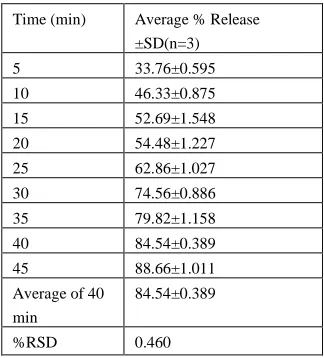
[image:7.612.232.381.505.683.2]The precision method was performed by preparations of six samples at different days as reported as (Table 4 & 5). The %RSD value was calculated.
Table 4: Intraday result for Telmisartan
Time (min) Average % Release ±SD (n=3)
5 34.65±0.854
10 47.23±0.486
15 52.05±1.02
20 56.56±1.02
25 63.75±0.879
30 75.13±0.773
35 81.45±0.775
40 86.60±0.595
45 89.96±1.76
Average at 40 min 86.60±0.595
155
Table 5: Interday results for Telmisartan
Time (min) Average % Release
±SD(n=3)
5 33.76±0.595
10 46.33±0.875
15 52.69±1.548
20 54.48±1.227
25 62.86±1.027
30 74.56±0.886
35 79.82±1.158
40 84.54±0.389
45 88.66±1.011
Average of 40 min
84.54±0.389
%RSD 0.460
Robustness
The robustness of the proposed dissolution method was performed by changing of instrument, laboratory and the analyst. The specified limit of 5% of RSD value represents the robustness of proposed method.
CONCLUSION
The proposed method was developed and validated by UV Spectrophotometric method for Telmisartan tablets. According to the ICH guidelines, the proposed method was validated. The suitable conditions of dissolution test for Telmisartan tablets (0.1N HCl, USP types II apparatus, speed 100 rpm at 60 min). The validated proposed method successfully applied to the quantification and quality control of Telmisartan in pharmaceutical tablets formulation.
REFERENCE
[1] LC Vaucher. Development and validation of a dissolution test for telithromycin in coated tablets. Quim. Nova.
2009, 32(5), 1–5.
[2] AP Kulkarni; N Shahnawaz; Zaheer Z; Dehghan M. H. G; Development and validation of a dissolution method for pioglitazone tablets; Dissolution Technol. 2012, 19(4), 36-45.
[3] Dressman J; Kramer J; Pharmaceutical dissolution testing. Taylor and Francis group, editors. Dissolution testing: Guidance for industry. New York: Marcel Dekker, 2005, 352-53.
[4] Kolatkar G; Zisman E; Pharmaceutical Compositions of Telmisartan. USA Patent US20070116759A1, filed in 22November 2005 and published in 24 May 2007.
[5] Oliveira E; Azevedo R; Bonfilio R; Oliveira D B; Ribeiro GP; Araujo MB; Dissoslution test optimization for meloxicam in the tablet pharmaceutical form. Braz. J. Pharm. Sci. 2009, 45(1), 67–73.
[6] Soni T; Nagda C; Gandhi T; Chotai N. P; Development of discriminating method for dissolution of aceclofenac marketed formulations. Dissolution Technol. 2008, 15(2), 31–35.
[7] Dressman JB; Amidon G. L; Reppas C; Shah VP; Dissolution Testing as a Prognostic Tool for Oral Drug Absorption: Immediate Release Dosage Forms; Pharm. Res; 1998, 15(1), 11–22
[8] Space JS; Opio AM; Nickerson B; Giang H; Dumont M; Berry M; Validation of a dissolution method with HPLC analysis for lasofoxifene tartrate low dose tablets; J. Pharm. Biomed. Anal; 2007, 44(5), 1064–1071.
[9] Bankey S; Tapadiya GG; Saboo SS; Bindaiya S; Deepti Jain; Khadbadi SS; Simultaneous Determination of Ramipril, Hydrochlorothizide and Telmisartan by Spectrophotometry. Inter J of Chem Tech Research. 2009, 1, 183-188.
[10] Zonghui Qin; Weifen Niu; Ron Tan. Spectrophotometric method for the determination of telmisartan with Congo red; Journal of Analytical Chemistry. 2009, 64, 449-454.
156
[12] Telmisartan available at http://www.drugbank.com/telmisartan[13] The United States Pharmacopeia and National Formulary USP 27–NF 24; the United States Pharmacopeial Convention, Inc.: Rockville, MD, 2007.
[14] Garcia CV; Paim CS; Steppe M; Schapoval EES. Development and validation of a dissolution test for rabeprazole sodium in coated tablets. J. Pharm. Biomed., Anal. 2006, 41(3), 833–837.
[15] International Conference on Harmonisation. Validation of Analytical Procedures: Text and Methodology, Q2(R1); ICH Harmonized Tripartite Guideline: Geneva, Switzerland, 2005.
[16] Patel PA; Patravale VB; Commercial Telmisartan Tablets: A Comparative Evaluation with Innovator Brand Micardis. Int. J. Pharm. Sci. Res., 2010, 1(8), 282–292.
[17] Breier AR; Paim CS; Steppe M; Schapoval EES. Development and validation of dissolution tests for fexofenadine hydrochloride capsules and coated tablets J. Pharm. Pharm. Sci., 2005, 8(2), 289–298.
[18] Swartz M; Emanuele M; Developing and Validating Dissolution Procedures for Improved Product Quality. 2009. White Paper. Smithers Pharma Services Web site: http://www.smitherspharma.com/resources(accessed Oct 10, 2012).
[19] Shohin IE; Kulinich JI; Ramensakya GV; Vasilenko GF; Evaluation of In Vitro Equivalence for Drugs Containing BCS Class II Compound Ketoprofen. Dissolution Technol. 2011, 18(1), 26–29.
[20] Gowthamarajan K; Singh SK. Dissolution Testing for Poorly Soluble Drugs: A Continuing Perspective. , Dissolution Technol. 2010, 17(3), 24–32.
[21] Sayar E; Sahin S; Cevhero˘glu S; Hinchal AA. Comparison of Dissolution Profiles of Two Commercially Available Co-Trimoxazole Tablets. FABAD, J. Pharm. Sci., 2008, 33, 87–94.
[22] Dissolution Testing of Immediate Release Solid Oral Dosage Forms; Guidance for Industry; U.S. Department of Health and Human Services, Food and Drug Administration, Center for Drug Evaluation and Research (CDER), U.S. Government Printing Office: Washington, DC. 1997.