Report written by Theo Lorenc, Angela Harden, Ginny Brunton, Ann Oakley
EPPI-Centre
Social Science Research Unit Institute of Education
University of London
EPPI-Centre report no. 1609 • September 2008
REPORT
and young people in health promotion
and public health research
Theo Lorenc, Angela Harden, Ginny Brunton, Ann Oakley of the EPPI-Centre, Social Science Research Unit, Institute of Education, University of London.
CONFLICTS OF INTEREST
There were no conflicts of interest for this review.
ACKNOWLEDGEMENTS
The authors would like to thank the members of the EPPI-Centre health team on whose work and experience they drew in preparing this report.
FUNDING
This work was undertaken by the EPPI-Centre, which received funding from the Department of Health. The views expressed in the publication are those of the authors and not necessarily those of the Department of Health.
CONTRIBUTIONS
The protocol was developed by AH, TL, GB, and AO. The searching, mapping and data analysis procedures were undertaken by AH, TL and GB. The report was written by TL, AH and AO.
This report should be cited as: Lorenc T, Harden A, Brunton G, Oakley A (2008)
Including diverse groups of children and young people in health promotion and public health research: a review of methodology and practice. London:
EPPI-Centre, Social Science Research Unit, Institute of Education, University of London.
The opinions expressed in this publication are not necessarily those of the EPPI-Centre or the funders. Responsibility for the views expressed remains solely with the authors.
ISBN: 978-0-9559087-4-3
© Copyright
Authors of the systematic reviews on the EPPI-Centre website
2
TABLE OF CONTENTS
SUMMARY ... 1
Background... 1
Research questions ... 2
Findings ... 2
Conclusions ... 3
The contribution of this review... 3
1. BACKGROUND ... 4
1.1 Diversity: rationales for inclusion ... 4
1.2 The UK policy context ... 4
1.3 Aims and objectives ... 5
2. METHODS USED IN THE REVIEW... 7
2.1 Review design... 7
2.2 Methodological and conceptual framework... 7
2.3 Analysis of HP and PH research ... 9
2.4 Topic focus of the studies...10
2.5 Country of study...11
2.6 Year of publication ...11
2.7 Study type and setting...11
3. ANALYSIS OF HP and PH RESEARCH: RESULTS ...13
3.1 Target populations ...13
3.2 Who exactly was included in the studies? ...14
3.3 Conclusion ...23
4. METHODOLOGICAL AND CONCEPTUAL FRAMEWORK...24
4.1 Introduction ...24
4.2 Diversity and research: general issues...24
4.3 Stages of the research process...29
4.4 Conclusion ...42
5. DISCUSSION AND RECOMMENDATIONS...43
5.1 Principal findings...43
5.2. Frameworks for good practice in research...45
5.3 Strengths and limitations of this review ...46
5.4 Recommendations ...47
1
This report presents the findings of a methodological study on the inclusion of diverse groups of children and young people in health promotion (HP) and public health (PH) research.
The need for diversity in research is increasingly recognised by researchers, funders and other stakeholders. Recent and ongoing changes to equalities legislation and health policy in the UK foreground the importance of the inclusion in research of diverse groups. An inclusive approach to research also improves the generalisability of research findings. However, there is relatively little guidance for researchers as to how diversity in research might be promoted. While valuable and relevant work has been done, few researchers have attempted to draw together material relevant to diversity across different populations and research designs. This report describes such an attempt.
We reviewed the methodological and conceptual literature on diversity, and identified ways in which it is appropriate for scientific and/or ethical reasons that HP and PH research should include socially diverse populations. They looked at 174 studies included in nine previous systematic reviews concerned with HP and PH research relating to children and young people. We found a mixed and patchy picture. Many studies do not provide sufficient socio-demographic detail to judge the nature of research samples. Rationales for sample selection are often unclear, and attention to diversity issues in data analysis appears to be driven more often by convenience than by science. Guidelines are suggested for improving the value and generalisability of HP and PH research – for all age groups as well as children and young people – by helping researchers to think critically about how social diversity can most appropriately be reflected in policy-relevant research.
Background
There are both scientific and ethical reasons why research should reflect the diverse and multicultural nature of many societies today. The inclusion of diverse groups in research increases the generalisability to the population at large of research findings, and helps to provide valuable information about differential patterns of ill-health and wellbeing. Apart from the benefit which people may gain directly from being involved in research, everyone has an equal right to contribute to research findings: the exclusion of certain groups is both unjust in itself and likely to contribute to injustice on the broader socio-political level. These
rationales for the inclusion of diverse groups in research have been given added impetus in recent years in the UK by the development of a legal and policy agenda for diversity.
2
This review seeks to answer the following two questions:
• What methods are appropriate for sampling, recruiting and retaining diverse groups of children and young people in HP and PH research, as well as for collecting and analysing data?
• To what extent have these methods been used in HP and PH research with children and young people?
The review was conducted in two parts. Firstly, theoretical and methodological literature was drawn upon to develop a framework for understanding diversity in research. Secondly, 174 studies included in nine previous reviews conducted by the EPPI-Centre were reanalysed to determine how HP and PH research has addressed diversity issues. The studies included in these nine reviews focused on HP and PH research related to mental health, healthy eating, physical activity, walking and cycling, accidental injury, and teenage pregnancy and parenthood. All the reviews were concerned with research involving children and young people. The studies included a range of research designs: 53 were evaluations of HP and PH interventions, using a controlled or randomised controlled trial design; and 121 studies examined people’s views and experiences using a range of quantitative and qualitative methods (surveys, interviews, ethnographic and action research).
Findings
It was found that reporting of demographic data on research participants is frequently insufficient to determine whether or not studies included diverse groups of children and young people.
In around one in twenty studies, information was lacking on the number of participants or their age or gender; more than half provided no data on ethnicity, and more than two out of five gave no information about participants’
3
Different areas of research vary widely in the extent to which they have
investigated diversity-related questions, and it is difficult to establish a single set of methods or criteria that can capture the diversity-related questions relevant to research in the HP and PH field. The most appropriate means of achieving diversity will vary depending on the research questions or hypotheses, the methods employed, and the population and setting under study. At present, poor reporting makes it difficult to judge the inclusiveness or appropriateness to diversity issues of much HP and PH research.
A distinction needs to be drawn between research whose central questions focus on diversity, or on particular disadvantaged groups, and research whose
questions relate to the general population. Much discussion of diversity in research to date has focused on the former, without considering implications for the latter. Including diverse groups in research means both conducting highly focused research with particular groups, to ensure that diverse voices are heard,
and conducting more broadly framed research projects which genuinely reflect
the diversity of the population.
This review identified areas in which research practice could improve. We recommend that it should be normal practice for all research to report major demographic factors for samples at baseline. In terms of strategies, to widen the research base, it may be useful for researchers to employ specific strategies such as, for example, testing sampling and recruitment strategies for their
capacity to promote the inclusion of diverse groups; recruiting outside institutional settings, such as schools; and using data collection tools piloted with, or
previously validated for, diverse populations.
More detailed reporting of sampling procedures (both of institutional settings, where relevant, and of individuals) would be valuable for all study designs, as would reporting of data analysis methods in qualitative research. More empirical work is needed on the effect of different research practices, particularly at the sampling and recruitment stages, on the diversity of samples obtained and the contribution of diverse groups to research findings. Other areas in which methods development would be valuable include sampling strategies for trials and
qualitative research; how research synthesis, both quantitative and qualitative, can take account of diversity; the balance between foregrounding diversity and observing common themes in the collection and analysis of qualitative data; and the formation of research agendas and the research-policy relationship.
The contribution of this review
4
1. BACKGROUND
1.1 Diversity: rationales for inclusion
Diversity is usually considered across a number of intersecting dimensions, such as age, gender, ethnicity, religion, income, place of residence, occupation and sexual orientation (Department of Health 2005; Evans and Brown 2003). The implementation and evaluation of policy needs to take into account
the characteristics and circumstances of the diverse social groups that are likely to make up any human population. There are also important scientific and ethical reasons to ensure that research reflects the diverse and multicultural nature of many societies today. An inclusive approach to research means that research findings are more generalisable to the population at large than would otherwise be the case. It also helps to provide valuable information about differential patterns of ill-health and wellbeing between groups (Bartlett et al. 2005, Flaskerud and Nyamathi 2000, Oakley 2006). Ethically, apart from the benefit which people may gain directly from being involved in research (Edwards et al. 1998), everyone has an equal right to participate in research and to contribute to research findings. Where the generalisability of research is compromised by its failure to include diverse groups, the implementation of policies or practices based on that research may lead to the further marginalisation of excluded groups, and thus contribute to injustice on the wider socio-political level (Baird 1999, Kahn et al. 1998).
Seeing diversity in terms of barriers and problems risks underestimating the positive value of an inclusive approach to research, both in terms of gaining more adequate answers to existing questions, and in shaping new fields of enquiry. Research has the potential actively to contribute both to the empowerment of disadvantaged or marginalised groups and to positive social change (Greenwood and Levin 1998, Kemmis and McTaggart 2005).
However, not a great deal is known about the extent to which diverse groups are included in research. This is true of research in general, and also of health-related research. Previous work has identified a substantial problem of non-reporting: many research reports simply give little information about the socio-demographic profile of research participants (Bartlett et al. 2005, Boehmer 2002, Ness et al. 1997, Oakley 2006, Oakley et al. 1998), so that it is impossible to judge to what extent research has taken account of diversity.
1.2 The UK policy context
5
disability, gender, age, sexual orientation and religion and belief (Department of Health 2007).
These and other policy developments foreground the value of diversity and the role of public bodies in promoting it. One implication is a shift from a ‘complaints-led’ towards a ‘proactive’ and ‘outcome-focused’ view of anti-discrimination legislation (Department for Communities and Local Government 2007, Fredman and Spencer 2006). This revised view implies a move beyond guaranteeing equality of treatment, or equality of opportunity, to working actively in order to achieve equality of outcomes for diverse groups. The elimination of discrimination needs to be driven by a commitment in the form of action plans or equality
schemes which are built into organisational structures, including the structures which support and drive research.
The need to understand diversity and inequality means an increased demand for a relevant evidence base. The broad shift in thinking represented by recent and ongoing policy changes forms a powerful framework for thinking about the relevance of diversity to research. However, such a framework does not provide detailed guidance on when or how to take into account ‘age, disability, gender, sexual orientation, race, culture and religion’, nor on whether all these aspects of diversity need to be addressed, or whether others are missing.
The review described in this report takes a close look at research in a particular area – health promotion and public health for children and young people. It examines how inclusive such research has been, and discusses ways in which it might better attend to diversity in its design, conduct and reporting. These findings should be useful in promoting discussion of how researchers and research
commissioners can respond to the diversity agenda.
Health promotion (HP) and public health (PH) span an extremely broad field, covering a range of interventions and other sorts of activities that go beyond the boundaries of health care and treatment to promote health and prevent disease. Definitions of what exactly constitutes HP and PH have varied over time,
especially in the relative emphasis given to individual and social determinants of health (Peersman 2001). The concept of ‘social determinants’ is an important one in contemporary definitions of HP and PH. This concept is concerned with
individual risk factors, such as smoking and healthy eating as well as the ‘social conditions that keep people well’, such as housing, education and financial resources (Graham 2006, p 67). For the purposes of the present study, we included research on a wide range of topics and types of interventions including those designed to tackle the wider social determinants of health. All the research examined focused on whole populations, rather than on individual patients, and sought to understand the factors promoting health.
The focus throughout the report is on children and young people between the ages of 4 and 21 years, although many of the conclusions are applicable to all age groups. The issues arising from research with very young (preschool-aged) children are not specifically discussed; recommendations for good practice in research with this age group can be found, for example, in Alderson (2008).
1.3 Aims and objectives
6
• to assess the extent to which HP and PH research has included diverse groups of children and young people with respect to dimensions such as age, gender, social class, sexual orientation, ethnicity, culture and religion
• to examine the ways in which HP and PH research with children and young people (aged 4-21 years) has attended to diversity in its design, sampling, data collection, and data analysis
• to assess to what extent researchers’ rationales for considering or not considering diversity are appropriate to their research aims, setting and population, and to the context of the research
• to identify appropriate methods for sampling, recruiting and retaining diverse groups of children and young people in HP and PH research and for collecting and analysing data from these diverse groups
• to make recommendations for how research practice in this area might be improved with respect to including diverse groups of children and young people
We followed a two-stage process. Firstly, we developed a framework to identify relevant methodological and theoretical literature, and to clarify how HP and PH research could attend to diversity. Secondly, we analysed a set of primary studies included in reviews on various areas of HP and PH research, to investigate who is included in research and how the methods employed by researchers attend, or fail to attend, to diversity.
In this report, the results of the two stages are integrated to provide a broad overview of diversity in HP and PH research, and to contribute to the key debates. Chapter 2 describes the research methods used. Chapter 3 presents the
empirical findings from analysis of HP and PH studies. Chapter 4 draws together findings from the methodological and conceptual framework, and from the analysis of primary studies. Chapter 5 discusses the main findings and the strengths and limitations of the review within the broader context of debates on diversity, and outlines points of reflection for researchers, including
recommendations as to how HP and PH research might improve its attention to diversity issues.
The review presented in this report was undertaken at the same time as a parallel review, also drawing on previous EPPI-Centre HP and PH work, examining the extent to which HP and PH research has explicitly addressed health inequalities among children and young people (Oliver et al. 2008). Diversity and health
7
2. METHODS USED IN THE REVIEW
2.1 Review design
The review was conducted in two parts:
1) the development of a methodological and conceptual framework for considering diversity in research
2) an in-depth analysis of studies included in EPPI-Centre HP and PH systematic reviews focused on children and young people
The first part investigated what is considered to be ‘best practice’ in the inclusion of diverse populations in research. The second part covered two bodies of
literature: trials of intervention effects and studies examining children’s and young people’s perspectives and experiences (‘views’ studies). These latter types of studies have used a range of methods, including large-scale surveys of attitudes and behaviour, and studies employing ‘qualitative’ methods such as in-depth interviews or focus groups. The results of the first part of the review informed the data-extraction tools developed for the second part.
2.2 Methodological and conceptual framework
The starting point in developing a methodological and conceptual framework to investigate diversity was twofold:
1) the six dimensions of diversity included in the Single Equality Scheme (Department of Health 2007): gender, age, ethnicity, religion, disability and sexual orientation (socioeconomic position (SEP) was added as a seventh dimension)
2) the stages of the research process: sampling, recruitment, data collection, and data analysis
These dimensions and stages provided a broad structure within which to examine the literature on diversity. We conducted preliminary searches on MEDLINE and the Cochrane Methodology Database, combining terms for ‘children and young people’ with terms for diversity (e.g. age, gender, ethnicity) and stages of the research process (e.g. sampling, data collection). These preliminary searches showed a lack of a discrete body of literature focused on including diverse groups of children and young people in HP and PH research, and the absence of any widely agreed conceptual framework for addressing questions of diversity as they relate to HP and PH research methods. In order to locate literature for the
8
• including women in clinical trials (e.g. Baird 1999)
• including ethnic minority groups in clinical trials (e.g. Swanson and Ward 1995)
• ethnicity, health and research (e.g. Nazroo 2006)
• disability, health and research (e.g. Gilson and DePoy 2004)
• sexuality, health and research (e.g. Boehmer 2002)
• research with children (e.g. Fraser et al 2004)
• research ethics, particularly for research with children (e.g. Morrow and Richards 1996)
• research on ‘hard to reach groups’ (e.g. those excluded from schools, refugees, asylum seekers) (e.g. Elliot et al. 2002, Jones and Allebone 1999)
• methods for sampling, data collection and data analysis in survey research (e.g. De Vaus 2002, Fowler 2002)
• methods for sampling, data collection and data analysis in qualitative research (e.g. Denzin and Lincoln 2005)
• quality assessment tools for qualitative research (e.g. Boulton and Fitzpatrick 1997; Spencer et al. 2003)
• justice and research (e.g. Kahn et al. 1998)
• existing policy discussion documents on diversity and research (e.g. National Co-ordinating Centre for Research Methodology 2001)
Papers were identified through an iterative process including personal contact, Google Scholar, and ‘snowballing’ methods, such as reference-scanning and searches on citation indexes (Science Citation Index and Social Science Citation Index). Our goal in identifying reports was not to cover all these bodies of
literature comprehensively, but rather to identify key papers in each field and summarise the key theoretical and methodological issues, in order to generate a set of hypotheses as to how researchers could attend to diversity in HP and PH research with children and young people.
These search strategies reflect those adopted in the literature on reviewing complex evidence (Dixon-Woods et al. 2006, Greenhalgh and Peacock 2005). The idea of ‘theoretical saturation’ found in some of these literatures, for example, guided the process of searching used: although saturation in the strong sense is probably too ambitious a goal where the conceptual ground covered is very extensive, decisions as to how much searching was sufficient were guided by a sense of relative closure of certain areas of the conceptual framework relative to others. The attempt to integrate this material into an overarching framework cannot be seen as a ‘synthesis’ in the narrow sense or even as a ‘synthetic construct’ in rather broader sense of Dixon-Woods et al. (2006), since it does not stand over and above the included reports as part of a distinct order of
9
2.3 Analysis of HP and PH research
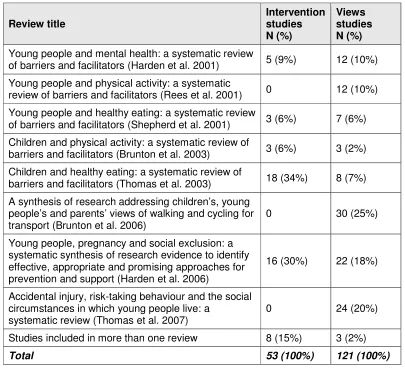
[image:12.612.140.545.243.611.2]For the empirical part of the review, we examined researchers’ treatment of diversity in more depth by interrogating a dataset of 174 specific HP and PH studies. These were drawn from nine previous EPPI-Centre HP and PH reviews in the topic areas of accidental injury, mental health, healthy eating, physical activity, walking and cycling and teenage pregnancy and parenthood (Table 2.1). Studies from these reviews were selected because they had already been retrieved and coded, and so formed a conveniently available body of research. The reviews covered a broad range of topics of health promotion and public health work with children and young people. They were all based on extensive searching and systematic inclusion procedures.
Table 2.1: Source of studies in the dataset (N = 174)
Review title Intervention studies
N (%)
Views studies N (%) Young people and mental health: a systematic review
of barriers and facilitators (Harden et al. 2001) 5 (9%) 12 (10%) Young people and physical activity: a systematic
review of barriers and facilitators (Rees et al. 2001) 0 12 (10%) Young people and healthy eating: a systematic review
of barriers and facilitators (Shepherd et al. 2001) 3 (6%) 7 (6%) Children and physical activity: a systematic review of
barriers and facilitators (Brunton et al. 2003) 3 (6%) 3 (2%) Children and healthy eating: a systematic review of
barriers and facilitators (Thomas et al. 2003) 18 (34%) 8 (7%) A synthesis of research addressing children’s, young
people’s and parents’ views of walking and cycling for
transport (Brunton et al. 2006) 0 30 (25%)
Young people, pregnancy and social exclusion: a systematic synthesis of research evidence to identify effective, appropriate and promising approaches for prevention and support (Harden et al. 2006)
16 (30%) 22 (18%)
Accidental injury, risk-taking behaviour and the social circumstances in which young people live: a
systematic review (Thomas et al. 2007) 0 24 (20%)
Studies included in more than one review 8 (15%) 3 (2%)
Total 53 (100%) 121 (100%)
The 174 studies included both evaluations of interventions and studies of children and young people’s views and experiences. Seven of the original reviews
10
their methodological quality, since there are no widely agreed guidelines or quality assessment criteria for such studies. Intervention studies were only included if they had been judged methodologically sound in the original reviews, since there is more consensus in this area (Moher et al. 2001).
In the original reviews, detailed data had been collected from these studies about sample characteristics, study design, sampling and recruitment methods, and methods of data collection and analysis. We reanalysed the data and collected supplementary data using the full texts of the studies. The new analysis aimed to determine first, who was included in the samples of the studies in the dataset, and, second, to what extent the studies had used methods identified in our conceptual review as promising means to promote diversity.
2.4 Topic focus of the studies
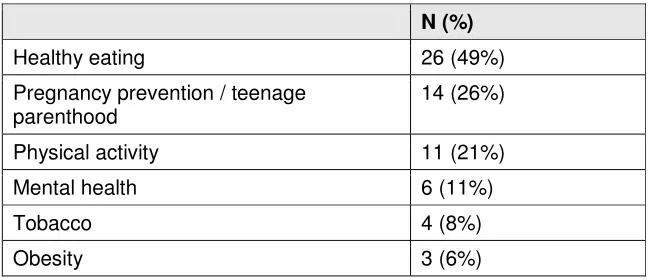
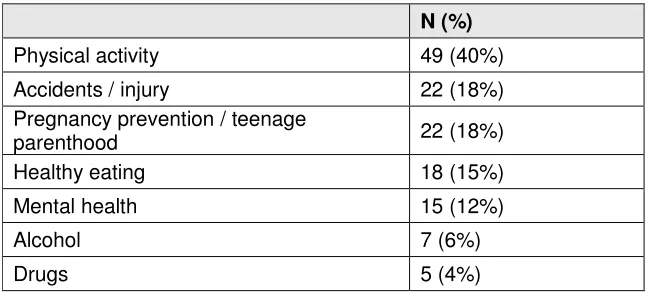
Tables 2.2 and 2.3 show the topic focus of the 174 studies.
[image:13.612.142.468.391.531.2]The topics obviously reflect the areas in which the original reviews were carried out, although some topics (e.g. alcohol, tobacco) were included in a number of studies without being a focus of any of the reviews. Healthy eating dominated the intervention studies (N=26, 49%), and physical activity the views studies (N=49, 40%).
Table 2.2: Topic focus of the intervention studies (N = 53; some studies focused on more than one topic)
N (%)
Healthy eating 26 (49%)
Pregnancy prevention / teenage
parenthood 14 (26%)
Physical activity 11 (21%)
Mental health 6 (11%)
Tobacco 4 (8%)
11
Table 2.3: Topic focus of the views studies (N = 121; some studies focused on more than one topic)
N (%)
Physical activity 49 (40%)
Accidents / injury 22 (18%)
Pregnancy prevention / teenage
parenthood 22 (18%)
Healthy eating 18 (15%)
Mental health 15 (12%)
Alcohol 7 (6%)
Drugs 5 (4%)
2.5 Country of study
Most of the intervention studies were conducted in the USA (N=43, 81%). Eight (15%) were conducted in the UK, and one each in Finland and Norway.
All the views studies were UK studies. One compared the views of children in the UK and Germany (Neale et al. 1998).
2.6 Year of publication
Most of the studies were published after the mid-1990s; 64% of the intervention studies and 85% of the views studies were dated 1995 or later.
2.7 Study type and setting
Of the intervention studies, 16 were non-randomised controlled trials and 37 were randomised controlled trials (RCTs). The most common settings for the
interventions were primary or secondary education, the home and the community. The largest group consisted of educational interventions delivered by teachers in school settings (N=32, 60%). Many of the interventions in this group also included other components (e.g. changes in school meal provision or parent-delivered home-based interventions). Ten studies evaluated multi-component interventions aimed at improving outcomes for young parents or disadvantaged young people at risk of pregnancy. The interventions evaluated in the remaining studies were either based in health services or in community sites, or were non-educational interventions (e.g. service provision) delivered in schools.
The views studies adopted a range of methodologies, from large-scale surveys, using closed questionnaires and predominantly quantitative methods, to
ethnographic and action-research studies with an emphasis on in-depth
12
two approaches. The majority of the views studies (N=69, 57%) were also conducted wholly or mostly in primary or secondary educational settings.
13
3. ANALYSIS OF HEALTH PROMOTION AND
PUBLIC HEALTH RESEARCH: RESULTS
In this chapter, we present the findings from our reanalysis of the 174 studies included in previous EPPI-Centre health promotion (HP) and public health (PH) reviews.
Most of the analyses are presented separately for the intervention studies (N=53) and the views studies (N=121).
3.1 Target populations
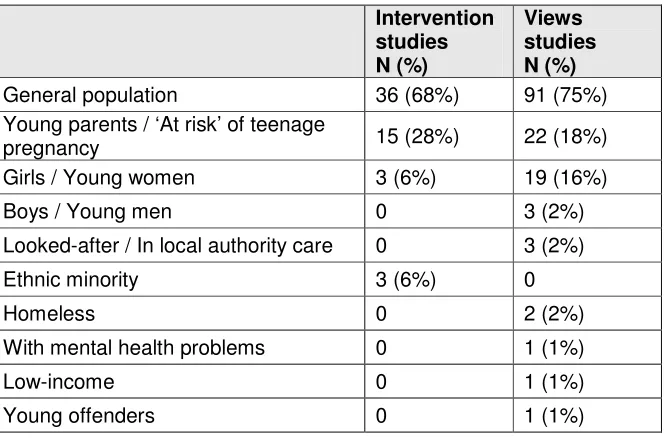
Of the 53 intervention studies, 17 (32%) explicitly stated that their aim was to target disadvantaged groups. All but two of these concerned teenage pregnancy and parenthood, and targeted either teenage parents or groups considered to be at risk of teenage pregnancy. The other 36 studies (68%) were carried out with a general population sample. Of the views studies, 32 (27%) targeted specific populations, and 91 (75%) studied the population of children and young people as a whole; these figures include two studies which both sampled from the general population and focused on specific groups within this population.
[image:16.612.165.497.464.683.2]Table 3.1 shows the target populations in the interventions and views studies; some populations fall in more than one category – for example, teenage mothers are counted both as ‘women’ and as ‘young parents’.
Table 3.1: Populations targeted in the intervention (N = 53) and views studies (N = 121; some studies targeted more than one population)
Intervention studies N (%)
Views studies N (%)
General population 36 (68%) 91 (75%)
Young parents / ‘At risk’ of teenage
pregnancy 15 (28%) 22 (18%)
Girls / Young women 3 (6%) 19 (16%)
Boys / Young men 0 3 (2%)
Looked-after / In local authority care 0 3 (2%)
Ethnic minority 3 (6%) 0
Homeless 0 2 (2%)
With mental health problems 0 1 (1%)
Low-income 0 1 (1%)
14
Of the views studies, in addition to the 32 studies which targeted specific groups, a further 19 studies stated that one of their primary aims was to investigate diversity by comparing different subgroups within the sample or by exploring the influence of demographic variables. In 10 of these studies the axis of diversity examined was gender; in six, it was age; in four, socioeconomic position (SEP); and, in three, ethnicity. No
intervention studies reported an explicit primary aim of comparing subgroups within the sample.
3.2 Who exactly was included in the studies?
3.2.1 Reporting of demographic information
Studies varied widely in how much information they reported about the demographic characteristics of their sample. Some studies did not provide information which was sufficiently precise to be aggregated in this way. For the analyses below, studies were required to (a) report information about participants themselves, and not, for example, about the community or school from which they were recruited; (b) report distributions or ranges of the relevant variable for the whole sample, not for a part of the sample only; and (c) report demographic information in the form of a precise characterisation of the individuals in the sample, not only a broad
15
Table 3.2: Reporting of demographic information in the intervention studies (N = 53)
No information N (%)
Some information, but not complete N (%)
Complete information for all participants N (%) Number of
participants 0 (0%) 2 (4%) 51 (96%)
Age 5 (9%) 10 (19%) 38 (72%)
Gender 1 (2%) 14 (26%) 38 (72%)
SEP 18 (34%) 22 (42%) 13 (24%)
Ethnicity 13 (24%) 4 (8%) 36 (68%)
Religion 53 (100%) 0 (0%) 0 (0%)
Sexual
orientation 53 (100%) 0 (0%) 0 (0%)
Disability 53 (100%) 0 (0%) 0 (0%)
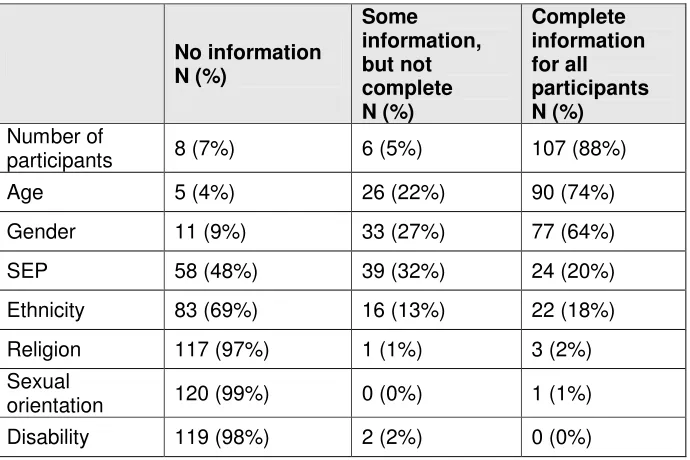
Table 3.3: Reporting of demographic information in the views studies (N = 121)
No information N (%)
Some information, but not complete N (%)
Complete information for all participants N (%) Number of
participants 8 (7%) 6 (5%) 107 (88%)
Age 5 (4%) 26 (22%) 90 (74%)
Gender 11 (9%) 33 (27%) 77 (64%)
SEP 58 (48%) 39 (32%) 24 (20%)
Ethnicity 83 (69%) 16 (13%) 22 (18%)
Religion 117 (97%) 1 (1%) 3 (2%)
Sexual
orientation 120 (99%) 0 (0%) 1 (1%)
[image:18.612.163.508.394.624.2]16
3.2.2 Number of participants
Of the 174 studies, eight (5%) provided no information on number of participants, and a further eight (5%) gave some, but not exact, information.
Intervention studies
Only two (4%) of the 53 intervention studies did not report the exact number of participants. The remaining 51 studies represent a total of 59,901 participants. Sample sizes ranged from 28 to 9,685, with a mean sample size of 1,175 and a median of 628. (The total N for each study has been calculated as the number of participants for whom at least some baseline data was available, and includes both intervention and control groups.)
Views studies
Fourteen (12%) of the 121 views studies did not clearly report the total number of participants. In eight (7%), no information was reported, while six (5%) reported some information but not the exact total. The 107 studies which did report the number of participants represent a total of 85,853 participants. Sample sizes ranged from 3 to 18,221, with a mean sample size of 802 and a median of 160. (Where studies included two or more stages of sampling – such as a large survey followed by in-depth interviews with a subsample of survey respondents – the largest Ns have been chosen in each case.)
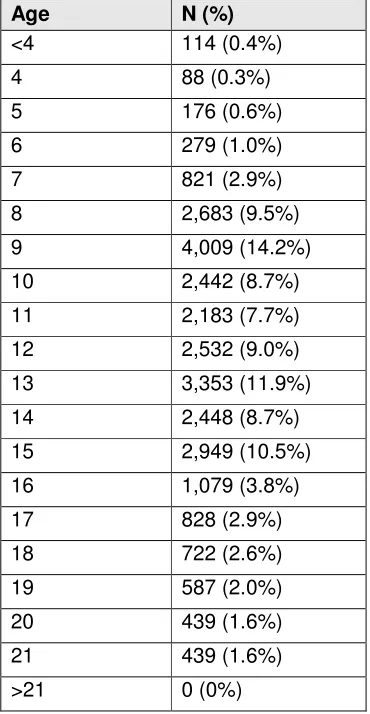
3.2.3 Age
Intervention studies
17
Table 3.4: Ages of participants in the intervention studies (N = 28,171)
Age N (%)
<4 114 (0.4%)
4 88 (0.3%)
5 176 (0.6%)
6 279 (1.0%)
7 821 (2.9%)
8 2,683 (9.5%)
9 4,009 (14.2%)
10 2,442 (8.7%)
11 2,183 (7.7%)
12 2,532 (9.0%)
13 3,353 (11.9%)
14 2,448 (8.7%)
15 2,949 (10.5%)
16 1,079 (3.8%)
17 828 (2.9%)
18 722 (2.6%)
19 587 (2.0%)
20 439 (1.6%)
21 439 (1.6%)
>21 0 (0%)
Views studies
18
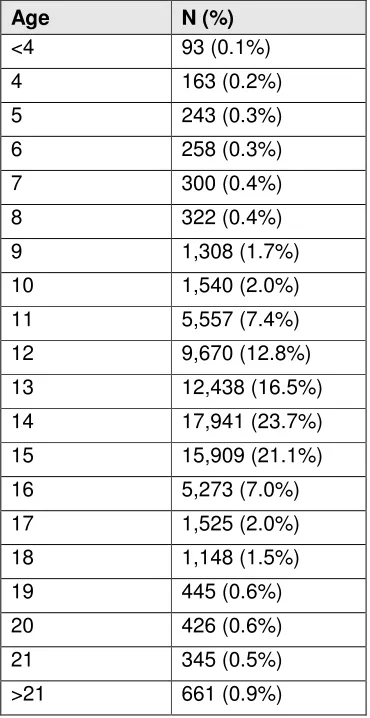
Table 3.5: Ages of participants in the views studies (N = 75,565)
Age N (%)
<4 93 (0.1%)
4 163 (0.2%)
5 243 (0.3%)
6 258 (0.3%)
7 300 (0.4%)
8 322 (0.4%)
9 1,308 (1.7%)
10 1,540 (2.0%)
11 5,557 (7.4%)
12 9,670 (12.8%)
13 12,438 (16.5%)
14 17,941 (23.7%)
15 15,909 (21.1%)
16 5,273 (7.0%)
17 1,525 (2.0%)
18 1,148 (1.5%)
19 445 (0.6%)
20 426 (0.6%)
21 345 (0.5%)
19
3.2.4 Gender
Intervention studies
One study (2%) reported no information on the gender of study
participants. Fourteen (26%) reported some information on gender: for example, that the sample contained both males and females, but failed to give the number of males and females in the sample. The 38 studies for which gender was reported covered a total of 50,773 participants, comprising 15,308 males (30%) and 35,465 females (70%). Ten of these studies sampled only or predominantly females (of which nine focused on teenage pregnancy). If these studies are removed, the remaining 27 studies included 14,961 males (49%) and 15,281 females (51%).
Views studies
Eleven studies (9%) reported no information on the gender of study participants. Thirty-three (27%) reported some information on gender: for example, that the sample contained both males and females, but failed to give the number of males and females in the sample. The remaining 77 studies included a total of 31,148 females (57%) and 23,445 males (43%). Of these studies, 25 sampled wholly or predominantly single-gender groups. If these studies are removed, the remaining 52 are equally balanced, with 22,951 females (50%) and 23,053 males (50%).
3.2.5 SEP
20
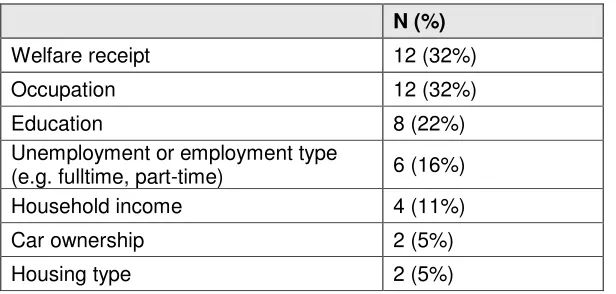
Table 3.6: Measures of SEP used (N = 37 studies reporting this information; some used more than one)
N (%)
Welfare receipt 12 (32%)
Occupation 12 (32%)
Education 8 (22%)
Unemployment or employment type
(e.g. fulltime, part-time) 6 (16%)
Household income 4 (11%)
Car ownership 2 (5%)
Housing type 2 (5%)
Intervention studies
Thirteen of the intervention studies (25%) characterised the SEP of the individuals in the sample precisely and are included in Table 3.6. A further seven studies used phrases such as ‘middle class’ or ‘disadvantaged’, but used no objective measure to characterise the SEP of the sample. Six studies described the average SEP of the schools from which the sample was drawn, using the percentage of pupils eligible for free school meals, and one used median household income to characterise the SEP of the community among which the intervention was carried out. A further eight studies gave only a qualitative indication of the SEP of either the school or the community.
Views studies
Twenty-four views studies (20%) provided some quantitative measure of the SEP of the individuals in the sample, and are included in Table 3.6. Eleven of these used an occupational class measure of SEP. Five of these 11 studies divided samples into two classes ('middle class' vs. 'working class' or ‘non-manual’ vs. ‘manual’), three studies used three classes (AB / C1C2 / DE), and three used four (AB / C1 / C2 / DE). Thirteen studies (11%) gave quantitative information on the SEP either of the schools or of the communities from which samples were drawn. For schools, the measure used was the percentage of pupils receiving free school meals (N=5). For communities, measures included unemployment rate (N=5), car ownership (N=2) and average household income (N=1). Six studies used compound measures of community-level deprivation, such as the Carstairs index or the Index of Multiple Deprivation. Twenty-five studies (21%) gave some qualitative information about the social class of schools or communities, or stated their intention to sample across a range of social classes, but did not provide clear quantitative data.
3.2.6 Ethnicity
21
Intervention studies
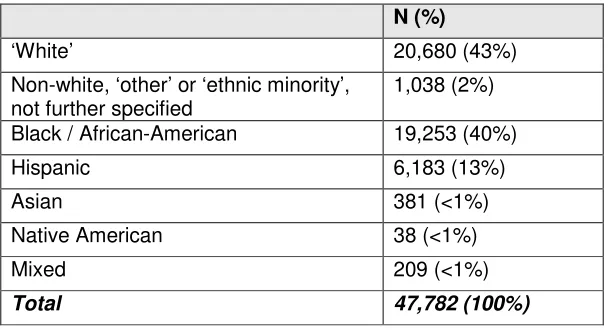
Thirty-six of the 53 intervention studies (68%) provided information on the ethnicity of participants. Data on ethnicity were available for a total of 47,782 participants (Table 3.7). The two largest categories were ‘White’ (43% of participants) and ‘Black’ or ‘African-American’ (40% of
[image:24.612.161.467.192.357.2]participants). All but two of these 36 studies were carried out in the USA.
Table 3.7: Ethnicity descriptors in the 36 intervention studies which provided information (N = 47,782 participants)
N (%)
‘White’ 20,680 (43%)
Non-white, ‘other’ or ‘ethnic minority’,
not further specified 1,038 (2%)
Black / African-American 19,253 (40%)
Hispanic 6,183 (13%)
Asian 381 (<1%)
Native American 38 (<1%)
Mixed 209 (<1%)
Total 47,782 (100%)
Views studies
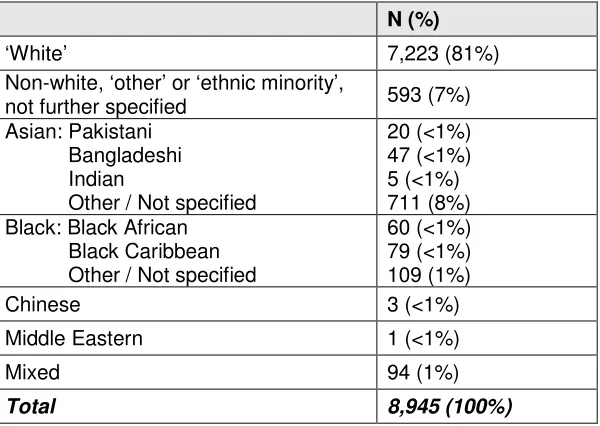
Twenty-two views studies (18%) provided information on the ethnicity of participants. Data on ethnicity was available for a total of 8,945
22
Table 3.8: Ethnicity descriptors in the 22 views studies which provided information (N = 8,945 participants)
N (%)
‘White’ 7,223 (81%)
Non-white, ‘other’ or ‘ethnic minority’,
not further specified 593 (7%)
Asian: Pakistani Bangladeshi Indian
Other / Not specified
20 (<1%) 47 (<1%) 5 (<1%) 711 (8%) Black: Black African
Black Caribbean Other / Not specified
60 (<1%) 79 (<1%) 109 (1%)
Chinese 3 (<1%)
Middle Eastern 1 (<1%)
Mixed 94 (1%)
Total 8,945 (100%)
3.2.7 Religion
Only four studies gave information on participants’ religion, and only three reported precise distributions (Table 3.9).
Intervention studies
No intervention studies provided information on the religion of participants.
Views studies
23
Table 3.9: Descriptors of religion in the three views studies which provided information (N = 369 participants)
N (%)
No religion 93 (25%)
Christian: Church of England Catholic
Other / Not further specified
143 (39%) 58 (16%) 34 (9%)
Muslim 33 (9%)
Jewish 1 (<1%)
Sikh 1 (<1%)
Hindu 1 (<1%)
Other 5 (1%)
Total 369 (100%)
3.2.8 Disability
One study listed disabled participants in the category of ‘employment status’, and one gave the number of participants with ‘special needs’; neither gave detailed information.
3.2.9 Sexual orientation
One study, of drug use among young people in nightclubs, reported the sexual orientation of participants.
3.3 Conclusion
The results of our analysis of 174 HP and PH studies relating to children and young people show that reporting of socio-demographic
24
4. METHODOLOGICAL AND CONCEPTUAL
FRAMEWORK
4.1 Introduction
This chapter discusses the review of debates about how diversity might be represented in health promotion (HP) and public health (PH) research. The discussion is divided into two sections. The first section relates to the research process as a whole, and the second covers more specific issues, such as sampling, recruitment, data collection and data analysis. The research question and design are considered throughout the chapter.
Not all the issues investigated here are relevant to all research projects. While the broad issues are independent of research type or method and apply to HP and PH (and, indeed, much other) research in general, how they apply to particular research projects will vary depending on the research question and its resultant design, the context of the research and the specific methods employed. One important distinction is between studies whose research aims demand a specific focus on diversity issues, and those which do not have such a focus. The former include, for example, studies whose research aim includes a comparison of diverse groups with one another; those which aim for an understanding of the experiences of particular disadvantaged groups; and/or studies of topic areas which impact disproportionately on diverse groups. Studies without such a focus include those in topic areas which are not known to be strongly associated with any dimension of diversity. Different levels of engagement with diversity issues are appropriate in these two groups of studies.
4.2 Diversity and research: general issues
4.2.1 Defining diversity
25
There are two broad approaches in the literature to the question of how to identify the relevant dimensions of diversity. In one, a standardised checklist of population variables (such as the six statutory dimensions) is used. In the other, diversity is defined differently in different contexts, depending on the aspects of diversity that are relevant for particular populations and topic areas. The use of standardised lists can have some advantages over a wholly flexible approach to defining diversity, but these may also detract attention from the need for researchers to reflect critically on the extent to which an inclusive approach to diversity flows from their particular research question. For example, does a study of an
intervention for promoting healthy eating among schoolchildren require a SEP or gender-balanced sample? Should the results be analysed according to SEP and gender? Different issues relating to diversity are salient at different stages of the research process: the issue of sample representativeness as an aid to the generalisability of research findings, for example, is different from the question of the extent to which a priori hypotheses mandate subgroup analyses by variables such as SEP or ethnicity.
A further complication of defining diversity is that researchers’ judgements as to which dimensions of diversity are relevant may conflict with research participants’ perspectives. An example of this conflict can be found in one of the studies in the views dataset (Hall et al. 2003). This was a peer research project led by young people, who made most of the substantive decisions regarding data collection and analysis. One of these decisions was not to collect data on ethnicity or disability, ‘because the peer researchers, who played a key role in designing the
questionnaire, felt strongly that we should not collect this data, as they believed that the experience of teenage parenthood was the most important indicator within the survey’ (p 7) – a decision which went against the wishes of the lead academic researcher on the project (p 34). In this study, then, a view of diversity as based on the empowerment of the population under study, and on the
participation of this population in shaping the research question, came into conflict with a view of diversity as an a priori list of categories.
4.2.2 Measuring diversity
The question of how particular dimensions of diversity should be measured raises analogous concerns: should researchers use standardised categories to facilitate the monitoring of diversity and the comparison of samples and results across studies, or allow research participants flexibility in identifying the categories most relevant to them?
Many dimensions of diversity can be seen either in somatic-biomedical terms or as social identities; in some cases, the two can be distinguished terminologically (for example, somatic ‘sex’ as against social ‘gender’, and researchers should be careful not inadvertently to over-emphasise the former at the expense of the latter (Hussain-Gambles et al. 2004, Karlsen and Nazroo 2002, Lippman 2006).
Ethnicity, for example, is a complex concept, including national origin, family background, cultural identity, and socio-political contexts. Individuals’ identification with a particular ethnic identity, as well as their views on whether this identity is relevant to a particular question, may be context-sensitive (Gunaratnam 2003).
26
Assessment Questionnaire (http://aramis.stanford.edu/), are geared towards measuring disability as an outcome rather than as a determinant or a
demographic variable, and hence may be of limited value in promoting diversity and inclusion. Seeing disability as part of the diversity agenda implies attention to its social and cultural meanings, and its potential role as a pretext for
discrimination, and these are not well captured by biomedical or impairment-based concepts (Gilson and DePoy 2004).
4.2.3 Language barriers
A key domain of concern with respect to the representation of cultural diversity in research is the barrier to inclusiveness posed by the use of the dominant
language in research. In the UK and the USA, most researchers design their projects, recruitment procedures, measures and data collection tools in the English language. This has the immediate effect of disenfranchising those groups who are not fluent or are not literate in English, or for whom it is a second
language. There is no reliable national data on language use in the UK (Aspinall 2007). A survey in the mid-1990s showed that between 16% and 44% of minority ethnic groups (Bengalis, Gujeratis, Punjabis, Chinese and refugees (Bosnians, Somalis, Tamils and Kurds)) did not have a level of ‘survival competence’ in written and spoken English (Carr-Hill et al. 1996).
In this dataset of 174 HP and PH studies – despite many studies being carried out with multi-ethnic populations – only two studies (Mauthner et al. 1993, Rogers et al. 1997) explicitly stated that translation or interpretation formed a part of the sample recruitment or data collection process. A further study (Armstrong et al. 1998) stated that information and consent forms were translated, but not data- collection tools. Translation may create its own problems. Key concepts used to identify outcomes of interest, for example, may not be adequately translatable into participants’ native languages, or different translations may be possible (Grewal and Ritchie 2006). There is also a risk that the translation of qualitative data for presentation in research reports may distort the significance of the findings (Temple 2005). There are a number of reasons why research materials are not translated into minority languages and why recruitment procedures are not more linguistically inclusive: it may not occur to researchers that this is an issue; they may be concerned about ethics and cultural sensitivity; they may refer to the rationale of needing ‘homogeneous’ research samples; or budgets may be insufficient to fund translation/interpretation activities. This is an area of research methods which appears to have received little attention. An informative exception is a trial of a social support intervention for disadvantaged mothers carried out in London. Oakley and colleagues (2003) translated research materials into six languages and used interpreters speaking 25 different languages to help in the recruitment process. The result was balanced recruitment rates among English and non-English speakers. Employing interpreters resulted in a more socially disadvantaged sample: 85% of the women recruited using interpreters were socially disadvantaged compared to 51% of those recruited without using
27
4.2.4 Reporting diversity
The reporting of baseline demographic variables is still not widely regarded as part of good practice in research. The CONSORT guidelines for clinical trials, for example (Moher et al. 2001), do not recommend that such information be routinely reported. The International Committee of Medical Journal Editors recommends that, if variables such as age, sex or ethnicity form part of the inclusion criteria of the study, they should be reported on and their use explained, but not otherwise: ‘Because the relevance of such variables as age and sex to the object of research is not always clear, authors should explain their use when they are included in a study report; for example, authors should explain why only subjects of certain ages were included or why women were excluded. The guiding principle should be clarity about how and why a study was done in a particular way. When authors use variables such as race or ethnicity, they should define how they measured the variables and justify their relevance’ (www.icmje.org, section IV.A.6.a). However, the British Medical Journal’s guidelines for authors require that authors report ‘numbers entering and completing the study, sex, and ethnic group if appropriate’ (http://resources.bmj.com/bmj/authors/types-of-article/research); regarding ethnicity, they further note: ‘Ethnicity and culture are socially determined variables of limited use in biological research, though they are useful in health services research. All the variables are confounded by
socioeconomic status’ (http://resources.bmj.com/bmj/authors/article-submission/ article-requirements).
Social science journals are generally less clear about how and why data relating to diversity should be reported. In a study by Newman and Elbourne (2004) of educational research, eight out of 11 educational research journals provided no such guidance as to how studies should be reported. Quality assessment tools for qualitative research often recommend that the sample should be described, but only sometimes do they specify that factors such as age, gender, ethnicity and SEP should be used to characterise the sample (Boulton and Fitzpatrick 1997, Boulton et al. 1996).
4.2.5 External validity and generalisation
One of the most important scientific rationales for including diverse groups in research is to ensure that research is externally valid – that its findings can be generalised to populations beyond the sample participating in the research. There are long-standing debates in the methods literature as to how this notion of external validity or generalisability should be understood, and, in the case of certain qualitative methodologies, as to whether it is appropriate at all.
28
The analyses of baseline demographics in the dataset of HP and PH studies in Chapter 3 demonstrate that reporting is often insufficient to judge the external validity of studies. If it is simply not clear who has been included in a study, it is impossible to decide whether or not the findings of that study are relevant to the wider population. This is true of both the intervention and the views studies in this dataset. However, in the literature concerned with the methodology of qualitative research, there is an argument that the notion of ‘generalisation’ which is
appropriate to qualitative research is distinct from, and broader than, that associated with quantitative studies, such as trials. According to this argument, the generalisability of qualitative findings is not impeded by the failure of research samples to be demographically representative of the population. Numerical representativeness is often not regarded as a relevant goal in sampling for qualitative research.
Some qualitative methodologists go beyond this to reject the notion of generalisability altogether, and replace it with a broader concept of
‘transferability’. They argue that ‘the burden of proof [that a particular result is transferable] lies less with the original investigator than with the person seeking to make an application elsewhere’ (Lincoln and Guba 1985, p 298). The problem with this argument is that the interpretation of the findings of qualitative studies requires that they be placed in some context broader than the particular sample studied. If relevant information about who was included in the sample is not reported, the extent to which a given result is in fact transferable to other populations cannot be determined (Britten et al. 1995). In addition, many qualitative researchers implicitly or explicitly generalise their findings to populations much wider than the research sample.
4.2.6 Involvement of research participants
Involving research participants in making decisions about research is of value in promoting the inclusion of diverse groups throughout the research process. For example, involving ethnic minority communities in research is recognised as an important means of ensuring ‘community legitimacy’, promoting trust in
researchers and, hence, increasing minority recruitment and encouraging full participation (Corbett et al. 1995, Nickens 1990). Involving the population also helps to ensure that research is relevant and sensitively conducted.
Johnson (2006) provides an overview of the benefits and costs of involving diverse groups, and of relevant strategies of involvement. He recommends ‘social action research’ as a model of good practice, incorporating the involvement of diverse groups in research design, data collection, and feedback on findings. Other recommendations developed in the involvement literature are also relevant to diversity issues. For example, recommendations for the involvement of children and young people in research include the following: ‘transparency and agreement about which children (and why) will be the partners in the research; ... [ensuring] that research tasks that are identified are appropriate and ‘do-able’ and take into account children’s views, age and abilities, as well as relevant social and cultural factors; that the language, methods and processes of research are made
accessible to children; ... [and that] there are adequate support systems in place’ (Jones 2004, p 129).
29
questioning assumptions that are made about values, rather than representing the values of any particular group’ (Schünemann et al. 2006). This idea has been seen by its proponents as something quite separate from the ‘representation’ of diverse groups. However, the emphasis on questioning accepted values is also useful in understanding the contribution that the involvement of diverse groups can make to research.
4.3 Stages of the research process
4.3.1 Sampling
The sampling and recruitment stages of the research process are of fundamental importance in the question of how research can promote diversity. For research to address diversity, it must sample and recruit participants from sufficiently diverse groups. The central concern is that sampling procedures should not exclude any subgroups of the population under study.
4.3.2 Exclusion criteria
One potential barrier to diversity is the adoption of exclusion criteria which are unduly restrictive. In health care randomised controlled trials (RCTs), criteria for exclusion of participants are often not clearly reported, and the rationale for excluding certain groups (e.g. women and older people) is weak or non-existent (Britton et al. 1999, Oakley 2006, Prescott et al. 1999, Van Spall et al. 2007). The exclusion of people with co-morbidities may also bias the sample in favour of younger and healthier participants. It is unclear whether such deliberate restrictions of the sample are a problem with HP and PH studies, which often seek to sample general populations without specific health needs. In this dataset of 174 studies, only three reported details of pre-specified exclusion criteria, and all gave some rationale for these criteria (Arai 2004, Epstein et al. 2001, Hughes et al. 1999). In addition, a number of intervention studies evaluated interventions which had their own eligibility criteria distinct from those of the study itself: for example, in studies of alterations to welfare systems, only people on a low income and resident in a particular area may have been eligible.
4.3.3 Sampling strategies
Two broad types of research question correspond to two types of sampling strategy. For research such as surveys, which aim to quantify attitudes or behaviour across a population, the primary concern is that the sample be numerically representative of the population, so that findings can be generalised from the former to the latter. For more in-depth and qualitative research which aims for rich description and analysis of individuals’ beliefs, motivations or experiences, the primary aim is to obtain a sample which will provide the most illuminating data for a particular research issue. The sampling strategies
30
cases or perspectives (or as many as is reasonably practicable) which are relevant to the research question.
The most straightforward form of statistical sampling is simple random sampling, where cases are chosen at random from a pre-defined sampling frame, such as a list of names. As a further safeguard of the diversity of the sample, ‘stratified’ random sampling may be used, in which the sample is drawn randomly from sub-populations or ‘strata’ (e.g. different ethnic or SEP groups), to ensure that these subgroups are selected in the same proportion that they exist in the population. Random sampling of the population ensures that quantitative characterisations of the sample will be generalisable to the population, or at least the population included in the sampling frame. If the representativeness of the sample is in some way compromised (for example, by differential rates of non-response between subgroups), it may be possible to adjust for this at the analysis stage, by adding greater weight to responses from under-represented groups (Fowler 2002, p48).
The concept of theoretical sampling was introduced by Glaser and Strauss (1967) as part of their ‘grounded theory’ paradigm of social research. In theoretical sampling, each decision as to whether to sample a particular case remains within the control of the researcher, and will be informed by the particular concerns of the research. The overarching aim of theoretical (or purposive) sampling is that the sample should “include the full range of individuals or cases so that the concepts and categories developed provide a comprehensive conceptualisation of the subject” (Boulton and Fitzpatrick 1997, p84). For example, researchers may set out to sample for diversity, aiming to ensure that views are gathered from all in a list of groups specified in advance; sampling may aim for theoretical saturation, and continue up to the point at which no new insights are available from the data; or it may aim for extreme cases or cases which disconfirm prior or emergent hypotheses (Onwuegbuzie and Leech 2007). Theoretically derived samples will generally not support quantitative forms of generalisation, but they may be intended to facilitate conceptual or interpretive generalisation, by attempting to include all (or an adequate range) of the perspectives within the population.
The implications for diversity of theoretical sampling methods are hard to define. Unlike in statistical sampling, diversity in theoretical sampling is inappropriately measured quantitatively (at least at the level of individual studies), since the goal is not to obtain a sample which is as diverse as the population, but one which is sufficiently diverse to obtain an adequate understanding of the subject under study (Allmark 2004). This is not to say that questions of diversity are irrelevant to theoretical sampling methods. Such methods have the potential to promote diversity, for example, by allowing researchers to focus on specific minority groups who might be marginalised if sampled in proportion to their numerical weight. In general, the key question – in terms of both diversity and best research practice – is whether researchers include a sufficient range of possible cases adequately to support the analyses carried out.
Questions relating to sampling strategies for intervention studies seem to have received relatively limited attention compared with the literature on sampling in qualitative and observational research, although issues relating to the
appropriateness of inclusion and exclusion criteria used in trials are now more widely discussed (see e.g. Bartlett et al. 2005, Oakley 2006). A main
31
sample is a question of external, rather than internal, validity. This is in contrast to survey research, where external validity, and hence the extent to which the sample represents the broader population, is regarded as directly relevant to the central aims of the study.
32
Table 4.1: Sampling strategies in the views studies (N = 121) and the intervention studies (N = 53)
Sites Individuals Views N (%) Intvn N (%)
Theoretical / purposive Theoretical / purposive 12 (10%) 0 (0%) Theoretical / purposive Unclear / convenience 13 (11%) 3 (6%) Theoretical / purposive Comprehensive 5 (4%) 8 (15%) Theoretical / purposive Simple random 2 (2%) 0 (0%) Unclear / convenience Theoretical / purposive 16 (13%) 1 (2%) Unclear / convenience Comprehensive 6 (5%) 18 (34%) Unclear / convenience Simple random 3 (3%) 2 (4%) Comprehensive Theoretical / purposive 1 (<1%) 0 (0%) Comprehensive Unclear / convenience 1 (<1%) 1 (2%)
Comprehensive Comprehensive 1 (<1%) 1 (2%)
Comprehensive Simple random 0 (0%) 1 (2%)
Simple random Unclear / convenience 2 (2%) 0 (0%) Simple random Stratified random 1 (<1%) 0 (0%)
Simple random Comprehensive 1 (<1%) 2 (4%)
Simple random sample from population database 1 (<1%) 0 (0%) Stratified random sample from population database 1 (<1%) 0 (0%) Quota-based random sample on street 4 (3%) 0 (0%) Unclear or purely convenience sample 51 (42%) 16 (30%)
Some examples of these different approaches from the views studies in this dataset are given below:
‘The sample was generated from lists of all women who had had a first baby when aged between 16 and 19 in hospitals in the three areas: Hackney, Leeds and Solihull...The records of all 16-19 year old mothers over a period of three to six months in 1995 were identified by hospital staff and scrutinised to ensure that the baby had not died or been adopted and that it was a first baby...This constituted a complete series of first births to 16-19 year old mothers and no sampling took place’ (Allen et al. 1998, p 211). This is an example of unclear sampling of sites and comprehensive sampling of individuals.
‘The schools were selected to represent a range of geographical areas as well as catchment areas of differing socioeconomic characteristics.’ For the questionnaire stage of the study, the sample was all children in relevant year group; for the interview stage, children were selected ‘randomly’ (Cahill et al. 1996, p 5). This is an example of purposive sampling of sites (for diversity) and comprehensive and random sampling of individuals.
33
1992, p 277). This is an example of purposive sampling of sites and purposive sampling of individuals.
‘The samples were taken from secondary schools and youth clubs. Both the schools and youth clubs used were situated in varying localities within West Berkshire and Tameside, to access a range of environmental and socio-economic influences’ (Lee 1993, p 13). This is an example of purposive sampling of sites and unclear sampling of individuals.
In Table 4.1, the concept of theoretical or purposive sampling has been interpreted broadly, to include any case in which researchers reported an
intention to obtain, for example, a range of participants on a particular variable, or a sample which was in some way representative. In many cases, however, no formal strategies were employed to attain this goal, and no information reported which would enable readers to judge whether the goal had been adequately attained. The relevance to diversity of many of these studies is compromised by inadequate reporting of how sampling intentions translated into practice.
Perhaps the most striking feature of Table 4.1 is the large number of studies (N=67, 39%, bottom row of the table) which were either unclear on the matter of sampling or which reported using a convenience sample. Many of the intervention studies tabulated as using comprehensive sampling for individuals could also be included here, as they suggested that selected school classes or year groups were comprehensively sampled without giving explicit details. In general, little detail was available on sampling in the intervention studies. While most indicated who might be eligible to be included in the sample, and some reported inclusion criteria either for the intervention or for the study, none gave a detailed
characterisation of the whole process.
One example is an RCT of a primary-school-based intervention to reduce risk factors for obesity (Sahota et al. 2001). Sahota and colleagues report: ‘We recruited 10 primary schools in Leeds…All the participating schools were state primary schools sited outside the inner city area. Socio-demographic measures suggested that the schools’ populations generally reflected the Leeds school aged population, although there was a slight bias towards more advantaged children. The schools had 1-42% children from ethnic minorities and 7-29% entitled to free school meals compared with 11% and 25% respectively for Leeds children as a whole’ (Sahota et al. 2001, pp 1029-1030). While the description of baseline demographics here increases the study’s external validity, it remains unclear why the participating schools were chosen for inclusion in the study rather than any others. The authors do not report whether any schools declined to be included, nor whether the exclusion of inner-city schools was a deliberate sampling decision. The lack of detail here contrasts with the detailed attention paid in the report to methodological issues relevant to internal validity, such as randomisation and attrition. Studies of the implementation of research in the HP and PH field have emphasised the need for clearer reporting of sampling decisions and results at the level of both individual participants and institutional settings, such as schools or health care units (Estabrooks et al. 2003, Glasgow et al. 2002).
34
disadvantaged or minority groups, as reported by four studies in our dataset (Armstrong et al. 1998, Bostock 2001, Chinn et al. 2004, Honess et al. 2000), may be valuable in addressing this issue.
Many of the studies claimed that either the sites or the individuals sampled included diverse groups, but reported no details of who was included, or of the sampling procedure. For example, one study of young people’s views of health and exercise (Harris 1994) reports that: ‘Sixty-one young people (11-14 years) from two different state secondary schools ... were involved in 14 focus groups. The schools were both large comprehensive schools, one in a main town and the other in a small town lying on the outskirts of an expanding major town. Both schools attracted pupils from urban and rural settings and from a mix of socio-economic backgrounds’ (p 144). Such reports evince a commitment to diversity as a valuable feature of research, without this appearing to inform the sampling strategy. This loose relation between intention and method is frequently
encountered in this dataset. In total, 57 of the 121 views studies (47%), as well as 5 of the 53 intervention studies (9%), stated some intention to obtain a sample which was either diverse or representative of some broader population, but relatively few made clear how they intended to, or did, achieve this.
Two questions may arise with any form of sampling method. The first concerns whether the diversity agenda is better served by comparing diverse groups within a population, or by focusing attention on particular groups without making any such comparisons. Avoiding inter-group comparisons, and concentrating on sampling one particular group, may assist in gaining an ‘emic’ or ‘insider’ perspective on the group under study. However, sampling only one group does not allow researchers to contextualise their findings by distinguishing what is shared between groups and what is particular to a given group.
The second question is what constitutes an adequate sample size. In general, sample size should be driven by the type of analysis the data is intended to support. Where data is to be tested statistically, power calculations will show what sample size is required for particular tests; the sample size should also be
sufficient to power any subgroup analyses or interaction tests which are to be carried out (Brookes et al. 2001). Where data is to be analysed qualitatively, formal power calc