Journal of Criminal Law and Criminology
Journal of Criminal Law and Criminology
Volume 109
Issue 4 Fall Article 3
Fall 2019
"I heard it through the grapevine": A Randomized Controlled Trial
"I heard it through the grapevine": A Randomized Controlled Trial
on the Direct and Vicarious Effects of Preventative Specific
on the Direct and Vicarious Effects of Preventative Specific
Deterrence Initiatives in Criminal Networks
Deterrence Initiatives in Criminal Networks
Barak Ariel
Hebrew University Faculty of Law
Ashley Englefield
University of Cambridge
John Denley
University of Cambridge
Follow this and additional works at: https://scholarlycommons.law.northwestern.edu/jclc
Part of the Criminology Commons
Recommended Citation Recommended Citation
Barak Ariel, Ashley Englefield, and John Denley, "I heard it through the grapevine": A Randomized Controlled Trial on the Direct and Vicarious Effects of Preventative Specific Deterrence Initiatives in Criminal Networks, 109 J. CRIM. L. & CRIMINOLOGY 819 (2019).
https://scholarlycommons.law.northwestern.edu/jclc/vol109/iss4/3
819
CRIMINOLOGY
“I HEARD IT THROUGH THE
GRAPEVINE”: A RANDOMIZED
CONTROLLED TRIAL ON THE DIRECT
AND VICARIOUS EFFECTS OF
PREVENTATIVE SPECIFIC DETERRENCE
INITIATIVES IN CRIMINAL NETWORKS
BARAK ARIEL
*, ASHLEY ENGLEFIELD
‡& JOHN
DENLEY
¥A rich body of literature exists on deterrence, yet little is known about how deterrence messages are communicated through social networks. This is an important gap in our understanding, because such communication gives rise to the possibility that social institutions can utilize the vicarious effect of the threat of punishment against one individual to reduce the rate of reoffending amongst their criminal associates. To test this, we identified criminals with an extensive offending history (prolific offenders) and their co-offenders using social network analysis and then conducted a randomized controlled trial to measure the effect on both prolific offenders and their co-offenders of delivering a “specific deterrence” message. The treatment— preemptive engagements with prolific offenders by a police officer offering both ‘carrots’ (desistance pathways) and ‘sticks’ (increased sanction
* Corresponding author, PhD, Associate Professor, Institute of Criminology, Faculty of Law, Hebrew University, Mount Scopus, Jerusalem 91905 Israel, +972.2.5882502; [email protected]; and Lecturer in Experimental Criminology, Institute of Criminology, University of Cambridge, Sidgwick Avenue Cambridge CB3 9DA UK, +44.1223.767378, [email protected]
‡ Cantab, Institute of Criminology, University of Cambridge, Sidgwick Avenue Cambridge CB3 9DA UK; [email protected]
threat)—was applied to the prolific offenders, but not to their co-offenders. The outcomes suggest that a single officer–offender engagement leads to a crime suppression effect in all comparisons, with 21.3%, 11.0%, and 15.0% reductions for specific, vicarious, and total network deterrence effects, respectively. The findings suggest that (a) social network analysis based on in-house police records can be used to cartographically understand social networks of offenders, with an aim of preventing crime; (b) deterrence messages promulgated by the police have the capacity to reduce crime beyond what was previously assumed, as the cascading of threats in co-offending relationships carries a vicarious crime reduction impact; (c) unlike “reactive specific deterrence” (i.e., a threat of punishment following a specific and detected crime) which can have perverse effects on certain offenders, preventative specific deterrence is a promising crime policy.
INTRODUCTION ... 821
I. LITERATURE REVIEW ... 824
A. Criminal Networks and Co-Offending ... 824
B. Messages in Networks ... 828
C. Specific Deterrence ... 833
D. Desistance ... 836
E. Vicarious Deterrence ... 837
II.THE SACRAMENTO EXPERIMENT ... 838
III.METHODS ... 840
A. Research Settings ... 840
B. Participants ... 840
1. Criminal Networks in Sacramento ... 840
2. Prolific Offenders ... 842
3. Co-offenders ... 843
C. Random Allocation ... 845
D. Treatments ... 845
1. Vicarious Deterrence ... 847
2. Total Network Effects ... 847
3. Control conditions ... 847
E. Measures ... 848
F. Statistical Procedure ... 850
G. Statistical Power ... 852
IV.RESULTS ... 852
A. Baseline Comparability ... 852
B. Main Effects ... 854
V.DISCUSSION ... 857
B. Policy Implications ... 862
C. Future Research ... 863
D. Additional Study Limitations ... 864
VI.SUPPLEMENTARY MATERIALS ... 866
A. Front Side Of Leaflet ... 866
B. Backside Of Leaflet ... 867
INTRODUCTION
How are messages communicated in networks of people? When does a message become powerful enough to alter behavior? To what extent does a message conveyed by Person A to Person B influence Person C? The assumption across disciplines, including psychology, economics, sociology and public health policy, has been that emotions and behaviors are contagious, cascading between individuals or groups.1 Concepts like peer pressure, persuasion, or susceptibility have been used since Aristotle, yet identifying the causal influences of contagion in social networks has remained empirically elusive. In part, singling out the effect of a sole message about behavior from the countless bits of information that are transmitted in social group interactions is difficult to describe, let alone to quantify within research settings. Still, the evidence we do have seems to lay out an avenue for testing these concepts in controlled yet real-life settings. Recent studies published in both Science and Nature have shown how online messaging can alter real-life behavior—for instance voting behavior, consumerism, as well as emotional contagion.2 These type of studies, however, are rare.
Can social institutions, such as the police, cascade messages to individuals that reduce their criminal propensity in such a manner that the crime control effects also reduce offending levels throughout their criminal networks? This question becomes particularly pertinent when the ‘target population’ is explicitly reluctant to modify its behavior. Some evidence suggests that text message nudges are effective in the cessation of smoking3
1 See, e.g., JOHN W.THIBAUT, THE SOCIAL PSYCHOLOGY OF GROUPS (1959); Sigal G.
Barsade, The Ripple Effect: Emotional Contagion and Its Influence on Group Behavior, 47 ADMIN.SCI.Q. 644, 646–48 (2002); Adam D.I. Kramer et al., Experimental Evidence of
Massive-Scale Emotional Contagion Through Social Networks. 111 PROC.NAT’L.ACAD.SCI.
8788(2014).
2 Robert M. Bond et al., A 61-Million-Person Experiment in Social Influence and Political
Mobilization, 489 NATURE295 (2012);Damon Centola, The Spread of Behavior in an Online Social Network Experiment, 329 SCI.1194 (2010); see also Kramer et al., supra note 1.
3 William Riley et al., Internet and Mobile Phone Text Messaging Intervention for College
or as reminders to take medications,4 but these are generally self-initiated behavioral modifications with some degree of self-motivation. What is not known is whether such messages can become an effective instrument to modify behaviors involuntarily, particularly if the intended recipients are members of criminal groups or gangs that they are unwilling or unable to leave. While influencing members of society to vote has been successful,5 one might expect the social and personal costs of desisting from crime, quitting drugs, or managing anger to be substantially higher. This research therefore utilized strong and robust messages in order to maximize the psychological impact on the individuals and groups involved, but in settings that are potentially challenging to change.
Measurement of the contagion effect with quantifiable data on human behavior remains difficult when the research settings are outside of the laboratory environment. Recent experimental studies have attempted to measure the causal effect of peer influence under field-controlled settings,6 but there have only been a handful of these7 and none in criminology. The lack of randomized controlled trials in this field is interesting by itself because, without proof of causal effect, the underlying foundations of living in groups and the fundamentals of communication require us to assume that messages are both conveyed and change behaviors. As well-reasoned as these assumptions may be, a rigorous scientific exploration of these communication patterns in social networks of offenders is essential to provide evidence upon which informed policy decisions can be made.
To address this challenge, we investigated one particular form of potent messages— proactive engagement by police officers with criminals with an extensive offending history (prolific offenders)—that carried the aim of preventing their delinquent behavior. The police are in a position to convey a critical message to offenders: “stop committing crimes.” They can do so by letting the subject know that the police have placed him or her under intensified surveillance. The theory of deterrence predicts that offenders will reduce their criminal activity under these conditions, as it becomes too “risky” to commit crimes. Some research (reviewed below) on specific deterrence—that is, when the state punishes or threatens to punish a particular offender in order to reduce the likelihood of his or her recidivism—
4 Jennifer L. Matjasko et al., Applying Behavioral Economics to Public Health Policy:
Illustrative Examples and Promising Directions, 50 AM.J.PREVENTIVE MED.S13, S16 (2016).
5 See Bond et al., supra note 2, at 297–98.
6 E.g.,Sinan Aral & Dylan Walker, Identifying Influential and Susceptible Members of
Social Networks, 337 SCI.337 (2012).
7 See James H. Fowler & Nicholas A. Christakis, Cooperative Behavior Cascades in
does exist, but has yielded conflicting recommendations.8 We want to revisit this approach by looking at preventative rather than reactive specific deterrence initiatives. But we explicitly go beyond that and ask: can the deterrence message “travel” to other members of the criminal community? And if so, is it effective enough to deter these co-offenders from committing crimes? More specifically, can this approach be done preventatively as a way of reducing criminality by those who are more likely to commit crimes, because they have committed them in the past but may not have necessarily committed a recent crime?
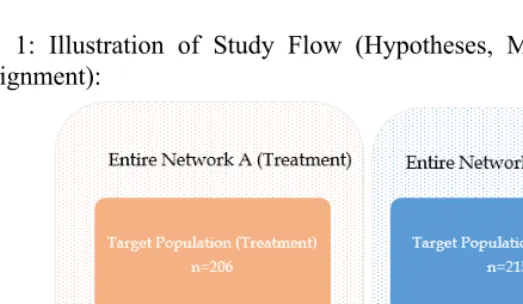
We conducted a randomized controlled field trial in Sacramento, California, by assigning half of all prolific offenders known to the police into “preventative specific deterrence” and in turn measuring not only the effect of officer-offender interactions on the targeted criminal (Person B) but also the effect of the messages on his co-offenders (Person C) and even other members of the criminal network (Person N). Crucially, the police did not engage with Person C or Person N, but we measured the criminal behavior of Person B, C, and N against the criminal behavior of the control persons.
In order to build our theoretical argument, we combine several intertwined conceptual frameworks. First, we discuss criminal networks more broadly and how this line of inquiry illustrates the relationship between group members, referred to hereafter as “nodes.” Directly linked to this is the study of co-offending and criminal groups, which is a rather mature body of literature in the sociology of crime that dates back to the days of the Chicago School;9 however, we place a greater emphasis on the more recent evidence. Second, we present the concept of dyad and group communications more specifically, and what the literature tells us about the ways in which messages are conveyed in social networks. We then move on to discuss the specific type of messages we are interested in manipulating: “preventative specific deterrence.” This type of intervention is meant to increase the perceived likelihood of the arrest of individual offenders as a result of increased sanction threats, but also to incorporate “turning point pathways” as well, as part and parcel of desistance. This then leads us to discuss the idea of vicarious deterrence, as our focus is on the ways in which messages are delivered within social networks.
We then go on to describe our research design; a field-randomized, controlled trial to test these theoretical hypotheses. Directly linked to the theoretical components of our approach, the operationalization of the
8 See infra Section I.C.
9 E.g., CLIFFORD R. SHAW & MAURICE E. MOORE, THE NATURAL HISTORY OF A
intervention included both carrots and sticks; a threat of increased surveillance, on the one hand, and a referral to assistance as a way out of crime, on the other. Thus, we tested how a message from a formal social control apparatus (the police) travels informally in criminal networks. We then discuss the results of this experiment and present the implications of the findings for both theory and practice.
I. LITERATUREREVIEW
A. CRIMINAL NETWORKS AND CO-OFFENDING
The literature on co-offending—that is, the committing of crime in dyads or larger groups —is one of the most evolved and mature areas of research in criminology.10 The term “co-offending” was introduced by Professor Reiss11 not too long ago, yet the scholastic enterprise on committing crimes in groups has existed for some time.12 Recent empirical
10 See, e.g.,ALEX R.PIQUERO ET AL.,KEY ISSUES IN CRIMINAL CAREER RESEARCH:NEW
ANALYSES OF THE CAMBRIDGE STUDY IN DELINQUENT DEVELOPMENT 2 (2007);MARK WARR, COMPANIONS IN CRIME: THE SOCIAL ASPECTS OF CRIMINAL CONDUCT (2002); Martin A. Andersen & Marcus Felson, The Impact of Co-Offending,50 BRIT.J.CRIMINOLOGY66 (2010); Peter J. Carrington, Group Crime in Canada, 44 CANADIAN J.CRIMINOLOGY277 (2002); Peter J. Carrington, Co-Offending and the Development of the Delinquent Career, 47 CRIMINOLOGY 1295 (2009); Peter J. Carrington, & Sarah B. van Mastrigt, Co-Offending in Canada, England and the United States: A Cross-National Comparison, 14 GLOBAL CRIME123 (2013); Joan McCord & Kevin P. Conway, Patterns of Juvenile Delinquency and Co-Offending, in 9 ADVANCES IN CRIMINOLOGICAL THEORY 15 (2002); Jean McGloin et al., Investigating the Stability of Co-Offending and Co-Offenders Among a Sample of Youthful Offenders, 46 CRIMINOLOGY155 (2008); Albert J. Reiss Jr., Co-Offending and Criminal Careers, 10 CRIME &JUST.117 (1988); Albert J. Reiss Jr. & David P. Farrington, Advancing Knowledge About Co-Offending: Results from a Prospective Longitudinal Survey of London Males, 82 J.CRIM. L.&CRIMINOLOGY360 (1991); Jerzy Sarnecki, Delinquent Networks: Youth Co-Offending in Stockholm, in CAMBRIDGE STUDIES IN CRIMINOLOGY (Alfred Blumstein & David Farrington eds., 2001); Sarah B. van Mastrigt & David P. Farrington, Co-Offending, Age, Gender and Crime Type: Implications for Criminal Justice Policy, 49BRIT.J.CRIMINOLOGY 552 (2009);
Sarah B. van Mastrigt & David P. Farrington, Prevalence and Characteristics of Co‐Offending Recruiters, 28 JUST.Q.325 (2011).
11 Albert J. Reiss, Co-Offending and Criminal Careers, in 10 CRIME AND JUSTICE:A
REVIEW OF RESEARCH (Michael Tonry & Norval Morris eds., 1988).
12 E.g.,SOPHONISBA P.BRECKINRIDGE &EDITH ABBOTT, THE DELINQUENT CHILD AND THE
HOME 33–35 (1912); RICHARD A. CLOWARD & LLOYD E. OHLIN, DELINQUENCY AND OPPORTUNITY, A THEORY OF DELINQUENT GANGS 150–59 (1966); ALBERT COHEN, DELINQUENT BOYS:THE CULTURE OF THE GANG 84 (1955); CLIFFORD R.SHAW &MAURICE E. MOORE,THE NATURAL HISTORY OF A DELINQUENT CAREER 26–41 (1931); CLIFFORD R.SHAW,
evidence suggests co-offending is widespread.13 Co-offending is a broad term both in terms of group dynamics and the types of criminality that such groups engage in. Previous research includes groups that can vary in size, ranging from two members14 to many dozens, including gangs, mafias, and organized crime groups15 often working together in furtherance of their criminal endeavors. Further, while van Mastrigt and Farrington identified co-offending as particularly prevalent in relation to juvenile delinquency, robbery and burglary, most offenders—up to 56%16 and even 80%17—have committed a crime with others at a certain point of their careers. Co-offending can be a life-long partnership or a “one-off” association for a particular job, depending on the social capital involved18 or the opportunistic nature of the offense.19 The magnitude and stability of the co-offending network is related to a number of factors, but it has been shown that the amount of crime committed with others is more profound than by solo careerists, with larger groups generating more crimes and more serious harm to society.20
It has been assumed across several lines of investigation that what sets co-offending apart from solo offending is a social process of association with other co-offenders or prospective co-offenders.21 For this (and other) reasons, co-offending can be contextualized as a learning process, coupled
13 See Peter J. Carrington, Co-offending, in ENCYCLOPEDIA OF CRIMINOLOGY AND
CRIMINAL JUSTICE (Gerben Bruinsma & David Weisburd eds., 2014).
14 E.g.,Albert J. Reiss Jr., Co-Offending and Criminal Careers, 10 CRIME &JUST.117
(1988);WARR,supra note 10, at 31–36.
15 E.g., Malcolm W. Klein & Lois Y. Crawford, Groups, Gangs, and Cohesiveness, 4 J.
RES.CRIME &DELINQ.63 (1967).
16 See Sarnecki, supra note 10.
17 McCord & Conway, supra note 10, at 15.
18 See Bill McCarthy & John Hagan, When Crime Pays: Capital, Competence, and
Criminal Success, 79 SOC.FORCES1035, 1053–54 (2001).
19 See Brendan Lantz & Robert Hutchison, Co-Offender Ties and the Criminal Career:
The Relationship Between Co-Offender Group Structure and the Individual Offender, 52 J. RES.CRIME &DELINQ.658, 660 (2015); McGloin et al., supra note 10, at 179; Mark Warr, Organization and Instigation in Delinquent Groups, 34 CRIMINOLOGY11, 27 (1996); see also Daniel S. Nagin et al., Deterrence, Criminal Opportunities, and Police, 53 CRIMINOLOGY74 (2015).
20 See Martin A. Andersen & Marcus Felson. The Impact of Co-Offending,50 BRIT.J.
CRIMINOLOGY66, 67 (2010); Ashley Englefield & Barak Ariel, Searching for Influential Actors in Co-Offending Networks: The Recruiter, 5 INT’L J.SOC.SCI.STUD.24, 36 (2017); Jean Marie McGloin & Alex R. Piquero, On the Relationship between Co-Offending Network Redundancy and Offending Versatility, 47 J.RES.CRIME &DELINQ.63, 77–79 (2010).
with differential association behaviors.22 This exchange of ideas, or transfer of knowledge, includes not only technical skills,23 but also the sharing of justifications, rationalizations, or normative affirmations that the crime should be committed.24 Consequently, the conditions in which this process of association takes place—that is, how a collective criminal mindset is established across the group—are of great interest to crime scholars.25 The prominent theories in this space are reviewed below.
Frank Weerman’s social exchange theory is particularly pertinent. 26 It shows that co-offending is an interpersonal exchange of tangible and intangible goods, in which each offender has something to gain from the co-operation of the other.27 Apart from relationships formed under duress and taking advantage of vulnerable people, crime is not very different from normative contractual arrangements, in the sense that parties co-operate in order to materialize a shared vision for preferential outcomes.28 Whatever the goods, the risks involved in securing the goods or the methods needed to achieve it, rational co-offenders enter these relationships with the notion of gaining and receiving benefits.29 Thus, co-offending can be seen as an explicit instrumental process.30
22 See generally SUTHERLAND, supra note 12; Ronald L. Akers et al., Social Learning and
Deviant Behavior: A Specific Test of a General Theory, 44 AM.SOC.REV. 636 (1979); Albert Bandura, Self-Efficacy: Toward a Unifying Theory of Behavioral Change, 84 PSYCHOL.REV. 191(1977).
23 See McGloin & Piquero, supra note 20, at 65–67.
24 See JACK KATZ,SEDUCTIONS OF CRIME:MORAL AND SENSUAL ATTRACTIONS IN DOING
EVIL (1st ed. 1988);see generally MONICA BLUMENTHAL ET AL., JUSTIFYING VIOLENCE: ATTITUDES OF AMERICAN MEN (1972);Gresham M. Sykes & David Matza, Techniques of Neutralization: A Theory of Delinquency, 22 AM.SOC.REV.664(1957).
25 E.g.,Sarnecki, supra note 10.
26 See Frank Weerman, Co-Offending as Social Exchange: Explaining Characteristics of
Co-Offending, 43BRIT.J.CRIMINOLOGY 398, 404 (2003).
27 Id. 28 See id.
29 See Gary S. Becker, Crime and Punishment: An Economic Approach, 76 J.POL.ECON.
169,176(1968);Derek B. Cornish & Ronald V. Clarke, Opportunities, Precipitators and Criminal Decisions: A Reply to Wortley’s Critique of Situational Crime Prevention, 16 CRIME PREVENTION STUD. 41, 50, 70 (2003); Pierre Tremblay,Searching for Suitable Co-Offenders, in 5 ROUTINE ACTIVITY AND RATIONAL CHOICE 17, 33–36 (2017); Weerman, supra note 26, at
404.
30 See Leanne F. Alarid et al., Group and Solo Robberies: Do Accomplices Shape Criminal
In this respect, co-offending is a rational decision, especially since it is more prevalent in crime categories that require an accomplice.31 If there is no “functional advantage” for collaborating,32 co-offending is less likely to occur. Some argue that this rational choice model is over-simplified,33 given the wider critique against rational choice and the extent to which we use heuristics or social selection effects34 to drive our behaviors.35 However, at least one aspect of rational choice theory36 can be agreed upon: the decision to co-offend is an instrumental decision to exchange.37 Even if other psychosocial dimensions play a part in the decision to commit crime with others, co-offending remains a utility-based, purposeful behavior for those who partake.
Related to this line of research is “participation literature,” which suggests that agency is pivotal to participation in group activities and at the same time participation affects the agent; this means that participants learn to participate by participating.38 It is essentially a learning process whereby the members of the group enhance their own personal efficacy skills.39 In co-offending relationships, this has been referred to as the implicit aspects of
31 See Marie Skubak Tillyer & Rob Tillyer, Maybe I Should Do This Alone: A Comparison
of Solo and Co-Offending Robbery Outcomes, 32 JUST. Q. 1064, 1080–81 (2015); see generally RICHARD T.WRIGHT &SCOTT H.DECKER,BURGLARS ON THE JOB:STREETLIFE AND RESIDENTIAL BREAK-INS (1994).
32 See generally Sarah B. van Mastrigt, Co-offending and Co-offender Selection, in THE
OXFORD HANDBOOK OF OFFENDER DECISION MAKING340 (Wim Bernasco et al. eds., 2017).
33 E.g., Amos Tversky & Daniel Kahneman, Judgment under Uncertainty: Heuristics and
Biases, inUTILITY,PROBABILITY AND HUMAN DECISION MAKING 141 (Dirk Wendt & Charles Vlek eds., 1st ed. 1975).
34 See generally Sheldon Glueck & Eleanor Glueck, Unraveling Juvenile Delinquency, 2
JUV. CT. JUDGES. 32 (1950); MICHAEL R.GOTTFREDSON &TRAVIS HIRSCHI,AGENERAL THEORY OF CRIME (1990).
35 See id.
36 See generally R. V. G. Clarke & Marcus Felson, Routine Activity and Rational Choice,
in5ADVANCES IN CRIMINOLOGICAL THEORY (Ronald V. Clarke & Marcus Felson eds., 1st ed., 2004).
37 See, e.g.,Jean Marie McGloin & Zachary R. Rowan, A Threshold Model of Collective
Crime, 53 CRIMINOLOGY 484, 485–86 (2015); Jean Marie McGloin & Kyle J. Thomas, Incentives for Collective Deviance: Group Size and Changes in Perceived Risk, Cost, and Reward, 54 CRIMINOLOGY 459(2016); Weerman, supra note 26, at 404.
38 Phillip Boyle, Participation in Neighborhood Governance and Its Influence on Sense of
Community, Capacity, and Legitimacy 34 (1997) (unpublished Ph.D. dissertation, University of Colorado at Denver).
39 See generally FRANCIS FUKUYAMA,THE GREAT DISRUPTION:HUMAN NATURE AND THE
the decision to co-offend,40 and these include “norm acquisition, modeling, tutelage, loyalty, fear of ridicule/sanction, status seeking, and peer pressure.”41 These concepts will immediately become critical when we discuss the circumstances in which group messages are communicated effectively.
Professor Akers would have undoubtedly agreed that co-offending is an important mechanism through which criminal definitions, skills, and rationalizations are transmitted from more experienced to less-experienced offenders in criminal networks.42 Therefore, “involvement with recruiter co-offenders early in one’s criminal career may provide particularly powerful learning opportunities in which one can directly observe and imitate the behaviors and values of more experienced teacher accomplices.”43 For example, criminal behavior is learned particularly through interactions with other individuals in a process of communication; the principal part of the learning of criminal behavior occurs within intimate personal groups.44
B. MESSAGES IN NETWORKS
In order to assume that dealing with offenders will have an effect on their co-offenders, we must accept an inherent assumption that group communications take place in these human interactions. These verbal (and nonverbal) communications are so fundamental and yet are taken for granted and often overlooked in research. However, social network scholars as well as criminal co-offending researchers should not ignore dyad or small-group communications, because even the basic inquiries in this research space may teach us about how criminal networks form, under which conditions they persist and how they could potentially be dismantled through formal or informal social control mechanisms.45 Yet we know very little about how offenders interact with one another46 with whom they choose to interact in
40 See generally McGloin & Rowan, supra note 37, at 486. 41 Van Mastrigt, supra note 32, at 350.
42 See RONALD L.AKERS, SOCIAL LEARNING AND SOCIAL STRUCTURE:AGENERAL THEORY
OF CRIME AND DEVIANCE (2011).
43 Van Mastrigt & Farrington, supra note 10, at 329; see also Reiss Jr. & Farrington, supra
note 10, at 365–66.
44 See Jean Marie McGloin & Holly Nguyen, It Was My Idea: Considering the Instigation
of Co-Offending, 50 CRIMINOLOGY463, 484–85 (2012); see also Warr, supra note 19, at 12– 17.
45 See generally Christopher J. Lennings et al., Grooming for Terror: The Internet and
Young People, 17 PSYCHIATRY PSYCHOL.&L. 424 (2010).
46 See generally DIEGO GAMBETTA, CODES OF THE UNDERWORLD: HOW CRIMINALS
order to offend—what Felson refers to as “offender convergence”47—and how “crime ideas” are developed outside solo acts of crimes. Do co-offending ideas progress over time; is co-co-offending crime more spontaneous in nature—as the phrase goes, “birds of a feather flock together”;or is it strictly based on the attractiveness of certain opportunities?48 How much planning takes place? Who instigated whom? What types of pressure messages are placed on which party? The evidence in criminology is rather thin.
To answer these questions, we can draw from the general literature on group communications.49 We can also draw inferences about criminal group communications from research on the cascade of online messages between peers,50 on how messages are transpired prior to social demonstrations,51 or on social influence and political mobilization.52 The health behavior change literature is also informative here, including a number of behavioral theories.53 A common thread that runs through all of this research has to do with how messages can be delivered effectively and in the most persuasive way. For group communications to be sustainable and efficient, some level of interdependence is needed between the parties,54 and the group needs to
47 Marcus Felson, The Process of Co-Offending, in 16 CRIME PREVENTION STUDIES 149
(Martha J. Smith & Derek B. Cornish eds., 2003).
48 See generally Alarid et al., supra note 30, at 6; Nagin et al., supra note 19.
49 Space limitations preclude a detailed dialogue of the intricacies and distinctions of each
theory, but some reviews of the literature are useful. See generallyNEW DIRECTIONS IN GROUP COMMUNICATION (Lawrence R. Frey ed., 2002); Dennis S. Gouran & Aubrey B. Fisher, The Function of Human Communication in the Formation, Maintenance and Performances of Small Groups, in HANDBOOK OF RHETORICAL AND COMMUNICATION THEORY 622(Carroll C. Arnold& John Waite Bowers eds., 1984); John F. Cragan and David W. Wright. Small Group Communication Research of the 1980s: A Synthesis and Critique, 41 COMM. STUD. 212
(1990).
50 E.g.,Sandra Gonzales-Bailon et al., The Dynamics of Protest Recruitment through an
Online Network, 1 SCI.REP. 197 (2011); Zi Yang et al., Tsinghua University, Presented Paper at the ACM Conference on Information and Knowledge Management: Understanding Retweeting Behaviors in Social Networks (October 2010).
51 E.g.,Bernard Enjorlas et al., Social Media and Mobilization to Offline Demonstrations:
Transcending Participatory Divides?, 15 NEW MEDIA &SOC’Y 890 (2013).
52 E.g.,Bond et al., supra note 2.
53 E.g., EMERGING THEORIES IN HEALTH PROMOTION PRACTICE AND RESEARCH:
STRATEGIES FOR IMPROVING PUBLIC HEALTH (Ralph J. DiClemente et al. eds., 1st ed.2002); Karen Glanz & Marc D. Schwartz, Stress, Coping and Health Behavior, in HEALTH BEHAVIOR AND HEALTH EDUCATION 210 (Karen Glanz et al. eds., 2002); Paul Krebs et al., A Meta-Analysis of Computer-Tailored Interventions for Health Behavior Change, 51 PREVENTIVE MED. 214 (2010).
54 See generally KURT LEWIN,FIELD THEORY IN SOCIAL SCIENCE:SELECTED THEORETICAL
share some delinquent norms and beliefs about their effectiveness and appropriateness.55 Some level of shared identity is also required.56 Collectively, these variables may speak to whether the network will be long-standing or a special-purpose vehicle57 and the extent to which “crime chatter” develops into criminal actions (online social network chat rooms that promote crime are a case in point, such as human trafficking for sexual exploitation, drug markets, and illegal downloading of films).58 Yet again, the fundamental virtue of all networks is that a certain intimate level of communication and message transference is required.
Offenders also communicate between themselves about the perceived risk of apprehension,59 cost avoidance,60 and whether targets are safe or risky.61 Offenders also discuss “crime ideas” with people they confide in and with whom they engage in criminal activity more freely than with others.62 Co-offenders are likely to be more cautious together, as they are able to identify additional risk factors, and they tend to select more lucrative targets together than alone.63 The very choice of whom to co-offend with depends on the level of trust individuals accord to their potential accomplices,64 which is fundamentally based on communications with these potential accomplices.
55 See generally Fredric M. Jablin & Patricia Sias, Communication Behavior in
Organizations-Communicative Competence, inTHE NEW HANDBOOK OF ORGANIZATIONAL COMMUNICATION:ADVANCES IN THEORY,RESEARCH AND METHODS (Fredric M. Jablin & Linda L. Putnam eds., 2004).
56 See generally ERNEST G.BORMANN,SMALL GROUP COMMUNICATION:THEORY AND
PRACTICE (3d ed. 1990).
57 See generally JOHN F.CRAGAN ET AL.,COMMUNICATION IN SMALL GROUPS:THEORY,
PROCESS,SKILLS (7th ed. 2009);Alex Bavelas, Communication Patterns in Task-Oriented Groups, 22 J.ACOUSTICAL SOC’Y AM. 725, 730 (1950).
58 See generally Gulia A. Capra et al., Current Scientific Research on Paedophilia: A
Review, 20 J.PSYCHOPATHOLOGY 17, 22–23 (2014); Dennis Howitt & Kerry Sheldon, The Role of Cognitive Distortions in Paedophilic Offending: Internet and Contact Offenders Compared, 13 PSYCH.,CRIME &L.469 (2007); Tejashree D. Datar & Richard Mislan, Purdue University, Presented Paper at the Annual ADFSL Conference on Digital Forensics, Security and Law: Social Networking: A Boon to Criminals (May 19, 2010).
59 See infra note 77 and accompanying discussion.
60 See Martin Bouchard & Holly Nguyen, Is It Who You Know, or How Many That
Counts? Criminal Networks and Cost Avoidance in a Sample of Young Offenders, 27 JUST.Q. 130, 131, 151–52 (2010).
61 See Cornish & Clarke, supra note 29, at 57, 64. 62 See McCarthy et al., supra note 30, at 162.
63 See generallyPAUL F.CROMWELL ET AL., BREAKING AND ENTERING:AN ETHNOGRAPHIC
ANALYSIS OF BURGLARY (1991); Wim Bernasco, Co-Offending and the Choice of Target
Areas in Burglary, 3 J.INVESTIGATIVE PSYCHOL.&OFFENDER PROFILING 139 (2006); Serge Moscovici & Marisa Zavalloni, The Group as a Polarizer of Attitudes, 12 J.PERSONALITY & SOC.PSYCHOL. 125 (1969).
Given the uncertainties about cooperating in criminal behavior, the need to efficiently communicate the costs and benefits of committing a crime is cardinal in co-offending relationships. This is why offenders are able to understand the value of cooperation. Translating this insight into action requires that offenders are willing to risk the trust that cooperation demands. Although criminal cooperation is frequently discouraged by the uncertainty involved , . . . networks . . . influence people’s willingness to co-offend.”65
Consequently, Andrew V. Papachristos was accurate when he argued that “social bonding, cohesion and control, opportunity structures, diffusion, trust, and peer influence” convey the importance of an individual’s network on their decision to commit crimes.66 This may be the reason why co-offending is more likely to take place in preexisting social networks and with childhood friends,67 unless an expert is required for co-offending. In short, being in a group requires people to trust each other as much as possible and to communicate with one another regarding the risks and perils of the profession, or else, co-offending would not be possible.
So far, we have discussed how offenders “carry” messages within social networks. An important yet missing piece of the puzzle, however, is how offenders register, process, and then cascade messages that originate from external sources and pass on to other group members. This issue can be contextualized more broadly as the ways in which formal and informal social structures interact. Both of these systems (the police on the one hand and friendships on the other, for example) have the potential to significantly affect the nature of the community.68 Whereas formal social structures have established rules, centralized roles, and activities; informal social structures are often diffused (however, they do not have to be, such as with pyramid-shaped organized crime groups) and less stringent about the rules of social
65 McCarthy, supra note 30, at 174.
66 Andrew V. Papachristos, The Coming of a Networked Criminology?, in MEASURING
CRIME AND CRIMINALITY:ADVANCES IN CRIMINOLOGICAL THEORY 101, 103 (John MacDonald ed., 2011); see generally Andy Hochstetler, Opportunities and Decisions: Interactional Dynamics in Robbery and Burglary Groups, 39 CRIMINOLOGY 737 (2001); van Mastrigt,
supra note 32.
67 See TRACEY BUDD ET AL., HOME OFFICE RESEARCH,DEVELOPMENT AND STATISTICS
DIRECTORATE, OFFENDING IN ENGLAND AND WALES:FIRST RESULTS FROM THE 2003CRIME AND JUSTICE SURVEY 61 (2005).
68 See John M. Bolland & Debra Moehle McCallum, Neighboring and Community
interactions.69 For our purpose—and as developed more fully by Donahue— it is possible to view these two social structures as “externally imposed and internally generated, depending on the size of the community under examination.”70
Offenders may communicate codes of behavior, the pros and cons of various tactics, the trustworthiness of certain group members, or the justification or rationalization for committing certain crimes71—all of which are internal to the norms and practices of the group—but they can also communicate sanction threats, the attractiveness of suitable targets, and the whereabouts of capable guardians.72 In this respect, ethnographic research on illegal drug markets is informative. Adler shows how drug dealers utilize their network of colleagues and friends not only to establish their clientele portfolio, but also to communicate information about apprehension risk by both the police as well as rival dealers.73 Rafik A. Mohamed and Erik D. Fritsvold74 uncovered similar findings. Alex Piquero and Raymond Paternoster added that drunk drivers estimate their own conviction and punishment probabilities through other drunk drivers’ experiences.75 Other studies have shown how messages about sanction threats, risks, and the potential to avoid punishment travel in groups.76 These “formal messages,” which are part and parcel of deterrence, are then cascaded within the
69 See Putnam, supra note 39, at 42; see generally ROLAND L.WARREN,THE COMMUNITY
IN AMERICA (3d ed. 1978).
70 Patricia Ann Farrell Donahue, We, the Community: A Study of Participation,
Community and Public Policy 31–32 (Nov. 11, 2013) (on file with author).
71 SeeSUTHERLAND,supra note 12, 77–80; see generally Sykes & Matza, supra note 12,
at664–65.
72 See Greg Pogarsky et al., Modeling Change in Perceptions About Sanction Threats:
The Neglected Linkage in Deterrence Theory,20 J.QUAN.CRIMINOLOGY 343, 360 (2004); see generally, e.g., PATRICIA A.ADLER, WHEELING AND DEALING:AN ETHNOGRAPHY OF AN UPPER-LEVEL DRUG DEALING AND SMUGGLING COMMUNITY (2d ed. 1993); Barak Ariel & Henry Partridge, Predictable Policing: Measuring the Crime Control Benefits of Hotspots Policing at Bus Stops, 33 J.QUANTITATIVE CRIMINOLOGY 809, 811–12 (2017); Barak Ariel et al., “Soft” Policing at Hot Spots—Do Police Community Support Officers Work? A Randomized Controlled Trial, 12 J.EXPERIMENTAL CRIMINOLOGY 277 (2016).
73 ADLER,supra note 72.
74 RAFIK A.MOHAMED &ERIK D.FRITSVOLD,DORM ROOM DEALERS:DRUGS AND THE
PRIVILEGES OF RACE AND CLASS (2010).
75 Alex Piquero & Raymond Paternoster, An Application of Stafford and Warr’s
Reconceptualization of Deterrence to Drinking and Driving, 35 J.RES.IN CRIME &DELINQ. 3 (1998).
76 Pogarsky, supra note 72, at 360;Alicia H. Sitren & Brandon K. Applegate, Testing the
offending group, and it is this social process that our research is most interested in.
C. SPECIFIC DETERRENCE
One major type of message that the state can transmit to offenders is the threat “do not offend or else.” The direct and specific warning approach has been suggested to reduce crime, for those who are the target of these interventions, are what Enlightenment philosophers referred to as “specific deterrence” (as opposed to “general deterrence”) messages.77 Specific deterrence is efficient when the cost of crime outweighs the profits of crime and when the threat of punishment is perceived to be real, consequential, and probable (or carries “meaningful” dosages of certainty of apprehension, severity of punishment, and the celerity with which it is carried out).78
Beyond theory, considerable research exists on the concept of deterrence more broadly and deterrence as administered by the police, although admittedly not all of the available evidence is sufficiently rigorous when it comes to measuring the effect of deterrence on behavior.79 There is no agreement in the literature that specific deterrence “works” as a mechanism of modifying behavior,80 and some research suggests that under certain conditions it can backfire.81 However, it is still generally the case that when appropriately applied, “perceived sanction risk is related to lower
77 See generally JACK P.GIBBS,CRIME,PUNISHMENT, AND DETERRENCE (1975).
78 See Daniel S. Nagin, Deterrence: A Review of the Evidence by a Criminologist for
Economists, 5 ANN.REV.ECON.83,85–89 (2013); Daniel S. Nagin, Deterrence in the Twenty-First Century, 42CRIME &JUST.199,205–16 (2013); see generally Travis C. Pratt & Jillian T. Turanovic, Celerity and Deterrence, in 23 DETERRENCE, CHOICE, AND CRIME: CONTEMPORARY PERSPECTIVES 187(Daniel S. Nagin et al. eds., 2018).
79 See Anthony A. Braga & David L. Weisburd, The Effects of Focused Deterrence
Strategies on Crime: A Systematic Review and Meta-Analysis of the Empirical Evidence, 49 J.RES.CRIME &DELINQ.323, 347–48 (2012).
80 See, e.g.,Travis C. Pratt et al., The Empirical Status of Deterrence Theory: A Meta-Analysis, in TAKING STOCK:THE STATUS OF CRIMINOLOGICAL THEORY 367, 374 (Francis T.
Cullen et al., eds., 2008); Francis T. Cullen et al., Prisons Do Not Reduce Recidivism: The High Cost of Ignoring Science, 91PRISON J.48S,58S(Supp. 2011); see generally ANDREW VON HIRSCH ET AL., CRIMINAL DETERRENCE AND SENTENCE SEVERITY: AN ANALYSIS OF RECENT RESEARCH (1999).
81 See Anthony Petrosino et al., Scared Straight and Other Juvenile Awareness Programs
offending,”82 so the concept nevertheless remains relevant for crime control theory and policy.
Specific deterrence is a broad category and can take many forms. While arrest might be the most popular manifestation of police-based specific deterrence interventions “against” criminals (at least in popular culture); most of the contact by police with suspected offenders, which can result in specific deterrence, does not result in arrest.83 In practice, such contact may refer to a threat of imprisonment or arrest, stop-and-frisk (without arrest), street checks, or alternative resolutions, which have gained tremendous popularity in places like England and Wales.84 The fact that so many specific deterrence approaches exist alludes to the fact that some specific deterrence approaches can be more effective than others.85 Given the heterogeneity of these interventions, we argue that an important distinction should be made between two types of specific deterrence, proactive and reactive, and this distinction is at the heart of our study.
First, there is what we refer to as “reactive specific deterrence,” which follows a particular crime.86 Within this mechanism, the state reacts to a specific offense, and the threat of sanctions is then applied to a particular offender.87 The aim of reactive specific deterrence is to dissuade him or her from committing additional crimes, above and beyond the crime for which he or she was apprehended.88 For example, the Turning Point Diversion
82 Lieven Pauwels et al., Perceived Sanction Risk, Individual Propensity and Adolescent
Offending: Assessing Key Findings from the Deterrence Literature in a Dutch Sample, 8 EUR. J.CRIMINOLOGY386, 386 (2011).
83 See Barak Ariel & Justice Tankebe, Racial Stratification and Multiple Outcomes in
Police Stops and Searches, 28 POLICING &SOC’Y 507,521(2018);Donald J. Black & Albert J. Reiss, Jr., Police Control of Juveniles, 35 AM.SOC.REV.63,65–66(1970); Douglas A. Smith & Patrick R. Gartin, Specifying Specific Deterrence: The Influence of Arrest on Future Criminal Activity, 54AM.SOC.REV.94,94–95(1989); see generally ALFRED BLUMSTEIN ET AL.,CRIMINAL CAREERS AND “CAREER CRIMINALS” (1986); FRANKLIN E.ZIMRING &GORDON J.HAWKINS,DETERRENCE:THE LEGAL THREAT IN CRIME CONTROL (1973).
84 See, e.g., Peter Neyroud, Out of Court Disposals Managed by the Police: A Review of
the Evidence, NATIONAL POLICE CHIEF’S COUNCIL OF ENGLAND AND WALES (2018). [perma.cc/FP3F-6AR4]
85 See, e.g.,David Weisburd et al., The Miracle of the Cells: An Experimental Study of
Interventions to Increase Payment of Court-Ordered Financial Obligations, 7CRIMINOLOGY &PUB. POL’Y 9,27–31 (2008); see also Lawrence W. Sherman & Heather M. Harris, Increased Death Rates of Domestic Violence Victims from Arresting vs. Warning Suspects in the Milwaukee Domestic Violence Experiment (MilDVE), 11J.EXPERIMENTAL CRIMINOLOGY 1, 2 (2015).
86 See David H. Bayley, The Complexities of 21st Century Policing, 10POLICING:J.POL’Y
&PRAC. 163, 164 (2016).
experiment by the West Midlands Police (U.K.) tested the premise that “offenders who have not previously been convicted at court, but whom the police would otherwise charge for prosecution, can be more cost-effectively dealt with by police-led offender management than by prosecution, subject to a certainty of prosecution in the event of reoffending or breaking an agreed ‘contract’ about their conduct.”89 Here, the “Sword of Damocles” hangs over the neck of the offender,90 where all the arrestees selected for treatment had a rapid (within 72 hours) diagnosis meeting with a police officer, after which the officer offered the arrestees the option of not being prosecuted if they agreed to a “turning point contract,” in which the arrestees would be prosecuted if they breached conditions of the contract or reoffended within six months.91 Recidivism or contract breach would automatically trigger prosecution for the original offense and any subsequent offenses, which creates a constant threat of punishment and by implication the focused deterrence effect.
Turning Points, however, was a reactive specific deterrence approach because the offender was already apprehended and arrested for a specific offence, and the desistance contract was in the context of that first offense. While promising and reflecting a wider and robust approach in criminology,92 these interventions follow a particular case (e.g., a specific crime). A person or property had already been victimized. We are interested in a more preventative approach; to contact prolific offenders for whom we have no evidence to link them to live cases and to deliver a proactive specific deterrence aimed at reducing their future offending.
Inspiration is drawn from initiatives such as the “Pulling Levers” case outlined in Boston (Operation Ceasefire), which had the broad idea of increasing the “certainty, severity, and swiftness of sanctions” in a number
89 Peter Neyroud et al., Operation Turning Point: An Experiment in “Offender Desistance
Policing”, UNIV. CAMBRIDGE INST. OF CRIMINOLOGY (2009) https://www.crim.cam.ac.uk/ global/docs/events/epb2012/operationturningpoint.pdf/view [perma.cc/W8KU-NNSQ].
90 See Lawrence W. Sherman, Al Capone, the Sword of Damocles, and the Police– Corrections Budget Ratio: Afterword to the Special Issue, 10 CRIMINOLOGY &PUB.POL’Y
195, 201 (2011).
91 Neyroud et al., supra note 89.
92 See, e.g., Anthony Petrosino et al., Formal System Processing of Juveniles: Effects on
Delinquency, 9 CRIME PREVENTION RES.REV.4(2013);Heather Strang et al., Reducing the
Harm of Intimate Partner Violence: Randomized Controlled Trial of the Hampshire Constabulary CARA Experiment, 1 CAMBRIDGE J.EVIDENCE-BASED POLICING 160 (2017); Heather Strang et al., Restorative Justice Conferencing (RJC) Using Face-to-Face Meetings of Offenders and Victims: Effects on Offender Recidivism and Victim Satisfaction. A Systematic Review, 12CAMPBELL SYSTEMATIC REVS.3 (2013); David B. Wilson et al., Police-Initiated Diversion for Youth to Prevent Future Delinquent Behavior: A Systematic Review,
of innovative ways, often by directly interacting with offenders and communicating clear incentives for compliance and consequences for criminal activity.93 An antecedent to a successful focused deterrence approach is that the target population realizes the police can increase the costs of crime through any legal means necessary. The perception of effectiveness is a more important issue,94 and as the literature review above suggests, specific deterrence can only work when the delivering authority is indeed considered capable of materializing the threat and the consequences of noncompliance are real.95 Effective deterrence messages must be perceived as “credible threats,”96 delivered by an authority that is considered effective and who can materialize the threat (e.g., arrests) to “deter[] repeated criminality because people respond[] . . . to a subjective pleasure/pain calculus.”97 Again, however, the aim of the Pulling Levers program was primarily to carb down ongoing and intense spikes in violent crimes.
D. DESISTANCE
However, deterrence alone does not seem to be able to pull offenders out of a life of crime, certainly not in the long run.98 Instead, a mixture of sticks and carrots is necessary. Effective crime control includes pathways of desistance for serious offenders.99 Previous research on U.K. initiatives such
93 Braga & Weisburd, supra note 79, at 327; see also Anthony A. Braga et al. Focused Deterrence Strategies and Crime Control: An Updated Systematic Review and Meta-Analysis of the Empirical Evidence, 17 CRIMINOLOGY &PUB.POL’Y 205 (2018); Anthony A. Braga et
al., Problem-Oriented Policing, Deterrence, and Youth Violence: An Evaluation of Boston’s Operation Ceasefire, 38J.RES.CRIME &DELINQ.195,196–201 (2001); David M. Kennedy, Pulling Levers: Chronic Offenders, High-Crime Settings, and a Theory of Prevention, 31 VAL. U.L.REV.449, 451–53 (1997). For a critique of this approach, see Mike Rowe & Thomas F. Sogaard, ‘Playing the Man, Not the Ball’: Targeting Organised Criminals, Intelligence and the Problems with Pulling Levers, POLICING &SOC’Y 1 (2019).
94 See generally Pogarsky et al., supra note 72, at 366. 95 See Sherman, supra note 90, at 201.
96 Robert Jervis, Rational Deterrence: Theory and Evidence, 41 WORLD POL.183, 200
(1989).
97 Smith & Gartin, supra note 83, at 95; see generally JEREMY BENTHAM,An Introduction
to the Principles of Morals and Legislation, in THE WORKS OF JEREMY BENTHAM17 (John Bowring ed., 1962).
98 See, e.g., Mark W. Lipsey, What Do We Learn From 400 Research Studies on the
Effectiveness of Treatment with Juvenile Delinquents, in WHAT WORKS: REDUCING REOFFENDING:GUIDELINES FROM RESEARCH AND PRACTICE 63, 67 (James McGuire ed.,1995).
99 See generally David M. Kennedy et al., Beyond Deterrence: Strategies of Focus and
as the Liverpool Desistance Study,100 the Sheffield Study,101 and the Bristol Integrated Offender Management Project102 provided valuable information on how law enforcement agencies can be agents of turning points. Based on these experiences, it appears that when officers manage offenders through a focused deterrence method, recidivism can be minimized. As the officer is acting as both the agent of change via desistance pathways and a tool of threat, this approach is arguably more promising than other channels of intervention.103
E. VICARIOUS DETERRENCE
Vicarious deterrence is the final piece of the theoretical framework that forms the basis of this research as it combines the three lines of research we depicted above—co-offending, dyad, or group communications and specific deterrence—together to create a multiplier effect. As far as we can tell, Gibbs was the first to discuss this concept104 in the framework of capital punishment,105 but it was more formally introduced by Beyleveld: “Vicarious deterrence occurs when a deterrent effect is achieved by the sanction threatening, not the potential offender personally, but someone other than the potential offender.”106 Yet it was Stafford and Warr who solidified vicarious deterrence as a more grounded approach; they demonstrated that this process takes place when an offender calculates the certainty of apprehension based on the punishment (or avoidance thereof) of others in their networks.107 Paternoster and Piquero extended this model by indicating that the
100 Shadd Maruna et al., Pygmalion in the Reintegration Process: Desistance from Crime
through the Looking Glass, 10PSYCHOL.CRIME &L.271 (2004); Shadd Maruna et al., The Liverpool Desistance Study and Probation Practice: Opening the Dialogue, 51 J.COMMUNITY &CRIM.JUST.221 (2004).
101 Anthony Bottoms & Joanna Shapland, Steps Towards Desistance among Male Young
Adult Recidivists, in ESCAPE ROUTES: CONTEMPORARY PERSPECTIVES ON LIFE AFTER PUNISHMENT 43 (Stephen Farrall et al. eds., 2011).
102 Andrew E. Williams & Barak Ariel, The Bristol Integrated Offender Management
Scheme: A Pseudo-Experimental Test of Desistance Theory, 7 POLICING:J.POL’Y &PRACTICE 123(2012).
103 See Mark W. Lipsey & Francis T. Cullen, The Effectiveness of Correctional
Rehabilitation: A Review of Systematic Reviews, 3ANN.REV.L.SOC.SCI.297, 302–04 (2007).
104 Jack P. Gibbs, Preventive Effects of Capital Punishment Other Than Deterrence,14
CRIM.L.BULL.34, 40–41 (1978).
105 See also Dane Archer et al., Homicide and the Death Penalty: A Cross-National Test
of a Deterrence Hypothesis, 74 J.CRIM.L.&CRIMINOLOGY991, 1004 (1983).
106 Deryck Beyleveld, Identifying, Explaining and Predicting Deterrence, 19BRIT.J.
CRIMINOLOGY 205, 213 (1979).
107 Mark C. Stafford & Mark Warr, A Reconceptualization of General and Specific
information an offender has about the criminal activity of their peers and how successful their crimes are heavily influences an offender’s judgment about the certainty of apprehension.108
The concept of vicarious deterrence across social networks fits squarely within the ways formal social control messages are cascaded. In this respect, we emphasize that there are different levels of vicariousness (i.e., the distance from the threatened/punished node in the network) and that we are most concerned about direct and immediate relationships between offenders (that is, one degree of separation only). Mark Granovetter suggested that in social circumstances in which offenders face sanction threats, they are likely to be affected by the experiences of their peers.109 The relevance of trust in this equation has to do with the likelihood of the effect of vicarious deterrence to modify the behavior of the co-offenders. Aili Malm et al. have found that vicarious deterrence within social networks outperforms traditional direct deterrence variables in an offender’s risk prediction; which leads to the assumption that between peers or colleagues, vicarious deterrence can carry tremendous potential in formal crime prevention initiatives.110 A similar argument was recently made by Anthony Braga, Robert Apel, and Brandon C. Welsh, where they refer to “spillover effects.”111 However, to our knowledge, a direct and controlled test of vicarious deterrence initiated by the state has not been conducted.
II. THESACRAMENTOEXPERIMENT
Whom within these criminal networks should the state target with deterrence messages? The first logical step is to go after the most prolific offenders: as they are what Lawrence R. Sherman referred to as the “power few,” the central actors in the network causing the most harm to society.112 An offender arrested more often than others is likely to be a suitable target,
108 Alex Piquero & Raymond Paternoster, An Application of Stafford and Warr’s
Reconceptualization of Deterrence to Drinking and Driving, 35 J.RES.IN CRIME &DELINQ. 3 (1998).
109 MARK GRANOVETTER,TOWARD ASOCIOLOGICAL THEORY OF INCOME DIFFERENCES
(1981); see also Bouchard & Nguyen, supra note 60, at 130–31, 152–53.
110 Aili Malm et al., More Structural Holes, More Risk? Network Structure and Risk
Perception Among Marijuana Growers, 51 SOC.NETWORKS 127,132 (2017) (finding that “network-based vicarious deterrence has a significant effect on perceived risk”).
111 Anthony A. Braga et al., The Spillover Effects of Focused Deterrence on Gang
Violence, 37EVALUATION REV.314,316 (2013).
112 Lawrence W. Sherman, The Power Few: Experimental Criminology and the Reduction
as one’s criminal history is a strong predictor of future criminal behavior.113 In this sense, the state through its social control agents—the police, social workers, probation and parole officers, etc.—ought to compile a list of targets of the most serious offenders and apply a preventative specific deterrence intervention on them.114
However, the list should go beyond the prolific nature of these offenders. If “formal messages” are indeed cascaded within criminal networks, the state would benefit by targeting serious offenders who are these offenders’ criminal associates (or “co-offenders”). Thus, the specific deterrence message will affect the target, but the formal message would have an informal effect vicariously as well. In practical terms, the most direct manifestation of this relationship is where an offender is linked to a disproportionate number of co-offenders, compared to the overall population of offenders. Moreover, it is likely that the target is someone within the network of esteemed respectability, trust or power, and the most straightforward assumption is age: a mature offender is more likely to pass on an effective communication within the social network.
Using police records on arrests and charges,115 we were able to conduct a pretest-posttest randomized controlled field trial, in order to test the effect of preventative specific deterrence on prolific Sacramento offenders, which we referred to as “targets.” We then were able to measure the vicarious deterrence effect of these interventions on co-offenders linked to these prolific targets, as well as on the “total network” in which these offenders operate. Our methods were designed to test the effect of messages in criminal networks, whereby a “stop offending, or else! and here are ways for you to get help” message was delivered by a formal, social control apparatus (i.e., the police) and then cascaded informally within groups of offenders.
113 Daniel S. Nagin & Raymond Paternoster, On the Relationship of Past to Future Participation in Delinquency, 29 CRIMINOLOGY 163, 183 (1991) (concluding that the results
from their study suggest that “prior involvement in illegal activity has a genuine behavioral impact on future involvement”).
114 Seegenerally Gavin Dudfield et al., The “Power Curve” of Victim Harm: Targeting
the Distribution of Crime Harm Index Values Across All Victims and Repeat Victims Over 1 Year, 1CAMBRIDGE J.EVIDENCE-BASED POLICING 38 (2017); Lawrence W. Sherman et al., Crime, Punishment, and Stake in Conformity: Legal and Informal Control of Domestic Violence, 57 AM.SOC.REV.680(1992).
115 As correctly argued by Jean Marie McGloin et al., “official record data [do] not contain