Volume 102 | Issue 4
Article 2
Fall 2012
Prosecution in 3-D
Kay L. Levine
Ronald F. Wright
Follow this and additional works at:
https://scholarlycommons.law.northwestern.edu/jclc
Part of the
Criminal Law Commons
This Criminal Law is brought to you for free and open access by Northwestern University School of Law Scholarly Commons. It has been accepted for inclusion in Journal of Criminal Law and Criminology by an authorized editor of Northwestern University School of Law Scholarly Commons.
Recommended Citation
1119
PROSECUTION IN 3-D
KAY L. LEVINE & RONALD F. WRIGHT∗
Despite the multidimensional nature of the prosecutor’s work, legal scholars tend to offer a comparatively flat portrait of the profession, providing insight into two dimensions that shape the prosecutor’s performance. Accounts in the first dimension look outward toward external institutions that bear on prosecutors’ case-handling decisions, such as judicial review or the legislative codes that define crimes and punishments. Sketches in the second dimension encourage us to look inward, toward the prosecutor’s individual conscience.
In this Article we add depth to the existing portrait of prosecution by exploring a third dimension: the office structure and the professional identity it helps to produce or reinforce. In addition to understanding the office’s explicit policies, new prosecutors must discover the unwritten social rules, norms, and language of the profession and of their particular offices. These informal instructions do more than simply define how a prosecutor acts; they define who a prosecutor is. Our theory of prosecution also explains how different dimensions of the role interact. The structure of a prosecutor’s office helps determine and bolster the professional identity of the attorneys who work there; that identity, in turn, has the capacity to
*Associate Professor of Law, Emory University; Needham Y. Gulley Professor of
powerfully shape the prosecutor’s outputs.
To investigate this third dimension of criminal prosecution at the state level, we conducted semi-structured interviews with misdemeanor and drug prosecutors in three offices during the 2010 calendar year. Our discussion here focuses on two particular features of office structure—the hierarchical shape of the organization’s workforce and the hiring preference for experience—to examine differences they can make in a prosecutor’s professional identity. In particular, the prosecutor’s basic attitude toward autonomy (or, conversely, the team) produces ripple effects on her relationships with other lawyers and police and on the value she places on achieving consistency across cases. By viewing prosecution through this lens, we hope to offer managers of prosecutors’ offices greater power to shape the work of their attorneys and to give the public deeper insight about the work done in its name in the criminal courts.
I.
I
NTRODUCTION... 1121
II.
T
HREED
IMENSIONS OFC
RIMINALP
ROSECUTION... 1124
A. The External and Individual Dimensions of Prosecution
... 1125
B. The Third Dimension: The Influence of the Office
... 1128
1
.
The Office as a Unit of Analysis in Prior Literature
... 1129
2
.
Explicit Policies as Office Structures
... 1133
3
.
Organizational Shape and Hiring Preference as Office
Structures
... 1135
III.
R
ESEARCHD
ESIGN... 1142
A. Methodology
... 1142
B. Shape and Hiring Preference in our Research Sites
... 1144
IV.
E
FFECTS OF THET
HIRDD
IMENSION ONP
ROSECUTORS’
P
ROFESSIONALO
RIENTATION... 1146
A. The Development of an Autonomous or Team Spirit
... 1146
B. Development of Connections to the Larger Office
... 1157
C. Development of Relationships with the Larger Legal
Profession
... 1161
1
.
Prosecutors Elsewhere
... 1162
2
.
Other Attorneys
... 1166
3
.
Accounting for the Disparity
... 1169
V.
E
FFECTS OF THET
HIRDD
IMENSION ONO
FFICEO
UTPUTS... 1170
A. Consistency in Case Handling
... 1170
B. Other Effects on Outcomes
... 1174
I. INTRODUCTION
The criminal prosecutor works in many different professional environments: in community meetings, in consultations with the police, in misdemeanor and felony courtrooms, in sentencing commission and legislative hearings, and in budget meetings. The professional experiences of this courtroom actor extend far beyond the courthouse doors.
Despite the multidimensional nature of the prosecutor’s work, many legal scholars paint a comparatively flat portrait of the profession, providing insight into two dimensions that shape the prosecutor’s performance. Accounts in the first dimension look outward toward external institutions that shape prosecutors’ case-handling decisions. These external checks come from the legislative codes that define crimes and punishments, jury and judicial review of the evidence, and the ethics enforcers within the legal profession, among others. When scholars assess prosecutorial behavior along this first dimension, they usually conclude that external institutions offer too much space for the prosecutor to roam and too little control over prosecutorial discretion.
Sketches in the second dimension encourage us to look inward, toward the prosecutor’s individual conscience. In these portrayals, the lawyers who work in the prosecutor’s office over the long haul are idealistic people, willing to accept a reduced salary for the opportunity to serve the public. Personal experience and morality guide them in prioritizing among crimes and in designing prosecution strategies to promote public safety. This internal and individualized account, while true in some respects, offers little explanation for why prosecutors in some places seem to do the work differently than prosecutors in other places, and no guidance for chief prosecutors looking to improve results or the workplace environment in their offices.
In this Article we add depth to the existing portrait of prosecution by exploring a third dimension: the office structure and the professional identity it helps to produce or reinforce. Looking to institutional forces within the office itself can show us in greater detail how a prosecutor experiences her professional role and the rule-of-law implications of that role.1 This deeper look at prosecution examines more than just the contents
1Some of our earlier work began this inquiry into the effects of office structure on prosecutors, a topic suggested to us by the time each of us spent working in prosecutors’ offices. For an exploration of the power of leaders in a prosecutor’s office to shift the practices of line prosecutors, even on a matter as integral to the job as the use of plea bargaining, see Ronald F. Wright & Marc L. Miller, The Screening/Bargaining Tradeoff, 55 STAN.L. REV. 29 (2002). For an account of policies concerning the enforcement of the
of explicit office policies. In addition to understanding the official policies, new prosecutors must discover the unwritten social rules, norms, and language of the profession and of their offices. Newcomers learn these expectations informally, whether through lunchtime chats or through careful observation of how veterans behave and speak. These informal instructions do more than simply define how a prosecutor acts; they define who a prosecutor is.
Our theory of prosecution also explains how different dimensions of the role interact. The structure of a prosecutor’s office helps determine or reinforce the professional identity of the attorneys who work there; that identity, we believe, has the capacity to powerfully shape the prosecutors’ outputs, including choices about charges, dispositions, and relationships with police.
By invoking the concept of office structure, we refer not to the physical edifice in which the prosecutor’s office sits.2 Instead, we have the
social architecture of the workplace in mind: those alignments and routines inside the workspace that organize the staff to handle its caseload. When the chief prosecutor decides whom to hire, how much to pay them, how to divide the work, how to train newcomers, how to monitor the work, and how to respond when staff prosecutors exercise poor judgment, attorneys learn from these choices what it means to be a good prosecutor.
In an effort to investigate this third dimension of criminal prosecution at the state level,3 we carried out fieldwork in two metropolitan areas in the
Southeast during the 2010 calendar year. We conducted 121 semi-structured interviews with line prosecutors and supervisors in locations that we call the Metro County District Attorney’s Office, the Midway County Solicitor General’s Office, and the Ring County District Attorney’s Office. In this first Article in a forthcoming series, we concentrate on a subset of forty-two interviews—those of the misdemeanor prosecutors and the drug
For a description of other scholarly inquiries into the influence of the office, see infra Part II.B.
2For works exploring the impact of physical space on human behavior in a legal context, see, e.g., LAWRENCE LESSIG, CODE AND OTHER LAWS OF CYBERSPACE (1999); CORNELIA
VISMANN,FILES:LAW AND MEDIA TECHNOLOGY (Geoffrey Winthrop-Young trans., Stanford
University Press 2008); Neal Kumar Katyal, Architecture as Crime Control, 111 YALE L.J.
1039 (2002).
3Given the distinctive caseloads and professional environments of federal prosecutors, we concentrated on state prosecutors’ offices, where the great majority of criminal prosecutions happen. For an insightful discussion of how structural issues can affect the decisionmaking of federal prosecutors, see Rachel Barkow, Institutional Design and the Policing of Prosecutors: Lessons from Adminstrative Law, 61 STAN.L.REV. 869, 913–21
prosecutors—because those attorneys perform comparable jobs in three different office environments and therefore illuminate the structural questions that concern us here. Our work is theory-generating, allowing us to formulate and sharpen theories about the culture of prosecutors’ offices, the professional identities of those who work there, and the potential impacts of those professional identities on office outputs.4
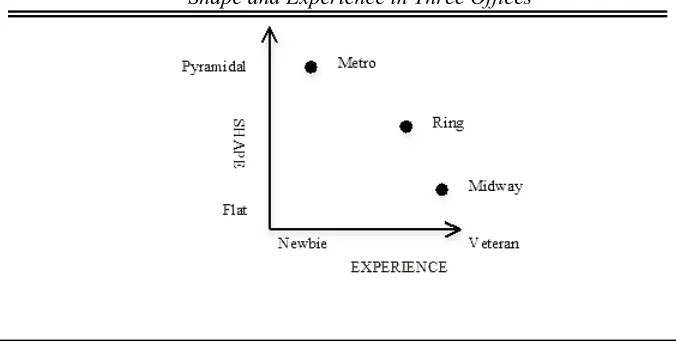
What we heard in those interviews sometimes surprised us, and at other times confirmed familiar assumptions about the prosecutor’s work. Two particular features of office structure drew our attention: the flat or pyramidal shape of the organization’s workforce and the preference for hiring experienced attorneys or recent graduates into entry-level positions. These features of the office’s social architecture correlate with distinctive professional identities of the prosecutors who work there. For example, attorneys who work in pyramidal offices and who are hired without experience (as in Metro County) tend to accept bureaucratic and group values. A strong team spirit marks their professional identities. On the other hand, attorneys in an office such as Midway County, characterized by a flatter structure and more experienced hires, display professional identities that are decidedly more independent; they feel no particular obligation to match their own outputs to the decisions of their peers or to the policies of their superiors. These are autonomous, rule-defying prosecutors. Surprisingly, an attorney’s team-member-versus-autonomous-actor identity correlates more strongly with his office’s social architecture than with his gender or race.
We also found that the prosecutor’s basic orientation toward autonomy or the team produced ripple effects on his relationships with other lawyers and police. Attorneys with a more autonomous professional identity tended to report more interest in the work of prosecutors outside their own office; they also dealt with the police in a more self-assured way. Lastly, our data suggest that a prosecutor’s professional identity might affect, or be reflected in, the outcomes she achieves in criminal cases and the consistency of those outcomes.
The argument proceeds as follows. After briefly reviewing the standard two dimensions of prosecutorial behavior in Part II.A, we turn in Part II.B to the third dimension of prosecution—office structure. We introduce there our theory, which traces the connections between office
4As with other theory-generating work, a great deal of work remains to elaborate and test the theories we develop here. Cf. Samuel Bloom, Socialization for the Physician’s Role: A Review of Some Contributions of Research to Theory, in BECOMING A PHYSICIAN:
DEVELOPMENT OF VALUES AND ATTITUDES IN MEDICINE 3 (Eileen Shapiro & Leah
structure, professional identity, and prosecutor outcomes. Part III describes our research methodology, as well as the three research sites for this study. In Part IV we present qualitative evidence from our research sites to support our hypothesis about the relationship between office shape and hiring preference and the professional identities of prosecutors. Part V considers the potential effects of the prosecutor’s self-identity on the output of the office.
By viewing prosecution through the lenses of social architecture and professional identity, we hope to make managers of prosecutors’ offices more effective in shaping the work of their attorneys. Our analysis also gives journalists, academic commentators, and other observers a basis for evaluating prosecutors in systemic and policy terms, rather than second-guessing prosecution choices in particular cases. Ultimately, an appreciation of the effects of office structure can give the voting public deeper insight about the work done in its name in the criminal courts.
The effects of the third dimension are sometimes difficult to notice, particularly for legally trained observers who tend to look for explicit rules as behavioral guideposts. This Article thus provides readers with a new way of seeing the state prosecutor. It is not the only way: studies of external institutional constraints and individual prosecutor character also offer valuable insights about prosecutors. We offer here (to invoke a famous metaphor) only one view of the Cathedral. To fully understand the institution of criminal prosecution, “one must see them all.”5
II.THREE DIMENSIONS OF CRIMINAL PROSECUTION
In an effort to understand the fascinating and multifarious work of criminal prosecutors, one could invoke several different perspectives, or units of analysis. Much of the legal scholarship focuses on the external environment of the prosecutor’s office, tracing the interaction between the prosecutor’s office and various other legal institutions, including the judiciary, legislatures, sentencing commissions, and others. The unit of analysis in this sort of work is a complete justice system, including all of its interlocking institutions. In contrast, the professional-development perspective on criminal prosecution takes the individual prosecutor as the unit of analysis, looking inward to the moral responsibility of the line prosecutor for the wise use of discretion. While external institutional relations and individual integrity offer two useful vantage points on the work of criminal prosecutors, there is a third possibility that receives surprisingly little attention: the effects that flow from the internal structure
5See Guido Calabresi & A. Douglas Melamed, Property Rules, Liability Rules and
of the prosecutor’s office.
A.THE EXTERNAL AND INDIVIDUAL DIMENSIONS OF PROSECUTION
Prosecutors have broad powers, and one might measure that breadth by mapping the outer boundaries that various legal actors and institutions set for prosecutorial discretion. Whether considered separately or together, those external institutions leave enormous room for prosecutors to shape criminal justice outcomes.6
The first place to look for external regulations on prosecutorial behavior is the criminal code crafted by the state legislature. Crime definitions and statutes authorizing penalties, however, tend over time to multiply—not restrain—the legal tools available to prosecutors. Legislators amend criminal codes to cover more behavior, to increase the range of punishments that apply to criminal behavior, and to intensify the overlap among criminal code provisions.7
Like the legislature, the judiciary usually does not temper the decisions of criminal prosecutors.8 When criminal defendants invite judges to
override prosecutors’ choices about filing or dismissing charges, judges view those requests through the lens of the separation of powers doctrine. In that light, prosecutorial decisions appear to be quintessential executive choices.9 Applying the formal law of due process, the judge considers only
6For more complete reviews of the practical limits on strategies for control of prosecutor discretion, see ANGELA J. DAVIS, ARBITRARY JUSTICE: THE POWER OF THE AMERICAN
PROSECUTOR (2007); Stephanos Bibas, Prosecutorial Regulation Versus Prosecutorial
Accountability, 157 U. PA. L. REV. 959 (2009); Donald A. Dripps, Overcriminalization,
Discretion, Waiver: A Survey of Possible Exit Strategies, 109 PENN ST.L.REV. 1155 (2005).
7See Rachel E. Barkow, Federalism and the Politics of Sentencing, 105 COLUM.L.REV. 1276 (2005); Sara Sun Beale, The Unintended Consequences of Enhancing Gun Penalties: Shooting Down the Commerce Clause and Arming Federal Prosecutors, 51 DUKE L.J. 1641
(2002); Paul H. Robinson & Michael T. Cahill, The Accelerating Degradation of American Criminal Codes, 56 HASTINGS L.J. 633 (2005). In settings where the criminal law regulates
business practices or where the pool of potential criminal defendants is already well organized, legislatures do sometimes repeal criminal statutes. See Darryl K. Brown, Democracy and Decriminalization, 86 TEX.L.REV. 223, 225 (2007).
8Of course, judges can control prosecutorial behavior inside their courtrooms. See, e.g., JAMES EISENSTEIN &HERBERT JACOB,FELONY JUSTICE:AN ORGANIZATIONAL ANALYSIS OF
CRIMINAL COURTS 21 (1977).
9See United States v. Batchelder, 442 U.S. 114, 125 (1979) (explaining that when there are two overlapping firearms statutes with different penalty schemes, the Government may choose which one to include in the indictment). As Judge Gerard Lynch famously phrased it, we now operate an “administrative” criminal justice system, where the important decisions typically happen in charging and plea negotiations, before the case ever makes it to trial. Gerard E. Lynch, Our Administrative System of Criminal Justice, 66 FORDHAM L.REV.
whether the charges have some minimal factual support in the available evidence; there is no “least restrictive alternative” requirement.10
While the willingness of legislatures and judges to shape the choices of prosecutors is muted, further potential checks might come from the voters who elect the chief prosecutor11 or from state bar authorities who license all
prosecuting attorneys in the jurisdiction.12 Like the legislators and the
judges, though, these institutions deliver less accountability for prosecutors than one might hope. Prosecutorial elections are marked by heavy incumbency advantages and empty rhetoric, and meaningful disciplinary sanctions from bar authorities tend to be few and far between.13
Taken together, these external institutions probably have some cumulative regulatory effects on prosecutors. They help to ensure that prosecutors’ actions comply with the law and with current public priorities. They do not, however, fully explain why prosecutors act the way they do. To understand prosecutorial actions, we have to consider more than the breadth of the power granted to prosecutors by other legal actors.
Some authors therefore have articulated a second dimension to prosecution, one that focuses on the individual prosecutor’s internal moral compass. According to this account, when it comes to exercising judgment, an attorney’s conscience keeps her in line. As an individual, and without prompting from others, she will behave responsibly despite the adversary pressures of her role. “A prosecutor is expected to possess moral and ethical principles, integrity, and the courage to do the right thing.”14 The
10 Judges, however, have reserved the right to overturn a prosecutorial decision in the rare case where a defendant stumbles upon proof that the decision was based on race, gender, or some other prohibited ground. See Oyler v. Boyles, 368 U.S. 448, 456 (1962) (stating that a prosecution may not be based on “an unjustifiable standard such as race, religion, or other arbitrary classification”).
11 See STEVEN W. PERRY, BUREAU OF JUSTICE STATISTICS, U.S. DEP’T OF JUSTICE,
PROSECUTORS IN STATE COURTS, 2005, at 3 (2006); Ronald F. Wright, How Prosecutor
Elections Fail Us, 6 OHIO ST. J. CRIM. L. 581, 589–91 (2009) [hereinafter Prosecutor
Elections]; Ronald F. Wright, Public Defender Elections and Popular Control over Criminal Justice, 75 MO.L.REV. 803 (2010).
12 Bar authorities bring few disciplinary proceedings against prosecutors, and light punishments are commonplace in the exceptional cases finding prosecutorial misconduct. See Angela J. Davis, The Legal Profession’s Failure to Discipline Unethical Prosecutors, 36
HOFSTRA L. REV. 275, 292 (2007); Fred C. Zacharias, The Professional Discipline of
Prosecutors, 79 N.C. L. REV. 721, 725–43 (2001). The notable exception to this trend is the
recent disbarring of Durham, North Carolina Prosecutor Mike Nifong, following his unsupported prosecution of three Duke University students for rape of an exotic dancer. Lara Setrakian & Chris Francescani, Former Duke Prosecutor Nifong Disbarred, ABC NEWS (June 16, 2007), http://abcnews.go.com/TheLaw/story?id=3285862&page=1.
13 See DAVIS, supra note 6, at 282–92; Wright, Prosecutor Elections, supra note 11, at 591–606.
prosecutor “may strike hard blows” but “is not at liberty to strike foul ones.”15
Such familiar quotes speak to the professional integrity of the prosecutor as an individual, and they may well characterize many of the professionals who hold this role. Indeed, for many prosecutors, one’s personal background, training, and professional experiences help to form and ground this internal moral compass, providing stability and guidance over time.16
But prosecutors—as professionals—are more than (or perhaps less than) the sum total of these individual traits and experiences.17
Observations about the individual character of a prosecuting attorney do not address the institutional environment in which she works or acknowledge
ASS’N MAG. Apr.–June 2009, at 4, 10.
15 Berger v. United States, 295 U.S. 78, 88 (1935). For a critique of the individualistic view of prosecutors underlying a recent Supreme Court decision, see Susan A. Bandes, The Lone Miscreant, the Self-Training Prosecutor, and Other Fictions: A Comment on Connick v. Thompson, 80 FORDHAM L.REV.715(2011).
16 A lawyer’s original ethnic, religious, and socioeconomic community has been found relevant to his place in the profession, see, e.g., JOHN P.HEINZ &EDWARD O.LAUMANN,
CHICAGO LAWYERS:THE SOCIAL STRUCTURE OF THE BAR (1982). Political party preference,
job experience, and gender have been found to be significantly related to attitudes about punishment and courthouse reputation. ROY B.FLEMMING,PETER F.NARDULLI &JAMES
EISENSTEIN,THE CRAFT OF JUSTICE:POLITICS AND WORK IN CRIMINAL COURT COMMUNITIES
75 (1992) [hereinafter THE CRAFT OF JUSTICE]. Recent studies of lawyers have paid special
attention to the development of connections to outsiders to gauge the depth and breadth of professional networks. See, e.g., JOHN P.HEINZET AL., URBAN LAWYERS:THE NEW SOCIAL
STRUCTURE OF THE BAR (2005); ROBERT L. NELSON ET AL., AFTER THE JD II:SECOND
RESULTS FROM A NATIONAL STUDY OF LEGAL CAREERS (2009), available at
http://www.law.du.edu/documents/directory/publications/sterling/AJD2.pdf; John P. Heinz & Edward O. Laumann, The Constituencies of Elite Urban Lawyers, 31 LAW &SOC’Y REV.
441 (1997); Anthony Paik, John P. Heinz & Anne Southworth, Political Lawyers: The Structure of a National Network, 36 LAW &SOC.INQUIRY 892 (2011).
17 See Howard S. Becker & James Carper, The Elements of Identification with an
Occupation, 21 AM.SOC.REV. 341 (1956); Meryl Reis Louis, Surprise and Sense Making:
What Newcomers Experience in Entering Unfamiliar Organizational Settings, 25 ADMIN.
SCI.Q. 226 (1980). The literature examining professional socialization has concentrated on
newcomers to the medical profession and for-profit business executives. For examples of the former, see DONALD LIGHT, The Moral Career of the Psychiatric Resident, in BECOMING
PSYCHIATRISTS:THE PROFESSIONAL TRANSFORMATION OF SELF 241, 241–58 (1980);
Apesoa-Varano, supra note 4; Brenda L. Beagan, “Even If I Don’t Know What I’m Doing I Can Make It Look Like I Know What I’m Doing”: Becoming a Doctor in the 1990s, 38 CAN.REV. OF SOC.&ANTHROPOLOGY 275 (2001); Bloom, supra note 4. For examples of studies in the
for-profit business sector, see LINDA A.HILL,BECOMING A MANAGER:MASTERY OF A NEW
IDENTITY (1992); Herminia Ibarra, Provisional Selves: Experimenting with Image and
Identity in Professional Adaptation, 44 ADMIN.SCI.Q. 764, 769 (1999); Abraham Sagie &
the interplay between the pressures of this environment and her personal values.18 Like most professionals who work in organizations, prosecutors
shape and filter their backgrounds to reinforce the professional image they want to achieve, in light of the expectations of the people around them. In short, while the internal dimension may reveal some personal truths, it does not account for structural aspects of the profession or illuminate geographic or temporal trends.
B.THE THIRD DIMENSION: THE INFLUENCE OF THE OFFICE The portrait of the prosecutor we find in the legal literature thus appears two-dimensional: not incorrect, but incomplete. When deciding how to do their jobs, prosecutors do more than simply listen to their own consciences or respond to (or ignore) outside legal, environmental, or policy pressures. They also work within the particular social architecture of their office and immerse themselves in attitudes about the job that come with membership in an organization. For scholars interested in understanding why prosecutors think and behave the way they do, the office is an important but previously understudied third dimension of prosecution.
Various organizational features of the prosecutor’s office—size of the workforce, status hierarchies, hiring strategies, job assignments, promotional ladders, access to the boss, and the like19—structure the
professional identities and work lives of the attorneys in the office. These aspects of the social architecture inside the office combine with aspects of the office’s external professional environment, such as the proximity to the
18 Academics frequently adopt this perspective when praising the willingness of prosecutors to consider more than wins and losses at trial. See David Luban, The Conscience of a Prosecutor, 45 VAL.U.L.REV. 1 (2010). Many published memoirs of state
prosecutors affirm the role of individual conscience, but emphasize the challenges that tend to prevent prosecutors from following that guidance consistently. See DAVID HEILBRONER,
ROUGH JUSTICE:DAYS AND NIGHTS OF A YOUNG D.A. (1990) (Manhattan); SARENA STRAUS,
BRONX DA:TRUE STORIES FROM THE SEX CRIMES AND DOMESTIC VIOLENCE UNIT (2006);
JOHN SUTHERS,NO HIGHER CALLING,NO GREATER RESPONSIBILITY:APROSECUTOR MAKES
HIS CASE (2008) (Colorado).
19 For example, others have documented the particular impact of specialized prosecution units on the exercise of prosecutorial discretion, see Dawn Beichner & Cassia Spohn, Prosecutorial Charging Decisions in Sexual Assault Cases: Examining the Impact of a Specialized Prosecution Unit, 16 CRIM.JUST.POL’Y REV. 461 (2005); David C. Pyrooz et al.,
Gang-Related Homicide Charging Decisions: The Implementation of a Specialized Prosecution Unit in Los Angeles, 22 CRIM.JUST.POL’Y REV. 3 (2011), and on the inverse
relationship between office size and rate of declination, see Michael Edmund O’Neill, Understanding Federal Prosecutorial Declinations: An Empirical Analysis of Predictive Factors, 41 AM.CRIM. L. REV. 1439, 1447–48 (2004). For a discussion of the general
courthouse, relationships with the defense bar, relationships with the judiciary, stability of courtroom personnel, and docket size and diversity, to produce the overall institutional environment.
1.The Office as a Unit of Analysis in Prior Literature
More than a generation ago a handful of socio-legal scholars set out to explain the influence of the prosecutor’s office on the individual prosecutor’s job. More specifically, they looked for external relationships or environmental factors that might affect a prosecutor’s willingness to plea bargain. For example, in her classic work Settling the Facts, Pamela Utz identified a number of institutional conditions responsible for producing variability in plea-bargaining rates in two California jurisdictions: Alameda County and San Diego County.20 She concluded that Alameda’s
comparatively higher rates of negotiated pleas resulted from the interaction of legal institutions in that county, along with aspects of the broader political and social climates. First, she pointed to the relatively strong public defense bar and the active role of the Alameda County judiciary in twisting arms to secure pleas in advance of trial.21 Second, she reported
that Alameda had long suffered from high rates of violent crime, while San Diego had only recently experienced an upsurge in those crimes.22 San
Diego also had a more conservative population than Alameda,23 which left
the office leadership unwilling to appear soft on crime through negotiations with defendants.24
A few years later Leonard Mellon, Joan Jacoby, and Marion Brewer studied ten jurisdictions across the United States, looking for structural features that “affect the uniformity, the quality, and the equality of justice administered by local prosecutors.”25 The authors concluded that in some
20 PAMELA J.UTZ, SETTLING THE FACTS:DISCRETION AND NEGOTIATION IN CRIMINAL COURT (1978).
21 See UTZ, supra note 20, at ch. 9; see also THE CRAFT OF JUSTICE, supra note 16, at 24– 37 (arguing that chief prosecutors choose one of three political styles—courthouse insurgent, policy reformer, or office conservator—based on strategic concerns over their status vis-à-vis the bench and the defense bar and personal views about the expected value of creating conflict by changing this status).
22 See UTZ, supra note 20, at xi. Utz also discussed the management styles of the office leadership—San Diego tightly supervised its deputies, while Alameda was more loosely organized and allowed its employees to exercise independent judgment—but these factors were peripheral to the question she intended to study. The core question of her study was why one office allowed more discretion in case handling than the other. Her insights about control from the top will, however, be useful to us in our discussion of internal structural features that influence professional identity.
23 UTZ, supra note 20, at 43–44. 24 Id. at 51–67.
places, “the external environment imposes substantial limits on a prosecutor’s ability to act.”26 For example, they found that caseload size,
prosecutors’ trust in the local police force, the demographic character of the jurisdiction, funding sources, and the values of the underlying community can all influence policies adopted by the prosecutor’s office.27
These first-generation works catalogued the myriad ways that the external environment constrains or enables work in the prosecutor’s office. Because the prosecutor’s office is only one institution in a much larger community of socio-legal actors with competing interests, these external relationships bear heavily on the results that prosecutors tend to get with their discretionary power.
Our theory of prosecution, like this earlier work, treats the office as an important unit of analysis, but we take the institutional insights in a different direction. Rather than focusing on the extrinsic influences on prosecutorial decisionmaking, we suggest that internal features of the prosecutor’s office frame the professional identities of prosecutors in substantial ways. By professional identities, we mean those “attributes, beliefs, values, motives, and experiences in terms of which people define themselves in a professional role.”28 Furthermore, while the earlier
generation of studies sought direct connections between environmental features and case outputs, our theory proceeds in two stages rather than one. We do not leap directly from internal office characteristics to prosecutorial outputs. We instead theorize that office features primarily affect or reinforce the professional identities of the prosecutors who work there; the influence of this identity might then be refracted, like light through a prism, to alter prosecutorial choices about plea bargaining, relationships with police and other attorneys, approaches to disclosure obligations, and the
by His Environment: A New Look at Discretionary Justice in the United States, 72 J.CRIM.
L.&CRIMINOLOGY 52, 52 (1981); see also JOAN E.JACOBY,THE PROSECUTOR’S CHARGING
DECISION: APOLICY PERSPECTIVE 2, 4 (1977). All were large offices, but the sample
contained regional diversity, including Detroit, Brooklyn, Miami, San Diego, Seattle, New Orleans, Gary, Salt Lake City, Norfolk, and Boulder. Mellon et al., supra, at 52–53 n.1, 77 n.58.
26 Mellon et al., supra note 25, at 53.
27 Id. at 60–65; see also JACOBY,supra note 25, at 2, 4. For more recent work on the correlation between community poverty levels, community political conservatism, and prosecutorial dismissals, see Travis W. Franklin, Community Influence on Prosecutorial Dismissals: A Multilevel Analysis of Case- and County-Level Factors, 38 J.CRIM.JUST. 693
(2010). For recent work documenting the correlation between community demographics and prosecutorial willingness to file charges with mandatory minimum sentences, see Jeffrey T. Ulmer et al., Prosecutorial Discretion and the Imposition of Mandatory Minimum Sentences, 44 J.RES.CRIME &DELINQ. 427 (2007).
like. In other words, the architectural features we discuss do not themselves cause prosecutors to handle cases a certain way. Rather, they incline prosecutors to think of themselves and their professional role in a certain way, and this role orientation can motivate prosecutors to make certain professional decisions.
In support of our hypothesis that structures within the prosecutor’s office matter to our understanding of the prosecutor’s job, we take seriously the insights of Roy Flemming, Peter Nardulli, and James Eisenstein, who first brought attention to the relationship between the organization of a prosecutor’s office and the political style of its leader.29 In their focus on
more than just the work product of the organization’s employees, Flemming and his coauthors advocated for studies of criminal justice institutions that address more than the “bottom line” of outputs. They warned that limiting research on criminal institutions to case outcomes “would be like limiting research on Congress to votes.”30 In other words, to understand fully an
institution that operates through seemingly independent units, scholars must do more than simply observe and record the end products generated by the individual units. When institutional fabric ties individuals together, what appear to be independent choices may in fact be decisions colored by institutional roles and expectations. For that reason, the institutional fabric itself deserves study, separate and apart from the institutional outputs. We wholeheartedly agree, and thus have designed a study of the prosecutor’s organization, as distinct from the outcomes that prosecutors produce.
We part ways with Flemming and his coauthors when it comes to the significance of social architecture in a prosecutor’s office. They treated office structure as a concrete embodiment of the chief prosecutor’s political style and personality.31 Because our concern is the professional identity of
the workforce rather than of the boss, we are interested more in identifying the downstream effects of these structures than in tracing their sources.
The connection between office structures and professional identity is not unique to criminal prosecutors; it is a common feature of professional life. Coining the phrase “moral career” to describe the dialectical
29 THE CRAFT OF JUSTICE, supra note 16, at 37–38. For Flemming and his co-authors, the structure of the prosecutor’s organization mostly reflects the political style of its leader as an insurgent, a reformer, or a conservator.
30 PETER F.NARDULLI,JAMES EISENSTEIN &ROY B.FLEMMING, THE TENOR OF JUSTICE: CRIMINAL COURTS AND THE GUILTY PLEA PROCESS 368 (1988).
relationship between one’s personal values and the interests or expectations of one’s professional community,32 sociologists have demonstrated in
various settings that internal routines within an office can have a profound effect on the professional identities of the workers.33 Moreover, one’s
professional identity is likely to change over time, particularly for professionals who make career transitions that require them to display new skills and attitudes as they adjust to new colleagues and new work environments.34
Applying this insight to lawyers, the moral career (or professional identity) of the attorney results from the interplay between that attorney’s personal values and the professional environment in which he works. The professional environment, which includes the office environment but extends further into the norms and practices of the legal profession itself, is thus one major driver of the attorney’s professional identity. Studies of legal aid, criminal defense, and nonprofit lawyers, with their distinctive motivations and professional goals, provide vivid examples of this moral career unfolding.35 We offer here a close-up look at the moral career of the
32 Erving Goffman, The Moral Career of the Mental Patient, in ASYLUMS 125, 169 (1961); DONALD E. SUPER, THE PSYCHOLOGY OF CAREERS: AN INTRODUCTION TO
VOCATIONAL DEVELOPMENT (1957); LIGHT,supra note 17, at 241–58.
33 For example, studies of health-care professionals show how a person’s career “takes place in and is shaped by the structure” of the professional community. LIGHT, supra note
17, at 244. The literature examining professional socialization is particularly well developed in the fields of medicine and business. For examples of the former, see LIGHT, supra note
17, Apesoa-Varano, supra note 4, and Beagan, supra note 17. For examples in the for-profit business sector, see HILL,supra note 17, and Ibarra, supra note 17.
34 See Nigel Nicholson, A Theory of Work Role Transitions, 29 ADMIN. SCI.Q. 172 (1984); Ibarra, supra note 17, at 765. In the socialization process, people assume new roles and learn the appropriate “display rules” that accompany their new roles; they do so in order to assimilate into their new environment and eventually to internalize the proper identity, whether “custodial” (accepting of the status quo) or “innovative” (inclined to make changes). John Van Maanen & Edgar H. Schein, Toward a Theory of Organizational Socialization, in
RESEARCH IN ORGANIZATIONAL BEHAVIOR 209, 228–29 (Barry M. Staw ed., 1979)
(describing the difference between custodial orientation, content innovative orientation, and role innovative orientation as fostered by office culture); Robert Sutton, Maintaining Norms about Expressed Emotions: The Case of Bill Collectors, 36 ADMIN. SCI.Q. 245 (1991).
Otherwise, they risk losing effectiveness or authority. See Mark R. Leary & Robin M. Kowalski, Impression Management: A Literature Review and Two-Component Model, 107 PSYCHOL.BULL. 34, 38 (1990).
35 For studies of lawyers who work with disadvantaged populations, see, e.g., Carrie
Menkel-Meadow, The Causes of Cause Lawyering: Toward an Understanding of the
Motivation and Commitment of Social Justice Lawyers, in CAUSE LAWYERING:POLITICAL
COMMITMENTS AND PROFESSIONAL RESPONSIBILITIES 31, 33 (Austin Sarat & Stuart
Scheingold eds., 1998); Margareth Etienne, The Ethics of Cause Lawyering: An Empirical
Examination of Criminal Defense Lawyers as Cause Lawyers, 95 J. CRIM. L. &
state prosecutor, placing a spotlight on particular aspects of the office environment that might influence or reinforce the professional identities of the prosecutors who work there.
2.Explicit Policies as Office Structures
Which office structures correlate with the prosecutor’s professional identity? A study of the third dimension of prosecution might naturally start with explicit policies, announced by the Elected36 or the chief
assistant,37 that restrict the discretion of individual line prosecutors.38 Such
policies exist in most places, at least as to certain crimes or certain courtroom issues.39 To be sure, bureaucratic life gives an employee plenty
of ways to evade the commands of the boss.40 Nevertheless, it is
Life and Fractured Ego of the Empathic, Heroic Public Defender, 37 U.C.DAVIS L.REV.
1203 (2004); Marina Zaloznaya & Laura Beth Nielsen, Mechanisms and Consequences of Professional Marginality: The Case of Poverty Lawyers Revisited, 36 LAW &SOC.INQUIRY
919 (2011). For a study of lawyers who work for politically conservative organizations, see ANNE SOUTHWORTH,LAWYERS OF THE RIGHT (2008); Anthony Paik, Ann Southworth & John
P. Heinz, Lawyers of the Right: Networks and Organization, 32 LAW &SOC.INQUIRY 883
(2007).
36 Throughout this Article, we refer to the chief prosecutor of the office (the District Attorney or the Solicitor General) as “the Elected” because this is the term prosecutors commonly use to refer to their bosses.
37 The chief assistant in a prosecutor’s office is akin to the chief operating officer of a corporation; she is the leader of the trial line attorneys, as well as the administrative decisionmaker on most day-to-day matters. Her work in this regard frees up the Elected to focus on political duties or external relationships. For the office to function well, she must be a highly trusted and loyal associate of the Elected. See THE CRAFT OF JUSTICE, supra note
16, at 38.
38 See Rachel E. Barkow, Organizational Guidelines for the Prosecutor’s Office, 31
CARDOZO L.REV. 2089 (2010); Alissa Pollitz Worden, Policymaking by Prosecutors: The
Uses of Discretion in Regulating Plea Bargaining, 73 JUDICATURE 335, 335 (1990)
(describing the prevalence of internal office policies). Note, though, that prosecutorial policies may be somewhat primitive; as Norman Abrams put it, “most often they amount to elementary instruction books for junior prosecutors . . . .” Norman Abrams, Internal Policy: Guiding the Exercise of Prosecutorial Discretion, 29 UCLA L. REV. 1, 8 (1971).
39 See Roy B. Flemming, The Political Styles and Organizational Strategies of American
Prosecutors: Examples from Nine Courthouse Communities, 12 LAW &POL’Y 25, 26 (1990)
(“Prosecutors, when compared to the other major actors in the courthouse, face few constraints in constructing offices that will follow their policies . . . Prosecutors have more freedom and less compunction in restricting the autonomy of their assistants.”). The policies might also establish monitoring and enforcement mechanisms to learn about departures from the announced policies and to discourage them. See George T. Felkenes, The Prosecutor: A Look at Reality, 7 SW. U. L. REV. 98, 108 (1975) (“The characteristics of his work
environment which greatly shape his own concept of the role he plays must include the nature of the organization which employs him, the methods used for the measurement of success, and his position in the judicial system.”).
commonplace for a chief prosecutor to declare a policy on an important topic and to make the policy stick.41 Such formal bureaucratic controls are
a routine part of the prosecutorial services in many other countries.42
Yet explicit policies in state prosecutors’ offices form only a thin visible crust on a deep set of office structures that shape or reinforce attorney identity. To understand why this is so, compare the shallow reach of a state prosecutor’s office policies to the deeper policies at work in other organizations that employ lawyers, such as administrative agencies or large private law firms. Administrative agencies generate an enormous volume of internal directives for how employees should interpret and enforce agency rules, in order to regularize their employees’ behavior.43 The
proliferation of these documents is likely a result of the enormous size of the agency staff and the funding and sophistication of the opposition.44
These factors do not come into play for the typical state criminal prosecution.
In the private law firm setting, the amount of client money at stake, the sophistication of negotiating or litigating counterparts, and the comparatively light caseload leads to closer supervision for junior attorneys than the typical state prosecutor’s office can provide for its new prosecutors.45 Unlike the decisions of a new prosecutor, any work product
(proposing that because “a high percentage of the deviant acts are committed by a small percentage” of the participants, organizations should devote extensive resources to screening new recruits); THE CRAFT OF JUSTICE, supra note 16, at 62–65 (describing how prosecutors
work around policies they feel are too restrictive).
41 The Elected can even force change on a significant issue, like plea bargaining, that is central to the daily work of the office. See Mary P. Brown & Stevan E. Bunnell, Negotiating Justice: Prosecutorial Perspectives on Federal Plea Bargaining in the District of Columbia, 43 AM.CRIM.L.REV. 1063, 1080–83 (2006); Wright & Miller, supra note 1, at 57.
42 See David T. Johnson, The Organization of Prosecution and the Possibility of Order, 32 LAW &SOC’Y REV. 247 (1998) (comparing American and Japanese prosecutors in their
emphasis on consistency). See generally Kay Levine & Malcolm Feeley, Prosecution, in
THE INTERNATIONAL ENCYCLOPEDIA OF THE SOCIAL AND BEHAVIORAL SCIENCES 12224
(2001) (comparing various countries on the degree of discretion possessed by individual prosecutors in the bureaucracy).
43 See Robert A. Anthony, Interpretive Rules, Policy Statements, Guidances, Manuals,
and the Like—Should Federal Agencies Use Them to Bind the Public?, 41 DUKE L.J. 1311
(1992); Peter L. Strauss, The Rulemaking Continuum, 41 DUKE L.J. 1463, 1446 (1992).
44 See Peter L. Strauss, Publication Rules in the Rulemaking Spectrum: Assuring Proper
Respect for an Essential Element, 53 ADMIN. L. REV. 803, 805–06 (2001) (describing
of a junior attorney at a large law firm receives multiple internal reviews before it goes out the door.46 The bare-bones funding available for state
prosecutors and for their usual adversaries creates an environment different from the large law firm or the administrative agency. The structural features of criminal justice work make formal policies less frequent, and less salient, for new prosecutors at the state level.
3.Organizational Shape and Hiring Preference as Office Structures Given the scarcity of explicit instructions or direct oversight by the Elected or her chief assistant, our concept of the third dimension of prosecution must be more layered, accounting for unarticulated forces as well as explicit office policies.47 We could consider, among other things,
how the leadership articulates the organization’s priorities,48 the provision
of internal training opportunities, the size and diversity of the docket, the supervisory structure, the typical progression (if any) of assignments in the office, and the ways in which the physical layout divides or joins employees.49 While these are all rich topics, we highlight here50 two
interests to outsiders. We suspect this is at least partly the result of caseload size. In many firms, junior associates work on a handful of matters at any given time; in contrast, the junior prosecutor is likely to have 75–100 cases on her desk.
46 Moreover, the lawyers in private law firms devote considerable energy to the salary structures in the firm and insist on detailed and transparent monitoring and evaluation systems for the work of each attorney on the payroll. See MICHAEL J.KELLY,LIVES OF
LAWYERS REVISITED: TRANSFORMATION AND RESILIENCE IN THE ORGANIZATIONS OF
PRACTICE (2007) (comparing law firm cultures and emphasizing transparent compensation
structures as a key determinant of office values); Elizabeth Chambliss, Measuring Law Firm Culture, 52 STUD.L.POL.&SOC’Y 1 (2010).
The large size of the federal prosecutorial bureaucracy and the relative sophistication and funding available to at least some federal defendants also help to explain why that prosecutorial service is so different from the typical state prosecutor’s office and is subject to more well-developed written policies. Assistant U.S. Attorneys (AUSAs) also face discipline from a well-developed monitoring and enforcement operation within the Department of Justice. E-mail from Jennifer Collins, former AUSA, to Kay Levine & Ronald Wright (Jan. 4, 2012, 4:51 PM EST) (on file with authors).
47 See Felkenes, supra note 39 (providing an anecdotal account of the socialization of new prosecutors); Jeffery T. Ulmer & John H. Kramer, The Use and Transformation of Formal Decision-Making Criteria: Sentencing Guidelines, Organizational Contexts, and Case Processing Strategies, 45 SOC.PROBS. 248, 262–65 (1998).
48 See THE CRAFT OF JUSTICE,supra note 16, at 25.
49 Thomas Winfree Jr. and his coauthors, in their study of the socialization of law student interns in prosecutors’ offices, also examined structural aspects of the office, but they were concerned with those features that affected the interns’ experiences, such as the appointment of an intern supervisor and prosecutors’ willingness to give substantive assignments to law students. See L. Thomas Winfree, Jr., et al., On Becoming a Prosecutor: Observations on the Organizational Socialization of Law Interns, 11 WORK &OCCUPATIONS 207 (1984).
features whose relationship to professional identity may seem less obvious: organizational shape and hiring preference.
Shape: The “organizational shape” variable refers to the division of labor among line prosecutors in one office. It is customary in the legal and sociological literature to treat hierarchical office structures and specialization among attorneys as the environmental norm for criminal prosecutors.51 This Weberian version52 of the prosecutor’s office is
overinclusive and leads us to ignore important differences among offices. There are thousands of independent state prosecutors’ offices in the country, most of which contain only a few prosecutors in addition to the Elected.53 Given their small size, the opportunities for hierarchical
supervision and specialization in most offices are severely limited. Even among the midsize and larger prosecutor’s offices, we suspect one can find meaningful variety in organizational shape because the shape of each office reflects the unique combination of environmental forces and the personal priorities of the Elected.
We see organizational shape as a variable that captures both the level
50 In the discussion that follows in Part III, we discuss some of these other architectural features of each office as they become relevant.
51 See, e.g., DAVID T.JOHNSON,THE JAPANESE WAY OF JUSTICE:PROSECUTING CRIME IN
JAPAN 119 (2002) (“On the surface, organizations of prosecutors in Japan and in America
may look much alike: they are bureaucratic; they distinguish between operator, manager, and executive roles; . . . they promote workers on the basis of some combination of merit and seniority . . .”); Jerald W. Cloyd, The Processing of Misdemeanor Drinking Drivers: The Bureaucratization of the Arrest, Prosecution, and Plea Bargaining Situations, 56 SOC.
FORCES 385, 385 (1977) (observing, based on empirical research in San Diego, that
prosecution has become “immersed in large bureaucratic structures that emphasize standardized procedures, specialization of activities, hierarchical decisionmaking, and the sanctity of written reports and records”); Felkenes, supra note 39, at 115–16 (observing, based on surveys of prosecutors in California and Alabama, that the “office of the prosecuting attorney as an ideal bureaucratic structure is characterized by the hierarchy of authority, the complete elimination of personalized relationships, the high degree of specialization within the office, and the elimination of nonrational considerations such as hostility, anxiety, and affectual involvements”). The only two contrary treatments we found in the literature (that is, studies that acknowledge the existence of alternative shapes) are THE
CRAFT OF JUSTICE, supra note 16, at 40–47, and Mellon et al., supra note 25, at 74–77.
52 See MAX WEBER, THE THEORY OF SOCIAL AND ECONOMIC ORGANIZATION 329–41
(A.M. Henderson & Talcott Parsons trans., 1947).
53 Among the 2,344 felony state prosecutors’ offices in existence in 2005, half served jurisdictions containing fewer than 37,000 people, and more than 85% served populations of 250,000 or less, what researchers regard as a “small” jurisdiction. See PERRY,supra note 11,
at 2; Ronald F. Wright, Padilla and the Delivery of Integrated Criminal Defense, 58 UCLA L.REV. 1515, 1523 (2011). Small offices typically have very small staffs; for example, in
2001, offices serving populations of 250,000 or less averaged only three assistant prosecutors plus one elected DA. CAROL J.DEFRANCES, BUREAU OF JUSTICE STATISTICS,
of supervision and the specialization of assignments in an office.54 It runs
from the flat to the gently hierarchical to the steeply pyramidal. The flat office is marked by egalitarianism and the absence of specialization among the staff.55 The line attorneys in a flat office are subordinate to the Elected
(and possibly to a chief assistant) but are essentially coequals to each other. They do not work under midlevel supervisors; they do not jockey for promotions because there are no promotional ladders for them to climb. Where specialized units exist, they are nothing more than alternative assignments, without conveying any sense of “moving up” in the office. Any articulated office policies tend to apply to the entire office, rather than to subgroups.
While egalitarianism and generalization are the hallmarks of the flat office, pyramidal offices show high levels of hierarchy and specialization.56
When it comes to hierarchy among the prosecutors in such offices, the most steeply pyramidal offices use several levels of supervision, including close monitoring at the unit level and culminating with the Elected and his chief assistant at the very top. The attorney assignments in the most pyramidal offices also reinforce the hierarchy. Seriousness of crime and prestige of assignment increase the higher up the pyramid one goes. Line attorneys at the lowest level of the pyramid have the least experience in the office and consequently receive the least desirable (and least risky) assignments; they are subject to at least one level of review for decisions of any consequence. Each attorney earns more plum jobs and more freedom from surveillance through success in the office over time.
With regard to specialization, designated groups of prosecutors handle certain types of cases (misdemeanors, drugs, and so forth) or certain phases of the adjudicatory process (such as screening, preliminary hearings, and trials). Specialization allows the attorneys to develop relationships with defense attorneys and police who regularly handle those sorts of cases.
54 We do not believe that this property is an exclusive function of the office docket. While offices with mixed (felony and misdemeanor) caseloads may be more inclined toward hierarchy, offices with homogeneous caseloads might fall anywhere on the shape axis. That is, an office that exclusively handles misdemeanors might be flat or might be hierarchical, depending on the preference and leadership style of the Elected. See THE CRAFT OF JUSTICE,
supra note 16, at 39.
55 This is akin to the “clan” office described by Flemming and his colleagues and the “unit” style office described by Mellon and his colleagues. THE CRAFT OF JUSTICE, supra
note 16, at 45; Mellon et al., supra note 25, at 74.
56 This organizational configuration calls to mind Max Weber’s rational legal
Moreover, team members can regularly share information about emerging defense tactics, enabling them to create a shared strategic response.57 A
supervisor leads each group and develops group-specific policies to supplement the office-wide policies. Team supervisors create a middle level of management for the office,58 although in smaller offices the Elected
might personally supervise each of the specialty units.
We hypothesize that the differences in office shape one finds among offices correlate with strikingly different professional identities and values among prosecutors. An attorney working in an office subunit, distinguished by attorneys with similar skills assigned to handle similar assignments, will tend to look to her peers in that subunit, rather than to attorneys in other units with distinct responsibilities, for advice and role models. Attorneys in this setting will treat prosecution as an exercise of group wisdom. Additionally, the prosecutor who is monitored by multiple levels of supervisors, who enforce a combination of team-specific and office-wide policies, is likely to be more comfortable with the burden of justification and accountability (those who are uncomfortable with these restrictions will likely seek work elsewhere). In contrast, an attorney who works in a flat office is more likely to bristle at the possibility of horizontal and vertical controls on the exercise of her individual judgment.
Hiring Preference: Turning to our second structural feature, an Elected must choose a hiring strategy for the office to keep the staff at full strength.59 Those hiring preferences could be based on alumni networks
(e.g., for graduates of certain law schools) or on geography (e.g., for lawyers who grew up within the jurisdiction). Here we focus on a particular kind of preference, for experience—that is, for entry-level applicants who possess prosecutorial experience at the time of hiring. Electeds on one end of this axis prefer to hire experienced prosecutors (veterans) whenever possible; Electeds on the other end recruit exclusively from the ranks of recent law school graduates (newbies).
57 See Cloyd, supra note 51, at 395–96. Whether the creation of a specialized unit actually affects filing decisions is up for debate. See, e.g., Beichner & Spohn, supra note 19, at 490; Pyrooz et al., supra note 19, at 17.
58 There may even be multiple levels of supervisors, as Bruce Frederick and Dan Stemen found in their study of the Midwestern County District Attorney’s Office. See BRUCE
FREDERICK &DAN STEMEN,THE ANATOMY OF DISCRETION:AN ANALYSIS OF PROSECUTORIAL
DECISION-MAKING, FINAL REPORT TO THE NATIONAL INSTITUTE OF JUSTICE 5 (Grant No.
There are costs associated with both approaches. Veterans command larger salaries than newbies, but taking on newbies requires a commitment to train them and to endure months or years of underdeveloped judgment. There are also benefits associated with both approaches: veterans can “hit the ground running” when it comes to case management and courtroom technique, but newbies are easier to mold and may develop longer-term loyalty to the office, regarding themselves as home-grown talent who should repay the investment in their professional development.60
We hypothesize that an office with a hiring preference for experience is more likely to employ prosecutors who think of themselves as self-sufficient, who see relatively little reason to look to others in their current office for guidance, and who are relatively reluctant to accept close supervision from team leaders or others. Offices stocked with newbies are more likely to employ prosecutors who are comfortable with, and perhaps even comforted by, multiple levels of control over their decisionmaking both horizontally (by peers) and vertically (by supervisors).
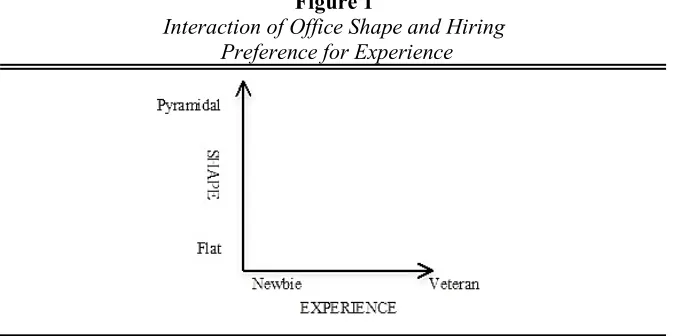
[image:22.612.139.476.344.512.2]Putting the pieces together, the two structural options we have described can be organized as in Figure 1.
Figure 1
Interaction of Office Shape and Hiring Preference for Experience
In theory, an Elected might combine any particular point on the shape axis with any given preference on the experience axis, although leadership style, budgets, docket diversity, applicant-pool limitations, and other practical restraints make some combinations more likely than others to arise in certain places.
For example, although the management style and personality of the Elected in even the smallest office might add some pyramidal elements to an otherwise flat structure,61 we suspect there is some correlation between
large office size and pyramidal structure, even though the structure itself performs the critical role in our theory. That is, given the inevitable specialization and levels of supervision that large organizations tend to require,62 we predict that larger prosecutors’ offices in the United States
would be located in the upper half of Figure 1.63 Varied dockets may also
push an office toward a more pyramidal shape. An Elected with jurisdiction over both misdemeanors and felonies is more likely to require some specialization among the staff attorneys, and diverse caseloads will increase the benefits of specialized work and midlevel supervision to assure quality control.64
There may also be a weak correlation between office shape and hiring preference. For example, although some larger offices may have the funds to hire the occasional expensive veteran to perform a specialized training or supervisory role, we surmise that offices in the top right-hand corner of the graph (pyramid plus a preference for hiring veterans into entry-level positions) are few and far between at the state level. An Elected who hires veterans into the bottom levels of a steeply pyramidal office can expect high turnover.65 Veterans are inclined to be “chiefs,” rather than “Indians,” to
borrow an impolitic analogy from one of our interviewees.66 For that
61 More active day-to-day supervision by the Elected in a smaller office, combined with more stable assignments to specialty areas, could push a smaller office up into the midrange of the pyramidal axis, even without a set of midlevel supervisors. THE CRAFT OF JUSTICE,
supra note 16, at 39 (noting that even smaller offices can possess bureaucratic features because “bureaucracy evolve[s] out of political styles and their related policy needs as much as from the problems associated with increasing size”).
62 See WEBER, supra note 52.
63 This is consistent with the findings of Flemming and his colleagues in THE CRAFT OF JUSTICE, supra note 16, at 39 (“[T]he bigger offices . . . were centralized, hierarchical, and
formally supervised.”).
64 On the other hand, offices with less diverse dockets may need to adopt flatter shapes in order to promote attorney job satisfaction, particularly if the Elected has a hiring preference for experienced attorneys. See Nicholson, supra note 34, at 178–79 (explaining that positions of high discretion keep employees from becoming unhappy and frustrated at work). We thank Darryl Brown for this insight.
65 Given the pay and prestige associated with that position in a pyramid office, the job is not particularly attractive to attorneys who have gained experience and salary elsewhere. Even in the Manhattan DA’s office, regarded as one of the most prestigious state offices in the country, David Heilbroner was nearly the only member of his 50-person cohort who had taken the bar more than a few months before starting the job. See HEILBRONER, supra note
18, at 17.