ii
Acknowledgements
We would like to extend our thanks to all the participants who took time to give their invaluable feedback to this evaluation. We would like to thank Suicide or Survive for
commissioning this evaluation and for their support throughout. We are grateful to the HSE National Office for Suicide Prevention for funding the evaluation. We would also like to thank Governor and Prison Officers at Wheatfield Prison for their support during this evaluation study.
About the Authors
Louise Doyle is an assistant professor of mental health at the School of Nursing and Midwifery, Trinity College Dublin.
Marié T. O’Shea is a researcher at the School of Nursing and Midwifery, Trinity College Dublin.
Brian Keogh is an assistant professor of mental health at the School of Nursing and Midwifery, Trinity College Dublin.
Jan de Vries is an assistant professor of psychology at the School of Nursing and Midwifery, Trinity College Dublin.
Pádraig McBennett is a clinical nurse tutor in mental health at the School of Nursing and Midwifery, Trinity College Dublin.
Agnes Higgins is a professor of mental health at the School of Nursing and Midwifery, Trinity College Dublin.
The report may be cited as follows: Doyle L., O’Shea M.T., Keogh B., de Vries J., McBennett P. and Higgins A. (2014) Suicide or Survive: Wellness Workshop Evaluation Report Dublin: School of Nursing and Midwifery Trinity College Dublin.
iii
Table of contents
Executive Summary...………...1
Chapter 1. Introduction and Background to the Evaluation Introduction………...10
Mental Health and Wellness Promotion through Education………....10
The SOS Wellness Workshop…….………..12
The 2012 SOS Workshop Evaluation Study and Changes Made………...13
The Wellness Workbook………...15
The Wellness Workshop in Wheatfield Place of Detention………...15
Mental Health and Mental Health Promotion in Prisons………...17
Summary………..………...19
Chapter 2. Methods Introduction………...20
Aims and Objectives……….20
Research Design……….…….21
Questionnaire Design…….……….….…..…22
Repeated Measures……….….…...24
Recruitment and Data Collection………...25
Sample………...26
Data Analysis………...27
Ethical Considerations……….………...28
iv
Demographic and Respondent Profile………..….30
Recruitment of Participants and their Motivation to Attend……….….……..…34
Overall Views on the Wellness Workshop……….………..…...36
Recommending the Wellness Workshop………...39
Impact of the Workshop………...41
Attitudes Towards Mental Health (AMH)………...42
Predicting the Impact of the Workshop………..……….…….…...47
Recommendations for Improvement………..………...48
Summary………….………...………….………...………….……….……..49
Chapter 4. Qualitative Results - General Population Introduction………...51
Perspectives of the Wellness Workshop-Motivations for Attending and Overall Experience………...….53
Participants Expectations of the Wellness Workshop Prior to Attending……….…...…54
Participants Overall Perceptions of the Wellness Workshop……….………..…...55
Applying the principles of the Wellness Workshop – Using Ordinary Strategies to Manage Mental Health………...58
Taking Responsibility for your own Mental Health ………...62
Participants Perceptions of Mental Distress and Suicide following Attendance at the Wellness Workshop………...63
Suggestions for Improvement of the Wellness Workshop………..………….…...65
Summary………….………...………….………...………..….………67
Chapter 5. Survey Results - Prison Population Introduction………...73
Demographic and Respondent Profile ……….….73
v
Overall Views of the Wellness Workshop………...78
Recommending the Wellness Workshop.………...…...80
Impact of the Workshop…………...81
Attitudes Towards Mental Health………..………….…….…….…….……….…….……...84
Summary………….………...………….………...………..….………...….…85
Chapter 6. Qualitative Results from the Interviews Conducted with the Participants who were in Prison Introduction………...87
Managing Mental Health within the Prison Environment……….……….….87
Perspectives of the Wellness Workshop – Motivations for Attending / Expectations….91 Overall Experiences………..………...93
Applying the Principles for the Wellness Workshop – Managing the Stress of Prison Life………...95
Participants Perceptions of Mental Distress and Suicide following Attendance at the Wellness Workshop…………...100
Suggestions for Improvement of the Wellness Workshop within the Prison Environment………..………….…….…….…….…….…….…….…….…….…….………..…...101
Summary………….………...………….…...………….……….………...…..……….…..105
Chapter 7. The Wellness Workbook Introduction………...107
The Wellness Workbook – General Population Survey Results……….………..………107
Utilisation of The Wellness Workbook………107
The Wellness Workbook as a Self-Help Tool……….108
The Wellness Workbook as a Support for the Implementation of Mental Health Strategies………109
vi
The Wellness Workbook – General Population Qualitative Results………....112
The Wellness Workbook - Prisoner Population Survey Results………...115
The Wellness Workbook as a Self-Help Tool………..115
The Wellness Workbook as a Support for the Implementation of Mental Health Strategies………115
Recommended Changes to the Wellness Workbook………116
The Wellness Workbook – Prisoner Population Qualitative Results…...116
Summary……….……..……..118
Chapter 8. Discussion Introduction………...120
The Impact of the Wellness Workshop on Mental Health and Attitudes Towards Mental Health ……….……….………..120
Strategies to Manage Mental Health……….124
The Wellness Workbook……….………...126
Promoting Recovery and Decreasing Stigma………129
The Wellness Workshop in the Prison Setting……….……130
Limitations……….….….………133
Recommendations……….………133
Conclusion………..…………136
References………..………...138
1
Executive Summary
Aim of the Wellness Workshop Evaluation 2014
The study aimed to evaluate the impact of a one-day Wellness Workshop provided by SOS (Suicide or Survive).
The objectives of the study were to establish whether:
1. Participating in the Wellness Workshop has led to an improvement in participants’ knowledge of mental health
2. Participating in the Wellness Workshop has led to the ability to recognise mental health issues in themselves and others
3. Participating in the Wellness Workshop has led to the development of a repertoire of strategies to manage mental health issues
4. Utilising the Wellness Workbook has enabled the implementation of these strategies 5. Participating in the Wellness Workshop has resulted in a self-reported improvement
in mental wellbeing
6. Participating in the Wellness Workshop has impacted on participants’ attitudes and perceptions towards mental illness and suicide
7. Participating in the Wellness Workshop has impacted on participants willingness to seek help when experiencing mental health difficulties
8. Participating in the Wellness Workshop has influenced whether participants actually sought help, if help was needed.
Methods
2 months later. The qualitative component explored participants’ views and experiences of the workshop via semi-structured interviews. A total of 484 completed surveys were included in the final dataset. Of these 415 were general public participants and 69 were male prisoners serving a sentence in Wheatfield Prison, Clondalkin, Dublin 22. A total of 34 interviews were completed, 24 of which were with members of the general public and 10 with participants who attended the workshop in prison.
Summary of Quantitative Findings - General Population
Approximately 50% of participants who attended the Wellness Workshop had experienced mental health problems.
The single most important motivation for participant attendance at the Wellness Workshop was to learn skills to manage their mental health.
A significant proportion also attended the workshop in order to help family, friends or clients. This suggests that the workshop attracted a mixed population with a personal and professional interest in mental health.
Participants were extremely satisfied with the workshop with almost 95% identifying that they were satisfied or very satisfied with the workshop.
In addition to being satisfied with the workshop, 95% also found the workshop useful or very useful.
75% of participants reported that attending the Wellness Workshop improved or greatly improved their wellbeing and this improvement in wellbeing persisted over time.
Very few participants reported that the workshop worsened their wellbeing suggesting that the Wellness Workshop appears not to have a negative impact on wellbeing.
At baseline, participants’ attitudes about mental health appeared to be more positive than those identified in Irish general population studies.
In general, the workshop did not have a significant effect on participants’ attitudes about mental health.
3 The workshop appeared to have no significant effect on participants’ level of hope. The Wellness Workshop did appear to bring about a slight improvement in mental
health self-efficacy and this improvement was maintained over time.
None of the demographic or other variables predicted the perceived extent of the impact of the workshop on wellbeing, suggesting that the workshop is equally applicable to a wide range of participants.
Almost all of the participants identified that they would recommend the Wellness Workshop to others. The universal applicability of the workshop was again highlighted by responses indicating that family, friends and ‘anyone’ should undertake the Wellness Workshop.
Two-thirds of participants reported that they had used the Wellness Workbook and of those, the vast majority (95%) reported that the workbook provided them with strategies to manage their mental health.
Recommendations for improving the workshop centred on extending the length of it and including a follow-up or refresher course for attendees.
Summary of Qualitative Finding – General Population
Motivations for attending the Wellness Workshops mainly ranged from learning self-help strategies to learning strategies for self-helping other people with mental health difficulties. Some participants had self-experience of mental distress, while others attended out of general interest in mental health.
Generally, participants had no real expectations of the Wellness Workshops and attended with an open mind, mostly expecting a traditional didactic approach to workshop facilitation.
There was an overwhelmingly positive response to the Wellness Workshops. Central to this was the narrative approach adopted by the facilitators, particularly with regard to sharing personal stories about recovery. In particular, Caroline’s personal story of her experiences of mental distress and her journey to recovery appears to have had a huge resonance with participants.
4 There was huge value placed on the small, simple but important strategies such as the mindfulness minute taught at the Wellness Workshops. These were perceived as user-friendly, non-invasive techniques to maintain mental health that could be easily incorporated into participants’ daily routines.
It appears that participants integrated the strategies learned during the Wellness Workshops in an elective way either incorporating them into their daily routines or using them when necessary e.g. in times of acute stress.
A central message emanating from analysis of the qualitative data was the recognition that mental health is a person’s own responsibility and that it needs to be protected, nurtured and fostered, both for oneself and in the context of supporting those with mental health problems.
The Wellness Workshops appear to have impacted positively on participants’ perceptions of mental distress and suicide, leading in some cases to a change in perceptions and more openness about mental distress and suicide, in particular that suicide is avoidable and that solutions to problems exist.
Overall, there were very few criticisms of the Wellness Workshops. The majority of the small number of criticisms related to the large amount of information that needed to be presented on the day, within a short timeframe. Suggestions were also made to spread the workshops over two days or providing a refresher course.
Suggestions for improving the workshops centred on making the workshops available to as many people as possible and to different groups throughout Irish society.
Suggestions were made to target males due to the under-representation of males at the workshops. Suggestions were also made to provide an adapted version of the workshops in primary and secondary schools.
Suggestions to improve use of the Wellness Workbook focused on actively incorporating the workbook into the Wellness Workshop.
Summary of Quantitative Findings - Prisoner Population
5 The single most important motivation for participant attendance at the Wellness
Workshop was to learn skills to manage their own mental health.
Approximately half of the prisoner population attended the workshop to help them better deal with family or friends with mental health problems.
The prisoner population were extremely satisfied with the workshop with almost 88% identifying that they were satisfied or very satisfied with the workshop.
In addition to being satisfied with the workshop, 95% also found the workshop useful or very useful.
Almost 79% of prisoners reported that the Wellness Workshop improved or greatly improved their wellbeing one week following the workshop and this improvement persisted over time rising to just over 90% 3-months after the workshop.
Attitudes towards mental health were very similar to non-prison based participants of the Wellness Workshop and generally more positive than those identified in Irish general population studies.
Baseline measures of hope and mental health self-efficacy were lower than those of the general population.
Following the Wellness Workshop, scores for both hope and mental health self-efficacy increased suggesting that the workshop increased both hope and mental health self-efficacy in the prisoner population however due to the low number of participants who completed all three surveys, these results were not statistically significant.
Almost all of the participants identified that they would recommend the Wellness Workshop to others including friends and family but also other prisoners and particularly newcomers to prison.
6 Summary of Qualitative Finding – Prisoner Population
Many participants spoke about prison life as being stressful. Participants spent long periods of time alone and had, what they described as ‘a lot of time on their hands’ and were anxious to fill this time in a productive way.
Participants described a reluctance to talk to other prisoners about anything that might project an open display of perceived weakness which participants believed would negatively impact on their ability to blend in with the prison population. There was recognition that suicide was a problem for people in prison, especially for
men. Despite improvements being made, there was a suggestion that suicidal feelings and thoughts were prevalent throughout the male prison population.
A number of participants had done the course more than once. This suggests that they either enjoyed and valued the course or alternatively that they used it as an avenue to escape the routine and monotonous nature of prison life.
As with the general population, the participants in prison had no real fixed expectations about the workshop and attended the workshop with an open mind. The overall experience of participants was overwhelmingly positive. There was
tremendous respect for the facilitators who were perceived as brave for coming into the prison environment, opening up about their experiences and sharing their stories.
As with the findings from the general public, this approach to learning about mental health was highly regarded and valued by the participants.
Following attendance at the Wellness Workshop, many of the participants spoke about how the strategies they learned helped them to manage the stress associated with prison. In addition there were also instances where the participants described helping others to manage their mental health and wellbeing either within the prison population or within their family and friends.
7 There was some evidence to suggest that participants’ attitudes towards mental
distress and suicide improved following attendance at the Wellness Workshops. The most prominent attitudinal change cited was the belief that mental distress could affect anyone regardless of their background, situation and walk of life.
There were also some references to the participants’ attitudes towards suicide, particularly how they had an improved understanding of why someone might want to consider suicide as an option.
Some participants identified how the Wellness Workshop provided them with the language to help someone going through a suicidal crisis.
In terms of criticisms of the Wellness Workshop completed in prison, 3 areas were discussed the length of the workshop, the location of the workshop and other participants on the workshop.
There were a number of suggestions for improving the workshop. These included rolling out the workshop in all prisons in particular those with young offenders, changing the location of the workshop to a quieter area of the prison and including specific content for long term prisoners.
Recommendations
In light of the findings, the following recommendations are proposed:
Workshop Format
While overall the structure and shape of the workshop was very well evaluated, consideration should be given to the following issues:
As a number of participants in the surveys and interviews believed some of the content was rushed, consider extending the workshop by half a day if possible. A proportion of participants identified the desire to have on-going basic education
on maintaining wellness. In light of this, consider providing additional educational content including simple tutorials and online videos for participants to access via the SOS website.
8 Workshop Content
In view of the overwhelmingly positive evaluation of the content of the workshop the following actions are proposed:
Continue with the sharing of facilitators’ experiences of mental distress.
Continue identifying how wellness strategies can be incorporated into everyday life. As the mindfulness strategies were particularly strongly evaluated and utilised by
participants, consider expanding the amount of time dedicated to these particular wellness strategies.
A significant proportion of participants identified undertaking the workshop to help others in distress. In light of this, consider expanding a section of the workshop to focus on supporting family/friends who are in distress. In the context of the time constraints of the workshop, this may take the form of a ‘what to do/say, what not to do/say’.
Recruitment to the Workshop
Participants on the Wellness Workshop are not representative of the general population. In light of this, consideration should be given to:
Actively recruiting more young adults
Actively recruiting those from different racial and ethnic backgrounds which more accurately reflect Irish society. This could include targeting such groups as asylum seekers who are known to have more mental health problems and may particularly benefit from this programme.
9 The Wellness Workshop in the Prison Setting
Following evaluation of the workshop in the prison environment, the following actions are recommended:
The workshop was not changed for the prison setting however some modifications are advisable e.g. context specific examples and an increased focus on the techniques to reduce agitation and feelings of anger (e.g. mindfulness minute and breathing techniques), which were very positively evaluated.
Further modifications which reduce the requirement for reading are recommended for the workshop in the prison setting to account for varying levels of literacy.
Anonymity and confidentiality is decreased in the prison setting however every effort should be made to increase participants’ sense of confidentiality. This may mean moving the workshop to a quieter location if possible where other prisoners not participating in the workshop are less likely to overhear proceedings.
Findings suggest that some participants in the prison setting may undertake the Wellness Workshop to ‘pass some time’ and may not be fully invested in it which may impact on other participants. In light of this, it is suggested that where possible only those with a genuine interest in improving mental health and wellbeing be included on the programme.
A number of prisoner participants identified how the workshop helped them to help other prisoners. In light of this finding, consider developing the workshop further to increase awareness of how to support other prisoners in distress.
The Wellness Workbook
Following evaluation of the workbook, the following actions are recommended:
Use of the Wellness Workbook should be more interwoven into the workshop with reference made to the workbook throughout. This may increase engagement with the workbook following completion of the workshop.
10 Locate the workbook exercises on the SOS website as downloadable sheets, to
enable participants to print and use them when required.
A reminder to use the workbook should be sent to participants at a period after completion of the workshop. This could occur through social media (e.g. Twitter or Facebook), through email or text, or through the development of an ‘e-Wellness Workshop Newsletter’ which could incorporate a reminder to use the workbook along with hints and tips on managing wellbeing. This newsletter could be sent to all attendees of the Wellness Workshop.
11
Chapter 1. Introduction and Background to the Evaluation
Introduction
This chapter sets out to provide some context to this longitudinal evaluation of the SOS Wellness Workshop. It commences with a brief consideration of the importance of mental health and mental health promotion and the use of education programmes such as the Wellness Workshop to promote and maintain wellness. Our previous report on the SOS Wellness Workshop evaluation detailed evidence relating to the increased focus on mental health promotion and the particular attention paid to promoting mental wellbeing and wellness through the delivery of mental health education programmes (Doyle et al. 2012). This chapter will briefly recap the main points developed in the previous evaluation and will in addition include any pertinent literature published since the 2012 report.
The Wellness Workshop has included some changes since its evaluation in 2012. This
chapter details some of these changes including the introduction of the Wellness Workbook and significantly the expansion of the Wellness Workshop to include prisoners as
participants. As the inclusion of prisoners is a significant development since the previous evaluation and as they are known to have more mental health problems than the general population, this chapter will also include a brief section on the mental health of prisoners which will be further elucidated on in Chapter 8 when discussing the findings of this evaluation in relation to prisoners.
Mental Health and Wellness Promotion Through Education
12 area and includes strategies focusing on housing, poverty, discrimination and physical ill-health in addition to those which focus exclusively on mental ill-health (WHO, 2013). A focus on promoting mental health has the potential to help individuals maintain wellness, reduce the risk of developing mental health problems, and enable those with mental health
problems to develop strategies to manage their mental health problems and also maintain their wellness. Reducing stigma is also a component of mental health promotion and is particularly important in light of the knowledge that perceived stigma, labelling, stereotyping and embarrassment associated with mental illness are common barriers associated with help seeking (Clement, 2014). Mental health education is one form of mental health promotion that can encourage the development of personal mental health skills and can increase knowledge about mental health. Mental health promotion through education also has the potential to decrease stigma and increase help-seeking for problems (Pinfold et al. 2005; Rickwood et al. 2007).
Since the publication of the previous SOS Wellness Workshop evaluation, the World Health Organisation published the ‘Mental Health Action Plan 2013-2020’ in a bid to provide targets which aim to increase mental well-being (WHO, 2013). One of the four key
objectives detailed in this report is to implement strategies for mental health promotion and prevention. Within this the WHO recognise the importance of universal interventions
including the development and roll-out of programmes which improve public knowledge and understanding about mental health. In many countries there is already an
understanding of the importance of promoting mental health awareness in the community setting; a key area in accessing a diverse range of individuals and groups of all ages
13 The SOS Wellness Workshop
The Wellness Workshop was developed by SOS in response to a number of key issues. One of these issues was the need to prevent un-wellness and enable people to look after their own mental health. The idea for the Wellness Workshop grew from the belief that people can learn to stay well by learning certain strategies and preventative measures. The ultimate aim is that if all people are educated to look after their mental health then when issues around hopelessness and negative thinking abound they will have the skills to monitor and evaluate their own wellness and seek appropriate support (Suicide or Survive 2012).
The first element of the Wellness Workshop is based on meditation and mindfulness techniques and how these can be used to ground us and bring us into the present. The second element involves the use of cognitive behavioural therapy (CBT) as a practical wellness tool. The relationship between thoughts, feelings, actions and physiology and the CBT based interventions that lead to improved mental wellbeing form the essence of this part of the workshop. The Wellness Workshop utilises a narrative approach drawing upon real life experiences detailed by the instructors. Through this method, the workshop provides participants with an account of how life circumstances can lead to life or death outcomes and importantly how these circumstances were overcome in the hope that participants will take wisdom and learning from the experiences described.
The workshop also focuses on holistic goal setting. It looks at all aspects of life and focuses on the key goals that will improve wellness. It shows how through simple goal setting and regular self-appraisal individuals can take personal responsibility and regain control of their lives. Other key elements of the workshop include a consideration of the principles of general mental wellbeing and the development of a wellness continuum that focuses on wellness strategies and triggers that affect mental health. The Wellness Workshop is delivered in an atmosphere of genuine warmth and caring where participants are
14 The 2012 SOS Workshop Evaluation Study and Changes Made
In 2011, SOS commissioned a retrospective evaluation study to explore the impact of the one day Wellness Workshop on participant’s knowledge of mental health and attitudes towards mental health difficulties. Participant responses were extremely positive, with the workshop regarded as being very effective in improving participants’ perceptions and knowledge of mental health (Doyle et al., 2012). However, one limitation of the original study was its inability to determine whether the Wellness Workshop leads to an objective and measurable improvement in actual wellbeing and knowledge and attitudes towards mental health difficulties. This would provide a greater insight into how a programme of this nature can improve mental well-being. Utilising a pre/post longitudinal design, this present study aimed to address this gap in knowledge and determine whether these improvements were sustained over time.
This study also served another distinct function which was to evaluate some major changes that took place around the Wellness Workshop based on the recommendations of the previous report. One of the main recommendations was that an information sheet detailing the basics of the skills learned in the Wellness Workshop be developed which participants could employ for their own use after the workshop and pass on to friends and family if required. In response to this recommendation, the SOS team developed the Wellness Workbook and this workbook is evaluated in this study and the findings presented in Chapter 7.
Another recommendation made by the research team was to target certain groups of individuals who might be more at risk of mental health problems. In response to this the SOS team are currently adapting the Wellness Workshop with a view to piloting the
programme with 16-18 year olds. However, another group of individuals who were targeted by SOS were prisoners and therefore the roll-out of the Wellness Workshop amongst
prisoners is also evaluated in this study. As prisoners are a distinct group and the
15 the survey and interviews for prisoners are presented in Chapters 5 and 6. Some further background detail is provided in this chapter on the Wellness Workbook and implementing the Wellness Workshop in the prison setting. It is important here to briefly include a note on the terminology used in this report. Findings relating to prisoners are presented separately as they are a distinct group who were recruited separately and the workshop occurred in a different context to other participants (i.e. prisoners were incarcerated at the time of the workshop). The remainder of the participants are referred to in this report as ‘general population’ participants as they were recruited through a variety of different methods from the general population. This is not to imply that prisoners are not part of the general
population and it should be noted that this terminology is for clarity of presentation and is absolutely not intended to imply a hierarchical structure.
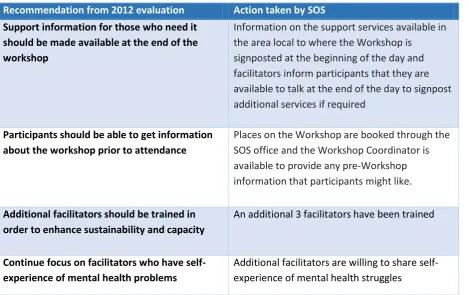
[image:21.595.69.539.421.716.2]A number of other recommendations were made by the research team in the report of the first evaluation which SOS acted upon and these are detailed below in Table 1:
Table 1. Recommendations Made and Actions Taken
Recommendation from 2012 evaluation Action taken by SOS Support information for those who need it
should be made available at the end of the workshop
Information on the support services available in the area local to where the Workshop is
signposted at the beginning of the day and facilitators inform participants that they are available to talk at the end of the day to signpost additional services if required
Participants should be able to get information about the workshop prior to attendance
Places on the Workshop are booked through the SOS office and the Workshop Coordinator is available to provide any pre-Workshop information that participants might like.
Additional facilitators should be trained in order to enhance sustainability and capacity
An additional 3 facilitators have been trained
Continue focus on facilitators who have self-experience of mental health problems
16 Caroline’s story is central to the workshop
however the team need to question the extent that this element can be successfully replaced
A video of ‘Caroline’s story’ has been developed and SOS are currently piloting the video and facilitation of the discussion that follows it in workshops without Caroline’s presence
Develop methods for participants to link back with SOS through greater use of social media
We continue to link closely with community based organisations and have increased our presence on social media since the last evaluation providing a vehicle through which Workshop participants can remain in touch with SOS.
The Wellness Workbook
The Wellness Workbook is a workbook that now accompanies the Wellness Workshop. The Workbook follows the same format as the Workshop but contains worksheets and exercises that participants can use themselves on a day-to-day basis to manage and maintain their own wellness. This is based on the belief of ‘Thinking in Ink’ – if things are written down they are more likely to remain fresh in the mind and therefore may be more easily recalled when dealing with stress. The workbook is seen as a wellness tool that can be built upon over time, adding tips and tools that participant’s source and strategies developed from personal experience.
17 The Wellness Workshop in Wheatfield Place of Detention
In addition to the workbook, the other major development around the Wellness Workshop since the previous evaluation was the roll-out of the workshop into the prison setting. Caroline McGuigan, founder and CEO of Suicide or Survive explains how this came about:
“Suicide or Survive developed a relationship with Wheatfield Place of Detention in 2012
when we approached the Governor to ask if the print workshop there could do some
printing for our Training Links Grant programme. The Governor was happy to have the
print workshop do this work for us, they carry out printing projects for many charities
and community based organisations. In return we offered to run a Wellness Workshop
for the prisoners housed there, the Governor jumped at the opportunity to bring in a
mental wellness programme as mental health and suicide are a major problem for the
prison service. So, our first connection with Wheatfield from the perspective of running
a Wellness Workshop there was more by accident than design.
Running a Workshop in a prison was a daunting experience. This was much less about
entering the prison environment and all that comes with that and more from a concern
about whether what we had to offer would be helpful in any way. I know I was
carrying stigma when I first went in to Wheatfield, as we all do, however this was
quickly broken down when I met the first group of participants and the staff assigned
to us on the day. The participants were as mixed a group as we would have
participating in any community based environment because, of course, they are a
community in themselves. They were interested and eager and for many this was the
first time they had paid any sort of attention to the area of mental health. The wealth
of experience and expertise and the sharing of personal experiences during the
Workshop blew me away. The feedback from the prisoners in the days and weeks
following that first Workshop was overwhelmingly positive with some saying that this
was the first time they had ever thought about their mental health and the first time
that they felt understood as they listened to the personal experiences of facilitators
and in particular to my own personal journey. I knew then that we could really make
18
little attention paid to their mental wellbeing and as a result have paid it little
attention themselves.
We have not changed the materials we use or altered how we deliver the Workshop in
any way when we deliver it in Wheatfield because it contains a universal message of
wellness and practical tools that anyone can use whatever their circumstances or living
environment.
The Governor and Chaplains are amazing and have become champions for the
Workshop and support us in any way possible to bring Workshops and the Workbook
to the prisoners housed there. In 2013 the Governor asked us to deliver a Workshop to
a group of staff from Wheatfield and again the feedback was overwhelmingly
positive. We delivered our first WRAP programme as a follow on to the Wellness
Workshops in Wheatfield this summer and again the reaction was overwhelmingly
positive. We are building on our relationship with the Governor and are planning
further developments in relation to the Workshop which will be piloted there before we
consider bringing them to other prison settings”.
Mental Health and Mental Health Promotion in Prisons
19 Prison is also regarded as a high-risk environment for suicide and self-harm with high distress levels and increased risk of suicide associated with initial custody periods (Hassan et al., 2011; Gullone et al., 2000; Shaw et al., 2004; WHO, 2007). Recent research suggests that between 5-6% of male prisoners and 20-24% of female prisoners self-harm every year (Hawton et al., 2014). In addition to this it is reported that the suicide rates of prisoners are significantly higher than the general population in many countries (Fazel et al., 2011). A number of factors influence this including that even before incarceration prisoners are a vulnerable population at high risk of self-harm and suicide. Prisons contain a high number of young males who are socially disenfranchised with poor levels of education and high levels of unemployment. In addition to this, many factors around the act of incarceration can impact negatively on a person’s mental health. Being imprisoned means removal from family, friends and a support network. The protective effect of having close friends and family members to confide in and support the person is largely lost in the prison setting where access to family and friends is significantly decreased (MacNamara and Mannix-McNamara, 2014). The stress associated with incarceration and the prospect of a long prison sentence can have a significant psychological impact on a person. This psychological impact is increased when the person is serving a life sentence (Patton and Jenkins, 2005). Despite the identification of prisoners as a high risk group for mental health difficulties including self-harm and suicidal behaviour, many prisons do not have adequate mental health services to meet the large demand (MacNamara and Mannix-McNamara, 2014). Differences exist in prisons between the levels of screening for mental health difficulties and more importantly the management of such difficulties.
20 is that community services and in-prison services develop strong relationships to ensure a successful reengagement with the community for the majority of prisoners. The concept that mental health promotion should be conducted within the prison setting, working in tandem with other aspects of rehabilitation is not a new one; however is deemed to be poorly understood and under-resourced in many cases (Carager et al., 2000, Watson et al., 2004; WHO 2007). Despite the complexities of incarceration, some community based organisations continue to work towards making a positive impact in the lives of rehabilitating prisoners.
Summary
This evaluation provides important information on the impact of the Wellness Workshop on participants in addition to evaluating the usefulness of the Wellness Workbook and the roll-out of the Workshop into the prison setting. The report is divided into 8 chapters:
Chapter 1 provides an introduction and some background information; Chapter 2 details the methods used in this evaluation;
Chapter 3 reports the key survey results relating to the general population;
Chapter 4 presents the findings from interviews with general population participants;
Chapter 5 reports the key survey results from the prisoner participants;
Chapter 6 presents the findings from the interviews with prisoner participants; Chapter 7 details the findings in relation to the Wellness Workbook;
21
Chapter 2. Methods
Introduction
In this chapter the study aims and objectives are outlined and a brief description of the research methodology is provided. This chapter also details the research methods utilised in this evaluation including the approach to sampling, the procedures for data collection and analysis and the ethical considerations procedures with this research.
Aims and Objectives
The study aimed to evaluate the impact of a one-day Wellness Workshop provided by SOS (Suicide or Survive).
The objectives of the study were to establish whether:
1. Participating in the Wellness Workshop has led to an improvement in participants’ knowledge of mental health
2. Participating in the Wellness Workshop has led to the ability to recognise mental health issues in themselves and others
3. Participating in the Wellness Workshop has led to the development of a repertoire of strategies to manage mental health issues
4. Utilising the Wellness Workbook has enabled the implementation of these strategies 5. Participating in the Wellness Workshop has resulted in a self-reported improvement
in mental wellbeing
6. Participating in the Wellness Workshop has impacted on participants’ attitudes and perceptions towards mental illness and suicide
7. Participating in the Wellness Workshop has impacted on participants willingness to seek help when experiencing mental health difficulties
22 Research Design
The study employed an embedded mixed methods design to meet the objectives, which is characterised by having one dominant method, with the other data set providing a supportive role (Doyle, et al 2009). In this evaluation, the quantitative component of this study was the dominant method of data collection while the qualitative method was embedded within the larger evaluation and served a supportive role. However, it is important to note that the qualitative data in this study served an important and distinct function. In addition to meeting a number of objectives in this evaluation, it also served to provide an in-depth understanding of the main issues around the Wellness Workshop and how it worked for participants. As can be seen in Chapters 4 and 6, the qualitative data provided a significant amount of rich, meaningful findings. Using a mixed methods design and collecting both quantitative and qualitative data provided a richness and depth of information that would not have been possible to achieve from quantitative methods alone thereby leading to a more comprehensive evaluation.
The quantitative component of this evaluation was achieved through the use of longitudinal surveys which were designed by the research team in consultation with the SOS Wellness Workshop team.
23 Semi-structured interviews explored participants’ views of and experiences on the workshop. An interview guide was developed with a focus on the impact of the workshop on participants’ knowledge of and confidence and skills in dealing with mental health issues, attitudes towards mental health issues, the application of the programme principles to own life, use of the Wellness Workbook, and recommendations for improvement of the workshop.
Post-workshop qualitative data were collected via telephone interview (n=34).Telephone interviews are seen to be advantageous with regards to health related research. It has been suggested that telephone interviews are an invaluable tool for exploring a sensitive topic as individuals may prefer to disclose information over the telephone rather than during face-to-face interviews (Chapple, 1999; Carr and Worth, 2001). Taking this into account, it was concluded that the concepts of anonymity and confidentiality may allow participants to talk more openly about their personal experience.
Additionally, telephone interviewing is a cost-effective method and is particularly useful when participants are geographically scattered, which was the case for this study (Chapple, 1999). As the cost implications for conducting face-to-face-interviews were extremely high, it was not feasible for the research team to conduct face-to-face interviews. Therefore, the telephone interview was considered the most effect method for qualitative data collection. A series of interviews were also undertaken with a cohort of prisoners (n=10) at Wheatfield Prison, Clondalkin, Dublin. A modified topic guide was designed for this cohort, with a focus on the experience of completing the workshop in a prison setting and its impact on participants’ mental health.
Questionnaire Design
24 section including the Herth Hope Index (HHI) and the Mental Health Self-Efficacy Scale (MHSE). The HHI is a 12-item self-administered tool that measures Hope. The instrument has a 4-point likert type scale with possible responses of 1 (strongly disagree) to 4 (strongly agree). Scores on the HHI can range from 12 to 48, with a higher score indicating a higher level of hope. The HHI has been found to be reliable and valid (Herth 1992).
The Mental Health Self-Efficacy scale was developed and used in this study to identify the ability of participants to manage their own mental health. The scale was specifically designed for this study to assess the extent to which five factors of mental health self-efficacy were affected by participation in the programme. The five factors (problem-focussed coping; stopping unpleasant emotions and thoughts; access to support; confidence in knowledge of own mental health; controlling maladaptive behaviour) were initially translated into 15 statements. An 11-point Likert Scale (0 ‘not at all’; to 10 ‘very much so’) was used to elicit the extent of agreement with the statements. The mean of all items (between 0-10) was computed as the overall score for each participant. Two statements were omitted in the study after the pilot study revealed low reliability scores for these two items.
Participants’ attitudes towards mental health were measured in section 3 with the use of 8 attitudinal statements which have been used in a number of studies identifying public attitudes towards mental health in Ireland. Participants were asked to identify their level of agreement on each statement from strongly disagree through to strongly agree.
25 The core of the surveys were in the form of statements and required participants to rate responses using a combination of four and five point Likert scales and yes/no responses. Additional open ended questions were included asking participants about what they liked most and least about the workshop, the impact of the wellness workbook and its appropriateness and usefulness and what recommendations they would make to improve the workshop for the future.
Keeping in mind the perils of undertaking a longitudinal study, survey return numbers were tracked daily, which enabled the research team to identify any issues. Concerned about low survey 3 response rates and a resulting lack of data pertaining to the Wellness Workbook, the decision was made to include into survey 2 the data collection section on the usefulness of the workbook which was originally placed in survey 3. This measure was taken to ensure that as much data as possible was gathered. This modification was made approximately half way through the workshop data collection process.
Repeated Measures
In this study the main dependent variables were assessed before participation in the SOS workshop, a week after participation and at a follow-up three months later. We will refer to these time points as pre, post and follow-up.
A Repeated Measures procedure assesses the impact over time of the workshop starting with a baseline measurement before participation (pre) and repeated after participation (post) and the 3 month follow-up (see Table 2).
Table 2. Repeated Measures
Three repeated measures (pre/post/follow-up)
Herth Hope Index (HHI) 12 items, range 1-4, 2 inverted items; overall Hope sum score possible range: 12 (low hope) –
48 (high hope)
Mental Health Self-Efficacy Scale (MHSE) 13 items, range 0-10, 1 inverted item, overall MHSE average score; possible range 0-10
26
strongly), no overall score computed
Recruitment and Data Collection
All SOS Wellness Workshop participants, between August 2013 and March 2014, were invited to take part in the study. Participants who volunteered to attend the Wellness Workshop programme were informed from the outset, via advertising literature, that the workshop was being evaluated by an external group. Participants were given an information sheet prior to their attendance on the course. The information sheet informed potential participants of the details of the study including the purpose, process and data collection procedures.
On the morning of the workshop, participants were provided with a survey pack containing 3 questionnaires. Participants were asked to complete the initial pre questionnaire (Survey 1) immediately prior to beginning the Wellness Workshop. To protect participants’ rights all participants were given the questionnaires in envelopes. They were requested to complete the first questionnaire if they wished to be involved and return in the envelope provided. Participants who did not wish to participate were also be requested to return the questionnaire; in this way people who did not wish to participate could do so without feeling pressurised or singled out.
The second questionnaire was completed one week from the day of the workshop and returned in the stamped addressed envelope (SAE) provided. The third questionnaire was returned three months after the workshop and returned in the SAE provided. On the day of the workshop, those participants who agreed to take part in the research were asked to provide a mobile number in order to receive a text reminder at time point 2 (one week after the initial workshop session) and at time point 3 (three months after the workshop session). An email reminder was also sent to participants by a member of the SOS Wellness Workshop team at time point 2 and 3. At all times participants were informed that they could opt out of the study at any time.
27 reminder was sent by a member of the research team at times 2 and 3 for prison staff to distribute the questionnaires to the prisoners for completion.
Upon completion of survey 2 participants were requested to indicate their willingness to participate in a qualitative interview via a hard copy ‘opt-in’ form or by contacting a member of the research team directly.
Data collection commenced on the receipt of ethical approval.
Sample
Every person who participated in the Wellness Workshop between August 2013 and March 2014 was eligible to participate in the evaluation. It was estimated that 528 people had participated in the Wellness Workshops nationally during this timeframe. A total of 600 survey packs were prepared for potential participants. A pilot survey of 37 participants was undertaken to field test the survey instrument, which provided insight on how long it took to fill in survey responses and whether the questions were easy to understand. Responses were overwhelmingly positive therefore no modifications were made.
[image:33.595.67.530.590.694.2]In total, 484 surveys were returned at time point 1, representing a 96% response rate. (See Table 3 for more details). A recognised problem in longitudinal surveys concerns difficulties in maintaining response rates over time. Studies pertaining to mailed surveys suggest that response rates to questionnaires can be extremely low, with a response rate of between 10 and 30% not uncommon (Levenkron and Farquhar, 1982). In light of such response rates, our rates of 56% and 27% for postal surveys 2 and 3 are quite good.
Table 3. Number of Survey Participants Estimated number
who completed Survey 1
Estimated number who completed Survey 2
Estimated number who completed Survey 3
Response Rate
n = 484 n = 270 n = 133 Survey 1: 96%
Survey 2: 56%
28 In total, 101 people returned opt in forms expressing an interest in participating in a follow up interview. Of this total, 94 were contactable and of that 34 people were interviewed as saturation had been reached (See Table 4 for more details).
Table 4. Number of Interview Participants
Expressed interest Contactable Total interviewed
n = 101 n = 94 n = 34 (34%)
Interview participants
Of the 34 interview participants, just over half were female (n=18). The participants ranged in age from 19 to 67 years of age, with a mean of 44 years of age for the survey sample. Further details about the interview participants are provided in Chapters 4 and 6.
Data Analyses Survey
The quantitative survey data were entered into the IBM SPSS Statistics Version 21. Frequency distributions and descriptive statistics were generated to describe participants’ scores on each measure to establish the extent to which key objectives of the course had been achieved. Inferential statistics were used to relate participants’ responses to satisfaction rates, demographic variables, time since participation in the workshop, and other relevant variables, in order to establish which factors contribute most to the success of the workshop in achieving the objectives. As previously identified, a repeated measures analysis was performed to determine if there were changes in the participants’ responses over the three time points. The open-ended survey questions were entered into a Microsoft Excel spreadsheet and were analysed thematically.
Interviews
29 the interviews against an agreed coding framework developed by the research team and codebooks were generated. Additionally any new codes that appeared in the data were included and analysed if required. Codes were then reviewed to assess the commonality and differences between the interviews. This helped to create a better understanding of the extent of the issues that had been raised. The codebooks allowed for critical data to be extracted and analysed, thus allowing for meaningful findings, which are discussed in Chapters 4 and 6. To enhance the rigor of the analysis, data were analysed by more than one researcher and findings compared. In addition, another member of the research team compared the transcripts of those who had identified as experiencing a mental health problem and those who did not in an attempt to determine if any significant differences existed in their experience of the Wellness Workshop.
Ethical Considerations
Ethical approval to conduct the study was granted by the Faculty of Health Sciences Research Ethics Committee, Trinity College Dublin. The rights and dignity of participants were respected throughout by adherence to models of good practice related to recruitment, voluntary inclusion, informed consent, privacy, confidentiality and withdrawal without prejudice.
30 Prior to participating in a telephone interview, all interested participants were provided verbal information about the research and were asked to provide verbal consent, consenting to be interviewed and audio recorded. Any questions pertaining to the study and participants rights were answered by the researcher conducting the interview. Participants were reminded that they were free to withdraw from the study at any time without fear of penalty.
31
Chapter 3. Quantitative results - General Population
Introduction
This chapter presents the findings from the survey relating to the general population. Those findings relating specifically to prisoners are detailed in Chapter 5. Within this chapter are findings relating to demographics and background information of the participants in addition to information about how they heard about the workshop and what motivated them to attend it. Central to this chapter is the presentation of findings relating to participants’ perceptions of the Wellness Workshop and crucially the impact it had on their mental health. Where appropriate, statistical findings are supplemented with qualitative comments derived from the open-ended questions on the survey.
Demographics and Respondent Profiles
This section briefly sets out the demographics of the participants who took part in this study in addition to providing some further information about the participants. This information was useful to provide context and an understanding of who was taking part in the workshop but was also used in the analysis as will be detailed throughout this chapter.
A total of 484 completed surveys were included in the final dataset. Of these 415 were general public participants and 69 were male prisoners serving a sentence in Wheatfield Prison, Clondalkin, Dublin 22 (findings presented in Chapter 5). Of the general public participants, women were over represented in the survey sample relative to men. Just over one quarter of the sample were men 25.7% (n=104), while 74.3% were female.
Age
32 Table 5. Age
Age (n=415) n %
Under 20 yrs 2 0.5
20-29 yrs 48 11.6
30-39 yrs 81 19.5
40-49 yrs 97 23.4
50-59 yrs 91 21.9
60 yrs and above 96 23.1
Civic Status
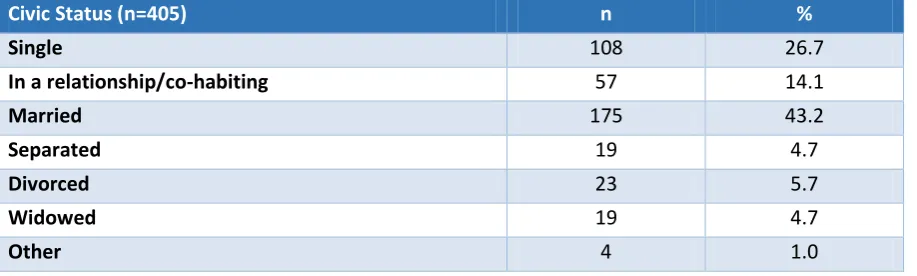
[image:38.595.68.527.422.560.2]Just over 40% of the sample (n=175) were married at the time of completing Survey 1 (see Table 6), while about a quarter (n=108) identified as single, with 14.1% in a relationship or co-habiting with a partner at the time. Just over ten percent of the sample indicated that they were separated or divorced. These figures are broadly in line with the general population as identified in the 2011 census (CSO, 2012).
Table 6. Civic Status
Civic Status (n=405) n %
Single 108 26.7
In a relationship/co-habiting 57 14.1
Married 175 43.2
Separated 19 4.7
Divorced 23 5.7
Widowed 19 4.7
Other 4 1.0
Educational Attainment
33 education (CSO, 2012). Therefore, the education level of participants on the Wellness Workshop was significantly higher than it is in the general population.
Table 7. Level of Educational Attainment
Highest level of education (n=403) n %
Some primary education or less 8 2.0
Completed primary education 19 4.7
Completed lower secondary level education 58 14.4
Completed upper secondary level education 68 16.9
Completed third level education 227 56.3
Other 23 5.7
Employment Status
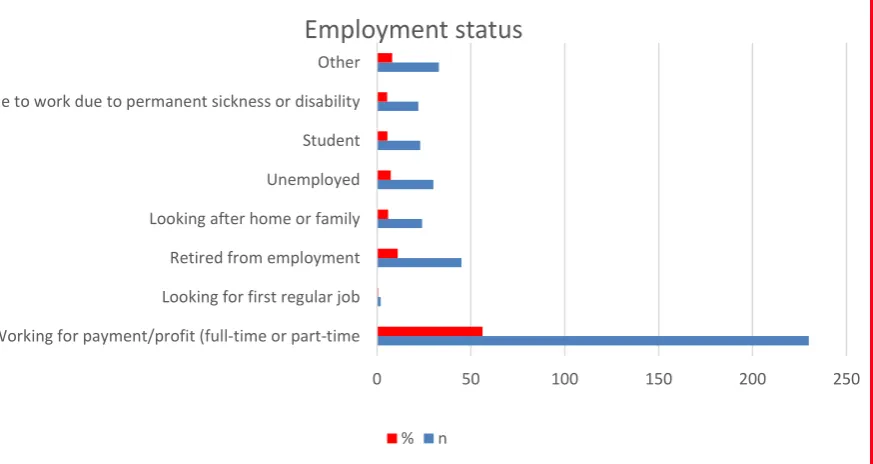
[image:39.595.99.536.479.711.2]Figure 1, which presents the employment statistics of respondents, indicates that just over 55% of the sample (n=230) were employed at the time of completing Survey 1. Eleven percent of respondents (n=45) has retired from employment, while just under 6% were looking after their home and/or family, and an additional 7.3% were unemployed. Just over 5% of participants were unable to work due to permanent illness or disability.
Figure 1. Current Employment Status
0 50 100 150 200 250 Working for payment/profit (full-time or part-time
Looking for first regular job Retired from employment Looking after home or family Unemployed Student Unable to work due to permanent sickness or disability Other
Employment status
34 Ethnic or Cultural Background
The vast majority of respondents (95%) identified as White Irish. A further 3.5% (n=14) stated that they were white from a non-Irish background (see Table 8). These figures suggest that there is an over-representation of White Irish participants in this workshop in comparison to 2011 Census figures which report that 84.5% of the population identify as White Irish (CSO, 2012).
Table 8. Ethnic or Cultural Background
Ethnic or cultural background (n=403) n %
White (Irish) 383 95.0
White (Irish Traveller) 2 0.5
White (Non-Irish/other white background) 14 3.5
Other 4 1.0
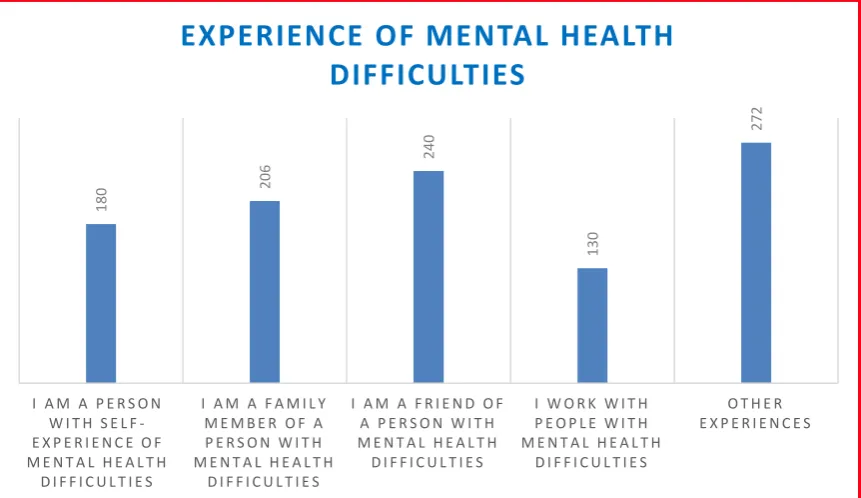
Experience of Mental Health Problems
35 Figure 2. Experience of Mental Health Difficulties
Current Treatment Status
Just under one third of respondents indicated that they were presently taking prescribed medication for mental health problems when surveyed, while 30% (n=74) were receiving counselling for a mental health concern. Approximately 20% (n=50) were currently receiving unidentified professional help for a mental health problem (see Table 9).
Table 9. Current Treatment Status
Current treatment status (n=249) n %
Taking prescribed medications for mental health problems 91 36.5
Receiving counselling for a mental health problem 74 29.7
Receiving psychotherapy for a mental health problem 34 13.6
Receiving other professional help for a mental health problem 50 20.1
Recruitment of Participants and their Motivation to Attend
It is clear that the Wellness Workshops are attended by an eclectic group of people from various different organisations in addition to individuals who are not affiliated to any organisation. Participants reported hearing of the Wellness Workshop (see Table 10) through their employer (24.8%), via posters (10.8%), community groups (23.5%) via the SOS website (4.9%) and via Facebook (1.7%). Just under one third indicated that they came to
180
206
240
130
272
I A M A P E R S O N W I T H S E L F -E X P -E R I -E N C -E O F M E N T A L H E A L T H
D I F F I C U L T I E S
I A M A F A M I L Y M E M B E R O F A P E R S O N W I T H M E N T A L H E A L T H
D I F F I C U L T I E S
I A M A F R I E N D O F A P E R S O N W I T H M E N T A L H E A L T H D I F F I C U L T I E S
I W O R K W I T H P E O P L E W I T H M E N T A L H E A L T H
D I F F I C U L T I E S
O T H E R E X P E R I E N C E S
36 attend the Wellness Workshop through other sources such as: “my community mental health nurse”, “parish newsletter”, “Aware local support group” and the “ Irish Countrywomen’s Association”. A number of participants identified hearing about the Wellness Workshop from a friend or by ‘word of mouth’.
Table 10. Recruitment of Participants
Current treatment status (n=408) n %
Through employer 101 24.8
Through flyer / poster 44 10.8
SOS website 20 4.9
Community group 96 23.5
Facebook 7 1.7
Other 140 34.3
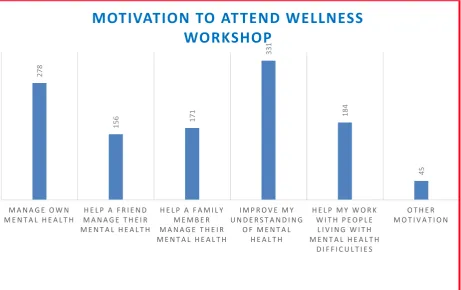
Participants’ motivations behind attending the workshop varied significantly and most participants identified a number of different reasons for attending (see Figure 3).
Figure 3. Motivations to Attend Workshop
278
156 171
331
184
45
M A N A G E O W N M E N T A L H E A L T H
H E L P A F R I E N D M A N A G E T H E I R M E N T A L H E A L T H
H E L P A F A M I L Y M E M B E R M A N A G E T H E I R M E N T A L H E A L T H
I M P R O V E M Y U N D E R S T A N D I N G
O F M E N T A L H E A L T H
H E L P M Y W O R K W I T H P E O P L E
L I V I N G W I T H M E N T A L H E A L T H
D I F F I C U L T I E S
O T H E R M O T I V A T I O N
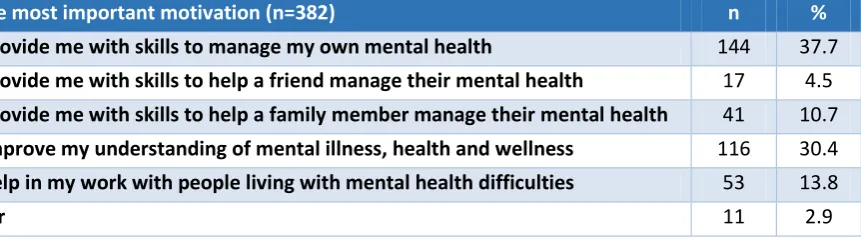
37 However, when asked to identify the single most important motivation for attending, 37.7% of participants reported that it was to learn the skills and tips to manage their mental health and wellbeing; 30% of respondents indicated that they were motivated to attend so that they might improve their understanding of mental illness, mental health and wellness. Approximately one sixth of respondents (n=58) were primarily motivated to attend in order to learn skills to help a loved one or family member manage their mental health. Fifty-three participants reported that they were motivated to attend the workshop for professional reasons, specifically to learn additional skills to help in their work with people affected by mental health issues. It is clear from this then that learning skills and tips to manage mental health in addition to understanding more about mental health problems are strong drivers behind enrolling in the Wellness Workshop. As identified in this chapter, the Wellness Workshop succeeded in this function.
Table 11. Single Most Important Motivation
Single most important motivation (n=382) n %
To provide me with skills to manage my own mental health 144 37.7
To provide me with skills to help a friend manage their mental health 17 4.5
To provide me with skills to help a family member manage their mental health 41 10.7
To improve my understanding of mental illness, health and wellness 116 30.4
To help in my work with people living with mental health difficulties 53 13.8
Other 11 2.9
38 In addition to these varied comments, there was a strong focus on suicide in this section and in particular in helping to understand their own suicidal feelings and in many cases trying to understand the suicidal behaviour of a friend or family member as can be seen from the selection of comments below:
Overall views on the Wellness Workshop
Respondents were asked to rate their satisfaction with the wellness workshop and whether they found it useful. In total almost 95% (n=204) of respondents were satisfied or very
“To make me more
aware of the early
signs of mental
health difficulties.”
(LICA, F, 37)
“To develop new skills
for me professionally.”
(DIPT, M, 41)
“I would like to help a
friend going through
cancer for the 2nd
time.” (NICA, F, 69)
“To look at the future in a
positive perspective. To get skills
to stay well.” (GGELS, F, 35)
“I have two nephews who died by suicide and
want to help the family to cope” (NICA, F, 62)
“I have had thoughts of suicide in the
past” (WAT, M, 48) “To help me forgive my brother who died by
suicide” (CRK, F, 63)
“A friend killed herself, I still struggle