© 2018, IRJET | Impact Factor value: 6.171 | ISO 9001:2008 Certified Journal | Page 3310
AN EXPERIMENTAL STUDIES ON REPLACEMENT OF NATURAL COARSE
AGGREGATE WITH RECYCLED COARSE AGGREGATE IN CONCRETE
K.PADMAVATHAMMA
1S.JYOTHIRMAYEE
2M.PRIYANKA
3C.REDDY VASAVI
4J.DASTHAGIRI
51
M.Tech scholar, K.S.R.M. College of Engineering (Autonomous), Kadapa, Andhra Pradesh.
2Assistant Professor, K.O.R.M. College of Engineering, Kadapa, Andhra Pradesh.
3,4,5
B.Tech scholar, K.O.R.M. College of Engineering, Kadapa, Andhra Pradesh.
---***---ABSTRACT
: In this study we replaced natural aggregateswith recycled aggregates in concrete cubes. This is the first part of the study we have to do. Here we are trying to see a pattern of how the strength decrease once we replace natural coarse aggregate (NCA) with recycled coarse aggregates (RCA). The percentages of replacement will be 0%,10%,20%,30%,40% and 50%. The test and design is as per Indian standard codes. The concrete cubes are designed for M20 as per Indian standard codes.
In the project work, used RCA has been tried as course aggregate in place of recycled course aggregate has be used as partial substitute in conventional coarse aggregate by 0%,10%,20%,30%,40%, and 50% in concrete making cubes, cylinders were of cast and tested for compressive strength, tensile strength and water absorption test after a curing period of 7days and 28days.
KEYWORDS: recycle coarse aggregates, cube testing, NCA, concrete strength
INTRODUCTION
Conservation of resource is always the need of human kind. In the starting of era/civilization, we have used the resources but soon after we have started over exploitation. This result in the scarcity of resources. Later on we have known the fact that we need to conserve the resources. Thus human have decided that we have to use resources efficiently and wisely. This phenomenon is discussed by using the principle of 3R i.e. reduce reuse and recycle. Our study primarily focuses on these “3R”. We have used the already made cubes from the laboratory. This will reduce the amount of concrete from the society. Then we will break that concrete into various sizes (This is done by crusher and the mechanism we have made) primarily into 40mm, 20mm and other. After this we recycle them into new cube for the study. Recycled aggregate is produced by crushing concrete, and sometimes asphalt, to reclaim the aggregate. Recycled aggregate can be used for many purposes. The primary market is road base. They can be used in building, dam, canal, tunnel construction etc. Recycled Aggregate consists of hard, graduated fragments of inert mineral materials, including sand, gravel, crushed stone, slag, rock dust, or powder, Inert solid waste is concrete, asphalt, dirt, brick and other rubble.
EXPERIMENTAL MATERIALS
Cement
The most common cement used is an ordinary Portland cement .The Ordinary Portland Cement of 53 grade (BIRLA.A1 cement OPC)conforming to IS: 8112-1989 is be use .Many tests were conducted on cement; some of them are consistency tests ,setting tests, soundness tests, etc.
Table 1: Properties of Cement
Sr.
No. BIRAL.A1 OPC 53grade Physical Properties of
Cement Results
Requirements as Per IS:8112-1989
1 Specific Gravity 3.11 3.10-3.15
2 Fineness of cement 4.15 <10%
2 Standard Consistency (%) 31.5 30-35
3 Initial Setting Time (min) 30 30 minimum
4 Final Setting Time (min) 260 600 maximum
5 Compressive Strength (at 28 days in N/mm2) 58 53 N/mm2 minimum
Aggregates
Aggregates are the important and large used constituents in concrete. They give bond to the concrete, reduce shrinkage and effect economy. One of the most important factors for producing workable concrete is good gradation of aggregates. It indicates that fractions of aggregates in required proportion such that the sample contains minimum voids.
Samples of the well graded aggregate containing minimum voids require minimum paste to fill up the voids in the aggregates. Minimum paste is mean less quantity of cement and less water, which are further mean increased economy, higher strength, lower shrinkage and greater durability.
Coarse Aggregate (Recycled and Natural Coarse Aggregates)
© 2018, IRJET | Impact Factor value: 6.171 | ISO 9001:2008 Certified Journal | Page 3311 Basalt rock, conforming to IS: 383 is being use. The
Flakiness and Elongation Index were maintained well below 15%.
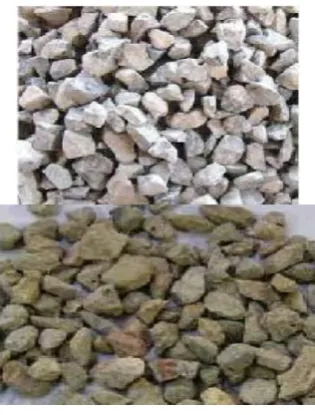
[image:2.595.315.553.105.227.2]Natural Aggregate Recycled Aggregate
Fig 2: Natural Aggregate and Recycled Aggregate
Properties of Coarse Aggregate(Recycled and Natural) Particle Size Distribution
The result of sieve analysis carried out as per IS 2386 for different types of crushed recycled concrete aggregate and natural aggregates. It is found that recycled coarse aggregate are reduced to various sizes during the process of crushing and sieving (by a sieve of 4.75mm), which gives the best particle size distribution
Specific Gravity and Water Absorption
The specific gravity (saturated surface dry condition) of recycled concrete aggregate was found from 2.35 to 2.58 which are lower as compared to natural aggregates. Since the RCA from demolished concrete consist of crushed stone aggregate with old mortar adhering to it, the water absorption ranges from 3.05% to 7.40%, which is relatively higher than that of the natural aggregates.
Bulk Density
[image:2.595.83.241.124.332.2]The rodded & loose bulk density of recycled aggregate is lower than that of natural aggregate. Recycled aggregate had passed through the sieve of 4.75mm due to which voids increased in rodded condition. The lower value of loose bulk density of recycled aggregate may be attributed to its higher porosity than that of natural aggregate.
Table 2: Properties of Natural & Recycled Aggregates
Sr No
Particulars Natural
Aggregate AggregateRecycled
1 Max. Aggregate Size 20mm 20mm
2 Specific Gravity 2.6 2.74
3 Water absorption % 1.31% 5.64%
4 Fineness Modulus 7.58 7.476
5 Density 1805.62
Kg/m³ 1660.44 Kg/m³
Crushing and Impact Values
The recycled aggregate is relatively weaker than the natural aggregate against mechanical actions. As per IS 2386, the crushing and impact values for concrete wearing surfaces should not exceed 45% and 50% respectively. The crushing & impact values of recycled aggregate satisfy the BIS specifications except recycled aggregate for impact value as originally it is low grade rubbles.
Table 3: Impact Test Value
2.36mm
Passing (gm) Total Wt. (gm) Value (%)Impact
Natural Aggregate 26 gm 326gm 8
Recycled Aggregate 38 gm 294gm 12.92
Fine Aggregate
[image:2.595.329.539.574.659.2]Those fractions from 4.75 mm to 150 micron are termed as fine aggregate. The river sand and crushed sand is be used in combination as fine aggregate conforming to the requirements of IS: 383. The river sand is wash and screen, to eliminate deleterious materials and over size particles.
Table 4: Properties of Fine Aggregate
Sr No Particulars Fine Aggregate
1 Specific Gravity 2.68
2 Fineness Modulus 6.285
3 Water absorption % 0.84%
4 Density 1752 Kg/m³
Water
© 2018, IRJET | Impact Factor value: 6.171 | ISO 9001:2008 Certified Journal | Page 3312
Slump Test:
Slump test is used to determine the workability of fresh concrete. The test is simple and cheap. It is suitable to use in the laboratory and also at site. Although the test is simple, but the testing has to be done carefully due to a huge slump may obtain if there is any disturbance in the process.
Compacting Factor Test:
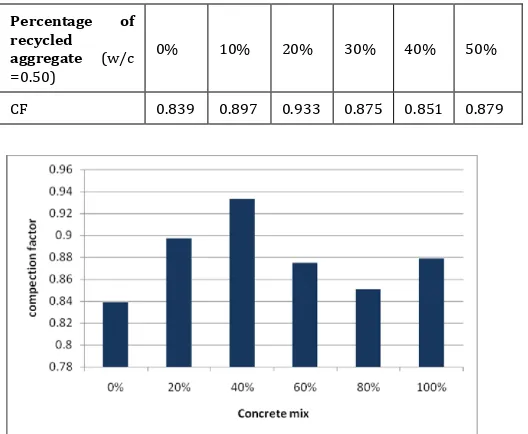
Compacting factor test was also used to determine the workability of fresh concrete as it gives a more accurate workability of fresh concrete than slump test. The compacting factor test is also known as the “drop test”, which measures the weight of fully compacted concrete and compare it with the weight of partially compacted concrete.
Percentage of recycled aggregate (w/c
=0.50)
0% 10% 20% 30% 40% 50%
CF 0.839 0.897 0.933 0.875 0.851 0.879
Fig5: Compacting factor test results (0.50w/c)
DESIGN MIX METHODOLOGY
[image:3.595.351.495.113.228.2]A mix M20 grade was designed as per IS 10262:2009 and the same was used to prepare the test samples. The design mix proportion is shown in Table 7
[image:3.595.31.295.354.571.2]Table 5: Concrete Design Mix Proportions
Table 6: Details of M20 Grade Concrete Mix
EXPERIMENTAL WORK
This experimental study includes research work for the workability test and hardened concrete specimen test. The whole test program is as follows
The experimental study was divided into four major segments viz.
• Materials and their testing
• Concrete mix design
• Checking the fresh properties of the mixes for M20 grade: Compacting factor test.
• Tests on Hardened concrete specimens: Compressive Strength Test
EXPERIMENTAL METHODOLOGY
Concrete contains cement, water, fine aggregate, coarse aggregate (Recycled and Natural). With the control concrete, i.e.0%, 10%, 20%, 30%, 40% and 50% of the natural aggregate is replaced with the recycled aggregates. Three cube samples were cast on the mould of size 150x150x150 mm for each 1:1.5:3concrete mix with partial replacement of coarse aggregate with w/c ratio as 0.50 were also cast. After about 24 h the specimens were de-moulded and water curing was continued till the respective specimens were tested after 7, and 28 days for compressive strength and workability tests.
Compressive Strength
Compressive strength tests were performed on compression testing machine using cube samples. Three samples per batch were tested with the average strength values reported in this paper. The loading rate on the cube is 35 N/mm2 per min. The comparative studies were made on their characteristics for concrete mix ratio of 1:1.03:2.5with partial replacement of natural aggregate with recycled aggregates as 0%, 10%, 20%, 30%, 40% and 50%.
Percentage of recycled aggregate
(w/c =0.50) 0% 10% 20% 30% 40% 50%
Slump test 10 9.5 10 11 9.5 10
W/C
Ratio Proportion
Cement (Kg/m3)
Fine Aggregate
(Kg/m3)
Coarse Aggregate
(Kg/m3)
Water
0.37 1:1.5:3 383.16 6060.5 1142.30 191.58
Mix Recycled Course Aggregate
Mx1 0 %
Mx2 20%
Mx3 20 %
Mx4 30 %
Mx5 40%
© 2018, IRJET | Impact Factor value: 6.171 | ISO 9001:2008 Certified Journal | Page 3313
EXPERIMENTAL RESULTS
Table 7: Compaction Factor Value for M20 Grade Mix
Mix Compaction Factor
Mx1 0.90
Mx2 0.89
Mx3 0.90
Mx4 0.88
Mx5 0.86
[image:4.595.49.277.109.401.2]Mx6 0.88
Fig:6 Different Types of Concrete Mix V/S Compaction Factor
Table 8: Different Types of Concrete Mix V/S Compressive Strength of Cubes and split tensile strength of cylinders at 7 and 28 Days Compressive
strength
Sl. No. Mix
Average Compressive Strength in N/mm2
Average split tensile Strength in N/mm2
7 days 28 Days 7 days 28 Days
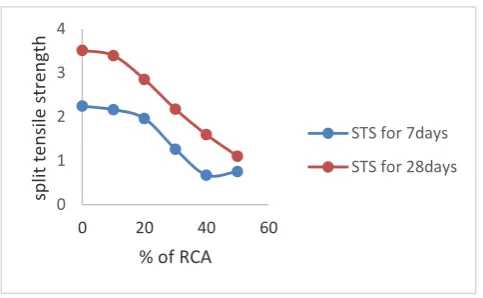
1 Mx1 12.1 24.23 2.24 3.51
2 Mx2 11.9 23.91 2.16 3.39
3 Mx3 11.26 23.26 1.96 2.85
4 Mx4 9.4 20.40 1.26 2.17
5 Mx5 8.9 18.86 0.97 1.59
[image:4.595.314.556.286.435.2]6 Mx6 7.06 16.67 0.75 1.1
[image:4.595.33.292.515.654.2]Fig:7 Recycled coarse aggregate are used in different percentages of concrete the Compressive strength of concrete is gradually decreases at 7days and 28days
Fig:8 recycled coarse aggregate are used in different percentages of concrete the Split tensile strength of concrete is gradually decreases at 7days and 28days
CONCLUSIONS
COMPRESSIVE STRENGTH
•
The compressive strength increases as compared to control mix as the percentage of recycled coarse aggregate is increased. After adding the recycled coarse aggregate the compressive strength is gradually decrease.•
The Compressive strength tends to decrease with further increase percentages of recycled coarse aggregate in the mix.SPLIT TENSILE STRENGTH
•
The Split tensile strength increases as compared to control mix as the percentage of recycled coarse aggregate is increased. After adding the recycled coarse aggregate the compressive strength is gradually decrease.0 5 10 15 20 25 30
0 20 40 60
comp
re
ss
iv
e
stren
gth
% of RCA
CS for 7days
CS for 28days
0 1 2 3 4
0 20 40 60
sp
lit
ten
sile
s
tren
gth
% of RCA
STS for 7days
© 2018, IRJET | Impact Factor value: 6.171 | ISO 9001:2008 Certified Journal | Page 3314
•
The split tensile strength tends to decrease with further increase percentages of recycled coarse aggregate in the mix.REFERENCES
1. AjdukiewiezA,Kliszczewicz A,(2002),“Influence of recycled aggregates on mechanical properties of HS/HPC”. Cement and Concrete Composites,vol:24, pp-269-279
2. Amnon Katz (2003),”Properties of concrete made with recycled aggregate from partially hydrated old concrete”, Cement and concrete Research, Vol: 33, pp- 703-711.
3. Biojen,J. (1996) “Waste Materials and Alternative Products “Pro’s and Con’s” Concrete for Environmental enhanced and Protection, E & FN Spon, pp. 587-598.
4. Esin T, Cosgun N, (2007)”A study conducted to Reduce construction waste generation in Turkey”. Build Environment, vol: 42; pp-1667-74.
5. Ferguson, J.; Kermode, O.N.; Nash, C.L.; Sketch, W.A.J. and Huxford, R.P. (1995), “Managing and Minimising Construction Waste,” Institution of Civil Engineers, Thomas, Telford Publications, U.K., pp. 1-60.
6. Hansen, T.C. (1992), “Recycling of Demolished Concrete Masonry, Rilem Report No. 6, E&FN Spon, London, Great Britain, pp. 316.
7. Khatib JM,(2005)”Properties of concrete incorporating fine recycled aggregate”. Cement Concrete Research, Vol: 35(4); pg-763-769.
8. Mehta. P. K, (Oct 2001)”Reducing the environmental impact of concrete”, Concrete International, Vol: 23, No : 10, pp-61-66.
9. Chakradhara Rao, S. K. Bhattacharyya ,S. V. Barai (April 2010),” Influence of field recycled coarse aggregate on properties of concrete “,Materials and Structures, DOI 10.1617/s11527-010-9620-x
10. A.M. Neville, Properties of Concrete, Longman 981-4053-56-2, 2000 by a.
11. Comité Euro-International du Beton and Federation International de la a. Precontrate, Paris, 1978.
12. R. Sri Ravindrarajah, Y.H. Loo, C.T. Tam, Recycled concrete as fine and a. coarse aggregates in
13. Concrete, Magazine of Concrete Research 39 (141) b. (Dec. 1987) 214–220.
14. Neela Deshpande (2011)“Effectiveness of using Coarse Recycled Concrete Aggregate in Concrete”
15. Oikonomou,N.D.(2005)”Recycled Concrete Aggregates,” Cement & Concrete Composites, Vol. 27, pp315-318.