Open Access
Research article
A systematic review of the international published literature
relating to quality of institutional care for people with longer term
mental health problems
Tatiana L Taylor
1, Helen Killaspy*
1, Christine Wright
2, Penny Turton
2,
Sarah White
2, Thomas W Kallert
3, Mirjam Schuster
3, Jorge A Cervilla
4,
Paulette Brangier
4, Jiri Raboch
5, Lucie Kališová
5, Georgi Onchev
6,
Hristo Dimitrov
6, Roberto Mezzina
7, Kinou Wolf
7, Durk Wiersma
8,
Ellen Visser
8, Andrzej Kiejna
9, Patryk Piotrowski
9, Dimitri Ploumpidis
10,
Fragiskos Gonidakis
10, José Caldas-de-Almeida
11, Graça Cardoso
11and
Michael B King
1Address: 1Research Department of Mental Health Sciences, UCL Medical School, London, UK, 2Division of Mental Health, St. George's University London, London, UK, 3Department of Psychiatry and Psychotherapy, University Hospital Carl Gustav Carus, Technische Universitaet Dresden, Dresden, Germany, 4CIBERSAM, Universidad de Granada, Granada, Spain, 5Psychiatric Department of the First Faculty of Medicine, Charles University, Prague, Czech Republic, 6Department of Psychiatry, Medical University Sofia, Sofia, Bulgaria, 7Dipartimento di Salute Mentale, University of Trieste, Trieste, Italy, 8Psychiatry, University Medical Centre Groningen, University of Groningen, Groningen, Netherlands, 9Department of Psychiatry, Wroclaw Medical University, Wroclaw, Poland, 10University Mental Health Research Institute (UMHRI), Athens, Greece and 11Department of Mental Health, Faculdade de Ciencias Medicas, New University of Lisbon, Lisbon, Portugal
Email: Tatiana L Taylor - [email protected]; Helen Killaspy* - [email protected]; Christine Wright - [email protected]; Penny Turton - [email protected]; Sarah White - [email protected]; Thomas W Kallert - [email protected]; Mirjam Schuster - [email protected]; Jorge A Cervilla - [email protected]; Paulette Brangier - [email protected]; Jiri Raboch - [email protected]; Lucie Kališová - [email protected]; Georgi Onchev - [email protected]; Hristo Dimitrov - [email protected]; Roberto Mezzina - [email protected];
Kinou Wolf - [email protected]; Durk Wiersma - [email protected]; Ellen Visser - [email protected];
Andrzej Kiejna - [email protected]; Patryk Piotrowski - [email protected]; Dimitri Ploumpidis - [email protected]; Fragiskos Gonidakis - [email protected]; José Caldas-de-Almeida - [email protected]; Graça Cardoso - [email protected]; Michael B King - [email protected]
* Corresponding author
Abstract
Background: A proportion of people with mental health problems require longer term care in a psychiatric or social care institution. However, there are no internationally agreed quality standards for institutional care and no method to assess common care standards across countries.
We aimed to identify the key components of institutional care for people with longer term mental health problems and the effectiveness of these components.
Methods: We undertook a systematic review of the literature using comprehensive search terms in 11 electronic databases and identified 12,182 titles. We viewed 550 abstracts, reviewed 223 papers and included 110 of these. A "critical interpretative synthesis" of the evidence was used to identify domains of institutional care that are key to service users' recovery.
Published: 7 September 2009
BMC Psychiatry 2009, 9:55 doi:10.1186/1471-244X-9-55
Received: 10 March 2009 Accepted: 7 September 2009
This article is available from: http://www.biomedcentral.com/1471-244X/9/55 © 2009 Taylor et al; licensee BioMed Central Ltd.
Results: We identified eight domains of institutional care that were key to service users' recovery: living conditions; interventions for schizophrenia; physical health; restraint and seclusion; staff training and support; therapeutic relationship; autonomy and service user involvement; and clinical governance. Evidence was strongest for specific interventions for the treatment of schizophrenia (family psychoeducation, cognitive behavioural therapy (CBT) and vocational rehabilitation).
Conclusion: Institutions should, ideally, be community based, operate a flexible regime, maintain a low density of residents and maximise residents' privacy. For service users with a diagnosis of schizophrenia, specific interventions (CBT, family interventions involving psychoeducation, and supported employment) should be provided through integrated programmes. Restraint and seclusion should be avoided wherever possible and staff should have adequate training in de-escalation techniques. Regular staff supervision should be provided and this should support service user involvement in decision making and positive therapeutic relationships between staff and service users. There should be clear lines of clinical governance that ensure adherence to evidence-based guidelines and attention should be paid to service users' physical health through regular screening.
Background
A proportion of people with mental health problems require longer term care in a psychiatric or social care institution based in hospital or the community. The majority of these people have a diagnosis of schizophre-nia [1]. They are also likely to have other problems which have complicated their recovery such as treatment resist-ance [2], cognitive impairment [3-6]; pre-morbid learning disability [7], substance misuse and other challenging behaviours [3,8]. Their illness impacts on their capacity to make informed choices for themselves and to actively par-ticipate in their care, putting them at risk of exploitation and abuse from others, including those who care for them. To combat this and ensure institutions are provid-ing appropriate treatment and care, many countries have set up their own systems for monitoring the care provided. However, there are no internationally agreed quality standards for institutional care and no method to assess common care standards across countries.
The DEMoBinc (Development of a European Measure of Best Practice for People with Long Term Mental Illness in Institutional Care) Study is a collaboration between eleven centres in ten European countries. It aims to build and test an international toolkit that can reliably assess the care and living conditions of adults with longer term mental health problems whose levels of need necessitate their living in psychiatric or social care institutions [9]. In order for the toolkit to have cross-country validity, it was recognised that it needed to incorporate core characteris-tics of care, whatever their service context. Therefore, an emphasis on the Recovery Model [10] has been included from the early stages of development since it incorporates key aspects of mental health promotion that are agreed internationally, such as advocating non-coercive relation-ships between professionals and service users, empower-ment, patient autonomy and facilitation of increasing
levels of independence. The initial stages of development of the toolkit comprised a literature review of aspects of institutional care associated with service users' recovery and an international Delphi exercise investigating key stakeholders' views of the "critical success factors" involved in promoting service users' recovery in these set-tings [11]. This paper reports on the findings of the litera-ture review.
The scope of the literature review was necessarily broad since we wanted to include all core components of insti-tutional care. Our review was carried out systematically but also has a narrative component whereby we synthe-sised the best available evidence in this field to identify areas (or "domains") of care and components of these domains for inclusion in the toolkit. Conventional sys-tematic reviews are often unable to provide a critical anal-ysis of a complex body of literature. This is particularly the case in assessing evidence on the components of care that constitute an "ideal" institution. Thus, we adopted the approach which has been described as a 'critical interpre-tative synthesis' [12] which allows for the analysis of a body of literature which is "large, diverse and complex" and includes both quantitative and qualitative methodol-ogies. Instead of analysing the literature using pre-deter-mined outcomes, key concepts are defined after the synthesis of the findings, allowing for greater exploration of a broad array of outcomes and experiences.
Aims
We undertook a systematic review of the international lit-erature published in peer reviewed journals since 1980 with the aims of:
2. evaluating the effectiveness of these components.
3. undertaking a critical interpretative synthesis of the evi-dence in order to identify the domains of institutional care that are key to service users' recovery.
Method
Eligibility Inclusion criteria
We included papers that examined factors associated with quality of care, of adults of working age with longer term mental health problems living in institutional care in hos-pital or the community. Papers that examined the rela-tionship between quality of care and operational systems, staffing, staff training, supervision and support were included as well as papers that investigated living condi-tions and those that investigated specific approaches to improve the quality of care. The review was limited to papers published since 1980 since much of the deinstitu-tionalisation across Europe has taken place in the last 30 years.
Exclusion criteria
Papers were excluded if the focus was irrelevant to the aims of our systematic review due to one or more of the following:
A) the results were specific to a client group that did not meet our inclusion criteria (e.g. child or adolescent patients; patients in prison; patients with mental illnesses unlikely to require long-term institutional care; patients with dementia; patients with primary drug or alcohol problems) and could not be extrapolated to adults of working age with long term mental health problems liv-ing in institutional care in hospital or in the community;
B) the study was carried out in unrelated settings (e.g. short-term wards or specialist units not focusing on patients with long-term mental health problems or patients living at home or in non-institutional commu-nity settings);
C) the results reported were confined to an exceptional setting, culture, client group or intervention and could not be extrapolated internationally (e.g. national mental health legislation or a very specific service context);
D) studies that examined patients' quality of life or satis-faction in isolation from their context in institutional care, or whose focus was too broad for its results to be use-ful for the aims of this systematic review.
E) studies that reported on drug trials.
Where a systematic review was included, we did not exam-ine each paper contaexam-ined within it. Nor did we include editorials, letters, books or book chapters.
Search strategy Search terms
The following terms were used to identify relevant articles: mental patient*; mental* ill*; mental disease*; mental* deficien*; mental disorder*; schizophreni*; mental* disab*; mental* retard*; psycho*; severe mental illness; psychiatr*; mental health patient; delivery; standard*; quality; benchmark*; evaluat* near care; evaluat* near health care; guideline*; quality of life; treatment satisfac-tion; model; evaluation stud*; patient* satisfacsatisfac-tion; clini-cal guideline*; evidence based medicine; psychiatric rehabilitation; rehabilitat*; activities of daily living; art therapy; bibliotherapy; dance therapy; exercise therapy; music therapy; occupational therapy; rehabilitation, voca-tion*; physical restrain*; hold* down; clinical hold*; human right*; patient right*; behaviour control; collabo-ration; recovery; empowerment; consumer movement; mental health care; mental health cent*; mental hospi-tal*; psychiatric department*; community mental health; community mental health cent*; community psychiatric nurs*; mental health service*; hospital*; inpatient*; insti-tut* care; institution*; deinstitution*; social work, psychi-atric; managed care; community mental health care; architectural accessibility; elevator* and escalator*; floor* and floorcovering*; interior design and furnishing*; loca-tion directorie* and sign*; parking facilit*; health facility environment; patient* room*; rehabilitation center*; sheltered workshop*; residential facility*; assisted living facility*; group home*; halfway house*; homes for the aged; nursing home*; nursing care; nursing services; reha-bilitation; activities of daily living; rehabilitation, voca-tional; self care.
All search terms were adapted for each database.
The following electronic databases were searched:
Medline: 1980 - May 2007
Embase: 1980 - May 2007
PsycINFO: 1980 - May 2007
CINAHL: 1982 - May 2007
The Cochrane Library as of Issue 2, 2007
Web of Knowledge: 1980 - June 2007
International Bibliography of the Social Sciences: 1980 - June 2007
Sociological Abstracts: 1980 - July 2007
Social Science Citation Index: 24 October 2007
Science Citation Index EXPANDED: 24 October 2007
Author or paper searches were clarified, where necessary, using Google scholar. First authors of included articles were contacted for additional published or unpublished material when appropriate. Principal investigators from each of the countries participating in the DEMoBinc study provided references or copies of relevant papers that had not been identified from the databases listed above. No relevant studies were found which had been missed by our search.
Selection of articles
TT and HK screened all relevant abstracts identified in the searches for eligibility. TT, HK, MK, CW, PT, and SW reviewed a draft list of articles for possible inclusion and a final list was agreed by consensus.
Assessment of methodological quality
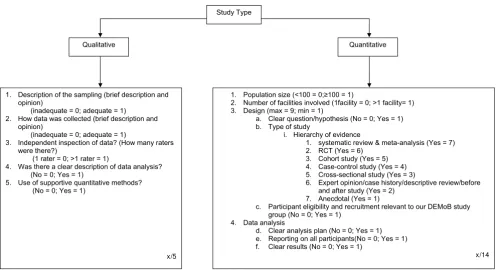
The quality of papers was rated, by consensus, by TT and HK using the criteria shown in Figure 1. Separate criteria
were used for qualitative and quantitative research papers. These criteria were derived from recommended approaches [13-16] and additional items specific to this review. Quantitative papers were assessed on: (1) popula-tion size; (2) number of facilities from which participants were recruited; (3) design, (which included clarity of the research question or hypothesis, the type of methodology used [16] and relevance of the participants to the aims of the review); (4) data analysis (which included clarity of the analysis plan, reporting on all participants and clarity of the results). These criteria provided a maximum score of 14 points. Qualitative papers were assessed on: (1) sampling; (2) data collection; (3) data inspection; (4) data analysis; (5) the use of supportive quantitative meth-ods. These criteria provided a maximum score of five points. Where a paper included both types of research two separate quality assessments were carried out.
Data extraction and management
Data on authors, year of publication, study setting, study design, population, study focus, assessment measures used and outcomes were extracted by TT. Results were extracted and compiled in summary form.
Included papers were grouped by theme and domains were determined once all data were compiled. TT, HK, MK, CW, PT, and SW agreed the domains by consensus. Allocation of papers to domains was carried out by TT,
[image:4.612.58.554.422.692.2]Quality assessment instructions (separate file)
Figure 1
Quality assessment instructions (separate file).
Qualitative Quantitative
1. Population size (<100 = 0;100 = 1)
2. Number of facilities involved (1facility = 0; >1 facility= 1) 3. Design (max = 9; min = 1)
a. Clear question/hypothesis (No = 0; Yes = 1) b. Type of study
i. Hierarchy of evidence
1. systematic review & meta-analysis (Yes = 7) 2. RCT (Yes = 6)
3. Cohort study (Yes = 5) 4. Case-control study (Yes = 4) 5. Cross-sectional study (Yes = 3)
6. Expert opinion/case history/descriptive review/before and after study (Yes = 2)
7. Anecdotal (Yes = 1)
c. Participant eligibility and recruitment relevant to our DEMoB study group (No = 0; Yes = 1)
4. Data analysis
d. Clear analysis plan (No = 0; Yes = 1) e. Reporting on all participants(No = 0; Yes = 1) f. Clear results (No = 0; Yes = 1)
x/14 Study Type
1. Description of the sampling (brief description and opinion)
(inadequate = 0; adequate = 1) 2. How data was collected (brief description and
opinion)
(inadequate = 0; adequate = 1)
3. Independent inspection of data? (How many raters were there?)
(1 rater = 0; >1 rater = 1)
4. Was there a clear description of data analysis? (No = 0; Yes = 1)
5. Use of supportive quantitative methods? (No = 0; Yes = 1)
while HK categorised a randomly selected sample of 20 of the included papers to ensure reliability. Nineteen of the 20 papers were matched. Efficacy data (e.g. effect size,
number needed to treat [NNT], risk ratio [RR]), P-value
and 95% confidence intervals from meta-analyses and randomised controlled trials (RCTs) were reported if pro-vided within the paper or if calculations could be per-formed using the data provided by the authors. The National Institute for Clinical Excellence (NICE) in the UK considers that an effect size of 0.20 to 0.49 is small, 0.50 to 0.79 is medium and 0.80 or over is large. We have used this guide in the text when reporting effect sizes. Findings are summarised in the text for each domain. More weight was given to papers of higher quality and findings supported by multiple studies.
Results
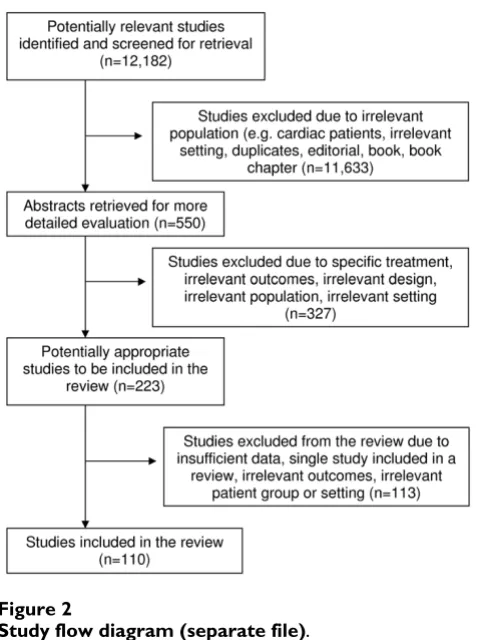
A total of 12,182 relevant articles were identified through the search strategy (see Figure 2). After further inspection of abstracts and papers, 12,073 articles were excluded due to duplications or exclusion criteria (see Additional file 1). One hundred and ten articles were included in the review.
Study Characteristics
Papers were grouped into at least one of eight domains: living conditions; interventions for schizophrenia; physi-cal health; restraint and seclusion; staff training and sup-port; therapeutic relationship; service user involvement and autonomy; and clinical governance.
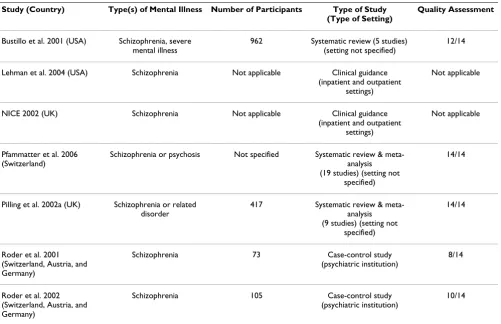
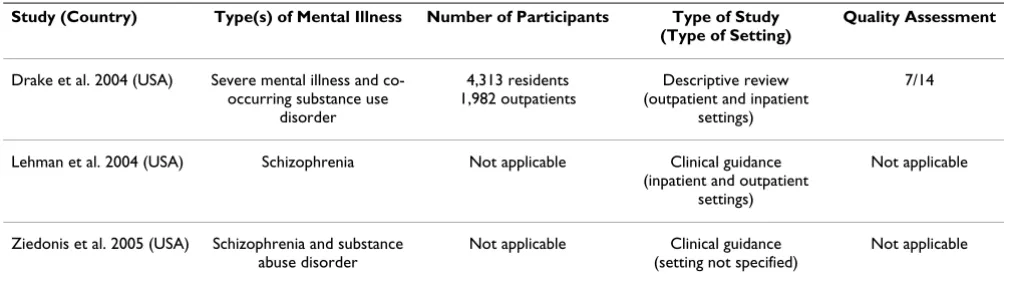
The main characteristics of papers included within each domain are shown in Tables 1, 2, 3, 4, 5, 6, 7, 8, 9, 10, 11, 12, 13, 14, 15, 16, 17, 18, 19 and 20. Included papers came from 19 countries and were published between 1980 and 2007. The majority came from the USA (46 papers) and the UK (27 papers). Five were international multicentre studies [17-21]. Fifty-six studies specifically included patients with schizophrenia but many did not describe participants' diagnoses. The types of facilities investigated included both hospital-based (e.g. wards) and community-based (e.g. boarding homes, nursing homes, supported housing) institutions. Several studies did not describe the specific type of facility and some stud-ies included outpatient and inpatient services.
Most (n = 77) included papers used quantitative research methods. Of these, 24 were systematic reviews or meta-analyses and 19 were descriptive reviews. Three papers used qualitative methods and two used both qualitative and quantitative methods. Six papers were clinical guide-lines. The types and number of studies relevant to each domain are shown in Table 21. Where studies used mixed methods they are counted only once in the table as quan-titative studies.
Quality assessment
Scores ranged from 2-5 for qualitative studies and 4-14 for quantitative studies. Scores for studies relevant to a partic-ular domain can be found in Tables 1, 2, 3, 4, 5, 6, 7, 8, 9, 10, 11, 12, 13, 14, 15, 16, 17, 18, 19 and 20.
Main Findings
The main findings from papers relevant to each domain are presented hierarchically, based on the quality of the papers, with findings from better quality papers presented first, followed by papers of weaker quality. Settings are reported as described in the papers.
Living Conditions
Descriptions of the 18 studies relevant to living condi-tions can be found in Table 1.
Restrictiveness and setting
The American Psychological Association's (APA) guide-lines for the treatment of schizophrenia suggest that, where patients require treatment in a residential facility, this should be in the least restrictive setting that will ensure patient safety and allow for effective treatment [22]. Overall, community residential facilities have been found to be less regimented than hospital wards and more facilitative of patient autonomy [23-25]. Hawthorne et al [26] examined two community residential facilities in America which emphasized provision of treatment in the least restrictive environment and positive staff-patient relationships. In a repeated measures design, where patients acted as their own control, patient functioning significantly increased and rehospitalisation significantly decreased in less restrictive settings even when patient morbidity was taken into account.
dis-tance between staff and residents, greater flexibility and greater promotion of community integration for its resi-dents.
In a descriptive review of community residential pro-grammes, patient characteristics were reported to have a weaker correlation with positive outcomes than environ-mental factors [29]. In "board and care" homes in the USA, a positive social climate characterised as cohesive, organised, comfortable and encouraging of residents' independence and involvement in decision making, was found to be associated with greater resident satisfaction with their living situation [32]. High levels of resident involvement, support, spontaneity, autonomy, organisa-tion and programme clarity have been cited as important components of environmental quality in group homes by both staff and residents [33]. Similar elements have been found to be important for greater therapeutic alliance between staff and patients in inpatient settings [34]. Brunt and Hansson [33] also found that security, physical (built) environment and social interaction were consid-ered important by both residents and staff but staff more often stressed the importance of supporting residents to gain practical skills. However, Cournos [29] found that concordance between staff and residents about the impor-tance of specific environmental characteristics was only weakly correlated with resident outcomes.
Cultural context
In a study comparing community-based residential facili-ties for people with mental health problems in Andalusia (Spain) and London (UK), Spanish facilities were found to be more restrictive with more rules and less privacy [18]. However, Spanish residents had more favourable views than their English counterparts on their individual progress and enjoyment of the company of other resi-dents, greater acceptance of house rules and routine and they reported greater benefits from their activities and medication. Spanish residences were closer to community amenities but twice as many UK participants reported involvement in community activities (such as attending day centres or sheltered employment) whereas Spanish residents made greater use of indoor recreational activi-ties.
Number of residents
There is no clear evidence on the optimal number of resi-dents in community-based residential mental health facil-ities. A study carried out in the USA found no association between the number of residents per facility and residents' integration in activities within the facility, after adjust-ment for other factors [25]. Another study found the number of residents in community-based "board and care" homes for veterans in the USA was positively corre-lated with social functioning in the community [32]. Although, an optimal number will depend upon "the prevalent philosophy of care, available resources and pop-ulation need", density of occupation (the ratio of resi-dents to available space) rather than a recommended specific number of residents is considered a better guide, since increased density increases residents' stress and decreases their privacy and control over their environment [35].
Physical environment
The effect of the physical environment on patient out-comes was examined in a systematic review of 30 control-led trials [36]. Participants included those with mental health as well as physical health problems. No trials were identified that exclusively investigated wall colour, pic-tures, plants, gardens, floor coverings or room size. Eleven trials investigated the effect of renovation or redecoration of a whole ward or treatment area on participants' social functioning and symptoms. Inconsistent findings were reported. Two trials found that the amount and timing of access to sunlight was associated with a reduced length of admission for depressed patients. One trial carried out in a psychiatric unit showed that seating arrangements in common areas that encouraged interaction (e.g. seating around small tables) increased patients' social interaction.
Baker and Douglas [37] carried out a large study in New York to investigate outcomes for people with mental health problems living in supported and unsupported
[image:6.612.56.295.87.407.2]Study flow diagram (separate file)
Figure 2
Table 1: Characteristics and quality of studies included in living conditions domain
Study (Country) Type(s) of Mental Illness Number of Participants Type of Study (Type of Setting)
Quality Assessment
Baker & Douglas 1990 (USA)
Mostly schizophrenia 729 Cohort study (supported and unsupported community housing)
10/14
Brunt & Hansson 2002 (Sweden)
Severe mental illness 33 patients 50 staff
Cross-sectional study (small group homes)
8/14
Corrigan 1990 (USA) Severe mental illness Not applicable Descriptive review
(hospital ward and outpatient settings)
6/14
Cournos 1987 (USA) Chronic mental illness Not specified Descriptive review (community residential settings)
6/14
Cullen et al. 1997 (UK) Not specified 42 Cross-sectional study (hospital and community residential settings)
7/14
Dijkstra et al. 2006 (The Netherlands)
Not confined to mental health patients
5412 Systematic review (30 studies)
(hospital-based settings)
12/14
Fakhoury et al. 2002 (UK) Severe and enduring mental illness
3,577 patients 166 staff
Systematic review (28 studies) (supported housing)
7/14
Fakhoury et al. 2005 (UK) Schizophrenia or related psychotic disorder
41 patients 39 staff
Cross-sectional study (supported housing)
5/5; 9/14
Hawthorne et al. 1994 (USA)
Severe mental illness 104 Before and after study (community-based residential settings)
9/14
Johansson & Eklund 2004 (Sweden)
Minority schizophrenia 61 Cross-sectional study (psychiatric inpatient ward)
8/14
Kruzich & Kruzich 1985 (USA)
Majority schizophrenia 87 Cross-sectional study (residential care settings)
10/14
Lehman et al. 2004 (USA) Schizophrenia Not applicable Clinical guidance (inpatient and outpatient settings)
Not applicable
Mares et al. 2002 (USA) Severe mental illness 164 Cross-sectional study (board and care homes)
9/14
Rickard et al. 2002 (Spain and UK)
Functional psychotic illness 136 Cross-sectional study (community residences)
10/14
Santone et al. 2005 (Italy) Severely impaired patients 265 facilities Cross-sectional study (residential setting)
9/14
Shrivastava et al. 1999 (UK) Not specified Not specified Descriptive review (psychiatric unit)
6/14
Trauer et al. 2001 (Australia)
Not specified 125 Cohort study (community care unit)
10/14
van Wel et al. 2003 (The Netherlands)
Not specified 129 Cross-sectional study (psychiatric hospital)
community housing of varying condition (assessed by observer ratings of the property's location, exterior condi-tion, interior condition and the condition of their per-sonal property). Those in supported housing where physical conditions were rated below average displayed a significant increase in maladaptive behaviour over the nine-month study period compared to those in housing of average or above average quality.
In a systematic review of 28 studies of supported housing for people with mental health problems, both the quality of the physical environment and the degree of privacy were found to mediate patient outcomes [27]. Corrigan [38] investigated mental health inpatients' satisfaction with their accommodation and found lack of privacy to be a major concern, specifically having a place to be alone and secure storage for personal items.
Interventions for the Treatment of Schizophrenia
The APA recommends that realistic treatment outcomes for individuals with a diagnosis of schizophrenia are iden-tified and assessed using standardised outcome measures [22]. Although there is good evidence for the efficacy of a number of interventions, those selected should be tai-lored to the patient/resident's individual needs.
Cognitive behavioural therapy
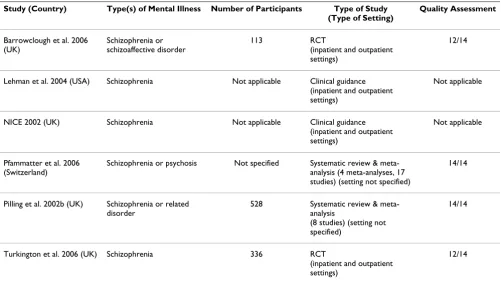
Meta-analyses of cognitive behavioural therapy (CBT) for patients with schizophrenia and other related psychoses
have found consistent evidence for its efficacy [39,40]. Descriptions of these studies as well as other evaluations of CBT can be found in Table 2. Pilling et al [39] found CBT had a small effect on improving positive symptoms during treatment (n = 273, effect size 0.27, CI 0.15, 0.49; NNT 5, CI 4, 9) and nine to 18 months after treatment (n = 119, effect size 0.25, CI 0.10, 0.64; NNT 6, CI 3, 27) but was not associated with reduced relapse rates. Pfammatter et al [40] examined three meta-analyses of CBT's effect on positive symptoms. The effect varied from small (effect size 0.33, CI 0.14, 0.51) to large (effect size 0.93, CI not reported). In their own meta-analysis of 17 randomised controlled trials (RCTs) they reported that consistent (but small) effects for CBT could only be established when pro-vided to individuals with persistent positive symptoms (during treatment: n = 486, effect size 0.47, CI 0.29, 0.65; post-treatment: n = 335, effect size 0.39, CI 0.17, 0.61) [40].
Turkington et al [41] carried out a multicentre RCT to investigate the efficacy of CBT for patients with schizo-phrenia who had ongoing positive and/or negative symp-toms or were at risk of relapse and found CBT to be associated with improved insight (ANCOVA 0.711, CI 0.11, 1.31, p = 0.021) and fewer negative symptoms (eta2
-0.773, CI -1.27, -0.28, p = 0.002) than participants
[image:8.612.55.556.448.729.2]assigned to usual care at 12-month follow-up. It was also found to be protective against depression and relapse.
Table 2: Characteristics and quality of studies included in interventions domain: Cognitive behavioural therapy
Study (Country) Type(s) of Mental Illness Number of Participants Type of Study (Type of Setting)
Quality Assessment
Barrowclough et al. 2006 (UK)
Schizophrenia or schizoaffective disorder
113 RCT
(inpatient and outpatient settings)
12/14
Lehman et al. 2004 (USA) Schizophrenia Not applicable Clinical guidance (inpatient and outpatient settings)
Not applicable
NICE 2002 (UK) Schizophrenia Not applicable Clinical guidance (inpatient and outpatient settings)
Not applicable
Pfammatter et al. 2006 (Switzerland)
Schizophrenia or psychosis Not specified Systematic review & meta-analysis (4 meta-analyses, 17 studies) (setting not specified)
14/14
Pilling et al. 2002b (UK) Schizophrenia or related disorder
528 Systematic review & meta-analysis
(8 studies) (setting not specified)
14/14
Turkington et al. 2006 (UK) Schizophrenia 336 RCT
(inpatient and outpatient settings)
An RCT of group CBT for people with schizophrenia found no effect in terms of improvement in symptoms, functioning or relapse rates, but a significant increase in self esteem (n = 94, effect size -1.51, CI -2.84, -0.18) and decrease in hopelessness (n = 94, effect size 1.62, CI -3.06, -0.18) at 12-month follow-up [42].
Both NICE [43] and the APA [22] recommend offering CBT to individuals with schizophrenia, especially those with persistent positive symptoms, with NICE
recom-mending treatment over at least six months comprising at least ten sessions.
Family Interventions and Psychoeducation
[image:9.612.54.555.101.599.2]Many family interventions involve psychoeducation and many trials of psychoeducation involve family members. Therefore, we have included studies of both family inter-ventions and psychoeducation in this section (see Table 3).
Table 3: Characteristics and quality of studies included in interventions domain: Family interventions and psychoeducation
Study (Country) Type(s) of Mental Illness Number of Participants Type of Study (Type of Setting)
Quality Assessment
Carrà et al. 2007 (Italy) Schizophrenia 101 relatives RCT (setting not specified) 12/14
Lehman et al. 2004 (USA) Schizophrenia Not applicable Clinical guidance (inpatient and outpatient
settings)
Not applicable
McFarlane et al. 2003 (USA) Schizophrenia Not specified Descriptive review (setting not specified)
6/14
Mueser & Bond 2000 (USA) Schizophrenia Not specified Descriptive review (inpatient and outpatient
settings)
6/14
NICE 2002 (UK) Schizophrenia Not applicable Clinical guidance (inpatient and outpatient
settings)
Not applicable
Pekkala & Merinder 2002 (Finland)
Schizophrenia or related serious mental illness
1125 Systematic review & meta-analysis (10 studies) (inpatient and outpatient
settings)
14/14
Pfammatter et al. 2006 (Switzerland)
Schizophrenia or psychosis Not specified Systematic review & meta-analysis (31 studies) (setting not
specified)
14/14
Pharoah et al. 2006 (UK) Schizophrenia or schizophrenia-like
conditions
4444 Systematic review & meta-analysis (43 studies) (community settings)
14/14
Pilling et al. 2002b (UK) Schizophrenia or related disorder
1128 Systematic review & meta-analysis (18 studies) (setting not
specified)
14/14
Pitschel-Walz et al. 2006 (Germany)
Schizophrenia or schizoaffective disorder
236 patients 125 relatives
RCT (hospital wards) 12/14
Rabovsky & Stoppe 2006 (Germany)
Schizophrenia Not applicable Discussion paper (inpatient setting)
7/14
Rummel-Kluge et al. 2006 (Germany, Austria, Switzerland)
Any, but focuses on patients with schizophrenia
337 facilities Cross-sectional study (psychiatric institutions)
Meta-analyses show that, compared to usual care, family interventions (including psychoeducation, crisis manage-ment work and problem solving) for people with a diag-nosis of schizophrenia reduce the risk of relapse (n = 3838, effect size 0.42, CI 0.35, 0.49) [40] and readmission (6-12 month follow-up: n = 3789, effect size 0.22, CI 0.14, 0.29; 18-24 month follow-up: n = 445, effect size 0.51, CI 0.32, 0.70) [40] and improve medication adherence (n = 393, effect size 0.63, CI 0.40, 1.01; NNT 10, CI 6, 90) [39] (n = 369, RR 0.74 CI 0.6, 0.9; NNT 7 CI 4, 19) [44].
Family interventions that include patients and their rela-tives are more effective than those for relarela-tives alone [43]. Both single and multiple family interventions are effica-cious but drop-out from multiple family interventions is high. Lehman et al [22] suggest the best time to engage families is during the acute phase of the illness or at times of crisis.
In a meta-analysis of 31 RCTs of family psychoeducation carried out by Pfammatter and colleagues [40], improve-ments were shown in family members' understanding of
the disorder (n = 3662, effect size 0.39, CI 0.31, 0.46) and expressed emotion (n = 284, effect size 0.59, CI 0.36, 0.83) and in patient's social functioning (n = 3362, effect size 0.38, CI 0.30, 0.46) and general psychopathology (n = 178, effect size 0.40, CI 0.10, 0.70).
In a Cochrane review of 10 RCTs of psychoeducation for service users, which included interventions where family members also participated, psychoeducation was found to significantly decrease relapse rates at nine to 18 months follow-up (n = 720, RR 10.8, CI 0.70, 0.92; NNT 9, CI 6, 22) and increase global psychosocial functioning (Weighted Mean Difference (WMD) 5.2, CI -8.8, -1.7) at one year follow-up [45].
[image:10.612.55.560.98.456.2]An RCT examining the effectiveness of psychoeducation provided to patients and families in separate groups com-pared to standard care found patients in the experimental group had significantly lower rehospitalisation rates than the standard care group at 12 (N = 163, RR 0.56, CI .033, 0.92) and 24 (N = 153, RR 0.70, CI 0.50, 0.97) month fol-low-up [46].
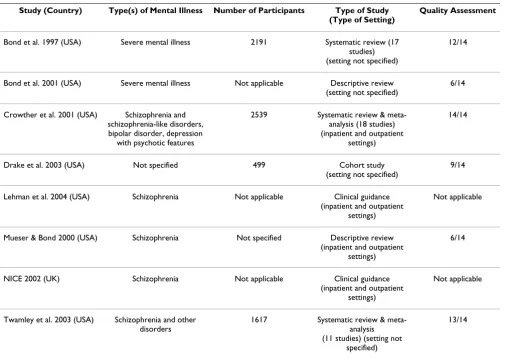
Table 4: Characteristics and quality of studies included in interventions domain: Vocational therapy
Study (Country) Type(s) of Mental Illness Number of Participants Type of Study (Type of Setting)
Quality Assessment
Bond et al. 1997 (USA) Severe mental illness 2191 Systematic review (17 studies) (setting not specified)
12/14
Bond et al. 2001 (USA) Severe mental illness Not applicable Descriptive review (setting not specified)
6/14
Crowther et al. 2001 (USA) Schizophrenia and schizophrenia-like disorders, bipolar disorder, depression
with psychotic features
2539 Systematic review & meta-analysis (18 studies) (inpatient and outpatient
settings)
14/14
Drake et al. 2003 (USA) Not specified 499 Cohort study (setting not specified)
9/14
Lehman et al. 2004 (USA) Schizophrenia Not applicable Clinical guidance (inpatient and outpatient
settings)
Not applicable
Mueser & Bond 2000 (USA) Schizophrenia Not specified Descriptive review (inpatient and outpatient
settings)
6/14
NICE 2002 (UK) Schizophrenia Not applicable Clinical guidance (inpatient and outpatient
settings)
Not applicable
Twamley et al. 2003 (USA) Schizophrenia and other disorders
1617 Systematic review & meta-analysis (11 studies) (setting not
specified)
Carrà et al [47] found no statistically significant differ-ences in patients' relapse or readmission rates in an RCT in which families were assigned to attend either a psych-oeducation group with the patient, a psychpsych-oeducation group with the patient plus a support group without the patient, or treatment as usual. Patient adherence with standard care was better for families who received the psy-choeducation plus support group intervention, although carer burden increased. However, several studies have found that both service users and their family members receiving psychoeducation show an improved level of
knowledge about the relevant psychiatric condition [45,48] but no consistent improvement in insight or adherence to medication [45].
[image:11.612.57.558.99.423.2]As well as reduced relapse rates and improved symptoms and social functioning, other reported benefits of multiple family psychoeducation groups are improved well-being for family members and increased service user participa-tion in vocaparticipa-tional rehabilitaparticipa-tion and competitive employ-ment [49].
Table 5: Characteristics and quality of studies included in interventions domain: Social skills training
Study (Country) Type(s) of Mental Illness Number of Participants Type of Study (Type of Setting)
Quality Assessment
Bustillo et al. 2001 (USA) Schizophrenia, severe mental illness
962 Systematic review (5 studies) (setting not specified)
12/14
Lehman et al. 2004 (USA) Schizophrenia Not applicable Clinical guidance (inpatient and outpatient
settings)
Not applicable
NICE 2002 (UK) Schizophrenia Not applicable Clinical guidance (inpatient and outpatient
settings)
Not applicable
Pfammatter et al. 2006 (Switzerland)
Schizophrenia or psychosis Not specified Systematic review & meta-analysis (19 studies) (setting not
specified)
14/14
Pilling et al. 2002a (UK) Schizophrenia or related disorder
417 Systematic review & meta-analysis (9 studies) (setting not
specified)
14/14
Roder et al. 2001 (Switzerland, Austria, and Germany)
Schizophrenia 73 Case-control study (psychiatric institution)
8/14
Roder et al. 2002 (Switzerland, Austria, and Germany)
Schizophrenia 105 Case-control study (psychiatric institution)
10/14
Table 6: Characteristics and quality of studies included in interventions domain: Cognitive remediation
Study (Country) Type(s) of Mental Illness Number of Participants Type of Study (Type of Setting)
Quality Assessment
Pfammatter et al. 2006 (Switzerland)
Schizophrenia or psychosis Not specified Systematic review & meta-analysis (6 meta-analyses, 19 studies) (setting not specified)
14/14
Pilling et al. 2002a (UK) Schizophrenia or related disorder
203 Systematic review & meta-analysis (5 studies) (setting not
specified)
14/14
[image:11.612.54.561.589.730.2]Although psychoeducation has been shown to have bene-ficial effects on patient outcome, it is not regularly pro-vided in inpatient care [48]. Rummel-Kluge et al [21] used a large postal survey to investigate difficulties in imple-menting a psychoeducational intervention in psychiatric hospitals in Germany, Austria and Switzerland. Although 86% of the institutions offered psychoeducation, only 21% of patients with schizophrenia and 2% of their fam-ily members had received the intervention in the previous year. Staff stated they lacked resources and training.
Clinical guidance from the UK [43] and US [50] recom-mends family interventions last over six months and with a minimum of ten sessions [43,50].
Vocational therapy
Supported employment is an approach to improve voca-tional functioning among people with various mental health problems including schizophrenia [22]. Evidence is strongest for programs that encourage direct entry into competitive employment and provide individualised workplace support rather than models which offer step-wise progression towards employment [51,52]. In two meta-analyses of different approaches to vocational
reha-bilitation, supported employment was found to be three to four times more successful in achieving competitive employment than other forms of vocational training such as sheltered workshops, psychosocial rehabilitation work programmes and transitional employment schemes (RR 0.76, CI 0.64, 0.89; NNT 4.5, CI 4.48, 4.63) [53] (OR 4.14, CI 1.73, 9.93) [54]. Descriptions of studies relevant to vocational therapy can be found in Table 4.
[image:12.612.54.559.100.260.2]Individual Placement and Support (IPS), a specific, man-ualised version of supported employment, has been shown to be more effective than prevocational training in terms of participants achieving competitive employment (n = 295, RR 0.79, CI 0.70, 0.89; NNT 5.5, CI 3.6, 10.2) [53] and their number of days in employment but there is insufficient evidence as to whether IPS is more effective than other less carefully specified forms of supported employment [53,54]. The components of IPS that are most beneficial are: rapid job search; elimination of prevocational preparation; sensitivity to the client's job preferences, strengths and work experience; integration with mental health services and time-unlimited support [50,52].
Table 7: Characteristics and quality of studies included in interventions domain: Arts therapies
Study (Country) Type(s) of Mental Illness Number of Participants Type of Study (Type of Setting)
Quality Assessment
Gold et al. 2005 (Norway) Schizophrenia or related psychoses
266 Systematic review & meta-analysis
(4 studies) (inpatient settings)
14/14
Ruddy & Milnes 2005 (UK) Schizophrenia 137 Systematic review & meta-analysis (2 studies) (setting not
specified)
14/14
Ruddy & Dent-Brown 2007 (UK)
Schizophrenia 210 Systematic review & meta-analysis
(5 studies) (inpatient settings)
14/14
Table 8: Characteristics and quality of studies included in interventions domain: Integrated therapy
Study (Country) Type(s) of Mental Illness Number of Participants Type of Study (Type of Setting)
Quality Assessment
Lenroot et al. 2003 (USA) Schizophrenia Not applicable Descriptive review (setting not specified)
5/14
Mueser et al. 2006 (USA) Schizophrenia or major mood disorder
32 Cohort study (non-residential community
settings)
10/14
Roder et al. 2006 (Switzerland)
Schizophrenia 1393 Systematic review (30 studies) (psychiatric institutions)
[image:12.612.54.557.587.728.2]Integration of supported employment programmes within other mental health services is more successful in engaging and retaining clients in vocational rehabilitation than when these services are separately provided. Inte-grated programmes also reduce problems with communi-cation between services and raise mental health staff's awareness of the achievability of clients' vocational goals [55].
Supported employment is recommended by the APA [22]. In the UK, NICE [43] recommends the provision of sup-ported employment for individuals who wish to work. However, they also recommend that other vocational rehabilitation resources are available for those who are unable to work.
Social skills training
Social skills training (SST) aims to improve social func-tioning for people with a diagnosis of schizophrenia by teaching them skills to improve their social performance in activities of daily living, employment, relationships and leisure [56]. Descriptions of studies examining SST can be found in Table 5.
The effectiveness of SST has been examined in two meta-analyses [40,57] which reached different conclusions regarding evidence for its efficacy. Pilling et al. [57] included nine RCTs of SST and found no clear evidence of benefit for relapse rates, global adjustment, social
func-tioning, quality of life or treatment adherence. In contrast, Pfammatter and colleagues' [40] meta-analysis of 19 SST studies (quasi-experimental studies as well as RCTs) found beneficial effects for the acquisition of social skills (during treatment: n = 688, effect size 0.77, CI 0.62, 0.93; post-treatment: n = 295, effect size 0.52, CI 0.28, 0.77), improvement in social functioning (during treatment: n = 342, effect size 0.39, CI 0.19, 0.59; post-treatment: n = 210, effect size 0.32, CI 0.08, 0.56) and reduced hospital-isation (post-treatment: n = 110, effect size 0.48, CI 0.11, 0.86).
Bustillo et al [56] included five SST studies (two were RCTs) in a systematic review of psychosocial treatment for schizophrenia. They noted that although social skills were usually enhanced when assessed, this did not generalise to social competence in the community.
[image:13.612.53.558.100.242.2]Roder et al [19,20] carried out an evaluation of a four stage skills training program focused on improving either recreational skills, vocational skills or residential skills for patients at eight institutions in Germany, Switzerland and Austria. Participants were assigned to the group that most addressed their goal of interest and matched for age, psy-chopathology, duration of illness and motivation. Group and individual sessions, in-vivo exercises and homework assignments were used to focus on clients' most frequent problems. Small to medium effect sizes for cognitive and social functioning for all three programs were found at
Table 9: Characteristics and quality of studies included in interventions domain: Treatment of comorbid substance misuse
Study (Country) Type(s) of Mental Illness Number of Participants Type of Study (Type of Setting)
Quality Assessment
Drake et al. 2004 (USA) Severe mental illness and co-occurring substance use
disorder
4,313 residents 1,982 outpatients
Descriptive review (outpatient and inpatient
settings)
7/14
Lehman et al. 2004 (USA) Schizophrenia Not applicable Clinical guidance (inpatient and outpatient
settings)
Not applicable
Ziedonis et al. 2005 (USA) Schizophrenia and substance abuse disorder
Not applicable Clinical guidance (setting not specified)
Not applicable
Table 10: Characteristics and quality of studies included in interventions domain: Medication management
Study (Country) Type(s) of Mental Illness Number of Participants Type of Study (Type of Setting)
Quality Assessment
Lehman et al. 2004 (USA) Schizophrenia Not applicable Clinical guidance (inpatient and outpatient
settings)
Not applicable
NICE 2002 (UK) Schizophrenia Not applicable Clinical guidance (inpatient and outpatient
settings)
[image:13.612.55.554.628.736.2]three (recreational skills: effect size 0.35, CI not reported, vocational skills: effect size 0.40, CI not reported, residen-tial skills: 0.51, CI not reported), six (recreational skills: effect size 0.48, CI not reported, vocational skills: effect size 0.47, CI not reported, residential skills: effect size 0.60, CI not reported) and 12-month (recreational skills: effect size 0.58, CI not reported, vocational skills: effect size 0.66, CI not reported, residential skills: effect size 0.73, CI not reported) follow-up.
The American Psychiatric Association states "SST may be helpful in addressing functional impairments with social skills of activities of daily living" [22] but it is not recom-mended by NICE [43].
Cognitive remediation
A meta-analysis of five RCTs of cognitive remediation plus standard care found no benefit in terms of attention,
[image:14.612.56.556.97.369.2]ver-bal memory, visual memory, mental state or executive functioning over standard care alone [57]. However, in Pfammatter et al's [40] review of six meta-analyses small to medium effects of cognitive remediation on general cognitive functioning were found, as well as an indication of a possible transfer of these effects to social functioning. Through a further meta-analysis of 19 studies, cognitive remediation was found to have a small effect on attention (n = 539, effect size 0.32, CI 0.15, 0.49), executive func-tioning (n = 606, effect size 0.28, CI 0.12, 0.44), memory (n = 704, effect size 0.36, CI 0.20, 0.51) and social cogni-tion (n = 228, effect size 0.40, CI 0.13, 0.68) [40]. A mod-erate transfer effect on social functioning (n = 306, effect size 0.49, CI 0.27, 0.70) and small reductions in overall psychopathology (n = 452, effect size 0.20, CI 0.01, 0.38) and negative symptoms (n = 394, effect size 0.24, CI 0.04, 0.44) were found. Descriptions of studies relevant to cog-nitive remediation can be found in Table 6.
Table 11: Characteristics and quality of studies included in interventions domain: Compliance therapy
Study (Country) Type(s) of Mental Illness Number of Participants Type of Study (Type of Setting)
Quality Assessment
Eckman et al. 1990 (USA) Schizophrenia 160 patients unknown number of staff
Case-control study (inpatient, outpatient and community
residential settings)
10/14
Eckman et al. 1992 (USA) Schizophrenia 41 RCT
(inpatient and outpatient settings)
11/14
Kemp et al. 1998 (UK) Majority schizophrenia 74 RCT (inpatient setting) 10/14
Kuipers et al. 1994 (USA) Chronically mental illness 60 RCT (hospital setting) 10/14
McIntosh et al. 2006 (UK) Schizophrenia or related severe mental disorders
56 Systematic review & meta-analysis (1 study) (setting not
specified)
12/14
Seltzer et al. 1980 (Canada) Majority schizophrenia 67 RCT (psychiatric institute) 9/14
Streicker et al. 1986 (USA) Majority schizophrenia 75 Case-control study (psychosocial rehabilitation
agency)
9/14
Table 12: Characteristics and quality of studies included in interventions domain: Occupational therapy
Study (Country) Type(s) of Mental Illness Number of Participants Type of Study (Type of Setting)
Quality Assessment
Buchain et al. 2003 (Brazil) Schizophrenia (treatment resistant)
26 RCT (setting not specified) 9/14
Oka et al. 2004 (Japan) Schizophrenia 52 Before and after study (inpatient and outpatient
settings)
[image:14.612.54.554.634.734.2]More recently, Wykes et al [58] conducted a single blind RCT comparing outcomes for participants assigned to receive 40 sessions of cognitive remediation therapy with participants receiving standard care. A small effect on working memory was found (effect size 0.34, CI 0.1, 0.55) but there were no differences between groups in social functioning.
Arts therapies
Gold et al [59] conducted a meta-analysis of four RCTs comparing music therapy for inpatients with a diagnosis of schizophrenia plus standard care with standard care alone. A minimum of 20 sessions was associated with sig-nificant improvement in positive and negative symptoms while findings for interventions with less than 20 sessions were inconclusive. Recipients of music therapy had signif-icantly improved global functioning (n = 72, RR 0.10, CI 0.03, 0.31; NNT 2, CI 1, 2) and individuals receiving "high dose" music therapy (average 78 sessions) showed significant improvement in social functioning (Standard-ised Mean Difference -0.78, CI -1.27, -0.28). Descriptions of studies relevant to arts therapies can be found in Table 7.
A Cochrane review and meta-analysis of two RCTs of art therapy for people with schizophrenia found marginally beneficial effects on mental state but no effect on social functioning or quality of life [60]. The need for further RCTs was recommended. A Cochrane review of drama therapy identified five RCTs but, with minimal extractable data, no conclusions regarding efficacy could be made [61].
Integrated therapy
Integrated therapy, which incorporates psychosocial and pharmacological interventions, has been evaluated in a
number of studies. Descriptions of these studies can be found in Table 8.
[image:15.612.52.554.103.171.2]The most widely implemented model is integrated psy-chological therapy (IPT), a group-based CBT programme for people with schizophrenia, which integrates neuro-cognitive remediation with social cognition, problem solving and social skills training. Roder et al [62] con-ducted a meta-analysis of 30 studies of IPT, then a second meta-analysis using only the highest quality studies (n = 7) to determine whether or not the results would confirm the findings of the first meta-analysis. In comparison to standard care or placebo-attention control interventions, medium effect sizes were reported for participants who received IPT for global effect (N = 253, effect size 0.65, CI 0.39, 0.74) and psychopathology (N = 638, effect size 0.58, CI 0.39, 0.61), small to medium effect sizes were reported for functioning (neurocognition: N = 633, effect size 0.61, CI 0.43, 0.65; psychosocial functioning: N = 530, effect size 0.43, CI 0.29, 0.54) and small effect sizes for symptoms (positive symptoms: N = 424, effect size 0.42, CI 0.32, 0.60; negative symptoms: N = 277 effect size 0.46, CI 0.24, 0.57). Inpatients showed greater improvement at follow-up than outpatients (inpatient weighted effect size [at 10-month follow-up] 0.79, CI 0.43, 1.16 vs. outpatient weighted effect size [at 7.5-month follow-up] 0.44, CI 0.07, 0.80). Studies including only social skills training and problem solving sub-pro-grammes showed no effect on neurocognition. Effects at follow-up were stronger when all five sub-programmes (cognitive differentiation, social perception, verbal com-munication, social skills and interpersonal problem solv-ing) were provided. Longer term therapy had a beneficial effect on functional outcome. However, individuals with longer illness durations were less likely to benefit from IPT.
Table 13: Characteristics and quality of studies included in interventions domain: Supportive therapy
Study (Country) Type(s) of Mental Illness Number of Participants Type of Study (Type of Setting)
Quality Assessment
Buckley et al. 2007 (UK) Schizophrenia 1762 Systematic review & meta-analysis (21 studies) (inpatient and
outpatient settings)
[image:15.612.54.553.636.744.2]13/14
Table 14: Characteristics and quality of studies included in interventions domain: Coping skills training
Study (Country) Type(s) of Mental Illness Number of Participants Type of Study (Type of Setting)
Quality Assessment
Leclerc et al. 2000 (Canada) Schizophrenia 99 RCT (inpatient wards and
outpatient clinics)
12/14
Lecomte et al. 1999 (Canada) Schizophrenia 95 RCT
(long-stay wards, short-stay wards, outpatient clinic)
Treatment programmes that specifically combine phar-macological and psychosocial interventions (including supportive psychotherapy, family interventions, SST and CBT) have been reported to have additive positive out-comes for patient with schizophrenia [63].
The Illness Management and Recovery programme, a medication adherence intervention comprised of SST, coping skills training, recovery strategies, a relapse preven-tion plan and a cognitive behavioural approach, was developed by Gingerich and Mueser [64]. The programme was found to be beneficial in individuals receiving psychi-atric care in non-residential community settings who reported high levels of satisfaction and found the pro-gramme to be useful, respectful, helpful for managing their symptoms and beneficial in making progress towards their goals [65].
Treatment of comorbid substance misuse
In their review of treatments for people with severe mental illnesses and co-occurring substance misuse, Drake et al [66] concluded that the available evidence supported the integration of mental health and substance misuse inter-ventions into a single care package. Patient-centred pro-grammes were especially effective as they addressed the individual's stage of motivation for change. Programmes that incorporate some form of motivational counselling and outreach to engage the individual were recommended [66].
[image:16.612.56.557.99.523.2]An integrated approach is supported by the APA [22]. Consensus expert guidance also endorses integrated treat-ment plus screening all patients with psychiatric symp-toms for substance misuse and assessing the type, amount and mode of substance use; the client's motivation for
Table 15: Characteristics and quality of studies included in physical health domain
Study (Country) Type(s) of Mental Illness Number of Participants Type of Study (Type of Setting)
Quality Assessment
Anath et al. 1992 (USA) Mostly schizophrenia 75 Cross-sectional study (inpatient setting)
7/14
Bazemore et al. 2005 (USA) Not specified 102 hospitals Cross-sectional study (hospital setting)
10/14
Kilian et al. 2006 (Germany) Schizophrenia, bipolar disorder, major depressive disorder, neurotic disorder,
somatoform disorder
363 Cross-sectional study (inpatient setting)
9/14
Lehman et al. 2004 (USA) Schizophrenia Not applicable Clinical guidance
(inpatient and outpatient settings)
Not applicable
Mitchell & Malone 2006 (UK)
Schizophrenia Not specified Descriptive Review (setting not specified)
6/14
NICE 2002 (UK) Schizophrenia Not applicable Clinical guidance
(inpatient and outpatient settings)
Not applicable
Osborn et al. 2003 (UK) Schizophrenia, schizoaffective disorder or other non-affective chronic psychotic
illness
495 Cross-sectional study (general practices)
9/14
Osborn et al 2006 (UK) Schizophrenia, schizoaffective disorder or other non-affective chronic psychotic
illness
222 Cross-sectional study (general practices)
10/14
Tang et al. 2004 (China) Majority schizophrenia 98 Cross-sectional study
(psychiatric rehabilitation facility)
Table 16: Characteristics and quality of studies included in restraint and seclusion domain
Study (Country) Type(s) of Mental Illness Number of Participants Type of Study (Type of Setting)
Quality Assessment
Addington et al. 2005 (Canada)
Schizophrenia Not applicable Clinical guidance (inpatient and outpatient
settings)
Not applicable
Bower et al. 2000 (USA) Not specified Not specified Systematic review (223 studies)
(inpatient psychiatric settings)
7/14
Donat 2002 (USA) Severe mental illness 53 Case-control study (psychiatric hospital)
6/14
Donat 2003 (USA) Severe mental illness 53 Case-control study (psychiatric hospital)
7/14
Fisher 1994 (USA) Not specified Not applicable Descriptive review (inpatient settings)
6/14
Gaskin et al. 2007 (Australia) Not specified Not specified Systematic review (16 studies) (psychiatric facilities)
11/14
Janssen et al. 2007 (The Netherlands)
Not specified Not specified Cross-sectional study (admission and long-stay
psychiatric wards)
10/14
Khadivi et al. 2004 (USA) Not specified Not specified Cross-sectional study (psychiatric inpatient setting)
6/14
Kostecka & Zardecka 1999 (Poland)
Not specified 866 Cross-sectional study (psychiatric hospital wards)
10/14
Lehman et al. 2004 (USA) Schizophrenia Not applicable Clinical guidance (inpatient and outpatient
settings)
Not applicable
McCue et al. 2004 (USA) Not specified 10,753 Cohort study (inpatient setting)
12/14
McGorry et al. 2005 (New Zealand and Australia)
Schizophrenia and related disorders
Not applicable Clinical guidance (inpatient and outpatient
settings)
Not applicable
Muralidharan & Fenton 2006 (USA)
Not specified 0 Systematic review (0 studies) (inpatient setting)
12/14
NICE 2002 (UK) Schizophrenia Not applicable Clinical guidance (inpatient and outpatient
settings)
Not applicable
Nelstrop et al. 2006 (UK) Not specified Not applicable Systematic review (36 studies) (inpatient settings)
12/14
Palazzolo et al. 2001 (France) Not specified Not specified Descriptive review (psychiatric hospitals)
6/14
Wynn 2002 (Norway) Not specified 235 Cross-sectional study (psychiatric hospital)
9/14
Wynn 2004 (Norway) Majority schizophrenia 12 Qualitative study (hospital wards)
change; physical sequelae of substance use, medication and psychosocial treatments including motivational ther-apy, modified CBT and relapse prevention [67]. Descrip-tions of studies relevant to the treatment of comorbid substance misuse can be found in Table 9.
Medication management
Evidence-based clinical guidance and treatment algo-rithms assist clinicians in the choice and administration of antipsychotic medications [22,43]. These are described
in Table 10. These guidelines also stress the importance of discussion and negotiation with the patient about the choice of medication, changes in medication and regular review of its effects and side effects [22,43].
Compliance therapy
A Cochrane review of compliance therapy for patients with schizophrenia [68] included only one RCT compar-ing it with non-specific counsellcompar-ing [69]. The manualised intervention was based on cognitive behavioural
interven-Table 17: Characteristics and quality of studies included in therapeutic relationship domain
Study (Country) Type(s) of Mental Illness Number of Participants
Type of Study (Type of Setting)
Quality Assessment
Allen et al 1985 (USA) Chronic and severe psychiatric disturbances
37 Cross-sectional study (long-term hospital unit)
9/14
Berger 2006 (Canada) Not specified 46 patients 17 staff
Cross-sectional study (inpatient and outpatient
settings)
5/14
Catty 2004 (UK) Not specified Not specified Descriptive review (setting not specified)
6/14
Clarkin et al. 1987 (USA) Schizophrenia, personality disorder, affective disorder,
acute illness
96 Cross-sectional study (inpatient setting)
7/14
Fakhoury et al. 2005 (UK) Schizophrenia or related psychotic disorder
41 patients 39 staff
Cross-sectional study (supported housing)
5/5; 9/14
Gehrs & Goering 1994 (Canada)
Schizophrenia or schizoaffective disorder
22 client-therapist dyads Case-control study (continuing care)
9/14
Gigantesco et al. 2002 (Italy)
Not specified 855 patients 265 relatives
Cross-sectional study (inpatient and outpatient
settings)
9/14
Hellzén 2004 (Sweden) Long-term mental illness 32 Focus group (psychiatric group dwellings)
4/5
Howgego et al. 2003 (USA)
Not specified 533 patients 131 case managers/
therapists
Systematic review & meta-analysis (2 meta-analyses & 7
studies) (inpatient and outpatient
settings)
12/14
Johansson & Eklund 2004 (Sweden)
Minority schizophrenia 61 Cross-sectional study (psychiatric inpatient ward)
8/14
McCabe et al. 1999 (UK) Schizophrenia 258 Cohort study (psychiatric hospital)
9/14
McCabe & Priebe 2004 (UK)
Severe mental illness 2055 Descriptive review (setting not specified)
7/14
Mueser et al. 2002 (USA) Serious mental illness 3,079 Descriptive review (inpatient and outpatient
settings)
6/14
Snyder et al.1995 (USA) Schizophrenia or schizoaffective disorder
15 care home operators 30 patients
Case-control study (residential care homes)
[image:18.612.55.553.100.605.2]tions and included aspects of motivational therapy, cogni-tive therapy and psychoeducation. No evidence of efficacy was found. Descriptions of studies relevant to compliance therapy can be found in Table 11.
Compliance therapy comprising four to six individual ses-sions exploring the pros and cons of patients' medications is more effective than supportive counselling [70], with advantages in terms of increased compliance (mean dif-ference 19%; CI 0.9, 1.6), insight (mean difdif-ference 18.8%; CI 12.3, 25.2), attitudes towards medication (mean differ-ence 15.6%; CI 2.5, 7.2) and global functioning (mean difference 2.4%) from baseline to 18 months after the end of the intervention.
A clinician administered, behaviourally-oriented pro-gramme on medication management and patient out-comes lead to improvements in patients' knowledge about medication, medication management and compli-ance [71]. Eckman et al [72] subsequently compared out-comes for male veterans receiving social and independent living skills training in groups or supportive group psy-chotherapy in an RCT. In group by trial analyses, individ-uals assigned to skills training showed significant improvement in medication management (F(1, 34) =
75.1, p < 0.0001) and symptom management (F(1, 32) =
[image:19.612.55.555.100.336.2]36.23, p < 0.0001). Significant differences in medication management in favour of skills training were found between groups at six-month follow-up (F(1, 30) = 56.45,
Table 18: Characteristics and quality of studies included in autonomy and service user involvement domain
Study (Country) Type(s) of Mental Illness Number of Participants Type of Study (Type of Setting)
Quality Assessment
Ahuja & Williams 2005 (UK) Not specified Not specified Descriptive review (setting not specified)
4/14
Lewis 1995 (USA) Severe mental illness Not applicable Descriptive reivew (nursing home)
5/14
Linhorst & Eckert 2002 (USA)
Mostly schizophrenia Not specified Descriptive review (psychiatric hospital)
4/14
Linhorst et al. 2005 (USA) Severe mental illness Not applicable Qualitative study (psychiatric hospital)
2/5
Simpson & House 2002 (UK)
Not specified 3796 Systematic review (13 studies) (setting not specified)
13/14
Timko et al. 1993 (USA) Schizophrenia or organic brain syndrome
403 RCT
(psychiatric hospital and nursing home)
12/14
Table 19: Characteristics and quality of studies included in staff training and support domain
Study (Country) Type(s) of Mental Illness Number of Participants Type of Study (Type of Setting)
Quality Assessment
Alexander et al. 2005 (USA) Severe mental illness 1638 Cross-sectional study (inpatient settings)
9/14
Bradshaw et al. 2007 (UK) Not specified 23 mental health nurses Before and after study (setting not specified)
8/14
Corrigan et al. 2001 (USA) Severe mental illness Not specified Descriptive review (setting not specified)
6/14
Linhorst 1995 (USA) Severe and persistent mental illness
7 focus group members Focus group study (long-term inpatient settings)
8/14; 3/5
Sowers 2005 (USA) Not specified Not applicable Clinical guidance (setting not specified)
[image:19.612.54.556.542.730.2]