2016 3rd International Conference on Information and Communication Technology for Education (ICTE 2016) ISBN: 978-1-60595-372-4
1 GENERAL INTRODUCTION
With the popularity of mobile intelligent terminal, the mobile Internet has been developed rapidly and the dissemination of information has undergone a fundamental change. Combined with the promotion of education informatization, the teacher and the learners gradually realize the feasibility of online learning. Online learning describes the multi-dimensional learning vision from the content, time and space, helping learners receive digital learning resources of high quality. According to their own interests and learning methods, learners can start learning from their own cognitive demand, which not only improves the learners' learning initiative, but also mines a greater degree of their own learning potential (Jiang et al. 2015). Online learning provides an effective method for education planning and discovers the differences of learners through collecting and collating learners' information, realizing the transformation from static mode to dynamic mode of education. Especially, with the fact that Big Data, learning analysis and other technologies are getting mature gradually, online learning provides autonomous learning with a substantial guarantee.
2 MOBILE LEARNING
2.1 Current situation of mobile learning
Mobile learning (referred to as m-learning) refers to the use of mobile intelligent terminal to help learners at any time, any place to get knowledge. Due to the fast and convenient information transmission network, mobile learning breaks the barrier of traditional learning mode and promotes the development of stimulating learning mode. Mobile learning must solve two fundamental problems: in the form, the learners must have access to the support of mobile Internet, cloud computing and other information technology which provide protection whenever and wherever possible for users to obtain knowledge. In the content, the developers have to make the reasonable arrangement of learning process and the learning substance (Zhang et al. 2013). The fragmentation and structuring of knowledge will be realized, the process of which is called knowledge management. Its main task is to manage learning resources, including the realization of the externalization of tacit knowledge in various ways, managing the explicit knowledge storage and constructing expert map (Zheng & Chen 2012). Mobile learning not only inherits the basic properties and advantages of the traditional distance education, but also becomes an effective solution to the
Application of Mobile Learning and Big Data on Improving
Flipped Classroom and MOOCs
Weibo Huang, Jianghui Liu
Education Technology Center, Experimental Teaching Center, Guangdong University of Foreign Studies, Guangzhou, China
Xiaowen Wang
School of English and Education, Guangdong University of Foreign Studies, Guangzhou, China
Jinkang Li, Rong Zhang, Yanxia Liu
Cisco School of Informatics, Guangdong University of Foreign Studies, Guangzhou, China
problem of time and space limits for continuous learning, helping learners get access to knowledge and solve other learners’ problems at any time, any place. Mobile learning has a more extensive application prospect, and becomes a hot topic and research direction in Chinese and foreign educational field.
2.2 The applications of mobile learning
The active interaction between the mobile learning platform and learners is required in mobile learning. Considering the fact that the mobile intelligent terminal operation ability is limited and the amount of data and information is huge, we will involve calculation on the server process (Zheng & Chen 2012). The client is responsible for receiving user request and displaying the final data, realizing the real-time interaction between platform and users. Nowadays, the mobile intelligent terminal can be widely supported in formal and informal learning environment tools and meet the mobile learner’s expectations of knowledge content, community interaction and cooperative learning (Chen et al. 2013). Especially in the last two years, the attention on mobile technology application in education has been moved from the improvement of intelligent hardware equipment and the better use of the mobile devices in education field to the combination of Big Data and mobile learning technology in mobile learning that makes greater contribution to education (Wang 2013).
3 BIG DATA TECHNOLOGY
With the development of cloud computing, Big Data technology has attracted more and more attention (Bienkowski et al. 2012). The era of Big Data in mobile learning has become the focus of attention. According to the new definition given by IBM, Big Data has the characteristics of 5V: Volume, Veracity, Variety, Value, and Velocity. First, compared with the traditional physical classroom curriculum, the scope of mobile learning is very large which can reach hundreds of thousands of people. The traditional database software cannot capture, store, manage and analyze such data as the mobile learning’s data. Second, Big Data is often naturally occurring data in the process of learning. We don’t need to spend a lot of time collecting data in the course of the study, so it’s immediate and convenient. Third, the types of Big Data are varied which have far-reaching research value. For example, by tracking the learners in the online classroom in each operation of learning step, mobile learning platform can collect accurate and detailed data on the learning behaviors, including the accuracy of classroom tests, the length of time on watching the video and the active degree of the
community interaction, which is difficult to collect in traditional classrooms.
4 FLIPPED CLASSROOM AND MOOCS
4.1 Flipped classroom
As a whole, the learners are no longer just taking the same notes and learning the same things without autonomy in the passive stage, but participating in the learning activities and discussions actively with the teachers and classmates to explore learning problems as to improve the learning interest greatly, which help to cultivate the consciousness and ability of learners and inspire innovative thinking to meet the learning needs.
4.2 MOOCs
MOOCs is the abbreviation for “Massive Open online courses (Zhang & Li 2013)”. With high degree of openness, flexible interactivity, and massive quantity and high quality of curriculum resources, MOOCs focus on creating short and high quality learning curriculum resources, to serve the scholars all over the world in ways of interactive communication anytime and anywhere, helping them break the limits of space and time to do the autonomous learning. That is why MOOCs can develop rapidly and get scholars’ and users’ fervent attention and full-hearted support.
Chasing the trend of MOOCs’ rapid development along with many other countries, China has established MOOCs platforms, but its development has lagged behind the famous universities, not to mention the three well-known platform co-operations. In recent years, Tsinghua University has established the first China Chinese Mu class platform online school, providing high-quality curriculum resources in colleges to meet the needs of the scholars, which is the essence of higher education. As a kind of open source in the environment of technology innovation, the core idea of MOOCs is to provide learners more convenient, higher quality learning resources to help learners acquire knowledge and chase the development of modern society. As one of the social characteristics of MOOCs is to be the participatory open learning resources, Mu class can help the scholars all over the world regardless of time, space, environment limits, fulfilling personalized learning plan in a virtual network classroom. Free sharing of Mu class resources mean that all people have the equal opportunity to accept college-level quality study learning resources with low education cost, which is conducive to the maintenance of world education fairness. In an effective way, MOOCs promote world teaching reform and the development of education all over the world.
5 APPLICATION OF MOBILE LEARNING AND BIG DATA TO THE FLIPPED CLASSROOM AND MOOCS
5.1 Big Data generated from Flipped classroom and MOOCs
MOOCs gather learners’ data gradually in the process of teaching. Through in-depth analysis and tracing of the data of learner characteristics, MOOCs will intelligently match the needs of next step, so as to catch the differences in knowledge transmission which enables the teacher to educate students according to individual abilities respectively. Large network open courses complete the index that the traditional physical classroom is difficult to complete. Adaptive mobile learning system is established on the basis of this, can quickly and accurately show the effects of learning, and recommend next learning points (including the key points, and how to transfer the knowledge from one aspect to another). MOOCs are considered to be a milepost of educational reform. The most important point is that modern technology can satisfy the existing educational psychology and curriculum arrangements of the teaching curriculum, and achieves the perfect combination of large-scale teaching and individualized learning. The concrete realization method is divided into learning analysis and data mining. Learning analysis is an interdisciplinary field of learning, including science, psychology, information science, statistics, and computer science and so on. A significant analysis is carried out through the study of performance monitoring and prediction of the learners, to find the problem and guide the implementation of effective learning as early as possible. The data mining is an important tool in the study of learning analysis. Data mining can identify the differences of success and failure learners (low efficiency), such as the rate of online test, the degree of participation in the discussion area. Learning analysis can help the learners which may not be well adapted to mobile learning mode by designing more flexible course contents and forms.
5.2 Application case of Big Data
5.3 Analysis of Big Data processing in Mobile Learning
Mobile technology enable students to actively take part in the generation, collection, representation, visualization, analysis, interpretation and communication. The huge amount of data generated from trading and sensor, and from activities such as communication, browsing, purchase, share and search for by-products, these huge set from various sources of data and in a variety of formats used has created Big Data.
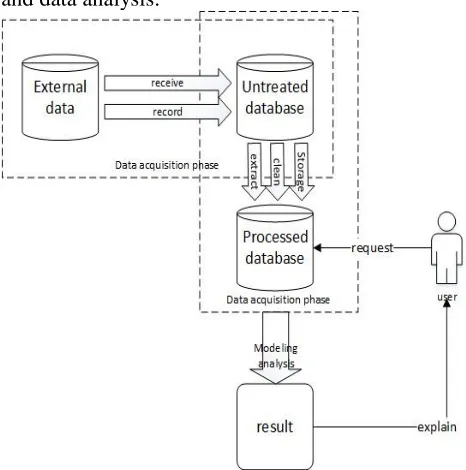
[image:4.612.315.555.42.162.2]Figure 1 shows Big Data processing divided into processing flow of data acquisition, data integration and data analysis.
Figure 1. Big Data processing flow.
The data acquisition stage is mainly to complete receiving and recording operation to the external data source. The receiving mode of Big Data is the main sensor, click on the mobile device, application service access and RFID access. The Big Data record mainly completes the metadata selection to construct the data structure needed. Integration of Big Data is mainly to complete the received data extraction, cleaning and storage operation. In the data analysis and interpretation stage, when users request a query, timely analysis with the model happens, and the results to the user can accept the way back to the user.
A fundamental research about MOOCs is to tap the situational awareness and the user preference to understand the client directly, and help achieve mobile services based on emotional awareness in a better way. In general, when the user's position (i.e. the personal preferences for different situations of mobile learning) is set, the system can provide more accurate and intelligent services for users in the current situation. Figure 2 shows how to use of context information to assist the implementation of intelligent recommendation service.
Figure 2. The perceived service of personalized situation.
The personalized resources recommendation model contains behavior record module, model analysis module and the recommendation algorithm module. First, the behavior record module is in charge of recording the messages of operation, registration and stores the relevant data to the corresponding database. The database will arrange data which become the input part according to the regulation. Second, model analysis module is responsible for extracting and detecting users’ information, and then summarizes the characteristics of users according to the relevant statistics and analysis. Third, recommendation algorithm module is the core module of personalized resource recommendation model and it processes the entire model calculation work. It provides accurately recommended service for the target users through collaborative filtering of resources.
6 CONCLUDING REMARKS
[image:4.612.56.289.203.438.2]7 ACKNOWLEDGEMENT
This research was financially supported by the Science and Technology Project of Guangdong Province, China (NO. 2016A040403113).
REFERENCES
[1]Bienkowski, M. Feng, M.Y. & Means B. 2012. Enhancing Teaching and Learning through Educational Data Mining and Learning Analytics: An Issue Brief. Washington, D C: US Department of Education Office of Educational Technology.
[2]Chen, X.J. Cui, G.Q. & Wang, SH.Y. 2013. In the era of global integration of learning—AECT meeting review and reflection. Journal of Distance Education, (1): 3-16.
[3]Jiang, Q. Zhao, W. & Peng, J. W. etc. 2015. Based on Big Data adaptive and personalized online learning analysis model and implementation. China Educational Technology, (1): 85-92.
[4]Wang, P. 2013. Analysis of the support function and design principles of WeChat mobile learning. Journal of Distance Education, (6): 41-34
[5]Zhang, K. Zhao, Z. & Mi, Y. 2013. I Fudan promote mobile learning and application. China Education Network, (1): 3-15.
[6]Zhang, Y. & Li, Y. 2013.An introduction to the study and analysis of Big Data in MOOCs and educational measurement. Tsinghua Journal of Education, 34(4):22-24. [7]Zheng, J.Q. Chen, Z.Y. Wang, M.J. & Wu, J. 2012. The