1
2 Subject to Predicate
Risk, Governance and the Event of Terrorism within Post-9/11 U.S. Border Security
Mathew Alexander Yuri Kabatoff
Department of Sociology
MPhil/PhD
London School of Economics
3 Declaration
I certify that the thesis I have presented for examination for the MPhil/PhD degree of the London School of Economics and Political Science is solely my own work, except where I have clearly indicated that it is the work of others.
The copyright of this thesis rests with the author. Quotation from it is permitted, provided that full acknowledgement is made. This thesis may not be reproduced without my prior written consent. I warrant that this authorisation does not, to the best of my belief, infringe the rights of any third party.
Final Word Count
82,086
Font
4 Abstract
As a result of the 9/11 terror attacks, a new and far-reaching form of security governance
has emerged within the United States under the heading of 'homeland security'. While this
mode of security has brought with it a range of domestic counter-terrorism efforts, such as
new methods of preparedness in the event of attacks on American cities, as well as
mechanisms to seize and cut off terrorist assets, it has also predominantly been oriented
towards the development of a new legal, institutional and technological regime responsible
for the management and risk assessment of individual identity and the identities of foreign
nationals passing through U.S. borders.
Although this mode of security provides new powers as well as more flexible and
collaborative methods for U.S. customs, law enforcement and intelligence to address the
threat of terrorism, it has also created political controversy. This controversy has rested upon
the perception that homeland security methods embody an unchecked extension of
executive power negatively impacting the rights and liberties of the individuals that these
very security techniques were established to protect. In order to interrogate this controversy
and analyse how this new form of security performs within an extended field of sovereign
power, this thesis takes into account the laws, policies and technologies – biometric, data-mining, database – that shape this new form of security at the border.
This new form of security arguably not only embodies a mobilisation and empowerment of
U.S. intelligence and law enforcement agencies which understand terrorism as catastrophic
and generational, but it can fundamentally be seen as creating a new infrastructure that
allows U.S. security institutions to become more 'informationally' aware of the identities of
individuals entering and exiting the country. How U.S. security institutions access such
identity information, along with how this data is used, is what constitutes the new social and
5
Table of Contents
1. Preliminary Considerations ...8
1.1 ...9
1.2 Three Questions ... 12
1.3 9/11 and Terrorist Travel ... 17
1.4 9/11 and Intelligence Sharing (FBI) ... 19
1.5 A layered Approach to Security ... 23
2. Literature Review: Sovereignty, Technology and Risk ... 27
2.1 ... 28
2.2 Two Concepts of Security ... 29
2.3 Sovereignty ... 33
2.4 Risk ... 39
2.5 Identity Technologies and Surveillance ... 45
2.6 Conclusion ... 52
3. Research Design and Methodology ... 52
3.1 ... 53
3.2 Research Question (Motivations and Problematics) ... 53
3.2.1 Problems and Problematics ... 57
3.2.2 Governmentality ... 59
3.3.1 Methodology: Discourse Analysis (Statement, Strategy, Archive) ... 61
3.3.3 Proposed Outcomes: Security Governance ... 66
4. [LAYER 1] Governance and War: Legal and Institutional Rationales Governing Search and Data Collection within Post-9/11 U.S. Border Security. ... 67
4.1 ... 68
4.1 9/11 and the Discourse of War (Executive Authority, Information Collection) ... 69
4.1.2 Domestic Intelligence Practises Pre-9/11... 73
4.1.3 Domestic Intelligence Practises Post-9/11 (Legal Precepts) ... 76
4.2 From Particularised to Non-Particularised Search ... 77
4.3 Domestic Spying Program: AT&T/Verizon ... 80
4.4 PNR and Trans-National Data Flows ... 85
4.5 Conclusion ... 88
5. [LAYER 2] The Economics of Security: Visa Reform and Post-9/11 U.S. Border Security ... 90
5.1 ... 91
6
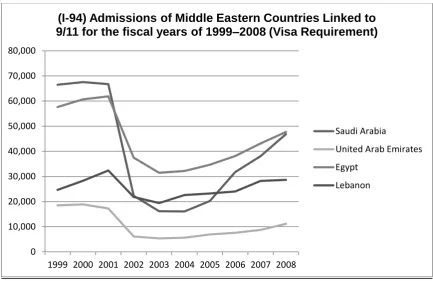
Figure 5.2.1: Visa Approvals from Countries whose Nationals Were Involved in 9/11 ... 96
5.3 The Visa Process Post-9/11 ... 97
Figure 5.4.1: Visa Waiver Program Entrants from Western European Nations since 2001... 104
5.4 The Economic Contribution of the Visa Waiver Program ... 104
5.5 Conclusion ... 109
6. [LAYER 3] Biometrics and Identity: U.S. Border Security Post-9/11. ... 111
6.1. ... 112
6.2. Why Biometrics ... 112
6.3 What is a biometric? ... 114
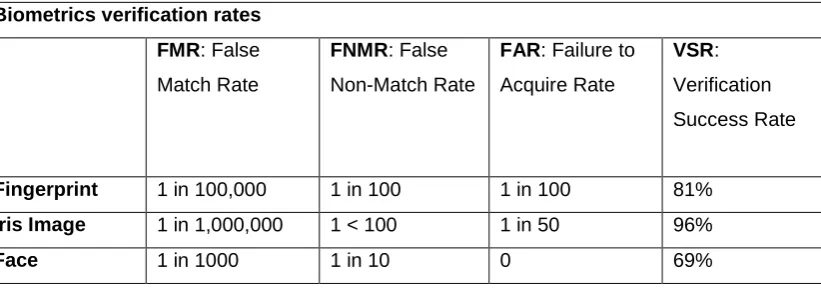
Figure 6.3.1 Legend for Biometric Performance Figures (Fingerprint, Iris Image, Face) ... 116
6.4.1 A Brief History of Biometrics ... 116
6.4.2 IAFIS/IDENT ... 118
6.4.3 IDENT/IAFIS Post-9/11: Integration into U.S. VISIT ... 123
6.5 Defence Biometrics ... 125
6.6 Conclusion ... 126
7. [LAYER 4] Subject to Predicate: Data-Mining, Terrorist Watch-Lists and Prevention/Precaution within Post-9/11 Border Security. ... 129
7.1 ... 130
7.2 Data-mining as a new mode of statecraft ... 131
7.3 Data-Mining within post-9/11 U.S. Border Security: Technical Attributes ... 133
7.3.1 Watch-List Name Matching ... 136
7.4 Pre-screening and Counter-terrorism: CAPS, TSDB, Secure Flight, PNR/APIS ... 137
7.5 Terrorist Watch-List Database Construction ... 140
Table 7.5.1 ... 141
7.5.2 TSC Terrorist Watch-List Nomination Process ... 142
7.6Cases: Positives/False-Positives/False-Negatives ... 144
7.7 Conclusion ... 146
Figure 7.7.1 Terrorist Watch-Lists Used by the U.S. Security Services ... 147
8. Conclusion ... 148
Works Cited ... 153
List of Acronyms (Alphabetical)... 163
Appendix 1 ... 165
7 The great uncertainty of all data in war is a peculiar difficulty,
because all action must, to a certain extent, be planned in a mere twilight, which in addition not infrequently — like the effect of a fog
or moonshine — gives to things exaggerated dimensions and
unnatural appearance. (Clausewitz, 1984)
9 1.1
In a February 2011 article in the New York Times commenting on the ‘Arab Spring’ that
resulted in the collapse of the autocratic regimes of Ben Ali in Tunisia, Mubarak of Egypt and
later Gaddafi of Libya, journalist Scott Shane questioned what impact this political movement
would have on the future threat of Al Qaeda to the United States and the region. Shane
wrote that if the regional locations of Al Qaeda’s discontent had disappeared and the political force that brought about this change had been based upon the emergence of a civil and
democratic consciousness rather than the values and beliefs of radical Islam,1 would ‘. . . the
terrorist network shrivel slowly to irrelevance? Or would it find a way to exploit the chaos
produced by political upheaval and the disappointment that would inevitably follow hopes now raised so high?’ (Shane, 2011, p. 2) While it would be premature to assume that this
important political event would have the immediate effect of extinguishing Islamic terrorism, it
does present the opportunity for a thought experiment to conceptualise an image of U.S.
political and security practise within a post-9/11 era. This conceptualisation can be further
supported by a number of events that have taken place since February 2011: namely, the
death of Osama Bin Laden; the withdrawal of the U.S. military from Iraq; and the recognition that the war in Afghanistan, despite that country’s continued status as fractured nation-state,
no longer fulfils specific counter-terrorism goals for the U.S. (Bremmer, 2012) While it would
be compelling to speculate or develop a vision of what political or security challenges come
after the war on terror, this thought experiment remains useful in grounding an analytic
framework in order to ask a counter-factual question or to ask in the extinguishing of the
terrorist threat, what form of U.S. domestic counter-terrorism practise and security remains?
Or, rather, how can the last 10 years of U.S. homeland security practise, which has
undergone a profound transformation in respect to the governance and management of
threats, be accounted for?
Admittedly, the broad-based foreign policy goals of the United States can be argued to have
shifted away from the Middle East, apart from the threat of Iran obtaining a nuclear weapon,
and now concern risks associated with economic stability and competition primarily arising
from China (Bremmer, 2012). However, it would be inaccurate to assume that the security
practises developed over the last decade primarily by the Department of Homeland Security
(DHS) would simply change their mission or wither away. In fact, U.S. constitutional scholar
Jack Goldsmith has argued that even the opportunity for U.S. counter-terror practises
embodied as part of the war on terror were primed to diminish in the changeover from the Bush to Obama administrations – Obama ran on a campaign deriding the Bush approach to
counter-terrorism – the vast majority of domestic and foreign counter-terrorism practises
remained (Goldsmith, 2012, p. 3). As a result, it will be argued that the domestic security
changes made since 9/11, and in particular those practises associated with the management
and risk assessment of the travelling population to and within the United States, not only
1
10 persists, but has created a new form of security governance based on informational
awareness of individual identity that is now a core feature of U.S. homeland security. This
identity-oriented security practise as a result continues to shape the empirical realities of
post-9/11 border security. Therefore, despite the urge to simply cast away the sociopolitical
transformation that has taken place over the last 10 years in the face of a changing Middle
Eastern foreign policy outlook, it remains an important task of social science to understand
what has constituted the domestic security transformation over the last decade in order to
assess the impact that these changes have had on securing the U.S. frontier as well as to
obtain generalisable characters that can inform an understanding of the behaviour and
actions of U.S. homeland security in the future.
What defines and continues to give analytic relevance to the U.S. homeland security agenda
is the change in how threats have been understood and mitigated since 9/11. An important
problematic that U.S. homeland security has set out to address is not merely how to guard
against identifiable threats residing outside of the country as found with the active global
counter-terrorism policy of engagement seen in the cases of the Iraq and Afghanistan wars,
but, rather, how to address the problem of identifying threats that are disguised or hidden within the travelling civilian population – as was the case with the 9/11 attacks. As a result,
U.S. homeland security has worked to securitise the visa and immigration system as well as
create new methods in order to vet and assess primarily foreign nationals prior to and upon
arrival to the United States. The main change that has defined this form of securitisation is
not the simple or binary of closing of the border to certain ethnic, religious or national groups,
but, rather, the emergence of a new form of security centred on the individual that not only allows for threats to be identified – via the collection of identity information and the matching
of this information against intelligence databases and watch lists – as well as allows U.S.
borders to remain open to flows of goods, capital and people.
To further develop this point, this mode of security departs from past U.S. homeland security
practises directed solely towards recognisable national or ethnic groups2 designated as a
national threat. Instead, contemporary homeland and in particular border security is oriented
towards the identification of threats associated with specific individuals travelling through the
border zone that are masked or disguised as civilians. While U.S. homeland security practises still contain a past cleavage of group profiling – a security practise that dates back to the Second World War and the internment of all U.S.–Japanese citizens on the West
Coast, with the contemporary version being the U.S. list of nations recognised as ‘state sponsors of terror’ – this form of profiling makes up only one attribute of the corresponding
security matrix. To illustrate how this works, in the aftermath of the attempted bombing of
Northwest Airlines flight 254 from Amsterdam to Detroit in December 2009 by a young
radical Muslim, Nigerian Umar Farouk Abdulmutallab, who was radicalised while a student3
2
11 in Britain, the DHS proceeded to enhance screening of nationals from 144 Middle Eastern
and North African countries, even though these nations did not have a direct link to the
Abdulmutallab plot (Lipton, 2009). However, the security response to this incident revealed
that beyond the broad category of national, ethnic or religious affiliation, Abdulmutallab was
already listed within U.S. counter-terrorism databases and was to be detained and
interviewed by DHS officials upon landing in Detroit. Since he was not placed on the ‘no-fly’
list – a list described in detail in Chapter 7, which bars high-risk individuals from boarding
aircraft bound for the U.S. – he was not impeded by airport security officials and was able to avoid detection from physical airport screening procedures – in this case carrying a
concealed explosive device onto the plane. The recourse by the DHS to the incident then
called for greater tightening of the watch-list nomination process as well as for further
collection of Passenger Name Record (PNR) data so that U.S. border security services were
able to more readily intervene upon specific individuals, rather than the upholding of blanket
bans on specific groups (Napolitano, 2011). What this example shows is that the new mode
of security taken up by the DHS and corresponding intelligence and border security agencies
is one that is multi-modal, operating at multiple layers and in this case moving from macro to
micro categories of analysis of the individual in order to monitor and identify threats. A key
component that makes this form of layering possible is the use of biometric, data-mining and
data-sharing technologies, whereby U.S. security services have been enabled since 9/11 to
acquire multiple data types from the individual that give clues into present and future
behaviour, along with social networks and national affiliation. However, while these new
technologies and data acquisition powers given to U.S. security services present a vision of
unfettered surveillance, this practise of data collection, analysis and, ultimately, security
action is shaped and mediated by economic, technological, constitutional and institutional
factors.
As a result, an important observation concerning this mode of security is that while it
announces a new form of data-surveillance active at the U.S. border zone, this security
practise can be found to be unevenly applied. This is perhaps not surprising. For instance,
Bigo and Guild have shown that immigration practises within Europe have had a long history
of segmenting and separating travelling populations to not only determine citizenship, but
also the right to work, study or asylum, which therefore results in a different experience and
application of state power to each particular group or individual (Bigo & Guild, 2005). Despite
the more universal claims made as part of U.S. counter-terrorism rhetoric and embodied in the phrase ‘war on terror’ – conceptually this phrase conflates the particularism of a national
war strategy with an unreferenced noun – U.S. homeland and border security has been
found to be primarily directed towards foreign nationals with respect to non-U.S. residents
where the visa, immigration and border cross systems have taken on prime interest. Here,
U.S. law enforcement, intelligence and security services have been granted greater
permissions and flexibility in terms of data collection and analysis due to the lack of legal
12 protections afforded to foreign nationals. Therefore, this mode of security cannot be
understood as a universal claim, but, rather, one that is shaped and directed, even though
the catastrophic threat imagined does not discriminate between foreigner and national.
However, despite the directionality of U.S. border security practises, the interplay between
law, technology and governance is importance since it has resulted in a major shift in how
populations are managed and threats are assessed at the border.
Taking into account this thought experiment as well as the subsequent rendering of the
socio-political implications of U.S. homeland and border security, this thesis asks three
questions in order to analyse and interrogate the relationship between executive power,
technology and security governance, post-9/11.
1.2 Three Questions
(1) What relationship does this new mode of security have with the theory of the ‘state of exception’ and the re-emergence of sovereign power post-9/11?
This first question directs us to consider how post-9/11 border security simultaneously
embodies and challenges the social science concept of the ‘state of exception’ where
executive power is understood to be divorced from social and legal constrains during a state
of emergency. This dual quality of post-9/11 border security is grounded empirically through
the consideration of the legal, technological and economic forces that, on the one hand,
afford increased flexibility and powers to U.S. security agencies, while on the other they
delimit and direct how, where and upon which subjects these powers can be applied. This concept of curtailment or shaping of sovereign power is supported by Burchell’s reading of
the concept of ‘governmentality’5 developed by Foucault and applied to liberal political
systems.6 In Burchell’s view, liberal government operates in response to the behaviour of
economic actors while at the same time seeking to establish and enforce political rights,
norms and obligations. Addressing specifically classical liberalism and its impact on
sovereign power, Burchell argues that liberalism is a ‘recognition of heterogeneity and
incompatibility of the principles regulating the non-totalisable multiplicity of economic subjects of interest and those operating in the totalizing unity of legal political sovereignty’
(Burchell, 1991, p. 118). While the liberal or economic form of government finds itself in
opposition to the legal form of government – since the liberal economic rationality is based upon the maximisation of utility as opposed to strictly the enforcement of sanctions – neither
completely cancels the other out. Rather, the choice between economy and sovereignty,
according to specific political events, informs how political power is exercised. If an update
can be made to the duality of economy and sovereignty, it perhaps can be extended to show
an opposition between economy, sovereignty and technology where each come to play a
5 The term ‘governmentality’ is used by Foucault and later developed by Rose, Miller, Burchell and others to describe and represent the logics or ‘rationales’ upon which government operates. Govermentality studies then attempt to understand not only the consequence of decisions made by government – whether they are right or wrong – but also the underlying motivations and ‘reason’ that inform both decision and action.
13 role in shaping how the U.S. border is governed. This third quality of technology, then, is
reserved for the second question of this thesis. Therefore, the notion of the governmentality
of U.S. homeland and border security that will be addressed concerns not only the relationship of the renewed exercise of executive power – which can be seen as subject to constitutional and legal constraints – or the pressures of global liberal economy on migration
flows, but technological capacities that make this new mode of security at the border
possible.
(2) How have digital technologies, in particular biometric, data-mining and database technologies, impacted and shaped this new form of security?
This second question will be addressed in two ways. First, as already introduced, the
rationale of government that can be found within the U.S. border zone is one that is primarily
concerned with the collection and analysis of identity predicates from individuals passing
through the visa and immigration system as well as the border zone. This form of knowledge
relies, then, on digital tools in order to apprehend, chart and measure the materiality of
identity. Identity predicates, however, are not captured solely for the binary operation of identity verification – such as in determining valid claims of identity at immigration controls or as part of the visa issuance process – but are equally oriented towards secondary methods
of identity analysis such as watch-list screening as well as to fulfil a forensic purpose in order
to be on hand in the case of a future terrorist attack. An analysis of this secondary form of
identity processing is central to understanding what makes this new mode of security
possible. The origins of this strategy date back to concerns about the ability of Al Qaeda and
like organisations to carry out the 9/11 attacks by exploiting the U.S. visa and immigration
system. As will be discussed in the further detail in the following pages, the 9/11 hijackers
were able to make detailed preparations, moving in and out of the United States up to 13
months prior to the attack, a period in which each was assumed to be a legitimate visa
holder. This perception of a fault in existing security arrangements was recognised by U.S.
congressional members as well as by U.S. intelligence in their audit of 9/11. It not only
contributed to a new security strategy oriented towards identity, but also led to three
significant institutional changes. First, the upgrading of the measures used for identity
verification and vetting as part of the visa application process to enter the U.S. Second, the
creation of a set of policies and laws to facilitate the collection and sharing of identity data
collected primarily on foreign nationals where this data includes biometric and biographic
data associated with the immigration and travel processes. Finally, the adoption of methods
of analysis and sharing data to allow U.S. security services the opportunity to find actionable
information that can be distributed between the law enforcement, intelligence and customs
communities. What this reveals is that U.S. homeland and border security not only functions
through the establishment of a new set of standards and norms that enforce stringent
requirements to pass through U.S. borders; it also works to create a new analytic regarding
the behaviour and attributes of those travelling to and within the U.S. This analytic is viewed
14 but it also acts as a framework for understanding how rationales of risk come to inform and
shape border management and control.
(3) How effective is U.S. homeland and border security in respect to its stated aims of counter-terrorism?
The third question this thesis asks is: How well does homeland and border security work to
achieve its stated policy aim of reducing or nullifying terrorist attacks on U.S. soil? One of the
obstacles in answering this question is the question of measurement. As will be argued in
Chapter 3 concerning methodology, while cost-benefit or quantitative methods of analysis
are not without merit, they alone cannot grasp the full impact of border security measures
post-9/11. This is due to the understanding of contemporary terrorism as an event that is
infrequent, catastrophic and generational. These three attributes are important since they
represent a threat that is at odds with scientific measurement yet occupies a central place in
national security and public policy decision making. As a result, this new mode of security
more easily lends itself to an analysis of the institutional, legal and technical changes that
have impacted security governance at the border post-9/11. For instance, a key finding
described in Chapter 7 that concerns PNR data collection is shown to be more pervasive in
respect to foreign nationals planning to enter the U.S. versus U.S. citizens due to a lack of
legal protections. One can only surmise that, given further terrorist activity or the issuance of
a state of emergency by the U.S. government, domestic security might plausibly wish to
apply such measures to U.S. citizens as well. However, until this unlikely yet plausible event takes place, U.S. homeland security is still left vulnerable to ‘home grown’ terrorism that is not explicitly checked for within the context of the border. Understanding how these
bifurcated security practises have emerged and perform, in respect to their security gains,
obstacles and limitations, provides insight into future forms of security governance along with
the politics concerning data acquisition and surveillance given a sustained future terrorist
threat.
With these three questions, this thesis maps and evaluates the emergence of a significant
form of security governance that has taken place within the United States and has impacted
Western Europe as well as the 367 member nations of the Visa Waiver Program (VWP).
What this thesis seeks to establish is not only a description of a new set of institutional, legal
and technological developments that have taken shape since late 2001, but how these very
developments have shaped a new form of security governance. In order to address the
research locations that compose the multi-dimensional space of the U.S. border, and in
particular air travel to and from the U.S., it is important to understand the set of rationales
that the U.S. executive branch, namely the presidency has operated under in response to
9/11. In order to define these rationales, it is important to revisit the account of the 9/11 terror
7 Andorra, Australia, Austria, Belgium, Brunei, Czech Republic, Denmark, Estonia, Finland, France, Germany,
15 attacks and the security holes within the U.S. immigration and border control process that
allowed for the 9/11 terror attacks to take place.
1.1 Changes within homeland security and its dominant rationales since 9/11
During the Bush administration – from 2000 to 2008 – U.S. counter-terrorism practises were
most visible outside the United States as exemplified by the wars in Iraq and Afghanistan as
well as the controversial and highly visible practises of enemy combatant detention in
Guantánamo Bay, and rendition (Goldsmith, 2012). While this global counter-terror strategy
met with substantial international criticism8 and therefore has garnered significant political
and academic attention, the United States has also engaged in a quieter9 but no less
substantial defensive domestic counter-terrorist and preparedness strategy under the title of ‘homeland security’ (Heng & McDonagh, 2009). This strategy has primarily been motivated
by the development of preventative and precautionary counter-terrorism measures that
actively seek to break up and thwart terrorist plots, logistical capabilities and actions. As a
result, the most significant structural changes that have taken place in respect to terrorism
have involved the reconfiguration and reformation of America’s domestic intelligence,
immigration and law-enforcement institutions in order to become more ‘informationally’
aware of the identity and affiliations of individuals, primarily foreign nationals wishing to travel
to and within the country. What is important to consider, however, is that despite the
dramatic change that took place within domestic national security infrastructure post-9/11,
pre-9/11 U.S. national security policy was already coming to be aware of threats inherent to
globalisation and technological change such as open borders as well as the increasing
availability of inexpensive yet catastrophic biological and even nuclear weaponry.
With this in mind, although U.S. Congress passed the ‘Homeland Security Act’ in 2002 – a bill used to create what is now known as the Department of Homeland Security (DHS) – the
bill was informed largely by the recommendations made by the Hart-Rudman Commission
on National Security, conducted from 1998 to 2001. In its pre-9/11 conclusions, this
commission determined that U.S. domestic security would be challenged not only by novel
developments of new weapons technologies such as bio- or cyber-weapons but more
significantly at the structural level where the U.S. would become increasingly vulnerable to
‘asymmetric’ threats. Despite American military pre-eminence in respect to arms and munitions, U.S. intelligence would face more challenging adversaries where not even ‘excellent intelligence would not be able prevent all surprises’; and the U.S. homeland would
become a target due to porous borders as a result of globalisation, both challenging and
calling for the reaffirmation of sovereignty (Hart & Rudman, 2001, p. 118) (Chertoff, 2008, p.
8
In respect to controversy surrounding the international and political strategy of the war on terror: the Iraq war was heavily opposed by millions of British and U.S. nationals; the Afghanistan war, while smaller, continues to this day and has led to the destabilisation of Pakistan due to retaliatory strikes by the Taliban; Guantánamo Bay, the holding center for suspected terrorists, has been linked with unlawful detention and torture; and the media campaign and public statements made by the Bush administration have not necessarily endeared the Middle East and the Muslim world to the United States.
9The term ‘quieter’ is only used in respect to media attention. The changes that have taken place in respect to
16 1). Given these recommendations, as well as with a view that U.S. domestic intelligence and
visa and immigration services were severely compromised in the lead-up to 9/11, the DHS
and the policy platform for homeland security were developed not only to ensure resilience in
the event of an emergency, but to provide a new networked and intergovernmental national
security infrastructure that would enable U.S. security services to identify and track threats
as they interfaced with U.S. immigration and the border crossing process. In order to achieve
this goal, the DHS, as the institution charged with the homeland security mandate, was to be
created out of the consolidation of 27 government agencies, including the Federal
Emergency Management Agency (FEMA), the Customs Service (renamed the Customs and
Border Protection agency [CBP]), the Border Patrol, the Coast Guard, and the Immigration
and Naturalization Service (INS), with the expressed intent of having closer communication
and data-sharing ties with U.S. domestic intelligence and law enforcement (DHS, 2008). The
DHS was also intended, as described in the Homeland Security Act, to prevent terror attacks
within the United States; reduce the vulnerability of the United States to terrorism; and
minimise the damage from terrorist attacks should they occur (Homeland Security Act,
2002). Coinciding with the development of this bill was the announcement by President Bush
of an increase in funding for homeland security from $19.5 billion – earmarked pre-9/11 as
part of the Y2002 budget – to $37.7 billion. The bulk of this funding was directed at first
responders, bioterrorism prevention efforts, border security and ‘technology reflecting an increased emphasis on homeland security’ (DHS, 2008, p. 5).
Along with the creation of the DHS, the Federal Bureau of Investigation (FBI) was also
tasked with its own set of institutional reforms to make it more effective in the face of
terrorism. It must be recalled that the FBI was singled out along with the INS in the 9/11
Commission Report for its intelligence failures in the lead-up to 9/11, where these failings
were the result of both inadequate intelligence-gathering techniques as well as self-imposed
institutional barriers that prevented the sharing of actionable intelligence10 (Grewe, 2004). As
part of its process of reform, which saw the departmental allocations of agents shift heavily
towards national security,11 the FBI acquired a new set of law enforcement tools and
adopted an investigatory orientation based upon information sharing, communication and
prevention (FBI, 2005). The new law-enforcement tools consisted of not only technological upgrades – that is, new digital methods for the analysis and collection of information – but a
legal and institutional retooling as well. For instance, the Department of Justice (DoJ), the
branch of government responsible for the prosecution of criminal and national security cases
brought forward by the FBI, was granted the ability to prosecute terror cases on the basis of
more general or minor offences such as identity theft, immigration violations and the making
of false statements in the context of immigration hearings. The rationale behind this shift was
10
The three members of the 9/11 plot in question were Khalid al Mihdhar, Nawaf al Hazmi and Zacarias Moussaoui. Moussaoui has been described by the U.S. State Department as the ‘20th hijacker’, since he was arrested and deported from the U.S. on immigration violations during the late summer of 2001 after arousing suspicion of hijacking intent at a flight training school in Minneapolis, Minnesota. Mihdhar and Hazmi were two of the five hijackers on American Airlines Flight 77, which crashed into the Pentagon on September 11, 2001.
17 one of prevention and precaution described by the FBI as beneficial, since ‘prosecution on
such charges is often an effective method, and sometimes the only available method, of deterring and disrupting terrorist planning and support activities’ (FBI, 2005, p. 1). Second,
with the passing of the USA Patriot Act12 (USA Patriot Act, 2001) (USAP), the FBI was also
granted institutional licence to share information with greater ease between the intelligence community and law enforcement – the problems in respect to data-sharing and 9/11 will be discussed in greater detail in the following pages. Finally, the FBI’s budget was doubled, much like that of the DHS over the period of 2001–08, from approximately $3.5 to $7.1 billion, and has been used to develop a new set of counter-terrorist units that allow for a
broader range of intelligence gathering, analysis and sharing in respect to both foreign and
domestic threats. These units, consisting of the Joint Terrorism Task Force (JTTF), the
Terrorist Screening Center (TSC), the National Counter Terrorism Center (NCTC) and the
Foreign Terrorist Tracking Task Force (FTTTF), have not, however, been created simply as
discrete investigatory bodies each with their own singular mandates; rather, each has been
designed to be networked not only with each other but with the broader law-enforcement
community and the DHS in order to provide timely intelligence when required. As a result, in
the acquisition of new law-enforcement tools and a change in institutional rationale towards a
rationale of prevention, the FBI has moved from a practise of veiled and targeted intelligence
gathering on a case-by-case basis to a mandate based on the daily monitoring of civil
institutions alongside a more targeted intelligence-gathering approach in order to intervene
upon potential threats. This technological and institutional shift, which can be described as
allowing the FBI to perform actions of non-particularised search, will be addressed in detail in
Chapter 5.
1.3 9/11 and Terrorist Travel
. . . Just yesterday, the Department of Justice released information indicating that 13
of 19 terrorist hijackers had entered the United States legally with valid visas. Of the
13, 3 of the hijackers had remained in the United States after their visas had expired.
The INS had no information on six of the hijackers. [. . .] . . . Today, I see three areas
of vulnerability in our immigration system: first, an unregulated visa waiver program in
which 23 million people arrive in this country annually from 29 different countries with
little scrutiny; second, an unmonitored non-immigrant visa system in which 7.1 million
tourists, business visitors, foreign students and temporary workers arrive. To date,
the INS does not have a reliable tracking system to determine how many of these
visitors left the country after their visas expired. Third, among the 7.1 million
non-immigrants, 500,000 nationals entered on foreign student visas. The foreign student
visa system is one of the most under-regulated systems we have today. (Feinstein,
2001, p. 3)
Senator Diane Feinstein
18 As it has been described in both the 9/11 Commission Report (Report) and the 9/11 Terrorist
Travel Monograph (Monograph), the narrative of the 9/11 attacks was one of not only shock
and tragedy, but missed opportunities on the part of U.S. intelligence and visa and
immigration control.13 While each report features many recommendations concerning
broader aspects of American foreign policy related to the war on terror and the threat of
radical Islam, each places significant emphasis on the securitisation of the travel visa,
immigration and travel process as a way to enhance homeland security. The Report and the
Monograph argue that systematic weakness in American domestic defence that allowed the
9/11 terrorists to coordinate the attacks from within the United States was the result of the
lack of a well-developed counter-terrorist strategy applied to American border security
practises. For instance, it was found that on separate occasions five hijackers were selected
for secondary screening, but these inspections did not look for terrorist predicates or
evidence of terrorist intent; rather, they were designed to identify drug smuggling or determine whether the individual was an ‘intending immigrant’ (9/11 Commission, 2004, p.
526). Second, the U.S. immigration system was unable to fulfil basic institutional duties such
as identifying fraudulent or manipulated identity documents – for example, Mohand al-Shehri, one of the 14 ‘muscle-hijackers’14
who were tasked with guarding the Al Qaeda pilot
of each hijacked flight, obtained a two-year B-1/B-2 tourist/business visa from the U.S.
Consulate in Saudi Arabia, despite submitting a passport that lacked an expiry date;
al-Shehri was also not interviewed by the Consulate as part of the visa administration process
despite being legally required to do so in order to obtain a visa (9/11 Commission, 2004).
Finally, it was found that U.S. intelligence agencies not only failed to exchange and share
important counter-terrorist intelligence inter-departmentally, but this information was not
passed onto U.S. customs and immigration, who were in the position to intercept the 9/11
hijackers. For instance, the CIA was aware of another muscle-hijacker, Khalid al-Mihdhar, as early as 2000, yet his name was not placed on a terror ‘watch-list’ nor was notification of
terrorist affiliation given to the consulate responsible for issuing his B-1/B-2 visa in Saudi
Arabia (9/11 Commission, 2004) (Eldridge, et al., 2004). These errors in the eyes of the
Commission and congressional testimony post-9/11 gained even more significance when
considered alongside the devastation of the 9/11 terror attacks as well as the fact that out of
the 23 visa applications made by the nineteen 9/11 hijackers, 22 applications were
successful, thus allowing the hijackers to remain within the country or even exit and re-enter
unimpeded.15
13
It may seem to the reader that the terms ‘domestic security’ or ‘border controls’ should be included in this list; however, the U.S. government pre-9/11 had not assigned a specific agency the duty of providing domestic defence or border security that included counter-terror measures.
14The term ‘muscle-hijacker’ refers to those hijackers who were not pilots. Their role was to protect the pilots and
intimidate and keep order amongst the air passengers.
19 A further fault identified by Congress and the Commission was the lack of an entry/exit
system in order to track visa overstays as well as a basic system to monitor visa violations,
in particular those violations related to the student visa issuance and compliance. Out of the
19, two hijackers violated the terms of their visas. For instance, Ziad Samir Jarrah, the pilot
of United Airlines Flight 93, which was shot down by U.S. fighter jets over a field in
Pennsylvania, entered the United States on a valid tourist visa but immediately took up flight
training, thus violating his visa terms (Eldridge, et al., 2004). However, these two hijackers
were not tracked down, nor was the violation enforced due to the lack of a monitoring and
enforcement mechanism to determine the whereabouts of the individuals or whether or not
an individual had left the country. Congress made the admission that in 1996 a bill had been
passed requiring the establishment of an entry/exit system at all American ports of entry – land, sea and air – under the Illegal Immigration Reform and Immigration Responsibility Act
1996.16 This directive, handed down from Congress to the Attorney General was, however,
never enacted due to pressure from trade lobby groups, who argued that additional
identity-verification requirements at the border would lead to longer wait times and negatively impact
the American economy. There were two attempts at a provision for an entry/exit system, first
in 2000 with the Immigration and Naturalization Service Data Management Improvement Act,
and then post-9/11 with the Patriot Act, with each attempt proving to be unsuccessful.
Surprisingly, as of 2012, despite a further attempt within the framework of US-VISIT, the U.S.
border still lacks the infrastructure to determine if and when a foreign national has left the
country (Hite, 2007). Again, within the framework of the 9/11 narrative, the interruption of one
terrorist attempting to travel to United States based simply on proper due diligence of the
U.S. immigration system could have potentially disrupted the terror attacks.
For the 9/11 Commission, these four examples: a lack of counter-terrorism awareness
amongst customs agents; the inability of the U.S. immigration and visa process to perform
due diligence in the issuance of visas; the lack of timely sharing of terror information; and the
inability for the INS to enforce immigration violations, not only led to a faulty immigration and
border system but allowed for repeated abuse of the immigration system. While it is evident
that this form of analysis by the Commission is clearly retrospective and may even suffer
from hindsight bias, it does present a problematic of the securitisation of civil institutions that
will be highlighted in coming chapters. This understanding of the security faults leading up to
9/11 conflates terrorism and terrorist planning and logistics with everyday civil practises of
the visa, immigration and passport process.
1.4 9/11 and Intelligence Sharing (FBI)
Unlike the faults attributed to the INS and U.S. border security, those attributed to the FBI were focused on the agency’s inability to share actionable information that was already in its
16
20 possession internally between its intelligence and criminal investigation units. This inability to
share has been termed the ‘the wall’ (FBI, 2002, p. 3). ‘The wall’ refers to the unwritten
institutional barriers that governed the sharing of intelligence information obtained by FBI
agents through the use of a FISA17 warrant18 that prevented the sharing of this information
with other divisions of U.S. intelligence and law enforcement as well as with criminal
prosecutors from the Department of Justice (DoJ) responsible for bringing FBI-led cases to
trial. This institutional norm originated in the late 1970s in response to the Watergate inquiry,
where it was revealed that the FBI, acting under the direction of the Nixon administration
used its investigatory power to monitor political opponents of the White House. Further
elaborated by the Church Committee19 from the 1930s until 1976, the FBI had been
responsible for intelligence gathering in relation to both national security and
law-enforcement matters. For instance, during World War II President Roosevelt directed the
FBI to expand its national security duties to include anyone suspected of ‘espionage, sabotage or subversion’ (Grewe, 2004). It has been further argued that during the postwar
period the domestic intelligence-gathering activity of the FBI under Director J. Edgar Hoover
expanded greatly, with the FBI establishing a covert action programme that operated from
1956 to 1971 against domestic organisations and, eventually, domestic dissidents. For
instance, over the period of 1960 to 1974 during the height of the Civil Rights and
anti-Vietnam peace movements more than one million files had been created on Americans and
more than 500,000 investigations had been carried out by the FBI without a single court conviction’ (Johnson, 2008). In 1976 the FBI’s ability to use its intelligence gathering for
purposes other than legitimate criminal or national security matters was curtailed. Up until
1976, in order for the FBI to gather intelligence for a criminal investigation, therefore
obtaining a search warrant or warrant to perform electronic surveillance, agents were
required to obtain the approval of a federal judge by presenting a case displaying probable
cause. The FBI was not required, however, to obtain court approval for the same methods of search and seizure if the Bureau claimed that it was investigating ‘agents of a foreign power’.
In 1975 this unregulated space of intelligence gathering came to an end and resulted in the
creation of the Foreign Intelligence Surveillance Act 1978 (FISA) and corresponding Foreign
Intelligence Surveillance Court (FISC), which required FBI agents wishing to collect foreign intelligence information to seek court approval – thus making foreign intelligence collection
consistent with the procedures required for criminal investigations. The main purpose of
FISA was to clearly define how intelligence gathering could be carried out so that the powers
of search and seizure could not be applied to any such persons that were not clearly defined
and court sanctioned. FISA also had implications for the DoJ since it was the department
17 FISA refers to the Foreign Intelligence Surveillance Act that was passed in 1978 in response to the Watergate hearings and the subsequence Church Committee review on intelligence that found that President Nixon, along with a host of senior government officials prior to the Nixon presidency, had in fact obtained warrants for surveillance and wiretapping of American citizens under the guise that these citizens were connected to a ‘foreign power’.
18
A warrant that regulates the acquisition of surveillance information on those individuals who are deemed agents of a foreign power.
19
21 responsible for the prosecution of criminal cases brought forward by the FBI. With the
establishment of FISA, the Justice Department ‘understood’ that it could be briefed by FBI
agents who had collected FISA-related intelligence but in no way could it direct or influence
how the FBI carried out its investigation despite the obvious benefit to the DoJ to direct the
FBI in order to maximise the evidence collection process and increase the chances of
successful prosecution (Grewe, 2004). As a result, FISA created not just two, but three
partitions in respect to the collection and sharing of intelligence. First, internally between FBI
agents working on criminal investigations; second, between FBI agents gathering foreign
intelligence; and third, between the Justice Department and their criminal prosecutors, who
were responsible for turning both types of investigations into prosecutable criminal cases.
This tri-partitioning functioned more or less without problems until 1994, when during the
prosecution of Aldrich Ames, a CIA counterintelligence agent accused of espionage, it was
found that the FBI and Attorney General’s office had signed a number of authorisations for
foreign intelligence gathering after Ames had been indicted and where the intelligence
gathered was to be used as part of the prosecution. This fact came to the attention of
Richard Scruggs, head of the Office of Intelligence Policy Review (OIPR),20 a unit that
functioned as an internal regulatory body within the DoJ. Scruggs raised the concern that,
since there had been steady communication between DoJ prosecutors and the FBI agents
who had collected intelligence information under FISA, the judge presiding over the Ames
case would throw it out on grounds of tampering, allowing Ames to walk free. Attorney
General Reno was notified of this potential hazard, and in 1995, after Ames had been
convicted, the OIPR was designated as the ‘gatekeeper’ that would determine under which
conditions information could be shared between the DoJ and FBI when gathering intelligence
specifically through FISA. In order to strengthen its regulatory standing, the OIPR sought an opinion from the Office of Legal Council (OLC) – also housed within the DoJ, who stated that ‘although the law did not clearly require a primary purpose standard [outside of the standard already applied by the FISC], [the] courts were likely to apply such a standard anyway’
(Grewe, 2004, p. 15). Therefore, the OLC recommended that the OIPR create a ‘primary purpose’ test in order to establish a consistent set of practises governing the acquisition of
foreign intelligence by the FBI, and the subsequent communication of pertinent information
to prosecutors within the DoJ. In July 1995 these guidelines were officially incorporated into
the FISA court to govern information sharing. These procedures, however, applied only to
the FBI and not the CIA or the National Security Agency (NSA), and they did not restrict information sharing within the FBI itself – that is, between criminal and intelligence divisions
of the FBI – but only between the FBI and prosecutors. Sharing then could only take place
when there was evidence of a criminal offence obligating the FBI and the OIPR to notify
criminal prosecutors. Rather than leading to direct and clearly defined regulation of the
communication between the FBI and the DoJ, hypersensitivity to the potential legal problems
of sharing foreign intelligence information created a set of unintended consequences that
20
22 were identified as institutional impediments involved in the intelligence response to the 9/11
threat.
FBI Director Robert Mueller III and former Attorney General John Ashcroft (2001–2005) have made numerous references to ‘the wall’ as a legal barrier that prevented the criminal and
foreign intelligence divisions from sharing potentially pertinent intelligence information.
However, as just described, no such law preventing the exchange of intelligence information
gathered under FISA existed as an enforceable statute; rather, ‘the wall’ was created as a
result of institutional internalisation of the sensitivities expressed by OIPR, along with the ‘guarding of one’s own [institutional] turf’ (Grewe, 2004, p. 35). This internalisation of
unwritten rules, though thought to make intelligence collection more just, had negative
consequences with respect to 9/11. The partitioning and establishment of a discrete
approach is described as working quite well for traditional cases of espionage where an
individual could be identified as an agent directed by a foreign power. Terrorist cases were
different and presented additional levels of complexity. For instance, intelligence gathering in
terrorism cases was likely required for multiple individuals, and pressing criminal charges
against one or a group of individuals did not mean that the threat was necessarily
extinguished and further intelligence no longer required. For instance, Osama Bin Laden was
criminally indicted for his involvement in the 1998 bombings of U.S. embassies in Tanzania
and Kenya, but he continued to remain at large. When confronted with further FISA requests
for the monitoring of Bin Laden in the lead-up to the millennium, the OIPR was faced with a
dilemma because it normally did not allow FISA requests to be made once a criminal case
had been started. In order to work around this problem, and with the realisation of the
urgency of monitoring Bin Laden, the OIPR and FISC resolved that the FISA requests could
be granted, but the FBI agents working on collecting the foreign intelligence remained barred
from sharing any relevant information with agents working on the Bin Laden criminal case
without first seeking court approval.
During the summer of 2001 on two such occasions ‘the wall’ had a negative consequence in
respect to intervention in the 9/11 plot. The first event involved the laptop and possessions of
Zacarias Moussaoui, otherwise known at the 20th hijacker; the second related to information
obtained by the NSA in December 1999 pertaining to Khalid al Mihdhar and Nawaf al Hazmi,
the hijackers on American Airlines Flight 77 that was flown into the Pentagon. In August
2001 the Minneapolis FBI field office was notified by a local flight-training school that an individual, despite having very little knowledge of airplanes, wanted to learn how to ‘take off and land’ a Boeing 747 (Grewe, 2004, p. 28). The Minneapolis agent who received the call
was concerned that the individual, Moussaoui, intended to hijack a plane, but since there
was no sign of criminal wrongdoing, it was not certain whether or not Moussaoui could be
charged and arrested. Lacking grounds for arrest, the agent decided to open an intelligence
investigation and place Moussaoui under surveillance, whereby it was learned that
Moussaoui was a French national and had overstayed the terms of his visa. On August 16
23 Moussaoui’s arrest, the FBI was presented with both his laptop and bag containing personal
belongings. However, because Moussaoui was arrested for an immigration violation, the FBI
agent was unable to access either of these items without a search warrant. Realising that a
criminal warrant could not be obtained, the agent decided to pursue a warrant under FISA,
remaining consistent with the parameters of the intelligence case he had opened. In order for
a FISA warrant to be granted, however, the agent had to show that Moussaoui was an agent
of a foreign power. The FBI agent could not, and Moussaoui was then deported along with
his belongings, unopened and intact.
The second ‘missed opportunity’ concerned the sharing of information pertaining to Khalid
al-Mihdhar and Nawaf al-Hazmi. In 1999 the NSA identified al-al-Mihdhar at a known terrorist
training camp in the Middle East and tracked him to Kuala Lumpur, where he met Hazmi and one other unknown individual – later identified as Fahd Mohammed Ahmed Al-Quso, who is known to the FBI as involved in the Al Qaeda bombing of the USS Cole in 2000. The three
men travelled to Bangkok on January 8, 2000, at which point the surveillance ended. The
NSA relayed information to the intelligence community concerning the travel routes and terror links pertaining to each individual, but the information came with a set of ‘caveats’ or
guidelines that prevented sharing it with FBI agents working on criminal investigations
without first obtaining permission from the OIPR. In May 2001 an FBI analyst assigned to the intelligence investigation of the October 2000 USS Cole bombing in Yemen – a criminal case
was also opened on the bombing at the same time by the DoJ – was able to review the
photos gathered by the NSA and identified Quso. The analyst was also aware that
Al-Quso had travelled to Bangkok to deliver money to a man named Tawfig Bin Attash, who
was known to have links with Bin Laden. When the analyst spoke with a CIA agent who was
also working on Cole-related matters, the agent suggested that she talk to FBI agents in
New York involved in the Cole criminal case. The analyst, accompanied by the CIA agent,
proceeded to show three photographs of the meeting between Mihdhar, Hazmi and al-Quso to the FBI, after which she was confronted with a series of questions: ‘why were these
photographs taken, why were these people followed, where were the rest of the photographs’ (Grewe, 2004, p. 31). Aware of the NSA caveats, the analyst refused to
provide any further information regarding the context and underpinnings of the photographs,
citing that she was prevented from doing so as a result of ‘the wall’. Surprisingly, the CIA
agent present also had quite detailed information of the Kuala Lumpur meeting, but he was
not asked about what he knew, nor did he offer any of this information to agents – later
stating that the CIA was not authorised to answer intelligence-related questions from the FBI.
Agents left the meeting without learning that al-Mihdhar had a U.S. visa indicating he
planned to travel to New York, that al-Hazmi had travelled to the United States in 2000 or
that it was in fact al-Mihdhar and al-Hazmi who were in the company of Al-Quso in the Kuala
Lumpur meeting.
24 These examples show that the security breakdown that played a role in 9/11 cannot simply
be attributed to the tactics of an intelligent adversary or the fulfilment of a radical ideology
oriented towards the destruction of the United States. Rather, 9/11 was made possible in
part due to the discontinuity within operational governance of U.S. intelligence, law
enforcement and immigration services. What is significant about this attribution of fault to
both the INS and FBI is that the reaction post-9/11 has seen the DHS take on an active role
in counter-terrorism practises, whereas the FBI has moved more directly into the civil sphere.
This closure of the gap between civil administration and intelligence practises has been
made possible through an interconnected set of legal, policy and technological
developments. First, there has been the creation of new legal definitions allowing for the
designation of identity information on foreign nationals as subject to collection and analysis.
Second, the DHS has deployed biometric, data-mining and data-sharing technology in order
to provide a greater amount of information on the behaviour and social networks of
individuals entering the country. Finally, civil and intelligence institutions have shifted
towards a counter-terrorism mandate or the wholesale placement of civil institutions under
supervision of intelligence agencies. As a result, these multiple layers provide a greater
number of opportunities for intelligence, law enforcement and civil service to monitor and
intervene on a threat while simultaneously raising issues concerning the use and extension
of executive power.
Empirically, this process of reform, most visible within U.S. border security and immigration
practises, has resulted in the development of a series of interrelated programmes and
technologies to better manage foreign nationals at the level of the individual, the subclass or
nationality. These initiatives, to be taken up sequentially in this thesis, can be identified as:
[Layer 1] The development of a legal framework that allows for the appropriation,
analysis and sharing, when appropriate, of foreign national identity information. This
legal framework allows for a much more permissive and flexible environment
through which U.S. intelligence, law enforcement and immigration can identify
threats and manage the foreign national population travelling in and out of the United
States.
[Layer 2] The creation of the Student and Exchange Visitor Information System
(SEVIS), the first programme developed after 9/11 responsible for the tracking of all
foreign students and exchange visitors that places minimum requirements on
enrolment as well as the certification of the educational institution itself.
[Layer 3] As mentioned, the establishment of US-VISIT, first installed at all air and
sea ports of entry, to collect fingerprint biometrics from all foreign nationals entering
the country in order to verify the identity of the individual to be matched against
25 against FBI terrorist and criminal watch-lists; where this process of biometric has
been expanded to include the U.S. theatre of war, such as Iraq and Afghanistan.
[Layer 4] The collection and analysis of Passenger Name Record (PNR) data that is
understood as all of the biographical information – passport number, credit card
number, meal preference, seating preference – entered by a traveller wishing to
board a flight to the U.S.
This new security logic, one that seeks to close the security gaps exploited by the 9/11
hijackers as well as create a space where new technologies and methods can provide U.S.
security services with greater understanding and realisation of terrorist threats, cannot only
be seen as interconnected, but can be understood as being composed of multiple layers.
These layers operate from the macro to micro levels. Each layer then reduces the probability
that a known terrorist would be able to travel to the U.S. undetected. However, the use of the term ‘layered’ should not be understood as a ‘stack’; that is, this term seems to suggest that there is one security feature after another through which the unsuspecting international
traveller must pass. Rather, each function can be understood as concerning the analysis and
scrutiny of different aspects of the individual based on the different population categories in
which they are found. For instance, changes in the visa application process are pronounced
in respect to those individuals who require a visa to enter the U.S. – students, members of
non-VWP countries, and those entering for business reasons. The collection of biometrics
comes to include this first category of visa holder but is directed primarily at VWP country
nationals, who make up the bulk of the population of international travellers crossing U.S.
borders. The analysis of PNR applies not only to foreign nationals but to U.S. citizens whereby a distinction is made over the extent of data gathered on foreign vs. U.S. citizens –
for instance, U.S. citizens can only have the information that is printed on an airline ticket
gathered, whereas for foreign nationals the DHS collects all information associated with the
travel process. This form of layering adds not simply greater or more astringent security
functions to the understanding of border security, but security functions that can provide
dimensionality with respect to the individual. This dimensionality then allows for security
services to make a multiple set of decisions or evaluations of the individual given the
collection of predicates associated with a given individual or population.
This opening chapter has laid out the three questions that this thesis will ask as well as identified four ‘layers’ or empirical sites of security through which post-9/11 U.S. homeland and border security can be evaluated. This chapter has also highlighted several important
26 that come to define the key socio-political changes in the post-9/11 period. First, formerly
civil institutions and processes involving immigration and visa issuance have been
securitised or placed under the auspices of the FBI. Second, new and novel sets of
technologies have been deployed in order not only to track and verify identity but also to
make the visa issuance and travel process less prone to error and abuse. Finally, new legal
permissions have been established in order to enable greater sharing of intelligence
information and now information gathered as part of the visa and immigration process,
between various U.S. security services and law-enforcement bodies. In the coming chapters
it will be shown not only how these new innovations and changes perform within the U.S.
border security regime but how each are limited and shaped by both external and internal
forces. Prior to the empirical analysis of each security layer, a literature review focused on
the dominant themes of technology, sovereignty and risk will be presented, as well as a