1
A qualitative study of avian influenza A H5N1 at the human-animal interface: Examining constructions of risk and associated behaviours of people who work with poultry in three live bird markets in Indonesia
Scott Naysmith
A thesis submitted to the Department of Social Policy at the London School of
2 Declaration of authorship
I certify that the thesis I have presented for examination for the MPhil/PhD degree of the London School of Economics and Political Science is solely my own work other than where I have clearly indicated that it is the work of others (in which case the extent of any work carried out jointly by me and any other person is clearly identified in it).
The copyright of this thesis rests with the author. Quotation from it is permitted, provided that full acknowledgement is made. This thesis may not be reproduced without the prior written consent of the author.
I warrant that this authorization does not, to the best of my belief, infringe the rights of any third party.
3 Acknowledgments
I would like to first thank the men and women working with poultry in Indonesia who spent time speaking with me about their experiences and perspectives.
Without them this research would not have been possible. I would especially like to thank my two incredible research assistants Sammy Khalifa and Sari Damar Ratri. From the outset of this project my two supervisors, Tony Barnett and Hakan Seckinelgin have offered unconditional support. This final product was made possible with their patient guidance.
I gratefully acknowledge the financial assistance from the Social Science and
Humanities Research Council in Canada, The Pierre Elliott Trudeau Foundation, the Aceh Research Training Institute and the University of Melbourne, the Department of History at Columbia University, the Central Research Fund at the University of London, and the London School of Economics and Political Science.
4 Abstract
This thesis draws on the notion of disease narratives to examine the manner in which people who work with poultry (PWP) in live bird markets (LBMs) construct risks associated with avian influenza A H5N1, as well as how these constructions of risk inform behaviours at the human-animal interface. Focusing on PWP in three live bird markets in Indonesia, this qualitative study employs a constructivist perspective to look at what informs PWP’s constructions of risk about avian
influenza in relation to themselves, their animals, their livelihoods, and the political authorities within their communities, and offers insight into the extent to which these constructions of risk underpin their behaviours. Although not strictly designed as a comparative study, this research draws out similarities and differences across the three fieldsites.
Findings suggest that PWP assess risk by drawing on experiential knowledge and observations. Respondents across the three sites suggest a theory of species-specific infection in relation to H5N1, which broadly posits that there are certain diseases that infect different types of poultry and certain diseases that infect humans. For most PWP, diseases in birds are not considered contagious, even between different species, and the possibility of zoonosis implausible. The majority of respondents conclude that humans are not susceptible to poultry diseases because their
observations and experiences do not support such a conclusion. PWP do, however, indicate that other forms of risk, such as the risk that a disease outbreak or an intervention can threaten their livelihood are plausible and salient. Behaviours of PWP at the human-animal interface reflect their constructions of risk, in that they prioritize economic considerations over any concern for mitigating the risk of disease in poultry or in people.
5
Table of Contents
Declaration of authorship ... 2
Acknowledgments ... 3
Abstract ... 4
List of Tables ... 8
List of Maps ... 8
List of Images ... 8
Acronyms ... 10
Chapter 1: Introduction ... 11
Introduction ... 11
Focus of this thesis ... 13
Poultry in Indonesia: from farms and backyards to live bird markets ... 14
Guiding research questions ... 18
Research contributions ... 19
Thesis outline ... 20
Chapter 2: The science of influenza and associated risks for poultry and people ... 24
Introduction ... 24
Influenza viruses and the emergence of highly pathogenic avian influenza A H5N1 ... 24
Avian influenza viruses in different birds ... 27
The dissemination and maintenance of H5N1 ... 30
H5N1 and risks to human health ... 34
Chapter 3: Epidemic narratives for H5N1: Implications for framing and responses ... 41
Introduction ... 41
Epidemic narratives ... 41
The public health narrative ... 43
Public health narrative: response pathways ... 45
The animal health narrative ... 50
Animal health narrative: response pathways ... 52
The One World, One Health narrative ... 60
Chapter 4: Alternative epidemic narratives ... 63
Introduction ... 63
Introducing alternative narratives ... 63
Livelihoods and poverty narrative ... 64
Risk environment narrative ... 65
Governance narratives ... 67
Local realities narrative ... 71
Conclusion ... 73
6
Introduction ... 74
Objectivist conceptualizations of risk ... 75
Experiential risk rationalities ... 77
Heuristics and biases ... 79
Conceptualizing multiple risks ... 81
Pathways of response ... 82
Summarizing the conceptual approach and guiding questions for this study ... 84
Chapter 6: Methodology and methods ... 86
Introduction ... 86
Methodological approach ... 86
Research tools ... 89
Semi-structured interviews ... 89
Participant observation ... 90
Photography ... 91
Field site selection ... 92
Repeated visits ... 94
Participant recruitment, purposive sampling, theoretical saturation, and generalizability of findings ... 95
Conclusion ... 99
Chapter 7: Ethical and practical considerations of doing this research ... 100
Introduction ... 100
Informed consent and voluntary participation ... 100
Confidentiality and anonymity ... 100
Reciprocity in research: Compensation and gifting ... 101
Positionality ... 102
Reflecting on research: Sammy and Sari looking back on fieldwork ... 105
Working with interpreters in the field ... 108
Ethical considerations and photography ... 110
Ethical considerations for social science studies of emerging infectious diseases at the human-animal interface ... 112
Conclusion ... 114
Chapter 8: The research context ... 116
Introduction ... 116
General human health considerations in Indonesia ... 116
Pasar Bireuen, Bireuen, Aceh ... 117
Pasar Bireuen ... 119
Where do birds at Pasar Bireuen come from? ... 119
The slaughter and sale of poultry at Pasar Bireuen ... 125
Pasar Tugu, Bandar Lampung, Lampung ... 132
Pasar Tugu ... 133
Where do birds and their by-products at Pasar Tugu come from? ... 134
The slaughter and sale of poultry at Pasar Tugu ... 139
Pasar Rau, Serang, Banten ... 142
Pasar Rau ... 143
Where do birds at Pasar Rau come from? ... 144
The slaughter and sale of poultry at Pasar Rau ... 154
Conclusion ... 156
7
Introduction ... 158
Pak Tusni ... 158
Constructions of risk for animals ... 160
Lay aetiology of avian influenza ... 165
Animals as disease vectors ... 170
Alternative interpretations of the origin of flu burung ... 172
Factors influencing constructions of risk ... 173
The construction of risks for humans ... 175
Sources of information or authority about avian influenza ... 180
Economic and political risks presented by avian influenza ... 182
Chapter 10: Understanding behaviours of PWP at the human-animal interface ... 186
Introduction ... 186
Washing in the markets ... 188
Personal protective equipment ... 195
Disposal of unsold dead birds and bird by-products ... 205
Conclusion ... 210
Chapter 11: Conclusion ... 212
Introduction ... 212
Summary of findings ... 212
Methodological and empirical contributions ... 215
Policy recommendations ... 219
Hypotheses ... 223
Limitations of this study and future directions for qualitative research ... 224
Conclusion ... 225
Appendix 1: Qualitative research guide ... 226
8 List of Tables
Table 1: Cumulative number of confirmed human H5N1 cases and resulting deaths
reported to WHO 2003 – 23 June 2015 ... 35
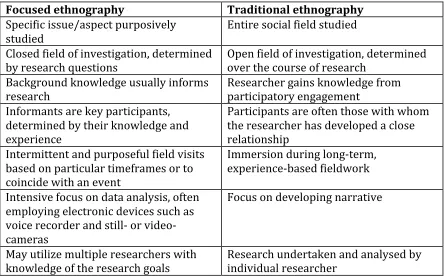
Table 2: Comparing focused ethnographies to traditional ethnographies ... 88
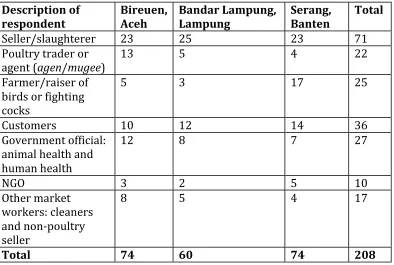
Table 3: Description of research participants ... 98
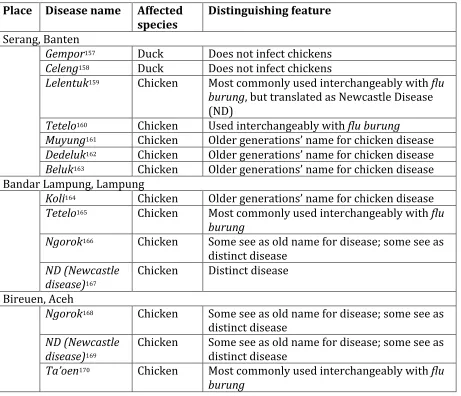
Table 4: Select diseases discussed in Banten, Lampung, and Aceh ... 163
List of Maps Map 1: Map of field site locations in Indonesia ... 93
Map 2: Map of Bireuen, Aceh, and Banda Aceh and Medan ... 119
Map 3: Bandar Lampung, Lampung ... 133
Map 4: Serang, Banten ... 143
List of Images Image 1: The Economist 2 May 2009 ... 11
Image 2: Ornamental birds and pigeons sold at Pasar Bieruen, Aceh ... 121
Image 3: Sorting and caging poultry at trading yard in Aceh ... 121
Image 4: A poultry trader travels by motorbike to pick up chickens in Aceh ... 123
Image 5: A mugee arrives at the market with a few birds to sell in Aceh ... 123
Image 6: A mugee in Aceh leaves the market at the end of the day ... 124
Image 7: A village chicken tied to the top of a cage with different bird species housed below ... 124
Image 8: A PWP in Aceh sells in the temporary market during reconstruction ... 126
Image 9: A PWP in the new market, located close to vegetable sellers ... 127
Image 10: A slaughterer carries carcasses to selling tables in Aceh ... 128
Image 11: A PWP waits for a bird to die before defeathering ... 129
Image 12: Chickens quickly boiled to loosen their feathers ... 129
Image 13: Defeathering chickens in Aceh ... 130
Image 14: Slaughtered birds ready to be sold, carried by wheelbarrow ... 130
Image 15: Customers looking at chickens for sale in Aceh ... 131
Image 16: A PWP sells poultry across from a clothing seller in Lampung ... 135
Image 17: Bats fly in the top story of Pasar Tugu, in Lampung ... 136
Image 18: Commercial chickens arrive at a trading yard to be sorted ... 136
Image 19: Birds that die during transit are set aside ... 137
9
Image 21: A PWP ties chickens he bought from a poultry yard to his motorbike .... 138
Image 22: A PWP prepares chickens to sell in Lampung ... 140
Image 23: A PWP sells chickens in the middle of the market in Lampung ... 141
Image 24: Birds kept at the market in Lampung ... 141
Image 25: Birds kept at the market in Lampung ... 142
Image 26: Delivering broiler chickens to Pasar Rau, in Banten ... 145
Image 27: Chicken faeces washed from the back of the truck after delivery ... 146
Image 28: Birds presented for sale at Pasar Kelodoran, outside Serang ... 150
Image 29: Ducks for sale at Pasar Kelodoran ... 151
Image 30: Customers look to buy ducks at Pasar Kelodoran ... 151
Image 31: Fighting cocks for sale at Pasar Kelodoran ... 152
Image 32: Two fighting cocks pitted against each other at Pasar Kelodoran ... 152
Image 33: A duck seller returns home with unsold ducks via public transit ... 153
Image 34: A PWP sells a few village chickens at Pasar Rau ... 153
Image 35: Birds are quickly boiled in Pasar Rau ... 154
Image 36: Chickens kept overnight at Pasar Rau ... 156
Image 37: Chickens kept overnight in cages at Pasar Rau ... 156
Image 38: Vitamins and antibiotics for chickens administered by diluting with water ... 169
Image 39: Medicine for chickens administered by diluting with water ... 169
Image 40: Water being drawn from well located in the poultry slaughter area ... 190
Image 41: Well being used during slaughter of poultry (note, the well is green) .... 191
Image 42: Washing at the end of work with water used during the day to slaughter and clean poultry ... 196
Image 43: A PWP wears an apron before defeathering chickens ... 196
Image 44: Two PWP kill a chicken without gloves ... 199
Image 45: A child plays in crates used to transport live poultry ... 199
Image 46: A PWP inspects ducks brought to him by an independent trader ... 204
Image 47: A dead chicken thrown away with general market refuse ... 204
Image 48: A bag of innards is set aside for fish farmers ... 208
Image 49: A PWP feeds chicken innards to ducks ... 208
Image 50: A duck struggles to swallow a chicken’s intestine ... 209
10 Acronyms
AI Avian influenza
ARC American Red Cross
ARTI Aceh Research Training Institute
CDC Centers for Disease Control and Prevention
DOC Day-old chicks
FAO Food and Agriculture Organization EID Emerging infectious disease
GAM Gerakan Aceh Merdeka
GISN Global Influenza Surveillance Network GPG Global public goods
HPAI High pathogenic avian influenza
KAPB Knowledge, attitudes, practices, and behaviours KAP Knowledge, attitudes, practices
LBM Live bird market
LPAI Low pathogenic avian influenza
ND Newcastle disease
NIC National Influenza Centres
NSABB National Science Advisory Board for Biosecurity OIE World Organization for Animal Health
PDSR Participatory disease surveillance and response
PMI Palang Merah Indonesia
PPE Personal protective equipment
PWP Person/people who work with poultry
STEPS Social, Technological and Environmental Pathways to Sustainability Centre, University of Sussex
WHO World Health Organization
11 Chapter 1: Introduction
Introduction
When this study was first conceptualized in 2008, fears about a potential influenza pandemic were elevated. In 2007, the World Health Organization (WHO) labelled the H5N1 virus among “the most feared security threat[s]” (World Health
Organisation 2007, 45). On 2 May 2009 The Economist presented an image of the Grim Reaper wearing a mask and thumbing through a world atlas, as if deciding where the next outbreak of H1N1 should take place (Image 1).
Image 1: The Economist 2 May 2009
Though at that time, concerns about an influenza pandemic were global, they were also focused on Indonesia for a number of reasons. First, Indonesia had the largest number of reported human cases of avian influenza A H5N11 and the highest crude
fatality rate. Second, Indonesia in relation to other affected countries had received a disproportionate share of multilateral and bilateral funding for H5N1 programming. Third, in 2006, a member of the Indonesian government responded to avian
influenza in a controversial manner that dramatically captured the attention of politicians, scientists, and academics. Former Indonesian Health Minister Siti Fadilah Supari observed that global supply for an antiviral used to treat H5N1 had surpassed the supply and, motivated by a combination of nationalism, and a concern for greater equity in international health governance and access to medicines,
announced that Indonesia would stop sending H5N1 virus samples through the
12 Global Influenza Surveillance Network (GISN) and onwards to WHO reference laboratories. Following controversy and debate about the fairness of existing
International Health Regulations, this virus-sharing dispute concluded in 2011 with a restructured international virus-sharing agreement.2
While Supari’s brinkmanship drew more attention to the potential risks for the emergence of an H5N1 virus with the potential for human-to-human transmission originating from Indonesia, over time, and as fears about swine flu abated and no sustained human-to-human transmission of H5N1 occurred, public interest in the dangers of influenza waned. Indeed, during the course of fieldwork for this study, I was frequently asked: “Is bird flu still a concern?” It appeared that by the time this study was completed, public attention, donor funding, and academic interest might have shifted elsewhere, away from avian influenza.
In 2011, however, public and academic interest once again spiked in response to the release of the Hollywood movie Contagion, which revolved around a fictional
pandemic – a viral respiratory infection - which had come to humans from bats, via pigs. This hypothetical scenario was made more realistic by the many well-known public health experts employed as consultants for the production (R. Ellis 2011). Around this time, actual developments within the scientific community
reinvigorated interest in influenza viruses.
In late 2011, two scientific papers described the molecular changes required for H5N1 to mutate so as to be able to transmit between mammals via respiratory droplets. Some argued that the results may be used by bioterrorists to modify the virus, or that the virus might be accidentally released from the laboratory into the general population (Doherty and Thomas 2012). For this reason the U.S. National Science Advisory Board for Biosecurity (NSABB) asked the academic journals
Science and Nature not to publish details from either study. The lead authors agreed to a voluntary publication ban until the risks associated with this research could be reviewed. Eight months later, in mid-2012, the ban was removed and each study was published in full (Herfst et al. 2012; Imai et al. 2012). As the international community came to terms with the potentialities of such research, in 2013 a novel influenza virus believed to have pandemic potential emerged (Qi et al. 2013). In March 2013 the Chinese Centres for Disease Control confirmed diagnosis of three human cases of avian influenza A H7N9, two of which resulted in death. As of July 2015, H7N9 has resulted in over 678 laboratory-confirmed human infections, with 278 deaths.3 Novel influenza viruses have also recently been discovered in bats
(Tong et al. 2013). These viruses, and their potential for human-to-human
2 While this case is analysed in greater detail elsewhere (Elbe 2010a; Kamradt-Scott and McInnes
2012), it is discussed in brief here to underscore the very political nature of the evidence and policies that have been most emphasized in conceptualizations of avian influenza in Indonesia.
3 See: www.fao.org/ag/againfo/programmes/en/empres/H7N9/
13 transmission, have reignited fears of an influenza virus evolving to become capable of spawning a pandemic.
Such oscillation in global concern about influenza viruses serves as a reminder of how perceptions of pandemic threats themselves wax and wane. This summary of the headlines associated with influenza viruses, and in particular H5N1, also
illustrates how concerns about influenza primarily focus on the virus as a potential threat to humans. Though this particular framing of H5N1 is important, persuasive and striking, it is not the sole interpretation of the virus. As Leach and Dry argue, “there is always more than one way to tell a story, or ‘frame’ a particular issue”. They direct attention to different “disease narratives” (Wald 2008; Leach and Scoones 2013; Sarah Dry and Leach 2010) that serve to highlight the diversity of conceptualizations about “the dynamics of a given disease, what counts as a problem, and to who” (2010, 5).
Focus of this thesis
This thesis draws on the notion of disease narratives to reflect on the different ways avian influenza – and H5N1 specifically - can be interpreted, and responded to, by global, national and local communities. Of particular interest in this thesis are disease narratives of people who work with poultry (PWP) in live bird markets (LBMs) on a routine basis. In certain conditions LBMs can host and facilitate the evolution of avian influenza viruses, posing a potential risk for disease in poultry and in people (Fournié et al. 2013; Fournié and Pfeiffer 2013). As will be highlighted in more detail in the following section of this chapter, the focus on PWP in the
current study is both because they work at the human-animal interface and are thus regarded as a potential “bridge” population, facilitating the much-feared jump between animals and humans (Gray and Kayali 2009; Gray, Trampel, and Roth 2007), and because live bird markets are a primary site of focus for interventions and responses aimed at limiting the spread and impact of avian influenza viruses in poultry and in people (FAO 2011; FAO 2013b; FAO 2013a; Samaan et al. 2011; Samaan et al. 2012). Though PWP are often the subject of commentaries, studies, and policy prescriptions, few qualitative studies to date have examined PWP’s perceptions and behaviours with regards to avian influenza at the human-animal interface.
14 In contrast, this study draws on Keck’s notion of “rationalities of risk” (2008) to highlight both the validity of multiple, divergent constructions of risk as well as the expectation that such constructions will exhibit an internal coherence with the context in which they have developed. This study, therefore, focuses on exploring how PWP conceptualize the risks posed by H5N1 to themselves, while also
considering the other dimensions of risk – such as risks to animals or economic risks stemming from disease outbreaks or disease interventions – that may be familiar or salient for PWP. This thesis also investigates the extent to which PWP’s constructions of risk about avian influenza underpin their behaviours at the human-animal interface. These behaviours are implicated in increasing the potential for infection and disease spread (Janes et al. 2012) and as such, aligning PWP’s
behaviours with dominant constructions of risk is a focus of interventions (Samaan et al. 2012).
Situated in this way, as a community of people who may play a central role in efforts to contain the spread of avian influenza in poultry and in people, PWP’s
constructions of risk and behaviours are significant, and raise important ethical questions. The prevention and containment of communicable diseases such as avian influenza is seen as a global public good in that the benefits of effective containment are both non-excludable - they are available to everyone - and non-rival in
consumption - because consumption by one person does not limit consumption by others (Nordhaus 2005). Viewed through this lens, PWP have the potential, and perhaps an obligation, to contribute towards the attainment of this global public good. Yet PWP may fail to do so, motivated by their own constructions of risk.
Attention to the issue of global public goods means that PWP’s behaviours cannot be considered purely private; their behaviours are not simply their own (Kaul,
Grunberg, and Stern 1999), as what they do at the human-animal interface may have implications for others in their communities, their country and ultimately, the
world. This thesis explores how PWP’s constructions of risk inform their notion of what societal obligations they bear with regards to their own behaviours.
Having introduced the key focus of this study, discussion will now turn to the justification for the focus population of this research. To understand why and how existing research and attention has focused on people who work at the human-animal interface requires an understanding of the nature of the poultry industry in Indonesia. The following section will outline this context before introducing the research questions guiding this study.
Poultry in Indonesia: from farms and backyards to live bird markets
Poultry provide valuable income and nutrition to millions of Indonesians. Poultry production systems across the archipelago are diverse, ranging from large
15 poultry industry, and that more than 22 million households in Indonesia raise
village chickens (USAID 2013). Alongside different types of chickens, duck and geese are also reared for their meat and eggs across Indonesia (CIVAS and FAO 2006). Taken together these birds provide income for millions of Indonesian families, as well as the majority of meat protein in a country where most do not meet daily caloric needs, and where more than one-third of children are stunted (WFP 2015; FAO 2012).
The actual number of birds raised for their meat or eggs in Indonesia is difficult to determine (Rushton et al. 2005), as numbers no doubt shift frequently as supply and demand rises and falls.4Conservative estimates suggest a standing population at
more than 620 million, with the annual turnover for broiler chickens alone estimated at over 1 billion birds (Sumiarto and Arifin 2008a). Others suggest the national standing population is closer to 2 billion (Simmons 2006). Of the 22 million households that have village chickens, or ayam kampung, more than one million raise more than 30 birds (USAID 2013). While chicken are the most common bird raised for consumption, estimates suggest there are more than 30 million ducks (CIVAS and FAO 2006). Although the number of poultry in Indonesia is difficult to determine, at any point in time, there are likely hundreds of millions of birds raised for consumption across the archipelago.
The Food and Agriculture Organization (FAO) of the United Nations delineates the poultry trade into four sectors (FAO 2004). Sector 1 refers to industrial integrated production where birds and their by-products are marketed commercially. Sector 2 includes commercial poultry production systems with birds sold through
slaughterhouses or live bird markets. Sector 3 indicates smallholder commercial poultry production with birds sold in live bird markets. Sector 4 refers to village or backyard production with birds consumed and sold locally. In Indonesia these sectors are not so clearly distinguished, and are often more blended and integrated than these discrete categories suggest (Forster and Charnoz 2013). Ultimately, the majority of all birds raised for consumption in Indonesia – roughly 80-90 percent – are slaughtered and sold at one of over 13,000 live bird markets found across Indonesia (Sumiarto and Arifin 2008a; USAID 2013). As this study is concerned generally with the live bird market environment, in the remainder of this study, I do not continually delineate between each of these four sectors.5
4 Along with birds raised for consumption, many Indonesians also raise birds such as songbirds,
pigeons, quail, and fighting cocks for personal, cultural, and economic reasons (Forster 2012; Naysmith 2011). As the focus of interest is on birds sold primarily for consumption via live bird market systems, I do not speak specifically about birds other than chickens, including village chickens, broilers, and layers, as well as ducks and geese; I also interview PWP who raise fighting cocks.
5 These crude categories do not necessarily capture the variety of birds that are reared for
16 Mirroring changes in demand for livestock across much of Asia in the past few decades (Liverani et al. 2013; P. K. Thornton 2010), in Indonesia the demand for poultry products has increased steadily, with total poultry meat consumption in the country estimated to have risen from 1,243,545 metric tons in 2007 to 1,613,683 metric tons in 2011 (USAID 2013). Much of this increase is attributed to demand for broiler and layer chickens, and their by-products: in 2011 approximately 1,628,720 metric tons of eggs were consumed in Indonesia (USAID 2013). There are around ten large companies that dominate the broiler market, but the three largest -
Charoen Pokphand, Japfa Comfeed, and Sierad Produce - maintain roughly 70 percent
of the market. Most of these companies rely on a system of contract farming, wherein they sell day-old chicks (DOCs) and supplies to farmers who raise these broilers until they are ready for slaughter - about 30-35 days - and then move them on to local markets (Simmons, Winters, and Patrick 2005; USAID 2013).
Alternatively, these companies also sell DOCs directly to individuals who raise the birds independently to sell at local markets in a similar time frame (Forster 2012). Commercial layer chickens are reared on farms across the country for around 18 weeks before they start laying, a phase lasting up to around 18 months: over this time each bird may lay 400 eggs. After this, most layer chickens are sold for consumption in live bird markets (USAID 2013). Taken together, estimates of the number of farms in Indonesia that raise broilers and layers exceed 80,000 (Rushton et al. 2005).
Backyard poultry production is common in Indonesia, contributing protein and a degree of economic security for households raising poultry (USAID 2013). Roughly 60-70 percent of households on Java raise birds (Sumiarto and Arifin 2008a). In Bali, 90 percent of households surveyed kept birds at home (Santhia et al. 2009). The majority of those who keep birds at home keep ayam kampung6 - native or village chickens - with fewer people raising ducks or geese in this way.7 The size of
these flocks can vary greatly, from a few birds to several hundred at more semi-intensive farms. Backyard birds are often raised for eggs and meat for in-house consumption, yet there is also a high-demand for these domestically-reared birds, especially during religious holidays in Indonesia, and, many village chickens, ducks, and geese will either be taken to market by their owner or bought by independent poultry traders to be sold through live bird markets.
While there is debate about whether commercial or backyard poultry are more responsible for maintaining and facilitating the spread of H5N1 in Indonesia
trade in Indonesia see, for example: (USAID 2013; Sumiarto and Arifin 2008a; Forster 2012; Simmons 2006).
6 There are many different breeds of chickens that are considered to be ayam kampung. I do not
differentiate between these breeds. For more on ayam kampung in Indonesia see: (Diwyanto and Iskandar 1999)
7 Although not routinely differentiated in this study, there are a three predominant local duck breeds
17 (Forster and Charnoz 2013; Loth et al. 2011; Yupiana et al. 2010), taken together these two broadly defined sectors provided myriad potential hosts when H5N1 entered the archipelago, sometime around 2002-2003. Once introduced, the extensive and intensive nature of the wider poultry trade in Indonesia helped shuttle the virus across the archipelago (Lam et al. 2012), enabling it to become entrenched in the wider poultry population system: along with poultry in Egypt, Bangladesh, parts of India, China, and Viet Nam, H5N1 is considered endemic in Indonesian poultry (FAO 2011). Indeed, the trade in live birds is considered a “major pathway” (Fournié et al. 2013, 1) for the spread of H5N1 viruses, and has been associated with disease events in poultry (Santhia et al. 2009) and people (Zhou et al. 2009), and with introducing these viruses into live bird markets (Wan et al. 2011).
In Indonesia, the trade in live birds has been implicated in the spread of the virus (Santhia et al. 2009; Roche et al. 2014), and this trade coalesces around live bird markets, in which the vast majority of birds slaughtered and sold for consumption in the archipelago pass through (Sumiarto and Arifin 2008a; USAID 2013). These markets act as hubs for traders, who can introduce H5N1 viruses into these
environments either through the birds they trade or on their equipment (Fournié et al. 2013). In LBMs in Indonesia, H5N1 viruses have been found in birds as well as on different surfaces used for the slaughter and sale of birds (Indriani et al. 2010; Santhia et al. 2009). Live bird markets may provide repeated contact points for birds and people to be exposed to the virus, either via an infected bird or a contaminated surface or material (Samaan et al. 2011), and LBMs have been identified as the likely source for infections in birds (Webster 2004; Fournié, de Glanville, and Pfeiffer 2012) and in humans (Kandun et al. 2008, 200; Zhou et al. 2009; Mounts et al. 1999). Under the right circumstances, once H5N1 is present, some live bird markets can act as viral reservoirs contributing to the maintenance, evolution, and dissemination of these viruses (Webster 2004; Fournié and Pfeiffer 2013). With poultry traders coming and going from markets, these LBMs can serve as a potentially “continuous source of infection for the poultry sector” (Fournié et al. 2013, 1). Whether H5N1 viruses can persist, evolve, and move on to new hosts from LBMs depends on a range of biological and anthropogenic factors, such as the particular type of H5N1 virus involved, and the behaviours and trading practices of those who sell and slaughter birds. In part for these reasons, LBMs are the location of interest for the current study, and the key respondents here are people who trade, slaughter, and sell poultry in and around three different LBMs in Indonesia – two in Sumatra and one in Java.
There are three further reasons for focusing on people working at the human-animal interface in LBMs in Indonesia. First, contact with infected poultry is
associated with most human cases of H5N1 (M. Van Kerkhove et al. 2011; M. D. Van Kerkhove 2013; Patel et al. 2014), and human cases in Indonesia have been
attributed to exposure in LBMs (Kandun et al. 2008). Human cases in Indonesia are particularly severe, with a crude fatality rate exceeding 80 percent in some
18 poultry as well as on multiple surfaces in Indonesian LBMs (Indriani et al. 2010). And, despite the fact that currently circulating H5N1 viruses do not appear to
disproportionately infect people working in LBMs (Toner and Adalja 2012), they are still considered a potential bridge population for disease transmission because they work at the human-animal interface, and may be among the first to become infected should H5N1 become more transmissible to humans (J. H. Kim et al. 2011; Bridges et al. 2002).
Second, as LBMs are identified as potential viral reservoirs (Fournié et al. 2013) capable of contributing to the maintenance, evolution, and dissemination of avian influenza and other zoonotic pathogens (Webster 2004; Fournié and Pfeiffer 2013; Guan et al. 2003) these markets, and those who work in them, have become a primary focus for avian influenza control initiatives in Indonesia (Samaan et al. 2012; Samaan et al. 2011; Santhia et al. 2009) and elsewhere (Fournié and Pfeiffer 2013; Fournié et al. 2013; Amonsin et al. 2008; Abdelwhab et al. 2010). These interventions can have negative economic and nutritional consequences for people who rely on poultry for their livelihoods, and this may in turn limit adherence to programming (Fournié and Pfeiffer 2013; Naysmith 2013b), as those negatively impacted by interventions may be “unlikely to widely adopt” (J. H. Kim et al. 2011, 2320) disease control efforts in LBMs if they are seen to impede their interests or well-being.
And third, despite this concerted focus on live bird markets, there are limited qualitative studies focusing on constructions of risk and associated behaviours among people working at this human-animal interface in Indonesia. This population may be central to the success of efforts to both prevent disease in birds, as well as in limiting environmental contamination, and ultimately the potential for zoonotic transmission. Having outlined the justification for focusing on people who work with poultry in Indonesian LBMs, the next section will outline the research
questions guiding this study, followed by a description of the major contributions made by this research.
Guiding research questions
This qualitative study broadly investigates three related topics of inquiry: One, how do people who work with poultry construct the risks associated with H5N1 for human health, animal health, for their own livelihoods, and for external involvement from political authorities? Do these constructions vary significantly across the three study sites?
19 the risks perceived to stem from animal disease and those presented by impacts to economic livelihoods?
Three, to what extent do these constructions of risk – about human health, animal health, economic impacts, political pressures - inform or underpin PWP’s
behaviours at the human-animal interface?
Research contributions
This study makes several original empirical and methodological contributions to existing knowledge. First, by indicating how constructions of risk among people who work with poultry diverge significantly from the constructions of risk reflected in some dominant disease narratives, findings from this study lend empirical
support to Rhodes’ challenge to a “single rationality of risk avoidance” (2002). Leach and Dry argue that the constructions of risk represented in the dominant disease narratives creates “the appearance of a consensus about the risks of global outbreaks” (2010, 3) that obscures the diversity of conceptualizations of risk in relation to avian influenza. By highlighting the processes of risk assessment undertaken by PWP, results from this study align with Keck’s notion that various “rationalities of risk” rather than a single, correct’ construction of risk are reflected in diverse disease narratives.
Second, in exploring constructions of risk and associated behaviours across three different field sites, this study provides insights into the range of experiences with avian influenza within a single country. Policy makers have been urged to recognize sub-national differences and design interventions accordingly (FAO/OIE/WHO 2007). However, there are no known qualitative studies of this nature across
multiple sites in one country; nor are there studies that examine these topics across multiple sites with different epidemiological profiles. Furthermore, given that findings from this study are mostly consistent across the three sites suggests that certain aetiological beliefs, constructions of risk, and associated practices may be common among PWP, a supposition that could be investigated further in future research.
20 problem of avian influenza to reside exclusively with their poultry, they have no reason to invest trust or confidence in external sources of information.
Fourth, this study suggests a methodological approach that circumvents some of the limitations of existing research on emerging infectious diseases (EIDs). In
attempting to develop an understanding of individual’s perceptions of risk and associated behaviours, studies in the extant literature often employ self-reporting measures, which are susceptible to social-desirability bias. By employing both semi-structured interviews and in-depth observations, this study was able to triangulate between data sources and derive a more comprehensive picture of how PWP assess risk and what implications these assessments have for their behaviours.
Fifth, in employing qualitative methods, this research contributes to discussions on how such studies can complement interdisciplinary, and mixed-method research on emerging infectious diseases (Kleinman et al. 2008b; Janes et al. 2012). As will be discussed in more detail in Chapter 3, the One Health agenda is the most prominent of several initiatives to encourage interdisciplinary scholarship. Defined as
“collaborative efforts of multiple disciplines working locally, nationally and globally to attain optimal health for people, animals and our environment” (Coker, Rushton, et al. 2011), the One Health framework underscores the importance of bringing different disciplinary perspectives into conversation. To date, however, there remain a dearth of social science literature on EID drawing on qualitative
methodologies, leading some to suggest that the presence of social science in the list of disciplines with important insights to bear on EID is a merely tokenistic inclusion (Craddock and Hinchliffe 2015, 1). By offering insights into the constructions of risk and associated behaviours among a population of interest to wider studies of EID, this thesis helps to delineate how qualitative social science research can contribute to future studies of emerging infectious diseases at the human-animal interface. It further provides substantive reflections on the practice and ethics of conducting qualitative research in EID contexts where researchers must seek to mitigate opportunities for infection among themselves and their research assistants, while also avoiding stigmatizing respondents.
Thesis outline
The remainder of this chapter briefly discusses the organization of each chapter in this thesis.
21
Chapter 3: Dominant narratives introduces the concept of “epidemic narratives” as a
way of viewing perspectives on a particular disease and the pathways of response that stem from these accounts. Three different dominant narratives are highlighted, pointing, respectively, to avian influenza as a significant threat to global public health and security, as a problem largely confined to animal health and the livelihoods of those who depend on livestock, and as an overarching challenge to both animal and human health requiring interdisciplinary collaboration. Though all these narratives draw attention to important features of EID, limitations and
omissions exist within each, and are reflected in alternative narratives, the subject of the following chapter.
Chapter 4: Alternative narratives introduces four epidemic narratives that diverge in
important ways from those presented in the previous chapter, drawing attention to different accounts of disease and the various pathways of response that follow from them. First, the livelihoods narrative emphasizes the disproportionately negative impacts that both disease and disease control programming can inflict upon poorer populations who raise, sell, and eat animals that can harbour zoonotic pathogens. Second, the risk environment narrative highlights the wider contextual environment in which zoonotic diseases proliferate. Third, the governance narrative draws
attention to disjunctures in the presumed consensus surrounding global governance of infectious diseases, as well as challenges faced by national and local level
governments in calibrating responses to diseases with available means. Lastly, the fourth alternative narrative draws on the notion that those who live and work in close proximity to disease events and the responses that aim to contain them undoubtedly have important insights and perspectives to offer. Focusing on the local realities of these individuals also highlights the diverse ways that risk is conceptualized and constructed, and allows for an examination of their behaviours in light of these insights.
Chapter 5: Conceptualizing constructions of risk at the human-animal interface introduces the conceptual commitments shaping this study. It outlines the objectivist tradition in risk perception research, which exhibits a tendency to represent risk as a rational, objectively-established phenomenon, and contrasts it with the constructivist perspective, which characterizes risk as a subjective, contextually-determined notion. Drawing on the concept of “rationalities of risk” (Keck 2008), this chapter then outlines the key conceptual ideas that are employed in this study to explore the processes of deliberation used by lay populations to question the source and veracity of scientific data about risk. These include: the salience of experiential risk rationalities drawing on observations and experiences; the influence of heuristics and biases in the formation of risk assessments; the attention to multiple, simultaneous risks in the Cultural Theory of risk (Wildavsky and Dake 1990), and the emphasis on how different constructions of risk lead to diverse pathways of response.
Chapter 6: Methodology and methods explains the methodology of the approach in
22 as offering reflections on my positionality, and that of my research assistants. In particular, the advantages of a focused ethnographic approach are highlighted and the methods, or research tools, used to collect data are outlined, including semi-structured interviews, participant observation, and photography.
Chapter 7: Ethical and practical considerations of doing this research highlights some of the challenges experienced in undertaking this research, including how to keep my research assistants and myself safe. This chapter concludes with a more general discussion of some of the ethical and practical considerations that arise in
qualitative social science research on emerging infectious diseases.
Chapter 8: The research context focuses on the wider environment in each site. The
first section briefly outlines general health considerations across Indonesia.
Following this, the remainder of this chapter outlines the trade, slaughter, and sale of poultry in each of the three markets, starting with Aceh, then Lampung, and finally Banten. Similarities and differences between these sites are discussed, as are different factors that may contribute and amplify risks for humans and poultry. Ultimately this chapter situates the research context and provides a background for data presented and analysed in Chapters 9 and 10.
Chapter 9: Constructions of risk about avian influenza among PWP explores the
manner in which PWP construct the risks about avian influenza for themselves, their animals, and their livelihoods. It argues that, in general, PWP conceive of avian influenza as a new name for a familiar disease that can only affect poultry and as such, the risks associated with H5N1 for humans are considered implausible. As a result, the most salient risks associated with avian influenza are the wider threats posed by disease outbreaks or by interventions to control the spread of the virus. PWP assess these risks by drawing on their long histories of working with poultry and their present-day observations of diseases among humans and animals, illustrating how constructions of risk are founded on PWP’s experiential risk rationalities.
Chapter 10: Understanding behaviours of PWP at the human-animal interface
examines certain behaviours among PWP in LBMs, juxtaposing these practices with recommended behaviours that have been identified in the WHO’s recommended Measures to reduce transmission of avian influenza in wet markets in developing countries (2006). In doing so, this chapter identifies gaps that exist between the WHO prescriptions that reflect the dominant outbreak narratives’ preoccupation with averting human exposure to H5N1, and the constructions of risk among PWP that frame avian influenza largely as a disease that does not affect humans.
Behaviours among these respondents appear to reflect their constructions of risk, described in Chapter 9, and as such, seem not to be significantly influenced by concern for human vulnerability to avian influenza infection, or considerable concern about infection in their birds. Thus PWP do not mitigate the potential for exposure by employing preventative behaviours, such as wearing personal
23 priorities to maximize profit and minimize loss are a primary influences on PWP’s behaviour.
Chapter 11: Conclusions summarizes the key findings from this study as they relate
to the research questions posed in Chapter 1, highlighting similarities and
differences across the field sites, how constructions of risk are formed by PWP, and with what implications for behaviours. It then identifies five unique methodological and empirical contributions from this study, before examining policy implications of these data for avian influenza control programming. Lastly, it outlines two
24 Chapter 2: The science of influenza and associated risks for poultry and people
Introduction
This chapter focuses on the science of influenza viruses, and avian influenza A H5N1 specifically, and consists of four sections. The first section establishes how influenza viruses work, and concludes by expanding on the evolution of H5N1 viruses since they were first diagnosed in geese in southern China in 1996. The second section looks at avian influenza viruses in different types of birds, and illustrates that the severity of disease in birds depends on a range of factors, and concludes that ducks may act as viral reservoirs, helping to maintain and disseminate H5N1 viruses. The origin of H5N1 is explored in the third section, along with how these viruses spread and became entrenched in some poultry populations, and concludes in outlining risk factors associated with disease in poultry. The final section in this chapter looks broadly at H5N1 infection in humans. A major concern is that a variant of H5N1 will emerge that can both efficiently infect people and also transmit between them. While sporadic human cases continue to be reported in some countries, available evidence suggests that in its current state, H5N1 viruses - although a major risk for many people’s livelihoods – can neither readily infect people, nor transmit between them.
Influenza viruses and the emergence of highly pathogenic avian influenza A H5N1
Influenza viruses belong to the family Orthomyxoviridae, a family made up of RNA viruses that include five genera: Influenza A, Influenza B, Influenza C, Thogotovirus, and Isavirus; for the purpose of this study the latter two genera will not be
discussed further.8 Influenza A, B, and C viruses can infect humans and other
mammals, such as seals, bats, pigs, horses, and felines, yet human infection with influenza C is rare (Kimura et al. 1997).9 Both influenza A and B viruses can cause
seasonal epidemics in humans, which occur typically during the winter months, with two distinct waves of infections in the southern and northern hemispheres.
Combined, these seasonal epidemics can annually kill hundreds of thousands of people globally (Shindo 2010; Molinari et al. 2007). Only influenza A viruses are considered capable of spawning a pandemic. Pandemics can occur when a novel influenza A virus – one in which humans have little to no immunity against – emerges and has the ability to infect people and readily transmit between them. Influenza viruses considered to have “pandemic potential” include influenza A H5N1 and influenza A H7N9, both of which occasionally infect humans but at present have limited to no ability to transmit between people.
8 For more information on these genera see: (Jones and Nuttall 1989).
9 Influenza C infection in humans is extremely rare. Since this type of virus does not cause epidemics
25 Influenza A viruses are classified into subtypes, delineated by the presence of two viral surface proteins, haemagglutinin (HA or H) and neuraminidase (NA or N), both of which are integral to disease spread. In brief, haemagglutinin enables infected cells to bind to uninfected cells and, once bound, facilitates the transfer of the virus into the uninfected cells. Neuraminidase, put simply, helps open the host cells, essentially releasing the virus and promoting its spread to uninfected cells.10
Influenza A viruses are continually evolving in this way over time and as they mix with other viruses. There are currently eighteen HA subtypes and eleven NA subtypes11 - a number that recently grew with the discovery of novel influenza
viruses in bats (Tong et al. 2013; Tong et al. 2012).12
Humans and other susceptible species can be subclinically infected with influenza A viruses, and also build a degree of immunity to genetically similar variants. The genes of influenza A viruses, however, are continually evolving, marked by small and large changes in their surface haemagglutinin and neuraminidase. Small changes to the haemagglutinin occur routinely, and can result in variants of
influenza A viruses that people do not have immunity against. This process is called
antigenic drift, andthese minor changes are sufficient and frequent enough to
amount to the “virological basis for seasonal epidemics” (Drobniewski, Pogoryelova, and Nikolayevskyy 2009, 5) in humans. Whereas antigenic drift is a continuous process that occurs in both influenza A and B viruses, antigenic shift is rare and occurs only in influenza A viruses. For this reason, only influenza A viruses are capable of spawning a pandemic.
Antigenic shift refers to an abrupt and significant change in the haemagglutinin, and/or a novel haemagglutinin and neuraminidase combination. This can occur when two distinct viruses merge in a host and evolve. Such processes can result in a novel virus that can both infect immunologically susceptible humans, and
consistently and efficiently transmit between people (Drobniewski, Pogoryelova, and Nikolayevskyy 2009).13 The outbreak of influenza A H1N1 in 2009, for example,
resulted from the reassortment of avian, human, and swine viruses (G. J. D. Smith et al. 2009). More recently, the emergence of influenza A H5N6 in poultry in southern China (Bi et al. 2015), came from the reassortment of H5N1 viruses and H5N6 viruses (Wong et al. 2015). While at present this novel virus primarily afflicts birds, the first human case of H5N6 resulting in death was reported in Sichuan province, southern China in November 2014.14
10 This is a very simplified explanation of how haemagglutinin and neuraminidase facilitate viral
replication and disease spread. For a more thorough discussion see Mitnaul and colleagues (2000).
11 See Influenza Type A Viruses at: http://www.cdc.gov/flu/avianflu/influenza-a-virus-subtypes.htm
Accessed: April 22, 2015.
12 Previously, the sixteenth HA subtype was isolated from shore birds in 2004 (Fouchier et al. 2005) 13 CDC. How the Flu Virus Can Change: “Drift” and “Shift”.
http://www.cdc.gov/flu/about/viruses/change.htm Accessed: October 2, 2013.
14 Human cases are currently rare, yet there is concern about more disease in humans as H5N6 has
26 While many vertebrate and mammal species can be infected with influenza A
viruses, wild birds - geese, ducks, swans, gulls, shorebirds and terns - are the natural reservoir for most subtypes of influenza A viruses (Webster et al. 2007), and avian influenza, or bird flu, is common nomenclature for most of these viruses.15 Infected
wild birds are often asymptomatic, with most avian influenza viruses showing little change in these hosts, as if in evolutionary stasis (Gorman, Bean, and Webster 1992). After transmission to susceptible species, however, some avian influenza viruses – including H5N1, as discussed more below - can show rapid evolution and “extensive diversity in pathogenicity” in different species of bird (Webster et al. 2007, S4). If avian influenza viruses cause severe morbidity and mortality in chickens in a laboratory setting, they are classified as highly pathogenic avian influenza (HPAI). Conversely, if they cause limited or no symptoms in chickens in a laboratory setting, they are classified as low pathogenic avian influenza (LPAI). Although all known HPAI viruses come from subtypes H5 or H7 viruses, “not all H5 or H7 viruses are HPAI”(Q. Liu, Liu, and Yang 2013, 1258). Moreover, as exhibited with rising incidence of LPAI H7N9 infection in humans, LPAI viruses can
concurrently reside as a subclinical infection in some poultry while posing a significant risk to susceptible human populations.
H5N1 was first identified in geese in the southern Chinese province of Guangdong in 1996 (Chen et al. 2005; Xu et al. 1999). Thereafter H5N1 spread to poultry stocks across the Eastern Hemisphere (Wallace et al. 2007), and has since evolved into multiple genetic lineages, all of which retain part of the progenitor virus. These different variations of H5N1 are organized into clades (WHO/OIE/FAO H5N1 Evolution Working Group 2012). A clade is a group of organisms from a genetically common ancestor, and can be described here simply as a sub-family of H5N1 viruses (Drobniewski, Pogoryelova, and Nikolayevskyy 2009). There are three first-order clades – Clade 1, Clade 2 and Clade 7 – and 20 distinct subclades defined as second-, third-, or fourth-order clades (WHO/OIE/FAO H5N1 Evolution Working Group 2012).16 As discussed below in relation to the risk H5N1 poses to poultry and
people, depending on the susceptible population or species, some H5N1 clades may be more pathogenic than others and, over time, some clades may go out of
circulation while new variants emerge.
H5N1 clade 2.1 was first detected in Indonesian poultry in 2003, and thereafter diversified into three distinct lineages – clades 2.1.1; 2.1.2; 2.1.3. From 2004, however, viruses of clades 2.1.1 and 2.1.2 “apparently disappeared” (Fournie, de Glanville, and Pfeiffer 2012), while clade 2.1.3 continued to evolve, necessitating reclassification into fourth-order clades - 2.1.3.1; 2.1.3.2; 2.1.3.3. In recent years, the majority of H5N1 viruses isolated in Indonesia belong to clade 2.1.3.2, suggesting
15 Although all avian influenza viruses are influenza A, not all influenza A viruses are avian influenza.
Two distinct influenza A viruses have recently been found in bats (see Tong and colleagues (2013; 2012).
16 For a more thorough discussion on the designation of H5N1 clades see the WHO:
27 that this is now the dominant genotype circulating in Indonesian poultry (Koel et al. 2014). As this research was undertaken in Indonesia over the years 2009-2012, H5N1 viruses circulating in poultry across the archipelago at that time likely
belonged to clade 2.1.3.2. H5N1 viruses in Indonesia and elsewhere will continue to evolve.
In recognizing their dynamic nature, for the purpose of the current study, HPAI H5N1 viruses may sometimes be discussed as a monolithic entity. However, to establish a foundation for understanding relative risks associated with H5N1 in birds, the next section outlines the contextual nature of H5N1 infection and disease severity in different birds, underscoring that H5N1 does not uniformly afflict all birds, and nor does it spread between them in a consistent pattern. While the following discussion outlines existing knowledge about avian influenza in different birds, it is important to recognize that serious gaps in knowledge persist (Forrest and Webster 2010).
Avian influenza viruses in different birds
Avian influenza infection in birds can occur through direct and indirect contact with the virus, with transmission mainly via a faecal-oral route, although viruses may also transmit via the respiratory route (Webster et al. 1992; Webster et al. 2007). Infected birds can shed live virus in bodily fluids, such as saliva, nasal secretions, and faeces (Kurmi et al. 2013). Virus in these secretions and excretions may remain infectious for days and, in certain conditions, these viruses can contaminate
environments and create fomites (Horm, Gutiérrez, Nicholls, et al. 2012; Spekreijse et al. 2012; Horm et al. 2013). The persistence of H5N1 outside of a host hinges on many environmental factors, including temperature, moisture, and salinity, if the virus is in water (J. D. Brown et al. 2007). H5N1 may be sustained in the faeces of infected birds for multiple weeks, with time increasing as temperature decreases (Kurmi et al. 2013). H5N1 viruses can also persist in feathers (Yamamoto et al. 2008), as well as the meat and by-products of slaughtered poultry (Mase et al. 2005; Nazir et al. 2011). In part, it is for these reasons that live bird markets where poultry are housed, slaughtered, and sold, are considered exceptional environments for the maintenance and spread of avian influenza viruses and other pathogens (Webster 2004).
28 disease ranging from subclinical enteric infection in some ducks to high mortality in some chickens (Mary Pantin-Jackwood et al. 2013; Martin, Pfeiffer, et al. 2011; Martin, Zhou, et al. 2011; Sturm-Ramirez et al. 2004; M. J. Pantin-Jackwood and Swayne 2007). The amount of virus shed by infected birds also depends on the species that is infected, and the condition and health of the bird in question (Spickler, Trampel, and Roth 2008; J. G. B. van Dijk et al. 2015).
In most wild birds avian influenza A viruses reside subclinically, causing limited morbidity and mortality; H5N1, however, has proven an exception, with extensive diversity in the range of pathogenicity in infected wild birds, extending between non-pathogenic subclinical infection to highly pathogenic and lethal (Webster et al. 2007). The exceptionality of H5N1 in wild birds was made apparent in May 2005, when more than 6000 wild birds died in Qinghai Lake, in western China, a mass die-off attributed to avian influenza A H5N1 (J. Liu et al. 2005); further die-die-offs in this region underscore the potential impact of H5N1 in wild birds (Y. Li et al. 2011). The severity of disease in wild birds, however, varies between species and can depend on many biological and contextual factors. In experimentally infected swans and geese, for example, H5N1 causes higher mortality in swans, with marked difference in the amount of virus shed and clinical illness experienced depending on species (J. D. Brown, Stallknecht, and Swayne 2008). Some pigeons infected with high
concentrations of H5N1 virus show only limited morbidity and mortality (J. D. Brown et al. 2009). Indeed, some wild birds, such as pigeons and starlings, for example, may have partial resistance to H5N1 viruses (Boon et al. 2007). Conversely, H5N1 viruses in some sparrows can lead to high morbidity and
mortality (J. D. Brown et al. 2009). Wild ducks infected with H5N1 viruses can also develop severe clinical disease, with infection ultimately resulting in death (J. D. Brown et al. 2006). Along with differentiation of disease severity by species,
different H5N1 viruses may be more or less severe for wild birds (Boon et al. 2007). Whereas earlier clades produced clinical disease in geese (Leigh Perkins and
Swayne 2002), more recent clades have been found to be less pathogenic for geese (J. D. Brown, Stallknecht, and Swayne 2008). Infected wild birds also shed different amounts of virus, and are thus not all equally capable of contaminating
environments and potentially infecting other species. Starlings, for example, may shed more virus than pigeons (Boon et al. 2007). The duration of viral shedding can depend on the severity of clinical infection (J. D. Brown et al. 2006). In brief, H5N1 viruses do not impact wild birds equally, with the likelihood of infection, the severity of disease, and the amount of virus shed, dependent on a range of
considerations. And while wild birds have been implicated in the transmission of H5N1 to other birds (Kilpatrick et al. 2006) and to people (Gilsdorf et al. 2006), many infected wild birds do not efficiently transmit virus (M Pantin-Jackwood and Swayne 2009), and are thus likely less of a risk for the maintenance and inter-species dissemination of H5N1 than domesticated ducks and chickens.
29 viruses, however, have been found to cause severe morbidity and mortality in some ducks, notably in two Hong Kong parks in 2002 (Sturm-Ramirez et al. 2004). H5N1 infection in ducks is not uniform, and the severity of disease depends on many factors. Muscovy ducks, for example, may exhibit more severe symptoms and higher mortality than Peking ducks (Mary Pantin-Jackwood et al. 2013). The age of the duck may also help determine the severity of H5N1 infection; so too may the
particular clade responsible for infection (M. J. Pantin-Jackwood and Swayne 2007), and the health of the duck prior to infection (J. G. B. van Dijk et al. 2015).
Aerosol transmission of avian influenza between ducks is not likely. Most ducks are probably infected with avian influenza viruses through an oral-faecal route
(Webster et al. 1992), with susceptible ducks likely ingesting the virus in water or feed contaminated with faeces or other excretions from an H5N1 infected host. The primary site of avian influenza infection in ducks is the intestine, although some ducks test positive for upper respiratory tract infection (J. K. Kim et al. 2009). H5N1 was found to cause paralysis and sudden death in some ducks in Cambodia (Theary et al. 2012). In Indonesia, for example, systemic viral spread has been found in H5N1 infected ducks during histological examinations post mortem (Wibawa et al. 2014). Whether or not a duck infected with H5N1 presents clinically, they can shed virus that contaminates environments and poses a risk to other birds and people. Experimentally infected ducks reportedly shed infectious virus for 2-5 days following inoculation, though some ducks may shed for upwards of 17 days after infection (Hulse-Post et al. 2005). Ducks have also been found to efficiently transmit disease to uninfected birds. For example, 5 ducks experimentally infected with an Indonesian H5N1 virus efficiently spread the disease to 5 ducks that were placed in close contact (Wibawa et al. 2014). Indeed, as ducks shed higher concentrations of virus than chickens, ducks have been identified as playing a crucial role in the maintenance and spread of H5N1, and may act as asymptomatic reservoirs of
infection – a so-called “Trojan horse” (J. K. Kim et al. 2009). Further discussed below in relation to risk factors for H5N1, it is in part for these reasons that ducks are associated with disease events in other birds (Tiensin et al. 2009; Henning et al. 2010).
30 Theary et al. 2012). Avian influenza, however, has no pathognomonic signs, with clinical presentation of H5N1 infection in chickens, for example, similar to that resulting from infection with Newcastle Disease (Balasubramaniam et al. 2012; Gardner and Alders 2014; Alders and Bagnol 2007), making it difficult – if not impossible - to correctly identify H5N1 infection in birds without laboratory
diagnosis. Newcastle disease is not uncommon in Indonesia, and is mostly found in backyard poultry (Sonaiya and Swan 2004).17
H5N1 infected chickens can begin to shed virus in their faeces and respiratory secretions in one or two days after infection (Spickler, Trampel, and Roth 2008), during which time they may release high concentrations of virus (Wibawa et al. 2013). Along with a short latency period, estimates suggest that H5N1 infected chickens may only remain infectious for a few days before most birds succumb to the virus (Bouma et al. 2009). While seroprevalence studies in chickens have identified sufficient antibodies to indicate past infection with H5N1, there are, for example, far fewer chickens found with antibodies than there are ducks (Henning et al. 2011), further confirming that most chickens infected with H5N1 likely die. The above discussion on H5N1 and different birds suggests that regardless of the species or breed, a combination of factors help to determine the severity of disease in different birds, and the amount of virus that an infected bird can shed in different environments. Although these myriad factors make it difficult to generalize,
available data identify ducks as playing a pivotal role in the maintenance and dissemination of H5N1. The next section identifies some of the wider contextual factors that helped maintain and disseminate H5N1 following emergence in China in 1996, paying particular attention to the factors found to be associated with disease events in poultry.
The dissemination and maintenance of H5N1
H5N1 likely started as a low pathogenic avian influenza virus in wild birds that spread to susceptible domesticated birds in southern China and then underwent significant mutations in becoming HPAI H5N1 (Vijaykrishna et al. 2008). While this initial viral introduction to domestic poultry is unclear, contact between wild birds and domestic poultry may be frequent, providing myriad instances for such viruses to spill into susceptible populations (Prosser et al. 2013; Henning, Pfeiffer, and Vu 2009; Kung et al. 2007). Once H5N1 emerged the virus quickly exploited
immunologically naïve poultry.
In 1997 the virus was identified in poultry in Hong Kong, followed by the first human cases of H5N1 (de Jong et al. 1997; Subbarao et al. 1998). While this disease event was promptly contained, afterwards, H5N1 continued to circulate extensively
17 While I do not seek to identify different diseases in different birds, poultry are susceptible to many
31 in southern China, and spread throughout the region (Wallace et al. 2007). In 2001 there were isolated cases identified in poultry in live bird markets in Viet Nam (D. C. Nguyen et al. 2005), and again in poultry and captive wild birds in Hong Kong in 2001-2003 (T. M. Ellis et al. 2004). From November 2003 to February 2004, H5N1 was identified in poultry in Cambodia, China, Indonesia, Japan, Laos, South Korea, and Thailand (K. S. Li et al. 2004). Genetic analysis of H5N1 viruses in Indonesia suggest H5N1 likely entered the archipelago through a single introduction to
poultry somewhere in East Java between November 2002 and October 2003 (Lam et al. 2012). From east and south east Asia, H5N1 was identified across the Eastern Hemisphere, and was soon isolated in wild birds and poultry in parts of south Asia, Russia, the Middle East, Europe, and Africa.
To date, over 60 countries have report H5N1 disease events in birds. And while most of these countries eliminated the virus and have been able to limit and control viral reintroduction, H5N1 remains endemic in poultry stocks in parts of
Bangladesh, China, Egypt, India, Viet Nam, and Indonesia. Disease introduction in most countries likely occurred through some combination of migratory birds
and/or the extensive and intensive trade in birds and their by-products (Fournié, de Glanville, and Pfeiffer 2012).18 Regardless of the initial route of introduction, in
countries where H5N1 remains entrenched, poultry are the primary hosts for H5N1 viruses. In these places, the structure of the poultry sector plays an integral role in the dissemination and maintenance of these viruses.
The emergence of H5N1 coincided with rapid changes in livestock production systems, characterized by an increased demand for protein and a concomitant, and rapid rise in the numbers of animals raised for consumption (Liverani et al. 2013). This “second livestock revolution” started around the 1980s with the intensification of poultry and pig production, and was facilitated by developments in therapeutic and preventative veterinary medicine, which allowed for densely housed animals, and expedited turnover (Coker, Rushton, et al. 2011). While the growth in livestock production has been global, there have been particularly pronounced changes in poultry production systems in much of Asia (P. K. Thornton 2010). In China, for example, between 1985 and 2005 the number of ducks and chickens bred for trade and consumption increased from approximately 1.98 billion birds in 1985 to 5.33 billion in 2005 (FAO 2008). The spectacular increase in the number of birds bred provided ample potential hosts for H5N1 viruses after they emerged.
A defining feature of this livestock revolution is the industrialization of poultry production systems, made-up of large-scale industrial farms that intensively raise large numbers of birds. Yet the poultry sector in many countries that have
18 The exact role that both wild birds and trade played in the initial spread of H5N1 remains debated.