Use of Educational Technology Learner Centered
Methods in Enhancement of Performance in School
Physics
Maurice Junior, Nicholas Twoli, David Khatete
Med at KU, KU, KU.
DOI: 10.29322/IJSRP.9.05.2019.p8917
http://dx.doi.org/10.29322/IJSRP.9.05.2019.p8917
Abstract- Physics is key in STEM and plays a major role in
National development yet its performance and enrollment in schools has not been impressive. This paper is based on a study to determine the use of Learner- Centered Instruction in the enhancement of Performance in Physics among students in Kenya. The study deployed Descriptive survey design. The study subjects were Form Three Physics Teachers and students in Migori County. A total of One Hundred and ninety two (192) students and twenty (20) teachers across twelve (12) schools in the county undertook the study. Data was gathered using a Checklist and questionnaires. Data was then analyzed using Statistical Package for Social Sciences (SPSS) and presented in descriptive statistics using frequency tables, percentages and graphs. The study finding revealed that Multimedia was predominantly used to enhance performance in Physics. Web- based learning and Resource-based learning was rarely and in most instances not used at all. Only one sampled school had a Learning Resource Centre and none of the schools that had computer rooms used them to access Physics WBLR. The study also revealed that even though majority of the teachers were familiar with the educational technology learner centered instruction, this was not reflected in the actual lessons as the learner centered instructions were rarely used. Lack of appropriate facilities was a major hindrance to implementation of the learner- centered methods. Others found hindering implementation of learner- centered instructions included: a tight school programme with little flexibility and high teacher work load.
Index Terms- Learner- centered instruction, STEM, Web- based
Learning Resources, Resource Based Learning, Multimedia.
I. INTRODUCTION
earner- centered teaching is an approach to teaching that places emphasis on the learner. The student hence becomes an active participant in the learning process. This is opposite to the traditional Teacher- centered approach where the student is a passive recipient in the learning process and is viewed as an empty vessel to be filled with knowledge. In Learner- centered teaching, the role of the instructor (in this case the teacher) focuses on constructing authentic, real life tasks that motivate learner involvement and participation (Weimer, 2002). Learner-centered methods in teaching has gained worldwide approval due to its
immense benefits which include; enhancing content retention by the student, promoting critical thinking, making learning enjoyable to the student and promoting creativity (Maxwell, 1998; Slavin, 1990). Advancement of Information Communication Technology (ICT) has influenced the development of Education by introducing Learner- centered teaching methods like Multimedia learning applications and Web-based learning resources. This in turn has created multiple platforms where learners are exposed to a more student-centered learning experience (Li & La Mont, 2005). New Communication and Information Technology has availed major resources for teaching and learning. The word technology is derived from the Greek word “techno” which means the skills, knowledge of the way, skills, tools and willingness and ‘logos” which means science, word, learning mental state (Stosic, 2015). There is no single term for Educational Technology. Different Countries use different terms and synonyms as Educational Equipment or the Technology of Teaching. Use of Information Communication Technology (ICT) in teaching can also be taken to mean use of Educational Technology in teaching. More than ever the role of Educational Technology is of great importance. With application of Educational Technology, students can independently progress in mastering teaching materials, to choose the pace of work, to repeat the material that is not sufficiently clear and track their progress (Stosic, 2015).
based learning which allows a greater freedom for the student to hear, see and above all to do (Mwaka & Kafu, 2013). Indeed if teachers are to prepare learners so that they are able to satisfy the needs of the modern industrial society and be able to fit into the working life, then they have to do it with Educational Technology (Tienne, 1994).
In most countries, the popularity of Physics among students has been low and the enrollment has declined. Physics is the least popular school subject and it has been for a long time (Hulobova, 2008). Kiptum (2016) also noted that despite Physics being an important subject, its enrollment and performance in Kenya has not been impressive. Countries such as United Kingdom, United States of America, Mainland China and Australia are in the top list of countries whose focus special attention on the new trend of Science Technology Engineering Mathematics (Sujeewa et al., 2017). Physics is a key subject in STEM and as such is important in achieving development of a country.
Science Technology Engineering Mathematics (STEM) literacy is an interdisciplinary study that bridges four areas of science, technology, engineering and mathematics. STEM literacy does not simply mean achieving literacy in these four areas, but investigating and questioning interrelated facets of the world (NGA, 2007). STEM Education policies in Europe report 2018 highlighted the increasing involvement of private companies working in STEM fields in supporting teachers in producing educational content (European Schoolnet, 2018). The report also noted that most teachers share a positive vision of innovative STEM teaching with their colleagues and their heads of schools and this is linked positively with the amount of innovation brought to school. The report also noted that ICT teachers in STEM appeared to be using student centered pedagogical approaches. STEM education motivates student interest through video games, instant messaging, experimental learning, hands on activities and project- based learning (Morrison, 2006). Any country who decides to pay lip service to the development of her physics education will surely lag behind others in the comity of nations (Benson & Nkimba, 2013).
II. METHODOLOGY
The study deployed Descriptive Survey Design. The major purpose of Descriptive Survey Design is to describe the state of affairs as it exists (Kombo & Tromp, 2014). This research aimed to establish the extent of use of Educational Technology on Learner- centered methods in teaching Physics in Kenya. The study population was one hundred and ninety two (192) Form Three students and Twenty (20) Form Three Teachers. The population was sampled across Twelve (12) schools in Migori County. Data was collected using a Checklist and Questionnaires. Data was then analyzed using Statistical Package for Social Sciences (SPSS) and then presented in descriptive statistics using frequency tables, percentages and graphs. Questionnaires were administered to both students and teachers. Stratified random sampling was used to sample twelve schools in the county. The schools were stratified according to levels of National, Extra- county, County and Sub- county schools. Schools were then randomly selected from each stratum for purposes of reaching a reasonable sample size.
III. RESULTS
Data was collected using Questionnaires and a Checklist. Student questionnaires were used to collect data on frequency of use of LCI in a week and effects that the LCI have on their learning. Teacher Questionnaires were used to determine challenges the teachers face in trying to implement the LCI as well as their familiarity with the Instruction methods. A Checklist was used to find out state of resources that required in implementing the LCI.
The Data collected was then analyzed using SPSS and the results presented using descriptive and inferential statistics.
[image:2.612.315.589.266.387.2]Rate of Exposure to LCI
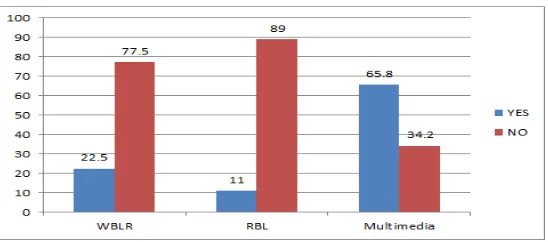
Fig 1 represents a summary of frequency of exposure to LCI.
Figure 1: Frequency of use of LCI
According to Stosic (2015) the use of Educational Technology in teaching provides better interaction with students, better reception of information because the student receive knowledge visual, auditory and kinesthetic way. For instance computer simulated experiments can be used to enhance performance of an average mathematical ability student. Therefore efforts should be made to equip Physics laboratories with computer software that can be used in computer simulated experiments in Physics practical (Benson & Nkiruka, 2013). An Educational Technology LCI also motivate students to work independently where the student is more motivated to return to learning and working because Educational Technology is widely available at any given moment. Teachers therefore should be encouraged to use them frequently.
From Fig 1, Multimedia is the predominantly used LCI method with 65.8% of learners saying they have ever been taught using a Multimedia resource. 89% of the learners have never experienced Resource Based Learning (RBL) while 77.5% have never interacted with Web Based Learning Resources (WBLR) in Physics. Only 22.5% of the learners have been taught using WBLR while only 11% have engaged in RBL. 34.2% of the learners have been taught using Multimedia.
STEM Education policies in Europe report 2018 reported that paper based materials are most used in teaching (88% of the responses) followed by audio- visual materials ( 77% of the responses) while 50% of the responses said they use web based or computer based simulations (European Schoolnet, 2018). Multimedia Instruction as the predominant teaching method to RBL and WBL was also noted by Amaal (2016). In the study, students stated that their teachers sometimes used videos in their classrooms and one student further indicated their teachers always used Multimedia tools if required. A study done in Turkey
established that the use of film and video was only used four times in a week by 5% of the teachers (Orhan, 2009).
The low use of RBL is likely caused by lack of a learning resource center in almost all schools. Equally, low use of WBL is likely due to lack of internet access and computer rooms in most schools. The relatively high use of Multimedia is likely due to availability of charts and Photographs in Physics which are usually cost effective. It is also likely that teachers use their own personal laptops to implement Multimedia instruction. Table 1, 2, and 3 shows the frequency of use of the LCI in a week.
Table 1: Frequency of use of Multimedia Instruction
Multimedia could be defined as various digital media such as text, images, sound and video that is integrated into a multi- sensory interactive application or presentation to convey a message to an audience (Oshinaike & Adekunmisi, 2012). 23.8% of the students are taught Physics using Multimedia regularly. Almost 60% of the students are taught Physics using multimedia at least twice in a week. Over 80% are taught Physics using Multimedia at least once in a week. Multimedia teaching is said to result in increase in quality of student knowledge and comprehension (Schnotz & Lowe, 2003). When students are taught Physics using Multimedia they are able to easily understand the materials they are being taught.
Multimedia technology carries risks for teaching because the computer is perceived by some teachers as an impoverishment of the forms and means of expression by the teachers. This might probably be the reason why 15.9% of the students are not taught using any Multimedia resource at all (Janusz et al., 2013). It is also likely that there aren’t the necessary relevant Multimedia resources in the school that the teacher can use. Teachers don’t teach using Multimedia resource material because they are not
readily available and they lack skills to make them available by improvising them (Okedeyi, 2015).
Given the above results, Multimedia is used frequently to enhance performance in Physics among Secondary Schools in Migori County. Indeed recent research supports the transition from traditional tools to teaching to multimedia tools like videos (Amaal, 2016). More teachers are also likely to use their laptops to access and utilize Multimedia resources or have likely acquired multimedia skills. As noted by Okedeyi (2015) there is a significant relationship between teacher acquisition of multimedia skills and teaching of scientific concepts and there is also significant relationship between teachers attitude and acquisition of multimedia skills in teaching resources.
Frequency of using RBL
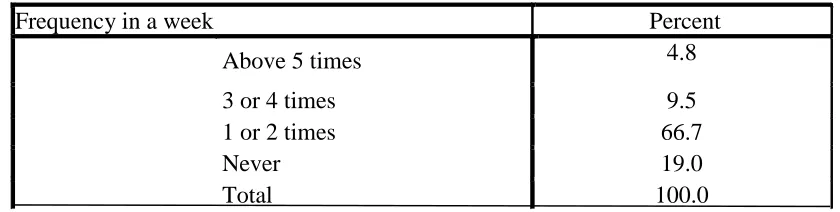
[image:3.612.66.486.590.696.2]Another consideration in the study was the use of Resource Based Learning (RBL) which showed weak frequency as shown in Table 2.
Table 2: Frequency of use of Resource Based Learning
Frequency in a week
Percent
Above 5 times
4.8
3 or 4 times
9.5
1 or 2 times
66.7
Never
19.0
Total
100.0
Frequency in a week Valid Percent
4 or Above 23.8
2 or 3times 35.7
Once 24.6
Never 15.9
Resource Based Learning (RBL) is the instructional strategy where learners construct meaning with a wide range of print, non-print and human resources (Sitepu, 2010). According to Sitepu RBL allow learners to discover knowledge for themselves. RBL is supported by a Learning Resource Centre (LRC) which is the development of convectional library. In the Physical sense a Learning Resource Center is a room set apart as a quiet study center in which to use or possibly store the various learning resources on offer. From a physiological point of view it can be what you make it. If there is no appropriate room, one can be made available for an LRC. With the existence of an LRC, RBL approach is developed to be a learning center approach. It is disappointing that only one sampled school had a learning resource center. Even in the sampled school that had an LRC, only 66.7% of the students use it once or twice in a week. Students are thus unable to perform experiments like splitting atoms which
cannot be done in the real world but possible with RBL (Girod, 2000). The lack of regular use of RBL even in the school that had a LRC is likely caused by a tight and rigid school program. This allows for little time for flexibility and time in the LRC for the students. Furthermore RBL is thus greatly hampered by lack of an LRC and subsequently the resources required thereof. Developing an LRC could be a potential solution towards scarcity of resources in education (Sitepu, 2010) Hence RBL is rarely and in most cases never used to enhance understanding and hence performance in Physics in Migori.
Frequency of using WBLR
[image:4.612.67.523.273.424.2]Learners were asked to indicate how frequently they use WBLR in a week. The results were then summarized in Table 3.
Table 3: Frequency of use of WBLR
Frequency in a week
Percent
Above Six times
14.0
4 or 5 times
9.3
2 or 3 times
30.2
1time
25.6
0 times
20.9
Total
100.0
Due to increased tendency towards learner’s digital literacy, Web- based learning resources as pedagogical tools are becoming increasingly important in classroom instruction (Faegheh, 2015). According to Faegheh (2015) countries like Iran have identified Web- based technology in classroom instruction as top priority and have made deliberate efforts to have them embedded into wider professional teaching practice.
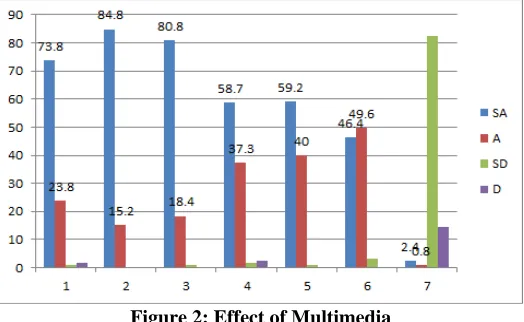
The use of WBLR is still very low in Migori County Schools. Almost all Boarding Schools do not have internet access and computer rooms. Students that have access to WBL also do not quite often use it. WBLR are thus minimally used to enhance understanding and hence performance of Physics in Migori likely due to lack of computers, computer rooms and internet. A study done by Makanda (2015) stated that most teachers accessed computers for less than one hour a day even though there was favorable attitude towards ICT use in classroom instruction. There is likelihood that even in schools with internet connected computers, teachers and leaners are unable to access these computers due to lack of time caused by a crowded timetable. Data on Effect of LCI was collected using a Likert Scale with four options [Strongly Agree (SA), Agree (A), Disagree (D), and Strongly Disagree (SD)] for each teaching method using the following series; Series 1(I am able to remember easily what I learnt) Series 2 (I enjoy the learning) Series 3(I become more interested in Physics) Series 4 (I improve in my academic performance) Series5 (I master concepts easily) Series 6 (I am able
to apply the knowledge in my own real life) series 7( It overburdens me and gives me a lot of work). The results are presented in Figures 4, 5 and 6.
Figure 1: Effect of RBL
[image:4.612.313.578.484.604.2]Figure 2: Effect of Multimedia
When Multimedia is used in teaching, information will easily make more sense to the learner (Janusz et al., 2013). From Figure 2, almost all students feel that Multimedia increases their mastery of concepts and enable them to remember concepts easily. They also become more interested in Physics and enjoy lessons when taught by Multimedia. Very few students feel that Multimedia is burdensome to them. Multimedia instruction engages the learner on various senses which in turn elicits positive attitude towards their use in instruction (Neo & Neo, 2000). A study by Ubogu (2006) in Nigeria states that Multimedia facilitates access to all human knowledge anytime and anywhere in a friendly, multi- modal and efficient and effective way. Close to 98% of the sampled learners said they easily remember what they learnt when Multimedia instruction is used which support the findings of Lindstrom (1994). According to Lindstrom (1994) use of Multimedia Instruction has shown to increase retention rates. Research has shown that people remember 20% of what they see, 40% of what they see and hear and 75% of what they see, hear and do. Multimedia materials like still and animated graphics, video and audio integrated in a structured manner, compared to traditional textbooks are confirmed to be more efficient tools in adopting new knowledge (Sadaghiani, 2012; Stelzer et al., 2009). Multimedia application in teaching Physics had resulted in a significant increase of the quantum and quality of student’s knowledge in all categories of Bloom’s taxonomy, as well as the retention of knowledge quality in the category of application compared to the traditional teaching method (Cubrilo et al., 2014). The findings of this study are also concurrent with other studies done previously. For instance a study done by Amaal (2016) found out that most students agree that multimedia tools are best for them in understanding the course materials and that the students prefer videos to lecturing and printed materials as a teaching method in classes. The students in the study also said they wished their teachers would use videos and games more in their classes. Indeed Multimedia like videos help to attract students attention, generate students interest, focus students concentration, increase understanding and increase the retention content (Berk, 2009). As established in this study 99% of the students agreed that Multimedia enables them to master concepts easily. According to Okedeyi (2015) when teachers use multimedia resources, instruction is made easy and well understood by students which will improve teaching and learning of scientific concepts in Secondary Schools. Mastery of scientific concepts cannot be fully
achieved without the use of Multimedia as an instructional learning material (Oshinaike & Adekunmisi, 2012).
There exists a logical question whether or not Multimedia assisted teaching can influence student attitude towards school subjects and if it is possible to eliminate student’s negative attitude to school subjects (Hofer & Sroboda, 2005). This is particularly interesting question to Physics teachers and Physicists in general given that the popularity of Physics among high school students is not impressive. The findings of this study suggest that increased use of Multimedia instruction in Physics lessons could potentially solve this problem. According to this study over 99% of the sampled students agreed that they become more interested in physics and 100% said they enjoy learning Physics when Multimedia instruction is used. Subsequently only 3% felt that Multimedia instruction is burdensome to them. Multimedia instruction could hence be used as a possible remedy for negative student attitude towards Physics.
[image:5.612.314.578.297.456.2]There was a measure of students attitude towards use of WBLR and the general impression was that it was positive (Figure 3).
Figure 3: Effect of WBLR
Web Based Learning Resources (WBLR) is instructional content or activity delivered through the web that teaches a focused concept, meets specific learning objectives and provides a Learner- centered learning context (Liu & LaMont, 2005). Web based instruction (WBI) is delivered via the internet and the intranet only. Examples of WBI include; chatrooms, instant messaging systems, Desktop video conferencing, Listservers, newsgroups, web or discussion Boards, Personal Digital Assistants, webcams, Plugins, Multi-User Domain (MUDs), Multi-User Object Oriented (MOOs) and Multi-User Shared Hallucination. Findings indicate that Smart School Teachers were generally motivated to use WBLR because they believed that technology infusion in the classroom setting could help improve their own teaching, improve student engagement and accelerate learning (Salehi & Salehi, 2012).
minimum experience with eLearning platforms, most of them said they did not need much support to use ePhysics and found the structure and navigation appropriate and comprehensible. Teacher familiarity with LCI is important and this was tested by using a Yes- No Scale against the three modes of instruction (Figure 7)
Figure 4: Teacher Familiarity with LCI
Lack of familiarity with a specific method has been identified as in intrinsic challenge towards implantation of Learner- centered methods (Lloyd, 1999; Stein et al., 2001). Shedd (2004) noted that those preparing to be modern day teachers must incorporate technology in their class. One Principal in the study done by Amaal (2016) stated that teachers needed to update their skills, keep up with advances in technology and use more computer programs in their classes. From the data in Figure 7, 15% of teachers are not aware of RBL or Multimedia teaching while 20% of the teachers are not aware of WBLR. However there is some positive news as a big percentage of teachers are aware of the aforementioned LCI. 80% are familiar with WBLR, 85% are familiar with RBL and a similar percentage is familiar with Multimedia. Indeed as noted by Makanda (2015) 70% of the teachers in the sample schools had been trained to use computers and 60% had been trained on how to integrate ICT in the teaching and learning of Physics. In this study there is a big disparity between teacher familiarity with the aforementioned LCI and their frequency of use in classroom instruction. Despite most of the teachers being familiar with the LCI, there frequency of use in lessons is not as high as shown earlier in Table 1, 2 and 3. Gokalp (2015) noted that the fact that a teacher is trained in ICT use in class does not necessarily translate to him or her using it in the actual classroom. The under use of Educational Technology is primary due to poor school equipment, necessary resources, insufficient information and knowledge of teachers and lack of motivation of teachers to use them (Stosic, 2015). Furthermore it takes more than just basic knowledge on Educational Technology to have it used by teachers in their classes. Teachers have to go through a variety of conferences, courses, professional literature and seminars in order to get a better knowledge in the use of Educational Technology (Stosic, 2015). According to Stosic some of these teachers might feel the need to attend workshops or seminars in order to gain additional technical knowledge of these appliances and how to use them in their classes especially in regard to older teachers. This is because older teachers did not have the possibility of training with modern technology as opposed to younger teachers. Attending such seminars and workshops are expensive and requires concerted effort and financial support from institutions to the teachers. This may prove had to do especially when majority of schools in developing nations still lack even
enough resources required for Educational Technology LCI. Studies done in Nigeria have found out that teachers do not attend ICT workshops, conferences and seminars because of lack of money (Adedibu,2001; Olagunju, 2012). Due to this challenge, some teachers have taken up individual initiatives to update themselves on the current trends in Educational Technology. The majority of STEM teachers in Europe had not taken any ICT- related professional development or training related to innovative STEM teaching in the last two years. When they do follow training, teachers tend to update their knowledge online and in their own time (European Schoolnet, 2018).
Another possible cause for this is likely due to lack of time to access computers by the teachers. Inadequate time to access computers was noted by Makanda (2015) as one of the causes for low use of ICT in lesson delivery. According to Leung et al. (2005) challenges faced by teachers in countries where ICT is being introduced include limited time caused time required for lesson preparation. Teachers who are not familiar with Multimedia, RBL and WBLR have probably not been exposed to such methods. If they have minimal exposure they might not be able to integrate them in the learning of Physics. As a conclusion to the study some challenges facing LCI were considered.
Table 8 shows a summary of major challenges facing the LCI as expressed by the teachers.
Table 5: Challenges facing LCI
Challenges facing LCI No of Respondents
RBL
• Lack of relevant resources 10
WBLR
• Lack of Internet connectivity
• Lack of Computer room
• Learner engaging in irrelevant web pages
9 2
1
Multimedia
• Lack of relevant resources
• Electricity failure/ blackouts 9 1
[image:6.612.313.577.363.552.2]costly to implement especially at the initial starting phase but schools should regardless strive to have LRCs due to its immense benefits to learning.
The main challenges affecting implementation of WBLR is lack of internet connectivity and lack of computers. If computes are minimally used in schools then the teaching process will be dominated by traditional methods (Stosic, 2015). Among the factors affecting implementation of STEM as quoted by teachers in Europe according to European Schoolnet (2018) include insufficient number of internet connected computers (61% of the responses), insufficient number of computers (63% of the responses) and budget constraints in accessing adequate content material for teaching (68% of the responses). There is no doubt the use of the internet has increased all around the world (Gokalp, 2013) however Leu et al. (2013) noted that children in developing countries very rarely use the internet as a learning tool. Makanda (2015) noted that some of the students in Bungoma District, Kenya, had never handled computers which likely points to a possibility of lack of proper policies in some schools that would ensure that every student can access computers. The study also noted that students who had had access to the internet for whatever purpose probably did so at home but not in school. Kola (2013) noted that lack of access to the internet was a major challenge facing implementation of Educational Technology in Nigerian Schools. Furthermore the study also established that 18% of the learners sampled had never interacted with a computer for whatever purpose. Studies done by Salehi & Salehi (2012) showed teachers lacked technical support at school and had limited access to the internet. Shortages of school computers were identified as one of the main challenges facing implementation of ICT in teaching and learning in Hong Kong during the initial stages (Leung et al., 2005). However they were able to overcome this hurdle by creating awareness through the media to the teachers about the advantages of incorporating ICT into teaching and massive support from the Government. School authorities also helped teachers to squeeze time to learn how to incorporate ICT to teaching. Lack of internet connectivity also affects Multimedia application as the internet offers over 5000 Multimedia learning materials for Physics Learners (Obadovic et al., 2016). The most widely used are video materials in the form of computer generated simulations, animations and interactive research experiments. Students can have access to the internet but use it for another purpose other than accessing Physics web resources. A study by Demirbilek et al. (2001) found out that 30% of the students aged 16- 22 years use the internet for entertainment while only 10% of them use it for educational purposes. Another challenge quoted by the teachers included lack of computers and Internet connectivity. It is likely that schools view implementation of the LCI as expensive and as such are not enthusiastic to provide the relevant resources.
Educational Technology has yet to take its place (Lowther et al., 2012). This may be particularly true in Kenya and most countries that want to implement Educational Technology due to lack of relevant resources. As noted from the data in table 8, lack of resources is the major challenge facing implementation of the aforementioned LCI. As noted by Makanda (2015) use of ICT in lesson delivery was low due to factors such as inadequate facilities, inadequate time to access computers or lack of ICT skills. Aisha (2017) noted that lack of resources and inadequate
equipment were one of the major challenges facing implementation of Educational Technology. The study also noted that schools were reluctant to repair equipment that had broken down due to the costly nature of repair. This resulted in zero use of such equipment and hence no use of Educational technology in class. In Nigeria, the number one problem facing Nigerian Educational system is corruption (Adedibu, 2001; Olagunju, 2012). Funds that were meant to purchase ICT equipment and other Educational facilities were often diverted to private accounts. Individuals including teachers were not spared of this corruption. They stole government money meant for educational purposes for their private use (Kola, 2013). As noted too by Kola, there is lack of uninterrupted power supply in Nigeria which has caused a lot of setbacks as far as usage of Educational technology is concerned. This is because Educational Technology LCI is heavily reliant on reliable power supply during that specific time the teacher or a student would wish to teach or learn using the technology.
CONCLUSION
Multimedia options predominantly used educational technology teaching method while Web- based learning and Resource Based learning were barely used. Lack of relevant resources greatly hampered the use of Web-based learning and Resource-based Learning. In cases where such resources were available, the school program was too tight to allow time for sufficient applications of these methods. Half of the sampled schools lacked computer rooms and even those that had rooms never used them to access WBLR. Only one sampled school had a Learning Resource Centre. The study recommended that resources should be availed to enable application of the interactive Educational Technology teaching methods for these are the ones that bring about meaningful learning in Physics and STEM subjects in general
REFERENCES
[1] Adedibu, J.S (2001). Technical development: the way forward. Nigeria Journal and Gender Development, 2(1), 79-85
[2] Aina, J.K. (2012). Factors affecting student’s performance in science in
Nigeria schools. Retrieved from http://www.amazines.com/article_detail.cfm?articleid=4246692
[3] Aisha, A. (2017). Using information and communication technology. International Journal of Education and development, 13, 32-51. Retrieved from https://files.eric.ed.gov/fulltext/EJ1142266.pdf
[4] Amaal, A.R. (2016). Using multimedia presentations in teaching (videos, films) in Oman: A cause study of a primary school. Journal of Teaching and Education, 5, 127-136. Retrieved from https://www.researchgate.net/publication/303856873_USING_MULTIME
DIA_PESENTATIONS_IN_TEACHING_VIDEOS_FILMS_IN_OMAN_ A_CAUSE_STUDY_OF_A_PRIMARY_SCHOOL
[5] Aggarwal, J.C. (2004). Essentials of educational technology: Teaching learning innovations in education. Delhi: Vikas Publishing House pvt Ltd. [6] Benson, A., Nkiruka, C. (2013). Improving students learning outcomes in
practical physics, which is better? Computer simulated experiment or hands- on- experiment? Journal of Research & Methods, 2(6), 18-26. Retrieved from
http://www.iosrjournals.org/iosr-jrme/papers/Vol-2%20Issue-6/C0261826.pdf
[7] Berk, R. A. (2009). Multimedia teaching with video clips: Tv, movies, YouTube, and mtvU in the college classroom. International Journal of Technology in Teaching and Learning, 5(1), 1–21.
Digest EDO-IR-2001-02). Syracuse, NY: ERIC Clearinghouse on Information and Technology.
[9] Demirbilek, M., Cilesiz, S., Tozoglu, D. (2001). Safety strategies while surfing online in the classroom, National Convention of the Association for Educational Communications and Technology, Atlanta, GA.
[10] European Schoolnet (2018, October). Education Practices in Europe Science, technology, engineering and mathematics education policies: Scientix observatory report. Retrieved from
http://www.scientix.eu/documents/10137/782005/STEM-Edu-Practices_DEF_WEB.pdf/b4847c2d-2fa8-438c-b080-3793fe26d0c8 [11] Faegheh, M., Abrizah, A., Maryam, N., Mohammad, A. (2015. What
motivates high school teachers to use web- based learning resources for classroom instruction? An explanatory case study in an Iranian school. Computers in Human Behavior,51, 373-381. Retrieved from https://www.academia.edu/20661734/What_motivates_high_school_teacher s_to_use_webbased_learning_resources_for_classroom_instruction_An_ex ploratory_case_study_in_an_Iranian_smart_school
[12] Girod, M.(2000). Technology as an agent of change in teacher practice. T.h.e. Journal, 4, 133-165. Retrieved from http://www.thejournal.com/magazine/vault/A3429.cfm
[13] Gokalp, M.S. (2013). Preceptors of the internet and education: A study with physics education website users. International Journal of Environment, 8(2), 289-302. Retrieved from https://files.eric.ed.gov/fulltext/EJ1008606.pdf Gokalp 2013
[14] Heinich, R. (1984). Learning maths by radio. Eric digest, 17(1), 40-42. [15] Hofer, G., Svoboda, E. (2007). Student’s opinions and attitudes to physics
teaching. Mathemstics- Physics- Informatics, 4, 212- 223.
[16] Janusz, C., Bohdan. B., Yury. K. (2013). Challenges in teaching and learning physics for first year students. Scientific Journal. 33(105), 11-15 [17] Kombo, D.K., & Tromp, L.A. (2014). Proposal and thesis writing: An
introduction. Nairobi: Paulines Publications Africa.
[18] Kola, A. (2013). Integration of ICT into physics learning to improve students’ academic achievement: Problems and solutions. Open Journal of Education,
1, 117-121. Retrieved from https://www.researchgate.net/publication/263654519_Integration_of_ICT_i
nto_Physics_Learning_to_Improve_Students'_Academic_Achievement_Pro blems_and_Solutions/download
[19] Leu, D. J., O’Byrne, W. I., Zawlinski, L., McVerry, G., & Everett-Cacopardo, H. (2009).
[20] Expanding the new literacies conversation. Educational Researcher,38(4), 264-269.
[21] Lindstrom, R. (1994). The business week guide to multimedia presentations: Create dynamic presentations that inspire. New York: McGraw-Hill. [22] Liu, L. & LaMont J.D. (2005). Web-based resources and applications.
Computer in the schools, 21(3), 31-147.
[23] Lowther, D. L., Inan, F. A., Ross, S. M., & Strahl, J. D. (2012). Do one-to-one initiatives bridge the way to 21st century knowledge and skills? Journal of Educational Computing Research, 46(1), 1-30.
[24] Makanda, J.V. (2015).Use of ICT in Teaching Physics: A Case Study of Secondary Schools in
[25] Kimilili District, BuNGAma County, Kenya. Masters Thesis, Kenyatta
University, Kenya. Retrieved from https://irlibrary.ku.ac.ke/bitstream/handle/123456789/13431/Use%20of%20
ict%20in%20teaching%20physics%20a%20case%20of%20secondary%20s chools%20in%20Kimilili%20District%2C%20BuNGAma%20County%2C %20Kenya.pdf?sequence=1&isAllowed=y
[26] Maxwell, W.E. (1998). Supplemental instruction, learning communities and student studying together. Community College Review, 26, 1-18.
[27] Morrison, J. (2006). Attributes of stem education: The student, the school, the classroom.
[28] Baltimore: Teaching Institute of Excellence in STEM. Retrieved from https://www.tiesteach.org/
[29] Mwaka, M., & Kafu, P.A. (2013). An evaluation of educational technology use in teacher education in Kenyan Universities. International Journal of Current Research. 5(3), 587-593.Retrieved from http://www.journalcra.com/sites/default/files/Download%203098.pdf
[30] National Governors Association. (2007). Innovation America: Building a science, technology, engineering and math agenda. Washington D.C.:
National Governors Association Centre for Best Practices. Retrieved from https;//www.nga.org/FILES/Pdf/0702INNOVATIONSTEM.PDF. [31] Neo, M., Neo, T.K. (2000). Multimedia learning: using multimedia as a
platformfor instruction
[32] and learning in higher education, Symp. Multimedia University International Symposium on Information and CommunicationTechnologies 2000 (M2USIC’2000), Petaling Jaya, Malaysia, pp. 5-6.
[33] Obadovic, Z., Radlovic, C., Danijela, L.C., &, Dusanka, S.M. (2016). The application of multimedia and its effects on teaching physics in secondary school. Zbornik Instituta za Pedagoska Istrazivanja, 46. 339-363. doi:10.2298/ZIPI1402339R.
[34] Okedeyi, S. (2015). The relevance of multimedia skills in teaching and learning of scientific concepts in secondary schools in Lagos State, Nigeria. Journal of Education and Practice, 6(15), 150- 154. Retrieved from https://www.researchgate.net/publication/277711314_The_relevance_of_m ultimedia_skills_in_teaching_and_learning_of_scientific_concepts_in_seco ndary_schools_in_lagos_state_Nigeria
[35] Olagunju, O. (2012). Corruption control in Nigeria: Holistic approach. Education Development Institute, 2(1), 76-84
[36] Orhan, K. (2009). Active learning strategies in Physics teaching. Journal of Energy Education Science and Technology Part B: Social and Educational Studies, 1(1), 27-50. Retrieved from https://pdfs.semanticscholar.org/7230/9e9a863a081a5dab6fdd921c41afc22e
7dbc.pdf
[37] Oshinaike, A.B., Adekunmisi, S.R. (2012). Use of Multimedia for teaching in Nigerian University System: A case study of university of Ibadan. Retrieved from http:www.un//ib.un/.edu/lpp/
[38] Romiszowski, A.J. (1988). The selection and use of instructional media. New York: Kogan Page Ltd.
[39] Salehi, H., Salehi Z. (2012). “Integration of ICT in language teaching: Challenges and barriers”.3rd International Conference on Education, e-Business, e-Management and e-Learning IPEDR vol.27 IACSIT Press, Singapore. Retrieved April 05, 2019, from http://www.ipedr.com/vol27/40-IC4E%202012-F10037.pdf
[40] Schnotz, W., & Lowe, R. (2003). External and internal representations in multimedia learning. Introduction Learning and Instruction, 13(2), 117–123. [41] Sengel, E. (2005). Effect of a web-based learning tool on student learning a
case study. PhD Thesis, Middle East Technical Universisty, Turkey. [42] Shedd, J. (2004). Incorporating technology in the classroom: A publication
of the school of education. Syracuse university, USA: Education Exchange. [43] Sitepu, B.P. (2010). The Role of Learning Resources Center. Retrieved from
https://bintangsitepu.wordpress.com/2010/07/02/the-role-of-learning-resources-center/
[44] Slavin, R.E. (1990). Cooperative learning theory, research and practice. Needham Heights: Allyn and Bacon.
[45] Stein, S.J., McRobbie, C.J., & Ginns, I.S. (2001). Authentic program planning in technology education. International Journal of Technology and Design Education, 11, 239-261.
[46] Stosic, L. (2015). The importance of educational technology in teaching. International Journal of Cognitive Research in Science, Engineering and Education (IJCRSEE), 3, 111-114. Retrieved from https://www.researchgate.net/publication/278848636_The_importance_of_e ducational_technology_in_teaching
[47] Sujeewa, A.P., Hong, S., Fang, H. (2017). STEM teacher education and professional development and training: Challenges and trends. Research
Gate, 2(2), 61- 65. Retrieved from
https://www.researchgate.net/publication/321097023_STEM_Teacher_Edu cation_and_Professional_Development_and_Training_Challenges_and_Tre nds
[48] Tienne, D. (1994). Instructional t.v and video, In Ely and Plomp. (eds) 1996. International Encyclopedia of Educational Technology. Pergamon Press. [49] Weimer,M.(2002). Learner- centered teaching: Five key changes to practice.
San Francisco: Jossey-Bass Publishers. Retrieved from http://www.dartmouth.edu/~physteach/ArticleArchive/Weimer_excerpt.pdf [50] Liu, L., & LaMont, J.D. (2005). Web-based resources and applications.
Computer in the Schools, 21(3), 31-147.
[52] Ubogu, F. N. (2006). Trends in digital library services in academic libraries in South Africa: library profiles and ETD system, Conf. 44thAnnual National Conference and AGM of Nigerian Library Association, Abuja, Nigeria, pp. 18-23
AUTHORS First Author – Maurice Junior Ochieng Masters student Kenyatta University
Second Author – Prof. Nicholas Twoli, PhD, Kenyatta University, [email protected]
Third Author – Dr. David Khatete, PhD, Kenyatta University [email protected]