Citation:
Dhingra, K and Boduszek, D and O’Connor, RC (2016) A structural test of the Integrated Motivational-Volitional model of suicidal behaviour. Psychiatry Research, 239. 169 - 178. ISSN 0165-1781 DOI: https://doi.org/10.1016/j.psychres.2016.03.023
Link to Leeds Beckett Repository record: http://eprints.leedsbeckett.ac.uk/2409/
Document Version: Article
The aim of the Leeds Beckett Repository is to provide open access to our research, as required by funder policies and permitted by publishers and copyright law.
The Leeds Beckett repository holds a wide range of publications, each of which has been checked for copyright and the relevant embargo period has been applied by the Research Services team.
We operate on a standard take-down policy. If you are the author or publisher of an output and you would like it removed from the repository, please contact us and we will investigate on a case-by-case basis.
A Structural Test of the Integrated Motivational-Volitional Model of Suicidal
Behaviour
Katie Dhingra1, Daniel Boduszek2 & Rory C O’Connor3
Version accepted for publication in Psychiatry Research
1Leeds Beckett University, Department of Criminology, Calverley Building, Leeds, LS1 3HE,
United Kingdom. [email protected]
2University of Huddersfield, Department of Psychology, Ramsden Building, Queensgate,
Huddersfield, HD1 3DH, United Kingdom. [email protected]
3University of Glasgow, Institute of Health & Wellbeing, Academic Centre, Gartnavel Royal
Hospital Glasgow, Glasgow, G12 0XH, United Kingdom. [email protected]
Correspondence to:
Dr Katie Dhingra
Leeds Beckett University Calverley Building (CL905) Leeds, LS1 3HE
United Kingdom
2
Abstract
Suicidal behaviours are highly complex, multi-determined phenomena. Despite this, historically research has tended to focus on bivariate associations between atheoretical
demographic and/or psychiatric factors and suicidal behaviour. The aim of this study was to empirically test theIntegrated Motivational-Volitional model of suicidal behaviour using structural equation modeling.Healthy adults (N = 1, 809) completed anonymous self-report
surveys. The fit of the proposed model was good, and explained 79% of variance in defeat, 83% of variance in entrapment, 61% of variance in suicidal ideation, and 27% of variance in
suicide attempts. All proposed paths were significant except for those between goal
re-engagement and two factors of suicide resilience (Internal Protective and External Protective)
and suicidal ideation; and impulsivity and discomfort intolerance and suicide attempts. These findings represent a preliminary step towards greater clarification of the mechanisms driving suicidal behaviour, and support the utility of basing future research on the Integrated
Motivational–Volitional model of suicidal behaviour.
Keywords: Integrated Motivational-Volitional (IMV) Model of Suicidal Behaviour;
3
1. Introduction
Each year approximately 6,000 people in the U.K. and approximately 804,000 people
worldwide die by suicide, making it the 14th leading cause of death globally (Office for National Statistics, 2014; World Health Organization [WHO], 2014). A history of suicidal
behaviour is one of the most robust predictors of future suicide (Hawton and van Heeringen, 2009), and is, therefore, frequently the focus of research efforts to better understand the aetiology of suicide (Suominen et al., 2004). Although our knowledge of distal suicide risk
factors (e.g., mental disorders) has increased considerably in recent decades (O’Connor and Nock, 2014), how and why certain factors work together to increase suicide risk is unclear.
Results of psychological autopsy studies suggest that more than 90% of people who die by suicide have a mental disorder before their death. However, most people with a mental disorder never become suicidal (i.e., experience suicide ideation, make suicide attempts, or
die by suicide; Bostwick and Pankratz, 2000; van Heerington, 2001; O’Connor and Nock, 2014). Thus, distal factors are not sufficiently specific to be clinically useful. For this reason,
it is crucial that we advance our understanding of how distal risk factors may be translated into suicidal thoughts and behaviour via proximal psychological risk processes, as well as the psychological processes that underpin both suicidal ideation and the decision to act on
suicidal thoughts. Such work is needed to inform the development of evidence-informed treatment interventions in this area.
Many theorists have sought to explain suicide (e.g., Baumeister, 1990; Shneidman, 1985; Williams, 2001; Williams et al., 2008), and although these theories have been useful in guiding research and prevention efforts, there is no evidence of sustained reductions in
suicide rates (WHO, 2014). A commonality between these theories that may be limiting progress in our understanding suicide is that they do not account for why most people who
4
Nock, 2014). Indeed, with only a few notable exceptions, these models have failed to differentiate between those who develop suicidal ideation (but do not attempt suicide) from
those who go on to engage in suicidal behaviour.
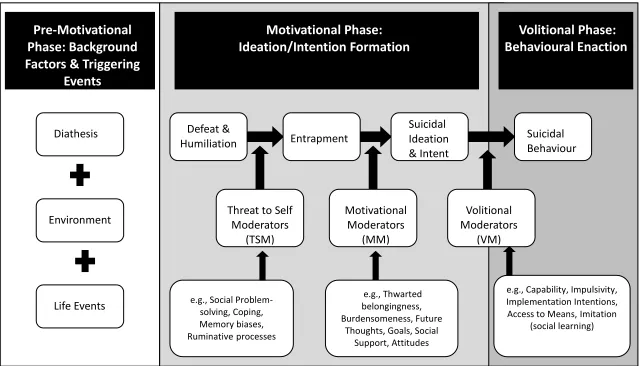
The Integrated Motivational–Volitional (Figure 1) Model of suicidal behaviour (O’Connor, 2011) attempts to address this very issue. Integrating predominant factors from
existing theoretical models, the Integrated Motivational–Volitional model conceptualises suicide as a behaviour (rather than a by-product of mental disorders) that develops through
motivational and volitional phases. The motivational phase describes the factors that govern the development of suicidal ideation and intent; whereas, the volitional phase outlines the
factors that determine whether an individual attempts suicide. Extending the “arrested flight” model of Williams (2001), the theory posits that suicidal thoughts derive from feelings of entrapment where suicidal behaviour is seen as the salient solution to life circumstances, and
entrapment is triggered by defeat/humiliation appraisals. Feelings of entrapment are exacerbated by specific state moderators (i.e., factors that facilitate/obstruct movement
between stages), such as brooding (ruminative cognitions which repetitively compare one’s present situation with another unachieved benchmark), poor problem solving, and attribution biases. In the presence of motivational moderators such as interpersonal states (i.e., perceived
burdensomeness and thwarted belongingness), impaired subjective goals, and disrupted future positive thinking, such appraisals lead to suicidal ideation. The translation from
Figure 1. Integrated Motivational –Volitional Model of Suicidal Behaviour (O’Connor, 2011)
Pre-Motivational
Phase: Background
Factors & Triggering
Events
Diathesis Environment Life EventsMotivational Phase:
Ideation/Intention Formation
Volitional Phase:
Behavioural Enaction
Suicidal Behaviour Motivational Moderators (MM) Volitional Moderators (VM) Threat to SelfModerators (TSM) Defeat & Humiliation Entrapment Suicidal Ideation & Intent
e.g., Capability, Impulsivity, Implementation Intentions, Access to Means, Imitation
(social learning) e.g., Social
Problem-solving, Coping, Memory biases, Ruminativeprocesses e.g., Thwarted belongingness, Burdensomeness, Future
Although relatively new, different aspects of the Integrated Motivational–Volitional model have already been tested empirically, yielding a number of encouraging findings. For
instance, one study found that entrapment was a proximal predictor of repetition of suicidal behaviour over time. Specifically, whereas, suicide ideation, past suicide attempts,
depression, hopelessness, defeat and entrapment were each univariate predictors of suicide attempts four years after an index attempt, entrapment was the only modifiable predictor (alongside frequency of previous suicide attempts) in multivariate analysis (O’Connor,
Smyth, Ferguson, Ryan and Williams, 2013). Different components of the motivational phase of the model have also received empirical support. For example, in a number of studies,
impaired positive future thinking (anticipation of positive experiences in the future) has been found to be a key factor within the suicidal process (e.g., Hunter and O’Connor, 2003; O’Connor, Connery, and Cheyne, 2000; O’Connor et al., 2004; O’Connor, Smyth, and
Williams, 2015). Indeed, within a sample of adults hospitalised following a suicide attempt, impaired positive future thinking was a better predictor of Time 2 suicidal ideation
(approximately 2.5 months following discharge) than global hopelessness (O’Connor et al., 2008). The way in which individuals respond to unachievable goals (i.e., goal regulation) has also been found to predict repetition of self-harm/suicide (O’Connor, Ryan, O’Carroll, and
Smyth, 2012, O’Connor, Fraser, and Whyte et al., 2009). O’Connor et al. (2012), for instance, found evidence to suggest that suicide attempters who tend not to re-engage with
new goals (in the face of existing unattainable goals) were at increased risk of readmission to hospital after self-harm, and that this association was further affected by the extent of existing goal disengagement.
Although the Integrated Motivational–Volitional model was developed with suicidal ideation and behaviour in mind, the central tenets of the model can, and have been, applied to
by the Integrated Motivational–Volitional model, motivational phase variables did not distinguish between adolescents who only thought about self-harm (i.e., ideators-only) and
those who actually engaged in self-harm (i.e., enactors); whereas, the volitional phase variables did (O’Connor, Rasmussen, and Hawton, 2012). In other words, volitional
moderators bridged the intention-behaviour gap.
Other research findings are consistent with the Integrated Motivational–Volitional model and its contention that pre-motivational/motivational and volitional phase variables
should differentially predict suicidal ideation and behaviour (May and Klonsky, in press; Séguin, Lynch, Labelle, and Gagnon, 2004; Taliaferro and Muehlenkamp, 2014; Taylor,
Wood, Gooding and Tarrier, 2011). Séguin et al. (2004) did not find significant differences between adolescents who attempted suicide from those who only experienced suicidal ideation on measures of depression, self-esteem, irrational beliefs, reasons for living, parent–
child relationships, or family functioning. Taliaferro and Muehlenkamp (2014) found that hopelessness and depression were higher among adolescent ideators than non-suicidal
adolescents, but comparable between ideators and attempters; conversely, a self-injury history (a volitional phase factor) was more likely among attempters than ideators. There is also evidence to suggest that suicide capability is elevated among suicide attempters relative
to suicide ideators (Smith, Cukrowicz, 2010; Van Orden, 2008), and that restricted physical access to lethal means may reduce the likelihood of suicide attempts (Baber and Miller,
2014).
1.1. The current study
Although the above findings are promising, they are limited by providing support for only a
limited selection of the model's components. Indeed, research to date has yet to test the interrelations between the key components of the theory simultaneously. The aim of the
(Figure 1) Model of suicidal behaviour through the application of latent variable modelling techniques. Such techniques allow for the connections between several constructs to be
simultaneously tested. A promising implication of studying the applicability of the Integrated Motivational–Volitional model is the development of more parsimonious risk assessment
tools. Specifically, individuals frequently experience numerous risk factors, making risk prediction especially challenging; while the Integrated Motivational–Volitional model
proposes a more proximal pathway from risk factors to suicidal behaviour whereby individual
factors are hypothesised to confer risk when they involve or increase the likelihood that individuals will experience feelings of entrapment. In addition, validating the Integrated
Motivational–Volitional model could lead to the development of valuable intervention
approaches that could target suicidal thoughts when they first emerge, before they progress to a suicide attempt, or help to identify which suicide ideators are at greatest risk of making a
2. Method
2.1. Sample
Participants (N = 1, 809) were 1,333 female and 476 male university students recruited from
various faculties in three UK universities. Participants were aged between 18 and 66 years (M
= 24.05; SD = 8.09). One thousand four hundred and forty four participants identified themselves as White (77.6%), 224 as Asian (12.4%), 73 as Mixed (4%), 67 as Black (3.7%),
39 as Other (2.2%). Two of the participants did not give any information regarding their race. Most students described their sexual orientation as heterosexual/straight (84.7%).
2.2. Measures
2.2.1. Motivational Phase Variables
Defeat. The Defeat Scale, a self-report measure of 16 questions assessing individuals’
perceptions of losing rank position and failed struggle during the past seven days (e.g., “I feel defeated by life”) (Gilbert and Allan, 1998), measured defeat. Items are rated on a five-point
scale; higher scores indicate greater feelings of defeat.
Entrapment. Entrapment represents the sense of being unable to escape feelings of defeat and rejection (e.g., “I am in a situation I feel trapped in”), and was measured by the 16-item
Entrapment Scale (Gilbert and Allan, 1998). Items are rated on a five-point scale; higher scores indicate more feelings of entrapment.
Brooding rumination. Consistent with previous research (e.g., O’Connor and Williams, 2014; Polanco-Roman, Quiñones, Miranda, 2014), brooding, defined as the extent to which
individuals passively focus on the reasons for their distress (e.g., “Think, ‘Why can’t I handle things better?’”), was measured using the five items from the Response Styles Questionnaire (RSQ; Nolen-Hoeksema, 1991). Given that reflection is inconsistently associated with
Suicide resilience. Suicide resilience was assessed using the Suicide Resilience Inventory 25 (SRI-25; Osman et al., 2004). The SRI-25 is a 25-item self-report measure used to assess
factors that help defend against suicidal thoughts and behaviours (e.g., “I can ask for
emotional support from people close to me if I were to think about killing myself”). The scale
is comprised of three subscales, two of which (External Protective and Emotional Stability) include the assessment of suicide-specific resilience. The External Protective subscale assesses people’s positive perceptions or beliefs that they are able to seek help from those
close to them should they experience suicidal thoughts; the Emotional Stability subscale assesses people’s positive perceptions or beliefs that they are able to resist acting on suicidal
thoughts when experiencing them. The third subscale, the Internal Protective subscale, assesses people’s satisfaction with life and positive feelings about themselves overall.
Perceived burdensomeness and thwarted belongingness. Perceived burdensomeness and
thwarted belongingness were measured with the 12-item version of the Interpersonal Needs Questionnaire (INQ; Van Orden et al., 2008). The INQ assesses respondent’s current beliefs
about feeling connected to others (i.e., thwarted belongingness; e.g., “I feel disconnected from other people”) and feeling like a burden on the people in their lives (i.e., perceived
burdensomeness; e.g., “The people in my life would be better off if I were gone”). Seven
items measure belongingness, and five items measure burdensomeness. Items are rated on a Likert-type scale ranging from 1 (‘‘not at all true of me’’) to 7 (‘‘very true for me’’), with
higher scores reflecting higher levels of thwarted belongingness and burdensomeness. Goal Reengagement and Disengagement. The goal adjustment scale (GAS; Wrosch, Scheier, and Miller et al., 2003) is a 10-item instrument that consists of two subscales: (i)
goal disengagement (4 items) and, (ii) goal reengagement (6 items). Goal disengagement measures one's perceived difficulty in reducing effort and relinquishing commitment toward
scored]). The goal reengagement subscale taps one's perceived ability to reengage in other new goals if they face constraints on goal pursuits (e.g., “I think about other new goals to pursue”).
2.2.2. Volitional Phase Variables
Discomfort Intolerance. The Discomfort Intolerance Scale (DIS; Schmidt, Richey, Cromer, and Buckner, 2007) is a five-item self-report index of the degree to which
individuals tolerate physical discomfort, including pain (e.g., “I can tolerate a great deal of physical discomfort” [reverse scored]). Participants rate the questions on a scale ranging from 0 (“not at all like me”) to 6 (“extremely like me”). In the current study, we used the two items
indexing the ability to withstand physical discomfort.
Impulsivity. Two items (“I do things on the spur of the moment” and “I do things
impulsively”) based on research by O’Connor et al. (2012) were selected from the Plutchik
Impulsivity Scale (Plutchik, Praag, Picard et al., 1989) to assess this construct.
Exposure to suicidal behaviour. Respondents were asked the following two questions about
self-harm by close friends and family: ‘Has anyone among your close friends [your family] attempted suicide or deliberately harmed themselves?’ Items were drawn from research by O’Connor et al. (2012).
Fearlessness about Death. To measure fearlessness about death we used the seven-item fearlessness about death subscale of the ACSS (Ribeiro, Witte, and Van Orden et al., 2014).
Participants rated items on a 5-point scale, with higher scores on the scale indicating greater fearlessness about death.
2.2.3. Mood and Suicidal ideation and behaviour
through my mind”) and seven correspond to the depression subscale (e.g. “I have lost interest
in my appearance”). Items are rated on a 0-3 point scale indicating strength of agreement with
each item.
Suicide ideation. The 4-item Depressive Symptom Index – Suicidality Subscale (DSISS;
Joiner, Pfaff, and Acres, 2002) was used to identify the frequency and intensity of suicidal ideation and impulses in the past two weeks. Scores on each item range from 0 to 3 (e.g., “I
do not have thoughts of killing myself” to “I always have thoughts of killing myself”), and on
the overall questionnaire from 0–12, with higher scores reflecting greater severity of suicidal ideation.
Suicide attempts. A single item, which was adapted from Nock, Holmberg, Photos, and Michel (2007), was used to assess suicide attempt history. Rather than “have you ever,” we used “how many times have you” before “made an actual attempt to kill yourself in which you had at least some intent to die?” Number of suicide attempts ranged from 0-4 (M = .21,
SD = .49). Sixteen percent reported one attempt and 2% reported two or more attempts.
2.3. Procedure
The research protocol was reviewed and approved by the institutional ethics panels of all three participating universities. The study adhered to the British Psychological Society’s
ethical guidelines (BPS, 2004). Participants were recruited via an email invite to participate in a study of suicide. Within this email, it was made clear to potential participants that they
did not need to have experienced suicidal thoughts and behaviours to take part. The study was also advertised on two of the participating university’s websites. Participants completed the study online using Qualtrics, a Web interface that allows for secure remote data collection
through the distribution of anonymous secure links to the protocol. Participants were required to consent before the survey was presented online. Participation in the current study was
given details of local mental health services, and telephone, postal and electronic contacts for useful support organisations.
2.4. Analysis
Preliminary analysis was carried out in SPSS 22 to ensure that the data were suitable for
structural equation modelling (SEM; Bollen, 1989). Pearson product-moment correlation coefficients were used to examine relationships between all variables included in further analysis. The structural model of the Integrated Motivational–Volitional model of suicidal
behaviour (Figure 2) was specified and tested using Mplus 7.11 (Muthén and Muthén, 1998– 2013) with robust maximum likelihood (MLR) estimation. SEM is a combination of two
analytical procedures: confirmatory factor analysis (CFA), which assesses the measurement component of a theoretical model, and path analysis, which assesses the relationship between latent variables. Within a SEM framework, the structural and measurement elements of
analysis are estimated simultaneously (MacCallum and Austin, 2000). A number of other features make the use of SEM procedures appropriate for the current analysis. These include
controlling for systematic and random measurement error and the ability to include a number of endogenous variables within a single model (Bollen, 1989). For the purpose of the current research, 17 latent factors were identified: defeat, entrapment, anxiety, depression, suicide
ideation, brooding rumination, suicide resilience (3 factors), perceived belongingness, goal disengagement, goal reengagement, thwarted belongingness, impulsivity, exposure,
discomfort tolerance, and fearlessness about death. Suicide attempts was a count (observed) variable.
The following statistics were used to assess model fit: Chi-square (χ2), root mean
square residual (RMSR), root mean square error of approximation (RMSEA; Steiger, 1990) with a 90% confidence interval (90% CI), the Incremental Fit Index (IFI; Bollen, 1989), and
values above .95 for the IFI and CFI are considered to reflect a good model fit (Hu and Bentler, 1999; Vandenberg and Lance, 2000). However, for CFI and IFI, values above .90
indicate adequate fit (Bentler, 1990; Hu and Bentler, 1999). RMSEA and RMSR values less than .05 suggest good fit and values of up to .08 indicate reasonable errors of approximation
3. Results
3.1. Descriptive statistics and correlations
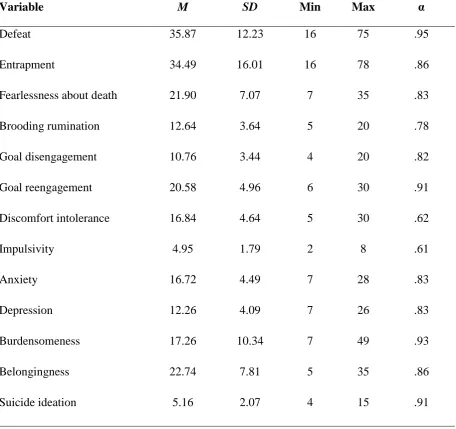
Descriptive statistics, including means (M) and standard deviations (SD) for all continuous
measures are presented in Table 1, along with Cronbach’s alphas. Results indicate that participants experienced relatively high levels of fearlessness about death, anxiety, and depression, as well as moderate levels of defeat, entrapment, and perceived burdensomeness.
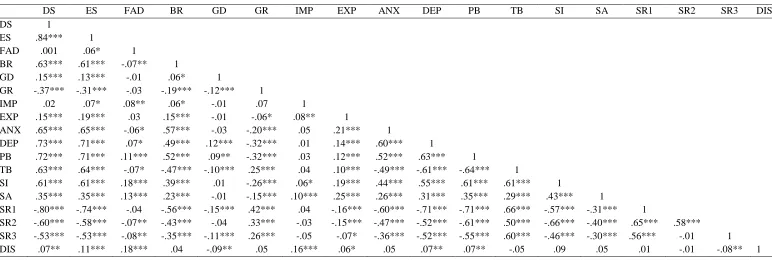
[image:16.595.73.530.317.746.2]Intercorrelations among all continuous variables are presented in Table 2.
Table 1: Descriptive statistics for all continuous variables.
Variable M SD Min Max α
Defeat 35.87 12.23 16 75 .95
Entrapment 34.49 16.01 16 78 .86
Fearlessness about death 21.90 7.07 7 35 .83
Brooding rumination 12.64 3.64 5 20 .78
Goal disengagement 10.76 3.44 4 20 .82
Goal reengagement 20.58 4.96 6 30 .91
Discomfort intolerance 16.84 4.64 5 30 .62
Impulsivity 4.95 1.79 2 8 .61
Anxiety 16.72 4.49 7 28 .83
Depression 12.26 4.09 7 26 .83
Burdensomeness 17.26 10.34 7 49 .93
Belongingness 22.74 7.81 5 35 .86
Suicide attempts .21 .49 0 4 N/A
Suicide resilience 1 37.31 10.91 9 54 .94
Suicide resilience 2 40.66 8.41 8 48 .93
Suicide resilience 3 37.36 9.92 8 48 .93
Discomfort intolerance 16.85 4.64 5 30 .90
Exposure .79 .78 0 2 .61
Table 2: Correlations among all continuous variables.
DS ES FAD BR GD GR IMP EXP ANX DEP PB TB SI SA SR1 SR2 SR3 DIS
DS 1
ES .84*** 1
FAD .001 .06* 1
BR .63*** .61*** -.07** 1
GD .15*** .13*** -.01 .06* 1
GR -.37*** -.31*** -.03 -.19*** -.12*** 1
IMP .02 .07* .08** .06* -.01 .07 1
EXP .15*** .19*** .03 .15*** -.01 -.06* .08** 1
ANX .65*** .65*** -.06* .57*** -.03 -.20*** .05 .21*** 1
DEP .73*** .71*** .07* .49*** .12*** -.32*** .01 .14*** .60*** 1
PB .72*** .71*** .11*** .52*** .09** -.32*** .03 .12*** .52*** .63*** 1
TB .63*** .64*** -.07* -.47*** -.10*** .25*** .04 .10*** -.49*** -.61*** -.64*** 1
SI .61*** .61*** .18*** .39*** .01 -.26*** .06* .19*** .44*** .55*** .61*** .61*** 1
SA .35*** .35*** .13*** .23*** -.01 -.15*** .10*** .25*** .26*** .31*** .35*** .29*** .43*** 1
SR1 -.80*** -.74*** -.04 -.56*** -.15*** .42*** .04 -.16*** -.60*** -.71*** -.71*** .66*** -.57*** -.31*** 1
SR2 -.60*** -.58*** -.07** -.43*** -.04 .33*** -.03 -.15*** -.47*** -.52*** -.61*** .50*** -.66*** -.40*** .65*** .58*** SR3 -.53*** -.53*** -.08** -.35*** -.11*** .26*** -.05 -.07* -.36*** -.52*** -.55*** .60*** -.46*** -.30*** .56*** -.01 1
DIS .07** .11*** .18*** .04 -.09** .05 .16*** .06* .05 .07** .07** -.05 .09 .05 .01 -.01 -.08** 1
Note: DS = defeat, ES = entrapment, FAD = fearlessness about death, BR = brooding rumination, GD = goal disengagement, GR = goal reengagement, IMP = impulsivity, EXP =
exposure, ANX = anxiety, DEP = depression, PB = perceived burdensomeness, TB = thwarted belongingness, SI = suicide ideation, SA = suicide attempts, SR1 = suicide resilience
Factor 1 (Internal Protective), SR2 = suicide resilience Factor 2 (Emotional Stability), SR3 = suicide resilience Factor 3 (External Protective), DIS = Discomfort intolerance.
3.2. Model testing—SEM
To test the proposed model, a two-step procedure was adopted. The first step was to analyse the overall model fit, which included all direct paths (Figure 2). The fit of the proposed model
was good, χ 2(6441) = 19092.18, p < .05, CFI = .912; TLI = .901, RMSEA = .034 (90% CI = [0.033, 0.034]), SRMR = .045, and explained 79% of variance in defeat, 83% of variance in
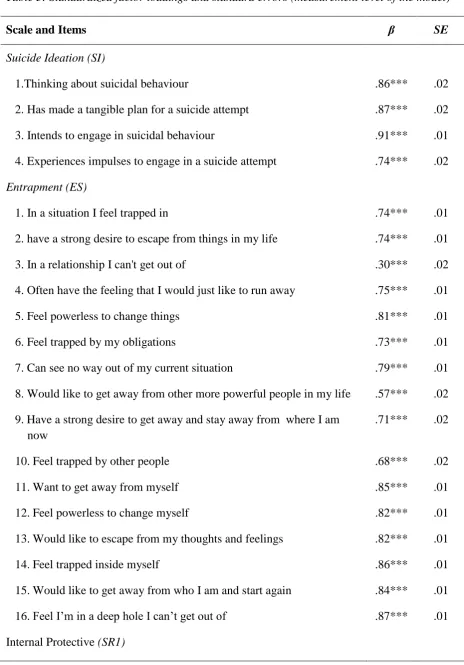
entrapment, 61% of variance in suicidal ideation, and 27% of variance in suicide attempts. Table 3 presents the standardized factor loadings for the measurement level of the model; whereas, Table 4 presents the regression path weights for the structural level of the
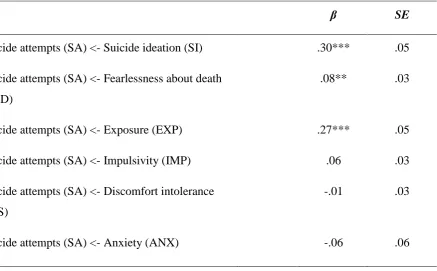
model.As can be seen in Table 4 (and in Figure 2), a strong positive relationship existed between defeat and entrapment, while weak-moderate positive relationships existed between
entrapment and suicidal ideation and suicidal ideation and suicide attempts. Anxiety and depression were controlled for at all four stages of the model. There were significant positive relationships between anxiety and defeat, depression and defeat, depression and entrapment,
depression and suicidal ideation, and depression and suicide attempts. None of the other relationships between depression and anxiety, and the stages of the model were statistically
significant. Brooding rumination was weakly related to entrapment. In terms of motivational covariates, suicide resilience Factor 2 (Emotional Stability) was negatively related to suicidal ideation as was goal disengagement, while perceived belongingness and thwarted
belongingness were positively associated with suicidal ideation. Goal reengagement and the other two suicide resilience factors (Internal Protective and External Protective) were not
Table 3: Standardized factor loadings and standard errors (measurement level of the model)
Scale and Items β SE
Suicide Ideation (SI)
1.Thinking about suicidal behaviour .86*** .02
2. Has made a tangible plan for a suicide attempt .87*** .02 3. Intends to engage in suicidal behaviour .91*** .01 4. Experiences impulses to engage in a suicide attempt .74*** .02
Entrapment (ES)
1. In a situation I feel trapped in .74*** .01
2. have a strong desire to escape from things in my life .74*** .01
3. In a relationship I can't get out of .30*** .02
4. Often have the feeling that I would just like to run away .75*** .01
5. Feel powerless to change things .81*** .01
6. Feel trapped by my obligations .73*** .01
7. Can see no way out of my current situation .79*** .01 8. Would like to get away from other more powerful people in my life .57*** .02 9.Have a strong desire to get away and stay away from where I am
now
.71*** .02
10.Feel trapped by other people .68*** .02
11.Want to get away from myself .85*** .01
12.Feel powerless to change myself .82*** .01
13.Would like to escape from my thoughts and feelings .82*** .01
14.Feel trapped inside myself .86*** .01
1.There are many things that I like about myself .78*** .02 2.Most of the time, I see myself as a happy person .83*** .01
5.I like myself .85*** .01
9.Most of the time I set goals that are reasonable for me to meet .58*** .02 11.I am satisfied with most things in my life .82*** .01 13.I am proud of many good things about myself .85*** .01 19.I feel that I am an emotionally strong person .69*** .02 20.Regardless of the problem situation I face, I can be happy with
myself
.87*** .01
25.I feel cheerful about myself .93*** .01
Emotional Stability (SR2)
4.Can deal with the emotional pain of rejection without thinking of killing myself
.69*** .01
8.I can resist thoughts of killing myself when I feel emotionally hurt .86*** .01 10.I can resist the urge to kill myself when I feel depressed or sad .79*** .02 12.Resist thoughts of killing myself when faced with a difficult or
life-threatening situation
.81*** .02
14.Can control urge to harm or hurt myself when criticized by someone .71*** .02 18. Can handle thoughts of killing myself when I feel lonely or isolated .78*** .01 23 Resist thoughts of killing myself when faced with humiliating or
embarrassing situations
.79*** .01
24.Resist thoughts of killing myself when I feel hopeless about the future
.87*** .01
External Protective (SR3)
3.People close to me would find the time to listen if I were to talk seriously about killing myself
.72*** .02
6.Could openly discuss thoughts of killing myself with people who are close to me, when it is necessary
.59*** .02
15.I can ask for emotional support from people close to me if I were to think about killing myself
.88*** .01
16.Even if people close to me are angry with me, I can approach them if I want to talk about my personal problems
.78*** .01
17.I can find someone (parent, friend, spouse, or relative) who can help me cope if I should think about killing myself
.92*** .01
21.If I am in trouble, I can ask for help from people close to me rather than attempt to kill myself
.84*** .01
22.I have close friends or family members that I could turn to for emotional support if I were to think of killing myself
.91*** .01
Defeat (DS)
1.Feel that I have not made it in life .68*** .02
2.Feel that I am a successful person .57*** .02
3.Feel defeated by life .79*** .01
4.Feel that I am basically a winner .51*** .02
5.Feel that I have lost my standing in the world .75*** .01 6. Feel that life has treated me like a punch bag .66*** .02
7. Feel powerless .78*** .01
8.Feel that my confidence has been knocked out of me .77*** .01 9. Feel able to deal with whatever life throws at me .57*** .02 10.Feel that I have sunk to the bottom of the ladder .82*** .01 11.Feel completely knocked out of action .83*** .01
12.Feel that I am one of life’s losers .82*** .01
13.Feel that I have given up .81*** .01
14. Feel down and out .83*** .01
15.Feel that I have lost important battles in life .77*** .01 16.Feel that there is no fight left in me .80*** .01
1.The fact that I am going to die does not affect me .58*** .03 2.The pain involved in dying frightens me .64*** .02
3.I am very much afraid to die .86*** .02
4.It does not make me nervous when people talk about death .44*** .03 5.The prospect of my own death arouses anxiety in me .78*** .02 6.I am not disturbed by death being the end of life as I know it .50*** .03
7.I am not at all afraid to die .76*** .02
Exposure (EXP)
1. Close friends attempted suicide or deliberately harmed themselves .64*** .05 2. Family attempted suicide or deliberately harmed themselves .50*** .05
Impulsivity (IMP)
1.I do things on the spur of the moment .88*** .06
2.I do things impulsively .93*** .06
Discomfort Intolerance (DIS)
1. I can tolerate a great deal of physical discomfort .94*** .03
2. I have a high pain threshold .87*** .03
Perceived Burdensomeness (PB)
1.The people in my life would be better off if I were gone .89*** .01 2.The people in my life would be happier without me .87*** .01 3.I think I have failed the people in my life .85*** .01 4.I feel like a burden on the people in my life .90*** .01 5.I think the people in my life wish they could be rid of me .80*** .02 6.I think I make things worse for the people in my life .90*** .01 7.I think I contribute to the well-being of the people in my life .51*** .03
Thwarted Belongingness (TB)
2.I am fortunate to have many caring and supportive friends .70*** .02
3.I feel disconnected from other people .76*** .02
4.I often feel like an outsider in social gatherings .71*** .02
5.I am close to other people .73*** .02
Goal disengagement (GD)
1.It’s easy for me to reduce my effort toward the goal .63*** .02 2.I stay committed to the goal for a long time; I can’t let it go .83*** .02 3.I find it difficult to stop trying to achieve the goal .72*** .02 4.It’s easy for me to stop thinking about the goal and let it go .73*** .02
Goal reengagement (GR)
1.I think about other new goals to pursue .76*** .02
2.I seek other meaningful goals .82*** .02
3.I convince myself that I have other meaningful goals to pursue .77*** .02 4.I tell myself that I have a number of other new goals to draw on .80*** .02
5.I start working on other new goal .84*** .02
6.I put effort toward other meaningful goals .81*** .02
Brooding rumination (BR)
1. Think “What am I doing to deserve this?” .52*** .03 2.Think “Why do I always react this way?” .68*** .02 3.Think about a recent situation, wishing it had gone better .65*** .02 4.Think “Why do I have problems other people don’t have?” .61*** .02 5.Think “Why can’t I handle things better?” .79*** .02
Anxiety (ANX)
1. I feel tense or 'wound up' .65*** .02
2. Get a frightened feeling as if something awful is about to happen .71*** .02
4. I can sit at ease and feel relaxed: .66*** .02 5. I get a sort of frightened feeling like 'butterflies' in the stomach .57*** .02 6. I feel restless as if I have to be on the move: .40*** .03
7. I get sudden feelings of panic: .78*** .02
Depression (DEP)
1. I still enjoy the things I used to enjoy .66*** .02 2. I can laugh and see the funny side of things .64*** .02
3. I feel cheerful .76*** .02
4. I feel as if I am slowed down .60*** .02
5. I have lost interest in my appearance .47*** .03
[image:25.595.91.529.492.763.2]6. I look forward with enjoyment to things .76*** .02 7. I can enjoy a good book or radio or TV programme .46*** .03 Note: ***p <.001.
Table 4: Standardized regression weights (with standard errors) for the specified structural
equation model ofthe integrated motivational-volitional model of suicidal behavior.
β SE
Suicide attempts (SA) <- Suicide ideation (SI) .30*** .05
Suicide attempts (SA) <- Fearlessness about death (FAD)
.08** .03
Suicide attempts (SA) <- Exposure (EXP) .27*** .05
Suicide attempts (SA) <- Impulsivity (IMP) .06 .03
Suicide attempts (SA) <- Discomfort intolerance (DIS)
-.01 .03
Suicide attempts (SA) <- Depression (DEP) .15* .07
Suicide Ideation <- Entrapment Scale (ES) .20*** .06
Suicide Ideation <- Perceived Burdensomeness (PB)
.19*** .05
Suicide Ideation <- Thwarted Belongingness (TB) .13** .05
Suicide Ideation <- Goal disengagement (GD) -.08** .03
Suicide Ideation <- Goal reengagement (GR) .04 .03
Suicide Ideation <- Internal Protective (SR1) .07 .06
Suicide Ideation <- Emotional Stability (SR2) -.44*** .04
Suicide Ideation <- External Protective (SR3) .01 .04
Suicide Ideation <- Anxiety (ANX) -.08 .05
Suicide Ideation <- Depression (DEP) .31** .10
Entrapment <- Defeat Scale (DS) .52*** .04
Entrapment <- Brooding rumination (BR) .11*** .03
Entrapment <- Anxiety (ANX) .06 .04
Entrapment <- Depression (DEP) .29*** .05
Defeat <- Anxiety (ANX) .26*** .05
Defeat <- Depression (DEP) .68*** .05
Figure 2: Structural model of the IMV
BR = Brooding rumination, SR1 = suicide resilience Factor 1 (Internal Protective), SR2 = suicide resilience Factor 2 (Emotional Stability), SR3 = suicide
resilience Factor 3 (External Protective), PB = perceived burdensomeness, GD = goal disengagement, GR = goal reengagement, TB = thwarted
belongingness, IMP = impulsivity, EXP = exposure, FAD = fearlessness about death, DIS = discomfort intolerance, ANX = anxiety, DEP = depression.
Statistical significance: **p <.01, ***p < .001.
TB IMP
Suicide
Attempts
SR3 GD GR EXP FAD DIS
Entrapment Suicide
Ideation
Defeat .52*** .20*** .30***
.01 .13**
.19*** .06
-.08
.68*** .31***
.15**
PB
ANX DEP
4. Discussion
Seeking to fill an important gap in the literature, the aim of the present study was to use latent variable modelling techniques to specify and test a structural model of the Integrated
Motivational–Volitional Model of suicidal behaviour. Results indicated that the model was a good fit of the data, and explained a considerable amount of variance in suicide attempts,
suicidal ideation, defeat, and entrapment.
The use of SEM in the current study allowed us to simultaneously test the connections between several constructs (both risk and protective factors) and the main Integrated
Motivational–Volitional model components (defeat, entrapment, suicide ideation, and suicide attempts). This is important, as despite widespread recognition that the aetiology of suicide is
complex, encompassing a wide array of factors, few studies have looked at the ways in which factors may together contribute to the development of suicidal behaviour. Indeed, most prior research has examined the extent to which individual factors predict the onset and persistence
of suicidal behaviour (i.e., suicide ideation, plans, and attempts) (Nock et al., 2008). Thus, by applying a latent variable modelling approach, we were able to yield estimates closer to the
true values for the relations between the involved variables.
In line with previous research, we found significant relationships between entrapment (O’Connor et al., 2013), perceived burdensomeness (e.g., Ribeiro, Bender, and Buchman et
al., 2015), thwarted belongingness (e.g., Van Orden et al., 2008), and goal disengagement (O’Connor et al., 2009) and suicidal ideation; and exposure to self-injurious behaviour in
others (e.g., Haw, Hawton, Niedzwidz, 2013) and fearlessness about death (e.g., Van Orden et al., 2008) and suicide attempts. Contrary to prior findings by O’Connor et al. (2009), difficulties with goal reengagement (one's perceived ability to reengage in other new goals if
in the present study. Furthermore, although impulsivity is often singled out as key for facilitating the transition from suicidal thoughts to attempts (see Klonsky and May, 2013 for
a review), it was not significantly related to suicide attempts in the present study, when controlling for the influence of all other variables, and neither was discomfort intolerance.
The non-significant relationship between impulsivity and suicide attempts may be due to our conceptualisations of impulsivity (Klonsky and May, 2010), the adoption of only two items to index this construct, or because the mean age of our sample is older than many of the
previously published studies. It may also be that impulsivity only relates to a sub-group of suicide attempters. The finding in relation to discomfort intolerance is not altogether
unexpected as we assessed lifetime frequency of suicide attempts and prior research indicates that tolerance for physical pain, which has been argued than an individual must acquire through repeated exposure to painful and provocative experiences, in order to enact self-harm
(Joiner, 2005), may be subject to temporal variation. For instance, results of one study
suggested that higher pain thresholds associated with self-injury engagement might normalise
following behavioural cessation (Ludäscher et al., 2009). Taken together, these findings highlight that many causes of suicidal behaviour remain unexplained. Thus, gaining a better understanding of the factors that predict which suicide ideators will go on to make a suicide
attempt is arguably the greatest priority for suicide research going forward.
The potential clinical implications of these findings are considerable and should
inform the development and rigorous evaluation of theoretically-driven clinical interventions. Applying the Integrated Motivational–Volitional model of suicidal behaviour to risk appraisal suggests that risk assessment frameworks should explicitly address the degree to which
patients are currently experiencing feelings of entrapment, as well as the degree to which they have acquired the psychological capability for lethal self-injury (i.e., fearlessness about
targeting the factors which involve or increase an individual’s fearlessness about death, in
particular, is important, as this may prevent the transition from ideation to acts. Determining
exposure to suicide should be routinely assessed in all individuals who present in distress. Risk assessment grounded in the Integrated Motivational–Volitional model, if
supported empirically, would allow for a more parsimonious and clinically useful
conceptualisation of the aetiology of suicide because this conceptualisation does not presume that to assess an individual’s degree of risk for suicide requires measurement (or
approximation of) a vast array of risk and protective factors. The findings also suggest that prevention efforts targeting resilience, particularly individual unique factors (i.e., emotional
stability; Factor 2), may be effective, as consistent with the results of previous research in military personnel (Youssef, Green, Beckham, and Elbogen, 2013), misusers of alcohol and illegal drugs, and prisoners (Roy, Carli, and Sarchiapone, 2011), results indicate that
resilience may confer a protective effect against the development of suicidal ideation. The findings further suggest, given the non-predictive nature of two of the suicide resilience
subscales, that combining the three components of resilience into a composite variable would be ill-advised.
Our results also suggest that individuals experiencing suicidal ideation would benefit
from interventions that highlight the importance relinquishing commitment to particular goals in the face of adversity (i.e., goal disengagement). This may be particularly true for those
individuals who struggle with re-engaging with new goals (O’Connor, O’Carroll, Ryan, & Smyth, 2012), although the interaction between goal disengagement and reengagement was not tested in the present study.Cognitive and behavioural strategies designed to reduce the
desire for suicide (Joiner, Van Orden, Witte, & Rudd, 2009; O’Connor, 2011) despite increased acquired capability (e.g., fearlessness about death) and exposure to the attempted
4.1 Limitations and Future Directions
The results should be interpreted in the light of potential limitations. First, the
analysis was based on retrospective self-reports, which may contain inaccuracies due to reporting biases or forgetting (Angold, Erkanli, Costello, and Rutter, 1996). There is,
however, some evidence to suggest that past events can be recalled with sufficient accuracy to support their validity (Hardt and Rutter, 2004). Second, many factors known to play a role in the occurrence of suicidal behaviour were not included in this model. Therefore, an
important direction for future research is the illumination of how different types of risk and protective factors (e.g., genetic, environmental, psychological) interact to produce suicidal
behaviour. Third, although the use of SEM offers several advantages to other multivariate analytic techniques, none of these methods, as such, are able to confirm causal relations using cross-sectional data. An important next step, therefore, is to test the usefulness of these
factors in longitudinal studies. Such studies would also help determine the extent to which volitional factors and acute life stress actually predict which individuals with thoughts of
suicide go on to attempt suicide. Fourth, although we found similar rates of suicidal ideation and attempts to previous studies (Garlow, Rosenberg, and Moore, et al., 2008; Tyssen, Vaglum, Grønvold, and Ekeberg, 2001), there may also have been a selection bias favouring
individuals with a suicidal history. As a condition of ethical approval, all potential
participants were informed about the nature of the study which may have influenced those
affected by suicide to participate more. Consequently, we cannot comment on the prevalence of suicidal ideation and behaviour in this study or the relative distribution of the other factors studied herein. Fifth, the fact that participants were students limits the generalisability of the
results given that students are not representative of those who die by suicide. Moreover, in light of our recruitment method, we cannot be certain that the sample is generalizable to the
populations. Sixth, in the present study, we focused on shared variance between factors rather than testing moderating effects, due to the demanding nature of the specified model. Thus, an
important direction for future research is to test each of the moderating pathways in turn to establish which factors are necessary and sufficient to lead to suicidal behaviour. Finally, we
examined past two-week suicide ideation (and other proximal factors) and lifetime history of suicide attempts. This timeframe inconsistency, which was required in order to form a
continuous latent suicide attempt variable, may have caused differences between ideators and
attempters to be conflated with differences between those currently in crisis and those who experienced crisis many years earlier. Thus, research is warranted to investigate this
possibility further. Related to this, although our measure of suicide attempt history is taken from a widely used measure, we acknowledge that it will not capture the complexity and heterogeneity of suicidal behaviour. As noted by Klonsky, May, and Saffer (2016), although
a desire to die is, by definition, a motivation underlying all suicide attempts, two
superordinate dimensions of attempt motivations exist: internal (self-oriented) motivations
(e.g., hopelessness, intense emotional pain, and a need to escape) and communication (other-oriented) motivations (e.g., a desire to influence, communicate with, or seek help from others).
Despite the aforementioned considerations, the results presented here complement and extend previous research by testing for the first time a structural model of the Integrated
Motivational–Volitional model, and, in doing so, providing a clearer understanding of the unique associations between each risk and protective factor and suicidal behaviour. The results indicate that the Integrated Motivational–Volitional model is a useful conceptual
Volitional model offers promise for aiding in the prediction of risk, contributing to risk
formulation, and ultimately preventing suicide deaths.
References
Angold, A., Erkanli, A., Costello, E.J., Rutter, M. (1996). Precision, reliability and
accuracy in the dating of symptom onsets in child and adolescent
psychopathology. Journal of Child Psychology and Psychiatry, 37, 657-664.
Barber, C.W., and Miller, M.J.(2014). Reducing a suicidal person’s access to lethal means of suicide: a research agenda. American Journal of Preventive Medicine, S264-S272. Baumeister, R.F. (1990). Suicide as escape from self. Psychological review, 97, 90-113.
Bentler, P.M. (1990). Comparative fit indexes in structural models. Psychological Bulletin, 107, 238-246.
Bollen, K. (1989). Structural equations with latent variables. Wiley, New York.1989. British Psychological Society. (2004). Guidelines for Minimum Standards of Ethical
Approval in Psychological Research.
Browne, M.W., and Cudeck, R. (1989). Single sample cross-validation indices for covariance structures. Multivariate Behavioral Research, 24, 445–455.
Garlow, S.J., Rosenberg, J., Moore, J.D., Haas, A.P., Koestner, B., et al (2008). Depression, desperation, and suicidal ideation in college students: results from the American Foundation for Suicide Prevention College Screening Project at Emory
Gilbert, P., and Allan, S. (1998). The role of defeat and entrapment (arrested flight) in depression: an exploration of an evolutionary view. Psychological Medicine, 28,
585-598.
Hardt, J., Rutter, M. (2004). Validity of adult retrospective reports of adverse childhood
experiences: review of the evidence. Journal of Child Psychology and Psychiatry, 45, 260-273.
Haw, C., Hawton, K., Niedzwiedz, C., and Platt, S. (2013). Suicide clusters: a review of risk
factors and mechanisms. Suicide and Life-threatening Bevavior, 43, 97-108. Hawton, K., and Van Heeringen, K. (2009). Suicide. The Lancet, 373, 1372-1381.
Hu, L.T, and Bentler, P.M. (1999). Cutoff criteria for fit indexes in covariance structure analysis: Conventional criteria versus new alternatives. Structural Equation Modeling: A Multidisciplinary Journal6, 1-55.
Joiner, T.E., Pfaff, J.J., and Acres, J.G. (2002). A brief screening tool for suicidal symptoms in adolescents and young adults in general health settings: reliability and validity data
from the Australian National General Practice Youth Suicide Prevention Project. Behaviour Research and Therapy, 40, 471-481.
Kline, R.B. (2005). Principles and Practice of Structural Equation Modeling (2nd Edition
ed.). The Guilford Press.
Klonsky, E. D., May, A. M., and Saffer, B. Y. (2016). Suicide, Suicide Attempts, and
Suicidal Ideation. Annual Review of Clinical Psychology, DOI: 10.1146/annurev-clinpsy-021815-093204
Klonsky, E.D., and May, A.M. (2014). Differentiating suicide attempters from suicide
Klonsky, E.D., May, A. (2010). Rethinking impulsivity in suicide. Suicide and Life-threatening Behavior, 40, 12-619.
Knapp, M., McDaid, M., and Parsonage, M. (eds). (2011). Mental Health Promotion and Mental Illness Prevention: The economic case. PSSRU, LSE and Political Science.
Ludäscher, P., Greffrath, W., Schmahl, C., Kleindienst, N., Kraus, A., et al (2009). A cross‐
sectional investigation of discontinuation of self‐injury and normalizing pain
perception in patients with borderline personality disorder. Acta Psychiatrica Scandinavica ,120, 62-70.
Lopez, A.D., Mathers, C.D., Ezzati, M, Jamison, D.T., and Murray, C.J. (2006). Global and regional burden of disease and risk factors, 2001: systematic analysis of population
health data. The Lancet, 367, 1747-1757.
MacCallum, R.C., Austin, J.T. (2000). Applications of structural equation modeling in psychological research. Annual Review of Psychology, 2000; 51:201-226.
Mathers, C., Fat, D.M., and Boerma, J.T. (2008). The global burden of disease: 2004 update. World Health Organization.
http://www.who.int/healthinfo/global_burden_disease/GBD_report_2004update_full. pdf?ua=1 (accessed May 2, 2014).
Mathers, C.D., and Loncar, D. (2006). Projections of global mortality and burden of disease
from 2002 to 2030. PLoS Medicine 3, e442.
May, A.M. and Klonsky, E.D. (in press). What distinguishes suicide attempters from suicide
ideators? A meta-analysis of potential factors. Clinical Psychology: Science and Practice.
McDaid, D., Bonin, E., Park, A., Hegerl, U, Arensman, E., Kopp, M., and Gusmao, R.
the economic impact of suicide and non-fatal self-harm events. Injury Prevention, 16, A257-A258.
Metalsky, G.I., Joiner, Jr. T.E. (1997). The hopelessness depression symptom questionnaire. Cognitive Therapy and Research, 21, 359-384.
Morrison, R., and O'Connor, R.C. (2008). A systematic review of the relationship between rumination and suicidality. Suicide and Life-Threatening Behavior, 38, 523-538. Muthén, L.K., and Muthén, B.O. (2008-2010). Mplus (Version 5.1). Los Angeles, CA:
Muthén and Muthén.
Nock, M.K., Borges, G., Bromet, E.J., Alonso, J., Angermeyer, M. et al. (2008)
Cross-national prevalence and risk factors for suicidal ideation, plans and attempts. The British Journal of Psychiatry, 192, 98-105.
Nock, M. K., Holmberg, E. B., Photos, V. I., and Michel, B. D. (2007). The Self-Injurious
Thoughts and Behaviors Interview: Development, reliability, and validity in an adolescent sample. Psychological Assessment, 19, 309-317.
Nolen-Hoeksema, S. (1991). Responses to depression and their effects on the duration of depressive episodes. Journal of Abnormal Psychology, 100, 569-582.
O’Connor, R.C. (2011). Towards an Integrated Motivational-Volitional of Suicidal
Behaviour. In R.C. O’Connor, S Platt, and J Gordon (Eds.) International Handbook of
Suicide Prevention: Research, Policy and Practice (p.181-198). Wiley Blackwell.
O'Connor, R.C., Nock, M.K. (2014). The psychology of suicidal behaviour. Lancet Psychiatry, 1, 73-85.
O'Connor, R.C., Fraser, L., Whyte, M.C., MacHale, S., Masterton, G. (2008). A comparison
of specific positive future expectancies and global hopelessness as predictors of suicidal ideation in a prospective study of repeat self-harmers. Journal of Affective
O'Connor, R.C., Fraser, L., Whyte, M.C., MacHale, and Masterton, G. (2009).
Self-regulation of unattainable goals in suicide attempters: the relationship between goal
disengagement, goal reengagement and suicidal ideation. Behaviour Research and Therapy, 47, 164-169
O'Connor, R.C., Rasmussen, S., and Hawton, K. (2012). Distinguishing adolescents who think about self-harm from those who engage in self-harm. British Journal of Psychiatry 200, 330-335.
O'Connor, R.C., O'Carroll, R.E., Ryan, C., and Smyth, R. (2012). Self-regulation of unattainable goals in suicide attempters: A two-year prospective study. Journal of
Affective Disorders, 142, 248-255.
O'Connor, R.C., Platt, S., Gordon, J. (2011). Introduction: International Handbook of Suicide Prevention: Research, Policy and Practice. In: O'Connor RC, Platt S, Gordon J. (eds.)
International Handbook of Suicide Prevention: Research, Policy and Practice. Wiley Blackwell, pp. 1-6.
O’Connor, R.C., Smyth, R., Ferguson, E., Ryan, C., and Williams, J.M.G. (2013).
Psychological processes and repeat suicidal behavior: A four-year prospective study. Journal of Consulting and Clinical Psychology, 81, 1137-1143.
O’Connor, R.C., Smyth, R., and Williams, J.M.G. (2015). Intrapersonal positive future
thinking predicts repeat suicide attempts in hospital-treated suicide
attempters. Journal of Consulting and Clinical Psychology , 83, 169. Office for National Statistics. (2013). Suicides in the United Kingdom, 2013.
Osman, A., Gutierrez, P.M., Muehlenkamp, J.J., Dix-Richardson, F., Barrios, F.X., and Kopper, B.A. (2004). Suicide Resilience Inventory-25: Development and preliminary
psychometric properties. Psychological Reports, 94, 1349–1360.
Plutchik, R., Van Praag, H.M., Conte, H.R., Picard, S. (1989). Correlates of suicide and
violence risk 1: the suicide risk measure. Comprehensive Psychiatry, 30,296-302. Polanco-Roman, L., Jurska, J., Quiñones, V., and Miranda, R. (2014). Brooding, Reflection,
and Distraction: Relation to Non-Suicidal Self-Injury versus Suicide
Attempts. Archives of Suicide Research, 19, 350–365.
Ribeiro, J.D., Bender, T.W., Buchman, J.M., Nock, M.K., Rudd, M.D., Bryan, C.J.(2015).
An investigation of the interactive effects of the capability for suicide and acute agitation on suicidality in a military sample. Depression and Anxiety, 32, 25-31. Ribeiro, J.D., Witte, T.K., Van Orden, K.A., Selby, E.A., Gordon, K.H., Bender, K., et al.
(2014). Fearlessness about death: The psychometric properties and construct validity of the revision to the Acquired Capability for Suicide Scale. Psychological
Assessment, 26, 115-126.
Roy, A., Carli, V., and Sarchiapone, M. (2011). Resilience mitigates the suicide risk associated with childhood trauma. Journal of Affective Disorders, 133, 591-594.
Schlesselman, J.J., and Schneiderman, M.A. (1982). Case control studies: design, conduct, analysis. Journal of Occupational and Environmental Medicine, 24, 879-890.
Schmidt, N.B., Richey, J.A., Cromer, K.R., Buckner, J.D.(2007). Discomfort intolerance: Evaluation of a potential risk factor for anxiety psychopathology. Behavior Therapy,
38, 247-255.
Séguin, M., Lynch, J., Labelle, R., and Gagnon, A. (2004). Personal and family risk factors for adolescent suicidal ideation and attempts. Archives of Suicide Research, 8,
227-238.
Smith, P.N., Cukrowicz, K.C., Poindexter, E.K., Hobson, V., Cohen, L.M. (2010). The
acquired capability for suicide: A comparison of suicide attempters, suicide ideators, and non‐suicidal controls. Depression and Anxiety, 27, 871-877.
Steiger, J.H. (1990). Structural model evaluation and modification: An interval estimation
approach. Multivariate Behavioral Research, 25, 173-180.
Suominen, K., Isometsä, E., Suokas, J., Haukka, J., Achte, K. et al. (2004). Completed suicide after a suicide attempt: a 37-year follow-up study. American Journal of
Psychiatry, 161, 562-563.
Taliaferro, L.A., and Muehlenkamp, J.J. (2014). Risk and protective factors that distinguish
adolescents who attempt suicide from those who only consider suicide in the past year. Suicide and Life-Threatening Behavior, 44, 6-22.
Taylor, P. J. , Wood, A. M , Gooding, P. A. and Tarrier, N. (2011). Prospective predictors of
suicidality: Defeat and entrapment lead to changes in suicidal ideation over time. Suicide and Life Threatening Behavior, 41, 297-306.
Tyssen, R., Vaglum, P., Grønvold, N.T., Ekeberg, Ø. (2001). Suicidal ideation among medical students and young physicians: a nationwide and prospective study of prevalence and predictors. Journal of Affective Disorders, 64, 69-79.
Vandenberg, R.J., and Lance, C.E. (2000). A review and synthesis of the measurement invariance literature: Suggestions, practices, and recommendations for organizational
research. Organizational Research Methods, 3, 4-70.
desire and the capability for suicide: tests of the interpersonal-psychological theory of suicidal behavior among adults. Journal of Consulting and Clinical Psychology, 76,
72-83.
Williams, J. M.G (2001). The Cry of Pain. Penguin.
Williams, J.M.G, Van der Does, A.J.W., Barnhofer, T., Crane, C., Segal, Z.S. (2008).
Cognitive reactivity, suicidal ideation and future fluency: preliminary investigation of a differential activation theory of hopelessness/suicidality. Cognitive Therapy and
Research, 32, 83-104.
World Health Organization. (2014). Preventing suicide: A global imperative. World Health
Organization. http://apps.who.int/iris/bitstream/10665/131056/1/9789241564779_eng. pdf
Wrosch, C., Scheier, M.F., Miller, G.E., Schulz, R., and Carver, C.S. (2003). Adaptive
self-regulation of unattainable goals: Goal disengagement, goal reengagement, and subjective well-being. Personality and Social Psychology Bulletin, 29, 1494-1508.
Youssef, N.A., Green, K.T., Beckham, J.C., and Elbogen, E.B. (2013). A 3-year longitudinal study examining the effect of resilience on suicidality in veterans. Annals of clinical psychiatry: official journal of the American Academy of Clinical Psychiatrists, 25, 59.