Relevant
Bipolaris
Species
Cau D. Pham,aAnne E. Purfield,aRobert Fader,bNeil Pascoe,cShawn R. Lockharta
Centers for Disease Control and Prevention, Atlanta, Georgia, USAa; Scott and White Hospital, Temple, Texas, USAb; Texas Department of State Health Services, Austin, Texas, USAc
Multilocus sequence typing (MLST) is the gold standard genotyping technique for many microorganisms. This classification approach satisfies the requirements for a high-resolution, standardized, and archivable taxonomic system. Here, we describe the development of a novel MLST system to assist with the investigation of an unusual cluster of surgical site infections caused by
Bipolarisspp. in postoperative cardiothoracic surgery (POCS) patients during January 2008 to December 2013 in the southeast-ern United States. We also used the same MLST system to perform a retrospective analysis on isolates from a 2012Bipolaris en-dophthalmitis outbreak caused by a contaminated product. This MLST system showed high intraspecies discriminatory power forBipolaris spicifera,B. hawaiiensis, andB. australiensis. Based on the relatedness of the isolates, the MLST data supported the hypothesis that infections in the POCS cluster were from different environmental sources while confirming that the endophthal-mitis outbreak resulted from a point source, which was a contaminated medication.
D
ematiaceous fungi belonging to the genusBipolarisare abun-dant in the environment. Many species in this genus are known to cause devastating disease in plants and staple crops around the world (1). In humans, they are common etiological agents of fungal sinusitis. Surgical site infections (SSIs) and deep tissue and invasive infections by members of this genus do occur, but they are extremely rare and typically associated with immu-nocompromised patients (2–7). The common disease-causing Bi-polarisspecies in humans areBipolaris spicifera, B. hawaiiensis, and, occasionally,B. australiensis(3). A recent proposal transfers these species to the genusCurvularia(1), but this new name has not yet been widely accepted.In the clinical setting,Bipolarisinfections are usually diagnosed using microscopy to distinguish the morphological characteristics of the fungus following culture. In recent years, the sequence com-prising the internal transcribed spacer (ITS) regions and the 5.8S nuclear rRNA genes of the ribosomal cistron has been exploited for species assignment of dematiaceous fungi (8,9). In most cases, ITS-based sequence identification is sufficient for determining species. However, ITS-based sequencing is limited by its depen-dence on the completeness and accuracy of available DNA se-quence databases. A DNA typing system employing two or more loci, such as multilocus sequence typing (MLST), can be used when it is necessary to distinguish between isolates within a spe-cies (10,11). MLST has been successfully implemented for species identification within a species complex as well as strain differen-tiation within a species for various fungal pathogens of humans such asAspergillus fumigatus,Candida albicans,Candida glabrata, Candida tropicalis,Cryptococcus gattii,Cryptococcus neoformans, andFusariumsp. (12–18). The recent investigations of infections caused by dematiaceous fungi (5,19) have highlighted the impor-tance of high-resolution, standardized, and archivable typing sys-tem(s) for this group of fungi.
In November 2013, the CDC was contacted by the Texas De-partment of State Health Services about a cluster of SSIs caused by Bipolarisspp. among patients who had recently undergone cardio-thoracic surgery. Upon further investigation, 21 cases in postop-erative cardiothoracic surgery (POCS) patients were identified
from 10 different hospitals in three states (Texas, Arkansas, and Florida) during 2008-2013. Three compelling epidemiological features emerged during the investigation: (i) all patients had a recent history of cardiothoracic surgery and had SSIs caused by Bipolarisspp., (ii) we could not find cases among patients who had undergone other invasive surgery procedures, and (iii) the cases were clustered together temporally (more than half of the cases occurred in 2013) and geographically (cases were found in the southeastern United States). Exposure to a common contami-nated product used during surgery was initially suspected, but common medical products or devices unique to the case patients were not identified in the epidemiologic investigation (A. Purf-ield, S. S. Vallabhaneni, K. Benedict, U. Luvsansharav, S. R. Lock-hart, C. D. Pham, A. Laufer, N. Pascoe, G. Heseltine, W. Chung, E. Hall, K. B. Brust, C. F. Wheeler, S. Chideya, and B. J. Park, unpub-lished data). The investigation concluded that patients likely ac-quired the infections from separate environmental sources. In such cases, investigators often rely on laboratory-based tech-niques to understand the relatedness of patient isolates for vali-dating the conclusions of the epidemiologic investigation. Al-though 10 patient isolates were available for analysis, a reliable method for strain typing did not exist at the time of the outbreak. Here, we describe the development and implementation of a novel MLST system using six different DNA loci to differentiateB. spicifera,B. hawaiiensis, andB. australiensisisolates from case
pa-Received8 June 2015Returned for modification13 July 2015 Accepted18 July 2015
Accepted manuscript posted online22 July 2015
CitationPham CD, Purfield AE, Fader R, Pascoe N, Lockhart SR. 2015. Development of a multilocus sequence typing system for medically relevant Bipolarisspecies. J Clin Microbiol 53:3239 –3246.doi:10.1128/JCM.01546-15. Editor:D. J. Diekema
Address correspondence to Shawn R. Lockhart, [email protected].
Copyright © 2015, American Society for Microbiology. All Rights Reserved.
doi:10.1128/JCM.01546-15
on May 16, 2020 by guest
http://jcm.asm.org/
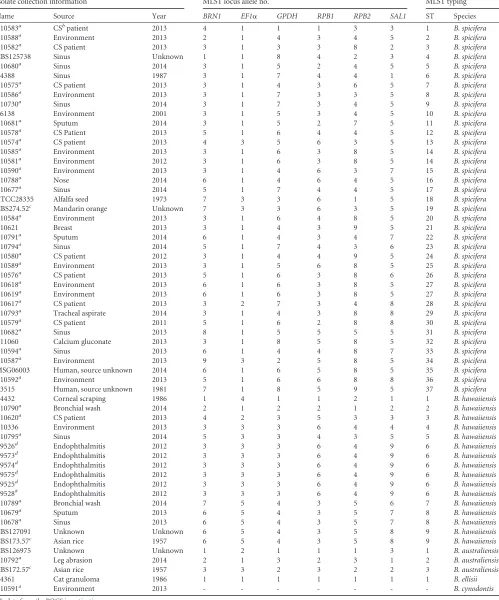
TABLE 1Isolate collection information and MLST-based allelic and sequence-type assignment
Isolate collection information MLST locus allele no. MLST typing
Name Source Year BRN1 EF1␣ GPDH RPB1 RPB2 SAL1 ST Species
B10583a CSbpatient 2013 4 1 1 1 3 3 1 B. spicifera
B10588a Environment 2013 2 1 4 3 4 5 2 B. spicifera
B10582a CS patient 2013 3 1 3 3 8 2 3 B. spicifera
CBS125738 Sinus Unknown 1 1 8 4 2 3 4 B. spicifera
B10680a Sinus 2014 3 1 5 2 4 5 5 B. spicifera
B4388 Sinus 1987 3 1 7 4 4 1 6 B. spicifera
B10575a CS patient 2013 3 1 4 3 6 5 7 B. spicifera
B10586a Environment 2013 3 1 7 3 3 5 8 B. spicifera
B10730a Sinus 2014 3 1 7 3 4 5 9 B. spicifera
B6138 Environment 2001 3 1 5 3 4 5 10 B. spicifera
B10681a Sputum 2014 3 1 5 2 7 5 11 B. spicifera
B10578a CS Patient 2013 5 1 6 4 4 5 12 B. spicifera
B10574a CS patient 2013 4 3 5 6 3 5 13 B. spicifera
B10585a Environment 2013 3 1 6 3 8 5 14 B. spicifera
B10581a Environment 2012 3 1 6 3 8 5 14 B. spicifera
B10590a Environment 2013 3 1 4 6 3 7 15 B. spicifera
B10788a Nose 2014 6 1 4 6 4 5 16 B. spicifera
B10677a Sinus 2014 5 1 7 4 4 5 17 B. spicifera
ATCC28335 Alfalfa seed 1973 7 3 3 6 1 5 18 B. spicifera
CBS274.52c Mandarin orange Unknown 7 3 3 6 3 5 19 B. spicifera
B10584a Environment 2013 3 1 6 4 8 5 20 B. spicifera
B10621 Breast 2013 3 1 4 3 9 5 21 B. spicifera
B10791a Sputum 2014 6 1 4 3 4 7 22 B. spicifera
B10794a Sinus 2014 5 1 7 4 3 6 23 B. spicifera
B10580a CS patient 2012 3 1 4 4 9 5 24 B. spicifera
B10589a Environment 2013 3 1 5 6 8 5 25 B. spicifera
B10576a CS patient 2013 5 1 6 3 8 6 26 B. spicifera
B10618a Environment 2013 6 1 6 3 8 5 27 B. spicifera
B10619a Environment 2013 6 1 6 3 8 5 27 B. spicifera
B10617a CS patient 2013 3 2 7 3 4 8 28 B. spicifera
B10793a Tracheal aspirate 2014 3 1 4 3 8 8 29 B. spicifera
B10579a CS patient 2011 5 1 6 2 8 8 30 B. spicifera
B10682a Sinus 2013 8 1 5 5 5 5 31 B. spicifera
B11060 Calcium gluconate 2013 3 1 8 5 8 5 32 B. spicifera
B10594a Sinus 2013 6 1 4 4 8 7 33 B. spicifera
B10587a Environment 2013 9 3 2 5 8 5 34 B. spicifera
MSG06003 Human, source unknown 2014 6 1 6 5 8 5 35 B. spicifera
B10592a Environment 2013 5 1 6 6 8 8 36 B. spicifera
B3515 Human, source unknown 1981 7 1 8 5 9 5 37 B. spicifera
B4432 Corneal scraping 1986 1 4 1 1 2 1 1 B. hawaiiensis
B10790a Bronchial wash 2014 2 1 2 2 1 2 2 B. hawaiiensis
B10620a CS patient 2013 4 2 3 5 3 3 3 B. hawaiiensis
B10336 Environment 2013 3 3 3 6 4 4 4 B. hawaiiensis
B10795a Sinus 2014 5 3 3 4 3 5 5 B. hawaiiensis
B9526d Endophthalmitis 2012 3 3 3 6 4 9 6 B. hawaiiensis
B9573d Endophthalmitis 2012 3 3 3 6 4 9 6 B. hawaiiensis
B9574d Endophthalmitis 2012 3 3 3 6 4 9 6 B. hawaiiensis
B9575d Endophthalmitis 2012 3 3 3 6 4 9 6 B. hawaiiensis
B9525d Endophthalmitis 2012 3 3 3 6 4 9 6 B. hawaiiensis
B9528# Endophthalmitis 2012 3 3 3 6 4 9 6 B. hawaiiensis
B10789a Bronchial wash 2014 7 5 4 3 5 6 7 B. hawaiiensis
B10679a Sputum 2013 6 5 4 3 5 7 8 B. hawaiiensis
B10678a Sinus 2013 6 5 4 3 5 7 8 B. hawaiiensis
CBS127091 Unknown Unknown 6 5 4 3 5 8 9 B. hawaiiensis
CBS173.57c Asian rice 1957 6 5 4 3 5 8 9 B. hawaiiensis
CBS126975 Unknown Unknown 1 2 1 1 1 3 1 B. australiensis
B10792a Leg abrasion 2014 2 1 3 2 3 1 2 B. australiensis
CBS172.57c Asian rice 1957 3 3 2 3 2 2 3 B. australiensis
B4361 Cat granuloma 1986 1 1 1 1 1 1 1 B. ellisii
B10591a Environment 2013 - - - - - - - B. cynodontis
a
Isolate from the POCS investigation. bCS, cardiothoracic surgery. c
Isolate from the endophthalmitis. dType strain from CBS.
on May 16, 2020 by guest
http://jcm.asm.org/
tients, controls, and the environment, collected during the investiga-tion of the cluster of fungal SSIs among POCS patients as well as from a preexisting culture collection at the CDC, includingBipolaris iso-lates from a previous outbreak of endophthalmitis (5).
MATERIALS AND METHODS
[image:3.585.38.540.77.301.2]Fungal collection, growth conditions, and DNA purification.Sixty Bi-polarisspecies isolates were included in this study (Table 1). Thirty-eight isolates were collected as part of the investigation into a cluster of fungal TABLE 2MLST loci information
Locus
GenBank accession no.a
Primer
typeb Primer sequence (5=to 3=)
No. of bp
analyzed Analyzed sequence fragment start and end points
TUB NA F AAATCGGTGCTGCTTTCTGGC 287⫺296 5=-CCAT(T/C)TC(C/T)...TGGGCCAA-3=
R GTAGTGACCCTTGGCCCAGTT
BRN1 AB011638.1 F TATTGGAAAGGCTATGGCCA 485 5=-TACGCCAA...AGAAG(G/A)TC-3=
R GGCAGACAGCGTGGTACAT
EF1a JN601010.1 F TCGGTGTCAAGCAGCTCAT 569 5=-GAGGAGCG...CAGGTCGG-3=
R AATCTTCTCGAGGAGCTCGG
GPDH JN601036.1 F GTCTCGCATGCGTAGGTGT 448–453 5=-TCCATTGA ...CGTCATGG-3=
R AGTGGTTGTGCAGGAGGC
RPB1 JQ965141.1 F TACAACCTGGCTACCCCG 556 5=-TTCTCC(T/A)G...C(G/A)TT(C/T)TTC-3=
R CAAGAGCCTGCTTCTTCTTGTT
RPB2 JQ585695.1 F GTGGAAAACAACCAAGACTTCAA 437 5=-CGGC(C/T)TGA...(A/G)GT(C/T)GTGC-3=
R ATATCACGAATCAAACTCATCTCGT
SAL1 AB587805.1 F CATGGCTAACTAGTTTGCAGATGT 275 5=-G(G/T)CGGC(A/G/C)T...TCA(C/T)CA (G/A)C-3=
R CCGCGACTCATCCGTGTAT aAccession number of gene sequence from which the primers were derived. b
F, forward; R, reverse.
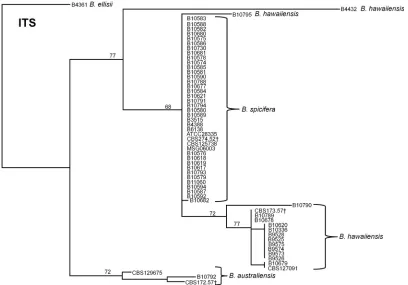
FIG 1Dendrogram showing the discrimination ofB. australiensis,B. hawaiiensis, andB. spiciferaisolates inferred from ITS sequence data. The dendrogram was constructed with the neighbor-joining method using CLUSTALW alignment and rooted atB. ellisii. The genetic distance and topology reliability were calculated using the Tamura-Nei model and 1,000 bootstrap replicates, respectively. †Type strain from CBS.
on May 16, 2020 by guest
http://jcm.asm.org/
[image:3.585.89.497.407.692.2]infections among POCS patients: 10 isolates obtained from surgical sites from POCS case patients, 15 isolates from respiratory tract or skin from patients who presented withBipolarisinfections that were not SSIs to hospitals whereBipolarisSSI cases were identified, and 12 isolates ob-tained through environmental sampling in hospitals withBipolarisSSI cases. Twenty-two isolates used as unrelated controls were obtained from the CDC collection (n⫽16) or the Centraalbureau voor Schimmelcul-tures (CBS) (http://www.cbs.knaw.nl/Collections/) collection (n⫽6, cluding the type strain for each species). The CDC collection isolates in-cluded sixB. hawaiiensis isolates which were collected as part of an investigation into a 2012Bipolarisendophthalmitis outbreak linked to contaminated medication (11).
Fungal isolates were propagated on Sabouraud dextrose agar. All iso-lates were maintained at 25°C. Total genomic DNA was purified using bead agitation and reagents in the DNeasy blood and tissue kit (Qiagen; Valencia, CA, USA) as previously described (20).
Molecular investigations of the ribosomal DNA and MLST loci.PCR and DNA sequencing of both strands with BigDye Terminator (Life Tech-nologies, Grand Island, NY, USA) were performed as described previously (21). The same primer sets were employed for both PCR and DNA se-quencing at each locus. Locus-specific primers were designed as described previously (22) (Table 2). The sequences for melanin reductase (BRN1) (23), glyceraldehyde-3-phosphate dehydrogenase (GPDH), transcription elongation factor-1 alpha (EF1␣), RNA polymerase II subunit 1-like (RPB1), RNA polymerase II subunit 1-like (RPB2), and scytalone dehy-dratase (SAL1) (24) were from the National Center for Biotechnology Information (Table 1). The-tubulin primers were designed using the
-tubulin gene sequences fromB. spicifera(n⫽3) andCurvulariasp. (n⫽1). PCR programs were as follows: 94°C for 5 min; 30 cycles of 94°C for 30 s, 55°C for 30 s, and 72°C for 1 min; and a final elongation step at 72°C for 2 min.
MLST marker stability and reproducibility were determined by per-forming sequential DNA analysis on two unrelatedB. hawaiiensisisolates and oneB. spiciferaisolate. These isolates were subcultured every 2 weeks over a period of 6 weeks, followed by DNA extraction and sequencing of the MLST loci to monitor for genetic instability.
Molecular computational phylogenetic analysis.Geneious (Biomat-ters Limited, San Francisco, CA, USA) was employed for visualizing and annotating DNA sequences and for phylogenetic analysis. The species assignment of fungal isolates was accomplished by using the ITS DNA sequence and the Basic Local Alignment Search Tool (BLAST) on the CBS fungal database website (http://www.cbs.knaw.nl/Collections/Biolo MICSSequences.aspx?file⫽all). For phylogenetic analysis, single-locus se-quences or concatenated multilocus sese-quences of allBipolarisisolates were pool aligned using MUSCLE (or otherwise specified) prior to the construction of a phylogram. All phylograms were generated using the neighbor-joining model and rooted onBipolaris ellisii. The genetic dis-tance and reproducibility of the phylograms were calculated according to Tamura-Nei parameters and 1,000 bootstrap replicates, respectively. Simpson’s index (SI) of diversity was calculated as previously described by Hunter and Gaston (25).
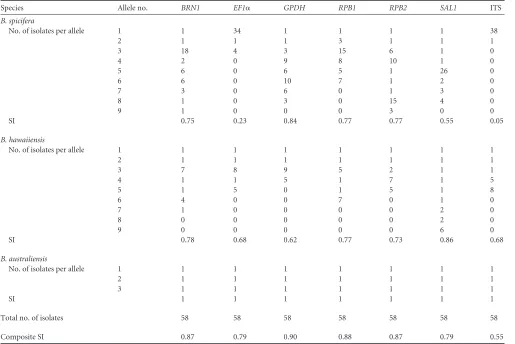
[image:4.585.40.555.77.421.2]Database hosting.The typing systems forB. spicifera,B. hawaiiensis, andB. australiensiswith allele number and sequence type assignment are TABLE 3Allelic information at each MLST locusa
Species Allele no. BRN1 EF1␣ GPDH RPB1 RPB2 SAL1 ITS
B. spicifera
No. of isolates per allele 1 1 34 1 1 1 1 38
2 1 1 1 3 1 1 1
3 18 4 3 15 6 1 0
4 2 0 9 8 10 1 0
5 6 0 6 5 1 26 0
6 6 0 10 7 1 2 0
7 3 0 6 0 1 3 0
8 1 0 3 0 15 4 0
9 1 0 0 0 3 0 0
SI 0.75 0.23 0.84 0.77 0.77 0.55 0.05
B. hawaiiensis
No. of isolates per allele 1 1 1 1 1 1 1 1
2 1 1 1 1 1 1 1
3 7 8 9 5 2 1 1
4 1 1 5 1 7 1 5
5 1 5 0 1 5 1 8
6 4 0 0 7 0 1 0
7 1 0 0 0 0 2 0
8 0 0 0 0 0 2 0
9 0 0 0 0 0 6 0
SI 0.78 0.68 0.62 0.77 0.73 0.86 0.68
B. australiensis
No. of isolates per allele 1 1 1 1 1 1 1 1
2 1 1 1 1 1 1 1
3 1 1 1 1 1 1 1
SI 1 1 1 1 1 1 1
Total no. of isolates 58 58 58 58 58 58 58
Composite SI 0.87 0.79 0.90 0.88 0.87 0.79 0.55
aAllele information will be stored athttp://mlst.mycologylab.org/DefaultSlideUD.aspx?Page⫽Home.
on May 16, 2020 by guest
http://jcm.asm.org/
publicly available and hosted at the Fungal MLST Database site (http: //mlst.mycologylab.org/DefaultInfo.aspx?Page⫽Home).
RESULTS
Morphological and ribosomal DNA sequence characteristics of mold isolates.As part of theBipolarisSSI cluster investigation, 38 Bipolarisisolates were received. By BLAST analysis of the ITS se-quence, theBipolarisisolates were further classified intoB. spic-ifera(n⫽30),B. hawaiiensis(n⫽6),B. australiensis(n⫽1), and B. cynodontis(n⫽1). ITS sequences of the 22 isolates ofBipolaris used as unrelated controls for the development of the MLST sys-tem confirmed them asB. australiensis(n⫽2),B. ellisii(n⫽1),B. hawaiiensis(n⫽10), andB. spicifera(n⫽9). TheB. spicifera isolates exhibited high ITS sequence identity; 38 of 39 shared iden-tical ITS sequences (Fig. 1). The ITS sequences ofB. australiensis andB. hawaiiensis, including their respective type strains, showed higher intraspecies diversity with Simpson’s index (SI) values of 1 and 0.68, respectively.
Validation of genetic stability and amplification reproduc-ibility for the genetic markers employed to differentiate Bipo-larisspecies.We investigated seven different loci (TUB,BRN1, GPDH,EF1␣,RPB1,RPB2, andSAL1) for the development of the MLST system. All primer sets generated robust bands forB. aus-traliensis,B. ellisii,B. hawaiiensis, andB. spicifera. Not all of the loci were amplified for theB. cynodontisisolate, so it was dropped from the analysis. DNA sequences for all seven loci were stable in iso-lates that were subcultured three times over a period of 6 weeks. Analysis of the DNA sequences revealed a highly variable intron in theTUB marker which is similar to introns observed in the
TUBgene of various other fungal species (26). TheTUBintron is approximately 46 to 55 bp long and contains 36 single nucleo-tide polymorphisms (SNPs). Upon further analysis of theTUB locus, it was determined that theTUBprimers amplified two tubulin paralogs. As a result,TUBwas not included in the final MLST system.
Characteristics of the DNA markers used for differentiating
B. australiensis, B. hawaiiensis, and B. spicifera. Partial frag-ments of theBRN1,EF1␣,GPDH,RPB1,RPB2, andSAL1genes were combined to form the new MLST system (Table 3). No in-sertions or deletions were observed in any of the MLST loci forB. australiensis,B. hawaiiensis, andB. spicifera. TheBRN1and the GPDHloci both contained introns. TheBRN1locus contained an intron of 53 bp that contained 15 unique SNPs. TheGPDHlocus used had one full intron and part of another. The full intron was 62 bp in length and contained 29 unique SNPs. The partial intron (truncated by the end of the sequence used for analysis) was 15 bp and contained two SNPs. The predicted coding regions ofBRN1 andGPDH loci also contained a high number of polymorphic sites. The majority of those sites were synonymous mutations; GPDHonly had synonymous mutations whileBRN1also pos-sessed five nonsynonymous mutations, an indication of possible selective pressure at this locus.
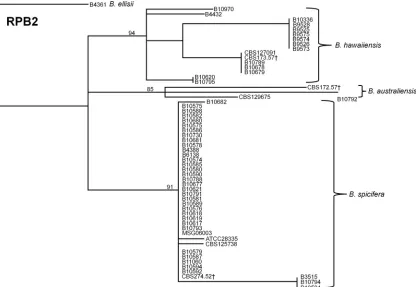
None of the three species (B. australiensis,B. spicifera, andB. hawaiiensis) shared an identical allele for any of the MLST mark-ers. The ITS locus was able to differentiate bothB. australiensisand B. spicifera, but suggested that B. hawaiiensis was polyphyletic
(Fig. 1); two isolates, B4432 and B10795, did not cluster with the
FIG 2Dendrogram showing discrimination ofB. australiensis,B. hawaiiensis, andB. spiciferaisolates by theRPB2sequence, which was constructed with the neighbor-joining method and rooted atB. ellisii. The genetic distance and topology reliability were calculated using the Tamura-Nei model and 1,000 bootstrap replicates, respectively. †Type strain from CBS.
on May 16, 2020 by guest
http://jcm.asm.org/
[image:5.585.85.501.67.354.2]type isolate. Of the six markers used,RPB2most reliably segre-gated all of the isolates to specific species clusters (Fig. 2).
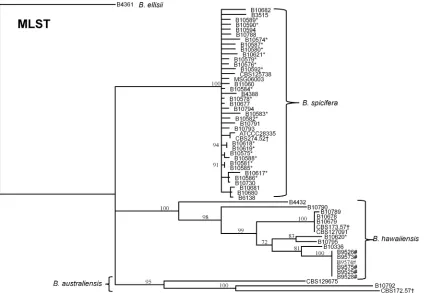
Discriminatory power of the MLST system.The MLST sys-tem displayed strong interspecies discriminatory power for the Bipolarisspecies investigated. It was able to segregate isolates of the same ITS-assigned species into distinct clades in concordance with the type strains, with bootstrapping values of⬎95% (Fig. 3). The MLST system also displayed good intraspecies differentiation
(Table 1). ForB. spicifera,GPDHdisplayed the highest
discrimi-natory power with an SI of 0.84 whileEF1␣displayed the lowest discriminatory power with an SI of 0.23. Each MLST marker alone was able to divide the 39B. spiciferaisolates into multiple allele types, ranging between three and nine alleles per locus. ForB. hawaiiensis, SAL1 displayed the highest discriminatory power with an SI of 0.86, whileGPDHdisplayed the lowest discrimina-tory power with an SI of 0.62. There were too few isolates ofB. australiensisto adequately calculate the discriminatory power.
The MLST system divided the 39B. spiciferaisolates into 37 unique sequence types (STs). Isolates collected during the Bipo-larisSSI investigation had unique STs except for two pairs of en-vironmental isolates that belonged to the same ST; isolates B10618 and B10619 came from two different swabs of a medical instru-ment associated with a case-patient’s care and shared an ST, and isolates B10581 and B10585 were cultured about 1 year apart from the environment of a hospital and shared an ST. The 16B. ha-waiiensisisolates were separated into 9 different STs. All isolates from a previousBipolarisendophthalmitis outbreak (5) had iden-tical STs, consistent with the epidemiological conclusion of a
point source from a contaminated medication. The threeB. aus-traliensisisolates were divided into three unique STs.
DISCUSSION
In November 2013, the CDC was asked to assist in the investiga-tion of a cluster of infecinvestiga-tions in POCS patients caused by the mold Bipolaris. One hypothesis was that this was a point source out-break caused by a contaminated product. In addition to an epide-miologic investigation looking for common exposures, such a hy-pothesis can be investigated by DNA typing of the isolates and looking for genetic homology or heterogeneity. However, no typ-ing system existed forBipolarisat the time of the outbreak. We designed an MLST system using six distinct loci, all of which were informative. This new typing system was used to provide support against a point source in the POCS cluster and to corroborate the hypothesis of a contaminated product from an older outbreak.
This novelBipolarisMLST system revealed a high degree of heterogeneity among theB. spiciferaisolates. The 39B. spicifera isolates separated into 37 unique STs. Two isolates collected a year apart at a hospital displayed identical MLST patterns. Together with the genetic stability experiments, this suggests that the MLST loci are stable. We also used this MLST system to analyze 16B. hawaiiensisisolates which revealed 9 different STs. Although our isolate numbers were low, this MLST system also seemed to work forB. australiensisandB. ellisii; the MLST primers were able to amplify all six genes in both species. The typing system did not work for the speciesB. cynodontis.
Using the new MLST system, we were able to confirm that the
FIG 3Dendrogram inferring the relatedness of 59Bipolarisisolates using MLST. The dendrogram was constructed with the neighbor-joining method and rooted atB. ellisii. The genetic distance and topology reliability were calculated using the Tamura-Nei model and 1,000 bootstrap replicates, respectively. *Isolate from the POCS investigation; †type strain from CBS; #isolate from the endophthalmitis outbreak.
on May 16, 2020 by guest
http://jcm.asm.org/
[image:6.585.83.512.66.359.2]B. spiciferaisolates from theBipolarisPOCS investigation were highly heterogeneous with no identical patterns among isolates from the case patients. This strongly supported the epidemiolog-ical data suggesting that the source was likely not a single-source contaminated product but rather that the likely sources of the infections were environmental. In contrast, theB. hawaiiensis iso-lates implicated in the 2012 endophthalmitis outbreak were clonal to the extent that was shown with this typing system, which con-firms the epidemiological data suggesting that the mode of trans-mission was likely due to contaminated triamcinolone steroid in-jected into the eyes of patients (5).
Although fungal outbreaks are relatively uncommon, there have been a number of high-profile fungal-related outbreaks in recent years (27). Fungal typing systems were not available for the majority of these clusters, and typing was performed in most cases after the epidemiologic investigation was completed. We show here that MLST high-resolution typing systems can be developed when only a minimum number of sequences are available for the species of interest. With the increasing number of fungal whole genomes becoming available for loci identification, fungal MLST systems can be developed quickly for immediate use in public health investigations. While whole genomes or a next-generation typing system like NGMLST (28) will likely be the typing tools of the future, the comparative speed and cost of MLST make it a welcome alternative for current fungal epidemiologic investiga-tions.
ACKNOWLEDGMENTS
We thank Joyce Peterson, Carol Bolden, and Ngoc Le of the Fungal Ref-erence Laboratory at the CDC, the staff at hospitals involved in the recent cluster and staff at Texas Department of State Health Services, and the Dallas, Tarrant, and Bell county health departments for their contribu-tions to this investigation. We also thank Snigdha Vallabhaneni, Jordan Peart, Alex Kallen, Gary Heseltine, Wendy Chung, Karen Brust, Charlotte Wheeler, Emily Hall, Kaitlin Benedict, Ulzii Luvsansharav, Sekai Chideya, Alison Halpin, and Benjamin Park for their role in the outbreak and cluster investigation.
The findings and conclusions of this article are those of the authors and do not necessarily represent the views of the Centers for Disease Control and Prevention.
REFERENCES
1.Manamgoda DS, Rossman AY, Castlebury LA, Crous PW, Madrid H, Chukeatirote E, Hyde KD.2014. The genusBipolaris. Stud Mycol79: 221–288.http://dx.doi.org/10.1016/j.simyco.2014.10.002.
2.Brandt ME, Warnock DW.2003. Epidemiology, clinical manifestations, and therapy of infections caused by dematiaceous fungi. J Chemother 15(Suppl 2):S36 –S47.
3.da Cunha KC, Sutton DA, Fothergill AW, Cano J, Gene J, Madrid H, De Hoog S, Crous PW, Guarro J.2012. Diversity ofBipolarisspecies in clinical samples in the United States and their antifungal susceptibility profiles. J Clin Microbiol50:4061– 4066.http://dx.doi.org/10.1128/JCM .01965-12.
4.Yew SM, Chan CL, Lee KW, Na SL, Tan R, Hoh CC, Yee WY, Ngeow YF, Ng KP.2014. A five-year survey of dematiaceous fungi in a tropical hospital reveals potential opportunistic species. PLoS One 9:e104352.
http://dx.doi.org/10.1371/journal.pone.0104352.
5.Mikosz CA, Smith RM, Kim M, Tyson C, Lee EH, Adams E, Straif-Bourgeois S, Sowadsky R, Arroyo S, Grant-Greene Y, Duran J, Vasquez Y, Robinson BF, Harris JR, Lockhart SR, Torok TJ, Mascola L, Park BJ. 2014. Fungal endophthalmitis associated with compounded products. Emerg Infect Dis20:248 –256.http://dx.doi.org/10.3201/eid2002.131257. 6.Pauzner R, Goldschmied-Reouven A, Hay I, Vered Z, Ziskind Z, Hassin N, Farfel Z.1997. Phaeohyphomycosis following cardiac surgery: case
report and review of serious infection due toBipolarisandExserohilum
species. Clin Infect Dis25:921–923.http://dx.doi.org/10.1086/597638. 7.Teran CG, Downes K, Medows M.2014. FatalBipolaris spiciferainfection
in an immunosuppressed child. BMJ Case Rep 2014.http://dx.doi.org/10 .1136/bcr-2013-009703.
8.Schoch CL, Seifert KA, Huhndorf S, Robert V, Spouge JL, Levesque CA, Chen W.2012. Nuclear ribosomal internal transcribed spacer (ITS) re-gion as a universal DNA barcode marker for fungi. Proc Natl Acad Sci U S A109:6241– 6246.http://dx.doi.org/10.1073/pnas.1117018109. 9.Irinyi L, Serena C, Garcia-Hermoso D, Arabatzis M, Desnos-Ollivier M,
Vu D, Cardinali G, Arthur I, Normand AC, Giraldo A, da Cunha KC, Sandoval-Denis M, Hendrickx M, Nishikaku AS, de Azevedo Melo AS, Merseguel KB, Khan A, Parente Rocha JA, Sampaio P, da Silva Briones MR, e Ferreira RC, de Medeiros Muniz M, Castanon-Olivares LR, Estrada-Barcenas D, Cassagne C, Mary C, Duan SY, Kong F, Sun AY, Zeng X, Zhao Z, Gantois N, Botterel F, Robbertse B, Schoch C, Gams W, Ellis D, Halliday C, Chen S, Sorrell TC, Piarroux R, Colombo AL, Pais C, de Hoog S, Zancope-Oliveira RM, Taylor ML, Toriello C, de Almeida Soares CM, et al.2015. International Society of Human and Animal Mycology (ISHAM)-ITS reference DNA barcoding database-the quality controlled standard tool for routine identification of human and animal pathogenic fungi. Med Mycol 53:313–337.http://dx.doi.org/10 .1093/mmy/myv008.
10. Schubert K, Groenewald JZ, Braun U, Dijksterhuis J, Starink M, Hill CF, Zalar P, de Hoog GS, Crous PW.2007. Biodiversity in the Cladospo-rium herbarumcomplex (Davidiellaceae, Capnodiales), with standardisa-tion of methods forCladosporiumtaxonomy and diagnostics. Stud Mycol 58:105–156.http://dx.doi.org/10.3114/sim.2007.58.05.
11. O’Donnell K, Sutton DA, Rinaldi MG, Sarver BA, Balajee SA, Schroers HJ, Summerbell RC, Robert VA, Crous PW, Zhang N, Aoki T, Jung K, Park J, Lee YH, Kang S, Park B, Geiser DM.2010. Internet-accessible DNA sequence database for identifying fusaria from human and animal infections. J Clin Microbiol 48:3708 –3718. http://dx.doi.org/10.1128 /JCM.00989-10.
12. Tavanti A, Gow NA, Senesi S, Maiden MC, Odds FC.2003. Optimiza-tion and validaOptimiza-tion of multilocus sequence typing forCandida albicans. J Clin Microbiol41:3765–3776.http://dx.doi.org/10.1128/JCM.41.8.3765 -3776.2003.
13. Dodgson AR, Pujol C, Denning DW, Soll DR, Fox AJ.2003. Multilocus sequence typing ofCandida glabratareveals geographically enriched clades. J Clin Microbiol41:5709 –5717.http://dx.doi.org/10.1128/JCM.41 .12.5709-5717.2003.
14. Tavanti A, Davidson AD, Johnson EM, Maiden MC, Shaw DJ, Gow NA, Odds FC.2005. Multilocus sequence typing for differentiation of strains ofCandida tropicalis. J Clin Microbiol43:5593–5600.http://dx.doi.org/10 .1128/JCM.43.11.5593-5600.2005.
15. Bain JM, Tavanti A, Davidson AD, Jacobsen MD, Shaw D, Gow NA, Odds FC.2007. Multilocus sequence typing of the pathogenic fungus
Aspergillus fumigatus. J Clin Microbiol45:1469 –1477.http://dx.doi.org /10.1128/JCM.00064-07.
16. Meyer W, Aanensen DM, Boekhout T, Cogliati M, Diaz MR, Esposto MC, Fisher M, Gilgado F, Hagen F, Kaocharoen S, Litvintseva AP, Mitchell TG, Simwami SP, Trilles L, Viviani MA, Kwon-Chung J.2009. Consensus multi-locus sequence typing scheme forCryptococcus neofor-mansandCryptococcus gattii. Med Mycol47:561–570.http://dx.doi.org /10.1080/13693780902953886.
17. Debourgogne A, Gueidan C, de Hoog S, Lozniewski A, Machouart M. 2012. Comparison of two DNA sequence-based typing schemes for the
Fusarium solanispecies complex and proposal of a new consensus method. J Microbiol Methods 91:65–72. http://dx.doi.org/10.1016/j .mimet.2012.07.012.
18. O’Donnell K, Humber RA, Geiser DM, Kang S, Park B, Robert VA, Crous PW, Johnston PR, Aoki T, Rooney AP, Rehner SA.2012. Phy-logenetic diversity of insecticolous fusaria inferred from multilocus DNA sequence data and their molecular identification via FUSARIUM-ID and
FusariumMLST. Mycologia104:427– 445.http://dx.doi.org/10.3852/11 -179.
19. Smith RM, Schaefer MK, Kainer MA, Wise M, Finks J, Duwve J, Fontaine E, Chu A, Carothers B, Reilly A, Fiedler J, Wiese AD, Feaster C, Gibson L, Griese S, Purfield A, Cleveland AA, Benedict K, Harris JR, Brandt ME, Blau D, Jernigan J, Weber JT, Park BJ.2013. Fungal infections associated with contaminated methylprednisolone
on May 16, 2020 by guest
http://jcm.asm.org/
injections. N Engl J Med369:1598 –1609.http://dx.doi.org/10.1056 /NEJMoa1213978.
20. Lockhart SR, Pham CD, Gade L, Iqbal N, Scheel CM, Cleveland AA, Whitney AM, Noble-Wang J, Chiller TM, Park BJ, Litvintseva AP, Brandt ME.2013. Preliminary laboratory report of fungal infections as-sociated with contaminated methylprednisolone injections. J Clin Micro-biol51:2654 –2661.http://dx.doi.org/10.1128/JCM.01000-13.
21. Gade L, Scheel CM, Pham CD, Lindsley MD, Iqbal N, Cleveland AA, Whitney AM, Lockhart SR, Brandt ME, Litvintseva AP.2013. Detection of fungal DNA in human body fluids and tissues during a multistate out-break of fungal meningitis and other infections. Eukaryot Cell12:677– 683.http://dx.doi.org/10.1128/EC.00046-13.
22. Pham CD, Bolden CB, Kuykendall RJ, Lockhart SR.2014. Development of a Luminex-based multiplex assay for detection of mutations conferring resistance to echinocandins inCandida glabrata. J Clin Microbiol52:790 – 795.http://dx.doi.org/10.1128/JCM.03378-13.
23. Shimizu K, Tanaka C, Peng YL, Tsuda M.1998. Phylogeny ofBipolaris
inferred from nucleotide sequences ofBrn1, a reductase gene involved in melanin biosynthesis. J Gen Appl Microbiol44:251–258.http://dx.doi.org /10.2323/jgam.44.251.
24. Saitoh Y, Izumitsu K, Morita A, Shimizu K, Tanaka C.2012. Cloning of SalI, a scytalone dehydratase gene involved in melanin biosynthesis in
Cochliobolus heterostrophus. Mycoscience53:330 –334.http://dx.doi.org /10.1007/S10267-011-0162-Z.
25. Hunter PR, Gaston MA.1988. Numerical index of the discriminatory ability of typing systems: an application of Simpson’s index of diversity. J Clin Microbiol26:2465–2466.
26. Begerow D, John B, Oberwinkler F. 2004. Evolutionary relationships among beta-tubulin gene sequences of basidiomycetous fungi. Mycol Res 108:1257–1263.http://dx.doi.org/10.1017/S0953756204001066. 27. Litvintseva AP, Brandt ME, Mody RK, Lockhart SR.2015. Investigating
fungal outbreaks in the 21st century. PLoS Pathog11:e1004808.http://dx .doi.org/10.1371/journal.ppat.1004808.
28. Chen Y, Frazzitta AE, Litvintseva AP, Fang C, Mitchell TG, Springer DJ, Ding Y, Yuan G, Perfect JR.2015. Next generation multilocus sequence typing (NGMLST) and the analytical software program MLSTEZ enable efficient, cost-effective, high-throughput, multilocus sequencing typing. Fungal Genet Biol75:64 –71.http://dx.doi.org/10 .1016/j.fgb.2015.01.005.