2018 International Conference on Computer, Communications and Mechatronics Engineering (CCME 2018) ISBN: 978-1-60595-611-4
Optimization Study of Ground Source Heat Pump Heating Systems in
Extremely Cold Areas
Yi LIU
1,2,*, Qing-lin CHENG
1, Dong LI
1and Xin CHEN
21
School of Petroleum Engineering, Northeast Petroleum University, Daqing, Heilongjiang, China
2
School of Energy and Civil Engineering, Harbin University of Commerce, Harbin, Heilongjiang, China
*Corresponding author
Keywords: Extremely cold area, Ground-source heat pump, System optimization, Inverter control.
Abstract. Optimization study of ground-source heat pump heating systems in extremely cold areas.
Through the ground-source heat pump system built in extremely cold areas, the optimization of the heating conditions of system is researched. The results show that the average COP value of the system is increased by 9.8% when the system is intermittent in operations and the average COP of system is increased by 11.1% when two compressors operate and the irculating pumps adopt the inverter control. The average COP of the heat pump is increased by 4.3% when 3 compressors operate and the circulating pumps adopt the inverter control. This shows that the system optimization is very necessary with the ground-source heat pump system in severe cold regions, and can further improve the efficiency of system.
Introduction
Heating energy consumption is larger at Heilongjiang area in winter, dust and oxides of petrochemical energy generation cause serious environmental pollution [1]. Ground-source heat pump system is a new kind of equipment to obtain the cold (or heat) energy in soil by the using of the medium. The soil temperature blow cold region frozen layer is less affected by the environment, ground-source heat pump system have stable operation, energy efficiency and environment protection [2, 3]. Ground-source heat pump system have widely used in some developed countries [4, 5]. Due to the system initial investment higher, there is few in domestic engineering application, especially in the cold region.
Compared with traditional way of heating, ground-source heat pump system energy saving effect is very significant. Currently, these systems in China have not great energy saving effect, the main reasons are: (1) System design is not reasonable, the working condition of circulating pump and compressor without regulating function; (2) System operation optimization is not enough, heating water temperature is not adjusted according to heat load change.
Focusing on these problems, The experimental system has been made optimization as: (1) Parallel operation unit adopts four compressors, Conditions can be adjusted according to the change of heat load demand; (2) Heating the water temperature is adjusted according to the load change, and Adopt intermittent operation mode; (3) Cold and hot circulation pump adopt frequency conversion control, and adjust the discharge condition changes according to system working condition.
Through the study of this article, Ground-source heat pump application in cold region would be able to provide reference.
Experimental System
the heat pump system, the underground heat exchange system and indoor cooling system. Ground heat exchangers are used vertical u-shaped arrangement, and hole depth is 100 meters, pitch is 5 meters, a total of exchangers are 70. Pipes make use of PE100, inner diameter of 26 mm and wall thickness 3 mm. Backfill materials are mixture of coarse sand and clay. Parallel operation unit adopts four compressors, each compressor input power is 20kW, and adjustable. Evaporator circulating pump rated power is 7.5 kW, condenser circulating pump rated power is 11 kW, both pump adopt frequency conversion control mode. Schematic diagram of system is shown in Fig. 1. Room of ground-source heat pump is shown in Fig. 2.
[image:2.595.198.402.365.501.2]Figure 1. Schematic diagram of system.
Figure 2. Room of ground-source heat pump.
Schematic diagram of control system is shown in Fig. 3. The compressor and circulating pump adopts centralized control state; choose compressor work stations according to the change of heat load demand. In the work state of compressor electromagnetic valve opens, and shut in stop state. Solenoid valve feedback signal transmit to the controller 1, 2, controller 1, 2, transmit output signal to frequency converter 1, 2. As a result of the change of frequency converter 1, 2 correspond with pump flow changes, and then reduce the power consumption of the circulating pump operation.
Figure 3. Schematic diagram of control system.
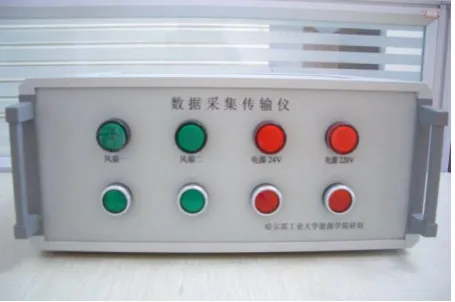
[image:2.595.146.451.612.743.2]temperature measuring points, Temperature sensor used for plus or minus 0.2% of PT100 platinum resistance for the condenser and evaporator’s inlet and outlet temperatures. There are two power measuring points to test the power of system and unit, precision of the current power transmitter reach ±0.1%. There are two flow measuring points to measure the circulating medium flow condenser and evaporator, and Accuracy of the electromagnetic flowmeter reach ±0.2%. The MCGS configuration software in the computer connected to data collection and transmission apparatus, Temperature sensors, transmitter power and electromagnetic flowmeter signal collected by the data acquisition transmission instrument centralized processing, then shown in the surface of the MCGS and save data.
Figure 4. Appearance of data acquisition and transmission apparatus.
Data Processing
Experimental data use the following formula for processing.
Ground Heat Exchanger
In thermal power of ground heat exchanger are as in Eq. 1.
1 1 1 1 (1out 1in)
Q V c t t . (1) Where, Q1 is ground heat exchanger heat power, kW; ρ1 is density of circulating fluid, kg/m3; V1 is volume of circulating fluid flow, m3/s; c1 is specific heat at constant pressure of circulating fluid, kJ/(kg · K); T1in is medium inlet temperature, K; T1out is medium outlet temperature, K; Heat transfer power of unit hole deep ground heat exchanger is as in Eq. 2.
1 1000
L Q q
nH
. (2)
Where, qL is heat transfer power of unit hole deep, W/m; H is hole depth, m; N is hole count.
Heat Pump System
Heat pump system heating power is as in Eq. 3.
2 2 2 2 (2out 2in)
Q V c t t . (3)
Heat pump system heating efficiency is as in Eq. 4.
2 /
copQ E. (4) Ignore energy loss of lines and system, as in Eq. 5.
2= 1
Where, ρ2 is water density, kg/m3; V2 is volume of water flow, m3/s; c2 is specific heat at constant pressure of the water, kJ/(kg·K);t2in is condenser inlet temperature, K; t2in is condenser outlet temperature , K; E is system output power, kW.
Analysis of Result
Under the condition of 4 sets of compressor working, experiments are tested in continuous and intermittent operation, and then get The COP value of test system.
Experiment system run continuously for 24 hours, data are shown in Fig.5. The system COP value dropped from 2.39 to 2.39, and falling fast before 8 hours then became stable. System average COP value is 2.15.
0 4 8 12 16 20 24 2.0
2.1 2.2 2.3 2.4 2.5
COP
[image:4.595.212.382.226.360.2]time(h)
Figure 5. System COP while operating continuously.
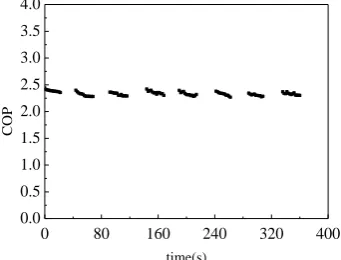
Intermittent operating experiments collected data in 6 hours, and shown in Fig.6. System COP value have small variations in intermittent running, and The start-stop ratio close to 1:1. System average COP value is 2.36, and 9.8% higher than the continuous run time. Thus it can be seen that system when the intermittent operation of energy-saving effect is good. This way is more advantageous to the soil thermal recovery, so ground-source heat pump system should adopt the intermittent operation mode.
0 80 160 240 320 400 0.0
0.5 1.0 1.5 2.0 2.5 3.0 3.5 4.0
COP
time(s)
Figure 6. System COP while operating intermittently.
The variation of heat load in cold region heating is bigger, building needed heat load is small at the beginning and end of heating, heat pump system do not need to run at full capacity. For optimized operation test, circulating pump systems used in the variable frequency control.
[image:4.595.212.383.478.608.2]0 4 8 12 16 20 24 3.0
3.2 3.4 3.6 3.8
4 compressors 3 compressors 2 compressors
COP
[image:5.595.211.383.69.206.2]time(h)
Figure 7. Unit COP with different number of compressors.
0 4 8 12 16 20 24 1.8
2.0 2.2 2.4 2.6 2.8 3.0
4 compressors 3 compressors 2 compressors
COP
[image:5.595.213.384.236.366.2]time(h)
Figure 8. System COP with different number of compressors.
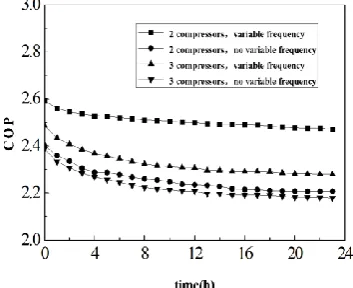
Figure 9. System COP while circulating pump with and without inverter.
For experimental verification energy saving effect of system circulating pump variable frequency, system COP value has carried on the comparative study add the circulation pump variable frequency and variable frequency. It shown in Fig.9 that, after the circulation pump with frequency conversion, system average COP value increased by 11.1% in two compressors working, and increased by 4.3% in three compressors working. Energy saving effect is obvious.
Through the experiment research, it shown that ground-source heat pump system in cold area should adopt the mode of the circulation pump frequency conversion control with Intermittent operation and variant working conditions, in order to obtain a good energy saving effect.
Conclusion
Through the experimental research, conclusion as following,
[image:5.595.208.385.399.543.2](2) The average system heating efficiency reached the highest in two compressors working, 12.3% and 16.3% higher than it was four compressors respectively. System should be adopted variant working conditions mode;
(3) After the circulation pump with frequency conversion, system average COP value increased by 11.1% in two compressors working, and increased by 4.3% in three compressors working.
Acknowledgement
This research was financially supported by Heilongjiang Postdoctoral Fund to pursue scientific research(No.LBH-Z15028)and Harbin University of Commerce Scientific Research Projects (No.2017XN066).
References
[1] Liu Zhenghua, Chen Rudong, Li Peng, Liu Shilong, Performance Study of Underground Heat Exchanger in Soil Source Heat Pump System, J. Sci. Fluid Machinery. 35(2007)63-67.
[2] Yang Weibo, Shi Mingheng, Chen Zhenqian, Experimental study on operation characteristics of ground coupled heat pump operated in cooling and heating mode, J. Sci. Journal of Southeast University (Natural Science Edition). 39(2009)276-281.
[3] V.R. Tarnawski, W.H. Leong, T. Momose, Y. Hamada, Analysis of ground source heat pumps with horizontal ground heat exchangers for northern Japan, J. Renewable Energy. Sci. 34(2009)127-134.
[4] Katsunori, Nagano, Takao Katsura, Sayaka Takeda, Development of a design and performance prediction tool for the ground source heat pump system, J.Sci. Applied Thermal Engineering. 26(2006) 1578-1592.
[5] Viorel Badescu, Economic aspects of using ground thermal energy for passive house heating, J.