M E T H O D O L O G Y
Open Access
Process evaluation for OptiBIRTH, a
randomised controlled trial of a complex
intervention designed to increase rates of
vaginal birth after caesarean section
Patricia Healy
1*, Valerie Smith
2, Gerard Savage
3, Mike Clarke
3, Declan Devane
1, Mechthild M. Gross
4,
Sandra Morano
5, Deirdre Daly
2, Susanne Grylka-Baeschlin
4, Jane Nicoletti
5, Marlene Sinclair
6, Rebekah Maguire
2,
Margaret Carroll
2and Cecily Begley
2,7Abstract
Background:Complex interventions encompassing several interconnecting and interacting components can be challenging to evaluate. Examining the underlying trial processes while an intervention is being tested can assist in explaining why an intervention was effective (or not). This paper describes a process evaluation of a pan-European cluster randomised controlled trial, OptiBIRTH (undertaken in Ireland, Italy and Germany), that successfully used both quantitative and qualitative methods to enhance understanding of the underlying trial mechanisms and their effect on the trial outcome.
Methods:We carried out a mixed methods process evaluation. Quantitative and qualitative data were collected from observation of the implementation of the intervention in practice to determine whether it was delivered according to the original protocol. Data were examined to assess the delivery of the various components of the intervention and the receipt of the intervention by key stakeholders (pregnant women, midwives, obstetricians). Using ethnography, an exploration of perceived experiences from a range of recipients was conducted to understand the perspective of both those delivering and those receiving the intervention.
Results: Engagement by stakeholders with the different components of the intervention varied from minimal intensity of women’s engagement with antenatal classes, to moderate intensity of engagement with online resources, to high intensity of clinicians’ exposure to the education sessions provided. The ethnography determined that, although the overall culture in the intervention site did not change, smaller, more individual cultural changes were observed. The fidelity of the delivery of the intervention scored average quality marks of 80% and above on repeat assessments.
Conclusion: Nesting a process evaluation within the trial enabled the observation of the mode of action of the intervention in its practice context and ensured that the intervention was delivered with a good level of consistency. Implementation problems were identified as they arose and were addressed accordingly. When dealing with a complex intervention, collecting and analysing both quantitative and qualitative data, as we did, can greatly enhance the process evaluation.
Trial registration: Current Controlled Trials Register, ISRCTN10612254. Registered on 3 April 2013.
Keywords: Process evaluation, Fidelity, Complex intervention, Randomised controlled trial, VBAC, Midwifery, Ethnography
* Correspondence:[email protected]
1School of Nursing and Midwifery, National University of Ireland, Galway,
Ireland
Full list of author information is available at the end of the article
Background
The interventions being tested in health services research are becoming increasingly more complex, encompassing several interconnecting and interacting components [1]. Although the primary outcome is the main focus of com-plex research studies, consideration of the study processes, including design and execution, is equally important. Evaluation of the underlying processes of a complex study assists in explaining why an intervention has failed unexpectedly or has unforeseen consequences or why a particular intervention is successful in achieving its outcome, and how that success can be optimised [1]. Information about the process of a study is also very helpful for study replication.
Process evaluations are particularly important in cluster randomised trials, where the studies take place across sev-eral sites with a variety of contexts in which the interven-tion is both delivered and received. In these situainterven-tions a ‘standardised’intervention may, in reality, be implemented in different ways or be the subject of different reactions [2]. A resulting ‘lack of effect’ may thus merely indicate problems with implementation rather than true ineffect-iveness [3]. Variation in intervention delivery has implica-tions for both internal and external validity and reduces the potential for generalisability of findings.
A process evaluation used within a trial is a useful way of assessing how well the trial protocol was adhered to [3]. This can help explain how well all aspects of the protocol were followed with regard to recruitment, treat-ment fidelity, data collection and reporting. This struc-tured process can help identify issues and factors that may have caused a deviation in expected outcomes, and it may illuminate local contextual factors which could have impacted the trial implementation, which might not otherwise have become apparent to the trial team.
The OptiBIRTH trial (ISRCTN10612254) research team developed a process evaluation plan to explore and document the implementation of the various aspects of the complex OptiBIRTH intervention and how it was re-ceived by key stakeholders, as well as to identify factors that could explain variation in outcomes, if any, across intervention sites. In this paper, we report on the Opti-BIRTH process evaluation procedures, fidelity to the intervention at the 15 trial sites and preliminary findings from the embedded ethnographic study. The OptiBIRTH trial results will be reported separately. The Template for Intervention Description and Replication (TIDieR) checklist was used to guide the structure and content of this paper [4].
Context
The OptiBIRTH trial was a cluster randomised con-trolled trial, with randomisation at the maternity unit level, in three European countries with relatively low
vaginal birth after caesarean section (VBAC) rates. The trial took place across 15 small (<2000 annual births), medium (2000–5000 annual births) and large maternity units (5000–8500 annual births) in both urban and rural locations in Ireland, Italy and Germany, with baseline VBAC rates in 2012 of 34% in Germany, 32% in Ireland and 8% in Italy. In all three countries, publicly funded maternity care is provided free of charge, but there is also a private healthcare model existing in parallel. There are some variations between countries in the way services are delivered, but the units in the OptiBIRTH trial provided a model of care that was obstetrics-led, and all births occurred in hospital. In general, women book at the maternity hospitals for antenatal care at around 19–20 weeks of gestation in Ireland, 24–26 weeks in Italy and 28–32 weeks in Germany (although these women attend primary care centres for their initial maternity care). Multiparous women in all three coun-tries would usually be in the range of 33–36 years of age, and 10–20% would have three or more children. National guidelines on VBAC existed prior to the Opti-BIRTH trial in Ireland, and guidelines on VBAC were in-cluded in a guideline on caesarean section (CS) in Italy [5, 6]. A national VBAC guideline was withdrawn in Germany because it was considered to be outdated. The objective of the trial, as set out in the published proto-col, was to compare the effectiveness of usual care ver-sus an intervention that had been developed with the intention of maximising VBAC [7]. A total of 2002 women were recruited to participate in the trial across the 15 sites in the 3 countries (1195 in the intervention arm and 807 in the control arm). Because the interven-tion was complex with multiple interconnected compo-nents that were delivered to a variety of stakeholders (pregnant women, midwives, obstetricians) at different times, we planned a parallel process evaluation to assess adherence to agreed intervention delivery content and methods and to enhance understanding of the under-lying trial mechanisms. The objectives of the process evaluation, designed on the basis of existing theoretical and methodological literature, were as follows:
To provide information on the intervention and how it was planned to be delivered [8,9]
To provide information on the context in which the intervention was implemented [8,9]
To measure the interaction between the intervention and the context [8] (i.e., the response of clusters and individuals to the intervention [10])
To ascertain the fidelity of the intervention and how closely it matched the intended intervention [10]
Information on the intervention
The OptiBIRTH intervention was developed on the basis of evidence from three systematic reviews on interventions designed to increase VBAC rates [12–14] and from findings from focus group interviews with 115 clinicians [15, 16] and 71 women [17, 18] in 6 countries, 3 with high (Finland, the Netherlands, Sweden) and 3 with low (Ireland, Italy and Germany) VBAC rates. Through an iterative process with key stakeholders and using motivational theory to guide its formation, the final complex intervention consisted of mul-tiple interconnected components (Table 1).
Once the clinical leaders of a study site had agreed to the site’s participation in the trial, all clinicians were in-cluded as agents of intervention conduct. Clinical opin-ion leaders (OLs) in midwifery (MOL) and obstetrics (OOL) from the site staff were appointed by interview. The MOLs’role was to promote and support VBAC, to act as research assistants for the study and to deliver the intervention. The OOLs’ role was to promote and sup-port VBAC, to deliver the intervention and to supsup-port the MOLs. A 1-day training programme for OLs was de-veloped by the core research team, consisting of the co-ordinator, project manager, country principal investiga-tors (PIs) and country post-doctoral researchers [19]. The training was delivered by the national OptiBIRTH research team (PIs and post-doctoral researchers in each country) to all OLs in the nine intervention sites (three per country). A follow-up meeting, attended by all OLs, the PI and the post-doctoral researcher in each country, took place at the end of the pilot study or in the first few weeks of the main study to encourage sharing of successful techniques for recruitment and ideas for im-provement in implementation. The OLs attended on-line and face-to-face training sessions on how to access and use the materials on the website. The OLs subse-quently provided the access information to women and clinicians as part of the intervention. They also each re-ceived a comprehensive manual detailing a precise, structured programme of how exactly the clinicians’ in-formation sessions and women’s education sessions were to be delivered.
Aspects of the OptiBIRTH intervention were designed to be delivered to the maternity staff in the maternity
unit clusters. Cluster-level aspects of the intervention in-cluded information for clinicians on VBAC and rising CS rates, the benefits and risks related to VBAC and re-peat CS, and ways to increase VBAC rates, all provided in a 1-h information session. Delivery of the clinician’s information sessions commenced as soon as the recruit-ment of women began in the antenatal clinics and con-tinued until the last OptiBIRTH baby was born. The information and all relevant published papers referred to in those sessions were available in a secure section of the OptiBIRTH website, called‘shecanbirth’, to which cli-nicians were given a site-specific password. All clicli-nicians providing care to pregnant women were expected to at-tend this session at least once during the study. The intention was that cluster-level delivery of the interven-tion would influence the underlying culture of the ma-ternity unit where pregnant women received their care.
Further aspects of the OptiBIRTH intervention were designed to be delivered to the individual pregnant women attending the maternity units. These included motivationally enhanced educational materials for women, which were conveyed in two face-to-face educa-tion sessions of 2 h each. Women were able to bring sig-nificant others (partners, mothers, children) with them to these sessions if they desired. The first session, facili-tated at 24–31 weeks of gestation, addressed the previ-ous CS birth and introduced the topic of VBAC. The second session, facilitated at 31–35 weeks of gestation, was focused on preparing for birth in the current preg-nancy. Delivery of the antenatal classes for women com-menced as soon as the first recruited woman reached 24 weeks of gestation and continued until the last Opti-BIRTH baby was born. However, because these women were not first-time mothers, we anticipated that they would have challenges regarding attendance at antenatal classes, so the PowerPoint presentations used for the classes, with an accompanying voice-over, were also pro-vided on the study website to enable a greater propor-tion of women to engage with them. The online component (consisting of the PowerPoint presentations shown in the face-to-face antenatal classes and three phone applications [‘apps’]), including a birth planner, was available for women in a secure section on the Opti-BIRTH website, called ‘icanbirth’, to which they were given an individual password. The online resources were available in English, German and Italian. Women could seek individual support from the MOLs by telephone, face-to-face meeting, or through the website (up to a total of 2 h per week). The intention was that deliv-ery of the intervention at the individual woman level would influence the extent to which women felt in-formed and engaged in decision-making about their choice of mode of birth and thus could and would achieve their planned VBAC.
Table 1Interconnected components of the intervention
Intervention components
Appointment of local clinical opinion leaders in midwifery and obstetrics
Motivationally enhanced educational materials for women, which were conveyed in two face-to-face education sessions
Information for clinicians on VBAC and repeat caesarean section provided in a 1-h information session
An OptiBIRTH website subdivided into two sections: one for women called‘icanbirth’and one for clinicians called‘shecanbirth’
Women in the intervention sites could participate at two levels: consent to receive the full OptiBIRTH inter-vention (i.e., plan to attend the antenatal classes) or con-sent to provide only ‘routine data’ (i.e., chose not to attend/engage with the classes and the online resources but give the research team permission to access their healthcare records). The aim of this process evaluation was to monitor the implementation of the OptiBIRTH intervention throughout the trial, collect data on aspects of the process of intervention implementation and assess fidelity to the intervention so that the relationship be-tween trial outcomes and differences in the amount and quality of the intervention at each site could be explored.
Methods
We used a combination of both qualitative and quantita-tive methods to monitor the fidelity of the intervention, the response of the clusters and the response of preg-nant women to the intervention as well as the mecha-nisms of adaptation and change at the intervention site as described in the subsections below.
The fidelity of the intervention
Intervention fidelity refers to the degree to which the
prescribed components of the intervention, as described in the study protocol, have been delivered [20]. The ex-tent to which the OptiBIRTH intervention was delivered as intended and the quality of that delivery were assessed during formal fidelity checks designed by the research team. A post-doctoral researcher observed the OLs’ delivery of the education sessions to women and the delivery of the 1-h information session to clinicians to check adherence to the planned, structured delivery. In each trial country, the same researcher visited all three intervention sites on two occasions at least 6 weeks apart, once in the pilot study phase and once in the early main study phase, to observe and record fidelity to the agreed delivery methods. We developed a structured servational checklist to measure fidelity while we ob-served the OLs delivering the sessions. The checklist criteria were based on the standardised training and the OL manual we had designed. The checklist of pre-determined criteria was administered consistently by a member of the research team not involved in delivering the intervention. The checklist for both the women’s and the clinicians’sessions consisted of items related to the degree of adherence by the facilitator to the educa-tion classes’ planned content and the quality of the de-livery of the intervention components, rated either dichotomously (yes, done as planned; or no, not as planned) or using a Likert scale. Nonspecific factors such as empathy, communication style, credibility, en-gagement and sensitivity were rated using a Likert scale. The tool comprised 111 items for monitoring the
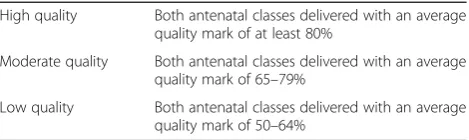
women’s class and 86 items for the clinicians’class, from which we calculated the overall score for the quality mark. We created an a priori specification of the ideal and minimally acceptable quality mark for delivery of the women’s classes and the clinician’s information sessions (Table 2).
The response of pregnant women
This refers to the extent to which the individual re-cruited women engaged with the various components of the OptiBIRTH intervention. We created an a priori spe-cification of the ideal and minimally acceptable treat-ment dose (Table 3). The treatment dose refers to the amount of the components of the intervention delivered by implementers and the extent to which participants received and used materials or other resources [19, 20]. This provides information about the degree to which the intended audience engaged with the intervention. In our case we measured treatment dose by documenting at-tendance by the women at the antenatal classes.
We also monitored the online activity to assess levels of engagement by the OptiBIRTH women with the online components of the intervention. A survey was created using the QUALTRICS web-based tool (www.qualtrics. com) for completion by those using‘icanbirth’, which was the secure section on the OptiBIRTH website for women. To monitor the amount of individual support women sought, the MOLs logged the number of individual telephone or face-to-face contacts from women re-cruited into the study and documented the total time spent advising women.
The response of the clusters
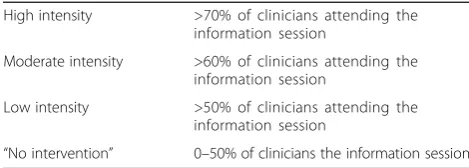
This refers to the extent to which the maternity units and professionals therein adopted (or not) the interven-tion into their existing systems and everyday work [10]. The results of the fidelity checks and documentary evi-dence of attendance rates at the clinicians’ information sessions informed this section. Again, we created an a priori specification of the ideal and minimally acceptable treatment dose (Table 4), which in this case was clini-cians’class attendance rates.
[image:4.595.305.540.661.731.2]We also monitored online activity to assess levels of engagement by the clinicians with the online compo-nents of the intervention. A survey was created on
Table 2Rating scale for the quality of delivery of the classes and information sessions
High quality Both antenatal classes delivered with an average quality mark of at least 80%
Moderate quality Both antenatal classes delivered with an average quality mark of 65–79%
QUALTRICS for completion by those using‘shecanbirth’, which was the secure section on the OptiBIRTH website for clinicians.
The mechanisms of adaptation and change in the intervention site
An ethnographic study was conducted at one of the intervention sites in Ireland to explore the mechanisms of adaptation and change following the introduction of the intervention [21]. A 16-month period of observation took place throughout the study. Twelve clinicians and 15 women were interviewed before, during and after the introduction of the intervention. The MOL at the site was interviewed three times and the OOL once through-out the study period.
Results
The fidelity of the intervention
Fidelity checking during delivery of the intervention yielded average quality marks of 80% and above at all sites. During fidelity checking and other random site visits by the post-doctoral researcher, OLs were observed to be delivering the intervention consistently and to a level of high quality.
The response of pregnant women to the intervention There were 1073 women recruited to receive the full OptiBIRTH intervention. A further 122 women chose the ‘routine data only’ participation, which gave us per-mission to access the healthcare records for the woman and her baby, but those women chose not to engage with the classes and the online resources [7]. The docu-mentary evidence of attendance rates at the women’s education sessions showed that in Ireland, 42% (162 women) of OptiBIRTH women attended class 1 and 37% (143 women) attended class 2; in Germany, 19% (91 women) attended class 1 and 17% (81 women) attended
class 2; and in Italy, 54% (166 women) attended class 1 and 38% (117 women) attended class 2. These rates were low and correspond to an a priori level of ‘no interven-tion’. Women rated the usefulness of these classes on a 10-point Likert scale, with 0 being of no use at all and 10 being the most useful, in a 3-month postnatal survey. Ninety percent of the 341 women who attended both classes rated the classes in the top 5 points of the scale, with 40% scoring the classes as 9 or 10 on the scale.
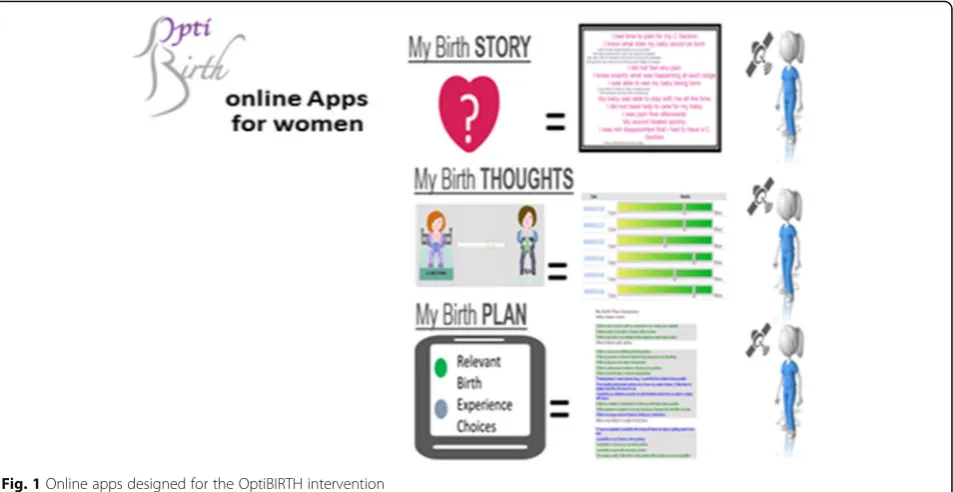
An evaluation of the online environment and the apps was an integral component of the overall project. The frequency of log-ins, including repeat and unique visitors, to the OptiBIRTH website was documented. There were 2608 visits by women recorded on the OptiBIRTH website. Among the women engaging with the OptiBIRTH intervention, for the trial as a whole, 97% (n= 1037) of the 1073 women recruited to receive the intervention registered to use the online resources. Of those who registered, 55% (n= 570) logged in to the website a total of 2608 times. Three online apps were designed to be completed sequentially: app 1 had to be completed before app 2, and app 2 had to be completed before app 3 (Fig. 1). Our analysis shows that 30% of registered women (n= 173) completed app 1, 46% (n= 79) of these women completed app 2 and 57% (n= 45) com-pleted app 3. The overall app use for women recruited to receive the intervention (n= 1073) was 16% for app 1, 7% for app 2 and 4% for app 3 Additonal file 1.
Logs of the individual support provided by the MOLs to women revealed that although many women did not request any more support than that provided by the classes and the online components, a small number of women required intense personal support. In addition, the MOLs logged a significant amount of time spent on individual contacts around consent reminders and class attendance arrangements. Over the duration of the study, the individual contact provided by the MOLs to women averaged more than the 2 h per week that had been anticipated.
The response of the clusters
[image:5.595.55.546.99.155.2]Attendance lists at the clinicians’ sessions were main-tained, duplicates were removed (many clinicians attended more than once) and proportions were calcu-lated using whole time equivalent numbers provided by human resources departments. In Ireland 80% of
Table 3Rating scale for the intensity of the intervention (women)
High intensity >60% of recruited women attending two antenatal classes or >80% of recruited women attending one antenatal class
Moderate intensity >50% of recruited women attending two antenatal classes or >65% of recruited women attending one antenatal class
[image:5.595.55.290.647.731.2]Low intensity >40% of recruited women attending two antenatal classes or >50% of recruited women attending one antenatal class “No intervention” 0–40% of recruited women attending two antenatal classes or 0–50% of recruited women attending one antenatal class
Table 4Rating scale for the intensity of the intervention (clinicians)
High intensity >70% of clinicians attending the information session
Moderate intensity >60% of clinicians attending the information session
Low intensity >50% of clinicians attending the information session
midwives and 80% of doctors attended. In Germany at-tendance rates were 80% of midwives and 95% of doc-tors, whereas in Italy 52% of midwives and 57% of doctors attended. This corresponds to a high intensity achieved for the clinicians’ interventions in Ireland and Germany. Italy achieved a lower level of intensity. The frequency of log-ins, including repeat and unique visitors, to the OptiBIRTH website was documented. There were 443 visits by clinicians recorded on the OptiBIRTH website.
The mechanisms of adaptation and change in one Irish site
The observational, field notes and interview data col-lected during the ethnographic study conducted at one of the intervention sites in Ireland showed that the inter-vention underwent a process of ‘ritualisation’to become embedded and accepted as ‘routine’ in daily practice. Women also developed study-specific identities; that is, they became‘OptiBIRTH women’by virtue of participat-ing in the study. Transference of authoritative know-ledge, in particular, during the educational classes was also observed as a central tenet of intervention delivery. Lastly, the effect of various power positions (women-cli-nicians, women-women, midwives-obstetricians) also af-fected intervention delivery, including how it was viewed, accepted and implemented at the field site. The ethnography demonstrated that although the overall cul-ture in this intervention site did not change, smaller, more individual cultural changes were observed, in par-ticular observations of women emerging as the main
drivers of change around VBAC as the intervention phase of the study progressed [22].
Discussion
The design and execution of research studies become more challenging as the interventions being evaluated move from simple towards more complex interventions with several components [3]. This is further com-pounded when such studies take place across several sites in several countries with multiple distinct work packages within the study design, as was the case with the OptiBIRTH trial. The OptiBIRTH trial took place in 15 maternity units across 3 different countries. Birth rates in the three countries differed, with 1.95 per woman in Ireland, 1.37 in Italy and 1.47 in Germany [23]. Understanding of the outcomes of such complex trials, conducted in a variety of practice settings, could be greatly improved by better understanding of the pro-cesses of the trials. Smyth et al. suggested that accounts of the reality of undertaking research, with all its chal-lenges, are missing from the currently available literature [24]. Process evaluations nested within trials may ad-dress this deficit. It is widely recognised that such process evaluations move beyond exploring whether an intervention works but also explore how the interven-tion works, why it works (or not), when it works, who is needed to make it work, what is needed to make it work, and if it can work again in other contexts, including bar-riers to its being adopted and having effect.
Conducting a process evaluation parallel to the Opti-BIRTH trial enabled us to ensure that the intervention was delivered appropriately. Fidelity monitoring identified
[image:6.595.62.539.88.334.2]implementation problems as they arose and allowed us to address them accordingly. Observations by a post-doctoral researcher as a non-participant of the OLs deliv-ering the education and information sessions removed the potential for social desirability bias that may have oc-curred with self-reported assessment by the OLs. The ini-tial observations at the beginning of the trial revealed minor issues around confidence with delivery and com-mand of the subject matter. An action plan was imple-mented in which the post-doctoral researcher explained to the OLs the evidence informing the intervention and role-played the delivery of that evidence in the sessions. The MOLs were very comfortable and confident engaging with the OptiBIRTH women, but less so about presenting to their peers, especially their obstetrics colleagues whom they felt would ask them questions they were unable to answer. The availability of the post-doctoral researcher and the obstetric OL to accompany the MOLs in a coach-ing capacity at the beginncoach-ing of the trial when they were delivering the sessions was instrumental in building their confidence and their technique. During the clinicians’ ses-sions, difficulty with delivery at an appropriate pace was identified and was due to an excess of material to be deliv-ered within the hour-long clinicians’session. This was ad-dressed by re-organising and/or removing some of the content. The difficulties resolved as the OLs became more confident and more familiar with the literature informing the sessions. Average quality marks of 80% and above were achieved on repeat assessments in all sites. Although there is a lack of clear guidelines about what the optimal level of adherence should be, most agree that 80–100% constitutes high fidelity, whereas 50% constitutes low fi-delity [19]. In addition to acting as a support for the OLs, regular site visits by the post-doctoral researcher enabled quality assurance throughout the trial. For the OptiBIRTH study, a post-doctoral researcher acted in this capacity, but for other studies this role could be fulfilled by a pro-ject manager or a research supervisor.
Balancing fidelity in terms of‘adherence to intervention’ versus application to context and flexibility to respond to individuals’ needs was challenging. Context-level adapta-tion does not necessarily mean that the integrity of what is being delivered and evaluated across multiple sites is lost, but uncontrolled variations in the implementation of the intervention may threaten the study’s integrity [25, 26]. The context within which intervention studies take place may sometimes challenge the way in which interventions are delivered [27], and the variety of practice settings was a particular complexity in this trial. We needed to pre-serve the core components of the intervention but facili-tate the flexibility required by the practice settings. The research team decided that it was preferable to have a structured programme requiring strict adherence to a set format because the trial covered three countries, with
three intervention sites in each, and had to be designed to be suitable for transfer to all European countries. We stan-dardised the training for the OLs delivering the interven-tion to ensure that the interveninterven-tion was delivered systematically and consistently. A structured training manual offered the advantages of greater consistency and precision in the delivery of the intervention and enhanced internal validity [28]. Thus the OptiBIRTH training man-ual and the observation tool for assessing fidelity were very structured around the core components of the inter-vention. However, flexibility was accommodated around secondary aspects such as the timing and location of the women’s classes. The clinicians’session was designed in such a way that it could be delivered as a single 1-h ses-sion or split into four 15-minute sesses-sions as the need arose. This enabled the delivery of the intervention to be maximised while being responsive to local contexts and allowed us to deliver and evaluate a very structured inter-vention in a‘real-world’practice context. We believe that the highly structured manual used in the context of very experienced OLs delivering the intervention allowed us to achieve the correct balance between standardisation for internal validity and flexibility for external validity.
We were able to observe the mode of action of the intervention in its practice context by monitoring the re-sponse of the maternity unit cluster and the pregnant women to the intervention. Our process evaluation re-vealed that there was a variable level of engagement by stakeholders with the different components of the inter-vention. This varied from minimal intensity of women’s engagement with antenatal classes, to moderate intensity of engagement with online resources, to high intensity of clinicians’exposure to the education sessions provided.
Preferential recruitment was not the method used for this trial; however, women could choose whether they took part in two ways, either as full participants or as ‘routine data only’participants, and those who agreed to join and to attend classes may have been more interested in achieving a VBAC. This will have had no effect on the trial outcome, because the primary outcome was the VBAC rate after trial completion compared with the VBAC rate in the year prior to the trial for all women at the study sites.
and 35 weeks of gestation and so occurred before mater-nity leave had begun. The OLs were very pragmatic and adaptable in trying to mitigate those challenges, and they tried to deliver the classes at a variety of times, including morning, midday, evenings and even weekends, to ac-commodate the women. They ensured that the infra-structure in which they delivered the sessions was safe and suitable for any woman wanting to bring children with her. Classes were provided for any number of women who were able to attend, regardless of whether it was as low as 2 women or as many as 15 women. How-ever, despite all their efforts, attendance at the classes was less than we would have liked. The women who did manage to attend the classes rated them very highly in their follow-up 3-month postnatal survey.
Perhaps some of the solution to poor attendance at antenatal education classes lies in the online resources. There were 3051 visits by users (2608 by women, 443 by clinicians) recorded on the OptiBIRTH website, suggest-ing that there is potential for the website to be improved and developed further to provide a more interactive en-vironment where women could attend a virtual class. However, further research is required to establish women’s preferences. The OptiBIRTH women attending the classes seemed to really appreciate the opportunity to not only engage freely with an obstetrician and mid-wife but also with other women who had experienced a previous CS and were now negotiating a birth after a previous CS. The ethnographic findings around the women forming a new identity as ‘OptiBIRTH women’ suggests a collective identity emerging from meeting other women at the classes, something that may not happen in an online forum.
A high intensity of clinicians’exposure to the education sessions provided was achieved in Ireland and Germany. The information sessions for all clinicians at each site were delivered by the OLs on a rolling basis so that each clinician would attend the session at some time during the trial. Again, the OLs were very pragmatic and adaptable in trying to mitigate challenges around attendance at these sessions. The information to be delivered required 1 h in total but was formatted in such a way that it could be de-livered in four distinct 15-minute sessions if required. An example of the practical application of this flexibility oc-curred where one MOL delivered the 15-minute sessions on 4 successive nights to her midwifery colleagues who were on a week of night duty. The 15-minute sessions also worked well in areas such as the antenatal clinics where staff worked stable hours as opposed to shifts. Rather than ask busy clinicians to find another hour in their already packed schedules, the OLs tried to deliver the sessions wherever possible within already existing meetings such as weekly risk management meetings, perinatal case study meetings, midwifery case review meetings or further
education classes. The OptiBIRTH clinicians’session be-came part of the mandatory induction week for newly appointed junior doctors in many of the sites. From re-cruitment of the first OptiBIRTH participant to the birth of the last OptiBIRTH baby, the study lasted 21 months and so spanned a number of rotations of junior doctors and new midwifery staff. Being able to meet those doctors and midwives at induction ensured that they were aware of the study and that they also received evidence-based in-formation about VBAC as soon as they began working at the study site. The senior obstetricians and midwives were instrumental in ensuring that their teams of junior clini-cians attended the sessions but also role-modelled the be-haviour by attending the sessions themselves. Having senior level buy-in is vital for all change processes. To en-courage attendance at the sessions, the MOLs at each site collected data on study eligibility rates, recruitment rates, VBAC, and elective and emergency repeat CS rates, and they presented these data to clinicians quarterly at the end of the session. The clinicians’ exposure to the education sessions ensured that clinicians gained evidence-based knowledge on VBAC which helped VBAC become a legit-imate option for women with a previous CS and helped clinicians and women jointly make an informed decision about trying for a VBAC.
The lower level of engagement by clinicians in Italy is most likely due to a culture that is less receptive to the concept of VBAC. There are a number of reasons for this, among them being the highly medicalised models of care for pregnancy and childbirth delivered largely by obstetricians in a private setting with midwives having a minimal role, limited skills among those clinicians around VBAC, and a widespread culture of fear and risk that leads to a specialists bias in dealing with CS and VBAC. The pre-trial VBAC rates in Italy were extremely low at only 8%.
may influence response to the intervention. VBAC base-line rates for the year after the completion of the study (2016) have been collated and are currently being ana-lysed. This will provide an indication of the degree of change in the care that clinicians delivered to the women they encountered and will also provide some in-formation about sustainability (or not) of the effect. The embedded ethnographic study seems to be suggesting that the mechanism of adaptation and change, al-though slower than expected, was beginning to effect change towards the end of the trial period [21]. The embedded ethnographic study was conducted at one intervention site but has potential transferability to other intervention sites.
The combination of both quantitative and qualitative methods, including checklists, researcher observations, and interviews, to monitor intervention implementation at the OL (deliverer), individual woman (recipient) and maternity unit staff (cluster) levels will make a valuable contribution to explaining the outcomes of the study and enhancing the credibility of the evidence. It also provides a data trail of what happened during the imple-mentation of the intervention. Embedding an ethno-graphic study at one site enabled us to explore midwives’, obstetricians’and women’s experiences of the intervention and their responses to it. This has signifi-cant implications for dissemination of the study findings but also for replication of the study in the future.
Limitations
Craig et al. acknowledged that there is no single best way to conduct a process evaluation and suggested that process evaluations need to be tailored to the trial, the intervention and the outcomes being studied [3]. For pragmatic and resource reasons, we had to decide where to focus our at-tention for the purpose of the process evaluation for Opti-BIRTH. There were certain aspects of the process on which we were able to gather data (e.g., numbers attending both the women’s and clinicians’classes), but other aspects for which we were less able to gather data (e.g., behavioural change in practitioners), which would have required a discrete substudy. When implementing a complex inter-vention, using a combination of quantitative and qualitative data as we did can greatly enhance the process evaluation. The processes involved in the trial and intervention imple-mentation, described above, were funded as part of the trial and supported by a research team. Such support necessarily ceases once funding ceases, and often initiatives founder at that stage. Further important questions are thus how, and why, these processes are sustained over time [8]. In the OptiBIRTH trial, hospitals agreeing to join the study also committed to continuing the intervention after trial end if the intervention was found to be beneficial. A further study
will be required to determine if the intervention is more ef-fective over time and if that effect is sustained.
Conclusion
This paper describes the pragmatic conduct of a process evaluation that ran parallel with the conduct of the Opti-BIRTH trial. Implementing theoretical interventions in real-world practice settings is complicated and can be imprecise. Adequate testing of complex interventions can be enhanced by parallel process evaluations that monitor and assess the mode of action of an interven-tion as it is applied in a practice setting. To be able to make accurate interpretations of outcomes, research teams need to know what intervention components were delivered and to what quality and consistency. It is widely accepted that better implementation leads to bet-ter outcomes and that multiple factors affect implemen-tation [26]. Therefore, process evaluation is absolutely essential for interpreting findings about the effects of in-terventions tested in trials, particularly if those interven-tions are complex. We can conclude from our process evaluation that the OptiBIRTH intervention was deliv-ered during the trial as per the trial protocol.
Additional file
Additional file 1:Online Apps designed for the OptiBIRTH intervention.
(PDF 646 kb)
Abbreviations
CS:Caesarean section; MOL: Midwife opinion leader; OL: Opinion Leader; OOL: Obstetrician opinion leader; PI: Principal investigator; TIDieR: Template for Intervention Description and Replication; VBAC: Vaginal birth after caesarean section
Acknowledgements
We thank the more than 2000 women who agreed to join the OptiBIRTH trial and the many practitioners at the participating sites, particularly the midwife and obstetric opinion leaders. We acknowledge receipt of funding for the OptiBIRTH trial and project as a whole from the European Union Seventh Framework Programme (grant agreement number 305208) and support for the authors of this paper from their host institutions.
Funding
The OptiBIRTH Project was funded by a European Union Seventh Framework Programme grant: FP7-HEALTH-2012-INNOVATION-1/HEALTH.2012.3.2-1, ‘Improving the organisation of health service delivery’, under grant agreement number 305208.
Availability of data and materials
The datasets used and/or analysed during the present study are held by the OptiBIRTH project management team and are available from Deirdre Daly ([email protected]).
Trial sponsor
The trial sponsor is European Commission Directorate-General for Research & Innovation (SDME 2/2), B-1049 Brussels, Belgium (http://ec.europa.eu/research/ index.cfm?pg=dg).
Authors’contributions
DDa, VS, GS, MCl, MMG, SM, DDe, SGB, JN, MS, RM and MCa commented on revisions of draft versions of the manuscript. PH, CB, DDa, VS, GS, MCl, MG, SM, DDe, SG, JN, MS, RM and MCa read, commented on and approved the final manuscript. PH, CB, DDa, VS, GS, MCl, MG, SM, DD, SG, JN, MS, RM and MCa are members of the overall OptiBIRTH study team. All authors read and approved the final manuscript.
Authors’information
Not applicable.
Ethics approval and consent to participate
Ethical approval was obtained for the OptiBIRTH trial as a whole, including the process evaluation, from the Faculty of Health Sciences Research Ethics Committee, Trinity College Dublin, Dublin, Ireland, and from each participating site in Ireland; from the ethics committee of Hannover Medical School, Hannover, Germany (1541-2012); and from the Comitato Etico dell’azienda Ospedaliera Universitaria San Marino, Italy (18/12).
Consent for publication
Signed, fully informed consent forms were obtained from all OptiBIRTH participants.
Competing interests
The authors declare that they have no competing interests.
Publisher’s Note
Springer Nature remains neutral with regard to jurisdictional claims in published maps and institutional affiliations.
Author details
1School of Nursing and Midwifery, National University of Ireland, Galway,
Ireland.2School of Nursing and Midwifery, Trinity College Dublin, Dublin, Ireland.3Centre for Public Health, Institute for Health Sciences, Queen’s University Belfast, Belfast, Northern Ireland.4Midwifery Research and Education Unit, Hannover Medical School, Hannover, Germany.5Department of Neurologic, Oculist, Gynaecologic, Maternal and Infant Sciences, University of Genoa, Genoa, Italy.6Centre for Maternal, Fetal and Infant Research, Institute of Nursing and Health Research, School of Nursing, Ulster University, Antrim, Northern Ireland.7Institute of Health and Care Sciences, Sahlgrenska Academy, University of Gothenburg, Gothenburg, Sweden.
Received: 18 May 2017 Accepted: 10 December 2017
References
1. Medical Research Council (MRC). Developing and evaluating complex interventions: new guidance. London: MRC; 2006. https://www.mrc.ac.uk/ documents/pdf/complex-interventions-guidance/. Accessed 14 Dec 2016. 2. Oakley A, Strange V, Bonell C, Allen E, Stephenson J, RIPPLE Study Team.
Process evaluation in randomised controlled trials of complex interventions. BMJ. 2006;332(7538):413–6.
3. Craig P, Dieppe P, Macintyre S, Michie S, Nazareth I, Petticrew M. Developing and evaluating complex interventions: the new Medical Research Council guidance. BMJ. 2008;337:a1655. doi:https://doi.org/10. 1136/bmj.a1655.
4. Hoffmann T, Glasziou P, Boutron I, Milne R, Perera R, Moher D, Altman D, Barbour V, Macdonald H, Johnston M, Lamb S, Dixon-Woods M, McCulloch P, Wyatt J, Chan A, Michie S. Better reporting of interventions: template for intervention description and replication (TIDieR) checklist and guide. BMJ. 2014;348:g1687.
5. Institute of Obstetricians and Gynaecologists, Royal College of Physicians of Ireland; and Clinical Strategy and Programmes Directorate; 2011. http:// www.hse.ie/eng/services/publications/Clinical-Strategy-and-Programmes/ Delivery-after-Previous-Caesarean-Section.pdf. Accessed 29 Oct 2017. 6. Ministero della Salute. Sistema Nazionale Linee Guida (SNLG): il taglio
cesareo: una scelta appropriata econsapevole. 2012.
7. Clarke M, Savage G, Smith V, Daly D, Devane D, Gross M, et al. Improving the organisation of maternal health service delivery and optimising childbirth by increasing vaginal birth after caesarean section through enhanced women-centred care (OptiBIRTH trial): study protocol for a randomised controlled trial (ISRCTN10612254). Trials. 2015;16:542.
8. Rychetnik L, Frommer M, Hawe P, Shiell A. Criteria for evaluating evidence on public health interventions. J Epidemiol Community Health. 2002;56:119–27. 9. Saunders RP, Evans MH, Joshi P. Developing a process-evaluation plan for assessing health promotion program implementation: a how-to guide. Health Promot Pract. 2005;6:134–47.
10. Grant A, Treweek S, Dreischulte T, Foy R, Gutherie B. Process evaluations for cluster-randomised trials of complex interventions: a proposed framework for design and reporting. Trials. 2013;14:15.
11. National Institute for Health and Care Excellence (NICE). Behaviour change: general approaches. Public Health Guidance [PH6]. London: NICE; Oct 2007. https://www.nice.org.uk/guidance/ph6. Accessed 29 Oct 2017.
12. Lundgren I, Begely C, Gross M, Bondas T.‘Groping through the fog’: VBAC (Vaginal birth after Casearean section)–a meta synthesis about women’s experiences. BMC Pregnancy Childbirth. 2012;12:85.
13. Lundgren I, Smith V, Nilsson C, Vehvilinen-Julkunen K, Nicoletti J, Devane D, Bernloehr A, van Limbeek E, Lalor J, Begley C. Clinician-centred
interventions to increase vaginal birth after caesarean section (VBAC): a systematic review. BMC Pregnancy Childbirth. 2015;15:16. doi:https://doi.org/ 10.1186/s12884-015-0441-3.
14. Nilsson C, Lundgren I, Smith V, Vehvilinen-Julkunen K, Nicoletti J, Devane D, et al. Women-centred interventions to increase vaginal birth after caesarean section (VBAC): a systematic review. Midwifery. 2015;31:657–63.
15. Lundgren I, van Limbeek E, Vehvilainen-Julkunen K, et al. Clinicians’views of factors of importance for improving the rate of VBAC (vaginal birth after caesarean section): a qualitative study from countries with high VBAC rates. BMC Pregnancy Childbirth. 2015;15:196. doi:https://doi.org/10.1186/s12884-015-0629-6.
16. Lundgren I, Healy P, Carroll M, Begley C, Matterne A, Gross M, Grylka-Baeschlin S, Nicoletti J, Morano S, Nilsson C, Lalor J. Clinicians’views of factors of importance for improving the rate of VBAC (vaginal birth after caesarean section): a study from countries with low VBAC rates. BMC Pregnancy Childbirth. 2016;16:350. doi:https://doi.org/10.1186/s12884-016-1144-0. 17. Nilsson C, Limbeek E, Vehvilainen-Julkunen K, et al. Vaginal birth after
caesarean—views of women from countries with high VBAC rates. Qual Health Res. 2017;27:325–40. doi:https://doi.org/10.1177/1049732315612041.18,28. 18. Nilsson C, Lalor J, Begley C, Carroll M, Gross MM, Grylka-Baeschlin S,
Lundgren I, Matterne A, Morano S, Nicoletti J, Healy P. Vaginal birth after caesarean: views of women from countries with low VBAC rates. Women Birth. 2017;30:481–90. doi:https://doi.org/10.1016/j.wombi.2017.04.009. 19. Borrelli B. The assessment, monitoring, and enhancement of treatment fidelity
in public health clinical trials. J Public Health Dent. 2011;71 Suppl 1:S52–63. 20. Mowbray CT, Holter MC, Teague GB, Bybee D. Fidelity criteria: development,
measurement, and validation. Am J Eval. 2003;24:315–40.
21. Maguire R.“Trying for a VBAC”: an ethnography of cultural change within a randomised trial aimed at increasing vaginal birth after caesarean section: the OptiBIRTH study. Doctoral thesis, University of Dublin, Trinity College Dublin, Ireland; 2016.
22. Steckler A, Linnan L, editors. Process evaluation for public health interventions and research. San Francisco: Jossey-Bass; 2002.
23. Organisation for Economic Co-operation and Development (OECD). Fertility rates (indicator). Paris: OECD; 2014. doi:https://doi.org/10.1787/8272fb01-en. https://data.oecd.org/pop/fertility-rates.htm. Accessed on 3 Feb 2017. 24. Smyth R, Jacoby A, Altman D, Gamble C, Williamson P. The natural history
of conducting and reporting clinical trials: interviews with trialists. Trials. 2015;16:16.
25. Hawe P, Shiell A, Riley T. Complex interventions: how“out of control”can a randomised controlled trial be? BMJ. 2004;328:1561–3.
26. Durlak J, DuPre E. Implementation matters: a review of research on the influence of implementation on program outcomes and the factors affecting implementation. Am J Community Psychol. 2008;41:327–50. 27. Wells M, Williams B, Treweek S, Coyle J, Taylor J. Intervention description is
not enough: evidence from an in-depth multiple case study on the untold role and impact of context in randomised controlled trials of seven complex interventions. Trials. 2012;13:95.