ScholarWorks @ Georgia State University
ScholarWorks @ Georgia State University
Art and Design Theses Ernest G. Welch School of Art and Design
5-10-2014
Identity Construction and the Post-Museum of Burning Man:
Identity Construction and the Post-Museum of Burning Man:
Exploring David Best's 2012 Temple of Juno
Exploring David Best's 2012 Temple of Juno
Christopher R. Langley
Follow this and additional works at: https://scholarworks.gsu.edu/art_design_theses
Recommended Citation Recommended Citation
Langley, Christopher R., "Identity Construction and the Post-Museum of Burning Man: Exploring David Best's 2012 Temple of Juno." Thesis, Georgia State University, 2014.
https://scholarworks.gsu.edu/art_design_theses/154
IDENTITY CONSTRUCTION AND THE POST-MUSEUM OF BURNING MAN:
EXPLORING DAVID BEST’S 2012 TEMPLE OF JUNO
by
CHRISTOPHER RYAN LANGLEY
Under the Direction of Dr. Susan Richmond
ABSTRACT
Since 2000, artists have built elaborate temple structures in the Black Rock Desert during
the annual Burning Man festival, the purpose of which is to act as ritualized spaces to experience
catharsis by way of contemporary death rites. The temple is destroyed on the last day of the
week-long event. The method by which both the space of Burning Man in the desert and the
temple structure operate is by facilitating a negotiation in participant identity through liminality
and self-enacted identity negotiation, both of which, as well as the event and the art, are
ephem-eral. The purpose of this thesis is to explore the 2012 Burning Man Festival (themed “Fertility
2.0”) with a specific focus on the Temple of Juno by artist David Best. This thesis will examine
how this artifact is activated through a multiplicity of audience participation while
simultaneous-ly allowing the participants to further explore their negotiated identity.
IDENTITY CONSTRUCTION AND THE POST-MUSEUM OF BURNING MAN:
EXPLORING DAVID BEST’S 2012 TEMPLE OF JUNO
by
CHRISTOPHER RYAN LANGLEY
A Thesis Submitted in Partial Fulfillment of the Requirements for the Degree of
Master of Arts
in the College of Arts and Sciences
Georgia State University
Copyright by Christopher Ryan Langley
IDENTITY CONSTRUCTION AND THE POST-MUSEUM OF BURNING MAN:
EXPLORING DAVID BEST’S 2012 TEMPLE OF JUNO
by
CHRISTOPHER RYAN LANGLEY
Committee Chair: Susan Richmond
Committee: John Decker
Kimberly Cleveland
Jeffrey Trask
Electronic Version Approved:
Office of Graduate Studies
College of Arts and Sciences
Georgia State University
DEDICATION
I am dedicating this work to my partner, Nick Chaivarlis. I am grateful for his constant
support, and for being a sounding board while experimenting with new ideas. It is also Nick who
I must thank for pushing me into my first meeting with my advisor when I was worried about
going back to school. And I certainly cannot leave out how thankful I am that he drove me
around the first semester when my leg was broken. So Nick, thank you so much for your support,
your love, and your constant willingness to work through all of life’s challenges and joys with
ACKNOWLEDGEMENTS
I wish to thank my advisor, Dr. Susan Richmond, and my committee members, Dr. John
Decker, Dr. Kimberly Cleveland, and Dr. Jeffrey Trask for their intellectual support, thoughtful
conversations, and constant moral uplifting through this process.
I am grateful to my parents, Barbara and Claude Langley, who have supported me
through the many ups and downs of graduate study. They are true testament to parents who raise
children to think for themselves and become who they want to be.
I would also like to thank my former advisor who supported me intellectually and
emo-tionally through the many years in college. A sincere thank-you to Dr. Wendy Koenig, who not
only gave me the guidance in the formative years of pursuing my education, but she also gave
me the emotional support to be brave and come out as queer to my friends and family.
And finally, I want to thank several wonderful friends to whom I am grateful. To Carissa
Landis, whose fateful meeting in our Women in Art course, and poking fun at a Dan Brown
nov-el spurred a lifnov-elong friendship and countless meaningful conversations (of which hnov-elped us both
understand Julia Kristeva, Walter Benjamin, and the overuse of literary cliffhangers). I would
also like to thank Jessica Gillespie, who was my sidekick for my entire program at Georgia State
University, and whose constant support and re-hashing of course material was much appreciated,
as well as the often necessary Irish Car Bombs. And last but not least, I want to thank Tony
Lew-is (Snotto) and Devon Desautels (Feather), who both are great friends and wonderful connections
to have been made at Burning Man, and without whom I would not have gotten the knowledge
and experiences that were paramount to this process. Tony, thank you for placing me in the Inner
Circle and for always being patient. Devon, thank you for the wonderful chats on Victor Turner
TABLE OF CONTENTS
ACKNOWLEDGEMENTS ... v
LIST OF FIGURES ... vii
1. INTRODUCTION ... 1
2. BURNING MAN AS AN IMPERFECT POST-MUSEUM ... 11
3. THE LIMINAL/EPHEMERAL IDENTITY AT BURNING MAN ... 21
4. RITUAL, DEATH RITES, AND RECRIPROCAL ACTIVATION IN THE TEMPLE OF JUNO ... 30
4.1. Ritual and Death Rites ... 31
4.2. Reciprocal Activation ... 37
5. CONCLUSIONS ... 42
LIST OF FIGURES
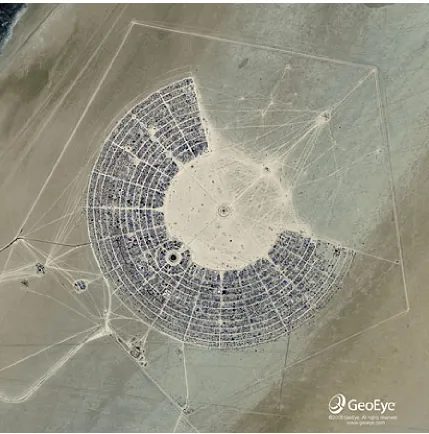
Figure 1 - Aerial view of the playa and layout of Burning Man campsites and
architectural structures ... 7
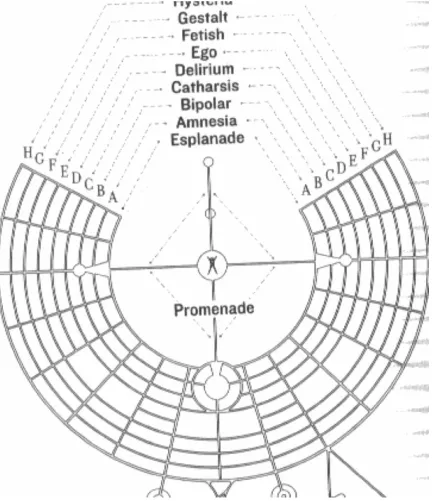
Figure 2 - Digital map indicating navigational tools ... 8
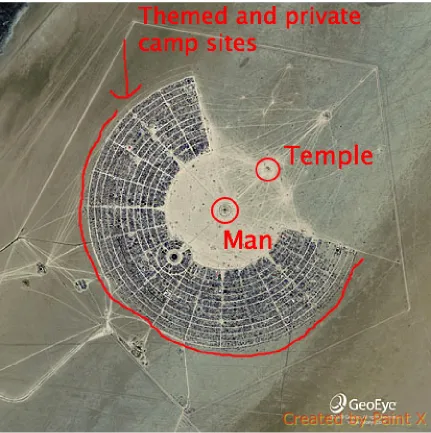
Figure 3 - Augmented aerial view of Burning Man to indicate specific structures ... 9
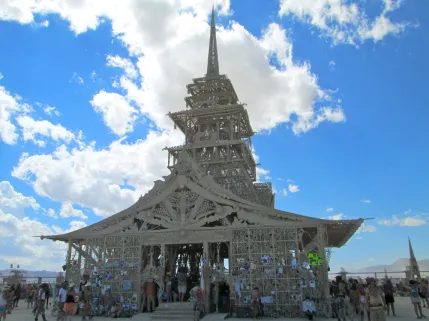
Figure 4 - David Best, Temple of Juno, 2012 ... 10
Figure 5 - David Best, Temple of Juno, 2012. Under construction in Black Rock City, NV. ... 39
Figure 6 - David Best, Temple of Juno, 2012. Interior close-up to the central lantern ... 40
1. INTRODUCTION
Introduction: Creating a “Placemyth”
The Burning Man Project (henceforth titled either “Burning Man” or the “Burn”) is a
week-long project/festival in self-sustainability, self-expression, self-exploration, mass
participa-tion, and community creation (to simply name a few of its more colorful descriptions). However,
as so many participants (or “burners”) have continually expressed over the many years of my
involvement with the project, trying to narrow the scope of Burning Man down to a simple
sen-tence does violence to it. Much of the mass media enjoys isolating small components to display
as the hallmark for the event, such as drug use or nudity. Indeed, any attempt to give it a cursory
explanation is difficult, as it cannot be done without omitting necessary details. That
notwith-standing, it is often described as, “A hippie festival in the desert,” or “It’s an arts and music
fes-tival,” or my personal favorite, “It’s where a bunch of folks get together to do drugs and dance in
the desert” as if drugs and dancing require a desert to operate. To really get a sense of what
Burning Man is all about, one ought to ask herself, “Could 60,000 people be wrong?”
I use the word wrong only to suggest the derisive manner in which so much of the media
has portrayed, and hence why so much convoluted misinformation has circulated regarding the
Burn. But 60,000 people voluntarily taking an expensive pilgrimage to the middle of the Black
Rock Desert in Nevada, having to bring all they need to survive (and have fun) with them,
hav-ing to follow the respectful rules of “leavhav-ing no trace behind,” wanderhav-ing around in the arid,
sti-flingly hot geography, suffering through alkali dust storms known aptly as “white outs,” and
under-standing of the scope of the Burn, we need to take a quick step back and look at the event’s
ori-gins and its growth.
The originating event was a simple gathering by a pair of friends on a San Francisco
beach with nointention of creating an internationally attended project. According to sociologist
and Burning Man scholar, Lee Gilmore:
On summer solstice eve in 1986, a man named Larry Harvey and his friend Jerry James decided, for no premeditated reason, to host an impromptu gathering on San Francisco’s Baker Beach, where they constructed a primitive wooded effigy and burned it. Having invited just a handful of friends to join the event they were delight-ed to discover that as they set flame to the eight-foot-high sculp-ture, the spectacle attracted onlookers from up and down the beach. As Harvey tells the often-repeated tale, someone began to strum a guitar, others began to dance and interact with the figure, and a spontaneous feeling of community and connectedness came up on those gathered – friends and strangers alike. Flushed with unantici-pated success of the gathering, Harvey and James soon decided to hold it again the next year; with each subsequent iteration, both the crowd and the sculpture grew substantially.1
As the event grew, there were spontaneous additions of both individuals and groups who
took note of the rowdy yet playful event and wished to join. One such group was San Francisco
based Cacophony Society, which also shared the 1986 originating year with Burning Man. The
society was a troupe of men and women who were part culture jammers (individuals/groups who
maneuver to subvert consumerist and media-driven culture), and part performance artists. They
understood the events on Baker Beach as another opportunity to ally themselves with likeminded
people who wanted an artistic and emotional release outside of culturally normative tropes.
Ac-cording to cultural sociologist and organizational scholar, Katherine K. Chen:
1
Government officials finally caught up with the event in 1990; their intervention catalyzed the event’s transformation and reloca-tion. Citing safety concerns about burning large items on the beach, a Golden Gate National Recreation Area ranger stopped or-ganizers from igniting the event’s signature sculpture. Oror-ganizers negotiated with officials to allow the 800 disappointed revelers to enjoy the forty-foot sculpture without the bonfire. To avoid dis-putes with authorities, a few attendees suggested relocation the event to the isolated Nevada Black Rock Desert, where they had previously participated in small events like a 1989 wind sculpture festival. With the event’s move to Nevada, the summer solstice beach bonfire transformed into a Labor Day weekend desert camp-ing trip. At the first event, participants joined hands and stepped over a line drawn in the desert’s surface, signifying their collective entry into another zone of experience. With this ceremonial cross-ing, ninety members ushered in a new era, one that significantly expanded the span and scope of organizing behind the event.2
A little over a decade later, I learned of the event in my freshman year in college in 2001,
by way of a now defunct blogging site. My first flicker of interest came in the form of curiosity
as to why so many people seemed so happy in the desert, covered in dust and grime, and all
wearing bizarre clothes. At that point, attendance was already in the 30,000+ range, and the
web-site was dense with information on the event.
After another decade passed, I was able to attend my first festival thanks to the reward of
a low-income ticket. Upon my arrival, I was approached by several jovial people who wanted me
to be “baptized by dust.” I jumped out of the car and rolled around on the ground, soiling my
clean clothes as instructed. That was the first step in eschewing the cultural norms that governed
so much of my life, and opening up my mind to the many possibilities that lay ahead for me in
that space. Despite having read everything available to me, I was astounded at how absolutely
foreign the festival was. Most of all, I was awestruck by how beautiful, large, intricate, and
2
Katherine K. Chen, Enabling Creative Chaos: The Organization Behind the Burning Man Event
meaningful so much of the art and architecture was. This was my first encounter with the human
effigy as well as my first interaction with the 2010 Temple structure. I understood why those
thousands of people making the pilgrimage were not in the wrong.
By 2010, when I first experienced the Burn, the geography of the festival had long been
established, with its iconic crescent moon shape, large avenues arranged alphabetically and
con-necting laterally, and smaller streets cutting vertically, marked in fifteen-minute increments,
in-dicated by time (e.g. 7:30 and Esplanade). [Figures 1 and 2]. The Man effigy is positioned in the
center of the crescent moon, while the Temple is the outermost structure before entering empty
space called the “deep playa.” [Figure 3]. The Nevada Bureau of Land Management allows the
event to occupy a large portion of the Black Rock Desert that is fenced off and monitored by the
Rangers, whose voluntary contribution to the Burn is to patrol the space and perimeter, checking
that no one is in danger, and that no one is entering illegally. Major theme camps can request to
be included in the initial mapping, however, the remainder of the city is constructed as
individu-als and groups select their own locations. Much of the artwork and architecture revolves around
the theme of that particular year (e.g., “Fertility 2.0” for the 2012 Burn and the Temple being
titled the Temple ofJuno). The vast majority of the artwork and theme camps change every year,
however a select few have remained constant, including the Man and the Temple, to name a few.
While the structures themselves are present each year, the artist(s), styles, materials, and sizes
will be different. The coordinates of the exact location of Burning Man within the Black Rock
Desert varies predicated on weather patterns and access points. It is within this desert landscape
that I will explore how this festival is a unique event and space that allows for people to
After the “baptism by dust,” it is understood that what is beyond the gates is a space with
new rules and new (and perhaps even fewer) socially constructed expectations for behavior. In
other words, it can be both liminal and liminiod (liminal in that it is a space with lessened
cultur-al rules that can lend a permanent change, and liminiod in that the same space may only lend a
temporary change).3 According to Religious Studies scholar Sarah M. Pike, “Black Rock City
comes to be a place of the powerful and transformative experiences that cannot be had
else-where. What is it about this festival that produces such powerful impressions in participants?
How does Burning Man come to be imagined and experienced as such a different place from the
outside?”4 In this thesis I intend to explore the reasons why Burning Man is such a compelling
and unique experience where both the participants’ relationships with themselves and others is
equally as augmented to those which they have with the architecture and works of art at the
Burn. Indeed, this essay will explore how festival participants create what cultural theorist Rob
Shields calls “’placemyths,’ composites of rumors, images, and experiences that make particular
place fascinating.”5 As an event that gives rise to “placemyths,” Burning Man is unique in its
ability to coalesce identity negotiation with the reception and experience of art and architecture.
Its desert locale further contributes the “placemyths” by its divergence from the everyday norm,
and, as such, lends itself to experiencing art differently.
For the purposes of this thesis I will focus on David Best’s 2012, Temple of Juno, and
clarify how the structure is received and understood through the experiences of both liminality
and identity negotiation. [Figure 4]. It is through much research, two pilgrimages to the Burn,
3
Stephen Bigger, “Victor Turner, Liminality, and Cultural Performance,” review of Contempo-rary and Cultural Performance, Victor Turner, in Journal of Beliefs & Values, Vol 30, No. 2 (August 2009), 209.
4
many conversations and formal interviews with participants and staff, and questionnaires
re-turned that I have come to the conclusion that the Temple of Juno is a sophisticated and
compel-ling structure that allows the engaged participants a unique way to explore and experience
con-temporary death rights.
In the first chapter I will discuss how the site of Burning Man acts as a liminal space and
so-called “post-museum.” This chapter will explore the trajectory of the art museum as it
re-sponds to changing technologies and cultural ideologies, and even as art itself is changing in how
consumers respond to it, and therefore the space in which it is displayed changes also. The
se-cond chapter will explore how the construction and negotiation of identity occur. The cultural
program in which most of Western culture participates can be changed in spaces such as Burning
Man, and therefore individuals become more aware of their freedom to explore aspects of their
personality that are often muted or hidden (e.g., nudity, spirituality, eye contact with stranger,
and being queer). This negotiated identity will inherently lead the individuals to experience their
surroundings in new and often compelling ways. This chapter will explore how that identity
cor-responds to the artwork at the Burn. The third chapter will explore contemporary death rights at
the Temple of Juno and show the previous two sections are necessary for the structure to operate.
I want to show how the space, in the words of geographer Yi-Fu Tuan, moves from being “open
and undefined to become a secure and familiar place for festivalgoers.”6
5
Figure 1 - Aerial view of the playa and layout of Burning Man campsites and archi-tectural structures
6
2. BURNING MAN AS AN IMPERFECT POST-MUSEUM
Burning Man takes place every summer in the unwelcoming, expansive, alkali-dusted
playa of the Black Rock Desert in northwest Nevada. In spite of the hostile desert, in 2012 (the
themed year of “Fertility 2.0”), at the height of the event, 56,149 people were participating, and
over 360 art installations were placed (44 of which were funded from the $700k pool of grant
funding from ticket sales).7 In effect, Burning Man is a museum. Indeed, it is a museum with an
entirely different physical structure and an entirely different set of rules of engagement than
typi-cal art museums. As such, Burning Man falls into the category of what Museum Studies scholar
Eilean Hooper-Greenhill describes as the “post-museum.” This category of post-museum is a
byproduct of changing technologies, particularly those for the production of knowledge such as
the Internet, as well as evolving sentiment from both artists and publics about what a museum
should be and what it should do. It is my sense that the context of the Burning Man museum
lo-cated in the desert is an appropriate response to some of the aforementioned changes and
con-cerns. It is important to this project to interrogate Burning Man and understand it as both a center
for learning and a phenomenological space unique unto itself. It shares several crucial and
fun-damental aspects with the 19th century modernist concepts of museums (such as having an
over-arching group of authority figures who make major curatorial decisions), but it simultaneously
offers up one (of many) possibilities for a new or “post-museum.”
“The great collecting phase of the museum is over,”8 wrote historian Eilean
Hooper-Greenhill in 2000. There is no longer any need for governments and interested parties to traverse
the globe searching for artifacts to bring back to their home countries, where once installed and
7
protected in the museums, they serve to educate patrons. This historical process established what
Hooper-Greenhill calls the “transmission approach” whereby objects in a museum are stationary
and meant to be meditated upon. That is, they are “transmitting” information to the audience that
is consumed by their eyes. The particular moment when the modernist museum’s omnipresent
authority and style was challenged came not from a need for epistemological change, but rather
from the smart phone. According to art historian Michael Sanchez, “What distinguishes this
par-ticular historical moment is not the emergence of the Internet, but the confluence of two more
specific developments: the radically increasing accessibility of the network, and the permeation
of portable devices on which dramatically higher levels of visual information are at hand.”9
Sanchez claims that technologies have made any necessary visits to the museum and gallery
moot, as now nearly anyone in industrialized countries can access the Internet to investigate and
visualize other cultures in both art and artifacts, and the processes can be often done simply in
the palm of the hand. While the two experiences certainly do not maintain the same level of
agency, Sanchez is clear that if a consumer simply wants to view an image, it is much easier by
way of the Internet.
For Sanchez, visitors to both the museum and the Internet receive information transmitted
by the act of hands-off looking. In the case of the museum, there exists an attached program of
behavior that suggests the items housed are to some degree sacrosanct. Patrons are to walk
qui-etly and absorb information methodically. This transmission approach operates well within the
framework of the museum, and is especially useful when trying to understand bold and complex
visual works of art. But as Hooper-Greenhill has written, “Knowledge is no longer unified and
8
monolithic; it becomes fragmented and multi-vocal. There is no necessary unified perspective –
rather a cacophony of voices may be heard that present a range of views, experiences, and
val-ues. The voice of the museum is one among many.”10 This is to say there is nothing inherently
wrong with transmission approaches, but rather that we must look at the path of the museum as
not being linear and progressing in a fashion that the buildings get grander and acquire more
ob-jects, but rather as a path with many branches all operating in tandem as institutions, situations,
and experiences designed to help people understand the world and to gain knowledge. “Where
the modernist museum was (and is) imagined as a building, the museum of the future might be
imagined as a process or an experience. The post-museum will take, and is already beginning to
take, many architectural forms.”11 Burning Man is one of a multiplicity of iterations of what a
new museum may look like.
This particular iteration has become ensnared with one particular facet of contemporary
culture: the smartphone, or rather the eschewing of the device, is central to the conception and
success of Burning Man. As Sanchez has astutely pointed out, there is a moment of particular
technological advancement in that of the smart phone that has simultaneously connected
every-one to everything while also isolating everyevery-one and removing much of the awe of the world by
keeping people engaged with devices instead of the world around them. In 2014 many people no
longer actively engage with one another, they do not look at each other’s eyes while walking on
the sidewalks to work, and they do not stop to experience the extraordinary achievements of the
world around them. If we can understand the museum as offering the transmission approach
where one observes the work of art or artifact first-hand, albeit disembodied from its original
9
Michael Sanchez, “2011: Michael Sanchez on Art and Transmission,” in Artforum Vol. 51, No. 10 (Summer 2014): 297.
10
context, and the individual meditates upon it and experiences a visceral or internal sensation,
then we can understand the smart phone as a muted or sub-transmission approach. This would be
an approach where the compelling nature of the so-called authentic is removed and the audience
is left with only an index pointing to where the authentic once existed. And while this is
never-theless still transmission in effect, it is (speaking to quality if I might) below that of typical
mu-seum transmission. That is, while the image can be seen, the image has no agency. It has little to
no ability to move or viscerally trigger the viewer. It is in response to the absence of visceral
re-ception and the general banality of people in response to art and artifacts experienced online that
has spurred and strengthened the development and successes of post-museums, of which Burning
Man is one. The primary method by which Burning Man achieves its goal is the presence of
ki-netic art, or art that requires audience participation to operate, and thus subverting any
documen-tation that could be housed in a museum.
Western Museums as institutions have a rich yet problematic history of both educating
and controlling information through their hegemonic authority. They have largely been
institu-tions that display art and objects from other cultures while largely telling a story of progress and
development within their own countries and cultures. They are institutions where the educated
and powerful could invite the everyman to come and see how one ought to behave in so-called
civilized society. Museums removed the voice of the viewer and supplanted it with that of the
curator who wanted to tell a narrative of some kind. Historically, museums were institutions of
power.12 In time they moved from a method of educating the masses to becoming ways of
11
Ibid. 152. 12
Information about museum hegemony, history, and trajectory are largely from Tony Bennett’s
riencing the past, such as a memory museum or a community museum. These mark the first
branches of on the path of the museum toward its multiplicity of post-museums.
Burning Man as a post-museum still houses works of art, and there still exists
infrastruc-ture and moderate curating (in terms of the installation of the works), and the space does intend
to educate, but by experience and active engagement, not transmission alone. Furthermore, the
locale in the desert renders most technologies useless, thereby alleviating some of Sanchez’s
concerns that the actual experience of visiting a museum will be exchanged for the simpler
expe-rience of viewing images on the Internet. The tools for constant connectivity that paradoxically
disconnect us from others as well as most of the physical world around us cannot be used.
Burn-ing Man continues to be unique as a post-museum due to its location in the desert, and the
meth-ods by which burners are welcomed to interact with the artwork. And finally, at an ontological
level, the ephemeral nature of Burning Man lends itself to a sense of urgency where one must
escape the normal flow of life and make the pilgrimage before it is gone. According to
sociolo-gist Lee Gilmore, “Among the qualities of Burning Man that are shared by all (or nearly all) the
festival participants – the heat, the dust, the climactic rite of the Burn – there is one that is of
ne-cessity universal: the journey.”13 Notwithstanding those who reside in the small outlying towns
of the Black Rock Desert, for most burners the trip to the festival is the first stage in
self-reflexivity and preparing to experience life and art in a wholly separate way, eschewing much of
the cultural tropes and standards that they abide by in their day-to-day programs. “Opportunities
for personal or social transformation are often cited as among the definitive qualities of
pilgrim-ages, and in this regard Burning Man does not disappoint,” wrote Gilmore.14
13
Lee Gilmore, Theater in a Crowded Fire (Berkeley: University of California Press, 2010), 103.
14
The initiation process of “baptism by dust” is a feature of the pilgrimage that helps to
de-rail burners from their clean Western program of tidy behavior. It prepares them to experience
things in a different way, and most importantly through a different lens. Although this so-called
baptism is one method to springboard participants into the new zone of this post-museum
experi-ence, it should be noted that the experience is largely subjective and bolstered by the intent of the
participant. The growing fascination with the project has attracted any number of personalities
with equally as many varying intentions. Some are there for the nuanced experience of this new
space and post-museum; others are there simply to photograph people who appear to be
some-how unique and otherwise interesting.
In her sociological research on the event, Lee Gilmer explains that there exists a tenuous
relationship between the pilgrimage (traditionally considered sacred quests) and tourism
(typi-cally associated with the profane.)15 Indeed, in effect Burning Man has the ability to act as a
post-museum space where the artwork epistemologies are fresh and unique, but the experience is
largely up to the participant in how much he/she wants to engage. However, at Burning Man it is
expected that participates will actively participate and not simply spectate, therefore it falls
with-in the realm of pilgrimage and not that of tourism. All thwith-ings bewith-ing equal, and for the sake of this
examination, I presume that the average participant at Burning Man is on a pilgrimage and is not
acting as a tourist.
The infrastructure within the city is basic: avenues move from east to west in a half-moon
shape and are labeled alphabetically, often with a theme (e.g., countries – Afghanistan, Bahrain,
China, etc.), and streets streaking the avenues going north and south by time (e.g., 12:00, 12:15,
12:30, etc.). The outer most avenue is the esplanade that opens into a delineated pathway lit by
15
the kerosene lanterns placed by the Lamplighter Camp to illuminate the path to both the Man and
the Temple.16 The basic cardinal structures provide a modicum of information for navigation,
and participants are encouraged to wander all around without particular care or concern for
where they end up, but rather as a method by which to get back to their camp when they are
ready.
The layout of the city encourages participants to mingle and move freely through the
space. My personal experience is such that wandering around leads to a heightened awareness of
things that might not have been seen had there been a specific destination or schedule.
Partici-pants are encouraged to engage with others, try new things, accept gifts, give gifts, and otherwise
refrain from the cultural programs that constantly compel people to go-go-go.
The stand-alone artworks, interactive artworks, theme camps, and kinetic events all
be-come activated by human interaction. Unlike the repository style of the traditional museum that
simply transmits, art at Burning Man often (if not always) allows for audience participation at
various levels, from construction, interaction, and the possibly destruction of the art. In the often
esoteric language of the Burning Man founder, Larry Harvey, “One test of a good piece of art is
whether it can invoke so complete an experience that it seems to exist entirely on its own terms.
The Black Rock Desert tends to do that to any object whether it’s art or not.”17 Much of the
day-to-day activity on the playa involves human collaboration to function, and, as such, a significant
problem of disconnectedness plaguing Twenty-First Century individuals is subverted for a brief
time during this collaboration. Some interactions come in the form of an impromptu gift of a
16
The Lamplighters originated in 1993 and are one of several theme camps that provide a service to the Burning Man community. The Lamplighters store, maintain, and ignite the kerosene laterns that illuminate the central pathways throughout the city. The Lamplighter motto is: “Illu-mination. Navigation. Celebration.”
17
physical item or talisman, or an offering of an individual’s skills such as a massage, both of
which play a part in the dismantling or slowing down of the cultural momentum of the West.
Burning Man insists on social and civic engagement by all participants to function at its
opti-mum. And finally, some of the artwork are of such sheer magnitude of human skill and
collabo-ration, they broach the sublime. The Sublime often imbues a sense of fear mixed with wonder in
viewers, and fragments one’s sense of mortality, but it also spurs a sincere curiosity of how this
could be. It is the latter effect to which I am referring. That awe of observing a sight so beautiful,
so large, built so quickly, and present only for seven days inspires feelings that can be difficult to
grapple with, particularly if you have experienced a personal attachment to the work(s).18
David Best’s temples, which he has designed for nine of the Burning Man events, are
in-tegral to the interactive, civic experience. His monumental structures have taken many forms
over the years, but they all tend to borrow from and appear like different types of religious
archi-tecture. The temples are the sites where burners are invited to enact rituals of confession, to
med-itate, and to leave ephemeral objects in memorial to the dead. While I discuss the specific details
of the Temple of Juno in chapter 4, here I want to briefly mention how Best contributes to, but
also resists the “post-museum” concept by re-incorporating the method of receiving a transmitted
idea from the work of art. According to Larry Harvey, “We integrated David’s work into our city
plan, placing it along the ceremonial pathway lined with lampposts, which gave people the
expe-rience of going on a pilgrimage to reach it, as with the Man itself. David single-handedly cast a
18
spell over the entire city.”19 The description is rife with a sentimentality that pervades the event
as a whole, and rightfully so. In this post-museum space, participants are permitted an emotional
experience often denied by the transmission method of the traditional museum space. That is not
to imagine emotional responses are precluded altogether from traditional museums or even
churches (e.g. the phenomenon of crying in front of images in churches), but rather this is a
unique emotional experience in that is deals with the recency of participants life events. In this
particular aspect, Best has offered a space within this post-museum that incorporates both the
transmission approach and the interactive quality necessary for the post-museum.
Nonetheless, there are (at least) two inherent problems with this subjective appreciation
of this post-museum space and pilgrimage. The first is that of necessary and active self-denial of
the work that goes into the infrastructure itself. The second is that of its inherently exclusionary
design that privileges only those who are “committed” enough to make the journey. The site of
the event takes thousands of volunteers, millions of dollars, thousands of production hours,
hun-dreds of varying permits from the Bureau of Land Management of Nevada, and over six months
of preparation and construction. In several conversations I have had with Tony Lewis (AKA:
Snotto), the Lamplighter Camp Project Coordinator, he has explained his opinion of the
bizarre-ness of the situation when the vast majority of participants arrive, experience the event, then
leave without ever considering the immense efforts required to operate the event. Acting as a
po-tential post-museum, the participants can wander and engage with the art and environment, but to
some degree it requires a denial of the necessary planning to continue the suspension of reality
and alternately experience the space liminally. Sociologist Katherine Chen has engaged in
sub-stantial research exploring the omnipresent yet surreptitious organization that runs, oversees, and
19
protects the event. “How can members establish sufficient structure and coordination that
sup-port but do not constrain their activities? Without adequately specified organizing practices,
underorganizing can result, hampering members’ efforts.”20 In this sense, the process of
con-struction and organization mirrors those of the traditional museum where the voices and presence
of the curators and organizers are hidden.
The second quality that mirrors the traditional museum is the inherent exclusionary
prac-tices of the Burn. While the Burning Man is certainly available for anyone to attend, one still has
to concede the considerable sum of $350+, a week off work, travel to the site, and supplies for
survival. Further evidence that this post-museum comes at a steep cost lies in the comments of
the event’s founder when asked how he felt about the growing population through the years.
Harvey replied, “I think it can work with more people but there are natural filters. It requires a
huge commitment to go out into a wilderness and struggle to survive: it’s a physical,
life-challenging ordeal. So that filters out the uncommitted.”21 While the experiences at Burning Man
can be profound and compelling, unfortunately they are reserved for those privileged enough to
afford to make the journey.
As Hooper-Greenhill has duly noted, there are going to be considerable challenges for the
post-museum. There will be challenges with changing technologies as well as museum
sentimen-talities entrenched in a rich hegemonic history. Understanding art and artifacts as technologies of
power and knowledge creation, we must now examine for the sake of the post-museum how that
power will be used. According to Hooper-Greenhill, “This power can be used to further
demo-cratic possibilities, or it can be used to uphold exclusionary values. Once this is acknowledged,
20
Katherine Chen, Enabling Creative Chaos: The Organization Behind the Burning Man Event
(Chicago: The University of Chicago Press, 2009), 154.
21
and the museum is understood as a form of cultural politics, the post-museum will develop its
identity.” 22 As a post-museum example, the Burning Man is imperfect, but it does sustain itself
as one possibility for a viable option for a method by which to experience art and culture. I do
not champion Burning Man as a solution to pre-existing museum problems, but it certainly
pro-vides scholars and laity alike the opportunity to move beyond purposeful curated narratives and
hegemonic ideals. While some have castigated the event for being a blithe and raucous party that
happens to have artworks present, I would caution such a cursory assumption under the simple
premise that 60,000 people do not often converge in one place simply to dance nude and do
drugs. These people are coming for an experience, and specifically one they cannot receive
else-where.
3. THE LIMINAL/EPHEMERAL IDENTITY AT BURNING MAN
Within the post-museum space of Burning Man, there is a crucial and compelling
per-formance that occurs that continues to bolster the reception of the space itself and the artworks
therein: the negotiation of one’s identity. The event organizers have established the “Ten
Princi-ples” of participation during Burning Man that include: radical inclusion, gifting,
decommodification, radical self-reliance, radical self-expression, communal effort, civic
respon-sibility, leave no trace, participation, and immediacy.23 Within this limited matrix of rule sets, it
is the notion of radical self-expression and its intersection with identity in which I am most
22
Hooper-Greenhill, 162. 23
ested. The Principles do not restrict the performance of a radical identity, but rather set the stage
for a transformative, liminal experience.
Indeed, it is with this radically self-expressed and ephemeral identity that the participants
can experience and activate works of art such as the Temple in a meaningful and reciprocal way.
The ephemeral identity allows for participants to behave differently and to experience the work
in a new and engaging way while simultaneously altering much of the artwork itself, including
the Temple. That is, they are activating aspects of their new identity when they are engaging with
the Temple in a multiplicity of behaviors ranging from leaving a message to request forgiveness,
admissions of guilt publicly, and transitory appreciation of a bygone memory. Individuals
ap-proach the Temple of Juno and write messages on the walls, thus externally performing for the
anonymous audience aspects of their internalized emotions. Burners will often leave images or
indexes of passed loved ones, a great number of which are byproducts of our ongoing wars in the
Middle East, and our even longer war with HIV/AIDS. Other burners will extol the virtues of
those in their lives (e.g., “Dad, you never understood my being gay, but you also never judged
me or let anyone harm me. You’re my hero.”). And there are also admissions of guilt performed
(in this case quite riskily) where people will tell the story of a wrongdoing, witnessed by the
au-dience. In doing so within this post-museum of Burning Man, they are operating within a new
rule set that allows for active engagement with artworks. In this process, the participants have
reciprocally engaged in the activation and continual altering of the Temple space by way of the
addition of new materials and indexes. That is to say, the Temple of Juno is activated and given
agency when the participants take an empty, black space and inscribe it with their love and loss,
while simultaneously exploring themselves further in the process, and thus a cycle of activation
com-pellingly with the Temple. Cuing the event’s end, the Temple is burned on the last day. This
ac-tion also literally and metaphorically destroys the personal ephemera, confessions, emoac-tions, and
memories brought to it by the participants, but does not, I would argue, destroy the impact that
the Temple interaction has on participants.
The liminality of Burning Man as a whole is central to the negotiation of identity that
happens therein. In colloquial practice, people understand a space as being liminal if the rules of
engagement with others, or even perceptions of themselves and normalcy have been altered
tem-porarily. Under those loose terms it can quickly be established that being in a bar is a liminal
space, visiting your family is a liminal space, or the work environment is a liminal space, etc.
But the research regarding liminality originated by cultural anthropologists (Arnold van Gennep
and adopted and worked over more thoroughly by Victor Turner) defines liminality as a
compli-cated ritual where a participant cleanses him/herself of some feature of the dominant and original
culture (and identity) in order to enter a state where they will be “betwixt and between” before
ultimately returning back to society.24 The term liminal itself means “threshold” and provides an
immediate understanding that it is the space between two spaces. Turner makes the point that
people must “distinguish between ‘authentic’ liminality, and playful artifices such as the theater
which are named ‘liminiod,’ or ‘liminal-like.’”25 It is critical to acknowledge the fact that being
in a liminal space is an option. Participants in this ritual can return to their social structure at any
time, which differentiates them from outcasts or minority groups, regardless of how members of
such communities might regard their circumstances. Liminality also promises its own end
result-ing in some form of a relevant change for its participants. So rather than sayresult-ing people who
24
gage in counterculture behavior, mob mentality, culture jamming, or other rule-breaking
behav-ior have behaved liminally, we absolutely must recognize that liminality is a rigidly defined
ritu-al system that encapsulates three phases: the freedom to exit the rituritu-al at any point; that there will
ultimately be an end; and that the end will be a significant change in the participant. Participants
in this ritual must engage in a ritual separation from their dominant culture. They must
experi-ence what Turner called the “liminal period,” then they must ultimately re-enter their dominant
culture again. Avoiding the ritual and identity aspects of liminality is doing violence to the term,
and thus dumbing it down to such a pedestrian term that it becomes unusable to achieve any
gravity for the subjects of which it speaks. Therefore, when I use the term “liminality” in this
thesis, it is couched in the more ritualistic and outcome-oriented results of its anthropologic
roots.
Another pertinent aspect of identity negotiation is the nature of its impetus. What spurs
members of a culture to explore themselves in such extraordinary and dramatic way at Burning
Man? It is my belief that the form of liminality at work at the Burn is a form of escapism. The
geosopher (a neologism coined to describe someone who explores academic geography through
any other perspective or lens, particularly that of philosophy) Yi-Fu Tuan explores the concept of
escapism in his book titled Escapism where he explains that:
Escapism has a somewhat negative meaning our society and per-haps in all societies. It suggests an inability to face facts – the real world. We speak of escapist literature, for instance, and we tend to judge as escapist places such as mega-shipping malls, fancy re-sorts, theme parks, or even picture-perfect suburbs. They all lack – in a single word – weight. Yet suspicion of escapism notwithstand-ing it is in the cultural nature of human benotwithstand-ings to imagine and re-imagine our world around us. Humans not only submit and adapt, as all animals do; they transform in accordance with preconceived plan. That is, before transforming, they do something
25
nary; namely, “see” what is not there. Seeing what is not there is the foundation of all human culture.26
It is an important feature of humanity to observe and understand the surrounding world, and to
respond accordingly and continuously (even to the point of having the ability to imagine
differ-ent realities, or to imagine the outcome of behaviors prior to any action). For Tuan, that ability
itself is what defines humans as having a culture, and what removes them from the realm of other
animals. Tuan speaks of several modalities of escapism; namely the “escape from nature,” and
the other method by which escapism is enacted, which he describes as “escape to nature.”
There-fore, it is worth noting that the particular mode of escapism is to the Black Rock Desert, and
thus, back to nature. According to Performance Studies scholar, Rachel Bowdich:
In America, Jean Baudrillard names the desert as the quintessen-tially postmodern space and a metaphor for America itself.
Baudrillard’s postmodern desert is not an endpoint, but a beginning space where a new narrative can begin. The desert allows for a playful space of freedom on the margins of everyday life, creating a constantly shifting boundary between the marginal and the main-stream. Burning Man is literally situated in Baudrillard’s idea postmodern desert, offering a space of possibility for the creating of new modes of expression, new or ‘alternative’ lifestyles, as well as for recycling and reassembling culture.27
Escapism to the Black Rock Desert itself offers an inherent understanding of the duality that
there is both a place where one exists that is somehow unacceptable or in disrepair, and
simulta-neously that there is an alternative to which one can relocate. It must also be understood that
sin-gle-serving relocations to places such as movie theaters or vacations are not what I am concerned
with as they are little more than superficial reprieves from more perplexing issues that compel
26
Yi Fu Tuan, Escapism (Baltimore: John Hopkins University Press, 1998) 5-6. 27
people to escape in the first place. The escapism to which I refer, and that Burning Man is an
es-tablished example of, is far richer in its ability to offer separate and compelling aspects of culture
as well as to lend itself to a sustained outcome of being “something better” than the previous
space that was escaped from. Escaping, so to speak, to a movie theater or beach offers little more
than a sustained distraction. Cultural norms are still observed, availability to constant
communi-cation (a continuing paradoxical problem of people being more digitally connected but
increas-ingly more isolated from one another), creature comforts, and a visually similar world sill
per-vades the environment in which these single-serving escapist zones are experienced. Burning
Man, by contrast, uses its “Ten Principles” as a method by which to eschew many aspects and
tropes of the dominant (default) culture in exchange for a new ethos of self-expression, inclusion,
and immediacy – the three I find to be most compelling in this chapter’s exploration of identity.
Complicating this further, we cannot ignore other aspects of human nature such as
together-ness with our surroundings/environment and our mutually shared desire to be connected to one
another. Although it seems an easy jump to understand identity negotiation in this liminal
envi-ronment as a method by which to become anonymous and settle into a crowd of strangers, it goes
against much of our human nature. Furthermore, in the “Ten Principles” it is outlined for people
to be inclusive and in the spirit of the communal effort. That is not to say there are requirements
for access to this space, but rather an understood set of suggestions necessary to create, maintain,
and eventually destroy and rebuild this space. The unconstrained freedom of behavior is
inesti-mably important to one’s identity negotiation and experience at Burning Man, so it is here that I
un-constrained freedom.28 In her thorough research on the sociological aspects of Burning Man, Lee
Gilmore observed that, “Participants today often speak of being ‘on the playa’ in a way that
ref-erences this sense of environmental and cognitive otherness, helping to set the stage for
trans-formative experiences.”29 In this transformative space the natural inclination to cling to one
an-other can be often experienced in a far more visceral way without the cultural tropes of hands-off
politeness.
The impetus to escape opens up the possibility to explore one’s identity in this new
envi-ronment while never eliminating fundamental aspects of culture and humanity, namely those of
human closeness and to build, sustain, and be a part of a collective. Interesting to understand,
however, is the often-held Western conception and appreciation of individuality. As Tuan has
eloquently explained, “An isolated individual is vulnerable, and we can understand why one
seeks strength of the group. A human individual, however, is also highly distinctive, even
unique. Is not uniqueness a quality all humans take pride in? The answer is, yes and no.”30
Tu-an’s argument is that humans long for the flexibility to experience uniqueness and
exceptionalism (which inherently requires a hierarchical system to be in place, and for the unique
individual to be at the top, therefore assuming others are in a lesser position) and also to fade into
the background and simply be an average member of the collective. With uniqueness and
28
I use the phrase “unconstrained freedom” intentionally and insert that it is not redundant. Free-dom, of course, is a thorny term as it is akin to an absolution of personal desire, but freedom as most people experience it has many constraints and rules. For example, one is free to quit their job, but the cost will likely be financial woes, so while freedom fundamentally exists, it is con-strained by inherent consequences. The notion is of unconcon-strained freedom is not without rules altogether, but it implies the constraints are significantly looser. For example, constrained free-dom would dictate that one can touch a work of art in a gallery, but the consequence will be get-ting in trouble, whereas unconstrained freedom would be touching the gallery work and it being acceptable, if not altogether desired.
29
exceptionalism also comes the inevitable scrutiny and brutal criticism that most experience in a
highly negative way. Of course, simultaneously, with a continual sense of only being average
one can become mired in a sense of the mundane that leads to anxiety and depression. The truly
unique aspect of our strata in humanity is that we can all experience different and fluctuating
de-grees of desire of our own uniqueness. Burning Man tends to be a zone where individuals can
explore and experience their own concepts of uniqueness outwardly (e.g. wild or provocative
clothing, queering of their otherwise heteronormative ethos, etc.) yet in a collective group
with-out an understood hierarchy, thereby further reifying the liminality of the space and the agency
of the individual undergoing a negotiated identity.
In 2012, after my second Burning Man experience I created a significantly open-ended
questionnaire concerned with identity and how others’ experienced their identities during the
event, as well as what others’ experiences were with the individual destruction of artworks,
in-cluding the Man and the Temple. My aim was to gather a broader sense of how people from
dif-ferent backgrounds perceived the burn, but I was clear with intentions in trying to focus
specifi-cally on perceptions of identity (i.e. playa name) and the personal experiences of the destruction
of ephemeral art with a focus on the Temple. In the responses I received there was an
over-whelming sense of a perceived authenticity in their identities and lifestyle behaviors while at
Burning Man that I found compelling. My own experience was that it was a space to experience
the self differently and come out on the other side with new perspectives to better negotiate the
world and life in general; however, nearly all the responses I received claimed Burning Man was
a space where they could be themselves, and consequently the default world was the space where
they were inauthentic, or somehow subverted and muted. For example, there was a member of
30
our camp who lives an openly queer lifestyle (in fact, overtly promiscuous) at the Burn, but in
his everyday life is a heteronormative male. A less extreme example would be myself – in the
everyday life I am somewhat conservative, non-confrontational (I even view eye-contact as a
type of stressful conflict), and modest; however, at the Burn I always feel less restricted by
cul-tural rules, so I say what I mean, I make eye contact, I have dressed in drag, and in general I do
not concern myself with the opinions of others. Simultaneously, in the questionnaire I wanted to
know what others’ experienced from the burning of the Temple, and the overwhelming response
was that of viscerally cathartic emotions. It was that overwhelming response from others
inter-preting their identities and experiences with the Temple that led me to this project’s trajectory.
Indeed, there is something profound about both the space and the negotiated identities that lead
them to experience art differently, and consequently to augment the artwork itself.
Burning Man is a compelling liminal space where participants not only negotiate their
identities, but they are also able to leave the experience in a changed way. This liminality and
ephemerality is also what uniquely situates Burning Man away from being a metaphorical
re-lease-valve for internal anxiety or desires in the way that perhaps a carnival might be (or that of
Bakhtin’s theory of the carnivalesque.) Participants are welcomed to a space where they can
ac-cess parts of their identity and act them out and subsequently they are able to return home with
that knowledge and that experience to parse pieces of it into their default identity. In essence,
participants can use this ephemeral experience in this liminal zone to return home with a
4. RITUAL, DEATH RITES, AND RECRIPROCAL ACTIVATION IN THE TEMPLE OF
JUNO
The temple structures at Burning Man date to 2000 when David Best designed his first,
significantly smaller and somewhat anonymous temple (Temple of the Mind). Weeks prior to the
event’s opening, one of Best’s closest friends committed suicide, so he used the opportunity to
personally memorialize his friend by dedicating Temple of the Mind not only to his specific
friend, but also to those at the Burn who had suffered the loss of loved ones under the same
cir-cumstances. Spontaneously, participants at the event joined Best in memorializing passed loved
ones and visibly managed their grief by using writing instruments to leave messages on the walls
of the temple. Once the Temple of the Mind burned at the event’s end, Best was invited to design
a larger and more elaborate structure the following year by the Burning Man founder, Larry
Har-vey. Since 2000, Best has designed nine of the temple structures operating at Burning Man,
though all of the subsequent structures followed the spontaneous ideas lead by the original: to
offer a memorializing space for participants as well as a so-called sacred space amidst the dust.
According to Best:
When we finish the Temple and turn it over to the community, it’s an empty building. And then the community comes and fills it. They bring their mothers, and they bring their bothers, and they bring their best friends, and they bring their weddings, and they bring their celebrations. Then it becomes something. It has no life in it until the community brings that life to it. My job is to build a temple in the desert for our community to try to solve some of that grief and some of the mourning in some of those things.31
31
For the purposes of this chapter I would like to narrow the scope to my most recent visit
to the playa in 2012 and explore the ritual, death rites, and the reciprocal activation of both
par-ticipants and the structure itself in the Temple of Juno. The Temple opened to the Burning Man
public on Monday, August 27, 2012 as a blank yet beautiful structure positioned in the outskirts
of the, now, third largest city (albeit temporary) in the state of Nevada waiting to be activated by
the participants.
4.1. Ritual and Death Rites
My initial sojourn to Black Rock City was in 2010. After nearly a decade of listening to
stories and reading about the project, my curiosity reached its threshold. After my arrival I was
awestruck at how expansive the space was, and how disjunctive it actually was from my cultural
norm despite having made myself thoroughly aware of what was to come. Prior to 2010 I did not
have any personal connection to the temple structures at Burning Man, but my near
instantane-ous response to the temple that year was nothing short of visceral. I traversed the space
repeated-ly, reading the messages and consuming the images and indexes as if I were in a museum. I made
repeated visits to the temple that year until its ultimate destruction on the final day, cuing the
event’s end and time for the aptly titled “exodus” to begin.
After coming home I needed to understand more about the temple structures. I spent
signif-icant time researching and discussing the ideas, materials, and experiences with several other
participants. It became obvious that the space acted in multiplicity as a space to ritualize
contem-porary death rights, a space to explain grief, a space to confess crimes, and even a space to house
celebrations at times. According to journalist Steven T. Jones, “In 2000, shortly before the event,
that resonated with gathered during the week and wrote messages to departed loved ones. At
week’s end, the community watched the temple burn, said their goodbyes, and released their
pain.“32 When I arrived again in 2012 I knew I would spend the majority of my time at the
tem-ple that year, exploring the various methods by which participants codify death and grief to
sus-tain catharsis. In 2012, I arrived at the Temple of Juno eager to experience the structure from
be-ginning to end.
David Best committed to design and build a structure for the 2012 burn, and he admitted
that this particular year would be the most elaborate to date. The cost to design, prepare,
transport, and construct the Temple was in excess of $30,000, and the majority of the funds were
produced from crowdsourcing by way of Kickstarter, which raised over $4,439 in excess of the
$30,000 sought. 33 The Temple of Juno was named thematically after the Roman goddess of
fer-tility, paying tribute to that particular year’s theme of “Fertility 2.0.” After previous years of
ex-periencing a collision of raucous playa life with the ubiquitously respected quiet space of the
Temple, Best opted to construct a 200 x 200 foot walled entrance reminiscent of a Shinto shrine
with the walled structure having four gates for entrance with a main structure central in the
inte-rior. This allowed for a larger space for the growing number of participants (reaching near
60,000 that particular year), but it also helped to eliminate the noise and disturbances of
every-day Burning Man life. The soaring 30-foot structure (purposefully designed to be slightly smaller
than the 40-foot height of the Man) was comprised of routed plywood designed off-site, then
32
Steven T. Jones, Tribes of Burning Man: How an Experimental City in the Desert is Shaping
the New American Counterculture (San Francisco: Consortium of Collective Consciousness, 2011), 262.
33
flat-packaged for transit to be installed in a three-week process leading up the event’s opening. 34
[Figure 4.1]Once completed, the Temple of Juno allowed four entrances on each of the fours
sides, knows as its gates. Best used metal cables and connectors to keep the structure in place,
and then wired it for lighting and eventual immolation.
Several characteristics were unique to this particular Temple, including benches lining
the perimeter wall, four two-foot-high square structures near each corner acting as gathering
spaces within the main structure, and a warmly lit inverse triangle acting as a center point to the
structure’s interior. [Figure 3.2]A Burning Man blogger who goes by the pseudonym “Moze”
explains of the interior, it felt “like a cone coming down into our world, cleaved by the
chande-lier in the main structure, the place reserved for suicides, as if the Temple were a lifting entity,
powered by those who built it and who filled up with their pain and hope.”35
The Temple of Juno offered a delineated space where participants were welcome to
nego-tiate their own grief in a manner often denied or muted by the more overt Western culture that so
often insists that death is a private matter, that grief ought be shared only with immediate family
and loved ones, and that it needs to be quickly placed into the background of our consciousness.
According to Religious Studies scholar, Sarah M. Pike, “There is a dissatisfaction with the
avail-able religious options for mourning one’s beloved dead. Losses that could not be named in other
religious and social contexts – suicides, estranged parents, parents who sexually abused their
children – were inscribed on the walls.”36 The inscriptions on the walls are a byproduct of Best
installing boxes of markers and pencils around the site for visitors to quickly use. It is these
34
“Temple of Juno,” Temple Crew website, accessed February 2, 2014, http://thetemplecrew.org/juno.html.
35
Moze, “A Sacred Place Amidst the Dust,” in The Burning Blog, accessed February 2, 2014, http://blog.burningman.com/2012/09/building-brc/a-sacred-place-amidst-the-dust/.
36
scriptions that begin the process of taking the matter of death, grief, and hurting and begin to
rit-ualize it in an effort to achieve catharsis.
The participants who tell their story on the walls of the Temple do so publicly. Indeed, a
participant is performing his or her grief where others can observe them. They are taking their
private information and making it public for anyone to read and consume throughout the week.
Admissions of guilt or wrongdoing also appear in this context. In admitting to such wrongdoings,
participants are taking what was once a guarded secret and placing it within a public space,
un-derstanding the information will be viewed by countless individuals. A prime example of this
was a message I observed that read, “I raped a girl when I was young and no one knows. I’ve
never forgiven myself.” Statements like this line the walls of the Temple, and many just as
horri-fying. The relevance of writing these messages publicly cannot be understated, particularly in
situations such as the one mentioned above. Not only did an individual confess to a heinous
crime, but the confession was also performed in a fashion that was immediately observable and
traceable. That is, that individual risked the possible, if not hopeful, chance of being discovered.
Therefore, individuals such as this who are utilizing this space as a conduit by which to
external-ize their guarded confessions are participating in a program that involves many people. Messages
of confession would not function if others were not available to share the experience. Within this
program, confessing individuals are taking what is private and making it public to share with
others in the ritual of knowledge transmission and eventual destruction of the space.
Of course, most of the ritualized behavior within the Temple is not that extreme,
but rather a method by which to experience death and to mourn, and to do so publicly, activating
a program of communal mourning. According to Pike:
si-lenced memories and suppressed grief. Letting go was possible be-cause of Burning Man’s emphasis on self-expression within com-munity. Just as costumes and body art allowed Burning Man par-ticipants to externalize repressed aspects of the self and play with alternate ways of presenting and expressing themselves, so rituals at the temple encouraged the expression of pent-up grief and the healing of untended wounds.37
Participants engage with the space by leaving not only messages and writing stories, but
also images and indexes, which become additional ways of sharing their losses with the
anony-mous public. [Figure 3.3] It is this sharing and story-telling that activates transmitted emotions
whereby others can understand an individual’s specific experience by allying it to one of their
own, then creating a larger group that participates in this program of taking the private and
ritual-istically making it public. However, it is not simply the act of stating something publicly that
ac-tivates these experiences, but rather that they are stated in a space where it is known that others
will read and potentially relate to them as well. The individuals leaving messages and indexes
can understand they are now engaging with a community in this process of grief facilitated by
the temple. According to anthropologists Robert V. Kozinets and John F. Sherry, Jr. regarding
the temple structures: “They act as analterativememorial ritual, a way of remembering the dead
in a way that is deeply personal, and yet co-constructed by the community. It is both auto (or
personalized) and collective, and therein lies much of its semiotic strength. It invites empathic,
cathartic, therapeutic response in dwellers.”38 Indeed, it is important to note the semiotic
rela-tionship participants have with the religio-moral architectural structure of the Temple ofJuno,
which looks quite similar to Japanese Shinto shrines. The annexing, or rather, re-purposing of
37
Ibid., 199.
38