Counseling and Psychological Services
Dissertations Department of Counseling and Psychological Services
8-12-2014
The Relationships among the Experiences of Racial
The Relationships among the Experiences of Racial
Microaggressions in Supervision, Traumatic Experiences, and the
Microaggressions in Supervision, Traumatic Experiences, and the
Supervisory Working Alliance in Professional Counselors and
Supervisory Working Alliance in Professional Counselors and
Counselors-in-Training
Counselors-in-Training
Caroline O'Hara
Georgia State University
Follow this and additional works at: https://scholarworks.gsu.edu/cps_diss
Recommended Citation Recommended Citation
O'Hara, Caroline, "The Relationships among the Experiences of Racial Microaggressions in Supervision, Traumatic Experiences, and the Supervisory Working Alliance in Professional Counselors and Counselors-in-Training." Dissertation, Georgia State University, 2014.
https://scholarworks.gsu.edu/cps_diss/102
ACCEPTANCE
This dissertation, THE RELATIONSHIPS AMONG THE EXPERIENCES OF RACIAL MICROAGGRESSIONS IN SUPERVISION, TRAUMATIC EXPERIENCES, AND THE SUPERVISORY WORKING ALLIANCE IN PROFESSIONAL COUNSELORS AND COUNSELORS-IN-TRAINING, by CAROLINE O’HARA, was prepared under the direction of the candidate’s Dissertation Advisory Committee. It is accepted by the committee members in partial fulfillment of the requirements for the degree Doctor of Philosophy, in the College of Education, Georgia State University.
The Dissertation Advisory Committee and the student’s Department Chairperson, as representatives of the faculty, certify that this dissertation has met all standards of excellence and scholarship as determined by the faculty. The Dean of the College of Education concurs.
Gregory L. Brack, Ph.D. Catherine Y. Chang, Ph.D. Committee Co-Chair Committee Co-Chair
Andrea L. Dixon, Ph.D. Philip B. Gnilka, Ph.D.
Committee Member Committee Member
Date
Brian J. Dew, Ph.D.
Chair, Counseling and Psychological Services
Paul A. Alberto, Ph.D. Dean
AUTHOR’S STATEMENT
By presenting this dissertation as a partial fulfillment of the requirements for the
advanced degree from Georgia State University, I agree that the library of Georgia State University shall make it available for inspection and circulation in accordance with its regulations governing materials of this type. I agree that permission to quote, to copy from, or to publish this dissertation may be granted by the professor under whose direction it was written, by the College of Education’s Director of Graduate Studies, or by me. Such quoting, copying, or publishing must be solely for scholarly purposes and will not involve potential financial gain. It is understood that any copying from or
publication of this dissertation which involves potential financial gain will not be allowed without my written permission.
NOTICE TO BORROWERS
All dissertations deposited in the Georgia State University library must be used in
accordance with the stipulations prescribed by the author in the preceding statement. The author of this dissertation is
Caroline O’Hara 617 Vinings Estates Drive, SE
Mableton, GA 30126
The directors of this dissertation are
Dr. Gregory L. Brack
Department of Counseling and Psychological Services College of Education
Georgia State University Atlanta, Georgia 30303-3083
Dr. Catherine Y. Chang
Department of Counseling and Psychological Services College of Education
CURRICULUM VITAE
Caroline O’Hara
ADDRESS: 617 Vinings Estates Drive, SE Mableton, GA 30126
EDUCATION:
Ph.D. 2014 Georgia State University
Counselor Education and Practice Ed.S. 2010 Georgia State University
Professional Counseling M.S. 2009 Georgia State University
Professional Counseling B.A. 2001 Mount Holyoke College
Biology
PROFESSIONAL EXPERIENCE:
2008-present Graduate Research Assistant
Department of Counseling and Psychological Services, Georgia State University, Atlanta, GA
2012-2013 Counseling Intern
Savannah College of Art and Design, Atlanta, GA 2007-2011 Graduate Research Assistant
Georgia State University, Counseling and Testing Center, Atlanta, GA
2011-2011 Doctoral Intern
Georgia State University, Counseling and Testing Center, Atlanta, GA
2010-2010 Specialist in Education Intern
Georgia State University, Counseling and Testing Center, Atlanta, GA
2009-2009 Master’s Intern
Hospice Atlanta, Atlanta, GA 2008-2008 Master’s Intern
Skyland Trail, Atlanta, GA
PRESENTATIONS AND PUBLICATIONS:
Chang, C. Y., McDonald, C. P., & O’Hara, C. (in press). Counseling clients from Asian and Pacific Island heritages. In M. J. Ratts, & P. Pedersen (Eds.), Counseling for multiculturalism and social justice: Integration, theory, and application.
Chang, C. Y., O’Hara, C., & Parker, L. K. (in press). The supervision process. In B. T. Erford (Ed.), Clinical experiences in counseling. Columbus, OH: Pearson Merrill. Chang, C. Y., Gnilka, P., & O’Hara, C. (2014). Social justice counseling. In D. G. Hays
Chang, C. Y., & O’Hara, C. (2013). The initial interview with Asian American clients. Journal of Contemporary Psychotherapy, 43, 33-42. doi:10.1007/s10879-012-9221-9
O’Hara, C., Dispenza, F., Brack, G., & Blood, R. A. C. (2013). The preparedness of counselors-in-training to work with transgender clients: A mixed methods investigation. Journal of LGBT Issues in Counseling, 7, 236-256. doi: 10.1080/15538605.2013.812929
McDonald, C. P., Guvensel, K., O'Hara, C., & Chang, C. Y. (2013, October). Experiences of multiracial individuals: Racial mislabeling and the effects thereof. Content session presented at the Association for Counselor Education and Supervision National Conference, Denver, CO.
O’Hara, C., Stewart, L. A., McDonald, C. P., & Levy, D. B. (2013, September). So what I hear you saying is…Best practices in assessing basic counseling skills in masters-level counseling students. Special Topics content session presented at the National Assessment and Research Conference. Houston, TX.
O’Hara, C., Corthell, K., Grubbs, N., McDonald, C. P., Parker, L., Smith, J., Stewart, L., & Chang, C. Y. (2013, March). The experiences of graduate students learning about professional advocacy. Poster session presented at the American
Counseling Association Conference. Cincinnati, OH.
O’Hara, C., Stewart, L. A., & Parker, L. K. (2012, August). Is Fido a Feminist? How experiential techniques illuminate feminist supervision principles. Content session presented at the Southern Association for Counselor Education and Supervision Conference, Savannah, GA.
O’Hara, C., & Bell, T. R. (2011, October). Transgender advocacy in counselor
education: Becoming an ally with the transgender community. Content session presented at the Association for Counselor Education and Supervision
Conference, Nashville, TN.
Chang, C. Y., & O’Hara, C. (2010). Supervision-based integrative models of counselor supervision: Developmental models. In N. Ladany & L. J. Bradley (Eds.), Counselor supervision (4th ed., pp. 145-165). New York: Routledge.
Chang, C. Y., O’Hara, C., & Parker, L. (2010, September). Assessment and evaluation in clinical supervision. Content session presented at the National Assessment Conference, Memphis, TN.
PROFESSIONAL SOCIETIES AND ORGANIZATIONS:
2013-present Association for Multicultural Counseling and Development
2009-present Association for Assessment and Research in Counseling
2008-present Chi Sigma Iota International 2008-present American Counseling Association
2008-present Association for Counselor Education and Supervision 2008-present Southern Association for Counselor Education and
ABSTRACT
THE RELATIONSHIPS AMONG THE EXPERIENCES OF RACIAL MICROAGGRESSIONS IN SUPERVISION, TRAUMATIC
EXPERIENCES, AND THE SUPERVISORY WORKING ALLIANCE IN PROFESSIONAL COUNSELORS
AND COUNSELORS-IN-TRAINING by
Caroline O’Hara
Supervision of counseling services is a crucial component to professional
counselor development (Bernard & Goodyear, 2009). A common and pervasive threat to
cross-cultural interpersonal relationships, such as supervision, is the presence of racial
microaggressions (Constantine & Sue, 2007). According to Carter (2007) and Helms,
Nicholas, and Green (2012), microaggressions are so damaging, that they may even
trigger traumatic responses in recipients. The purpose of this study was to examine the
relationships among racial microaggressions in supervision, the supervisory working
alliance, and traumatic symptomatology in supervisees. This study collected survey data
from 86 participants who self-identified as racial, ethnic, or cultural minority group
members and who were counselors-in-training, professional counselors, or counselor
educators. Data collection included responses to demographic questions, the adapted
Experiences of Black Supervisors Scale (EBSS adapted; Barnes, 2011), the Trauma
Symptom Check-list 40 (TSC-40; Elliot & Briere, 1992), and the Supervisory Working
Alliance Inventory – Trainee Version (SWAI-T; Efstation, Patton, & Kardash, 1990).
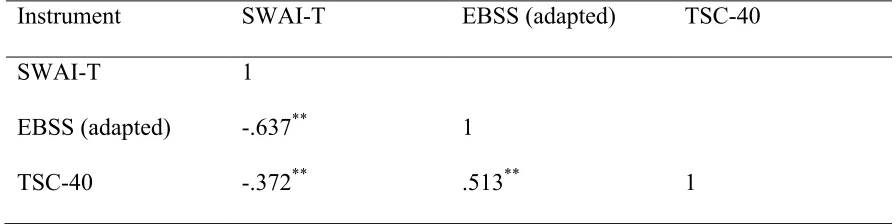
Bivariate correlations revealed significant relationships among all three of the main
variables. The SWAI-T full-scale scores had a moderate negative correlation with the
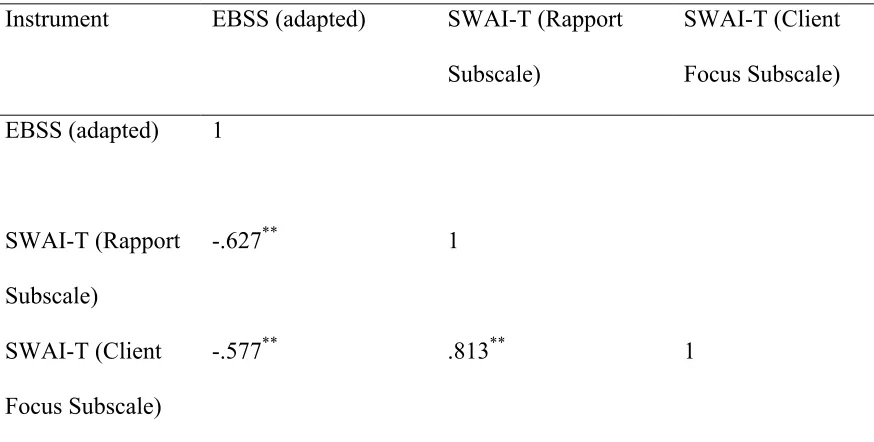
EBSS (adapted) full-scale scores (r = -.637, p < .01) and a moderate negative correlation
scores had a moderate positive correlation with the TSC-40 full-scale scores (r = .513, p
< .01). Regression analysis yielded a model whereby 40.6% of the variation in the
supervisory alliance can be explained by microaggressions in supervision F (1, 48) =
32.752, p < .01. Hierarchical multiple regression analysis determined that the presence of
traumatic experiences does not add to the predictive capacity of the model. The results
suggest that the presence of racial microaggressions is an important impediment to the
supervisory working alliance. Implications, limitations, and future directions were
THE RELATIONSHIPS AMONG THE EXPERIENCES OF RACIAL MICROAGGRESSIONS IN SUPERVISION, TRAUMATIC
EXPERIENCES, AND THE SUPERVISORY WORKING ALLIANCE IN PROFESSIONAL COUNSELORS AND
COUNSELORS-IN-TRAINING by
Caroline O’Hara
A Dissertation
Presented in Partial Fulfillment of Requirements for the Degree of
Doctor of Philosophy in
Counselor Education and Practice in
the Department of Counseling and Psychological Services in
the College of Education Georgia State University
Copyright by Caroline O’Hara
ii
ACKNOWLEDGMENTS
It is with great appreciation that I recognize my dissertation committee members, especially my Co-Chairs, Dr. Greg Brack and Dr. Catharina Chang. I would also like to thank the rest of my professional family, including my professors, supervisors, and mentors, as well as my personal family, including my friends and loved ones. Your years of investment, support, love, and laughter have helped me get to where I am today.
I would also like to thank the Southern Association for Counselor Education and Supervision (SACES) for awarding me one of the 2013 SACES Research Grants in support of this investigation.
iii
TABLE OF CONTENTS
Page
List of Tables ... iv
Abbreviations ... v
Chapter 1 RACIAL MICROAGGRESSIONS, THE SUPERVISORY WORKING ALLIANCE, AND TRAUMATIC EXPERIENCES IN PROFESSIONAL COUNSELORS ... 1
Introduction ... 1
Supervision ... 1
Microaggressions ... 2
Trauma ... 15
Conclusions and Implications for Counselor Educators ... 20
References ... 23
2 THE RELATIONSHIPS AMONG THE EXPERIENCES OF RACIAL MICROAGGRESSIONS IN SUPERVISION, TRAUMATIC EXPERIENCES, AND THE SUPERVISORY WORKING ALLIANCE IN PROFESSIONAL COUNSELORS AND COUNSELORS-IN-TRAINING ... 35
Introduction and Literature Review ... 35
Method ... 42
Results ... 51
Discussion ... 56
References ... 65
iv
LIST OF TABLES
Table Page
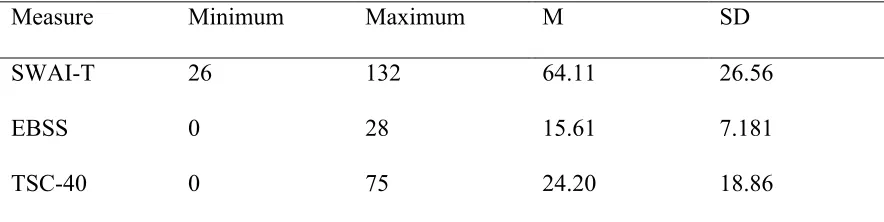
1 Descriptive Statistics for Full-Scale Scores ... 51
2 Correlations between Microaggressions, Trauma, and the Supervisory Alliance .. 54
v
ABBREVIATIONS
APA American Psychiatric Association
DSM Diagnostic and Statistical Manual of Mental Disorders
EBSS Experiences of Black Supervisors Scale
PTSD Posttraumatic Stress Disorder
SWAI-T Supervisory Working Alliance Inventory – Trainee Version
CHAPTER 1
RACIAL MICROAGGRESSIONS, THE SUPERVISORY WORKING ALLIANCE, AND TRAUMATIC EXPERIENCES IN PROFESSIONAL COUNSELORS
Introduction
Supervision is one of the hallmarks of effective preparation for professional
counselors; it involves a relationship built upon trust, respect, and safety (Bernard &
Goodyear, 2009). Microaggressions, which are regular offenses that intentionally or
unintentionally serve to insult, undermine, and demean the recipient (Sue, 2010), can
severely affect any interpersonal relationship, including supervision (Constantine & Sue,
2007; Sue et al., 2007). Since the effects of such common, relentless interpersonal
stressors may even be traumatic (Carter, 2007; Helms, Nicholas, & Green, 2012), it
follows that exploring supervisory guidelines to prevent and address such issues is
needed. Therefore, in this paper, the author will explore the constructs of racial
microaggressions, the supervisory working alliance, and traumatic experiences.
Supervision
Counseling supervision offers a unique, interpersonal, professional relationship
that aims to promote professional functioning and client welfare through an evaluative,
hierarchical relationship that exists over time (Bernard & Goodyear, 2009). Many
elements impact the supervisory alliance including supervisor factors, supervisee factors,
and supervision processes. The supervisory relationship is one that is inherently laden
with power dynamics as the supervisor is in an evaluative position throughout
supervision (Crook Lyon & Potkar, 2010).
With the demographic changes in racial and ethnic diversity in the US, it becomes
more likely over time that cross-cultural counseling and supervision relationships will
order to promote multiculturally competent counseling practice, it is imperative that
supervision sessions directly address constructs and concerns surrounding race, ethnicity,
and culture (Constantine, 1997). Although the responsibility to initiate such dialogues lies
with the supervisor (Bernard & Goodyear, 2009; Constantine, 2003; Constantine & Sue,
2007), open discussions of race, ethnicity, and culture are still considered taboo and often
painful topics (Sue et al., 2007; Utsey, Hammar, & Gernat, 2005). As a result, many
supervisors and supervisees do not engage in these kinds of multicultural dialogues
(Utsey, Gernat, & Hammar, 2005). However, according to Helms and Cook (1999), if the
counselor or supervisor prompts dialogues about race and culture in supervision, then the
alliance can be strengthened and discord can be minimized.
Given the importance of race, ethnicity, and culture in counseling supervision,
researchers have begun to address the nature of microaggressions in supervision
(Constantine & Sue, 2007). According to Helms and Cook (1999), racial
microaggressions may impair the supervisory alliance, processes, and outcomes. The
primary focus of investigations on microaggressions in supervision has included the
perspectives of supervisees who identify as racial or ethnic minority group members. The
following section will explore what microaggressions are, how they relate to racism,
privilege, and oppression, and how they may manifest in clinical supervision.
Microaggressions
In 1978, Pierce, Carew, Pierce-Gonzalez, and Willis put forth the term
microaggressions, a term which aims to expose the subtleties of the dynamics embedded
The chief vehicle for proracist behaviors are microaggressions. These are subtle,
stunning, often automatic, and non-verbal exchanges which are “put downs” of
blacks by offenders. The offending mechanisms used against blacks often are
innocuous. The cumulative weight of their never-ending burden is the major
ingredient in black-white interactions. This accounts for a near inevitable
perceptual clash between blacks and whites in regard to how a matter is described
as well as the emotional charge involved. (Pierce et al., 1978, p. 66)
Since then, many other scholars have built upon these principles (Smith, Shin, & Officer,
2012; Sue, 2010; Sue et al., 2007) and extended the term to explore the nature and
measure the effects of microaggressions on other races and ethnicities (Nadal, 2011;
Torres-Harding, Andrade, & Romero Diaz, 2012) as well as other social identities such as
gender (Capodilupo et al., 2010; Lewis, Mendenhall, Harwood, & Browne Huntt, 2013),
gender identity (Nadal, 2013), and sexual identity (Balsam, Molina, Beadnell, Simoni, &
Walters, 2011; Shelton & Delgado-Romero, 2011). Sue and colleagues (2007) noted that
“racial microaggressions are potentially present whenever human interactions involve
participants who differ in race and culture (teaching, supervising, training, administering,
Racism, Privilege, and Oppression
In order to understand the nature and nuances of racial microaggressions more
fully, an exploration of terms is necessary. Racial microaggressions are closely tied to the
constructs of racism, privilege, and oppression. Racism is a system of unearned
advantages (privilege) and unearned disadvantages (oppression) based upon the social
construct of race (Chang, Gnilka, & O’Hara, 2014; Crethar, Torres Rivera, & Nash,
2008). Racism can be intentional or unintentional, overt or covert, hostile or passive, and
individual or systemic (Chang et al., 2014). Privileges are unearned advantages that are
afforded certain groups in a society based on perceived group membership (Chang et al.,
2014). Oppression includes the unearned disadvantages that exist because of racism and
is the result of the restriction of societal equity, access to resources, participation in
community and political processes, and public harmony which respects the common good
(Crethar et al., 2008). Because the dynamics of privilege, oppression, and racism exist
widely and pervasively across individuals, institutions, and US culture, they operate and
manifest in supervisory relationships as well (Constantine & Sue, 2007; Hays & Chang,
2003; Sue & Sue, 2012).
Both privilege and oppression are symptoms of social injustice (Chang et al.,
2014). For instance, men experience sex privilege, whereas women experience sexism.
Heterosexuals experience sexual identity privilege, whereas any other sexual identity
(e.g., bisexual, pansexual, asexual, lesbian, gay) experiences oppression based on sexual
identity. Cisgender individuals (those with inherent sex and gender congruence)
experience privilege based upon gender identity while transgender individuals experience
experience race privilege, while other racial and ethnic groups experience racial
oppression and racism. It should be noted that an individual can be privileged and
oppressed on multiple levels simultaneously and that the intersection of social identities
can create nuanced, dynamic, and idiosyncratic life experiences.
Examples of everyday race privilege include being free from tracking,
harassment, or surveillance while shopping, being able to see wide representations of
one’s race in the media, being able to speak without representing one’s entire racial
group, or being able to use any method of payment without race being an issue
(McIntosh, 1990). The impact of race privilege includes access, assuredness,
disconnection, security, obliviousness, and power. In terms of supervisory relationships,
although supervisors should be addressing and dismantling privilege and oppression in
the supervisory relationship and modeling this for their supervisees’ work with clients, it
is often the case that White privilege intercedes and prevents White supervisors from
engaging in cross-cultural dialogues (Constantine & Sue, 2007; Hays & Chang, 2003).
A metaphorical example of unexamined privilege is that of the moving sidewalk.
Such an apparatus propels the people on it in a specific direction, without any effort from
the people onboard. For people born onto this moving sidewalk, knowing no other reality,
they would likely assume a degree of normality about their lived experience. For these
individuals, as they pass by others who are actively moving on their own outside of the
moving sidewalk, they may wonder why others progress so slowly – all the while, unable
to understand the unearned advantage and momentum that undergirds their lives. This is
an example of unearned, unexamined privilege. White Americans progress through life
all the while, remain blithely oblivious to the horrors and injuries of racism (Constantine
& Sue, 2007).
As racism, privilege, and oppression relate to counselor preparation, it is
important to note that the majority of counselor educators identify as White or European
American (Hanna, Talley, & Guindon, 2000; Hays & Chang, 2003). As a result, it is
likely that these individuals are conveying Eurocentric biases and perspectives to
counselors-in-training (Hanna et al., 2000; Hays & Chang, 2003; Sue, Lin, Torino,
Capodilupo, & Rivera, 2009). Dialogues on race and racism in educational settings are
challenging and often originate from microaggressions in classroom discussions or
educational resources (Sue et al., 2009). Although counselor educators are ethically
mandated to explore social and cultural issues in the classroom and in supervision, the
reality is that often these dialogues do not occur or do not unfold well (Constantine, 1997,
2003; Constantine & Sue, 2007; Utsey, Gernat, & Hammar, 2005).
Methods of Microaggression Delivery
In order to understand more about racial microaggressions in supervisory
relationships as subtle forms of racism, it is important to examine the ways in which
microaggressions are transmitted. People deliver microaggressions via three methods or
processes - verbal, behavioral, and environmental (Sue, 2010; Sue et al., 2007).
Regardless of the delivery mechanism, the messages are the same. You are not welcome.
You are not worthy. You are inferior. You do not belong. Your experiences do not matter.
Your reality does not exist. “Racial microaggressions are brief and commonplace daily
that communicate hostile, derogatory, or negative racial slights and insults to the target
person or group” (Sue et al., 2007, p. 273).
Verbal microaggressions include spoken comments or exchanges (Sue, 2010; Sue
et al., 2007). Regarding race, Constantine and Sue (2007) found multiple examples of
verbal microaggressions in their investigation of supervision between White supervisors
and Black supervisees. One example included a supervisee (participant) who indicated
that her supervisor conveyed how pleased he was to see so many Black college students
since many of them do not escape the “ghetto” of their childhoods. Behavioral
microaggressions include various actions or non-actions (Sue, 2010; Sue et al., 2007). An
example may include differential attention to members of different races and various
topics during group supervision. Environmental microaggressions encompass contextual,
systemic, and situational factors (Sue, 2010; Sue et al., 2007). Environmental
microaggressions may or may not be interpersonal in nature. “The term ‘environmental
microaggression’ refers to the numerous demeaning and threatening social, educational,
political, or economic cues that are communicated individually, institutionally, or
societally to marginalized groups” (Sue, 2010, p. 25). Examples of environmental racial
microaggressions may include a counselor education program consisting of all White or
European American faculty members, or a supervision group consisting of all White or
European American members except for one.
Sue (2010) offered multiple examples of environmental microaggressions
including (a) the presence of a Native American mascot of a school or sports team; (b)
the exclusion or absence of culturally-appropriate and inclusive cultural practices,
of European Americans and White males in positions of organizational and institutional
leadership and management. Other examples might include the presence of Confederate
battle flag emblems in yards, car bumper stickers, or even state flags. In fact, the state
flag of Georgia incorporated the Confederate flag design from 1956 through 2001
(“Georgians prefer,” 2004) and the state flag of Mississippi incorporates the Confederate
flag in its state flag to this day (“For Mississippi,” 2012; “Mississippi votes,” 2001). The
theme that binds these environmental microaggressions is that the group with the
institutional and cultural power and privilege (i.e., European Americans and Whites) has
the ability to define the parameters of what is acceptable, true, and normal practice
regardless of the impact on historically marginalized groups. Although the intent of the
messages may range from hostile to oblivious, the impact is that those with less societal
power feel unwanted, demeaned, misunderstood, invalidated, or unsafe (Sue, 2010; Sue
et al., 2007).
Forms of Microaggressions
According to Sue et al. (2007) and Sue (2010), microaggressions can be described
along two dimensions that include delivery methods and forms. To review, the three
delivery methods of microaggressions are verbal, behavioral, and environmental. Another
dimension to microaggressions includesthe forms that the microaggressions take.
According to Sue et al. (2007), microaggressions take three forms, namely, microassaults,
microinsults, and microinvalidations. Racial microassaults are explicit verbal or
non-verbal attacks with the intent to harm the target. Racial microinsults encompass non-verbal or
non-verbal insults that are disrespectful, insensitive, and/or demeaning to the person’s
“that exclude, negate, or nullify the psychological thoughts, feelings or experiential
reality of a person of color” (p. 278). Whereas microassaults are often conscious and
deliberate, microinsults and microinvalidations tend to be more ambiguous, unconscious,
unintentional, and invisible to the perpetrator. To summarize, forms of microaggressions
involve the nature of what is said (content) and the effect on the recipient (impact).
In 2007, Constantine and Sue examined the perspectives of Black supervisees in
cross-racial supervisory relationships. They found multiple examples of racial
microinvalidations and microinsults. For example, supervisees reported that supervisors
tended to ignore, dismiss, or avoid discussing race and racial issues in supervision –
events that are classified as microinvalidations when using the Sue (2010) and Sue et al.
(2007) frameworks. These invalidations negatively impacted the supervisory alliance and
contributed to supervisee emotional frustration and disappointment.
Another theme that emerged from the Constantine and Sue (2007) study was that
supervisees reported that many supervisors ignored systemic factors and oppressive
forces that contribute to client concerns. Instead of engaging in multiculturally competent
dialogues, these supervisors appeared to be ignorant of societal privileges and oppression.
Constantine and Sue (2007) indicated that the supervisees felt mistrustful of these
supervisors and that the supervisory alliances were marred. Participants reported that in
these instances, the supervisors ignored the role that racism and discrimination played in
the lives of clients. Each denial of the racial reality of a client or supervisee exemplifies a
microinvalidation (Sue, 2010). Sue et al. (2007) and Sue (2010) identified this particular
microinvalidation as the myth of meritocracy. This is the inaccurate belief that every
plays a minimal role in life successes (Sue et al., 2007). In essence, this perspective can
be conceptualized as victim-blaming. Constantine and Sue (2007) indicated that the
supervisors described in their study likely ascribed to beliefs in the myth of meritocracy.
These faulty beliefs,
fueled by the lack of awareness of their White privilege, clearly could cause them
to misattribute the etiology of some clients’ mental health concerns to factors that
are individual or personal in nature rather than tied to structural or institutional
discrimination. (Constantine & Sue, 2007, p. 149)
Constantine and Sue (2007) also uncovered a theme whereby supervisors offered
culturally inappropriate or insensitive treatment recommendations to their supervisees.
For example, as indicated by one of the trainees, a supervisor directed the
supervisee to encourage his Black gay male client to disengage from his family of
origin, which was viewed by the supervisee as a primary support
system….Asking clients of color to disengage from a system that potentially
provides vital support in the realm of race-related phenomena could prove to be
damaging to their psychological well-being because it undermines their cultural
matrix.” (Constantine & Sue, 2007, p. 149)
The supervisor appeared to be viewing the client from a Eurocentric perspective that was
biased and not culturally responsive or appropriate. These microinvalidations contributed
to damaged supervisory alliances and even client outcomes (Constantine & Sue, 2007).
Contemporary Racism
For the majority of White Americans, being called a “racist” is an extreme
rap artist Kanye West who had stated that “George Bush doesn’t care about Black
people,” by stating in a later interview that, “He called me a racist…I resent it. It's not
true, and it was one of the most disgusting moments in my Presidency.” (“Decision
Points,” 2010).
Whereas overt, blatant racism has become less socially acceptable and less legal
over time, covert, insidious, subtle, ambiguous, and unconscious racism continues to
thrive (Constantine & Sue, 2007; Gaertner & Dovidio, 1977; Pearson, Dovidio, &
Gaertner, 2009; Solórzano, Ceja, & Yosso, 2000). Several constructs relate to this
contemporary racism including prejudice, racial harassment, racial discrimination,
symbolic racism, modern racism, and aversive racism. Prejudice includes positive or
negative attitudes toward other races, often informed by stereotypes (Bryant-Davis &
Ocampo, 2005). Racial harassment has a more overt and open quality and includes
majority group hostility and denigration of other racial groups (Carter, 2007). Racial
discrimination allows majority group members to distance, avoid, and ostracize minority
group members, often in a covert manner (Carter, 2007). Symbolic racism (Kinder &
Sears, 1981; Sears & Henry, 2003) includes a combination of racial anxiety and
conservative values including individualism. Modern racism (McConahay, 1986)
examines the belief system that holds that discrimination has ended, so any efforts to
promote racial equality are too ambitious, unneeded, and unfair. Aversive racism
embodies the discrepancy between White individuals’ denial of overt prejudice and their
actual, unconscious negative cognitions and emotions regarding racial and ethnic
minority group members (Dovidio & Gaertner, 1986; Pearson et al., 2009). This type of
attitudes that favor equality while simultaneously harboring unconscious and negative
attitudes and biases toward other racial, ethnic, and cultural groups.White people do not
want to appear racist (they are averse to endorsing overt prejudice) and at the same time,
they often exhibit discomfort and unease (averseness) around other racial groups.
Constantine and Sue (2007) found evidence of this double-edged ambivalence in
cross-racial supervision. Several Black supervisees perceived their White supervisors as
reluctant to give feedback for fears of being labeled as racist. Additionally, many
supervisees reported that supervisors appeared to focus mostly on supervisee clinical
weaknesses and not on existing strengths. These types of ambivalence exemplify the
nature of aversive racism manifested through racial microaggressions, specifically
microinvalidations. The supervisees experienced mistrust, discord, frustration, and
disappointment in their supervision. Accurate, appropriate, and balanced feedback and
evaluations are key components of ethical and competent supervision (Bernard &
Goodyear, 2009). However, it appears that in the Constantine and Sue (2007)
investigation, White supervisors were failing in their supervisory duties to the detriment
of their supervisees and, by extension, the clientele.
Constantine and Sue (2007) also found evidence of supervisor prejudice toward
Black people. Multiple participants reported that their White supervisors held racially
stereotyped views of Black supervisees and Black clientele. These prejudices negatively
impacted the supervisory alliance and quality of client care and can be classified as racial
The Effects of Racial Microaggressions
The construct of racial microaggressions intersects and imbricates with other
nuanced constructs such as race-related stress (Williams, Yu, Jackson, & Anderson,
1997), racial and ethnic discrimination (Fang & Myers, 2001; Williams et al., 1997),
perceived racial and ethnic discrimination (Flores, Tschann, Dimas, Pasch, & de Groat,
2010; Moradi & Risco, 2006; Sellers & Shelton, 2003), race-based traumatic stress
(Carter, 2007), racial battle fatigue (Smith, Allen, & Danley, 2007), and posttraumatic
stress disorder (PTSD; Bryant-Davis & Ocampo, 2005; Helms et al., 2012). Numerous
studies have demonstrated the link between factors of racism, racial discrimination, and
racial microaggressions and adverse experiences and life outcomes. Constantine and Sue
(2007) found results consistent with previous findings, specifically in supervisory
relationships.
Regarding physical health outcomes, experiences of racial discrimination relate to
high blood pressure (Harrel, Hall, & Taliaferro, 2003; Steffen, McNeilly, Anderson, &
Sherwood, 2003) and sleep disturbance (Steffen & Bowden, 2006). Regarding mental
health outcomes, experiences of racial discrimination relate to stress (Fang & Myers,
2001; Moradi & Risco, 2006; Solórzano et al., 2000; Sue, Capodilupo, & Holder, 2008),
depression (Lambert, Herman, Bynum, & Ialongo, 2009; Santana, Almeida-Filho,
Roberts, & Cooper, 2007), substance abuse (Wei, Alvarez, Ku, Russell, & Bonett, 2010),
eating disorders (Mastria, 2002), and posttraumatic stress disorder (Flores et al., 2010;
Pieterse, Carter, Evans, & Walter, 2010). Regarding educational outcomes, Solórzano et
al. (2000) found that racial microaggressions created an adverse campus climate and
among African American college students. In addition, according to Steele and Aronson
(1995), stereotype threat is a major factor that undermines achievement, resulting in
lowered scores on high-stakes standardized tests for African Americans. Nadal (2011)
found that individuals who self-identify as racial and ethnic minorities can recognize
racial microaggressions and do connect them to race and racism. Carter (2007) argued
that based on their chronic nature and cumulative impact, racial microaggressions are
stressors that can result in physical and mental harm.
Investigators have documented microaggressions in numerous formats and arenas
of life such as graduate teaching assistantships (Gomez, Khurshid, Freitag, & Lachuk,
2011), college campuses (Solórzano et al., 2000), daily life (Ong, Burrow, Fuller-Rowell,
Ja, & Sue, 2013), counseling (Constantine, 2007), and clinical supervision (Constantine
& Sue, 2007). Therefore, for counselor educators, microaggressions in supervision is a
pressing topic, and one not often addressed in either supervision or the literature (Bernard
& Goodyear, 2009; Constantine & Sue, 2007; Utsey, Gernat, & Hammar, 2005). Despite
receiving multicultural training, for example, White supervisors often demonstrate covert
or unconscious racism (Constantine, 1997, 2003; Constantine & Sue, 2007; Utsey,
Gernat, & Hammar, 2005), the results of which could cause harm to supervisees, the
supervisory relationship, and clients (Helms & Cook, 1999). Furthermore, Helms and
Cook (1999) argued that even though most White supervisors would not openly espouse
or engage in overt racism, since racism permeates aspects of everyday life, then
supervision is no more resistant than any other realm of life.
Because experiences of racism and microaggressions have the potential to be so
that these types of oppressive experiences can be thought of as emotionally abusive,
chronic, traumatic stressors (Bryant-Davis & Ocampo, 2005; Carter, 2007;
Sanchez-Hucles, 1998; Helms et al., 2012). In order to understand how microaggressions may
relate to trauma, the following section explores trauma and the connections between
racial microaggressions and trauma.
Trauma
The word trauma comes from the Greek, titrōskein, meaning “to wound”
(Trauma, n.d.). Medical and mental health professionals have agreed upon several key
features to consider when diagnosing traumatic disorders. According to the fifth edition
of the Diagnostic and Statistical Manual of Mental Disorders (DSM), the hallmark of
PTSD is the development of a specific constellation of symptoms as responses to
traumatic stressors or triggers (American Psychiatric Association [APA], 2013).
Traumatic stressors are present when someone is exposed “to actual or threatened death,
serious injury or sexual violence” (APA, 2013, p. 271). Additionally, exposure must
follow at least one of the following scenarios:
[d]irectly experiencing the traumatic event. Witnessing, in person, the event as it
occurred to others. Learning that traumatic event(s) occurred to a close family
member or close friend….Experiencing repeated or extreme exposure to aversive
details of the traumatic event(s). (APA, 2013, p. 271)
Notably, the essential criteria focus on concrete, explicit, and recent physical
danger to one’s corporeal form and make no mention of threats to one’s mental integrity
or wellness.When considering the nature of trauma, it is important to note that not all
individuals (Briere & Scott, 2006). In other words, people respond differently to trauma.
According to Terr (1991), Type I traumas tend to be non-interpersonal, singular events
(e.g., a hurricane), whereas Type II traumas tend to be prolonged, repeated, interpersonal
experiences (e.g., chronic abuse). Given Terr’s (1991) framework in the context of
clinical supervision, it appears that Type II traumas would be the proper classification for
supervisory microaggressions.
Precursors and Responses to Trauma
Many factors affect the likelihood of individuals developing traumatic responses,
the intensity of the responses, and the complications associated with the responses (see
Briere & Scott, 2006 for a review). One set of factors includes demographic and other
characteristics that existed for the individual before or during the trauma (Briere & Scott,
2006). For example, individuals who were already experiencing heightened distress at or
around the time of the traumatic stressor (peritraumatic distress) are more likely to
develop posttraumatic stress symptoms (Brewin, Andrews, & Rose, 2000; Roemer,
Orsillo, Borkovec, & Litz, 1998). In theory, for supervisees who are already experiencing
stress prior to or during supervision, this may heighten the impact of negative supervision
experiences.
In addition, race is a factor as people in the racial and ethnic minority are at a
higher risk for developing traumatic symptomatology (Ruch & Chandler, 1983).
Identifying as a woman or a racial or ethnic minority group member constitutes a risk
factor for developing posttraumatic symptoms because these groups, in general,
experience greater exposure to situations and incidents that produce traumatic responses
supervisees who identify as racial or ethnic minority group members. Another set of
factors relates to the characteristics of the stressor itself. For instance, if the stressor is
perceived as being unpredictable or uncontrollable, post-traumatic reactions may be more
likely or more intense (Carlson & Dalenberg, 2000; Foa, Zinbarg, & Rothbaum, 1992).
Finally, social support, societal response, and availability and access to resources can
impact the level of intensity of the reaction. Reactions and communities that are
accepting, respectful, compassionate, and validating are extremely helpful in mitigating
traumatic effects (Briere & Scott, 2006). The inverse is true as well. For supervisees, if
their supervisory relationships are already detrimental (as well as evaluative), then it
follows that the clinical supervision experience may become oppressive and traumatic.
Racial Microaggressions as Traumatic Stressors
Traumatic sequelae can result from many stressors including interpersonal abuse
(Briere & Scott, 2006). According to Lourie and Stefano (1978), emotional abuse is a
“mental injury” (as cited in Sanchez-Hucles, 1998). Melchert (2000) defined emotional
abuse as rejection and emotional neglect as non-responsiveness. The key to establishing
the presence of emotional abuse is to determine whether the consequences of an act in
question were detrimental (Sanchez-Hucles, 1998). Constantine and Sue (2007)
“conclude that racial microaggressions take a psychological toll on Black trainees, and
their effects cannot be considered minimally harmful” (p. 149).
According to Hart, Germain, and Brassard (1983), emotional abuse includes the
commission and/or omission of actions that result in mental, physical, or emotional harm
of the target (as cited in Sanchez-Hucles, 1998). Sanchez-Hucles (1998) also linked the
Garbarino and Vondra (1987) asserted that emotional abuse can be related to
social and cultural contexts when groups or individuals perpetuate negative and
rejecting messages towards other individuals and groups that can impede the
development of positive self concepts. These negative and rejecting messages are
clearly communicated in society, as in the case when people of color are depicted
in stereotyped ways in the media, and in literature, when the cultures of these
groups are ignored, disparaged or belittled, and perhaps most insidiously when
society perpetuates the myth that fairness and opportunity are equally available to
all (Jones & Jones, 1987). (Sanches-Hucles, 1998, p. 73)
Furthermore, “the trauma and emotional abusiveness of racism is as likely to be due to
chronic, systemic and invisible assaults on the personhoods of ethnic minorities as a
single catastrophic event” (Sanches-Hucles, 1998, p. 72). These passages are consistent
with the theoretical and empirical works of Sue (2010), Sue et al. (2007), and Constantine
and Sue (2007), the latter specifically regarding clinical supervision. Constantine and Sue
(2007) found evidence of supervisor stereotyping of clients and supervisees, supervisor
ignorance of minority cultures, supervisor multicultural insensitivity, and supervisor
belief in the myth of meritocracy. These microaggressions served to undermine the
self-esteem of supervisees and contribute to unhealthy supervisory relationships.
Trauma experts such as van der Kolk, Roth, Pelcovitz, Sunday, and Spinazzola
(2005) and Herman (1992, 1997) have contributed to an understanding of traumatic
stressors that transcends the limited notion that the stressor must be purely physical and
concrete. For instance, although physically abusive and sexually abusive experiences are
experiences can yield the same types of traumatic responses in targets (Briere & Scott,
2006). In other words, not all of the traumatic stressors that are widely accepted by
medical and mental health communities encompass the breadth of traumatic stressors
(Briere & Scott, 2006; Carter, 2007). In fact, Herman (1992) and Carlson and Dalenberg
(2000) argued that the diagnostic criteria for PTSD omit numerous events and
circumstances – not related to injury or death – that may trigger posttraumatic responses.
Carter (2007) proposed a new diagnostic category of Race-Based Traumatic Stress that
would serve as a non-pathological model for understanding, preventing, and treating
race-based injuries. Similarly, Franklin, Boyd-Franklin, and Kelly (2006) proposed a
Reactions to Racism-Related Trauma diagnostic category that aims to recognize the link
between racism and trauma in a way that does not pathologize targets of racism.
According to Briere and Scott (2006), “ an event is traumatic if it is extremely
upsetting and at least temporarily overwhelms the individual’s internal resources” (p. 4).
Many argue that oppressive experiences such as racism can be conceptualized as
emotionally abusive, chronic traumatic stressors (Bryant-Davis & Ocampo, 2005; Carter,
2007; Sanchez-Hucles, 1998; Helms et al., 2012). Furthermore, Helms and colleagues
(2012) reasoned that, “immediate or delayed PTSD symptoms may result from (a) direct
cataclysmic racial or ethnic cultural events, (b) vicarious or witnessed cataclysmic events,
and (c) racial and cultural microaggressions” (p. 68). Helms et al. (2012) further
maintained that “racial/cultural microaggressionsare discriminatory events that trigger
memories of past personal or historical group trauma that are recalled as threatening to
one’s life or mental health” (p. 68). In this framework, the PTSD diagnosis may in fact be
are traumatic stressors as defined by the DSM because they serve as a conduit, linking the
target of the microaggression to an event that involved physical injury or death.
Resistance and Resilience
Although racism and racial microaggressions are well-documented and pervasive,
it is also noteworthy that resistance and resilience strategies are common as well. For
example, according to Solórzano et al., 2000, African American college students create
safer, affirmative spaces, both on-campus and off-campus, where they can develop a
sense of community, support, and safety. To manage the chronic stressor of invisibility,
target groups may engage in what Franklin and Boyd-Franklin (2000) termed,
“microaggression repair” (p. 39). Constantine and Sue (2007) concluded that their
participants (who were Black supervisees) were highly aware of and skilled at navigating
contemporary forms of racism. Combining their “ability to distinguish between opposing
racial realities, and ability to ward off implied racial deficiencies may have allowed the
trainees in our investigation to better cope with incidents of racial microaggression” (pp.
149-150).
Conclusions and Implications for Counselor Educators
The term microaggression has been used since the 1970’s. Scholars have recently
investigated racial microaggressions and their effects on members of racial, cultural, and
ethnic minority communities in a number of arenas of life, including counseling
supervision. The literature and evidence discussed in this paper indicate that racial
microaggressions (both inside and outside of counseling supervision) are pervasive, often
obscured, and harmful. It is clear that further research is needed in the area of racial
The majority of studies on racial microaggressions have included qualitative
methodologies, seeking the perspectives of those who are targets of the microaggressions.
Two recent investigations have delved into scale development and validation in order to
provide quantitative data regarding the experiences and classifications of racial
microaggressions (Nadal, 2011; Torres-Harding et al., 2012). Future investigations
(including qualitative, mixed-methods, and quantitative designs) should continue to
examine and validate the classification systems of microaggressions proposed by Sue et
al. (2007) and Sue (2010). These efforts could emphasize race, gender, sexual identity,
and any other social identities with the potential of marginalization. In addition,
researchers could explore the nuances and frequencies of different types of
microaggressions in different populations in order to understand the dynamics involved.
Future investigations could also provide support and models for professional
counselors and counselor educators to engage in advocacy, education, and prevention
efforts. Such activities could intervene on the client level, the counselor level, and the
supervisor/educator level. All of these investigations and pursuits would serve to advance
multicultural competence in supervision, multicultural competence in professional
counseling, and social justice for clients, counselors, and communities.
To date, no quantitative investigations have examined racial microaggressions in
supervision from a supervisee perspective. Because the potential for harm is so potent
with racial microaggression dynamics, and because wellness, prevention, development
(Myers, 1992) and social justice (Chang et al., 2014) are foundations of professional
counseling, it follows that further investigations will need to continue examining racial
analyze the relationships among the experiences of racial microaggressions in
supervision, traumatic symptomatology, and assessments of the supervisory working
alliance from a supervisee perspective.
References
American Psychiatric Association. (2013). Diagnostic and statistical manual of mental
disorders (5th ed.). Washington, DC: Author.
Balsam, K. F., Molina, Y., Beadnell, B., Simoni, J., & Walters, K. (2011). Measuring
multiple minority stress: The LGBT people of color microaggressions scale.
Cultural Diversity and Ethnic Minority Psychology, 17, 163-174.
doi:10.1037/a0023244
Barnes, R. R. (2011). Racial microaggressions, racial identity, and working alliance in
cross-racial counseling supervision relationships between Black supervisors and
White supervisees (Unpublished doctoral dissertation). The University of North
Carolina at Greensboro, Greensboro, N.C.
Bernard, J. M., & Goodyear, R. K. (2009). Fundamentals of clinical supervision (4th ed.).
Upper Saddle River, N.J.: Pearson.
Brewin, C., Andrews, B., & Rose, S. (2000). Fear, helplessness, and horror in
posttraumatic stress disorder: Investigating DSM-IV criterion A2 in victims of
violent crime. Journal of Traumatic Stress, 13, 499-509.
Briere, J. (2004). Psychological assessment of adult posttraumatic states:
Phenomenology, diagnosis, and measurement (2nd ed.). Washington, DC:
American Psychological Association.
Briere, J., & Scott, C. S. (2006). Principles and practices of trauma therapy: A guide to
symptoms, evaluation, and treatment. Thousand Oaks, CA: Sage Publications,
Bryant-Davis, T., & Ocampo, C. (2005). Racist incident–based trauma. The Counseling
Psychologist, 33, 479-500. doi:10.1177/0011000005276465
Capodilupo, C. M., Nadal, K. L., Corman, L., Hamit, S., Lyons, O. B., & Weinberg, A.
(2010). The manifestation of gender microaggressions. In D. Sue (Ed.),
Microaggressions and marginality: Manifestation, dynamics, and impact (pp.
193-216). Hoboken, NJ: John Wiley & Sons Inc.
Carlson, E. B., & Dalenberg, C. J. (2000). A conceptual framework for the impact of
traumatic experiences. Trauma, Violence and Abuse, 1, 4-28.
doi:10.1177/1524838000001001002
Carter, R. T. (2007). Racism and psychological and emotional injury: Recognizing and
assessing race-based traumatic stress. The Counseling Psychologist, 35, 13–105.
doi:10.1177/0011000006292033
Chang, C. Y., Gnilka, P., & O’Hara, C. (2014). Social justice counseling. In D. G. Hays
& B. T. Erford (Eds.), Developing multicultural counseling competence: A
systems approach (2nd ed., pp. 58-81). NY: Pearson.
Constantine, M. G. (1997). Facilitating multicultural competency in counseling
supervision: Operationalizing a practical framework. In D. B. Pope-Davis & H. L.
K. Coleman (Eds.), Multicultural counseling competencies: Assessment,
education and training, and supervision (pp. 310–325). Thousand Oaks, CA:
Sage.
Constantine, M. G. (2003). Multicultural competence in supervision: Issues, processes,
Toporek (Eds.), Handbook of multicultural competencies in counseling and
psychology (pp. 383–391). Thousand Oaks, CA: Sage.
Constantine, M. G. (2007). Racial microaggressions against African American clients in
cross-racial counseling relationships. Journal of Counseling Psychology, 54, 1-16.
doi:10.1037/0022-0167.54.1.1
Constantine, M. G., & Sue, D. W. (2007). Perceptions of racial microaggressions among
Black supervisees in cross-racial dyads. Journal of Counseling Psychology, 54,
142–153. doi:10.1037/0022-0167.54.2.142
Crethar, H. C., Torres Rivera, E., & Nash, S. (2008). In search of common threads
linking multicultural, feminist, and social justice counseling paradigms. Journal
of Counseling and Development, 86, 269-278.
Crook Lyon, R. E., & Potkar, K. A. (2010). The supervisory relationship. In N. Ladany &
L. J. Bradley (Eds.), Counselor supervision (4th ed., pp. 15-52). New York:
Routledge.
Decision Points: Former president George W. Bush reflects on the most important
decisions of his presidential and personal life. (2010, November 8).
NBCNews.com. Retrieved from
http://www.nbcnews.com/id/40076644/ns/politics-decision_points/#.UXQgNJV23ww
Dovidio, J. F., & Gaertner, S. L. (1986). Prejudice, discrimination, and racism: Historical
trends and contemporary approaches. In J. F. Dovidio and S. L. Gaertner (Eds.),
Prejudice, discrimination, and racism (pp. 1-34). Orlando, FL: Academic Press,
Efstation, J. F., Patton, M. J., & Kardash, C. M. (1990). Measuring the working alliance
in counselor supervision. Journal of Counseling Psychology 37, 322-329.
doi:10.1037/0022- 0167.37.3.322
Elliott, D. M., & Briere, J. (1992). Sexual abuse trauma among professional women:
Validating the Trauma Symptom Checklist-40 (TSC-40). Child Abuse and
Neglect, 16, 391-398.
Fang, C. Y., & Myers, H. F. (2001). The effects of racial stressors and hostility on
cardiovascular reactivity in African American and Caucasian men. Health
Psychology, 20, 64–70. doi:10.1037/0278-6133.20.1.64
Flores, E., Tschann, J. M., Dimas, J. M., Pasch, L. A., & de Groat, C. L. (2010).
Perceived racial/ethnic discrimination, posttraumatic stress symptoms, and health
risk behaviors among Mexican American adolescents. Journal of Counseling
Psychology, 57, 264–273. doi:10.1037/ a0020026
Foa, E. B., Zinbarg, R., & Rothbaum, B. O. (1992). Uncontrollability and
unpredictability in post-traumatic stress disorder: An animal model.
Psychological Bulletin, 112, 218-238. doi:10.1037/0033-2909.112.2.218
For Mississippi, an angst-filled Civil War anniversary. (2012, August 18).
HuffingtonPost.com. Retrieved from
http://www.huffingtonpost.com/2012/08/18/mississippi-civil-war_n_1804627.html
Franklin, A. J., & Boyd-Franklin, N. (2000). Invisibility syndrome: A clinical model of
the effects of racism on African-American males. American Journal of
Franklin, A. J., Boyd-Franklin, N., & Kelly, S. (2006). Racism and invisibility:
Race-related stress, emotional abuse and psychological trauma for people of color.
Journal of Emotional Abuse, 6, 9-30. doi:10.1300/J135v06n02_02
Gaertner, S. L., & Dovidio, J. F. (1977). The subtlety of White racism, arousal, and
helping behavior. Journal of Personality and Social Psychology, 35, 691-707.
Georgians prefer most recent design of state flag. (2004, March 3). CNN.com. Retrieved
from
http://articles.cnn.com/2004-03-03/politics/elec04.flag_1_battle-emblem-state-flag-confederate?_s=PM:ALLPOLITICS
Gomez, M. L., Khurshid, A., Freitag, M. B., & Lachuk, A. J. (2011). Microaggressions in
graduate students’ lives: How they are encountered and their consequences.
Teaching and Teacher Education, 27, 1189-1199. doi:10.1016/j.tate.2011.06.003
Halpert, S. C., & Pfaller, J. (2001). Sexual orientation and supervision: Theory and
practice. Journal of Gay and Lesbian Social Services, 13, 23– 40.
doi:10.1300/J041v13n03_02
Hanna, F. J., Talley, W. B., & Guindon, M. H. (2000). The power of perception: Toward
a model of cultural oppression and liberation. Journal of Counseling and
Development, 78, 430-441.
Harrel, J. P., Hall, S., & Taliaferro, J. (2003). Physiological responses to racism and
discrimination: An assessment of the evidence. American Journal of Public
Health, 93, 243–248.
Hays, D. G., & Chang, C. Y. (2003). White privilege, oppression, and racial identity
development: Implications for supervision. Counselor Education and Supervision,
Helms, J. E., & Cook, D. A. (1999). Using race and culture in counseling and
psychotherapy: Theory and process. Needham Heights, MA: Allyn & Bacon.
Helms, J. E., Nicolas, G., & Green, C. E. (2012). Racism and ethnoviolence as trauma:
Enhancing professional and research training. Traumatology, 18, 65-74.
doi:10.1177/1534765610396728
Herman, J. L. (1992). Complex PTSD: A syndrome in survivors of prolonged and
repeated trauma. Journal of Traumatic Stress, 5, 377-391.
doi:10.1002/jts.2490050305
Herman, J. L. (1997). Trauma and Recovery. NY: Basic Books.
Kinder, D. R., & Sears, D. O. (1981). Prejudice and politics: Symbolic racism versus
racial threats to the good life. Journal of Personality and Social Psychology, 40,
414-431. doi:10.1037/0022-3514.40.3.414
Lambert, S. F., Herman, K. C., Bynum, M. S., & Ialongo, N. S. (2009). Perceptions of
racism and depressive symptoms in African American adolescents: The role of
perceived academic and social control. Journal of Youth and Adolescence, 38,
519–531. doi:10.1007/s10964-009- 9393-0
Lewis, J., Mendenhall, R., Harwood, S., & Browne Huntt, M. (2013). Coping with
gendered racial microaggressions among Black women college students. Journal
of African American Studies, 17, 51-73. doi:10.1007/s12111-012-9219-0
Mastria, M. R. (2002). Ethnicity and eating disorders. Psychoanalysis and
McConahay, J. B. (1986). Modern racism, ambivalence, and the modern racism scale. In
J. F. Dovidio and S. L. Gaertner (Eds.), Prejudice, discrimination, and racism
(pp. 91-125). Orlando, FL: Academic Press, Inc.
McIntosh, P. (1990). White privilege: Unpacking the invisible knapsack. Independent
School, 49(2), 31.
Melchert, T. (2000). Clarifying the effects of parental substance abuse, child sexual
abuse, and parental caregiving on adult adjustment. Professional Psychology:
Research and Practice, 31, 64-69.
Mississippi votes 2-1 to keep existing flag. (2001, April 17). CNN.com. Retrieved from
http://articles.cnn.com/2001-04-17/politics/mississippi.flag.02_1_confederate-battle-state-flag-new-flag?_s=PM:ALLPOLITICS
Moradi, B., & Risco, C. (2006). Perceived discrimination experiences and mental health
of Latina/o American persons. Journal of Counseling Psychology, 53, 411–421.
doi:10.037/0012-0167.53.411
Myers, J. E. (1992). Wellness, prevention, development: The cornerstone of the
profession. [Special issue]. Journal of Counseling and Development, 71, 136-139.
Nadal, K. L. (2011). The Racial and Ethnic Microaggressions Scale (REMS):
Construction, reliability, and validity. Journal of Counseling Psychology, 58,
470-480. doi:10.1037/a0025193
Nadal, K. L. (2013). Gender identity microaggressions: Experiences of transgender and
gender nonconforming people. In, That's so gay! Microaggressions and the
lesbian, gay, bisexual, and transgender community (pp. 81-107). Washington,
Ong, A. D., Burrow, A. L., Fuller-Rowell, T. E., Ja, N. M., & Sue, D. W. (2013). Racial
microaggressions and daily well-being among Asian Americans. Journal of
CounselingPsychology. Advance online publication. doi:10.1037/a0031736
Pearson, A. R., Dovidio, J. F., & Gaertner, S. L. (2009). The nature of contemporary
prejudice: Insights from aversive racism. Social and Personality Psychology
Compass, 3(3), 314-338. doi:10.1111/j.1751-9004.2009.00183.x
Pierce, C., Carew, J., Pierce-Gonzalez, D., & Willis, D. (1978). An experiment in racism:
TV commercials. In C. Pierce (Ed.), Televisionand education (pp. 62–88).
Beverly Hills, CA: Sage.
Pieterse, A. L., Carter, R. T., Evans, S. A., & Walter, R. A. (2010). An exploratory
examination of the associations among racial and ethnic discrimination, racial
climate, and trauma-related symptoms in a college student population. Journal of
Counseling Psychology, 57, 255–263. doi:10.1037/a0020040
Roemer, L., Orsillo, S. M., Borkovec, T. D., & Litz, B. T. (1998). Emotional response at
the time of a potentially traumatizing event and PTSD symptomatology: A
preliminary retrospective analysis of the DSM-IV criterion A-2. Journal of
Behavior Therapy And Experimental Psychiatry, 29, 123-130.
doi:10.1016/S0005-7916(98)00007-X
Ruch, L. O., & Chandler, S. (1983). Sexual assault trauma during the acute phase: An
exploratory model and multivariate analysis. Journal of Health and Social
Behavior, 24, 174-185. doi:10.2307/2136643
Sanchez-Hucles, J. V. (1998). Racism: Emotional abusiveness and psychological trauma
Santana, V., Almeida-Filho, N., Roberts, R., & Cooper, S. P. (2007). Skin colour,
perception of racism and depression among adolescents in urban Brazil. Child and
Adolescent Mental Health, 12, 125–131. doi:10.1111/ j.1475-3588.2007.00447.x
Sears, D. J., & Henry, P. J. (2003). The origins of symbolic racism. Journal of
Personality and Social Psychology, 85, 259-275. doi:10.1037/0022-3514.85.2.259
Sellers, R. M., & Shelton, J. (2003). The role of racial identity in perceived racial
discrimination. Journal of Personality and Social Psychology, 84, 1079-1092.
doi:10.1037/0022-3514.84.5.1079
Shelton, K., & Delgado-Romero, E. A. (2011). Sexual orientation microaggressions: The
experience of lesbian, gay, bisexual, and queer clients in psychotherapy. Journal
ofCounseling Psychology, 58(2), 210-221. doi:10.1037/a0022251
Solórzano, D., Ceja, M., & Yosso, T. (2000). Critical race theory, racial
microaggressions, and campus racial climate: The experiences of African
American college students. Journal of Negro Education, 69, 60–73.
Smith, L. C., Shin, R. Q., & Officer, L. M. (2012). Moving counseling forward on LGB
and transgender issues: Speaking queerly on discourses and microaggressions.
TheCounseling Psychologist, 40, 385-408.
Smith, W. A., Allen, W. R., & Danley, L. L. (2007). "Assume the position…you fit the
description": Psychosocial experiences and racial battle fatigue among African
American male college students. American Behavioral Scientist, 51, 551-578.
Steele, C., & Aronson, J. (1995). Stereotype threat and the intellectual test performance
of African Americans. Journal of Personality and Social Psychology, 69,
797-811.
Steffen, P. R., & Bowden, M. (2006). Sleep disturbance mediates the relationship
between perceived racism and depressive symptoms. Ethnicity and Disease, 16,
16–21.
Steffen, P. R., McNeilly, M., Anderson, N., & Sherwood, A. (2003). Effects of perceived
racism and anger inhibition on ambulatory blood pressure in African Americans.
Psychosomatic Medicine, 65, 746–750.
doi:10.1097/01.PSY.0000079380.95903.78
Sue, D. W. (2010). Microaggressions in everyday life: Race, gender, and sexual
orientation. Hoboken, N.J.: John Wiley & Sons, Inc.
Sue. D. W., Capodilupo, C. M., Torino, G. C., Bucceri, J. M., Holder, A. M. B., Nadal,
K. L., Esquilin, M. (2007). Racial microaggressions in everyday life: Implications
for clinical practice. American Psychologist, 62, 271-286.
doi:10.1037/0003-066X.62.4.271
Sue, D. W., Capodilupo, C. M., & Holder, A. M. B. (2008). Racial microaggressions in
the life experience of Black Americans. Professional Psychology: Research and
Practice, 39, 329–336. doi:10.1037/0735-7028.39.3.329.
Sue, D. W., Lin, A. I., Torino, G. C., Capodilupo, C. M., & Rivera, D. P. (2009). Racial
microaggressions and difficult dialogues on race in the classroom. Cultural
Sue, D. W., & Sue, D. (2012). Counseling the culturally diverse: Theoryand practice
(5th ed.). Hoboken, NJ: Wiley.
Terr, L. (1991). Childhood traumas: an outline and overview. The American Journal of
Psychiatry, 148(1), 10-20.
Toporek, R. L., Ortega-Villalobos, L., & Pope-Davis, D. B. (2004). Critical incidents in
multicultural supervision: Exploring supervisees’ and supervisors’ experiences.
Journal of Multicultural Counseling and Development, 32, 66–83.
Torres-Harding, S. R., Andrade, Jr., A. L., & Romero Diaz, C. E. (2012). The Racial
Microaggressions Scale (RMAS): A new scale to measure experiences of racial
microaggressions in people of color. Cultural Diversity and Ethnic Minority
Psychology, 18(2), 153-164. doi:10.1037/a0027658
Trauma. (n.d.). In Merriam-Webster’s online dictionary. Retrieved from
http://www.merriam-webster.com/dictionary/trauma
Utsey, S. O., Gernat, C. A., & Hammer, L. (2005). Examining White counselor trainees’
reactions to racial issues in counseling and supervision dyads. The Counseling
Psychologist, 33, 449–478.
Utsey, S. O., Hammar, L., & Gernat, C. A. (2005). Examining the reactions of White,
Black, and Latino/a counseling psychologists to a study of racial issues in
counseling and supervision dyads. The Counseling Psychologist, 33, 565-573.
doi:10.1177/0011000005276493
van der Kolk, B. A., Roth, S., Pelcovitz, D., Sunday, S., & Spinazzola, J. (2005).
Disorders of extreme stress: The empirical foundation of a complex adaptation to
Wei, M., Alvarez, A. N., Ku, T., Russell, D. W., & Bonett, D. G. (2010). Development
and validation of a Coping with Discrimination Scale: Factor structure, reliability,
and validity. Journal of Counseling Psychology, 57, 328–344.
doi:10.1037/a0019969
Williams, D. R., Yu, Y., Jackson, J. S., & Anderson, N. B. (1997). Racial differences in
physical and mental health: Socio-economic status and discrimination. Journal of